AB 2092: Abandoned Watercraft Abatement Fund: grants.
- Session Year: 2015-2016
- House: Assembly
- Latest Version Date: 2016-02-17
Existing law makes it an infraction punishable by a maximum $3,000 fine, and a minimum $1000 fine, for a person to abandon a vessel upon a public waterway or public or private property without the express or implied consent of the owner or person in lawful possession or control of the property, except for the urgent and immediate concern for the safety of those aboard the vessel. Existing law requires 80% of those fines imposed and collected to be deposited in the Abandoned Watercraft Abatement Fund, and used, upon appropriation by the Legislature, for grants to local agencies for, among other purposes, removal as a public nuisance of abandoned vessels. Existing law prohibits the grants from being used for abatement, removal, storage, or disposal of commercial vessels.
This bill would delete that prohibition and thereby authorize grants to be used for abatement, removal, storage, or disposal of commercial vessels.
(a)Except for the urgent and immediate concern for the safety of those aboard a vessel, a person shall not abandon a vessel upon a public waterway or public or private property without the express or implied consent of the owner or person in lawful possession or control of the property.
(b)The abandonment of a vessel in a manner as provided in subdivision (a) is prima facie evidence that the last registered owner of record, not having notified the appropriate registration or documenting agency of any relinquishment of title or interest therein, is responsible for the abandonment and is thereby liable for the cost of the removal and disposition of the vessel.
(c)A violation of this section is an infraction and shall be punished by a fine of not less than one thousand dollars ($1,000), nor more than three thousand dollars ($3,000). In addition, the court may order the defendant to pay to the agency that removes and disposes of the vessel the actual costs incurred by the agency for that removal and disposition.
(d)Fines imposed and collected pursuant to this section shall be allocated as follows:
(1)(A)Eighty percent of the moneys shall be deposited in the Abandoned Watercraft Abatement Fund, which is hereby created as a special fund. Moneys in the fund shall be used exclusively, upon appropriation by the Legislature, for grants to be awarded by the department division to local agencies for the abatement, removal, storage, and disposal as public nuisances of any abandoned property as described in Section 522 or for the disposal of surrendered vessels as defined in Section 526.1, wrecked or dismantled vessels, or parts thereof, or any other partially submerged objects that pose a substantial hazard to navigation, from navigable waterways or adjacent public property, or private property with the landowners consent. These grants shall not be utilized for abatement, removal, storage, or disposal of commercial vessels.
(B)In evaluating a grant request submitted by a local agency pursuant to subparagraph (A), the department division shall place great weight on the following two factors:
(i)The existence of an active local enforcement program to control and prevent the abandonment of watercraft within the local agencys jurisdiction.
(ii)The existence of a submerged navigational hazard abatement plan at the local level that provides for the control or abatement of water hazards, including, but not limited to, abandoned watercraft, wrecked watercraft, hazardous floating debris, submerged vessels and objects, and abandoned piers and pilings.
(C)A grant awarded by the department division pursuant to subparagraph (A) shall be matched by a 10-percent contribution from the local agency receiving the grant.
(D)As a condition of receiving grant funding pursuant to this paragraph, a local agency shall report to the department division data, as deemed appropriate by the department, division, regarding abandoned and surrendered vessels removed or anticipated for removal pursuant to this article.
(2)Twenty percent shall be allocated as set forth in Section 1463.001 of the Penal Code.
(e)The state shall not assume liability for any injuries or damages to a person or entity, public or private, connected to or resulting from the processing or disposal of a surrendered vessel, as defined in Section 526.1.
(f)The department division may adopt rules and regulations for the purpose of administering this section.
|
Date
|
Status
|
|---|---|
| Feb 17, 2016 | Read first time. To print. |
| Feb 18, 2016 | From printer. May be heard in committee March 19. |
| Feb 29, 2016 | Referred to Com. on TRANS. |
| Apr 19, 2016 | From committee: Do pass and re-refer to Com. on APPR. (Ayes 10. Noes 3.) (April 18). Re-referred to Com. on APPR. |
| May 4, 2016 | In committee: Set, first hearing. Referred to APPR. suspense file. |
| May 27, 2016 | In committee: Held under submission. |
|
Date
|
Description
|
Location
|
Votes
|
|
|---|---|---|---|---|
| Apr 18, 2016 | Do pass and be re-referred to the Committee on [Appropriations] | Assembly Standing Committee on Transportation |
Passed |
This list shows positions taken on this bill by organizations on the date displayed, which is linked to the original source.
Positions by individuals are not included.
|
Organization
|
Position
|
Date
|
|---|---|---|
| 115 private citizens | ** Against | Apr 18, 2016 |
| Recreational Boaters Of California | * Against | Apr 18, 2016 |
| Sean Alexander Marine Services | * Support | Apr 18, 2016 |
| Sportsmen Yacht Club | ** Against | Apr 18, 2016 |
Date of Hearing: May 4, 2016
ASSEMBLY COMMITTEE ON APPROPRIATIONS
Lorena Gonzalez, Chair
ABPCA Bill Id:AB 2092
Author:(Frazier) – As Introduced Ver:February 17, 2016
Policy Committee: | Transportation | Vote: | 10 - 3 |
|
| ||
|
|
Urgency: No State Mandated Local Program: No Reimbursable: No
SUMMARY:
This bill expands the allowable uses of Abandoned Watercraft Abatement Fund (AWAF) revenues to include the abatement, removal, storage, or disposal of commercial vessels.
FISCAL EFFECT:
Significant increased cost pressure on the AWAF of at least several hundred thousand dollars annually.
The 2015-16 Budget Act funds the AWAF with a transfer of $1.75 million from the Harbors and Watercraft Revolving Fund (HWRF). (The same transfer is proposed for 2016-17.) The current transfer represents a significant increase from the $775,000 transferred to AWAF in 2013-14. Even with the increased funding, demand on the fund exceeds available resources, as grant requests exceeded $2.2 million. It should be noted that the HWRF—the fund source for the AWAF—is projected to have a reserve of $102 million at the end of 2016-17.
COMMENTS:
- Background. The AWAF was established in 1998 and is funded with proceeds from vessel fuel taxes, vessel registration fees, yacht and ship broker and sales person licensing fees, as well as fines collected pursuant to laws prohibiting vessel abandonment. The fund is used to provide grants to public agencies for the abatement of non-commercial abandoned vessels, as well as marine debris or any other partially submerged objects that pose a navigation hazard. According to the Department of Boating and Waterways (DBW), AWAF funds cannot be used to abate commercial vessels because the fund was created by and revenues collected from recreational boaters for the express use of abating recreational vessels.
- Purpose. According to the sponsor, the California Sheriffs' Association, because only non-commercial abandoned vessels qualify for AWAF grants, and because local jurisdictions typically lack funds for vessel abatement, many commercial vessels are not promptly removed. As a result, over time, the vessels sink and disintegrate. The sponsor notes that once the vessel is submerged and disintegrated, a local jurisdiction can apply for AWAF revenues, because the vessel is then considered "marine debris," and a qualifying use of AWAF revenues. This sponsor contends this is situation is ultimately more costly and environmentally damaging, and argues that it makes more sense to remove vessels that present a strike hazard or environmental impacts regardless of their commercial or non-commercial status.
- Opposition. The Recreational Boaters of California (RBOC) is concerned that that opening up boater fuel tax and registration fee revenues in AWAF to abate commercial vessels would quickly deplete the fund since these vessels are significantly more expensive to remove. RBOC argues that, since commercial vessels do not contribute to the fund, recreational vessel abatement should take priority.
Also in opposition, a number of private citizens, contend that commercial vessels, while clearly representing a danger on California waterways, are easily identified and, therefore, the owners of these vessels should be required to pay the abatement and clean-up costs.
Analysis Prepared by: Chuck Nicol / APPR. / (916) 319-2081
Date of Hearing: April 18, 2016
ASSEMBLY COMMITTEE ON TRANSPORTATION
Jim Frazier, Chair
ABPCA Bill Id:AB 2092 (
Author:Frazier) – As Introduced Ver:February 17, 2016
SUBJECT: Abandoned Watercraft Abatement Fund: grants
SUMMARY: Allows Watercraft Abatement Fund (AWAF) revenues to be used for the removal of abandoned commercial vessels. Specifically, this bill:
- Deletes the prohibition on using AWAF revenues to for abatement, removal, storage, or disposal of commercial vessels.
- Makes related, clarifying amendments.
EXISTING LAW:
- Makes it an infraction, punishable by a maximum fine of $3,000, for a person to abandon a vessel on a public waterway or public or private property without express or implied consent of the owner or person in control of the property, with the exception for the urgent and immediate concern for the safety on board the vessel.
- Requires that 80% of fines imposed and collected for abandoning recreational vessels be deposited in AWAF
- Authorizes AWAF revenues to be used, upon appropriation by the Legislature, for grants to local agencies to, among other things, the removal of specified vessels determined to be a public nuisance.
- Requires that in reviewing AWAF grant proposals that weight be placed on the existence of an active local enforcement program to control and prevent the abandonment of watercraft within the local agencies jurisdiction and the existence of a submerged navigational hazard abatement plan.
- Requires that grant awards be matched by a 10% contribution from the local agency receiving the grant.
- Prohibits AWAF grants from being used to abate, remove, store, or dispose of commercial vessels.
FISCAL EFFECT: Unknown
COMMENTS: AWAF was created in 1998 and is funded with proceeds from vessel fuel taxes, vessel registration fees, yacht and ship broker and sales person licensing fees, as well as fines collected pursuant to laws prohibiting vessel abandonment. AWAF is used to provide grants to public agencies to fund the abatement of non-commercial abandoned vessels, as specified, as well as marine debris or any other partially submerged objects that pose a navigation hazard. According to the Department of Boating and Waterways (DBW), AWAF funds cannot be used to abate commercial vessels because the fund was created by and revenues collected from recreational boaters for the express use of abating recreational vessels. According to the Governor's budget, AWAF is projected to be $1.74 million in the 2016/17 fiscal year.
When a local jurisdiction wishes to remove a qualifying abandoned vessel, they can apply for AWAF grant funds, which, when awarded by DBW, require a 10% match (or contribution) from the local agency receiving the grant. According to the sponsor, the California Sheriffs' Association, because only non-commercial abandoned vessels qualify for AWAF grants, and because local jurisdictions typically lack funds for vessel abatement, many commercial vessels are not promptly removed. As a result, over time, the vessels sink and disintegrate. The sponsor notes that once the vessel is submerged and disintegrated, a local jurisdiction can, at that time, apply for AWAF revenues because the vessel is then considered "marine debris," and a qualifying use of AWAF revenues.
The author and the sponsor contend that allowing these commercial vessels to sink and disintegrate not only pollutes the waterways with fuel and other chemicals (e.g., battery acids, and other products), it also creates boating strike hazards because the vessels (which can lie just underneath the surface) often go undetected by passing vessels. The sponsor contends that it makes no sense to allow these vessels to deteriorate before AWAF grant monies can be used. They also argue that this practice is more costly and results in severe environmental damage. For example, the sponsor provided an example where an abandoned commercial vessel could have been abated at a cost of $10,000 by a local jurisdiction but instead the local jurisdiction was awarded a $48,500 AWAF grant for abatement of that same vessel after the vessel sank and became "marine debris." The sponsor also contends that it makes more sense to remove vessels that present a strike hazard or environmental impacts regardless of their commercial or non-commercial status.
Writing in opposition to AB 2092, the Recreational Boaters of California (RBOC) points out that opening up boater fuel tax and registration fee revenues in AWAF to abate commercial vessels would quickly deplete the fund since these vessels are significantly more expensive to remove. RBOC points out that since commercial vessels do not contribute to fund; recreational vessel abatement should take priority. RBOC and a number of private citizens contend that other state and local agencies have the financial resources and expertise to address the abatement of abandoned commercial vessels, namely CalRecycle's Solid Waste Cleanup Trust Fund and the State Water Resources Control Board's Cleanup and Abatement Account.
A number of private citizens, also writing in opposition to this bill, contend that commercial vessels, while clearly representing a danger on California waterways, are easily identified and, therefore, the owners of these vessels should be required to pay the abatement and clean-up costs.
Committee comments: The AWAF was created to help local jurisdictions remove abandoned vessels and eliminate associated health and safety risks. While recreational vessel fees sustain the fund, it seems that removal of hazardous vessels, regardless of their status, would benefit all waterway users. If existing funds are insufficient to fully address what appears to be a significantly greater need, expanding AWAF funding to encompass additional source fees may be worth consideration.
Previous legislation: Senate Bill 172 (Rainey), Chapter 930, Statutes of 1997, expanded the authority of local officials to remove and dispose of wrecked vessels on public waterways.
REGISTERED SUPPORT / OPPOSITION:
Support
California Sheriffs' Association (Sponsor)
Opposition
Recreational Boaters of California
Sportsmen Yacht Club
115 private citizens
Analysis Prepared by: Victoria Alvarez / TRANS. / (916) 319-2093
Discussed in Hearing
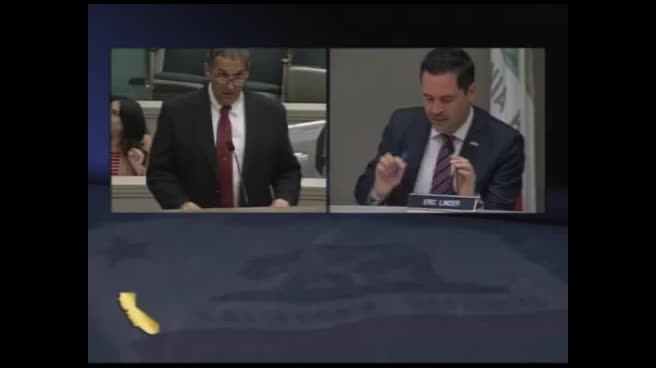 24MIN
Assembly Standing Committee on Transportation
Bill Author

Bill Co-Author(s):