AB 2742: Transportation projects: comprehensive development lease agreements.
- Session Year: 2015-2016
- House: Assembly
- Latest Version Date: 2016-02-19
Existing law authorizes the Department of Transportation and regional transportation agencies, as defined, to enter into comprehensive development lease agreements with public and private entities, or consortia of those entities, for certain transportation projects that may charge certain users of those projects tolls and user fees, subject to various terms and requirements. These arrangements are commonly known as public-private partnerships. Existing law prohibits a lease agreement from being entered into under these provisions on or after January 1, 2017.
This bill would allow a lease agreement to be entered into under these provisions until January 1, 2030. The bill would include within the definition of regional transportation agency the Santa Clara Valley Transportation Authority, thereby authorizing the authority to enter into public-private partnerships under these provisions.
(a)(1)Best value means a value determined by objective criteria, including, but not limited to, price, features, functions, life-cycle costs, and other criteria deemed appropriate by the department or the regional transportation agency.
(2)Contracting entity or lessee means a public or private entity, or consortia thereof, that has entered into a comprehensive development lease agreement with the department or a regional transportation agency for a transportation project pursuant to this section.
(3)Design-build means a procurement process in which both the design and construction of a project are procured from a single entity.
(4)Regional transportation agency means any of the following:
(A)A transportation planning agency as defined in Section 29532 or 29532.1 of the Government Code.
(B)A county transportation commission as defined in Section 130050, 130050.1, or 130050.2 of the Public Utilities Code.
(C)Any other local or regional transportation entity that is designated by statute as a regional transportation agency.
(D)A joint exercise of powers authority as defined in Chapter 5 (commencing with Section 6500) of Division 7 of Title 1 of the Government Code, with the consent of a transportation planning agency or a county transportation commission for the jurisdiction in which the transportation project will be developed.
(E)The Santa Clara Valley Transportation Authority established pursuant to Part 12 (commencing with Section 100000) of Division 10 of the Public Utilities Code.
(5)Public Infrastructure Advisory Commission means a unit or auxiliary organization established by the Transportation Agency that advises the department and regional transportation agencies in developing transportation projects through performance-based infrastructure partnerships.
(6)Transportation project means one or more of the following: planning, design, development, finance, construction, reconstruction, rehabilitation, improvement, acquisition, lease, operation, or maintenance of highway, public street, rail, or related facilities supplemental to existing facilities currently owned and operated by the department or regional transportation agencies that is consistent with the requirements of subdivision (c).
(b)(1)The Public Infrastructure Advisory Commission shall do all of the following:
(A)Identify transportation project opportunities throughout the state.
(B)Research and document similar transportation projects throughout the state, nationally, and internationally, and further identify and evaluate lessons learned from these projects.
(C)Assemble and make available to the department or regional transportation agencies a library of information, precedent, research, and analysis concerning infrastructure partnerships and related types of public-private transactions for public infrastructure.
(D)Advise the department and regional transportation agencies, upon request, regarding infrastructure partnership suitability and best practices.
(E)Provide, upon request, procurement-related services to the department and regional transportation agencies for infrastructure partnership.
(2)The Public Infrastructure Advisory Commission may charge a fee to the department and regional transportation agencies for the services described in subparagraphs (D) and (E) of paragraph (1), the details of which shall be articulated in an agreement entered into between the Public Infrastructure Advisory Commission and the department or the regional transportation agency.
(c)(1)Notwithstanding any other provision of law, only the department, in cooperation with regional transportation agencies, and regional transportation agencies, may solicit proposals, accept unsolicited proposals, negotiate, and enter into comprehensive development lease agreements with public or private entities, or consortia thereof, for transportation projects.
(2)Projects proposed pursuant to this section and associated lease agreements shall be submitted to the California Transportation Commission. The commission, at a regularly scheduled public hearing, shall select the candidate projects from projects nominated by the department or a regional transportation agency after reviewing the nominations for consistency with paragraphs (3) and (4). Approved projects may proceed with the process described in paragraph (5).
(3)The projects authorized pursuant to this section shall be primarily designed to achieve the following performance objectives:
(A)Improve mobility by improving travel times or reducing the number of vehicle hours of delay in the affected corridor.
(B)Improve the operation or safety of the affected corridor.
(C)Provide quantifiable air quality benefits for the region in which the project is located.
(4)In addition to meeting the requirements of paragraph (3), the projects authorized pursuant to this section shall address a known forecast demand, as determined by the department or regional transportation agency.
(5)At least 60 days prior to executing a final lease agreement authorized pursuant to this section, the department or regional transportation agency shall submit the agreement to the Legislature and the Public Infrastructure Advisory Commission for review. Prior to submitting a lease agreement to the Legislature and the Public Infrastructure Advisory Commission, the department or regional transportation agency shall conduct at least one public hearing at a location at or near the proposed facility for purposes of receiving public comment on the lease agreement. Public comments made during this hearing shall be submitted to the Legislature and the Public Infrastructure Advisory Commission with the lease agreement. The Secretary of Transportation or the chairperson of the Senate or Assembly fiscal committees or policy committees with jurisdiction over transportation matters may, by written notification to the department or regional transportation agency, provide any comments about the proposed agreement within the 60-day period prior to the execution of the final agreement. The department or regional transportation agency shall consider those comments prior to executing a final agreement and shall retain the discretion for executing the final lease agreement.
(d)For the purpose of facilitating those projects, the agreements between the parties may include provisions for the lease of rights-of-way in, and airspace over or under, highways, public streets, rail, or related facilities for the granting of necessary easements, and for the issuance of permits or other authorizations to enable the construction of transportation projects. Facilities subject to an agreement under this section shall, at all times, be owned by the department or the regional transportation agency, as appropriate. For department projects, the commission shall certify the departments determination of the useful life of the project in establishing the lease agreement terms. In consideration therefor, the agreement shall provide for complete reversion of the leased facility, together with the right to collect tolls and user fees, to the department or regional transportation agency, at the expiration of the lease at no charge to the department or regional transportation agency. At the time of the reversion, the facility shall be delivered to the department or regional transportation agency, as applicable, in a condition that meets the performance and maintenance standards established by the department or regional transportation agency and that is free of any encumbrance, lien, or other claims.
(e)Agreements between the department or regional transportation agency and the contracting entity or lessee shall authorize the contracting entity or lessee to use a design-build method of procurement for transportation projects, subject to the requirements for utilizing such a method contained in Chapter 6.5 (commencing with Section 6800) 6820) of Part 1 of Division 2 of the Public Contract Code, other than Sections 6802, 6803, and 6813 of that code, if those provisions are enacted by the Legislature during the 200910 Regular Session, or a 200910 extraordinary session. 6821 and 6822 of that code.
(f)(1)(A)Notwithstanding any other provision of this chapter, for projects on the state highway system, the department is the responsible agency for the performance of project development services, including performance specifications, preliminary engineering, prebid services, the preparation of project reports and environmental documents, and construction inspection services. The department is also the responsible agency for the preparation of documents that may include, but need not be limited to, the size, type, and desired design character of the project, performance specifications covering the quality of materials, equipment, and workmanship, preliminary plans, and any other information deemed necessary to describe adequately the needs of the department or regional transportation agency.
(B)The department may use department employees or consultants to perform the services described in subparagraph (A), consistent with Article XXII of the California Constitution. Department resources, including personnel requirements, necessary for the performance of those services shall be included in the departments capital outlay support program for workload purposes in the annual Budget Act.
(2)The department or a regional transportation agency may exercise any power possessed by it with respect to transportation projects to facilitate the transportation projects pursuant to this section. The department, regional transportation agency, and other state or local agencies may provide services to the contracting entity or lessee for which the public entity is reimbursed, including, but not limited to, planning, environmental planning, environmental certification, environmental review, preliminary design, design, right-of-way acquisition, construction, maintenance, and policing of these transportation projects. The department or regional transportation agency, as applicable, shall regularly inspect the facility and require the contracting entity or lessee to maintain and operate the facility according to adopted standards. Except as may otherwise be set forth in the lease agreement, the contracting entity or lessee shall be responsible for all costs due to development, maintenance, repair, rehabilitation, and reconstruction, and operating costs.
(g)(1)In selecting private entities with which to enter into these agreements, notwithstanding any other provision of law, the department and regional transportation agencies may utilize, but are not limited to utilizing, one or more of the following procurement approaches:
(A)Solicitations of proposals for defined projects and calls for project proposals within defined parameters.
(B)Prequalification and short-listing of proposers prior to final evaluation of proposals.
(C)Final evaluation of proposals based on qualifications and best value. The California Transportation Commission shall develop and adopt criteria for making that evaluation prior to evaluation of a proposal.
(D)Negotiations with proposers prior to award.
(E)Acceptance of unsolicited proposals, with issuance of requests for competing proposals. Neither the department nor a regional transportation agency may award a contract to an unsolicited bidder without receiving at least one other responsible bid.
(2)When evaluating a proposal submitted by the contracting entity or lessee, the department or the regional transportation agency may award a contract on the basis of the lowest bid or best value.
(h)The contracting entity or lessee shall have the following qualifications:
(1)Evidence that the members of the contracting entity or lessee have completed, or have demonstrated the experience, competency, capability, and capacity to complete, a project of similar size, scope, or complexity, and that proposed key personnel have sufficient experience and training to competently manage and complete the design and construction of the project, and a financial statement that ensures that the contracting entity or lessee has the capacity to complete the project.
(2)The licenses, registration, and credentials required to design and construct the project, including, but not limited to, information on the revocation or suspension of any license, credential, or registration.
(3)Evidence that establishes that members of the contracting entity or lessee have the capacity to obtain all required payment and performance bonding, liability insurance, and errors and omissions insurance.
(4)Evidence that the contracting entity or lessee has workers compensation experience, history, and a worker safety program of members of the contracting entity or lessee that is acceptable to the department or regional transportation agency.
(5)A full disclosure regarding all of the following with respect to each member of the contracting entity or lessee during the past five years:
(A)Any serious or willful violation of Part 1 (commencing with Section 6300) of Division 5 of the Labor Code or the federal Occupational Safety and Health Act of 1970 (Public Law 91-596).
(B)Any instance where members of the contracting entity or lessee were debarred, disqualified, or removed from a federal, state, or local government public works project.
(C)Any instance where members of the contracting entity or lessee, or its owners, officers, or managing employees submitted a bid on a public works project and were found to be nonresponsive or were found by an awarding body not to be a responsible bidder.
(D)Any instance where members of the contracting entity or lessee, or its owners, officers, or managing employees defaulted on a construction contract.
(E)Any violations of the Contractors State License Law (Chapter 9 (commencing with Section 7000) of Division 3 of the Business and Professions Code), including, but not limited to, alleged violations of federal or state law regarding the payment of wages, benefits, apprenticeship requirements, or personal income tax withholding, or Federal Insurance Contributions Act (FICA) withholding requirements.
(F)Any bankruptcy or receivership of any member of the contracting entity or lessee, including, but not limited to, information concerning any work completed by a surety.
(G)Any settled adverse claims, disputes, or lawsuits between the owner of a public works project and any member of the contracting entity or lessee during the five years preceding submission of a bid under this article, in which the claim, settlement, or judgment exceeds fifty thousand dollars ($50,000). Information shall also be provided concerning any work completed by a surety during this five-year period.
(H)If the contracting entity or lessee is a partnership, joint venture, or an association that is not a legal entity, a copy of the agreement creating the partnership or association that specifies that all general partners, joint venturers, or association members agree to be fully liable for the performance under the agreement.
(i)No agreement entered into pursuant to this section shall infringe on the authority of the department or a regional transportation agency to develop, maintain, repair, rehabilitate, operate, or lease any transportation project. Lease agreements may provide for reasonable compensation to the contracting entity or lessee for the adverse effects on toll revenue or user fee revenue due to the development, operation, or lease of supplemental transportation projects with the exception of any of the following:
(1)Projects identified in regional transportation plans prepared pursuant to Section 65080 of the Government Code.
(2)Safety projects.
(3)Improvement projects that will result in incidental capacity increases.
(4)Additional high-occupancy vehicle lanes or the conversion of existing lanes to high-occupancy vehicle lanes.
(5)Projects located outside the boundaries of a public-private partnership project, to be defined by the lease agreement.
However, compensation to a contracting entity or lessee shall only be made after a demonstrable reduction in use of the facility resulting in reduced toll or user fee revenues, and may not exceed the difference between the reduction in those revenues and the amount necessary to cover the costs of debt service, including principal and interest on any debt incurred for the development, operation, maintenance, or rehabilitation of the facility.
(j)(1)Agreements entered into pursuant to this section shall authorize the contracting entity or lessee to impose tolls and user fees for use of a facility constructed by it, and shall require that over the term of the lease the toll revenues and user fees be applied to payment of the capital outlay costs for the project, the costs associated with operations, toll and user fee collection, administration of the facility, reimbursement to the department or other governmental entity for the costs of services to develop and maintain the project, police services, and a reasonable return on investment. The agreement shall require that, notwithstanding Sections 164, 188, and 188.1, any excess toll or user fee revenue either be applied to any indebtedness incurred by the contracting entity or lessee with respect to the project, improvements to the project, or be paid into the State Highway Account, or for all three purposes, except that any excess toll revenue under a lease agreement with a regional transportation agency may be paid to the regional transportation agency for use in improving public transportation in and near the project boundaries.
(2)Lease agreements shall establish specific toll or user fee rates. Any proposed increase in those rates not otherwise established or identified in the lease agreement during the term of the agreement shall first be approved by the department or regional transportation agency, as appropriate, after at least one public hearing conducted at a location near the proposed or existing facility.
(3)The collection of tolls and user fees for the use of these facilities may be extended by the commission or regional transportation agency at the expiration of the lease agreement. However, those tolls or user fees shall not be used for any purpose other than for the improvement, continued operation, or maintenance of the facility.
(k)Agreements entered into pursuant to this section shall include indemnity, defense, and hold harmless provisions agreed to by the department or regional transportation agency and the contracting entity or lessee, including provisions for indemnifying the State of California or the regional transportation agency against any claims or losses resulting or accruing from the performance of the contracting entity or lessee.
(l)The plans and specifications for each transportation project on the state highway system developed, maintained, repaired, rehabilitated, reconstructed, or operated pursuant to this section shall comply with the departments standards for state transportation projects. The lease agreement shall include performance standards, including, but not limited to, levels of service. The agreement shall require facilities on the state highway system to meet all requirements for noise mitigation, landscaping, pollution control, and safety that otherwise would apply if the department were designing, building, and operating the facility. If a facility is on the state highway system, the facility leased pursuant to this section shall, during the term of the lease, be deemed to be a part of the state highway system for purposes of identification, maintenance, enforcement of traffic laws, and for the purposes of Division 3.6 (commencing with Section 810) of Title 1 of the Government Code.
(m)Failure to comply with the lease agreement in any significant manner shall constitute a default under the agreement and the department or the regional transportation agency, as appropriate, shall have the option to initiate processes to revert the facility to the public agency.
(n)The assignment authorized by subdivision (c) of Section 130240 of the Public Utilities Code is consistent with this section.
(o)A lease to a private entity pursuant to this section is deemed to be public property for a public purpose and exempt from leasehold, real property, and ad valorem taxation, except for the use, if any, of that property for ancillary commercial purposes.
(p)Nothing in this section is intended to infringe on the authority to develop high-occupancy toll lanes pursuant to Section 149.4, 149.5, or 149.6.
(q)Nothing in this section shall be construed to allow the conversion of any existing nontoll or nonuser-fee lanes into tolled or user fee lanes with the exception of a high-occupancy vehicle lane that may be operated as a high-occupancy toll lane for vehicles not otherwise meeting the requirements for use of that lane.
(r)The lease agreement shall require the contracting entity or lessee to provide any information or data requested by the California Transportation Commission or the Legislative Analyst. The commission, in cooperation with the Legislative Analyst, shall annually prepare a report on the progress of each project and ultimately on the operation of the resulting facility. The report shall include, but not be limited to, a review of the performance standards, a financial analysis, and any concerns or recommendations for changes in the program authorized by this section.
(s)Notwithstanding any other provision of this section, no lease agreement may be entered into pursuant to the section that affects, alters, or supersedes the Memorandum of Understanding (MOU), dated November 26, 2008, entered into by the Golden Gate Bridge Highway and Transportation District, the Metropolitan Transportation Commission, and the San Francisco County Transportation Authority, relating to the financing of the U.S. Highway 101/Doyle Drive reconstruction project located in the City and County of San Francisco.
(t)No A lease agreements may agreement shall not be entered into under this section on or after January 1, 2017. 2030.
|
Date
|
Status
|
|---|---|
| Feb 19, 2016 | Introduced. To print. |
| Feb 21, 2016 | From printer. May be heard in committee March 22. |
| Feb 22, 2016 | Read first time. |
| Mar 10, 2016 | Referred to Com. on TRANS. |
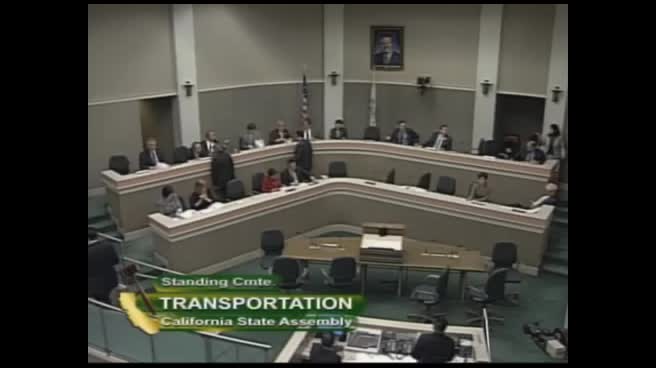
| Apr 12, 2016 | From committee: Do pass and re-refer to Com. on APPR. (Ayes 13. Noes 0.) (April 11). Re-referred to Com. on APPR. |
| Apr 27, 2016 | In committee: Set, first hearing. Referred to APPR. suspense file. |
| May 27, 2016 | In committee: Held under submission. |
|
Date
|
Description
|
Location
|
Votes
|
|
|---|---|---|---|---|
| Apr 11, 2016 | Do pass and be re-referred to the Committee on [Appropriations] | Assembly Standing Committee on Transportation |
Passed |
This list shows positions taken on this bill by organizations on the date displayed, which is linked to the original source.
Positions by individuals are not included.
|
Organization
|
Position
|
Date
|
|---|---|---|
| American Federation Of State, County And Municipal Employees, Afl-Cio | ** Against | Apr 11, 2016 |
| Associated General Contractors | ** Support | Apr 11, 2016 |
| California Transportation Commission | * Support | Apr 11, 2016 |
| California Transportation Commission | * Indeterminate | Apr 11, 2016 |
| Los Angeles County Metropolitan Transportation Authority | ** Support | Apr 11, 2016 |
| Mobility 21 | ** Support | Apr 11, 2016 |
| Orange County Transportation Authority | ** Support | Apr 11, 2016 |
| Professional Engineers In California Government | * Against | Apr 11, 2016 |
| Santa Clara Valley Transportation Authority | * Support | Apr 11, 2016 |
| Santa Clara Valley Transportation Authority | * Indeterminate | Apr 11, 2016 |
| Transportation Agency For Monterey County | ** Support | Apr 11, 2016 |
| Transportation California | ** Support | Apr 11, 2016 |
Date of Hearing: April 27, 2016
ASSEMBLY COMMITTEE ON APPROPRIATIONS
Lorena Gonzalez, Chair
ABPCA Bill Id:AB 2742
Author:(Nazarian) – As Introduced Ver:February 19, 2016
Policy Committee: | Transportation | Vote: | 13 - 0 |
|
|
Urgency: No State Mandated Local Program: No Reimbursable: No
SUMMARY:
This bill extends, from January 1, 2017, to January 1, 2030, the sunset date on provisions authorizing public-private partnership (P3) agreements for transportation.
FISCAL EFFECT:
Indeterminate future costs or savings depending on the outcomes of the projects selected for future P3s, as opposed to other procurement methods that might have been used on those projects. Given that these are likely to be large, complex projects, the costs or savings could be significant.
COMMENTS:
- Background. While there can be varying degrees of P3 agreements, a typical approach, and one that has been used in California, is for the state to enter into a single contract with a private partner (often a consortium of several companies) for the design, construction, finance, operation, and maintenance of an infrastructure facility.
SB 2X 4, (Cogdill)/Chapter 2, Statutes of 2009, authorized Caltrans and regional transportation agencies to enter into an unlimited number of P3 agreements for a broad range of highway, road, and transit projects, through December 31, 2016. In January 2011, Caltrans entered into its first P3 under this new authority for the Presidio Parkway project, a 1.6-mile segment of SR 101 that connects the Golden Gate Bridge to city streets in San Francisco. The private partner will complete the second phase of the design and reconstruction of the southern approach to the bridge and operate and maintain the roadway for 30 years. In exchange, the state will make payments estimated to total roughly $1.1 billion to the private partner over the life of the contract.
- Purpose. The author has introduced this bill so that P3 agreements can continue as a viable option for state and regional transportation agencies to fund transportation infrastructure when other funds are not readily available. AB 2742 is supported by a number of transportation agencies and industry organizations that contend P3 authority is an important tool in delivering complex projects in a cost-effective and expeditious manner.
- LAO Report on P3s. In a November 2012 report entitled "Maximizing State Benefits from Public-Private Partnerships," the Legislative Analyst's Office (LAO) examined the two state infrastructure projects undertaken in recent years using P3 agreements, one of them being the Presidio Parkway project. The LAO notes that successful P3 agreements:
- Can transfer project risks to the private partner;
- May provide greater price and schedule certainty;
- Allow for more innovative design and construction techniques;
- Can free up public funds for other purposes;
- Can provide quicker access to project financing; and,
- Can provide a higher level of maintenance than might otherwise be provided.
The LAO also, noted, however, that P3 agreements are not without their potential drawbacks, including:
- Increased financing costs;
- Greater possibility of unforeseen challenges (due primarily to the extended time periods involved in P3 agreements);
- Limits to government's flexibility;
- Greater risks due to more complex procurement processes; and,
- Fewer bidders.
Based on a review of international research on P3s and interviews with experts in the field, the LAO identified a set of best practices to maximize the benefits and minimize the limitations of P3s. In assessing the Presidio Parkway project, the LAO found that Caltrans did not apply many of these best practices, asserting that Caltrans lacked a transparent framework for selecting the project and did not adequately assess the total expected P3-related project costs relative to other project delivery options. The LAO concluded that this resulted in a project not well suited for P3 procurement. This bill, which simply extends the sunset date on P3 authorization, does not incorporate any of the LAO's recommendations.
As discussed in the analysis of this bill by the Assembly Committee on Transportation, "It would be difficult to argue that California's experiences with P3 transportation projects have been unqualified successes. Each was heavily embroiled in litigation and each was subjected to criticisms of excessive costs, insufficient risk transference, and prolonged delays. In fairness, however, these same criticisms could be applied to virtually all of California's large, complex transportation projects, independent of the procurement or financing methods used to develop and construct them."
- Opposition. The Professional Engineers California Government (PECG) is opposed unless the bill is amended to clarify Caltrans' responsibilities for construction inspection, environmental review, and a variety of other functions. PECG seeks provisions mirroring those including in AB 401 (Daly)/Chapter 586 of 2013, which authorized Caltrans and regional transportation authorities, until 2024, to use a design-build procurement process.
Also opposed are the American Federation of State, County and Municipal Employees and the California State Council of the Service Employees International Union, which object to P3s, which by their nature shift certain work traditionally performed on highway projects by public employees to private sector employees.
- Prior Legislation. AB 1265 (Perea) of 2015, and almost identical bill, did not pass off this committee's Suspense file.
Analysis Prepared by: Chuck Nicol / APPR. / (916) 319-2081
Date of Hearing: April 11, 2016
ASSEMBLY COMMITTEE ON TRANSPORTATION
Jim Frazier, Chair
ABPCA Bill Id:AB 2742 (
Author:Nazarian) – As Introduced Ver:February 19, 2016
SUBJECT: Transportation projects: comprehensive development lease agreements
SUMMARY: Extends the sunset date on provisions that authorize public-private partnership (P3) agreements for transportation. Specifically, this bill:
- Extends from 2017 to 2030 the sunset date on provisions that authorize the California Department of Transportation (Caltrans) and regional transportation authorities to enter into P3 agreements for transportation.
- Adds Santa Clara Valley Transportation Authority (VTA) to the list of regional transportation agencies that are authorized to use P3 authority.
- Exempts P3 agreements from non-applicable provisions of existing law governing the Caltrans' and regional transportation agencies' use of design-build contracting authority.
- Delete obsolete provisions.
EXISTING LAW:
- Defines key terms, most notably "transportation project" to mean one or more of the following: planning, design, development, finance, construction, reconstruction, rehabilitation, improvement, acquisition, lease, operation, or maintenance of highway, public street, rail, or related facilities supplemental to existing facilities currently owned and operated by Caltrans or regional transportation agencies.
- Until January 1, 2017, grants Caltrans and regional transportation agencies, as defined, authority to enter into P3 agreements--that is, comprehensive development lease agreements with public or private entities, or consortia thereof, under the following conditions:
- The California Transportation Commission must review and approve proposed P3 projects;
- Proposed projects must be primarily designed to improve mobility, improve the operations or safety of the affected corridor, and provide quantifiable air quality benefits; and,
- Proposed projects must also address known forecast demands.
- Prescribes the review and approval process for proposed P3 agreements.
- For projects on the state highway system, requires Caltrans to be the responsible agency for performance of project development work, including the development of performance specifications, preliminary engineering, prebid services, environmental documents, and construction inspection services; authorizes Caltrans to do the work using in-house employees or contractors.
- Requires all P3 agreements to authorize the use of tolls and user fees for the use of the facility being constructed.
FISCAL EFFECT: Unknown
COMMENTS: California's first venture into P3s for transportation was with AB 680 (Baker), Chapter 107, Statutes of 1989, which authorized Caltrans to enter into P3 agreements for up to four projects. Caltrans built two projects under this authorization. The first project was ten miles of tolled express lanes in the median of the existing State Route (SR) 91 in Orange County and the subsequent project was SR 125 in San Diego County to connect the area near the Otay Mesa border crossing with the state highway system. For each project, Caltrans used a single contract with a private partner to design, construct, finance, operate, and maintain the facility.
In 2009, authority to enter into P3 agreements for transportation was expanded. Specifically,
SBX2 4 (Cogdill), Chapter 2, Statutes of 2009, authorized Caltrans and regional transportation agencies to enter into an unlimited number of P3 agreements for a broad range of highway, road, and transit projects, through December 31, 2016. In January 2011, Caltrans entered into its first P3 under this new authority for the Presidio Parkway project, a 1.6-mile segment of SR 101 that connects the Golden Gate Bridge to city streets in San Francisco. This particular P3 requires the private partner to complete the second phase of the design and reconstruction of the southern approach to the Golden Gate Bridge and to operate and maintain the roadway for 30 years. In exchange, the state will make payments estimated to total roughly $1.1 billion to the private partner over the life of the contract.
In a 2012 report entitled "Maximizing State Benefits from Public-Private Partnerships," the Legislative Analyst's Office (LAO) examined the two state infrastructure projects undertaken in recent years using P3 agreements, one of them being the Presidio Parkway project that used the authority granted under SBX2 4. In this examination, the LAO cites a number of potential benefits of successful P3 agreements, including:
- They can transfer project risks to the private partner;
- They may provide greater price and schedule certainty;
- They allow for more innovative design and construction techniques;
- They can free up public funds for other purposes;
- They can provide quicker access to project financing; and,
- They can provide a higher level of maintenance than might otherwise be provided.
The LAO also, noted, however, that P3 agreements are not without their potential drawbacks, including:
- Increased financing costs;
- Greater possibility of unforeseen challenges (due primarily to the extended time periods involved in P3 agreements);
- Limits to government's flexibility;
- Greater risks due to more complex procurement processes; and,
- Fewer bidders.
The author introduced AB 2742 so that P3 agreements can continue as a viable option for state and regional transportation agencies to fund transportation infrastructure when other funds are not readily available. According to the author, "California's transportation infrastructure—consisting of streets, highways, bridges, and transit operations—is suffering a shortage of necessary investments for the operations and maintenance of existing facilities and dedicated funding sources for new improvements. The extension of P3s will give California another tool in its toolbox to meet its ambitious transportation infrastructure goals and remain competitive in the global marketplace." AB 2742 is supported by a number of transportation agencies and industry organizations that contend P3 authority is an important tool in delivering complex projects in a cost-effective and expeditious manner.
Opponents of AB 2742 argue that P3 agreements by their very nature result in work that is traditionally performed by public employees being outsourced to private entities. They also object to provisions of the bill that exempt P3s from certain requirements governing design-build authority, as set forth in AB 401 (Daly), Chapter 586, Statutes of 2013. These requirements ensure that public employees maintain responsibilities for specific aspects of design-build projects entered into by Caltrans or a regional transportation agency. On this note, the Professional Engineers in California Government (PECG), writing in opposition to AB 2742 unless it is amended, believes the role of construction inspection is a critical government function that is necessary on any infrastructure project, particularly on complex P3 projects. PECG is seeking amendments to ensure this function remains the responsibility of public employees.
Committee comments:
- It would be difficult to argue that California's experiences with P3 transportation projects have been unqualified successes. Each was heavily embroiled in litigation and each was subjected to criticisms of excessive costs, insufficient risk transference, and prolonged delays. In fairness, however, these same criticisms could be applied to virtually all of California's large, complex transportation projects, independent of the procurement or financing methods used to develop and construct them.
- Regarding the opponents' concerns that this bill circumvents statutory protections for public employees that were set forth in AB 401, it is worth noting that AB 2742 exempts P3 agreements from provisions related to design-build contracts entered into by Caltrans or by regional transportation agencies. These are not the agencies that would typically be entering into a design-build contract under a P3 agreement. These agencies would enter into a P3 agreement with the contracting entity or lessee who would, in turn, use design-build authority, as is provided for in AB 2742. The exemptions provided for in AB 2742 are technically and logically accurate. Whether or not similar provisions should or should not apply to P3 agreements is another matter.
Related legislation: AB 1265 (Perea) of 2015 was identical to this bill. AB 1265 was returned to the Chief Clerk by the Assembly Appropriations Committee pursuant to Joint Rule 56.
ABX1 2 (Perea), which is identical to AB 2742, is pending in the First Extraordinary Session.
SBX1 14 (Cannella), nearly identical to this bill, would extend P3 authority indefinitely.
SBX1 14 is pending in the Senate Transportation and Infrastructure Development Committee.
SB 158 (Huff), which would provide a narrow exception to the 2017 sunset date for P3s. SB 158 was returned to the Secretary of the Senate by the Senate Transportation and Housing Committee pursuant to Joint Rule 56.
Previous legislation: AB 749 (Gorell) of 2013, would have extended the sunset date for provisions that grant authority to Caltrans and to others to enter into P3s for transportation projects. AB 749 was referred to this committee but was not heard at the request of the author.
AB 401 (Daly), Chapter 586, Statutes of 2013, authorizes Caltrans and regional transportation agencies to use design-build procurements for highways and expressways, under certain conditions.
SBX2 4 (Cogdill), Chapter 2, Statutes of 2009, authorized, until January 1, 2017, Caltrans and regional transportation agencies to enter into an unlimited number of P3 agreements. To date, only one project, the Presidio Parkway, has been approved under this authority.
AB 1467 (Nunez), Chapter 32, Statutes of 2006, authorized, until January 1, 2012, Caltrans and regional transportation agencies to enter into P3 agreements for certain transportation projects.
AB 680 (Baker), Chapter 107, Statutes of 1989, authorized Caltrans to enter into P3 agreements for up to four projects. Caltrans built two projects under this authorization.
REGISTERED SUPPORT / OPPOSITION:
Support
Associated General Contractors
California Transportation Commission
Los Angeles County Metropolitan Transportation Authority
Mobility 21
Orange County Transportation Authority
Santa Clara Valley Transportation Authority
Transportation Agency for Monterey County
Transportation California
Opposition
American Federation of State, County and Municipal Employees, AFL-CIO
California State Council of the Service Employees International Union
Professional Engineers in California Government
Analysis Prepared by: Janet Dawson / TRANS. / (916) 319-2093
Discussed in Hearing
 24MIN
Senate Standing Committee on Transportation and Housing
Bill Author

Bill Co-Author(s):