AB 2866: Autonomous vehicles.
- Session Year: 2015-2016
- House: Assembly
- Latest Version Date: 2016-04-11
Existing law establishes certain criteria that must be met by a manufacturer of an autonomous vehicle vehicle, as defined, in order for the manufacturer an eligible driver, as specified, to operate the autonomous vehicle for testing purposes on public roads. Existing law requires the driver to be seated in the drivers seat, monitoring the safe operation of the autonomous vehicle, and capable of taking over immediate manual control of the autonomous vehicle in the event of an autonomous technology failure or other emergency. Existing law requires, as part of an application by the manufacturer to the Department of Motor Vehicles, a certification that the autonomous vehicle allows the operator, as defined, to take control in multiple manners, including, without limitation, through the use of the brake, the accelerator pedal, or the steering wheel, as specified, and a certification that the autonomous vehicles autonomous technology meets Federal Motor Vehicle Safety Standards. Existing law provides that federal regulations promulgated by the National Highway Traffic Safety Administration shall supersede these provisions when found to be in conflict with any other state law or regulation.
This bill would, notwithstanding those provisions, until January 1, 2018, require the Department of Motor Vehicles and the Department of the California Highway Patrol to conduct a pilot project in conjunction with one or more manufacturers of autonomous vehicles to test the safety and feasibility of operating autonomous vehicles on public roads. The bill would require the Department of Motor Vehicles to select 3 counties in which to conduct the pilot project and to contract with local law enforcement agencies to participate in the pilot project in each county. The bill would require the Department of Motor Vehicles to report the results of the pilot project to the Legislature on or before July 1, 2018. The bill would repeal these provisions on January 1, 2019.
This bill would authorize, notwithstanding the above requirements, the operation of an autonomous vehicle without a driver in the vehicle or an autonomous vehicle not equipped with a brake pedal, accelerator pedal, or steering wheel on public roads for testing and operation purposes if all other requirements of the above provisions are met and the operator of the autonomous vehicle is capable of taking immediate control of the vehicle in the event of an autonomous technology failure or other emergency. The bill would require the department to adopt conforming regulations no later than July 1, 2018. The bill would require the department to submit a report on the results of the testing and operation of these autonomous vehicles to the Legislature, as specified.
Existing law establishes certain criteria that must be met by a manufacturer of an autonomous vehicle in order for the manufacturer to operate the autonomous vehicle for testing purposes on public roads.
This bill would, notwithstanding those provisions, until January 1, 2018, require the Department of Motor Vehicles and the Department of the California Highway Patrol to conduct a pilot project in conjunction with one or more manufacturers of autonomous vehicles to test the safety and feasibility of operating autonomous vehicles on public roads. The bill would require the Department of Motor Vehicles to select 3 counties in which to conduct the pilot project and to contract with local law enforcement agencies to participate in the pilot project in each county. The bill would require the Department of Motor Vehicles to report the results of the pilot project to the Legislature on or before July 1, 2018. The bill would repeal these provisions on January 1, 2019.
Under existing law, a person who takes binder chains having a value of $950 or less that are not his or her own, without the owners consent and with intent either permanently or temporarily to deprive the owner of title to or possession of the binder chains, or any party or accessory to that act, is guilty of a misdemeanor, subject to imprisonment in the county jail, a fine, or both, as specified.
This bill would make technical, nonsubstantive changes to those provisions, including deleting an obsolete cross-reference.
(a)For purposes of this division, the following definitions apply:
(1)Autonomous technology means technology that has the capability to drive a vehicle without the active physical control or monitoring by a human operator.
(2)(A)Autonomous vehicle means any vehicle equipped with autonomous technology that has been integrated into that vehicle.
(B)An autonomous vehicle does not include a vehicle that is equipped with one or more collision avoidance systems, including, but not limited to, electronic blind spot assistance, automated emergency braking systems, park assist, adaptive cruise control, lane keep assist, lane departure warning, traffic jam and queuing assist, or other similar systems that enhance safety or provide driver assistance, but are not capable, collectively or singularly, of driving the vehicle without the active control or monitoring of a human operator.
(3)Department means the Department of Motor Vehicles.
(4)An operator of an autonomous vehicle is the person who is seated in the drivers seat, or, if there is no person in the drivers seat, causes the autonomous technology to engage.
(5)A manufacturer of autonomous technology is the person as defined in Section 470 that originally manufactures a vehicle and equips autonomous technology on the originally completed vehicle or, in the case of a vehicle not originally equipped with autonomous technology by the vehicle manufacturer, the person that modifies the vehicle by installing autonomous technology to convert it to an autonomous vehicle after the vehicle was originally manufactured.
(b)An autonomous vehicle may be operated on public roads for testing purposes by a driver who possesses the proper class of license for the type of vehicle being operated if all of the following requirements are met:
(1)The autonomous vehicle is being operated on roads in this state solely by employees, contractors, or other persons designated by the manufacturer of the autonomous technology.
(2)The driver shall be seated in the drivers seat, monitoring the safe operation of the autonomous vehicle, and capable of taking over immediate manual control of the autonomous vehicle in the event of an autonomous technology failure or other emergency.
(3)Prior to the start of testing in this state, the manufacturer performing the testing shall obtain an instrument of insurance, surety bond, or proof of self-insurance in the amount of five million dollars ($5,000,000), and shall provide evidence of the insurance, surety bond, or self-insurance to the department in the form and manner required by the department pursuant to the regulations adopted pursuant to subdivision (d).
(c)Except as provided in subdivision (b), an autonomous vehicle shall not be operated on public roads until the manufacturer submits an application to the department, and that application is approved by the department pursuant to the regulations adopted pursuant to subdivision (d). The application shall contain, at a minimum, all of the following certifications:
(1)A certification by the manufacturer that the autonomous technology satisfies all of the following requirements:
(A)The autonomous vehicle has a mechanism to engage and disengage the autonomous technology that is easily accessible to the operator.
(B)The autonomous vehicle has a visual indicator inside the cabin to indicate when the autonomous technology is engaged.
(C)The autonomous vehicle has a system to safely alert the operator if an autonomous technology failure is detected while the autonomous technology is engaged, and when an alert is given, the system shall do either of the following:
(i)Require the operator to take control of the autonomous vehicle.
(ii)If the operator does not or is unable to take control of the autonomous vehicle, the autonomous vehicle shall be capable of coming to a complete stop.
(D)The autonomous vehicle shall allow the operator to take control in multiple manners, including, without limitation, through the use of the brake, the accelerator pedal, or the steering wheel, and it shall alert the operator that the autonomous technology has been disengaged.
(E)The autonomous vehicles autonomous technology meets Federal Motor Vehicle Safety Standards for the vehicles model year and all other applicable safety standards and performance requirements set forth in state and federal law and the regulations promulgated pursuant to those laws.
(F)The autonomous technology does not make inoperative any Federal Motor Vehicle Safety Standards for the vehicles model year and all other applicable safety standards and performance requirements set forth in state and federal law and the regulations promulgated pursuant to those laws.
(G)The autonomous vehicle has a separate mechanism, in addition to, and separate from, any other mechanism required by law, to capture and store the autonomous technology sensor data for at least 30 seconds before a collision occurs between the autonomous vehicle and another vehicle, object, or natural person while the vehicle is operating in autonomous mode. The autonomous technology sensor data shall be captured and stored in a read-only format by the mechanism so that the data is retained until extracted from the mechanism by an external device capable of downloading and storing the data. The data shall be preserved for three years after the date of the collision.
(2)A certification that the manufacturer has tested the autonomous technology on public roads and has complied with the testing standards, if any, established by the department pursuant to subdivision (d).
(3)A certification that the manufacturer will maintain, an instrument of insurance, a surety bond, or proof of self-insurance as specified in regulations adopted by the department pursuant to subdivision (d), in an amount of five million dollars ($5,000,000).
(d)(1)(A)As soon as practicable, but no later than January 1, 2015, the department shall adopt regulations setting forth requirements for the submission of evidence of insurance, surety bond, or self-insurance required by subdivision (b), and the submission and approval of an application to operate an autonomous vehicle pursuant to subdivision (c).
(B)(i)As soon as practicable, but no later than July 1, 2018, the department shall adopt regulations setting forth requirements for the testing and operation of an autonomous vehicle without a driver in the vehicle and an autonomous vehicle not equipped with a brake pedal, accelerator pedal, or steering wheel, in accordance with subdivision (i).
(ii)The regulations adopted pursuant to clause (i) shall remain in effect, as initially adopted or as amended, until four years after the effective date of the regulations.
(iii)Notwithstanding Section 10231.5 of the Government Code, the department shall submit a report, pursuant to Section 9795 of the Government Code, on the results of the testing and operation of autonomous vehicles described in subdivision (i) to the Legislature no later than six months after the regulations are no longer in effect.
(2)The regulations shall include any testing, equipment, and performance standards, in addition to those established for purposes of subdivision (b), that the department concludes are necessary to ensure the safe operation of autonomous vehicles on public roads, with or without the presence of a driver inside the vehicle. In developing these regulations, the department may consult with the Department of the California Highway Patrol, the Institute of Transportation Studies at the University of California, or any other entity identified by the department that has expertise in automotive technology, automotive safety, and autonomous system design.
(3)The department may establish additional requirements by the adoption of regulations, which it determines, in consultation with the Department of the California Highway Patrol, are necessary to ensure the safe operation of autonomous vehicles on public roads, including, but not limited to, regulations regarding the aggregate number of deployments of autonomous vehicles on public roads, special rules for the registration of autonomous vehicles, new license requirements for operators of autonomous vehicles, and rules for revocation, suspension, or denial of any license or any approval issued pursuant to this division.
(4)The department shall hold public hearings on the adoption of any regulation applicable to the operation of an autonomous vehicle without the presence of a driver inside the vehicle.
(e)(1)The department shall approve an application submitted by a manufacturer pursuant to subdivision (c) if it finds that the applicant has submitted all information and completed testing necessary to satisfy the department that the autonomous vehicles are safe to operate on public roads and the applicant has complied with all requirements specified in the regulations adopted by the department pursuant to subdivision (d).
(2)Notwithstanding paragraph (1), if the application seeks approval for autonomous vehicles capable of operating without the presence of a driver inside the vehicle, the department may impose additional requirements it deems necessary to ensure the safe operation of those vehicles, and may require the presence of a driver in the drivers seat of the vehicle if it determines, based on its review pursuant to paragraph (1), that such a requirement is necessary to ensure the safe operation of those vehicles on public roads. The department shall notify the Legislature of the receipt of an application from a manufacturer seeking approval to operate an autonomous vehicle capable of operating without the presence of a driver inside the vehicle and approval of the application. Approval of the application shall be effective no sooner than 180 days after the date the application is submitted.
(f)Nothing in this division shall limit or expand the existing authority to operate autonomous vehicles on public roads, until 120 days after the department adopts the regulations required by paragraph (1) of subdivision (d).
(g)Federal regulations promulgated by the National Highway Traffic Safety Administration shall supersede the provisions of this division when found to be in conflict with any other state law or regulation.
(h)The manufacturer of the autonomous technology installed on a vehicle shall provide a written disclosure to the purchaser of an autonomous vehicle that describes what information is collected by the autonomous technology equipped on the vehicle. The department may promulgate regulations to assess a fee upon a manufacturer that submits an application pursuant to subdivision (c) to operate autonomous vehicles on public roads in an amount necessary to recover all costs reasonably incurred by the department.
(i)Notwithstanding paragraph (2) of subdivision (b) and subparagraph (D) of paragraph (1) of subdivision (c), an autonomous vehicle without a driver in the vehicle or an autonomous vehicle not equipped with a brake pedal, accelerator pedal, or steering wheel may be operated on public roads for testing and operation purposes, pursuant to regulations specified in subparagraph (B) of paragraph (1) of subdivision (d), if all other requirements of this section are met and the operator of the autonomous vehicle is capable of taking immediate control of the vehicle in the event of an autonomous technology failure or other emergency.
SECTION 1.Division 16.65 (commencing with Section 38755) is added to the Vehicle Code, to read:16.65.Autonomous Vehicle Pilot Project38755.Notwithstanding subdivisions (b) and (c) of Section 38750, the Department of Motor Vehicles and the Department of the California Highway Patrol shall, in conjunction with one or more manufacturers of autonomous vehicles, conduct a pilot project to test the safety and feasibility of operating autonomous vehicles on public roads.
38756.The Department of Motor Vehicles shall select three counties in which to conduct the road tests, and shall contract with local law enforcement agencies for purposes of participating in the road testing prior to conducting any road tests. A local agency may consent to contract and participate, but shall not be required to contract and participate, in the pilot project. The pilot project shall commence on January 1, 2017, and shall terminate on January 1, 2018.
38757.(a)For purposes of this division, the terms autonomous vehicle and manufacturer have the same meaning as set forth in Section 38750.
(b)Autonomous vehicles tested in the pilot project are not required to be equipped with a steering wheel, brake pedal, or accelerator, and may be operated without a driver inside the vehicle.
38758.The Department of Motor Vehicles shall report the results of the pilot project to the Legislature on or before July 1, 2018. A report submitted pursuant to this subdivision shall be submitted pursuant to Section 9795 of the Government Code.
38759.This division shall remain in effect only until January 1, 2019, and as of that date is repealed, unless a later enacted statute, that is enacted before January 1, 2019, deletes or extends that date.
Notwithstanding subdivisions (b) and (c) of Section 38750, the Department of Motor Vehicles and the Department of the California Highway Patrol shall, in conjunction with one or more manufacturers of autonomous vehicles, conduct a pilot project to test the safety and feasibility of operating autonomous vehicles on public roads.
38756.The Department of Motor Vehicles shall select three counties in which to conduct the road tests, and shall contract with local law enforcement agencies for purposes of participating in the road testing prior to conducting any road tests. A local agency may consent to contract and participate, but shall not be required to contract and participate, in the pilot project. The pilot project shall commence on January 1, 2017, and shall terminate on January 1, 2018.
38757.(a)For purposes of this division, the terms autonomous vehicle and manufacturer have the same meaning as set forth in Section 38750.
(b)Autonomous vehicles tested in the pilot project are not required to be equipped with a steering wheel, brake pedal, or accelerator, and may be operated without a driver inside the vehicle.
38758.The Department of Motor Vehicles shall report the results of the pilot project to the Legislature on or before July 1, 2018. A report submitted pursuant to this subdivision shall be submitted pursuant to Section 9795 of the Government Code.
38759.This division shall remain in effect only until January 1, 2019, and as of that date is repealed, unless a later enacted statute, that is enacted before January 1, 2019, deletes or extends that date.
SECTION 1.Section 10851.5 of the Vehicle Code is amended to read:10851.5.A person who takes binder chains having a value of nine hundred fifty dollars ($950) or less that are not his or her own, without the consent of the owner thereof, and with intent either permanently or temporarily to deprive the owner thereof of his or her title to or possession of the binder chains, whether with or without intent to steal the binder chains, or a person who is a party or accessory to or an accomplice in the unauthorized taking or stealing, is guilty of a misdemeanor, and upon conviction thereof shall be punished by imprisonment in the county jail for not less than six months or by a fine of not less than one thousand dollars ($1,000) or by both the fine and imprisonment. The consent of the owner of the binder chain to its taking shall not in any case be presumed or implied because of the owners consent on a previous occasion to the taking of the binder chain by the same or a different person.
Any A person who takes binder chains, required under regulations adopted pursuant to Section 31510, chains having a value of nine hundred fifty dollars ($950) or less which chains that are not his or her own, without the consent of the owner thereof, and with intent either permanently or temporarily to deprive the owner thereof of his or her title to or possession of the binder chains chains, whether with or without intent to steal the same, or any person binder chains, or a person who is a party or accessory to or an accomplice in the unauthorized taking or stealing stealing, is guilty of a misdemeanor, and upon conviction thereof shall be punished by imprisonment in the county jail for not less than six months or by a fine of not less than one thousand dollars ($1,000) or by both such the fine and imprisonment. The consent of the owner of the binder chain to its taking shall not in any case be presumed or implied because of such the owners consent on a previous occasion to the taking of the binder chain by the same or a different person.
|
Date
|
Status
|
|---|---|
| Feb 19, 2016 | Introduced. To print. |
| Feb 21, 2016 | From printer. May be heard in committee March 22. |
| Feb 22, 2016 | Read first time. |
| Mar 17, 2016 | Referred to Com. on TRANS. |
| Mar 18, 2016 | From committee chair, with author's amendments: Amend, and re-refer to Com. on TRANS. Read second time and amended. |
| Mar 28, 2016 | Re-referred to Com. on TRANS. |
| Apr 6, 2016 | In committee: Hearing postponed by committee. |
| Apr 11, 2016 | From committee chair, with author's amendments: Amend, and re-refer to Com. on TRANS. Read second time and amended. |
| Apr 12, 2016 | Re-referred to Com. on TRANS. |
| Apr 19, 2016 | From committee: Do pass and re-refer to Com. on APPR. (Ayes 14. Noes 0.) (April 18). Re-referred to Com. on APPR. |
| May 4, 2016 | In committee: Hearing postponed by committee. |
| May 11, 2016 | In committee: Set, first hearing. Hearing canceled at the request of author. |
|
Date
|
Description
|
Location
|
Votes
|
|
|---|---|---|---|---|
| Apr 18, 2016 | Do pass and be re-referred to the Committee on [Appropriations] | Assembly Standing Committee on Transportation |
Passed |
This list shows positions taken on this bill by organizations on the date displayed, which is linked to the original source.
Positions by individuals are not included.
|
Organization
|
Position
|
Date
|
|---|---|---|
| Consumer Watchdog | ** Against | Apr 18, 2016 |
| Employment and Development Department | * Support | Aug 1, 2016 |
Date of Hearing: April 18, 2016
ASSEMBLY COMMITTEE ON TRANSPORTATION
Jim Frazier, Chair
ABPCA Bill Id:AB 2866 (
Author:Gatto) – As Amended Ver:April 11, 2016
SUBJECT: Autonomous vehicles
SUMMARY: Requires the Department of Motor Vehicles (DMV) to adopt regulations for the testing and operation of autonomous vehicles without a driver in the vehicle and without a brake pedal, accelerator pedal, or steering wheel. Specifically, this bill:
- Authorizes the testing and operation of autonomous vehicles without a driver in the vehicle and not equipped with a brake pedal, accelerator pedal, and steering wheel, pursuant to regulations adopted by DMV and subject to all other requirements of existing law.
- Requires DMV to, by July 1, 2018, adopt regulations for the testing and operation of autonomous vehicles without a driver in the vehicle and autonomous vehicles not equipped with a brake pedal, accelerator pedal, or steering wheel.
- Provides that the regulations adopted by DMV shall remain in effect until four years after their effective date.
- Requires DMV to report on the results of the autonomous vehicles deployed under these regulations no later than 6 months after they are no longer in effect.
EXISTING LAW:
- Authorizes the operation of autonomous vehicles on public roads for testing purposes under certain circumstances specified in regulations adopted by the DMV.
- Requires DMV, by January 1, 2015, to adopt regulations setting forth requirements for the application to operate autonomous vehicles on public roads for non-testing purposes.
- Prohibits the operation of autonomous vehicles on public roads for non-testing purposes unless the manufacturer of the vehicles submits an application to DMV that is approved pursuant to DMV regulations.
- Requires the application submitted to DMV for the operation of autonomous vehicles on public roads for non-testing purposes to include a certification from the manufacturer that the vehicle’s autonomous technology allows the operator to take control through the use of the brake, the accelerator pedal, or the steering wheel and that the vehicle’s autonomous technology meets and does not make inoperative any Federal Motor Vehicle Safety Standards (FMVSS) and all other applicable safety standards and performance requirements established by state and federal law.
- Requires DMV to approve an application submitted by a manufacturer for the operation of autonomous vehicles for non-testing purposes if DMV finds that the applicant has submitted all information and completed testing necessary to satisfy DMV that the autonomous vehicles are safe to operate on public roads and the applicant has complied with all requirements specified in DMV regulations.
- Authorizes DMV to impose additional requirements it deems necessary to ensure the safe operation of autonomous vehicles if those vehicles are capable of operating without the presence of a driver inside the vehicle, including the presence of a driver in the driver’s seat of the vehicle, if DMV determines that such a requirement is necessary to ensure the safe operation of those vehicles on public roads.
- Requires DMV to notify the Legislature of the receipt and approval of an application from a manufacturer seeking to operate autonomous vehicles capable of operating without the presence of a driver inside the vehicle on public roads for non-testing purposes.
FISCAL EFFECT: Unknown
COMMENTS: In response to arguments for the traffic safety benefits of increasingly automated vehicle technology, the Legislature passed and the Governor signed legislation requiring DMV to adopt regulations for the operation of autonomous vehicles on California’s public roads in 2012 [SB 1298 (Padilla), Chapter 570, Statutes of 2012]. The rollout of DMV’s regulations was separated into two stages: regulations for insurance requirements for the purposes of testing autonomous vehicles and regulations for the full deployment of autonomous vehicles on California roads for non-testing purposes. Both sets of regulations were required to be adopted by January 1, 2015. DMV adopted testing regulations on May 19, 2014, and has yet to adopt regulations for the deployment of autonomous vehicles for non-testing purposes. DMV is reluctant to make a final regulatory action until it receives more input from the public and stakeholders.
The original legislation directing DMV to adopt these regulations includes several requirements for the operation of autonomous vehicles, including the presence of an operator inside the vehicle and the ability of the operator to take over control of the vehicle from the autonomous technology through the use of the brake, the accelerator pedal, or the steering wheel. Existing law also allows DMV to include any other testing, equipment, and performance standards that DMV concludes are necessary to ensure the safe operation of autonomous vehicles, with or without the presence of a driver in the vehicle. Early drafts of the DMV regulations for the operation of autonomous vehicles for both testing and non-testing purposes exclude the use of vehicles that are capable of operation without the presence of an operator inside the vehicle.
The author raises concerns with the current proposed contents of DMV’s upcoming regulatory package, relating specifically to the prohibition on autonomous vehicles without a licensed driver in the vehicle, and without the specified technical attributes. The author believes that, by not allowing these types of vehicles to be tested or operated in California, DMV risks stifling technological innovation in the state and encouraging manufacturers advancing this technology to relocate to other states with less restrictive autonomous vehicle standards. Some estimates suggest that fatalities from motor vehicle accidents could fall by 90% and save $190 billion once autonomous vehicles become prevalent in the state.
AB 2866 would authorize the operation of autonomous vehicles without a driver inside the vehicle and not equipped with a brake pedal, accelerator pedal, or steering wheel, pursuant to regulations that this bill would require DMV to adopt. Those regulations would be adopted by July 1, 2018 and would remain in effect for 4 years, after which DMV would report on the results of the testing and operation of these autonomous vehicles to the Legislature.
By directing DMV to include these types of autonomous vehicles in its regulatory framework, the author intends to keep the development of technology in California, and ensure access to autonomous vehicles for all Californians, particularly those who are unable to drive conventional motor vehicles. The author believes AB 2866 will enable the state to reap the economic and public health benefits of autonomous vehicles, which “have the potential to save Californians’ lives, time and money.”
DMV has undertaken a careful, thorough approach to adopting autonomous vehicle regulations since SB 1298 was signed by the Governor in 2012. The department has conducted numerous public hearings and workshops to receive input from manufacturers, technology companies, academics, privacy advocates, the disabled community, consumer groups, and other stakeholders. The approach that has been developed is incremental but has a heavy focus on ensuring that the vehicles that are operated on California’s roads are as safe as possible. Although DMV has yet to initiate the formal regulatory process for the operation of autonomous vehicles for non-testing purposes, it has used the time since its deadline to continue to engage stakeholders to work through the issues associated with creating a regulatory framework for a still-emerging technology and that has no analog in other states or at the federal level. As the department has articulated in the past, the technology is still ahead of the law in this area.
Out of concern for losing out on technological innovation and the corresponding economic and public health benefits, AB 2866 would force DMV to make larger strides in the development of its regulations by removing the department’s discretion to make incremental steps towards approving technologies that do not require the oversight of a licensed driver and physical override mechanisms in the vehicle. This concern is likely a valid one, as some major manufacturers of autonomous vehicles are already currently testing in other states.
Equally valid a concern is that the technology required for the operation of the vehicles specified in this bill may not yet exist at a level that could be widely deployed in a safe manner in California if new regulations were to be adopted. Manufacturers testing autonomous vehicles in California are required to report to DMV when the autonomous technology disengages due to technological failure or other conditions. DMV has received hundreds of disengagement reports stemming from a variety of conditions. For example, autonomous technology has yet to be proven infallible in poor weather conditions or when driving on the state’s dilapidated road infrastructure.
While questions remain on the negative impact of overly restrictive regulations or the status of the technology generally, this bill compels DMV to keep pace with the rate of technological advancement at the level that some manufacturers are arguing is necessary to keep the state competitive in attracting innovation. Previous versions of this bill requiring DMV to conduct a pilot with autonomous vehicles without a driver in the vehicle would have removed the operation of those vehicles from the existing safety, testing, and regulatory framework established by
SB 1298. The current version of AB 2866 would merely require DMV to adopt additional regulations under that scheme, leaving that framework intact and in effect, including the requirement that all vehicles comply with all FMVSS. To the extent current FMVSS require the physical controls specified in this bill in most vehicles, autonomous or otherwise, and existing statute requires vehicles comport to those standards, these vehicles may not be able to operate in California until they are in compliance with federal requirements or receive a federal exemption. However, by conforming the new regulations with existing statute, AB 2866 minimizes the impact of directing DMV to initiate a new regulatory process. After the regulations are no longer in effect and the department submits its report, the Legislature will have additional information with which to make a decision on the future of autonomous vehicles in the state.
The author may wish to consider future amendments authorizing DMV to use its existing regulatory process to the extent possible as a basis for its future regulations, in order to further expedite the process and encourage consistency between all autonomous vehicle rules.
Federal developments: In January 2016, United States Department of Transportation Secretary Anthony Foxx announced President Obama’s Fiscal Year 2017 budget proposal to allocate nearly $4 billion over ten years towards accelerating the development of autonomous vehicle technology through real-world pilot projects. Additionally, Secretary Foxx announced that the National Highway Traffic Safety Administration (NHTSA) will, within six months, both consult with industry and other stakeholders to develop guidance on the safe deployment and operation of autonomous vehicles, and consult with state partners, the American Association of Motor Vehicle Administrators, and other stakeholders to develop a model state policy on automated vehicles that offers a path to consistent national policy.
According to DMV, the department has been in constant communication with NHTSA on the topic of its autonomous vehicle regulations and will likely be able to easily comport its regulatory package to NHTSA’s model state policy.
Related legislation: AB 1592 (Bonilla) authorizes the Contra Costa Transportation Authority to conduct a pilot project for the testing of autonomous vehicles under specific conditions.
AB 1592 passed out of this committee on April 4, 2016 with a 16-0 vote, and passed off the Assembly Floor with a 75-0 vote. AB 1592 is currently awaiting assignment in the Senate Rules Committee.
AB 2682 (Chang) requires DMV, upon the development of a model state policy on autonomous vehicles by NHTSA, to hold public hearings on the model policy and consider, to the extent authorized by other law, conforming department regulations with that policy. AB 2682 passed out of this committee on April 4, 2016, with a 16-0 vote, and is currently awaiting a hearing in the Assembly Appropriations Committee.
Previous legislation: SB 1298 (Padilla), Chapter 570, Statutes of 2012, established conditions for the operation of autonomous vehicles upon public roadways.
REGISTERED SUPPORT / OPPOSITION:
Support
None on file
Opposition
Consumer Watchdog
Analysis Prepared by: Justin Behrens / TRANS. / (916) 319-2093
Discussed in Hearing
 2MIN
Senate Standing Committee on Appropriations
 2MIN
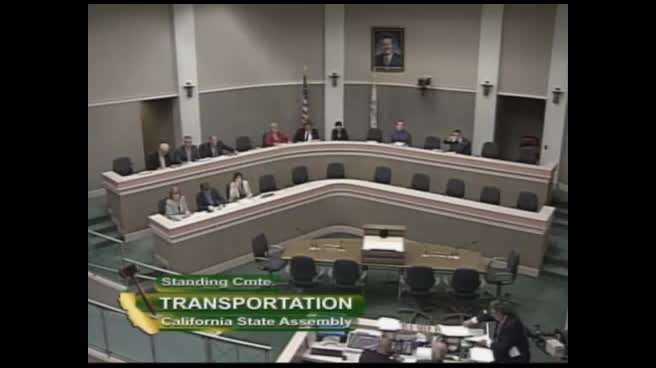
Assembly Standing Committee on Transportation
Bill Author

Bill Co-Author(s):