AB 366: Transactions and use taxes: City of Alameda.
- Session Year: 2015-2016
- House: Assembly
- Latest Version Date: 2016-09-23
Existing law authorizes cities and counties, subject to certain limitations and approval requirements, to levy a transactions and use tax for general purposes, in accordance with the procedures and requirements set forth in the Transactions and Use Tax Law, including a requirement that the combined rate of all taxes that may be imposed in accordance with that law in the county not exceed 2%.
This bill would authorize the City of Alameda to impose a transactions and use tax for general purposes that, in combination with other transactions and use taxes, would not exceed the combined rate limit of 2% by more than 0.5%, if the city adopts an ordinance proposing the tax and the ordinance proposing the tax is approved by the voters, subject to applicable voter approval requirements, as specified. The bill would repeal this authorization on January 1, 2025, if an ordinance proposing the tax has not been approved by that date.
This bill would make legislative findings and declarations as to the necessity of a special statute for the City of Alameda.
Existing law authorizes cities and counties, subject to certain limitations and approval requirements, to levy a transactions and use tax for general purposes, in accordance with the procedures and requirements set forth in the Transactions and Use Tax Law, including a requirement that the combined rate of all taxes that may be imposed in accordance with that law in the county not exceed 2%.
This bill would authorize the City of Alameda to impose a transactions and use tax for general purposes that, in combination with other transactions and use taxes, would not exceed the combined rate limit of 2% by more than 0.5%, if the city adopts an ordinance proposing the tax and the ordinance proposing the tax is approved by the voters, subject to applicable voter approval requirements, as specified. The bill would repeal this authorization on January 1, 2025, if an ordinance proposing the tax has not been approved by that date.
This bill would make legislative findings and declarations as to the necessity of a special statute for the City of Alameda.
Existing law authorizes cities and counties, subject to certain limitations and approval requirements, to levy a transactions and use tax for general purposes, in accordance with the procedures and requirements set forth in the Transactions and Use Tax Law, including a requirement that the combined rate of all taxes that may be imposed in accordance with that law in the county not exceed 2%.
This bill would authorize the City of Alameda to impose a transactions and use tax for general purposes that, in combination with other transactions and use taxes, would not exceed the combined rate limit of 2% by more than 0.5%, if the city adopts an ordinance proposing the tax and the ordinance proposing the tax is approved by the voters, subject to applicable voter approval requirements, as specified. The bill would repeal this authorization on January 1, 2025, if an ordinance proposing the tax has not been approved by that date.
This bill would make legislative findings and declarations as to the necessity of a special statute for the City of Alameda.
Existing law establishes the Medi-Cal program, administered by the State Department of Health Care Services, under which health care services are provided to qualified, low-income persons. The Medi-Cal program is, in part, governed and funded by federal Medicaid Program provisions. Under the federal Patient Protection and Affordable Care Act, existing state law extends Medi-Cal eligibility to childless adults under 65 years of age.
This bill would require the State Department of Health Care Services, by March 15, 2016, and annually thereafter by February 1, to submit to the Legislature, and post on the departments Internet Web site, a Medi-Cal access monitoring report providing an assessment of access to care in Medi-Cal and identifying a basis to evaluate the adequacy of Medi-Cal reimbursement rates and the existence of other barriers to access to care, as specified. The bill would require the department to hold a public meeting to present and discuss the access monitoring report at least once annually, and would require the department to accept public comment from stakeholders at the public meeting. The bill would authorize the department to enter into a contract with an independent entity to perform an ongoing assessment of access to care and the adequacy of provider payments in Medi-Cal. The bill would require, to the extent funding is provided in the annual Budget Act and federal financial participation is available, rate increases to be implemented for services, provider types, or geographic areas for which rates are identified in the annual report as inadequate.
Existing law establishes the Medi-Cal program, administered by the State Department of Health Care Services, under which health care services are provided to qualified, low-income persons. The Medi-Cal program is, in part, governed and funded by federal Medicaid Program provisions. Under the federal Patient Protection and Affordable Care Act, existing state law extends Medi-Cal eligibility to childless adults under 65 years of age.
This bill would require the State Department of Health Care Services, by March 15, 2016, and annually thereafter by February 1, to submit to the Legislature, and post on the departments Internet Web site, a Medi-Cal access monitoring report providing an assessment of access to care in Medi-Cal and identifying a basis to evaluate the adequacy of Medi-Cal reimbursement rates and the existence of other barriers to access to care, as specified. The bill would require the department to hold a public meeting to present and discuss the access monitoring report at least once annually, and would require the department to accept public comment from stakeholders at the public meeting. The bill would authorize the department to enter into an interagency agreement with the University of California a contract with an independent entity to perform an ongoing assessment of access to care and the adequacy of provider payments in Medi-Cal. The bill would require, to the extent funding is provided in the annual Budget Act and federal financial participation is available, rate increases to be implemented for services, provider types, or geographic areas for which rates are identified in the annual report as inadequate.
Existing law establishes the Medi-Cal program, administered by the State Department of Health Care Services, under which health care services are provided to qualified, low-income persons. The Medi-Cal program is, in part, governed and funded by federal Medicaid Program provisions. Under the federal Patient Protection and Affordable Care Act, existing state law extends Medi-Cal eligibility to childless adults under 65 years of age.
This bill would require the State Department of Health Care Services, by March 15, 2016, and annually thereafter by February 1, to submit to the Legislature, and post on the departments Internet Web site, a Medi-Cal access monitoring report providing an assessment of access to care in Medi-Cal and identifying a basis to evaluate the adequacy of Medi-Cal reimbursement rates and the existence of other barriers to access to care, as specified. The bill would require the department to hold a public meeting to present and discuss the access monitoring report at least once annually, and would require the department to accept public comment from stakeholders at the public meeting. The bill would authorize the department to enter into an interagency agreement with the University of California to perform an ongoing assessment of access to care and the adequacy of provider payments in Medi-Cal. The bill would require, to the extent funding is provided in the annual Budget Act and federal financial participation is available, rate increases to be implemented for services, provider types, or geographic areas for which rates are identified in the annual report as inadequate.
(1)Existing law establishes the Medi-Cal program, administered by the State Department of Health Care Services, under which health care services are provided to qualified, low-income persons. The Medi-Cal program is, in part, governed and funded by federal Medicaid provisions. Existing law requires the department to develop and implement a Medi-Cal inpatient hospital reimbursement payment methodology based on diagnosis-related groups, subject to federal approval, that reflects the costs and staffing levels associated with quality of care for patients in all general acute care hospitals, as specified. Existing law generally requires the diagnosis-related group-based payments to apply to all claims.
This bill would require claims for payments pursuant to the inpatient hospital reimbursement methodology described above to be increased by 16% for the 201516 fiscal year, and would require, commencing July 1, 2016, and annually thereafter, the department to increase each diagnosis-related group payment claim amount based, at a minimum, on increases in the medical component of the California Consumer Price Index. Commencing with the 201516 fiscal year, and annually thereafter, the bill would require managed care rates for Medi-Cal managed care health plans to be increased by a proportionately equal amount for increased payments for hospital services.
(2)Existing law requires, except as otherwise provided, Medi-Cal provider payments to be reduced by 1% or 5%, and provider payments for specified non-Medi-Cal programs to be reduced by 1%, for dates of service on and after March 1, 2009, and until June 1, 2011. Existing law requires, except as otherwise provided, Medi-Cal provider payments and payments for specified non-Medi-Cal programs to be reduced by 10% for dates of service on and after June 1, 2011.
This bill would, instead, prohibit the application of those reductions for payments to providers for dates of service on or after June 1, 2011. The bill would also require payments for managed care health plans for dates of service following the effective date of the bill to be determined without application of some of those reductions. The bill would require the Director of Health Care Services to implement this provision to the maximum extent permitted by federal law and for the maximum time period for which the director obtains federal approval for federal financial participation for those payments.
(3)Prior law required, beginning January 1, 2013, through and including December 31, 2014, that payments for primary care services provided by specified physicians be no less than 100% of the payment rate that applies to those services and physicians as established by the Medicare program, for both fee-for-service and managed care plans.
This bill, commencing January 1, 2016, would require, only to the extent permitted by federal law and that federal financial participation is available, payments for specified medical care services to not be less than 100% of the payment rate that applies to those services as established by the Medicare program for services rendered by fee-for-service providers, and would require rates paid to Medi-Cal managed care plans to be actuarially equivalent to payment rates established by the Medicare program. The bill would authorize the department to implement those provisions through provider bulletins without taking regulatory action until regulations are adopted, and would require the department to adopt those regulations by July 1, 2018. The bill would require, commencing July 1, 2016, the department to provide a status report to the Legislature on a semiannual basis until regulations have been adopted.
(4)This bill would declare that it is to take effect immediately as an urgency statute.
(1)Existing law establishes the Medi-Cal program, administered by the State Department of Health Care Services, under which health care services are provided to qualified, low-income persons. The Medi-Cal program is, in part, governed and funded by federal Medicaid provisions. Existing law requires the department to develop and implement a Medi-Cal inpatient hospital reimbursement payment methodology based on diagnosis-related groups, subject to federal approval, that reflects the costs and staffing levels associated with quality of care for patients in all general acute care hospitals, as specified. Existing law generally requires the diagnosis-related group-based payments to apply to all claims.
This bill would require claims for payments pursuant to the inpatient hospital reimbursement methodology described above to be increased by 16 percent 16% for the 201516 fiscal year, and would require, commencing July 1, 2016, and annually thereafter, the department to increase each diagnosis-related group payment claim amount based, at a minimum, on increases in the medical component of the California Consumer Price Index. Commencing with the 201516 fiscal year, and annually thereafter, the bill would require managed care rates for Medi-Cal managed care health plans to be increased by a proportionately equal amount for increased payments for hospital services.
(2)Existing law requires, except as otherwise provided, Medi-Cal provider payments to be reduced by 1% or 5%, and provider payments for specified non-Medi-Cal programs to be reduced by 1%, for dates of service on and after March 1, 2009, and until June 1, 2011. Existing law requires, except as otherwise provided, Medi-Cal provider payments and payments for specified non-Medi-Cal programs to be reduced by 10% for dates of service on and after June 1, 2011.
This bill would, instead, prohibit the application of those reductions for payments to providers for dates of service on or after June 1, 2011. The bill would also require payments for managed care health plans for dates of service following the effective date of the bill to be determined without application of some of those reductions. The bill would require the Director of Health Care Services to implement this provision to the maximum extent permitted by federal law and for the maximum time period for which the director obtains federal approval for federal financial participation for those payments.
(3)Prior law required, beginning January 1, 2013, through and including December 31, 2014, that payments for primary care services provided by specified physicians be no less than 100% of the payment rate that applies to those services and physicians as established by the Medicare program, for both fee-for-service and managed care plans.
This bill, commencing January 1, 2016, would require, only to the extent permitted by federal law and that federal financial participation is available, payments for specified medical care services to not be less than 100% of the payment rate that applies to those services as established by the Medicare program for services rendered by fee-for-service providers, and would require rates paid to Medi-Cal managed care plans to be actuarially equivalent to payment rates established by the Medicare program. The bill would authorize the department to implement those provisions through provider bulletins without taking regulatory action until regulations are adopted, and would require the department to adopt those regulations by July 1, 2018. The bill would require, commencing July 1, 2016, the department to provide a status report to the Legislature on a semiannual basis until regulations have been adopted.
(4)This bill would declare that it is to take effect immediately as an urgency statute.
(1)Existing law establishes the Medi-Cal program, administered by the State Department of Health Care Services, under which health care services are provided to qualified, low-income persons. The Medi-Cal program is, in part, governed and funded by federal Medicaid provisions. Existing law requires the department to develop and implement a Medi-Cal inpatient hospital reimbursement payment methodology based on diagnosis-related groups, subject to federal approval, that reflects the costs and staffing levels associated with quality of care for patients in all general acute care hospitals, as specified. Existing law generally requires the diagnosis-related group-based payments to apply to all claims.
This bill would require claims for payments pursuant to the inpatient hospital reimbursement methodology described above to be increased by ___ 16 percent for the 201516 fiscal year, and would require, commencing July 1, 2016, and annually thereafter, the department to increase each diagnosis-related group payment claim amount based, at a minimum, on increases in the medical component of the California Consumer Price Index. Commencing with the 201516 fiscal year, and annually thereafter, the bill would require managed care rates for Medi-Cal managed care health plans to be increased by a proportionately equal amount for increased payments for hospital services.
(2)Existing law requires, except as otherwise provided, Medi-Cal provider payments to be reduced by 1% or 5%, and provider payments for specified non-Medi-Cal programs to be reduced by 1%, for dates of service on and after March 1, 2009, and until June 1, 2011. Existing law requires, except as otherwise provided, Medi-Cal provider payments and payments for specified non-Medi-Cal programs to be reduced by 10% for dates of service on and after June 1, 2011.
This bill would, instead, prohibit the application of those reductions for payments to providers for dates of service on or after June 1, 2011. The bill would also require payments for managed care health plans for dates of service following the effective date of the bill to be determined without application of some of those reductions. The bill would require the Director of Health Care Services to implement this provision to the maximum extent permitted by federal law and for the maximum time period for which the director obtains federal approval for federal financial participation for those payments.
(3)Prior law required, beginning January 1, 2013, through and including December 31, 2014, that payments for primary care services provided by specified physicians be no less than 100% of the payment rate that applies to those services and physicians as established by the Medicare Program, program, for both fee-for-service and managed care plans.
This bill, commencing January 1, 2016, would require, only to the extent permitted by federal law and that federal financial participation is available, payments for specified medical care services to not be less than 100% of the payment rate that applies to those services as established by the Medicare Program, for both fee-for-service and managed care plans. program for services rendered by fee-for-service providers, and would require rates paid to Medi-Cal managed care plans to be actuarially equivalent to payment rates established by the Medicare program. The bill would authorize the department to implement those provisions through provider bulletins without taking regulatory action until regulations are adopted, and would require the department to adopt those regulations by July 1, 2018. The bill would require, commencing July 1, 2016, the department to provide a status report to the Legislature on a semiannual basis until regulations have been adopted.
(4)Under existing law, one of the methods by which Medi-Cal services are provided is pursuant to contracts with various types of managed care plans.
This bill would require, to the extent federal financial participation is not jeopardized, the department to pay Medi-Cal managed care plans rate range increases at a minimum level of 100% of the rate range available with respect to all enrollees who are not subject to the rate range payment requirements that are applicable to all enrollees who are newly eligible beneficiaries assigned to county public hospital health systems.
(5)
(4)This bill would declare that it is to take effect immediately as an urgency statute.
(1)Existing law establishes the Medi-Cal program, administered by the State Department of Health Care Services, under which health care services are provided to qualified, low-income persons. The Medi-Cal program is, in part, governed and funded by federal Medicaid provisions. Existing law requires the department to develop and implement a Medi-Cal inpatient hospital reimbursement payment methodology based on diagnosis-related groups, subject to federal approval, that reflects the costs and staffing levels associated with quality of care for patients in all general acute care hospitals, as specified. Existing law generally requires the diagnosis-related group-based payments to apply to all claims.
This bill would require claims for payments pursuant to the inpatient hospital reimbursement methodology described above to be increased by ___ percent for the 201516 fiscal year, and would require, commencing July 1, 2016, and annually thereafter, the department to increase each diagnosis-related group payment claim amount based on increases in the medical component of the California Consumer Price Index.
(2)Existing law requires, except as otherwise provided, Medi-Cal provider payments to be reduced by 1% or 5%, and provider payments for specified non-Medi-Cal programs to be reduced by 1%, for dates of service on and after March 1, 2009, and until June 1, 2011. Existing law requires, except as otherwise provided, Medi-Cal provider payments and payments for specified non-Medi-Cal programs to be reduced by 10% for dates of service on and after June 1, 2011.
This bill would, instead, prohibit the application of those reductions for payments to providers for dates of service on or after June 1, 2011. The bill would also require payments for managed care health plans for dates of service following the effective date of the bill to be determined without application of some of those reductions. The bill would require the Director of Health Care Services to implement this provision to the maximum extent permitted by federal law and for the maximum time period for which the director obtains federal approval for federal financial participation for those payments.
(3)Prior law required, beginning January 1, 2013, through and including December 31, 2014, that payments for primary care services provided by specified physicians be no less than 100% of the payment rate that applies to those services and physicians as established by the Medicare Program, for both fee-for-service and managed care plans.
This bill, commencing January 1, 2016, would require, only to the extent permitted by federal law and that federal financial participation is available, payments for specified medical care services to not be less than 100% of the payment rate that applies to those services as established by the Medicare Program, for both fee-for-service and managed care plans. The bill would authorize the department to implement those provisions through provider bulletins without taking regulatory action until regulations are adopted, and would require the department to adopt those regulations by July 1, 2018. The bill would require, commencing July 1, 2016, the department to provide a status report to the Legislature on a semiannual basis until regulations have been adopted.
(4)Under existing law, one of the methods by which Medi-Cal services are provided is pursuant to contracts with various types of managed care plans.
This bill would require, to the extent federal financial participation is not jeopardized, the department to pay Medi-Cal managed care plans rate range increases at a minimum level of 100% of the rate range available with respect to all enrollees who are not subject to the rate range payment requirements that are applicable to all enrollees who are newly eligible beneficiaries assigned to county public hospital health systems.
(5)This bill would declare that it is to take effect immediately as an urgency statute.
(a)Notwithstanding any other law, the City of Alameda may impose a transactions and use tax for general purposes that, in combination with all taxes imposed pursuant to the Transactions and Use Tax Law (Part 1.6 (commencing with Section 7251)), would not exceed the limit established in Section 7251.1 by more than 0.5 percent, if all of the following requirements are met:
(1)The city adopts an ordinance proposing the transactions and use tax subject to any applicable voter approval requirement.
(2)The ordinance proposing the transactions and use tax is submitted to the electorate and is approved by the voters voting on the ordinance pursuant to Article XIIIC of the California Constitution. The election on the ordinance proposing the transactions and use tax may occur after January 1, 2017.
(3)The transactions and use tax conforms to the Transactions and Use Tax Law (Part 1.6 (commencing with Section 7251)) other than Section 7251.1.
(b)Notwithstanding Section 7251.1, the tax rate authorized in subdivision (a) shall not be considered for purposes of the combined rate limit established by that section.
7292.6.If, as of January 1, 2025, an ordinance proposing a transactions and use tax pursuant to this chapter has not been approved as required by paragraph (2) of subdivision (a) of Section 7292.5, this chapter shall be repealed as of that same date.
SEC. 2.The Legislature finds and declares that a special law is necessary and that a general law cannot be made applicable within the meaning of Section 16 of Article IV of the California Constitution because of the unique fiscal pressures in the City of Alameda.
(a)Notwithstanding any other law, the City of Alameda may impose a transactions and use tax for general purposes that, in combination with all taxes imposed pursuant to the Transactions and Use Tax Law (Part 1.6 (commencing with Section 7251)), would not exceed the limit established in Section 7251.1 by more than 0.5 percent, if all of the following requirements are met:
(1)The city adopts an ordinance proposing the transactions and use tax subject to any applicable voter approval requirement.
(2)The ordinance proposing the transactions and use tax is submitted to the electorate and is approved by the voters voting on the ordinance pursuant to Article XIIIC of the California Constitution. The election on the ordinance proposing the transactions and use tax may occur after January 1, 2017.
(3)The transactions and use tax conforms to the Transactions and Use Tax Law (Part 1.6 (commencing with Section 7251)) other than Section 7251.1.
(b)Notwithstanding Section 7251.1, the tax rate authorized in subdivision (a) shall not be considered for purposes of the combined rate limit established by that section.
7292.6.If, as of January 1, 2025, an ordinance proposing a transactions and use tax pursuant to this chapter has not been approved as required by paragraph (2) of subdivision (a) of Section 7292.5, this chapter shall be repealed as of that same date.
SEC. 2.The Legislature finds and declares that a special law is necessary and that a general law cannot be made applicable within the meaning of Section 16 of Article IV of the California Constitution because of the unique fiscal pressures in the City of Alameda.
(a)Notwithstanding any other law, the City of Alameda may impose a transactions and use tax for general purposes that, in combination with all taxes imposed pursuant to the Transactions and Use Tax Law (Part 1.6 (commencing with Section 7251)), would not exceed the limit established in Section 7251.1 by more than 0.5 percent, if all of the following requirements are met:
(1)The city adopts an ordinance proposing the transactions and use tax subject to any applicable voter approval requirement.
(2)The ordinance proposing the transactions and use tax is submitted to the electorate and is approved by the voters voting on the ordinance pursuant to Article XIIIC of the California Constitution. The election on the ordinance proposing the transactions and use tax may occur after January 1, 2017.
(3)The transactions and use tax conforms to the Transactions and Use Tax Law (Part 1.6 (commencing with Section 7251)) other than Section 7251.1.
(b)Notwithstanding Section 7251.1, the tax rate authorized in subdivision (a) shall not be considered for purposes of the combined rate limit established by that section.
7292.6.If, as of January 1, 2025, an ordinance proposing a transactions and use tax pursuant to this chapter has not been approved as required by paragraph (2) of subdivision (a) of Section 7292.5, this chapter shall be repealed as of that same date.
SEC. 2.The Legislature finds and declares that a special law is necessary and that a general law cannot be made applicable within the meaning of Section 16 of Article IV of the California Constitution because of the unique fiscal pressures in the City of Alameda.
SECTION 1.Section 14105.2 is added to the Welfare and Institutions Code, to read:14105.2.(a)The Legislature finds and declares all of the following:
(1)California has significantly reduced the number of uninsured persons by expanding the Medi-Cal program under the federal Patient Protection and Affordable Care Act (Public Law 111-148).
(2)It is important to ensure adequate access to care in the Medi-Cal program as new enrollees seek appropriate care.
(3)The state needs to assess the gaps in access to care and act swiftly to address those gaps.
(4)One area of anticipated need is the availability of more Medi-Cal providers.
(5)Californias Medi-Cal provider reimbursement rates have historically been among the lowest in the nation.
(6)During recent years, the state has reduced reimbursement rates to Medi-Cal providers due to budget constraints.
(7)An assessment of gaps in access should include a determination of whether current provider rates are sufficient to ensure access to care.
(b)Therefore, it is the intent of the Legislature that an annual access monitoring report provide a valid, clear, and public assessment of access to care in Medi-Cal, and provide a basis to evaluate the adequacy of Medi-Cal rates and the existence of other barriers to access to care.
(c)Notwithstanding Section 10231.5 of the Government Code, by March 15, 2016, and annually thereafter by February 1, the department shall submit to the Legislature, and post on the departments Internet Web site, a Medi-Cal access monitoring report. The report shall be submitted in compliance with Section 9795 of the Government Code. The annual report shall:
(1)Present results of the departments ongoing access monitoring efforts in fee-for-service and managed care. For managed care, the report shall include results from the Department of Managed Health Cares oversight of provider networks and timely access in Medi-Cal managed care.
(2)Compare the level of access to care and services available through Medi-Cal, to the level of access to care and services available to the general population in different geographic areas of California.
(3)Include access measurements of sufficient granularity to reflect patient experience of access to particular services or provider types, or in particular geographic areas.
(4)Identify particular services, provider types, or geographic areas for which the level of access is less than the level of access to care and services available to the general population in the geographic area. For those services, provider types, or geographic areas, the annual report shall assess and report on the adequacy of provider payment rates and identify any other factors that impede access.
(5)Use language clearly understandable to the public.
(6)Use more than one valid, generally accepted method to assess access to care.
(d)At least once annually, the department shall hold a public meeting to present and discuss the access monitoring report. The department shall accept public comment from stakeholders at the public meeting.
(e)The department may enter into a contract with an independent entity to perform an ongoing assessment of access to care and the adequacy of provider payment rates in Medi-Cal.
(f)For services, provider types, or geographic areas for which rates are identified in the annual report as inadequate, rate increases shall be implemented to the extent funding is provided in the annual Budget Act and federal financial participation is available.
(a)The Legislature finds and declares all of the following:
(1)California has significantly reduced the number of uninsured persons by expanding the Medi-Cal program under the federal Patient Protection and Affordable Care Act (Public Law 111-148).
(2)It is important to ensure adequate access to care in the Medi-Cal program as new enrollees seek appropriate care.
(3)The state needs to assess the gaps in access to care and act swiftly to address those gaps.
(4)One area of anticipated need is the availability of more Medi-Cal providers.
(5)Californias Medi-Cal provider reimbursement rates have historically been among the lowest in the nation.
(6)During recent years, the state has reduced reimbursement rates to Medi-Cal providers due to budget constraints.
(7)An assessment of gaps in access should include a determination of whether current provider rates are sufficient to ensure access to care.
(b)Therefore, it is the intent of the Legislature that an annual access monitoring report provide a valid, clear, and public assessment of access to care in Medi-Cal, and provide a basis to evaluate the adequacy of Medi-Cal rates and the existence of other barriers to access to care.
(c)Notwithstanding Section 10231.5 of the Government Code, by March 15, 2016, and annually thereafter by February 1, the department shall submit to the Legislature, and post on the departments Internet Web site, a Medi-Cal access monitoring report. The report shall be submitted in compliance with Section 9795 of the Government Code. The annual report shall:
(1)Present results of the departments ongoing access monitoring efforts in fee-for-service and managed care. For managed care, the report shall include results from the Department of Managed Health Cares oversight of provider networks and timely access in Medi-Cal managed care.
(2)Compare the level of access to care and services available through Medi-Cal, to the level of access to care and services available to the general population in different geographic areas of California.
(3)Include access measurements of sufficient granularity to reflect patient experience of access to particular services or provider types, or in particular geographic areas.
(4)Identify particular services, provider types, or geographic areas for which the level of access is less than the level of access to care and services available to the general population in the geographic area. For those services, provider types, or geographic areas, the annual report shall assess and report on the adequacy of provider payment rates and identify any other factors that impede access.
(5)Use language clearly understandable to the public.
(6)Use more than one valid, generally accepted method to assess access to care.
(d)At least once annually, the department shall hold a public meeting to present and discuss the access monitoring report. The department shall accept public comment from stakeholders at the public meeting.
(e)The department may enter into an interagency agreement with the University of California a contract with an independent entity to perform an ongoing assessment of access to care and the adequacy of provider payment rates in Medi-Cal.
(f)For services, provider types, or geographic areas for which rates are identified in the annual report as inadequate, rate increases shall be implemented to the extent funding is provided in the annual Budget Act and federal financial participation is available.
(a)The Legislature finds and declares all of the following:
(1)California has significantly reduced the number of uninsured persons by expanding the Medi-Cal program under the federal Patient Protection and Affordable Care Act (Public Law 111-148).
(2)It is important to ensure adequate access to care in the Medi-Cal program as new enrollees seek appropriate care.
(3)The state needs to assess the gaps in access to care and act swiftly to address those gaps.
(4)One area of anticipated need is the availability of more Medi-Cal providers.
(5)Californias Medi-Cal provider reimbursement rates have historically been among the lowest in the nation.
(6)During recent years, the state has reduced reimbursement rates to Medi-Cal providers due to budget constraints.
(7)An assessment of gaps in access should include a determination of whether current provider rates are sufficient to ensure access to care.
(b)Therefore, it is the intent of the Legislature that an annual access monitoring report provide a valid, clear, and public assessment of access to care in Medi-Cal, and provide a basis to evaluate the adequacy of Medi-Cal rates and the existence of other barriers to access to care.
(c)Notwithstanding Section 10231.5 of the Government Code, by March 15, 2016, and annually thereafter by February 1, the department shall submit to the Legislature, and post on the departments Internet Web site, a Medi-Cal access monitoring report. The report shall be submitted in compliance with Section 9795 of the Government Code. The annual report shall:
(1)Present results of the departments ongoing access monitoring efforts in fee-for-service and managed care. For managed care, the report shall include results from the Department of Managed Health Cares oversight of provider networks and timely access in Medi-Cal managed care.
(2)Compare the level of access to care and services available through Medi-Cal, to the level of access to care and services available to the general population in different geographic areas of California.
(3)Include access measurements of sufficient granularity to reflect patient experience of access to particular services or provider types, or in particular geographic areas.
(4)Identify particular services, provider types, or geographic areas for which the level of access is less than the level of access to care and services available to the general population in the geographic area. For those services, provider types, or geographic areas, the annual report shall assess and report on the adequacy of provider payment rates and identify any other factors that impede access.
(5)Use language clearly understandable to the public.
(6)Use more than one valid, generally accepted method to assess access to care.
(d)At least once annually, the department shall hold a public meeting to present and discuss the access monitoring report. The department shall accept public comment from stakeholders at the public meeting.
(e)The department may enter into an interagency agreement with the University of California to perform an ongoing assessment of access to care and the adequacy of provider payment rates in Medi-Cal.
(f)For services, provider types, or geographic areas for which rates are identified in the annual report as inadequate, rate increases shall be implemented to the extent funding is provided in the annual Budget Act and federal financial participation is available.
SECTION 1.Section 14105.28 of the Welfare and Institutions Code is amended to read:14105.28.(a)It is the intent of the Legislature to design a new Medi-Cal inpatient hospital reimbursement methodology based on diagnosis-related groups that more effectively ensures all of the following:
(1)Encouragement of access by setting higher payments for patients with more serious conditions.
(2)Rewards for efficiency by allowing hospitals to retain savings from decreased length of stays and decreased costs per day.
(3)Improvement of transparency and understanding by defining the product of a hospital in a way that is understandable to both clinical and financial managers.
(4)Improvement of fairness so that different hospitals receive similar payment for similar care and payments to hospitals are adjusted for significant cost factors that are outside the hospitals control.
(5)Encouragement of administrative efficiency and minimizing administrative burdens on hospitals and the Medi-Cal program.
(6)That payments depend on data that has high consistency and credibility.
(7)Simplification of the process for determining and making payments to the hospitals.
(8)Facilitation of improvement of quality and outcomes.
(9)Facilitation of implementation of state and federal provisions related to hospital acquired conditions.
(10)Support of provider compliance with all applicable state and federal requirements.
(b)(1)(A)(i)The department shall develop and implement a payment methodology based on diagnosis-related groups, subject to federal approval, that reflects the costs and staffing levels associated with quality of care for patients in all general acute care hospitals in state and out of state, including Medicare critical access hospitals, but excluding public hospitals, psychiatric hospitals, and rehabilitation hospitals, which include alcohol and drug rehabilitation hospitals.
(ii)The payment methodology developed pursuant to this section shall be implemented on July 1, 2012, or on the date upon which the director executes a declaration certifying that all necessary federal approvals have been obtained and the methodology is sufficient for formal implementation, whichever is later.
(iii)Claims for payments pursuant to the payment methodology based on diagnosis-related groups established under this section shall be increased by 16 percent for the 201516 fiscal year. Managed care rates to Medi-Cal managed care health plans shall be increased by a proportionately equal amount for increased payments for hospital services for the 201516 fiscal year.
(iv)Commencing July 1, 2016, and annually thereafter, the department shall increase each diagnosis-related group payment claim amount based, at a minimum, on increases in the medical component of the California Consumer Price Index. Commencing July 1, 2016, and annually thereafter, managed care rates to Medi-Cal managed care health plans shall be increased by a proportionately equal amount for increased payments for hospital services.
(B)The diagnosis-related group-based payments shall apply to all claims, except claims for psychiatric inpatient days, rehabilitation inpatient days, managed care inpatient days, and swing bed stays for long-term care services, provided, however, that psychiatric and rehabilitation inpatient days shall be excluded regardless of whether the stay was in a distinct-part unit. The department may exclude or include other claims and services as may be determined during the development of the payment methodology.
(C)Implementation of the new payment methodology shall be coordinated with the development and implementation of the replacement Medicaid Management Information System pursuant to the contract entered into pursuant to Section 14104.3, effective on May 3, 2010.
(2)The department shall evaluate alternative diagnosis-related group algorithms for the new Medi-Cal reimbursement system for the hospitals to which paragraph (1) applies. The evaluation shall include, but not be limited to, consideration of all of the following factors:
(A)The basis for determining diagnosis-related group base price, and whether different base prices should be used taking into account factors such as geographic location, hospital size, teaching status, the local hospital wage area index, and any other variables that may be relevant.
(B)Classification of patients based on appropriate acuity classification systems.
(C)Hospital case mix factors.
(D)Geographic or regional differences in the cost of operating facilities and providing care.
(E)Payment models based on diagnosis-related groups used in other states.
(F)Frequency of group updates for the diagnosis-related groups.
(G)The extent to which the particular grouping algorithm for the diagnosis-related groups accommodates ICD-10 diagnosis and procedure codes, and applicable requirements of the federal Health Insurance Portability and Accountability Act of 1996 (Public Law 104-191).
(H)The basis for calculating relative weights for the various diagnosis-related groups.
(I)Whether policy adjusters should be used, for which care categories they should be used, and the frequency of updates to the policy adjusters.
(J)The extent to which the payment system is budget neutral and can be expected to result in state budget savings in future years.
(K)Other factors that may be relevant to determining payments, including, but not limited to, add-on payments, outlier payments, capital payments, payments for medical education, payments in the case of early transfers of patients, and payments based on performance and quality of care.
(c)The department shall submit to the Legislature a status report on the implementation of this section on April 1, 2011, April 1, 2012, April 1, 2013, and April 1, 2014.
(d)The alternatives for a new system described in paragraph (2) of subdivision (b) shall be developed in consultation with recognized experts with experience in hospital reimbursement, economists, the federal Centers for Medicare and Medicaid Services, and other interested parties.
(e)In implementing this section, the department may contract, as necessary, on a bid or nonbid basis, for professional consulting services from nationally recognized higher education and research institutions, or other qualified individuals and entities not associated with a particular hospital or hospital group, with demonstrated expertise in hospital reimbursement systems. The rate setting system described in subdivision (b) shall be developed with all possible expediency. This subdivision establishes an accelerated process for issuing contracts pursuant to this section and contracts entered into pursuant to this subdivision shall be exempt from the requirements of Chapter 1 (commencing with Section 10100) and Chapter 2 (commencing with Section 10290) of Part 2 of Division 2 of the Public Contract Code.
(f)(1)The department may adopt emergency regulations to implement the provisions of this section in accordance with rulemaking provisions of the Administrative Procedure Act (Chapter 3.5 (commencing with Section 11340) of Part 1 of Division 3 of Title 2 of the Government Code). The initial adoption of emergency regulations and one readoption of the initial regulations shall be deemed to be an emergency and necessary for the immediate preservation of the public peace, health and safety, or general welfare. Initial emergency regulations and the one readoption of those regulations shall be exempt from review by the Office of Administrative Law. The initial emergency regulations and the one readoption of those regulations authorized by this section shall be submitted to the Office of Administrative Law for filing with the Secretary of State and publication in the California Code of Regulations.
(2)As an alternative to paragraph (1), and notwithstanding the rulemaking provisions of Chapter 3.5 (commencing with Section 11340) of Part 1 of Division 3 of Title 2 of the Government Code, or any other law, the department may implement and administer this section by means of provider bulletins, all-county letters, manuals, or other similar instructions, without taking regulatory action. The department shall notify the fiscal and appropriate policy committees of the Legislature of its intent to issue a provider bulletin, all-county letter, manual, or other similar instruction, at least five days prior to issuance. In addition, the department shall provide a copy of any provider bulletin, all-county letter, manual, or other similar instruction issued under this paragraph to the fiscal and appropriate policy committees of the Legislature.
SEC. 2.Section 14105.194 is added to the Welfare and Institutions Code, to read:14105.194.(a)Notwithstanding Sections 14105.07, 14105.191, 14105.192, and 14105.193, payments to providers for dates of service on or after June 1, 2011, shall be determined without application of the reductions in Sections 14105.07, 14105.191, 14105.192, and 14105.193, except as otherwise provided in this section.
(b)Notwithstanding Sections 14105.07 and 14105.192, and except as otherwise provided in this section, for managed care health plans that contract with the department pursuant to this chapter or Chapter 8 (commencing with Section 14200), payments for dates of service following the effective date of the act adding this section shall be determined without application of the reductions, limitations, and adjustments in Sections 14105.07 and 14105.192.
(c)The director shall implement this section to the maximum extent permitted by federal law and for the maximum time period for which the director obtains federal approval for federal financial participation for the payments provided for in this section.
(d)The director shall promptly seek all necessary federal approvals to implement this section.
SEC. 3.Section 14105.196 is added to the Welfare and Institutions Code, to read:14105.196.(a)It is the intent of the Legislature to:
(1)Maintain the increased reimbursement rates for primary care providers in the Medi-Cal program upon expiration of the temporary increase provided for under Chapter 23 of the Statutes of 2012, as amended by Chapter 438 of the Statutes of 2012, in order to ensure adequate access to these providers.
(2)Increase reimbursement rates for other Medi-Cal providers to the amounts reimbursed by the federal Medicare program in order to ensure access to medically necessary health care services, and to comply with federal Medicaid requirements that care and services are available to Medi-Cal enrollees at least to the extent that care and services are available to the general population in the geographic area.
(3)Increase reimbursement rates for Denti-Cal providers to the equivalent rate of the percentage increase for other Medi-Cal providers to the amounts reimbursed by the federal Medicare program in order to ensure access to medically necessary dental services, and to comply with federal Medicaid requirements that care and services are available to Medi-Cal enrollees at least to the extent that care and services are available to the general population in the geographic area.
(b)(1)(A)Commencing January 1, 2016, payments for medical care services rendered by fee-for-service Medi-Cal providers, including dental providers, shall not be less than 100 percent of the payment rate that applies to those services as established by the Medicare program for services rendered by fee-for-service providers.
(B)Commencing January 1, 2016, rates paid to Medi-Cal managed care plans shall be actuarially equivalent to the payment rate established under the Medicare program.
(2)This subdivision shall be implemented only to the extent permitted by federal law and regulations.
(c)Notwithstanding any other law, to the extent permitted by federal law and regulations, the payments for medical care services made pursuant to this section shall be exempt from the payment reductions under Sections 14105.191 and 14105.192.
(d)Payment increases made pursuant to this section shall not apply to provider rates of payment described in Section 14105.18 for services provided to individuals not eligible for Medi-Cal or the Family Planning, Access, Care, and Treatment (Family PACT) Program.
(e)For purposes of this section, medical care services means the services identified in subdivisions (a), (h), (i), (j), (n), (q), and (w) of Section 14132, and adult dental benefits provided pursuant to Section 14131.10.
(f)Notwithstanding any other law, the department shall implement the payment increase required by this section to managed care health plans that contract pursuant to Chapter 8.75 (commencing with Section 14591) and to contracts with the Senior Care Action Network and the AIDS Healthcare Foundation in the following manner, to the extent that the services are provided through any of these contracts, payments by the department to managed care health plans shall be increased by the actuarially equivalent amount of the payment increases pursuant to contract amendments or change orders effective on or after January 1, 2016.
(g)Notwithstanding Chapter 3.5 (commencing with Section 11340) of Part 1 of Division 3 of Title 2 of the Government Code, the department shall implement, clarify, make specific, and define the provisions of this section by means of provider bulletins or similar instructions, without taking regulatory action until the time regulations are adopted. The department shall adopt regulations by July 1, 2018, in accordance with the requirements of Chapter 3.5 (commencing with Section 11340) of Part 1 of Division 3 of Title 2 of the Government Code. Beginning July 1, 2016, and notwithstanding Section 10231.5 of the Government Code, the department shall provide a status report to the Legislature on a semiannual basis, in compliance with Section 9795 of the Government Code, until regulations have been adopted.
(h)This section shall be implemented only if and to the extent that federal financial participation is available and any necessary federal approvals have been obtained.
SEC. 4.This act is an urgency statute necessary for the immediate preservation of the public peace, health, or safety within the meaning of Article IV of the Constitution and shall go into immediate effect. The facts constituting the necessity are:
In order to ensure, at the earliest possible time, access to medically necessary care for Medi-Cal beneficiaries, it is necessary that this act take effect immediately.
(a)It is the intent of the Legislature to design a new Medi-Cal inpatient hospital reimbursement methodology based on diagnosis-related groups that more effectively ensures all of the following:
(1)Encouragement of access by setting higher payments for patients with more serious conditions.
(2)Rewards for efficiency by allowing hospitals to retain savings from decreased length of stays and decreased costs per day.
(3)Improvement of transparency and understanding by defining the product of a hospital in a way that is understandable to both clinical and financial managers.
(4)Improvement of fairness so that different hospitals receive similar payment for similar care and payments to hospitals are adjusted for significant cost factors that are outside the hospitals control.
(5)Encouragement of administrative efficiency and minimizing administrative burdens on hospitals and the Medi-Cal program.
(6)That payments depend on data that has high consistency and credibility.
(7)Simplification of the process for determining and making payments to the hospitals.
(8)Facilitation of improvement of quality and outcomes.
(9)Facilitation of implementation of state and federal provisions related to hospital acquired conditions.
(10)Support of provider compliance with all applicable state and federal requirements.
(b)(1)(A)(i)The department shall develop and implement a payment methodology based on diagnosis-related groups, subject to federal approval, that reflects the costs and staffing levels associated with quality of care for patients in all general acute care hospitals in state and out of state, including Medicare critical access hospitals, but excluding public hospitals, psychiatric hospitals, and rehabilitation hospitals, which include alcohol and drug rehabilitation hospitals.
(ii)The payment methodology developed pursuant to this section shall be implemented on July 1, 2012, or on the date upon which the director executes a declaration certifying that all necessary federal approvals have been obtained and the methodology is sufficient for formal implementation, whichever is later.
(iii)Claims for payments pursuant to the payment methodology based on diagnosis-related groups established under this section shall be increased by 16 percent for the 201516 fiscal year. Managed care rates to Medi-Cal managed care health plans shall be increased by a proportionately equal amount for increased payments for hospital services for the 201516 fiscal year.
(iv)Commencing July 1, 2016, and annually thereafter, the department shall increase each diagnosis-related group payment claim amount based, at a minimum, on increases in the medical component of the California Consumer Price Index. Commencing July 1, 2016, and annually thereafter, managed care rates to Medi-Cal managed care health plans shall be increased by a proportionately equal amount for increased payments for hospital services.
(B)The diagnosis-related group-based payments shall apply to all claims, except claims for psychiatric inpatient days, rehabilitation inpatient days, managed care inpatient days, and swing bed stays for long-term care services, provided, however, that psychiatric and rehabilitation inpatient days shall be excluded regardless of whether the stay was in a distinct-part unit. The department may exclude or include other claims and services as may be determined during the development of the payment methodology.
(C)Implementation of the new payment methodology shall be coordinated with the development and implementation of the replacement Medicaid Management Information System pursuant to the contract entered into pursuant to Section 14104.3, effective on May 3, 2010.
(2)The department shall evaluate alternative diagnosis-related group algorithms for the new Medi-Cal reimbursement system for the hospitals to which paragraph (1) applies. The evaluation shall include, but not be limited to, consideration of all of the following factors:
(A)The basis for determining diagnosis-related group base price, and whether different base prices should be used taking into account factors such as geographic location, hospital size, teaching status, the local hospital wage area index, and any other variables that may be relevant.
(B)Classification of patients based on appropriate acuity classification systems.
(C)Hospital case mix factors.
(D)Geographic or regional differences in the cost of operating facilities and providing care.
(E)Payment models based on diagnosis-related groups used in other states.
(F)Frequency of grouper group updates for the diagnosis-related groups.
(G)The extent to which the particular grouping algorithm for the diagnosis-related groups accommodates ICD-10 diagnosis and procedure codes, and applicable requirements of the federal Health Insurance Portability and Accountability Act of 1996. 1996 (Public Law 104-191).
(H)The basis for calculating relative weights for the various diagnosis-related groups.
(I)Whether policy adjusters should be used, for which care categories they should be used, and the frequency of updates to the policy adjusters.
(J)The extent to which the payment system is budget neutral and can be expected to result in state budget savings in future years.
(K)Other factors that may be relevant to determining payments, including, but not limited to, add-on payments, outlier payments, capital payments, payments for medical education, payments in the case of early transfers of patients, and payments based on performance and quality of care.
(c)The department shall submit to the Legislature a status report on the implementation of this section on April 1, 2011, April 1, 2012, April 1, 2013, and April 1, 2014.
(d)The alternatives for a new system described in paragraph (2) of subdivision (b) shall be developed in consultation with recognized experts with experience in hospital reimbursement, economists, the federal Centers for Medicare and Medicaid Services, and other interested parties.
(e)In implementing this section, the department may contract, as necessary, on a bid or nonbid basis, for professional consulting services from nationally recognized higher education and research institutions, or other qualified individuals and entities not associated with a particular hospital or hospital group, with demonstrated expertise in hospital reimbursement systems. The rate setting system described in subdivision (b) shall be developed with all possible expediency. This subdivision establishes an accelerated process for issuing contracts pursuant to this section and contracts entered into pursuant to this subdivision shall be exempt from the requirements of Chapter 1 (commencing with Section 10100) and Chapter 2 (commencing with Section 10290) of Part 2 of Division 2 of the Public Contract Code.
(f)(1)The department may adopt emergency regulations to implement the provisions of this section in accordance with rulemaking provisions of the Administrative Procedure Act (Chapter 3.5 (commencing with Section 11340) of Part 1 of Division 3 of Title 2 of the Government Code). The initial adoption of emergency regulations and one readoption of the initial regulations shall be deemed to be an emergency and necessary for the immediate preservation of the public peace, health and safety, or general welfare. Initial emergency regulations and the one readoption of those regulations shall be exempt from review by the Office of Administrative Law. The initial emergency regulations and the one readoption of those regulations authorized by this section shall be submitted to the Office of Administrative Law for filing with the Secretary of State and publication in the California Code of Regulations.
(2)As an alternative to paragraph (1), and notwithstanding the rulemaking provisions of Chapter 3.5 (commencing with Section 11340) of Part 1 of Division 3 of Title 2 of the Government Code, or any other law, the department may implement and administer this section by means of provider bulletins, all-county letters, manuals, or other similar instructions, without taking regulatory action. The department shall notify the fiscal and appropriate policy committees of the Legislature of its intent to issue a provider bulletin, all-county letter, manual, or other similar instruction, at least five days prior to issuance. In addition, the department shall provide a copy of any provider bulletin, all-county letter, manual, or other similar instruction issued under this paragraph to the fiscal and appropriate policy committees of the Legislature.
SEC. 2.Section 14105.194 is added to the Welfare and Institutions Code, to read:14105.194.(a)Notwithstanding Sections 14105.07, 14105.191, 14105.192, and 14105.193, payments to providers for dates of service on or after June 1, 2011, shall be determined without application of the reductions in Sections 14105.07, 14105.191, 14105.192, and 14105.193, except as otherwise provided in this section.
(b)Notwithstanding Sections 14105.07 and 14105.192, and except as otherwise provided in this section, for managed care health plans that contract with the department pursuant to this chapter or Chapter 8 (commencing with Section 14200), payments for dates of service following the effective date of the act adding this section shall be determined without application of the reductions, limitations, and adjustments in Sections 14105.07 and 14105.192.
(c)The director shall implement this section to the maximum extent permitted by federal law and for the maximum time period for which the director obtains federal approval for federal financial participation for the payments provided for in this section.
(d)The director shall promptly seek all necessary federal approvals to implement this section.
SEC. 3.Section 14105.196 is added to the Welfare and Institutions Code, to read:14105.196.(a)It is the intent of the Legislature to:
(1)Maintain the increased reimbursement rates for primary care providers in the Medi-Cal program upon expiration of the temporary increase provided for under Chapter 23 of the Statutes of 2012, as amended by Chapter 438 of the Statutes of 2012, in order to ensure adequate access to these providers.
(2)Increase reimbursement rates for other Medi-Cal providers to the amounts reimbursed by the federal Medicare program in order to ensure access to medically necessary health care services, and to comply with federal Medicaid requirements that care and services are available to Medi-Cal enrollees at least to the extent that care and services are available to the general population in the geographic area.
(3)Increase reimbursement rates for Denti-Cal providers to the equivalent rate of the percentage increase for other Medi-Cal providers to the amounts reimbursed by the federal Medicare program in order to ensure access to medically necessary dental services, and to comply with federal Medicaid requirements that care and services are available to Medi-Cal enrollees at least to the extent that care and services are available to the general population in the geographic area.
(b)(1)(A)Commencing January 1, 2016, payments for medical care services rendered by fee-for-service Medi-Cal providers, including dental providers, shall not be less than 100 percent of the payment rate that applies to those services as established by the Medicare program for services rendered by fee-for-service providers.
(B)Commencing January 1, 2016, rates paid to Medi-Cal managed care plans shall be actuarially equivalent to the payment rate established under the Medicare program.
(2)This subdivision shall be implemented only to the extent permitted by federal law and regulations.
(c)Notwithstanding any other law, to the extent permitted by federal law and regulations, the payments for medical care services made pursuant to this section shall be exempt from the payment reductions under Sections 14105.191 and 14105.192.
(d)Payment increases made pursuant to this section shall not apply to provider rates of payment described in Section 14105.18 for services provided to individuals not eligible for Medi-Cal or the Family Planning, Access, Care Care, and Treatment (Family PACT) Program.
(e)For purposes of this section, medical care services means the services identified in subdivisions (a), (h), (i), (j), (n), (q), and (w) of Section 14132, and adult dental benefits provided pursuant to Section 14131.10.
(f)Notwithstanding any other law, the department shall implement the payment increase required by this section to managed care health plans that contract pursuant to Chapter 8.75 (commencing with Section 14591) and to contracts with the Senior Care Action Network and the AIDS Healthcare Foundation in the following manner, to the extent that the services are provided through any of these contracts, payments by the department to managed care health plans shall be increased by the actuarially equivalent amount of the payment increases pursuant to contract amendments or change orders effective on or after January 1, 2016.
(g)Notwithstanding Chapter 3.5 (commencing with Section 11340) of Part 1 of Division 3 of Title 2 of the Government Code, the department shall implement, clarify, make specific, and define the provisions of this section by means of provider bulletins or similar instructions, without taking regulatory action until the time regulations are adopted. The department shall adopt regulations by July 1, 2018, in accordance with the requirements of Chapter 3.5 (commencing with Section 11340) of Part 1 of Division 3 of Title 2 of the Government Code. Beginning July 1, 2016, and notwithstanding Section 10231.5 of the Government Code, the department shall provide a status report to the Legislature on a semiannual basis, in compliance with Section 9795 of the Government Code, until regulations have been adopted.
(h)This section shall be implemented only if and to the extent that federal financial participation is available and any necessary federal approvals have been obtained.
SEC. 4.This act is an urgency statute necessary for the immediate preservation of the public peace, health, or safety within the meaning of Article IV of the Constitution and shall go into immediate effect. The facts constituting the necessity are:
In order to ensure, at the earliest possible time, access to medically necessary care for Medi-Cal beneficiaries, it is necessary that this act take effect immediately.
(a)It is the intent of the Legislature to design a new Medi-Cal inpatient hospital reimbursement methodology based on diagnosis-related groups that more effectively ensures all of the following:
(1)Encouragement of access by setting higher payments for patients with more serious conditions.
(2)Rewards for efficiency by allowing hospitals to retain savings from decreased length of stays and decreased costs per day.
(3)Improvement of transparency and understanding by defining the product of a hospital in a way that is understandable to both clinical and financial managers.
(4)Improvement of fairness so that different hospitals receive similar payment for similar care and payments to hospitals are adjusted for significant cost factors that are outside the hospitals control.
(5)Encouragement of administrative efficiency and minimizing administrative burdens on hospitals and the Medi-Cal program.
(6)That payments depend on data that has high consistency and credibility.
(7)Simplification of the process for determining and making payments to the hospitals.
(8)Facilitation of improvement of quality and outcomes.
(9)Facilitation of implementation of state and federal provisions related to hospital acquired conditions.
(10)Support of provider compliance with all applicable state and federal requirements.
(b)(1)(A)(i)The department shall develop and implement a payment methodology based on diagnosis-related groups, subject to federal approval, that reflects the costs and staffing levels associated with quality of care for patients in all general acute care hospitals in state and out of state, including Medicare critical access hospitals, but excluding public hospitals, psychiatric hospitals, and rehabilitation hospitals, which include alcohol and drug rehabilitation hospitals.
(ii)The payment methodology developed pursuant to this section shall be implemented on July 1, 2012, or on the date upon which the director executes a declaration certifying that all necessary federal approvals have been obtained and the methodology is sufficient for formal implementation, whichever is later.
(iii)Claims for payments pursuant to the payment methodology based on diagnosis-related groups established under this section shall be increased by ___ 16 percent for the 201516 fiscal year. Managed care rates to Medi-Cal managed care health plans shall be increased by a proportionately equal amount for increased payments for hospital services for the 201516 fiscal year.
(iv)Commencing July 1, 2016, and annually thereafter, the department shall increase each diagnosis-related group payment claim amount based, at a minimum, on increases in the medical component of the California Consumer Price Index. Commencing July 1, 2016, and annually thereafter, managed care rates to Medi-Cal managed care health plans shall be increased by a proportionately equal amount for increased payments for hospital services.
(B)The diagnosis-related group-based payments shall apply to all claims, except claims for psychiatric inpatient days, rehabilitation inpatient days, managed care inpatient days, and swing bed stays for long-term care services, provided, however, that psychiatric and rehabilitation inpatient days shall be excluded regardless of whether the stay was in a distinct-part unit. The department may exclude or include other claims and services as may be determined during the development of the payment methodology.
(C)Implementation of the new payment methodology shall be coordinated with the development and implementation of the replacement Medicaid Management Information System pursuant to the contract entered into pursuant to Section 14104.3, effective on May 3, 2010.
(2)The department shall evaluate alternative diagnosis-related group algorithms for the new Medi-Cal reimbursement system for the hospitals to which paragraph (1) applies. The evaluation shall include, but not be limited to, consideration of all of the following factors:
(A)The basis for determining diagnosis-related group base price, and whether different base prices should be used taking into account factors such as geographic location, hospital size, teaching status, the local hospital wage area index, and any other variables that may be relevant.
(B)Classification of patients based on appropriate acuity classification systems.
(C)Hospital case mix factors.
(D)Geographic or regional differences in the cost of operating facilities and providing care.
(E)Payment models based on diagnosis-related groups used in other states.
(F)Frequency of grouper updates for the diagnosis-related groups.
(G)The extent to which the particular grouping algorithm for the diagnosis-related groups accommodates ICD-10 diagnosis and procedure codes, and applicable requirements of the federal Health Insurance Portability and Accountability Act of 1996.
(H)The basis for calculating relative weights for the various diagnosis-related groups.
(I)Whether policy adjusters should be used, for which care categories they should be used, and the frequency of updates to the policy adjusters.
(J)The extent to which the payment system is budget neutral and can be expected to result in state budget savings in future years.
(K)Other factors that may be relevant to determining payments, including, but not limited to, add-on payments, outlier payments, capital payments, payments for medical education, payments in the case of early transfers of patients, and payments based on performance and quality of care.
(c)The department shall submit to the Legislature a status report on the implementation of this section on April 1, 2011, April 1, 2012, April 1, 2013, and April 1, 2014.
(d)The alternatives for a new system described in paragraph (2) of subdivision (b) shall be developed in consultation with recognized experts with experience in hospital reimbursement, economists, the federal Centers for Medicare and Medicaid Services, and other interested parties.
(e)In implementing this section, the department may contract, as necessary, on a bid or nonbid basis, for professional consulting services from nationally recognized higher education and research institutions, or other qualified individuals and entities not associated with a particular hospital or hospital group, with demonstrated expertise in hospital reimbursement systems. The rate setting system described in subdivision (b) shall be developed with all possible expediency. This subdivision establishes an accelerated process for issuing contracts pursuant to this section and contracts entered into pursuant to this subdivision shall be exempt from the requirements of Chapter 1 (commencing with Section 10100) and Chapter 2 (commencing with Section 10290) of Part 2 of Division 2 of the Public Contract Code.
(f)(1)The department may adopt emergency regulations to implement the provisions of this section in accordance with rulemaking provisions of the Administrative Procedure Act (Chapter 3.5 (commencing with Section 11340) of Part 1 of Division 3 of Title 2 of the Government Code). The initial adoption of emergency regulations and one readoption of the initial regulations shall be deemed to be an emergency and necessary for the immediate preservation of the public peace, health and safety, or general welfare. Initial emergency regulations and the one readoption of those regulations shall be exempt from review by the Office of Administrative Law. The initial emergency regulations and the one readoption of those regulations authorized by this section shall be submitted to the Office of Administrative Law for filing with the Secretary of State and publication in the California Code of Regulations.
(2)As an alternative to paragraph (1), and notwithstanding the rulemaking provisions of Chapter 3.5 (commencing with Section 11340) of Part 1 of Division 3 of Title 2 of the Government Code, or any other law, the department may implement and administer this section by means of provider bulletins, all-county letters, manuals, or other similar instructions, without taking regulatory action. The department shall notify the fiscal and appropriate policy committees of the Legislature of its intent to issue a provider bulletin, all-county letter, manual, or other similar instruction, at least five days prior to issuance. In addition, the department shall provide a copy of any provider bulletin, all-county letter, manual, or other similar instruction issued under this paragraph to the fiscal and appropriate policy committees of the Legislature.
SEC. 2.Section 14105.194 is added to the Welfare and Institutions Code, to read:14105.194.(a)Notwithstanding Sections 14105.07, 14105.191, 14105.192, and 14105.193, payments to providers for dates of service on or after June 1, 2011, shall be determined without application of the reductions in Sections 14105.07, 14105.191, 14105.192, and 14105.193, except as otherwise provided in this section.
(b)Notwithstanding Sections 14105.07 and 14105.192, and except as otherwise provided in this section, for managed care health plans that contract with the department pursuant to this chapter or Chapter 8 (commencing with Section 14200), payments for dates of service following the effective date of the act adding this section shall be determined without application of the reductions, limitations, and adjustments in Sections 14105.07 and 14105.192.
(c)The director shall implement this section to the maximum extent permitted by federal law and for the maximum time period for which the director obtains federal approval for federal financial participation for the payments provided for in this section.
(d)The director shall promptly seek all necessary federal approvals to implement this section.
SEC. 3.Section 14105.196 is added to the Welfare and Institutions Code, to read:14105.196.(a)It is the intent of the Legislature to:
(1)Maintain the increased reimbursement rates for primary care providers in the Medi-Cal program upon expiration of the temporary increase provided for under Chapter 23 of the Statutes of 2012, as amended by Chapter 438 of the Statutes of 2012, in order to ensure adequate access to these providers.
(2)To increase Increase reimbursement rates for other Medi-Cal providers to the amounts reimbursed by the federal Medicare program in order to ensure access to medically necessary health care services, and to comply with federal Medicaid requirements that care and services are available to Medi-Cal enrollees at least to the extent that care and services are available to the general population in the geographic area.
(3)Increase reimbursement rates for Denti-Cal providers to the equivalent rate of the percentage increase for other Medi-Cal providers to the amounts reimbursed by the federal Medicare program in order to ensure access to medically necessary dental services, and to comply with federal Medicaid requirements that care and services are available to Medi-Cal enrollees at least to the extent that care and services are available to the general population in the geographic area.
(b)Beginning January 1, 2016, to the extent permitted by federal law and regulations, payments (1)(A)Commencing January 1, 2016, payments for medical care services rendered by fee-for-service Medi-Cal providers, including dental providers, shall not be less than 100 percent of the payment rate that applies to those services as established by the Medicare program, for both fee-for-service and managed care plans. program for services rendered by fee-for-service providers.
(B)Commencing January 1, 2016, rates paid to Medi-Cal managed care plans shall be actuarially equivalent to the payment rate established under the Medicare program.
(2)This subdivision shall be implemented only to the extent permitted by federal law and regulations.
(c)Notwithstanding any other law, to the extent permitted by federal law and regulations, the payments for medical care services made pursuant to this section shall be exempt from the payment reductions under Sections 14105.191 and 14105.192.
(d)Payment increases made pursuant to this section shall not apply to provider rates of payment described in Section 14105.18 for services provided to individuals not eligible for Medi-Cal or the Family Planning, Access, Care and Treatment (Family PACT) Program.
(e)For purposes of this section, medical care services means the services identified in subdivisions (a), (h), (i), (j), (n), and (q), and (w) of Section 14132. 14132, and adult dental benefits provided pursuant to Section 14131.10.
(f)Notwithstanding any other law, the department shall implement the payment increase implemented pursuant to required by this section shall apply to managed care health plans that contract with the department pursuant to Chapter 8.75 (commencing with Section 14591) and to contracts with the Senior Care Action Network and the AIDS Healthcare Foundation, and Foundation in the following manner, to the extent that the services are provided through any of these contracts, payments by the department to managed care health plans shall be increased by the actuarial actuarially equivalent amount of the payment increases pursuant to contract amendments or change orders effective on or after January 1, 2016.
(g)Notwithstanding Chapter 3.5 (commencing with Section 11340) of Part 1 of Division 3 of Title 2 of the Government Code, the department shall implement, clarify, make specific, and define the provisions of this section by means of provider bulletins or similar instructions, without taking regulatory action until the time regulations are adopted. The department shall adopt regulations by July 1, 2018, in accordance with the requirements of Chapter 3.5 (commencing with Section 11340) of Part 1 of Division 3 of Title 2 of the Government Code. Beginning July 1, 2016, and notwithstanding Section 10231.5 of the Government Code, the department shall provide a status report to the Legislature on a semiannual basis, in compliance with Section 9795 of the Government Code, until regulations have been adopted.
(h)This section shall be implemented only if and to the extent that federal financial participation is available and any necessary federal approvals have been obtained.
SEC. 4.Section 14301.6 is added to the Welfare and Institutions Code, to read:14301.6.To the extent federal financial participation is not jeopardized and consistent with federal law, the department shall pay Medi-Cal managed care plans rate range increases, as defined by paragraph (4) of subdivision (b) of Section 14301.4, at a minimum level of 100 percent of the rate range available with respect to all enrollees who are not subject to the rate range payment requirements described in Section 14301.5.
SEC. 5.SEC. 4.This act is an urgency statute necessary for the immediate preservation of the public peace, health, or safety within the meaning of Article IV of the Constitution and shall go into immediate effect. The facts constituting the necessity are:
In order to ensure, at the earliest possible time, access to medically necessary care for Medi-Cal beneficiaries, it is necessary that this act take effect immediately.
(a)It is the intent of the Legislature to design a new Medi-Cal inpatient hospital reimbursement methodology based on diagnosis-related groups that more effectively ensures all of the following:
(1)Encouragement of access by setting higher payments for patients with more serious conditions.
(2)Rewards for efficiency by allowing hospitals to retain savings from decreased length of stays and decreased costs per day.
(3)Improvement of transparency and understanding by defining the product of a hospital in a way that is understandable to both clinical and financial managers.
(4)Improvement of fairness so that different hospitals receive similar payment for similar care and payments to hospitals are adjusted for significant cost factors that are outside the hospitals control.
(5)Encouragement of administrative efficiency and minimizing administrative burdens on hospitals and the Medi-Cal program.
(6)That payments depend on data that has high consistency and credibility.
(7)Simplification of the process for determining and making payments to the hospitals.
(8)Facilitation of improvement of quality and outcomes.
(9)Facilitation of implementation of state and federal provisions related to hospital acquired conditions.
(10)Support of provider compliance with all applicable state and federal requirements.
(b)(1)(A)(i)The department shall develop and implement a payment methodology based on diagnosis-related groups, subject to federal approval, that reflects the costs and staffing levels associated with quality of care for patients in all general acute care hospitals in state and out of state, including Medicare critical access hospitals, but excluding public hospitals, psychiatric hospitals, and rehabilitation hospitals, which include alcohol and drug rehabilitation hospitals.
(ii)The payment methodology developed pursuant to this section shall be implemented on July 1, 2012, or on the date upon which the director executes a declaration certifying that all necessary federal approvals have been obtained and the methodology is sufficient for formal implementation, whichever is later.
(iii)Claims for payments pursuant to the payment methodology based on diagnosis-related groups established under this section shall be increased by ___ percent for the 201516 fiscal year.
(iv)Commencing July 1, 2016, and annually thereafter, the department shall increase each diagnosis-related group payment claim amount based on increases in the medical component of the California Consumer Price Index.
(B)The diagnosis-related group-based payments shall apply to all claims, except claims for psychiatric inpatient days, rehabilitation inpatient days, managed care inpatient days, and swing bed stays for long-term care services, provided, however, that psychiatric and rehabilitation inpatient days shall be excluded regardless of whether the stay was in a distinct-part unit. The department may exclude or include other claims and services as may be determined during the development of the payment methodology.
(C)Implementation of the new payment methodology shall be coordinated with the development and implementation of the replacement Medicaid Management Information System pursuant to the contract entered into pursuant to Section 14104.3, effective on May 3, 2010.
(2)The department shall evaluate alternative diagnosis-related group algorithms for the new Medi-Cal reimbursement system for the hospitals to which paragraph (1) applies. The evaluation shall include, but not be limited to, consideration of all of the following factors:
(A)The basis for determining diagnosis-related group base price, and whether different base prices should be used taking into account factors such as geographic location, hospital size, teaching status, the local hospital wage area index, and any other variables that may be relevant.
(B)Classification of patients based on appropriate acuity classification systems.
(C)Hospital case mix factors.
(D)Geographic or regional differences in the cost of operating facilities and providing care.
(E)Payment models based on diagnosis-related groups used in other states.
(F)Frequency of grouper updates for the diagnosis-related groups.
(G)The extent to which the particular grouping algorithm for the diagnosis-related groups accommodates ICD-10 diagnosis and procedure codes, and applicable requirements of the federal Health Insurance Portability and Accountability Act of 1996.
(H)The basis for calculating relative weights for the various diagnosis-related groups.
(I)Whether policy adjusters should be used, for which care categories they should be used, and the frequency of updates to the policy adjusters.
(J)The extent to which the payment system is budget neutral and can be expected to result in state budget savings in future years.
(K)Other factors that may be relevant to determining payments, including, but not limited to, add-on payments, outlier payments, capital payments, payments for medical education, payments in the case of early transfers of patients, and payments based on performance and quality of care.
(c)The department shall submit to the Legislature a status report on the implementation of this section on April 1, 2011, April 1, 2012, April 1, 2013, and April 1, 2014.
(d)The alternatives for a new system described in paragraph (2) of subdivision (b) shall be developed in consultation with recognized experts with experience in hospital reimbursement, economists, the federal Centers for Medicare and Medicaid Services, and other interested parties.
(e)In implementing this section, the department may contract, as necessary, on a bid or nonbid basis, for professional consulting services from nationally recognized higher education and research institutions, or other qualified individuals and entities not associated with a particular hospital or hospital group, with demonstrated expertise in hospital reimbursement systems. The rate setting system described in subdivision (b) shall be developed with all possible expediency. This subdivision establishes an accelerated process for issuing contracts pursuant to this section and contracts entered into pursuant to this subdivision shall be exempt from the requirements of Chapter 1 (commencing with Section 10100) and Chapter 2 (commencing with Section 10290) of Part 2 of Division 2 of the Public Contract Code.
(f)(1)The department may adopt emergency regulations to implement the provisions of this section in accordance with rulemaking provisions of the Administrative Procedure Act (Chapter 3.5 (commencing with Section 11340) of Part 1 of Division 3 of Title 2 of the Government Code). The initial adoption of emergency regulations and one readoption of the initial regulations shall be deemed to be an emergency and necessary for the immediate preservation of the public peace, health and safety, or general welfare. Initial emergency regulations and the one readoption of those regulations shall be exempt from review by the Office of Administrative Law. The initial emergency regulations and the one readoption of those regulations authorized by this section shall be submitted to the Office of Administrative Law for filing with the Secretary of State and publication in the California Code of Regulations.
(2)As an alternative to paragraph (1), and notwithstanding the rulemaking provisions of Chapter 3.5 (commencing with Section 11340) of Part 1 of Division 3 of Title 2 of the Government Code, or any other provision of law, the department may implement and administer this section by means of provider bulletins, all-county letters, manuals, or other similar instructions, without taking regulatory action. The department shall notify the fiscal and appropriate policy committees of the Legislature of its intent to issue a provider bulletin, all-county letter, manual, or other similar instruction, at least five days prior to issuance. In addition, the department shall provide a copy of any provider bulletin, all-county letter, manual, or other similar instruction issued under this paragraph to the fiscal and appropriate policy committees of the Legislature.
SEC. 2.Section 14105.194 is added to the Welfare and Institutions Code, to read:14105.194.(a)Notwithstanding Sections 14105.07, 14105.191, 14105.192, and 14105.193, payments to providers for dates of service on or after June 1, 2011, shall be determined without application of the reductions in Sections 14105.07, 14105.191, 14105.192, and 14105.193, except as otherwise provided in this section.
(b)Notwithstanding Sections 14105.07 and 14105.192, and except as otherwise provided in this section, for managed care health plans that contract with the department pursuant to this chapter or Chapter 8 (commencing with Section 14200), payments for dates of service following the effective date of the act adding this section shall be determined without application of the reductions, limitations, and adjustments in Sections 14105.07 and 14105.192.
(c)The director shall implement this section to the maximum extent permitted by federal law and for the maximum time period for which the director obtains federal approval for federal financial participation for the payments provided for in this section.
(d)The director shall promptly seek all necessary federal approvals to implement this section.
SEC. 3.Section 14105.196 is added to the Welfare and Institutions Code, to read:14105.196.(a)It is the intent of the Legislature to:
(1)Maintain the increased reimbursement rates for primary care providers in the Medi-Cal program upon expiration of the temporary increase provided for under Chapter 23 of the Statutes of 2012, as amended by Chapter 438 of the Statutes of 2012, in order to ensure adequate access to these providers.
(2)To increase reimbursement rates for other Medi-Cal providers to the amounts reimbursed by the federal Medicare program in order to ensure access to medically necessary health care services, and to comply with federal Medicaid requirements that care and services are available to Medi-Cal enrollees at least to the extent that care and services are available to the general population in the geographic area.
(b)Beginning January 1, 2016, to the extent permitted by federal law and regulations, payments for medical care services shall not be less than 100 percent of the payment rate that applies to those services as established by the Medicare program, for both fee-for-service and managed care plans.
(c)Notwithstanding any other law, to the extent permitted by federal law and regulations, the payments for medical care services made pursuant to this section shall be exempt from the payment reductions under Sections 14105.191 and 14105.192.
(d)Payment increases made pursuant to this section shall not apply to provider rates of payment described in Section 14105.18 for services provided to individuals not eligible for Medi-Cal or the Family Planning, Access, Care and Treatment (Family PACT) Program.
(e)For purposes of this section, medical care services means the services identified in subdivisions (a), (h), (i), (n), and (q) of Section 14132.
(f)Notwithstanding any other law, the payment increase implemented pursuant to this section shall apply to managed care health plans that contract with the department pursuant to Chapter 8.75 (commencing with Section 14591) and to contracts with the Senior Care Action Network and the AIDS Healthcare Foundation, and to the extent that the services are provided through any of these contracts, payments shall be increased by the actuarial equivalent amount of the payment increases pursuant to contract amendments or change orders effective on or after January 1, 2016.
(g)Notwithstanding Chapter 3.5 (commencing with Section 11340) of Part 1 of Division 3 of Title 2 of the Government Code, the department shall implement, clarify, make specific, and define the provisions of this section by means of provider bulletins or similar instructions, without taking regulatory action until the time regulations are adopted. The department shall adopt regulations by July 1, 2018, in accordance with the requirements of Chapter 3.5 (commencing with Section 11340) of Part 1 of Division 3 of Title 2 of the Government Code. Beginning July 1, 2016, and notwithstanding Section 10231.5 of the Government Code, the department shall provide a status report to the Legislature on a semiannual basis, in compliance with Section 9795 of the Government Code, until regulations have been adopted.
(h)This section shall be implemented only if and to the extent that federal financial participation is available and any necessary federal approvals have been obtained.
SEC. 4.Section 14301.6 is added to the Welfare and Institutions Code, to read:14301.6.To the extent federal financial participation is not jeopardized and consistent with federal law, the department shall pay Medi-Cal managed care plans rate range increases, as defined by paragraph (4) of subdivision (b) of Section 14301.4, at a minimum level of 100 percent of the rate range available with respect to all enrollees who are not subject to the rate range payment requirements described in Section 14301.5.
SEC. 5.This act is an urgency statute necessary for the immediate preservation of the public peace, health, or safety within the meaning of Article IV of the Constitution and shall go into immediate effect. The facts constituting the necessity are:
In order to ensure, at the earliest possible time, access to medically necessary care for Medi-Cal beneficiaries, it is necessary that this act take effect immediately.
|
Date
|
Status
|
|---|---|
| Aug 15, 2016 | Read third time. Passed. Ordered to the Assembly. |
| Jul 16, 2015 | From committee: Do pass and re-refer to Com. on APPR. with recommendation: To Consent Calendar. (Ayes 9. Noes 0.) (July 15). Re-referred to Com. on APPR. |
| Aug 17, 2015 | In committee: Referred to APPR. suspense file. |
| Aug 27, 2015 | In committee: Held under submission. |
| Jun 14, 2016 | From committee chair, with author's amendments: Amend, and re-refer to committee. Read second time, amended, and re-referred to Com. on APPR. |
| Jun 15, 2016 | Re-referred to Com. on RLS. |
| Jun 15, 2016 | Withdrawn from committee. |
| Jun 16, 2016 | Re-referred to Com. on GOV. & F. |
| Jun 29, 2016 | From committee: Do pass. (Ayes 5. Noes 2.) (June 29). |
| Jun 30, 2016 | Read second time. Ordered to third reading. |
| Jul 7, 2015 | From committee chair, with author's amendments: Amend, and re-refer to committee. Read second time, amended, and re-referred to Com. on HEALTH. |
| Aug 15, 2016 | Read third time. Passed. Ordered to the Assembly. (Ayes 25. Noes 11. Page 4958.). |
| Aug 15, 2016 | Read third time. Passed. Ordered to the Assembly. (Ayes 25. Noes 11.). |
| Aug 16, 2016 | In Assembly. Concurrence in Senate amendments pending. May be considered on or after August 18 pursuant to Assembly Rule 77. |
| Aug 18, 2016 | Re-referred to Com. on L. GOV. pursuant to Assembly Rule 77.2. |
| Aug 25, 2016 | From committee: That the Senate amendments be concurred in. (Ayes 5. Noes 3.) . |
| Aug 30, 2016 | Senate amendments concurred in. To Engrossing and Enrolling. |
| Aug 30, 2016 | Senate amendments concurred in. To Engrossing and Enrolling. (Ayes 50. Noes 30. Page 6419.). |
| Sep 8, 2016 | Enrolled and presented to the Governor at 4 p.m. |
| May 20, 2015 | In committee: Set, first hearing. Referred to suspense file. |
| Feb 18, 2015 | From printer. May be heard in committee March 20. |
| Mar 2, 2015 | Referred to Com. on HEALTH. |
| Apr 7, 2015 | From committee chair, with author's amendments: Amend, and re-refer to Com. on HEALTH. Read second time and amended. |
| Apr 8, 2015 | Re-referred to Com. on HEALTH. |
| Apr 15, 2015 | From committee: Do pass and re-refer to Com. on APPR. (Ayes 16. Noes 0.) (April 14). Re-referred to Com. on APPR. |
| May 13, 2015 | In committee: Hearing postponed by committee. |
| May 14, 2015 | From committee chair, with author's amendments: Amend, and re-refer to Com. on APPR. Read second time and amended. |
| May 18, 2015 | Re-referred to Com. on APPR. |
| Feb 17, 2015 | Read first time. To print. |
| May 20, 2015 | In committee: Set, first hearing. Referred to APPR. suspense file. |
| May 28, 2015 | From committee: Amend, and do pass as amended. (Ayes 17. Noes 0.) (May 28). |
| May 28, 2015 | Read second time and amended. Ordered returned to second reading. |
| Jun 1, 2015 | Read second time. Ordered to third reading. |
| Jun 2, 2015 | In Senate. Read first time. To Com. on RLS. for assignment. |
| Jun 2, 2015 | Read third time. Passed. Ordered to the Senate. |
| Jun 2, 2015 | Read third time. Passed. Ordered to the Senate. (Ayes 77. Noes 0. Page 1801.) |
| Jun 11, 2015 | Referred to Com. on HEALTH. |
|
Date
|
Description
|
Location
|
Votes
|
|
|---|---|---|---|---|
| Aug 30, 2016 | AB 366 BONTA Concurrence in Senate Amendments | Assembly Floor |
Passed |
|
| Aug 25, 2016 | With recommendation: That Senate amendments be concurred in. | Assembly Standing Committee on Local Government |
Passed |
|
| Aug 15, 2016 | Assembly 3rd Reading AB366 Bonta By Hancock | Senate Floor |
Passed |
|
| Jun 29, 2016 | Do pass | Senate Standing Committee on Governance and Finance |
Passed |
|
| Aug 17, 2015 | Placed on suspense file | Senate Standing Committee on Appropriations |
Passed |
|
| Jul 15, 2015 | Do pass, but first be re-referred to the Committee on [Appropriations] with the recommendation: To Consent Calendar | Senate Standing Committee on Health |
Passed |
|
| Jun 2, 2015 | AB 366 BONTA Assembly Third Reading | Assembly Floor |
Passed |
|
| May 28, 2015 | Do pass as amended. | Assembly Standing Committee on Appropriations |
Passed |
|
| Apr 14, 2015 | Do pass and be re-referred to the Committee on [Appropriations] | Assembly Standing Committee on Health |
Passed |
This list shows positions taken on this bill by organizations on the date displayed, which is linked to the original source.
Positions by individuals are not included.
|
Organization
|
Position
|
Date
|
|---|---|---|
| Adventist Health | * Support | Apr 14, 2015 |
| Alameda | * Indeterminate | Jun 29, 2016 |
| Alameda Chamber of Commerce | ** Support | Aug 30, 2016 |
| Alameda Firefighters Association | ** Support | Aug 15, 2016 |
| Alameda Firefighters Association, Local 689 | ** Support | Aug 30, 2016 |
| Alameda Police Officers Association | ** Support | Aug 30, 2016 |
| Alameda Unified School District | ** Support | Aug 30, 2016 |
| Alliance Of Catholic Health Care Inc. | * Support | Apr 14, 2015 |
| ALS Association Golden West Chapter | ** Support | Aug 17, 2015 |
| American Congress of Obstetricians and Gynecologists | * Support | Apr 14, 2015 |
| Anthem Blue Cross | ** Support | Apr 14, 2015 |
| Association of California Healthcare Districts | ** Support | Aug 17, 2015 |
| Association Of Northern California Oncologists | * Support | Apr 14, 2015 |
| Blue Shield Of California | ** Support | Apr 14, 2015 |
| Cal-PACE | * Support | Apr 14, 2015 |
| California Academy Of Audiology | ** Support | Apr 14, 2015 |
| California Academy Of Family Physicians | ** Support | Aug 17, 2015 |
| California Academy of Physician Assistants | * Support | Apr 14, 2015 |
| California Ambulance Association | * Support | Apr 14, 2015 |
| California Association For Adult Day Services | * Support | Apr 14, 2015 |
| California Association For Health Services At Home | ** Support | Aug 17, 2015 |
| California Association Of Health Facilities | * Support | Apr 14, 2015 |
| California Association Of Medical Product Suppliers | * Support | Apr 14, 2015 |
| California Association of Medical Products Suppliers | * Support | Apr 14, 2015 |
| California Association Of Physician Groups | ** Support | Apr 14, 2015 |
| California Chapter American College Of Cardiology | * Support | Apr 14, 2015 |
| California Chapter American College Of Emergency Physicians | * Support | Apr 14, 2015 |
| California Chapter of the American College of Emergency Physicians | * Support | Apr 14, 2015 |
| California Children'S Hospital Association | * Support | Apr 14, 2015 |
| California Clinical Laboratory Association | ** Support | Apr 14, 2015 |
| California Commission on Aging | * Support | Apr 14, 2015 |
| California Coverage & Health Initiatives | ** Support | Apr 14, 2015 |
| California Dental Association | ** Support | Apr 14, 2015 |
| California Dialysis Council | ** Support | Apr 14, 2015 |
| California Hospital Association | ** Support | Aug 17, 2015 |
| California Immigrant Policy Center | ** Support | Aug 17, 2015 |
| California Labor Federation, Afl-Cio | * Support | Apr 14, 2015 |
| California Medical Association, Inc. | ** Support | Aug 17, 2015 |
| California Medical Transportation Association, Inc. | ** Support | Apr 14, 2015 |
| California PACE Association | ** Support | Apr 14, 2015 |
| California Pharmacists Association | * Support | Apr 14, 2015 |
| California Primary Care Association | * Support | Apr 14, 2015 |
| California Radiological Society | * Support | Apr 14, 2015 |
| California School Employees Association | ** Support | Aug 17, 2015 |
| California Society Of Anesthesiologists, Inc. | ** Support | Apr 14, 2015 |
| California Society Of Pathologists | * Support | Apr 14, 2015 |
| California Society Of Plastic Surgeons | * Support | Apr 14, 2015 |
| California Taxpayers' Association | ** Against | Aug 30, 2016 |
| California. Society of Pathologists | * Support | Apr 14, 2015 |
| CAPSHE | * Support | Apr 14, 2015 |
| Children Now | * Support | Apr 14, 2015 |
| Children Now, California Coverage in Health Initiatives | * Support | Apr 14, 2015 |
| Children'S Specialty Care Coalition | * Support | Apr 14, 2015 |
| City of Alameda [SPONSOR] | ** Support | Aug 30, 2016 |
| Community Clinic Association of Los Angeles County | ** Support | Aug 17, 2015 |
| Congress of California Seniors | * Support | Apr 14, 2015 |
| Dignity Health | ** Support | Apr 14, 2015 |
| District Hospital Leadership Forum | * Support | Apr 14, 2015 |
| Fall River Mills | * Support | Apr 14, 2015 |
| Health Access California | ** Support | Aug 17, 2015 |
| Health Net | ** Support | Apr 14, 2015 |
| Howard Jarvis Taxpayers Association | ** Against | Aug 30, 2016 |
| Kaiser Permanante | * Support | Apr 14, 2015 |
| Kaiser Permanente | * Support | Apr 14, 2015 |
| Liuna Local 777 | ** Support | Aug 17, 2015 |
| LIUNA Local 792 | ** Support | Aug 17, 2015 |
| Loma Linda University Health | * Support | Apr 14, 2015 |
| Maxim Healthcare Services, Inc. | ** Support | Apr 14, 2015 |
| Mayers Memorial Hospital | * Support | Apr 14, 2015 |
| Medical Oncology Association Of Southern California | * Support | Apr 14, 2015 |
| Mee Memorial Hospital | * Support | Apr 14, 2015 |
| Molina Healthcare of California | ** Support | Apr 14, 2015 |
| National Association Of Chain Drug Stores | * Support | Apr 14, 2015 |
| National Coalition of Assistive and Rehab Technology | ** Support | Apr 14, 2015 |
| Occupational Therapy Association Of California | ** Support | Apr 14, 2015 |
| Osteopathic Physicians And Surgeons Of California | * Support | Apr 14, 2015 |
| Paramedics Plus | * Support | Apr 14, 2015 |
| PICO California | * Support | Apr 14, 2015 |
| Planned Parenthood Affiliates Of California | ** Support | Aug 17, 2015 |
| Private Essential Access Community Hospitals | * Support | Apr 14, 2015 |
| Providence Health & Services | ** Support | Apr 14, 2015 |
| Rural County Representatives of California | ** Support | Aug 17, 2015 |
| Silicon Valley Leadership Group | ** Support | Aug 17, 2015 |
| The Arc and United Cerebral Palsy California Collaboration | ** Support | Apr 14, 2015 |
| The Children's Partnership, Children's Defense Fund | * Support | Apr 14, 2015 |
| Ultimate Health Services | * Support | Apr 14, 2015 |
| Union Of American Physicians And Dentists | * Support | Apr 14, 2015 |
| United Cerebral Palsy California Coalition | * Support | Apr 14, 2015 |
| United Ways Of California | * Support | Apr 14, 2015 |
| We Care for California | ** Support | Apr 14, 2015 |
| Western Center On Law And Poverty Inc. | ** Support | Aug 17, 2015 |
| Western Dental Services, Inc. | * Support | Apr 14, 2015 |
CONCURRENCE IN SENATE AMENDMENTS
CSA2 Bill Id:AB 366
Author:(Bonta)
As Amended Ver:June 14, 2016
Majority vote
ASSEMBLY: |
| (June 2, 2015) | SENATE: | 25-11 | (August 15, 2016) |
(vote not relevant)
COMMITTEE VOTE: | 5-3 | (August 25, 2016) | RECOMMENDATION: | concur |
(L. Gov.)
Original Committee Reference: HEALTH
SUMMARY: Allows the City of Alameda to adopt an ordinance proposing the imposition of a transactions and use tax that exceeds the 2% statutory limitation.
The Senate amendments delete the Assembly version of this bill, and instead:
- Allow the City of Alameda to impose a transactions and use tax for general purposes at a rate of no more than 0.5% that would, in combination with all other transaction and use taxes, exceed the 2% limit established in existing law, if all the following conditions are met:
- The city adopts an ordinance proposing the transactions and use tax by any applicable voting requirements;
- The ordinance proposing the transactions and use tax is approved by the voters voting on the ordinance in accordance with California Constitution Article XIII C, and the election on the ordinance proposing the tax may occur on or after January 1, 2017; and,
- The transactions and use tax conforms to the Transactions and Use Tax Law, as specified.
- Provide, if the ordinance proposing the transactions and use tax is not approved, that the provisions of the bill shall be repealed as of January 1, 2025.
- Find and declare that a special law is necessary because of the unique fiscal pressures in the City of Alameda.
EXISTING LAW:
- Authorizes cities and counties to impose a local sales and use tax.
- Authorizes cities and counties to impose transactions and use taxes.
- Prohibits, in any county, the combined rate of all taxes imposed in accordance with Transactions and Use Tax Law from exceeding 2%.
- Authorizes Alameda County and Contra Costa County to adopt an ordinance imposing a transactions and use tax not to exceed 0.5% for the support of countywide transportation programs at a rate that would, in combination with all other transaction and use taxes, exceed the 2% limit established in existing law, if all the following conditions are met:
- The local government entity adopts an ordinance proposing the transactions and use tax by any applicable voting requirements;
- The ordinance proposing the transactions and use tax is submitted to the electorate and is approved by two-thirds of the voters voting on the ordinance; and,
- The transactions and use tax conforms to the Transaction and Use Tax Law.
- Provides that the authority for Alameda County and Contra Costa County to adopt an ordinance to impose a transactions and use tax that exceeds the combined statutory rate of 2% shall only remain in effect until December 31, 2020.
FISCAL EFFECT: None
COMMENTS:
- Transactions and Use Taxes. Existing law authorizes cities and counties to impose transactions and use taxes in 0.125% increments in addition to the state's 7.5% sales tax provided that the combined rate in the county does not exceed 2%. Transactions and use taxes are taxes imposed on the total retail price of any tangible personal property and the use or storage of such property when sales tax is not paid. These types of taxes may be levied as general taxes (majority vote required), which are unrestricted, or special taxes (two-thirds vote required), which are restricted for a specified use.
The Transactions and Use Tax law authorizes the adoption of local add-on rates to the combined state and local sales tax rate. The law has been amended multiple times to authorize specific cities, counties, special districts and county transportation authorities to impose a transactions and use tax, if voters approve the tax. Currently, 20 counties have transactions and use taxes for public transportation or transit.
Prior to 2003, cities lacked the ability to place transactions and use taxes before their voters without first obtaining approval by the Legislature to bring an ordinance before the city council, and, if approved at the council level, to the voters. This was remedied by SB 566 (Scott), Chapter 709, Statutes of 2003. SB 566 also contained provisions to increase a county's transactions and use tax cap because of the possibility that certain counties were going to run out of room under their caps, if cities within those counties approved transactions and use taxes.
Because of the interaction between city-imposed and county-imposed transactions and use taxes, the concern that counties will run into the 2% cap still applies today. Currently, the Counties of Alameda, Contra Costa, Los Angeles, and San Mateo have reached the 2% limit, and the Counties of Marin, San Diego, and Sonoma are near the 2% limit. The Legislature has granted several exemptions to the 2% cap, including to several counties to allow an additional countywide transactions and use tax for transportation purposes.
- Bill Summary. This bill provides an exemption to the City of Alameda from the 2% transactions and use tax combined rate cap that is currently in statute. This bill authorizes the City of Alameda to adopt an ordinance to propose the imposition of a transactions and use tax for general purposes at a rate of no more than 0.5%, and with the appropriate voter approval pursuant to the California Constitution, which requires a majority vote for transaction and use taxes for general purposes. If the ordinance proposing the transactions and use tax is not approved by voters by January 1, 2025, the provisions of the bill would be repealed as of that same date.
According to the City of Alameda, the sponsor of this bill, the City is considering placing a measure on the 2018 or 2020 ballot.
- Prior Legislation. In 2011, the Legislature provided a one-time exemption for Alameda County from the 2% transactions and use tax combined rate cap [AB 1086 (Wieckowski), Chapter 327, Statutes of 2011]. After a ballot measure in Alameda County fell narrowly short of the necessary two-thirds vote, the Legislature extended the authority for Alameda County to adopt an ordinance imposing a transactions and use tax from January 1, 2014, to December 31, 2020, and authorized Contra Costa County to adopt an ordinance imposing a transactions and use tax in the same manner as Alameda County [AB 210 (Wieckowski), Chapter 194, Statutes of 2013]. In November of 2014, voters in Alameda County passed Measure BB, a transactions and use tax at 0.5% to fund transportation improvements for 30 years. AB 1665 (Bonilla), Chapter 45, Statutes of 2016, removes the existing authority granted to Alameda County and Contra Costa County to impose an additional transactions and use tax, subject to voter approval, and instead, grants Contra Costa County's existing authority to the Contra Costa Transportation Authority.
AB 464 (Mullin) of 2015 would have increased the countywide transactions and use tax combined cap from 2% to 3%, but was vetoed by the Governor.
- Support Arguments. The City of Alameda argues that this bill "would allow voters to decide if they want to increase taxes to fund City services that are critical to maintaining Alameda's quality of life. If the City is successful and the Sales Tax rate does not otherwise change, this could potentially bring the City's Sales Tax rate to 10%."
- Opposition Arguments. Howard Jarvis Taxpayers Association argues "Radically different tax rates across different counties also make it more difficult for businesses to remain compliant with the law. Counties need to learn to balance their budgets and control pension excesses. We simply cannot justify increased regressive taxation upon hard working families."
Analysis Prepared by: Misa Lennox / L. GOV. / (916) 319-3958 FN: 0004932
Date of Hearing: August 25, 2016
ASSEMBLY COMMITTEE ON LOCAL GOVERNMENT
Susan Talamantes Eggman, Chair
ABPCA Bill Id:AB 366 (
Author:Bonta) – As Amended Ver:June 14, 2016
SUBJECT: Transactions and use taxes: City of Alameda.
SUMMARY: Allows the City of Alameda to adopt an ordinance proposing the imposition of a transactions and use tax that exceeds the 2% statutory limitation.
The Senate amendments delete the Assembly version of this bill, and instead:
- Allow the City of Alameda to impose a transactions and use tax for general purposes at a rate of no more than 0.5% that would, in combination with all other transaction and use taxes, exceed the 2% limit established in existing law, if all the following conditions are met:
- The city adopts an ordinance proposing the transactions and use tax by any applicable voting requirements;
- The ordinance proposing the transactions and use tax is approved by the voters voting on the ordinance in accordance with California Constitution Article XIII C, and the election on the ordinance proposing the tax may occur on or after January 1, 2017; and,
- The transactions and use tax conforms to the Transactions and Use Tax Law, as specified.
- Provide, if the ordinance proposing the transactions and use tax is not approved, that the provisions of the bill shall be repealed as of January 1, 2025.
- Find and declare that a special law is necessary because of the unique fiscal pressures in the City of Alameda.
EXISTING LAW:
- Authorizes cities and counties to impose a local sales and use tax.
- Authorizes cities and counties to impose transactions and use taxes.
- Prohibits, in any county, the combined rate of all taxes imposed in accordance with Transactions and Use Tax Law from exceeding 2%.
- Authorizes Alameda County and Contra Costa County to adopt an ordinance imposing a transactions and use tax not to exceed 0.5% for the support of countywide transportation programs at a rate that would, in combination with all other transaction and use taxes, exceed the 2% limit established in existing law, if all the following conditions are met:
- The local government entity adopts an ordinance proposing the transactions and use tax by any applicable voting requirements;
- The ordinance proposing the transactions and use tax is submitted to the electorate and is approved by two-thirds of the voters voting on the ordinance; and,
- The transactions and use tax conforms to the Transaction and Use Tax Law.
- Provides that the authority for Alameda County and Contra Costa County to adopt an ordinance to impose a transactions and use tax that exceeds the combined statutory rate of 2% shall only remain in effect until December 31, 2020.
FISCAL EFFECT: None
COMMENTS:
- Transactions and Use Taxes. Existing law authorizes cities and counties to impose transactions and use taxes in 0.125% increments in addition to the state's 7.5% sales tax provided that the combined rate in the county does not exceed 2%. Transactions and use taxes are taxes imposed on the total retail price of any tangible personal property and the use or storage of such property when sales tax is not paid. These types of taxes may be levied as general taxes (majority vote required), which are unrestricted, or special taxes (two-thirds vote required), which are restricted for a specified use.
The Transactions and Use Tax law authorizes the adoption of local add-on rates to the combined state and local sales tax rate. The law has been amended multiple times to authorize specific cities, counties, special districts and county transportation authorities to impose a transactions and use tax, if voters approve the tax. Currently, 20 counties have transactions and use taxes for public transportation or transit.
Prior to 2003, cities lacked the ability to place transactions and use taxes before their voters without first obtaining approval by the Legislature to bring an ordinance before the city council, and, if approved at the council level, to the voters. This was remedied by SB 566 (Scott), Chapter 709, Statutes of 2003. SB 566 also contained provisions to increase a county's transactions and use tax cap because of the possibility that certain counties were going to run out of room under their caps, if cities within those counties approved transactions and use taxes.
Because of the interaction between city-imposed and county-imposed transactions and use taxes, the concern that counties will run into the 2% cap still applies today. Currently, the Counties of Alameda, Contra Costa, Los Angeles, and San Mateo have reached the 2% limit, and the Counties of Marin, San Diego, and Sonoma are near the 2% limit. The Legislature has granted several exemptions to the 2% cap, including to several counties to allow an additional countywide transactions and use tax for transportation purposes.
- Bill Summary. This bill provides an exemption to the City of Alameda from the 2% transactions and use tax combined rate cap that is currently in statute. This bill authorizes the City of Alameda to adopt an ordinance to propose the imposition of a transactions and use tax for general purposes at a rate of no more than 0.5%, and with the appropriate voter approval pursuant to the California Constitution, which requires a majority vote for transaction and use taxes for general purposes. If the ordinance proposing the transactions and use tax is not approved by voters by January 1, 2025, the provisions of the bill would be repealed as of that same date.
According to the City of Alameda, the sponsor of this bill, the City is considering placing a measure on the 2018 or 2020 ballot.
- Prior Legislation. In 2011, the Legislature provided a one-time exemption for Alameda County from the 2% transactions and use tax combined rate cap [AB 1086 (Wieckowski), Chapter 327, Statutes of 2011]. After a ballot measure in Alameda County fell narrowly short of the necessary two-thirds vote, the Legislature extended the authority for Alameda County to adopt an ordinance imposing a transactions and use tax from January 1, 2014, to December 31, 2020, and authorized Contra Costa County to adopt an ordinance imposing a transactions and use tax in the same manner as Alameda County [AB 210 (Wieckowski), Chapter 194, Statutes of 2013]. In November of 2014, voters in Alameda County passed Measure BB, a transactions and use tax at 0.5% to fund transportation improvements for 30 years. AB 1665 (Bonilla), Chapter 45, Statutes of 2016, removes the existing authority granted to Alameda County and Contra Costa County to impose an additional transactions and use tax, subject to voter approval, and instead, grants Contra Costa County's existing authority to the Contra Costa Transportation Authority.
AB 464 (Mullin) of 2015 would have increased the countywide transactions and use tax combined cap from 2% to 3%, but was vetoed by the Governor.
- Support Arguments. The City of Alameda argues that this bill "would allow voters to decide if they want to increase taxes to fund City services that are critical to maintaining Alameda's quality of life. If the City is successful and the Sales Tax rate does not otherwise change, this could potentially bring the City's Sales Tax rate to ten percent."
- Opposition Arguments. Howard Jarvis Taxpayers Association argues "Radically different tax rates across different counties also make it more difficult for businesses to remain compliant with the law. Counties need to learn to balance their budgets and control pension excesses. We simply cannot justify increased regressive taxation upon hard working families."
REGISTERED SUPPORT / OPPOSITION:
Support
City of Alameda [SPONSOR]
Alameda Chamber of Commerce
Alameda Firefighters Association, Local 689
Alameda Police Officers Association
Alameda Unified School District
Opposition
California Taxpayers Association
Howard Jarvis Taxpayers Association
Analysis Prepared by: Misa Lennox / L. GOV. / (916) 319-3958
CONCURRENCE IN SENATE AMENDMENTS
CSA1 Bill Id:AB 366
Author:(Bonta)
As Amended Ver:June 14, 2016
Majority vote
ASSEMBLY: |
| (June 2, 2015) | SENATE: | 25-11 | (August 15, 2016) |
(vote not relevant)
Original Committee Reference: HEALTH
SUMMARY: Allows the City of Alameda to adopt an ordinance proposing the imposition of a transactions and use tax that exceeds the 2% statutory limitation.
The Senate amendments delete the Assembly version of this bill, and instead:
- Allow the City of Alameda to impose a transactions and use tax for general purposes at a rate of no more than 0.5% that would, in combination with all other transactions and use taxes, exceed the 2% limit established in existing law, if all the following conditions are met:
- The city adopts an ordinance proposing the transactions and use tax by any applicable voting requirements;
- The ordinance proposing the transactions and use tax is approved by the voters voting on the ordinance in accordance with California Constitution Article XIII C, and the election on the ordinance proposing the tax may occur on or after January 1, 2017; and,
- The transactions and use tax conforms to the Transactions and Use Tax Law, as specified.
- Provide, if the ordinance proposing the transactions and use tax is not approved, that the provisions of the bill shall be repealed as of January 1, 2025.
- Find and declare that a special law is necessary because of the unique fiscal pressures in the City of Alameda.
EXISTING LAW:
- Authorizes cities and counties to impose a local sales and use tax.
- Authorizes cities and counties to impose transactions and use taxes.
- Prohibits, in any county, the combined rate of all taxes imposed in accordance with Transactions and Use Tax Law from exceeding 2%.
- Authorizes Alameda County and Contra Costa County to adopt an ordinance imposing a transactions and use tax not to exceed 0.5% for the support of countywide transportation programs at a rate that would, in combination with all other transactions and use taxes, exceed the 2% limit established in existing law, if all the following conditions are met:
- The local government entity adopts an ordinance proposing the transactions and use tax by any applicable voting requirements;
- The ordinance proposing the transactions and use tax is submitted to the electorate and is approved by two-thirds of the voters voting on the ordinance; and,
- The transactions and use tax conforms to the Transactions and Use Tax Law.
- Provides that the authority for Alameda County and Contra Costa County to adopt an ordinance to impose a transactions and use tax that exceeds the combined statutory rate of 2% shall only remain in effect until December 31, 2020.
AS PASSED BY THE ASSEMBLY, this bill required the Department of Health Services to prepare an annual report to the Legislature on the California Medical Assistance Program (Medi-Cal) access.
FISCAL EFFECT: None
COMMENTS:
- Transactions and Use Taxes. Existing law authorizes cities and counties to impose transactions and use taxes in 0.125% increments in addition to the state's 7.5% sales tax provided that the combined rate in the county does not exceed 2%. Transactions and use taxes are taxes imposed on the total retail price of any tangible personal property and the use or storage of such property when sales tax is not paid. These types of taxes may be levied as general taxes (majority vote required), which are unrestricted, or special taxes (two-thirds vote required), which are restricted for a specified use.
The Transactions and Use Tax law authorizes the adoption of local add-on rates to the combined state and local sales tax rate. The law has been amended multiple times to authorize specific cities, counties, special districts and county transportation authorities to impose a transactions and use tax, if voters approve the tax. Currently, 20 counties have transactions and use taxes for public transportation or transit.
Prior to 2003, cities lacked the ability to place transactions and use taxes before their voters without first obtaining approval by the Legislature to bring an ordinance before the city council, and, if approved at the council level, to the voters. This was remedied by SB 566 (Scott), Chapter 709, Statutes of 2003. SB 566 also contained provisions to increase a county's transactions and use tax cap because of the possibility that certain counties were going to run out of room under their caps, if cities within those counties approved transactions and use taxes.
Because of the interaction between city-imposed and county-imposed transactions and use taxes, the concern that counties will run into the 2% cap still applies today. Currently, the Counties of Alameda, Contra Costa, Los Angeles, and San Mateo have reached the 2% limit, and the Counties of Marin, San Diego, and Sonoma are near the 2% limit. The Legislature has granted several exemptions to the 2% cap, including to several counties to allow an additional countywide transactions and use tax for transportation purposes.
- Bill Summary. This bill provides an exemption to the City of Alameda from the 2% transactions and use tax combined rate cap that is currently in statute. This bill authorizes the City of Alameda to each adopt an ordinance to propose the imposition of a transactions and use tax for general purposes at a rate of no more than 0.5%, and with the appropriate voter approval pursuant to the California Constitution, which requires a majority vote for transactions and use taxes for general purposes. If the ordinance proposing the transactions and use tax is not approved by voters by January 1, 2025, the provisions of the bill would be repealed as of that same date. This bill is sponsored by the City of Alameda.
- Prior Legislation. In 2011, the Legislature provided a one-time exemption for Alameda County from the 2% transactions and use tax combined rate cap [AB 1086 (Wieckowski), Chapter 327, Statutes of 2011]. After a ballot measure in Alameda County fell narrowly short of the necessary two-thirds vote, the Legislature extended the authority for Alameda County to adopt an ordinance imposing a transactions and use tax from January 1, 2014, to December 31, 2020, and authorized Contra Costa County to adopt an ordinance imposing a transactions and use tax in the same manner as Alameda County [AB 210 (Wieckowski), Chapter 194, Statutes of 2013]. In November of 2014, voters in Alameda County passed Measure BB, a transactions and use tax at 0.5% to fund transportation improvements for 30 years. AB 1665 (Bonilla), Chapter 45, Statutes of 2016, removes the existing authority granted to Alameda County and Contra Costa County to impose an additional transactions and use tax, subject to voter approval, and instead, grants Contra Costa County's existing authority to the Contra Costa Transportation Authority.
AB 464 (Mullin) of 2015 would have increased the countywide transactions and use tax combined cap from 2% to 3%, but was vetoed by the Governor.
- Support Arguments. The City of Alameda argues that this bill "would allow voters to decide if they want to increase taxes to fund City services that are critical to maintaining Alameda's quality of life. If the City is successful and the Sales Tax rates does not otherwise change, this could potentially bring the City's Sales Tax rate to 10%."
- Opposition Arguments. Howard Jarvis Taxpayers Association argues "Radically different tax rates across different counties also make it more difficult for businesses to remain compliant with the law. Counties need to learn to balance their budgets and control pension excesses. We simply cannot justify increased regressive taxation upon hard working families."
- Gut and Amend. The Assembly version of this bill was deleted in the Senate, and consequently, the subject matter has not been heard by an Assembly policy committee this legislative session.
Analysis Prepared by: Misa Lennox / L. GOV. / (916) 319-3958 FN: 0003665
Office of Senate Floor Analyses (916) 651-1520 Fax: (916) 327-4478 | AB |
THIRD READING
Bill No: AB 366
:
PRIOR VOTES NOT RELEVANT
SENATE GOVERNANCE & FIN. COMMITTEE: 5-2, 6/29/16
AYES: Hertzberg, Beall, Hernandez, Lara, Pavley
NOES: Nguyen, Moorlach
DIGEST: This bill allows the City of Alameda to adopt an ordinance proposing the imposition of a transactions and use tax that exceeds the 2% statutory limitation.
Existing law:
- Imposes a sales and use tax (SUT) on the sale, storage, or use of tangible personal property unless exempted by state law.
- Allows cities and counties to increase the SUT rate up to 2% as a transactions and use tax (TUT) for either specific or general purposes with voter approval as required by the California Constitution.
- Requires the local tax to be imposed in increments of 0.125%.
This bill:
- Allows the City of Alameda to adopt an ordinance proposing the imposition of a TUT for the support of citywide programs and services, at a rate of no more than 0.50% that, in combination with other specified taxes, exceeds the 2% statutory limitation.
- Requires the City of Alameda to meet the following criteria before imposing the tax:
- The ordinance proposing the TUT must be adopted in accordance with the applicable voting approval requirement;
- The ordinance must be submitted to the electorate and be approved by the voters after January 1, 2017 and before January 1, 2025; and,
- The proposed tax must conform to current law.
- Finds and declares that a special law is necessary because of the unique fiscal pressures experienced in the City Alameda.
Comments
- Transactions and Use Tax Law. Cities and counties are authorized to impose additional TUT to the state's SUT rate, subject to voter approval as required by the California Constitution, which provides that general purpose taxes require majority voter approval and taxes restricted for a specified use require two-thirds voter approval. According BOE, as of April 1, 2016, 4 of 48 county-imposed taxes are general taxes and 44 are special taxes, with 30 dedicated for transportation purposes. There are 157 city-imposed taxes: 127 general purpose and 30 special purpose taxes.
Generally, TUT may be imposed in 0.125% increments, up to a total of 2% within the county. However, the Legislature has granted several exemptions to the 2% cap, subject to voter approval, as local jurisdictions where both the county and cities within the county impose TUT may otherwise easily exceed the cap. These jurisdictions include the City of El Cerrito, County of Alameda, County of Contra Costa, County of San Mateo, Transportation Agency for Monterey County, and the Los Angeles Metropolitan Transportation Authority (MTA).
- Existing cap. SB 566 (Scott, Chapter 709, Statutes of 2003) imposed the uniform 2% cap for both cities and counties, in response to at least five bills a year seeking to impose the tax. The cap set an upper limit on the local rate, as California’s sales and use tax rate is very high relative to other states. Last year, AB 464 (Mullin and Gordon) attempted to raise the cap to 3%, however, Governor Brown vetoed the bill, stating:
“This bill would raise, on a blanket basis, the limit on local transactions and use tax for all counties and cities from two percent to three percent. Although I have approved raising the limit for individual counties, I am reluctant to approve this measure in view of all the taxes being discussed and proposed for the 2016 ballot.”
FISCAL EFFECT: Appropriation: Fiscal Com.: Local:
Alameda Chamber of Commerce
Alameda Firefighters Association
Alameda Police Officers Association
Alameda Unified School District
City of Alameda
California Taxpayers Association
Howard Jarvis Taxpayers Association
ARGUMENTS IN SUPPORT: According to the author, “The City of Alameda is seeking the ability to submit to the voters in a future election an increase in the sales and use tax rate up to an additional .5%. This could potentially take Alameda’s tax rate to 10%. The ability for Alameda to go to the voters with this request is necessary because the city faces unique fiscal pressures that warrant a tax increase. Alameda is an island city with specific needs related to its infrastructure, public services, and proximity to the San Francisco Bay. In order to ensure that there is adequate time for the measure to be ready for the November 2018 election, there are many significant milestones that need to be met to give the city a chance at successfully passing the measure. “
ARGUMENTS IN OPPOSITION: Opponents argue that this bill sets a negative taxation precedent because it would create another exemption from the existing 2% cap for local sales taxes. Radically different tax rates across different counties can make it more difficult for businesses to remain compliant with the law. Also, a sales tax increase is highly regressive, and therefore it seems unwise to authorize additional tax increases.
7/29/16 10:48:58
**** END ****
SENATE COMMITTEE ON GOVERNANCE AND FINANCE
Senator Robert M. Hertzberg, Chair
2015 - 2016 Regular
Bill No: | AB 366 | Hearing Date: | 6/29/16 |
Author: | Bonta | Tax Levy: | No |
Version: | 6/14/16 | Fiscal: | No |
Consultant: | Bouaziz | ||
Transactions and use taxes: City of Alameda
Allows the City of Alameda to adopt an ordinance proposing the imposition of a transactions and use tax that exceeds the 2% statutory limitation.
Background
State law imposes a sales and use tax (SUT) on the sale, storage, or use of tangible personal property unless exempted by state law. Cities and Counties may increase the SUT rate up to 2% as a transactions and use tax for either specific or general purposes with voter approval as required by the California Constitution.
The current state SUT is 7.5%, but beginning January 1, 2017, the state SUT rate on tangible personal property will be 7.25% and imposed as follows:
Rate | Jurisdiction | Purpose/Authority |
|---|---|---|
3.9375% | State (General Fund) | State general purposes |
1.0625% | Local Revenue Fund 2011 | Realignment of local public safety services |
0.50% | State (Local Revenue Fund) | Local governments to fund health and welfare programs |
0.50% | State (Local Public Safety Fund) | Local governments to fund public safety services |
1.25% | Local (City/County) 1.00% City and County | City and county general operations. Dedicated to county transportation purposes |
Transactions & Use Tax
Existing law allows cities and counties to impose additional sales and use taxes, called transactions and use taxes (TUT), up to a combined 2% rate, with voter approval. The tax must be imposed in increments of 0.125%. In rare cases, the Legislature allows local agencies to exceed the 2% cap.
Proposed Law
Assembly Bill 366 allows the City of Alameda to adopt an ordinance proposing the imposition of a transactions and use tax for the support of citywide programs and services, at a rate of no more than 0.50% that, in combination with other specified taxes, exceeds the 2% statutory limitation.
AB 366 requires the City of Alameda to meet the following criteria before imposing the tax:
- The ordinance proposing the transactions and use tax must be adopted in accordance with the applicable voting approval requirement;
- The ordinance must be submitted to the electorate and be approved by the voters after January 1, 2017 and before January 1, 2025; and,
- The proposed tax must conform to current law.
AB 366 finds and declares that a special law is necessary because of the unique fiscal pressures experienced in the City Alameda.
State Revenue Impact
Assuming voters approve the tax authorized by the proposed law, the Board of Equalization (BOE) estimates this bill would generate approximately $4.1 million annually for the City of Alameda
Comments
1. Purpose of the bill. According to the author, “The City of Alameda is seeking the ability to submit to the voters in a future election an increase in the sales and use tax rate up to an additional .5%. This could potentially take Alameda’s tax rate to 10%. The ability for Alameda to go to the voters with this request is necessary because the city faces unique fiscal pressures that warrant a tax increase. Alameda is an island city with specific needs related to its infrastructure, public services, and proximity to the San Francisco Bay. In order to ensure that there is adequate time for the measure to be ready for the November 2018 election, there are many significant milestones that need to be met to give the city a chance at successfully passing the measure. “
2. Transactions and Use Tax Law. Cities and counties are authorized to impose additional TUT to the state's SUT rate, subject to voter approval as required by the California Constitution, which provides that general purpose taxes require majority voter approval and taxes restricted for a specified use require two-thirds voter approval. According BOE, as of April 1, 2016, 4 of 48 county-imposed taxes are general taxes and 44 are special taxes, with 30 dedicated for transportation purposes. There are 157 city-imposed taxes: 127 general purpose and 30 special purpose taxes.
Generally, TUT may be imposed in 0.125% increments, up to a total of 2% within the county. However, the Legislature has granted several exemptions to the 2% cap, subject to voter approval, as local jurisdictions where both the county and cities within the county impose TUT may otherwise easily exceed the cap. These jurisdictions include the City of El Cerrito, County of Alameda, County of Contra Costa, County of San Mateo, Transportation Agency for Monterey County, and the Los Angeles Metropolitan Transportation Authority (MTA).
3. Existing cap. SB 566 (Scott, 2003) imposed the uniform 2% cap for both cities and counties, in response to at least five bills a year seeking to impose the tax. The cap set an upper limit on the local rate, as California’s sales and use tax rate is very high relative to other states. Last year, AB 464 (Mullin and Gordon) attempted to raise the cap to 3%, however, Governor Brown vetoed the bill, stating:
“This bill would raise, on a blanket basis, the limit on local transactions and use tax for all counties and cities from two percent to three percent. Although I have approved raising the limit for individual counties, I am reluctant to approve this measure in view of all the taxes being discussed and proposed for the 2016 ballot.”
4. High rate. Eight cities in California already impose the highest sales and use tax rate in the state. An additional 0.5% in the City of Alameda will make nine cities with a double digit sales and use tax rate. Unfortunately, this will disproportionately impact low income individuals and families that generally pay a higher percentage of their income in sales and use tax.
5. Alameda County. On November 4, 2014, 70.76% of Alameda County voters approved an additional 0.50% TUT via Measure BB to fund transportation improvements for 30 years, the first tax in the county levied in excess of the 2% cap. As such, Alameda County is currently at its 2.5% countywide cap, which is why the City of Alameda needs authorization to impose an additional TUT.
6. Prior Legislation. AB 210 (Wieckowski, 2013), extended the authority of Alameda County and authorized Contra Costa County, until December 31, 2020, to impose TUT in excess of the 2% countywide cap if approved by voters.
7. Special legislation. The California Constitution prohibits special legislation when a general law can apply (Article IV, §16). AB 366 contains findings and declarations explaining the need for legislation that applies only to the City of Alameda.
Assembly Actions
Not relevant to this version of this bill.
Support and Opposition
(6/22/16)
Support: City of Alameda.
Opposition: California Taxpayers Association.
-- END --
AB 366 (Bonta) Page 3 of 3
SENATE COMMITTEE ON APPROPRIATIONS
Senator Ricardo Lara, Chair
2015 - 2016 Regular Session
AB 366 (Bonta) - Medi-Cal: annual access monitoring report
|
|
Version: July 7, 2015 |
Policy Vote: HEALTH 9 - 0 |
Urgency: No |
Mandate: No |
Hearing Date: August 17, 2015 |
Consultant: Brendan McCarthy |
This bill meets the criteria for referral to the Suspense File.
Bill Summary:
AB 366 would require the Department of Health Care Services to prepare an annual report on access to Medi-Cal services. The bill would require provider rate increases to be implemented, to the extent that provider rates are found to be inadequate and funding is provided in the annual budget act
Fiscal Impact:
Likely annual costs up to $1 million per year to collect analyze data and prepare the required report by the Department of Health Care Services (General Fund and federal funds).
Unknown costs for increased provider payments (General Fund and federal fund). The bill requires provider rate increases to be implemented, to the extent that provider rates are found to be inadequate and funding is provided in the annual budget act. The extent to which the required report will find that provider rates are a barrier to access is unknown. Therefore, the extent to which the bill will require future rate increases is unknown.
Background:
Under state and federal law, the Department of Health Care Services operates the Medi-Cal program, which provides health care coverage to low income individuals, families, and children. Medi-Cal provides coverage to childless adults and parents with household incomes up to 138% of the federal poverty level and to children with household incomes up to 266% of the federal poverty level. The federal government provides matching funds that vary from 50% to 90% of expenditures depending on the category of beneficiary.
Over the last several years, there have been a variety of attempts by the state to reduce payment rates to Medi-Cal providers, in an effort to reduce state spending on the program. Many of those rate reductions have been enjoined by the courts or repealed and replaced by different budget actions.
As part of the 2011-12 budget (AB 97, Committee on Budget, Statutes of 2011), the state imposed a 10% reduction in the rates paid to many fee-for-service Medi-Cal providers and required the capitated rates paid to managed care plans to be reduced by an actuarially equivalent amount. In addition, payment rates for distinct part skilled nursing facilities (located on a hospital campus) were “rolled back” to the payment rates in place in 2008-09 and then reduced by 10%. Rate reductions were made retroactive to June 1, 2011 for all fee-for-service providers.
Many of those rate reductions were enjoined by the courts until June 2013. At that point, the state had legal authority to both reduce provider rates going forward and to “claw back” rate reductions for services provided between June 2011 and June 2013. (Providers subject to claw backs include pharmacies, durable medical equipment providers, clinical laboratories, distinct part nursing facilities, and radiology services.) Rate reductions for Medi-Cal managed care providers will be made going forward but the state will not recoup unrealized savings. Since the enactment of the 2013-14 Budget Act, several categories of providers have been exempted from Medi-Cal rate reductions by statute or administrative action of the Department.
Proposed Law:
AB 366 would require the Department of Health Care Services to prepare an annual report on access to Medi-Cal services.
Specific provisions of the bill would:
Require the Department to prepare an annual access monitoring report, to allow an assessment of access to care in Medi-Cal and provide a basis to evaluate the adequacy of provider rates and the existence of other barriers to care;
Specify the information required to be included in the report;
Require at least one public meeting to present the report;
Authorize the Department to enter into a contract with an independent entity to perform an assessment of access to care and the adequacy of provider rates;
Require provider rate increases to be implemented, subject to budget act funding, for provider types or geographic areas for which rates are found to be inadequate.
Related Legislation:
SB 243 (Hernandez) would require the Department of Health Care Services to raise a variety of rates paid to Medi-Cal providers and require the Department to rescind existing rate reductions to specified providers. That bill was held on this committee’s Suspense File.
Staff Comments:
Concerns have been raised by providers and advocates that low reimbursement rates in the Medi-Cal program result in providers limiting their participation in the program. Providers may accept no Medi-Cal patients, refuse new Medi-Cal patients, or limit the number of Medi-Cal patients in their practice. Surveys of providers performed by the Medical Board of California and the National Centers for Health Statistics Data Brief have found that providers accept new Medi-Cal patients at lower rates than new patients with other sources of health care coverage and at lower rates than providers in other states.
Currently, about 80% of Medi-Cal beneficiaries are enrolled in Medi-Cal managed care plans. Commercial Medi-Cal managed care plans are subject to network adequacy and timely access to care requirements under the Knox-Keene Act and regulations adopted by the Department of Managed Health Care. Non-commercial Medi-Cal managed care plans (such as county organized health systems) are not directly regulated by those requirements. However, the Department of Health Care Services includes substantively similar requirements in its contracts with managed care plans.
-- END --
AB 366 (Bonta) Page 9 of 9
SENATE COMMITTEE ON HEALTH
Senator Ed Hernandez, O.D., Chair
BILL NO: AB 366
AUTHOR: |
Bonta |
||
VERSION: |
July 7, 2015 |
||
HEARING DATE: |
July 15, 2015 |
|
|
CONSULTANT: |
Scott Bain |
||
SUBJECT: Medi-Cal: annual access monitoring report.
SUMMARY:
Requires the Department of Health Care Services (DHCS) to submit to the Legislature, and post on the DHCS’ Internet Web site, a Medi-Cal access monitoring report. Requires the report to present results of DHCS’ ongoing access monitoring efforts in fee-for-service and managed care and to compare the level of access to care and services available through Medi-Cal, to the level of access to care and services available to the general population in different geographic areas of California.
Existing law:
Establishes the Medi-Cal program, administered by DHCS, under which qualified low-income individuals receive health care services.
Requires payments to be reduced by 10% for Medi-Cal fee-for-service (FFS) benefits for dates of service on and after June 1, 2011. Requires payments to Medi-Cal managed care plans to be reduced by the actuarial equivalent amount of the 10% payment reduction. This is referred to as the “AB 97 reductions.”
Requires the Director of the Department of Health Services (DHS was the predecessor to DHCS) to annually review the reimbursement levels for physician and dental services under Medi-Cal, taking into account the following factors:
Annual cost increases for physicians as reflected by the Consumer Price Index;
Physician reimbursement levels of Medicare, Blue Shield, and other third-party payers;
Prevailing customary physician charges within the state and in various geographical areas;
Procedures reflected by the current Relative Value Studies (RVS); and,
Characteristics of the current population of Medi-Cal beneficiaries and the medical services needed.
This bill:
Requires DHCS to submit to the Legislature, and post on the DHCS Internet Web site, a Medi-Cal access monitoring report. Requires the annual report to be completed by March 15, 2016, and annually thereafter by February 1st, and to include the following:
Present results of DHCS’ ongoing access monitoring efforts in FFS and managed care. Requires, for managed care, the report to include results from the Department of Managed Health Care’s oversight of provider networks and timely access in Medi-Cal managed care.
Compare the level of access to care and services available through Medi-Cal, to the level of access to care and services available to the general population in different geographic areas of California;
Include access measurements of sufficient granularity to reflect patient experience of access to particular services or provider types, or in particular geographic areas;
Identify particular services, provider types, or geographic areas for which the level of access is less than the level of access to care and services available to the general population in the geographic area. Requires, for those services, provider types, or geographic areas, the annual report to assess and report on the adequacy of provider payment rates and identify any other factors that impede access;
Use language clearly understandable to the public; and,Use more than one valid, generally accepted method to assess access to care.
Requires DHCS, at least once annually, to hold a public meeting to present and discuss the access monitoring report, and to accept public comment from stakeholders at the public meeting.
Permits DHCS to enter into a contract with an independent entity to perform an ongoing assessment of access to care and the adequacy of provider payment rates in Medi-Cal.
Requires, for services, provider types, or geographic areas for which rates are identified in the annual report as inadequate, rate increases to be implemented to the extent funding is provided in the annual Budget Act and federal financial participation is available.
Makes legislative findings and declarations that it is important to ensure adequate access to care in the Medi-Cal program as new enrollees seek appropriate care, that the state needs to assess the gaps in access to care and act swiftly to address those gaps, that one area of anticipated need is the availability of more Medi-Cal providers, that Medi-Cal provider reimbursement rates have historically been among the lowest in the nation, that during recent years, the state has reduced reimbursement rates to Medi-Cal providers due to budget constraints, and that an assessment of gaps in access should include a determination of whether current provider rates are sufficient to ensure access to care.
States legislative intent that an annual access monitoring report provide a valid, clear, and public assessment of access to care in Medi-Cal, and provide a basis to evaluate the adequacy of Medi-Cal rates and the existence of other barriers to access to care.
FISCAL EFFECT:
According to the Assembly Appropriations Committee, costs in the range of $1 million (General Fund/federal funds) for enhanced monitoring and reporting of access and adequacy of provider rates.
PRIOR VOTES:
Assembly Floor: |
77 - 0 |
Assembly Appropriations Committee: |
17 - 0 |
Assembly Health Committee: |
16 - 0 |
COMMENTS:
Author’s statement. According to the author, this bill would provide critical stability to health care provider networks and ensure access to health care services for people receiving services in the Medi-Cal program. The author notes that with the dramatic expansion of enrollment in California’s Medi-Cal program, there is increased concern about access to care. That concern stems from the low rates in the program. California already pays its Medi-Cal FFS providers some of the lowest rates in the entire country (for primary care and obstetric care, California ranked 48th among all states in 2012, and overall, Medi-Cal compensated physicians at only 51 % of Medicare levels). Having expanded Medi-Cal under the Patient Protection and Affordable Care Act (ACA), California needs to ensure that Medi-Cal beneficiaries have sufficient access to care.
Medi-Cal budget. The 2015-16 DHCS budget assumes average monthly enrollment in Medi-Cal of 12.4 million individuals, and total expenditures of $91.3 billion ($18.1 billion General Fund). Each monthly, DHCS assumes 9.5 million individuals, or 76.6% of program enrollment, to be in Medi-Cal managed care plans, and 23.3%, or 2.9 million, to be in FFS.
Medi-Cal rates. To achieve budget savings in Medi-Cal during the state’s fiscal crisis, the state has three principle policy and fiscal choices: (a) to reduce or restrict who is eligible for Medi-Cal benefits; (b) to reduce the scope of benefits provided in the program; and, (c) to reduce the payments to health care providers and managed care plans for Medi-Cal services. Federal law has prevented or limited the state’s ability to reduce eligibility, but the state previously eliminated benefits in Medi-Cal, most notably adult dental services (which were partially restored in May 2014). In addition, the state has attempted several times to reduce Medi-Cal payments to health plans, health facilities and health care providers. However, some of these rate reductions did not, and have not taken effect because of court injunctions, while other reductions have expired by their own terms and been replaced by different rate reductions.
While the number of people receiving health care through Medi-Cal has grown dramatically, beginning in 2008, Medi-Cal payment rates to health plans and providers in the program were reduced to help address state budget deficits. In 2011, the Legislature passed and Governor Brown signed AB 97 into law, which largely replaced prior Medi-Cal rate reductions and which remains in effect today. Major provisions of AB 97 include the following:
Reduced Medi-Cal provider payments, with specified exceptions, by 10% for FFS benefits for dates of service on and after June 1, 2011;
Required Medi-Cal managed care plan rates to be reduced by the actuarial equivalent amount of the FFS reduction, effective July 1, 2011;
Froze rates at the 2008-09 rate year and then applied the 10% rate reduction for certain types of facility providers;
Required the payment reductions to be applied retroactively to June 1, 2011 or on such other date as may be applicable when federal approval is obtained;
Conditioned the implementation of the payment reductions on the reductions complying with federal Medicaid requirements;
Granted the Director of DHCS the discretion to not implement a particular payment reduction or adjustment, or to adjust the payment as necessary to comply with federal Medicaid requirements, to the extent that the director determines that the payments do not comply with the federal Medicaid requirements or that federal financial participation is not available with respect to any payment that is reduced; and,
Prohibited implementation until federal approval was obtained.
Federal approval of the AB 97 rate reductions was obtained in October 2011, but a court injunction prevented DHCS from implementing many of these reductions. In June 2013, the injunctions were lifted, giving the state authority to (1) apply the reductions to current and future payments to providers on an ongoing basis; and, (2) retroactively recoup the reductions from past payments that were made to providers during the period in which the injunctions were in effect (this is commonly referred to as a “claw back”).
The AB 97 reductions did not apply to certain provider categories, including hospital inpatient and outpatient services, critical access hospitals, federally qualified health centers and hospices, services provided under Family PACT and payments funded by intergovernmental transfers or certified public expenditures. Entities subject to the AB 97 rate reduction include physician services to adults, other health care providers (such as nurse practitioners, psychologists, podiatrists, optometrists, physical therapists), blood banks, adult day care centers, MSSP providers, medical transportation providers, durable medical equipment/supply providers, dental service providers, clinics and pharmacy providers.
Since the 2013-14 budget was enacted, several types of providers and services have been exempted from the ongoing payment reductions through either administrative decisions by DHCS or through subsequently enacted legislation. DHCS administratively exempted from the Medi-Cal managed care plans from the AB 97 retroactive reduction, and the following providers/services were exempted prospectively:
Pediatric health care;
Audiology rates by a particular type of provider;
Residential care facilities for the elderly and care coordinator agencies;
Genetic disease screening program;
Community-based adult services providers located in San Francisco;
Non-profit dental pediatric surgery centers that provide at least 99 % of their services under general anesthesia to children with severe dental disease under age 21;
For-profit dental pediatric surgery centers that provide services to at least 95 % of their Medi-Cal beneficiaries under age 21; and,
Certain prescription drugs (or categories of drugs) that are generally high-cost drugs used to treat extremely serious conditions, such as hemophilia, multiple sclerosis, hepatitis.
Providers subject to the
retroactive payment recoveries include pharmacies, durable medical
equipment/supply providers, clinical laboratories/laboratory
services, distinct part skilled nursing facilities, and radiology
service providers. DHCS has indicated these
retroactive payment recoveries will not occur until after the
prospective 10 % provider payment reductions are implemented, and
DHCS has indicated it will provide at least 60 days advanced
notification of scheduled recoveries.
DHCS assumes total
fund savings from the AB 97 reductions of $550 million ($275 million
General Fund) in 2015-16. The provisions of AB 97 were not changed in
the most recently enacted 2015-16 budget, except for Denti-Cal
services. The AB 97 10% rate reduction was repealed for dental
services for by the health budget trailer bill, SB 75 (Committee on
Budget and Fiscal Review) Chapter 18, Statutes of 2015. Specifically,
the 10% rate reduction was repealed for dental
services and applicable ancillary services for dates of service on or
after July 1, 2015, or the effective date of any necessary federal
approvals, whichever is later, and for Denti-Cal managed care plans
for contract amendments or change orders effective on or after July
1, 2015, or the effective date of any necessary federal approvals,
whichever is later.
Physician and dentist participation in Medi-Cal. Surveys of physicians and dentists have found lower participation in Medi-Cal and lower reimbursement rates as compared to Medicare and private insurance. A survey of physicians through the Medical Board of California found the percentage of California physicians accepting new patients in 2013 was 62 % for Medi-Cal, compared to 79 % for private insurance and 75% for Medicare. The percentage of physicians with any Medi-Cal patients in their practice (69%) was significantly lower than the percentage with any Medicare patients (77 %) and much lower than the percentage with any privately insured patients (92%). A March 2015 National Centers for Health Statistics Data Brief found 76.6% of California physicians were accepting new privately insured patients, 77.2 were accepting new Medicare patients, as compared to 54.2 % of California physicians who were accepting new Medi-Cal patients. The national average for accepting new Medicaid patients was 68.9%.
A December 2012 publication by the Kaiser Commission on Medicaid and the Uninsured (KCMU) showed how states compare in their 2012 Medicaid fee levels, and how Medicaid fees compared to Medicare fees. In California, Medi-Cal fees for all services were 51 % of Medicare, primary care physician fees were 43% of Medicare, obstetrical care services were 54% of Medicare, and other services were 67% of Medicare. A December 2014 Bureau of State Audits (BSA) review of California’s Denti-Cal Program found that California had similar access to care problems for children needing dental services, as five counties may lack active providers, an additional 11 counties had no providers willing to accept new Medi-Cal patients, and 16 other counties appear to have an insufficient number of providers. The BSA stated a primary reason for low dental provider participation rates is low reimbursement rates compared to national and regional averages and to the reimbursement rates of other states BSA examined.Access to care in Medi-Cal. Surveys of Californians conducted before coverage expansions enacted under the ACA consistently showed a wide gap between Medi-Cal enrollees and other insured populations with respect to access to care. A 2011 survey funded by the California HealthCare Foundation (CHCF) of over 1,500 Medi-Cal beneficiaries identified difficulties in finding health care providers who accept their coverage, as 34% of Medi-Cal beneficiaries said it was difficult to find health care providers who accept their insurance, compared to 13% for people with other coverage. The survey found a higher percentage of adults with Medi-Cal say they have more difficulty getting appointments with specialists and primary care providers than adults with other health coverage (42% v. 24% for specialists and 26% v. 15% for primary care providers).
Similarly, the 2012 California Health Interview Survey asked how access to care in Medi-Cal compares to access to care in employer-sponsored insurance (ESI) for adults with similar health care needs. Medi-Cal had bigger gaps in access to care, including Medi-Cal beneficiaries being less likely to have a usual source of care other than the emergency room as compared to individuals with ESI (21.5% v. 8.1%, Medi-Cal beneficiaries were more likely to have used the emergency room than individuals with ESI (3.7% v. 0.5%), and Medi-Cal beneficiaries were either sometimes or never able to get a physician appointment within two days of seeking an appointment compared to individuals with ESI (46% v. 20.6%).Primary care rate bump under ACA. The expansion of Medicaid under the ACA has exacerbated concerns about whether the supply of primary care providers would be sufficient to ensure access to care for this new population, particularly given low reimbursement rates offered by many Medicaid programs. For this reason, the ACA included a “primary care bump,” which required states, for 2013 and 2014, to increase their Medicaid primary care rates to those rates provided by Medicare, and provided states federal funds to make up the difference between state rates and Medicare rates. Final federal regulations were released in November 2012, but a state plan amendment California submitted to implement the federal requirement was only approved October 24, 2013, nearly 11 months after the effective date. The increased payments covered the two years the primary care bump was in effect, but the increased payments ended December 31, 2014.
Medi-Cal FFS. Medi-Cal rates and access to care requirements vary by FFS versus managed care, and are governed by a complex mix of state and federal laws and regulations, administrative decisions by DHCS and the federal Centers for Medicare and Medicaid Services (CMS), and court interpretation of federal Medicaid requirements.
Medicaid is a cooperative federal-state program, and in order to qualify for federal funds, states must submit their Medicaid plan and any amendments to CMS. Before approving a Medicaid State Plan Amendments (SPA), CMS conducts a review to determine whether they comply with federal requirements. For the AB 97 FFS rate reductions, the state submitted several SPAs for federal approval. Relevant federal law (Section 1902(a)(30)(A) of the Social Security Act) for the AB 97 SPAs is as follows (emphasis added):
“provide such methods and procedures relating to the utilization of, and the payment for, care and services available under the plan . . . as may be necessary to safeguard against unnecessary utilization of such care and services and to assure that payments are consistent with efficiency, economy, and quality of care and are sufficient to enlist enough providers so that care and services are available under the plan at least to the extent that such care and services are available to the general population in the geographic area;”
As a condition of approval of the AB 97 FFS rate reductions in California’s SPA, CMS required DHCS to monitor health care access. DHCS was required to provide metrics which adequately demonstrated beneficiary access to CMS, and a monitoring plan that would apply to the services where rates were being reduced. DHCS developed a health care access monitoring system to detect if Medi-Cal beneficiaries are experiencing difficulties accessing health care services in FFS Medi-Cal. CMS indicated DHCS would monitor predetermined metrics on a quarterly or annual basis in order to ensure the beneficiary access is comparable to services available to the general population in the geographic area. DHCS indicates it will report on 23 access measures annually and a subset of four access measures quarterly. The four areas reported quarterly are changes in physician supply, Medi-Cal beneficiary participation, service utilization rates per 1,000 member months, and beneficiary feedback.
Medi-Cal managed care. Medi-Cal managed care rates are also set under state and federal requirements. State law requires DHCS to pay capitation rates to health plans participating in the Medi-Cal managed care program using actuarial methods under what is commonly referred to as the “Mercer methodology” (Mercer is DHCS’ actuarial consulting firm). Medi-Cal managed care plans must provide DHCS with financial and utilization data to establish rates. DHCS is required to utilize a county- and model-specific rate methodology to develop Medi-Cal managed care capitation rates that includes health plan-specific encounter and claims data, supplemental utilization and cost data submitted by the health plans, FFS data for the underlying county of operation or other appropriate counties as deemed necessary by DHCS.
Federal regulations for Medicaid managed care plans require all payments under risk contracts (such as to Medi-Cal managed care plans) and all risk-sharing mechanisms in contracts to be actuarially sound.
For enrollees of Medi-Cal managed
care plans, DHCS has requirements for network adequacy in existing
law, regulation, contracts with health plans, and through All Plan
Letters issued by DHCS. For example, DHCS contractually requires
Medi-Cal managed care plans to abide by the time and distance
standards in the Knox-Keene Health Care Service Plan Act of 1974
(Knox Keene Act). The Knox-Keene Act is the body of law regulating
health plans, and it requires a primary care physician to be no more
than 15 miles or 30 minutes from the place of residence or work of
the member unless the member chooses a different provider; the
Medi-Cal standard is 10 miles from a member’s residence unless the
plan has a DHCS-approved alternative.
In addition, the
Knox-Keene Act requires Medi-Cal managed care plans (except for
County Organized Health Systems, which are exempt from the Knox-Keene
Act) to make all services be readily available at reasonable times to
each enrollee consistent with good professional practice.
Regulations implementing the Knox-Keene Act require timely access to
care by requiring urgent and non-urgent appointments to be provided
within specified timeframes.
Recent Supreme Court decision on Medicaid rates. In March 2014, the United States Supreme Court issued a decision in Armstrong et al. v. Exceptional Child Center, Inc., et al. In that case, providers of “habilitation services” under Idaho’s Medicaid plan are reimbursed by the Idaho’s Department of Health and Welfare. Section 1902(a)(30)(A) of the federal Medicaid Act requires Idaho’s plan to “assure that payments are consistent with efficiency, economy, and quality of care” while “safeguard[ing] against unnecessary utilization of . . .care and services. The providers of habilitation services sued the Idaho Health and Welfare Department officials, claiming that petitioner Idaho reimbursed them at rates lower than §30(A) permits, and sought to enjoin Idaho to increase these rates. The District Court entered summary judgment for the providers. The Ninth Circuit affirmed, concluding that the Supremacy Clause gave the providers an implied right of action, and that they could sue under this implied right of action to seek an injunction requiring Idaho to comply with §30(a).
The Supreme Court reversed this decision in a 5-4 opinion. The Supreme Court concluded that the Supremacy Clause of the Constitution does not confer a private right of action, and that Medicaid providers cannot sue for an injunction requiring compliance with §30(a). The Supreme Court also stated that the providers of habilitation services suit cannot proceed in equity as the power of federal courts of equity to enjoin unlawful executive action is subject to express and implied statutory limitations. In this case, the express provision of a single remedy for a State’s failure to comply with Medicaid’s requirements—the withholding of Medicaid funds by the federal Secretary of Health and Human Services, and the sheer complexity associated with enforcing §30(A) combine to establish Congress’s “intent to foreclose” equitable relief.Related legislation. Last session, SB 870 (Senate Budget and Fiscal Review Committee), was signed by Governor Brown on June 20, 2014. Among its provisions is uncodified legislative intent language that requires DHCS to continue to monitor access to and utilization of Medi-Cal services in the FFS and managed care settings during the 2014–15 fiscal year, in conjunction with DHCS’ federally approved plan to monitor health care access for Medi-Cal beneficiaries and any other methods deemed appropriate by the director. The language would further require DHCS to use this information to evaluate current reimbursement levels for Medi-Cal providers and to make recommendations for targeted changes to the reductions in reimbursement levels made pursuant to AB 97 (Committee on Budget, Chapter 3, Statutes of 2011), to the extent DHCS finds those changes appropriate.
SB 243 (Hernandez), would have repealed prior year Medi-Cal provider and managed care rate reductions, including the AB 97 reductions. SB 243 would have increased specified FFS Medi-Cal provider rates to Medicare levels, required rates paid to Medi-Cal managed care plans to be actuarially equivalent to the payment rates established under the Medicare program, required Medi-Cal hospital inpatient claims for diagnosis-related groups to be increased by 16% for the 2015–16 fiscal year, and to be increased annually thereafter, and required Medi-Cal managed care plan rates to be increased by a proportionately equal amount for increased payments for hospital services. SB 243 was held on the Senate Appropriations Committee suspense file.
Support. This bill is supported by rural county representatives, some health care providers, and labor groups, which argue this bill is important to document the shortcomings in the Medi-Cal delivery system and the need to increase reimbursement rates in order to improve access to care. Supporters argue that as the state expands Medi-Cal cover increasing numbers of Californians, it is critical to perform a regular assessment of access to care the adequacy of provider payments in the program. Supporters conclude that requiring a regular assessment of access issues and provider rates is an important part in ensuring the quality and long-term sustainability of the Medi-Cal program.
SUPPORT AND OPPOSITION:
Support: California Academy of Family Physicians (co-sponsor)
ALS Association Golden West Chapter
Association of California
Healthcare Districts
California Association for Health Services
at Home
California Hospital Association
California Immigrant Policy Center
California Labor Federation
California Medical Association
California School Employees Association
Community Clinic Association of Los Angeles County
Health Access California
LIUNA Local 777
LIUNA Local 792
Planned Parenthood Affiliates of California
Rural County Representatives of
California
Silicon Valley Leadership Group
Western Center on Law and Poverty
Oppose: None
received
-- END --
AB 366
Page 2
ASSEMBLY THIRD READING
AB 366
(Bonta)
As Amended May 28, 2015
Majority vote
Committee |
Votes |
Ayes |
Noes |
Health |
16-0 |
Bonta, Maienschein, Burke, Chávez, Chiu, Gomez, Gonzalez, Lackey, Nazarian, Patterson, Ridley-Thomas, Rodriguez, Santiago, Thurmond, Waldron, Wood |
|
Appropriations |
17-0 |
Gomez, Bigelow, Bonta, Calderon, Chang, Daly, Eggman, Gallagher, Eduardo Garcia, Gordon, Holden, Jones, Quirk, Rendon, Wagner, Weber, Wood |
|
SUMMARY: Requires the Department of Health Services (DHCS) to prepare an annual report to the Legislature on the California Medical Assistance Program (Medi-Cal) access. Requires for those services, providers or geographic areas when DHCS identifies the rates as inadequate, an increases in rates, to the extent money is provided in the budget and federal funds are available.
FISCAL EFFECT: According to the Assembly Appropriations Committee, costs in the range of $1 million (General Fund/federal funds) for enhanced monitoring and reporting of access and adequacy of provider rates.
COMMENTS: According to the author, this bill would provide critical stability to health care provider networks and ensure access to health care services for people receiving services in the Medi-Cal program. The author notes that with the dramatic expansion of enrollment in California’s Medi-Cal program, there is increased concern about access to care. That concern stems from the low rates in the program. California already pays its Medi-Cal fee-for-service (FFS) providers some of the lowest rates in the entire country (for primary care and obstetric care, California ranked 48th among all states in 2012, and overall, Medi-Cal compensated physicians at only 51 % of Medicare levels). Having expanded Medi-Cal under the Patient Protection and Affordable Care Act (ACA), California needs to ensure that Medi-Cal beneficiaries have sufficient access to care.
Medi-Cal is California's version of Medicaid, a joint federal-state program to provide health coverage to low-income individuals. With the enactment of the ACA and California’s implementation of the Medi-Cal expansion, California has taken a major step toward filling gaps in health coverage and removing financial barriers that limit access to health care. Millions of low – to moderate-income individuals have gained health benefits as states expand their Medicaid programs and develop their marketplaces for private health plans. In 2010, 7.4 million people were covered by Medi-Cal. Today, 11.9 million people – nearly one in three Californians – are enrolled in the program. With the Medi-Cal program projected to cover 12.2 million people in 2015 to 2016, access to care can be a problem for those who have coverage, particularly if Medi-Cal plan and provider rates are below those paid by other payors.
Surveys of Californians conducted before coverage expansions enacted under the ACA consistently showed a wide gap between Medi-Cal enrollees and other insured populations with respect to access to care. A 2011 survey funded by the California HealthCare Foundation of over 1,500 Medi-Cal beneficiaries identified difficulties in finding health care providers who accept their coverage, as 34% of Medi-Cal beneficiaries said it was difficult to find health care providers who accept their insurance, compared to 13% for people with other coverage. The survey found a higher percentage of adults with Medi-Cal say they have more difficulty getting appointments with specialists and primary care providers than adults with other health coverage (42% v. 24% for specialists and 26% v. 15% for primary care providers).
Similarly, the 2012 California Health Interview Survey asked how access to care in Medi-Cal compares to access to care in employer-sponsored insurance (ESI) for adults with similar health care needs. Medi-Cal had bigger gaps in access to care, including Medi-Cal beneficiaries being less likely to have a usual source of care other than the emergency room as compared to individuals with ESI (21.5% v. 8.1%, Medi-Cal beneficiaries were more likely to have used the emergency room than individuals with ESI (3.7% v. 0.5%), and Medi-Cal beneficiaries were either sometimes or never able to get a physician appointment within two days of seeking an appointment compared to individuals with ESI (46% v. 20.6%).
While the number of people receiving health care through Medi-Cal has grown dramatically, beginning in 2008, Medi-Cal payment rates to health plans and providers in the program have been reduced to help address the state budget deficits. In 2011, the Legislature passed and Governor Brown signed AB 97 (Budget Committee), Chapter 3, Statutes of 2011, into law, which largely replaced prior Medi-Cal rate reductions and which remains in effect. A court injunction prevented DHCS from implementing many of these reductions, however, in June 2013, the injunctions were lifted, giving the state authority to: 1) apply the reductions to current and future payments to providers on an ongoing basis; and, 2) retroactively recoup the reductions from past payments that were made to specified providers during the period in which the injunctions were in effect (this is commonly referred to as a "claw back").
The Legislative Analyst’s Office (LAO) in their 2014-15 analysis of health reviewed DHCS’ baseline analysis and quarterly monitoring reports. The LAO came away with numerous concerns about the quality of the DHCS data, the soundness of the methodologies, and the assumptions underlying the administration’s findings on FFS access. In the LAO’s view, these concerns are sufficient to render the administration’s public reporting of very limited value for the purpose of understanding beneficiary access in the FFS system. The LAO specifically cited inflated estimates of available FFS physicians and a flawed construction and interpretation of enrollee-to-physician ratios that failed to take into account physicians accepting new patients. Regarding Denti-Cal coverage (which is primarily provided through Medi-Cal FFS), the LAO stated that, because dental care will remain primarily a FFS benefit for the foreseeable future, it recommended the Legislature enact legislation that would create meaningful standards for monitoring Denti-Cal access.
Analysis Prepared by: Roger Dunstan / HEALTH / (916) 319-2097 FN: 0000693
AB 366
Page 3
Date of Hearing: May 20, 2015
ASSEMBLY COMMITTEE ON APPROPRIATIONS
Jimmy Gomez, Chair
AB 366
(Bonta) – As Amended May 14, 2015
Policy Committee: |
Health |
Vote: |
16 - 0 |
|
|
|
|
|
|
|
|
Urgency: Yes State Mandated Local Program: No Reimbursable: No
SUMMARY:
This bill increases provider payment rates in the Medi-Cal program. Specifically, this bill:
Repeals implementation of prior year Medi-Cal rate reductions, including the 10% reduction for affected Medi-Cal providers.
Increases fee-for service (FFS) Medi-Cal reimbursement rates for specified medical services to the amounts reimbursed by the federal Medicare program, and by a similar amount for dental services. Requires actuarially equivalent increases for managed care.
Increases Medi-Cal hospital reimbursement rates for inpatient hospital services by 16% on a one-time basis and requires annual increases linked to the medical component of the California consumer price index (CPI). Requires actuarially equivalent increases for managed care.
Conditions granting rate increases on compliance with applicable federal law and regulations, availability of federal financial participation, and obtaining necessary federal approvals.
Authorizes the Department of Health Care Services (DHCS) to implement through provider bulletins or other similar instructions until July 1, 2018 at which time DHCS is required to adopt regulations.
FISCAL EFFECT:
Approximately $11.1 billion total funds ($6.6 billion GF) in increased costs to Medi-Cal in 2016-17, and growing as specified on an annual basis thereafter. This consists of:
Increased hospital payments of $1.7 billion ($841 million GF). In future years, hospital payments would automatically increase annually by hundreds of millions of dollars per year, depending on the medical CPI.
Decreased hospital quality assurance fee (QAF) revenues of $1.2 billion. This reduction is associated with the effect increased state payments to hospitals have on the ability to raise funds through the hospital QAF. This estimate assumes the QAF is extended past its current expiration in December 2016.
Increased GF costs related to the reduction of revenues for children's' health care coverage associated with the hospital QAF, of $195 million, and potentially growing in future years.
$538 million ($269 million GF) associated with restoring the 10% payment reductions to certain FFS providers, and actuarially equivalent reductions in managed care.
$10.9 billion ($5.3 billion GF) to increase specified payments in FFS, managed care, and dental rates to the equivalent of Medicare rates.
$616 million ($308 million GF) over 2015-16 and 2016-17 in lost savings and repayment related to the bill's repeal of 2011 provider cuts. This includes cuts that have been implemented, and some that have not yet been implemented.
COMMENTS:
Purpose. The purpose of this bill is to increase payment rates in the Medi-Cal program to reverse cuts made in the recent recession and increase rates up to Medicare levels, which the author believes will result in increased access to care for Medi-Cal patients.
Background. California pays its Medi-Cal FFS providers some of the lowest rates in the country. Medi-Cal has paid poorly by national standards for quite some time; a 2001 LAO report notes that 1998 FFS rates were 47 percent of Medicare rates, as compared to 51% today. With the Medi-Cal program projected to cover one-third of the state, or 12.2 million people in 2015-16, there is a state interest in ensuring enrollees can access care.
Access in Medi-Cal. Surveys of Californians conducted before coverage expansions enacted under the ACA consistently showed a wide gap between Medi-Cal enrollees and other insured populations with respect to access to care. For example, a 2011 survey funded by the California HealthCare Foundation of over 1,500 Medi-Cal beneficiaries identified difficulties in finding health care providers who accepted their coverage, as 34% of Medi-Cal beneficiaries said it was difficult to find health care providers who accepted their insurance, compared to 13% for people with other coverage. The transition of most Medi-Cal enrollees to managed care has been touted as ensuring better access, as plans must meet network adequacy and other access standards in order to remain licensed. Oversight of managed care compliance with timely access and provider network adequacy standards is currently being improved through the passage of SB 964 (Ed Hernández), Chapter 573, Statutes of 2014, and related budget proposals. By federal law, FFS payments must be sufficient to enlist enough providers so that care and services are available to Medicaid beneficiaries to at least the same extent that they are available to the general population in a geographic area.
Legislative Analyst's Office (LAO) Recommendations. A review of access issues in Medi-Cal, relevant to the 10% provider cuts made pursuant to Chapter 3, Statutes of 2011 (AB 97, Committee on Budget), is highlighted in the LAO Analysis of the 2014-15 Health Budget. Key points include that the debate over provider rates has largely focuses on FFS reductions, while most enrollees are now in managed care. In addition, LAO states they are unaware of any compelling evidence to support the widely held notion that FFS rate-setting strongly and persistently influences capitated rate-setting for Medi-Cal managed care. The LAO recommends refocusing oversight priorities on monitoring the managed care system instead of on FFS rate levels, given the state has delegated much de facto control over provider payment policy to Medi-Cal managed care plans.
Related Legislation. SB 243 (Ed Hernandez), pending in Senate Appropriations Committee, is virtually identical to this bill.
Prior Legislation. Numerous bills have addressed Medi-Cal payments; most recently:
AB 1805 (Skinner and Pan) required DHCS to disregard the 10% payment reductions for Medi-Cal providers. AB 1805 was set for hearing in this committee, but the hearing was cancelled at the request of the author.
AB 900 (Alejo) of 2013 eliminated scheduled Medi-Cal payment reductions for distinct part skilled nursing facilities. AB 900 was held on the Suspense File of this committee.
SB 646 (Nielsen) of 2013 was similar to AB 900 and was held in the Senate Appropriations Committee.
SB 640 (Lara) of 2013 required scheduled Medi-Cal payment reductions not apply to Medi-Cal provider and managed care health plans for services delivered after June 1, 2011. SB 640 was held on the Suspense File of the Senate Appropriations Committee.
AB 97 (Committee on Budget), Chapter 3, Statutes of 2011, reduced Medi-Cal provider FFS and managed care payments by 10% effective June 1, 2011.
Staff Comments. This bill raises provider payments in Medi-Cal significantly, ostensibly to increase access, with no corresponding evaluation of whether the over $11 billion annual costs is paying off in terms of increased access or health outcomes for Medi-Cal enrollees. Access monitoring and evaluation would seem to be a critical missing piece of this proposal. The author may also wish to consider whether there are more cost-effectiveness ways of increasing access, such as more targeted rate increases in areas with known access problems, or complimentary approaches that could increase providers' willingness to see Medicaid patients that are not strictly monetary. Staff also notes automatic price increases linked to medical inflation even beyond Medicare levels, such as those proposed for hospital payments, would not incentivize cost-efficient provision of services.
Finally, taking a very broad view, even access to care is likely an intermediate metric; many observers would agree the state is not interested in health care access simply for access's sake, but for its role in improving health outcomes. While access to health care has a significant effect on health outcomes and is certainly worthy of attention, research shows environmental and social determinants play a much bigger role in health status. If improving health is the ultimate outcome, the author may also wish to consider how this proposal measures up against the costs and benefits of other approaches to improving health. In addition, given the sheer magnitude of the state fiscal impact, there are obvious opportunity costs for other state priorities.
Analysis Prepared by: Lisa Murawski / APPR. / (916) 319-2081
AB 366
Page 3
Date of Hearing: May 13, 2015
ASSEMBLY COMMITTEE ON APPROPRIATIONS
Jimmy Gomez, Chair
AB 366
(Bonta) – As Amended April 7, 2015
Policy Committee: |
Health |
Vote: |
16 - 0 |
|
|
|
|
|
|
|
|
Urgency: Yes State Mandated Local Program: No Reimbursable: No
SUMMARY: This bill increases provider payment rates in the Medi-Cal program. Specifically, this bill:
Repeals implementation of prior year Medi-Cal rate reductions, including the 10% reduction for affected Medi-Cal providers.
Increases fee-for service (FFS) Medi-Cal reimbursement rates for specified medical services to the amounts reimbursed by the federal Medicare program, and by a similar amount for dental services. Requires actuarially equivalent increases for managed care.
Increases Medi-Cal hospital reimbursement rates for inpatient hospital services by 16% on a one-time basis and requires annual increases linked to the medical component of the California consumer price index (CPI). Requires actuarially equivalent increases for managed care.
Conditions granting rate increases on compliance with applicable federal law and regulations, availability of federal financial participation, and obtaining necessary federal approvals.
Authorizes the Department of Health Care Services (DHCS) to implement through provider bulletins or other similar instructions until July 1, 2018 at which time DHCS is required to adopt regulations.
FISCAL EFFECT:
Approximately $11.1 billion total funds ($6.6 billion GF) in increased costs to Medi-Cal in 2016-17, and growing as specified on an annual basis thereafter. This consists of:
Increased hospital payments of $1.7 billion ($841 million GF). In future years, hospital payments would automatically increase annually by hundreds of millions of dollars per year, depending on the medical CPI.
Decreased hospital quality assurance fee (QAF) revenues of $1.2 billion. This reduction is associated with the effect increased state payments to hospitals have on the ability to raise funds through the hospital QAF. This estimate assumes the QAF is extended past its current expiration in December 2016.
Increased GF costs related to the reduction of revenues for children's' health care coverage associated with the hospital QAF, of $195 million, and potentially growing in future years.
$538 million ($269 million GF) associated with restoring the 10% payment reductions to certain FFS providers, and actuarially equivalent reductions in managed care.
$10.9 billion ($5.3 billion GF) to increase specified payments in FFS, managed care, and dental rates to the equivalent of Medicare rates.
$616 million ($308 million GF) over 2015-16 and 2016-17 in lost savings and repayment related to the bill's repeal of 2011 provider cuts. This includes cuts that have been implemented, and some that have not yet been implemented.
COMMENTS:
Purpose. The purpose of this bill is to increase payment rates in the Medi-Cal program to reverse cuts made in the recent recession and increase rates up to Medicare levels, which the author believes will result in increased access to care for Medi-Cal patients.
Background. California pays its Medi-Cal FFS providers some of the lowest rates in the country. Medi-Cal has paid poorly by national standards for quite some time; a 2001 LAO report notes that 1998 FFS rates were 47 percent of Medicare rates, as compared to 51% today. With the Medi-Cal program projected to cover one-third of the state, or 12.2 million people in 2015-16, there is a state interest in ensuring enrollees can access care.
Access in Medi-Cal. Surveys of Californians conducted before coverage expansions enacted under the ACA consistently showed a wide gap between Medi-Cal enrollees and other insured populations with respect to access to care. For example, a 2011 survey funded by the California HealthCare Foundation of over 1,500 Medi-Cal beneficiaries identified difficulties in finding health care providers who accepted their coverage, as 34% of Medi-Cal beneficiaries said it was difficult to find health care providers who accepted their insurance, compared to 13% for people with other coverage. The transition of most Medi-Cal enrollees to managed care has been touted as ensuring better access, as plans must meet network adequacy and other access standards in order to remain licensed. Oversight of managed care compliance with timely access and provider network adequacy standards is currently being improved through the passage of SB 964 (Ed Hernández), Chapter 573, Statutes of 2014, and related budget proposals. By federal law, FFS payments must be sufficient to enlist enough providers so that care and services are available to Medicaid beneficiaries to at least the same extent that they are available to the general population in a geographic area.
Legislative Analyst's Office (LAO) Recommendations. A review of access issues in Medi-Cal, relevant to the 10% provider cuts made pursuant to Chapter 3, Statutes of 2011 (AB 97, Committee on Budget), is highlighted in the LAO Analysis of the 2014-15 Health Budget. Key points include that the debate over provider rates has largely focuses on FFS reductions, while most enrollees are now in managed care. In addition, LAO states they are unaware of any compelling evidence to support the widely held notion that FFS rate-setting strongly and persistently influences capitated rate-setting for Medi-Cal managed care. The LAO recommends refocusing oversight priorities on monitoring the managed care system instead of on FFS rate levels, given the state has delegated much de facto control over provider payment policy to Medi-Cal managed care plans.
Related Legislation. SB 243 (Ed Hernandez), pending in Senate Appropriations Committee, is virtually identical to this bill.
Prior Legislation. Numerous bills have addressed Medi-Cal payments; most recently:
AB 1805 (Skinner and Pan) required DHCS to disregard the 10% payment reductions for Medi-Cal providers. AB 1805 was set for hearing in this committee, but the hearing was cancelled at the request of the author.
AB 900 (Alejo) of 2013 eliminated scheduled Medi-Cal payment reductions for distinct part skilled nursing facilities. AB 900 was held on the Suspense File of this committee.
SB 646 (Nielsen) of 2013 was similar to AB 900 and was held in the Senate Appropriations Committee.
SB 640 (Lara) of 2013 required scheduled Medi-Cal payment reductions not apply to Medi-Cal provider and managed care health plans for services delivered after June 1, 2011. SB 640 was held on the Suspense File of the Senate Appropriations Committee.
AB 97 (Committee on Budget), Chapter 3, Statutes of 2011, reduced Medi-Cal provider FFS and managed care payments by 10% effective June 1, 2011.
Staff Comments. This bill raises provider payments in Medi-Cal significantly, ostensibly to increase access, with no corresponding evaluation of whether the over $11 billion annual costs is paying off in terms of increased access or health outcomes for Medi-Cal enrollees. Access monitoring and evaluation would seem to be a critical missing piece of this proposal. The author may also wish to consider whether there are more cost-effectiveness ways of increasing access, such as more targeted rate increases in areas with known access problems, or complimentary approaches that could increase providers' willingness to see Medicaid patients that are not strictly monetary. Staff also notes automatic price increases linked to medical inflation even beyond Medicare levels, such as those proposed for hospital payments, would not incentivize cost-efficient provision of services.
Finally, taking a very broad view, even access to care is likely an intermediate metric; many observers would agree the state is not interested in health care access simply for access's sake, but for its role in improving health outcomes. While access to health care has a significant effect on health outcomes and is certainly worthy of attention, research shows environmental and social determinants play a much bigger role in health status. If improving health is the ultimate outcome, the author may also wish to consider how this proposal measures up against the costs and benefits of other approaches to improving health. In addition, given the sheer magnitude of the state fiscal impact, there are obvious opportunity costs for other state priorities.
Analysis Prepared by: Lisa Murawski / APPR. / (916) 319-2081
AB 366
Page 10
Date of Hearing: April 14, 2015
ASSEMBLY COMMITTEE ON HEALTH
Rob Bonta, Chair
AB 366
(Bonta) – As Amended April 7, 2015
SUBJECT: Medi-Cal: reimbursement: provider rates.
SUMMARY: Increases rates paid to providers in the Medi-Cal program to the comparable rate paid in the Medicare program. Specifically, this bill:
Repeals implementation of prior year Medi-Cal rate reductions, including the 10 % reduction for affected Medi-Cal providers.
Increases rates paid to Medi-Cal primary care providers upon expiration of the temporary increases required by state and federal law.
Increases reimbursement rates for other Medi-Cal providers to the amounts reimbursed by the federal Medi-care program for the purpose of ensuring access to health care services and to comply with federal Medicaid requirements regarding access to care and services.
Increases reimbursement rates for Denti-Cal providers by equivalent rate of increase for other Medi-Cal providers for the purpose of ensuring access to medically necessary dental services and to comply with federal Medicaid requirements regarding access to care and services.
Increases payment rates to Medi-Cal fee-for-service (FFS) providers to not less than the payment rate in the Medicare program for the same services.
Increases rates paid to Medi-Cal managed care plans and requires the rates to be actuarially equivalent to the payment rate established in Medicare.
Increases hospital Medi-Cal rates for inpatient hospital services on a one-time basis and then requires annual increases linked to the medical component of the California consumer price.
Increases Medi-Cal managed care health plans by a proportionately equal amount for increased payments for hospital services.
Conditions granting rate increases on compliance with applicable federal law and regulations, availability of federal financial participation, and obtaining necessary federal approvals.
Authorizes the Department of Health Care Services (DHCS) to implement through provider bulletins or other similar instructions until July 1, 2018 at which time DHCS is required to adopt regulations.
Contains an urgency clause and will go immediately into effect.
EXISTING LAW:
Establishes the Medi-Cal program, administered by DHCS, under which qualified low-income patients receive health care benefits. Medi-Cal is California’s version of the federal Medicaid program in which funding is provide by both the state and federal government.
Requires Medi-Cal provider payments and payments to Medi-Cal managed care plans to be reduced by 10% for dates of service on and after June 1, 2011.
FISCAL EFFECT: This bill has not been analyzed by a fiscal committee.
COMMENTS:
PURPOSE OF THIS BILL. According to the author, this bill would provide critical stability to health care provider networks and ensure access to health care services for people receiving services in the Medi-Cal program. The author notes that with the dramatic expansion of enrollment in California’s Medi-Cal program, it makes no sense to continue Medi-Cal provider rate reductions that limit access to care that were enacted during California’s economic downturn. California already pays its Medi-Cal FFS providers some of the lowest rates in the entire country (for primary care and obstetric care, California ranked 48th among all states in 2012, and overall, Medi-Cal compensated physicians at only 51 % of Medicare levels). Having expanded Medi-Cal under the Affordable Care Act (ACA), California needs to ensure that Medi-Cal provider rates provide sufficient access to Medi-Cal beneficiaries. In order for the expansion of Medi-Cal program to result in access to care, an adequate number of health care providers must be available to provide care to Medi-Cal patients.
BACKGROUND.
Medi-Cal. Medicaid (known as Medi-Cal in California) is a joint federal-state program to provide health coverage to low-income individuals. With the enactment of the ACA and California’s implementation of the Medi-Cal expansion, California has taken a major step toward filling gaps in health coverage and removing financial barriers that limit access to health care. Millions of low- to moderate-income individuals have gained health benefits as states expand their Medicaid programs and develop their marketplaces for private health plans. In 2010, 7.4 million people were covered by Medi-Cal. Today, 11.9 million people — nearly one in three Californians — are enrolled in the program. With the Medi-Cal program projected to cover 12.2 million people in 2015-16, access to care can be a problem for those who have coverage, particularly if Medi-Cal plan and provider rates are below those paid by other payors.
Access. Surveys of Californians conducted before coverage expansions enacted under the ACA consistently showed a wide gap between Medi-Cal enrollees and other insured populations with respect to access to care. A 2011 survey funded by the California HealthCare Foundation (CHCF) of over 1,500 Medi-Cal beneficiaries identified difficulties in finding health care providers who accept their coverage, as 34% of Medi-Cal beneficiaries said it was difficult to find health care providers who accept their insurance, compared to 13% for people with other coverage. The survey found a higher percentage of adults with Medi-Cal say they have more difficulty getting appointments with specialists and primary care providers than adults with other health coverage (42% v. 24% for specialists and 26% v. 15% for primary care providers).
Similarly, the 2012 California Health Interview Survey asked how access to care in Medi-Cal compares to access to care in employer-sponsored insurance (ESI) for adults with similar health care needs. Medi-Cal had bigger gaps in access to care, including Medi-Cal beneficiaries being less likely to have a usual source of care other than the emergency room as compared to individuals with ESI (21.5% v. 8.1%, Medi-Cal beneficiaries were more likely to have used the emergency room than individuals with ESI (3.7% v. 0.5%), and Medi-Cal beneficiaries were either sometimes or never able to get a physician appointment within two days of seeking an appointment compared to individuals with ESI (46% v. 20.6%).
In addition to surveys of beneficiaries, surveys of physicians and dentists have found lower participation in Medi-Cal and lower reimbursement rates as compared to Medicare and private insurance. A survey of physicians through the Medical Board of California found the percentage of California physicians accepting new patients in 2013 was 62% for Medi-Cal, compared to 79% for private insurance and 75% for Medicare. The percentage of physicians with any Medi-Cal patients in their practice (69%) was significantly lower than the percentage with any Medicare patients (77%) and much lower than the percentage with any privately insured patients (92%).
A December 2012 publication by the Kaiser Commission on Medicaid and the Uninsured (KCMU) showed how states compare in their 2012 Medicaid fee levels, and how Medicaid fees compared to Medicare fees. In California, Medi-Cal fees for all services were 51% of Medicare, primary care physician fees were 43% of Medicare, obstetrical care services were 54% of Medicare, and other services were 67% of Medicare. A December 2014 Bureau of State Audits (BSA) review of California’s Denti-Cal Program found that California had similar access to care problems for children needing dental services, as five counties may lack active providers, an additional 11 counties had no providers willing to accept new Medi-Cal patients, and 16 other counties appear to have an insufficient number of providers. The BSA stated a primary reason for low dental provider participation rates is low reimbursement rates compared to national and regional averages and to the reimbursement rates of other states BSA examined.Primary Care Access. The expansion of Medicaid under the ACA has exacerbated concerns about whether the supply of primary care providers would be sufficient to ensure access to care for this new population, particularly given low reimbursement rates offered by many Medicaid programs. For this reason, the ACA included a so-called “primary care bump,” which required states, for 2013 and 2014, to increase their Medicaid primary rates to those rates provided by Medicare, and provided states 100% federal funds to make up the difference between state rates and Medicare rates. Final federal regulations were released in November 2012, but a state plan amendment implementing the federal requirement was only approved October 24, 2013, nearly 11 months after the effective date.
The impact on physician acceptance of Medi-Cal is unclear at this point, given that the Medi-Cal expansion just started in January 2014, the dollars actually started flowing out to providers on a retroactive basis in November 2013, the payment bump is expected to expire in 2015, and there are other, massive changes happening throughout the health care system. Observers have noted that states and the federal government will need to make decisions about whether to extend these increased rates or let them expire before it is clear how they affect provider behavior.Recent Actions on Medi-Cal Rates. While the number of people receiving health care through Medi-Cal has grown dramatically, beginning in 2008, Medi-Cal payment rates to health plans and providers in the program have been reduced to help address the state budget deficits. In 2011, the Legislature passed and Governor Brown signed AB 97 (Committee on Budget), Chapter 3, Statutes of 2011, into law, which largely replaced prior Medi-Cal rate reductions and which remains in effect. Major provisions of AB 97 include the following:
Reduced Medi-Cal provider payments by 10% for FFS benefits for dates of service on and after June 1, 2011;
Required Medi-Cal managed care plan rates to be reduced by the actuarial equivalent amount of the FFS reduction, effective July 1, 2011;
Froze rates at the 2008-09 rate year and then applied the 10% rate reduction for certain types of facility providers;
Required the payment reductions to be applied retroactively to June 1, 2011 or on such other date as may be applicable when federal approval is obtained;
Conditioned the implementation of the payment reductions on the reductions complying with federal Medicaid requirements;
Granted the Director of DHCS the discretion to not implement a particular payment reduction or adjustment, or to adjust the payment as necessary to comply with federal Medicaid requirements, to the extent that the director determines that the payments do not comply with the federal Medicaid requirements or that federal financial participation is not available with respect to any payment that is reduced; and,
Prohibited implementation of AB 97 until federal approval was obtained.
Federal approval of the AB 97 rate reductions was obtained in October 2011, but a court injunction prevented DHCS from implementing many of these reductions. In June 2013, the injunctions were lifted, giving the state authority to (1) apply the reductions to current and future payments to providers on an ongoing basis; and, (2) retroactively recoup the reductions from past payments that were made to providers during the period in which the injunctions were in effect (this is commonly referred to as a “claw back”).
Since the 2013-14 budget was enacted, several types of providers and services have been exempted from the ongoing payment reductions through either administrative decisions by DHCS or through subsequently enacted legislation. DHCS administratively exempted from the AB 97 rate reduction the following providers/services:
Pediatric health care;
Audiology rates by a particular type of provider;
Residential care facilities for the elderly and care coordinator agencies;
Genetic disease screening program;
Community-based adult services providers located in San Francisco;
Non-profit dental pediatric surgery centers that provide at least 99% of their services under general anesthesia to children with severe dental disease under age 21;
For-profit dental pediatric surgery centers that provide services to at least 95% of their Medi-Cal beneficiaries under age 21; and,
Certain prescription drugs (or categories of drugs) that are generally high-cost drugs used to treat extremely serious conditions, such as hemophilia, multiple sclerosis, hepatitis.
Medi-Cal managed care plans were also exempt from the retroactive
recoupment.
Providers subject to the retroactive payment
recoveries include pharmacies, durable medical equipment/supply
providers, clinical laboratories/laboratory services, and radiology
service providers. DHCS has indicated these retroactive payment
recoveries will not occur until after the prospective 10% provider
payment reductions are implemented, and DHCS has indicated it will
provide at least 60 days advanced notification of scheduled
recoveries.
DHCS assumes total fund savings from the AB 97
reductions of $550 million ($275 million General Fund) in 2015-16.
Medi-Cal FFS. Medi-Cal rates and access to care requirements vary by FFS versus managed care, and are governed by a complex mix of state and federal laws and regulations, administrative decisions by DHCS and the federal Centers for Medicare and Medicaid Services (CMS), and court interpretation of federal Medicaid requirements.
Medicaid is a cooperative federal-state program, and in order to qualify for federal funds, states must submit their Medicaid plan and any amendments to CMS. Before approving a Medicaid State Plan Amendments (SPA), CMS conducts a review to determine whether they comply with federal requirements. For the AB 97 FFS rate reductions, the state submitted several SPAs for federal approval. Relevant federal law (Section 1902(a)(30)(A) of the Social Security Act) for the AB 97 SPAs is as follows (emphasis added):
“provide such methods and procedures relating to the utilization of, and the payment for, care and services available under the plan . . . as may be necessary to safeguard against unnecessary utilization of such care and services and to assure that payments are consistent with efficiency, economy, and quality of care and are sufficient to enlist enough providers so that care and services are available under the plan at least to the extent that such care and services are available to the general population in the geographic area;”
As a condition of approval of the AB 97 FFS rate reductions in California’s SPA, CMS required DHCS to monitor health care access. DHCS was required to provide metrics which adequately demonstrated beneficiary access to CMS, and a monitoring plan that would apply to the services where rates were being reduced. DHCS developed a health care access monitoring system to better detect if Medi-Cal beneficiaries are experiencing difficulties accessing health care services in FFS Medi-Cal. CMS indicated DHCS would monitor predetermined metrics on a quarterly or annual basis in order to ensure the beneficiary access is comparable to services available to the general population in the geographic area. DHCS indicates it will report on 23 access measures annually and a subset of four access measures quarterly. The four areas reported quarterly are changes in physician supply, Medi-Cal beneficiary participation, service utilization rates per 1,000 member months, and beneficiary feedback.
Medi-Cal Managed Care. Medi-Cal managed care rates are also set under state and federal requirements. State law requires DHCS to pay capitation rates to health plans participating in the Medi-Cal managed care program using actuarial methods under what is commonly referred to as the “Mercer methodology” (Mercer is DHCS’ actuarial consulting firm). Medi-Cal managed care plans must provide DHCS with financial and utilization data to establish rates. DHCS is required to utilize a county- and model-specific rate methodology to develop Medi-Cal managed care capitation rates that includes, but is not limited to, all of the following:
Health plan-specific encounter and claims data;
Supplemental utilization and cost data submitted by the health plans;
FFS data for the underlying county of operation or other appropriate counties as deemed necessary by DHCS;
DMHC financial statement data specific to Medi-Cal operations; and,
Other demographic factors, such as age, gender, or diagnostic-based risk adjustments, as DHCS deems appropriate.
Federal regulations for Medicaid managed care plans require all payments under risk contracts (such as to Medi-Cal managed care plans) and all risk-sharing mechanisms in contracts to be actuarially sound. The requirement for actuarially sound capitation rates means capitation rates that:
Have been developed in accordance with generally accepted actuarial principles and practices;
Are appropriate for the populations to be covered, and the services to be furnished under the contract; and,
Have been certified by actuaries who meet the qualification standards established by the American Academy of Actuaries and follow the practice standards established by the Actuarial Standards Board.
For enrollees of Medi-Cal managed care plans, DHCS has requirements
for network adequacy in existing law, regulation, contracts with
health plans, and through All Plan Letters issued by DHCS. For
example, DHCS contractually requires Medi-Cal managed care plans to
abide by the time and distance standards in the Knox-Keene Health
Care Service Plan Act of 1974 (Knox Keene Act). The Knox-Keene Act
is the body of law regulating health plans, and it requires a primary
care physician to be no more than 15 miles or 30 minutes from the
place of residence or work of the member unless the member chooses a
different provider; the Medi-Cal standard is 10 miles from a member’s
residence unless the plan has a DHCS-approved alternative.
In
addition, the Knox-Keene Act requires Medi-Cal managed care plans
(except for County Organized Health Systems, which are exempt from
the Knox-Keene Act) to make all services be readily available at
reasonable times to each enrollee consistent with good professional
practice. Regulations implementing the Knox-Keene Act require timely
access to care by requiring urgent and non-urgent appointments to be
provided within specified timeframes. Health plan members have the
right to appointments within the following time frames:
The Legislative Analyst’s Office (LAO) review. The LAO in their 2014-15 analysis of health reviewed DHCS’ baseline analysis and quarterly monitoring reports. The LAO came away with numerous concerns about the quality of the DHCS data, the soundness of the methodologies, and the assumptions underlying the administration’s findings on FFS access. In the LAO’s view, these concerns are sufficient to render the administration’s public reporting of very limited value for the purpose of understanding beneficiary access in the FFS system. The LAO specifically cited inflated estimates of available FFS physicians and a flawed construction and interpretation of enrollee-to-physician ratios that failed to take into account physicians accepting new patients. Regarding Denti-Cal coverage (which is primarily provided through FFS Medi-Cal), the LAO stated that, because dental care will remain primarily a FFS benefit for the foreseeable future, it recommended the Legislature enact legislation that would create meaningful standards for monitoring Denti-Cal access.
SUPPORT. The We Care for California Coalition, who represents the largest statewide organizations of physicians, dentists, hospitals, health care workers, community health clinics, health plans, first responders, caregivers, and other health providers, is the sponsor of the bill, arguing this bill is necessary to ensure Medi-Cal recipients have real access to health care. They note that as California's Medi-Cal program as grown to serve over 12 million people, patients throughout the state are experiencing significant hurdles receiving care due to California's low reimbursement rates paid to Medi-Cal provider, one of the lowest reimbursement rates in the country. As a result of the low rates, patients on Medi-Cal frequently express frustration about limited provider availability and delays in accessing care. The supporters note that Californians who rely on Medi-Cal for health insurance are often unable to get medical services and often must turn to hospital emergency rooms for access to healcare, demonstrating that the low rates have negatively impacted the health of all Californians. Supporters conclude that although California law promises Medi-Cal beneficiaries access to needed medical care in timely manner, patients and providers know that promise is not being met.
RELATED LEGISLATION. SB 243 (Ed Hernandez) is virtually identical to this bill. SB 243 is currently pending in Senate Health Committee.
PREVIOUS LEGISLATION.
AB 1805 (Skinner and Pan) would have required DHCS to disregard the 10% payment reductions for Medi-Cal providers, to the maximum extent permitted by federal law and for the maximum time period for which federal financial participation is obtained. AB 1805 was set for hearing in the Assembly Appropriations Committee, but the hearing was cancelled at the request of the author.
AB 900 (Alejo) of 2013 would have eliminated scheduled Medi-Cal payment reductions for distinct part skilled nursing facilities. AB 900 was held on the Appropriations Committee suspense file.
SB 646 (Nielsen) of 2013 was similar to AB 900 and was held in the Senate Appropriations Committee.
SB 640 (Lara) of 2013 would have required scheduled Medi-Cal payment reductions not apply to Medi-Cal provider and managed care health plans for services delivered after June 1, 2011. SB 640 was held on the suspense file of the Senate Appropriations Committee.
SB 640 (Lara) would have required scheduled Medi-Cal payment reductions not apply to Medi-Cal provider and managed care health plans for services delivered after June 1, 2011. SB 640 was held on the suspense file of the Senate Appropriations Committee.
AB 5 X3 (Committee on Budget), Chapter 3, Statutes of 2007-08 Third Extraordinary Session, reduced Medi-Cal provider fee-for-service payments and payments to Medi-Cal managed care plans by 10% effective July 1, 2008, and also reduced payments for specified non-Medi-Cal programs in a similar manner and reduced non-contract Medi-Cal hospital payments as specified. AB 5 X3 exempted specified providers from payment reductions.
AB 1183 (Committee on Budget), Chapter 758, Statutes of 2008, rendered inoperative the AB 5 X3 rate reduction provisions on February 28, 2009, and applied various payment reductions to other providers.
AB 5 X4, for specified providers, froze Medi-Cal payment rates for services provided in the 2009-10 rate year and beyond, by prohibiting reimbursement rates from exceeding rates applicable in the 2008-09 rate year after the 5% reduction mandated by AB 1183.
AB 97 requires the rate reductions required by AB 1183 and AB 5 X4 not be instituted for services delivered on or after June 1, 2011 (with specified exceptions). Reduces Medi-Cal provider FFS and managed care payments by 10% effective June 1, 2011. Reduces payments for non-Medi-Cal programs for services on and after June 1, 2011, with exceptions. AB 97 was dependent upon federal approval and specified that payment reductions would be collected retroactively to June 1, 2011. Federal approval was obtained October, 2011 and effectively voided the payment reductions mandated in AB 1183 and AB 5 X4.
AB 102 (Committee on Budget), Chapter 29, Statutes of 2011, continued the 1% and 5% Medi-Cal reductions set to expire effective June 1, 2011, until the reimbursement reductions specified in AB 97 received federal approval, at which time payments were to be collected retroactively back to June 1, 2011.
REGISTERED SUPPORT / OPPOSITION:
Support
We Care for California (sponsor)
Adventist Health
Alliance of Catholic Health Care
American Federation of State, County and Municipal Employees (AFSCME), AFL-CIO
AMR
Anthem Blue Cross
The Arc and United Cerebral Palsy California Collaboration
Association of California Healthcare Districts
Association of Northern California Oncologists
Blue Shield of California
California Academy of Audiology
California Academy of Family Physicians
California Ambulance Association
California Association of Medical Products Suppliers
California Association of Physician Groups
California Chapter of the American College of Emergency Physicians
California Children's Hospital Association
California Clinical Laboratory Association
California Commission on Aging
California Coverage & Health Initiatives
California Dental Association
California Dialysis Council
California Hospital Association
California Labor Federation
California Medical Association
California Medical Transportation Association
California PACE Association
California Pharmacists Association
California Primary Care Association
California Radiological Society
California School Employees Association
California Society of Anesthesiologists
California Society of Plastic Surgeons
California. Society of Pathologists
Children's Defense Fund-California
Children Now
Children's Partnership
DaVita HealthCare Partners
Dignity Health
Health Access California
Health Net
Kaiser Permanente
LIUNA Locals 777&792
Maxim Healthcare Services
Medical Oncology Association of Southern California, Inc.
Molina Healthcare of California
National
Association of Chain Drug Stores
National Coalition of Assistive
and Rehab Technology
Occupational Therapy Association of California
Osteopathic Physicians and Surgeons of California
Paramedics Plus
PICO California
Planned Parenthood Action Fund of Santa Barbara, Ventura and San Luis Obispo Counties, Inc.
Planned Parenthood Action Fund of the Pacific Southwest
Planned Parenthood Advocacy Project Los Angeles County
Planned Parenthood Affiliates of California
Planned Parenthood Mar Monte
Planned Parenthood Northern California Action Fund
Planned Parenthood of Orange and San Bernardino Counties
Private Essential Access Community Hospitals
Providence Health & Services
Rural County Representatives of California
SEIU-UHW
United
Ways of California
Several individuals
Opposition
None on file.
Analysis Prepared by: Roger Dunstan / HEALTH / (916) 319-2097
Discussed in Hearing
 2MIN
Assembly Floor
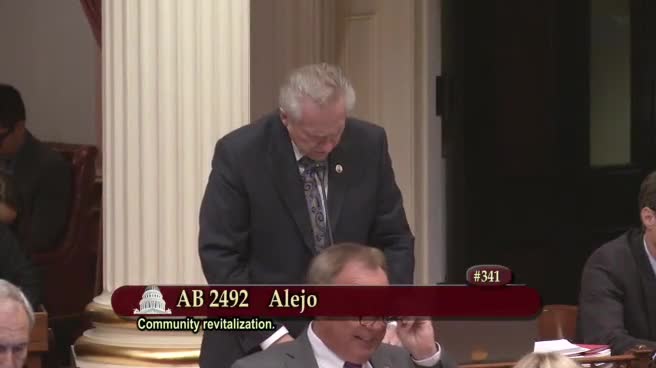 3MIN
Senate Floor
 8MIN
Senate Standing Committee on Governance and Finance
 1MIN
Senate Standing Committee on Appropriations
 1MIN
Assembly Floor
 14MIN
Assembly Standing Committee on Health
Bill Author

Bill Co-Author(s):