AB 859: Medi-Cal: obesity treatment plans.
- Session Year: 2015-2016
- House: Assembly
- Latest Version Date: 2015-04-30
Existing law provides for the Medi-Cal program, which is administered by the State Department of Health Care Services, under which qualified low-income individuals receive health care services. The Medi-Cal program is, in part, governed and funded by federal Medicaid Program provisions. Existing law specifies the benefits provided pursuant to the program.
This bill would require the department, on or before December 31, 2016, and until January 1, 2021, to create an Obesity Treatment Action Plan to diagnose, treat, and reduce the incidence of adult obesity in the Medi-Cal program. The bill would require the department to report the plan to the Legislature, along with any legislative recommendations to implement the plan. The bill would require the plan to include evidence-based principles and obesity treatment guidelines from specified provider associations, a plan for identifying and screening patients for obesity, and a review of coverage services to treat obesity. The bill would provide that limit application of the plan apply only to noncapitated payment plans in Medi-Cal. Medi-Cal fee-for-service plans. This bill would require the department to seek any federal approvals necessary to implement the requirements of the bill and to obtain federal financial participation, as specified.
Existing law provides for the Medi-Cal program, which is administered by the State Department of Health Care Services, under which qualified low-income individuals receive health care services. The Medi-Cal program is, in part, governed and funded by federal Medicaid Program provisions. Existing law specifies the benefits provided pursuant to the program.
This bill would declare the intent of the Legislature to enact legislation to provide beneficiaries in the Medi-Cal program who have been diagnosed by a physician and surgeon as obese or morbidly obese with a comprehensive obesity treatment plan.
This bill would require the department, on or before December 31, 2016, to create an Obesity Treatment Action Plan to diagnose, treat, and reduce the incidence of adult obesity in the Medi-Cal program. The bill would require the department to report the plan to the Legislature, along with any legislative recommendations to implement the plan. The bill would require the plan to include evidence-based principles and obesity treatment guidelines from specified provider associations, a plan for identifying and screening patients for obesity, and a review of coverage services to treat obesity. The bill would provide that the plan apply only to noncapitated payment plans in Medi-Cal.
Existing law provides for the Medi-Cal program, which is administered by the State Department of Health Care Services, under which qualified low-income individuals receive health care services. The Medi-Cal program is, in part, governed and funded by federal Medicaid Program provisions. Existing law specifies the benefits provided pursuant to the program.
This bill would declare the intent of the Legislature to enact legislation to provide beneficiaries in the Medi-Cal program who have been diagnosed by a physician and surgeon as obese or morbidly obese with a comprehensive obesity treatment plan.
The Legislature finds and declares all of the following:
(a)Obesity is a chronic disease and increases the risk of, and aggravates, cardiovascular disease, cancer, diabetes, and arthritis. Obesity is the only chronic disease for which Americans face prohibitions for access to treatment.
(b)Twenty-five percent of Californias population has obesity. Of this population, 37.7 percent are African American and 31.3 percent are Hispanic.
(c)In the 2014 Medi-Cal Statistical Report, the department found that the proportion of adults suffering with obesity was the highest among adults enrolled in Medi-Cal, higher than the privately insured market and the uninsured population.
(d)Treatment of an individual with obesity should include an individualized treatment plan and should be able to include medications, very low calorie diets, surgery, and lifestyle changes such as diet, exercise, and behavioral therapy.
(e)In addition to the improved health of patients, by confronting obesity and reducing the average Body Mass Index (BMI) by just 5 percent, significant savings can be achieved. Reducing the BMI by 5 percent in just five years could save California approximately $28.9 billion. By 2030, Californias potential savings could be 7.6 percent in overall health care spending.
14146.1.(a)On or before December 31, 2016, the department shall create an Obesity Treatment Action Plan (OTAP) to diagnose, treat, and reduce the incidence of adult obesity in the Medi-Cal program, and shall report the plan to the Legislature along with any legislative recommendations to implement the plan.
(b)The OTAP shall apply only to noncapitated fee-for-service Medi-Cal payment plans in Medi-Cal. plans.
(c)The OTAP shall include evidence-based principles and obesity treatment guidelines from nationally recognized provider associations, including, but not limited to, the following:
(1)The American Society of Bariatric Physicians.
(2)The Endocrine Society.
(3)The American Association of Clinical Endocrinologists.
(4)The Academy of Nutrition and Dietetics and the American Society of Metabolic and Bariatric Surgery.
(5)The Obesity Society.
(d)The OTAP shall include all of the following:
(1)A plan for educating fee-for-service physicians regarding the importance of screening for obesity and treatment options available in Medi-Cal.
(2)A plan for identifying and screening patients for obesity.
(3)A review of current coverage of services to treat obesity and recommendations with evidence-based rationale on the continuum of coverage of additional obesity treatment services, including nutritional, exercise, and lifestyle counseling and pharmacotherapy.
(e)(1)A report to be submitted pursuant to subdivision (a) shall be submitted in compliance with Section 9795 of the Government Code.
(2)Pursuant to Section 10231.5 of the Government Code, this section is repealed on January 1, 2021.
(e)The department shall seek any federal approvals necessary to implement the requirements of this section and to obtain federal financial participation to the maximum extent permitted by federal law.
14146.2.(a)A report submitted pursuant to Section 14146.1 shall be submitted in compliance with Section 9795 of the Government Code.
(b)Pursuant to Section 10231.5 of the Government Code, this article is repealed on January 1, 2021.
The Legislature finds and declares all of the following:
(a)Obesity is a chronic disease and increases the risk of, and aggravates, cardiovascular disease, cancer, diabetes, and arthritis. Obesity is the only chronic disease for which Americans face prohibitions for access to treatment.
(b)Twenty-five percent of Californias population has obesity. Of this population, 37.7 percent are African American and 31.3 percent are Hispanic.
(c)In the 2014 Medi-Cal Statistical Report, the department found that the proportion of adults suffering with obesity was the highest among adults enrolled in Medi-Cal, higher than the privately insured market and the uninsured population.
(d)Treatment of an individual with obesity should include an individualized treatment plan and should be able to include medications, very low calorie diets, surgery, and lifestyle changes such as diet, exercise, and behavioral therapy.
(e)In addition to the improved health of patients, by confronting obesity and reducing the average Body Mass Index (BMI) by just 5 percent, significant savings can be achieved. Reducing the BMI by 5 percent in just five years could save California approximately $28.9 billion. By 2030, Californias potential savings could be 7.6 percent in overall health care spending.
14146.1.(a)On or before December 31, 2016, the department shall create an Obesity Treatment Action Plan (OTAP) to diagnose, treat, and reduce the incidence of adult obesity in the Medi-Cal program, and shall report the plan to the Legislature along with any legislative recommendations to implement the plan.
(b)The OTAP shall apply only to noncapitated payment plans in Medi-Cal.
(c)The OTAP shall include evidence-based principles and obesity treatment guidelines from nationally recognized provider associations, including, but not limited to, the following:
(1)The American Society of Bariatric Physicians.
(2)The Endocrine Society.
(3)The American Association of Clinical Endocrinologists.
(4)The Academy of Nutrition and Dietetics and the American Society of Metabolic and Bariatric Surgery.
(5)The Obesity Society.
(d)The OTAP shall include all of the following:
(1)A plan for educating fee-for-service physicians regarding the importance of screening for obesity and treatment options available in Medi-Cal.
(2)A plan for identifying and screening patients for obesity.
(3)A review of current coverage of services to treat obesity and recommendations with evidence-based rationale on the continuum of coverage of additional obesity treatment services, including nutritional, exercise, and lifestyle counseling and pharmacotherapy.
(e)(1)A report to be submitted pursuant to subdivision (a) shall be submitted in compliance with Section 9795 of the Government Code.
(2)Pursuant to Section 10231.5 of the Government Code, this section is repealed on January 1, 2021.
SECTION 1.It is the intent of the Legislature to enact legislation to provide beneficiaries in the Medi-Cal program who have been diagnosed by a physician and surgeon as obese or morbidly obese with a comprehensive obesity treatment plan.
It is the intent of the Legislature to enact legislation to provide beneficiaries in the Medi-Cal program who have been diagnosed by a physician and surgeon as obese or morbidly obese with a comprehensive obesity treatment plan.
|
Date
|
Status
|
|---|---|
| Feb 26, 2015 | Read first time. To print. |
| Feb 27, 2015 | From printer. May be heard in committee March 29. |
| Mar 26, 2015 | From committee chair, with author's amendments: Amend, and re-refer to Com. on HEALTH. Read second time and amended. |
| Mar 26, 2015 | Referred to Com. on HEALTH. |
| Apr 6, 2015 | Re-referred to Com. on HEALTH. |
| Apr 29, 2015 | From committee: Amend, and do pass as amended and re-refer to Com. on APPR. (Ayes 19. Noes 0.) (April 28). |
| Apr 30, 2015 | Read second time and amended. |
| May 4, 2015 | Re-referred to Com. on APPR. |
| May 13, 2015 | In committee: Set, first hearing. Referred to APPR. suspense file. |
| May 28, 2015 | In committee: Held under submission. |
| Jan 31, 2016 | Died pursuant to Article IV, Sec. 10(c) of the Constitution. |
| Feb 1, 2016 | From committee: Filed with the Chief Clerk pursuant to Joint Rule 56. |
|
Date
|
Description
|
Location
|
Votes
|
|
|---|---|---|---|---|
| Apr 28, 2015 | Do pass as amended and be re-referred to the Committee on [Appropriations] | Assembly Standing Committee on Health |
Passed |
This list shows positions taken on this bill by organizations on the date displayed, which is linked to the original source.
Positions by individuals are not included.
|
Organization
|
Position
|
Date
|
|---|---|---|
| Biocom | * Support | Apr 28, 2015 |
| Biotechnology Industry Organization | * Support | Apr 28, 2015 |
| California Chronic Care Coalition | * Support | Apr 28, 2015 |
| California Communities United Institute | ** Support | Apr 28, 2015 |
| California Healthcare Institute | ** Support | Apr 28, 2015 |
| California Healthcare Institute (Chi) | * Support | Apr 28, 2015 |
| Obesity Action Coalition | * Support | Apr 28, 2015 |
| Obesity Care Continuum | * Support | Apr 28, 2015 |
AB 859
Page 3
Date of Hearing: May 13, 2015
ASSEMBLY COMMITTEE ON APPROPRIATIONS
Jimmy Gomez, Chair
AB 859
(Medina) – As Amended April 30, 2015
Policy Committee: |
Health |
Vote: |
19 - 0 |
|
|
|
|
|
|
|
|
Urgency: No State Mandated Local Program: No Reimbursable: No
SUMMARY:
This bill requires
the Department of Health Care Services (DHCS) to create an Obesity
Treatment Action Plan (plan) to diagnose, treat, and reduce the
incidence of adult obesity in Medi-Cal fee-for-service payment plans,
and report the plan and recommendations to the Legislature, as
specified. Specifically, this bill:
Requires DHCS to create the plan by December 31, 2016 and specifies required components.
Requires the plan to include evidence-based principles and obesity treatment guidelines from five specified provider associations.
Contains findings, including that obesity is a chronic disease and is the only chronic disease for which Americans face prohibitions on access to treatment, and that treatment should be able to include medications, behavioral therapy, and surgery as well as lifestyle changes.
FISCAL EFFECT:
Costs to DHCS in the low hundreds of thousands of dollars (GF/federal) to conduct a review of current treatment options, to assess and recommend additional obesity treatment services, and to develop a plan for provider and patient outreach.
Unknown, significant cost pressure (GF/federal) for additional coverage of treatments based on treatment guidelines developed by the outside provider organizations specified in the bill. It is unclear how coverage standards might change because of this reliance on specified provider groups to define treatment guidelines.
COMMENTS:
Purpose. This bill is intended to expand treatments for obesity. The author contends that Medi-Cal's coverage for obesity treatments is inadequate. The author points to DHCS studies that have shown the proportion of adults with obesity is highest among adults enrolled in Medi-Cal, with rates higher than individuals in the privately insured market and the uninsured population. The author concludes this bill will provide a plan to diminish obesity as an epidemic in California, will improve state health, and ensure long-term savings of taxpayer dollars.
Obesity. Approximately 61% of Californians are overweight, and 24% are obese. According to the World Health Organization (WHO), obesity is largely preventable and is caused by an energy imbalance between calories consumed and calories expended. The WHO points to an increased intake of energy-dense foods and an increase in physical inactivity associated with development due to the increasingly sedentary nature of many forms of work, changing modes of transportation, and increasing urbanization. Obesity is a multifaceted condition with social, economic, environmental, and behavioral dimensions. There is widespread agreement in the public health community that an "obesogenic" environment, which influences food and activity choices people make, bears much responsibility for the rapid rise in excess body weight over the last several decades.
"Medicalization" of Obesity. In 2013, The American Medical Association's House of Delegates approved a measure to label obesity a disease. This designation was not without controversy and continues to be controversial. The delegates overruled their own Council on Science and Public Health in voting for the measure. The council's review noted the lack of a clear definition of what constitutes a disease and whether obesity would fit in this definition, as well as the lack of reliable diagnostic test. The council also cited concern about the medicalization of obesity detracting from collective social solutions to environmental factors that shape people's behaviors and impact a number of conditions besides obesity.
Obesity Treatment. According to the National Institutes of Health, successful weight-loss treatments include setting goals and making lifestyle changes, such as eating fewer calories and being physically active. Medicines and weight-loss surgery also are options for some people, if lifestyle changes aren't enough. According to the Mayo Clinic, increasing energy output and reducing caloric intake is required in addition to any drug or surgical treatment in order for the treatment to be successful.
Support. This bill's sponsor, Obesity Action Coalition, an obesity advocacy organization that receives substantial financial support from pharmaceutical and surgical industries with interest in the coverage of obesity drugs and surgery, states obesity is a chronic disease affecting nearly one in three Americans, and that this bill will highlight gaps in treatment that need to be addressed. The bill is supported by biotechnology companies; the California chapter of the American Society of Metabolic and Bariatric Surgery; the Obesity Care Continuum, which includes the sponsor, bariatric surgeons, and other groups; and California Communities United Institute.
Staff Comments.
Clarity of Duties. Staff suggests this bill, at a minimum, be clarified to better define terms and the responsibilities of DHCS. The bill requires DHCS to create an action plan to diagnose, treat, and reduce the incidence of obesity. It then requires the plan to include "evidence based principles and treatment guidelines." Finally, it requires the plan to include: a plan for educating fee-for-service physicians about obesity screening and treatment, a plan for screening patients, a review of current coverage, and recommendations "with evidence-based rationale on the continuum of coverage of additional obesity treatment services, including nutritional, exercise, and lifestyle counseling and pharmacotherapy."
Staff suggests removing references to the "continuum of coverage" unless this term is defined.
It is unclear what evidence-based principles must be included. Does the term "evidence-based' apply to the treatment guidelines? Are treatment guidelines from all five referenced societies necessarily evidence-based? This should be clarified.
DHCS is primarily a payer for health care services. DHCS does not have a direct relationship with patients nor management of provider offices, making it ill-suited to developing a plan to identify and screen patients.
Too prescriptive. Furthermore, the prescriptive nature of the language presupposes what types of coverage are needed, and does not defer to DHCS to define this based on their review of medical evidence and sound management of the Medi-Cal program. Indeed, it does not even defer to DHCS to choose which professional guidelines are relevant. It instead requires the inclusion of treatment guidelines developed by several specific groups detailed in statute and lists what services should be covered. This poses unknown fiscal risk. The bill would benefit from removing the references to "nutritional, exercise, and lifestyle counseling and pharmacotherapy" and the professional societies, and instead require DHCS to report on coverage and treatment available through the Medi-Cal program as compared to other state's Medicaid programs and commercial coverage, including indications for treatment and restrictions on treatment, as well as compared to evidence-based clinical guidelines and best practices.
Medical focus on a complex issue. Finally, this bill focuses on medical treatment for obesity and ignores the social and environmental root causes of obesity many leading public health groups like the WHO have identified. According to the Mayo Clinic, even medical treatment for obesity is unsuccessful without lifestyle changes to reduce caloric intake or expend additional energy. The bill addresses a very small aspect of a very big issue. It is silent on how treatment for obesity potentially interacts with the well-documented social, environmental, behavioral, and economic aspects of the obesity epidemic that are both at the core of the issue and pose risks for successful treatment. The author may wish to consider how this bill fits into the overall context of the state's efforts to address obesity.
Analysis Prepared by: Lisa Murawski / APPR. / (916) 319-2081
AB 859
Page 5
Date of Hearing: April 28, 2015
ASSEMBLY COMMITTEE ON HEALTH
Rob Bonta, Chair
AB 859
(Medina) – As Amended March 26, 2015
SUBJECT: Medi-Cal: obesity treatment plans.
SUMMARY:
Requires the Department of Health Care Services (DHCS) to create an
Obesity Treatment Action Plan (OTAP) to diagnose, treat, and reduce
the incidence of adult obesity in the Medi-Cal program, and report
the plan and recommendations to the Legislature, as specified.
Specifically, this bill:
Requires DHCS to create an OTAP by December 31, 2016, that applies to only noncapitated Medi-Cal payment plans.
Requires the OTAP to include evidence-based principles based on guidelines provided by recognized provider associations, as specified.
Requires the OTAP to include all of the following:
A plan for educating fee-for-service physicians regarding the importance of screening for obesity and treatment options available in Medi-Cal;
A plan for identifying and screening patients for obesity; and,
A review of current coverage of services to treat obesity and recommendations with evidence-based rationale on the continuum of coverage of additional obesity treatment services, including nutritional, exercise, and lifestyle counseling and pharmacotherapy.
Requires a report to be submitted to the Legislature and for the section to be repealed by January 1, 2021.
EXISTING LAW:
Requires the Department of Public Health (DPH) to investigate and apply for federal funding opportunities regarding the promotion of healthy eating and preventing obesity, and authorizes DPH, upon receipt of federal funds, to provide in-kind support and award grants to local governments, nonprofit organizations, and local education agencies as deemed appropriate.
Establishes the Medi-Cal program under the direction of DHCS, as California’s Medicaid program, to provide qualifying low-income individuals with health care and a uniform schedule of benefits.
Establishes the Urban Community Health Institute: Centers to Eliminate Health Disparities at the Charles R. Drew University of Medicine and Science to address the problem of disparate health care in the Los Angeles County Planning Area and other multicultural communities that have the worst health care status indicators, medical outcomes, and death rates in Los Angeles County. Establishes the Obesity and Nutrition Center as one of the three centers at the Institute.
FISCAL EFFECT: This bill has not yet been analyzed by a fiscal committee.
COMMENTS:
PURPOSE OF THIS BILL. The author points to DHCS studies that have shown the proportion of adults with obesity is highest among adults enrolled in Medi-Cal, with rates higher than individuals in the privately insured market and the uninsured population. The author contends that California is behind other states with regard to obesity treatment; while the majority of other states cover nutritional consultation under Medicaid, California explicitly excludes this type of coverage. The author asserts that California could receive significant cost savings on healthcare and improve the health of patients by investing on obesity treatments. The author concludes this bill will provide a plan to diminish obesity as an epidemic in California and will improve state health and ensure long-term savings of taxpayer dollars.
BACKGROUND.
Impacts of obesity on health. Obesity is a chronic disease that can have serious negative effects on the internal systems of the body. There are a variety of factors that play a role in obesity, which makes it a complex health issue to address. Behavior, environment, and genetic factors all have an effect on causing people to be overweight and obese. People who are obese have an increased risk of developing serious medical conditions, including heart disease, type 2 diabetes, and bone or joint disease. The U.S. Surgeon General has declared that obesity has reached epidemic levels within the U.S., with approximately 35% of women and 31% of men considered seriously overweight.
Obesity in California. California now has the fifth lowest adult obesity rate in the nation, according to The State of Obesity: Better Policies for a Healthier America. However, the state’s adult obesity rate has increased up to 24.1%, up from 9.9% in 1990. In 2007, 33.6% of children ages two to five were overweight or obese.
Previous Efforts to Fight Obesity in California. Previous initiatives have been established in California to prevent obesity. In 2000, the Center for Weight and Health collaborated with DPH’s predecessor to establish the California Obesity Prevention Initiative (COPI). The COPI program was part of a national effort from the federal Centers for Disease Control and Prevention (CDC) to prevent obesity among children in California. Part of the program involved pilot testing an innovative strategy to reduce television viewing among children in select communities that could subsequently be implemented on a larger scale. Funding for COPI lasted for only five years.
DPH
has launched more recent initiatives. The 2005-06 Budget mandated
DPH create a strategic plan to coordinate existing resources and to
guide a statewide response to the obesity crisis. In 2006, DPH
published its first Obesity Prevention Plan (OPP) in response to the
legislative mandate. Since its publication, DPH reports there has
been significant progress in the implementation of policies
supporting obesity prevention.
In
2010, DPH updated the OPP to focus on the importance of implementing
policy and environmental change strategies, as well as addressing
health inequities and disparities. The 2010 OPP Plan is a
broader array of obesity prevention strategies, as well as highlights
of successful actions currently being implemented across the state.
SUPPORT. The Obesity Action Coalition, the sponsor of the bill, states that Medi-Cal fee-for-service patients who are affected by obesity should have access to the same medically necessary and covered treatment avenues afforded to others who receive care through managed care, or public or private health plans. The sponsor asserts it is critical for DHCS to address the disease of obesity and provide evidence-based treatments to those who lack the economic means or resources to gain access themselves. The sponsor concludes this bill will provide for a thorough review of current coverage policies surrounding evidence-based obesity treatment avenues and highlight gaps in treatment avenues that should be addressed.
Supporters of this bill assert that those affected by obesity should
follow the same continuum of coordinated care as those with suffering
from other chronic diseases, such as heart disease. Supporters state
the complex nature of obesity and its variety of impacts on both
physical and mental health requires coordinated services of providers
from several disciplines and professions in order to provide
effective treatment. The supporters contend this bill will provide
valuable information as to the latest treatments and costs associated
with obesity, and will help the state mitigate its impact as one of
the biggest drivers of preventable chronic disease and healthcare
costs in the U.S.
RELATED LEGISLATION.
AB 572 (Gaines) requires DPH to create a diabetes action plan for the state, and to report the results of the plan to the Legislature biennially. AB 572 was heard in the Assembly Health Committee on April 14, 2015 and passed out with a vote of 17-0. AB 572 is pending in the Assembly Appropriations Committee.
AB 1357 (Bloom) establishes the Children and Family Health Promotion Program in DPH and requires the program to consist of a competitive grant process in which grants are awarded by the department to counties, cities, nonprofit organizations, community-based organizations, and licensed clinics that seek to invest in childhood obesity and diabetes prevention activities and oral health programs. AB 1357 is pending in the Assembly Health Committee.
SB 203 (Monning) requires a safety warning to be affixed to sugar sweetened beverages that states “STATE OF CALIFORIA SAFETY WARNING: Drinking beverages with added sugar(s) contributes to obesity, diabetes, and tooth decay.” SB 203 is pending in the Senate Health Committee.
SCR 34 (Monning) proclaims the month of September 2015, and each year thereafter, as Childhood Obesity Awareness Month, and would express the Legislature’s support of various programs that work to reduce obesity among children. SCR 34 was recently heard on the Senate Floor and passed with a vote of 29-4. SCR 34 is pending at the Assembly Desk.
PREVIOUS LEGISLATION.
AB 1592 (Beth Gaines) of 2014 would have required DPH to complete and submit to the Legislature a Diabetes Burden Report by December 31, 2015. AB 1592 was vetoed by Governor Brown, stating that DPH had already submitted its Diabetes Burden Report to the CDC, as required, and is unable to withdraw the report to include additional information prescribed by AB 1592.
SB 1000 (Monning) of 2014 would have established the Sugar-Sweetened Beverages Safety Warning Act, to be administered by DPH and required a safety warning on sugar sweetened beverages. SB 1000 failed passage in the Assembly Health Committee.
AB 200 (Hayashi) of 2011 would have required the State Board of Education, to establish the Health and Fitness Award Program to provide an award to one school in each legislative district that conducts their physical education courses pursuant to the model content standards and demonstrates that increasing numbers of pupils meet minimum standards on the physical performance test. AB 200 was vetoed by the Governor Brown, who stated that although health and fitness are important, schools should be allowed to design their own awards programs.
POLICY COMMENTS.
The author states part of the purpose of this bill is to have the state realize cost savings to healthcare, in part due to a preventive treatment plan for obesity. As currently written, this bill does not provide a funding source for this plan. Existing law requires DPH to investigate and request federal financial assistance to help create programs to reduce obesity. The author may wish to consider future amendments that would require DHCS to investigate and request similar funding specifically for the Medi-Cal population, as there is no existing funding source for this bill.
The author indicates the intent of the bill is to apply the OTAP to only Medi-Cal fee-for-service patients, rather than being inclusive of both the Medi-Cal fee-for-service and managed care population. Fee-for-service beneficiaries account for approximately 25% of the estimated total of 12 million beneficiaries within the Medi-Cal program. The remaining 75% are Medi-Cal managed care beneficiaries. Although the managed care system is designed to include care for obesity diagnoses and treatments, the obesity rates of the overall Medi-Cal population is still high. The author may wish to consider including Medi-Cal managed care beneficiaries within the requirements of the bill.
TECHNICAL AMENDMENTS.
This bill requires DHCS to create an OTAP to diagnose, treat, and reduce the incidence of adult obesity in the Medi-Cal program; however it is unclear whether or not the establishment of this program is allowable under federal law. The Committee may suggest amending this bill to authorize DHCS to apply for a waiver or any necessary federal approvals from the Centers for Medicare and Medicaid Services, if the OTAP is in fact not, and help address the funding issue by insuring the program is eligible for federal financial participation.
This bill requires the provisions to apply only to noncapitated payment plans in Medi-Cal. The author indicates the intent of the bill is to apply only to Medi-Cal fee-for-service, however the current language of the bill does not explicitly indicate the program should be applied to only this population and the wording could be somewhat confusing. The Committee may suggest amending this bill to clarify that the provisions only apply to the Medi-Cal fee-for-service population.
REGISTERED SUPPORT / OPPOSITION:
Support
Obesity Action Coalition (sponsor)
American Society for
Metabolic and Bariatric Surgery – California State Chapter
Biocom
Biotechnology Industry Organization
California Communities United Institute
California Healthcare Institute
Obesity Care Continuum
Opposition
None on file.
Analysis Prepared by: An-Chi Tsou / HEALTH / (916) 319-2097
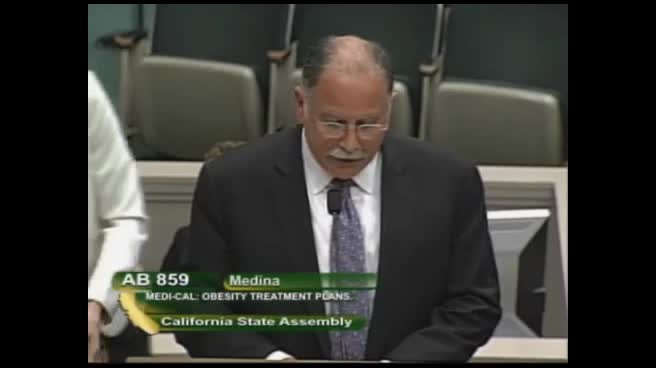
Bill Author

Bill Co-Author(s):