SBX2 14: Tobacco: electronic cigarettes: taxes: managed care organization provider tax: in-home supportive services.
- Session Year: 2015-2016
- House: Senate
- Latest Version Date: 2015-09-09
(1)The Cigarette and Tobacco Products Licensing Act of 2003 requires the State Board of Equalization to administer a statewide program to license manufacturers, importers, distributors, wholesalers, and retailers of cigarettes and tobacco products. Under existing law, a violation of this act is a misdemeanor.
This bill would expand the definition of tobacco products for purposes of that act to include electronic cigarettes, as defined, thereby subjecting manufacturers, importers, distributors, wholesalers, and retailers of electronic cigarettes to the same licensing requirements imposed pursuant to that act on manufacturers, importers, distributors, wholesalers, and retailers of tobacco products. By broadening the act to apply to manufacturers, importers, distributors, wholesalers, and retailers of electronic cigarettes, this bill would expand the scope of an existing crime, thereby imposing a state-mandated local program.
The Cigarette and Tobacco Products Tax Law, the violation of which is a crime, imposes a tax on distributors of cigarettes at the rate of $0.87 per package of 20 cigarettes and a tax on distributors of tobacco products, based on wholesale cost, at a rate determined annually that is equivalent to the combined rate of all taxes imposed on cigarettes, and at a rate equivalent to $0.50 per package of 20 cigarettes. Revenues from taxes imposed under this law are deposited in specified accounts. These taxes are inclusive of the taxes imposed under the Tobacco Tax and Health Protection Act of 1988 (Proposition 99) and the California Families and Children Act of 1998 (Proposition 10).
This bill would, on or after the first day of the first calendar quarter commencing more than 90 days on or after the effective date of the bill, impose an additional tax on the distribution of cigarettes at the rate of $0.10 for each cigarette distributed, which would be $2 per pack; would require a dealer and a wholesaler to file a return with the State Board of Equalization showing the number of cigarettes in its possession or under its control on that date, and impose a related floor stock tax; and would require a licensed cigarette distributor to file a return with the board and pay a cigarette indicia adjustment tax at the rate equal to the difference between the existing tax rate and the tax rate imposed by this bill for cigarette tax stamps in its possession or under its control on that date. Because the bill would impose an additional tax on cigarettes under the Cigarette and Tobacco Products Tax Law, it would thereby increase the tax upon the distribution of tobacco products pursuant to Proposition 99, the revenues from which are required to be deposited in the Cigarette and Tobacco Products Surtax Fund.
This bill would additionally, on or after the first day of the first calendar quarter commencing more than 90 days on or after the effective date of the bill, impose a tax on the distribution of electronic cigarettes, as defined, based on the wholesale cost, at a rate determined annually that is equivalent to the cigarette tax rate, which would be $2.87 per package of 20 cigarettes.
This bill would expand the definition of tobacco products for purposes of the Cigarette and Tobacco Products Tax Law to include electronic cigarettes, thereby subjecting distributors, wholesalers, and transporters of electronic cigarettes to, among other things, the same licensing, bonding, and registration requirements imposed on distributors, wholesalers, and transporters of tobacco products.
This bill would provide that the revenues collected from the taxes imposed on cigarettes and electronic cigarettes by this bill, less refunds, would not be considered General Fund revenues and would be deposited in the California Health Care, Research, and Prevention Tobacco Tax Act of 2015 Fund created by this bill. The bill would continuously appropriate those amounts without regard to fiscal year to the Controller for allocation in accordance with this bill to be expended for specified purposes, which include, but are not limited to: (1) offsetting any revenue decreases directly resulting from the additional taxes imposed by this bill to the Cigarette and Tobacco Products Surtax Fund, the Breast Cancer Fund, and the California Children and Families Trust Fund; (2) reimbursing the State Board of Equalization and the State Auditor for administrative duties imposed by the bill; (3) providing funding to the University of California for the purpose of increasing the number of physicians trained in California; (4) funding state and local law enforcement efforts and investigative activities to reduce illegal sales of tobacco products; (5) providing funding to the State Department of Health Care Services for existing health care programs and services and to draw down federal funding; (6) funding the California Department of Public Health Tobacco Control Program; and (7) supplementing the Cigarette and Tobacco Products Surtax Medical Research Program administered by the University of California.
Because this bill would impose new requirements under the Cigarette and Tobacco Products Tax Law, the violation of which is a crime, it would impose a state-mandated local program.
(2)Existing law provides for the county-administered In-Home Supportive Services (IHSS) program, under which qualified aged, blind, and disabled persons are provided with services to permit them to remain in their own homes and avoid institutionalization. Existing law provides, as part of the Coordinated Care Initiative, that IHSS is a Medi-Cal benefit available through managed care health plans in specified counties. Existing law provides for a 7% reduction in hours of service to each IHSS recipient of services.
This bill would repeal the 7% reduction in hours of service to each IHSS recipient of services.
(3)Existing law establishes the Medi-Cal program, administered by the State Department of Health Care Services, under which health care services are provided to qualified low-income persons. The Medi-Cal program is, in part, governed and funded by federal Medicaid Program provisions. Under existing law, one of the methods by which Medi-Cal services are provided is pursuant to contracts with various types of managed care plans. Existing law also imposes a sales tax on sellers of Medi-Cal managed care plans.
This bill would establish a new managed care organization provider tax, to be administered by the department in consultation with the Department of Managed Health Care. The tax would be assessed by the department on licensed health care service plans and managed care plans contracted with the department to provide Medi-Cal services, except as excluded by the bill. The bill would require the health plans to report to the department specified enrollment information, on a quarterly basis, beginning with the 201617 state fiscal year. On December 1, 2016, or the date upon which the department receives approval for federal financial participation, whichever is later, the department would commence notification to the health plans of the assessed tax amount and due date for the first taxable quarter.
This bill would establish applicable taxing tiers and per enrollee amounts for the 201617 fiscal year, for Medi-Cal enrollees, and other enrollees, as defined. Commencing with the 201718 fiscal year, the bill would require the department and the Department of Managed Health Care to determine tax tiers and per enrollee tax amounts. The bill would require the department to request approval from the federal Centers for Medicare and Medicaid Services, as necessary, to implement the bill. The bill would authorize the department to implement its provisions by means of provider bulletins, all-plan letters, or similar instructions, and to notify the Legislature of this action.
This bill would establish the Health and Human Services Special Fund in the State Treasury, into which all revenues, less refunds, derived from taxes imposed by the bill would be deposited. The bill would require $230,000,000 in the fund to be transferred to the Developmental Disabilities Fund, which the bill would create, to be used upon appropriation to increase funding provided to regional centers, as specified, and increase rates paid to service providers for providing services to persons with disabilities, as specified. The remaining moneys in the fund would be continuously appropriated to the department for the purpose of funding the nonfederal share of Medi-Cal managed care rates, as prescribed, thereby making an appropriation.
(4) The California Constitution requires the state to reimburse local agencies and school districts for certain costs mandated by the state. Statutory provisions establish procedures for making that reimbursement.
This bill would provide that no reimbursement is required by this act for a specified reason.
(5) This bill would include a change in state statute that would result in a taxpayer paying a higher tax within the meaning of Section 3 of Article XIIIA of the California Constitution, and thus would require for passage the approval of 2/3 of the membership of each house of the Legislature.
The Legislature hereby finds and declares all of the following:
(a)Tobacco use is the single most preventable cause of death and disease in California, claiming the lives of more than 40,000 people every year. Each year thousands of Californians require medical and dental treatment as a result of tobacco use.
(b)Health care treatment of all types of cancer, cardiovascular and lung disease, oral disease, and tobacco-related diseases and conditions continues to impose a significant financial burden upon Californias overstressed health care system. Tobacco use costs Californians more than $13.29 billion in health care expenses every year, of which $3.5 billion is paid for by taxpayers through existing health care programs and services that provide health care, treatment, and services for Californians. The cost of lost productivity due to tobacco use adds an additional estimated $10.35 billion to the annual economic consequences of smoking and tobacco use in California.
(c)An increase in the tobacco tax is an appropriate way to decrease tobacco use and mitigate the costs of health care treatment and improve existing programs providing quality health care and access to health care services for families and children. It will save lives and save state and local governments money in the future.
(d)An increase in funding for existing health care programs and services that treat all types of cancer, cardiovascular and lung disease, oral disease, and tobacco-related diseases and conditions will expand the number of health care providers that treat patients with such diseases and conditions. Funds spent for this purpose can be used to match federal funds, with the federal government putting up as much as nine dollars for every dollar spent from this fund.
(e)Most electronic cigarettes contain nicotine, which is derived from tobacco and is a highly addictive drug. Electronic cigarettes are currently not subject to any tobacco taxation, making them cheaper and potentially more attractive, especially to young people.
(f)There are more than 470 electronic cigarette brands for sale today offered in over 7,700 flavors including candy-flavors that appeal to youth, such as Captain Crunch, gummy bear, cotton candy, Atomic Fireball, and fruit loops. The fastest growing age range for electronic cigarettes is middle school and high school students and according to the Centers for Disease Control, electronic cigarette use among this group tripled from 2013 to 2014.
(g)Research into the causes, early detection, and effective treatment, care, prevention, and potential cures of all types of cancer, cardiovascular and lung disease, oral disease, and tobacco-related diseases will ultimately save lives and save state and local governments money in the future.
(h)There is an urgent need for research in California for new and effective treatments for all types of cancer, cardiovascular and lung disease, oral disease, and tobacco-related diseases. Such research transforms scientific discoveries into clinical applications that reduce the incidence and mortality of such diseases and conditions.
(i)Funding prevention programs designed to discourage individuals, particularly youth, from taking up smoking and the use of other tobacco products through health education and health promotion programs will save lives and save state and local governments money in the future.
(j)A reinvigorated tobacco control program will allow targeted public health efforts to combat the tobacco industrys predatory marketing to ethnic groups, driving down smoking rates and ultimately reducing cancer, cardiovascular and lung disease, oral disease, and tobacco-related diseases in these California communities.
(k)Funding implementation and administrative programs to support law enforcement efforts to reduce illegal sales of tobacco products to minors, cigarette smuggling, and tobacco tax evasion will save lives and save state and local governments money in the future.
(l)California faces a shortage of physicians and dentists to meet the growing health care needs of its residents. As a result, access to primary and oral health care, treatment for tobacco-related diseases, regular check-ups and other urgent health care needs will suffer. California taxpayers support the education of thousands of medical and dental students every year, yet because of limits on the number of residency programs, many of those physicians and dentists are forced out of state to continue their training, leaving patients in California without access to care. Funding implementation and administrative programs that will help keep hundreds more doctors in California every year to improve the health of Californians will save lives and save state and local governments money in the future.
(m)Increasing the cost of cigarettes and tobacco products is widely recognized as the most effective way to reduce smoking across California, especially by young people. The 2000 U.S. Surgeon Generals Report, Reducing Tobacco Use, found that raising tobacco-product prices decreases the prevalence of tobacco use, particularly among kids and young adults, and that tobacco tax increases produce substantial long-term improvements in health. From its review of existing research, the report concluded that raising tobacco taxes is one of the most effective tobacco prevention and control strategies. Reducing smoking will save lives and saves state and local governments money in the future.
(n)Because increasing the tobacco tax will reduce smoking and use of other tobacco products, it is important to protect existing tobacco tax-funded programs from a decline in tax revenues.
(o)California currently taxes cigarettes at only $0.87 per pack, and ranks 35th in tobacco tax rates, reflecting one of the lowest tobacco tax rates in the United States. The national average is $1.60 per pack. Thirty-five states have cigarette tax rates of $1.00 per pack or higher, and California is well below other western states (Washington: $3.025, Oregon: $1.31, Nevada: $1.80, and Arizona: $2.00). California last raised its tobacco tax in 1998.
SEC. 2.Section 22971.05 is added to the Business and Professions Code, to read:22971.05.For purposes of this division, beginning on and after the first day of the first calendar quarter commencing more than 90 days after the effective date of this section, tobacco products also includes electronic cigarettes, as that term is defined in subdivision (b) of Section 30130.51 of the Revenue and Taxation Code.
SEC. 3.Section 30014 of the Revenue and Taxation Code is amended to read:30014.(a)Transporter means any person transporting into or within this state any of the following:
(1)Cigarettes not contained in packages to which are affixed California cigarette tax stamps or meter impressions.
(2)Tobacco products upon which the tobacco products surtax imposed by Article 2 (commencing with Section 30121) and Article 3 (commencing with Section 30131) of Chapter 2 has not been paid.
(3)Electronic cigarettes upon which the electronic cigarette tax imposed by Section 30130.52 has not been paid.
(b)Transporter shall not include any of the following:
(1)A licensed distributor.
(2)A common carrier.
(3)A person transporting cigarettes and tobacco products under federal internal revenue bond or customs control that are non-tax-paid under Chapter 52 of the Internal Revenue Act of 1954 as amended.
SEC. 4.Section 30104 of the Revenue and Taxation Code is amended to read:30104.The taxes imposed by this part shall not apply to the sale of cigarettes or tobacco products by a distributor to a common carrier engaged in interstate or foreign passenger service or to a person authorized to sell cigarettes or tobacco products on the facilities of the carrier. Whenever cigarettes or tobacco products are sold by distributors to common carriers engaged in interstate or foreign passenger service for use or sale on facilities of the carriers, or to persons authorized to sell cigarettes or tobacco products on those facilities, the tax imposed by Sections 30101, 30123, and 30131.2 under this part shall not be levied with respect to the sales of the cigarettes or tobacco products by the distributors, but a tax is hereby levied upon the carriers or upon the persons authorized to sell cigarettes or tobacco products on the facilities of the carriers, as the case may be, for the privilege of making sales in California at the same rate as set forth in Sections 30101, 30123, and 30131.2. under this part. Those common carriers and authorized persons shall pay the tax imposed by this section and file reports with the board, as provided in Section 30186.
SEC. 5.Section 30108 of the Revenue and Taxation Code is amended to read:30108.(a)Every distributor engaged in business in this state and selling or accepting orders for cigarettes or tobacco products with respect to the sale of which the tax imposed by Sections 30101, 30123, and 30131.2 under this part is inapplicable shall, at the time of making the sale or accepting the order or, if the purchaser is not then obligated to pay the tax with respect to his or her distribution of the cigarettes or tobacco products, at the time the purchaser becomes so obligated, collect the tax from the purchaser, if the purchaser is other than a licensed distributor, and shall give to the purchaser a receipt therefor in the manner and form prescribed by the board.
(b)Every person engaged in business in this state and making gifts of untaxed cigarettes or tobacco products as samples with respect to which the tax imposed by Sections 30101, 30123, and 30131.2 under this part is inapplicable shall, at the time of making the gift or, if the donee is not then obligated to pay the tax with respect to his or her distribution of the cigarettes or tobacco products, at the time the donee becomes so obligated, collect the tax from the donee, if the donee is other than a licensed distributor, and shall give the donee a receipt therefor in the manner and form prescribed by the board. This section shall not apply to those distributions of cigarettes or tobacco products which that are exempt from tax under Section 30105.5.
(c)Engaged in business in the state means and includes any of the following:
(1)Maintaining, occupying, or using, permanently or temporarily, directly or indirectly, or through a subsidiary, or agent, by whatever name called, an office, place of distribution, sales or sample room or place, warehouse or storage place, or other place of business.
(2)Having any representative, agent, salesperson, canvasser canvasser, or solicitor operating in this state under the authority of the distributor or its subsidiary for the purpose of selling, delivering, or the taking of orders for cigarettes or tobacco products.
(d)The taxes required to be collected by this section constitute debts owed by the distributor, or other person required to collect the taxes, to the state.
SEC. 6.Article 2.5 (commencing with Section 30130.51) is added to Chapter 2 of Part 13 of Division 2 of the Revenue and Taxation Code, to read:2.5.The California Health Care, Research, and Prevention Tobacco Tax Act of 201530130.51.For the purposes of this article:
(a)Cigarette has the same meaning as in Section 30003 as it read on January 1, 2015.
(b)Electronic cigarettes means any device that is intended to be used to deliver aerosolized or vaporized nicotine to the person inhaling from the device, including, but not limited to, an e-cigarette, e-cigar, e-pipe, vape pen, or e-hookah. Electronic cigarettes include any component, part, or accessory of that a device that is used during the operation of the device, whether sold separately or as a package with that device, if it is intended to be used to deliver aerosolized or vaporized nicotine to the person using the device. Electronic cigarettes also include any liquid or substance containing nicotine intended to be inhaled during the use of the device. Electronic cigarettes do not include any battery, battery charger, carrying case, or other accessory not used in the operation of the device if sold separately. E-cigarettes shall not include any product that has been approved by the United States Food and Drug Administration for sale as a tobacco cessation product or for other therapeutic purposes where that product is marketed and sold solely for such an approved purpose.
(c)The references to tobacco products in this part, except in Article 2 (commencing with Section 30121) and Article 3 (commencing with Section 30131) of Chapter 2 (commencing with Section 30101), and Chapter 9 (commencing with Section 30461), shall include electronic cigarettes, unless the context otherwise requires.
30130.52.(a)In addition to any other taxes imposed upon the distribution of cigarettes, there shall be imposed an additional tax upon every distributor of cigarettes at the rate of one hundred mills ($0.10) for each cigarette distributed on or after the first day of the first calendar quarter commencing more than 90 days after the effective date of this article.
(b)(1)There shall be imposed upon every distributor a tax upon the distribution of electronic cigarettes, based on the wholesale cost of these products, at a tax rate, as determined annually by the State Board of Equalization, that is equivalent to the total rate of tax imposed on cigarettes by this part, on or after the first day of the first calendar quarter commencing more than 90 days after the effective date of this article.
(2)The board may adopt any regulations necessary to enforce and administer the tax imposed in paragraph (1), as provided for in subdivision (c) of Section 30130.51, including, but not limited to, regulations that address the following:
(A)The imposition of tax on the distribution of any liquid or substance containing nicotine, any device intended to be used to deliver aerosolized or vaporized nicotine to the person inhaling from the device, and any component, part, or accessory of such a device that is intended to be used to deliver aerosolized or vaporized nicotine to the person inhaling from the device.
(B)Describing who is a distributor of electronic cigarettes, which is consistent with the definition of the term distributor in Section 30111.
(c)The wholesale cost used to calculate the amount of tax due under subdivision (b) does not include the wholesale cost of electronic cigarettes that were returned by a customer during the same reporting period in which the electronic cigarettes were distributed, when the distributor refunds the entire amount the customer paid for the tobacco products either in cash or credit. For purposes of this subdivision, refund or credit of the entire amount shall be deemed to be given when the purchase price less rehandling and restocking costs is refunded or credited to the customer. The amount withheld for rehandling and restocking costs may be a percentage of the sales price determined by the average cost of rehandling and restocking returned merchandise during the previous accounting cycle.
30130.53.(a)(1)Every dealer and wholesaler, for the privilege of holding or storing cigarettes for sale, use, or consumption, shall pay a floor stock tax for each cigarette in its possession or under its control in this state at 12:01 a.m. on the first day of the first calendar quarter commencing more than 90 days after the effective date of this article at the rate of one hundred mills ($0.10) for each cigarette.
(2)Every dealer and wholesaler shall file a return with the State Board of Equalization on or before the first day of the first calendar quarter commencing more than 180 days after the effective date of this act on a form prescribed by the State Board of Equalization, showing the number of cigarettes in its possession or under its control in this state at 12:01 a.m. on the first day of the first calendar quarter commencing more than 90 days after the effective date of this article. The amount of tax shall be computed and shown on the return.
(b)(1)Every licensed cigarette distributor, for the privilege of distributing cigarettes and for holding or storing cigarettes for sale, use, or consumption, shall pay a cigarette indicia adjustment tax for each California cigarette tax stamp that is affixed to any package of cigarettes and for each unaffixed California cigarette tax stamp in its possession or under its control at 12:01 a.m. on the first day of the first calendar quarter commencing more than 90 days after the effective date of this article at the following rates:
(A)Two dollars and fifty cents ($2.50) for each stamp bearing the designation 25.
(B)Two dollars ($2.00) for each stamp bearing the designation 20.
(C)One dollar ($1.00) for each stamp bearing the designation 10.
(2)Every licensed cigarette distributor shall file a return with the board on or before the first day of the first calendar quarter commencing 180 days after the effective date of this act on a form prescribed by the board, showing the number of stamps described in subparagraphs (A), (B), and (C) of paragraph (1). The amount of tax shall be computed and shown on the return.
(c)The taxes required to be paid by this section are due and payable on or before the first day of the first calendar quarter commencing 180 days after the effective date of this act. Payments shall be made by remittances payable to the board and the payments shall accompany the return and forms required to be filed by this section.
(d)Any amount required to be paid by this section that is not timely paid shall bear interest at the rate and by the method established pursuant to Section 30202 from the first day of the first calendar quarter commencing 180 days after the effective date of this article until paid, shall be subject to determination, redetermination, and any penalties provided with respect to determinations and redeterminations.
30130.54.(a)The California Health Care, Research, and Prevention Tobacco Tax Act of 2015 Fund is hereby established in the State Treasury for the purposes set forth in this article. Notwithstanding Section 30461, all revenues, less refunds, derived from the taxes imposed by this article on cigarettes and electronic cigarettes shall be deposited in the California Health Care, Research, and Prevention Tobacco Tax Act of 2015 Fund.
(b)Notwithstanding any other law, the California Health Care, Research, and Prevention Tobacco Tax Act of 2015 Fund is a trust fund established solely to carry out the purposes set forth in this article, and all revenues deposited into the California Health Care, Research, and Prevention Tobacco Tax Act of 2015 Fund, together with interest earned by the fund, are hereby continuously appropriated without regard to fiscal year to the Controller for allocation in accordance with this article, and to be expended only in accordance with this article and its purposes.
(c)Notwithstanding any other law, the taxes imposed by this article and the revenue derived therefrom, including investment interest, shall not be considered to be part of the General Fund, as that term is used in Chapter 1 (commencing with Section 16300) of Part 2 of Division 4 of Title 2 of the Government Code, and shall not be considered General Fund revenue for purposes of Section 8 of Article XVI of the California Constitution, and its implementing statutes.
(d)Notwithstanding any other law, revenues deposited into the California Health Care, Research, and Prevention Tobacco Tax Act of 2015 Fund, and any interest earned by the fund, shall only be used for the specific purposes set forth in this article. Revenues deposited into the California Health Care, Research, and Prevention Tobacco Tax Act of 2015 Fund shall not be subject to appropriation, reversion, or transfer by the Legislature, the Governor, the Director of Finance, or the Controller for any other purpose, nor shall the funds be loaned to the General Fund or any other fund of the state or any local government fund.
30130.55.(a)The State Board of Equalization shall determine within one year of the effective date of this act, and annually thereafter, the effect that the additional taxes imposed on cigarettes by this article, and the resulting increase in the tax on tobacco products required by subdivision (b) of Section 30123, have on the consumption of cigarettes and tobacco products in this state. To the extent that a decrease in consumption is determined by the State Board of Equalization to be a direct result of the additional tax imposed by this article, or the resulting increase in the tax on tobacco products required by subdivision (b) of Section 30123, the State Board of Equalization shall determine the fiscal effect the decrease in consumption has on the Cigarette and Tobacco Products Surtax Fund created by Section 30122 (Proposition 99 as approved by the voters at the November 8, 1988, statewide general election), the Breast Cancer Fund created by Section 30461.6, and the California Children and Families Trust Fund created by Section 30131 (Proposition 10 as approved by the voters at the November 3, 1998, statewide general election).
(b)Funds shall be transferred from the California Health Care, Research, and Prevention Tobacco Tax Act of 2015 Fund to the Cigarette and Tobacco Products Surtax Fund, the Breast Cancer Fund, and the California Children and Families Trust Fund, to offset the revenue decrease directly resulting from the imposition of additional taxes by this article.
(c)Transfers under this section shall be made by the Controller at times as the Controller determines necessary to further the intent of this section.
(d)For purposes of this section, tobacco products shall not include electronic cigarettes.
30130.56.(a)Moneys from the California Health Care, Research, and Prevention Tobacco Tax Act of 2015 Fund shall be used to reimburse the board for expenses incurred in the administration, calculation, and collection of the tax imposed by this article and for expenses incurred in the calculation and distribution of moneys and in the promulgation of regulations as required by this article, provided, however, that after deducting the necessary amounts pursuant to subdivision (b) of Section 30130.55, not more than 1 percent annually of the moneys remaining in the California Health Care, Research, and Prevention Tobacco Tax Act of 2015 Fund shall be used for those administrative costs.
(b)Moneys from the California Health Care, Research, and Prevention Tobacco Tax Act of 2015 Fund shall be used to reimburse the California State Auditor up to four hundred thousand dollars ($400,000) annually for actual costs incurred to conduct each of the audits required by Section 30130.58 for the purpose of providing public transparency and ensuring that the revenues generated by this article are used for health care, tobacco use prevention, and research.
(c)Moneys from the California Healthcare, Research, and Prevention Tobacco Tax Act of 2015 Fund in the amount of forty million dollars ($40,000,000) annually shall be used to provide funding to the University of California for the purpose and goal of increasing the number of physicians trained in California. This goal shall be achieved by providing this funding to the University of California to sustain, retain, and expand graduate medical education programs in the State of California based on demonstrated workforce needs and priorities.
(d)Moneys from the California Health Care, Research, and Prevention Tobacco Tax Act of 2015 Fund in the amount of forty-eight million dollars ($48,000,000) annually shall be used for the purpose of funding law enforcement efforts and investigative activities to reduce illegal sales of tobacco products, including illegal sales to minors; to reduce cigarette smuggling, tobacco tax evasion, and counterfeit tobacco products; to enforce licensing requirements; to enforce tobacco-related laws, court judgments, and legal settlements; and to conduct law enforcement training and technical assistance activities for tobacco-related statutes, provided that these moneys are not to be used to supplant existing state or local funds for these same purposes. These moneys shall be apportioned in the following manner:
(1)Thirty million dollars ($30,000,000) annually to the Department of Justice to be distributed to local law enforcement agencies to support and hire front-line law enforcement peace officers for programs, including, but not limited to, enforcement of state and local laws related to the illegal sales and marketing of tobacco to minors, and increasing investigative activities and compliance checks to reduce illegal sales of tobacco products to minors and youth tobacco use.
(2)Six million dollars ($6,000,000) annually to the board to be used to enforce laws that regulate the distribution and retail sale of cigarettes and other tobacco products, such as laws that prohibit cigarette and tobacco product smuggling, counterfeiting, selling untaxed cigarettes and other tobacco products, and selling cigarettes and other tobacco products without a proper license.
(3)Six million dollars ($6,000,000) annually to the California Department of Public Health to be used to support programs, including, but not limited to, providing grants and contracts to local law enforcement agencies to provide training and funding for the enforcement of state and local laws related to the illegal sales of tobacco to minors, increasing investigative activities and compliance checks, and other appropriate activities to reduce illegal sales of tobacco products to minors including, but not limited to, the Stop Tobacco Access to Kids Enforcement (STAKE) Act (Division 8.5 (commencing with Section 22950) of the Business and Professions Code), pursuant to Section 22952 of the Business and Professions Code.
(4)Six million dollars ($6,000,000) annually to the California Attorney General to be used for activities including, but not limited to, enforcing laws that regulate the distribution and sale of cigarettes and other tobacco products, such as laws that prohibit cigarette smuggling, counterfeiting, selling untaxed tobacco, selling tobacco without a proper license and selling tobacco to minors, and enforcing tobacco-related laws, court judgments, and settlements.
(e)Not more than 1 percent of the amounts received pursuant to subdivision (a) of Section 30130.57 or subdivision (d) of this section shall be used by any state or local agency or department receiving such amounts for administrative costs.
(f)Not more than 5 percent of the amounts received pursuant to subdivisions (b) and (c) of Section 30130.57 shall be used by any state agency or department receiving such amounts for administrative costs.
(g)The California State Auditor shall promulgate regulations pursuant to the rulemaking provisions of the Administrative Procedure Act (Chapter 3.5 (commencing with Section 11340) of Part 1 of Division 3 of Title 2 of the Government Code) to define administrative costs for purposes of this article.
(h)The board shall determine beginning two years following the effective date of this article, and annually thereafter, any reduction in revenues, following the first year after the effective date of this article, resulting from a reduction in the consumption of cigarettes and tobacco products due to the additional taxes imposed on cigarettes by this article, and the increase in the tax on tobacco products required by subdivision (b) of Section 30123. If the board determines there has been a reduction in revenues, the amount of moneys allocated pursuant to subdivisions (c) and (d) shall be reduced proportionately.
30130.57.Moneys in the California Health Care, Research, and Prevention Tobacco Tax Act of 2015 Fund, less moneys transferred pursuant to Section 30130.55 and subdivisions (a), (b), (c), and (d) of Section 30130.56, shall be allocated by the Controller as follows:
(a)Eighty-two percent shall be transferred to the Health Care Treatment Fund, which is hereby created, and, upon appropriation by the Legislature, shall be used by the State Department of Health Care Services to increase funding for the existing health care programs and services described in Chapter 7 (commencing with Section 14000) to Chapter 8.9 (commencing with Section 14700), inclusive, of Part 3 of Division 9 of the Welfare and Institutions Code, including those that provide health care, treatment, and services for Californians with tobacco-related diseases and conditions, by providing improved payments, including funding support to designated public hospitals, as defined in subdivision (d) of Section 14166.1 of the Welfare and Institutions Code, and the governmental entities with which those designated public hospitals are affiliated for the nonfederal share of payments, for all health care, treatment, and services described in Chapter 7 (commencing with Section 14000) to Chapter 8.9 (commencing with Section 14700), inclusive, of Part 3 of Division 9 of the Welfare and Institutions Code. To the extent possible given the limits of funding under this article, payments and support for the nonfederal share of payments for health care, services, and treatment shall be increased based on criteria developed, and periodically updated, as needed, by the department, in consultation with the Legislature as part of the annual state budget process, provided that these funds are not to be used to supplant existing state general funds for these same purposes. This criteria shall include, but not be limited to, ensuring timely access, specific geographic shortages of services, or ensuring quality care. Consistent with federal law, the funding shall be used to draw down federal funds. The funding shall be used to the greatest extent feasible only for care provided by health care professionals who are enrolled with the Medi-Cal program, health facilities contracting with the State Department of Health Care Services under, or enrolled with, the Medi-Cal program, and health plans contracting with the State Department of Health Care Services under the Medi-Cal program to provide health benefits to Medi-Cal beneficiaries. The department shall, if required, submit a request for an amendment to Californias State Plan to the federal Centers for Medicare and Medicaid Services.
(b)Thirteen percent shall be used for the purpose of funding comprehensive tobacco prevention and control programs, provided that these funds are not used to supplant existing state or local funds for these same purposes. These funds shall be apportioned in the following manner:
(1)Eighty-five percent to the California Department of Public Health Tobacco Control Program to be used for the tobacco control programs described in Article 1 (commencing with Section 104350) of Chapter 1 of Part 3 of Division 103 of the Health and Safety Code. The State Department of Public Health shall award funds to state and local governmental agencies, tribes, universities and colleges, community-based organizations, and other qualified agencies for the implementation, evaluation, and dissemination of evidence-based health promotion and health communication activities in order to monitor, evaluate, and reduce tobacco use, tobacco-related disease rates, and tobacco-related health disparities, and develop a stronger evidence base of effective prevention programming with not less than 15 percent of health promotion, health communication activities, and evaluation and tobacco use surveillance funds being awarded to accelerate and monitor the rate of decline in tobacco-related disparities with the goal of eliminating tobacco-related disparities.
(2)Fifteen percent to the State Department of Education to be used for school programs to prevent and reduce the use of tobacco and nicotine products by young people as described in Section 104420 of the Health and Safety Code, with not less than 15 percent of these funds being awarded to accelerate and monitor the rate of decline in tobacco-related disparities for the purpose of eliminating tobacco-related disparities.
(c)Five percent to the University of California Tobacco-Related Disease Research Program pursuant to Article 2 (commencing with Section 104500) of Chapter 1 of Part 3 of Division 103 of the Health and Safety Code to supplement the Cigarette and Tobacco Products Surtax Medical Research Program, provided that these funds be used under the following conditions:
(1)The funds shall be used for grants and contracts for basic, applied, and translational medical research in California into the prevention of, early detection of, treatments for, complementary treatments for, and potential cures for all types of cancer, cardiovascular and lung disease, oral disease, and tobacco-related diseases. Notwithstanding any other law, the Tobacco-Related Disease Research Program shall have authority to expend funds received under this article for the purposes set forth in this subdivision.
(2)Any grants and contracts awarded shall be awarded using existing medical research program infrastructure and on the basis of scientific merit as determined by an open, competitive peer review process that assures objectivity, consistency, and high quality.
(3)Individuals or entities that receive the grants and contracts shall reside or be located entirely in California.
(4)The research shall be performed entirely in California.
(5)The funds shall not be used to supplant existing state or local funds for these same purposes.
30130.58.To provide full public accountability concerning the uses to which moneys from the California Health Care, Research, and Prevention Tobacco Tax Act of 2015 Fund are put, and to ensure full compliance with this article, all of the following shall occur:
(a)The California State Auditor shall conduct at least biennially an independent financial audit of the state and local agencies receiving moneys pursuant to this article. An audit conducted pursuant to this section shall include, but not be limited to, a review of the administrative costs expended by the state agencies that administer the fund.
(b)Based on the independent audit, the California State Auditor shall prepare a report detailing its review and include any recommendations for improvements. The report shall be made available to the public.
(c)Each state agency and department receiving funds pursuant to this article shall, on an annual basis, publish on its respective Internet Web site an accounting of how much money was received from the California Health Care, Research, and Prevention Tobacco Tax Act of 2015 Fund and how that money was spent. The annual accounting shall also be posted on any social media outlets the state agency or department deems appropriate.
(d)The use of the funds received by the State Department of Health Care Services pursuant to subdivision (a) of Section 30130.57 shall be subject to the same restrictions, including, but not limited, to audits and prevention of fraud, imposed by existing law.
(e)The use of the funds received by the State Department of Public Health, the State Department of Education, and the University of California pursuant to subdivisions (b) and (c) of Section 30130.57 shall be subject to oversight by the Tobacco Education and Research Oversight Committee pursuant to Sections 104365 and 104370 of the Health and Safety Code.
SEC. 7.Section 30166 of the Revenue and Taxation Code is amended to read:30166.Stamps and meter register settings shall be sold at their denominated values less a discount of 0.85 percent to licensed distributors. percent, which shall be calculated on the first one dollar ($1.00) in denomination value. Payment for stamps or meter register settings shall be made at the time of purchase, provided that a licensed distributor, subject to the conditions and provisions of this article, may be permitted to defer payments therefor.
SEC. 8.Section 30181 of the Revenue and Taxation Code is amended to read:30181.(a) When If any tax imposed upon cigarettes under Article 1 (commencing with Section 30101), Article 2 (commencing with Section 30121), and Article 3 (commencing with Section 30131) of Chapter 2 this part is not paid through the use of stamps or meter impressions, the tax shall be due and payable monthly on or before the 25th day of the month following the calendar month in which a distribution of cigarettes occurs, or in the case of a sale of cigarettes on the facilities of a common carrier for which the tax is imposed pursuant to Section 30104, the tax shall be due and payable monthly on or before the 25th day of the month following the calendar month in which a sale of cigarettes on the facilities of the carrier occurs.
(b)Each distributor of tobacco products shall file a return in the form, as prescribed by the board, which that may include, but not be limited to, electronic media respecting the distributions of tobacco products and their wholesale cost during the preceding month, and any other information as the board may require to carry out this part. The return shall be filed with the board on or before the 25th day of the calendar month following the close of the monthly period for which it relates, together with a remittance payable to the board, of the amount of tax, if any, due under Article 2 (commencing with Section 30121) or Article 3 (commencing with Section 30131) of Chapter 2 for that period.
(c)To facilitate the administration of this part, the board may require the filing of the returns for longer than monthly periods.
(d)Returns shall be authenticated in a form or pursuant to methods as may be prescribed by the board.
(e)This section shall become operative on January 1, 2007.
SEC. 9.Section 12301.02 of the Welfare and Institutions Code is repealed.12301.02.(a)(1)Notwithstanding any other law, except as provided in subdivision (c), the department shall implement a 7 percent reduction in hours of service to each recipient of services under this article, which shall be applied to the recipients hours as authorized pursuant to the most recent assessment. This reduction shall become effective 12 months after the implementation of the reduction set forth in Section 12301.01. The reduction required by this section shall not preclude any reassessment to which a recipient would otherwise be entitled. However, hours authorized pursuant to a reassessment shall be subject to the 7 percent reduction required by this section.
(2)A request for reassessment based only on the reduction required in paragraph (1) may be administratively denied by the county.
(3)A recipient of services under this article may direct the manner in which the reduction of hours is applied to the recipients previously authorized services.
(4)For those individuals who have a documented unmet need, excluding protective supervision because of the limitations on authorized hours under Section 12303.4, the reduction shall be taken first from the documented unmet need.
(b)The notice of action informing the recipient of the reduction pursuant to subdivision (a) shall be mailed at least 20 days prior to the reduction going into effect. The notice of action shall be understandable to the recipient and translated into all languages spoken by a substantial number of the public served by the In-Home Supportive Services program, in accordance with Section 7295.2 of the Government Code. The notice shall not contain any recipient financial or confidential identifying information other than the recipients name, address, and Case Management Information and Payroll System (CMIPS) client identification number, and shall include, but not be limited to, all of the following information:
(1)The aggregate number of authorized hours before the reduction pursuant to subdivision (a) and the aggregate number of authorized hours after the reduction.
(2)That the recipient may direct the manner in which the reduction of authorized hours is applied to the recipients previously authorized services.
(3)A county shall assess a recipients need for supportive services any time that the recipient notifies the county of a need to adjust the supportive services hours authorized, or when there are other indications or expectations of a change in circumstances affecting the recipients need for supportive services. Counties shall not require recipients to submit a medical certification form or a doctors note to show evidence of a change in the recipients circumstances.
(c)A recipient shall have all appeal rights otherwise provided for under Chapter 7 (commencing with Section 10950) of Part 2.
(d)The reduction specified in paragraph (1) of subdivision (a) shall be ongoing and may be adjusted pursuant to Section 12301.03.
SEC. 10.Section 12301.03 of the Welfare and Institutions Code is repealed.12301.03.(a)It is the intent of this section to offset the reductions described in Section 12301.02 to the extent that an assessment as described in Section 12301.05 provides General Fund savings. This section shall become operative only upon certification by the State Department of Health Care Services that any necessary federal approvals to implement the assessment referenced in Section 12301.05 have been obtained. This certification shall be provided promptly to the Joint Legislative Budget Committee and the Department of Finance.
(b)Within 30 days after receipt of the certification described in subdivision (a), the Director of Finance shall perform the obligations described in this subdivision for the fiscal year in which the certification is received and for the following fiscal year. Specifically, the Director of Finance shall do the following:
(1)Estimate the total amount of additional funding, less refunds, that will be derived from the assessment for the next fiscal year.
(2)Estimate the amount of the total revenues, if any, that are attributable to any permitted retroactive implementation of the assessment.
(3)Estimate the amount of the total General Fund savings generated by the assessment revenues that remain after taking into account reductions such as the revenues attributable to any retroactive application of the assessment that will be allocated pursuant to Section 12301.04, and any General Fund costs associated with establishment and administration of the assessment. The General Fund costs shall be estimated following consultation with the appropriate budget subcommittees of the Legislature.
(4)Calculate, as a percentage, the amount by which the reduction described in Section 12301.02 is offset by General Fund savings. In making this calculation, the Director of Finance shall estimate the amount of the reduction that may be partially or completely offset. If the estimated General Fund savings from the assessment are less than the amount required to fully offset the reduction pursuant to Section 12301.02, then the percentage offset shall be proportionate to the level of General Fund savings. At no point may the reduction pursuant to Section 12301.02 become negative or go below zero.
(5)Notify the Joint Legislative Budget Committee of the determinations made in paragraphs (1) to (4), inclusive.
(c)On or before May 14, prior to the third fiscal year after the certification described in subdivision (a) is received, the Director of Finance shall perform the activities described in paragraphs (1) to (5), inclusive, of subdivision (b).
(d)Within 10 days of the effective date of any federal change or action that prevents or reduces the amount of General Fund savings received from the assessment, the Director of Health Care Services shall provide a notification to the Joint Legislative Budget Committee and the Director of Finance of that change. Within 30 days of the receipt of this notification, the Director of Finance shall perform the activities described in paragraphs (1) to (5), inclusive, of subdivision (b).
(e)Notwithstanding any provision of Section 12301.02, the reduction of services required by Section 12301.02 shall be mitigated by the percentage offset determined by the Director of Finance in paragraph (4) of subdivision (b).
(f)(1)Any change in the percentage reduction of services as provided in Section 12301.02 shall occur on the first day of the first full month occurring 30 days after the determination provided for in subdivision (b) is made by the Director of Finance.
(2)Any change in the percentage reduction of services as provided in Section 12301.02 due to a determination of the Director of Finance required by subdivision (c) shall occur on July 1 of the fiscal year immediately following the determination.
(3)If a change in the percentage reduction of services as provided in Section 12301.02 is triggered based on a determination of the Director of Finance required by subdivision (d), that change in hours of service shall occur on July 1 after the notification referenced in subdivision (d) from the Director of Health Care Services is received, if the notification is received between the preceding September 30 and January 2. If the notification is received on any other date, then a change in hours shall occur on the first of the month that is nine months after the notification is received.
(g)In preparation of every Governors Budget and for every May Revision, the Director of Finance shall perform the obligation described in paragraphs (1) to (3), inclusive, of subdivision (b).
SEC. 11.Article 6.7 (commencing with Section 14199.50) is added to Chapter 7 of Part 3 of Division 9 of the Welfare and Institutions Code, to read:6.7.Managed Care Organization Provider Tax14199.50.It is the intent of the Legislature that the department implement a managed care organization provider tax effective July 1, 2016, to provide ongoing funding for the Medi-Cal program, minimize to the extent possible any need for new reductions to the program, and meet all of the following goals:
(a)Generate an amount of nonfederal funds for the Medi-Cal program equivalent to the funds generated by the tax imposed pursuant to Article 5 (commencing with Section 6174) of Chapter 2 of Part 1 of Division 2 of the Revenue and Taxation Code.
(b)In addition to the amount in subdivision (a), generate an additional two hundred thirty million dollars ($230,000,000) to increase the funding provided to regional centers and developmental disabilities service providers.
(c)Comply with federal Medicaid requirements applicable to permissible health care-related taxes.
(d)Structure the tax, to the extent possible, to have the lowest aggregate net financial impact on the health plans subject to the tax imposed pursuant to this article.
14199.51.The following definitions shall apply for the purposes of this article:
(a)Countable enrollee means an individual enrolled in a health plan, as defined in subdivision (e), each month of a taxable quarter. Countable enrollee does not include an individual enrolled in a Medicare plan, or a plan-to-plan enrollee, as defined in subdivision (l).
(b)Department means the State Department of Health Care Services.
(c)Director means the Director of Health Care Services.
(d)Excluded plan means a health plan licensed pursuant to Section 1351.2 of the Health and Safety Code.
(e)Health care service plan or health plan means a full-service health care service plan licensed by the Department of Managed Health Care under the Knox-Keene Health Care Service Plan Act of 1975 (Chapter 2.2 (commencing with Section 1340) of Division 2 of the Health and Safety Code) or a managed care plan contracted with the State Department of Health Care Services to provide Medi-Cal services.
(f)Medi-Cal enrollee means an individual enrolled in a health plan, as defined in subdivision (e), who is a Medi-Cal beneficiary and who is not concurrently enrolled in an additional health plan during a taxable quarter.
(g)Medi-Cal per enrollee tax amount means the amount of tax assessed per countable Medi-Cal enrollee within a Medi-Cal taxing tier.
(h)Medi-Cal taxing tier means a range of cumulative enrollment of countable Medi-Cal enrollees for a taxable quarter.
(i)Other enrollee means an individual enrolled in a health plan, as defined in subdivision (e), who is not a Medi-Cal beneficiary.
(j)Other per enrollee tax amount means the amount of tax assessed per countable other enrollee within another taxing tier.
(k)Other taxing tier means a range of cumulative enrollment of countable other enrollees for a taxable quarter.
(l)Plan-to-plan enrollee means an individual who receives his or her health care services through a full-service health plan pursuant to a subcontract from another full-service health plan.
(m)Taxable quarter means a calendar quarter of the state fiscal year.
14199.52.(a)The Health and Human Services Special Fund is hereby created in the State Treasury.
(b)All revenues, less refunds, derived from the taxes provided for in this article shall be deposited in the State Treasury to the credit of the fund.
(c)Notwithstanding Section 16305.7 of the Government Code, any interest and dividends earned on moneys in this fund shall be retained in the fund for purposes specified in subdivisions (d) and (e).
(d)The sum of two hundred thirty million dollars ($230,000,000) shall be transferred annually to the Developmental Disabilities Fund, which is hereby created, and shall be used, upon appropriation by the Legislature, to do both of the following:
(1)Increase the funding provided to a regional center for the regional centers operating budget by up to 10 percent above the levels in effect on the effective date of the act that added this section.
(2)Notwithstanding any other law, increase all rates paid to service providers for providing services under Division 4.5 (commencing with Section 4500) of the Welfare and Institutions Code by up to 10 percent above the levels in effect on the effective date of the act that added this section.
(e)After meeting the funding obligations pursuant to subdivision (d), and notwithstanding Section 13340 of the Government Code, the remaining funds deposited in the Health and Human Services Special Fund pursuant to this article shall be continuously appropriated, without regard to fiscal years, to the State Department of Health Care Services for purposes of funding the nonfederal share of Medi-Cal managed care rates for health care services furnished to children, adults, seniors and persons with disabilities, and persons dually eligible for Medi-Cal and Medicare.
14199.53.(a)Beginning with the 201617 state fiscal year, within 45 days after the end of each state fiscal quarter, each health plan shall submit reports to the department for the state fiscal quarter that includes all of the following:
(1)Total cumulative enrollment for the quarter.
(2)Total Medicare cumulative enrollment for the quarter.
(3)Total Medi-Cal cumulative enrollment for the quarter.
(4)Total plan-to-plan cumulative enrollment for the quarter.
(5)Total other cumulative enrollment for the quarter that is not otherwise counted in paragraphs (2) through (4), inclusive.
(b)The department, in consultation with the Department of Managed Health Care, shall develop the methodologies used to determine the enrollments required to be reported by health plans and the format of those submissions.
(c)A report submitted under this section shall be accompanied by a certification by the health plan attesting to the accuracy of the reports.
(d)For the efficient operation of this section, the director, in consultation with the Director of the Department of Managed Health Care, may delegate the development of the format of the reports or the collection of the reports, or both, to the Department of Managed Health Care.
14199.54.(a)A managed care organization provider tax shall be imposed on each health plan that is not an excluded plan.
(b)The department shall compute the quarterly tax for each health plan subject to the tax during the state fiscal year pursuant to Section 14199.55.
(c)On December 1, 2016, or the date the department receives federal approval necessary for receipt of federal financial participation in conjunction with the tax assessed pursuant to this article, whichever is later, the following activities shall commence:
(1)The director shall certify in writing that federal approval has been received, and within five business days shall post the certification on its Internet Web site and send a copy of the certification to the Secretary of State, the Secretary of the Senate, the Chief Clerk of the Assembly, and the Legislative Counsel.
(2)Within 10 business days following receipt of the notice of federal approval, the department shall send a notice to each health plan subject to the tax, which shall contain the following information:
(A)The quarterly tax due for the first taxable quarter, and any subsequent taxable quarters for which data has been submitted and a tax has been calculated.
(B)The date on which the tax payments are due.
(3)A health plan shall pay the quarterly tax, based on a schedule developed by the department. The department shall establish the date that each tax payment is due, provided that the first tax payment shall be due no earlier than 20 days following the date the department sends the notice pursuant to paragraph (2), and the tax payments shall be paid at least one month apart, but no more than one quarter apart.
(4)A health plan shall pay the quarterly taxes that are due, if any, in the amounts and at the times set forth in the notice unless superseded by a subsequent notice issued by the department.
(d)The managed care organization provider tax, as assessed pursuant to this article, shall be paid by each health plan subject to the tax to the department for deposit in the Health and Human Services Special Fund created pursuant to Section 14199.52.
(e)(1) Interest shall be assessed on managed care organization provider taxes that are not paid on the date due at a rate of 10 percent per annum. Interest shall begin to accrue the day after the date the tax payment was due, and shall be deposited in the Health and Human Services Special Fund created pursuant to Section 14199.52.
(2)If a tax payment is more than 60 days overdue, a penalty equal to the interest charge described in paragraph (1) shall be assessed and due for each month for which the tax payment is not received after 60 days.
(f)(1) Subject to paragraph (2), the director may waive a portion or all of either the interest or penalties, or both, assessed under this article in the event that the director determines, in his or her sole discretion, that the health plan has demonstrated that imposition of the full amount of the managed care organization provider tax pursuant to the timelines applicable under this article has a high likelihood of creating an undue financial hardship for the health plan, or creates a significant financial difficulty in providing needed services to Medi-Cal beneficiaries.
(2)Waiver of some or all of the interest or penalties pursuant to this subdivision shall be conditioned on the health plans agreement to make tax payments on an alternative schedule developed by the department that takes into account the financial situation of the health plan and the potential impact on services.
(g)For the efficient operation of this section, the director, in consultation with the Director of Managed Health Care, may delegate the collection of the taxes under this article to the Department of Managed Health Care.
14199.55.(a)Prior to each fiscal year, beginning with the 201718 fiscal year and each fiscal year thereafter, the department, in consultation with the Department of Managed Health Care, shall determine the Medi-Cal taxing tiers, the other taxing tiers, the Medi-Cal per enrollee tax amounts for each Medi-Cal taxing tier, and the other per enrollee tax amounts for each other taxing tier, for the fiscal year, in order to achieve the goals specified in Section 14199.50.
(b)For each fiscal year, beginning with the 2017-18 fiscal year, the department shall include in the Medi-Cal Local Assistance Estimate, released each January and May of the preceding fiscal year, the Medi-Cal taxing tiers, the other taxing tiers, the Medi-Cal per enrollee tax amounts for each Medi-Cal taxing tier and the other per enrollee tax amounts for each other taxing tier, determined pursuant to subdivision (a) and attributable to the applicable fiscal year.
(c)For the 201617 fiscal year, the Medi-Cal taxing tiers for each fiscal quarter shall be as follows:
(1)Medi-Cal taxing tier I shall consist of all countable Medi-Cal enrollees in a health plan for the fiscal quarter from 0 through 500,000, inclusive.
(2)Medi-Cal taxing tier II shall consist of all countable Medi-Cal enrollees in a health plan for the fiscal quarter from 500,001 through 1,250,000, inclusive.
(3)Medi-Cal taxing tier III shall consist of all countable Medi-Cal enrollees in a health plan for the fiscal quarter from 1,250,001 through 2,500,000, inclusive.
(4)Medi-Cal taxing tier IV shall consist of all countable Medi-Cal enrollees in a health plan for the fiscal quarter greater than 2,500,000.
(d)For the 201617 fiscal year, the Medi-Cal per enrollee tax amount for each Medi-Cal taxing tier for each fiscal quarter shall be as follows:
(1)The Medi-Cal per enrollee tax for Medi-Cal taxing tier I shall be twenty-seven dollars and fifty cents ($27.50).
(2)The Medi-Cal per enrollee tax for Medi-Cal taxing tier II shall be ten dollars and twenty-five cents ($10.25).
(3)The Medi-Cal per enrollee tax for Medi-Cal taxing tier III shall be five dollars ($5.00).
(4)The Medi-Cal per enrollee tax for Medi-Cal taxing tier IV shall be one dollar ($1.00).
(e)For the 201617 fiscal year, the other taxing tiers for each fiscal quarter shall be as follows:
(1)Other taxing tier I shall consist of all countable other enrollees in a health plan for the fiscal quarter from 0 through 125,000, inclusive.
(2)Other taxing tier II shall consist of all countable other enrollees in a health plan for the fiscal quarter from 125,001 through 1,250,000, inclusive.
(3)Other taxing tier III shall consist of all countable other enrollees in a health plan for the fiscal quarter greater than 1,250,000.
(f)For the 201617 fiscal year, the other per enrollee tax amount for each other taxing tier for each fiscal quarter shall be as follows:
(1)The other per enrollee tax for the other taxing tier I shall be five dollars and eighty cents ($5.80).
(2)The other per enrollee tax for the other taxing tier II shall be three dollars ($3.00).
(3)The other per enrollee tax for the other taxing tier III shall be seventy-five cents ($0.75).
(g)The department may modify any methodology or other provision specified in this article to the extent necessary to meet the requirements of federal law or regulations, obtain federal approval, or ensure federal financial participation is available, provided the modifications do not otherwise conflict with the purposes of this article.
(h)The department shall make adjustments, as necessary, to the tax amounts specified in this section in order to ensure compliance with the federal requirements set forth in Section 433.68 of Title 42 of the Code of Federal Regulations, or elsewhere in federal law or regulation.
(i)The department shall request approval from the federal Centers for Medicare and Medicaid Services as is necessary to implement this article. In making such request, the department may seek, as it deems necessary, a request for waiver of the broad-based requirement, waiver of the uniformity requirement, or both, pursuant to paragraphs (1) and (2) of subsection (e) of Section 433.68 of Title 42 of the Code of Federal Regulations, or a request for waiver of any other provision of federal law or regulation necessary to implement this article.
(j)Notwithstanding Chapter 3.5 (commencing with Section 11340) of Part 1 of Division 3 of Title 2 of the Government Code, the department may implement this article by means of provider bulletins, all-plan letters, or other similar instruction, without taking regulatory action. The department shall provide notification to the Joint Legislative Budget Committee and to the Senate Committees on Appropriations, Budget and Fiscal Review, and Health, and the Assembly Committees on Appropriations, Budget, and Health within 10 business days after the above-described action is taken to inform the Legislature that the action is being implemented.
SEC. 12.No reimbursement is required by this act pursuant to Section 6 of Article XIIIB of the California Constitution because the only costs that may be incurred by a local agency or school district will be incurred because this act creates a new crime or infraction, eliminates a crime or infraction, or changes the penalty for a crime or infraction, within the meaning of Section 17556 of the Government Code, or changes the definition of a crime within the meaning of Section 6 of Article XIIIB of the California Constitution.
|
Date
|
Status
|
|---|---|
| Sep 9, 2015 | Introduced. Read first time. Referred to Com. on P.H. & D.S. |
| Sep 9, 2015 | To print. |
| Sep 10, 2015 | From committee: Do pass and re-refer to Com. on APPR. (Ayes 9. Noes 4. Page 77.) (September 10). Re-referred to Com. on APPR. |
| Sep 10, 2015 | From committee: Do pass and re-refer to Com. on APPR. (Ayes 9. Noes 4.) (September 10). Re-referred to Com. on APPR. |
| Sep 10, 2015 | From committee: Do pass. (Ayes 5. Noes 2. Page 77.) (September 10). |
| Sep 10, 2015 | From committee: Do pass. (Ayes 5. Noes 2.) (September 10). |
| Sep 10, 2015 | From printer. |
| Sep 10, 2015 | Set for hearing September 10. |
| Sep 11, 2015 | Read second time. Ordered to third reading. |
| Mar 10, 2016 | Died on third reading. |
|
Date
|
Description
|
Location
|
Votes
|
|
|---|---|---|---|---|
| Sep 10, 2015 | Do pass, but first be re-referred to the Committee on [Appropriations] | Senate 2nd Extraordinary Session on Public Health and Developmental Services |
Passed |
|
| Sep 10, 2015 | Do pass | Senate Standing Committee on Appropriations |
Passed |
This list shows positions taken on this bill by organizations on the date displayed, which is linked to the original source.
Positions by individuals are not included.
|
Organization
|
Position
|
Date
|
|---|---|---|
| American Cancer Society Cancer Action Network Inc. | * Support | Sep 10, 2015 |
| American Federation Of State County And Municipal Employees Afl-Cio | * Support | Sep 10, 2015 |
| American Heart Association | * Support | Sep 10, 2015 |
| American Lung Association in California | * Support | Sep 10, 2015 |
| American Stroke Association | * Support | Sep 10, 2015 |
| Association Of Regional Center Agencies | * Support | Sep 10, 2015 |
| Bayberry | * Support | Sep 10, 2015 |
| California Association Of Health Plans | * Against | Sep 10, 2015 |
| California Association Of Public Hospitals And Health Systems | * Support | Sep 10, 2015 |
| California Chamber Of Commerce | * Against | Sep 10, 2015 |
| California Dental Association | * Support | Sep 10, 2015 |
| California Disability Service Association | * Support | Sep 10, 2015 |
| California Distributors Association | * Against | Sep 10, 2015 |
| California Pan-Ethnic Health Network | * Neutral | Sep 10, 2015 |
| California Primary Care Association | * Support | Sep 10, 2015 |
| California Society Of Addiction Medicine | * Support | Sep 10, 2015 |
| California Supported Living Network | * Support | Sep 10, 2015 |
| California Taxpayers' Association | * Against | Sep 10, 2015 |
| Congress of California Seniors | * For If Amend | Sep 10, 2015 |
| Disability Rights California | * Support | Sep 10, 2015 |
| Health Access California | * Support | Sep 10, 2015 |
| Howard Jarvis Taxpayers Association | * Against | Sep 10, 2015 |
| Planned Parenthood Affiliates Of California | * Support | Sep 10, 2015 |
| SEIU California State Council | * Support | Sep 10, 2015 |
| State Building & Construction Trades Council Of California | * Support | Sep 10, 2015 |
| The Arc California | * Support | Sep 10, 2015 |
| UDW AFSCME Local 3930 | * Support | Sep 10, 2015 |
| United Cerebral Palsy California Coalition | * Support | Sep 10, 2015 |
| Western Center On Law And Poverty Inc. | * Support | Sep 10, 2015 |
Office of Senate Floor Analyses (916) 651-1520 Fax: (916) 327-4478 | SBX2 |
THIRD READING
Bill No: SBX2 14
:
SENATE HEALTH & DEV. SVCS. COMMITTEE: 9-4, 9/10/15
AYES: Hernandez, Beall, Hall, Leno, McGuire, Mitchell, Monning, Pan, Wolk
NOES: Morrell, Anderson, Moorlach, Nielsen
SENATE APPROPRIATIONS COMMITTEE: 5-2, 9/10/15
AYES: Lara, Beall, Hill, Leyva, Mendoza
NOES: Bates, Nielsen
DIGEST: This bill imposes an additional excise tax of $2 per package of 20 cigarettes, imposes an equivalent one-time “floor stock tax” on the cigarettes held or stored by dealers and wholesalers, and indirectly increases the tobacco products tax. Imposes a tax on electronic cigarettes equivalent to the $2 per package tax imposed on cigarettes by this bill. Requires revenue from tobacco and electronic cigarette taxes to be used for various tobacco use prevention and research, law enforcement, medical school education, for improved payments for Medi-Cal funded services, and to backfill existing tobacco-tax funded services for any revenue decline resulting from the additional tax. Imposes a managed care organization provider tax (MCO tax) on health plans, with different taxing tiers based on enrollment. Continuously appropriates funds from the MCO tax for purposes of funding the nonfederal share of Medi-Cal managed care rates, and transfers $230 million, to be used upon appropriation by the Legislature, to increase the funding provided to regional centers and to increase rates paid to providers of service to the developmentally disabled. Repeals the 7% reduction in hours of service to each In-Home Supportive Services recipient of services.
Existing law:
- Imposes an 87 cents tax per pack of 20 cigarettes on distributors of cigarettes and tobacco products, which funds a variety of programs and services including: tobacco-related health education, tobacco-related disease research, hospital and physician services, fire prevention, environmental conservation, breast cancer research and early detection services, and early childhood development programs.
- Requires the Board of Equalization (BOE), under the Cigarette and Tobacco Products Licensing Act of 2003 (Licensing Act), to administer a statewide program to license manufacturers, importers, distributors, wholesalers and retailers of cigarettes and tobacco products.
- Establishes the county-administered In-Home Supportive Services (IHSS) program, under which qualified aged, blind, and disabled persons are provided with services to permit them to remain in their own homes and avoid institutionalization. Existing law provides for a 7% reduction in hours of service to each IHSS recipient of services.
- Establishes the Medi-Cal program, administered by the Department of Health Care Services (DHCS), under which health care services are provided to qualified, low-income persons. Under existing law, one of the methods by which Medi-Cal services are provided is through contracts with various types of managed care plans.
- Imposes a sales tax on sellers of Medi-Cal managed care organizations (MCOs), until July 1, 2016.
- Requires, under the Lanterman Developmental Disabilities Services Act, the Department of Developmental Services (DDS) to contract with regional centers to provide services and supports to individuals with developmental disabilities. Under existing law, the regional centers purchase needed services for individuals with developmental disabilities through approved service providers or arrange for those services through other publicly funded agencies. The annual Budget Act also appropriates funds to DDS to fund regional center operations.
- Establishes specified rates to be paid to certain developmental service providers and the rates to be paid for certain developmental services. Requires that rates to be paid to other developmental service providers either be set by DDS or negotiated between the regional center and the service provider.
This bill:
- Imposes an additional excise tax of $2 per package of 20 cigarettes, and imposes a one-time “floor stock tax” on the cigarettes held or stored by dealers and wholesalers.
- Imposes a tax on electronic cigarettes equivalent to the $2 per package tax
imposed on cigarettes by this bill. - Expands the definition of “tobacco products” to include electronic cigarettes, as defined, for purposes of the Licensing Act, thereby subjecting manufacturers, importers, distributors, wholesalers, and retailers of e-cigarettes to the same licensing requirements imposed under the Licensing Act applicable to tobacco products.
- Creates the California Health Care, Developmental Services, and Prevention Tobacco Tax Act Fund of 2015 in the State Treasury, and requires all revenue from the $2 excise tax increase and equivalent tax on e-cigarettes be deposited in this fund.
- Prohibits the cigarette and e-cigarette taxes imposed by this bill from being considered part of the General Fund, or be considered General Fund revenue for purposes of Proposition 98.
- Establishes the California Health Care, Research, and Prevention Tobacco Tax Act of 2015 in the State Treasury as a continuously appropriated fund, to be used for the following purposes:
- To offset the revenue decrease resulting from the imposition of the additional tax in this bill on the existing tobacco-tax funded Breast Cancer Fund, Proposition 99 and Proposition 10-funded programs based on the decrease in tobacco consumption resulting from the additional tax imposed by this bill;
- To reimburse the Board of Equalization (BOE) in the administration, calculation, and collection of the tax, the calculation and distribution of funds and in regulation promulgation, with a 1% cap for administrative costs;
- To reimburse the State Auditor up to $400,000 for actual costs incurred to conduct audits required by this bill;
- To provide $40 million in funding to the University of California (UC) for the purpose and goal of increasing the number of physicians trained in California;
- To provide $48 million for the purpose of funding law enforcement efforts and investigative activities to reduce illegal sales of tobacco products, illegal sales to minors, reduce cigarette smuggling, tobacco tax evasion and counterfeit tobacco products, to enforce licensing requirements, to enforce tobacco-related laws, court judgments and legal settlements, and to conduct law enforcement training and technical assistance for tobacco-related statutes, provided these funds are not used to supplant existing state or local funds. Apportions these funds in the following manner:
- $30 million to the Department of Justice to be distributed to local law enforcement to support and hire front-line law enforcement peace officers;
- $6 million to BOE to be used to enforce laws that regulate the distribution and retail sale of cigarettes and other tobacco products;
- $6 million to the Department of Public Health (DPH) to be used to support programs, including grants to local law enforcement agencies to provide training and funding for the enforcement of state and local laws related to the illegal sales of tobacco to minors;
- $6 million to the Attorney General to be used for activities including enforcing laws that regulate the distribution and sale of cigarettes and tobacco products.
- Requires the BOE, beginning two years after the effective date of this bill, to determine the reduction in revenues from a reduction in cigarette and tobacco product consumption due to the additional taxes. Requires BOE, if it determines there has been a reduction, to reduce the amounts in a) through e) above proportionately.
- Requires the Controller to allocate, after the transfers in 6) above, the remaining moneys as follows:
- 82% to the Health Care Treatment Fund, to be used by DHCS to increase funding for existing Medi-Cal health care programs and services by providing improved payments, including funding support for county and UC hospitals and the governmental entities with which they are affiliated, for the nonfederal share of payments. Requires, to the extent possible, payments and support to be increased based on criteria developed and updated by DHCS in consultation with the Legislature as part of the annual state budget process, provided these funds are used to supplant existing state general funds for these same purposes. Requires the criteria to include, but not be limited to, ensuring timely access, specific geographic shortages of services or ensuring quality care. Requires, consistent with federal law, the funding to be used to draw down federal funds;
- 13% for the purpose of funding comprehensive tobacco prevention and control programs, provided that these funds are not used to supplant existing state or local funds, apportioned in the following manner:
- 85% to DPH for tobacco control programs, and requires DPH to award funds to local government and community-based organization for the implementation, evaluation and dissemination of evidence-based health promotion and health communication activities in order to monitor, evaluate and reduce tobacco use, tobacco-related disease rates and health disparities;
- 15% to the Department of Education for school programs to prevent and reduce the use of tobacco and nicotine products by young people;
- 5% to the UC Tobacco-Related Disease Research Program for basic, applied and translational medical research in California into the prevention of, early detection of, treatments for, complementary treatments and potential cures for all types of cancer, cardiovascular and lung disease, oral disease and tobacco-related diseases.
- 82% to the Health Care Treatment Fund, to be used by DHCS to increase funding for existing Medi-Cal health care programs and services by providing improved payments, including funding support for county and UC hospitals and the governmental entities with which they are affiliated, for the nonfederal share of payments. Requires, to the extent possible, payments and support to be increased based on criteria developed and updated by DHCS in consultation with the Legislature as part of the annual state budget process, provided these funds are used to supplant existing state general funds for these same purposes. Requires the criteria to include, but not be limited to, ensuring timely access, specific geographic shortages of services or ensuring quality care. Requires, consistent with federal law, the funding to be used to draw down federal funds;
- Requires the State Auditor to define “administrative costs” via regulation, and caps administrative costs at specified amounts.
- Requires the State Auditor to conduct at least biennially an independent financial audit of the state and local agencies receiving tobacco tax funds. Requires the State Auditor to prepare a report detailing its review, including any recommendations for improvements.
- Requires state agencies and departments receiving tobacco tax funds under this bill to publish on an annual basis on their internet web site an accounting of how much money was received, and how the money was spent.
- Repeals a provision of law that reduces by 7% the hours of service for each IHSS recipient.
- Establishes a new MCO tax, to be administered by DHCS, in consultation with the Department of Managed Health Care (DMHC).
- Assesses the MCO tax on health plans licensed by DMHC and managed care plans contracted with DHCS to provide Medi-Cal services, with some exceptions, as specified.
- Requires health plans to report to DHCS specified enrollment information, on a quarterly basis, beginning with the 2016-17 state fiscal year.
- Establishes applicable taxing tiers and per enrollee amounts for the 2016-17 fiscal year. Requires, commencing with the 2017-18 fiscal year, DHCS and DMHC to determine tax tiers and per enrollee tax amounts. Requires DHCS to request approval from the federal Centers for Medicare and Medicaid Services as necessary to implement these provisions.
- Establishes the Health and Human Services Special Fund in the State Treasury, into which all revenues, less refunds, derived from MCO taxes imposed by this bill would be deposited. Requires the moneys in the fund to be allocated as follows:
- $230 million transferred annually from the Health and Human Services Special Fund to the Developmental Disabilities Fund created by this bill, to be used upon appropriation by the Legislature, to do both of the following:
- Increase the funding provided to a regional center for the regional center’s operating budget by up to 10% above the levels in effect on the effective date of this bill; and,
- Increase all rates paid to service providers for providing services to developmentally disabled individuals by up to 10% above the levels in effect on the effective date of this bill.
- Continuously appropriates to DHCS for the purpose of funding the nonfederal share of Medi-Cal managed care rates.
- $230 million transferred annually from the Health and Human Services Special Fund to the Developmental Disabilities Fund created by this bill, to be used upon appropriation by the Legislature, to do both of the following:
Comments
- Author’s statement. According to the author, this comprehensive piece of legislation directly addresses the shortage of funding for California’s most vulnerable communities. The author states this legislation guarantees funding to improve quality and expand access to health care for those on Medi-Cal, as well as restores funding for our developmentally disabled community, and clearly demonstrates California’s commitment to help those that need it most, including seniors, children, families, and individuals with special needs. This bill would increase the cigarette tax by $2 a pack, and would impose an equivalent increase on e-cigarette products, which is preliminarily estimated to generate nearly $1.3 billion annually. The revenue would go towards increasing Medi-Cal reimbursement rates to help improve access to quality providers for Medi-Cal recipients, and to ensure a robust tobacco prevention program by providing increased funding for existing tobacco-funded programs including law enforcement and smoking prevention efforts. In addition, the legislation also would enact the Governor’s most recent proposed tax on MCO and allocates the funding directly to Med-Cal managed care rates and to increase rates to providers of services to individuals served by the developmental disabilities system and regional center operations budgets by up to 10%. The author concludes that this bill is a win-win for Californians as it will not only generate much needed revenue for health care and developmental services, but it will also help reduce smoking rates and deter teenagers from getting hooked on a deadly habit. The revenue generated by enacting this bill will help provide care for the most underserved and neediest communities in California.
- Cigarette and tobacco products tax law. State law imposes an 87 cent excise tax on a package of cigarettes. Federal law imposes a tax of $1.01 per pack of 20 cigarettes with the majority of the funds being used to fund children's health programs, under federal law. Since 1998, the Legislature and voters have adopted three tobacco tax measures which have raised the cigarette tax by 77 cents. Current state taxes and surtaxes are allocated in the following manner: 10 cents to the state General Fund; 25 cents to the Cigarette and Tobacco Products Surtax Fund (Proposition 99, 1988); 2 cents to the Breast Cancer Fund; and 50 cents to the California Children and Families Trust Fund (Proposition 10, 1998). In November 1998, state attorney generals and tobacco companies entered into the Master Settlement Agreement, whereby, tobacco companies, agreed to change the way tobacco products were marketed and agreed to pay, in perpetuity, various annual payments to compensate for medical costs for caring for persons with smoking-related illnesses. In 2012, California received a Master Settlement Payment of around $735.7 million, which adds an additional 50 cents tax per pack.
Current law provides that increasing the cigarette tax triggers an automatic tobacco products tax increase. Specifically, a provision of Proposition 99 requires the BOE to annually determine the tobacco products tax rate at a rate equivalent to the combined rate of all taxes imposed on cigarettes. Additionally, because the cigarette tax increase and indirect tobacco products tax will be included in the total sales price, the bill will increased sales tax revenues.
- The Lanterman Act. The Lanterman Developmental Disabilities Services Act establishes an entitlement to services and supports for Californians with developmental disabilities, defined as a disability originating before the age of 18, that can be expected to continue, indefinitely, and constitutes a substantial disability. Approximately 290,000 children and adults with developmental disabilities are served in community-based programs and supported by state- and federally funded services that are coordinated by 21 local, nonprofit regional centers. An additional 1,100 individuals are served in four state-run institutions, including three Developmental Centers. Approximately 45,000 agencies provide services in more than 150 service category types including residential care, day programs, behavioral therapies, independent and supported living, supported employment, respite, transportation and many others.
Since 2009, the state has reduced costs to community-based developmental services programs by more than $1 billion (GF) including restrictions on payments for specific services, caps on costs provided for other services, across-the-board reductions, mandated holidays and other cuts. Prior to the 2009 cost-containment measures, the state had frozen rates to providers in order to contain costs. Regional centers also have struggled with heavy caseloads and low salary reimbursements during this time period.
- In-Home Supportive Services. The IHSS program provides personal care services to approximately 420,000 qualified low-income individuals who are aged (over 65), blind, or who have disabilities. Services include tasks like feeding, bathing, bowel and bladder care, meal preparation and clean-up, laundry, and paramedical care. These services frequently help program recipients to avoid or delay placement in institutional care settings. The average annual cost of services per IHSS client is estimated to be around $14,217 ($1,185 per client per month) for 2015-16.
In December 2011, as a part of the Governor’s budget trigger package that took effect as a result of lower than anticipated state revenues, a 20% across-the-board reduction of IHSS hours was imposed. A federal district court prevented the reduction from taking effect, pending the outcome of litigation. In March 2013, the Administration and plaintiffs (labor unions and disability rights advocates) announced a settlement agreement from an 8% across-the-board reduction to authorized service hours, effective July 1, 2013, and a 7% across-the-board reduction to service hours July 1, 2014. The settlement agreement includes a provision to “trigger off” the ongoing reduction of up to 7%–in whole or in part–as a result of enhanced federal funding received pursuant to an “assessment” (a provider tax under Medicaid law) on home health care services, including IHSS.
DHCS was required by statute to submit a proposal for its implementation to the federal government by October 2014, but the Administration instead submitted a letter to the Legislature in August 2014, indicating that it had worked in good-faith to develop a federally-compliant proposal but, given the new federal guidance on health care related taxes, it was unable to meet the deadline. The letter indicated that the Administration would work with all parties on viable legislation early in the 2015-16 session. Instead, the Governor’s budget included a proposal to create a new MCO tax, which is projected to raise for 2015-16 an additional $215.6 million GF in revenues (to be matched with federal funds) to fully restore the 7% reduction in IHSS hours.
- MCO tax. California’s existing MCO tax imposes a 3.9% tax on the total revenue received by MCOs through their Medi-Cal managed care plans. This existing tax holds the MCOs harmless and generates funding to offset other GF costs. According to the Senate Budget Subcommittee on Health and Human Services, for 2015-16, the current MCO tax is projected to generate $1.13 billion in non-federal funding for the Medi-Cal program. The revenues are deposited into the Children’s Health and Human Services Special Fund. Half of the MCO tax revenues are used to draw down federal Medi-Cal funds and then used to pay back Medi-Cal managed care plans in order to “make them whole.” The other half of these funds is used to offset GF expenditures for Medi-Cal managed care rates for children, seniors and persons with disabilities, and dual eligibles. California’s current MCO tax sunsets on July 1, 2016.
In a July 2014 letter to State Medicaid Directors, the federal Centers for Medicare and Medicaid Services (CMS) indicates that taxes structured like California’s current MCO tax will likely be considered health care-related taxes that would have to meet Medicaid requirements. This means the tax must:
- Be applied to all providers in a class (meaning the tax must be applied to all MCOs and not just MCOs providing services to Medi-Cal beneficiaries, unless a waiver is obtained);
- Applied at the same rate for all payers of the tax (unless a federal waiver is obtained); and,
- Cannot directly or indirectly guarantee that providers receive their tax back.
The federal deadline for states to reform tax structures that are out of compliance is the end of the states’ legislative session, which is August 31, 2016 for California.
The Administration revised its MCO proposal in early September 2015. This revised tax continues to use enrollment ranges with tax tiers for enrollment in each range, but it taxes Medi-Cal enrollees at a higher amount than non-Medi-Cal enrollees. The revised proposal continues to generate roughly the same amount of revenue ($1.3 billion GF net to the state), but reduces the net impact to managed care plans from the Administration’s prior proposal of $669 million, to $317 million. A more recent proposal further reduces the net impact to the plans to $114 million by selectively reducing corporate, gross premiums and corporate tax rates for plans paying the MCO tax, and by increasing some of the MCO taxing tier amounts and by exempting three plans from the MCO tax entirely. In addition, the revised proposal reduces the net impact to every plan, significantly reduces tax rates for non-Medi-Cal lives and reduces the differential between tiers for non-Medi-Cal enrollees from the previous proposal, particularly for those middle tiers that had the burden of the highest rates under the Administration’s prior proposal.
FISCAL EFFECT: Appropriation: Fiscal Com.: Local:
According to the Senate Appropriations Committee:
- Tobacco Tax Revenues. Estimated total annual revenue increase of $1.3 billion per year from taxes paid on cigarettes and other tobacco products ($1.2 billion per year) and electronic cigarettes ($100 million per year ) (General Fund).
- Tobacco Tax Expenditures. The bill specifies that revenues resulting from the increased tobacco tax will be spent as follows:
- Ongoing costs of about $100 million per year to backfill existing programs supported with tobacco tax revenues (General Fund). Under current law, existing tobacco tax revenues are used to support Breast Cancer Research, programs supported by Proposition 99 (including public health and environmental protection programs), and programs supported by Proposition 10 (for early childhood education). The bill requires that reductions in existing tobacco tax revenues for those programs (due to declining tobacco use resulting from higher overall taxes) would be backfilled with revenue from the additional tobacco tax imposed by the bill. (Note that the bill does not require new tobacco tax revenues to be used to backfill the portion of the tobacco tax that is deposited in the General Fund.)
- Ongoing costs up to $12 million per year for administration and enforcement by the Board of Equalization (General Fund). The bill authorizes the Board of Equalization to use up to 1% of new tax revenues (after backfilling existing programs) for administration and enforcement.
- Annual costs of $400,000 per year for required audits of tobacco tax revenues by the Bureau of State Audits (General Fund).
- Annual costs of $40 million per year to support physician training programs within the University of California System (General Fund).
- Annual costs of $48 million per year for enforcement programs at the local level, the Board of Equalization, the Department of Public Health, and the Attorney General’s Office (General Fund).
- Annual costs up to about $900 million per year for increased payments to Medi-Cal providers (General Fund). The bill provides that 82% new tobacco tax revenues (after accounting for the above expenditures) shall be used by the Department of Health Care Services to augment payments to Medi-Cal providers. The General Fund monies allocated in the bill would be augmented with federal matching funds, more than doubling the actual amount of payments made to Medi-Cal providers.
- Annual costs up to about $140 million per year for tobacco prevention and control programs by the Department of Public Health and the Department of Education (General Fund).
- Annual costs up to about $55 million per year for research on tobacco-related diseases by the University of California (General Fund). Similar to the increase in Medi-Cal provider payments, the actual amount of funding that would be available will be reduced by any backfill of existing programs.
- Managed Care Organization Tax Revenues. Annual revenues of $1.939 billion per year in tax revenues paid by managed care organizations, including those providing services under the Medi-Cal program and those managed care plans that do not contract with the Medi-Cal program (General Fund).
- Managed Care Organization Tax Expenditures. The bill would allocate the resulting revenues as follows:
- Annual costs of $1.645 billion to provide increased capitation payments to Medi-Cal managed care plans ($576 million from the Managed Care Organization Tax revenues and $1.069 billion in matching federal funds).
- Annual costs of $230 million per year to increase provider rates in the regional center system for services provided to individuals with developmental disabilities and increases in regional center operational budgets.
- Annual General Fund revenues of $1.133 billion used to offset current expenditures in the Medi-Cal program (General Fund).
- Other state costs. In addition to the dedication of new revenues for specific expenditures, the may impose other direct costs on the state.
- Potential increased Proposition 98 funding obligation. The bill may result in additional state funding obligations for education (General Fund). The state constitution generally requires the state to make payments for K-14 education equal to about 50% of annual General Fund revenues. (The actual funding formulas for Proposition 98 are complex and vary from year to year based on economic conditions and state budgeting.) Historically, the state has not counted revenues from the existing Managed Care Organization Tax towards the Proposition 98 funding requirement. However, because this measure imposes new taxes, the resulting revenues may be subject to the requirements of Proposition 98. The state could therefore be obligated to increase payments for education on average by about 50% of the resulting revenues – in this case about $650 million per year due to the increased tobacco tax and $970 million per year due to the Managed Care Organization Tax.
- IHHS restoration. Ongoing annual costs of $275 million (General Fund only) to restore an existing 7% reduction in In-Home Supportive Services hours.
- Cost to the state through CalPERS managed care plans. Annual costs to the state of about $11 million per year, due to the cost of the Managed Care Organization Tax on CalPERS plans (General Fund and special funds). CalPERS health care plans would be subject to the tax as commercial managed care plans. Presumably those contracting managed care plans would pass along the increased tax cost to the state through higher premiums.
- Ongoing reduction in General Fund tobacco tax revenue. By increasing tobacco taxes, the bill will reduce overall consumption of tobacco products, reducing revenues from the existing tobacco taxes. Based on the projected reduction in consumption, the bill will result in an annual reduction of about $14 million per year in tobacco tax revenue that is deposited in the General Fund. Unlike the other programs supported by existing tobacco tax revenues, the reduced General Fund revenue would not be backfilled with new tobacco tax revenue.
American Federation of State, County and Municipal Employees, AFL-CIO
American Lung Association in California
Bay Area Council
California Business Roundtable
California Chamber of Commerce
California Manufacturing & Technology Association
California Taxpayers Association
Greater San Fernando Valley Chamber of Commerce
Los Angeles Area Chamber of Commerce
Pacific Business Group on Health
Simi Valley Chamber of Commerce
ARGUMENTS IN SUPPORT: The American Federation of State, County and Municipal Employees (AFSCME) writes in support of this measure that without a permanent funding source, the state will reinstate the 7% cut in IHSS hours on July 1, 2016, which would be a terrible injustice to the hundreds of thousands of Californians who rely on the IHSS program to live independently and safely in their homes. AFSCME states these cuts were devastating to all IHSS recipients but particularly so to families with developmental disabled loved ones who rely heavily on the IHSS program.
ARGUMENTS IN OPPOSITION: The California Taxpayers Association (CalTax) writes in opposition to the $2 per pack cigarette tax and the equivalent rate imposed on other tobacco products and e cigarettes. CalTax writes that relying on a declining revenue source to fund important programs creates long-term funding shortfalls that can be paid for only through siphoning revenue from other budgetary needs or through additional tax increases. In addition, CalTax argues this tax is a regressive tax that has a greater burden on lower- and middle-income taxpayers, and this bill will provide a financial windfall for criminals as higher taxes create an increased incentive for the black market and this problem would worsen should the tax increase by $2 a pack.
2/9/16 10:28:58
**** END ****
SBX2 14
Page 14
|
Office of Senate Floor Analyses (916) 651-1520 Fax: (916) 327-4478 |
THIRD READING
Bill No: SBX2 14
Introduced: 9/9/15
SENATE HEALTH & DEV. SVCS. COMMITTEE: 9-4, 9/10/15
AYES: Hernandez, Beall, Hall, Leno, McGuire, Mitchell, Monning, Pan, Wolk
NOES: Morrell, Anderson, Moorlach, Nielsen
SENATE APPROPRIATIONS COMMITTEE: 5-2, 9/10/15
AYES: Lara, Beall, Hill, Leyva, Mendoza
NOES: Bates, Nielsen
SUBJECT: Tobacco: electronic cigarettes: taxes: managed care organization provider tax: in-home supportive services
DIGEST: This bill imposes an additional excise tax of $2 per package of 20 cigarettes, imposes an equivalent one-time “floor stock tax” on the cigarettes held or stored by dealers and wholesalers, and indirectly increases the tobacco products tax. Imposes a tax on electronic cigarettes equivalent to the $2 per package tax imposed on cigarettes by this bill. Requires revenue from tobacco and electronic cigarette taxes to be used for various tobacco use prevention and research, law enforcement, medical school education, for improved payments for Medi-Cal funded services, and to backfill existing tobacco-tax funded services for any revenue decline resulting from the additional tax. Imposes a managed care organization provider tax (MCO tax) on health plans, with different taxing tiers based on enrollment. Continuously appropriates funds from the MCO tax for purposes of funding the nonfederal share of Medi-Cal managed care rates, and transfers $230 million, to be used upon appropriation by the Legislature, to increase the funding provided to regional centers and to increase rates paid to providers of service to the developmentally disabled. Repeals the 7% reduction in hours of service to each In-Home Supportive Services recipient of services.
Existing law:
Imposes an 87 cents tax per pack of 20 cigarettes on distributors of cigarettes and tobacco products, which funds a variety of programs and services including: tobacco-related health education, tobacco-related disease research, hospital and physician services, fire prevention, environmental conservation, breast cancer research and early detection services, and early childhood development programs.
Requires the Board of Equalization (BOE), under the Cigarette and Tobacco Products Licensing Act of 2003 (Licensing Act), to administer a statewide program to license manufacturers, importers, distributors, wholesalers and retailers of cigarettes and tobacco products.
Establishes the county-administered In-Home Supportive Services (IHSS) program, under which qualified aged, blind, and disabled persons are provided with services to permit them to remain in their own homes and avoid institutionalization. Existing law provides for a 7% reduction in hours of service to each IHSS recipient of services.
Establishes the Medi-Cal program, administered by the Department of Health Care Services (DHCS), under which health care services are provided to qualified, low-income persons. Under existing law, one of the methods by which Medi-Cal services are provided is through contracts with various types of managed care plans.
Imposes a sales tax on sellers of Medi-Cal managed care organizations (MCOs), until July 1, 2016.
Requires, under the Lanterman Developmental Disabilities Services Act, the Department of Developmental Services (DDS) to contract with regional centers to provide services and supports to individuals with developmental disabilities. Under existing law, the regional centers purchase needed services for individuals with developmental disabilities through approved service providers or arrange for those services through other publicly funded agencies. The annual Budget Act also appropriates funds to DDS to fund regional center operations.
Establishes specified rates to be paid to certain developmental service providers and the rates to be paid for certain developmental services. Requires that rates to be paid to other developmental service providers either be set by DDS or negotiated between the regional center and the service provider.
This bill:
Imposes an additional excise tax of $2 per package of 20 cigarettes, and imposes a one-time “floor stock tax” on the cigarettes held or stored by dealers and wholesalers.
Imposes a tax on electronic cigarettes equivalent to the $2 per package tax
imposed on cigarettes by this bill.
Expands the definition of “tobacco products” to include electronic cigarettes, as defined, for purposes of the Licensing Act, thereby subjecting manufacturers, importers, distributors, wholesalers, and retailers of e-cigarettes to the same licensing requirements imposed under the Licensing Act applicable to tobacco products.
Creates the California Health Care, Developmental Services, and Prevention Tobacco Tax Act Fund of 2015 in the State Treasury, and requires all revenue from the $2 excise tax increase and equivalent tax on e-cigarettes be deposited in this fund.
Prohibits the cigarette and e-cigarette taxes imposed by this bill from being considered part of the General Fund, or be considered General Fund revenue for purposes of Proposition 98.
Establishes the California Health Care, Research, and Prevention Tobacco Tax Act of 2015 in the State Treasury as a continuously appropriated fund, to be used for the following purposes:
To offset the revenue decrease resulting from the imposition of the additional tax in this bill on the existing tobacco-tax funded Breast Cancer Fund, Proposition 99 and Proposition 10-funded programs based on the decrease in tobacco consumption resulting from the additional tax imposed by this bill;
To reimburse the Board of Equalization (BOE) in the administration, calculation, and collection of the tax, the calculation and distribution of funds and in regulation promulgation, with a 1% cap for administrative costs;
To reimburse the State Auditor up to $400,000 for actual costs incurred to conduct audits required by this bill;
To provide $40 million in funding to the University of California (UC) for the purpose and goal of increasing the number of physicians trained in California;
To provide $48 million for the purpose of funding law enforcement efforts and investigative activities to reduce illegal sales of tobacco products, illegal sales to minors, reduce cigarette smuggling, tobacco tax evasion and counterfeit tobacco products, to enforce licensing requirements, to enforce tobacco-related laws, court judgments and legal settlements, and to conduct law enforcement training and technical assistance for tobacco-related statutes, provided these funds are not used to supplant existing state or local funds. Apportions these funds in the following manner:
$30 million to the Department of Justice to be distributed to local law enforcement to support and hire front-line law enforcement peace officers;
$6 million to BOE to be used to enforce laws that regulate the distribution and retail sale of cigarettes and other tobacco products;
$6 million to the Department of Public Health (DPH) to be used to support programs, including grants to local law enforcement agencies to provide training and funding for the enforcement of state and local laws related to the illegal sales of tobacco to minors;
$6 million to the Attorney General to be used for activities including enforcing laws that regulate the distribution and sale of cigarettes and tobacco products.
Requires the BOE, beginning two years after the effective date of this bill, to determine the reduction in revenues from a reduction in cigarette and tobacco product consumption due to the additional taxes. Requires BOE, if it determines there has been a reduction, to reduce the amounts in a) through e) above proportionately.
Requires the Controller to allocate, after the transfers in 6) above, the remaining moneys as follows:
82% to the Health Care Treatment Fund, to be used by DHCS to increase funding for existing Medi-Cal health care programs and services by providing improved payments, including funding support for county and UC hospitals and the governmental entities with which they are affiliated, for the nonfederal share of payments. Requires, to the extent possible, payments and support to be increased based on criteria developed and updated by DHCS in consultation with the Legislature as part of the annual state budget process, provided these funds are used to supplant existing state general funds for these same purposes. Requires the criteria to include, but not be limited to, ensuring timely access, specific geographic shortages of services or ensuring quality care. Requires, consistent with federal law, the funding to be used to draw down federal funds;
13% for the purpose of funding comprehensive tobacco prevention and control programs, provided that these funds are not used to supplant existing state or local funds, apportioned in the following manner:
85% to DPH for tobacco control programs, and requires DPH to award funds to local government and community-based organization for the implementation, evaluation and dissemination of evidence-based health promotion and health communication activities in order to monitor, evaluate and reduce tobacco use, tobacco-related disease rates and health disparities;
15% to the Department of Education for school programs to prevent and reduce the use of tobacco and nicotine products by young people;
5% to the UC Tobacco-Related Disease Research Program for basic, applied and translational medical research in California into the prevention of, early detection of, treatments for, complementary treatments and potential cures for all types of cancer, cardiovascular and lung disease, oral disease and tobacco-related diseases.
Requires the State Auditor to define “administrative costs” via regulation, and caps administrative costs at specified amounts.
Requires the State Auditor to conduct at least biennially an independent financial audit of the state and local agencies receiving tobacco tax funds. Requires the State Auditor to prepare a report detailing its review, including any recommendations for improvements.
Requires state agencies and departments receiving tobacco tax funds under this bill to publish on an annual basis on their internet web site an accounting of how much money was received, and how the money was spent.
Repeals a provision of law that reduces by 7% the hours of service for each IHSS recipient.
Establishes a new MCO tax, to be administered by DHCS, in consultation with the Department of Managed Health Care (DMHC).
Assesses the MCO tax on health plans licensed by DMHC and managed care plans contracted with DHCS to provide Medi-Cal services, with some exceptions, as specified.
Requires health plans to report to DHCS specified enrollment information, on a quarterly basis, beginning with the 2016-17 state fiscal year.
Establishes applicable taxing tiers and per enrollee amounts for the 2016-17 fiscal year. Requires, commencing with the 2017-18 fiscal year, DHCS and DMHC to determine tax tiers and per enrollee tax amounts. Requires DHCS to request approval from the federal Centers for Medicare and Medicaid Services as necessary to implement these provisions.
Establishes the Health and Human Services Special Fund in the State Treasury, into which all revenues, less refunds, derived from MCO taxes imposed by this bill would be deposited. Requires the moneys in the fund to be allocated as follows:
$230 million transferred annually from the Health and Human Services Special Fund to the Developmental Disabilities Fund created by this bill, to be used upon appropriation by the Legislature, to do both of the following:
Increase the funding provided to a regional center for the regional center’s operating budget by up to 10% above the levels in effect on the effective date of this bill; and,
Increase all rates paid to service providers for providing services to developmentally disabled individuals by up to 10% above the levels in effect on the effective date of this bill.
Continuously appropriates to DHCS for the purpose of funding the nonfederal share of Medi-Cal managed care rates.
Comments
Author’s statement. According to the author, this comprehensive piece of legislation directly addresses the shortage of funding for California’s most vulnerable communities. The author states this legislation guarantees funding to improve quality and expand access to health care for those on Medi-Cal, as well as restores funding for our developmentally disabled community, and clearly demonstrates California’s commitment to help those that need it most, including seniors, children, families, and individuals with special needs. This bill would increase the cigarette tax by $2 a pack, and would impose an equivalent increase on e-cigarette products, which is preliminarily estimated to generate nearly $1.3 billion annually. The revenue would go towards increasing Medi-Cal reimbursement rates to help improve access to quality providers for Medi-Cal recipients, and to ensure a robust tobacco prevention program by providing increased funding for existing tobacco-funded programs including law enforcement and smoking prevention efforts. In addition, the legislation also would enact the Governor’s most recent proposed tax on MCO and allocates the funding directly to Med-Cal managed care rates and to increase rates to providers of services to individuals served by the developmental disabilities system and regional center operations budgets by up to 10%. The author concludes that this bill is a win-win for Californians as it will not only generate much needed revenue for health care and developmental services, but it will also help reduce smoking rates and deter teenagers from getting hooked on a deadly habit. The revenue generated by enacting this bill will help provide care for the most underserved and neediest communities in California.
Cigarette and tobacco products tax law. State law imposes an 87 cent excise tax on a package of cigarettes. Federal law imposes a tax of $1.01 per pack of 20 cigarettes with the majority of the funds being used to fund children's health programs, under federal law. Since 1998, the Legislature and voters have adopted three tobacco tax measures which have raised the cigarette tax by 77 cents. Current state taxes and surtaxes are allocated in the following manner: 10 cents to the state General Fund; 25 cents to the Cigarette and Tobacco Products Surtax Fund (Proposition 99, 1988); 2 cents to the Breast Cancer Fund; and 50 cents to the California Children and Families Trust Fund (Proposition 10, 1998). In November 1998, state attorney generals and tobacco companies entered into the Master Settlement Agreement, whereby, tobacco companies, agreed to change the way tobacco products were marketed and agreed to pay, in perpetuity, various annual payments to compensate for medical costs for caring for persons with smoking-related illnesses. In 2012, California received a Master Settlement Payment of around $735.7 million, which adds an additional 50 cents tax per pack.
Current law provides that increasing the cigarette tax triggers an
automatic tobacco products tax increase. Specifically, a
provision of Proposition 99 requires the BOE to annually determine
the tobacco products tax rate at a rate equivalent to the combined
rate of all taxes imposed on cigarettes. Additionally, because
the cigarette tax increase and indirect tobacco products tax will be
included in the total sales price, the bill will increased sales tax
revenues.
The Lanterman Act. The Lanterman Developmental Disabilities Services Act establishes an entitlement to services and supports for Californians with developmental disabilities, defined as a disability originating before the age of 18, that can be expected to continue, indefinitely, and constitutes a substantial disability. Approximately 290,000 children and adults with developmental disabilities are served in community-based programs and supported by state- and federally funded services that are coordinated by 21 local, nonprofit regional centers. An additional 1,100 individuals are served in four state-run institutions, including three Developmental Centers. Approximately 45,000 agencies provide services in more than 150 service category types including residential care, day programs, behavioral therapies, independent and supported living, supported employment, respite, transportation and many others.
Since 2009, the state has reduced costs to community-based developmental services programs by more than $1 billion (GF) including restrictions on payments for specific services, caps on costs provided for other services, across-the-board reductions, mandated holidays and other cuts. Prior to the 2009 cost-containment measures, the state had frozen rates to providers in order to contain costs. Regional centers also have struggled with heavy caseloads and low salary reimbursements during this time period.
In-Home Supportive Services. The IHSS program provides personal care services to approximately 420,000 qualified low-income individuals who are aged (over 65), blind, or who have disabilities. Services include tasks like feeding, bathing, bowel and bladder care, meal preparation and clean-up, laundry, and paramedical care. These services frequently help program recipients to avoid or delay placement in institutional care settings. The average annual cost of services per IHSS client is estimated to be around $14,217 ($1,185 per client per month) for 2015-16.
In December 2011, as a part of the Governor’s budget trigger package that took effect as a result of lower than anticipated state revenues, a 20% across-the-board reduction of IHSS hours was imposed. A federal district court prevented the reduction from taking effect, pending the outcome of litigation. In March 2013, the Administration and plaintiffs (labor unions and disability rights advocates) announced a settlement agreement from an 8% across-the-board reduction to authorized service hours, effective July 1, 2013, and a 7% across-the-board reduction to service hours July 1, 2014. The settlement agreement includes a provision to “trigger off” the ongoing reduction of up to 7%–in whole or in part–as a result of enhanced federal funding received pursuant to an “assessment” (a provider tax under Medicaid law) on home health care services, including IHSS.
DHCS was required by statute to submit a proposal for its implementation to the federal government by October 2014, but the Administration instead submitted a letter to the Legislature in August 2014, indicating that it had worked in good-faith to develop a federally-compliant proposal but, given the new federal guidance on health care related taxes, it was unable to meet the deadline. The letter indicated that the Administration would work with all parties on viable legislation early in the 2015-16 session. Instead, the Governor’s budget included a proposal to create a new MCO tax, which is projected to raise for 2015-16 an additional $215.6 million GF in revenues (to be matched with federal funds) to fully restore the 7% reduction in IHSS hours.
MCO tax. California’s existing MCO tax imposes a 3.9% tax on the total revenue received by MCOs through their Medi-Cal managed care plans. This existing tax holds the MCOs harmless and generates funding to offset other GF costs. According to the Senate Budget Subcommittee on Health and Human Services, for 2015-16, the current MCO tax is projected to generate $1.13 billion in non-federal funding for the Medi-Cal program. The revenues are deposited into the Children’s Health and Human Services Special Fund. Half of the MCO tax revenues are used to draw down federal Medi-Cal funds and then used to pay back Medi-Cal managed care plans in order to “make them whole.” The other half of these funds is used to offset GF expenditures for Medi-Cal managed care rates for children, seniors and persons with disabilities, and dual eligibles. California’s current MCO tax sunsets on July 1, 2016.
In a July 2014 letter to State Medicaid Directors, the federal Centers for Medicare and Medicaid Services (CMS) indicates that taxes structured like California’s current MCO tax will likely be considered health care-related taxes that would have to meet Medicaid requirements. This means the tax must:
Be applied to all providers in a class (meaning the tax must be applied to all MCOs and not just MCOs providing services to Medi-Cal beneficiaries, unless a waiver is obtained);
Applied at the same rate for all payers of the tax (unless a federal waiver is obtained); and,
Cannot directly or indirectly guarantee that providers receive their tax back.
The federal deadline for states to reform tax structures that are out of compliance is the end of the states’ legislative session, which is August 31, 2016 for California.
The Administration revised its MCO proposal in early September 2015.
This revised tax continues to use enrollment ranges with tax tiers
for enrollment in each range, but it taxes Medi-Cal enrollees at a
higher amount than non-Medi-Cal enrollees. The revised proposal
continues to generate roughly the same amount of revenue ($1.3
billion GF net to the state), but reduces the net impact to managed
care plans from the Administration’s prior proposal of $669
million, to $317 million. A more recent proposal further reduces the
net impact to the plans to $114 million by selectively reducing
corporate, gross premiums and corporate tax rates for plans paying
the MCO tax, and by increasing some of the MCO taxing tier amounts
and by exempting three plans from the MCO tax entirely. In addition,
the revised proposal reduces the net impact to every plan,
significantly reduces tax rates for non-Medi-Cal lives and reduces
the differential between tiers for non-Medi-Cal enrollees from the
previous proposal, particularly for those middle tiers that had the
burden of the highest rates under the Administration’s prior
proposal.
FISCAL EFFECT: Appropriation: Yes Fiscal Com.: Yes Local: Yes
According to the Senate Appropriations Committee:
Tobacco Tax Revenues. Estimated total annual revenue increase of $1.3 billion per year from taxes paid on cigarettes and other tobacco products ($1.2 billion per year) and electronic cigarettes ($100 million per year ) (General Fund).
Tobacco Tax Expenditures. The bill specifies that revenues resulting from the increased tobacco tax will be spent as follows:
Ongoing costs of about $100 million per year to backfill existing programs supported with tobacco tax revenues (General Fund). Under current law, existing tobacco tax revenues are used to support Breast Cancer Research, programs supported by Proposition 99 (including public health and environmental protection programs), and programs supported by Proposition 10 (for early childhood education). The bill requires that reductions in existing tobacco tax revenues for those programs (due to declining tobacco use resulting from higher overall taxes) would be backfilled with revenue from the additional tobacco tax imposed by the bill. (Note that the bill does not require new tobacco tax revenues to be used to backfill the portion of the tobacco tax that is deposited in the General Fund.)
Ongoing costs up to $12 million per year for administration and enforcement by the Board of Equalization (General Fund). The bill authorizes the Board of Equalization to use up to 1% of new tax revenues (after backfilling existing programs) for administration and enforcement.
Annual costs of $400,000 per year for required audits of tobacco tax revenues by the Bureau of State Audits (General Fund).
Annual costs of $40 million per year to support physician training programs within the University of California System (General Fund).
Annual costs of $48 million per year for enforcement programs at the local level, the Board of Equalization, the Department of Public Health, and the Attorney General’s Office (General Fund).
Annual costs up to about $900 million per year for increased payments to Medi-Cal providers (General Fund). The bill provides that 82% new tobacco tax revenues (after accounting for the above expenditures) shall be used by the Department of Health Care Services to augment payments to Medi-Cal providers. The General Fund monies allocated in the bill would be augmented with federal matching funds, more than doubling the actual amount of payments made to Medi-Cal providers.
Annual costs up to about $140 million per year for tobacco prevention and control programs by the Department of Public Health and the Department of Education (General Fund).
Annual costs up to about $55 million per year for research on tobacco-related diseases by the University of California (General Fund). Similar to the increase in Medi-Cal provider payments, the actual amount of funding that would be available will be reduced by any backfill of existing programs.
Managed Care Organization Tax Revenues. Annual revenues of $1.939 billion per year in tax revenues paid by managed care organizations, including those providing services under the Medi-Cal program and those managed care plans that do not contract with the Medi-Cal program (General Fund).
Managed Care Organization Tax Expenditures. The bill would allocate the resulting revenues as follows:
Annual costs of $1.645 billion to provide increased capitation payments to Medi-Cal managed care plans ($576 million from the Managed Care Organization Tax revenues and $1.069 billion in matching federal funds).
Annual costs of $230 million per year to increase provider rates in the regional center system for services provided to individuals with developmental disabilities and increases in regional center operational budgets.
Annual General Fund revenues of $1.133 billion used to offset current expenditures in the Medi-Cal program (General Fund).
Other state costs. In addition to the dedication of new revenues for specific expenditures, the may impose other direct costs on the state.
Potential increased Proposition 98 funding obligation. The bill may result in additional state funding obligations for education (General Fund). The state constitution generally requires the state to make payments for K-14 education equal to about 50% of annual General Fund revenues. (The actual funding formulas for Proposition 98 are complex and vary from year to year based on economic conditions and state budgeting.) Historically, the state has not counted revenues from the existing Managed Care Organization Tax towards the Proposition 98 funding requirement. However, because this measure imposes new taxes, the resulting revenues may be subject to the requirements of Proposition 98. The state could therefore be obligated to increase payments for education on average by about 50% of the resulting revenues – in this case about $650 million per year due to the increased tobacco tax and $970 million per year due to the Managed Care Organization Tax.
IHHS restoration. Ongoing annual costs of $275 million (General Fund only) to restore an existing 7% reduction in In-Home Supportive Services hours.
Cost to the state through CalPERS managed care plans. Annual costs to the state of about $11 million per year, due to the cost of the Managed Care Organization Tax on CalPERS plans (General Fund and special funds). CalPERS health care plans would be subject to the tax as commercial managed care plans. Presumably those contracting managed care plans would pass along the increased tax cost to the state through higher premiums.
Ongoing reduction in General Fund tobacco tax revenue. By increasing tobacco taxes, the bill will reduce overall consumption of tobacco products, reducing revenues from the existing tobacco taxes. Based on the projected reduction in consumption, the bill will result in an annual reduction of about $14 million per year in tobacco tax revenue that is deposited in the General Fund. Unlike the other programs supported by existing tobacco tax revenues, the reduced General Fund revenue would not be backfilled with new tobacco tax revenue.
American
Federation of State, County and Municipal Employees, AFL-CIO
American Lung Association in California
OPPOSITION: (Verified 9/11/15)
Bay Area Council
California Business Roundtable
California Chamber of Commerce
California Manufacturing & Technology Association
California Taxpayers Association
Greater San Fernando Valley Chamber of Commerce
Los Angeles Area Chamber of Commerce
Pacific Business Group on Health
Simi Valley Chamber of Commerce
ARGUMENTS IN SUPPORT: The American Federation of State, County and Municipal Employees (AFSCME) writes in support of this measure that without a permanent funding source, the state will reinstate the 7% cut in IHSS hours on July 1, 2016, which would be a terrible injustice to the hundreds of thousands of Californians who rely on the IHSS program to live independently and safely in their homes. AFSCME states these cuts were devastating to all IHSS recipients but particularly so to families with developmental disabled loved ones who rely heavily on the IHSS program.
ARGUMENTS IN OPPOSITION: The California Taxpayers Association (CalTax) writes in opposition to the $2 per pack cigarette tax and the equivalent rate imposed on other tobacco products and e cigarettes. CalTax writes that relying on a declining revenue source to fund important programs creates long-term funding shortfalls that can be paid for only through siphoning revenue from other budgetary needs or through additional tax increases. In addition, CalTax argues this tax is a regressive tax that has a greater burden on lower- and middle-income taxpayers, and this bill will provide a financial windfall for criminals as higher taxes create an increased incentive for the black market and this problem would worsen should the tax increase by $2 a pack.
Prepared by: Scott Bain / HEALTH /
9/11/15 12:39:20
**** END ****
SBX2 14 (Hernandez) Page 5 of 5
SENATE COMMITTEE ON APPROPRIATIONS
Senator Ricardo Lara, Chair
2015 - 2016 Regular Session
SBX2 14 (Hernandez) – Tobacco: electronic cigarettes: taxes: managed care organization provider tax: in-home supportive services.
|
|
Version: September 10, 2015 |
Policy Vote: HEALTH 9-4 |
Urgency: No |
Mandate: Yes |
Hearing Date: September 10, 2015 |
Consultant: Brendan McCarthy |
This bill meets the criteria for referral to the Suspense File.
Bill Summary:
SB X2 14 would increase the current tobacco tax by $2.00 per package of cigarettes and dedicate the resulting revenues for specified purposes. The bill would revise and extend the current Managed Care Organization Tax and dedicate the resulting revenues for specified purposes. The bill would eliminate an existing reduction in the number of hours for which IHSS beneficiaries are eligible.
Fiscal Impact:
Tobacco Tax Revenues. Estimated total annual revenue increase of $1.3 billion per year from taxes paid on cigarettes and other tobacco products ($1.2 billion per year) and electronic cigarettes ($100 million per year ) (General Fund).
Tobacco Tax Expenditures. The bill specifies that revenues resulting from the increased tobacco tax will be spent as follows:
Ongoing costs of about $100 million per year to backfill existing programs supported with tobacco tax revenues (General Fund). Under current law, existing tobacco tax revenues are used to support Breast Cancer Research, programs supported by Proposition 99 (including public health and environmental protection programs), and programs supported by Proposition 10 (for early childhood education). The bill requires that reductions in existing tobacco tax revenues for those programs (due to declining tobacco use resulting from higher overall taxes) would be backfilled with revenue from the additional tobacco tax imposed by the bill. (Note that the bill does not require new tobacco tax revenues to be used to backfill the portion of the tobacco tax that is deposited in the General Fund.)
Ongoing costs up to $12 million per year for administration and enforcement by the Board of Equalization (General Fund). The bill authorizes the Board of Equalization to use up to 1% of new tax revenues (after backfilling existing programs) for administration and enforcement.
Annual costs of $400,000 per year for required audits of tobacco tax revenues by the Bureau of State Audits (General Fund).
Annual costs of $40 million per year to support physician training programs within the University of California System (General Fund).
Annual costs of $48 million per year for enforcement programs at the local level, the Board of Equalization, the Department of Public Health, and the Attorney General’s Office (General Fund).
Annual costs up to about $900 million per year for increased payments to Medi-Cal providers (General Fund). The bill provides that 82% new tobacco tax revenues (after accounting for the above expenditures) shall be used by the Department of Health Care Services to augment payments to Medi-Cal providers. The General Fund monies allocated in the bill would be augmented with federal matching funds, more than doubling the actual amount of payments made to Medi-Cal providers.
Annual costs up to about $140 million per year for tobacco prevention and control programs by the Department of Public Health and the Department of Education (General Fund).
Annual costs up to about $55 million per year for research on tobacco-related diseases by the University of California (General Fund). Similar to the increase in Medi-Cal provider payments, the actual amount of funding that would be available will be reduced by any backfill of existing programs.
Managed Care Organization Tax Revenues. Annual revenues of $1.939 billion per year in tax revenues paid by managed care organizations, including those providing services under the Medi-Cal program and those managed care plans that do not contract with the Medi-Cal program (General Fund).
Managed Care Organization Tax Expenditures. The bill would allocate the resulting revenues as follows:
Annual costs of $1.645 billion to provide increased capitation payments to Medi-Cal managed care plans ($576 million from the Managed Care Organization Tax revenues and $1.069 billion in matching federal funds).
Annual costs of $230 million per year to increase provider rates in the regional center system for services provided to individuals with developmental disabilities and increases in regional center operational budgets.
Annual General Fund revenues of $1.133 billion used to offset current expenditures in the Medi-Cal program (General Fund).
Other state costs. In addition to the dedication of new revenues for specific expenditures, the may impose other direct costs on the state.
Potential increased Proposition 98 funding obligation. The bill may result in additional state funding obligations for education (General Fund). The state constitution generally requires the state to make payments for K-14 education equal to about 50% of annual General Fund revenues. (The actual funding formulas for Proposition 98 are complex and vary from year to year based on economic conditions and state budgeting.) Historically, the state has not counted revenues from the existing Managed Care Organization Tax towards the Proposition 98 funding requirement. However, because this measure imposes new taxes, the resulting revenues may be subject to the requirements of Proposition 98. The state could therefore be obligated to increase payments for education on average by about 50% of the resulting revenues – in this case about $650 million per year due to the increased tobacco tax and $970 million per year due to the Managed Care Organization Tax.
IHHS restoration. Ongoing annual costs of $275 million (General Fund only) to restore an existing 7% reduction in In-Home Supportive Services hours.
Cost to the state through CalPERS managed care plans. Annual costs to the state of about $11 million per year, due to the cost of the Managed Care Organization Tax on CalPERS plans (General Fund and special funds). CalPERS health care plans would be subject to the tax as commercial managed care plans. Presumably those contracting managed care plans would pass along the increased tax cost to the state through higher premiums.
Ongoing reduction in General Fund tobacco tax revenue. By increasing tobacco taxes, the bill will reduce overall consumption of tobacco products, reducing revenues from the existing tobacco taxes. Based on the projected reduction in consumption, the bill will result in an annual reduction of about $14 million per year in tobacco tax revenue that is deposited in the General Fund. Unlike the other programs supported by existing tobacco tax revenues, the reduced General Fund revenue would not be backfilled with new tobacco tax revenue.
Background:
Under current law, the state imposes a tax of $0.87 per package of cigarettes in addition to the existing $1.01 federal tax on cigarettes. Resulting tobacco tax revenues are allocated to a variety of programs to support public health, research, early childhood education, and deposited into the General Fund. Current law requires the Board of Equalization to assess an excise tax on non-cigarette tobacco products equal to the tax levied on cigarettes. Current law does not extend the current tobacco tax to electronic cigarettes.
The Medi-Cal program provides health care services to low income individuals and families and other qualified individuals. Over the last several years, there have been a variety of attempts by the state to reduce payment rates to Medi-Cal providers, in an effort to reduce state spending on the program. Many of those rate reductions have been enjoined by the courts or repealed and replaced by different budget actions. Since the enactment of the 2013-14 Budget Act, several categories of providers have been exempted from Medi-Cal rate reductions by statute or administrative action of the Department.
Under current law, the state imposes a Managed Care Organization Tax on Medi-Cal managed care plans. The resulting tax revenues are used to draw down matching federal funds. The state returns the taxes paid by Medi-Cal managed care plans through the capitation rates paid by the program (holding the Medi-Cal managed care plans harmless). The state keeps the remaining revenues, providing about $1.1 billion per year which is used to reduce the state’s funding obligation for the Medi-Cal program. The existing tax expires on July 1, 2016.
Recently, the federal government has indicated that the state’s current Managed Care Organization Tax is not permissible under federal rules. The federal government has indicated that in order to be permissible, such a tax cannot be levied solely on Medi-Cal managed care plans, but must be levied on a broader base of managed care plans in the state. The federal government has indicated that the state has until the end of the current legislative session to replace the existing tax with a tax structure that meets federal requirements.
Under current law, the In-Home Supportive Services Program provides qualified individuals with services intended to permit beneficiaries to remain in their home and avoid the need for institutional care. Current law (and a legal settlement the state has entered into) provides for a 7% reduction in the hours of service to each beneficiary. (However, the 2015 Budget Act temporarily eliminated the reduction in the 2015-16 budget year.)
Proposed Law:
SB X2 14 would increase the current tobacco tax by $2.00 per package of cigarettes and dedicate the resulting revenues for specified purposes. The bill would revise and extend the current Managed Care Organization Tax and dedicate the resulting revenues for specified purposes. The bill would eliminate an existing reduction in the number of hours for which IHSS beneficiaries are eligible.
Specific provisions of the bill would:
Impose an additional excise tax of $2.00 per package of cigarettes and impose a one-time floor tax on existing supplies of cigarettes held by dealers;
Impose a tax on electronic cigarettes equivalent to $2.00 per package of cigarettes;
Expand the definition of “tobacco products” to include electronic cigarettes, for the purposes of licensing and tax collection;
State that the revenues resulting from the tobacco tax increase in the bill are not General Fund revenues for the purposes of Proposition 98;
Continuously appropriate new tobacco tax revenues to: (1) backfill existing programs supported by existing tobacco taxes, (2) pay for administrative costs, (3) provide $40 million for physician training at the University of California, (4) provide $48 million for law enforcement relating to illegal tobacco sales, (5) provide increased funding for Medi-Cal provider payments (82% of revenues after making previous allocations), (6) provide funding for tobacco prevention and control programs (13% of revenues after making previous allocations), and provide funding for tobacco-related research at the University of California (5% of revenues after making previous allocations);
Repeal the existing 7% reduction in allowable hours provided by the In-Home Supportive Services program;
Impose a new Managed Care Organization Tax (to replace the existing tax) on both Medi-Cal managed care plans and managed care plans that do not contract with the Medi-Cal program, beginning in the 2016-17 fiscal year;
Establish a rate structure for the new Managed Care Organization tax including a tiered rate structure based on enrollment and which imposes differing tax rates at each tier depending on whether a managed care plan contracts with the Medi-Cal program (tax rates for non-Medi-Cal managed care plans would be substantially lower);
Require revenues resulting from the new Managed Care Organization Tax to be allocated as follows: (1) $230 million per year to be used to provide additional funding for Regional Center operations and to increase payments to providers of services to developmentally disabled Regional Center consumers and (2) require the remaining revenues to be continuously appropriated to the Department of Health Care Services for support of the Medi-Cal program.
Staff comments: Proposition 98 impacts. As noted above, the state constitution requires payments for K-14 education based on state tax revenues. The bill provides that the tax revenues resulting from the increased tobacco tax are not to be considered General Fund revenues for the purposed of Proposition 98. However, because those revenues are the proceeds of taxes, the bill could be interpreted as increasing in the Proposition 98 funding requirement.
New Managed Care Organization Tax and federal requirements. As noted above, the federal government has indicated that the current tax structure is not permissible under federal requirements because it is only paid by Medi-Cal managed care plans rather than all managed care plans. The new tax structure proposed in this bill does expand the tax to non-Medi-Cal contracting managed care plans. However, because the structure of the new tax still places a significantly higher tax burden on Medi-Cal managed care plans than non-contracting plans, it is not clear whether the new tax structure will meet federal requirements.
-- END --
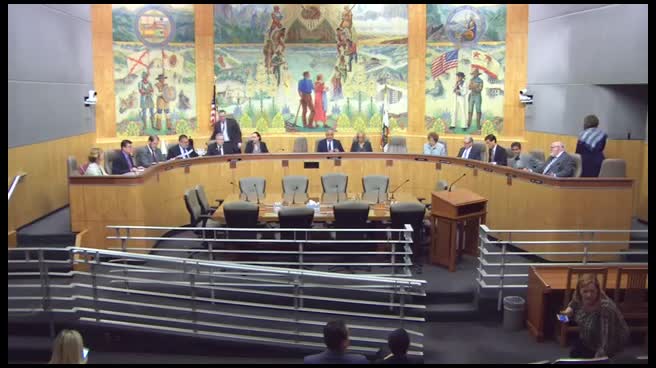
Bill Author

Bill Co-Author(s):