AB 1570: Violent felonies.
- Session Year: 2017-2018
- House: Assembly
- Latest Version Date: 2017-04-20
Existing law, as amended by Proposition 21 as approved by the voters at the March 7, 2000, statewide primary election and by Proposition 83 at the November 7, 2006, statewide general election, classifies certain felonies as violent felonies for purposes of various criminal sentencing schemes. Existing law imposes an additional one-year term for a felony and a 3-year term for a violent felony for each prior separate prison term served for a violent felony. Existing law, as added by Proposition 184, adopted November 8, 1994, and amended by Proposition 36, adopted November 6, 2012, commonly known as the Three Strikes Law, also imposes additional years of imprisonment in state prison on a person who commits a violent felony and has been convicted of, or who has a prior conviction for, a violent felony. The Legislature may amend the above-specified initiative statutes by a statute passed in each house by a 2/3 vote.
This bill would additionally define as violent felonies assault with a deadly weapon or force likely to cause great injury, domestic violence, child abuse, hate crimes, human trafficking involving a minor, and exploding a destructive device, among other crimes, as specified, thereby amending Proposition 36 by adding to the list of violent felonies that can be prosecuted as a 3rd strike. By changing the definition of a crime, this bill would impose a state-mandated local program.
The California Constitution requires the state to reimburse local agencies and school districts for certain costs mandated by the state. Statutory provisions establish procedures for making that reimbursement.
This bill would provide that no reimbursement is required by this act for a specified reason.
Existing law establishes the California-Mexico Border Relations Council in state government, and prescribes the membership and functions and duties of the council with respect to coordinating the activities of state agencies, including environmental agencies, that are related to cross-border programs, initiatives, projects, and partnerships that exist within state agencies, and state and local efforts that are of concern between California and Mexico. Existing law also authorizes the Office of California-Mexico Affairs to develop better relations with Mexico by coordinating with state agencies to foster economic cooperation.It is the intent of the Legislature to enact legislation that would address border policy between California and Mexico.Existing law establishes the California-Mexico Border Relations Council in state government, and prescribes the membership and functions and duties of the council with respect to coordinating the activities of state agencies, including environmental agencies, that are related to cross-border programs, initiatives, projects, and partnerships that exist within state agencies, and state and local efforts that are of concern between California and Mexico. Existing law also authorizes the Office of California-Mexico Affairs to develop better relations with Mexico by coordinating with state agencies to foster economic cooperation.
It is the intent of the Legislature to enact legislation that would address border policy between California and Mexico.
(a)Notwithstanding subdivision (h) of Section 667, for all offenses committed on or after November 7, 2012, but before January 1, 2018, all references to existing statutes in subdivisions (c) to (g), inclusive, of Section 667, are to those statutes as they read on November 7, 2012.
(b)Notwithstanding subdivision (h) of Section 667, for all offenses committed on or after January 1, 2018, all references to existing statutes in subdivisions (c) to (g), inclusive, of Section 667, are to those statutes as they read on January 1, 2018.
SEC. 2.Section 667.5 of the Penal Code is amended to read:667.5.Enhancement of prison terms for new offenses because of prior prison terms shall be imposed as follows:
(a)If one of the new offenses is one of the violent felonies specified in subdivision (c), in addition and consecutive to any other prison terms therefor, the court shall impose a three-year term for each prior separate prison term served by the defendant if the prior offense was one of the violent felonies specified in subdivision (c). However, no additional term shall be imposed under this subdivision for any prison term served prior to a period of 10 years in which the defendant remained free of both prison custody and the commission of an offense which results in a felony conviction.
(b)Except if subdivision (a) applies, if the new offense is any felony for which a prison sentence or a sentence of imprisonment in a county jail under subdivision (h) of Section 1170 is imposed or is not suspended, in addition and consecutive to any other sentence therefor, the court shall impose a one-year term for each prior separate prison term or county jail term imposed under subdivision (h) of Section 1170 or if the sentence is not suspended for any felony. An additional term shall not be imposed under this subdivision for any prison term or county jail term imposed under subdivision (h) of Section 1170 or if the sentence is not suspended prior to a period of five years in which the defendant remained free of both the commission of an offense which results in a felony conviction, and prison custody or the imposition of a term of jail custody imposed under subdivision (h) of Section 1170 or any felony sentence that is not suspended. A term imposed under paragraph (5) of subdivision (h) of Section 1170, wherein a portion of the term is suspended by the court to allow mandatory supervision, shall qualify as a prior county jail term for the purposes of the one-year enhancement.
(c)For the purpose of this section, violent felony shall mean any of the following:
(1)Murder or voluntary manslaughter.
(2)Mayhem.
(3)Rape as defined in paragraph (2) or (6) of subdivision (a) of Section 261 or paragraph (1) or (4) of subdivision (a) of Section 262.
(4)Sodomy as defined in subdivision (c) or (d) of Section 286.
(5)Oral copulation as defined in subdivision (c) or (d) of Section 288a.
(6)Lewd or lascivious act as defined in subdivision (a) or (b) of Section 288.
(7)Any felony punishable by death or imprisonment in the state prison for life.
(8)Any felony in which the defendant inflicts great bodily injury on any person other than an accomplice which has been charged and proved as provided for in Section 12022.7, 12022.8, or 12022.9 on or after July 1, 1977, or as specified prior to July 1, 1977, in Sections 213, 264, and 461, or any felony in which the defendant uses a firearm which use has been charged and proved as provided in subdivision (a) of Section 12022.3, or Section 12022.5 or 12022.55.
(9)Any robbery.
(10)Arson, in violation of subdivision (a) or (b) of Section 451.
(11)Sexual penetration as defined in subdivision (a) or (j) of Section 289.
(12)Attempted murder.
(13)A violation of Section 18745, 18750, or 18755.
(14)Kidnapping.
(15)Assault with the intent to commit a specified felony, in violation of Section 220.
(16)Continuous sexual abuse of a child, in violation of Section 288.5.
(17)Carjacking, as defined in subdivision (a) of Section 215.
(18)Rape, spousal rape, or sexual penetration, in concert, in violation of Section 264.1.
(19)Extortion, as defined in Section 518, which would constitute a felony violation of Section 186.22.
(20)Threats to victims or witnesses, as defined in Section 136.1, which would constitute a felony violation of Section 186.22.
(21)Any burglary of the first degree, as defined in subdivision (a) of Section 460, wherein it is charged and proved that another person, other than an accomplice, was present in the residence during the commission of the burglary.
(22)Any violation of Section 12022.53.
(23)Assault with a deadly weapon in violation of paragraph (1) of subdivision (a) of Section 245, if a felony.
(24)Assault by means of force likely to produce great bodily injury in violation of paragraph (4) of subdivision (a) of Section 245, if a felony.
(25)Discharging a firearm in violation of Section 246, if a felony.
(26)Domestic violence resulting in a traumatic condition in violation of Section 273.5, if a felony.
(27)Inflicting a cruel or inhuman corporal punishment or injury on a child in violation of Section 273d, if a felony.
(28)A hate crime punishable pursuant to Section 422.7, if a felony.
(29)Arson or a structure or forest land in violation of subdivision (c) of Section 451, if the arson causes physical injury.
(30)Human trafficking of a minor in violation of subdivision (a), (b), or (c) of Section 236.1.
(31)Possessing, exploding, or igniting a destructive device in violation of Section 18740.
(32)Assault on a peace officer in violation of Section 241.4, if a felony.
(33)Battery in violation of subdivision (d) of Section 243, if a felony.
(34)Solicitation to commit murder in violation of Section 653f.
(35)Burglary in violation of Section 459, if a felony.(36)(35)Active participation in a criminal street gang, in violation of subdivision (a) of Section 186.22, if a felony.
(37)(36)A violation of subdivision (b) or (c) of Section 11418.
The Legislature finds and declares that these specified crimes the crimes specified in this subdivision merit special consideration when imposing a sentence to display societys condemnation for these extraordinary crimes of violence against the person.
(d)For the purposes of this section, the defendant shall be deemed to remain in prison custody for an offense until the official discharge from custody, including any period of mandatory supervision, or until release on parole or postrelease community supervision, whichever first occurs, including any time during which the defendant remains subject to reimprisonment or custody in county jail for escape from custody or is reimprisoned on revocation of parole or postrelease community supervision. The additional penalties provided for prior prison terms shall not be imposed unless they are charged and admitted or found true in the action for the new offense.
(e)The additional penalties provided for prior prison terms shall not be imposed for any felony for which the defendant did not serve a prior separate term in state prison or in county jail under subdivision (h) of Section 1170.
(f)A prior conviction of a felony shall include a conviction in another jurisdiction for an offense which, if committed in California, is punishable by imprisonment in the state prison or in county jail under subdivision (h) of Section 1170 if the defendant served one year or more in prison for the offense in the other jurisdiction. A prior conviction of a particular felony shall include a conviction in another jurisdiction for an offense which includes all of the elements of the particular felony as defined under California law if the defendant served one year or more in prison for the offense in the other jurisdiction.
(g)A prior separate prison term for the purposes of this section shall mean a continuous completed period of prison incarceration imposed for the particular offense alone or in combination with concurrent or consecutive sentences for other crimes, including any reimprisonment on revocation of parole which is not accompanied by a new commitment to prison, and including any reimprisonment after an escape from incarceration.
(h)Serving a prison term includes any confinement time in any state prison or federal penal institution as punishment for commission of an offense, including confinement in a hospital or other institution or facility credited as service of prison time in the jurisdiction of the confinement.
(i)For the purposes of this section, a commitment to the State Department of Mental Health, or its successor the State Department of State Hospitals, as a mentally disordered sex offender following a conviction of a felony, which commitment exceeds one year in duration, shall be deemed a prior prison term.
(j)For the purposes of this section, when a person subject to the custody, control, and discipline of the Secretary of the Department of Corrections and Rehabilitation is incarcerated at a facility operated by the Division of Juvenile Justice, that incarceration shall be deemed to be a term served in state prison.
(k)(1)Notwithstanding subdivisions (d) and (g) or any other provision of law, where one of the new offenses is committed while the defendant is temporarily removed from prison pursuant to Section 2690 or while the defendant is transferred to a community facility pursuant to Section 3416, 6253, or 6263, or while the defendant is on furlough pursuant to Section 6254, the defendant shall be subject to the full enhancements provided for in this section.
(2)This subdivision does not apply if a full, separate, and consecutive term is imposed pursuant to any other provision of law.
SEC. 3.Section 1170.125 of the Penal Code is amended to read:1170.125.(a)Notwithstanding Section 2 of Proposition 184, as adopted at the November 8, 1994, General Election, for all offenses committed on or after November 7, 2012, but before January 1, 2018, all references to existing statutes in Sections 1170.12 and 1170.126 are to those sections as they read on November 7, 2012.
(b)Notwithstanding Section 2 of Proposition 184, as adopted at the November 8, 1994, General Election, for all offenses committed on or after January 1, 2018, all references to existing statutes in Sections 1170.12 and 1170.126 are to those sections as they read on January 1, 2018.
SEC. 4.No reimbursement is required by this act pursuant to Section 6 of Article XIIIB of the California Constitution because the only costs that may be incurred by a local agency or school district will be incurred because this act creates a new crime or infraction, eliminates a crime or infraction, or changes the penalty for a crime or infraction, within the meaning of Section 17556 of the Government Code, or changes the definition of a crime within the meaning of Section 6 of Article XIIIB of the California Constitution.
(a)Notwithstanding subdivision (h) of Section 667, for all offenses committed on or after November 7, 2012, but before January 1, 2018, all references to existing statutes in subdivisions (c) to (g), inclusive, of Section 667, are to those statutes as they existed read on November 7, 2012.
(b)Notwithstanding subdivision (h) of Section 667, for all offenses committed on or after January 1, 2018, all references to existing statutes in subdivisions (c) to (g), inclusive, of Section 667, are to those statutes as they read on January 1, 2018.
SEC. 2.Section 667.5 of the Penal Code is amended to read:667.5.Enhancement of prison terms for new offenses because of prior prison terms shall be imposed as follows:
(a)Where If one of the new offenses is one of the violent felonies specified in subdivision (c), in addition to and consecutive to any other prison terms therefor, the court shall impose a three-year term for each prior separate prison term served by the defendant where if the prior offense was one of the violent felonies specified in subdivision (c). However, no additional term shall be imposed under this subdivision for any prison term served prior to a period of 10 years in which the defendant remained free of both prison custody and the commission of an offense which results in a felony conviction.
(b)Except where if subdivision (a) applies, where if the new offense is any felony for which a prison sentence or a sentence of imprisonment in a county jail under subdivision (h) of Section 1170 is imposed or is not suspended, in addition and consecutive to any other sentence therefor, the court shall impose a one-year term for each prior separate prison term or county jail term imposed under subdivision (h) of Section 1170 or when if the sentence is not suspended for any felony; provided that no felony. An additional term shall not be imposed under this subdivision for any prison term or county jail term imposed under subdivision (h) of Section 1170 or when if the sentence is not suspended prior to a period of five years in which the defendant remained free of both the commission of an offense which results in a felony conviction, and prison custody or the imposition of a term of jail custody imposed under subdivision (h) of Section 1170 or any felony sentence that is not suspended. A term imposed under the provisions of paragraph (5) of subdivision (h) of Section 1170, wherein a portion of the term is suspended by the court to allow mandatory supervision, shall qualify as a prior county jail term for the purposes of the one-year enhancement.
(c)For the purpose of this section, violent felony shall mean any of the following:
(1)Murder or voluntary manslaughter.
(2)Mayhem.
(3)Rape as defined in paragraph (2) or (6) of subdivision (a) of Section 261 or paragraph (1) or (4) of subdivision (a) of Section 262.
(4)Sodomy as defined in subdivision (c) or (d) of Section 286.
(5)Oral copulation as defined in subdivision (c) or (d) of Section 288a.
(6)Lewd or lascivious act as defined in subdivision (a) or (b) of Section 288.
(7)Any felony punishable by death or imprisonment in the state prison for life.
(8)Any felony in which the defendant inflicts great bodily injury on any person other than an accomplice which has been charged and proved as provided for in Section 12022.7, 12022.8, or 12022.9 on or after July 1, 1977, or as specified prior to July 1, 1977, in Sections 213, 264, and 461, or any felony in which the defendant uses a firearm which use has been charged and proved as provided in subdivision (a) of Section 12022.3, or Section 12022.5 or 12022.55.
(9)Any robbery.
(10)Arson, in violation of subdivision (a) or (b) of Section 451.
(11)Sexual penetration as defined in subdivision (a) or (j) of Section 289.
(12)Attempted murder.
(13)A violation of Section 18745, 18750, or 18755.
(14)Kidnapping.
(15)Assault with the intent to commit a specified felony, in violation of Section 220.
(16)Continuous sexual abuse of a child, in violation of Section 288.5.
(17)Carjacking, as defined in subdivision (a) of Section 215.
(18)Rape, spousal rape, or sexual penetration, in concert, in violation of Section 264.1.
(19)Extortion, as defined in Section 518, which would constitute a felony violation of Section 186.22.
(20)Threats to victims or witnesses, as defined in Section 136.1, which would constitute a felony violation of Section 186.22.
(21)Any burglary of the first degree, as defined in subdivision (a) of Section 460, wherein it is charged and proved that another person, other than an accomplice, was present in the residence during the commission of the burglary.
(22)Any violation of Section 12022.53.
(23)Assault with a deadly weapon in violation of paragraph (1) of subdivision (a) of Section 245, if a felony.
(24)Assault by means of force likely to produce great bodily injury in violation of paragraph (4) of subdivision (a) of Section 245, if a felony.
(25)Discharging a firearm in violation of Section 246, if a felony.
(26)Domestic violence resulting in a traumatic condition in violation of Section 273.5, if a felony.
(27)Inflicting a cruel or inhuman corporal punishment or injury on a child in violation of Section 273d, if a felony.
(28)A hate crime punishable pursuant to Section 422.7, if a felony.
(29)Arson or a structure or forest land in violation of subdivision (c) of Section 451, if the arson causes physical injury.
(30)Human trafficking of a minor in violation of subdivision (a), (b), or (c) of Section 236.1.
(31)Possessing, exploding, or igniting a destructive device in violation of Section 18740.
(32)Assault on a peace officer in violation of Section 241.4, if a felony.
(33)Battery in violation of subdivision (d) of Section 243, if a felony.
(34)Solicitation to commit murder in violation of Section 653f.
(35)Burglary in violation of Section 459, if a felony.
(36)Active participation in a criminal street gang, in violation of subdivision (a) of Section 186.22, if a felony.
(23)(37)A violation of subdivision (b) or (c) of Section 11418. The
The Legislature finds and declares that these specified crimes merit special consideration when imposing a sentence to display societys condemnation for these extraordinary crimes of violence against the person.
(d)For the purposes of this section, the defendant shall be deemed to remain in prison custody for an offense until the official discharge from custody, including any period of mandatory supervision, or until release on parole or postrelease community supervision, whichever first occurs, including any time during which the defendant remains subject to reimprisonment or custody in county jail for escape from custody or is reimprisoned on revocation of parole or postrelease community supervision. The additional penalties provided for prior prison terms shall not be imposed unless they are charged and admitted or found true in the action for the new offense.
(e)The additional penalties provided for prior prison terms shall not be imposed for any felony for which the defendant did not serve a prior separate term in state prison or in county jail under subdivision (h) of Section 1170.
(f)A prior conviction of a felony shall include a conviction in another jurisdiction for an offense which, if committed in California, is punishable by imprisonment in the state prison or in county jail under subdivision (h) of Section 1170 if the defendant served one year or more in prison for the offense in the other jurisdiction. A prior conviction of a particular felony shall include a conviction in another jurisdiction for an offense which includes all of the elements of the particular felony as defined under California law if the defendant served one year or more in prison for the offense in the other jurisdiction.
(g)A prior separate prison term for the purposes of this section shall mean a continuous completed period of prison incarceration imposed for the particular offense alone or in combination with concurrent or consecutive sentences for other crimes, including any reimprisonment on revocation of parole which is not accompanied by a new commitment to prison, and including any reimprisonment after an escape from incarceration.
(h)Serving a prison term includes any confinement time in any state prison or federal penal institution as punishment for commission of an offense, including confinement in a hospital or other institution or facility credited as service of prison time in the jurisdiction of the confinement.
(i)For the purposes of this section, a commitment to the State Department of Mental Health, or its successor the State Department of State Hospitals, as a mentally disordered sex offender following a conviction of a felony, which commitment exceeds one year in duration, shall be deemed a prior prison term.
(j)For the purposes of this section, when a person subject to the custody, control, and discipline of the Secretary of the Department of Corrections and Rehabilitation is incarcerated at a facility operated by the Division of Juvenile Justice, that incarceration shall be deemed to be a term served in state prison.
(k)(1)Notwithstanding subdivisions (d) and (g) or any other provision of law, where one of the new offenses is committed while the defendant is temporarily removed from prison pursuant to Section 2690 or while the defendant is transferred to a community facility pursuant to Section 3416, 6253, or 6263, or while the defendant is on furlough pursuant to Section 6254, the defendant shall be subject to the full enhancements provided for in this section.
(2)This subdivision shall does not apply when if a full, separate, and consecutive term is imposed pursuant to any other provision of law.
SEC. 3.Section 1170.125 of the Penal Code is amended to read:1170.125.(a)Notwithstanding Section 2 of Proposition 184, as adopted at the November 8, 1994, General Election, for all offenses committed on or after November 7, 2012, but before January 1, 2018, all references to existing statutes in Sections 1170.12 and 1170.126 are to those sections as they existed read on November 7, 2012.
(b)Notwithstanding Section 2 of Proposition 184, as adopted at the November 8, 1994, General Election, for all offenses committed on or after January 1, 2018, all references to existing statutes in Sections 1170.12 and 1170.126 are to those sections as they read on January 1, 2018.
SEC. 4.No reimbursement is required by this act pursuant to Section 6 of Article XIIIB of the California Constitution because the only costs that may be incurred by a local agency or school district will be incurred because this act creates a new crime or infraction, eliminates a crime or infraction, or changes the penalty for a crime or infraction, within the meaning of Section 17556 of the Government Code, or changes the definition of a crime within the meaning of Section 6 of Article XIIIB of the California Constitution.
SECTION 1.It is the intent of the Legislature to enact legislation that would address border policy between California and Mexico.It is the intent of the Legislature to enact legislation that would address border policy between California and Mexico.
|
Date
|
Status
|
|---|---|
| May 23, 2017 | From committee: Without further action pursuant to Joint Rule 62(a). |
| Apr 25, 2017 | In committee: Set, first hearing. Failed passage. |
| Apr 24, 2017 | Re-referred to Com. on PUB. S. |
| Apr 20, 2017 | From committee chair, with author's amendments: Amend, and re-refer to Com. on PUB. S. Read second time and amended. |
| Mar 29, 2017 | Re-referred to Com. on PUB. S. |
| Mar 28, 2017 | From committee chair, with author's amendments: Amend, and re-refer to Com. on PUB. S. Read second time and amended. |
| Mar 27, 2017 | Referred to Com. on PUB. S. |
| Feb 19, 2017 | From printer. May be heard in committee March 21. |
| Feb 17, 2017 | Read first time. To print. |
|
Date
|
Description
|
Location
|
Votes
|
|
|---|---|---|---|---|
| Apr 25, 2017 | Do pass and be re-referred to the Committee on [Appropriations] | Assembly Standing Committee on Public Safety |
Failed |
This list shows positions taken on this bill by organizations on the date displayed, which is linked to the original source.
Positions by individuals are not included.
|
Organization
|
Position
|
Date
|
|---|---|---|
| American Civil Liberties Union | ** Against | Apr 24, 2017 |
| California Attorneys For Criminal Justice | ** Against | Apr 24, 2017 |
| California Public Defenders Association | ** Against | Apr 24, 2017 |
| Courage Campaign | ** Against | Apr 24, 2017 |
Date of Hearing: April 25, 2017
Counsel: Gabriel Caswell
ASSEMBLY COMMITTEE ON
Reginald Byron Jones-Sawyer, Sr., Chair
ABPCA Bill Id:
Author:() – As Ver:
SUMMARY:
Adds a number of offenses to the list of violent felonies and specifies that they are "strikes" under California's Three-Strikes Law. Specifically, this bill adds the following offenses, if convicted as a felony, to the list of violent felonies and specifies that they are to be treated as "strikes" under California's Three-Strikes Law:
- Assault with a deadly weapon other than a firearm.
- Assault by means of force likely to produce great bodily injury.
- Discharging a firearm at an inhabited location.
- Domestic violence resulting in a traumatic condition.
- Corporal punishment or injury of a child.
- Crimes with a hate crime enhancement.
- Arson of an uninhabited or a structure or forest land with no bodily injury.
- Human trafficking of a minor.
- Possessing, exploding, or igniting a destructive device.
- Assault on a custodial officer.
- Battery with serious bodily injury.
- Solicitation to commit murder.
- Active participation in a criminal street gang.
EXISTING LAW:
- Defines a "violent felony" as any of the following (Pen. Code § 667.5(c).):
- Murder or voluntary manslaughter;
- Mayhem;
- Rape or spousal rape accomplished by means of force or threats of retaliation;
- Sodomy by force or fear of immediate bodily injury on the victim or another person;
- Oral copulation by force or fear of immediate bodily injury on the victim or another person;
- Lewd acts on a child under the age of 14 years, as defined;
- Any felony punishable by death or imprisonment in the state prison for life;
- Any felony in which the defendant inflicts great bodily injury on any person other than an accomplice, or any felony in which the defendant has used a firearm, as specified;
- Any robbery;
- Arson of a structure, forest land, or property that causes great bodily injury;
- Arson that causes an inhabited structure or property to burn;
- Sexual penetration accomplished against the victim's will by means of force, menace or fear of immediate bodily injury on the victim or another person;
- Attempted murder;
- Explosion or attempted explosion of a destructive device with the intent to commit murder;
- Explosion or ignition of any destructive device or any explosive which causes bodily injury to any person;
- Explosion of a destructive device which causes death or great bodily injury;
- Kidnapping;
- Assault with intent to commit mayhem, rape, sodomy or oral copulation;
- Continuous sexual abuse of a child;
- Carjacking, as defined;
- Rape or penetration of genital or anal openings by a foreign object;
- Felony extortion;
- Threats to victims or witnesses, as specified;
- First degree burglary, as defined, where it is proved that another person other than an accomplice, was present in the residence during the burglary;
- Use of a firearm during the commission of specified crimes; and,
- Possession, development, production, and transfers of weapons of mass destruction.
- Murder or voluntary manslaughter;
- Provides that when a defendant is convicted on a new felony offense and has a prior conviction for a specified violent felony, the defendant shall receive a consecutive three-year term for each prior separate prison term served by the defendant where the prior offense was one of the specified violent felonies specified, unless the defendant meets certain conditions. (Pen. Code § 667.5, subd. (a).)
- States that a conviction of a violent felony counts as a prior conviction for sentencing under the two and three strike law. (Pen. Code § 667.)
- Provides that if a defendant is convicted of a felony offense and it is pled and proved that the defendant has been convicted of one prior serious or violent offense as defined, the term of imprisonment is twice the term otherwise imposed for the current offense. (Pen, Code § 667
- Specifies that notwithstanding any other law, any person who is convicted of a felony that is contained in the "violent" felony list shall accrue no more than 15% of work-time credit. (Pen. Code § 2933.1, subd. (a).)
- Defines a "serious felony" as any of the following: murder or manslaughter; mayhem; rape; sodomy; oral copulation; lewd acts on a child under the age of 14; any felony punishable by death or imprisonment for life; any felony in which the defendant inflicts great bodily injury; attempted murder; assault with the intent to commit rape or robbery; assault with a deadly weapon or instrument on a peace officer; assault by a life prisoner on a non-inmate; assault with a deadly weapon by an inmate; arson; exploding a destructive devise with the intention to commit murder or great bodily injury; first-degree burglary; armed robbery or bank robbery; kidnapping; holding of a hostage by a person confined to a state prison; attempting to commit a felony punishable by death or life in prison; any felony where the defendant personally used a dangerous or deadly weapon; selling or otherwise providing heroin, PCP or any type of methamphetamine-related drug; forcible sexual penetration; grand theft involving a firearm; carjacking; assault with the intent to commit mayhem, rape, sodomy or forcible oral copulation; throwing acid or other flammable substance; assault with a deadly weapon on a peace officer; assault with a deadly weapon on a member of the transit authority; discharge of a firearm in an inhabited dwelling or car; rape or sexual penetration done in concert; continuous sexual abuse of a child; shooting from a vehicle; intimidating a victim or witness; any attempt to commit the above-listed crimes except assault or burglary; and using a firearm in the commission of a crime and possession of weapons of mass destruction. (Pen. Code § 1192.7(c).)
FISCAL EFFECT:
Unknown
COMMENTS:
- Author's Statement: According to the author, "There have been approximately 170,000 violent crimes committed in California this year. After several decades of decline, armed robberies, rapes, homicides and other violent crimes are on the upswing. FBI released its annual state-by-state breakdown on crime, revealing that in 2015, California saw a 7.6 percent increase in violent acts from the previous year to 166,883, or 426.3 per 100,000 population. That was 2 1/2 times the 3 percent national increase, the 13th highest of any state. California’s overall violent crime rate is also the nation’s 13th highest. To simply redefine what it means to be violent in order to address these staggering facts compromises the safety of all Californians."
- "Violent" Felony Designation: This bill adds 14 new offenses to the list of "violent" crimes that causes an offender to receive fewer "custody credits" toward release on parole. Inmates who receive convictions for violent felonies must serve 85% of their time in custody. Additionally, these new offenses will be considered "strikes" for purposes of California's Three Strikes Law. In essence, any person who is convicted one of these offenses after committing two prior strikes can be sentenced to 25-years to life in state prison.
- Three Strikes Implications: In general, violent felonies on the violent felonies list are considered "strikes" for purposes of California's Three Strikes Law. However, Proposition 36, which was passed by California voters on November 6, 2012 specifies that only the crimes that were included in the "violent felonies" list prior to November 7, 2016 shall be treated as strikes for purposes of the three-strikes law.
"Notwithstanding subdivision (h) of Section 667, for all offenses committed on or after November 7, 2012, all references to existing statutes in subdivisions (c) to (g), inclusive, of Section 667, are to those statutes as they existed on November 7, 2012." (Pen. Code § 667.1.)
This bill seeks to modify the date in Proposition 36 to 2018. As a result, the offenses in this bill, and any other offenses added to the violent felonies list prior to 2018 will become "strikes" under California's Three Strikes Law. This committee recently passed AB 27 (Melendez), and AB 67 (Rodriguez) which added various offenses related to human trafficking and rape of unconscious or intoxicated persons to the violent felony list. If this bill passes, all of those bills will likely be considered strikes as well because the bills may be double-joined.
- Wobblers (or Alternate Felony/Misdemeanors): This bill, as drafted, would add seven offenses that can be charged alternatively as either felonies or misdemeanors to the list of violent felonies. The bill specifies that they should only count as violent felonies if they are charged as a felony. The following offenses are alternate felony/misdemeanors or wobblers that are being added to the violent felonies list:
- Assault with a deadly weapon other than a firearm.
- Assault by means of force likely to produce great bodily injury.
- Discharging a firearm at an inhabited location.
- Domestic violence resulting in a traumatic condition.
- Corporal punishment or injury of a child.
- Crimes with a hate crime enhancement.
- Assault on a custodial officer.
- Battery with serious bodily injury.
- Active participation in a criminal street gang.
- Assault with a deadly weapon other than a firearm.
The violent felony list contains the most serious crimes under California law, including crimes such as murder, attempted murder, mayhem, forcible sex crimes, arson, and robbery. The violent felony list does not contain any crimes classified as alternate felony/misdemeanors as they are not deemed to be of a serious enough nature if they can alternatively be charged as a misdemeanor. To add the alternate felony/ misdemeanor offense, if charged as a felony to the list of violent felonies would be unprecedented.
- Proposition 57: On November 8, 2016 the voters of California approved Proposition 57. Proposition 57 was known as the "Parole for Non-Violent Criminals and Juvenile Court Trial Requirements Initiative." The initiative allows parole consideration for non-violent felons. It also authorizes sentence credits for rehabilitation, good behavior, and education. Additionally the proposition provides juvenile court judge decides whether juvenile will be prosecuted as adult.
As a result of the initiative, state prison inmates convicted of non-violent felony offenses are considered for early release. The state prison system may award additional sentencing credits to inmates for good behavior and approved rehabilitative or educational achievements. Additionally, minors must have a hearing in juvenile court before they can be transferred to adult court.
The California Department of Corrections (CDCR) has been tasked with drafting regulations on how the parole process will be implemented. The initiative specifies that early parole may only be given to non-violent offenses. However, the initiative does not specify what is considered a non-violent felony. Advocates for this legislation want the offense included in this bill to be considered violent felonies by including them on the violent felonies list as codified in the penal code. It is not clear however if that is the standard that CDCR is going to employ.
- Prison Overcrowding: In January 2010, a three-judge panel issued a ruling ordering the State of California to reduce its prison population to 137.5% of design capacity because overcrowding was the primary reason that CDCR was unable to provide inmates with constitutionally adequate healthcare. (Coleman/Plata vs. Schwarzenegger (2010) No. Civ S-90-0520 LKK JFM P/NO. C01-1351 THE.) The United State Supreme Court upheld the decision, declaring that “without a reduction in overcrowding, there will be no efficacious remedy for the unconstitutional care of the sick and mentally ill” inmates in California’s prisons. (Brown v. Plata (2011) 131 S.Ct. 1910, 1939; 179 L.Ed.2d 969, 999.)
After continued litigation, on February 10, 2014, the federal court ordered California to reduce its in-state adult institution population to 137.5% of design capacity by February 28, 2016, as follows: 143% of design bed capacity by June 30, 2014; 141.5% of design bed capacity by February 28, 2015; and, 137.5% of design bed capacity by February 28, 2016.
CDCR’s February 2017 monthly report on the prison population notes that the in-state adult institution population is currently 114,124 inmates, which amounts to 134.1% of design capacity. This is an increase of 1.1% from February of last year. Additionally, there are still 4,400 prisoners being housed out of state. (http://www.cdcr.ca.gov/Reports_Research/Offender_Information_Services_Branch/Monthly/TPOP1A/TPOP1Ad1702.pdf )
The Governor’s January proposed budget for 2017-2018 anticipates that “[t]he adult inmate average daily population is projected to decrease from 129,015 in 2016-17 to 128,159 in 2017-18, a decrease of 856 inmates, or 0.7 percent. The average daily parolee population is projected to increase from 43,686 in 2016-17 to 44,761 in 2017-18, an increase of 1,075 parolees, or 2.5 percent. The decrease in the adult inmate population is due to a projected reduction related to the implementation of Proposition 57, the Public Safety and Rehabilitation Act of 2016, which offsets a projected increase in felon admissions.” (http://ebudget.ca.gov/budget/2017-18/#/Department/5225)
Thus, while CDCR is currently in compliance with the three-judge panel’s order on the prison population, the state needs to maintain a “durable solution” to prison overcrowding “consistently demanded” by the court. (Opinion Re: Order Granting in Part and Denying in Part Defendants’ Request For Extension of December 31, 2013 Deadline, NO. 2:90-cv-0520 LKK DAD (PC), 3-Judge Court, Coleman v. Brown, Plata v. Brown (2-10-14).)
The provisions of this bill not only specify that anyone convicted of these offenses added to the violent felonies list would have to spend 85% of their sentence in custody, but the legislation also adds "strikes" to the list of offenses that can trigger a 25-years to life sentence. This bill would most definitely exacerbate California's prison overcrowding crisis.
- Probable Drafting Error: The bill adds Pen. Code, § 653f to the list of violent felonies while referencing "solicitation to commit murder." However, Pen. Code § 653f is a general section for solicitation to commit a wide range of offenses. If the author's intent is to add solicitation to commit murder to the list of violent felonies, the cross reference should refer to Pen. Code, § 653f, subd. (b).
- Argument in Opposition: According to the California Public Defenders Association, "this bill would add 13 new felonies to the list of violent felonies in Penal Code section 667.5, subdivision (c). Many of these felonies strain the common meaning of violent. To take just one example, felony burglary might be nothing more than entry of an empty shed in a distant field.
"More important, this bill would, in effect, overturn much of Proposition 57, the Public Safety and Rehabilitation Act of 2016, passed by a landslide 64.5% of the voters at the November 2016 General Election. Proposition 57 added to California Constitution Article 1 a new section 32, directing the California Department of Corrections and Rehabilitation (CDCR) to write regulations providing parole consideration for prisoners convicted of “nonviolent offenses” when they have completed the full term for their primary offense.…” CDCR’s proposed regulations have already been approved by the Office of Administrative Law as emergency regulations. They are at CDCR’s web site, at http://www.cdcr.ca.gov/proposition57/docs/prop-57- regs-text.pdf. The definition of nonviolent offense is at proposed Cal. Code of Regs. tit. 15 section 3490.
"None of AB 1570’s proposed 13 new so-called violent felonies would qualify as violent under CDCR’s regulations. But if they are added to the statutory list of violent felonies, CDCR could no longer give prisoners convicted of them parole consideration when the primary term is completed. AB 1570 would thus partially undo what the voters overwhelmingly wanted only last November. The legislature should not thwart the will of the voters so recently and so overwhelmingly proclaimed.
"Moreover, AB 1570 is not needed. Presumably, a motivation for AB 1570 is to protect public safety by preventing parole consideration for these new categories, but CDCR’s proposed regulations already do that. Proposed new 15 Cal. Code of Regs. tit. 15, section 3492, and other regulations, require extensive public safety screening; and CDCR must 'certify that these regulations protect and enhance public safety.'
"AB 1570 adds to the complexity of our Penal Code, includes offenses that are not violent, and partially undoes the will of voters. For these reasons, CPDA respectfully urges your 'No' vote on AB 1570 when it comes before you in Assembly Public Safety Committee."
- Related Legislation:
- AB 27 (Melendez) adds specified sexual assault offenses to the list of violent felonies codified in the Penal Code. AB 27 has been referred to the Assembly Appropriations Committee.
- AB 67 (Rodriguez) adds human sex trafficking and specified sexual assault offenses to the list of violent felonies codified in the Penal Code. AB 67 has been referred to the Assembly Appropriations Committee.
- AB 197 (Kiley) adds a number of offenses to the list of violent felonies and specifies that they are "strikes" under California's Three-Strikes Law. AB 197 was pulled by the author from a hearing in this committee.
- SB 75 (Bates) adds vehicular manslaughter, human trafficking involving a minor, assault with a deadly weapon, solicitation of murder, rape under various specified circumstances, and grand theft of a firearm as violent felonies for purposes of imposing specified sentence enhancements. The bill would also make conforming changes. SB 75 failed passage in the Senate Public Safety Committee.
- SB 652 (Nielsen) defines as a “violent felony” the unlawful possession of a firearm by a person previously convicted of a felony enumerated as a violent felony. SB 652 failed passage in the Senate Public Safety Committee.
- SB 770 (Glazier) adds human trafficking, elder and dependent adult abuse, assault with a deadly weapon, rape under specified circumstances, discharge of a firearm at an occupied building, and specified crimes against peace officers and witnesses, as violent felonies for purposes of the above specified sentence enhancements. SB 770 was head in Senate Public Safety Committee and no vote was taken. A further hearing is to be set.
- AB 27 (Melendez) adds specified sexual assault offenses to the list of violent felonies codified in the Penal Code. AB 27 has been referred to the Assembly Appropriations Committee.
- Prior Legislation:
- AB 2888 (Low), Chapter 863, Statutes of 2016, prohibits judges from granting probation when specified felony sexual assault offenses, contained in this bill, are committed.
- SB 1269 (Galgiani), of the 2015-2016 Legislative Session, would have included human trafficking in the list of violent felonies, for which Three Strike sentencing, sentencing credit limits, enhancements for prior violent felony prison terms and other consequences apply. SB 1269 failed passage in the Senate Public Safety Committee.
- AB 60 (Jeffries), of the 2011-2012 Legislative Session, would have added felony battery on specified peace officers to the list of strikes under California's three-strikes law. AB 60 failed passage in the Assembly Public Safety Committee.
- AB 1188 (Pan), of the 2011-2012 Legislative Session, would have added four new offenses relating to child abuse to the list of "violent" felonies, and added five new offenses related to human trafficking and the abuse of a child to the "serious" felony list. AB 1188 failed passage in the Assembly Public Safety Committee.
- AB 16 (Swanson), of the 2009-2010 Legislative Session, would have added human trafficking to the list of serious and violent felonies codified in the penal code. AB 16 failed passage in the Assembly Appropriations Committee.
- SB 440 (Denham), of the 2009-2010 Legislative Session, added the crimes of child abuse likely to produce great bodily injury or death, physical child abuse, killing, mutilating, or torturing a domestic animal, elder abuse for which the defendant was incarcerated in state prison, and escape or attempted escape by force or violence to the lists of "serious felonies" as well as to the list of "violent felonies," as specified; and added the crimes of human trafficking, stalking, solicitation to commit murder, fleeing or attempting to elude a pursuing peace officer, willful flight or attempting to elude a pursuing peace officer, and felon in possession of a firearm, to the list of "serious felonies," as specified. SB 440 failed passage in the Senate Public Safety Committee.
- AB 303 (Spitzer), of the 2007-2008 Legislative Session, would have specified that gross vehicular manslaughter while intoxicated is a "strike" under the "Three Strikes Law". AB 303 failed passage in the Assembly Appropriations Committee.
- AB 426 (Galgiani), of the 2007-2008 Legislative Session, would have added human trafficking to the list of serious and violent offenses as codified under the California Penal Code. AB 426 failed passage in the Senate Public Safety Committee.
- AB 2888 (Low), Chapter 863, Statutes of 2016, prohibits judges from granting probation when specified felony sexual assault offenses, contained in this bill, are committed.
REGISTERED SUPPORT / OPPOSITION:
Support
None
Opposition
American Civil Liberties Union
California Attorneys for Criminal Justice
California Public Defenders Association
Courage Campaign
Analysis Prepared by:
Discussed in Hearing
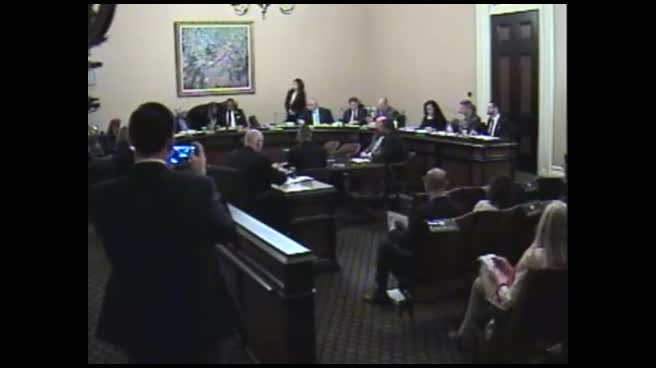 7MIN
Assembly Standing Committee on Public Safety
Bill Author

Bill Co-Author(s):