AB 1612: Nursing: certified nurse-midwives: supervision.
- Session Year: 2017-2018
- House: Assembly
- Latest Version Date: 2017-04-18
(1)The Nursing Practice Act provides for the licensure and regulation of nurse practitioners by the Board of Registered Nursing, which is within the Department of Consumer Affairs, and requires the board to issue a certificate to practice nurse-midwifery to a licensee who meets specified qualifications. That act requires each applicant for a certificate to show evidence satisfactory to the board that the applicant has met educational standards established by the board or has at least the equivalent thereof and authorizes the board to appoint a committee of qualified physicians and nurses to develop the necessary standards relating to educational requirements, ratios of nurse-midwives to supervising physicians, and associated matters. authorizes a certified nurse-midwife, under the supervision of a licensed physician and surgeon, to attend cases of normal childbirth and to provide prenatal, intrapartum, and postpartum care, including family planning care, for the mother, and immediate care for the newborn, and provides that the practice of nurse-midwifery constitutes the furthering or undertaking by a certified person, under the supervision of a licensed physician and surgeon who has current practice or training in obstetrics, to assist a woman in childbirth so long as progress meets criteria accepted as normal. The act makes the violation of any of its provisions punishable as a misdemeanor, as specified.
This bill would specify that evidence satisfactory to the board includes evidence of current advanced level national certification by a certifying body that meets standards established and approved by the board and would remove from the authority of the committee the development of standards relating to ratios of nurse-midwives to supervising physicians. repeal the requirement that a certified nurse-midwife be under the supervision of a licensed physician and surgeon. The bill would authorize a certified nurse-midwife to consult, refer, or transfer care to a physician and surgeon as indicated by the health status of the patient and the resources and medical personnel available in the setting of care. The bill would provide that a certified nurse-midwife practices within a variety of settings, including, but not limited to, the home setting. The bill would specify that nurse-midwifery care emphasizes informed consent, preventive care, and early detection and referral of complications.
(2)The act authorizes a certified nurse-midwife to furnish and order drugs or devices incidentally to the provision of family planning services, routine health care or perinatal care, and care rendered consistent with the certified nurse-midwifes educational preparation in specified facilities and clinics, and only in accordance with standardized procedures and protocols, including physician and surgeon supervision.
This bill additionally would authorize a certified nurse-midwife to furnish and order drugs and devices related to care rendered in a home and only would require physician and surgeon supervision for the furnishing and ordering of drugs and devices if the standardized procedures and protocols require supervision. The bill would authorize a certified nurse-midwife to directly procure supplies and devices, to obtain and administer drugs and diagnostic tests, to order laboratory and diagnostic testing, and to receive reports that are necessary to his or her practice and consistent with nurse-midwifery education preparation.
(3)The act also authorizes a certified nurse-midwife to perform and repair episiotomies and to repair first-degree and 2nd-degree lacerations of the perineum in a licensed acute care hospital and a licensed alternative birth center, if certain requirements are met, including, but not limited to, that episiotomies are performed pursuant to protocols developed by the supervising physician and surgeon.
This bill would also authorize a certified nurse-midwife to perform and repair episiotomies and to repair first-degree and 2nd-degree lacerations of the perineum in a home setting and in a birth center accredited by a national accrediting body approved by the board. The bill would delete all requirements that those procedures be performed pursuant to protocols developed and approved by the supervising physician and surgeon. The bill would require a certified nurse-midwife when performing those procedures to ensure that all complications are referred to a physician and surgeon immediately and to ensure immediate care of patients who are in need of care beyond the scope of practice of the certified nurse-midwife or emergency care for times when a physician and surgeon is not available. By placing new requirements on a certified nurse-midwife, this bill would expand an existing crime and would, therefore, result in a state-mandated local program.
(4)The California Constitution requires the state to reimburse local agencies and school districts for certain costs mandated by the state. Statutory provisions establish procedures for making that reimbursement.
This bill would provide that no reimbursement is required by this act for a specified reason.
The Nursing Practice Act provides for the licensure and regulation of nurse practitioners by the Board of Registered Nursing, which is within the Department of Consumer Affairs, and requires the board to issue a certificate to practice nurse-midwifery to a licensee who meets specified qualifications. That act requires each applicant for a certificate to show evidence satisfactory to the board that the applicant has met educational standards established by the board or has at least the equivalent thereof and authorizes the board to appoint a committee of qualified physicians and nurses to develop the necessary standards relating to educational requirements, ratios of nurse-midwives to supervising physicians, and associated matters.
This bill would specify that evidence satisfactory to the board includes evidence of current advanced level national certification by a certifying body that meets standards established and approved by the board and would remove from the authority of the committee the development of standards relating to ratios of nurse-midwives to supervising physicians.
The Nursing Practice Act provides for the licensure and regulation of nurse practitioners by the Board of Registered Nursing, which is within the Department of Consumer Affairs, and requires the board to issue a certificate to practice nurse-midwifery to a licensee who meets specified qualifications. That act authorizes the board to appoint a committee of qualified physicians and nurses to develop the necessary standards relating to educational requirements, ratios of nurse-midwives to supervising physicians, and associated matters.
This bill would remove from the authority of the committee the development of standards relating to ratios of nurse-midwives to supervising physicians.
(a)The certificate to practice nurse-midwifery authorizes the holder, under the supervision of a licensed physician and surgeon, holder to attend cases of normal childbirth and to provide prenatal, intrapartum, and postpartum care, including family-planning care, for the mother, and immediate care for the newborn. newborn in a variety of settings, including, but not limited to, the home setting.
(b)As used in this chapter, the practice of nurse-midwifery constitutes the furthering or undertaking by any certified person, under the supervision of a licensed physician and surgeon who has current practice or training in obstetrics, person to assist a woman in childbirth so long as progress meets criteria accepted as normal. All complications shall be referred to a physician and surgeon immediately. The practice of nurse-midwifery does not include the assisting of childbirth by any artificial, forcible, or mechanical means, nor the performance of any version.
(c)As used in this article, supervision shall not be construed to require the physical presence of the supervising physician. A certified nurse-midwife may consult, refer, or transfer care to a physician and surgeon as indicated by the health status of the patient and the resources and medical personnel available in the setting of care. Nurse-midwifery care emphasizes informed consent, preventive care, and early detection and referral of complications.
(d)A certified nurse-midwife is not authorized to practice medicine and surgery by the provisions of this chapter.
(e)Any regulations promulgated by a state department that affect the scope of practice of a certified nurse-midwife shall be developed in consultation with the board.
SEC. 2.Section 2746.51 of the Business and Professions Code is amended to read:2746.51.(a)Neither this chapter nor any other provision of law shall be construed to prohibit a certified nurse-midwife from furnishing or ordering drugs or devices, including controlled substances classified in Schedule II, III, IV, or V under the California Uniform Controlled Substances Act (Division 10 (commencing with Section 11000) of the Health and Safety Code), when all of the following apply:
(1)The drugs or devices are furnished or ordered incidentally related to the provision of any of the following:
(A)Family planning services, as defined in Section 14503 of the Welfare and Institutions Code.
(B)Routine health care or perinatal care, as defined in subdivision (d) of Section 123485 of the Health and Safety Code.
(C)Care rendered, consistent with the certified nurse-midwifes educational preparation or for which clinical competency has been established and maintained, to persons within a facility specified in subdivision (a), (b), (c), (d), (i), or (j) of Section 1206 of the Health and Safety Code, a clinic as specified in Section 1204 of the Health and Safety Code, a general acute care hospital as defined in subdivision (a) of Section 1250 of the Health and Safety Code, a licensed birth center as defined in Section 1204.3 of the Health and Safety Code, or a special hospital specified as a maternity hospital in subdivision (f) of Section 1250 of the Health and Safety Code.
(D)Care rendered in a home pursuant to subdivision (a) of Section 2746.5.
(2)The drugs or devices are furnished or ordered by a certified nurse-midwife in accordance with standardized procedures or protocols. For purposes of this section, standardized procedure means a document, including protocols, developed and approved by the supervising a physician and surgeon, the certified nurse-midwife, and the facility administrator or his or her designee. The standardized procedure covering the furnishing or ordering of drugs or devices shall specify all of the following:
(A)Which certified nurse-midwife may furnish or order drugs or devices.
(B)Which drugs or devices may be furnished or ordered and under what circumstances.
(C)The extent of physician and surgeon supervision. supervision required, if any.
(D)The method of periodic review of the certified nurse-midwifes competence, including peer review, and review of the provisions of the standardized procedure.
(3)If Schedule II or III controlled substances, as defined in Sections 11055 and 11056 of the Health and Safety Code, are furnished or ordered by a certified nurse-midwife, the controlled substances shall be furnished or ordered in accordance with a patient-specific protocol approved by the treating or supervising physician and surgeon. For Schedule II controlled substance protocols, the provision for furnishing the Schedule II controlled substance shall address the diagnosis of the illness, injury, or condition for which the Schedule II controlled substance is to be furnished.
(4)The furnishing or ordering of drugs or devices by a certified nurse-midwife occurs under physician and surgeon supervision. For purposes of this section, no physician and surgeon shall supervise more than four certified nurse-midwives at one time. Physician standardized procedures and protocols. If the standardized procedures and protocols require physician and surgeon supervision, supervision shall not be construed to require the physical presence of the physician, but does include all of the following:
(A)Collaboration on the development of the standardized procedure or protocol.
(B)Approval of the standardized procedure or protocol.
(C)Availability by telephonic contact at the time of patient examination by the certified nurse-midwife.
(b)(1)The furnishing or ordering of drugs or devices by a certified nurse-midwife is conditional on the issuance by the board of a number to the applicant who has successfully completed the requirements of paragraph (2). The number shall be included on all transmittals of orders for drugs or devices by the certified nurse-midwife. The board shall maintain a list of the certified nurse-midwives that it has certified pursuant to this paragraph and the number it has issued to each one. The board shall make the list available to the California State Board of Pharmacy upon its request. Every certified nurse-midwife who is authorized pursuant to this section to furnish or issue a drug order for a controlled substance shall register with the United States Drug Enforcement Administration.
(2)The board has certified in accordance with paragraph (1) that the certified nurse-midwife has satisfactorily completed a course in pharmacology covering the drugs or devices to be furnished or ordered under this section. The board shall establish the requirements for satisfactory completion of this paragraph.
(3)A physician and surgeon may determine the extent of supervision necessary pursuant to this section in the furnishing or ordering of drugs and devices.
(4) A copy of the standardized procedure or protocol relating to the furnishing or ordering of controlled substances by a certified nurse-midwife shall be provided upon request to any licensed pharmacist who is uncertain of the authority of the certified nurse-midwife to perform these functions.
(5) Certified nurse-midwives who are certified by the board and hold an active furnishing number, who are currently authorized through standardized procedures or protocols to furnish Schedule II controlled substances, and who are registered with the United States Drug Enforcement Administration shall provide documentation of continuing education specific to the use of Schedule II controlled substances in settings other than a hospital based on standards developed by the board.
(c)Drugs or devices furnished or ordered by a certified nurse-midwife may include Schedule II controlled substances under the California Uniform Controlled Substances Act (Division 10 (commencing with Section 11000) of the Health and Safety Code) under the following conditions:
(1)The drugs and devices are furnished or ordered in accordance with requirements referenced in paragraphs (2) to (4), inclusive, of subdivision (a) and in paragraphs (1) to (3), inclusive, of subdivision (b).
(2)When Schedule II controlled substances, as defined in Section 11055 of the Health and Safety Code, are furnished or ordered by a certified nurse-midwife, the controlled substances shall be furnished or ordered in accordance with a patient-specific protocol approved by the treating or supervising a physician and surgeon.
(d)Furnishing of drugs or devices by a certified nurse-midwife means the act of making a pharmaceutical agent or agents available to the patient in strict accordance with a standardized procedure or protocol. Use of the term furnishing in this section shall include the following: includes
(1)The the ordering of a drug or device in accordance with the standardized procedure or protocol.
(2)Transmitting an order of a supervising physician and surgeon.(e)Drug order or order for purposes of this section means an order for medication or for a drug or device that is dispensed to or for an ultimate user, issued by a certified nurse-midwife as an individual practitioner, within the meaning of Section 1306.03 of Title 21 of the Code of Federal Regulations. Notwithstanding any other provision of law, (1) a drug order issued pursuant to this section shall be treated in the same manner as a prescription of the supervising a physician; (2) all references to prescription in this code and the Health and Safety Code shall include drug orders issued by certified nurse-midwives; and (3) the signature of a certified nurse-midwife on a drug order issued in accordance with this section shall be deemed to be the signature of a prescriber for purposes of this code and the Health and Safety Code.
(f)Notwithstanding any other law, a certified nurse-midwife is authorized to directly procure supplies and devices, to obtain and administer drugs and diagnostic tests, to order laboratory and diagnostic testing, and to receive reports that are necessary to his or her practice as a certified nurse-midwife and consistent with nurse-midwifery education preparation.
SEC. 3.Section 2746.52 of the Business and Professions Code is amended to read:2746.52.(a)Notwithstanding Section 2746.5, the certificate to practice nurse-midwifery authorizes the holder to perform and repair episiotomies, and to repair first-degree and second-degree lacerations of the perineum, in a licensed acute care hospital, as defined in subdivision (a) of Section 1250 of the Health and Safety Code, and a licensed alternate alternative birth center, as defined in paragraph (4) of subdivision (b) of Section 1204 of the Health and Safety Code, but only if all of the following conditions are met: a birth center accredited by a national accrediting body approved by the board, and in a home setting.
(a)The supervising physician and surgeon and any backup physician and surgeon is credentialed to perform obstetrical care in the facility.(b)The episiotomies are performed pursuant to protocols developed and approved by all of the following:(1)The supervising physician and surgeon.(2)The certified nurse-midwife.(3)The director of the obstetrics department or the director of the family practice department, or both, if a physician and surgeon in the obstetrics department or the family practice department is a supervising physician and surgeon, or an equivalent person if there is no specifically identified obstetrics department or family practice department.(4)The interdisciplinary practices committee, if applicable.(5)The facility administrator or his or her designee.(c)The protocols, and the procedures which shall be developed pursuant to the protocols, shall relate to the performance and repair of episiotomies and the repair of first-degree and second-degree lacerations of the perineum, and shall do all of the following:(b)A certified nurse-midwife performing and repairing episiotomies and repairing first-degree and second-degree lacerations of the perineum, shall do both of the following:
(1)Ensure that all complications are referred to a physician and surgeon immediately.
(2)Ensure immediate care of patients who are in need of care beyond the scope of practice of the certified nurse midwife, nurse-midwife, or emergency care for times when the supervising a physician and surgeon is not on the premises. available.
(3)Establish the number of certified nursemidwives that a supervising physician and surgeon may supervise.SEC. 4.No reimbursement is required by this act pursuant to Section 6 of Article XIIIB of the California Constitution because the only costs that may be incurred by a local agency or school district will be incurred because this act creates a new crime or infraction, eliminates a crime or infraction, or changes the penalty for a crime or infraction, within the meaning of Section 17556 of the Government Code, or changes the definition of a crime within the meaning of Section 6 of Article XIIIB of the California Constitution.
SECTION 1.Section 2746.2 of the Business and Professions Code is amended to read:2746.2.Each applicant shall show by evidence satisfactory to the board that he or she has met the educational standards established by the board or has at least the equivalent thereof, including evidence of current advanced level national certification by a certifying body that meets standards established and approved by the board. The board is authorized to appoint a committee of qualified physicians and nurses, including, but not limited to, obstetricians and nurse-midwives, to develop the necessary standards relating to educational requirements and associated matters.Each applicant shall show by evidence satisfactory to the board that he or she has met the educational standards established by the board or has at least the equivalent thereof. thereof, including evidence of current advanced level national certification by a certifying body that meets standards established and approved by the board. The board is authorized to appoint a committee of qualified physicians and nurses, including, but not limited to, obstetricians and nurse-midwives, to develop the necessary standards relating to educational requirements and associated matters.
Each applicant shall show by evidence satisfactory to the board that he or she has met the educational standards established by the board or has at least the equivalent thereof. The board is authorized to appoint a committee of qualified physicians and nurses, including, but not limited to, obstetricians and nurse-midwives, to develop the necessary standards relating to educational requirements, ratios of nurse-midwives to supervising physicians, requirements and associated matters.
|
Date
|
Status
|
|---|---|
| Feb 1, 2018 | From committee: Filed with the Chief Clerk pursuant to Joint Rule 56. |
| Jan 31, 2018 | Died pursuant to Art. IV, Sec. 10(c) of the Constitution. |
| Apr 26, 2017 | From committee: Do pass and re-refer to Com. on APPR. (Ayes 9. Noes 4.) (April 25). Re-referred to Com. on APPR. |
| Apr 19, 2017 | Re-referred to Com. on B. & P. |
| Apr 18, 2017 | From committee chair, with author's amendments: Amend, and re-refer to Com. on B. & P. Read second time and amended. |
| Mar 21, 2017 | Re-referred to Com. on B. & P. |
| Mar 20, 2017 | From committee chair, with author's amendments: Amend, and re-refer to Com. on B. & P. Read second time and amended. |
| Mar 16, 2017 | Referred to Com. on B. & P. |
| Feb 19, 2017 | From printer. May be heard in committee March 21. |
| Feb 17, 2017 | Read first time. To print. |
|
Date
|
Description
|
Location
|
Votes
|
|
|---|---|---|---|---|
| Apr 25, 2017 | Do pass and be re-referred to the Committee on [Appropriations] | Assembly Standing Committee on Business and Professions |
Passed |
This list shows positions taken on this bill by organizations on the date displayed, which is linked to the original source.
Positions by individuals are not included.
|
Organization
|
Position
|
Date
|
|---|---|---|
| American Nurses Association/California | * Support | Apr 25, 2017 |
| Association of California Healthcare Districts | * Support | Apr 25, 2017 |
| California Assocation of Licensed Midwives | * Support | Apr 25, 2017 |
| California Hospital Association | * Support | Apr 25, 2017 |
| California Nurse Midwives Association | * Support | Apr 25, 2017 |
| California Nurse Practioners | * Support | Apr 25, 2017 |
| The United Nurses Association of California | * Support | Apr 25, 2017 |
Date of Hearing:
ASSEMBLY COMMITTEE ON BUSINESS AND PROFESSIONS
Evan Low, Chair
ABPCA Bill Id:AB 1612
Author:(Burke) – As Amended Ver:April 18, 2017
SUBJECT: Nursing: certified nurse-midwives: supervision.
SUMMARY: Authorizes a certified nurse-midwife (CNM) to furnish and order drugs and devices related to care rendered in a home under standardized procedures and protocols; authorizes a CNM to directly procure supplies and devices, to obtain and administer drugs and diagnostic tests, to order laboratory and diagnostic testing, and to receive reports that are necessary to his or her practice and consistent with nurse-midwifery education preparation; authorizes a CNM to perform and repair episiotomies and to repair first-degree and second degree lacerations of the perineum, in a licensed acute care center, as specified, in a home setting and in a birth center accredited by a national accrediting body approved by the Board of Registered Nursing (BRN); requires a certified nurse-midwife when performing those procedures, to ensure that all complications are referred to a physician and surgeon immediately.
EXISTING LAW:
- The Nursing Practice Act, provides for the licensure and regulation of the practice of nursing by the Board of Registered Nursing (BRN), within the Department of Consumer Affairs, and authorizes the board to issue a certificate to practice nurse-midwifery to a person who meets educational standards established by the board or the equivalent of those educational standards. (Business and Professions Code (BPC) § 2700 et seq.)
- Authorizes a CNM, under the supervision of a licensed physician and surgeon, to attend cases of normal childbirth and to provide prenatal, intrapartum, and postpartum care, including family-planning care, for the mother, and immediate care for the newborn. (BPC § 2746.5 (a))
- Provides that the practice of nurse-midwifery constitutes the furthering or undertaking by a certified person, under the supervision of a licensed physician and surgeon who has current practice or training in obstetrics, to assist a woman in childbirth so long as progress meets criteria accepted as normal. (BPC § 2746.5 (b))
- Authorizes a CNM to furnish and order drugs or devices incidentally to the provision of family planning services, routine health care or perinatal care, and care rendered consistently with the CNM's educational preparation in specified facilities and clinics, and only in accordance with standardized procedures and protocols, as specified. (BPC § 2746.51 et seq.)
- Authorizes a CNM to perform and repair episiotomies and to repair first-degree and second degree lacerations of the perineum in a licensed acute care hospital and a licensed alternate birth center, if certain requirements are met, including, but not limited to, that episiotomies are performed pursuant to protocols developed and approved by the supervising physician and surgeon. (BPC § 2746.52)
THIS BILL:
- Allows CNMs to attend to cases of normal childbirth and to provide prenatal, intrapartum, and postpartum care, including family-planning care, for the mother, and immediate care for the newborn.
- Removes the requirements that a CNM practice under the supervision of a licensed physician and surgeon who has current practice or training in obstetrics.
- States that a CNM may consult, refer, or transfer care to a physician and surgeon as indicated by the health status of the patient and the resources and medical personnel available in the setting of care. Nurse-midwifery care emphasizes informed consent, preventive care, and early detection and referral of complications.
- Permits a CNM to provide care in a home setting, as specified.
- Requires the ordering of drugs and devices to be authorized by a physician.
FISCAL EFFECT: Unknown. This bill is keyed fiscal by the Legislative Counsel.
COMMENTS:
Purpose. This bill is sponsored by the California Nurse Midwives Association. According to the author, “AB 1612 removes the physician supervision requirements for CNMs, allowing them to practice independently within their scope of practice. It retains physician involvement in prescribing medications. If signed into law, CNMs will continue to collaborate with physicians as indicated by the needs of their patients, but will have the flexibility to provide a full range of women’s health care services. The legislature has previously granted practice autonomy to California’s licensed midwives (regulated by the Medical Board). The licensed midwives are required to have three years of training after completing high school; comparatively, nurse-midwifery education programs are Master's degree programs available only to individuals who already have a registered nursing license. It would be logical for the legislature to remove physician supervision laws for both types of midwifery practitioners.”
The California Maternal Quality Care Collaborative states “Midwifery care has been identified as an underused maternity service, with the potential to curb costs, improve overall outcomes, and reduce rates of cesarean. When permitted to work to the full extent of their education and experience, CNMs can expertly provide more women’s health care in California. Untethering CNMs from physician supervision requirements will increase access to health care services for thousands of women in both urban and rural areas.”
Background. Midwifery is the care of childrearing women during pregnancy, labor and birth and during the postpartum period. Midwifery services are offered by CNMs, who are regulated by the BRN and Licensed Midwives (LMs) who are regulated by the Medical Board of California (MBC). While both CNMs and NMs practice midwifery, there are differences in their education requirements, practice settings and supervision requirements.
Education. CNMs are licensed registered nurses with a certificate to practice midwifery, have acquired additional training in the field of obstetrics and are certified by the American College of Nurse Midwives.
LMs have completed a three-year postsecondary education program in an accredited midwifery school approved by the MBC or via the Challenge Mechanism. The Challenge Mechanism is an approved midwifery education program which allows students to obtain credit by examination for previous midwifery education and clinical experience.
Practice Settings. LMs can practice in home, birth centers and clinics. CNMs can practice in the same settings, but, unlike LMs, they can also practice in hospital settings. In 2012, CNMs attended approximately 8.5 percent of all births in California – the majority of which took place in a hospital and 1,365 were in free-standing birth centers. It is estimated that ninety percent of all CNM attended births take place in a hospital setting.
CNM care is a federally mandated Medicaid benefit. According to the Centers for Disease Control and Prevention, in 2012, 30 percent of CNM attended births in California were Medicaid, 65 percent were private pay and 2 percent were self-pay.
Physician Supervision. In California, LMs are permitted to practice without the supervision of a physician. However, despite the fact that many states allow CNMs to practice independently, California is one of six states that still requires physician supervision of CNMs. California law specifies that the supervision shall not be construed to require the physical presence of the physician. It also requires that in order for a CNM to prescribe medication, a physician needs to be telephonically available.
According to the author, although the supervision requirement tethers CNMs to practice only where a physician can supervise, it does not consist of actual oversight of health care delivery, inspection or review of charts, co-signature on prescriptions, direct care of the patient or evaluation of CNM patients at any point during pregnancy or well-woman care.
Changes to CNMs Scope of Practice. If this measure is enacted, a number of changes to the scope of practice for a CNM and authorization for a CNMs independent practice would be made. These include:
- Practice in all settings, including, but not limited to, a home.
- Authorization to provide peripartum care in an out-of-hospital setting to low-risk women with uncomplicated singleton-term pregnancies who are expected to have an uncomplicated birth.
- A CNM would no longer be required to adhere to standardized procedures and protocols when:
- procuring supplies and devices;
- ordering and obtaining diagnostic tests;
- ordering laboratory and diagnostic testing;
- receiving reports that are necessary to his or her practice as a CNM; and,
- performing and repairing episiotomies and to repair first-degree and second degree lacerations of the perineum in a patient’s home.
Prior Related Legislation. AB 1306 (Burke) of 2016 would have removed physician supervision for certified nurse midwives. NOTE: This bill failed passage on the Assembly Floor.
AB 1308 (Bonilla), Chapter 665, Statutes of 2013, removed physician supervision requirements for LMs.
SB 1950 (Figueroa), Chapter 1085, Statutes of 2002, required the MBC to adopt regulations defining the appropriate standard of care and level of supervision required for the practice of midwifery.
SB 1479 (Figueroa), Chapter 303, Statutes of 2000, expanded the disclosures required to be given by LMs and also required midwives to register birth certificates for home births.
SB 350 (Killea), Chapter 1280, Statutes of 1993, enacted the Licensed Midwifery Practice Act of 1993 to provide for the licensing and regulation of non-nurse and non-physician assistant midwives by the MBC.
REGISTERED SUPPORT:
California Nurse Midwives Association (sponsor)
Association for California Healthcare Districts
California Hospital Association
California Association of Nurse Anesthetists
Maternal and Child Health Access
American Nurses Association California
California Families for Access to Midwives
2 individuals
REGISTERED OPPOSITION:
California Medical Association
Analysis Prepared by: Le Ondra Clark Harvey, Ph.D. / B. & P. / 916-319-3301
Discussed in Hearing
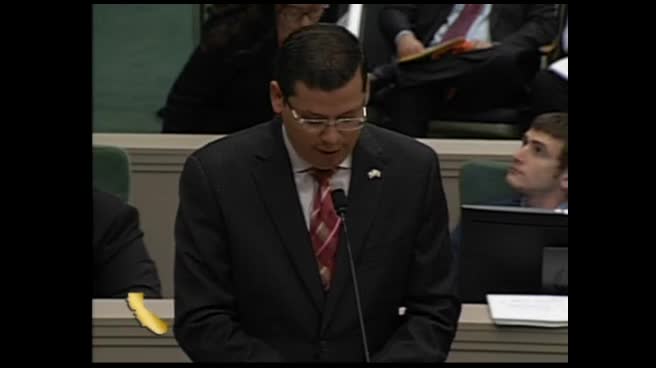 42MIN
Assembly Standing Committee on Business and Professions
Bill Author

Bill Co-Author(s):