AB 1922: California Competitiveness and Innovation Act.
- Session Year: 2017-2018
- House: Assembly
- Latest Version Date: 2018-03-01
(1)Existing property tax law provides, pursuant to the authority of a specified provision of the California Constitution, for a homeowners exemption in the amount of $7,000 of the full value of a dwelling, as defined, and authorizes the Legislature to increase this exemption.
This bill, beginning with the lien date for the 201920 fiscal year, would increase the homeowners exemption from $7,000 to $14,000 of the full value of a dwelling. This bill, for the 202021 fiscal year and for each fiscal year thereafter, would also require the county assessor to adjust the amount of the homeowners exemption by the percentage change in the House Price Index for California for the first 3 quarters of the prior calendar year, as specified.
(2)The Personal Income Tax Law imposes taxes based upon taxable income of individuals, estates, and trusts, at specified rates.
This bill, for taxable years beginning on or after January 1, 2018, would revise the personal income tax rates and the amounts of income those rates are imposed upon, as provided.
(3)The California Constitution requires the Legislature, whenever it increases the homeowners property tax exemption, to provide a comparable increase in benefits to qualified renters. The Personal Income Tax Law authorizes various credits against the taxes imposed by that law, including a credit for qualified renters in the amount of $120 for spouses filing joint returns, heads of household, and surviving spouses if adjusted gross income is $50,000 or less, and in the amount of $60 for other individuals if adjusted gross income is $25,000 or less. Existing law requires the Franchise Tax Board to annually adjust for inflation these adjusted gross income amounts.
This bill, for taxable years beginning on and after January 1, 2019, would increase this credit for a qualified renter to $240 for spouses filing joint returns, heads of household, and surviving spouses if adjusted gross income is $50,000 or less, as adjusted for inflation, and to an amount equal to $120 for other individuals if adjusted gross income is $25,000 or less, as adjusted for inflation. The bill, for taxable years beginning on or after January 1, 2020, would also require the Franchise Tax Board to annually adjust for inflation, based upon the California Consumer Price Index, the amount of these credits. The bill would also make nonsubstantive changes to the renters credit.
(4)The Corporation Tax Law generally imposes a franchise tax on corporations doing business within the limits of this state, including a minimum franchise tax on specified corporations, as provided.
This bill would eliminate the minimum franchise tax and make related technical amendments.
(5)Existing law requires the state to reimburse local agencies annually for certain property tax revenues lost as a result of any exemption or classification of property for purposes of ad valorem property taxation.
This bill would provide that, notwithstanding those provisions, no appropriation is made and the state shall not reimburse local agencies for property tax revenues lost by them pursuant to the bill.
(6)This bill would take effect immediately as a tax levy.
(1)Existing property tax law provides, pursuant to the authority of a specified provision of the California Constitution, for a homeowners exemption in the amount of $7,000 of the full value of a dwelling, as defined, and authorizes the Legislature to increase this exemption.
This bill, beginning with the lien date for the 201920 fiscal year, would increase the homeowners exemption from $7,000 to $14,000 of the full value of a dwelling. This bill, for the 202021 fiscal year and for each fiscal year thereafter, would also require the county assessor to adjust the amount of the homeowners exemption by the percentage change in the House Price Index for California for the first 3 quarters of the prior calendar year, as specified.
(2)The Personal Income Tax Law imposes taxes based upon taxable income of individuals, estates, and trusts, at specified rates.
This bill, for taxable years beginning on or after January 1, 2018, would revise the personal income tax rates and the amounts of income those rates are imposed upon, as provided.
(3)The California Constitution requires the Legislature, whenever it increases the homeowners property tax exemption, to provide a comparable increase in benefits to qualified renters. The Personal Income Tax Law authorizes various credits against the taxes imposed by that law, including a credit for qualified renters in the amount of $120 for spouses filing joint returns, heads of household, and surviving spouses if adjusted gross income is $50,000 or less, and in the amount of $60 for other individuals if adjusted gross income is $25,000 or less. Existing law requires the Franchise Tax Board to annually adjust for inflation these adjusted gross income amounts.
This bill, for taxable years beginning on and after January 1, 2019, would increase this credit for a qualified renter to $240 for spouses filing joint returns, heads of household, and surviving spouses if adjusted gross income is $50,000 or less, as adjusted for inflation, and to an amount equal to $120 for other individuals if adjusted gross income is $25,000 or less, as adjusted for inflation. The bill, for taxable years beginning on or after January 1, 2020, would also require the Franchise Tax Board to annually adjust for inflation, based upon the California Consumer Price Index, the amount of these credits. The bill would also make nonsubstantive changes to the renters credit.
(4)The Corporation Tax Law generally imposes a franchise tax on corporations doing business within the limits of this state, including a minimum franchise tax on specified corporations, as provided.
This bill would eliminate the minimum franchise tax and make related technical amendments.
(5)Existing law requires the state to reimburse local agencies annually for certain property tax revenues lost as a result of any exemption or classification of property for purposes of ad valorem property taxation.
This bill would provide that, notwithstanding those provisions, no appropriation is made and the state shall not reimburse local agencies for property tax revenues lost by them pursuant to the bill.
(6)This bill would take effect immediately as a tax levy.
This act shall be known, and may be cited, as the California Competitiveness and Innovation Act.
SEC. 2.Section 218 of the Revenue and Taxation Code is amended to read:218.(a)The homeowners property tax exemption is in the amount of the assessed value of the dwelling specified in this section, as authorized by subdivision (k) of Section 3 of Article XIII of the Constitution. That exemption is in the following amounts:
(1)Seven thousand dollars ($7,000) of the full value of the dwelling through the 201819 fiscal year.
(2)(A)Beginning with the lien date for the 201920 fiscal year, fourteen thousand dollars ($14,000) of the full value of the dwelling.
(B)Beginning with the lien date for the 202021 fiscal year and for each fiscal year thereafter, the assessor shall adjust the exemption amount of the prior fiscal year by the percentage change, rounded to the nearest one-thousandth of 1 percent, in the House Price Index for California for the first three quarters of the prior calendar year, as determined by the federal Housing Finance Agency.
(b)(1)The exemption does not extend to property that is rented, vacant, under construction on the lien date, or that is a vacation or secondary home of the owner or owners, nor does it apply to property on which an owner receives the veterans exemption.
(2)Notwithstanding paragraph (1), if a person receiving the exemption is not occupying the dwelling on the lien date because the dwelling was damaged in a misfortune or calamity, the person shall be deemed to occupy that same dwelling as his or her principal place of residence on the lien date, provided the persons absence from the dwelling is temporary and the person intends to return to the dwelling when possible to do so. Except as provided in paragraph (3), when a dwelling has been totally destroyed, and thus no dwelling exists on the lien date, the exemption provided by this section shall not be applicable until the structure has been replaced and is occupied as a dwelling.
(3)A dwelling that was totally destroyed in a disaster for which the Governor proclaimed a state of emergency, that qualified for the exemption provided by this section prior to the commencement date of the disaster and that has not changed ownership since the commencement date of the disaster, shall be deemed occupied by the person receiving the exemption on the lien date provided the person intends to reconstruct a dwelling on the property and occupy the dwelling as his or her principal place of residence when it is possible to do so.
(c)For purposes of this section, all of the following apply:
(1)Owner includes a person purchasing the dwelling under a contract of sale or who holds shares or membership in a cooperative housing corporation, which holding is a requisite to the exclusive right of occupancy of a dwelling.
(2)(A)Dwelling means a building, structure, or other shelter constituting a place of abode, whether real property or personal property, and any land on which it may be situated. A two-dwelling unit shall be considered as two separate single-family dwellings.
(B)Dwelling includes the following:
(i)A single-family dwelling occupied by an owner thereof as his or her principal place of residence on the lien date.
(ii)A multiple-dwelling unit occupied by an owner thereof on the lien date as his or her principal place of residence.
(iii)A condominium occupied by an owner thereof as his or her principal place of residence on the lien date.
(iv)Premises occupied by the owner of shares or a membership interest in a cooperative housing corporation, as defined in subdivision (i) of Section 61, as his or her principal place of residence on the lien date. Each exemption allowed pursuant to this subdivision shall be deducted from the total assessed valuation of the cooperative housing corporation. The exemption shall be taken into account in apportioning property taxes among owners of share or membership interests in the cooperative housing corporations so as to benefit those owners who qualify for the exemption.
(d)The exemption provided for in subdivision (k) of Section 3 of Article XIII of the California Constitution shall first be applied to the building, structure, or other shelter and the excess, if any, shall be applied to any land on which it may be located.
SEC. 3.Section 17041 of the Revenue and Taxation Code is amended to read:17041.(a)(1)There shall be imposed for each taxable year upon the entire taxable income of every resident of this state who is not a part-year resident, except the head of a household as defined in Section 17042, taxes in the following amounts and at the following rates upon the amount of taxable income computed for the taxable year as if the resident were a resident of this state for the entire taxable year and for all prior taxable years for any carryover items, deferred income, suspended losses, or suspended deductions:
If the taxable income is: | The tax is: |
Not over $3,650 | 1% of the taxable income |
Over $3,650 but not over $8,650 |
|
Over $8,650 but not over $13,650 |
|
Over $13,650 but not over $18,950 |
|
Over $18,950 but not over $23,950 |
|
Over $23,950 | $1,054.50 plus 9.3% of the excess |
(2)(A)For taxable years beginning on or after January 1, 2018, the income tax brackets and rates set forth in paragraph (1) shall be replaced with the following:
If the taxable income is: | The tax is: |
Not over $7,850 | 0% of the taxable income |
Over $7,850 but not over $18,610 |
|
Over $18,610 but not over $29,372 |
|
Over $29,372 but not over $40,773 | $322.84 plus 4% of the excess over $29,372 |
Over $40,733 but not over $51,530 | $787.28 plus 6% of the excess over $40,733 |
Over $51,530 but not over $250,000 | $1,432.70 plus 8% of the excess over $51,530 |
If the taxable income is: | The tax is: |
Not over $35,000 | 2% of the taxable income |
Over $35,000 but not over $45,000 |
|
Over $45,000 but not over $60,000 |
|
Over $60,000 but not over $285,000 | $2,500 plus 9.3% of the excess over $60,000 |
(B)(i)Except as provided in clause (ii), the income tax brackets specified in this paragraph shall be recomputed, as otherwise provided in subdivision (h), only for taxable years beginning on or after January 1, 2019.
(ii)The two-hundred-fifty-thousand dollar ($250,000) income tax bracket ceiling under subparagraph (A) shall be that amount as recomputed pursuant to subparagraph (B) of paragraph (2) of subdivision (f) of Section 36 of Article XIII of the California Constitution.
(3)(A)For taxable years beginning on or after January 1, 2031, for that portion of taxable income that is over two hundred fifty thousand dollars ($250,000), but not over three hundred thousand dollars ($300,000), as those amounts were recomputed pursuant to subparagraph (B) of paragraph (2) of subdivision (f) of Section 36 of Article XIII of the California Constitution, the tax rate is 9.3 percent of the excess over two hundred fifty thousand dollars ($250,000).(B)The income tax brackets specified in this paragraph shall be recomputed, as otherwise provided in subdivision (h), only for taxable years beginning on or after January 1, 2032.(3)For taxable years beginning on or after January 1, 2031, for taxable income that was subject to the tax rates established by paragraph (2) of subdivision (f) of Section 36 of Article XIII of the California Constitution, the tax rate is 8 percent.
(b)(1)There shall be imposed for each taxable year upon the taxable income of every nonresident or part-year resident, except the head of a household as defined in Section 17042, a tax as calculated in paragraph (2).
(2)The tax imposed under paragraph (1) shall be calculated by multiplying the taxable income of a nonresident or part-year resident, as defined in subdivision (i), by a rate (expressed as a percentage) equal to the tax computed under subdivision (a) on the entire taxable income of the nonresident or part-year resident as if the nonresident or part-year resident were a resident of this state for the taxable year and as if the nonresident or part-year resident were a resident of this state for all prior taxable years for any carryover items, deferred income, suspended losses, or suspended deductions, divided by the amount of that income.
(c)(1)There shall be imposed for each taxable year upon the entire taxable income of every resident of this state who is not a part-year resident for that taxable year, when the resident is the head of a household, as defined in Section 17042, taxes in the following amounts and at the following rates upon the amount of taxable income computed for the taxable year as if the resident were a resident of the state for the entire taxable year and for all prior taxable years for carryover items, deferred income, suspended losses, or suspended deductions:
If the taxable income is: | The tax is: |
Not over $7,300 | 1% of the taxable income |
Over $7,300 but not over $17,300 |
|
Over $17,300 but not over $22,300 |
|
Over $22,300 but not over $27,600 |
|
Over $27,600 but not over $32,600 |
|
Over $32,600 | $1,191 plus 9.3% of the excess |
(2)(A)For taxable years beginning on or after January 1, 2018, the income tax brackets and rates set forth in paragraph (1) shall be replaced with the following:
| If the taxable income is: | The tax is: |
| Not over $15,700 | 0% of the taxable income |
| Over $15,700 but notover $37,220 | $0 plus 1% of the excessover $15,700 |
| Over $37,220 but notover $58,744 | $215.20 plus 2% of the excessover $37,220 |
| Over $58,744 but notover $81,543 | $645.68 plus 4% of the excessover $58,744 |
| Over $81,543 but notover $103,060 | $1,257.76 plus 6% of the excessover $81,543 |
| Over $103,060 but notover $340,000 | $2,554 plus 8% of the excessover $103,060 |
If the taxable income is: | The tax is: |
Not over $15,700 | 0% of the taxable income |
Over $15,700 but not over $37,220 |
|
Over $37,220 but not over $58,744 |
|
Over $58,744 but not over $81,543 | $645.68 plus 4% of the excess over $58,744 |
Over $81,543 but not over $103,060 | $1,257.76 plus 6% of the excess over $81,543 |
Over $103,060 but not over $340,000 | $2,554 plus 8% of the excess over $103,060 |
If the taxable income is: | The tax is: |
Not over $7,300 | 1% of the taxable income |
Over $7,300 but not over $17,300 |
|
Over $17,300 but not over $22,300 |
|
Over $22,300 but not over $27,600 |
|
Over $27,600 but not over $32,600 |
|
Over $32,600 | $1,191 plus 9.3% of the excess |
If the taxable income is: | The tax is: |
Not over $15,710 | 0% of the taxable income |
Over $15,710 but not over $37,221 |
|
Over $37,221 but not over $47,982 |
|
Over $47,982 but not over $59,383 |
|
Over $59,383 but not over $70,142 |
|
Over $70,142 but not over $340,000 |
|
(B)(i)Except as provided in subclause (ii), the income tax brackets specified in this paragraph shall be recomputed, as otherwise provided in subdivision (h), only for taxable years beginning on or after January 1, 2019.
(ii)The three-hundred-forty-thousand dollar ($340,000) income tax bracket ceiling shall be that amount as recomputed pursuant to subparagraph (B) of paragraph (3) of subdivision (f) of Section 36 of Article XIII of the California Constitution.
(3)(A)For taxable years beginning on or after January 1, 2031, for that portion of taxable income that is over one hundred three thousand sixty dollars ($103,060), as that amount was recomputed pursuant to subparagraph (B) of paragraph (2), but not over five hundred twenty-six thousand four hundred forty-four dollars ($526,444), as that amount is determined as if recomputed pursuant to subparagraph (B) of paragraph (2), the tax rate is 8 percent of the excess over one hundred three thousand sixty dollars ($103,060).(B)For taxable years beginning on or after January 1, 2031, for that portion of taxable income that is over five hundred twenty-six thousand four hundred forty-four dollars ($526,444), as that amount is determined as if recomputed pursuant to subparagraph (B) of paragraph (2), the tax rate is 9 percent of the excess over five hundred twenty-six thousand four hundred forty-four dollars ($526,444). (C)The income tax brackets specified in this paragraph shall be recomputed, as otherwise provided in subdivision (h), only for taxable years beginning on or after January 1, 2032.(3)For taxable years beginning on or after January 1, 2031, for taxable income that was subject to the tax rates established by paragraph (3) of subdivision (f) of Section 36 of Article XIII of the California Constitution, the tax rate is 8 percent.
(d)(1)There shall be imposed for each taxable year upon the taxable income of every nonresident or part-year resident when the nonresident or part-year resident is the head of a household, as defined in Section 17042, a tax as calculated in paragraph (2).
(2)The tax imposed under paragraph (1) shall be calculated by multiplying the taxable income of a nonresident or part-year resident, as defined in subdivision (i), by a rate (expressed as a percentage) equal to the tax computed under subdivision (c) on the entire taxable income of the nonresident or part-year resident as if the nonresident or part-year resident were a resident of this state for the taxable year and as if the nonresident or part-year resident were a resident of this state for all prior taxable years for any carryover items, deferred income, suspended losses, or suspended deductions, divided by the amount of that income.
(e)There shall be imposed for each taxable year upon the taxable income of every estate, trust, or common trust fund taxes equal to the amount computed under subdivision (a) for an individual having the same amount of taxable income.
(f)The tax imposed by this part is not a surtax.
(g)(1)Section 1(g) of the Internal Revenue Code, relating to certain unearned income of children taxed as if parents income, shall apply, except as otherwise provided.
(2)Section 1(g)(7)(B)(ii)(II) of the Internal Revenue Code is modified, for purposes of this part, by substituting 1 percent for 10 percent.
(h)For each taxable year beginning on or after January 1, 1988, and before January 1, 2018, and for each taxable year beginning on or after January 1, 2019, the Franchise Tax Board shall recompute the income tax brackets prescribed in subdivisions (a) and (c). That computation shall be made as follows:
(1)The California Department of Industrial Relations shall transmit annually to the Franchise Tax Board the percentage change in the California Consumer Price Index for all items from June of the prior calendar year to June of the current calendar year, no later than August 1 of the current calendar year.
(2)The Franchise Tax Board shall do both of the following:
(A)Compute an inflation adjustment factor by adding 100 percent to the percentage change figure that is furnished pursuant to paragraph (1) and dividing the result by 100.
(B)Multiply the preceding taxable year income tax brackets by the inflation adjustment factor determined in subparagraph (A) and round off the resulting products to the nearest one dollar ($1).
(i)(1)For purposes of this part, the term taxable income of a nonresident or part-year resident includes each of the following:
(A)For any part of the taxable year during which the taxpayer was a resident of this state (as defined by Section 17014), all items of gross income and all deductions, regardless of source.
(B)For any part of the taxable year during which the taxpayer was not a resident of this state, gross income and deductions derived from sources within this state, determined in accordance with Article 9 of Chapter 3 (commencing with Section 17301) and Chapter 11 (commencing with Section 17951).
(2)For purposes of computing taxable income of a nonresident or part-year resident under paragraph (1), the amount of any net operating loss sustained in any taxable year during any part of which the taxpayer was not a resident of this state shall be limited to the sum of the following:
(A)The amount of the loss attributable to the part of the taxable year in which the taxpayer was a resident.
(B)The amount of the loss which, during the part of the taxable year the taxpayer is not a resident, is attributable to California source income and deductions allowable in arriving at taxable income of a nonresident or part-year resident.
(3)For purposes of computing taxable income of a nonresident or part-year resident under paragraph (1), any carryover items, deferred income, suspended losses, or suspended deductions shall only be includable or allowable to the extent that the carryover item, deferred income, suspended loss, or suspended deduction was derived from sources within this state, calculated as if the nonresident or part-year resident, for the portion of the year he or she was a nonresident, had been a nonresident for all prior years.
SEC. 4.Section 17053.5 of the Revenue and Taxation Code is amended to read:17053.5.(a)(1)For a qualified renter, there shall be allowed a credit against his or her net tax, as defined in Section 17039. The amount of the credit shall be as follows:
(A)(i)For spouses filing joint returns, heads of household, and surviving spouses, as defined in Section 17046, the credit shall be equal to one hundred twenty dollars ($120) if adjusted gross income is fifty thousand dollars ($50,000) or less.
(ii)For taxable years beginning on or after January 1, 2019, the credit shall be equal to two hundred forty dollars ($240) for taxpayers described in clause (i). For taxable years beginning on or after January 1, 2020, the Franchise Tax Board shall adjust the amount of the credit as provided by subdivision (j).
(B)(i)For other individuals, the credit shall be equal to sixty dollars ($60) if adjusted gross income is twenty-five thousand dollars ($25,000) or less.
(ii)For taxable years beginning on or after January 1, 2019, the credit shall be equal to one hundred twenty dollars ($120) for taxpayers described in clause (i). For taxable years beginning on or after January 1, 2020, the Franchise Tax Board shall adjust the amount of the credit as provided by subdivision (j).
(2)Except as provided in subdivision (b), spouses shall receive but one credit under this section. If the spouses file separate returns, the credit may be taken by either or equally divided between them, except as follows:
(A)If one spouse was a resident for the entire taxable year and the other spouse was a nonresident for part or all of the taxable year, the resident spouse shall be allowed one-half the credit allowed to married persons and the nonresident spouse shall be permitted one-half the credit allowed to married persons, prorated as provided in subdivision (e).
(B)If both spouses were nonresidents for part of the taxable year, the credit allowed to married persons shall be divided equally between them subject to the proration provided in subdivision (e).
(b)For spouses, if each spouse maintained a separate place of residence and resided in this state during the entire taxable year, each spouse will be allowed one-half the full credit allowed to married persons provided in subdivision (a).
(c)For purposes of this section, a qualified renter means an individual who satisfies both of the following:
(1)Was a resident of this state, as defined in Section 17014.
(2)Rented and occupied premises in this state which constituted his or her principal place of residence during at least 50 percent of the taxable year.
(d)Qualified renter does not include any of the following:
(1)An individual who for more than 50 percent of the taxable year rented and occupied premises that were exempt from property taxes, except that an individual, otherwise qualified, is deemed a qualified renter if he or she or his or her landlord pays possessory interest taxes, or the owner of those premises makes payments in lieu of property taxes that are substantially equivalent to property taxes paid on properties of comparable market value.
(2)An individual whose principal place of residence for more than 50 percent of the taxable year is with any other person who claimed that individual as a dependent for income tax purposes.
(3)An individual who has been granted or whose spouse has been granted the homeowners property tax exemption during the taxable year. This paragraph does not apply to an individual whose spouse has been granted the homeowners property tax exemption if each spouse maintained a separate residence for the entire taxable year.
(e)An otherwise qualified renter who is a nonresident for any portion of the taxable year shall claim the credits set forth in subdivision (a) at the rate of one-twelfth of those credits for each full month that individual resided within this state during the taxable year.
(f)A person claiming the credit provided in this section shall, as part of that claim, and under penalty of perjury, furnish that information as the Franchise Tax Board prescribes on a form supplied by the board.
(g)The credit provided in this section shall be claimed on returns in the form as the Franchise Tax Board may from time to time prescribe.
(h)For purposes of this section, premises means a house or a dwelling unit used to provide living accommodations in a building or structure and the land incidental thereto, but does not include land only, unless the dwelling unit is a mobilehome. The credit is not allowed for any taxable year for the rental of land upon which a mobilehome is located if the mobilehome has been granted a homeowners exemption under Section 218 in that year.
(i)This section shall become operative on January 1, 1998, and applies to any taxable year beginning on or after January 1, 1998.
(j)For each taxable year beginning on or after January 1, 1999, the Franchise Tax Board shall recompute the adjusted gross income amounts set forth in subdivision (a). For each taxable year beginning on or after January 1, 2020, the Franchise Tax Board shall also recompute the amount of the credit set forth in subdivision (a). These computations shall be made as follows:
(1)The Department of Industrial Relations shall transmit annually to the Franchise Tax Board the percentage change in the California Consumer Price Index for all items from June of the prior calendar year to June of the current year, no later than August 1 of the current calendar year.
(2)The Franchise Tax Board shall compute an inflation adjustment factor by adding 100 percent to that portion of the percentage change figure furnished pursuant to paragraph (1) and dividing the result by 100.
(3)The Franchise Tax Board shall multiply the amounts in paragraph (1) of subdivision (a) for the preceding taxable year by the inflation adjustment factor determined in paragraph (2), and round off the resulting products to the nearest one dollar ($1).
(4)In computing the amounts pursuant to this subdivision, the amounts provided in subparagraph (A) of paragraph (1) of subdivision (a) shall be twice the amount provided in subparagraph (B) of paragraph (1) of subdivision (a).
SEC. 5.Section 23151.1 of the Revenue and Taxation Code is amended to read:23151.1.Notwithstanding Section 23151, every corporation (except banks and financial corporations) doing business within the limits of this state and not exempted from taxation by the provisions of the Constitution of this state or by this part, shall annually pay to the state for the privilege of exercising its corporate franchises within this state, a tax determined as follows:
(a)With respect to corporations, other than those described in subdivision (b), which commence doing business within the state after December 31, 1971, and before January 1, 2000, the tax for the taxable year of commencement, whether or not for 12 full months, shall be the minimum franchise tax prescribed in Section 23153.
(b)If after December 31, 1972, a corporation commences to do business and ceases doing business in the same taxable year, the tax for that taxable year shall be according to or measured by its net income for the year, to be computed at the rate prescribed in Section 23151.
(c)(1)With respect to taxable years beginning after December 31, 1972, and before January 1, 2000, other than the year of commencement described in subdivision (a) or (b) or the year of cessation described in subdivision (d), the tax for that taxable year shall be according to or measured by its net income for the next preceding taxable year, to be computed at the rate prescribed in Section 23151.
(2)With respect to taxable years beginning on or after January 1, 2000, (other than the first taxable year beginning on or after that date), the tax for the taxable year (including the taxable year of commencement and the taxable year of cessation) shall be according to or measured by its net income for the taxable year to be computed at the rate prescribed in Section 23151.
(d)With respect to corporations which cease doing business in a taxable year beginning after December 31, 1972, and before January 1, 2000, other than those described in subdivision (b), the tax for the taxable year of cessation shall be:
(1)According to or measured by its net income for the next preceding taxable year, to be computed at the rate prescribed in Section 23151, plus
(2)According to or measured by its net income for the taxable year during which the corporation ceased doing business, to be computed at the rate prescribed in Section 23151.
SEC. 6.Section 23151.2 of the Revenue and Taxation Code is amended to read:23151.2.Notwithstanding Section 23151, every corporation (except banks and financial corporations) not exempted from taxation by the provisions of the Constitution of this state or by this part which dissolves or withdraws, shall pay a tax for its taxable year of dissolution or withdrawal according to or measured by its net income for the taxable year in which it ceased doing business, unless that income has previously been included in the measure of tax for any taxable year, to be computed at the rate prescribed in Section 23151 for its taxable year of dissolution or withdrawal.
SEC. 7.Section 23153 of the Revenue and Taxation Code is amended to read:23153.(a)Every corporation described in subdivision (b) shall be subject to the minimum franchise tax specified in subdivision (d) from the earlier of the date of incorporation, qualification, or commencing to do business within this state, until the effective date of dissolution or withdrawal as provided in Section 23331 or, if later, the date the corporation ceases to do business within the limits of this state.
(b)Unless expressly exempted by this part or the California Constitution, subdivision (a) shall apply to each of the following:
(1)Every corporation that is incorporated under the laws of this state.
(2)Every corporation that is qualified to transact intrastate business in this state pursuant to Chapter 21 (commencing with Section 2100) of Division 1 of Title 1 of the Corporations Code.
(3)Every corporation that is doing business in this state.
(c)The following entities are not subject to the minimum franchise tax specified in this section:
(1)Credit unions.
(2)Nonprofit cooperative associations organized pursuant to Chapter 1 (commencing with Section 54001) of Division 20 of the Food and Agricultural Code that have been issued the certificate of the board of supervisors prepared pursuant to Section 54042 of the Food and Agricultural Code. The association shall be exempt from the minimum franchise tax for five consecutive taxable years, commencing with the first taxable year for which the certificate is issued pursuant to subdivision (b) of Section 54042 of the Food and Agricultural Code. This paragraph only applies to nonprofit cooperative associations organized on or after January 1, 1994.
(d)(1)Except as provided in paragraph (2), paragraph (1) of subdivision (f) of Section 23151, paragraph (1) of subdivision (f) of Section 23181, and paragraph (1) of subdivision (c) of Section 23183, corporations subject to the minimum franchise tax shall pay annually to the state a minimum franchise tax of eight hundred dollars ($800).
(2)The minimum franchise tax shall be twenty-five dollars ($25) for each of the following:
(A)A corporation formed under the laws of this state whose principal business when formed was gold mining, which is inactive and has not done business within the limits of the state since 1950.
(B)A corporation formed under the laws of this state whose principal business when formed was quicksilver mining, which is inactive and has not done business within the limits of the state since 1971, or has been inactive for a period of 24 consecutive months or more.
(3)For purposes of paragraph (2), a corporation shall not be considered to have done business if it engages in business other than mining.
(e)Notwithstanding subdivision (a), for taxable years beginning on or after January 1, 1999, and before January 1, 2000, every qualified new corporation shall pay annually to the state a minimum franchise tax of five hundred dollars ($500) for the second taxable year. This subdivision shall apply to any corporation that is a qualified new corporation and is incorporated on or after January 1, 1999, and before January 1, 2000.
(1)The determination of the gross receipts of a corporation, for purposes of this subdivision, shall be made by including the gross receipts of each member of the commonly controlled group, as defined in Section 25105, of which the corporation is a member.
(2)Gross receipts, less returns and allowances reportable to this state, means the sum of the gross receipts from the production of business income, as defined in subdivision (a) of Section 25120, and the gross receipts from the production of nonbusiness income, as defined in subdivision (d) of Section 25120.
(3)Qualified new corporation means a corporation that is incorporated under the laws of this state or has qualified to transact intrastate business in this state, that begins business operations at or after the time of its incorporation and that reasonably estimates that it will have gross receipts, less returns and allowances, reportable to this state for the taxable year of one million dollars ($1,000,000) or less. Qualified new corporation does not include any corporation that began business operations as a sole proprietorship, a partnership, or any other form of business entity prior to its incorporation. This subdivision shall not apply to any corporation that reorganizes solely for the purpose of reducing its minimum franchise tax.
(4)This subdivision shall not apply to limited partnerships, as defined in Section 17935, limited liability companies, as defined in Section 17941, limited liability partnerships, as described in Section 17948, charitable organizations, as described in Section 23703, regulated investment companies, as defined in Section 851 of the Internal Revenue Code, real estate investment trusts, as defined in Section 856 of the Internal Revenue Code, real estate mortgage investment conduits, as defined in Section 860D of the Internal Revenue Code, qualified Subchapter S subsidiaries, as defined in Section 1361(b)(3) of the Internal Revenue Code, or to the formation of any subsidiary corporation, to the extent applicable.
(5)For any taxable year beginning on or after January 1, 1999, and before January 1, 2000, if a corporation has qualified to pay five hundred dollars ($500) for the second taxable year under this subdivision, but in its second taxable year, the corporations gross receipts, as determined under paragraphs (1) and (2), exceed one million dollars ($1,000,000), an additional tax in the amount equal to three hundred dollars ($300) for the second taxable year shall be due and payable by the corporation on the due date of its return, without regard to extension, for that year.
(f)(1)Notwithstanding subdivision (a), every corporation that incorporates or qualifies to do business in this state on or after January 1, 2000, shall not be subject to the minimum franchise tax for its first taxable year.
(2)This subdivision shall not apply to limited partnerships, as defined in Section 17935, limited liability companies, as defined in Section 17941, limited liability partnerships, as described in Section 17948, charitable organizations, as described in Section 23703, regulated investment companies, as defined in Section 851 of the Internal Revenue Code, real estate investment trusts, as defined in Section 856 of the Internal Revenue Code, real estate mortgage investment conduits, as defined in Section 860D of the Internal Revenue Code, and qualified Subchapter S subsidiaries, as defined in Section 1361(b)(3) of the Internal Revenue Code, to the extent applicable.
(3)This subdivision shall not apply to any corporation that reorganizes solely for the purpose of avoiding payment of its minimum franchise tax.
(g)Notwithstanding subdivision (a), a domestic corporation, as defined in Section 167 of the Corporations Code, that files a certificate of dissolution in the office of the Secretary of State pursuant to subdivision (b) of Section 1905 of the Corporations Code, prior to its amendment by the act amending this subdivision, and that does not thereafter do business shall not be subject to the minimum franchise tax for taxable years beginning on or after the date of that filing.
(h)The minimum franchise tax imposed by paragraph (1) of subdivision (d) shall not be increased by the Legislature by more than 10 percent during any calendar year.
(i)(1)Notwithstanding subdivision (a), a corporation that is a small business solely owned by a deployed member of the United States Armed Forces shall not be subject to the minimum franchise tax for any taxable year the owner is deployed and the corporation operates at a loss or ceases operation.
(2)The Franchise Tax Board may promulgate regulations as necessary or appropriate to carry out the purposes of this subdivision, including a definition for ceases operation.
(3)For the purposes of this subdivision, all of the following definitions apply:
(A)Deployed means being called to active duty or active service during a period when a Presidential Executive order specifies that the United States is engaged in combat or homeland defense. Deployed does not include either of the following:
(i)Temporary duty for the sole purpose of training or processing.
(ii)A permanent change of station.
(B)Operates at a loss means negative net income as defined in Section 24341.
(C)Small business means a corporation with total income from all sources derived from, or attributable, to the state of two hundred fifty thousand dollars ($250,000) or less.
(4)This subdivision shall become inoperative for taxable years beginning on or after January 1, 2018.
(j)This section shall remain in effect only until the effective date of the act adding this subdivision, and as of that date is repealed.
SEC. 8.Section 23221 of the Revenue and Taxation Code is amended to read:23221.(a)Any credit union that incorporates under the laws of this state or qualifies to transact intrastate business in this state shall thereupon prepay a tax of twenty-five dollars ($25) as provided in Section 23153. The prepayment shall be made to the Secretary of State with the filing of the articles of incorporation or the statement and designation by a foreign corporation. The Secretary of State shall transmit the amount of the prepayment to the Franchise Tax Board. The Franchise Tax Board shall certify to the Secretary of State on an individual or class basis those domestic or foreign corporations that are exempt from prepayment or for which prepayment to the Secretary of State is waived.
(b)This section shall become operative and apply beginning on or after January 1, 2001.
(c)This section shall remain in effect only until the effective date of the act adding this subdivision, and as of that date is repealed.
SEC. 9.Section 23282 of the Revenue and Taxation Code is amended to read:23282.(a)The tax imposed upon any taxpayer which has suffered the suspension or forfeiture provided in Section 23301, and which revives in any taxable year other than the taxable year in which suspension or forfeiture occurred, shall be computed in the same manner as provided in Sections 23222 to 23224, inclusive, relative to the computation of taxes upon taxpayers commencing to do business for the first time after incorporation or qualification. In addition to the taxes, penalties, and interest specified in Section 23305, such taxpayer shall prepay a tax in an amount equal to the minimum tax provided for in Section 23153 as a condition precedent to the issuance of a certificate of revivor.
(b)After December 31, 1971, and before January 1, 2000, the tax imposed upon any taxpayer which has suffered the suspension or forfeiture provided in Section 23301, and which revives in any taxable year other than the taxable year in which suspension or forfeiture occurred, shall be
(1)In the case of a taxpayer which was doing business in the year next preceding the year in which revivor took place, computed upon the basis of the net income for that next preceding income year,
(2)In the case of a taxpayer which resumed doing business in the year of revivor, computed upon the basis of the net income for the year in which it ceased doing business, unless such income is or has otherwise been subject to tax.
(c)After December 31, 1999, the tax imposed upon any taxpayer that has suffered the suspension or forfeiture provided in Section 23301, and that revives in any taxable year other than the taxable year in which suspension or forfeiture occurred, shall be computed upon the basis of the net income for the taxable year in which it revives, but in no event less than the minimum tax provided in Section 23153. revives.
SEC. 10.Notwithstanding Section 2229 of the Revenue and Taxation Code, no appropriation is made by this act and the state shall not reimburse any local agency for any property tax revenues lost by it pursuant to this act.
SEC. 11.This act provides for a tax levy within the meaning of Article IV of the California Constitution and shall go into immediate effect.
This act shall be known, and may be cited, as the California Competitiveness and Innovation Act.
SEC. 2.Section 218 of the Revenue and Taxation Code is amended to read:218.(a)The homeowners property tax exemption is in the amount of the assessed value of the dwelling specified in this section, as authorized by subdivision (k) of Section 3 of Article XIII of the California Constitution. That exemption shall be in the amount of seven thousand dollars ($7,000) of the full value of the dwelling. is in the following amounts:
(1)Seven thousand dollars ($7,000) of the full value of the dwelling through the 201819 fiscal year.
(2)(A)Beginning with the lien date for the 201920 fiscal year, fourteen thousand dollars ($14,000) of the full value of the dwelling.
(B)Beginning with the lien date for the 202021 fiscal year and for each fiscal year thereafter, the assessor shall adjust the exemption amount of the prior fiscal year by the percentage change, rounded to the nearest one-thousandth of 1 percent, in the House Price Index for California for the first three quarters of the prior calendar year, as determined by the federal Housing Finance Agency.
(b)(1)The exemption does not extend to property that is rented, vacant, under construction on the lien date, or that is a vacation or secondary home of the owner or owners, nor does it apply to property on which an owner receives the veterans exemption.
(2)Notwithstanding paragraph (1), if a person receiving the exemption is not occupying the dwelling on the lien date because the dwelling was damaged in a misfortune or calamity, the person shall be deemed to occupy that same dwelling as his or her principal place of residence on the lien date, provided the persons absence from the dwelling is temporary and the person intends to return to the dwelling when possible to do so. Except as provided in paragraph (3), when a dwelling has been totally destroyed, and thus no dwelling exists on the lien date, the exemption provided by this section shall not be applicable until the structure has been replaced and is occupied as a dwelling.
(3)A dwelling that was totally destroyed in a disaster for which the Governor proclaimed a state of emergency, that qualified for the exemption provided by this section prior to the commencement date of the disaster and that has not changed ownership since the commencement date of the disaster, shall be deemed occupied by the person receiving the exemption on the lien date provided the person intends to reconstruct a dwelling on the property and occupy the dwelling as his or her principal place of residence when it is possible to do so.
(c)For purposes of this section, all of the following apply:
(1)Owner includes a person purchasing the dwelling under a contract of sale or who holds shares or membership in a cooperative housing corporation, which holding is a requisite to the exclusive right of occupancy of a dwelling.
(2)(A)Dwelling means a building, structure, or other shelter constituting a place of abode, whether real property or personal property, and any land on which it may be situated. A two-dwelling unit shall be considered as two separate single-family dwellings.
(B)Dwelling includes the following:
(i)A single-family dwelling occupied by an owner thereof as his or her principal place of residence on the lien date.
(ii)A multiple-dwelling unit occupied by an owner thereof on the lien date as his or her principal place of residence.
(iii)A condominium occupied by an owner thereof as his or her principal place of residence on the lien date.
(iv)Premises occupied by the owner of shares or a membership interest in a cooperative housing corporation, as defined in subdivision (i) of Section 61, as his or her principal place of residence on the lien date. Each exemption allowed pursuant to this subdivision shall be deducted from the total assessed valuation of the cooperative housing corporation. The exemption shall be taken into account in apportioning property taxes among owners of share or membership interests in the cooperative housing corporations so as to benefit those owners who qualify for the exemption.
(d)The exemption provided for in subdivision (k) of Section 3 of Article XIII of the California Constitution shall first be applied to the building, structure, or other shelter and the excess, if any, shall be applied to any land on which it may be located.
SEC. 3.Section 17041 of the Revenue and Taxation Code is amended to read:17041.(a)(1)There shall be imposed for each taxable year upon the entire taxable income of every resident of this state who is not a part-year resident, except the head of a household as defined in Section 17042, taxes in the following amounts and at the following rates upon the amount of taxable income computed for the taxable year as if the resident were a resident of this state for the entire taxable year and for all prior taxable years for any carryover items, deferred income, suspended losses, or suspended deductions:
If the taxable income is: | The tax is: |
Not over $3,650 | 1% of the taxable income |
Over $3,650 but not over $8,650 |
|
Over $8,650 but not over $13,650 |
|
Over $13,650 but not over $18,950 |
|
Over $18,950 but not over $23,950 |
|
Over $23,950 | $1,054.50 plus 9.3% of the excess |
(2)(A)For taxable years beginning on or after January 1, 2018, the income tax brackets and rates set forth in paragraph (1) shall be replaced with the following:
If the taxable income is: | The tax is: |
Not over $7,850 | 0% of the taxable income |
Over $7,850 but not over $18,610 |
|
Over $18,610 but not over $29,372 |
|
Over $29,372 but not over $40,773 | $322.84 plus 4% of the excess over $29,372 |
Over $40,733 but not over $51,530 | $787.28 plus 6% of the excess over $40,733 |
Over $51,530 but not over $250,000 | $1,432.70 plus 8% of the excess over $51,530 |
If the taxable income is: | The tax is: |
Not over $35,000 | 2% of the taxable income |
Over $35,000 but not over $45,000 |
|
Over $45,000 but not over $60,000 |
|
Over $60,000 but not over $285,000 | $2,500 plus 9.3% of the excess over $60,000 |
(B)(i)Except as provided in clause (ii), the income tax brackets specified in this paragraph shall be recomputed, as otherwise provided in subdivision (h), only for taxable years beginning on or after January 1, 2019.
(ii)The two-hundred-fifty-thousand dollar ($250,000) income tax bracket ceiling under subparagraph (A) shall be that amount as recomputed pursuant to subparagraph (B) of paragraph (2) of subdivision (f) of Section 36 of Article XIII of the California Constitution.
(3)(A)For taxable years beginning on or after January 1, 2031, for that portion of taxable income that is over two hundred fifty thousand dollars ($250,000), but not over three hundred thousand dollars ($300,000), as those amounts were recomputed pursuant to subparagraph (B) of paragraph (2) of subdivision (f) of Section 36 of Article XIII of the California Constitution, the tax rate is 9.3 percent of the excess over two hundred fifty thousand dollars ($250,000).
(B)The income tax brackets specified in this paragraph shall be recomputed, as otherwise provided in subdivision (h), only for taxable years beginning on or after January 1, 2032.
(b)(1)There shall be imposed for each taxable year upon the taxable income of every nonresident or part-year resident, except the head of a household as defined in Section 17042, a tax as calculated in paragraph (2).
(2)The tax imposed under paragraph (1) shall be calculated by multiplying the taxable income of a nonresident or part-year resident, as defined in subdivision (i), by a rate (expressed as a percentage) equal to the tax computed under subdivision (a) on the entire taxable income of the nonresident or part-year resident as if the nonresident or part-year resident were a resident of this state for the taxable year and as if the nonresident or part-year resident were a resident of this state for all prior taxable years for any carryover items, deferred income, suspended losses, or suspended deductions, divided by the amount of that income.
(c)(1)There shall be imposed for each taxable year upon the entire taxable income of every resident of this state who is not a part-year resident for that taxable year, when the resident is the head of a household, as defined in Section 17042, taxes in the following amounts and at the following rates upon the amount of taxable income computed for the taxable year as if the resident were a resident of the state for the entire taxable year and for all prior taxable years for carryover items, deferred income, suspended losses, or suspended deductions:
If the taxable income is: | The tax is: |
Not over $7,300 | 1% of the taxable income |
Over $7,300 but not over $17,300 |
|
Over $17,300 but not over $22,300 |
|
Over $22,300 but not over $27,600 |
|
Over $27,600 but not over $32,600 |
|
Over $32,600 | $1,191 plus 9.3% of the excess |
(2)(A)For taxable years beginning on or after January 1, 2018, the income tax brackets and rates set forth in paragraph (1) shall be replaced with the following:
If the taxable income is: | The tax is: |
Not over $15,700 | 0% of the taxable income |
Over $15,700 but not over $37,220 |
|
Over $37,220 but not over $58,744 |
|
Over $58,744 but not over $81,543 | $645.68 plus 4% of the excess over $58,744 |
Over $81,543 but not over $103,060 | $1,257.76 plus 6% of the excess over $81,543 |
Over $103,060 but not over $340,000 | $2,554 plus 8% of the excess over $103,060 |
(B)(i)Except as provided in subclause (ii), the income tax brackets specified in this paragraph shall be recomputed, as otherwise provided in subdivision (h), only for taxable years beginning on or after January 1, 2019.
(ii)The three-hundred-forty-thousand dollar ($340,000) income tax bracket ceiling shall be that amount as recomputed pursuant to subparagraph (B) of paragraph (3) of subdivision (f) of Section 36 of Article XIII of the California Constitution.
(3)(A)For taxable years beginning on or after January 1, 2031, for that portion of taxable income that is over one hundred three thousand sixty dollars ($103,060), as that amount was recomputed pursuant to subparagraph (B) of paragraph (2), but not over five hundred twenty-six thousand four hundred forty-four dollars ($526,444), as that amount is determined as if recomputed pursuant to subparagraph (B) of paragraph (2), the tax rate is 8 percent of the excess over one hundred three thousand sixty dollars ($103,060).
(B)For taxable years beginning on or after January 1, 2031, for that portion of taxable income that is over five hundred twenty-six thousand four hundred forty-four dollars ($526,444), as that amount is determined as if recomputed pursuant to subparagraph (B) of paragraph (2), the tax rate is 9 percent of the excess over five hundred twenty-six thousand four hundred forty-four dollars ($526,444).
(C)The income tax brackets specified in this paragraph shall be recomputed, as otherwise provided in subdivision (h), only for taxable years beginning on or after January 1, 2032.
(d)(1)There shall be imposed for each taxable year upon the taxable income of every nonresident or part-year resident when the nonresident or part-year resident is the head of a household, as defined in Section 17042, a tax as calculated in paragraph (2).
(2)The tax imposed under paragraph (1) shall be calculated by multiplying the taxable income of a nonresident or part-year resident, as defined in subdivision (i), by a rate (expressed as a percentage) equal to the tax computed under subdivision (c) on the entire taxable income of the nonresident or part-year resident as if the nonresident or part-year resident were a resident of this state for the taxable year and as if the nonresident or part-year resident were a resident of this state for all prior taxable years for any carryover items, deferred income, suspended losses, or suspended deductions, divided by the amount of that income.
(e)There shall be imposed for each taxable year upon the taxable income of every estate, trust, or common trust fund taxes equal to the amount computed under subdivision (a) for an individual having the same amount of taxable income.
(f)The tax imposed by this part is not a surtax.
(g)(1)Section 1(g) of the Internal Revenue Code, relating to certain unearned income of children taxed as if parents income, shall apply, except as otherwise provided.
(2)Section 1(g)(7)(B)(ii)(II) of the Internal Revenue Code is modified, for purposes of this part, by substituting 1 percent for 10 percent.
(h)For each taxable year beginning on or after January 1, 1988, and before January 1, 2018, and for each taxable year beginning on or after January 1, 2019, the Franchise Tax Board shall recompute the income tax brackets prescribed in subdivisions (a) and (c). That computation shall be made as follows:
(1)The California Department of Industrial Relations shall transmit annually to the Franchise Tax Board the percentage change in the California Consumer Price Index for all items from June of the prior calendar year to June of the current calendar year, no later than August 1 of the current calendar year.
(2)The Franchise Tax Board shall do both of the following:
(A)Compute an inflation adjustment factor by adding 100 percent to the percentage change figure that is furnished pursuant to paragraph (1) and dividing the result by 100.
(B)Multiply the preceding taxable year income tax brackets by the inflation adjustment factor determined in subparagraph (A) and round off the resulting products to the nearest one dollar ($1).
(i)(1)For purposes of this part, the term taxable income of a nonresident or part-year resident includes each of the following:
(A)For any part of the taxable year during which the taxpayer was a resident of this state (as defined by Section 17014), all items of gross income and all deductions, regardless of source.
(B)For any part of the taxable year during which the taxpayer was not a resident of this state, gross income and deductions derived from sources within this state, determined in accordance with Article 9 of Chapter 3 (commencing with Section 17301) and Chapter 11 (commencing with Section 17951).
(2)For purposes of computing taxable income of a nonresident or part-year resident under paragraph (1), the amount of any net operating loss sustained in any taxable year during any part of which the taxpayer was not a resident of this state shall be limited to the sum of the following:
(A)The amount of the loss attributable to the part of the taxable year in which the taxpayer was a resident.
(B)The amount of the loss which, during the part of the taxable year the taxpayer is not a resident, is attributable to California source income and deductions allowable in arriving at taxable income of a nonresident or part-year resident.
(3)For purposes of computing taxable income of a nonresident or part-year resident under paragraph (1), any carryover items, deferred income, suspended losses, or suspended deductions shall only be includable or allowable to the extent that the carryover item, deferred income, suspended loss, or suspended deduction was derived from sources within this state, calculated as if the nonresident or part-year resident, for the portion of the year he or she was a nonresident, had been a nonresident for all prior years.
SEC. 4.Section 17053.5 of the Revenue and Taxation Code is amended to read:17053.5.(a)(1)For a qualified renter, there shall be allowed a credit against his or her net tax, as defined in Section 17039. The amount of the credit shall be as follows:
(A)(i)For spouses filing joint returns, heads of household, and surviving spouses, as defined in Section 17046, the credit shall be equal to one hundred twenty dollars ($120) if adjusted gross income is fifty thousand dollars ($50,000) or less.
(ii)For taxable years beginning on or after January 1, 2019, the credit shall be equal to two hundred forty dollars ($240) for taxpayers described in clause (i). For taxable years beginning on or after January 1, 2020, the Franchise Tax Board shall adjust the amount of the credit as provided by subdivision (j).
(B)(i)For other individuals, the credit shall be equal to sixty dollars ($60) if adjusted gross income is twenty-five thousand dollars ($25,000) or less.
(ii)For taxable years beginning on or after January 1, 2019, the credit shall be equal to one hundred twenty dollars ($120) for taxpayers described in clause (i). For taxable years beginning on or after January 1, 2020, the Franchise Tax Board shall adjust the amount of the credit as provided by subdivision (j).
(2)Except as provided in subdivision (b), spouses shall receive but one credit under this section. If the spouses file separate returns, the credit may be taken by either or equally divided between them, except as follows:
(A)If one spouse was a resident for the entire taxable year and the other spouse was a nonresident for part or all of the taxable year, the resident spouse shall be allowed one-half the credit allowed to married persons and the nonresident spouse shall be permitted one-half the credit allowed to married persons, prorated as provided in subdivision (e).
(B)If both spouses were nonresidents for part of the taxable year, the credit allowed to married persons shall be divided equally between them subject to the proration provided in subdivision (e).
(b)For spouses, if each spouse maintained a separate place of residence and resided in this state during the entire taxable year, each spouse will be allowed one-half the full credit allowed to married persons provided in subdivision (a).
(c)For purposes of this section, a qualified renter means an individual who satisfies both of the following:
(1)Was a resident of this state, as defined in Section 17014.
(2)Rented and occupied premises in this state which constituted his or her principal place of residence during at least 50 percent of the taxable year.
(d)Qualified renter does not include any of the following:
(1)An individual who for more than 50 percent of the taxable year rented and occupied premises that were exempt from property taxes, except that an individual, otherwise qualified, is deemed a qualified renter if he or she or his or her landlord pays possessory interest taxes, or the owner of those premises makes payments in lieu of property taxes that are substantially equivalent to property taxes paid on properties of comparable market value.
(2)An individual whose principal place of residence for more than 50 percent of the taxable year is with another any other person who claimed that individual as a dependent for income tax purposes.
(3)An individual who has been granted or whose spouse has been granted the homeowners property tax exemption during the taxable year. This paragraph does not apply to an individual whose spouse has been granted the homeowners property tax exemption if each spouse maintained a separate residence for the entire taxable year.
(e)An otherwise qualified renter who is a nonresident for any portion of the taxable year shall claim the credits set forth in subdivision (a) at the rate of one-twelfth of those credits for each full month that individual resided within this state during the taxable year.
(f)A person claiming the credit provided in this section shall, as part of that claim, and under penalty of perjury, furnish that information as the Franchise Tax Board prescribes on a form supplied by the board.
(g)The credit provided in this section shall be claimed on returns in the form as the Franchise Tax Board may from time to time prescribe.
(h)For purposes of this section, premises means a house or a dwelling unit used to provide living accommodations in a building or structure and the land incidental thereto, but does not include land only, unless the dwelling unit is a mobilehome. The credit is not allowed for any taxable year for the rental of land upon which a mobilehome is located if the mobilehome has been granted a homeowners exemption under Section 218 in that year.
(i)This section shall become operative on January 1, 1998, and applies to any taxable year beginning on or after January 1, 1998.
(j)For each taxable year beginning on or after January 1, 1999, the Franchise Tax Board shall recompute the adjusted gross income amounts set forth in subdivision (a). The computation For each taxable year beginning on or after January 1, 2020, the Franchise Tax Board shall also recompute the amount of the credit set forth in subdivision (a). These computations shall be made as follows:
(1)The Department of Industrial Relations shall transmit annually to the Franchise Tax Board the percentage change in the California Consumer Price Index for all items from June of the prior calendar year to June of the current year, no later than August 1 of the current calendar year.
(2)The Franchise Tax Board shall compute an inflation adjustment factor by adding 100 percent to the that portion of the percentage change figure which is furnished pursuant to paragraph (1) and dividing the result by 100.
(3)The Franchise Tax Board shall multiply the amount in subparagraph (B) of amounts in paragraph (1) of subdivision (d) (a) for the preceding taxable year by the inflation adjustment factor determined in paragraph (2), and round off the resulting products to the nearest one dollar ($1).
(4)In computing the amounts pursuant to this subdivision, the amounts provided in subparagraph (A) of paragraph (1) of subdivision (a) shall be twice the amount provided in subparagraph (B) of paragraph (1) of subdivision (a).
SEC. 5.Section 23151.1 of the Revenue and Taxation Code is amended to read:23151.1.Notwithstanding Section 23151, every corporation (except banks and financial corporations) doing business within the limits of this state and not exempted from taxation by the provisions of the Constitution of this state or by this part, shall annually pay to the state for the privilege of exercising its corporate franchises within this state, a tax determined as follows:
(a)With respect to corporations, other than those described in subdivision (b), which commence doing business within the state after December 31, 1971, and before January 1, 2000, the tax for the taxable year of commencement, whether or not for 12 full months, shall be the minimum franchise tax prescribed in Section 23153.
(b)If after December 31, 1972, a corporation commences to do business and ceases doing business in the same taxable year, the tax for that taxable year shall be according to or measured by its net income for the year, to be computed at the rate prescribed in Section 23151.
(c)(1)With respect to taxable years beginning after December 31, 1972, and before January 1, 2000, other than the year of commencement described in subdivision (a) or (b) or the year of cessation described in subdivision (d), the tax for that taxable year shall be according to or measured by its net income for the next preceding taxable year, to be computed at the rate prescribed in Section 23151.
(2)With respect to taxable years beginning on or after January 1, 2000, (other than the first taxable year beginning on or after that date), the tax for the taxable year (including the taxable year of commencement and the taxable year of cessation) shall be according to or measured by its net income for the taxable year to be computed at the rate prescribed in Section 23151.
(d)With respect to corporations which cease doing business in a taxable year beginning after December 31, 1972, and before January 1, 2000, other than those described in subdivision (b), the tax for the taxable year of cessation shall be:
(1)According to or measured by its net income for the next preceding taxable year, to be computed at the rate prescribed in Section 23151, plus
(2)According to or measured by its net income for the taxable year during which the corporation ceased doing business, to be computed at the rate prescribed in Section 23151.
(e)In any event, the tax for any taxable year shall not be less than the minimum tax provided for in Section 23153 for that taxable year.SEC. 6.Section 23151.2 of the Revenue and Taxation Code is amended to read:23151.2.Notwithstanding Section 23151, every corporation (except banks and financial corporations) not exempted from taxation by the provisions of the Constitution of this state or by this part which dissolves or withdraws, shall pay a tax for its taxable year of dissolution or withdrawal according to or measured by its net income for the taxable year in which it ceased doing business, unless that income has previously been included in the measure of tax for any taxable year, to be computed at the rate prescribed in Section 23151 for its taxable year of dissolution or withdrawal. In any event, the tax for the taxable year of its dissolution or withdrawal shall not be less than the minimum tax provided for in Section 23153 for that taxable year.
SEC. 7.Section 23153 of the Revenue and Taxation Code is amended to read:23153.(a)Every corporation described in subdivision (b) shall be subject to the minimum franchise tax specified in subdivision (d) from the earlier of the date of incorporation, qualification, or commencing to do business within this state, until the effective date of dissolution or withdrawal as provided in Section 23331 or, if later, the date the corporation ceases to do business within the limits of this state.
(b)Unless expressly exempted by this part or the California Constitution, subdivision (a) shall apply to each of the following:
(1)Every corporation that is incorporated under the laws of this state.
(2)Every corporation that is qualified to transact intrastate business in this state pursuant to Chapter 21 (commencing with Section 2100) of Division 1 of Title 1 of the Corporations Code.
(3)Every corporation that is doing business in this state.
(c)The following entities are not subject to the minimum franchise tax specified in this section:
(1)Credit unions.
(2)Nonprofit cooperative associations organized pursuant to Chapter 1 (commencing with Section 54001) of Division 20 of the Food and Agricultural Code that have been issued the certificate of the board of supervisors prepared pursuant to Section 54042 of the Food and Agricultural Code. The association shall be exempt from the minimum franchise tax for five consecutive taxable years, commencing with the first taxable year for which the certificate is issued pursuant to subdivision (b) of Section 54042 of the Food and Agricultural Code. This paragraph only applies to nonprofit cooperative associations organized on or after January 1, 1994.
(d)(1)Except as provided in paragraph (2), paragraph (1) of subdivision (f) of Section 23151, paragraph (1) of subdivision (f) of Section 23181, and paragraph (1) of subdivision (c) of Section 23183, corporations subject to the minimum franchise tax shall pay annually to the state a minimum franchise tax of eight hundred dollars ($800).
(2)The minimum franchise tax shall be twenty-five dollars ($25) for each of the following:
(A)A corporation formed under the laws of this state whose principal business when formed was gold mining, which is inactive and has not done business within the limits of the state since 1950.
(B)A corporation formed under the laws of this state whose principal business when formed was quicksilver mining, which is inactive and has not done business within the limits of the state since 1971, or has been inactive for a period of 24 consecutive months or more.
(3)For purposes of paragraph (2), a corporation shall not be considered to have done business if it engages in business other than mining.
(e)Notwithstanding subdivision (a), for taxable years beginning on or after January 1, 1999, and before January 1, 2000, every qualified new corporation shall pay annually to the state a minimum franchise tax of five hundred dollars ($500) for the second taxable year. This subdivision shall apply to any corporation that is a qualified new corporation and is incorporated on or after January 1, 1999, and before January 1, 2000.
(1)The determination of the gross receipts of a corporation, for purposes of this subdivision, shall be made by including the gross receipts of each member of the commonly controlled group, as defined in Section 25105, of which the corporation is a member.
(2)Gross receipts, less returns and allowances reportable to this state, means the sum of the gross receipts from the production of business income, as defined in subdivision (a) of Section 25120, and the gross receipts from the production of nonbusiness income, as defined in subdivision (d) of Section 25120.
(3)Qualified new corporation means a corporation that is incorporated under the laws of this state or has qualified to transact intrastate business in this state, that begins business operations at or after the time of its incorporation and that reasonably estimates that it will have gross receipts, less returns and allowances, reportable to this state for the taxable year of one million dollars ($1,000,000) or less. Qualified new corporation does not include any corporation that began business operations as a sole proprietorship, a partnership, or any other form of business entity prior to its incorporation. This subdivision shall not apply to any corporation that reorganizes solely for the purpose of reducing its minimum franchise tax.
(4)This subdivision shall not apply to limited partnerships, as defined in Section 17935, limited liability companies, as defined in Section 17941, limited liability partnerships, as described in Section 17948, charitable organizations, as described in Section 23703, regulated investment companies, as defined in Section 851 of the Internal Revenue Code, real estate investment trusts, as defined in Section 856 of the Internal Revenue Code, real estate mortgage investment conduits, as defined in Section 860D of the Internal Revenue Code, qualified Subchapter S subsidiaries, as defined in Section 1361(b)(3) of the Internal Revenue Code, or to the formation of any subsidiary corporation, to the extent applicable.
(5)For any taxable year beginning on or after January 1, 1999, and before January 1, 2000, if a corporation has qualified to pay five hundred dollars ($500) for the second taxable year under this subdivision, but in its second taxable year, the corporations gross receipts, as determined under paragraphs (1) and (2), exceed one million dollars ($1,000,000), an additional tax in the amount equal to three hundred dollars ($300) for the second taxable year shall be due and payable by the corporation on the due date of its return, without regard to extension, for that year.
(f)(1)Notwithstanding subdivision (a), every corporation that incorporates or qualifies to do business in this state on or after January 1, 2000, shall not be subject to the minimum franchise tax for its first taxable year.
(2)This subdivision shall not apply to limited partnerships, as defined in Section 17935, limited liability companies, as defined in Section 17941, limited liability partnerships, as described in Section 17948, charitable organizations, as described in Section 23703, regulated investment companies, as defined in Section 851 of the Internal Revenue Code, real estate investment trusts, as defined in Section 856 of the Internal Revenue Code, real estate mortgage investment conduits, as defined in Section 860D of the Internal Revenue Code, and qualified Subchapter S subsidiaries, as defined in Section 1361(b)(3) of the Internal Revenue Code, to the extent applicable.
(3)This subdivision shall not apply to any corporation that reorganizes solely for the purpose of avoiding payment of its minimum franchise tax.
(g)Notwithstanding subdivision (a), a domestic corporation, as defined in Section 167 of the Corporations Code, that files a certificate of dissolution in the office of the Secretary of State pursuant to subdivision (b) of Section 1905 of the Corporations Code, prior to its amendment by the act amending this subdivision, and that does not thereafter do business shall not be subject to the minimum franchise tax for taxable years beginning on or after the date of that filing.
(h)The minimum franchise tax imposed by paragraph (1) of subdivision (d) shall not be increased by the Legislature by more than 10 percent during any calendar year.
(i)(1)Notwithstanding subdivision (a), a corporation that is a small business solely owned by a deployed member of the United States Armed Forces shall not be subject to the minimum franchise tax for any taxable year the owner is deployed and the corporation operates at a loss or ceases operation.
(2)The Franchise Tax Board may promulgate regulations as necessary or appropriate to carry out the purposes of this subdivision, including a definition for ceases operation.
(3)For the purposes of this subdivision, all of the following definitions apply:
(A)Deployed means being called to active duty or active service during a period when a Presidential Executive order specifies that the United States is engaged in combat or homeland defense. Deployed does not include either of the following:
(i)Temporary duty for the sole purpose of training or processing.
(ii)A permanent change of station.
(B)Operates at a loss means negative net income as defined in Section 24341.
(C)Small business means a corporation with total income from all sources derived from, or attributable, to the state of two hundred fifty thousand dollars ($250,000) or less.
(4)This subdivision shall become inoperative for taxable years beginning on or after January 1, 2018.
(j)This section shall remain in effect only until the effective date of the act adding this subdivision, and as of that date is repealed.
SEC. 8.Section 23221 of the Revenue and Taxation Code is amended to read:23221.(a)Any credit union that incorporates under the laws of this state or qualifies to transact intrastate business in this state shall thereupon prepay a tax of twenty-five dollars ($25) as provided in Section 23153. The prepayment shall be made to the Secretary of State with the filing of the articles of incorporation or the statement and designation by a foreign corporation. The Secretary of State shall transmit the amount of the prepayment to the Franchise Tax Board. The Franchise Tax Board shall certify to the Secretary of State on an individual or class basis those domestic or foreign corporations that are exempt from prepayment or for which prepayment to the Secretary of State is waived.
(b)This section shall become operative and apply beginning on or after January 1, 2001.
(c)This section shall remain in effect only until the effective date of the act adding this subdivision, and as of that date is repealed.
SEC. 9.Section 23282 of the Revenue and Taxation Code is amended to read:23282.(a)The tax imposed upon any taxpayer which has suffered the suspension or forfeiture provided in Section 23301, and which revives in any taxable year other than the taxable year in which suspension or forfeiture occurred, shall be computed in the same manner as provided in Sections 23222 to 23224, inclusive, relative to the computation of taxes upon taxpayers commencing to do business for the first time after incorporation or qualification. In addition to the taxes, penalties, and interest specified in Section 23305, such taxpayer shall prepay a tax in an amount equal to the minimum tax provided for in Section 23153 as a condition precedent to the issuance of a certificate of revivor.
(b)After December 31, 1971, and before January 1, 2000, the tax imposed upon any taxpayer which has suffered the suspension or forfeiture provided in Section 23301, and which revives in any taxable year other than the taxable year in which suspension or forfeiture occurred, shall be
(1)In the case of a taxpayer which was doing business in the year next preceding the year in which revivor took place, computed upon the basis of the net income for that next preceding income year,
(2)In the case of a taxpayer which resumed doing business in the year of revivor, computed upon the basis of the net income for the year in which it ceased doing business, unless such income is or has otherwise been subject to tax, tax.
(3)In the case of a taxpayer which first commences to do business in the year of revivor, the minimum tax provided in Section 23153,(4)In no event less than the minimum tax provided in Section 23153.In addition to the taxes, penalties, and interest specified in Section 23305, such taxpayer shall prepay the minimum tax imposed by this subdivision as a condition precedent to the issuance of a certificate of revivor.(c)After December 31, 1999, the tax imposed upon any taxpayer that has suffered the suspension or forfeiture provided in Section 23301, and that revives in any taxable year other than the taxable year in which suspension or forfeiture occurred, shall be computed upon the basis of the net income for the taxable year in which it revives, but in no event less than the minimum tax provided in Section 23153.
SEC. 10.Notwithstanding Section 2229 of the Revenue and Taxation Code, no appropriation is made by this act and the state shall not reimburse any local agency for any property tax revenues lost by it pursuant to this act.
SEC. 11.This act provides for a tax levy within the meaning of Article IV of the California Constitution and shall go into immediate effect.
|
Date
|
Status
|
|---|---|
| May 14, 2018 | In committee: Set, final hearing. Failed passage. |
| Mar 19, 2018 | In committee: Set, second hearing. Hearing canceled at the request of author. |
| Mar 12, 2018 | In committee: Set, first hearing. Hearing canceled at the request of author. |
| Mar 5, 2018 | Re-referred to Com. on REV. & TAX. |
| Mar 1, 2018 | From committee chair, with author's amendments: Amend, and re-refer to Com. on REV. & TAX. Read second time and amended. |
| Feb 5, 2018 | Referred to Com. on REV. & TAX. |
| Jan 25, 2018 | From printer. May be heard in committee February 24. |
| Jan 24, 2018 | Read first time. To print. |
|
Date
|
Description
|
Location
|
Votes
|
|
|---|---|---|---|---|
| May 14, 2018 | Do pass and be re-referred to the Committee on [Appropriations] | Assembly Standing Committee on Revenue and Taxation |
Failed |
This list shows positions taken on this bill by organizations on the date displayed, which is linked to the original source.
Positions by individuals are not included.
|
Organization
|
Position
|
Date
|
|---|---|---|
| California Association Of Realtors | ** Support | May 11, 2018 |
| California Business Properties Association | * Support | May 14, 2018 |
| Greater Bakersfield Chamber of Commerce | ** Support | May 11, 2018 |
| Howard Jarvis Taxpayers Association | * Support | May 14, 2018 |
| National Federation Of Independent Business | * Support | May 14, 2018 |
Date of Hearing: May 14, 2018
ASSEMBLY COMMITTEE ON REVENUE AND TAXATION
Autumn R. Burke, Chairwoman
ABPCA Bill Id:AB 1922 (
Author:Fong) – As Amended Ver:March 1, 2018
Majority vote. Tax levy. Fiscal committee.
SUBJECT: California Competitiveness and Innovation Act
SUMMARY: Increases the homeowner's property tax exemption, modifies the personal income tax rates and brackets, increases the renter's credit, and eliminates the minimum franchise tax. Specifically, this bill:
- Increases, beginning with the lien date for the 2019–20 fiscal year (FY), the homeowner's property tax exemption to $14,000.
- Requires a county assessor, beginning with the lien date for the 2020–21 FY and each FY thereafter, to adjust the amount of the homeowner's exemption by the percentage change in the Housing Price Index for California for the first three quarters of the prior calendar year, as specified.
- Increases the nonrefundable renters' tax credit for taxable years beginning on and after January 1, 2019, according to filing status of the individual as follows:
- From $60 to $120 for individual taxpayers filing single, or married filing separate; and,
- From $120 to $240 for married couples filing joint returns, heads of household, and surviving spouses.
- Requires the Franchise Tax Board (FTB) to adjust annually the amount of the renters' credit for inflation, beginning with the 2020 taxable year, based upon the California Consumer Price Index.
- Eliminates the minimum franchise tax of $800.
- Modifies Personal Income Tax (PIT) rates and brackets as follows:
- 0% of the taxable income not over $7,850;
- 1% of the taxable income over $7,850 but not over $18,610;
- $107.60 plus 2% of the taxable income over $18,610 but not over $29,372;
- $322.84 plus 4% of the taxable income over $29,372 but not over $40,773;
- $787.28 plus 6% of the taxable income over $40,773 but not over $51,530; and,
- $1,432.70 plus 8% of the taxable income over $51,530 but not over $250,000.
- Modifies PIT rates and brackets for heads of households as follows:
- 0% of the taxable income not over $15,710;
- 1% of the taxable income over $15,710 but not over $37,221;
- $215.11 plus 2% of the taxable income over $37,221 but not over $47,982;
- $430.33 plus 4% of the taxable income over $47,982 but not over $59,383;
- $886.37 plus 6% of the taxable income over $59,383 but not over $70,142; and,
- $1,531.91 plus 8% of the taxable income over $70,142 but not over $340,000.
- Imposes a maximum tax rate of 8% for taxable years beginning on or after January 1, 2031.
- Provides that the state shall not reimburse local agencies for property tax revenues lost as a result of this bill.
- Takes effect immediately as a tax levy.
EXISTING LAW:
- Provides that all property is taxable, unless otherwise provided by the California Constitution or federal laws.
- Limits ad valorem taxes on real property to 1% of the full cash value of that property and limits future annual increases in assessed values to the rate of inflation, not to exceed 2%, as long as the property remains under the same ownership.
- Exempts from property taxation the first $7,000 of assessed value of an owner-occupied principal place of residence (usually referred to as the "homeowners' exemption").
- Requires the state to reimburse each local government for the revenue loss from the homeowners' exemption. The Constitution establishes the minimum amount of the homeowners' exemption, but permits statutory increases under certain conditions.
- Authorizes the Legislature to increase the amount of the homeowners' exemption if both of the following requirements are satisfied:
- Local governments are reimbursed for the revenue loss; and,
- Benefits to renters, currently provided via the renters' income tax credit, are increased by a comparable amount.
- Allows a nonrefundable credit for qualified renters in the following amounts:
- $60 for single and married filing separate with an adjusted gross income (AGI) of $37,768 or less; and,
- $120 for married or registered domestic partners filing jointly, heads of household, or surviving spouses with an AGI of $75,536 or less.
- Requires the FTB to adjust annually for inflation the amount of AGI used for purposes of calculating the renters' credit.
- Imposes a franchise tax on all corporations doing business in California equal to 8.84% of the taxable income attributable to California. A minimum franchise tax of $800 is imposed on all corporations that are incorporated under the laws of California, qualified to transact intrastate business in California, or are doing business in California. Taxpayers must pay the minimum franchise tax only if it is more than their regular franchise tax liability.[1]
- Provides exceptions with respect to imposition of the minimum franchise tax. For instance, credit unions and nonprofit organizations are not subject to the minimum franchise tax and a corporation is not subject to the minimum franchise tax for its first taxable year. However, even though a corporation is not subject to the minimum tax in its first taxable year, it will be subject to franchise tax in its first taxable year based on its taxable income.
- Provides that limited partnerships (LPs), limited liability partnerships (LLPs), and limited liability companies (LLCs) that are doing business in California, registered or qualified to do business in California, or formed in this state, are subject to annual tax in an amount equal to the minimum franchise tax, currently set at $800. These entities (known as 'pass-through entities') are not subject to any tax based on taxable income. Rather, the items of income, gain, loss, deduction and credit are passed-through to the owners and reported on their respective income or franchise tax returns. Every LLC subject to the annual tax is also required to pay an annual fee based on the total income from all sources derived from or attributable to the state. The fee is determined as follows:
- If total income is more than $250,000, but less than $500,000, the fee is $900;
- If total income is more than $500,000, but less than $1 million, the fee is $2,500;
- If total income is more than $1 million, but less than $5 million, the fee is $6,000; and,
- If the total income is more than $5 million, the fee is $11,790.
- Imposes six permanent and three temporary PIT rates ranging from 1% to 12.3%, at the state level. Each tax bracket applies to a different range of income, and the FTB is required to adjust the tax brackets each year based on the change in the California Consumer Price Index.
- Imposes an additional 1% tax on the portion of a taxpayer's taxable income that exceeds $1 million, known as the mental health tax.
FISCAL EFFECT: According to the State Board of Equalization, the increase in the homeowners' property tax exemption "would initially decrease local revenues by $408 million, and further adjust annually with the California House Price Index. We expect the increase to grow significantly over time due to the compounding effect of the adjustment." The FTB estimates a General Fund (GF) revenue gain due to the increase in the homeowners' property tax exemption of $12 million in FY 2019-20, and $25 million in FY 2020-21. The FTB estimates a GF revenue loss due to changes to the PIT rates of $19 billion in FY 2018-19, $12 billion in FY 2019-20, and $13 billion in FY 2020-21. The FTB estimates a GF revenue loss due to the increase in the renters' credit of $110 million in FY 2019-20 and $120 million in FY 2020-21. Finally, FTB estimates a GF revenue loss due to the elimination of the minimum franchise tax of $1.6 billion in FY 2018-19, $1.2 billion in FY 2019-20, and $1.3 billion in FY 2020-21.
COMMENTS:
- The author has provided the following statement in support of this bill:
California has the highest state personal income tax, the highest sales tax, and the second highest gas tax in the nation. With California's housing crisis and the price of food, rent, mortgages, electricity, and gasoline continuing to go up, affordability is one of the biggest issues facing this state-especially for middle class families and residents in the inland regions of the state. California also has the highest poverty rate in the nation. The California Competitiveness and Innovation Act will make California competitive with other states, especially for California families and small businesses that are struggling to survive. Californians will be able to keep more of their hard-earned money and use it to invest in their families and local communities.
- Proponents argue that "[r]ents throughout California are rising due to the lack of new housing inventory. Doubling the renter's credit would be a meaningful savings for families struggling to keep up with increasing rents. Most renters can barely afford their rent, studies show almost one-third of renters spend almost half of their take home pay on rent." Additionally, proponents argue that a "lower income tax rate may just allow a renter to become a homeowner or a worker to save for retirement. As the federal tax reform package has demonstrated, lower taxes can have a huge impact on many." Finally, proponents state that "[s]mall businesses are also struggling in California. The $800 annual franchise tax on small businesses is absurd. Businesses earning $9,040 are subject to this additional tax that needs to be reversed to make California more business friendly."
- Committee Staff Comments:
- One of the lowest property tax burdens for owner-occupied housing in the nation: Proposition 13, passed by the voters in 1978, was designed to provide real property tax relief by imposing a set of interlocking limitations upon the assessment and taxing powers of state and local governments. Proposition 13 generally limits the maximum amount of any ad valorem tax on real property to no more than 1% of the property's full cash value, as adjusted for the lesser of inflation or 2% per year[2]. Proposition 13 also requires cities, counties, and special districts to obtain approval of two-thirds of their qualified electors in order to impose an undefined class of "special taxes."[3] Consequently, California homeowners bear a low property tax burden in comparison to homeowners in other states: California ranks 34th for property taxes paid as a percentage of owner-occupied housing value. The effective property tax rate on owner-occupied housing (which is calculated as total real property taxes paid divided by total home value) amounts to 0.81% in California. In contrast, that rate is 2.38% in New Jersey, 1.64% in New York, and 1.90% in Texas. Hawaii has the lowest rate of 0.28%.
- Homeowners' property tax exemption: In addition to Proposition 13, the California Constitution provides for a property tax homeowners' exemption, which amounts to annual tax relief for homeowners of almost $75. The exemption, which reduces the taxable value of a home, may be claimed only by a taxpayer who owns and occupies a home as his/her principal residence. According to the BOE staff, in FY 2013-14, the homeowners' exemption was claimed by 5.2 million property owners.
The amount of the exemption was set at $7,000 in 1974, prior to the passage of Proposition 13, and has remained unchanged since then. Clearly, the amount of tax relief due to the homeowners' exemption was more valuable in 1974. However, it may be argued that the need for the homeowners' exemption was made obsolete by the passage of Proposition 13 because protections against rising property taxes are now built into the tax system. - Indexing: This bill requires the county assessor to index the amount of the homeowners' exemption every year by the percentage change in the House Price Index, as specified. The proposed adjustment would provide on-going property tax reductions even if values of houses in California soar, while an adjustment to the assessed value of a house would remain subject to the 2% constitutional inflation cap. The Committee may wish to consider whether indexing the homeowners' exemption amount without a corresponding annual adjustment to the assessed value is justified given the existence of Proposition 13 limitations on the assessment of real property in the state. Without a corresponding annual adjustment to the assessed value, it is possible that at some point in the future the exemption will exceed the assessed value of the home.
- Renters' credit: The PIT Law allows an eligible individual who rents her/his principal residence to reduce her/his state income tax with a tax credit. The renters' credit was suspended for the 1993 through 1997 taxable years, but was reinstated beginning with the 1998 taxable year. The credit eligibility is based on the taxpayer's AGI and her/his filing status. AGI amounts are indexed annually for inflation. For the 2015 tax year, a credit of $120 is allowed for married taxpayers filing joint returns; heads of household and surviving spouses with an AGI of $75,536 or less; and $60 for other individuals (single or married/RDP filing separately) with an AGI of $37,768 or less.[4] The renters' credit is nonrefundable.
- The constitutional requirement: The $7,000 homeowners' exemption amount prescribed by the California Constitution is the minimum exemption amount, which means that it may be increased by the Legislature. However, the California Constitution requires the Legislature to provide an equivalent increase in the amount of the renters' credit whenever the homeowners' exemption amount is increased. Furthermore, the state is required by the Constitution to reimburse local governments for the property tax revenue loss due to the homeowners' exemption. In fact, this exemption is the only property tax exemption for which the state fully reimburses local governments. This bill provides that the state shall not reimburse local agencies for property tax revenues lost.
- A person does not need to pay $800 to conduct business in California: California allows an individual to open a business as a sole proprietor. A sole proprietorship is an unincorporated business that is owned by one person and is the simplest form of business organization to start and maintain. The business has no existence apart from the owner; its liabilities are the owner's personal liabilities; and the owner undertakes the risks of the business for all assets owned, whether used in the business or personally owned. The owner includes the income and expenses of the business on the owner's tax return. Formation documents are not required to be filed with the California Secretary of State's (SOS) office, but other state filings may be required depending on the type of business. General partnerships are treated very similarly but are required to file a statement of partnership authority with the SOS. Although the structure and liabilities are different from other business entities, sole proprietorships and general partnerships can engage in business without having to pay the minimum franchise tax or the annual tax.
- Minimum tax: The minimum franchise tax, the annual tax, and annual fee, were enacted to ensure that all corporations and other pass through entities pay at least a minimum amount of tax for the privilege of doing business in California, regardless of the businesses' income or losses. Thus, the minimum tax is not an "income tax", but rather a tax on the right to exercise the powers granted to a corporation doing business in California. Even when a business earns no income, it still receives the benefits of its corporate status, including the limited liability protection under California law.
- $800 for limited liability: By providing limited liability to certain entities, (e.g., LLCs, LLPs, and corporations), California is essentially allowing a business owner to transfer part of the cost of conducting business onto creditors and tort victims. (Jonathan Macey, The Limited Liability Company: Lessons for Corporate Law, Washington University Law Review, Vol. 73, Issue 2, 1995.) As an example, if an owner of a construction company, having limited liability, injures an individual during the course of business, the victim's redress is limited to the assets of the company. If the company is insolvent, part of the cost of the injury is borne by the victim. Before the advent of LLCs and LLPs, that small business owner would have likely started the company as a sole proprietorship or general partnership, allowing the victim pursue the personal assets of the owner.
As a public policy, California has decided that the risk borne by creditors and potential tort victims is outweighed by the need to encourage investment. Providing limited liability to small businesses, presumably with few or no assets, may cause owners of the business to only consider those marginal costs and benefits associated with the investments that they will internalize. In other words, "limited liability allows investors to pursue extremely risky projects and to profit from the pursuit of a 'heads I win; tails you lose' strategy of project finance." (Id.) The idea that people will take on greater risk because someone else will pay for the costs is known as "moral hazard." (Id.) This tends to occur when businesses are shielded from liability, but also when businesses lack financial resources to provide adequate compensation to creditors. (Id.) It may be argued that creditors, knowing that LLCs have limited liability, will require higher borrowing costs or ask for personal guarantees from the individual owners. However, the person hit by a taxi cab or the victim of a toxic spill did not assume the potential risk of the company's insolvency and the owner's limited liability. (David Millon, Piercing the Corporate Veil, Financial Responsibility, and the Limits of Limited Liability, Emory Law Journal, Vol. 65, Number 5, 2007.) The goal of providing limited liability appears to be the state's need to promote investment by transferring risk from investors to creditors. (Id.) Therefore, corporations and other limited liability structures provide a substantial benefit to entrepreneurs at a nominal cost of $800 per year, even when insolvent or operating at a loss. Furthermore, the entire elimination of the minimum franchise tax could potentially encourage greater use of limited liability entities as a way of shielding assets instead of generating new business activity.
- Inflation: California's minimum franchise tax was increased to $800 in 1990 and has remained at $800 since then. Due to inflation, the cost of the minimum franchise tax has been significantly reduced. The $800 minimum franchise tax in 1990 would cost $1,556.46 in January 2018 dollars.[5] Because the minimum franchise tax is not indexed for inflation, it has functionally been lowered by 2.35% per year. Thus, the minimum franchise tax has effectively been cut in half since it was imposed in 1990.
- Cash flow problems: Both startups and established companies may, at some point, face cash flow problems. A number of things can put a strain on a business' cash flow: customers can choose not to pay or pay late, the cost of materials can skyrocket, unforeseen acts can delay production, and changes in interest rates can increase the costs of capital. Additionally, once a business realizes that it is unable to pay current debts, it may be difficult, if not impossible, to secure additional funding. It appears that this bill could aid new businesses as they struggle to become profitable. However, as noted earlier, $800 is a nominal amount and it is unclear if the elimination of the minimum tax would help struggling businesses succeed.
- Personal income tax rates: In 2012, voters approved Proposition 30, which, among other things, required high-income taxpayers to pay an extra 1%, 2%, or 3% tax on part of their incomes. Specifically, the marginal tax rate on taxable incomes above $250,000 (single) and $500,000 (joint filing) was increased to 10.3%; the marginal tax rate on taxable incomes above $300,000 (single) and $600,000 (joint filing) was increased to 11.3%; and the marginal tax rate on taxable income over $500,000 (single) and $1 million (joint filing) was increased to 12.3%. The voters extended the income provisions of Proposition 30 through 2030 with the passage of Proposition 55. In additional to these high-income rates, a 1% marginal tax rate for mental health services applies to taxable income in excess of $1 million. As a result, the marginal tax rate on taxable income in excess of $1 million is currently 13.3%.
This bill, in general, reduces PIT rates and makes modifications to the income thresholds so that greater amounts of income are subject to a lower tax rate. The changes do not apply to the income tax rates imposed by Proposition 30 and 55, or the mental health tax. However, beginning on or after January 1, 2031, the maximum tax rate will be 8%. The proposed income tax rates and the brackets will make California's system of taxation substantially less progressive. However, until that date, low-income individuals will see a substantial tax reduction.
- Progressive system of taxation: Generally speaking, there are those who believe in a progressive system of taxation, and those who do not, preferring other methods of taxation such as a flat tax. The argument against a progressive tax system is similar to the one espoused by Austrian economist and author, Eugen Von Bohm-Bawerk. Addressing the concept in his work, Karl Marx and the Close of his System, Von Bohm-Bawerk focuses his argument on the consumption of goods versus the consumption of capital. Applying the concept of diminishing returns, as income rises a smaller portion of that income will be used for consumption of goods. By default, a larger portion will be used for capital investments, which will generate more income for more capital investments. By purchasing more and more capital goods, the cost of production begins to fall and begins to elevate the standard of living. A progressive system of taxation would increase the tax rate on higher income individuals, reducing the amount of income available for capital investments and thereby reducing improvements to the standard of living.
This argument against a progressive system of taxation, however, fails to address the issue of a growing gap between those who have capital investments generating an exceedingly greater amount of income and those who are just able to pay for life's necessities. Because low-income earners spend a larger share of their income on necessities, they have a much smaller portion of income left over to make their own capital investments. The argument also fails to recognize that the return on capital is greater than the rate of economic growth, which leads to a concentration of wealth, and, potentially, social instability[6].
- How is a tax expenditure different from a direct expenditure? As the Department of Finance notes in its Tax Expenditure Report, there are several key differences between tax expenditures and direct expenditures. First, once they are put in place, tax expenditures are reviewed less frequently than direct expenditures. Although this creates greater certainty for taxpayers regarding the applicable tax laws (because the tax expenditure will remain on the books for longer periods of time), it may also result in arbitrary tax expenditures that do not serve a public benefit. Second, there is generally no control over the amount of revenue losses associated with any given tax expenditure. Finally, it should also be noted that once enacted it takes a two-thirds vote to rescind an existing tax expenditure absent a sunset date. For this reason, the Committee may wish to include a five-year sunset date for all of these provisions.
REGISTERED SUPPORT / OPPOSITION:
Support
California Association of Realtors
Greater Bakersfield Chamber of Commerce
Howard Jarvis Taxpayers Association
Opposition
None on file
Analysis Prepared by: Carlos Anguiano / REV. & TAX. / (916) 319-2098
According to the FTB, for taxable years beginning on or after January 1, 1997, only taxpayers with net incomes of less than approximately $9,040 pay the minimum franchise tax because the amount of measured tax owed would be less than $800 ($9,039 x 8.84% = $799). ↑
California Constitution, Section 1 of Article XIII A. ↑
California Constitution, Section 4 of Article XIII A. ↑
The California Constitution requires the State Legislature to provide a comparable increase in benefits to qualified renters wherever it proposes to increase the homeowner's exemption as provided by Article XIII, Section 3(k) of the California Constitution. The current exemption amount is the first $7,000 of the full value of a dwelling occupied as the owner's principal residence on the January 1 lien date from property taxation. The Legislature may increase the size of the homeowners' exemption; but if it does so, it must also: (a) increase the rate of state taxes in an amount sufficient to pay for the increased cost of state subventions to local governments, and (b) provide a comparable increase in benefits to qualified renters.
↑Consumer Price Index, Inflation Calculator, Bureau of Labor Statistics, https://www.bls.gov/data/inflation_calculator.htm ↑
Thomas Piketty, Capital in the Twenty-First Century, 2013 ↑
Discussed in Hearing
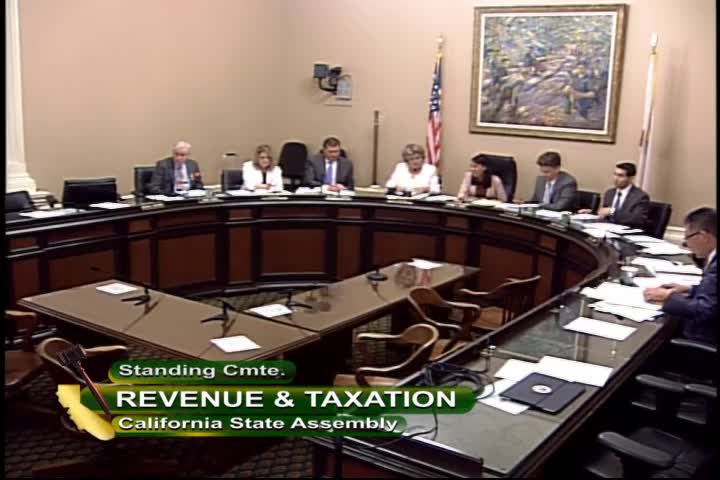 6MIN