AB 2278: Local Government Renewable Energy Self-Generation Program.
- Session Year: 2017-2018
- House: Assembly
- Latest Version Date: 2018-04-25
Under existing law, the Public Utilities Commission has regulatory authority over public utilities, including electrical corporations. Existing law authorizes the commission to fix the rates and charges for every public utility and requires that those rates and charges be just and reasonable. Existing law authorizes a local government to receive a bill credit, as specified, to be applied to a designated benefiting account for electricity exported to the electrical grid by an eligible renewable generating facility, as defined, and requires the commission to approve a rate tariff for the benefiting account. Existing law provides specific rules for the calculation of these bill credits. Under existing law, an electrical corporation is obligated to provide a bill credit to a benefiting account designated by a local government only until the combined statewide cumulative rated generating capacity of all eligible renewable generating facilities within the service territories of the states 3 largest electrical corporations reaches 250 megawatts. Existing law provides that any bill credit applicable to a benefiting account is credited to the generation component of electricity usage charges and reduces the bill up to the amount of those charges during a billing cycle. If the bill credit exceeds the generation component in a billing cycle, the surplus is carried over as a financial credit to the next billing cycle, except that when the last billing cycle of a 12-month period is reached, any remaining credit is reset to zero. These provisions are known as the Local Government Renewable Energy Self-Generation Program.
This bill would revise how the bill credit is calculated, as specified, and, for these purposes, would require the electrical corporation, until January 1, 2044, to use the time-of-use periods and seasonal definitions that were in effect on January 1, 2017. The bill would require the commission and an electrical corporation to consider the climate change benefits of the program when determining whether to propose, implement, approve, or modify any rate tariff, bill credit, time-of-use period, or rate design that impacts the ability of local governments to establish or continue to operate eligible renewable generating facilities under the program. The bill would require a tariff approved by the commission as part of the program to remain in effect for the operating life of the associated eligible renewable generating facility. The bill would repeal the requirement that when the last billing cycle of a 12-month period is reached, any remaining credit is reset to zero. The bill would prohibit the commission from implementing its provisions unless the commission determines that the implementation of these provisions would not result in cost shifting among customers.
Under existing law, a violation of the Public Utilities Act or an order or direction of the commission is a crime.
Because the provisions of this bill would require an order or other action of the commission to implement, and a violation of that order or action would be a crime, the bill would impose a state-mandated local program.
The California Constitution requires the state to reimburse local agencies and school districts for certain costs mandated by the state. Statutory provisions establish procedures for making that reimbursement.
This bill would provide that no reimbursement is required by this act for a specified reason.
Under existing law, the Public Utilities Commission has regulatory authority over public utilities, including electrical corporations. Existing law authorizes the commission to fix the rates and charges for every public utility and requires that those rates and charges be just and reasonable. Existing law authorizes a local government to receive a bill credit, as defined, specified, to be applied to a designated benefiting account for electricity exported to the electrical grid by an eligible renewable generating facility, as defined, and requires the commission to adopt approve a rate tariff for the benefiting account. Existing law establishes the responsibilities of the affected electrical corporation to which the facility is interconnected. Existing law provides specific rules for the calculation of these bill credits. Under existing law, an electrical corporation is obligated to provide a bill credit to a benefiting account designated by a local government only until the combined statewide cumulative rated generating capacity of all eligible renewable generating facilities within the service territories of the states 3 largest electrical corporations reaches 250 megawatts. These provisions are known as the Local Government Renewable Energy Self-Generation Program. Existing law provides that any bill credit applicable to a benefiting account is credited to the generation component of electricity usage charges and reduces the bill up to the amount of those charges during a billing cycle. If the bill credit exceeds the generation component in a billing cycle, the surplus is carried over as a financial credit to the next billing cycle, except that when the last billing cycle of a 12-month period is reached, any remaining credit is reset to zero. These provisions are known as the Local Government Renewable Energy Self-Generation Program.
This bill would revise how the bill credit is calculated, as specified, and, for these purposes, would require the electrical corporation, until January 1, 2044, to use the time-of-use periods and seasonal definitions that were in effect on January 1, 2017. The bill would require the commission and an electrical corporation to consider the climate change benefits of the program when determining whether to propose, implement, approve, or modify any rate tariff, bill credit, time-of-use period, or rate design that impacts the ability of local governments to establish or continue to operate eligible renewable generating facilities under the program. The bill would require a tariff approved by the commission as part of the program to remain in effect for the operating life of the associated eligible renewable generating facility. The bill would repeal the requirement that when the last billing cycle of a 12-month period is reached, any remaining credit is reset to zero.
Under existing law, a violation of the Public Utilities Act or an order or direction of the commission is a crime.
Because the provisions of this bill would require an order or other action of the commission to implement, and a violation of that order or action would be a crime, the bill would impose a state-mandated local program.
The California Constitution requires the state to reimburse local agencies and school districts for certain costs mandated by the state. Statutory provisions establish procedures for making that reimbursement.
This bill would provide that no reimbursement is required by this act for a specified reason.
Under existing law, the Public Utilities Commission has regulatory authority over public utilities, including electrical corporations. Existing law authorizes a local government to receive a bill credit, as defined, to be applied to a designated benefiting account for electricity exported to the electrical grid by an eligible renewable generating facility, as defined, and requires the commission to adopt a rate tariff for the benefiting account. Existing law establishes the responsibilities of the affected electrical corporation to which the facility is interconnected. These provisions are known as the Local Government Renewable Energy Self-Generation Program. Existing law provides that any bill credit applicable to a benefiting account is credited to the generation component of electricity usage charges and reduces the bill up to the amount of those charges during a billing cycle. If the bill credit exceeds the generation component in a billing cycle, the surplus is carried over as a financial credit to the next billing cycle, except that when the last billing cycle of a 12-month period is reached, any remaining credit is reset to zero.
This bill would repeal the requirement that when the last billing cycle of a 12-month period is reached, any remaining credit is reset to zero.
(a)As used in this section, the following terms have the following meanings:
(1)Benefiting account means an electricity account, or more than one account, that satisfies either of the following:
(A)The account or accounts are located within the geographical boundaries of a local government or, for a campus, within the geographical boundary of the city, county, or city and county in which the campus is located, with the account or accounts being mutually agreed upon by the local government or campus and an electrical corporation.
(B)The account or accounts belong to members of a joint powers authority and are located within the geographical boundaries of the group of public agencies that formed the joint powers authority, if the eligible renewable generating facility and electricity account or accounts are wholly located within the confines of a single county within which the joint powers authority is located and electric service is provided by a single electrical corporation, with the account or accounts being mutually agreed upon by the joint powers authority and the electrical corporation.
(2)Bill credit means an amount of money credited to one or more benefiting accounts that is calculated based upon all of the following:
(A)For a period of 12 consecutive months starting on the date that the electrical corporation grants express written permission to operate the eligible renewable generating facility, the bill credit shall be calculated based upon the time-of-use electricity generation component of the electricity usage charge of the generating account that was in place at the time when the local government submitted its interconnection application for the eligible renewable generating facility to the electrical corporation, multiplied by the quantities of electricity generated by the eligible renewable generating facility that are exported to the grid during the corresponding time period.
(B)Following that 12-month period, the bill credit shall be calculated in the same manner described in subparagraph (A) except that the time-of-use electricity generation component of the electricity usage charge of the generating account for the eligible renewable generating facility shall increase by 3 percent every 12 months for 24 consecutive years.
(C)Electricity is exported to the grid if it is generated by an eligible renewable generating facility, is not utilized onsite by the local government, and the electricity flows through the meter site and on to the electrical corporations distribution or transmission infrastructure.
(D)In calculating the time-of-use electricity generation component of the electricity usage charge of each generating account, the electrical corporation, until January 1, 2044, shall use its time-of-use periods and seasonal definitions that were in effect on January 1, 2017.
(3)Campus means an individual community college campus, individual California State University campus, or individual University of California campus.
(4)Eligible renewable generating facility means a generation facility that meets all of the following requirements:
(A)Has a generating capacity of no more than five megawatts.
(B)Is an eligible renewable energy resource, as defined in Article 16 (commencing with Section 399.11) of Part 1.
(C)Is located within the geographical boundary of the local government or, for a campus, within the geographical boundary of the city or city and county, if the campus is located in an incorporated area, or county, if the campus is located in an unincorporated area.
(D)Is owned by, operated by, or on property under the control of, the local government or campus.
(E)Is sized to offset all or part of the electrical load of the benefiting account. For these purposes, premises that are leased by a local government or campus are under the control of the local government or campus.
(5)Generating account means the time-of-use electric service account of the local government or campus where the eligible renewable generating facility is located.
(6)Local government means a city, county, whether general law or chartered, city and county, special district, school district, political subdivision, other local public agency, or a joint powers authority formed pursuant to the Joint Exercise of Powers Act (Chapter 5 (commencing with Section 6500) of Division 7 of Title 1 of the Government Code) that has as members public agencies located within the same county and same electrical corporation service territory, but shall not mean the state, any agency or department of the state, other than an individual campus of the University of California or the California State University, or any joint powers authority that has as members public agencies located in different counties or different electrical corporation service territories, or that has as a member the federal government, any federal department or agency, this or another state, or any department or agency of this state or another state.
(b)Subject to the limitation in subdivision (h), a local government may elect to receive electric service pursuant to this section if all of the following conditions are met:
(1)The local government designates one or more benefiting accounts to receive a bill credit.
(2)A benefiting account receives service under a time-of-use rate schedule.
(3)The benefiting account is the responsibility of, and serves property that is owned, operated, or on property under the control of, the same local government that owns, operates, or controls the eligible renewable generating facility.
(4)The electrical output of the eligible renewable generating facility is metered for time of use to allow calculation of the bill credit based upon when the electricity is exported to the grid.
(5)All direct costs associated with the metering requirements of paragraphs (2) and (4) are the responsibility of the local government.
(6)All direct costs associated with interconnection are the responsibility of the local government. For purposes of this paragraph, interconnection has the same meaning as defined in Section 2803, except that it applies to the interconnection of an eligible renewable generating facility rather than the energy source of a private energy producer.
(7)The local government does not sell electricity exported to the electrical grid to a third party.
(8)All electricity exported to the grid by the local government that is generated by the eligible renewable generating facility becomes the property of the electrical corporation to which the facility is interconnected, and may, with the concurrence of the local government, be counted toward the electrical corporations total retail sales for purposes of Article 16 (commencing with Section 399.11) of Chapter 2.3 of Part 1. Ownership of the renewable energy credits, as defined in Section 399.12, shall be the same as the ownership of the renewable energy credits associated with electricity that is net metered pursuant to Section 2827.
(9)An electrical corporation shall not be required to compensate a local government for electricity generated from an eligible renewable facility pursuant to this section in excess of the bill credits applied to the designated benefiting account. A local government renewable generation facility participating pursuant to this section shall not be eligible for any other tariff or program that requires an electrical corporation to purchase generation from that facility while participating in the local government renewable energy self-generation program pursuant to this section.
(c)(1)A benefiting account shall be billed for all electricity usage, and for each bill component, at the rate schedule applicable to the benefiting account, including any cost-responsibility surcharge or other cost recovery mechanism, as determined by the commission, to reimburse the Department of Water Resources for purchases of electricity, pursuant to Division 27 (commencing with Section 80000) of the Water Code.
(2)The bill shall then subtract the bill credit applicable to the benefiting account. The generation component credited to the benefiting account shall not include the cost-responsibility surcharge or other cost recovery mechanism, as determined by the commission, to reimburse the Department of Water Resources for purchases of electricity, pursuant to Division 27 (commencing with Section 80000) of the Water Code. The electrical corporation shall ensure that the local government receives the full bill credit.
(3)If, during the billing cycle, the generation component of the electricity usage charges exceeds the bill credit, the benefiting account shall be billed for the difference.
(4)If, during the billing cycle, the bill credit applied pursuant to paragraph (2) exceeds the generation component of the electricity usage charges, the difference shall be carried forward as a financial credit to the next billing cycle.
(d)This program is intended to achieve Californias climate change and alternative energy goals and objectives. The commission and electrical corporations shall consider the climate change benefits of this program when determining whether to propose, implement, approve, or modify any rate tariff, bill credit, time-of-use period, or rate design that impacts the ability of local governments to establish or continue to operate eligible renewable generating facilities under this program. The commission shall ensure that the transfer of a bill credit to a benefiting account does not directly result in a shifting of actual costs to bundled service subscribers. The actual costs associated with the transfer of a bill credit shall include all billing-related expenses directly attributable to the eligible renewable generating facility. expenses. The commission shall not implement the amendments to this section enacted in the 201718 Regular Session unless it determines that the implementation of those amendments would not result in cost shifting among customers.
(e)Not more frequently than once per year, and upon providing the electrical corporation with a minimum of 60 days notice, the local government may elect to change a benefiting account. Any credit resulting from the application of this section earned prior to the change in a benefiting account that has not been used as of the date of the change in the benefiting account shall be applied, and may only be applied, to a benefiting account as changed.
(f)A local government shall provide the electrical corporation to which the eligible renewable generating facility will be interconnected with not less than 60 days notice prior to the eligible renewable generating facility becoming operational. The electrical corporation shall file an advice letter with the commission that complies with this section not later than 30 days after receipt of the notice proposing a rate tariff for a benefiting account. The commission, within 30 days of the date of filing, shall approve the proposed tariff or specify conforming changes to be made by the electrical corporation to be filed in a new advice letter.
(g)The local government may terminate its election pursuant to subdivision (b), upon providing the electrical corporation with a minimum of 60 days notice. Should the local government sell its interest in the eligible renewable generating facility, or sell the electricity generated by the eligible renewable generating facility, in a manner other than required by this section, upon the date of either event, and the earliest date if both events occur, no further bill credit pursuant to paragraph (3) of subdivision (b) may be earned. Only credit earned prior to that date shall be made to a benefiting account.
(h)An electrical corporation is not obligated to provide a bill credit to a benefiting account that is not designated by a local government prior to the point in time that the combined statewide cumulative rated generating capacity of all eligible renewable generating facilities within the service territories of the states three largest electrical corporations reaches 250 megawatts. Only those eligible renewable generating facilities that are providing bill credits to benefiting accounts pursuant to this section shall count toward reaching this 250-megawatt limitation. Each electrical corporation shall only be required to offer service or contracts under this section until that electrical corporation reaches its proportionate share of the 250-megawatt limitation based on the ratio of its peak demand to the total statewide peak demand of all electrical corporations. Except as provided in subdivision (g), a tariff approved pursuant to subdivision (f) shall remain in effect for the operating life of the associated eligible renewable generating facility.
(i)This chapter does not apply to an electrical corporation with 60,000 or fewer customer accounts.
SEC. 2.No reimbursement is required by this act pursuant to Section 6 of Article XIIIB of the California Constitution because the only costs that may be incurred by a local agency or school district will be incurred because this act creates a new crime or infraction, eliminates a crime or infraction, or changes the penalty for a crime or infraction, within the meaning of Section 17556 of the Government Code, or changes the definition of a crime within the meaning of Section 6 of Article XIIIB of the California Constitution.
(a)As used in this section, the following terms have the following meanings:
(1)Benefiting account means an electricity account, or more than one account, that satisfies either of the following:
(A)The account or accounts are located within the geographical boundaries of a local government or, for a campus, within the geographical boundary of the city, county, or city and county in which the campus is located, with the account or accounts being mutually agreed upon by the local government or campus and an electrical corporation.
(B)The account or accounts belong to members of a joint powers authority and are located within the geographical boundaries of the group of public agencies that formed the joint powers authority, if the eligible renewable generating facility and electricity account or accounts are wholly located within the confines of a single county within which the joint powers authority is located and electric service is provided by a single electrical corporation, with the account or accounts being mutually agreed upon by the joint powers authority and the electrical corporation.
(2)Bill credit means an amount of money credited to a one or more benefiting account accounts that is calculated based upon all of the time-of-use following:
(A)For a period of 12 consecutive months starting on the date that the electrical corporation grants express written permission to operate the eligible renewable generating facility, the bill credit shall be calculated based upon the time-of-use electricity generation component of the electricity usage charge of the generating account, account that was in place at the time when the local government submitted its interconnection application for the eligible renewable generating facility to the electrical corporation, multiplied by the quantities of electricity generated by an the eligible renewable generating facility that are exported to the grid during the corresponding time period. Electricity
(B)Following that 12-month period, the bill credit shall be calculated in the same manner described in subparagraph (A) except that the time-of-use electricity generation component of the electricity usage charge of the generating account for the eligible renewable generating facility shall increase by 3 percent every 12 months for 24 consecutive years.
(C)Electricity is exported to the grid if it is generated by an eligible renewable generating facility, is not utilized onsite by the local government, and the electricity flows through the meter site and on to the electrical corporations distribution or transmission infrastructure.
(D)In calculating the time-of-use electricity generation component of the electricity usage charge of each generating account, the electrical corporation, until January 1, 2044, shall use its time-of-use periods and seasonal definitions that were in effect on January 1, 2017.
(3)Campus means an individual community college campus, individual California State University campus, or individual University of California campus.
(4)Eligible renewable generating facility means a generation facility that meets all of the following requirements:
(A)Has a generating capacity of no more than five megawatts.
(B)Is an eligible renewable energy resource, as defined in Article 16 (commencing with Section 399.11) of Part 1.
(C)Is located within the geographical boundary of the local government or, for a campus, within the geographical boundary of the city or city and county, if the campus is located in an incorporated area, or county, if the campus is located in an unincorporated area.
(D)Is owned by, operated by, or on property under the control of of, the local government or campus.
(E)Is sized to offset all or part of the electrical load of the benefiting account. For these purposes, premises that are leased by a local government or campus are under the control of the local government or campus.
(5)Generating account means the time-of-use electric service account of the local government or campus where the eligible renewable generating facility is located.
(6)Local government means a city, county, whether general law or chartered, city and county, special district, school district, political subdivision, other local public agency, or a joint powers authority formed pursuant to the Joint Exercise of Powers Act (Chapter 5 (commencing with Section 6500) of Division 7 of Title 1 of the Government Code) that has as members public agencies located within the same county and same electrical corporation service territory, but shall not mean the state, any agency or department of the state, other than an individual campus of the University of California or the California State University, or any joint powers authority that has as members public agencies located in different counties or different electrical corporation service territories, or that has as a member the federal government, any federal department or agency, this or another state, or any department or agency of this state or another state.
(b)Subject to the limitation in subdivision (h), a local government may elect to receive electric service pursuant to this section if all of the following conditions are met:
(1)The local government designates one or more benefiting accounts to receive a bill credit.
(2)A benefiting account receives service under a time-of-use rate schedule.
(3)The benefiting account is the responsibility of, and serves property that is owned, operated, or on property under the control of of, the same local government that owns, operates, or controls the eligible renewable generating facility.
(4)The electrical output of the eligible renewable generating facility is metered for time of use to allow calculation of the bill credit based upon when the electricity is exported to the grid.
(5)All direct costs associated with the metering requirements of paragraphs (2) and (4) are the responsibility of the local government.
(6)All direct costs associated with interconnection are the responsibility of the local government. For purposes of this paragraph, interconnection has the same meaning as defined in Section 2803, except that it applies to the interconnection of an eligible renewable generating facility rather than the energy source of a private energy producer.
(7)The local government does not sell electricity exported to the electrical grid to a third party.
(8)All electricity exported to the grid by the local government that is generated by the eligible renewable generating facility becomes the property of the electrical corporation to which the facility is interconnected, but shall not and may, with the concurrence of the local government, be counted toward the electrical corporations total retail sales for purposes of Article 16 (commencing with Section 399.11) of Chapter 2.3 of Part 1. Ownership of the renewable energy credits, as defined in Section 399.12, shall be the same as the ownership of the renewable energy credits associated with electricity that is net metered pursuant to Section 2827.
(9)An electrical corporation shall not be required to compensate a local government for electricity generated from an eligible renewable facility pursuant to this section in excess of the bill credits applied to the designated benefiting account. A local government renewable generation facility participating pursuant to this section shall not be eligible for any other tariff or program that requires an electrical corporation to purchase generation from that facility while participating in the local government renewable energy self-generation program pursuant to this section.
(c)(1)A benefiting account shall be billed for all electricity usage, and for each bill component, at the rate schedule applicable to the benefiting account, including any cost-responsibility surcharge or other cost recovery mechanism, as determined by the commission, to reimburse the Department of Water Resources for purchases of electricity, pursuant to Division 27 (commencing with Section 80000) of the Water Code.
(2)The bill shall then subtract the bill credit applicable to the benefiting account. The generation component credited to the benefiting account shall not include the cost-responsibility surcharge or other cost recovery mechanism, as determined by the commission, to reimburse the Department of Water Resources for purchases of electricity, pursuant to Division 27 (commencing with Section 80000) of the Water Code. The electrical corporation shall ensure that the local government receives the full bill credit.
(3)If, during the billing cycle, the generation component of the electricity usage charges exceeds the bill credit, the benefiting account shall be billed for the difference.
(4)If, during the billing cycle, the bill credit applied pursuant to paragraph (2) exceeds the generation component of the electricity usage charges, the difference shall be carried forward as a financial credit to the next billing cycle.
(d)This program is intended to achieve Californias climate change and alternative energy goals and objectives. The commission and electrical corporations shall consider the climate change benefits of this program when determining whether to propose, implement, approve, or modify any rate tariff, bill credit, time-of-use period, or rate design that impacts the ability of local governments to establish or continue to operate eligible renewable generating facilities under this program. The commission shall ensure that the transfer of a bill credit to a benefiting account does not directly result in a shifting of actual costs to bundled service subscribers. The actual costs associated with the transfer of a bill credit shall include all billing-related expenses. expenses directly attributable to the eligible renewable generating facility.
(e)Not more frequently than once per year, and upon providing the electrical corporation with a minimum of 60 days notice, the local government may elect to change a benefiting account. Any credit resulting from the application of this section earned prior to the change in a benefiting account that has not been used as of the date of the change in the benefiting account shall be applied, and may only be applied, to a benefiting account as changed.
(f)A local government shall provide the electrical corporation to which the eligible renewable generating facility will be interconnected with not less than 60 days notice prior to the eligible renewable generating facility becoming operational. The electrical corporation shall file an advice letter with the commission that complies with this section not later than 30 days after receipt of the notice proposing a rate tariff for a benefiting account. The commission, within 30 days of the date of filing, shall approve the proposed tariff or specify conforming changes to be made by the electrical corporation to be filed in a new advice letter.
(g)The local government may terminate its election pursuant to subdivision (b), upon providing the electrical corporation with a minimum of 60 days notice. Should the local government sell its interest in the eligible renewable generating facility, or sell the electricity generated by the eligible renewable generating facility, in a manner other than required by this section, upon the date of either event, and the earliest date if both events occur, no further bill credit pursuant to paragraph (3) of subdivision (b) may be earned. Only credit earned prior to that date shall be made to a benefiting account.
(h)An electrical corporation is not obligated to provide a bill credit to a benefiting account that is not designated by a local government prior to the point in time that the combined statewide cumulative rated generating capacity of all eligible renewable generating facilities within the service territories of the states three largest electrical corporations reaches 250 megawatts. Only those eligible renewable generating facilities that are providing bill credits to benefiting accounts pursuant to this section shall count toward reaching this 250-megawatt limitation. Each electrical corporation shall only be required to offer service or contracts under this section until that electrical corporation reaches its proportionate share of the 250-megawatt limitation based on the ratio of its peak demand to the total statewide peak demand of all electrical corporations. Except as provided in subdivision (g), a tariff approved pursuant to subdivision (f) shall remain in effect for the operating life of the associated eligible renewable generating facility.
(i)This chapter does not apply to an electrical corporation with 60,000 or fewer customer accounts.
SEC. 2.No reimbursement is required by this act pursuant to Section 6 of Article XIIIB of the California Constitution because the only costs that may be incurred by a local agency or school district will be incurred because this act creates a new crime or infraction, eliminates a crime or infraction, or changes the penalty for a crime or infraction, within the meaning of Section 17556 of the Government Code, or changes the definition of a crime within the meaning of Section 6 of Article XIIIB of the California Constitution.
(a)As used in this section, the following terms have the following meanings:
(1)Benefiting account means an electricity account, or more than one account, that satisfies either of the following:
(A)The account or accounts are located within the geographical boundaries of a local government or, for a campus, within the geographical boundary of the city, county, or city and county in which the campus is located, with the account or accounts being mutually agreed upon by the local government or campus and an electrical corporation.
(B)The account or accounts belong to members of a joint powers authority and are located within the geographical boundaries of the group of public agencies that formed the joint powers authority, if the eligible renewable generating facility and electricity account or accounts are wholly located within the confines of a single county within which the joint powers authority is located and electric service is provided by a single electrical corporation, with the account or accounts being mutually agreed upon by the joint powers authority and the electrical corporation.
(2)Bill credit means an amount of money credited to a benefiting account that is calculated based upon the time-of-use electricity generation component of the electricity usage charge of the generating account, multiplied by the quantities of electricity generated by an eligible renewable generating facility that are exported to the grid during the corresponding time period. Electricity is exported to the grid if it is generated by an eligible renewable generating facility, is not utilized onsite by the local government, and the electricity flows through the meter site and on to the electrical corporations distribution or transmission infrastructure.
(3)Campus means an individual community college campus, individual California State University campus, or individual University of California campus.
(4)Eligible renewable generating facility means a generation facility that meets all of the following requirements:
(A)Has a generating capacity of no more than five megawatts.
(B)Is an eligible renewable energy resource, as defined in Article 16 (commencing with Section 399.11) of Part 1.
(C)Is located within the geographical boundary of the local government or, for a campus, within the geographical boundary of the city or city and county, if the campus is located in an incorporated area, or county, if the campus is located in an unincorporated area.
(D)Is owned by, operated by, or on property under the control of the local government or campus.
(E)Is sized to offset all or part of the electrical load of the benefiting account. For these purposes, premises that are leased by a local government or campus are under the control of the local government or campus.
(5)Generating account means the time-of-use electric service account of the local government or campus where the eligible renewable generating facility is located.
(6)Local government means a city, county, whether general law or chartered, city and county, special district, school district, political subdivision, other local public agency, or a joint powers authority formed pursuant to the Joint Exercise of Powers Act (Chapter 5 (commencing with Section 6500) of Division 7 of Title 1 of the Government Code) that has as members public agencies located within the same county and same electrical corporation service territory, but shall not mean the state, any agency or department of the state, other than an individual campus of the University of California or the California State University, or any joint powers authority that has as members public agencies located in different counties or different electrical corporation service territories, or that has as a member the federal government, any federal department or agency, this or another state, or any department or agency of this state or another state.
(b)Subject to the limitation in subdivision (h), a local government may elect to receive electric service pursuant to this section if all of the following conditions are met:
(1)The local government designates one or more benefiting accounts to receive a bill credit.
(2)A benefiting account receives service under a time-of-use rate schedule.
(3)The benefiting account is the responsibility of, and serves property that is owned, operated, or on property under the control of the same local government that owns, operates, or controls the eligible renewable generating facility.
(4)The electrical output of the eligible renewable generating facility is metered for time of use to allow calculation of the bill credit based upon when the electricity is exported to the grid.
(5)All costs associated with the metering requirements of paragraphs (2) and (4) are the responsibility of the local government.
(6)All costs associated with interconnection are the responsibility of the local government. For purposes of this paragraph, interconnection has the same meaning as defined in Section 2803, except that it applies to the interconnection of an eligible renewable generating facility rather than the energy source of a private energy producer.
(7)The local government does not sell electricity exported to the electrical grid to a third party.
(8)All electricity exported to the grid by the local government that is generated by the eligible renewable generating facility becomes the property of the electrical corporation to which the facility is interconnected, but shall not be counted toward the electrical corporations total retail sales for purposes of Article 16 (commencing with Section 399.11) of Chapter 2.3 of Part 1. Ownership of the renewable energy credits, as defined in Section 399.12, shall be the same as the ownership of the renewable energy credits associated with electricity that is net metered pursuant to Section 2827.
(9)An electrical corporation shall not be required to compensate a local government for electricity generated from an eligible renewable facility pursuant to this section in excess of the bill credits applied to the designated benefiting account. A local government renewable generation facility participating pursuant to this section shall not be eligible for any other tariff or program that requires an electrical corporation to purchase generation from that facility while participating in the local government renewable energy self-generation program pursuant to this section.
(c)(1)A benefiting account shall be billed for all electricity usage, and for each bill component, at the rate schedule applicable to the benefiting account, including any cost-responsibility surcharge or other cost recovery mechanism, as determined by the commission, to reimburse the Department of Water Resources for purchases of electricity, pursuant to Division 27 (commencing with Section 80000) of the Water Code.
(2)The bill shall then subtract the bill credit applicable to the benefiting account. The generation component credited to the benefiting account shall not include the cost-responsibility surcharge or other cost recovery mechanism, as determined by the commission, to reimburse the Department of Water Resources for purchases of electricity, pursuant to Division 27 (commencing with Section 80000) of the Water Code. The electrical corporation shall ensure that the local government receives the full bill credit.
(3)If, during the billing cycle, the generation component of the electricity usage charges exceeds the bill credit, the benefiting account shall be billed for the difference.
(4)If, during the billing cycle, the bill credit applied pursuant to paragraph (2) exceeds the generation component of the electricity usage charges, the difference shall be carried forward as a financial credit to the next billing cycle.
(5)After the electricity usage charge pursuant to paragraph (1) and the credit pursuant to paragraph (2) are determined for the last billing cycle of a 12-month period, any remaining credit resulting from the application of this section shall be reset to zero.(d)The commission shall ensure that the transfer of a bill credit to a benefiting account does not result in a shifting of costs to bundled service subscribers. The costs associated with the transfer of a bill credit shall include all billing-related expenses.
(e)Not more frequently than once per year, and upon providing the electrical corporation with a minimum of 60 days notice, the local government may elect to change a benefiting account. Any credit resulting from the application of this section earned prior to the change in a benefiting account that has not been used as of the date of the change in the benefiting account shall be applied, and may only be applied, to a benefiting account as changed.
(f)A local government shall provide the electrical corporation to which the eligible renewable generating facility will be interconnected with not less than 60 days notice prior to the eligible renewable generating facility becoming operational. The electrical corporation shall file an advice letter with the commission that complies with this section not later than 30 days after receipt of the notice proposing a rate tariff for a benefiting account. The commission, within 30 days of the date of filing, shall approve the proposed tariff or specify conforming changes to be made by the electrical corporation to be filed in a new advice letter.
(g)The local government may terminate its election pursuant to subdivision (b), upon providing the electrical corporation with a minimum of 60 days notice. Should the local government sell its interest in the eligible renewable generating facility, or sell the electricity generated by the eligible renewable generating facility, in a manner other than required by this section, upon the date of either event, and the earliest date if both events occur, no further bill credit pursuant to paragraph (3) of subdivision (b) may be earned. Only credit earned prior to that date shall be made to a benefiting account.
(h)An electrical corporation is not obligated to provide a bill credit to a benefiting account that is not designated by a local government prior to the point in time that the combined statewide cumulative rated generating capacity of all eligible renewable generating facilities within the service territories of the states three largest electrical corporations reaches 250 megawatts. Only those eligible renewable generating facilities that are providing bill credits to benefiting accounts pursuant to this section shall count toward reaching this 250-megawatt limitation. Each electrical corporation shall only be required to offer service or contracts under this section until that electrical corporation reaches its proportionate share of the 250-megawatt limitation based on the ratio of its peak demand to the total statewide peak demand of all electrical corporations.
(i)This chapter does not apply to an electrical corporation with 60,000 or fewer customer accounts.
|
Date
|
Status
|
|---|---|
| May 25, 2018 | In committee: Held under submission. |
| May 9, 2018 | In committee: Set, first hearing. Referred to APPR. suspense file. |
| Apr 26, 2018 | Re-referred to Com. on APPR. |
| Apr 25, 2018 | Read second time and amended. |
| Apr 24, 2018 | From committee: Amend, and do pass as amended and re-refer to Com. on APPR. (Ayes 9. Noes 3.) (April 18). |
| Apr 2, 2018 | In committee: Set, first hearing. Hearing canceled at the request of author. |
| Mar 22, 2018 | Re-referred to Com. on U. & E. |
| Mar 21, 2018 | From committee chair, with author's amendments: Amend, and re-refer to Com. on U. & E. Read second time and amended. |
| Mar 1, 2018 | Referred to Com. on U. & E. |
| Feb 14, 2018 | From printer. May be heard in committee March 16. |
| Feb 13, 2018 | Read first time. To print. |
|
Date
|
Description
|
Location
|
Votes
|
|
|---|---|---|---|---|
| Apr 18, 2018 | Do pass as amended and be re-referred to the Committee on [Appropriations] | Assembly Standing Committee on Utilities and Energy |
Passed |
This list shows positions taken on this bill by organizations on the date displayed, which is linked to the original source.
Positions by individuals are not included.
|
Organization
|
Position
|
Date
|
|---|---|---|
| California Solar Energy Industries Association | * Support | Apr 18, 2018 |
| County of Santa Clara | * Support | Apr 18, 2018 |
| Engie Services U.S. Inc. | ** Support | Apr 17, 2018 |
| Pacific Gas And Electric Company | * Against | Apr 18, 2018 |
| San Diego Gas and Electric | * Against | Apr 18, 2018 |
| San Joaquin County Board of Supervisors | ** Support | Apr 17, 2018 |
| Southern California Edison | * Against | Apr 18, 2018 |
| SunPower Corporation | ** Support | Apr 17, 2018 |
| The Utility Reform Network | * Against | Apr 18, 2018 |
Date of Hearing: May 9, 2018
ASSEMBLY COMMITTEE ON APPROPRIATIONS
Lorena Gonzalez Fletcher, Chair
ABPCA Bill Id:AB 2278
Author:(Berman) – As Amended Ver:April 25, 2018
Policy Committee: | Utilities and Energy | Vote: | 9 - 3 |
|
| ||
|
|
Urgency: No State Mandated Local Program: Yes Reimbursable: No
SUMMARY:
This bill modifies an existing renewable energy distributed generation program available to local governments, known as the Renewable Energy Self-generation Program (RES-BCT), to lock in the rate of credits program participants receive for energy they produce. Specifically, this bill:
- For a period of 12 months following a local government’s receipt of permission to operate a renewable generating facility as part of the RES-BCT program, locks in the basis for a bill credit the local government is to receive as the time-of-use (TOU) electricity generation component in place at the time the local government submitted its interconnection application to the electrical utility.
- Following the 12-month period described in 1), requires the TOU electricity component to increase by 3% every 12 months for purposes of calculating the RES-BCT bill credit.
- Requires an electrical utility, until January 1, 2044, in calculating the TOU generation component of the electricity usage charge of each RES-BCT generating account, to use its TOU periods and seasonal definitions in effect on January 1, 2017.
- Deletes existing statute, thereby allowing a local government to transfer RES-BCT program credits into the following year.
- Requires an electrical utility’s rate for electricity service (tariff) under which a local government’s RES-BCT generation facility interconnected to remain in effect for the operating life of the facility.
- Allows an electrical utility to count the renewable generation of a RES-BCT facility towards its statutory renewable energy procurement requirements, provided the local government gives the utility permission to do so.
- Prohibits the California Public Utilities Commission (CPUC) from implementing the provisions of this bill unless the CPUC determines doing so would not shift costs among customers.
FISCAL EFFECT:
One-time cost over two years for CPUC staffing and contracting, in the low-to-mid hundred thousands of dollars, to assess the potential for the requirements of this bill to shift costs on to ratepayers who do not participate in the program.
COMMENTS:
- Purpose. The author contends changes to the TOU periods, definitions of season, and the amount to be credited to solar customers harms RES-BCT customers (local governments and public schools), turning once viable projects uneconomic. The author contends this situation is contrary to the state’s policy to promote the development of renewable energy resources. The author intends this bill to hold RES-BCT customers harmless and protect the investments many made in renewable energy.
- RES-BCT, find out what it means to me. The RES-BCT program was established by the passage of AB 2466 (Laird), Chapter 540, Statutes of 2008. The program allows a local governmental entity to operate a small renewable electricity generating facility, up to five megawatts in capacity, in one metered location (known as a “generating account”) and have the utility credit the output of that facility against electricity the local government consumes at another metered location or locations (known as “benefitting accounts”). For example, a local government may install a solar array above a vehicle yard, which has little demand for electricity, and have the electrical utility credit the array’s generation of electricity against the local government’s coincident electrical use at another metered location within the local government’s geographic boundaries, such as an office building or jailhouse.
- Statute requires electric rates to better reflect costs. For several years, the CPUC, under the impetus of statutory direction, has been undertaking reform of energy rates. In doing so, the CPUC adopted a number of principles, including, of relevance to this bill:
- Rates should be based on marginal cost and on cost-causation principles.
- Rates should encourage conservation and energy efficiency.
- Rates should encourage reduction of both coincident and non-coincident peak demand.
- Rates should be stable and understandable and provide customer choice.
- Rates should generally avoid cross-subsidies, unless the cross-subsidies appropriately support explicit state policy goals.
- Incentives should be explicit and transparent.
- Rates should encourage economically efficient decision making.
- Transitions to new rate structures should emphasize customer education and outreach that enhances customer understanding and acceptance of new rates, and minimizes and appropriately considers the bill impacts associated with such transitions.
This bill represents a tension between several of the principles listed above. On the one hand, the CPUC has revised TOU rates to more accurately reflect the times of day and year when the costs of electricity use are greatest, which has changed largely because of considerable increases in electricity generation from solar electricity. On the other hand, the author, and the local governments in the RES-BCT program who support this bill, wants the rates for electricity that drive the value of program credits to be stable and understandable.
The CPUC has considered the fairness of cost-causation-driven changes to rates for electrical service. In making that consideration (see CPUC Decision 17-01-006), the CPUC acknowledges local governments’ investments in renewable generation may be lessened by “unexpected changes in TOU time periods.” At the same time, the CPUC recognized “unreasonably long grandfathering periods prolong the period during which such customers receive less accurate and less cost-based TOU pricing signals.”
In an attempt to balance these two conflicting realities, the CPUC compromised: it grandfather TOU periods for ten years for any interconnection application a customer, including a RES-BCT customer, completed prior to June 30, 2017. The author contends the CPUC failed to achieve an appropriate balance between cost causation and rate stability.
In support of the bill, the author notes that some local governments installed renewable generation facilities through financial arrangements that span decades. According to the author, these financial arrangements do not make economic sense under the CPUC’s revised rate structure. In contrast, The Utility Reform Network (TURN) opposes the bill, contending its provisions will likely, and unfairly, shift costs on to customers who do not participate in the RES-BCT program, the bill’s prohibition on such cost-shifting notwithstanding.
Analysis Prepared by: Jay Dickenson / APPR. / (916) 319-2081
Date of Hearing: April 18, 2018
ASSEMBLY COMMITTEE ON UTILITIES AND ENERGY
Chris Holden, Chair
ABPCA Bill Id:AB 2278 (
Author:Berman) – As Amended Ver:March 21, 2018
SUBJECT: Local Government Renewable Energy Self-Generation Program
SUMMARY: Modifies the rate structure of the Renewable Energy Self-Generation Bill Credit Transfer (RES-BCT) tariff available to customers of electrical corporations (IOU). Specifically, this bill:
- Requires bill credits under the tariff to be calculated based on time-of-use (TOU) rates in place at the time when a local government submitted its interconnection application for the eligible renewable generating facility to the IOU for the first year.
- Requires that the TOU rate which forms the basis for the bill credit increases three percent each year, for 24 years after the first year.
- Mandates that the IOUs use seasonal definitions and TOU periods, for purposes of rate calculations, in place on January 1, 2017.
- Limits costs required to be paid by the customer for interconnection to direct costs associated with metering.
- Permits a local government allow an IOU to count the renewable energy credits associated with generation from the facility toward the IOU’s goals under the Renewables Portfolio Standard.
- Eliminates the requirement that the bill credit be reset to zero every 12 months therefore allowing the carry-over of surplus credits for future use.
- States that the RES-BCT is intended to achieve climate change goals and objectives. Requires the CPUC and the IOUs to consider the climate change benefits of the program when making any changes to the program.
- Limits the costs required to be paid by the connecting local government facility to those direct costs associated with metering and interconnection.
- Eliminates the requirement that the program not result in a cost-shift to other customers and instead requires the commission to ensure that the program not directly result in a shifting of actual costs to other customers. Actual costs are defined to include bill-related expenses.
- Requires the tariff under this section to remain in effect for the life of the renewable generating facility.
EXISTING LAW:
- Establishes the RES-BCT program, which provides that a city, county, city and county, special district, school district, political subdivision, or other local public agency may elect to designate another account or accounts controlled by the governmental entity to receive bill credits for electricity generated by a renewable generating facility located within the boundaries of the governmental entity. (Public Utilities Code § 2830)
- Defines an eligible "benefitting account" under the RES-BCT program to mean an electricity account, or more than one account, located within the geographical boundaries of a local government or, for a campus, within the geographical boundary of the city, county, or city and county in which the campus is located, that is mutually agreed upon by the local government or campus and an electrical corporation. (Public Utilities Code § 2830)
- Requires benefitting accounts under the RES-BCT program to receive service under a TOU rate schedule and calculates the bill credit to be based on when the electricity was exported to the grid. (Public Utilities Code § 2830)
- Requires the three IOUs to offer contracts to local governments under the RES-BCT program until the combined statewide cumulative generating capacity of all eligible renewable facilities within their service territories reaches 250 megawatts (MW). (Public Utilities Code § 2830)
- Requires the California Public Utilities Commission (CPUC) to ensure the transfer of a bill credit to a benefiting account does not result in a shifting of costs onto bundled service subscribers. (Public Utilities Code § 2830)
FISCAL EFFECT: This bill is keyed fiscal and will be referred to the Appropriations Committee for its review of the fiscal effect of this bill. It is important to note however that the Appropriations Committee limits its analysis to the impact on overall state agency impacts and cannot assess the impacts of policy on the costs of electricity or gas service to ratepayers.
BACKGROUND:
RES-BCT – In 2008, the Legislature approved AB 2466 (Laird), Chapter 540, Statutes of 2008, which allowed a local governmental entity to operate a small renewable electricity generating facility in one location and have the utility credit the output of that facility against electricity the local government consumes at another location. This program is now known as the RES-BCT program or the Laird program.
The basic concept of the program was to allow governmental entities that had many different electricity meters (and thus many accounts with a utility) spread across a city or county to produce renewable power at a location where they had very little demand and then use the electricity to benefit another building where demand is high but may not be a suitable location to build renewable generation. For example, a county could locate solar panels at a fleet operations facility, but use the electricity generated as a bill credit against the use at the county courthouse two miles away.
Under the RES-BCT program, local governments such as cities and counties, school districts, special districts, political subdivisions, and public agencies may participate as well as individual college campuses. In addition, the program requires that the transfer of a bill credit to a benefiting account does not result in a shifting of costs to bundled service subscribers.
Rate Changes – Time of Use – The basis of the bill credits for solar generation or any other renewable facility under the RES-BCT is the electric bill of the participating government customer. All non-residential customers are on TOU rates. This pricing utilizes a per-unit-of consumption rate structure that varies depending on the time of day during which energy is consumed, with higher per-unit rates applied during blocks of hours in which electricity demand or costs tend to be higher. Customer bills on TOU tariffs are determined both by how much electricity the customer uses, the times of day during which the energy is used, and the season. The retail price for energy consumed during each time period is established in advance. By varying retail price signals in relation to utility costs, TOU rates better reflect cost causation and motivate customers to shift their usage to periods that promote more efficient use of the electrical system.
The deployment of grid-connected and behind-the-meter solar has increased the availability of energy during the afternoon and decreased the load on the grid. As a result, the peak periods, in terms of grid needs and cost, have shifted to later in the day and early evening (the duck curve). In addition, on spring days with low demand and high solar generation, there is a risk that there will be an excess of generation, leading to curtailment of renewables and other resources. Adjusting TOU rates and moving the peak period are among the tools being used by the CPUC and IOUs to address the evening ramp. The benefit of TOU rates is that a large number of customers making small adjustments in time of energy use will have a significant impact on the load curve, which in turn benefits the grid and reduces system costs overall.
CPUC Action on TOU Policy – The CPUC, as directed by the Legislature, has for several years been working on rate reform. The need was two-fold. First to address the repercussions of statutory restrictions on residential rate increases left-over from the energy crisis. The second need is to align rates with the new grid to manage a growing surplus of generation mid-day and a high evening ramp. This resulted in a 2017 decision adopting a framework, including guiding principles, for designing, implementing, and modifying the time intervals reflected in TOU rates with a specific goal to modify electric usage and supply.
Of significance to this bill, is the shift in peak periods for purposes of electric rates ordered by the CPUC in 2017. The time frame for peak charges was shifted from mid-day to the late afternoon and evening. This change means that the bill credit under the RES-BCT program will likely be lower since the TOU rates were associated with the time when solar generation is highest. But higher TOU rates and the associated peak period will move to the time when solar generation is declining (a.k.a. the evening ramp). The CPUC recognized this impact on solar customers associated with the RES-BCT program and grandfathered the peak period at mid-day for purposes of calculating TOU rates for ten years for non-residential customers.
COMMENTS:
- Author’s Statement. According to the author, proposed changes to time-of-use (TOU) periods, definitions of seasonality, and the amount credited per kilowatt-hour to solar customers impact RES-BCT customers in a material and substantial way, rendering most projects economically underwater. Further, these changes make the RES-BCT program effectively inoperable and threaten local government’s financial ability to continue to support clean energy or sustainability projects – which is detrimental to and inconsistent with the state’s longstanding policy goal to promote the development of renewable energy sources. AB 2278 recognizes that local governments and public schools invested in renewable energy projects under a set of conditions that are now being significantly changed. This bill would hold harmless these entities by grandfathering in the TOU periods, definitions of seasonality, and making modest changes to the generation credit for customers participating in the RES-BCT program. AB 2278 maintains the viability of the existing program and protects the significant investments made by local governments in eligible renewable energy projects.
- Asked and Answered. The extensive adoption of solar by customers and the procurement of the resource by utilities has dramatically changed the electricity grid and created a new “peak period” for electricity use. Years ago peak demand was mid-day; it is now in the late afternoon and into the evening as the sun goes down and solar stops generating. Consequently the CPUC has acted to modify the peak timeframe and associated rates (TOU) to match this change. It’s also called the evening ramp.
Because the highest cost of electricity is now in the late afternoon and evening, the rates charged customers will now be higher in the evening but lower at noon (when solar is generating the most electricity) as this policy is implemented statewide. The effect of this change in peak will lower the rates for customers which receive a bill credit as a result of their mid-day solar generation under the RES-BCT and other solar tariffs. Some customers feel that the bill credits they had when they installed the solar should be locked-in and not changed. The CPUC responded with a policy that generally allows solar customers on the RES-BCT to keep the bill credit rate for another ten years.
The CPUC carefully considered the impact of peak periods on solar customers taking comments from all stakeholders and in January 2017 decided[1]:
Because certain customers have incurred costs, and other customers will incur costs in the future, to invest in solar or other load-shifting technologies based upon the current TOU periods, the previously expected value of those investments in relation to savings in utility rates may be lessened if they are subjected to unexpected changes in TOU time periods. Parties proposed a variety of rate structures to lessen the impact of TOU period changes on customers who invest in specific technology, including grandfathering, vintaging (tying TOU periods to the year the customer enrolls), critical peak pricing in exchange for longer grandfathering, limiting TOU period changes to no more than one hour per year, and fixed indifference payments. Unreasonably long grandfathering periods prolong the period during which such customers receive less accurate and less cost-based TOU pricing signals. D.15-07-001 adopted a five-year grandfathering period for certain residential NEM customers that were required to change tariffs or TOU periods. D.16-01-044 adopted a five-year grandfathering period for residential solar customers taking service under the successor NEM tariff. Based on the treatment previously accorded residential NEM customers in D.15-07-001 and D.16-01-044, a reasonable balance may be achieved by adopting a limited grandfathering period of five years for NEM customers who opt in to existing TOU rates no later than to June 30, 2017. A ten-year grandfathering period for non-residential customers who complete interconnection applications prior to June 30, 2017 is reasonable [emphasis added]. The limited grandfathering adopted here for certain solar customers only applies to the definitions of the TOU periods, and not to the TOU period prices. The rate values within those fixed TOU periods, including methods for allocating costs to TOU periods and setting specific rate levels will be litigated in utility specific rate proceedings.
- Legislative Ratemaking. This bill upends the CPUC’s decision and planned transition of solar customers to the new tariff. It is done in somewhat of a vacuum. What we don’t see are other changes in the rates, such as demand charges, that were also adjusted for these solar customers in this broader consideration of how to manage the adjustment of the peak periods and associated TOU rates. When the Legislature modifies a ratemaking decision of the CPUC, it’s like pulling a brick out of a wall. You cannot touch one aspect of the rate structure without creating a ripple effect, or cost shift, someplace else but we do not know where or what.
- Other Program Changes. This bill changes other elements of the RES-BCT which have been standard policies of this solar tariff. Those changes include permitting cost shifting by redefining the definitions of costs, and locking in rate structures for customers on this tariff for decades. The precedent set for this program with these changes would create disparate policy for other tariffs for customers with renewable generation. To make the change for this one program/tariff would trigger a request to give the same consideration to every other customer tariff affected by the TOU rates and peak periods.
- Cherry-Picking? The sponsor of this bill, the County of Santa Clara, voted to establish community choice aggregation (CCA) for its electricity generation – departing as an electric customer from PG&E. However, the county has chosen to leave certain facilities as customers of PG&E and are seeking to lock rate structures in for those facilities for decades as a result of this bill. It is not clear why the County, which voted for local control of its energy choices, cannot also have its CCA take control of its customer-sited solar and related rate structures, and why the remaining customers of PG&E should pay the extraordinary costs associated with this bill. The County responds that it is merely seeking the rate structure upon which the financing of the solar facility was based and that the utility be required to meet that commitment. However, the County voted to leave the utility.
- Locked-In. This bill not only locks-in TOU periods and rates for existing RES-BCT customers, but every future customer would be permitted to use the outdated TOU rate structure.
- Amendments? The CPUC has thoroughly considered the questions presented by this bill. But should the committee wish for the CPUC to take another look, the committee may wish to consider striking the changes in cost principles and direct the CPUC to consider the changes in this bill but condition implementation on the original cost basis of the program – no cost-shifting to other customers with the following amendment starting at page 6, line 38:
(d)This program is intended to achieve California’s climate change and alternative energy goals and objectives. The commission and electrical corporations shall consider the climate change benefits of this program when determining whether to propose, implement, approve, or modify any rate tariff, bill credit, time-of-use period, or rate design that impacts the ability of local governments to establish or continue to operate eligible renewable generating facilities under this program.The commission shall ensure that the transfer of a bill credit to a benefiting account does notdirectlyresult in a shifting ofactualcosts to bundled service subscribers. Theactualcosts associated with the transfer of a bill credit shall include all billing-relateddirectly attributable to the eligible renewable generating facility. It is in intent of the Legislature that the Commission not implement this bill unless it determines that there are no cost shifts as a result of the bill’s provisions.
REGISTERED SUPPORT / OPPOSITION:
Support
ENGIE Services U.S. Inc.
San Joaquin County Board Of Supervisors
Solar Energy Industries Association
SunPower Corporation
The County Of Santa Clara
Opposition
San Diego Gas & Electric
The Utility Reform Network
Analysis Prepared by: Kellie Smith / U. & E. /
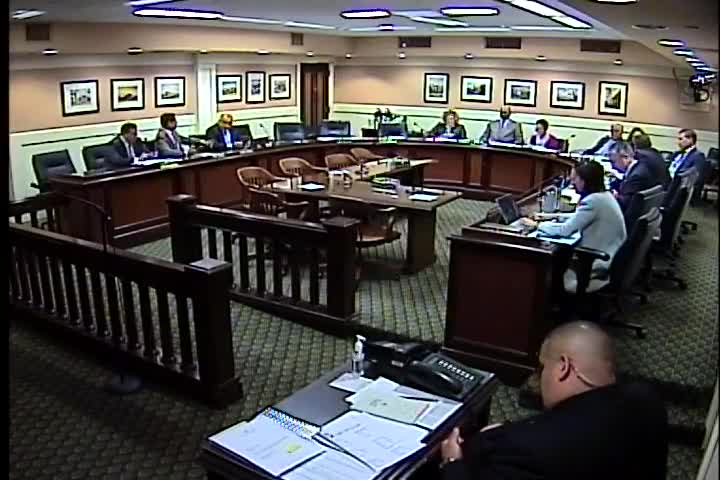
Discussed in Hearing
 16MIN
Assembly Standing Committee on Utilities and Energy
Bill Author

Bill Co-Author(s):