AB 2506: State vehicle fleet: near-zero-emission vehicles.
- Session Year: 2017-2018
- House: Assembly
- Latest Version Date: 2018-04-19
Existing law, except as provided, requires, beginning December 31, 2025, at least 15% of newly purchased vehicles with a gross vehicle weight rating of 19,000 pounds or more purchased by the Department of General Services and other state entities for the state fleet to be zero emission, and beginning December 31, 2030, at least 30% of those vehicles to be zero emission.
This bill would additionally require, beginning January 1, 2020, 2022, at least 30% 15% of newly purchased vehicles with a gross vehicle weight rating of 19,000 pounds or more purchased by the department and other state entities for the state fleet to be near-zero emission, as defined. fueled by renewable natural gas that furthers the states air quality improvement goals, as specified. The bill, if the department finds in a public hearing on or after January 1, 2023, that it cannot meet the needs of the state while meeting this requirement, would require the department to disclose this finding at the hearing and to the Legislature. The bill would require the department, upon disclosure of this finding, to take certain steps to address the issues preventing the department and other state agencies from meeting this state fleet requirement. The bill, after a specified time period and if the department finds in a public hearing that it still cannot meet the needs of the state after taking those steps, would require the department to disclose this finding at the hearing and to the Legislature. The bill would provide that the requirement would be inoperative on the latter date on which the department notifies the Legislature.
Existing law, except as provided, requires, beginning December 31, 2025, at least 15% of newly purchased vehicles with a gross vehicle weight rating of 19,000 pounds or more purchased by the Department of General Services and other state entities for the state fleet to be zero emission, and beginning December 31, 2030, at least 30% of those vehicles to be zero emission.
This bill would additionally require, beginning January 1, 2020, at least 30% of newly purchased vehicles with a gross vehicle weight rating of 19,000 pounds or more purchased by the department and other state entities for the state fleet to be near-zero emission. emission, as defined.
Existing law, except as provided, requires, beginning December 31, 2025, at least 15% of newly purchased vehicles with a gross vehicle weight rating of 19,000 pounds or more purchased by the Department of General Services and other state entities for the state fleet to be zero emission, and beginning December 31, 2030, at least 30% of those vehicles to be zero emission.
This bill would additionally require, beginning January 1, 2020, at least 30% of newly purchased vehicles with a gross vehicle weight rating of 19,000 pounds or more purchased by the department and other state entities for the state fleet to be near-zero emission.
(a)Beginning January 1, 2022, at least 15 percent of newly purchased vehicles with a gross vehicle weight rating of 19,000 pounds or more purchased by the Department of General Services and other state entities for the state fleet shall be fueled by renewable natural gas that furthers the states air quality improvement goals.
(b)This section does not apply to vehicles that have special performance requirements necessary for the protection of public safety, as defined by the Department of General Services.
(c)If, on or after January 1, 2023, the Department of General Services, in a public hearing, finds that it cannot meet the needs of the state while meeting the requirements of this section, whether in whole or in part, the department shall disclose that finding at the hearing and shall notify the Legislature of the finding in compliance with Section 9795 of the Government Code.
(d)Upon disclosure of a finding pursuant to subdivision (c), the Department of General Services shall take the following steps:
(1)While meeting the requirements of this section to the maximum extent practicable, the department, in consultation with the State Air Resources Board, shall conduct a technological assessment of renewable natural gas fueling technology for vehicles with a gross vehicle weight rating of 19,000 pounds or more. The technological assessment shall include a plan to address the issues preventing the department and other state entities from meeting the requirements of this section.
(2)The department shall implement the plan developed pursuant to paragraph (1) for a period of at least one year.
(3)If, after the one-year period specified in paragraph (2), the department, in a public hearing, finds that it still cannot meet the needs of the state while meeting the requirements of this section, the department shall disclose that finding at the hearing and shall notify the Legislature of the finding in compliance with Section 9795 of the Government Code.
(e)This section is inoperative on the date on which the Department of General Services notifies the Legislature pursuant to paragraph (3) of subdivision (d) and is repealed on January 1 of the following year.
SECTION 1.Section 25722.11 of the Public Resources Code is amended to read:25722.11.(a)For purposes of this section, the following definitions apply:(1)Near-zero emission means a vehicle that meets the voluntary low-NOx engine standards of .02 g/bhp NOx as adopted by the State Air Resources Board.(2)NOx means oxides of nitrogen.(b)(1)Beginning December 31, 2025, at least 15 percent of newly purchased vehicles with a gross vehicle weight rating of 19,000 pounds or more purchased by the Department of General Services and other state entities for the state fleet shall be zero emission. Beginning December 31, 2030, at least 30 percent of newly purchased vehicles with a gross vehicle weight rating of 19,000 pounds or more purchased by the Department of General Services and other state entities for the state fleet shall be zero emission.(2)Beginning January 1, 2020, at least 30 percent of newly purchased vehicles with a gross vehicle weight rating of 19,000 pounds or more purchased by the Department of General Services and other state entities for the state fleet shall be near-zero emission.(c)This section does not apply to vehicles that have special performance requirements necessary for the protection of public safety, as defined by the Department of General Services.(d)If, on or after December 31, 2026, the Department of General Services, in a public hearing, finds that it cannot meet the needs of the state while meeting the requirements of this section, whether in whole or in part, the department shall disclose that finding at the hearing and shall notify the Legislature of the finding in compliance with Section 9795 of the Government Code.(e)Upon disclosure of a finding pursuant to subdivision (d), the Department of General Services shall take the following steps:(1)While meeting the requirements of this section to the maximum extent practicable, the department, in consultation with the State Air Resources Board, shall conduct a technological assessment of zero-emission vehicle technology for vehicles with a gross vehicle weight rating of 19,000 pounds or more. The technological assessment shall include a plan to address the issues preventing the department and other state entities from meeting the requirements of this section.(2)The department shall implement the plan developed pursuant to paragraph (1) for a period of at least one year.(3)If, after the one-year period specified in paragraph (2), the department, in a public hearing, finds that it still cannot meet the needs of the state while meeting the requirements of this section, the department shall disclose that finding at the hearing and shall notify the Legislature of the finding in compliance with Section 9795 of the Government Code.(f)This section is inoperative on the date on which the Department of General Services notifies the Legislature pursuant to paragraph (3) of subdivision (e) and is repealed on January 1 of the following year.(a)For purposes of this section, the following definitions apply:
(1)Near-zero emission means a vehicle that meets the voluntary low-NOx engine standards of .02 g/bhp NOx as adopted by the State Air Resources Board.
(2)NOx means oxides of nitrogen.
(b)(1)Beginning December 31, 2025, at least 15 percent of newly purchased vehicles with a gross vehicle weight rating of 19,000 pounds or more purchased by the Department of General Services and other state entities for the state fleet shall be zero emission. Beginning December 31, 2030, at least 30 percent of newly purchased vehicles with a gross vehicle weight rating of 19,000 pounds or more purchased by the Department of General Services and other state entities for the state fleet shall be zero emission.
(2)Beginning January 1, 2020, at least 30 percent of newly purchased vehicles with a gross vehicle weight rating of 19,000 pounds or more purchased by the Department of General Services and other state entities for the state fleet shall be near-zero emission.
(b)(c)This section does not apply to vehicles that have special performance requirements necessary for the protection of public safety, as defined by the Department of General Services.
(c)(d)If, on or after December 31, 2026, the Department of General Services, in a public hearing, finds that it cannot meet the needs of the state while meeting the requirements of this section, whether in whole or in part, the department shall disclose that finding at the hearing and shall notify the Legislature of the finding in compliance with Section 9795 of the Government Code.
(d)(e)Upon disclosure of a finding pursuant to subdivision (c), (d), the Department of General Services shall take the following steps:
(1)While meeting the requirements of this section to the maximum extent practicable, the department, in consultation with the State Air Resources Board, shall conduct a technological assessment of zero-emission vehicle technology for vehicles with a gross vehicle weight rating of 19,000 pounds or more. The technological assessment shall include a plan to address the issues preventing the department and other state entities from meeting the requirements of this section.
(2)The department shall implement the plan developed pursuant to paragraph (1) for a period of at least one year.
(3)If, after the one-year period specified in paragraph (2), the department, in a public hearing, finds that it still cannot meet the needs of the state while meeting the requirements of this section, the department shall disclose that finding at the hearing and shall notify the Legislature of the finding in compliance with Section 9795 of the Government Code.
(e)(f)This section is inoperative on the date on which the Department of General Services notifies the Legislature pursuant to paragraph (3) of subdivision (d) (e) and is repealed on January 1 of the following year.
(a)(1)Beginning December 31, 2025, at least 15 percent of newly purchased vehicles with a gross vehicle weight rating of 19,000 pounds or more purchased by the Department of General Services and other state entities for the state fleet shall be zero emission. Beginning December 31, 2030, at least 30 percent of newly purchased vehicles with a gross vehicle weight rating of 19,000 pounds or more purchased by the Department of General Services and other state entities for the state fleet shall be zero emission.
(2)Beginning January 1, 2020, at least 30 percent of newly purchased vehicles with a gross vehicle weight rating of 19,000 pounds or more purchased by the Department of General Services and other state entities for the state fleet shall be near-zero emission.
(b)This section does not apply to vehicles that have special performance requirements necessary for the protection of public safety, as defined by the Department of General Services.
(c)If, on or after December 31, 2026, the Department of General Services, in a public hearing, finds that it cannot meet the needs of the state while meeting the requirements of this section, whether in whole or in part, the department shall disclose that finding at the hearing and shall notify the Legislature of the finding in compliance with Section 9795 of the Government Code.
(d)Upon disclosure of a finding pursuant to subdivision (c), the Department of General Services shall take the following steps:
(1)While meeting the requirements of this section to the maximum extent practicable, the department, in consultation with the State Air Resources Board, shall conduct a technological assessment of zero-emission vehicle technology for vehicles with a gross vehicle weight rating of 19,000 pounds or more. The technological assessment shall include a plan to address the issues preventing the department and other state entities from meeting the requirements of this section.
(2)The department shall implement the plan developed pursuant to paragraph (1) for a period of at least one year.
(3)If, after the one-year period specified in paragraph (2), the department, in a public hearing, finds that it still cannot meet the needs of the state while meeting the requirements of this section, the department shall disclose that finding at the hearing and shall notify the Legislature of the finding in compliance with Section 9795 of the Government Code.
(e)This section is inoperative on the date on which the Department of General Services notifies the Legislature pursuant to paragraph (3) of subdivision (d) and is repealed on January 1 of the following year.
|
Date
|
Status
|
|---|---|
| May 25, 2018 | In committee: Held under submission. |
| May 9, 2018 | In committee: Set, first hearing. Referred to APPR. suspense file. |
| Apr 25, 2018 | From committee: Do pass and re-refer to Com. on APPR. (Ayes 7. Noes 0.) (April 25). Re-referred to Com. on APPR. |
| Apr 23, 2018 | Re-referred to Com. on A. & A.R. |
| Apr 19, 2018 | From committee chair, with author's amendments: Amend, and re-refer to Com. on A. & A.R. Read second time and amended. |
| Apr 11, 2018 | In committee: Set, first hearing. Hearing canceled at the request of author. |
| Apr 3, 2018 | Re-referred to Com. on A. & A.R. |
| Apr 2, 2018 | From committee chair, with author's amendments: Amend, and re-refer to Com. on A. & A.R. Read second time and amended. |
| Mar 8, 2018 | Referred to Com. on A. & A.R. |
| Feb 15, 2018 | From printer. May be heard in committee March 17. |
| Feb 14, 2018 | Read first time. To print. |
|
Date
|
Description
|
Location
|
Votes
|
|
|---|---|---|---|---|
| Apr 25, 2018 | Do pass and be re-referred to the Committee on [Appropriations] | Assembly Standing Committee on Accountability and Administrative Review |
Passed |
This list shows positions taken on this bill by organizations on the date displayed, which is linked to the original source.
Positions by individuals are not included.
|
Organization
|
Position
|
Date
|
|---|---|---|
| Agriculture Energy Consumer Association | * Support | Apr 25, 2018 |
| Bioenergy Association of California | ** Support | Apr 23, 2018 |
| Clean Energy | ** Support | Apr 23, 2018 |
Date of Hearing: May 9, 2018
ASSEMBLY COMMITTEE ON APPROPRIATIONS
Lorena Gonzalez Fletcher, Chair
ABPCA Bill Id:AB 2506
Author:(Burke) – As Amended Ver:April 19, 2018
Policy Committee: | Accountability and Administrative Review | Vote: | 7 - 0 |
Urgency: No State Mandated Local Program: No Reimbursable: No
SUMMARY:
This bill requires at least 15% of specified new heavy-duty (HD) vehicles purchased by state agencies to be fueled by renewable natural gas (RNG) beginning on January 1, 2022. Specifically, this bill:
- Mandates that at least 15% of new vehicles with a gross vehicle weight rating (GVWR) of 19,000 pounds or more purchased by state agencies must be fueled by RNG beginning on January 1, 2022.
- Specifies procedures that the Department of General Services (DGS) must follow if, on or after January 1, 2023, it finds that it cannot meet the needs of the state while meeting the target established in this bill.
FISCAL EFFECT:
- Ongoing costs to DGS of approximately $287,000 (GF), including two additional staff positions, to develop and implement statewide policy, ensure ongoing compliance and produce regular reports.
- DGS estimates ongoing statewide increased costs in the low millions of dollars (GF/special funds) annually to purchase vehicles with RNG fuel tanks.
- DGS estimates unknown one-time statewide costs, likely in the tens of millions of dollars, to build fueling infrastructure. For example, the Department of Water Resources (DWR) estimates onetime costs in the range of $9.8 million to $12.6 million (GF/special funds) for infrastructure that will fuel near-zero emission equipment.
Because retailers obtain their natural gas from the distribution pipeline, which mixes fossil based natural gas with RNG, state agencies would likely need to obtain fuel in the form of liquid natural gas (LNG) and have it shipped via trucks to their own bulk fueling tanks in order to ensure they are fueling with RNG. Most affected state agencies would likely have to install a new bulk fueling system to accommodate this.
COMMENTS:
- Purpose. This bill requires at least 15% of HD vehicles purchased by a state agency be fueled by RNG starting in 2022. The author states that the target in this bill "builds upon the substantial efforts California has already undertaken to address the state’s impact on climate change and air quality."
- Background. DGS reports that HD vehicles weighing 19,000 pounds or more comprise 12% of the state's total fleet, or 4,463 vehicles. About 88% of these vehicles are powered by renewable diesel fuel. These vehicles tend to be used for cleaning roads, transporting goods in bulk, or repairing utility lines. This bill would require 15% of new HD vehicles procured for the fleet to be fueled by RNG beginning in 2022. DGS estimates that the state will need to purchase an average of nine HD vehicles per year to meet this target.
- Prior Legislation.
AB 739 (Chau), Chapter 639, Statutes of 2017, requires at least 15% of new HD vehicles with a GVWR of at least 19,000 pounds purchased by state agencies to be zero-emission vehicles (ZEV) beginning December 31, 2025, and at least 30% to be ZEV beginning December 31, 2030.
SB 498 (Skinner), Chapter 628, Statures of 2017, among other things, requires DGS to ensure that ZEVs comprise at least 50% of the state's light-duty vehicle fleet purchases by FY 2024-25.
SB 32 (Pavley), Chapter 249, Statutes of 2016, requires ARB to ensure that statewide GHG emissions are reduced at least 40% below 1990 levels by 2030.
Analysis Prepared by: Jennifer Swenson / APPR. / (916) 319-2081
Date of Hearing: April 25, 2018
ASSEMBLY COMMITTEE ON ACCOUNTABILITY AND ADMINISTRATIVE REVIEW
Susan Talamantes Eggman, Chair
ABPCA Bill Id:AB 2506 (
Author:Burke) – As Amended Ver:April 19, 2018
SUBJECT: State vehicle fleet: near-zero-emission vehicles
SUMMARY: Requires at least 15% of specified new heavy-duty (HD) vehicles purchased by state agencies to be fueled by renewable natural gas (RNG) beginning on January 1, 2022. Specifically, this bill:
- Mandates that at least 15% of new vehicles with a gross vehicle weight rating (GVWR) of 19,000 pounds or more purchased by state agencies must be fueled by RNG beginning on January 1, 2022.
- Specifies procedures that the Department of General Services (DGS) must follow if, on or after January 1, 2023, it finds that it cannot meet the needs of the state while meeting the target established in this bill.
EXISTING LAW requires at least 15% of new HD vehicles with a GVWR of at least 19,000 pounds purchased by state agencies to be zero-emission (ZEV) beginning December 31, 2025, and at least 30% to be ZEV beginning December 31, 2030, pursuant to AB 739 (Chau), Chapter 639, Statutes of 2017.
FISCAL EFFECT: Unknown
COMMENTS: This bill establishes a 15% target for incorporating newly purchased HD vehicles fueled by RNG into the state’s fleet starting in 2022. The author states that the target in this bill "builds upon the substantial efforts California has already undertaken to address the state’s impact on climate change and air quality."
DGS reports that, currently, HD vehicles weighing 19,000 pounds or more comprise 12% of the state's total fleet, or 4,463 vehicles. About 88% of these are currently powered by renewable diesel fuel. These vehicles tend to be used for such purposes as cleaning roads, transporting goods in bulk, or repairing utility lines.
This bill would require 15% of new HD vehicles procured for the fleet to be fueled by RNG beginning in 2022. DGS estimates that the state will need to purchase 15 HD vehicles per year to meet this target, based on a replacement rate of about 110 vehicles per year.
RNG comes from a variety of sources, such as manure, food waste, landfills, wastewater treatment sludge, agricultural residues, and municipal solid waste, that is then processed to be interchangeable with traditional natural gas. RNG is available in both compressed natural gas (CNG) and liquefied natural gas (LNG) forms.
According to DGS, the state currently has 108 CNG stations, which are primarily located in southern California, and 25 LNG stations. While DGS states that it discontinued its last CNG fueling station in 2017, it notes that other departments likely still have some CNG fueling stations in place to support the 10 HD CNG vehicles currently in the state fleet.
The target provided in this bill could be a potential option for state agencies until the market evolves to bring both the price and battery life of HD ZEVs into a reasonable range for state agency use in 2026. In the meantime, additional RNG fueling infrastructure may be needed to ensure agencies could meet the target while responding to their operational needs.
REGISTERED SUPPORT / OPPOSITION:
Support
Agricultural Energy Consumers Association
Bioenergy Association of California
Clean Energy
Opposition
None on file.
Analysis Prepared by: Cassie Royce / A. & A.R. / (916) 319-3600
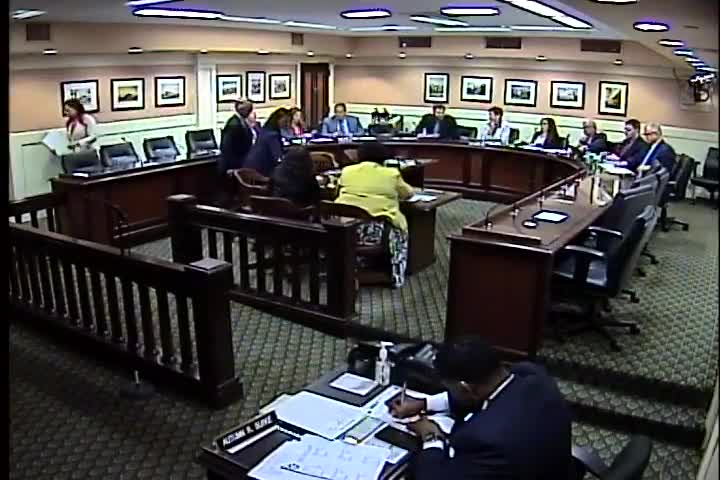
Discussed in Hearing
 5MIN
Assembly Standing Committee on Accountability and Administrative Review
Bill Author


