AB 2563: Student financial aid: Cal Grant B and Cal Grant C awards: financial aid book advance program.
- Session Year: 2017-2018
- House: Assembly
- Latest Version Date: 2018-03-23
Existing law, known as the Ortiz-Pacheco-Poochigian-Vasconcellos Cal Grant Program, establishes, among other programs, the Cal Grant B program and the Cal Grant C Program under the administration of the Student Aid Commission and establishes eligibility requirements for awards under those programs.
This bill, beginning with the 201920 academic year, would require each Cal Grant participating institution, as a condition of its voluntary participation in the Cal Grant Program, to implement a financial aid book advance program that would provide a line of credit at the institutions campus bookstore to students receiving Cal Grant B or B, Cal Grant C awards C, federal Pell Grant, or other financial aid dispersed to the student for educational expenses for the purchase of books and educational materials before the Cal Grant B or Cal Grant C funds are disbursed to the student. The bill would provide for a reduction in the amount of these grant funds disbursed to a student based on the amount of credit expended by the student at the institutions campus bookstore and would provide for reimbursement to the institutions campus bookstore for the amount of the credit expended by the student. The bill would exempt an institution that does not have a campus bookstore from these requirements.
Existing law, known as the Ortiz-Pacheco-Poochigian-Vasconcellos Cal Grant Program, establishes, among other programs, the Cal Grant B program and the Cal Grant C Program under the administration of the Student Aid Commission and establishes eligibility requirements for awards under those programs.
This bill, beginning with the 201920 academic year, would require each Cal Grant participating institution, as a condition of its voluntary participation in the Cal Grant Program, to implement a financial aid book advance program that would provide credit at the institutions campus bookstore to students receiving Cal Grant B or Cal Grant C awards for the purchase of books and educational materials before the Cal Grant B or Cal Grant C funds are disbursed to the student. The bill would provide for a reduction in the amount of grant funds disbursed to a student based on the amount of credit expended by the student at the institutions campus bookstore and would provide for reimbursement to the institutions campus bookstore for the amount of the credit expended by the student.
Beginning in the 201920 academic year, as a condition of its voluntary participation in the Cal Grant Program, a Cal Grant participating institution shall implement a financial aid book advance program for students who are awarded Cal Grant B or B, Cal Grant C awards C, or federal Pell Grant awards, or other financial aid awards dispersed by the institution for education expenses, in accordance with all of the following:
(a)(1)At least one week before classes are scheduled to begin until one day before the institutions financial aid census date, the institution shall provide a line of credit at the institutions campus bookstore to a student receiving a Cal Grant B or B, Cal Grant C award an amount equal to the amount of the award or an amount equal to the maximum amount authorized to be expended for books and educational materials, as applicable, at the institutions campus bookstore. C, or federal Pell Grant award, or other financial aid award dispersed by the institution for educational expenses.
(2)If a source of the line of credit is a Cal Grant B or Cal Grant C award, the amount of this line of credit shall equal the portion of the award not used for tuition and fees.
(3)If a source of the line of credit is a federal Pell Grant award or other financial aid award not described in paragraph (2) dispersed by the institution for educational expenses, the amount of this line of credit shall not exceed a maximum amount established by the institution for purposes of this section.
(b)The campus bookstore shall authorize the student to purchase books and educational materials during the period specified in subdivision (a) up to the amount credited of the line of credit established pursuant to subdivision (a).
(c)A student may purchase books and educational materials using the line of credit established pursuant to subdivision (a) up to the amount authorized pursuant to subdivision (a) and shall not exceed the amount of the credit. (a).
(d)The campus bookstore shall report the amount of the credit expended by the student pursuant to subdivision (c) to the institutions financial aid office.
(e)The institution, in accordance with its own financial aid disbursement policy as set forth in the Institutional Participation Agreement with the Student Aid Commission, shall reduce do one of the following:
(1)Reduce the amount of the students Cal Grant B or Cal Grant C award balance by the amount of credit expended by the student pursuant to subdivision (c) from the students Cal Grant B or Cal Grant C award, and reported by the campus bookstore pursuant to subdivision (d).
(2)Reduce the amount of the students federal Pell Grant or other financial aid award not described in paragraph (2) dispersed by the institution for educational expenses by the amount expended by the student pursuant to subdivision (c) from these respective sources of funds, and reported by the campus bookstore pursuant to subdivision (d).
(f)The institution shall reimburse the campus bookstore in an amount equal to the amount of credit expended by the student at the campus bookstore as reported pursuant to subdivision (d). If, subsequent to the student purchasing educational materials, including, but not limited to, textbooks, pursuant to this section, the amount of a financial aid award described in this section is lower, due to changes in the students eligibility status, than the line of credit provided by the institution for the award, the institution may reimburse the campus bookstore for the difference in these amounts pursuant to an agreement between the institution and the bookstore.
(g)An institution that does not have a campus bookstore is exempt from the requirements of this section.
Beginning in the 201920 academic year, as a condition of its voluntary participation in the Cal Grant Program, a Cal Grant participating institution shall implement a financial aid book advance program for students who are awarded Cal Grant B or Cal Grant C awards in accordance with all of the following:
(a)At least one week before classes are scheduled to begin until one day before the institutions financial aid census date, the institution shall credit to a student receiving a Cal Grant B or Cal Grant C award an amount equal to the amount of the award or an amount equal to the maximum amount authorized to be expended for books and educational materials, as applicable, at the institutions campus bookstore.
(b)The campus bookstore shall authorize the student to purchase books and educational materials during the period specified in subdivision (a) up to the amount credited pursuant to subdivision (a).
(c)A student may purchase books and educational materials using credit up to the amount authorized pursuant to subdivision (a) and shall not exceed the amount of the credit.
(d)The campus bookstore shall report the amount of the credit expended by the student to the institutions financial aid office.
(e)The institution, in accordance with its own financial aid disbursement policy as set forth in the Institutional Participation Agreement with the Student Aid Commission, shall reduce the amount of the students Cal Grant B or Cal Grant C award by the amount of credit expended by the student and reported by the campus bookstore pursuant to subdivision (d).
(f)The institution shall reimburse the campus bookstore in an amount equal to the amount of credit expended by the student at the campus bookstore as reported pursuant to subdivision (d).
|
Date
|
Status
|
|---|---|
| May 25, 2018 | In committee: Held under submission. |
| Apr 18, 2018 | In committee: Set, first hearing. Referred to APPR. suspense file. |
| Apr 4, 2018 | From committee: Do pass and re-refer to Com. on APPR. (Ayes 13. Noes 0.) (April 3). Re-referred to Com. on APPR. |
| Apr 2, 2018 | Re-referred to Com. on HIGHER ED. |
| Mar 23, 2018 | From committee chair, with author's amendments: Amend, and re-refer to Com. on HIGHER ED. Read second time and amended. |
| Mar 5, 2018 | Referred to Com. on HIGHER ED. |
| Feb 16, 2018 | From printer. May be heard in committee March 18. |
| Feb 15, 2018 | Read first time. To print. |
|
Date
|
Description
|
Location
|
Votes
|
|
|---|---|---|---|---|
| Apr 3, 2018 | Do pass and be re-referred to the Committee on [Appropriations] | Assembly Standing Committee on Higher Education |
Passed |
This list shows positions taken on this bill by organizations on the date displayed, which is linked to the original source.
Positions by individuals are not included.
|
Organization
|
Position
|
Date
|
|---|---|---|
| Fresno State University | * Support | Apr 3, 2018 |
Date of Hearing: April 18, 2018
ASSEMBLY COMMITTEE ON APPROPRIATIONS
Lorena Gonzalez Fletcher, Chair
ABPCA Bill Id:AB 2563
Author:(Patterson) – As Amended Ver:March 23, 2018
Policy Committee: | Higher Education | Vote: | 13 - 0 |
|
| ||
|
|
Urgency: No State Mandated Local Program: No Reimbursable: No
SUMMARY: This bill establishes a program whereby a recipient of financial aid for educational expenses can purchase textbooks on credit from their campus bookstore. Specifically, it requires postsecondary educational institutions to provide a line of credit at their campus bookstore to students who receive a Cal Grant B or Cal Grant C award, a federal Pell Grant, or another financial aid award disbursed by the institution for educational expenses, as a condition of participating in the Cal Grant Program. The campus bookstore would then be reimbursed by the student’s aid once it arrives.
FISCAL EFFECT:
- One-time costs of about $240,000 GF for 24 California State University (CSU) campuses to purchase or revise software that would allow reimbursement to the bookstore once the student’s financial aid funding arrives and set up the program. Ongoing costs to hire a position at each campus and pay maintenance costs for the software, likely in the high hundreds of thousands of dollars annually.
- One-time costs of about $200,000 GF for 9 University of California (UC) campuses to purchase software and set up the program. Ongoing costs to hire a position at each campus and pay maintenance costs for the software, likely in the high hundreds of thousands of dollars annually.
- One-time costs of about $400,000 Proposition 98 GF for CCCs to purchase new software or revise existing software and to set up the program. (11 campuses already have a program, so these costs likely would not apply to them.) Ongoing costs to hire a position at each campus and pay maintenance costs for the software, likely in the high hundreds of thousands of dollars annually. (This bill applies to only half of the CCC’s 114 campuses, which own their own campus book stores.) These costs would not represent a reimbursable state mandate cost because CCCs are not required by this bill to perform this activity. But CCC students would lose Cal Grant funding if CCCs do not comply.
- Unknown costs to private institutions, likely in the tens of thousands of dollars annually. The state would not be required to reimburse these campuses because private entities are ineligible to claim state mandate costs.
COMMENTS:
- Purpose. The author asserts that each participating Cal Grant institution has discretion as to how it disburses the non-tuition portion of Cal Grant B and C awards. The author indicates that some Cal Grant B and C recipients receive these monies after the start of instruction, after they have incurred costs for expensive textbooks.
- Financial Aid Recipients. Though not all students receiving financial aid would likely take advantage of the book advance program established in this bill, the number that could do so is significant. For example, at the CSU, 340,000 undergraduates received some form of financial aid (grants, loans, work study, and/or fee waivers) in the 2016-17 school year. Of course, every form of financial aid, such as work study or aid solely to cover tuition costs, would not be available for book purchases, but for example, 95,000 CSU students received Cal Grant B awards last year and 218,000 received Pell Grants. At the community colleges, 112,000 students received Cal Grant B or C awards and 450,000 received Pell Grants.
- Cal Grant Funding to Colleges and Universities. The Cal Grant program is the state’s largest need-based financial aid program. It awards over $2 billion General Fund annually to undergraduate students at CCC, CSU, UC, and some private institutions who meet certain income and eligibility criteria. Students may receive Cal Grants for up to four years of full-time college attendance if they continue to meet income and other requirements. Cal Grants awards may provide aid for both tuition and nontuition expenses. In the 2016-17, CCC students received $141 million in Cal Grants, CSU students received $666 million in Cal Grants, UC students received $891 million in Cal Grants, and private institutions received $250 million.
- Spending on Books and Course Materials. According to the National Association of College Stores' annual Student Watch survey for 2016-17, college students nationwide spent an average of $579 last year on books and $506 on technology and school supplies. According to the survey, the average spent on books has been slowly declining in recent years, as students are increasing the use of book rentals and electronic materials. The survey also indicates that students obtained their books from a variety of sources: campus store (82%), Amazon (40%), other students (8%), Chegg (7%), and from publishers' websites (7%).
- Staff Comments. The bill’s language is somewhat unclear as to whether its requirements would apply to campus-owned bookstores only, or to privately run bookstores on campus, too. While the author indicates the former, clarifying language may be needed.
Analysis Prepared by: Natasha Collins / APPR. / (916) 319-2081
Date of Hearing: April 3, 2018
ASSEMBLY COMMITTEE ON HIGHER EDUCATION
Jose Medina, Chair
ABPCA Bill Id:AB 2563 (
Author:Patterson) – As Amended Ver:March 23, 2018
SUBJECT: Student financial aid: book advance program
SUMMARY: Establishes a program whereby a recipient of financial aid for educational expenses can purchase textbooks on credit from the campus bookstore. Specifically, this bill:
- Requires every postsecondary educational institution, as a condition of participating in the Cal Grant Program, and from one week prior to the start of classes until the campus's census date, to provide a line of credit at the campus bookstore, to a recipient of a Cal Grant B or Cal Grant C award, a federal Pell Grant, or other financial aid awards disbursed by the institution for educational expenses, as follows:
- If the source of the line of credit is a Cal Grant B or C award, the amount of the line of credit shall equal the portion of the award not used for tuition and fees, and,
- If the source of the line of credit is a Pell Grant or other financial aid award disbursed by the institution for educational expenses, the amount of the line of credit shall not exceed a maximum amount established by the institution for this purpose.
- Requires the campus to authorize the financial aid recipient to purchase books and educational materials at the bookstore, during the period specified, up to the amount of the line of credit established pursuant to (1).
- Allows a student to purchase books and educational materials using the line of credit up to the amount established per (1).
- Requires the bookstore to report the amount expended by the student per (3) to the campus financial aid office, and requires the institution do one of the following:
- Reduce the amount of the student's Cal Grant B or C award, by the amount expended by the student pursuant to (3), from the student's Cal Grant B or C award, or,
- Reduce the amount of the student's Pell Grant or other financial aid disbursed by the institution for educational expenses, by the amount expended by the student pursuant to (3), from those respective fund sources.
- Requires the institution to reimburse the bookstore in the amount equal to the amount reported by the bookstore pursuant to (4).
- Stipulates that, if subsequent to purchasing books and educational materials, the amount of a student's financial aid award is reduced, due to a change in the student's eligibility status, and this reduction would have reduced the line of credit originally established for that student, and the student's expenditures for books and educational materials exceeded what would have been the reduced line of credit, the institution may reimburse the bookstore at a lesser amount pursuant to an agreement between the institution and the bookstore.
- Exempts an institution that does not have a campus bookstore from the requirements of this bill.
EXISTING LAW:
- Establishes the California Student Aid Commission (CSAC) for the purpose of administering specified student financial aid programs. (Education Code (EC) Section 69510, et seq.)
- Cal Grant B Entitlement Awards. Students that meet income and asset thresholds and other eligibility requirements, have at least a 2.0 GPA and apply either the year they graduate from high school or the following year are entitled to a living allowance and tuition and fee assistance. Awards for most first-year students are limited to an allowance for non-tuition costs (access award), such as books and living expenses (currently $1,672). In the second and subsequent years, the award also provides tuition and fee support. (EC Sect. 69435.)
- Competitive Cal Grant A and B Awards. Students who are not eligible for entitlement awards may compete for a Cal Grant A or B Competitive award. The award benefits and eligibility requirements are the same as the entitlement program, but awards are not guaranteed. Annually, 25,750 Cal Grant Competitive awards are available. Of these, 12,875 (one-half) are for students who do not qualify for a Cal Grant Entitlement award, but who otherwise meet the Cal Grant requirements. The remaining awards are set aside for eligible California Community College (CCC) students. (EC Sect. 69437.)
- Cal Grant C Awards. Specifically to assist students with tuition and training costs at occupational or vocational programs of four months to two years in length. Since 2000-01, the total number of new annual Cal Grant C awards has been set at 7,761. The maximum award amounts, which are determined in the annual Budget Act, are currently up to $2,462 for tuition and fees and $547 for non-tuition costs, for recipients attending other than a community college, and $1,094 toward non-tuition costs for CCC students. (EC Sect. 69439.)
- CCC Full-Time Student Success Grant. Provides up to $1,000 annually to supplement the Cal Grant B or C access award for recipients who enroll in 12 or more units per semester. (Budget Act of 2015 and thereafter.)
- CCC Completion Grant. Provides up to $2,000 annually to supplement the access award and the Full-Time Student Success Grant for Cal Grant B or C recipients who develop a comprehensive educational plan and enroll in 15 or more units per semester. (EC Sect. 88910, et seq.)
- The federal Pell Grant provides aid to students who demonstrate financial need, and can be used for tuition and fees, books and supplies, transportation, and living expenses for the equivalent of up to six years of full-time enrollment. The maximum Pell Grant for 2017-18 is $5,920. (20 U.S. Code Sect. 1070.)
FISCAL EFFECT: Unknown
COMMENTS: Purpose. The author asserts that each participating Cal Grant institution has discretion as to how it disburses the non-tuition portion of Cal Grant B and C awards. The author indicates that some Cal Grant B and C recipients receive these monies after the start of instruction, after they have incurred costs for expensive textbooks. Under AB 2563, the campus financial aid office would provide a line of credit, equal to the amount of a Cal Grant B or C recipient's non-tuition award, to the campus bookstore one week before the start of classes. The student could then purchase up to this amount of books and related materials based on this credit. The bookstore would then be reimbursed by the campus financial aid office from the non-tuition portion of the student's Cal Grant.
According to the author, this bill is modeled after a pilot program implemented at Santa Ana College, whereby students are allowed to obtain course materials at the start of the semester credited against their incoming Pell Grants. About 1,400 students took advantage of the program last year. In light of the practice used in this pilot program, the recent amendments broaden the bill to, in addition to Cal Grant B or C recipients, allow participation by students receiving Pell Grants or other forms of financial aid that are disbursed by the institution and that can, at least in part, be used to purchased books and course materials. Importantly, under the bill no student would be required to buy their books from the campus bookstore or to use the line of credit. Students could continue to purchase their books through any means and from any source of funds available to them.
Spending on Books/Course Materials. According to the National Association of College Stores' (NACS) annual Student Watch survey for 2016-17, college students nationwide spent an average of $579 last year on books and $506 on technology and school supplies. According to the survey, the average spent on books has been slowly declining in recent years, as students are increasing the use of book rentals and electronic materials. According to the survey, during the fall of 2016, 74% of students purchased new books, 70% bought used books, and 23% purchased in digital format (up from 8% in fall 2015). In addition, 25% of the students surveyed reported using a free method (borrowing, sharing, downloading) to obtain some of their course materials. Lastly, the survey indicates that students obtained their books from a variety of sources: campus store (82%), Amazon (40%), other students (8%), Chegg (7%), and from publishers' websites (7%).
Financial Aid Recipients. Though not all students receiving financial aid would likely take advantage of the book advance program established in this bill, the number that could do so is significant. For example, at the California State University (CSU), 340,000 undergraduates received some form of financial aid (grants, loans, work study, and/or fee waivers) in 2016-17. Of course, every form of financial aid, such as work study or aid solely to cover tuition costs, would not be available for book purchases, but for example, 95,000 CSU students received Cal Grant B awards last year and 218,000 received Pell Grants. At the community colleges, 112,000 students received Cal Grant B or C awards and 450,000 received Pell Grants.
REGISTERED SUPPORT / OPPOSITION:
Support
None on file.
Opposition
None on file.
Analysis Prepared by: Chuck Nicol / HIGHER ED. / (916) 319-3960
Discussed in Hearing
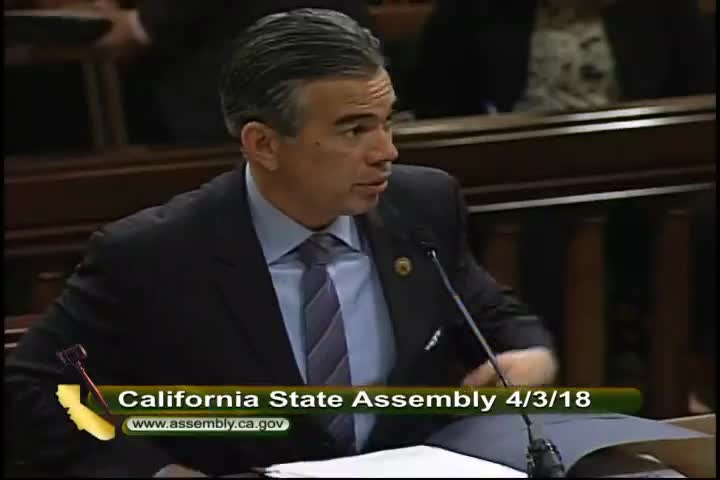 5MIN
Assembly Standing Committee on Higher Education
Bill Author

Bill Co-Author(s):