AB 2662: State government: Office of Planning and Research: electronic media: child development.
- Session Year: 2017-2018
- House: Assembly
- Latest Version Date: 2018-03-23
Existing law establishes in the Governors Office the Office of Planning and Research to serve the Governor and his or her Cabinet as staff for long-range planning and research, and to constitute the comprehensive state planning agency. Existing law requires the office to accept and allocate or expend grants and gifts from any source, public or private, for the purpose of state planning and to undertake other planning and coordinating activities that will implement the policy and intent of the Legislature, as specified.
This bill would require the Office of Planning and Research to enter into appropriate arrangements with relevant state agencies to establish an independent panel of experts to review, synthesize, and report on research, theory, and applications in the social, behavioral, and biological sciences and to establish research priorities regarding the positive and negative roles and impacts of electronic media use, and exposure to its content and the medium on youth, as specified. The bill would require the office, during the first year in which the panel is implementing these duties, to provide for the conduct of initial pilot projects to supplement and inform the panel in its work. The bill would require the office to develop and implement a grant program that funds additional research determined to be necessary by the panel concerning the role and impact of electronic media in the cognitive, physical, and social-emotional development of children and adolescents. The bill would require the panel, on or before December 31, 2022, to prepare and submit a report or reports to the Legislature that, among other things, summarizes the empirical evidence and other results produced by the research conducted pursuant to these provisions, and makes recommendations on how scientific evidence and knowledge may be used to improve the healthy developmental and learning capacities of children and adolescents. Contingent upon receipt by the office of $5,000,000 in contributions for the purpose of implementing these provisions from philanthropic organizations, companies, or private donors, the bill would continuously appropriate that amount to the office for the purpose of implementing these provisions from July 1, 2019, to June 30, 2022, inclusive.
Existing law requires the Superintendent of Public Instruction to award educational technology competitive grants to school districts or county offices of education with respect to certain categories based on regular average daily attendance.This bill would require the Superintendent, to the extent feasible, to post on the departments Internet Web site the amount of allocated program grant funds by school district.Existing law requires the Superintendent of Public Instruction to award educational technology competitive grants to school districts or county offices of education with respect to certain categories based on regular average daily attendance.
This bill would require the Superintendent, to the extent feasible, to post on the departments Internet Web site the amount of allocated program grant funds by school district.
The Legislature finds and declares all of the following:
(a)Little research has been conducted on digital addiction, distraction, well-being, and problematic technology use to examine the positive and negative aspects of the digital technology revolution, and to explore the effects of feeling pressured to remain connected and current technology design practices. In the digital technology revolution, little research has been conducted on problematic technology use and the associated negative effects on childrens cognitive, physical, social, and emotional development. Additionally, little research has been conducted on how to use technology to support healthy development.
(b)The rapid rise of technology and digital device use among children and adolescents has created a pressing need to expand research into the health consequences of digital addiction and problematic technology use. problematic technology use and possible digital addictions.
(c)Today, 98 percent of children under eight years of age in America have access to a mobile device at home, a rapid increase from just over 50 percent in 2011. 2011 (Common Sense Media, 2017). The average amount of time children under eight years of age spend with mobile devices each day has tripled twice in the same time period, period (Common Sense Media, 2017), and 78 percent of teens check their digital devices at least hourly. hourly (Felt and Rob, 2016).
(d)The very features that capture childrens attention are taking a toll on their physical and mental health and their role as vibrant digital citizens. Studies report that 48 percent of teens who spend more than five hours a day on electronic devices report at least one suicide-related outcome, outcome (Twenge, Joiner, Rogers, and Martin, 2017), cyberbullying affects up to an estimated 40 percent of children, children (Kowalski, Giumetti, Schroeder, and Lattanner, 2014), 50 percent of teens feel addicted to their mobile device, device (Common Sense Media, 2016), and that the brains of youth diagnosed with Internet addiction show significantly less gray matter density, associated with planning, decisionmaking, and impulse control. control (Zhou, Lin, Du, Qin, Zhao, Xu, and Lei, 2011). A study of two-year-old children also found that body mass index (BMI) increases for every hour per week of media consumed. consumed (Wen, Baur, Rissel, Xu, and Simpson, 2014).
(e)There are serious concerns that devices can significantly disrupt parent-child interactions that are critical to healthy child development.
(f)A study from the University of Missouri reported that measurable increases in stress can be recorded when people have their smartphones taken away and other studies have demonstrated that the presence of a smartphone, even when off, can reduce cognitive capacity and tax impact an individuals attention (Ward, Duke, Gneezy & Gneezy, and Bos, 2017).
(g)The Diagnostic and Statistical Manual of Mental Disorders, or DSM5, identified Internet Gaming Disorder, which includes compulsive and personally harmful uses of technology, as a condition of interest warranting additional research.
SEC. 2.Section 65040.16 is added to the Government Code, to read:65040.16.(a)It is the intent of the Legislature to authorize funding for the establishment of a program to study the role and impact of electronic media in the development of children. Specifically, the Office of Planning and Research, through grant programs, shall do both of the following as provided in this section:
(1)Examine the role and impact of electronic media in childrens and adolescents cognitive, social, emotional, physical, and behavioral development.
(2)Provide for a report or reports to the Legislature containing the empirical evidence and other results produced by the research funded through grants under this section.
(b)The Office of Planning and Research shall enter into appropriate arrangements with relevant state agencies to establish an independent panel of experts to review, synthesize, and report on research, theory, and applications in the social, behavioral, and biological sciences and to establish research priorities regarding the positive and negative roles and impacts of electronic media use, including television, motion pictures, DVDs, augmented and virtual reality, interactive video games, artificial intelligence, mobile devices or cell phones, and the Internet, including social media, and exposure to that content and medium on youth, in the following core areas of child and adolescent development:
(1)The role and impact of media use and exposure in the development of children and adolescents within cognitive areas including, but not limited to, language development, executive functioning, attention problem solving skills such as the ability to conduct multiple tasks or to multitask, critical thinking, visual and spatial skills, literacy, and other learning abilities.
(2)The impact of early technology use on developmental trajectories.
(2)(3)The role and impact of media use and exposure on childrens and adolescents physical development and health behaviors, including diet, exercise, sleeping and eating routines, sexual activity, access to health tools, and other areas of physical development.
(3)(4)The influence of media on childrens and adolescents social-emotional competencies, including self-awareness, self-management, social awareness, relationship skills, and decisionmaking, as well as outcomes such as depression and anxiety.
(c)During the first year in which the panel is implementing subdivision (b), the office shall provide for the conduct of initial pilot projects to supplement and inform the panel in its work. The pilot projects shall consider the role of media exposure on cognitive and social-emotional development during infancy and early childhood, and on the development of childhood and adolescent sleep patterns and obesity, particularly as a function of media advertising and sedentary lifestyles when paired with heavy media use and other excessive use of digital technologies, or the pilot projects shall instead consider the adverse impact of platform development and excessive media consumption on incidents of addiction, depression, social-emotional development, and bullying media consumption on social-emotional development, including, but not limited to, negative outcomes such as addiction, depression, anxiety, bullying, and harassment.
(d)The office shall develop and implement a grant program that funds additional research determined to be necessary by the panel concerning the role and impact of electronic media in the cognitive, physical, and social-emotional development of children and adolescents with a particular focus on the impact of factors such as media content, format, platform development, length of exposure, the age of a child or adolescent, and the nature of parental involvement. The grant program shall include extramural and intramural research and shall support collaborative efforts to link the research to other research investigations of early child health and development.
(e)In order to be eligible to receive any grant funds that are made available by the office for the purposes of funding research pursuant to subdivision (d), an entity shall prepare and submit an application at the time, and in the manner and containing that information, as the office may require, and agree to use amounts received under the grant pursuant to guidelines developed by the office pursuant to its consultations with experts to carry out activities that establish or implement a research program relating to the effects of media on children and adolescents in the areas of:
(1)Television.
(2)Motion pictures.
(3)DVDs.
(4)Interactive video games.
(5)Virtual and augmented reality.
(6)The Internet.
(7)Social media.
(8)Mobile devices and cell phones.
(f)On or before December 31, 2022, the panel established by office pursuant to subdivision (b) shall prepare and submit a report or reports to the Legislature that does all of the following:
(1)Summarizes the empirical evidence and other results produced by the research performed pursuant to this section in a manner that can be understood by the general public.
(2)Places the evidence in context with other evidence and knowledge generated by the scientific community that address the same or related topics.
(3)Discusses the implications of the collective body of scientific evidence and knowledge regarding the role and impact of electronic media on children and adolescents.
(4)Makes recommendations on how scientific evidence and knowledge may be used to improve the healthy developmental and learning capacities of children and adolescents.
(g)(1)The requirement for submitting a report imposed under subdivision (f) is inoperative on December 31, 2026, pursuant to Section 10231.5.
(2)A report to be submitted pursuant to subdivision (f) shall be submitted in compliance with Section 9795.
SEC. 3.Contingent upon receipt by the Office of Planning and Research of five million dollars ($5,000,000) in contributions for the purpose of implementing these provisions from philanthropic organizations, companies, or private donors, which shall be deposited in a special account in the General Fund, the sum of five million dollars ($5,000,000) is, notwithstanding Section 13340 of the Government Code, hereby continuously appropriated from that account to the office for the purpose of implementing these provisions from July 1, 2019, to June 30, 2022, inclusive.
The Legislature finds and declares all of the following:
(a)Little research has been conducted on digital addiction, distraction, well-being, and problematic technology use to examine the positive and negative aspects of the digital technology revolution, and to explore the effects of feeling pressured to remain connected and current technology design practices.
(b)The rapid rise of technology and digital device use among children and adolescents has created a pressing need to expand research into the health consequences of digital addiction and problematic technology use.
(c)Today, 98 percent of children under eight years of age in America have access to a mobile device at home, a rapid increase from just over 50 percent in 2011. The average amount of time children under eight years of age spend with mobile devices each day has tripled twice in the same time period, and 78 percent of teens check their digital devices at least hourly.
(d)The very features that capture childrens attention are taking a toll on their physical and mental health and their role as vibrant digital citizens. Studies report that 48 percent of teens who spend more than five hours a day on electronic devices report at least one suicide-related outcome, cyberbullying affects up to an estimated 40 percent of children, 50 percent of teens feel addicted to their mobile device, and that the brains of youth diagnosed with Internet addiction show significantly less gray matter density, associated with planning, decisionmaking, and impulse control. A study of two-year-old children also found that body mass index (BMI) increases for every hour per week of media consumed.
(e)There are serious concerns that devices can significantly disrupt parent-child interactions that are critical to healthy child development.
(f)A study from the University of Missouri reported that measurable increases in stress can be recorded when people have their smartphones taken away and other studies have demonstrated that the presence of a smartphone, even when off, can reduce cognitive capacity and tax an individuals attention (Ward, Duke, Gneezy & Bos, 2017).
(g)The Diagnostic and Statistical Manual of Mental Disorders, or DSM5, identified Internet Gaming Disorder, which includes compulsive and personally harmful uses of technology, as a condition of interest warranting additional research.
SEC. 2.Section 65040.16 is added to the Government Code, to read:65040.16.(a)It is the intent of the Legislature to authorize funding for the establishment of a program to study the role and impact of electronic media in the development of children. Specifically, the Office of Planning and Research, through grant programs, shall do both of the following as provided in this section:
(1)Examine the role and impact of electronic media in childrens and adolescents cognitive, social, emotional, physical, and behavioral development.
(2)Provide for a report or reports to the Legislature containing the empirical evidence and other results produced by the research funded through grants under this section.
(b)The Office of Planning and Research shall enter into appropriate arrangements with relevant state agencies to establish an independent panel of experts to review, synthesize, and report on research, theory, and applications in the social, behavioral, and biological sciences and to establish research priorities regarding the positive and negative roles and impacts of electronic media use, including television, motion pictures, DVDs, augmented and virtual reality, interactive video games, artificial intelligence, mobile devices or cell phones, and the Internet, including social media, and exposure to that content and medium on youth, in the following core areas of child and adolescent development:
(1)The role and impact of media use and exposure in the development of children and adolescents within cognitive areas including, but not limited to, language development, executive functioning, attention problem solving skills such as the ability to conduct multiple tasks or to multitask, critical thinking, visual and spatial skills, literacy, and other learning abilities.
(2)The role and impact of media use and exposure on childrens and adolescents physical development and health behaviors, including diet, exercise, sleeping and eating routines, and other areas of physical development.
(3)The influence of media on childrens and adolescents social-emotional competencies, including self-awareness, self-management, social awareness, relationship skills, and decisionmaking, as well as outcomes such as depression and anxiety.
(c)During the first year in which the panel is implementing subdivision (b), the office shall provide for the conduct of initial pilot projects to supplement and inform the panel in its work. The pilot projects shall consider the role of media exposure on cognitive and social-emotional development during infancy and early childhood, and on the development of childhood and adolescent sleep patterns and obesity, particularly as a function of media advertising and sedentary lifestyles when paired with heavy media use and other excessive use of digital technologies, or the pilot projects shall instead consider the adverse impact of platform development and excessive media consumption on incidents of addiction, depression, social-emotional development, and bullying and harassment.
(d)The office shall develop and implement a grant program that funds additional research determined to be necessary by the panel concerning the role and impact of electronic media in the cognitive, physical, and social-emotional development of children and adolescents with a particular focus on the impact of factors such as media content, format, platform development, length of exposure, the age of a child or adolescent, and the nature of parental involvement. The grant program shall include extramural and intramural research and shall support collaborative efforts to link the research to other research investigations of early child health and development.
(e)In order to be eligible to receive any grant funds that are made available by the office for the purposes of funding research pursuant to subdivision (d), an entity shall prepare and submit an application at the time, and in the manner and containing that information, as the office may require, and agree to use amounts received under the grant pursuant to guidelines developed by the office pursuant to its consultations with experts to carry out activities that establish or implement a research program relating to the effects of media on children and adolescents in the areas of:
(1)Television.
(2)Motion pictures.
(3)DVDs.
(4)Interactive video games.
(5)Virtual and augmented reality.
(6)The Internet.
(7)Social media.
(8)Mobile devices and cell phones.
(f)On or before December 31, 2022, the panel established by office pursuant to subdivision (b) shall prepare and submit a report or reports to the Legislature that does all of the following:
(1)Summarizes the empirical evidence and other results produced by the research performed pursuant to this section in a manner that can be understood by the general public.
(2)Places the evidence in context with other evidence and knowledge generated by the scientific community that address the same or related topics.
(3)Discusses the implications of the collective body of scientific evidence and knowledge regarding the role and impact of electronic media on children and adolescents.
(4)Makes recommendations on how scientific evidence and knowledge may be used to improve the healthy developmental and learning capacities of children and adolescents.
(g)(1)The requirement for submitting a report imposed under subdivision (f) is inoperative on December 31, 2026, pursuant to Section 10231.5.
(2)A report to be submitted pursuant to subdivision (f) shall be submitted in compliance with Section 9795.
SEC. 3.Contingent upon receipt by the Office of Planning and Research of five million dollars ($5,000,000) in contributions for the purpose of implementing these provisions from philanthropic organizations, companies, or private donors, which shall be deposited in a special account in the General Fund, the sum of five million dollars ($5,000,000) is, notwithstanding Section 13340 of the Government Code, hereby continuously appropriated from that account to the office for the purpose of implementing these provisions from July 1, 2019, to June 30, 2022, inclusive.
SECTION 1.Section 33132 of the Education Code is amended to read:33132.(a)The Superintendent shall award educational technology competitive grants under this code with respect to each of the following categories based on a school districts regular average daily attendance:(1)1,000 and below.(2)1,001 to 2,500.(3)2,501 to 5,000.(4)5,001 to 15,000.(5)15,001 to 60,000.(6)60,001 and above.(b)The Superintendent shall award educational technology competitive grants under this code with respect to each of the following two categories based on a county office of educations regular average daily attendance:(1)1,000 and below.(2)1,001 and above.(c)The Superintendent shall use the prior years second principal regular average daily attendance to determine the category in which a school district or county office of education shall be placed.(d)Program grant funds shall be allocated for each category in subdivisions (a) and (b) in the following proportion:(1)Compute the average daily attendance determined pursuant to subdivision (c) for the school districts or county offices of education in the category.(2)Divide the aggregate sum determined pursuant to paragraph (1) by the total statewide regular average daily attendance reported for the second principal apportionment for the prior fiscal year.(e)The applicants within each category shall be evaluated and scored as otherwise required by the grant program.(f)The Superintendent shall, to the extent feasible, post on the departments Internet Web site the amount of allocated program grant funds by school district.(g)This section is applicable only to educational technology grants awarded on or after January 1, 1997.(a)Notwithstanding Section 51877, the Superintendent of Public Instruction The Superintendent shall award educational technology competitive grants under this code with respect to each of the following categories based on a school districts regular average daily attendance:
(1)1,000 and below.
(2)1,001 to 2,500.
(3)2,501 to 5,000.
(4)5,001 to 15,000.
(5)15,001 to 60,000.
(6)60,001 and above.
(b)Notwithstanding Section 51877, the Superintendent of Public Instruction The Superintendent shall award educational technology competitive grants under this code with respect to each of the following two categories based on a county office of educations regular average daily attendance:
(1)1,000 and below.
(2)1,001 and above.
(c)The Superintendent shall use the prior years second principal regular average daily attendance to determine the category in which a school district or county office of education shall be placed.
(d)Program grant funds shall be allocated for each category in subdivisions (a) and (b) in the following proportion:
(1)Compute the average daily attendance determined pursuant to subdivision (c) for the school districts or county offices of education in the category.
(2)Divide the aggregate sum determined pursuant to paragraph (1) by the total statewide regular average daily attendance reported for the second principal apportionment for the prior fiscal year.
(e)The applicants within each category shall be evaluated and scored as otherwise required by the grant program.
(f)The Superintendent shall, to the extent feasible, post on the departments Internet Web site the amount of allocated program grant funds by school district.
(f)(g)This section is applicable only to educational technology grants awarded on or after January 1, 1997.
|
Date
|
Status
|
|---|---|
| May 25, 2018 | In committee: Held under submission. |
| May 2, 2018 | In committee: Set, first hearing. Referred to APPR. suspense file. |
| Apr 17, 2018 | From committee: Do pass and re-refer to Com. on APPR. (Ayes 7. Noes 0.) (April 17). Re-referred to Com. on APPR. |
| Apr 4, 2018 | From committee: Do pass and re-refer to Com. on A.,E.,S.,T., & I.M. (Ayes 10. Noes 0.) (April 3). Re-referred to Com. on A.,E.,S.,T., & I.M. |
| Apr 2, 2018 | Re-referred to Com. on P. & C.P. |
| Mar 23, 2018 | From committee chair, with author's amendments: Amend, and re-refer to Com. on P. & C.P. Read second time and amended. |
| Mar 15, 2018 | From committee chair, with author's amendments: Amend, and re-refer to Com. on P. & C.P. Read second time and amended. |
| Mar 19, 2018 | Re-referred to Com. on P. & C.P. |
| Mar 15, 2018 | Referred to Coms. on P. & C.P. and A.,E.,S.,T., & I.M. |
| Feb 16, 2018 | From printer. May be heard in committee March 18. |
| Feb 15, 2018 | Read first time. To print. |
|
Date
|
Description
|
Location
|
Votes
|
|
|---|---|---|---|---|
| Apr 17, 2018 | Do pass and be re-referred to the Committee on [Appropriations] | Assembly Standing Committee on Arts, Entertainment, Sports, Tourism, and Internet Media |
Passed |
|
| Apr 3, 2018 | Do pass and be re-referred to the Committee on [Arts, Entertainment, Sports, Tourism, and Internet Media] | Assembly Standing Committee on Privacy and Consumer Protection |
Passed |
This list shows positions taken on this bill by organizations on the date displayed, which is linked to the original source.
Positions by individuals are not included.
|
Organization
|
Position
|
Date
|
|---|---|---|
| Common Sense Kids Action | ** Support | Apr 16, 2018 |
| University Of Michigan Medical School | ** Support | Apr 16, 2018 |
Date of Hearing: May 2, 2018
ASSEMBLY COMMITTEE ON APPROPRIATIONS
Lorena Gonzalez Fletcher, Chair
ABPCA Bill Id:AB 2662
Author:(Chau) – As Amended Ver:March 23, 2018
Policy Committee: | Privacy and Consumer Protection | Vote: | 10 - 0 |
Arts, Entertainment, Sports, Tourism, and Internet Media | 7 - 0 | ||
|
|
Urgency: No State Mandated Local Program: No Reimbursable: No
SUMMARY:
This bill requires the Office of Planning and Research (OPR) to establish an independent panel of experts to study the effects of electronic media on youth and report its findings to the Legislature. Specifically, this bill:
- Requires OPR to enter into appropriate arrangements with relevant state agencies to establish an independent panel of experts to review, synthesize, and report on research, theory, and applications in the social, behavioral, and biological sciences and to establish research priorities regarding the positive and negative roles and impacts of electronic media use and exposure to its content and the medium on youth, as specified.
- Requires OPR, during the first year in which the panel is implementing these duties, to provide for the conduct of initial pilot projects to supplement and inform the panel in its work.
- Requires OPR to develop and implement a grant program that funds additional research the panel determines necessary by the panel concerning the role and impact of electronic media in the cognitive, physical, and social-emotional development of children and adolescents.
- Requires the panel, on or before December 31, 2022, to prepare and submit a report or reports to the Legislature that, among other things, summarizes the empirical evidence and other results produced by the research conducted pursuant to these provisions, and makes recommendations on how scientific evidence and knowledge may be used to improve the healthy developmental and learning capacities of children and adolescents.
- Continuously appropriates $5 million to OPR, contingent upon receipt of $5 million in donations from philanthropic or private sources. Specifies that the continuous appropriation is available to OPR from July 1, 2019, through June 30, 2022.
FISCAL EFFECT:
- $5 million appropriation to OPR of privately donated funds, contingent upon receipt of such funds.
- Unknown, significant onetime administrative costs, in the hundreds of thousands of dollars, to OPR and state departments involved with the panel created by this bill. At a minimum there would be state administrative costs to convene the required panel and solicit private donations. After the receipt of private donations, it is unclear whether such donations will fund administrative costs of the program established by this bill.
COMMENTS:
- Background and purpose. For nearly three decades, the American Academy of Pediatrics (AAP) has expressed concerns about the amount of time that children and teenagers spend with electronic media and about some of the content they view. This bill would require the Office of Planning and Research to examine the role and impact of electronic media on children’s and adolescents’ cognitive, social, emotional, physical, and behavioral development and provide for reports to the Legislature on their findings by December 31, 2022. According to the author:
In the digital technology revolution, little research has been conducted on problematic technology use and the associated negative effects on children's cognitive, physical, social, and emotional development. Additionally, little research has been conducted on how to use technology to support healthy development. The rapid rise of technology and digital device use among children and adolescents has created a pressing need to expand research into the health consequences of problematic technology use and possible digital addictions. This bill would require the Office of Planning and Research to enter into appropriate arrangements with relevant state agencies to establish an independent panel of experts to review, synthesize, and report on research, theory, and applications in the social, behavioral, and biological sciences and to establish research priorities regarding the positive and negative roles and impacts of electronic media use, and exposure to its content and the medium on youth.
- Staff comments. This bill establishes OPR as the lead state agency on a comprehensive multi-year effort to study the health and behavioral impacts of electronic media use by children. However, OPR generally works on issues related to land use planning and environmental impacts. The author may wish to amend the bill to specify a different lead agency that has expertise in health and behavioral sciences, such as the Department of Public Health. This change would better ensure that the panel and studies required by this bill achieve the intended goals and will likely result in lower costs by aligning responsibilities with the department best suited to complete the work.
Analysis Prepared by: Jessica Peters / APPR. / (916) 319-2081
Date of Hearing: April 17, 2018
ASSEMBLY COMMITTEE ON ARTS, ENTERTAINMENT, SPORTS, TOURISM, AND INTERNET MEDIA
Kansen Chu, Chair
ABPCA Bill Id:AB 2662 (
Author:Chau) – As Amended Ver:March 23, 2018
SUBJECT: State government: Office of Planning and Research: electronic media: child development.
SUMMARY: This bill would require the Office of Planning and Research (OPR) to enter into appropriate arrangements with relevant state agencies to establish an independent panel of experts to study the effects of electronic media on youth and report its findings to the Legislature. Specifically, this bill:
- Require OPR to enter into appropriate arrangements with relevant state agencies to establish an independent panel of experts to review, synthesize, and report on research, theory, and applications in the social, behavioral, and biological sciences and to establish research priorities regarding the positive and negative roles and impacts of electronic media use, and exposure to its content and the medium on youth, as specified, in the following four areas:
- The role and impact of media use and exposure in the development of children and adolescents within cognitive areas including, but not limited to, language development, executive functioning, attention problem solving skills such as the ability to conduct multiple tasks or to multitask, critical thinking, visual and spatial skills, literacy, and other learning abilities.
- The impact of early technology use on developmental trajectories.
- The role and impact of media use and exposure on children’s and adolescents’ physical development and health behaviors, including diet, exercise, sleeping and eating routines, sexual activity, access to health tools, and other areas of physical development.
- The influence of media on children’s and adolescents’ social-emotional competencies, including self-awareness, self-management, social awareness, relationship skills, and decision-making, as well as outcomes such as depression and anxiety.
- Require OPR, during the first year in which the panel is implementing these duties, to provide for the conduct of initial pilot projects to supplement and inform the panel in its work.
- Require OPR to develop and implement a grant program that funds additional research determined to be necessary by the panel concerning the role and impact of electronic media in the cognitive, physical, and social-emotional development of children and adolescents.
- Require the panel, on or before December 31, 2022, to prepare and submit a report or reports to the Legislature that, among other things, summarizes the empirical evidence and other results produced by the research conducted pursuant to these provisions, and makes recommendations on how scientific evidence and knowledge may be used to improve the healthy developmental and learning capacities of children and adolescents.
- Contingent upon receipt by the office of $5,000,000 in contributions for the purpose of implementing these provisions from philanthropic organizations, companies, or private donors, continuously appropriate that amount to the office for the purpose of implementing these provisions from July 1, 2019, to June 30, 2022, inclusive.
- Makes various Legislative findings and declarations.
EXISTING LAW:
- Establishes within the Governor’s Office, OPR to serve the Governor and his or her Cabinet as staff for long-range planning and research, and to constitute the comprehensive state planning agency. (Gov. Code Sec. 65040 et seq)
- Requires OPR to accept and allocate or expend grants and gifts from any source, public or private, for the purpose of state planning and to undertake other planning and coordinating activities that will implement the policy and intent of the Legislature, as specified. (Gov. Code Sec. 65040 et seq.)
FISCAL EFFECT: Unknown. This bill has been keyed fiscal by the Legislative Council.
COMMENTS:
- Author and supporters statement of need for legislation: According to the author, "In the digital technology revolution, little research has been conducted on problematic technology use and the associated negative effects on children's cognitive, physical, social, and emotional development. Additionally, little research has been conducted on how to use technology to support healthy development. The rapid rise of technology and digital device use among children and adolescents has created a pressing need to expand research into the health consequences of problematic technology use and possible digital addictions. This bill would require the Office of Planning and Research to enter into appropriate arrangements with relevant state agencies to establish an independent panel of experts to review, synthesize, and report on research, theory, and applications in the social, behavioral, and biological sciences and to establish research priorities regarding the positive and negative roles and impacts of electronic media use, and exposure to its content and the medium on youth.
This measure is sponsored by Common Sense Kids Action, who states in their support that, "AB 2662 would establish a program to study the role and impact of electronic media in the development of children." They point out that, "Current studies show that 98 percent of children under the age of eight have access to a mobile device, and the average amount of time children under eight years of age spend with mobile devices each day has tripled twice since 2011. … Addressing the impact of the digital revolution on our children is critical. With little research having been conducted on problematic technology use and associated negative effects on children’s cognitive, physical, social, and emotional development, this bill calls for a study of these effects, as well as research on how technology can support healthy development. We are pleased to see that AB 2662 will specifically examine the role and impact of electronic media in children’s and adolescents’ development, and provide for a report or reports to the Legislature containing the empirical evidence and other results produced by the research funded through private grants.”
- Recent studies show pervasive and growing exposure and use of media by youth, with mixed pro and con influences. Researchers call for more research. This bill would require the Office of Planning and Research to examine the role and impact of electronic media on children’s and adolescents’ cognitive, social, emotional, physical, and behavioral development and provide for reports to the Legislature on their findings by December 31, 2022. It would provide the following forms of media to be within the scope of the research: Television; Motion pictures; DVDs; Interactive video games; Virtual and augmented reality; The Internet; Social media; Mobile devices and cell phones. The study would be contingent upon receipt of five million dollars ($5,000,000) in contributions from philanthropic organizations, companies, or private donors.
Prior studies have examined the impacts of these media upon children, including a recent Policy Statement, Children, Adolescents, and the Media, by the American Academy of Pediatrics, (AAP). The AAP looked at the impacts of various media on the physical, emotional and educational development of children and found both good and bad, recognizing, "Media, from traditional television to the 'new media' (including cell phones, iPads, and social media), are a dominant force in children’s lives. Although media are not the leading cause of any major health problem in the United States, the evidence is now clear that they can and do contribute substantially to many different risks and health problems and that children and teenagers learn from, and may be negatively influenced by, the media. However, media literacy and prosocial uses of media may enhance knowledge, connectedness, and health."
The APA found the average 8- to 10-year-old spends nearly 8 hours a day with a variety of different media, and older children and teenagers spend more than 11 hours per day. Presence of a television (TV) set in a child’s bedroom increases these figures even more, and 71% of children and teenagers report having a TV in their bedroom. Young people now spend more time with media than they do in school—it is the leading activity for children and teenagers other than sleeping. "In addition to time spent with media, what has changed dramatically is the media landscape. TV remains the predominant medium but nearly one-third of TV programming is viewed on alternative platforms (computers, iPads, or cell phones). Nearly all children and teenagers have Internet access (84%), often high-speed, and one-third have access in their own bedroom. Computer time accounts for up to 1.5 hours per day; half of this is spent in social networking, playing games, or viewing videos. New technology has arrived in a big way: some 75% of 12- to 17-year-olds now own cell phones, up from 45% in 2004. Nearly all teenagers (88%) use text messaging."
"For nearly 3 decades, the AAP has expressed concerns about the amount of time that children and teenagers spend with media and about some of the content they view. In a series of policy statements, the AAP has delineated its concerns about media violence, sex in the media, substance use, music and music videos, obesity and the media, and infant media use. At the same time, existing AAP policy discusses the positive, prosocial uses of media and the need for media education in schools and at home. Shows like “Sesame Street” can help children learn numbers and letters, and the media can also teach empathy, racial and ethnic tolerance, and a whole variety of interpersonal skills. Prosocial media may also influence teenagers. Helping behaviors can increase after listening to prosocial (rather than neutral) song lyrics, and positive information about adolescent health is increasingly available through new media, including YouTube videos and campaigns that incorporate cell phone text messages." (American Academy of Pediatrics, Policy Statement: Children, Adolescents, and the Media (2013), accessed at: file:///S:/aart/2017-18/2018/ABs/AB%202836%20(Gloria)/APA%20Kids%20and%20Media%20study.pdf)
The researchers at Princeton-Brookings, stated much the same thing – there is both positive and negative potential in media exposure - in the Introduction to their expansive compilation analysis, The Future of Children: Children and Electronic Media, finding that, "The main lesson learned from this volume can be captured in one phrase: 'content matters.' That is, the message is the message. Rather than focusing on the type of technology children use or even how much time children spend with media, parents and policymakers need to focus on what is being offered to children on the various media platforms."
However, as the report concludes, the researchers stressed the need for greater understanding and further study of the new technologies, noting, "Researchers have amassed a vast amount of solid information on older technologies, such as television and movies. But investigations of newer technologies and of the novel uses of existing technologies are far fewer in number and more speculative in their findings. The pervasiveness of electronic media in the lives of children makes it important for policymakers, educators, parents, and advocates to know what researchers have discovered, as well as what questions remain unanswered.
"Academic researchers have a unique opportunity to inform policymakers about the efficacy of public policy. Ultimately, societal awareness and use of media-related information and technology and the effect of the policy on media use by children and families are distinct avenues of inquiry that promise to contribute much to the discussion of whether and how media policy can contribute to the positive role of media in the developing child’s life."
(Princeton-Brookings, The Future of Children: Children and Electronic Media, Vol 18, Num. 1 (2008).)
REGISTERED SUPPORT / OPPOSITION:
Support
Common Sense Kids Action (Sponsor)
University of Michigan Medical School
Opposition
There is no opposition on file.
Analysis Prepared by: Dana Mitchell / A.,E.,S.,T., & I.M. / (916) 319-3450
Date of Hearing: April 3, 2018
ASSEMBLY COMMITTEE ON PRIVACY AND CONSUMER PROTECTION
Ed Chau, Chair
ABPCA Bill Id:AB 2662 (
Author:Chau) – As Amended Ver:March 23, 2018
SUBJECT: State government: Office of Planning and Research: electronic media: child development
SUMMARY: This bill would require the Office of Planning and Research (OPR) to enter into appropriate arrangements with relevant state agencies to establish an independent panel of experts to study the effects of electronic media on youth and report its findings to the Legislature. Specifically, this bill would:
- Require OPR to enter into appropriate arrangements with relevant state agencies to establish an independent panel of experts to review, synthesize, and report on research, theory, and applications in the social, behavioral, and biological sciences and to establish research priorities regarding the positive and negative roles and impacts of electronic media use, and exposure to its content and the medium on youth, as specified.
- Require OPR, during the first year in which the panel is implementing these duties, to provide for the conduct of initial pilot projects to supplement and inform the panel in its work.
- Require OPR to develop and implement a grant program that funds additional research determined to be necessary by the panel concerning the role and impact of electronic media in the cognitive, physical, and social-emotional development of children and adolescents.
- Require the panel, on or before December 31, 2022, to prepare and submit a report or reports to the Legislature that, among other things, summarizes the empirical evidence and other results produced by the research conducted pursuant to these provisions, and makes recommendations on how scientific evidence and knowledge may be used to improve the healthy developmental and learning capacities of children and adolescents.
- Contingent upon receipt by the office of $5,000,000 in contributions for the purpose of implementing these provisions from philanthropic organizations, companies, or private donors, continuously appropriate that amount to the office for the purpose of implementing these provisions from July 1, 2019, to June 30, 2022, inclusive.
- Include various findings and declarations, such as:
- In the digital technology revolution, little research has been conducted on problematic technology use and the associated negative effects on children’s cognitive, physical, social, and emotional development. Additionally, little research has been conducted on how to use technology to support healthy development.
- The rapid rise of technology and digital device use among children and adolescents has created a pressing need to expand research into the health consequences of problematic technology use and possible digital addictions.
EXISTING LAW:
- Establishes within the Governor’s Office, OPR to serve the Governor and his or her Cabinet as staff for long-range planning and research, and to constitute the comprehensive state planning agency. (Gov. Code Sec. 65040 et seq)
- Requires OPR to accept and allocate or expend grants and gifts from any source, public or private, for the purpose of state planning and to undertake other planning and coordinating activities that will implement the policy and intent of the Legislature, as specified. (Gov. Code Sec. 65040 et seq.)
FISCAL EFFECT: Unknown.
COMMENTS:
- Purpose of this bill: Researchers have amassed a vast amount of information on older technologies, such as television and movies. However, investigations of newer technologies are far fewer in number and more speculative in their findings. The pervasiveness of electronic media in the lives of children makes it important for policymakers, educators, parents, and advocates to know what researchers have discovered, as well as what questions remain unanswered. This bill seeks to outline research that should be completed so that the state of California may implement policies to benefit children. This bill is sponsored by Common Sense Kids Action.
- Author’s statement: According to the author:
The rapid rise of technology and digital device use among children and adolescents has created a pressing need to expand research into the health consequences of problematic technology use and possible digital addictions.
Today, 98 percent of children under eight years of age in America have access to a mobile device at home, a rapid increase from just over 50 percent in 2011 (Common Sense Media, 2017). The average amount of time children under eight years of age spend with mobile devices each day has tripled twice in the same time period (Common Sense Media, 2017), and 78 percent of teens check their digital devices at least hourly (Felt & Robb, 2016).
The very features that capture children’s attention are taking a toll on their physical and mental health, and their role as vibrant digital citizens. Studies report that 48 percent of teens who spend more than five hours a day on electronic devices report at least one suicide-related outcome (Twenge, Joiner, Rogers & Martin, 2017), cyberbullying affects up to an estimated 40 percent of children (Kowalski, Giumetti, Schroeder & Lattanner, 2014), 50 percent of teens feel addicted to their mobile device (Common Sense Media, 2016), and that the brains of youth diagnosed with Internet addiction show significantly less gray matter density, associated with planning, decision-making decisionmaking, and impulse control (Zhou, Lin, Du, Qin, Zhao, Xu & Lei, 2011). A study of two-year-old children also found that body mass index (BMI) increases for every hour per week of media consumed (Wen, Baur, Rissel, Xu & Simpson, 2014).
There are serious concerns that devices can significantly disrupt parent-child interactions that are critical to healthy child development. A study from the University of Missouri reported that measurable increases in stress can be recorded when people have their smartphones taken away and other studies have demonstrated that the presence of a smartphone, even when off, can reduce cognitive capacity and impact tax an individual’s attention (Ward, Duke, Gneezy & Bos, 2017). The Diagnostic and Statistical Manual of Mental Disorders, or DSM–5, identified Internet Gaming Disorder, which includes compulsive and personally harmful uses of technology, as a condition of interest warranting additional research.
- Need for more data so policy makers can best protect children: Television, which dominated the media world through the mid-1990s, now competes in an arena with cell phones, iPods, video games, instant messaging, interactive multiplayer video games, virtual reality sites, social networking sites, and email. The vast majority of American children have access to multiple types of media. Technological convergence, a hallmark of media use today, enables youth to access the same source from different, often portable, media platforms. Children, particularly adolescents, thus have almost constant access to media— often at times and in places where adult supervision is absent.
As a result, Californian children arguably spend more time using media than they do engaging in any single activity other than sleeping. While there is much research on how traditional media affect and influence children, as reflected in the findings and declarations of this bill, there are far fewer investigations of how newer technologies impact our youth. The pervasiveness of electronic media in the lives of children is important for policymakers, educators, parents, and advocates as they strive to create programs and policies that will help children succeed. (Princton-Brookings, The Future of Children: Children and Electronic Media, Vol 18, Num 1 (2008).) Accordingly, this bill would state the intent of the legislature to establish a program to study the role and impact of electronic media on children through the Governor’s OPR.
Specifically, this bill would outline questions that researchers should investigate with regard to the positive and negative impacts of electronic media use by children, including how it affects their cognitive development, executive functioning, critical thinking, and other learning abilities could very well produce important information in the development of policies intended to benefit children. The bill, which appears to be contingent entirely upon charitable funding, would also require a report to the Legislature, by the end of 2022, which would arguably be an incredible resource as the state of California continues in its endeavors to protect the interests of children and families.
As a matter of public policy, as this state considers new and innovative technologies that have incredible abilities to simplify and improve lives and services, government should also consider implications for children given their increasing reliance on those technologies. The Legislature should seek to ensure that any new regulations are fully analyzed and contingencies considered.
- Arguments in support: In support, Common Sense Kids Action (sponsor) writes, “addressing the impact of the digital revolution on our children is critical. With little research having been conducted on problematic technology use and associated negative effects on children’s cognitive, physical, social, and emotional development, this bill calls for a study of these effects, as well as research on how technology can support healthy development. We are pleased to see that AB 2662 will specifically examine the role and impact of electronic media in children’s and adolescents’ development, and provide for a report or reports to the Legislature containing the empirical evidence and other results produced by the research funded through grants.”
Double-referral: This bill was double-referred to the Assembly Arts, Entertainment, Sports, Tourism, & Internet Media Committee, where it will be heard if passed by this Committee.
REGISTERED SUPPORT / OPPOSITION:
Support
Common Sense Kids Action (sponsor)
Opposition
None received
Analysis Prepared by: Nichole Rapier / P. & C.P. / (916) 319-2200
Discussed in Hearing
 5MIN
Assembly Standing Committee on Arts, Entertainment, Sports, Tourism, and Internet Media
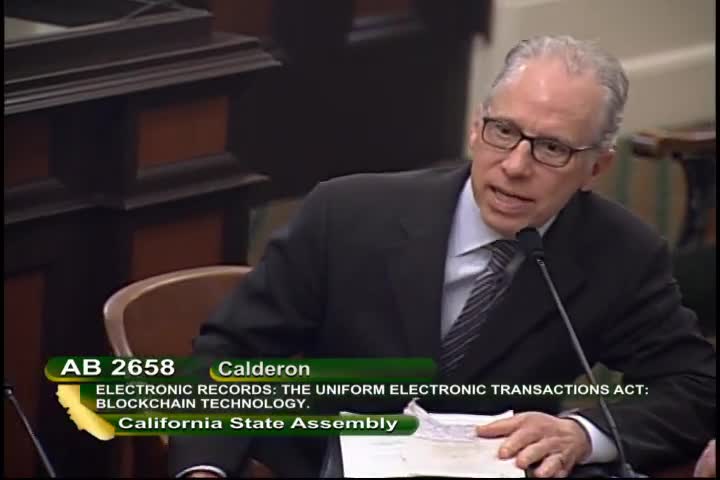 8MIN
Assembly Standing Committee on Privacy and Consumer Protection
Bill Author

Bill Co-Author(s):