AB 2701: Victims of violent crimes: trauma recovery centers.
- Session Year: 2017-2018
- House: Assembly
- Latest Version Date: 2018-02-15
Existing law requires the California Victim Compensation Board to administer a program to evaluate applications and award grants to trauma recovery centers funded by moneys in the Restitution Fund. Existing law provides that these funds for the support of trauma recovery center grants are not continuously appropriated and the administrative costs of the board are subject to annual review and appropriation as part of the state budget process.
Existing law recognizes the Trauma Recovery Center at San Francisco General Hospital, University of California, San Francisco, as the State Pilot Trauma Recovery Center (State Pilot TRC). Existing law requires the board to use the evidence-informed Integrated Trauma Recovery Services model developed by the State Pilot TRC when it provides grants to trauma recovery centers.
This bill would require the board to administer a program to evaluate applications and award grants to school-based trauma recovery centers, upon appropriation by the Legislature for these purposes. The bill would require the board to award a grant only to a school-based trauma recovery center that meets specified criteria, including, among other things, providing a whole-school, systematic approach to trauma and that uses certain core elements. The bill would permit the board to award a grant providing for funding for up to 3 years, and would require the board, when considering grant applications, to give preference to school-based trauma recovery centers that meet outlined criteria. The bill would require school-based trauma recovery centers that are awarded grants to report to the board annually on how grant funds were spent, as well as other specified information.
(a)The Legislature finds and declares all of the following:
(1)Children and youth who are low-income, minority, and immigrant youth are disproportionately more likely to be exposed to community violence or other traumatic events or traumatic circumstances.
(2)Trauma creates a negative neurobiological response in a child or youths brain. Children and youth who face chronic toxic stress and exposure to traumatic events and circumstances are constantly placed in fight, flight, or freeze mode.
(3)Trauma in a child or youth has a consequential relationship on a students educational maturation and the overall educational environment. Trauma can reduce the ability to focus, organize, and process information. It also can cause lower academic achievement, decreased reading ability, and increased school absences.
(4)Children and youth in high-poverty neighborhoods are overwhelmingly concentrated in schools that fail to meet the educational and mental health needs of trauma-impacted students and has a direct impact on the goal of closing the academic achievement gap.
(5)Trauma is a public health issue that should not be criminalized through removal, suspension, or expulsion; rather, it should be effectively addressed at the earliest possible stage in a students life in order to ensure a greater likelihood of educational success.
(6)Unaddressed trauma can place the most at-risk children and youth on a pathway to becoming involved in criminal activity in their adult years.
(b)It is the intent of the Legislature to enact a program, to be administered by the California Victim Compensation Board, to evaluate applications and award grants to school-based trauma recovery centers.
SEC. 2.Section 13963.3 is added to the Government Code, to read:13963.3.(a)Upon appropriation by the Legislature for the purposes of this section, the California Victim Compensation Board shall administer a program to evaluate applications and award grants to school-based trauma recovery centers.
(b)The board shall award a grant only to a school-based trauma recovery center that meets all of the following criteria:
(1)The school-based trauma recovery center provides a whole-school, systemic approach to trauma to students directly or indirectly impacted by trauma.
(2)The school-based trauma recovery center uses the core elements established in subdivision (g).
(3)Any other related criteria required by the board.
(c)Subject to funding pursuant to subdivision (a), the board may award a grant providing funding for up to a maximum period of three years. Any portion of a grant that a school-based trauma recovery center does not use within the specified grant period shall revert to the Restitution Fund. The board may award consecutive grants to a school-based trauma recovery center to prevent a lapse in funding.
(d)The board, when considering grant applications, shall give preference to school-based trauma recovery centers, that meet all of the following criteria:
(1)Serve under-resourced, chronically traumatized neighborhoods where community violence is prevalent.
(2)Have a demonstrated track record of collaborating with schools to create trauma-informed and trauma-sensitive school environments.
(3)Have a demonstrated track record of serving children and youth who are involved with child protective services.
(e)The school-based trauma recovery center sites shall be selected by the board through a well-defined selection process.
(f)A school-based trauma recovery center that is awarded a grant shall do both of the following:
(1)Report to the board annually on how grant funds were spent, how many clients were served (counting an individual client who receives multiple services only once), units of service, staff productivity, treatment outcomes, and patient flow throughout both the clinical and evaluation components of service.
(2)In compliance with federal statutes and rules governing federal matching funds for victims services, each center shall submit any forms and data requested by the board to allow the board to receive the 60 percent federal matching funds for eligible victim services and allowable expenses.
(g)A school-based trauma recovery center funded by the board pursuant to this section shall do all of the following:
(1)Provide outreach and services to students who typically are unable to access traditional services, including, but not limited to, students who are low income or homeless, display symptoms of post-traumatic stress disorder or severe-trauma related symptoms, members of immigrant and refugee groups, students with disabilities, disabled students, and students who interact with child protective systems or who have had contact with the juvenile justice system.
(2)Provide school-based intervention and prevention work to all students, whether directly or indirectly affected by trauma through a three-tiered intervention model of: (A) primary prevention, which fosters the emotional well-being of all students through school-wide safe and supportive environments; (B) secondary prevention, which includes supports and services that are preventative and enable schools to intervene early to minimize escalation of identified behavioral health symptoms and other barriers to school success; and (C) tertiary intervention, which includes intensive services for the small number of students demonstrating significant needs.
(3)Offer training and support for adult members of the caregiving system. Examples include, but are not limited to, psychoeducation and skill-building workshops for parents and caregivers, training and consultation in complex trauma and trauma-sensitive practices for teachers, administrators, paraprofessionals, and school mental health staff.
(4)Collaborate with school-level and district-level personnel to help improve trauma-informed policies and procedures.
(5)Ensure that no person is excluded from services solely on the basis of emotional or behavioral issues resulting from trauma, including, but not limited to, substance abuse problems, low initial motivation, or high levels of anxiety.
(6)Utilize established, evidence-based and evidence-informed practices in treatment.
(7)Ensure that no person is excluded from services based on immigration status.
(h)For purposes of this section, a school-based trauma recovery center provides services to students who have not attained 21 years of age, parents of students who receive services, and caregivers of students who receive services.
SEC. 3.Section 13964 of the Government Code is amended to read:13964.(a)Claims under this chapter shall be paid from the Restitution Fund.
(b)Notwithstanding Section 13340, except for funds to support trauma recovery center grants pursuant to Section 13963.1, Sections 13963.1 and 13963.3, the proceeds in the Restitution Fund are hereby continuously appropriated to the board, without regard to fiscal years, for the purposes of this chapter. However, the funds appropriated pursuant to this section for administrative costs of the board shall be subject to annual review through the State Budget process.
(c)A sum not to exceed 15 percent of the amount appropriated annually to pay claims pursuant to this chapter may be withdrawn from the Restitution Fund, to be used as a revolving fund by the board for the payment of emergency awards pursuant to Section 13961.
|
Date
|
Status
|
|---|---|
| May 25, 2018 | In committee: Held under submission. |
| Apr 18, 2018 | In committee: Set, first hearing. Referred to APPR. suspense file. |
| Apr 4, 2018 | From committee: Do pass and re-refer to Com. on APPR. (Ayes 5. Noes 1.) (April 3). Re-referred to Com. on APPR. |
| Mar 8, 2018 | Referred to Com. on PUB. S. |
| Feb 16, 2018 | From printer. May be heard in committee March 18. |
| Feb 15, 2018 | Read first time. To print. |
|
Date
|
Description
|
Location
|
Votes
|
|
|---|---|---|---|---|
| Apr 3, 2018 | Do pass and be re-referred to the Committee on [Appropriations] | Assembly Standing Committee on Public Safety |
Passed |
This list shows positions taken on this bill by organizations on the date displayed, which is linked to the original source.
Positions by individuals are not included.
|
Organization
|
Position
|
Date
|
|---|---|---|
| California Catholic Conference, Inc. | ** Support | Apr 2, 2018 |
| Californians for Safety and Justice | * Support | Apr 3, 2018 |
| Healthy Environments in Response to Trauma in Schools | * Support | Apr 3, 2018 |
| Mothers and Men Against Gangs Coalition | * Support | Apr 3, 2018 |
Date of Hearing: April 18, 2018
ASSEMBLY COMMITTEE ON APPROPRIATIONS
Lorena Gonzalez Fletcher, Chair
ABPCA Bill Id:AB 2701
Author:(Rubio) – As Introduced Ver:February 15, 2018
Policy Committee: | Public Safety | Vote: | 5 - 1 |
Urgency: No State Mandated Local Program: No Reimbursable: No
SUMMARY:
This bill, upon appropriation, creates a grant program administered by the California Victim Compensation Board (CalVCB) to provide funding for school-based trauma recovery centers (TRCs). Specifically, this bill:
- Contemplates funding the grant program from the Restitution Fund, upon appropriation.
- Specifies numerous significant requirements for each school-based TRC to comply with to receive grant funding.
- Requires that school-based TRCs provide services to students and parents or caregivers of students.
FISCAL EFFECT:
- Significant cost pressures (Restitution Fund), in the tens of millions to hundreds of millions of dollars, for CalVCB to award grants to school-based TRCs. For example, there are about 10,000 K-12 schools in the state. If 100 of these schools receive $1 million annually, costs for CalVCB will be $100 million. Cost pressures will be even higher to the extent that more schools seek to establish a TRC.
- Significant loss of federal Victims of Crime Act (VOCA) funding, likely in the tens of millions of dollars. Specifically, any amount of Restitution Fund dollars spent on school-based TRCs instead of funding the existing victim compensation program will reduce the amount of federal VOCA funds the state receives. This is because VOCA funds are provided to the state at a 60% match rate of state spending on victim compensation or other eligible services to victims of violent crimes. Since the TRCs created by this bill will not be restricted to helping only victims of violent crimes, any state funds spent on school-based TRCs will not be eligible for the federal match. For example, if the state were to spend $100 million from the Restitution Fund on school-based TRCs, the state would lose $60 million in federal VOCA funds.
COMMENTS:
- Background. Under existing law, CalVCB provides grants to several TRCs throughout the state. This funding comes from the Restitution Fund and from Proposition 47 funds. Currently, this funding for TRCs is fully committed to existing centers. These grants average about $1 million for each TRC and covers only a portion of the cost of each center. Generally, a TRC costs several million annually to operate, depending on the size and the range of services provided.
- Purpose. According to the author:
As a previous school teacher, I recognize that some students are harder to work with than others. However, I also know that more often than not, when students do poorly in the classroom it is because they are dealing with deeper underlying problems that are occurring in their lives. It is time we stop seeing kids who lash out as, “problematic,” or, “bad,” and we start doing more to address some of those deeper issues they may be dealing with on their own. By encouraging schools to develop trauma informed practices on their campuses we are ensuring students receive the support they need to be successful in their academics.
- Restitution Fund shortfall. The Restitution Fund receives funding from restitution funds, fees, and penalties paid by criminal offenders. Similar to many funds supported by criminal fines and fees, the Restitution Fund has experienced declining revenues in recent years. In fiscal year 2015-16, the Restitution Fund developed a structural shortfall—a situation where expenditures from the account exceed revenues. This shortfall has persisted since that time and is projected to continue into the future. If the operating shortfall continues, the Restitution Fund will face insolvency in the coming years, which will require either increased revenues or reduced expenditures.
The cost of this bill is likely so significant that the Restitution Fund cannot support a new program such as the one in this bill. At the end of the current fiscal year, the Restitution fund is projected to have a fund balance of about $48 million, with this balance decreasing to about $25 million at the end of fiscal year 2018-19. Given the potential costs of funding school-based TRCs, the Restitution Fund appears insufficient to support this new program.
- Related legislation. There are several bills in the current legislative session that will increase costs to CalVCB by generally expanding the items eligible for reimbursement through the victim compensation program.
AB 1939 (Steinorth) includes temporary housing for the victim’s pets as part of relocation expenses which are reimbursable by the board. AB 1939 is on this committee’s suspense file.
AB 2100 (Bonta) will extend the limitation on reimbursement for peer counseling services from 10 weeks of counseling services to 20 weeks of counseling services and increases the reimbursement rate for the providers of these services. AB 2100 is on this committee’s suspense file.
SB 1005 (Atkins) will include a pet deposit and additional rent required if the victim has a pet in relocation expenses reimbursable by CalVCB. SB 1005 is pending hearing in the Senate Appropriations Committee.
Analysis Prepared by: Jessica Peters / APPR. / (916) 319-2081
Date of Hearing:
Consultant: Mureed Rasool
ASSEMBLY COMMITTEE ON PUBLIC SAFETY
Reginald Byron Jones-Sawyer, Sr., Chair
ABPCA Bill Id:AB 2701
Author:(Rubio) – As Introduced Ver:
SUMMARY:
Requires the California Victim Compensation Board (VCB) to administer a program evaluating and awarding grants to school-based trauma recovery centers (TRC). Specifically, this bill:
- Finds and declares, among other things, that trauma creates a negative neurobiological response in a youth’s brain, that youth in low-income neighborhoods are disproportionately more likely to be exposed to community violence or other traumatic events, that unaddressed trauma can lead youth to criminal activities, and that trauma related symptoms should not be criminalized but effectively addressed at the earliest possible stages in a student’s life.
- States that it is the intent of the Legislature to enact a program, to be administered by the VCB upon appropriation, to evaluate applications and award grants to school-based TRCs.
- Requires the VCB to only award grants to school-based TRCs that meet all of the following:
- The school-based TRC provides a whole-school systemic approach to students impacted by trauma;
- Any related criteria required by the VCB; and,
- The school-based TRCs adhere to core elements, as established.
- The school-based TRC provides a whole-school systemic approach to students impacted by trauma;
- Establishes core elements that every school-based TRC must follow. Each school-based TRC must do all of the following:
- Provide outreach and services to students who are typically unable to access traditional services, including, students who are low income, members of immigrant or refugee groups, disabled, interact with child protective systems, and those who have had contact with the juvenile justice system;
- Provide school-wide intervention and prevention work through a three-tiered intervention model, which includes fostering the emotional well-being of all students through safe and supportive environments, having preventative support services that enable schools to minimize escalation of identified behavioral health symptoms, and maintaining intensive services for students demonstrating significant needs;
- Offer training and support for adult members of the caregiving system;
- Collaborate with school and district personnel to improve and implement trauma-informed policies;
- Not exclude any student solely on the basis of emotional or behavioral issues resulting from trauma;
- Use established, evidence-based and evidence-informed practices; and,
- Not exclude a student from service based on immigration status.
- Provide outreach and services to students who are typically unable to access traditional services, including, students who are low income, members of immigrant or refugee groups, disabled, interact with child protective systems, and those who have had contact with the juvenile justice system;
- Gives preference to school-based TRCs that meet all of the following criteria:
- Serve chronically traumatized neighborhoods where community violence is prevalent;
- Demonstrate a track record of collaborating with schools to create school environments that are trauma informed and sensitive; and,
- Demonstrate a track record of serving youth who are involved with child protective services.
- Serve chronically traumatized neighborhoods where community violence is prevalent;
- Requires all school-based TRCs awarded grants to annually report on, among other things, how fund were spent, clients served, treatment outcomes, and patient flow.
- Requires all school-based TRCs awarded grants to submit data requested by the VCB in order to receive applicable federal funds.
- States that, for the purposes of this section, school-based TRCs provide services to students less than 21 years of age and to the parents or caregivers of students receiving services.
- Prevents all TRC grants from receiving continuously appropriated proceeds from the Restitution Fund.
EXISTING LAW:
- Creates the VCB, to reimburse victims of crime for pecuniary losses suffered as a result of criminal acts. Indemnification is made from the Restitution Fund, a fund continuously appropriated for the aforementioned purposes. (Gov. Code, §13950 et seq.)
- Provides that the VCB shall enter into an interagency agreement with the UCSF to establish a recovery center for victims of crime at the San Francisco General Hospital for comprehensive and integrated services to victims of crime, subject to conditions set by the board. (Gov. Code, § 13974.5.)
- Requires the VCB to “administer a program to evaluate applications and award grants to trauma recovery centers.” (Gov. Code, § 13963.1, subd. (b).)
- Mandates that grants shall only be awarded to TRCs that meet all of the following criteria:
- The TRC must show it serves the community by, among other things, providing training to law enforcement, community-based agencies, and healthcare providers on identifying violent crime and its effects;
- A showing that the TRC uses the core elements as developed by the State Pilot Trauma Recovery Center in San Francisco; and,
- Any related criteria required by VCB. (Gov. Code, § 13963.1, subds. (b)(1)- (3).)
- The TRC must show it serves the community by, among other things, providing training to law enforcement, community-based agencies, and healthcare providers on identifying violent crime and its effects;
- Gives preference to TRCs that conduct outreach and serve both crime victims who typically are unable to access traditional services and victims of a wide range of crimes including sexual assault, shootings, and human trafficking. (Gov. Code, § 13963.1, subds. (e)(1) & (2).)
- Requires all TRCs awarded grants to report annually on how funds were spent, the amount of clients served, treatment outcomes, and as otherwise specified. Also, such TRCs must submit any forms requested by the VCB for federal funding. (Gov. Code, § 13963.1, subd. (g)(1) & (2).)
- States that, for the purpose of giving grants to TRCs, TRCs must provide mental health services, community based outreach and clinical case management, services to homicide victims’ families and friends, and a multidisciplinary staff of clinicians, as specified. (Gov. Code, § 13963.1, subd. (h)(1)-(5).)
FISCAL EFFECT:
Unknown
COMMENTS:
- Author's Statement: According to the author, “Last year, I was the proud author of AB 752 which was signed by the governor and now prohibits California State Preschool Programs from expelling or unenrolling children who exhibit problem behavior in the classroom. As a follow-up to that bill, I have introduced AB 2701. As a previous school teacher, I recognize that some students are harder to work with than others. However, I also know that more often than not, when students do poorly in the classroom it is because they are dealing with deeper underlining problems that are occurring in their lives. It is time we stop seeing kids who lash out as, ‘problematic,’ or, ‘bad,’ and we start doing more to address some of those deeper issues they may be dealing with on their own. By encouraging schools to develop trauma informed practices on their campuses we are ensuring students receive the support they need to be successful in their academics.”
- TRCs in California: The California Legislature’s first venture into trauma recovery centers was at San Francisco General Hospital. AB 2491 (Jackson, Chapter 1016, Statutes of 2000), required the VCB to enter into an interagency agreement with the University of California, San Francisco, to establish a victims of crime recovery center at San Francisco General Hospital. It was created as a four year pilot project to test the effectiveness of providing comprehensive and integrated services to victims of crime, as opposed to the usual fee-for-service care reimbursed by the Victim Restitution funds. The goals of the TRC included improving the process of care for victims of crime by enhancing medical services for acute victims of sexual assault, linking victims to other services to facilitate recovery, and improving access to victim compensation funds.
In May 2004, the VCB published a report to the Legislature on the effectiveness of the victims of crime recovery center. The report concluded that the TRC model provides a wider, more effective, range of services at a lower cost for trauma victims that the traditional fee-for-service mental health treatment programs.
The report’s conclusions were based on a study conducted by the TRC. The study randomly selected a group of patients and enrolled part of them in the TRC model of care. It then gave the remaining participants “usual care,” which included emergency department treatment and referral to resources such as the San Francisco Victim Witness Assistance Center.
Among some of its findings, the study found that 48 percent more TRC group victims cooperated with the DA’s office and 29 percent more with police than the “usual care” group. It also found that the TRC group who had been sexually assaulted allowed medical collection of evidence 38 percent of the time more than the usual care group, and 29 percent more agreed to file a police report. TRC patients also had a 67 percent reduced homelessness rate than the usual care group at 12 months post-trauma. Furthermore, the report found that, of those with significant substance abuse problems, 56 percent decreased or stopped drinking, 54 percent decreased or stopped using drugs, and 89 percent reported being able to deal with their substance abuse problems better.
In terms of costs, the study found that the TRC group’s unit of cost for each patient was $2,015 whereas the usual care group’s cost was $2,079 per patient, for a total of $64 saved per patient. (VCB. (2004). San Francisco Trauma Recovery Center: Report to the Legislature. <https://victims.ca.gov/docs/reports/UCSFTRCreport.pdf> [Mar. 25, 2018].)
Due to the program’s success, the Legislature directed the VCB to implement more TRC programs throughout the state. (Gov. Code, § 13963.1.) Currently, VCB funds 12 TRCs across California. (VCB. (2018). CalVCB Announces Funding Availability for Trauma Recovery Centers. <https://victims.ca.gov/media/pressrelease/2018/2018-03-2/> [Mar. 25, 2018].)
This bill would take the core elements of the TRC model of care and expand its coverage to reach schools. Numerous studies have linked traumatic childhood experiences to increased mental health issues later on in life. (Centers for Disease Control and Prevention. Adverse Childhood Experiences Journal Articles by Topic Area. <https://www.cdc.gov/violenceprevention/acestudy/journal.html> [Mar. 26, 2018].)
In 2015, approximately 60 percent of children had reported experiencing exposure to physical assault, sexual victimization, maltreatment, property victimization, or witnessing violence. (US Office of Juvenile Justice and Delinquency Prevention. (2015). Children’s Exposure to Violence, Crime, and Abuse: An Update. <https://www.ojjdp.gov/pubs/248547.pdf> [Mar. 27, 2018].) Exposure to certain trauma has been “connected to developmental difficulties, problem behavior, and physical and mental health effects extending throughout the lifespan.” (Id.)
This bill could potentially catch trauma related issues at an earlier stage of an individual’s life, before trauma related mental health problems aggrandize.
- Results from Schools with Trauma Informed Practices: In 1998, the Los Angeles Unified School District (LAUSD), teamed up with UCLA and the Research and Development Corporation (RAND), to determine the extent of violence exposure and post-traumatic stress symptoms among LAUSD students and to implement a program designed to address such issues.
Of the eligible participants, two randomly assigned groups were created. One group started the program immediately and the other received treatment later on in the year. RAND and mental health clinicians from LAUSD developed an intervention program named “Cognitive-Behavioral Intervention for Trauma in School” (CBITS). The CBITS program consisted of, among other things, individual sessions with clinicians, activities training such as relaxation methods, ways of dealing with negative thoughts, and coping with violent events through talking, drawing or writing.
Within three months, the students receiving CBITS intervention showed a greater substantial decrease in their Post-Traumatic Stress and Depressive symptoms than the students who had not yet received any intervention. After the three month period, the study stopped treating the group which had previously been helped, and began the CBITS program for the second group. After another three month period, the results were that the group that had received CBITS after the waiting period also showed substantial improvement, while the group that had initially received CBITS maintained their improvements. The data in figures 1 and 2 provide an overview of this information.
After the study, an adaptation, named “Support for Students Exposed to Trauma” (SSET), was created to streamline the services so that teachers and other school staff could administer the program without the need for extensive clinical worker oversight. The modified approach showed similar positive results, although they were not as substantial. (RAND Organization. (2011). Helping Children Cope with Violence and Trauma: A School-Based Program That Works. <file:///C:/Users/rasoolmu/Downloads/RAND_RB4557-2.pdf> [Mar. 26, 2018].)
CBITS and SSET have since been replicated several times. The Substance Abuse and Mental Health Services Administration, an agency within the US Department of Health and Human Services, listed in its National Registry of Evidence-based Programs and Practices that CBITS, “yielded strong evidence of a favorable effect,” and stated that SSET “yielded sufficient evidence of a favorable effect.” (<https://nrepp.samhsa.gov/ProgramProfile.aspx?id=205#hide1> [Mar. 26, 2018]; <https://nrepp.samhsa.gov/ProgramProfile.aspx?id=170#hide1> [Mar. 26, 2018].)
A related trauma informed program utilized by a California school district has yielded similar results; seeing a drop in referrals from 674 in 2008-09, to 50 in 2014, and a suspension rate decrease of 89 percent during the same time period. (ACEs Too High. (2014). San Francisco’s El Dorado Elementary Uses Trauma-Informed & Restorative Practices; Suspensions Drop 89%. <https://acestoohigh.com/2014/01/28/hearts-el-dorado-elementary/> [Mar. 26, 2018].)
Other states have either included resources on trauma informed care, or implemented it in some form, including, Massachusetts, Washington, Illinois, and Wisconsin. (County Health Rankings & Roadmaps. <http://www.countyhealthrankings.org/take-action-to-improve-health/what-works-for-health/policies/trauma-informed-schools> [Mar. 27, 2018].) - California Schools’ Trauma Recovery Litigation: On May 18, 2015, students from the Compton Unified School District (CUSD) filed a complaint in the United States Central District Court against CUSD. (P.P., et al. v. Compton Unified School District, (C.D.Cal. 2015) 135 F.Supp.3d 1038, 1103.) The complaint alleged that the school district failed to properly accommodate students whose access to education had been fundamentally impaired by certain types of trauma they had experienced. (Id. at 1106.) The complaint mentioned, among other things, that CUSD’s policies failed to provide teachers and administrative personnel with training in regards to evidence-based trauma programs that have been demonstrated to reduce the effects of trauma. (Id.) In part, it asserted that certain forms of traumas were “disabilities” under the Americans with Disabilities Act and Section 504 of the Rehabilitation Act, and that failure by CUSD to accommodate such disabilities violated those laws. (Id.)
In denying CUSD’s motion to dismiss, the court made it clear that it was not making a final decision as to whether exposure to traumatic events, without more, is a legally cognizable disability under either Act. (Id. at 1103.) However, the court stated that it acknowledged the allegations that certain traumatic experiences might cause physical or mental impairments could possibly be cognizable as disabilities under the two Acts. (Id.) The federal court’s docket indicates that proceedings will resume on April 2, 2018, upon expiration of a Joint Stipulation to Stay Litigation. (Id.at dock. 2:15CV03726.)
If the Central District Court were to issue a final opinion that classified certain types of trauma as a disability, it could potentially affect a large number of school districts within California. - Argument in Support: According to Californians for Safety and Justice, “Medical research establishes that trauma creates a negative neurobiological response in a young person’s developing brain. Children and youth who face chronic toxic stress and exposure to traumatic events and circumstances are constantly placed in fight, flight or freeze mode. Young trauma victims suffer reduced ability to focus, organize, and process information, leading to lower academic achievement, decreased reading ability, and increased school absences
“AB 2701 will create a funding stream and state monitoring and evaluation for school-based TRCs providing outreach and services to students who are typically underserved, including but not limited to, students who are low-income or homeless, display symptoms of post-traumatic stress disorder or severe-trauma related symptoms, members of immigrant and refugee groups, students with disabilities, disabled students, students who interact with child protective systems and/or have had contact with the juvenile justice system.
“Under AB 2701, school-based TRCs will collaborate with school-level and district-level personnel to help improve trauma-informed policies and procedures. TRCs will utilize established, evidence-based and evidence-informed practices in treatment and will put policies into place to ensure that no person is excluded from services solely on the basis of immigration status, or emotional or behavioral issues resulting from trauma, including, but not limited to, substance abuse problems, low initial motivation, or high levels of anxiety. The bill will also make possible programs to train and support adult members of the caregiving system. Examples include, but are not limited to, psychoeducation and skill-building workshops for parents and caregivers, as wells as training and consultation in complex trauma and trauma-sensitive practices for teachers, administrators, paraprofessionals, and school mental health staff.”
- Prior Legislation:
- AB 1384 (Weber), Chapter 587, Statutes of 2017, required the VCB to disburse grants to TRCs and required that such TRCs follow the model developed at the San Francisco General Hospital Trauma Recovery Center.
- SB 518 (Leno), of the 2015-2016 Legislative Session, would have required the VCB to use a specified evidence-based model when giving a grant to a TRC, as specified. SB 518 was held in the Assembly Appropriations Committee.
- SB 1404 (Leno), of the 2015-2016 Legislative Session, would have recognized the Trauma Recovery Center at San Francisco General Hospital as the State Pilot Trauma Recovery Center, and required the VCB to use the model developed by this center when it awards grants to establish additional trauma recovery centers pursuant to new funding made available from Proposition 47. SB 1401 died in the Assembly Appropriations Committee.
- SB 71 (Budget and Fiscal Review), Chapter 28, Statutes of 2013, authorized the VCB to administer a program to award, upon appropriation by the Legislature, up to $2,000,000 in grants, annually, to trauma recovery centers, as defined, funded from the Restitution Fund.
- SB 733 (Leno), of the 2009-2010 Legislative session, would have authorized the VCB to evaluate applications and award grants totaling up to $3 million, up to $1.7 million per center, to multi-disciplinary TRCs that provide specified services to and resources for crime victims. SB 733 failed passage on the Senate Floor.
- AB 1669 (Leno), of the 2007-08 Legislative Session, would have appropriated $1.5 million for the TRC at the San Francisco General Hospital. AB 1669 was vetoed.
- AB 50 (Leno), Chapter 884, Statutes of 2006, appropriated $1.3 million for the TRC at the San Francisco General Hospital.
- AB 1384 (Weber), Chapter 587, Statutes of 2017, required the VCB to disburse grants to TRCs and required that such TRCs follow the model developed at the San Francisco General Hospital Trauma Recovery Center.
REGISTERED SUPPORT / OPPOSITION:
Support
Californians for Safety and Justice (Sponsor)
California Catholic Conference, Inc.
Opposition
None
Analysis Prepared by:
Mureed Rasool / PUB. S. / (916) 319-3744
Discussed in Hearing
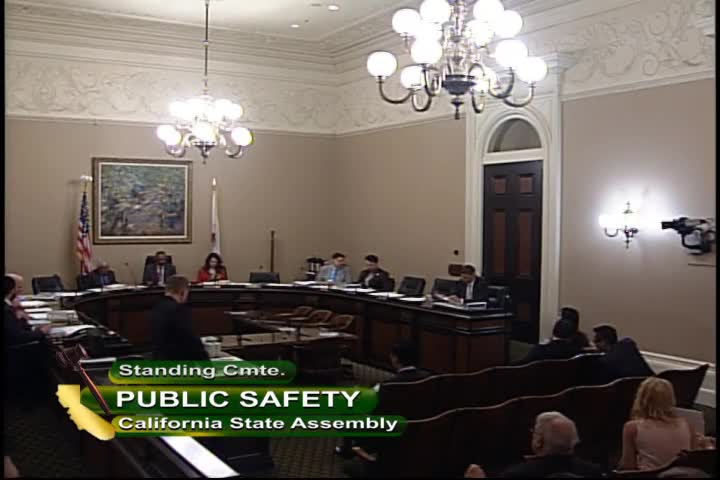 10MIN
Assembly Standing Committee on Public Safety
Bill Author

Bill Co-Author(s):