AB 2784: California State University: Emergency Student Housing Loan Program.
- Session Year: 2017-2018
- House: Assembly
- Latest Version Date: 2018-04-09
Existing law establishes the California State University, under the administration of the Trustees of the California State University, as one of the segments of public postsecondary education in this state. The California State University comprises 23 institutions of higher education located throughout the state.
This bill would establish the Emergency Student Housing Loan Program, commencing with the 201920 academic year, at 3 campuses of the California State University, contingent upon the enactment of an appropriation of state funds for this purpose. This bill would define homeless and homelessness homeless, homelessness, and rapid rehousing for the purposes of this article. Under the program, the 3 participating campuses of the university, as designated by the trustees, would establish an Emergency Student Housing Loan Program pursuant to which the participating campus would design a program enabling students at their campus who are experiencing an individual housing emergency, as specified, to receive a loan to pay for their housing that would either be short term, up to 3 months, or medium term, from 3 months to a maximum of 24 months. for up to 12 months. The bill would establish eligibility requirements and priorities for the selection of participating students.
The bill would require the trustees to submit a report, including specified information about the program, to the appropriate policy and fiscal committees of the Legislature no later than June 30, 2022.
This bill would make these provisions inoperative on July 1, 2022, and would repeal them as of January 1, 2023.
Existing law establishes the California State University, under the administration of the Trustees of the California State University, as one of the segments of public postsecondary education in this state. The California State University comprises 23 institutions of higher education located throughout the state.
This bill would establish the Emergency Student Housing Loan Program, commencing with the 201920 academic year, at 3 campuses of the California State University, contingent upon the enactment of an appropriation of state funds for this purpose. This bill would define homeless and homelessness for the purposes of this article. Under the program, the 3 participating campuses of the university, as designated by the trustees, would establish an Emergency Student Housing Loan Program pursuant to which the participating campus would design a program enabling students at their campus who are experiencing an individual housing emergency, as specified, to receive a loan to pay for their housing for no less than one semester, and no more than 2 semesters. that would either be short term, up to 3 months, or medium term, from 3 months to a maximum of 24 months. The bill would establish eligibility requirements and priorities for the selection of participating students.
The bill would require the trustees to submit a report, including specified information about the program, to the appropriate policy and fiscal committees of the Legislature no later than June 30, 2022.
This bill would make these provisions inoperative on July 1, 2022, and would repeal them as of January 1, 2023.
Existing law establishes the California State University, under the administration of the Trustees of the California State University, as one of the segments of public postsecondary education in this state. The California State University comprises 23 institutions of higher education located throughout the state.
This bill would establish the Emergency Student Housing Loan Program, commencing with the 201920 academic year, at 3 campuses of the California State University, contingent upon the enactment of an appropriation of state funds for this purpose. Under the program, the 3 participating campuses of the university, as designated by the trustees, would establish an Emergency Student Housing Loan Program pursuant to which the participating campus would design a program enabling students at their campus who are experiencing an individual housing emergency, as specified, to receive a loan to pay for their housing for no less than one semester, and no more than 2 semesters. The bill would establish eligibility requirements and priorities for the selection of participating students.
The bill would require the trustees to submit a report, including specified information about the program, to the appropriate policy and fiscal committees of the Legislature no later than June 30, 2022.
This bill would make these provisions inoperative on July 1, 2022, and would repeal them as of January 1, 2023.
(a)The Legislature finds and declares both of the following:
(1)According to the California State University (CSU), one in five CSU students experiences chronic hunger and one in 10 experiences homelessness.
(2)Research conducted at Stanford University found that state colleges like those within the CSU system offer the most proven pathways to upward social mobility, ensuring that individuals who graduate from the CSU have a higher likelihood of becoming self-sufficient and avoiding chronic homelessness.
(b)Therefore, it is the intent of the Legislature to enact legislation that would reduce the incidence of hunger and homelessness among college students in California.
SEC. 2.Article 4.5 (commencing with Section 89335) is added to Chapter 3 of Part 55 of Division 8 of Title 3 of the Education Code, to read:4.5.Emergency Student Housing Loan Program89335.(a)For the purposes of this article:
(1)Program means the Emergency Student Housing Loan Program.
(2)Homeless is defined as means any of the following:
(A)An individual who lacks a fixed, regular, and adequate nighttime residence, and includes a subset for an individual who is exiting an institution where he or she resided for 90 days or less and who resided in an emergency shelter or a place not meant for human habitation immediately before entering that institution. residence.
(B)An individual who will imminently lose their his or her primary nighttime residence.
(C)An individual who is fleeing, or is attempting to flee, domestic violence, dating violence, sexual assault, stalking, or other dangerous or life-threatening conditions relating to violence against the individual or a family member.
(3)Homelessness is defined as means the state of being homeless, as defined in paragraph (2).
(4)Rapid Rehousing means a process to offer a student immediate, temporary assistance in order to help a student return to permanent housing, which may include, but is not limited to, housing search assistance, one-time financial assistance to offset move-in costs, ongoing financial assistance as needed to bridge the gap between family income and housing cost, and other supportive service or linkages to community resources to help a student develop the capacity to sustain housing stability.
(b)Contingent on the enactment of an appropriation of state funds, funds for this purpose, commencing with the 201920 academic year, three campuses of the California State University, as designated by the trustees, after consultation with the federal agency specified in subdivision (c), shall establish an Emergency Student Housing Loan Program pursuant to which a participating campus would design a program that would utilize rapid rehousing, as defined, rapid rehousing as a form of permanent housing support that would either be short term, up to 3 months, or medium term, from 3 months to a maximum of 24 months, housing support for up to 12 months and that would enable students experiencing a housing crisis or emergency to receive a loan to pay for their housing for either of those durations of time. during this time.
(c)The eligibility of a campus of the California State University for participation in this program is conditional on consultation by the participating campus with the regional United States Department of Housing and Urban Development Continuum of Care program.
(d)Payment for housing shall be administered directly by the campus to an entity constituting an identified long-term housing solution for all participating students. each participating student. For purposes of this subdivision, long-term housing solutions a housing solution shall not include either of the following:
(1)A homeless shelter.
(2)A hotel. For purposes of this paragraph, hotel means a hotel, motel, bed and breakfast inn, or other similar transient lodging establishment, but it does not include a residential hotel as defined in Section 50519 of the Health and Safety Code.
(e)To qualify for participation in the program, a California State University student shall comply with both of the following requirements:
(1)Be currently enrolled at a participating campus.
(2)Be able to demonstrate that he or she is undergoing an individual housing emergency. A student who is eligible to receive the federal Pell Grant, would be eligible to receive the federal Pell Grant, whether or not the student currently receives the grant, in combination with one of the following housing emergencies, shall be prioritized first, and in the following order:
(A)Currently experiencing homelessness.
(B)Experiencing loss of housing due to natural disaster at the students campus-based residence. place of residence while enrolled at a participating campus.
(C)Has a formal eviction action filed against him or her due to failure of payment, or for other financial reasons.
(f)It is the intent of the Legislature that the Emergency Student Housing Loan Program at each participating campus shall accommodate as many students in its program as is feasible in consideration of available funding.(g)(f)The support provided by a participating campus of the California State University to a student who participates in the Emergency Student Housing Loan Program shall include monthly meetings between the participating student and the appropriate campus professional staff member.
(h)Loans awarded to participating students(g)A loan awarded to a participating student shall be forgiven upon the recipient students successful completion of the completion of any academic semester or the equivalent during which the loan was awarded, student receives loan assistance, or at the discretion of the individual campus or Chancellors the chancellors office.
(h)In the event a loan is not forgiven, the campus shall determine the terms of loan repayment.
(i)The trustees shall submit a report to the appropriate policy and fiscal committees of the Legislature no later than June 30, 2022. The report shall include, but not necessarily be limited to, all of the following data:
(1)The number of students participating in the program in total, by campus, and disaggregated based on the following:
(A)Whether the student entered as a first-time freshman or a transfer student.
(B)Whether the student is a first-generation college student.
(C)Whether the student is a recipient of financial aid under the Federal Pell Grant Program (20 U.S.C. Sec. 1070a) or under the Ortiz-Pacheco-Poochigian-Vasconcellos Cal Grant Program established in Chapter 1.7 (commencing with Section 69430) of Part 42 of Division 5.
(D)According to the students ethnicity.
(E)Whether the participating students family experienced some sort of homelessness.
(F)The age of the participating student at the beginning of the loan term.
(G)The gender with which the participating student identifies.
(2)The total number of students who graduated after participating in the program, and disaggregated based on the characteristics identified in subparagraphs (A) to (G), inclusive, of paragraph (1).
(3)The total number of students who retained housing after participating in the program, and disaggregated based on the characteristics identified in subparagraphs (A) to (G), inclusive, of paragraph (1).
(j)Each campus that participates in the program shall receive funding upon the enactment of an appropriation for purposes of this article.
89336.This article shall become inoperative on July 1, 2022, and, as of January 1, 2023, is repealed.
(a)The Legislature finds and declares both of the following:
(1)According to the California State University (CSU), one in five CSU students experiences chronic hunger and one in 10 experiences homelessness.
(2)Research conducted at Stanford University found that state colleges like those within the CSU system offer the most proven pathways to upward social mobility, ensuring that individuals who graduate from the CSU have a higher likelihood of becoming self-sufficient and avoiding chronic homelessness.
(b)Therefore, it is the intent of the Legislature to enact legislation that would reduce the incidence of hunger and homelessness among college students in California.
SEC. 2.Article 4.5 (commencing with Section 89335) is added to Chapter 3 of Part 55 of Division 8 of Title 3 of the Education Code, to read:4.5.Emergency Student Housing Loan Program89335.(a)For the purposes of this article, program article:
(1)Program means the Emergency Student Housing Loan Program.
(2)Homeless is defined as any of the following:
(A)An individual who lacks a fixed, regular, and adequate nighttime residence, and includes a subset for an individual who is exiting an institution where he or she resided for 90 days or less and who resided in an emergency shelter or a place not meant for human habitation immediately before entering that institution.
(B)An individual who will imminently lose their primary nighttime residence.
(C)An individual who is fleeing, or is attempting to flee, domestic violence, dating violence, sexual assault, stalking, or other dangerous or life-threatening conditions relating to violence against the individual or a family member.
(3)Homelessness is defined as the state of being homeless, as defined in paragraph (2).
(b)Contingent on the enactment of an appropriation of state funds, commencing with the 201920 academic year, three campuses of the California State University, as designated by the trustees, after consultation with the federal agency specified in subdivision (c), shall establish an Emergency Student Housing Loan Program pursuant to which a participating campus would design a program that would utilize rapid rehousing, as defined, as a form of permanent housing support that would either be short term, up to 3 months, or medium term, from 3 months to a maximum of 24 months, and that would enable students experiencing a housing crisis or emergency to receive a loan to pay for their housing for no less than one semester, and for no more than two semesters. either of those durations of time.
(c)The eligibility of a campus of the California State University for participation in this program is conditional on consultation by the trustees the participating campus with the regional United States Department of Housing and Urban Development Continuum of Care program.
(d)Payment for housing shall be administered directly by the campus to an entity constituting an identified long-term housing solution for all participating students. For purposes of this subdivision, long-term housing solutions shall not include either of the following:
(1)A homeless shelter.
(2)A hotel. For purposes of this paragraph, hotel means a hotel, motel, bed and breakfast inn, or other similar transient lodging establishment, but it does not include a residential hotel as defined in Section 50519 of the Health and Safety Code.
(e)To qualify for participation in the program, a California State University student shall comply with both of the following requirements:
(1)Be currently enrolled at a participating campus.
(2)Be able to demonstrate that he or she is undergoing an individual housing emergency. Students who are A student who is eligible to receive the federal Pell Grant, in combination with one of the following housing emergencies, shall be prioritized first, and in the following order:
(A)Currently experiencing homelessness.
(B)Experiencing loss of housing due to natural disaster. disaster at the students campus-based residence.
(C)Has been evicted due to failure of rent payment, or for other financial reasons.(D)(C)Has a formal eviction action filed against them him or her due to failure of payment, or for other financial reasons.
(f)It is the intent of the Legislature that the Emergency Student Housing Loan Program at each participating campus shall accommodate as many students in its program as is feasible in consideration of available funding.
(g)The support provided by a participating campus of the California State University to a student who participates in the Emergency Student Housing Loan Program shall include monthly meetings between the participating student and the appropriate campus professional staff member.
(h)Loans awarded to participating students shall be forgiven upon the recipient students successful completion of the academic semester during which the loan was awarded. awarded, or at the discretion of the individual campus or Chancellors office.
(i)The trustees shall submit a report to the appropriate policy and fiscal committees of the Legislature no later than June 30, 2022. The report shall include, but not necessary necessarily be limited to, all of the following data:
(1)The number of students participating in the program in total, by campus, and disaggregated based on the following:
(A)Whether the student entered as a first-time freshman or a transfer student.
(B)Whether the student is a first-generation college student.
(C)Whether the student is a recipient of financial aid under the Federal Pell Grant Program (20 U.S.C. Sec. 1070a) or under the Ortiz-Pacheco Poochigian-Vasconcellos Ortiz-Pacheco-Poochigian-Vasconcellos Cal Grant Program established in Chapter 1.7 (commencing with Section 69430) of Part 42 of Division 5.
(D)According to the students ethnicity.
(E)Whether the participating students family experienced some sort of homelessness.
(F)The age of the participating student at the beginning of the loan term.
(G)The gender with which the participating student identifies.
(2)The total number of students who graduated after participating in the program, and disaggregated based on the characteristics identified in subparagraphs (A) to (D), (G), inclusive, of paragraph (1).
(3)The total number of students who retained housing after participating in the program, and disaggregated based on the characteristics identified in subparagraphs (A) to (D), (G), inclusive, of paragraph (1).
(j)Each campus that participates in the program shall receive funding upon the enactment of an appropriation for purposes of this article.
89336.This article shall become inoperative on July 1, 2022, and, as of January 1, 2023, is repealed.
(a)The Legislature finds and declares both of the following:
(1)According to the California State University (CSU), one in five CSU students experiences chronic hunger and one in 10 experiences homelessness.
(2)Research conducted at Stanford University found that state colleges like those within the CSU system offer the most proven pathways to upward social mobility, ensuring that individuals who graduate from the CSU have a higher likelihood of becoming self-sufficient and avoiding chronic homelessness.
(b)Therefore, it is the intent of the Legislature to enact legislation that would reduce the incidence of hunger and homelessness among college students in California.
SEC. 2.Article 4.5 (commencing with Section 89335) is added to Chapter 3 of Part 55 of Division 8 of Title 3 of the Education Code, to read:4.5.Emergency Student Housing Loan Program89335.(a)For the purposes of this article, program means the Emergency Student Housing Loan Program.
(b)Contingent on the enactment of an appropriation of state funds, commencing with the 201920 academic year, three campuses of the California State University, as designated by the trustees, after consultation with the federal agency specified in subdivision (c), shall establish an Emergency Student Housing Loan Program pursuant to which a participating campus would design a program that would enable students experiencing a housing crisis or emergency to receive a loan to pay for their housing for no less than one semester, and for no more than two semesters.
(c)The eligibility of a campus of the California State University for participation in this program is conditional on consultation by the trustees with the regional United States Department of Housing and Urban Development Continuum of Care program.
(d)Payment for housing shall be administered directly by the campus to an entity constituting an identified long-term housing solution for all participating students. For purposes of this subdivision, long-term housing solutions shall not include either of the following:
(1)A homeless shelter.
(2)A hotel. For purposes of this paragraph, hotel means a hotel, motel, bed and breakfast inn, or other similar transient lodging establishment, but it does not include a residential hotel as defined in Section 50519 of the Health and Safety Code.
(e)To qualify for participation in the program, a California State University student shall comply with both of the following requirements:
(1)Be currently enrolled at a participating campus.
(2)Be able to demonstrate that he or she is undergoing an individual housing emergency. Students who are eligible to receive the federal Pell Grant, in combination with one of the following housing emergencies, shall be prioritized first, and in the following order:
(A)Currently experiencing homelessness.
(B)Experiencing loss of housing due to natural disaster.
(C)Has been evicted due to failure of rent payment, or for other financial reasons.
(D)Has a formal eviction action filed against them due to failure of payment, or for other financial reasons.
(f)It is the intent of the Legislature that the Emergency Student Housing Loan Program at each participating campus shall accommodate as many students in its program as is feasible in consideration of available funding.
(g)The support provided by a participating campus of the California State University to a student who participates in the Emergency Student Housing Loan Program shall include monthly meetings between the participating student and the appropriate campus professional staff member.
(h)Loans awarded to participating students shall be forgiven upon the recipient students successful completion of the academic semester during which the loan was awarded.
(i)The trustees shall submit a report to the appropriate policy and fiscal committees of the Legislature no later than June 30, 2022. The report shall include, but not necessary be limited to, all of the following data:
(1)The number of students participating in the program in total, by campus, and disaggregated based on the following:
(A)Whether the student entered as a first-time freshman or a transfer student.
(B)Whether the student is a first-generation college student.
(C)Whether the student is a recipient of financial aid under the Federal Pell Grant Program (20 U.S.C. Sec. 1070a) or under the Ortiz-Pacheco Poochigian-Vasconcellos Cal Grant Program established in Chapter 1.7 (commencing with Section 69430) of Part 42 of Division 5.
(D)According to the students ethnicity.
(2)The total number of students who graduated after participating in the program, and disaggregated based on the characteristics identified in subparagraphs (A) to (D), inclusive, of paragraph (1).
(3)The total number of students who retained housing after participating in the program, and disaggregated based on the characteristics identified in subparagraphs (A) to (D), inclusive, of paragraph (1).
(j)Each campus that participates in the program shall receive funding upon the enactment of an appropriation for purposes of this article.
89336.This article shall become inoperative on July 1, 2022, and, as of January 1, 2023, is repealed.
|
Date
|
Status
|
|---|---|
| May 25, 2018 | In committee: Held under submission. |
| May 2, 2018 | In committee: Set, first hearing. Referred to APPR. suspense file. |
| Apr 18, 2018 | From committee: Do pass and re-refer to Com. on APPR. (Ayes 12. Noes 0.) (April 17). Re-referred to Com. on APPR. |
| Apr 10, 2018 | Re-referred to Com. on HIGHER ED. |
| Apr 9, 2018 | From committee chair, with author's amendments: Amend, and re-refer to Com. on HIGHER ED. Read second time and amended. |
| Mar 20, 2018 | Re-referred to Com. on HIGHER ED. |
| Mar 19, 2018 | From committee chair, with author's amendments: Amend, and re-refer to Com. on HIGHER ED. Read second time and amended. |
| Mar 8, 2018 | Referred to Com. on HIGHER ED. |
| Feb 17, 2018 | From printer. May be heard in committee March 19. |
| Feb 16, 2018 | Read first time. To print. |
|
Date
|
Description
|
Location
|
Votes
|
|
|---|---|---|---|---|
| Apr 17, 2018 | Do pass and be re-referred to the Committee on [Appropriations] | Assembly Standing Committee on Higher Education |
Passed |
This list shows positions taken on this bill by organizations on the date displayed, which is linked to the original source.
Positions by individuals are not included.
|
Organization
|
Position
|
Date
|
|---|---|---|
| Cal State Student Association | * Support | Apr 17, 2018 |
| California Faculty Association | * Support | Apr 17, 2018 |
| CSU Chancellor's Office | * Indeterminate | Apr 17, 2018 |
| Housing California | * Support | Apr 17, 2018 |
| National Association of Social Workers | * Support | Apr 17, 2018 |
| Renaissance Scholars Program Fresno State | * Indeterminate | Apr 17, 2018 |
| Steinberg Institute | * Support | Apr 17, 2018 |
Date of Hearing: May 2, 2018
ASSEMBLY COMMITTEE ON APPROPRIATIONS
Lorena Gonzalez Fletcher, Chair
ABPCA Bill Id:AB 2784
Author:(Caballero) – As Amended Ver:April 9, 2018
Policy Committee: | Higher Education | Vote: | 12 - 0 |
Urgency: No State Mandated Local Program: No Reimbursable: No
SUMMARY: This bill creates a pilot program beginning in the 2019-20 school year and sunsetting on January 1, 2023, at three California State University (CSU) campuses. This program is to provide funding for housing expenses up to 12 months to low-income students experiencing a housing crisis, subject to an appropriation. Campuses will be required to use a “rapid rehousing” approach to assist students in finding housing, after consulting with the U.S. Department of Housing and Urban Development (HUD), and meet monthly with pilot participants. The bill also requires CSU to submit a report to the Legislature.
FISCAL EFFECT:
- Potential annual General Fund costs in the tens of millions of dollars. Estimate assumes 10% of full-time equivalent students experience a housing crisis at least once a year (as reported by CSU) at three campuses with average full-time enrollment. Estimate also assumes the program pays for between six and 12 months of housing at about $800 per participant per month.
- One-time General Fund costs to CSU campuses participating in the pilot of about $50,000 total to hire part-time staff to administer the loan program, consult with HUD, and meet with program participants.
- One-time General Fund cost pressures to the CSU chancellor’s office of between $107,000 to $180,000 to collect data and produce a report.
COMMENTS:
- Current Law. CSU campuses maintaining student housing are required to give housing priority to current and former foster youth and to current and former homeless youth.
- Rapid Re-Housing. Rapid re-housing is an intervention model to help families and individuals experiencing homelessness quickly identify permanent housing while connecting to resources to address other needs. Initial research suggests the program reduces homelessness.
- Financial Aid for CSU Students. CSU students may qualify for federal, state, and institutional aid programs. At the federal level, need-based aid is available for up to six years through Pell Grants, which awards grants of up to $5,600 annually to help students cover tuition and nontuition expenses (such as housing). All students may also apply for federal student loans, which generally have more favorable repayment and loan terms than private loans. At the state level, need-based grants are available for up to four years through the Cal Grant program, which covers full tuition and some nontuition expenses for students. At the institutional level, CSU provides need-based grants for full tuition coverage.
- UC Grants. The UC provides need-based grants to students for tuition and nontuition costs, including housing.
- Pilot Forgives Housing Loan. Assistance provided to a student through this pilot program is a loan, which would be forgiven once the student completes any semesters or quarters during which they receive the loan. In cases where a student is unable to complete the semester due to unforeseen circumstances, such as a health issue, the bill allows the campus or the chancellor's office to make a determination to forgive a loan.
- Cost of Attendance and Access to Aid. Students may not receive grant aid or federal student loans that exceed their institution’s annual “cost of attendance.” (Cost of attendance includes tuition, fees, housing, food, and other costs to attend college.) The CSU calculates its cost of attendance by adjusting a 2011 cost-of-attendance survey annually by inflation. (Prior to 2011, the California Student Aid Commission conducted annual surveys of the costs to attend postsecondary institutions.) Costs of attendance in California have risen more quickly than inflation, especially with regard to housing. Therefore, the CSU’s cost-of-attendance calculation likely is lower than the actual cost of attendance, especially in areas of the state with exceptionally high housing costs.
According to the author, the proposal provides a loan instead of a grant because providing a grant could lower the students’ ability to access financial aid. This is because CSU’s cost of attendance calculation is lower than the actual cost of attendance for students, and were the CSU to provide a grant for housing, it would appear the CSU student had less need when applying for additional aid or loans—therefore potentially lowering their ability to access aid.
- Student Expenses and Resources Survey (SEARS). Prior to the 2006-07 fiscal year, the California Student Aid Commission (CSAC) conducted a survey known as SEARS to determine cost of attendance for all of California’s postsecondary institutions. CSAC intends to begin administering the survey again in the early months of 2018, with cost-of-attendance data available to students applying to college in fall 2018.
- Staff Comments. This bill does not include an appropriation for its purpose and presumably would require funding in the Budget Act or another statute for implementation.
Analysis Prepared by: Natasha Collins / APPR. / (916) 319-2081
Date of Hearing: April 17, 2018
ASSEMBLY COMMITTEE ON HIGHER EDUCATION
Jose Medina, Chair
ABPCA Bill Id:AB 2784 (
Author:Caballero) – As Amended Ver:April 9, 2018
SUBJECT: California State University: Emergency Student Housing Loan Program
SUMMARY: Establishes a program to provide loans for housing expenses to students experiencing homelessness at three California State University (CSU) campuses, subject to an appropriation for this purpose. Specifically, this bill:
- Requires the CSU trustees, commencing in 2019-20 and contingent on a state appropriation, to designate three CSU campuses to establish an Emergency Student Housing Loan Program, which will provide loans for up to 12 months to students experiencing a housing crisis in order to pay for the students' housing during that time.
- Requires participating campuses to assist students using a "rapid rehousing" approach, which is defined as a process to offer students immediate, temporary assistance to help the student return to permanent housing. The assistance may include housing search assistance, one-time assistance for move-in costs, ongoing financial assistance to bridge the gap between family income and housing cost, and other supportive services or linkages to community resources to help the student realize housing stability.
- Requires a campus, in order to be eligible for selection to participate in the program, to first consult with the U.S. Department of Housing and Urban Development regarding its Continuum of Care Program.
- Requires the campus to pay the housing costs to an entity constituting an identified housing solution for a student participating in the program. In this context, a housing solution would not include a homeless shelter or a hotel in general, but could include a residential hotel.
- Stipulates that a CSU student qualifies to participate in the program if the student is currently enrolled at a participating campus and is able to demonstrate that they are undergoing an individual housing emergency.
- Establishes a priority for participating in the program for a student eligible to receive a federal Pell Grant who has one of the following housing emergencies, in priority order:
- Currently experiencing homelessness.
- Experiencing a loss of housing due to natural disaster at the student's place of residence while enrolled at a participating campus.
- Faces a formal eviction action due to failure of payment, or for other financial reasons.
- Defines "homeless" individual, for purposes of this act, as any of the following:
- Someone lacking fixed, regular, and adequate nighttime residence.
- Someone who will imminently lose their primary nighttime residence.
- Someone fleeing, or attempting to flee, domestic violence, dating violence, sexual assault, stalking, or other dangerous or life-threatening conditions related to violence against the individual or family member.
- Requires an appropriate campus professional staff member to meet monthly with each participating student.
- Stipulates that a loan awarded to a participating student shall be forgiven upon the student's completion of any academic semester during which the student receives loan assistance, or at the discretion of the individual campus or the CSU Chancellor's Office.
- Requires the campus, in the event a loan is not forgiven, to determine the terms of loan repayment.
- Requires the trustees to report to the Legislature by June 30, 2022, regarding the number of students participating in the program: in total, by campus, and disaggregated by a variety of specified factors.
- Sunsets all of the above on January 1, 2023.
EXISTING LAW: Requires each CSU campus that maintains student housing to give priority to current and former foster youth and to current and former homeless youth and to also give such priority to student housing facilities that are open during school breaks or on a year-round basis. (Education Code Section 90001.5.)
FISCAL EFFECT: Unknown.
COMMENTS: Background. According to the author, while California has maintained an elaborate portfolio to help low-income students attend college, the state's financial aid programs focus primarily on offsetting tuition and fees, and not on the other costs of attending college. For most students, housing is their largest college expense. Average annual CSU tuition and fees total just over $7,000, while the average annual cost for room and board exceeds $13,000. The author asserts that high housing costs have effectively become a critical impediment to students’ success and timely graduation.
The high cost of living in California has pushed many working individuals and families into homelessness, something college students are increasingly experiencing as well. CSU's recent "Study of Basic Student Needs" (January 2018), found that 10.9% of CSU students experienced homelessness one or more times within the prior 12 months. First-generation African American students face the highest rates of housing insecurity with 18 percent. The report noted that, as affordable housing becomes less available across California, students have little to compete with against high market value rental environments. Students who are housing insecure report higher incidences of physical and mental health issues and are more likely to discontinue their education and drop out of college, leading to a higher risk of becoming chronically homeless.
Purpose. AB 2784 would utilize an existing best practice in the field of homelessness,
Rapid Re-housing, and tailor it to the CSU system through a pilot program to assist students who are homeless or are at risk of becoming homeless. Eligible students at three participating campuses would submit proof of a housing emergency to the appropriate staff on campus. Staff would then identify a housing option for the student, and the campus would help the student pay for that housing option.
Why a Loan? This assistance provided under the pilot program would be a loan to the student, which would be forgiven upon the student completing any semesters or quarters during which they receive loan assistance. The purpose of providing a loan instead of a grant is that providing grant assistance could complicate the recipient student's eligibility for other financial aid. The intent of the program is not to saddle homeless students with any additional loan debt, thus generally the only criterion for loan forgiveness is the completion of a semester or quarter. In cases where a student is unable to complete the semester due to unforeseen circumstances, such as a health issue, the bill allows the campus or the Chancellor's Office to make a determination to forgive a loan.
Rapid Re-housing. To tackle the issue of growing national homelessness, the federal government in 2009 implemented the Homelessness Prevention and Rapid Re-housing Program (HPRP). Rapid re-housing is an intervention model to rapidly connect families and individuals experiencing homelessness to permanent housing while connecting them to resources to address their other needs. Initial research shows the program is effective. According to report by the Urban Institute, under the program, housing placements were high and the rates of return to homelessness were low.
Prior Legislation. Chapter 571/Statutes of 2015, (AB 1228, Gipson), expanded then-existing law to require each CSU campus that maintains student housing to give priority to current and former homeless youth, in addition to current and former foster youth, and to also give such priority to student housing facilities that are open during school breaks on a year-round basis.
REGISTERED SUPPORT / OPPOSITION:
Support
California State Student Association (sponsor)
Housing California
Opposition
None on file.
Analysis Prepared by: Chuck Nicol / HIGHER ED. / (916) 319-3960
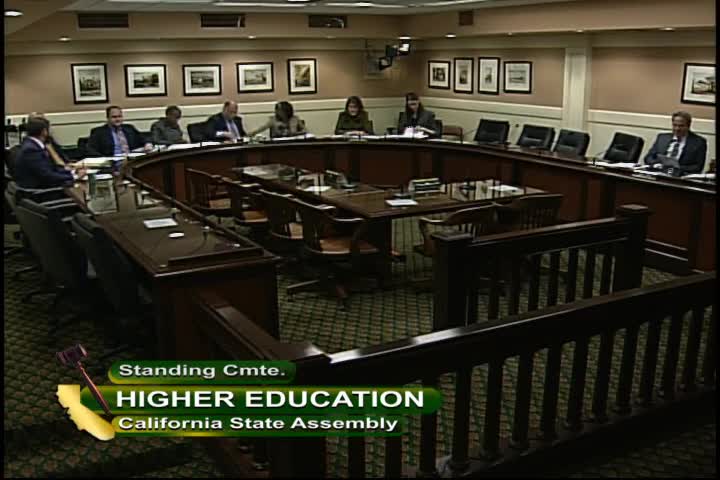
Discussed in Hearing
 16MIN
Assembly Standing Committee on Higher Education


Bill Co-Author(s):







