AB 2834: Sentencing: driving under the influence.
- Session Year: 2017-2018
- House: Assembly
- Latest Version Date: 2018-04-19
Under existing law, if a crime is punishable, in the discretion of the court, either as a misdemeanor or a felony, the crime is a misdemeanor for all purposes under specified circumstances, including, among other circumstances, when the court grants probation to a defendant without imposition of sentence and at the time of granting probation, or on application of the defendant or probation officer thereafter, the court declares the offense to be a misdemeanor.
Existing law makes it a crime to operate a vehicle while under the influence of alcohol or drugs, and sets forth the penalties for a violation of these provisions. Existing law provides that a person who is guilty of driving under the influence, or driving under the influence causing injury, is subject to enhanced penalties if the current offense for driving under the influence, or driving under the influence causing injury, occurred within 10 years of a separate conviction that was punished as a felony for driving under the influence, driving under the influence causing injury, or vehicular manslaughter with gross negligence.
This bill would state that a conviction for driving under the influence or driving under the influence causing injury, punishable punished as a felony, constitutes a felony for the purpose of determining whether the person has been convicted of a separate violation or a prior violation, even if the sentence imposed was conviction was subsequently reduced to a misdemeanor pursuant to the discretionary sentencing provision described above. By expanding the group of people eligible for a sentence enhancement, this bill would impose a state-mandated local program.
The California Constitution requires the state to reimburse local agencies and school districts for certain costs mandated by the state. Statutory provisions establish procedures for making that reimbursement.
This bill would provide that no reimbursement is required by this act for a specified reason.
Under existing law, if a crime is punishable, in the discretion of the court, either as a misdemeanor or a felony, the crime is a misdemeanor for all purposes under specified circumstances, including, among other circumstances, when the court grants probation to a defendant without imposition of sentence and at the time of granting probation, or on application of the defendant or probation officer thereafter, the court declares the offense to be a misdemeanor.
Existing law makes it a crime to operate a vehicle while under the influence of alcohol or drugs, and sets forth the penalties for a violation of these provisions. Existing law provides that a person who is guilty of driving under the influence, or driving under the influence causing injury, is subject to enhanced penalties if the current offense for driving under the influence, or driving under the influence causing injury, occurred within 10 years of a separate conviction that was punished as a felony for driving under the influence, driving under the influence causing injury, or vehicular manslaughter with gross negligence.
This bill would state a conviction for driving under the influence or driving under the influence causing injury, punishable as a felony, constitutes a felony for the purpose of determining whether the person has been convicted of a separate violation or a prior violation, even if the sentence imposed was a misdemeanor pursuant to the discretionary sentencing provision described above. By expanding the group of people eligible for a sentence enhancement, this bill would impose a state-mandated local program.
The California Constitution requires the state to reimburse local agencies and school districts for certain costs mandated by the state. Statutory provisions establish procedures for making that reimbursement.
This bill would provide that no reimbursement is required by this act for a specified reason.
(a)A person is guilty of a public offense, punishable by imprisonment in the state prison or confinement in a county jail for not more than one year and by a fine of not less than three hundred ninety dollars ($390) nor more than one thousand dollars ($1,000) if that person is convicted of a violation of Section 23152 or 23153, and the offense occurred within 10 years of any of the following:
(1)A separate violation of Section 23152 that was punished as a felony under Section 23550 or this section, or both, or under former Section 23175 or former Section 23175.5, or both.
(2)A separate violation of Section 23153 that was punished as a felony.
(3)A separate violation of paragraph (1) of subdivision (c) of Section 192 of the Penal Code that was punished as a felony.
(b)Each person who, having previously been convicted of a violation of subdivision (a) of Section 191.5 of the Penal Code, a felony violation of subdivision (b) of Section 191.5, or a violation of subdivision (a) of Section 192.5 of the Penal Code, is subsequently convicted of a violation of Section 23152 or 23153 is guilty of a public offense punishable by imprisonment in the state prison or confinement in a county jail for not more than one year and by a fine of not less than three hundred ninety dollars ($390) nor more than one thousand dollars ($1,000).
(c)The privilege to operate a motor vehicle of a person convicted of a violation that is punishable under subdivision (a) or (b) shall be revoked by the department pursuant to paragraph (7) of subdivision (a) of Section 13352, unless paragraph (6) of subdivision (a) of Section 13352 is also applicable, in which case the privilege shall be revoked under that provision. The court shall require the person to surrender the drivers license to the court in accordance with Section 13550.
(d)A person convicted of a violation of Section 23152 or 23153 that is punishable under this section shall be designated as a habitual traffic offender for a period of three years, subsequent to the conviction. The person shall be advised of this designation under subdivision (b) of Section 13350.
(e)A conviction for a violation of Section 23152 that was punishable punished as a felony under Section 23550 or this section or both, or a violation of Section 23153 that was punishable punished as a felony, constitutes a felony for the purpose of determining whether the person has been convicted of a separate violation or a prior conviction of this section, even if the sentence imposed was conviction was subsequently reduced to a misdemeanor pursuant to subdivision (b) of Section 17 of the Penal Code.
SEC. 2.No reimbursement is required by this act pursuant to Section 6 of Article XIIIB of the California Constitution because the only costs that may be incurred by a local agency or school district will be incurred because this act creates a new crime or infraction, eliminates a crime or infraction, or changes the penalty for a crime or infraction, within the meaning of Section 17556 of the Government Code, or changes the definition of a crime within the meaning of Section 6 of Article XIIIB of the California Constitution.
(a)A person is guilty of a public offense, punishable by imprisonment in the state prison or confinement in a county jail for not more than one year and by a fine of not less than three hundred ninety dollars ($390) nor more than one thousand dollars ($1,000) if that person is convicted of a violation of Section 23152 or 23153, and the offense occurred within 10 years of any of the following:
(1)A separate violation of Section 23152 that was punished as a felony under Section 23550 or this section, or both, or under former Section 23175 or former Section 23175.5, or both.
(2)A separate violation of Section 23153 that was punished as a felony.
(3)A separate violation of paragraph (1) of subdivision (c) of Section 192 of the Penal Code that was punished as a felony.
(b)Each person who, having previously been convicted of a violation of subdivision (a) of Section 191.5 of the Penal Code, a felony violation of subdivision (b) of Section 191.5, or a violation of subdivision (a) of Section 192.5 of the Penal Code, is subsequently convicted of a violation of Section 23152 or 23153 is guilty of a public offense punishable by imprisonment in the state prison or confinement in a county jail for not more than one year and by a fine of not less than three hundred ninety dollars ($390) nor more than one thousand dollars ($1,000).
(c)The privilege to operate a motor vehicle of a person convicted of a violation that is punishable under subdivision (a) or (b) shall be revoked by the department pursuant to paragraph (7) of subdivision (a) of Section 13352, unless paragraph (6) of subdivision (a) of Section 13352 is also applicable, in which case the privilege shall be revoked under that provision. The court shall require the person to surrender the drivers license to the court in accordance with Section 13550.
(d)A person convicted of a violation of Section 23152 or 23153 that is punishable under this section shall be designated as a habitual traffic offender for a period of three years, subsequent to the conviction. The person shall be advised of this designation under subdivision (b) of Section 13350.
(e)A conviction for a violation of Section 23152 that was punishable as a felony under Section 23550 or this section or both, or a violation of Section 23153 that was punishable as a felony, constitutes a felony for the purpose of determining whether the person has been convicted of a separate violation or a prior conviction of this section, even if the sentence imposed was a misdemeanor pursuant to subdivision (b) of Section 17 of the Penal Code.
SEC. 2.No reimbursement is required by this act pursuant to Section 6 of Article XIIIB of the California Constitution because the only costs that may be incurred by a local agency or school district will be incurred because this act creates a new crime or infraction, eliminates a crime or infraction, or changes the penalty for a crime or infraction, within the meaning of Section 17556 of the Government Code, or changes the definition of a crime within the meaning of Section 6 of Article XIIIB of the California Constitution.
|
Date
|
Status
|
|---|---|
| May 31, 2018 | From committee: Without further action pursuant to Joint Rule 62(a). |
| Apr 24, 2018 | In committee: Set, second hearing. Failed passage. |
| Apr 23, 2018 | Re-referred to Com. on PUB. S. |
| Apr 19, 2018 | From committee chair, with author's amendments: Amend, and re-refer to Com. on PUB. S. Read second time and amended. |
| Apr 17, 2018 | In committee: Testimony taken. Hearing postponed by committee. |
| Apr 10, 2018 | In committee: Set, first hearing. Hearing canceled at the request of author. |
| Mar 8, 2018 | Referred to Com. on PUB. S. |
| Feb 17, 2018 | From printer. May be heard in committee March 19. |
| Feb 16, 2018 | Read first time. To print. |
|
Date
|
Description
|
Location
|
Votes
|
|
|---|---|---|---|---|
| Apr 24, 2018 | Do pass and be re-referred to the Committee on [Appropriations] | Assembly Standing Committee on Public Safety |
Failed |
This list shows positions taken on this bill by organizations on the date displayed, which is linked to the original source.
Positions by individuals are not included.
|
Organization
|
Position
|
Date
|
|---|---|---|
| American Civil Liberties Union of California | ** Against | Apr 23, 2018 |
| Association Of Orange County Deputy Sheriffs | ** Support | Apr 23, 2018 |
| California Attorneys For Criminal Justice | ** Against | Apr 23, 2018 |
| California District Attorneys Association | ** Support | Apr 23, 2018 |
| California Police Chiefs Association | ** Support | Apr 23, 2018 |
| California Public Defenders Association | ** Against | Apr 23, 2018 |
| Fraternal Order of Police | ** Support | Apr 23, 2018 |
| Kern County District Attorney, Lisa Green | ** Support | Apr 23, 2018 |
| Long Beach Police Officers Association | ** Support | Apr 23, 2018 |
| Mothers Against Drunk Driving, Southern California | ** Support | Apr 23, 2018 |
| Orange County District Attorney Office | * Support | Apr 17, 2018 |
| Peace Officers Resource Association Of California | ** Support | Apr 23, 2018 |
| Sacramento County Deputy Sheriffs' Association | ** Support | Apr 23, 2018 |
| San Diego County District Attorney's Office | ** Support | Apr 23, 2018 |
Date of Hearing:
Counsel: David Billingsley
ASSEMBLY COMMITTEE ON PUBLIC SAFETY
Reginald Byron Jones-Sawyer, Sr., Chair
ABPCA Bill Id:AB 2834
Author:(Fong) – As Amended Ver:April 19, 2018
VOTE ONLY
SUMMARY: Specifies that a conviction for driving under the influence (DUI) or driving under the influence causing injury (DUI w/injury), that was punished as a felony, constitutes a felony for the purpose of determining whether the person has been convicted of a separate violation or a prior violation, even if the judge exercised his or her discretion to subsequently reduce the offense to a misdemeanor. Increases the number of crimes that can be charged as felony DUI or felony DUI w/injury by treating those prior convictions as felonies.
EXISTING LAW:
- States that a person is guilty of a felony or a misdemeanor, with a maximum sentence of three years in the state prison (felony) or one year in the county jail (misdemeanor), if that person is convicted of a violation of DUI or DUI w/injury, and the offense occurred within 10 years of any of the following: (Veh. Code, § 23550.5, (subd. (a).)
- A separate violation of DUI that was punished as a felony as specified;
- A separate violation of DUI w/injury that was punished as a felony; or,
- A separate violation of vehicular manslaughter, as specified, that was punished as a felony.
- A separate violation of DUI that was punished as a felony as specified;
- Specifies that each person who, having previously been convicted of gross vehicular manslaughter while intoxicated, a felony for vehicular manslaughter while intoxicated, or vehicular manslaughter by means of a boat, as specified, is subsequently convicted of a violation of DUI or DUI w/injury is guilty of a felony or a misdemeanor, with a maximum sentence of three years in the state prison (felony) or one year in the county jail (misdemeanor). (Veh. Code, § 23550.5, (subd. (b).)
- Requires the driving privileges of a person convicted of a violation listed above be revoked, as specified. (Veh. Code, § 23550.5, (subd. (c).)
- States that a person convicted of a violation of DUI or DUI w/injury as described above, shall be designated as a habitual traffic offender for a period of three years, subsequent to the conviction. (Veh. Code, § 23550.5, (subd. (d).)
- States that if a person is convicted of a violation of DUI and the offense occurred within 10 years of three or more separate violations of DUI, as specified, that resulted in convictions, that person can be punished as a felony or a misdemeanor, with a maximum of three years in the county jail pursuant to realignment (felony), or one year in the county jail (misdemeanor).
- Specifies that when a crime is punishable, in the discretion of the court, either by imprisonment in the state prison or imprisonment in a county jail under realignment, or by fine or imprisonment in the county jail, it is a misdemeanor for all purposes under the following circumstances: (Pen. Code 17(b).)
- After a judgment where the defendant is sentenced as misdemeanor;
- When the court, upon committing the defendant to the Division of Juvenile Justice, designates the offense to be a misdemeanor;
- When the court grants probation to a defendant without imposition of sentence and at the time of granting probation, or on application of the defendant or probation officer thereafter, the court declares the offense to be a misdemeanor;
- When the prosecuting attorney files in a court having jurisdiction over misdemeanor offenses a complaint specifying that the offense is a misdemeanor, unless the defendant at the time of his or her arraignment or plea objects to the offense being made a misdemeanor, in which event the complaint shall be amended to charge the felony and the case shall proceed on the felony complaint; or,
- When, at or before the preliminary examination, the magistrate determines that the offense is a misdemeanor, in which event the case shall proceed as if the defendant had been arraigned on a misdemeanor complaint.
- After a judgment where the defendant is sentenced as misdemeanor;
FISCAL EFFECT:
Unknown
COMMENTS:
- Author's Statement: According to the author, "Every year, thousands of innocent lives are needlessly lost in DUI-related accidents. According to the Centers for Disease Control, over 10,300 people were killed in crashes involving a drunk driver in California between 2003 and 2012. Of particular concern are repeat offenders, whom studies show are more likely than first-time offenders to be involved in alcohol-related traffic fatalities. To ensure that felony DUI convictions are treated with the proper weight during consideration of future DUI violations, AB 2834 will ensure that a prior felony DUI conviction remains a felony for purposes of the determination of a subsequent DUI offense. By allowing original felony convictions to stand as felonies in light of new DUI violations, AB 2834 will hold repeat DUI offenders accountable for their actions and help save lives. It is our responsibility to close loopholes that are putting the public at serious risk.”
- Reduction of a Felony to a Misdemeanor: Current law states that when a crime is punishable either as a felony or a misdemeanor, it is a misdemeanor for all purposes under specified circumstances. Those circumstances include the following situations in which a judge chooses to exercise their discretion:
- After a judgment where the defendant is sentenced as misdemeanor; or (Pen. Code. § 17. Subd. (b)(1).)
- When the court grants probation to a defendant without imposition of sentence and at the time of granting probation, or on application of the defendant or probation officer thereafter, the court declares the offense to be a misdemeanor. (Pen. Code. § 17. Subd. (b)(2).)
- When, at or before the preliminary examination, the magistrate determines that the offense is a misdemeanor, in which event the case shall proceed as if the defendant had been arraigned on a misdemeanor complaint. (Pen. Code. § 17. Subd. (b)(5).)
- After a judgment where the defendant is sentenced as misdemeanor; or (Pen. Code. § 17. Subd. (b)(1).)
Courts have the authority to sentence defendants to misdemeanors on certain criminal offenses that can be charged as felonies. A “wobbler” is an offense which can be charged as a felony or a misdemeanor. Among the reasons courts have this type of discretion is that it provides a check against over-charging by the prosecution. The fact that a charge is a wobbler reflects that the conduct underlying the criminal charge can range from low level (misdemeanor) to more serious conduct (felony). By giving the court the discretion to sentence an individual on a misdemeanor when they have been charged with a felony wobbler, the court can ensure that the culpability for the defendant’s conduct appropriately matches the level of the offense and punishment.
Courts also have the discretion to reduce certain felony charges to misdemeanors subsequent to a probationary sentence, upon petition by the defendant or probation officer. Courts have the authority to exercise such discretion when a charge is a “wobbler.”
When a court exercises its discretion to declare a "wobbler" offense a misdemeanor, such a declaration precludes its use as a prior felony conviction in a subsequent prosecution. (People v. Camarillo (2000), 84 Cal. App.4th 1386, 1390.)
This bill would specify that when a court exercises its discretion to reduce a felony DUI charge to a misdemeanor, subsequent to a grant of probation, the charge not be treated as a misdemeanor for all purposes. This bill would require a DUI charge that was otherwise a misdemeanor for all purposes to be treated as a felony for the purpose of elevating a new DUI charge to a felony.
- Effect of this Bill: This bill states that a conviction for a violation of DUI that was “charged as a felony,” or a violation of DUI w/injury that was “charged as a felony,” constitutes a felony for the purpose of determining whether the person has been convicted of a separate violation or a prior conviction of this section, even if the sentence imposed was a misdemeanor based on the exercise of the judge’s discretion, as specified.
Under existing law, an individual can be charged with a felony DUI under the following circumstances:- Individuals that have been convicted of three separate convictions for driving under the influence (as specified) within 10 years can be charged and convicted of a felony for a new charge of DUI; and
- Individuals convicted of a felony DUI of felony DUI w/injury within the past 10 years can be charged and convicted of a felony for a new DUI charge.
- Individuals that have been convicted of three separate convictions for driving under the influence (as specified) within 10 years can be charged and convicted of a felony for a new charge of DUI; and
This bill would lower the bar in terms of the criteria that is necessary to charge and convict and individual for a felony DUI. This bill would allow a person to be convicted a felony DUI if the person had only one conviction for DUI where the court had exercised its discretion to reduce the charge to a misdemeanor after sentencing.
- Argument in Support: According to Mothers Against Drunk Driving Southern California, “Every year, thousands of innocent lives are needlessly lost in DUI-related accidents. According to the Centers for Disease Control, over 10,300 people were killed in crashes involving a drunk driver in California between 2003 and 2012. Of particular concern are repeat offenders, whom studies show are more likely than first-time offenders to be involved in alcohol-related traffic fatalities. Those with multiple DUI convictions are five times more likely to have a diagnosis of alcohol abuse or dependence than the general population.
Under the Vehicle Code, a second DUI offense can be considered a felony if the offender has previously been convicted of a felony DUI (Vehicle Code § 23550.5). However, a loophole in existing law has allowed repeat offenders to evade harsher penalties. At the request of the defendant, a prior felony DUI conviction that has been reduced to a misdemeanor may not be counted as a prior felony violation necessary to elevate a new DUI offense to a felony. Without this reduction, the offense would qualify as a prior felony offense, allowing a subsequent DUI to be treated as a felony.
“AB 2834 will ensure that a prior felony DUI conviction remains a felony for purposes of the determination of a subsequent DUI offense. By allowing original felony convictions to stand as felonies in light of new DUI violations, AB 2834 will hold repeat DUI offenders accountable for their actions and help save lives.” - Argument in Opposition: According to the California Public Defenders Association, “AB 2834 is an almost exact re-write of SB 67 (Bates), which died last year. We opposed that bill, and we oppose this one for much the same reasons. We stated five objections at that time. The first two had to do with clumsy and inconsistent wording in the first bill, which has been corrected in this one. Nevertheless our remaining three objections are still appropriate. AB 2834 would amend Vehicle Code section 23550.5, which makes any DUI within ten years of a prior felony DUI also a felony. Most (but not all) felony DUIs are “wobblers,” that is, they can be punished as felonies or, under conditions set forth in Penal Code section 17(b), as misdemeanors when the judge decides either at original sentencing, or upon completion of probation, that the offense is more appropriately punished as a misdemeanor. This bill amend section 23550.5 in such a way that if a person is convicted of any new DUI and it occurred within ten years of a prior DUI that COULD HAVE been punished as a felony but WASN’T because the court exercised its discretion under P.C 17(b), then IT DOESN’T MATTER. It is STILL considered a felony prior and the new offense would be a felony, no matter how minor the new DUI offense might otherwise be. First, this bill creates a totally new and unique exception to the provision of P.C. 17(b) that a reduction to a misdemeanor under that section makes the offense a misdemeanor “for all purposes.” Is the priorability of DUIs so critical that we should set precedents for the further weakening 0f section 17(b)? Do we really want to reduce incentives for defendants to reform and rehabilitate themselves by telling them the elimination of ex-felon status they have earned comes with a catch? Second, If the prior DUIs were that important they would not have been wobblers in the first place ( and, as mentioned above, some DUIs are not), or the sentencing judge on the prior would have imposed a state prison sentence then, thereby rendering the whole reduction issue moot. Third, and finally, this bill would further erode the sentencing discretion of judges, especially the language that says ‘even if the sentence imposed was a misdemeanor pursuant to Penal code section 17(b).’ Basically, what this bill says is ‘we don’t care what the judge says; even though he has the power and discretion to the decide that individual cases should be misdemeanors we are going to consider all such offenses to be felonies.’ Even though the judge facially has the power to reduce a wobbler to a misdemeanor this bill would make the judge’s authority subordinate to the charging discretion of the prosecutor, thereby violating the Separation of Powers doctrine in a way that is reminiscent of Esteybar v. Municipal Court 5 Cal.3d 119. If the prior DUI is so serious that it should be considered a felony for priorability purposes maybe it should be a straight felony. The Legislature can set sentencing parameters for crimes such that offenses can be straight felonies or wobblers, but having set an offense as a wobbler they should let the judges vested with those decisions do their job, instead of micromanaging or adopting a one size fits all approach.”
- Related Legislation: AB 1941 (Jones-Sawyer), would give the court discretion to reduce a wobbler to a misdemeanor in situations where probation was granted and a sentence was imposed, but its execution had been suspended. AB 1941 is awaiting committee assignment in the Senate Rules Committee.
- Prior Legislation:
- SB 67 (Bates), of the 2017-18 Legislative Session, would have a required a felony conviction for driving under the influence or driving under the influence causing injury, to remain a felony for purpose of determining whether the person has been convicted of a separate violation or a prior violation, even if the conviction was subsequently reduced to a misdemeanor. SB 67 was held in the Senate Appropriations Committee.
- AB 2690 (Mullin) Chapter 590, Statutes of 2014, authorized enhanced penalties for a current conviction for driving under the influence or driving under the influence causing injury that occurs within 10 years of a separate conviction that was punished as a felony for driving under the influence, driving under the influence causing injury, or vehicular manslaughter with gross negligence.
- AB 1601(Hill) Chapter 301, Statutes of 2010, permits a court to order a 10-year revocation of a driver's license for a person convicted of three or more separate driving under the influence (DUI) offenses.
- SB 67 (Bates), of the 2017-18 Legislative Session, would have a required a felony conviction for driving under the influence or driving under the influence causing injury, to remain a felony for purpose of determining whether the person has been convicted of a separate violation or a prior violation, even if the conviction was subsequently reduced to a misdemeanor. SB 67 was held in the Senate Appropriations Committee.
REGISTERED SUPPORT / OPPOSITION:
Support
Association of Orange County Deputy Sheriffs
California District Attorneys Association
California Police Chiefs Association
Fraternal Order of Police
Kern County District Attorney, Lisa Green
Long Beach Police Officers Association
Mothers Against Drunk Driving, Southern California
Peace Officers Resource Association of California
Sacramento County Deputy Sheriffs’ Association
San Diego County District Attorney’s Office
Opposition
American Civil Liberties Union of California
California Attorneys for Criminal Justice
California Public Defenders Association
Analysis Prepared by:
David Billingsley / PUB. S. / (916) 319-3744
Date of Hearing:
Counsel: David Billingsley
ASSEMBLY COMMITTEE ON PUBLIC SAFETY
Reginald Byron Jones-Sawyer, Sr., Chair
ABPCA Bill Id:AB 2834
Author:(Fong) – As Introduced Ver:February 16, 2018
SUMMARY: Specifies that a conviction for driving under the influence (DUI) or driving under the influence causing injury (DUI w/injury), which could have been punished as a felony, constitutes a felony for the purpose of determining whether the person has been convicted of a separate violation or a prior violation, even if the judge exercised his or her discretion to set the level of the conviction at a misdemeanor. Increases the number of crimes that can be charged as felony DUI or felony DUI w/injury by treating those prior convictions as felonies.
EXISTING LAW:
- States that a person is guilty of a felony or a misdemeanor, with a maximum sentence of three years in the state prison (felony) or one year in the county jail (misdemeanor), if that person is convicted of a violation of DUI or DUI w/injury, and the offense occurred within 10 years of any of the following: (Veh. Code, § 23550.5, (subd. (a).)
- A separate violation of DUI that was punished as a felony as specified;
- A separate violation of DUI w/injury that was punished as a felony; or,
- A separate violation of vehicular manslaughter, as specified, that was punished as a felony.
- A separate violation of DUI that was punished as a felony as specified;
- Specifies that each person who, having previously been convicted of gross vehicular manslaughter while intoxicated, a felony for vehicular manslaughter while intoxicated, or vehicular manslaughter by means of a boat, as specified, is subsequently convicted of a violation of DUI or DUI w/injury is guilty of a felony or a misdemeanor, with a maximum sentence of three years in the state prison (felony) or one year in the county jail (misdemeanor). (Veh. Code, § 23550.5, (subd. (b).)
- Requires the driving privileges of a person convicted of a violation listed above be revoked, as specified. (Veh. Code, § 23550.5, (subd. (c).)
- States that a person convicted of a violation of DUI or DUI w/injury as described above, shall be designated as a habitual traffic offender for a period of three years, subsequent to the conviction. (Veh. Code, § 23550.5, (subd. (d).)
- States that if a person is convicted of a violation of DUI and the offense occurred within 10 years of three or more separate violations of DUI, as specified, that resulted in convictions, that person can be punished as a felony or a misdemeanor, with a maximum of three years in the county jail pursuant to realignment (felony), or one year in the county jail (misdemeanor).
- Specifies that when a crime is punishable, in the discretion of the court, either by imprisonment in the state prison or imprisonment in a county jail under realignment, or by fine or imprisonment in the county jail, it is a misdemeanor for all purposes under the following circumstances: (Pen. Code 17(b).)
- After a judgment where the defendant is sentenced as misdemeanor;
- When the court, upon committing the defendant to the Division of Juvenile Justice, designates the offense to be a misdemeanor;
- When the court grants probation to a defendant without imposition of sentence and at the time of granting probation, or on application of the defendant or probation officer thereafter, the court declares the offense to be a misdemeanor;
- When the prosecuting attorney files in a court having jurisdiction over misdemeanor offenses a complaint specifying that the offense is a misdemeanor, unless the defendant at the time of his or her arraignment or plea objects to the offense being made a misdemeanor, in which event the complaint shall be amended to charge the felony and the case shall proceed on the felony complaint; or,
- When, at or before the preliminary examination, the magistrate determines that the offense is a misdemeanor, in which event the case shall proceed as if the defendant had been arraigned on a misdemeanor complaint.
- After a judgment where the defendant is sentenced as misdemeanor;
FISCAL EFFECT:
Unknown
COMMENTS:
- Author's Statement: According to the author, "Every year, thousands of innocent lives are needlessly lost in DUI-related accidents. According to the Centers for Disease Control, over 10,300 people were killed in crashes involving a drunk driver in California between 2003 and 2012. Of particular concern are repeat offenders, whom studies show are more likely than first-time offenders to be involved in alcohol-related traffic fatalities. To ensure that felony DUI convictions are treated with the proper weight during consideration of future DUI violations, AB 2834 will ensure that a prior felony DUI conviction remains a felony for purposes of the determination of a subsequent DUI offense. By allowing original felony convictions to stand as felonies in light of new DUI violations, AB 2834 will hold repeat DUI offenders accountable for their actions and help save lives. It is our responsibility to close loopholes that are putting the public at serious risk.”
- Reduction of a Felony to a Misdemeanor: Current law states that when a crime is punishable either as a felony or a misdemeanor, it is a misdemeanor for all purposes under specified circumstances. Those circumstances include the following situations in which a judge chooses to exercise their discretion:
- After a judgment where the defendant is sentenced as misdemeanor; or (Pen. Code. § 17. Subd. (b)(1).)
- When the court grants probation to a defendant without imposition of sentence and at the time of granting probation, or on application of the defendant or probation officer thereafter, the court declares the offense to be a misdemeanor. (Pen. Code. § 17. Subd. (b)(2).)
- After a judgment where the defendant is sentenced as misdemeanor; or (Pen. Code. § 17. Subd. (b)(1).)
Courts have the authority to sentence defendants to misdemeanors on certain criminal offenses that can be charged as felonies. A “wobbler” is an offense which can be charged as a felony or a misdemeanor. Among the reasons courts have this type of discretion is that it provides a check against over-charging by the prosecution. The fact that a charge is a wobbler reflects that the conduct underlying the criminal charge can range from low level (misdemeanor) to more serious conduct (felony). By giving the court the discretion to sentence an individual on a misdemeanor when they have been charged with a felony wobbler, the court can ensure that the culpability for the defendant’s conduct appropriately matches the level of the offense and punishment.
Courts also have the discretion to reduce certain felony charges to misdemeanors subsequent to a probationary sentence, upon petition by the defendant or probation officer. Courts have the authority to exercise such discretion when a charge is a “wobbler.”
When a court exercises its discretion to declare a "wobbler" offense a misdemeanor, such a declaration precludes its use as a prior felony conviction in a subsequent prosecution. (People v. Camarillo (2000), 84 Cal. App.4th 1386, 1390.)
This bill would specify that when a court exercises its discretion to reduce a felony DUI charge to a misdemeanor under either of the circumstances above, the charge not be treated as a misdemeanor for all purposes. This bill would require a DUI charge that was otherwise a misdemeanor for all purposes to be treated as a felony for the purpose of elevating a new DUI charge to a felony.
- Effect of this Bill: This bill states that a conviction for a violation of DUI that was “punishable as a felony,” or a violation of DUI w/injury that was “punishable as a felony,” constitutes a felony for the purpose of determining whether the person has been convicted of a separate violation or a prior conviction of this section, even if the sentence imposed was a misdemeanor based on the exercise of the judge’s discretion, as specified.
Under existing law, an individual can be charged with a felony DUI under the following circumstances:- Individuals that have been convicted of three separate convictions for driving under the influence (as specified) within 10 years can be charged and convicted of a felony for a new charge of DUI; and
- Individuals convicted of a felony DUI of felony DUI w/injury within the past 10 years can be charged and convicted of a felony for a new DUI charge.
- Individuals that have been convicted of three separate convictions for driving under the influence (as specified) within 10 years can be charged and convicted of a felony for a new charge of DUI; and
This bill would lower the bar in terms of the criteria that is necessary to charge and convict and individual for a felony DUI. This bill would allow a person to be convicted of a felony DUI, if the person had only one misdemeanor conviction for DUI within the past 10 years, but the prior conviction could have been punished as a felony, but the defendant was punished as a misdemeanor because court exercised its discretion to do so at the time of sentencing. This bill would also allow a person to be convicted a felony DUI if the person had only one conviction for DUI where the court had exercised its discretion to reduce the charge to a misdemeanor after sentencing.
- Argument in Support: According to Mothers Against Drunk Driving Southern California, “Every year, thousands of innocent lives are needlessly lost in DUI-related accidents. According to the Centers for Disease Control, over 10,300 people were killed in crashes involving a drunk driver in California between 2003 and 2012. Of particular concern are repeat offenders, whom studies show are more likely than first-time offenders to be involved in alcohol-related traffic fatalities. Those with multiple DUI convictions are five times more likely to have a diagnosis of alcohol abuse or dependence than the general population.
Under the Vehicle Code, a second DUI offense can be considered a felony if the offender has previously been convicted of a felony DUI (Vehicle Code § 23550.5). However, a loophole in existing law has allowed repeat offenders to evade harsher penalties. At the request of the defendant, a prior felony DUI conviction that has been reduced to a misdemeanor may not be counted as a prior felony violation necessary to elevate a new DUI offense to a felony. Without this reduction, the offense would qualify as a prior felony offense, allowing a subsequent DUI to be treated as a felony.
“AB 2834 will ensure that a prior felony DUI conviction remains a felony for purposes of the determination of a subsequent DUI offense. By allowing original felony convictions to stand as felonies in light of new DUI violations, AB 2834 will hold repeat DUI offenders accountable for their actions and help save lives.” - Argument in Opposition: According to the California Public Defenders Association, “AB 2834 is an almost exact re-write of SB 67 (Bates), which died last year. We opposed that bill, and we oppose this one for much the same reasons. We stated five objections at that time. The first two had to do with clumsy and inconsistent wording in the first bill, which has been corrected in this one. Nevertheless our remaining three objections are still appropriate. AB 2834 would amend Vehicle Code section 23550.5, which makes any DUI within ten years of a prior felony DUI also a felony. Most (but not all) felony DUIs are “wobblers,” that is, they can be punished as felonies or, under conditions set forth in Penal Code section 17(b), as misdemeanors when the judge decides either at original sentencing, or upon completion of probation, that the offense is more appropriately punished as a misdemeanor. This bill amend section 23550.5 in such a way that if a person is convicted of any new DUI and it occurred within ten years of a prior DUI that COULD HAVE been punished as a felony but WASN’T because the court exercised its discretion under P.C 17(b), then IT DOESN’T MATTER. It is STILL considered a felony prior and the new offense would be a felony, no matter how minor the new DUI offense might otherwise be. First, this bill creates a totally new and unique exception to the provision of P.C. 17(b) that a reduction to a misdemeanor under that section makes the offense a misdemeanor “for all purposes.” Is the priorability of DUIs so critical that we should set precedents for the further weakening 0f section 17(b)? Do we really want to reduce incentives for defendants to reform and rehabilitate themselves by telling them the elimination of ex-felon status they have earned comes with a catch? Second, If the prior DUIs were that important they would not have been wobblers in the first place ( and, as mentioned above, some DUIs are not), or the sentencing judge on the prior would have imposed a state prison sentence then, thereby rendering the whole reduction issue moot. Third, and finally, this bill would further erode the sentencing discretion of judges, especially the language that says ‘even if the sentence imposed was a misdemeanor pursuant to Penal code section 17(b).’ Basically, what this bill says is ‘we don’t care what the judge says; even though he has the power and discretion to the decide that individual cases should be misdemeanors we are going to consider all such offenses to be felonies.’ Even though the judge facially has the power to reduce a wobbler to a misdemeanor this bill would make the judge’s authority subordinate to the charging discretion of the prosecutor, thereby violating the Separation of Powers doctrine in a way that is reminiscent of Esteybar v. Municipal Court 5 Cal.3d 119. If the prior DUI is so serious that it should be considered a felony for priorability purposes maybe it should be a straight felony. The Legislature can set sentencing parameters for crimes such that offenses can be straight felonies or wobblers, but having set an offense as a wobbler they should let the judges vested with those decisions do their job, instead of micromanaging or adopting a one size fits all approach.”
- Related Legislation: AB 1941 (Jones-Sawyer), would give the court discretion to reduce a wobbler to a misdemeanor in situations where probation was granted and a sentence was imposed, but its execution had been suspended. AB 1941 is awaiting committee assignment in the Senate Rules Committee.
- Prior Legislation:
- SB 67 (Bates), of the 2017-18 Legislative Session, would have a required a felony conviction for driving under the influence or driving under the influence causing injury, to remain a felony for purpose of determining whether the person has been convicted of a separate violation or a prior violation, even if the conviction was subsequently reduced to a misdemeanor. SB 67 was held in the Senate Appropriations Committee.
- AB 2690 (Mullin) Chapter 590, Statutes of 2014, authorized enhanced penalties for a current conviction for driving under the influence or driving under the influence causing injury that occurs within 10 years of a separate conviction that was punished as a felony for driving under the influence, driving under the influence causing injury, or vehicular manslaughter with gross negligence.
- AB 1601(Hill) Chapter 301, Statutes of 2010, permits a court to order a 10-year revocation of a driver's license for a person convicted of three or more separate driving under the influence (DUI) offenses.
- SB 67 (Bates), of the 2017-18 Legislative Session, would have a required a felony conviction for driving under the influence or driving under the influence causing injury, to remain a felony for purpose of determining whether the person has been convicted of a separate violation or a prior violation, even if the conviction was subsequently reduced to a misdemeanor. SB 67 was held in the Senate Appropriations Committee.
REGISTERED SUPPORT / OPPOSITION:
Support
Association of Orange County Deputy Sheriffs
California District Attorneys Association
California Police Chiefs Association
Fraternal Order of Police
Kern County District Attorney, Lisa Green
Long Beach Police Officers Association
Mothers Against Drunk Driving, Southern California
Peace Officers Resource Association of California
Sacramento County Deputy Sheriffs’ Association
San Diego County District Attorney’s Office
Opposition
American Civil Liberties Union of California
California Attorneys for Criminal Justice
California Public Defenders Association
Analysis Prepared by:
David Billingsley / PUB. S. / (916) 319-3744
Discussed in Hearing
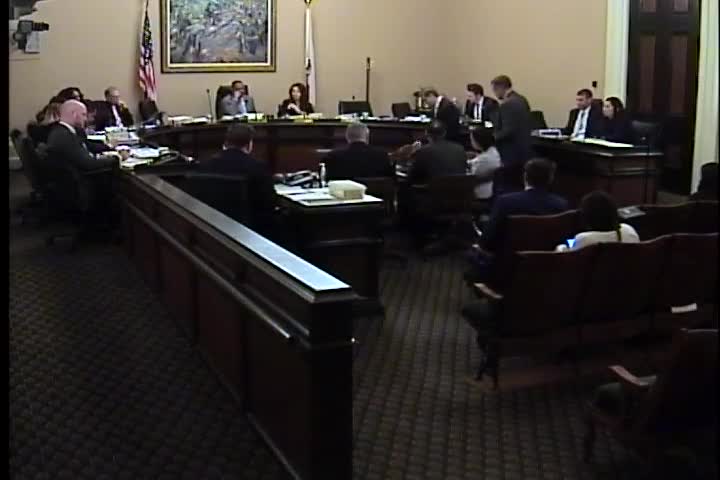 1MIN
Assembly Standing Committee on Public Safety
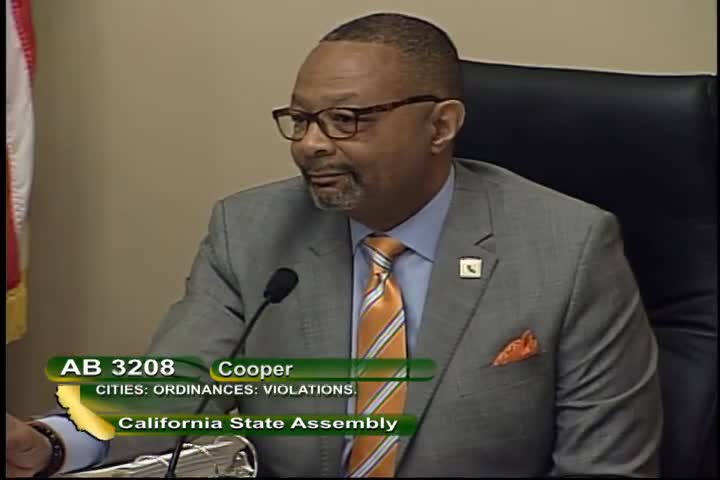 15MIN
Assembly Standing Committee on Public Safety
Bill Author

Bill Co-Author(s):
