AB 3064: Firearms: felons in possession.
- Session Year: 2017-2018
- House: Assembly
- Latest Version Date: 2018-02-16
Existing law makes a person convicted of, or who has an outstanding warrant for, a felony under the laws of the United States, the State of California, or any other state, government, or country, and who owns, purchases, receives, or has in possession or under custody or control any firearm is guilty of a felony. Existing law prescribes the punishment for that felony as imprisonment for a term of 16 months, or 2 or 3 years in the state prison.
This bill would provide that the punishment for a second or subsequent conviction of that felony would be imprisonment for a term of 4, 5, or 6 years in the state prison. By creating a new crime, this bill would impose a state-mandated local program. The bill would also make additional technical, nonsubstantive changes.
The California Constitution requires the state to reimburse local agencies and school districts for certain costs mandated by the state. Statutory provisions establish procedures for making that reimbursement.
This bill would provide that no reimbursement is required by this act for a specified reason.
(a)(1)Any A person who has been convicted of, or has an outstanding warrant for, a felony under the laws of the United States, the State of California, or any other state, government, or country, or of an offense enumerated in subdivision (a), (b), or (d) of Section 23515, or who is addicted to the use of any narcotic drug, country and who owns, purchases, receives, or has in possession or under custody or control any firearm is guilty of a felony. A second or subsequent conviction for the offense specified in this paragraph is a felony punishable by imprisonment for four, five, or six years.
(2)A person who has been convicted of a misdemeanor violation of paragraph (2) of subdivision (a) of Section 245, a misdemeanor violation of Section 246, or a misdemeanor violation of subdivision (c) of Section 417 and who owns, purchases, receives, or has in possession or under custody or control any firearm is guilty of a felony.
(3)A person who is addicted to the use of any narcotic drug and who owns, purchases, receives, or has in possession or under custody or control any firearm is guilty of a felony.
(2)Any(4)A person who has two or more convictions for violating paragraph (2) of subdivision (a) of Section 417 and who owns, purchases, receives, or has in possession or under custody or control any firearm is guilty of a felony.
(b)Notwithstanding subdivision (a), any a person who has been convicted of a felony or of an offense enumerated in Section 23515, when that conviction results from certification by the juvenile court for prosecution as an adult in an adult court under Section 707 of the Welfare and Institutions Code, and who owns or has in possession or under custody or control any firearm is guilty of a felony.
(c)Subdivision (a) shall not apply to a person who has been convicted of a felony under the laws of the United States unless either of the following criteria is satisfied:
(1)Conviction of a like offense under California law can only result in imposition of felony punishment.
(2)The defendant was sentenced to a federal correctional facility for more than 30 days, or received a fine of more than one thousand dollars ($1,000), or received both punishments.
SEC. 2.No reimbursement is required by this act pursuant to Section 6 of Article XIIIB of the California Constitution because the only costs that may be incurred by a local agency or school district will be incurred because this act creates a new crime or infraction, eliminates a crime or infraction, or changes the penalty for a crime or infraction, within the meaning of Section 17556 of the Government Code, or changes the definition of a crime within the meaning of Section 6 of Article XIIIB of the California Constitution.
|
Date
|
Status
|
|---|---|
| May 31, 2018 | From committee: Without further action pursuant to Joint Rule 62(a). |
| Apr 24, 2018 | In committee: Set, first hearing. Failed passage. |
| Apr 17, 2018 | In committee: Hearing postponed by committee. |
| Mar 12, 2018 | Referred to Com. on PUB. S. |
| Feb 17, 2018 | From printer. May be heard in committee March 19. |
| Feb 16, 2018 | Read first time. To print. |
|
Date
|
Description
|
Location
|
Votes
|
|
|---|---|---|---|---|
| Apr 24, 2018 | Do pass and be re-referred to the Committee on [Appropriations] | Assembly Standing Committee on Public Safety |
Failed |
This list shows positions taken on this bill by organizations on the date displayed, which is linked to the original source.
Positions by individuals are not included.
|
Organization
|
Position
|
Date
|
|---|---|---|
| ACLU of California | * Against | Apr 24, 2018 |
| Calfornia Police Chief's Association | * Support | Apr 24, 2018 |
| California District Attorneys Association | * Support | Apr 24, 2018 |
| California Peace Officers Association | * Support | Apr 24, 2018 |
| California Public Defender's Association | * Against | Apr 24, 2018 |
| California Rifle and Pistol Association | * Support | Apr 24, 2018 |
| California State Sheriff's Association | * Support | Apr 24, 2018 |
| Contra Costa County District Attorney's Office | * Support | Apr 24, 2018 |
| Ella Baker Center For Human Rights | * Against | Apr 24, 2018 |
| National Shooting Sports Foundation | ** Support | Apr 23, 2018 |
| San Diego County District Attorney's Office | ** Support | Apr 23, 2018 |
Date of Hearing: April 24, 2018
Chief Counsel: Gregory Pagan
ASSEMBLY COMMITTEE ON
Reginald Byron Jones-Sawyer, Sr., Chair
ABPCA Bill Id:
Author:() – As Ver:
SUMMARY:
Increases the penalty for a second or subsequent violation of being an ex-felon in possession of a firearm from 16 months, two, or three years in the state prison to four, five, or six years in the state prison.
EXISTING LAW:
- Provides that any person who has been convicted of, or has an outstanding warrant for, a felony under the law of the United States, the State of California, or any other state, government, or country, or assault with a firearm on another person or peace officer, discharging a firearm at an inhabited dwelling or automobile, brandishing a firearm in the presence of a peace officer in a rude, angry or threatening manner, or who is addicted to the use of any narcotic, and who owns, purchases, receives, or has in possession or under custody and control any firearm is guilty of felony punishable by 16 months, two, or three years in the state prison. (Pen. Code, § 29800, subd. (a).)
- Provides that it shall be unlawful for the following people to ship or transport in interstate or foreign commerce, or possess in or affecting commerce, any firearm or ammunition; or to receive any firearm or ammunition which has been shipped or transported in interstate or foreign commerce: (18 USC § 922(g).)
- Who has been convicted in any court of, a crime punishable by imprisonment for a term exceeding one year;
- Who is a fugitive from justice;
- Who is an unlawful user of or addicted to any controlled substance, as defined;
- Who has been adjudicated as a mental defective or who has been committed to a mental institution;
- Who, being "an alien" —
- is illegally or unlawfully in the United States; or
- except as specified, has been admitted to the United States under a non-immigrant visa, as defined;
- is illegally or unlawfully in the United States; or
- Who has been discharged from the Armed Forces under dishonorable conditions;
- Who, having been a citizen of the United States, has renounced his citizenship; and,
- Who is subject to a court order that —
- was issued after a hearing of which such person received actual notice, and at which such person had an opportunity to participate;
- restrains such person from harassing, stalking, or threatening an intimate partner of such person or child of such intimate partner or person, or engaging in other conduct that would place an intimate partner in reasonable fear of bodily injury to the partner or child; and
- includes a finding that such person represents a credible threat to the physical safety of such intimate partner or child; or
- by its terms explicitly prohibits the use, attempted use, or threatened use of physical force against such intimate partner or child that would reasonably be expected to cause bodily injury; or
- includes a finding that such person represents a credible threat to the physical safety of such intimate partner or child; or
- Who has been convicted in any court of a misdemeanor crime of domestic violence
- was issued after a hearing of which such person received actual notice, and at which such person had an opportunity to participate;
- Who has been convicted in any court of, a crime punishable by imprisonment for a term exceeding one year;
- Specifies a 10 year ban for anyone convicted of numerous misdemeanors involving violence or threats of violence. (Pen. Code § 29805.)
- Provides that a violation of these provisions of the 10 year firearm ban may be sentenced to a year in the county jail or up to three years in state prison, as specified. (Pen. Code § 29805.)
- Provides that persons who are bound by a temporary restraining order or injunction or a protective order issued under the Family Code or the Welfare and Institutions Code, may be prohibited from firearms ownership for the duration of that court order. (Pen. Code § 29825.)
- Specifies that the Attorney General maintains an online database known as the Armed Prohibited Persons File (“APPS”). The purpose of APPS is to cross-reference persons who have ownership or possession of a firearm on or after January 1, 1991, as indicated by a record in the Consolidated Firearms Information System, and who, subsequent to the date of that ownership or possession of a firearm, fall within a class of persons who are prohibited from owning or possessing a firearm. The information contained in APPS is only be available to specified entities through the California Law Enforcement Telecommunications System, for the purpose of determining if persons are armed and prohibited from possessing firearms. (Pen. Code § 30000.)
FISCAL EFFECT:
Unknown
COMMENTS:
- Author's Statement: According to the author, "A felon who repeatedly breaks our laws and is found to be illegally in possession of a firearm is precisely the individual on whom we should be focusing our limited law enforcement and public safety efforts. We need to get guns out of their hands. Yet California law only slaps their hands when these felons are found to illegally possess a firearm."
- Enhancement of Prison Term for New Offense: Under Penal Code Section 29800 (a) any person previously convicted of felony who has a firearm in his or her possession if guilty of a felony punishable by 16 months, two, or three years in the state prison. This bill would increase punishment for being an ex-felon in possession of a firearm, upon a second or subsequent conviction to four, five, or six years in the state prison.
It should be noted that Penal Code Section 667.5 (b) provides that for any felony prison sentence imposed, in addition to and consecutive to, the court shall impose an additional one year term for each prior separate prison term previously imposed, provided that the defendant did not remain free of felony conviction or prison custody for a period of five years. Therefore, under existing law, a defendant who has a prior felony conviction, within the last five years, and is in possession of a firearm can receive a base term sentence of 16 months, two, or three years and an additional one year term consecutively imposed for the prior conviction for a maximum term of four years. Is it really necessary to increase the base term for a second conviction of being an ex-felon in possession of a firearm when there are other sentence enhancements that may apply? - Prison Overcrowding: In January 2010, a three-judge panel issued a ruling ordering the State of California to reduce its prison population to 137.5% of design capacity because overcrowding was the primary reason that CDCR was unable to provide inmates with constitutionally adequate healthcare. (Coleman/Plata vs. Schwarzenegger (2010) No. Civ S-90-0520 LKK JFM P/NO. C01-1351 THE.) The United State Supreme Court upheld the decision, declaring that “without a reduction in overcrowding, there will be no efficacious remedy for the unconstitutional care of the sick and mentally ill” inmates in California’s prisons. (Brown v. Plata (2011) 131 S.Ct. 1910, 1939; 179 L.Ed.2d 969, 999.)
After continued litigation, on February 10, 2014, the federal court ordered California to reduce its in-state adult institution population to 137.5% of design capacity by February 28, 2016, as follows: 143% of design bed capacity by June 30, 2014; 141.5% of design bed capacity by February 28, 2015; and, 137.5% of design bed capacity by February 28, 2016.
CDCR’s February 2017 monthly report on the prison population notes that the in-state adult institution population is currently 114,124 inmates, which amounts to 134.1% of design capacity. This is an increase of 1.1% from February of the previous year. Additionally, there are still 4,400 prisoners being housed out of state. (http://www.cdcr.ca.gov/Reports_Research/Offender_Information_Services_Branch/Monthly/TPOP1A/TPOP1Ad1702.pdf )
The Governor’s January proposed budget for 2017-2018 anticipates that “[t]he adult inmate average daily population is projected to decrease from 129,015 in 2016-17 to 128,159 in 2017-18, a decrease of 856 inmates, or 0.7 percent. The average daily parolee population is projected to increase from 43,686 in 2016-17 to 44,761 in 2017-18, an increase of 1,075 parolees, or 2.5 percent. The decrease in the adult inmate population is due to a projected reduction related to the implementation of Proposition 57, the Public Safety and Rehabilitation Act of 2016, which offsets a projected increase in felon admissions.” (http://ebudget.ca.gov/budget/2017-18/#/Department/5225)
Thus, while CDCR is currently in compliance with the three-judge panel’s order on the prison population, the state needs to maintain a “durable solution” to prison overcrowding “consistently demanded” by the court. (Opinion Re: Order Granting in Part and Denying in Part Defendants’ Request For Extension of December 31, 2013 Deadline, NO. 2:90-cv-0520 LKK DAD (PC), 3-Judge Court, Coleman v. Brown, Plata v. Brown (2-10-14).) Increasing the penalty for a second or subsequent violation of being an ex-felon in possession of a firearm from 16 months, two, or three years in the state prison to four, five, or six years in the state prison will aggravate the prison overcrowding problem and is inconsistent with the three-judge panel's requirement that the state maintain a durable solution to prison overcrowding. - Argument in Support: According to the California Rifle and Pistol Association, "While defending the constitutional rights of our citizens to own and use firearms, CRPA believes those who use firearms in the commission of violent crimes, and felons found to be in possession of firearms should be punished to the full extent of the law. We stand with law enforcement throughout California and put the safety of our citizens first. It is very hard to explain to our members how, or why, their elected politicians continually write and pass legislation that chips away at the law-abiding gun owners' Second Amendment rights. While at the same time pass legislation such as Senate Bill 620 in 2017 that did away with mandatory penalty enhancements for the small percentage of Californians who choose to use firearms to commit unlawful acts.
''AB 3064 will increase the severity of punishment for felons illegally possessing firearms. The sentence for such felons will increase to a term of 4, 5, or 6 years if the felon has been found in possession of a firearm a second time. A violent felon who is found to be illegally in possession of a firearm is precisely the individual we should be focusing our law enforcement and public safety efforts on. Our elected officials need to get guns out of the hands of violent criminals and stop focusing on law abiding citizens. CRPA will continue to support should legislation aimed at reducing crime and getting criminals off our streets and out of our communities.''
- Argument in Opposition: According to the California Public Defenders Association, "At a time when the California State Prison system is subject to receivership supervision by a Federal Court because of overcrowding, this bill proposes to enhance prison sentences for a nonviolent offense with a surprisingly far reach. Under current law, an individual who possesses an inoperable gun can be convicted of violating California Penal Code section 29800. Further, an individual may also be convicted of violating California Penal Code section 29800 even if she or he only possesses a firearm receiver, i.e., a single component of a firearm. Plainly: an individual is subject to a state prison sentence and, under AB 3064 an enhanced state prison sentence, if she or he possesses something that is not dangerous.
''California Penal Code section 29800 also applies to an individual who may have no idea that she or he falls within the proscribed class. For instance, if someone has been convicted of a crime in another State, and that State deems that crime a felony, that individual is subject to the penalties of California Penal Code section 29800 even if the crime is not a felony under the California law. Further, if someone mistakenly believes that a prior crime was a misdemeanor, she or he is subject to state prison for possessing a gun, broken gun, or gun component even if the mistaken belief was held in good faith. Lastly, non-violent weapons laws are disproportionately enforced against minorities, so any enhanced sentence for this violation will likely have a disparate impact on nonwhite community members.''
- Prior Legislation: AB 2666 (Baker), of the 2015-2016 Legislative Session, was substantially similar to this bill in that it increased the punishment for a second or subsequent violation of being an ex-felon in possession of a firearm from 16 months, two, or three years in state prison to four, five, or six years in state prison. AB 2666 failed passage in the Assembly Public Safety Committee.
REGISTERED SUPPORT / OPPOSITION:
Support
California District Attorneys Association
California Peace officers Association
California Rifle and Pistol Association
California State Sheriffs' Association
National Shooting Sports Foundation
San Diego County District Attorney's Office
Opposition
American Civil Liberties Union
California Public Defenders Association
Ella Baker Center for Human Rights
Analysis Prepared by:
Date of Hearing: April 17, 2018
Chief Counsel: Gregory Pagan
ASSEMBLY COMMITTEE ON
Reginald Byron Jones-Sawyer, Sr., Chair
ABPCA Bill Id:
Author:() – As Ver:
SUMMARY:
Increases the penalty for a second or subsequent violation of being an ex-felon in possession of a firearm from 16 month, two, or three years in the state prison to four, five, or six years in the state prison.
EXISTING LAW:
- Provides that any person who has been convicted of, or has an outstanding warrant for, a felony under the law of the United States, the State of California, or any other state, government, or country, or assault with a firearm on another person or peace officer, discharging a firearm at an inhabited dwelling or automobile, brandishing a firearm in the presence of a peace officer in a rude, angry or threatening manner, or who is addicted to the use of any narcotic, and who owns, purchases, receives, or has in possession or under custody and control any firearm is guilty of felony punishable by 16 months, two, or three years in the state prison. (Pen. Code, § 29800, subd. (a).)
- Provides that it shall be unlawful for the following people to ship or transport in interstate or foreign commerce, or possess in or affecting commerce, any firearm or ammunition; or to receive any firearm or ammunition which has been shipped or transported in interstate or foreign commerce: (18 USC § 922(g).)
- Who has been convicted in any court of, a crime punishable by imprisonment for a term exceeding one year;
- Who is a fugitive from justice;
- Who is an unlawful user of or addicted to any controlled substance, as defined;
- Who has been adjudicated as a mental defective or who has been committed to a mental institution;
- Who, being "an alien" —
- is illegally or unlawfully in the United States; or
- except as specified, has been admitted to the United States under a non-immigrant visa, as defined;
- is illegally or unlawfully in the United States; or
- Who has been discharged from the Armed Forces under dishonorable conditions;
- Who, having been a citizen of the United States, has renounced his citizenship; and,
- Who is subject to a court order that —
- was issued after a hearing of which such person received actual notice, and at which such person had an opportunity to participate;
- restrains such person from harassing, stalking, or threatening an intimate partner of such person or child of such intimate partner or person, or engaging in other conduct that would place an intimate partner in reasonable fear of bodily injury to the partner or child; and
- includes a finding that such person represents a credible threat to the physical safety of such intimate partner or child; or
- by its terms explicitly prohibits the use, attempted use, or threatened use of physical force against such intimate partner or child that would reasonably be expected to cause bodily injury; or
- includes a finding that such person represents a credible threat to the physical safety of such intimate partner or child; or
- Who has been convicted in any court of a misdemeanor crime of domestic violence
- was issued after a hearing of which such person received actual notice, and at which such person had an opportunity to participate;
- Who has been convicted in any court of, a crime punishable by imprisonment for a term exceeding one year;
- Specifies a 10 year ban for anyone convicted of numerous misdemeanors involving violence or threats of violence. (Pen. Code § 29805.)
- Provides that a violation of these provisions of the 10 year firearm ban may be sentenced to a year in the county jail or up to three years in state prison, as specified. (Pen. Code § 29805.)
- Provides that persons who are bound by a temporary restraining order or injunction or a protective order issued under the Family Code or the Welfare and Institutions Code, may be prohibited from firearms ownership for the duration of that court order. (Pen. Code § 29825.)
- Specifies that the Attorney General maintains an online database known as the Armed Prohibited Persons File (“APPS”). The purpose of APPS is to cross-reference persons who have ownership or possession of a firearm on or after January 1, 1991, as indicated by a record in the Consolidated Firearms Information System, and who, subsequent to the date of that ownership or possession of a firearm, fall within a class of persons who are prohibited from owning or possessing a firearm. The information contained in APPS is only be available to specified entities through the California Law Enforcement Telecommunications System, for the purpose of determining if persons are armed and prohibited from possessing firearms. (Pen. Code § 30000.)
FISCAL EFFECT:
Unknown
COMMENTS:
- Author's Statement: According to the author, "A felon who repeatedly breaks our laws and is found to be illegally in possession of a firearm is precisely the individual on whom we should be focusing our limited law enforcement and public safety efforts. We need to get guns out of their hands. Yet California law only slaps their hands when these felons are found to illegally possess a firearm."
- Prison Overcrowding: In January 2010, a three-judge panel issued a ruling ordering the State of California to reduce its prison population to 137.5% of design capacity because overcrowding was the primary reason that CDCR was unable to provide inmates with constitutionally adequate healthcare. (Coleman/Plata vs. Schwarzenegger (2010) No. Civ S-90-0520 LKK JFM P/NO. C01-1351 THE.) The United State Supreme Court upheld the decision, declaring that “without a reduction in overcrowding, there will be no efficacious remedy for the unconstitutional care of the sick and mentally ill” inmates in California’s prisons. (Brown v. Plata (2011) 131 S.Ct. 1910, 1939; 179 L.Ed.2d 969, 999.)
After continued litigation, on February 10, 2014, the federal court ordered California to reduce its in-state adult institution population to 137.5% of design capacity by February 28, 2016, as follows: 143% of design bed capacity by June 30, 2014; 141.5% of design bed capacity by February 28, 2015; and, 137.5% of design bed capacity by February 28, 2016.
CDCR’s February 2017 monthly report on the prison population notes that the in-state adult institution population is currently 114,124 inmates, which amounts to 134.1% of design capacity. This is an increase of 1.1% from February of the previous year. Additionally, there are still 4,400 prisoners being housed out of state. (http://www.cdcr.ca.gov/Reports_Research/Offender_Information_Services_Branch/Monthly/TPOP1A/TPOP1Ad1702.pdf )
The Governor’s January proposed budget for 2017-2018 anticipates that “[t]he adult inmate average daily population is projected to decrease from 129,015 in 2016-17 to 128,159 in 2017-18, a decrease of 856 inmates, or 0.7 percent. The average daily parolee population is projected to increase from 43,686 in 2016-17 to 44,761 in 2017-18, an increase of 1,075 parolees, or 2.5 percent. The decrease in the adult inmate population is due to a projected reduction related to the implementation of Proposition 57, the Public Safety and Rehabilitation Act of 2016, which offsets a projected increase in felon admissions.” (http://ebudget.ca.gov/budget/2017-18/#/Department/5225)
Thus, while CDCR is currently in compliance with the three-judge panel’s order on the prison population, the state needs to maintain a “durable solution” to prison overcrowding “consistently demanded” by the court. (Opinion Re: Order Granting in Part and Denying in Part Defendants’ Request For Extension of December 31, 2013 Deadline, NO. 2:90-cv-0520 LKK DAD (PC), 3-Judge Court, Coleman v. Brown, Plata v. Brown (2-10-14).) According to CDCR in 2017 there were 232 new admissions to CDCR of persons convicted of a felony violation of Penal Code Section 20001 (b) (1), and the total inmate population of persons convicted of a violation of Penal Code Section 20001 (b) was 499. Obviously, increasing the penalty for a second or subsequent violation of being an ex-felon in possession of a firearm from 16 months, two, or three years in the state prison to four, five, or six years in the state prison will aggravate the prison overcrowding problem and is inconsistent with the three-judge panel's requirement that the state maintain a durable solution to prison overcrowding. - Argument in Support: According to the California Rifle and Pistol Association, "While defending the constitutional rights of our citizens to own and use firearms, CRPA believes those who use firearms in the commission of violent crimes, and felons found to be in possession of firearms should be punished to the full extent of the law. We stand with law enforcement throughout California and put the safety of our citizens first. It is very hard to explain to our members how, or why, their elected politicians continually write and pass legislation that chips away at the law-abiding gun owners' Second Amendment rights. While at the same time pass legislation such as Senate Bill 620 in 2017 that did away with mandatory penalty enhancements for the small percentage of Californians who choose to use firearms to commit unlawful acts.
''AB 3064 will increase the severity of punishment for felons illegally possessing firearms. The sentence for such felons will increase to a term of 4, 5, or 6 years if the felon has been found in possession of a firearm a second time. A violent felon who is found to be illegally in possession of a firearm is precisely the individual we should be focusing our law enforcement and public safety efforts on. Our elected officials need to get guns out of the hands of violent criminals and stop focusing on law abiding citizens. CRPA will continue to support should legislation aimed at reducing crime and getting criminals off our streets and out of our communities.''
- Argument in Opposition: According to the California Public Defenders Association, "At a time when the California State Prison system is subject to receivership supervision by a Federal Court because of overcrowding, this bill proposes to enhance prison sentences for a nonviolent offense with a surprisingly far reach. Under current law, an individual who possesses an inoperable gun can be convicted of violating California Penal Code section 29800. Further, an individual may also be convicted of violating California Penal Code section 29800 even if she or he only possesses a firearm receiver, i.e., a single component of a firearm. Plainly: an individual is subject to a state prison sentence and, under AB 3064 an enhanced state prison sentence, if she or he possesses something that is not dangerous.
''California Penal Code section 29800 also applies to an individual who may have no idea that she or he falls within the proscribed class. For instance, if someone has been convicted of a crime in another State, and that State deems that crime a felony, that individual is subject to the penalties of California Penal Code section 29800 even if the crime is not a felony under the California law. Further, if someone mistakenly believes that a prior crime was a misdemeanor, she or he is subject to state prison for possessing a gun, broken gun, or gun component even if the mistaken belief was held in good faith. Lastly, non-violent weapons laws are disproportionately enforced against minorities, so any enhanced sentence for this violation will likely have a disparate impact on nonwhite community members.''
- Prior Legislation: AB 2666 (Baker) of the 2015-2016 Legislative Session was substantially similar to this bill in that it increased the punishment for a second or subsequent violation of being an ex-felon in possession of a firearm from 16 months, two, or three years in state prison to four, five, or six years in state prison.
REGISTERED SUPPORT / OPPOSITION:
Support
California District Attorneys Association
California Rifle and Pistol Association
California State Sheriffs' Association
National Shooting Sports Foundation
San Diego County District Attorney's Office
Opposition
American Civil Liberties Union
California Public Defenders Association
Analysis Prepared by:
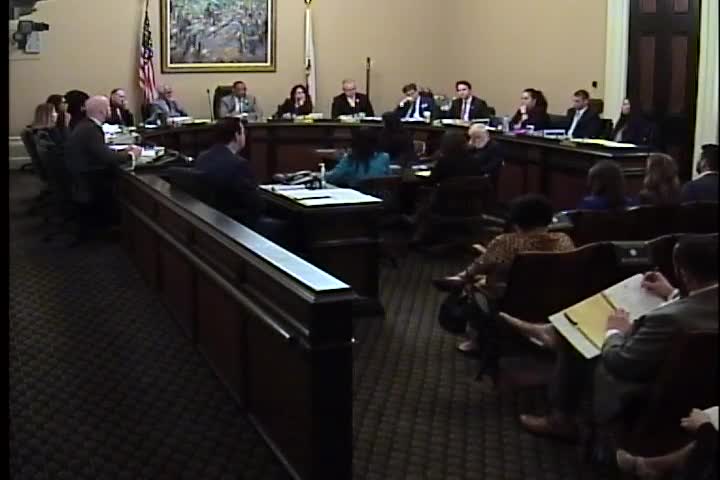
Discussed in Hearing
 20MIN
Assembly Standing Committee on Public Safety
Bill Author