AB 361: Income taxes: credit: apprentices.
- Session Year: 2017-2018
- House: Assembly
- Latest Version Date: 2017-05-15
The Personal Income Tax Law and the Corporation Tax Law allow various credits against the taxes imposed by those laws.
This bill bill, under both laws, for taxable years beginning on or after January 1, 2018, and before January 1, 2023, would allow a credit against those taxes for each taxable year beginning on or after January 1, 2017, in an amount equal to $1,000 for each registered apprentice trained by the taxpayer and who worked 7 months or more during the taxable year, not to exceed $10,000 per taxable year per taxpayer.
This bill would take effect immediately as a tax levy.
The Personal Income Tax Law and the Corporation Tax Law allow various credits against the taxes imposed by those laws.
This bill would allow a credit against those taxes for each taxable year beginning on or after January 1, 2017, in an amount equal to $1,000 for each registered apprentice trained by the taxpayer and who worked 7 months or more during the taxable year, not to exceed $10,000 per taxable year per taxpayer.
This bill would take effect immediately as a tax levy.
Existing law includes the Revenue and Taxation Code, under which various taxes are imposed, calculated, and administered.This bill would make a nonsubstantive change to a provision naming that code.Existing law includes the Revenue and Taxation Code, under which various taxes are imposed, calculated, and administered.
This bill would make a nonsubstantive change to a provision naming that code.
(a)For each taxable year beginning on or after January 1, 2017, 2018, and before January 1, 2023, there shall be allowed a credit against the net tax, as defined in Section 17039, in an amount equal to one thousand dollars ($1,000) for each individual who was employed by the tax payer taxpayer as a registered apprentice in this state for seven months or more during the taxable year, not to exceed ten thousand dollars ($10,000) per taxable year per taxpayer.
(b)For purposes of this section, registered apprentice means an individual who is trained by the taxpayer through an apprenticeship program that meets all of the following requirements:
(1)The apprenticeship program is approved by the Chief of the Division of Apprenticeship Standards pursuant to Chapter 4 (commencing with Section 3070) of Division 3 of the Labor Code.
(2)The program is provided pursuant to an apprenticeship agreement as described in Section 3077 of the Labor Code.
(3)The minimum term for the program is 2,000 hours.
(c)(1)A credit shall only be allowed under this section for the taxable year if the taxpayer obtains a copy of an apprentice certificate from the Division of Apprenticeship Standards in the Department of Industrial Relations. A certificate is required for each taxable year. The taxpayer shall provide a copy of the certificate to the Franchise Tax Board upon request.
(2)The Division of Apprenticeship Standards may adopt rules and regulations as reasonably necessary to fulfill its obligations under this section, but shall consult with the Franchise Tax Board.
(d) The credit allowed under this section must be claimed on a timely filed original return.
(e)In the case where the credit allowed by this section exceeds the net tax, the excess may be carried over to reduce the net tax in the following year, if necessary.
(f)(1)The Franchise Tax Board may issue adopt any regulations necessary or appropriate to implement the purposes of this section.
(2)Chapter 3.5 (commencing with Section 11340) of Part 1 of Division 3 of Title 2 of the Government Code shall not apply to any standard, criterion, procedure, determination, rule, notice, or guideline established or issued by the Franchise Tax Board.
(g)Any deduction otherwise allowed under this part for the wages or salaries paid or incurred by the taxpayer upon which the credit is based shall be reduced by the amount of the credit.
(h)This section shall remain in effect only until December 1, 2023, and as of that date is repealed.
SEC. 2.Section 23667 is added to the Revenue and Taxation Code, to read:23667.(a)For each taxable year beginning on or after January 1, 2017, 2018, and before January 1, 2023, there shall be allowed a credit against the tax, as defined in Section 23036, in an amount equal to one thousand dollars ($1,000) for each individual who was employed by the taxpayer as a registered apprentice in this state for seven months or more for the taxpayer, during the taxable year, not to exceed ten thousand dollars ($10,000) per taxable year per taxpayer.
(b)For purposes of this section, registered apprentice means an individual who is trained by the taxpayer through an apprenticeship program that meets all of the following requirements:
(1)The apprenticeship program is approved by the Chief of the Division of Apprenticeship Standards pursuant to Chapter 4 (commencing with Section 3070) of Division 3 of the Labor Code.
(2)The program is provided pursuant to an apprenticeship agreement as described in Section 3077 of the Labor Code.
(3)The minimum term for the program is 2,000 hours.
(c)(1)A credit shall only be allowed under this section for the taxable year if the taxpayer obtains a copy of an apprentice certificate from the Division of Apprenticeship Standards in the Department of Industrial Relations. A certificate is required for each taxable year. The taxpayer shall provide a copy of the certificate to the Franchise Tax Board upon request.
(2)The Division of Apprenticeship Standards may adopt rules and regulations as reasonably necessary to fulfill its obligations under this section, but shall consult with the Franchise Tax Board.
(d)The credit allowed under this section must be claimed on a timely filed original return.
(e)In the case where the credit allowed by this section exceeds the tax, the excess may be carried over to reduce the tax in the following year, if necessary.
(f)(1)The Franchise Tax Board may issue adopt any regulations necessary or appropriate to implement the purposes of this section.
(2)Chapter 3.5 (commencing with Section 11340) of Part 1 of Division 3 of Title 2 of the Government Code shall not apply to any standard, criterion, procedure, determination, rule, notice, or guideline established or issued by the Franchise Tax Board.
(g)Any deduction otherwise allowed under this part for the wages or salaries paid or incurred by the taxpayer upon which the credit is based shall be reduced by the amount of the credit.
(h)This section shall remain in effect only until December 1, 2023, and as of that date is repealed.
SEC. 3.It is the intent of the Legislature to comply with Section 41 of the Revenue and Taxation Code.
SEC. 4.This act provides for a tax levy within the meaning of Article IV of the California Constitution and shall go into immediate effect.
(a)For each taxable year beginning on or after January 1, 2017, there shall be allowed a credit against the net tax, as defined in Section 17039, in an amount equal to one thousand dollars ($1,000) for each individual who was employed by the tax payer as a registered apprentice in this state for seven months or more during the taxable year, not to exceed ten thousand dollars ($10,000) per taxable year per taxpayer.
(b)For purposes of this section, registered apprentice means an individual who is trained by the taxpayer through an apprenticeship program that meets all of the following requirements:
(1)The apprenticeship program is approved by the Chief of the Division of Apprenticeship Standards pursuant to Chapter 4 (commencing with Section 3070) of Division 3 of the Labor Code.
(2)The program is provided pursuant to an apprenticeship agreement as described in Section 3077 of the Labor Code.
(3)The minimum term for the program is 2,000 hours.
(c)(1)A credit shall only be allowed under this section for the taxable year if the taxpayer obtains a copy of an apprentice certificate from the Division of Apprenticeship Standards in the Department of Industrial Relations. A certificate is required for each taxable year. The taxpayer shall provide a copy of the certificate to the Franchise Tax Board upon request.
(2)The Division of Apprenticeship Standards may adopt rules and regulations as reasonably necessary to fulfill its obligations under this section, but shall consult with the Franchise Tax Board.
(d) The credit allowed under this section must be claimed on a timely filed original return.
(e)In the case where the credit allowed by this section exceeds the net tax, the excess may be carried over to reduce the net tax in the following year, if necessary.
(f)(1)The Franchise Tax Board may issue any regulations necessary or appropriate to implement the purposes of this section.
(2)Chapter 3.5 (commencing with Section 11340) of Part 1 of Division 3 of Title 2 of the Government Code shall not apply to any standard, criterion, procedure, determination, rule, notice, or guideline established or issued by the Franchise Tax Board.
(g)Any deduction otherwise allowed under this part for the wages or salaries paid or incurred by the taxpayer upon which the credit is based shall be reduced by the amount of the credit.
SEC. 2.Section 23667 is added to the Revenue and Taxation Code, to read:23667.(a)For each taxable year beginning on or after January 1, 2017, there shall be allowed a credit against the tax, as defined in Section 23036, in an amount equal to one thousand dollars ($1,000) for each individual who was employed by the taxpayer as a registered apprentice in this state for seven months or more for the taxpayer, during the taxable year, not to exceed ten thousand dollars ($10,000) per taxable year per taxpayer.
(b)For purposes of this section, registered apprentice means an individual who is trained by the taxpayer through an apprenticeship program that meets all of the following requirements:
(1)The apprenticeship program is approved by the Chief of the Division of Apprenticeship Standards pursuant to Chapter 4 (commencing with Section 3070) of Division 3 of the Labor Code.
(2)The program is provided pursuant to an apprenticeship agreement as described in Section 3077 of the Labor Code.
(3)The minimum term for the program is 2,000 hours.
(c)(1)A credit shall only be allowed under this section for the taxable year if the taxpayer obtains a copy of an apprentice certificate from the Division of Apprenticeship Standards in the Department of Industrial Relations. A certificate is required for each taxable year. The taxpayer shall provide a copy of the certificate to the Franchise Tax Board upon request.
(2)The Division of Apprenticeship Standards may adopt rules and regulations as reasonably necessary to fulfill its obligations this section, but shall consult with the Franchise Tax Board.
(d)The credit allowed under this section must be claimed on a timely filed original return.
(e)In the case where the credit allowed by this section exceeds the tax, the excess may be carried over to reduce the tax in the following year, if necessary.
(f)(1)The Franchise Tax Board may issue any regulations necessary or appropriate to implement the purposes of this section.
(2)Chapter 3.5 (commencing with Section 11340) of Part 1 of Division 3 of Title 2 of the Government Code shall not apply to any standard, criterion, procedure, determination, rule, notice, or guideline established or issued by the Franchise Tax Board.
(g)Any deduction otherwise allowed under this part for the wages or salaries paid or incurred by the taxpayer upon which the credit is based shall be reduced by the amount of the credit.
SEC. 3.It is the intent of the Legislature to comply with Section 41 of the Revenue and Taxation Code.
SEC. 4.This act provides for a tax levy within the meaning of Article IV of the California Constitution and shall go into immediate effect.
SECTION 1.Section 1 of the Revenue and Taxation Code is amended to read:1.This act shall be known and may be cited as the Revenue and Taxation Code.This act shall be known and may be cited as the Revenue and Taxation Code.
|
Date
|
Status
|
|---|---|
| Feb 1, 2018 | From committee: Filed with the Chief Clerk pursuant to Joint Rule 56. |
| Jan 31, 2018 | Died pursuant to Art. IV, Sec. 10(c) of the Constitution. |
| May 26, 2017 | In committee: Held under submission. |
| May 24, 2017 | In committee: Set, first hearing. Referred to APPR. suspense file. |
| May 16, 2017 | Re-referred to Com. on APPR. |
| May 15, 2017 | Read second time and amended. |
| May 11, 2017 | From committee: Amend, and do pass as amended and re-refer to Com. on APPR. (Ayes 8. Noes 0.) (May 8). |
| Mar 28, 2017 | Re-referred to Com. on REV. & TAX. |
| Mar 27, 2017 | From committee chair, with author's amendments: Amend, and re-refer to Com. on REV. & TAX. Read second time and amended. |
| Mar 23, 2017 | Referred to Com. on REV. & TAX. |
| Feb 9, 2017 | From printer. May be heard in committee March 11. |
| Feb 8, 2017 | Read first time. To print. |
|
Date
|
Description
|
Location
|
Votes
|
|
|---|---|---|---|---|
| May 8, 2017 | Do pass as amended and be re-referred to the Committee on [Appropriations] | Assembly Standing Committee on Revenue and Taxation |
Passed |
This list shows positions taken on this bill by organizations on the date displayed, which is linked to the original source.
Positions by individuals are not included.
|
Organization
|
Position
|
Date
|
|---|---|---|
| California Tax Reform Association | ** Against | May 5, 2017 |
Date of Hearing: May 24, 2017
ASSEMBLY COMMITTEE ON APPROPRIATIONS
Lorena Gonzalez Fletcher, Chair
ABPCA Bill Id:AB 361
Author:(Cervantes) – As Amended Ver:May 15, 2017
Policy Committee: | Revenue and Taxation | Vote: | 8 - 0 |
|
| ||
|
|
Urgency: No State Mandated Local Program: No Reimbursable: No
SUMMARY:
This bill allows a Personal Income Tax (PIT) and Corporation Tax (CT) credit equal to $1,000 for each registered apprentice, as defined, who is employed and trained by the taxpayer and who worked seven months or more during the taxable year. The credit is available for taxable years 2018 through 2022, and a taxpayer may not receive more than $10,000 in tax credits each taxable year.
FISCAL EFFECT:
Annual General Fund (GF) revenue loss of approximately $2.8 million in 2017-18, $2.8 million in 2018-19, and $2.7 million in 2019-20.
COMMENTS:
- Background. California has a relatively robust involvement in developing standards for, and promoting apprenticeships. As of 2014, there were 53,000 apprentices working statewide, compared to 16,500 in New York. The Division of Apprenticeship Standards (DAS) administers apprenticeship law and enforces standards for the hours, wages, working conditions, and the specific skills required for state certification as a journeyperson in an apprenticeable occupation. DAS also distributes grants to apprenticeship programs and provides training and consultation to programs across the state.
In November 2016, the DAS was awarded a $1.8 million federal Department of Labor "ApprenticeshipUSA State Expansion Grant" to support existing efforts and also expand apprenticeship training to new, high-demand industries such as information technology, advanced manufacturing, healthcare, and transportation.
- Purpose. According to the author, AB 361 will help incentivize employers to take advantage of apprenticeship programs and help build a middle- and high-skilled workforce.
- Fiscal implications of tax expenditures. Existing law provides various credits, deductions, exclusions, and exemptions for particular taxpayer groups. These features of tax law are referred to as "expenditures" since they are generally enacted to accomplish some governmental purpose and there is a determinable cost associated with each (in the form of foregone revenues). One ongoing concern about tax expenditures is the lack of control over revenue losses, since the number of taxpayers taking advantage of any given tax expenditure can vary each year. This bill enacts a new tax expenditure program, in the form of a PIT and CT credit, to encourage the hiring of apprentices.
- Related legislation. This bill uses state dollars to encourage the hiring and retention of apprentices. A number of other bills pending on this committee’s Suspense File use state funds to support targeted apprenticeship programs: AB 579 (Flora) allocates $300,000 GF for a firefighter pre-apprenticeship program that aims to recruit talent from underserved groups and AB 1376 (Caballero) allocates $500,000 GF for a pre- apprenticeship program for women in the construction trades.
- Recent legislation. AB 151, of the 2015-16 Legislative Session, which would have created a $2,000 tax credit for each apprentice, and AB 1569 (Rodriguez), of the 2013-14 Legislative Session, which was substantially similar to this bill, were both held in this Committee on Suspense.
Analysis Prepared by: Luke Reidenbach / APPR. / (916) 319-2081
Date of Hearing: May 8, 2017
ASSEMBLY COMMITTEE ON REVENUE AND TAXATION
Sebastian Ridley-Thomas, Chair
ABPCA Bill Id:AB 361 (
Author:Cervantes) – As Amended Ver:March 27, 2017
Majority vote. Tax levy. Fiscal committee.
SUBJECT: Income taxes: credit: apprentices
SUMMARY: Allows a credit under the Personal Income Tax (PIT) Law and the Corporation Tax (CT) Law in an amount equal to $1,000 for each registered apprentice employed and trained by the taxpayer and who worked seven months or more during the taxable year, not to exceed $10,000 per taxable year per taxpayer. Specifically, this bill:
- Allows, for each taxable year beginning on or after January 1, 2017, a credit under the PIT Law and the CT Law in an amount equal to $1,000 for each individual who was employed by the taxpayer as a registered apprentice in California for seven months or more during the taxable year, not to exceed $10,000 per taxable year per taxpayer.
- Defines a "registered apprentice" as an individual who is trained by the taxpayer through an apprenticeship program that meets all of the following requirements:
- The apprenticeship program is approved by the Chief of the Division of Apprenticeship Standards (DAS), pursuant to Chapter 4, Division 3 of the Labor Code;
- The program is provided pursuant to an apprenticeship agreement as described in Labor Code Section 3077; and,
- The minimum term for the program is 2,000 hours.
- Provides that the credit is allowed for the taxable year only if the taxpayer obtains a copy of an apprentice certificate from the DAS in the Department of Industrial Relations. The taxpayer must provide a copy of the certificate to the Franchise Tax Board (FTB) upon request. The DAS may adopt rules and regulations as reasonably necessary to fulfill its obligations in relation to the credit, but must do so in consultation with the FTB.
- Provides that the credit must be claimed on a timely filed original return.
- Allows the credit to be carried forward for one year.
- Authorizes the FTB to issue regulations to implement the credit, as specified.
- Provides that any deduction otherwise allowed for wages or salaries paid or incurred by the taxpayer, upon which the credit is based, must be reduced by the amount of the credit.
- States legislative intent to comply with Revenue and Taxation Code (R&TC) Section 41.
- Takes effect immediately as a tax levy.
EXISTING LAW:
- Defines an "apprenticeship agreement" as a written agreement entered into between an apprentice (at least 16 years old) and an employer or program sponsor. The term of apprenticeship must be approved by the Chief of the DAS and must provide at least 2,000 hours of reasonably continuous employment for such person and for his or her participation in an approved program of training through employment and education in related and supplemental subjects.
- Allows various tax credits under the PIT Law and the CT Law generally designed to encourage socially beneficial behavior or to provide relief to taxpayers who incur specified expenses.
- Applies performance measurement standards to any new tax credit under either the PIT Law or the CT Law if enacted by a bill introduced on or after January 1, 2015. Specifically, existing law requires all of the following:
- Specific goals, purposes, and objectives that the tax credit will achieve;
- Detailed performance indicators for the Legislature to use when measuring whether the tax credit meets the goals, purposes, and objectives stated in the bill; and,
- Data collection requirements to enable the Legislature to determine whether the tax credit is meeting, failing to meet, or exceeding those specific goals, purposes, and objectives, including a requirement to specify both of the following:
- The baseline data, to be collected and remitted in each year the credit is effective, for the Legislature to measure the change in performance indicators; and,
- The taxpayers, state agencies, or other entities required to collect and remit data.
FISCAL EFFECT: The FTB estimates General Fund revenue losses of $2.8 million in fiscal year (FY) 2017-18, $2.8 million in FY 2018-19, and $2.7 million in FY 2019-20.
COMMENTS:
- The author has provided the following statement in support of this bill:
A robust apprenticeship program within any company serves as a mechanism for both employers and apprentices to integrate real-world instruction and mentoring into an effective training model. The trust and development that is instilled between these partnerships strengthens an individual's likelihood of securing permanent employment. Finding tools to incentivize employers to take advantage of the [up-and-coming] workforce is a key component to training and maintaining [the] middle and high-skilled workforce.
- Committee Staff Comments:
- What is a "Tax Expenditure"? Existing law provides various credits, deductions, exclusions, and exemptions for particular taxpayer groups. In the late 1960s, United States Treasury officials began arguing that these features of the tax law should be referred to as "expenditures," since they are generally enacted to accomplish some governmental purpose and there is a determinable cost associated with each of them (in the form of forgone revenues). This bill would enact a new tax expenditure program in the form of a tax credit for employing and training registered apprentices.
- Tax Expenditure vs. Direct Expenditure: As the Department of Finance notes in its annual Tax Expenditure Report, there are several key differences between tax expenditures and direct expenditures. First, tax expenditures are reviewed less frequently than direct expenditures once they are put in place. This can offer taxpayers greater certainty, but it can also result in tax expenditures remaining part of the tax code without demonstrating any public benefit. Second, there is generally no control over the amount of revenue losses associated with any given tax expenditure. Finally, it should also be noted that, once enacted, it takes a two-thirds vote to rescind an existing tax expenditure absent a sunset date. This bill does not include a sunset date. The Committee may wish to consider including a sunset date to allow for proper legislative review of the benefits and costs of this tax expenditure in the future.
- Purpose of This Bill: This bill provides a $1,000 tax credit to taxpayers for each individual the taxpayer employs and trains as a registered apprentice. To claim the credit, the taxpayer must employ the registered apprentice for at least seven months during the taxable year and obtain a copy of the apprentice's certificate from the DAS for each taxable year. The taxpayer may not claim more than $10,000 in credits per taxable year, which may help ensure that the increased number of apprentices does not come at the expense of full-time employees whose wages and benefits may only be claimed as a deduction (a less valuable tax benefit) by employers.
However, because this bill allows the credit for taxable years beginning on or after January 1, 2017, this bill would provide a tax benefit for registered apprentices employed prior to its enactment. The Committee may wish to consider the efficiency of providing a tax benefit for behavior that has already occurred, and whether the incentive provided by this bill should be further targeted to only apply in prospective tax years.
- Apprenticeship Training in California: Apprenticeship programs are collaborations of industry, educational institutions, government, and the apprentice. The programs allow apprentices to gain an education and develop well-rounded skills without leaving the workforce, while employers gain loyal and skilled workers trained exactly to their needs.
The DAS oversees management of apprenticeship programs, ensuring high training standards for all apprentices, which include standards related to apprentice wages, hours, and working conditions; learning of skills; length of training; and required supplemental classroom instruction. According to the California Apprenticeship Council (CAC), which sets policy for the DAS, there were 74,441 active apprentices in the quarter ending December 31, 2016. Of this number, 6.7% were new registrations, 6.6% were veterans, 6.3% were women, and 63.0% were minorities.
Generally, wages and benefits are paid to registered apprentices by employers participating in the apprenticeship programs, but related and supplementary instruction (RSI) educational funding has traditionally been provided for via the state budget. RSI funding was previously provided to the California Department of Education but was shifted to the California Community College Chancellor's Office during FY 2013-14. In November 2016, the DAS was awarded a $1.8 million federal Department of Labor "ApprenticeshipUSA State Expansion Grant" to support existing efforts and also expand apprenticeship training to new, high-demand industries such as information technology, advanced manufacturing, healthcare, and transportation.
According to the Chair of the CAC, "[t]he combination of these federal funds with California state grants and increased funding from Governor Brown allowed [the DAS] to approve a record number of new apprenticeship programs."[1] As such, the Committee may wish to consider whether direct augmentation of state funds to continue expansion of apprenticeship programs would be a more efficient approach than a tax credit to increase these employment and training opportunities. Alternatively, the Committee may wish to consider whether more targeted efforts are needed to incentivize growth of apprenticeship programs within emerging industries or communities where workforce development opportunities do not currently exist.
- R&TC Section 41: SB 1335 (Leno), Chapter 845, Statutes of 2014 added R&TC Section 41, which recognized that the Legislature should apply the same level of review used for government spending programs to tax preference programs, including tax credits. Thus, Section 41 requires any bill that is introduced on or after January 1, 2015 and allows a new PIT or CT credit to contain specific goals, purposes, and objectives that the tax credit will achieve. In addition, Section 41 requires detailed performance indicators for the Legislature to use when measuring whether the tax credit meets the goals, purposes, and objectives so-identified. Although this bill states the intent of the Legislature to comply with R&TC Section 41, this bill does not outline specific measures for the proposed tax credit's effectiveness. The Committee may wish to consider what criteria should be used in future evaluation of the proposed tax credit.
- Technical Amendments:
- On Page 2, Line 7, delete the space between "tax" and "payer";
- On Page 3, Line 13, strike "for the taxpayer,"; and,
- On Page 3, Line 33, insert "under" before "this".
- Prior Legislation:
- AB 151 (Rodriguez), of the 2015-16 Legislative Session, would have allowed a credit in an amount equal to $1 for each hour a registered apprentice worked during the taxable year, up to $2,000, for each registered apprentice trained by the taxpayer in the taxable year, not to exceed 10 registered apprentices per taxable year. AB 151 was held on the Committee on Appropriations' Suspense File.
- AB 1569 (Rodriguez), of the 2013-14 Legislative Session, would have allowed a credit in an amount equal to $2,000 for each registered apprentice trained by the taxpayer in the taxable year. AB 1569 was held on the Committee on Appropriations' Suspense File.
REGISTERED SUPPORT / OPPOSITION:
Support
None on file
Opposition
California Tax Reform Association
Analysis Prepared by: Irene Ho / REV. & TAX. / (916) 319-2098
Letter from the Chairperson of the CAC, Jim Hussey, printed in the California Apprenticeship Council's 2017 Newsletter, First Quarter. ↑
Discussed in Hearing
 1H
Assembly Standing Committee on Appropriations
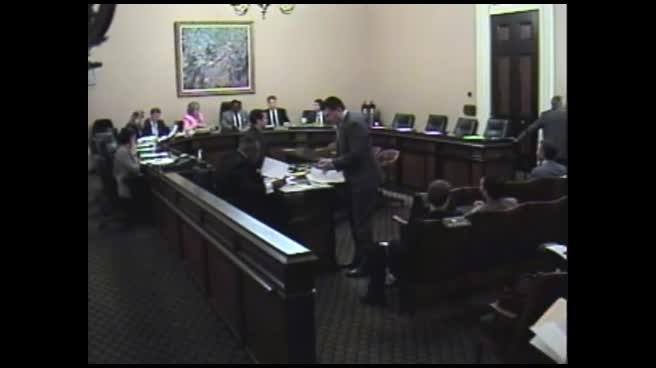 4MIN
Assembly Standing Committee on Revenue and Taxation
Bill Author

Bill Co-Author(s):