AB 620: Prisoners: trauma-focused programming.
- Session Year: 2017-2018
- House: Assembly
- Latest Version Date: 2017-04-20
Existing law authorizes the Board of Parole Hearings to establish and enforce rules and regulations under which inmates committed to state prisons may be allowed to go upon parole outside the prison buildings and enclosures when eligible for parole. Existing law requires the board to meet with each inmate before the inmates minimum eligible parole date, as specified, for the purposes of reviewing and documenting the inmates activities and conduct pertinent to parole eligibility. Existing law charges the Department of Corrections and Rehabilitation with administering the state prisons.
This bill would require the department to provide a meaningful opportunity for the successful release of a qualified inmate, as defined, by providing effective trauma focused programming, as defined, by a clinical social worker, psychologist, violence peer counselor, as specified, or other qualified professional to a qualified inmate during the 5 years preceding his or her parole hearing date upon, his or her request. If the state prison does not have one of the aforementioned professionals available to provide trauma focused programming to a qualified inmate, the department shall contract with a nonprofit organization that meets specified requirements to provide this service. The bill provides that, among other purposes, meaningful opportunity means access to therapy to address traumatic experiences that lead to substance abuse, criminal behavior, and violent actions. to implement a 4-year pilot program at 4 state prisons to offer trauma-focused programming, which includes, among other things, programs that provide tools for coping and dealing with trauma and individual therapy, to qualified incarcerated persons during the 5 years preceding his or her parole date. The bill would require the department, by July 1, 2018, to convene a stakeholder group, as specified, and develop trauma-focused programming for use in the pilot program. The bill would authorize the department to contract with a nonprofit organization to provide trauma-focused programming if a state prison participating in the pilot program does not have a clinical social worker, psychologist, or other qualified professional to provide trauma-focused programming. The bill would authorize the board to consider a qualified inmates incarcerated persons participation in and completion of trauma focused trauma-focused programming as a performance milestone for purposes of credit reductions from the inmates incarcerated persons term of confinement. The bill would repeal these provisions on January 1, 2023.
Existing law authorizes the Board of Parole Hearings to establish and enforce rules and regulations under which inmates committed to state prisons may be allowed to go upon parole outside the prison buildings and enclosures when eligible for parole. Existing law requires the board to meet with each inmate before the inmates minimum eligible parole date, as specified, for the purposes of reviewing and documenting the inmates activities and conduct pertinent to parole eligibility. Existing law charges the Department of Corrections and Rehabilitation with administering the state prisons.
This bill would require the department to provide a meaningful opportunity for the successful release of inmates a qualified inmate, as defined, by providing individual introspective trauma informed therapy, effective trauma focused programming, as defined, for specified inmates at least 1 year prior to an offenders minimum eligible parole date. by a clinical social worker, psychologist, violence peer counselor, as specified, or other qualified professional to a qualified inmate during the 5 years preceding his or her parole hearing date upon, his or her request. If the state prison does not have one of the aforementioned professionals available to provide trauma focused programming to a qualified inmate, the department shall contract with a nonprofit organization that meets specified requirements to provide this service. The bill provides that, among other purposes, meaningful opportunity means access to therapy to address traumatic experiences that lead to substance abuse or abuse, criminal behavior, and violent actions. The bill would authorize the board to consider an offenders informed trauma therapy in granting parole. a qualified inmates participation in and completion of trauma focused programming as a performance milestone for purposes of credit reductions from the inmates term of confinement.
Existing law authorizes the Board of Parole Hearings to establish and enforce rules and regulations under which inmates committed to state prisons may be allowed to go upon parole outside the prison buildings and enclosures when eligible for parole. Existing law requires the board to meet with each inmate before the inmates minimum eligible parole date, as specified, for the purposes of reviewing and documenting the inmates activities and conduct pertinent to parole eligibility. Existing law charges the Department of Corrections and Rehabilitation with administering the state prisons.
This bill would require the department to provide meaningful opportunity for the successful release of inmates by providing individual introspective trauma informed therapy, as defined, for specified inmates at least 1 year prior to an offenders minimum eligible parole date. The bill provides that, among other purposes, meaningful opportunity means access to therapy to address traumatic experiences that lead to substance abuse or violent actions. The bill would authorize the board to consider an offenders informed trauma therapy in granting parole.
(a)It is the intent of the Legislature that the design and activities of an effective trauma focused trauma-focused program, for purposes of this section, reflect all of the following values:
(1)Restorative justice, reconciliation, and accountability principles.
(2)Enhanced interactional communication skills and interpersonal relations.
(3)Self-efficacy and empowerment.
(4)Trauma healing approaches and methods.
(5)Eliminating or reducing traumatic symptoms and triggers.
(6)Creating a safe environment.
(b)For purposes of this section, the following terms have the following meanings:
(1)Meaningful opportunity means all of the following are available, if needed, to the qualified inmate:(A)Access to trauma-focused parole assistance during the five years preceding the qualified inmates parole hearing date.(B)Access to trauma therapy that seeks to heal and rehabilitate responses to trauma that are often related to substance abuse, criminal behavior, and violent actions.(C)Access to activities, information, and tools that can be practiced by the qualified inmate in an individual or community setting as a form of continuing care for traumatic experiences.(2)(1)Qualified inmate means an inmate incarcerated person means a person who was convicted of a controlling offense crime committed before he or she attained 25 years of age and who is at a moderate to high risk for trauma. age.
(3)(2)Trauma means emotional distress caused by a damaging event or repetitive events that exceeds an individuals ability to cope with, or integrate emotions from, the experience causing the emotional distress, which may lead to destructive symptoms and behavior.
(4)Trauma focused program means(3)Trauma-focused program or trauma-focused programming means programming that includes all of the following:
(A)Access to and information about trauma-specific therapy programs that helps a qualified inmate participant manage the effects of trauma exposure.
(B)Therapy that increases Trauma-informed programs that increase understanding of how and why trauma affects the qualified inmate participant and ways to minimize the impact.
(C)Mental health care that provides Programs that provide tools for coping and dealing with trauma.
(D)Screening and assessment tools that help identify a qualified inmate incarcerated person experiencing the effects of trauma.
(E)Utilization of peer review best practices and an expanded focus on trauma informed and trauma-specific behavioral health supports.(E)Collaboration with a mental health professional to offer individual therapy that will assist with emotional guidance, understanding of the trauma that led to the participants crime, and coping methods, and that will help the participant understand, and communicate about, the trauma that led to his or her negative actions and manage the impact of the trauma. Individual therapy shall only be a component of a trauma-focused program to the extent that a participant voluntarily agrees to participate in this component.
(F)Cognitive-behavioral treatment that places trauma at the center of the treatment in order to foster an understanding of the impact of trauma, dealing with triggering effects, and furthering insight in a group setting.
(G)Assistance in understanding and regulating trauma in order to enable a participant to make cognitive-behavioral improvements and articulate his or her progress successfully during his or her parole hearing.
(c)(1)(A)The Department of Corrections and Rehabilitation shall implement a four-year pilot program to offer trauma-focused programming to qualified incarcerated persons at four state prisons in order to provide necessary assistance to participants in understanding and regulating their trauma symptoms so they can effectively articulate their rehabilitation before the Board of Parole Hearings, increase their accountability, and positively influence their cognitive behavior.
(c)(1)The(B)As part of the pilot program implemented pursuant to subparagraph (A), the Department of Corrections and Rehabilitation shall provide a meaningful opportunity for successful release for a qualified inmate by offering him or her a qualified incarcerated person information about and access to effective trauma focused trauma-focused programming by a clinical social worker, psychologist, violence peer counselor as defined in paragraph (3) of subdivision (c) of Section 13957.9 of the Government Code, or any other qualified professional, as determined by the department. The or other qualified mental health professional.
(C)The department shall, upon a qualified inmates request, the request of a qualified incarcerated person who is housed at a prison participating in the pilot program described in subparagraph (A), provide him or her with access to trauma focused programming trauma-focused programming, access to trauma therapy that seeks to rehabilitate, increase understanding, and minimize responses to trauma that are often related to substance abuse, criminal behavior, and violent actions, and access to activities, information, and tools that can be practiced by the incarcerated person in an individual or community setting as a form of continuing care for traumatic experiences during the five years preceding his or her parole hearing date.
(2)The effective trauma focused programming shall be a peer reviewed program that represents best practices for that program.(D)The effective trauma-focused programming may be integrated with existing cognitive-behavioral programming at a prison participating in the pilot program described in subparagraph (A), if the existing programming meets the definition of a trauma-focused program.
(3)(E)The department shall provide information on trauma, trauma informed care, and the trauma focused programming to a qualified inmate trauma-informed care, and the trauma-focused programming to a qualified incarcerated person who is housed at a prison participating in the pilot program described in subparagraph (A), at his or her parole consultation.
(d)(F)A clinical diagnosis is not required for access to the trauma focused program, as defined in paragraph (4) of subdivision (b). trauma-focused programming offered as part of the pilot program described in subparagraph (A).
(2)The department shall convene a stakeholder group to assist in developing the trauma-focused programming that will be offered to qualified incarcerated persons as a part of the pilot program described in subparagraph (A) of paragraph (1). Stakeholders shall include, but not be limited to, all of the following:
(A)Nonprofit organizations with experience in restorative justice advocacy or programming.
(B)A representative of the department.
(C)A representative of the Board of Parole Hearings.
(D)A psychologist or licensed clinical social worker.
(3)The department shall convene the stakeholder group described in paragraph (2) and develop trauma-focused programming for use in the pilot program by July 1, 2018.
(e)If the state prison(d)If a state prison participating in the pilot program implemented pursuant to subparagraph (A) of paragraph (1) of subdivision (c) does not have a clinical social worker, psychologist, violence peer counselor as defined in paragraph (3) of subdivision (c) of Section 13957.9 of the Government Code, or other qualified professional to provide trauma focused trauma-focused programming to a qualified inmate, incarcerated person, the department shall may contract with a nonprofit organization to provide this service. A nonprofit organization shall comply with all of the following requirements to be eligible for a contract to provide trauma focused trauma-focused programming:
(1)The nonprofit organization shall have training in trauma informed trauma-informed practices and in providing trauma focused trauma-focused programming to individuals with trauma.
(2)The nonprofit organization shall have an application process for volunteers.
(3)The nonprofit organization shall provide a psychologist who is an accredited marriage and family therapist (MFT) to supervise volunteers. or mental health professional to supervise volunteers and oversee implementation of a trauma-focused program.
(4)The nonprofit organization shall have a credit reduction program under the department for performance milestones or any program recognized as a best practice for prisons.(5)(4)The nonprofit organization shall meet all other requirements for contracted nonprofit organizations and services required by department policy.
(f)(e)The trauma focused trauma-focused programming described in this section is an expansion of rehabilitative programming offered to inmates and is not intended to offset or displace any current or future wait list of individuals who do not meet the criteria of a qualified inmate as defined in paragraph (2) of subdivision (b). are not qualified incarcerated persons.
(g)The Board of Parole Hearings(f)The Department of Corrections and Rehabilitation may consider the qualified inmates incarcerated persons participation in and completion of trauma focused trauma-focused programming as a performance milestone for purposes of credit reductions from the qualified inmates incarcerated persons term of confinement.
(g)This section shall remain in effect only until January 1, 2023, and as of that date is repealed.
(a)It is the intent of the Legislature that the design and activities of an effective trauma focused program, for purposes of this section, reflect all of the following values:
(1)Restorative justice, reconciliation, and accountability principles.
(2)Enhanced interactional communication skills and interpersonal relations.
(3)Self-efficacy and empowerment.
(4)Trauma healing approaches and methods.
(5)Eliminating or reducing traumatic symptoms and triggers.
(6)Creating a safe environment.
(b)For purposes of this section, the following terms have the following meanings:
(1)Meaningful opportunity means all of the following are available, if needed, to the qualified inmate:
(A)Access to trauma-focused parole assistance during the five years preceding the qualified inmates parole hearing date.
(B)Access to trauma therapy that seeks to heal and rehabilitate responses to trauma that are often related to substance abuse, criminal behavior, and violent actions.
(C)Access to activities, information, and tools that can be practiced by the qualified inmate in an individual or community setting as a form of continuing care for traumatic experiences.
(2)Qualified inmate means an inmate who was convicted of a controlling offense committed before he or she attained 25 years of age and who is at a moderate to high risk for trauma.
(3)Trauma means emotional distress caused by a damaging event or repetitive events that exceeds an individuals ability to cope with, or integrate emotions from, the experience causing the emotional distress, which may lead to destructive symptoms and behavior.
(4)Trauma focused program means programming that includes all of the following:
(A)Access to and information about trauma-specific therapy that helps a qualified inmate manage the effects of trauma exposure.
(B)Therapy that increases understanding of how and why trauma affects the qualified inmate and ways to minimize the impact.
(C)Mental health care that provides tools for coping and dealing with trauma.
(D)Screening and assessment tools that help identify a qualified inmate experiencing the effects of trauma.
(E)Utilization of peer review best practices and an expanded focus on trauma informed and trauma-specific behavioral health supports.
(c)(1)The Department of Corrections and Rehabilitation shall provide a meaningful opportunity for successful release for a qualified inmate by offering him or her information about and access to effective trauma focused programming by a clinical social worker, psychologist, violence peer counselor as defined in paragraph (3) of subdivision (c) of Section 13957.9 of the Government Code, or any other qualified professional, as determined by the department. The department shall, upon a qualified inmates request, provide him or her with access to trauma focused programming during the five years preceding his or her parole hearing date.
(2)The effective trauma focused programming shall be a peer reviewed program that represents best practices for that program.
(3)The department shall provide information on trauma, trauma informed care, and the trauma focused programming to a qualified inmate at his or her parole consultation.
(d)A clinical diagnosis is not required for access to the trauma focused program, as defined in paragraph (4) of subdivision (b).
(e)If the state prison does not have a clinical social worker, psychologist, violence peer counselor as defined in paragraph (3) of subdivision (c) of Section 13957.9 of the Government Code, or other qualified professional to provide trauma focused programming to a qualified inmate, the department shall contract with a nonprofit organization to provide this service. A nonprofit organization shall comply with all of the following requirements to be eligible for a contract to provide trauma focused programming:
(1)The nonprofit organization shall have training in trauma informed practices and in providing trauma focused programming to individuals with trauma.
(2)The nonprofit organization shall have an application process for volunteers.
(3)The nonprofit organization shall provide a psychologist who is an accredited marriage and family therapist (MFT) to supervise volunteers.
(4)The nonprofit organization shall have a credit reduction program under the department for performance milestones or any program recognized as a best practice for prisons.
(5)The nonprofit organization shall meet all other requirements for contracted nonprofit organizations and services required by department policy.
(f)The trauma focused programming described in this section is an expansion of rehabilitative programming offered to inmates and is not intended to offset or displace any current or future wait list of individuals who do not meet the criteria of a qualified inmate as defined in paragraph (2) of subdivision (b).
(g)The Board of Parole Hearings may consider the qualified inmates participation in and completion of trauma focused programming as a performance milestone for purposes of credit reductions from the qualified inmates term of confinement.
SECTION 1.Section 3055 is added to the Penal Code, to read:3055.(a)(1)The Department of Corrections and Rehabilitation shall provide meaningful opportunity for successful release for adult and juvenile offenders by offering access to individual introspective trauma informed therapy by clinical social workers, psychologists, or accredited violence peer counselors for those offenders in need of this therapy.(2)The introspective trauma informed therapy is therapy that is peer reviewed and represents best practices for that therapy.(b)A clinical diagnosis is not required for access to the mental health services described in this section.(c)For purposes of this section, meaningful opportunity means all of the following are available, if needed, to the offender:(1)Access to rehabilitative programming in a timely manner after entry and before parole hearings.(2)Access to trauma informed therapy that seeks to heal and rehabilitate the root causes of the traumatic experience that lead to substance abuse or violent actions.(3)Access to therapy methods that can be practiced by the offender in an individual or community setting as a form of continuing care for traumatic experiences.(d)For purposes of this section, trauma informed therapy means therapy that includes all of the following:(1)Therapy that revolves around intervening regarding neglected or unknown symptoms of the individuals trauma.(2)Therapy that increases understanding of how and why trauma affects the individual.(3)Mental health care that provides tools for coping and dealing with trauma.(e)For purposes of this section, trauma means emotional distress caused by a damaging event or repetitive events that exceeds the individuals ability to cope with, or integrate emotions from, the experience causing the emotional distress, and which leads to destructive symptoms and behavior.(f)The therapy described in this section shall be provided as early as practicable, but in no event later than one year prior to the offenders minimum eligible parole date.(g)The Board of Parole Hearings may consider the offenders introspective trauma informed therapy in granting parole.(a)(1)The Department of Corrections and Rehabilitation shall provide meaningful opportunity for successful release for adult and juvenile offenders by offering access to individual introspective trauma informed therapy by clinical social workers, psychologists, or accredited violence peer counselors for those offenders in need of this therapy.
(2)The introspective trauma informed therapy is therapy that is peer reviewed and represents best practices for that therapy.
(b)A clinical diagnosis is not required for access to the mental health services described in this section.
(c)For purposes of this section, meaningful opportunity means all of the following are available, if needed, to the offender:
(1)Access to rehabilitative programming in a timely manner after entry and before parole hearings.
(2)Access to trauma informed therapy that seeks to heal and rehabilitate the root causes of the traumatic experience that lead to substance abuse or violent actions.
(3)Access to therapy methods that can be practiced by the offender in an individual or community setting as a form of continuing care for traumatic experiences.
(d)For purposes of this section, trauma informed therapy means therapy that includes all of the following:
(1)Therapy that revolves around intervening regarding neglected or unknown symptoms of the individuals trauma.
(2)Therapy that increases understanding of how and why trauma affects the individual.
(3)Mental health care that provides tools for coping and dealing with trauma.
(e)For purposes of this section, trauma means emotional distress caused by a damaging event or repetitive events that exceeds the individuals ability to cope with, or integrate emotions from, the experience causing the emotional distress, and which leads to destructive symptoms and behavior.
(f)The therapy described in this section shall be provided as early as practicable, but in no event later than one year prior to the offenders minimum eligible parole date.
(g)The Board of Parole Hearings may consider the offenders introspective trauma informed therapy in granting parole.
|
Date
|
Status
|
|---|---|
| Feb 1, 2018 | From committee: Filed with the Chief Clerk pursuant to Joint Rule 56. |
| Jan 31, 2018 | Died pursuant to Art. IV, Sec. 10(c) of the Constitution. |
| May 26, 2017 | In committee: Held under submission. |
| May 3, 2017 | In committee: Set, first hearing. Referred to APPR. suspense file. |
| Apr 24, 2017 | Re-referred to Com. on APPR. |
| Apr 20, 2017 | From committee chair, with author's amendments: Amend, and re-refer to Com. on APPR. Read second time and amended. |
| Mar 21, 2017 | From committee: Do pass and re-refer to Com. on APPR. (Ayes 6. Noes 1.) (March 21). Re-referred to Com. on APPR. |
| Mar 20, 2017 | Re-referred to Com. on PUB. S. |
| Mar 16, 2017 | From committee chair, with author's amendments: Amend, and re-refer to Com. on PUB. S. Read second time and amended. |
| Feb 27, 2017 | Referred to Com. on PUB. S. |
| Feb 15, 2017 | From printer. May be heard in committee March 17. |
| Feb 14, 2017 | Read first time. To print. |
|
Date
|
Description
|
Location
|
Votes
|
|
|---|---|---|---|---|
| Mar 21, 2017 | Do pass and be re-referred to the Committee on [Appropriations] | Assembly Standing Committee on Public Safety |
Passed |
This list shows positions taken on this bill by organizations on the date displayed, which is linked to the original source.
Positions by individuals are not included.
|
Organization
|
Position
|
Date
|
|---|---|---|
| 1 Private Individual | ** Support | Mar 20, 2017 |
| Alliance for Boys and Men of Color | ** Support | Mar 20, 2017 |
| Berkeley Law School | * Support | Mar 21, 2017 |
| California Access Coalition | ** Support | Mar 20, 2017 |
| California Attorneys For Criminal Justice | * Support | Mar 21, 2017 |
| California Public Defenders Association | ** Support | Mar 20, 2017 |
| Californians for Safety and Justice | ** Support | Mar 20, 2017 |
| Center for Living and Learning | ** Support | Mar 20, 2017 |
| Friends Committee of Legislation in California | * Support | Mar 21, 2017 |
| Initiate Justice | ** Support | Mar 20, 2017 |
| National Center for Youth Law | ** Support | Mar 20, 2017 |
| Southeast Asia Resource Action Center | ** Support | Mar 20, 2017 |
| Uncommon Law | * Support | Mar 21, 2017 |
| western center on law and poverty | ** Support | Mar 20, 2017 |
Date of Hearing: May 3, 2017
ASSEMBLY COMMITTEE ON APPROPRIATIONS
Lorena Gonzalez Fletcher, Chair
ABPCA Bill Id:AB 620
Author:(Holden) – As Amended Ver:April 20, 2017
Policy Committee: | Public Safety | Vote: | 6 - 1 |
|
| ||
|
|
Urgency: No State Mandated Local Program: No Reimbursable: No
SUMMARY:
This bill requires the Department of Corrections and Rehabilitation (CDCR) to establish a four-year pilot project at four state prisons to provide trauma focused therapy to incarcerated persons who were committed of a crime before the attaining 25 years of age. Specifically, this bill:
- Requires CDCR to offer programming that provides tools for coping and dealing with trauma and individual therapy to qualified incarcerated persons during the five years preceding a parole date.
- Requires CDCR to provide the therapy upon request of a qualified inmate.
- Requires CDCR to convene a stakeholder group to assist in developing the trauma-focused programming that will be offered, the programming must be developed for use in the pilot project by July 1, 2018.
- Authorizes the Board of Parole Hearings (BPH) to consider a qualified incarcerated person’s participation in and completion of trauma-focused programming as a performance milestone for purposes of credit reductions from the incarcerated person’s term of confinement.
FISCAL EFFECT:
CDCR costs (GF) in the $4.9 million range to establish trauma focused programming in four institutions, which includes $1 million for eight clinical social workers per year for each of the four years and $900,000 for program development and administrative costs. As of March 31, 2017, there were almost 41,000 offenders in the institutions who were convicted of a controlling offense prior to age 25. A pilot project at four institutions will result in several thousand inmates eligible for the therapy. This bill authorizes CDCR to contract with a third party, the assumption is that the costs would not be much different.
COMMENTS:
- Background. Current law authorizes the BPH to establish and enforce rules and regulations under which inmates committed to state prisons may be allowed to go upon parole outside the prison buildings and enclosures when eligible for parole, and requires the BPH board to meet with each inmate before the inmate’s minimum eligible parole date for the purposes of reviewing and documenting the inmate’s activities and conduct pertinent to parole eligibility.
- Trauma Informed Therapy: Trauma informed therapy is a form of therapy that focuses on an individual’s previous traumatic experiences and how those experiences influence behavior. Therefore, negative behaviors are treated as coping mechanisms for previous trauma as opposed to symptoms of mental illness and character flaws. This form of therapy generally focuses on the impact of trauma and understanding potential paths for recovery; recognizing the signs and symptoms of trauma in clients, families, staff, and others involved with the system; responding by fully integrating knowledge about trauma into policies, procedures, and practices; and seeking to actively resist re-traumatization. Access to trauma informed therapy could, therefore, be potentially beneficial in decreasing disturbances by inmates and increasing successful parole hearings
- Purpose. The author believes that trauma-focused treatment at an optimal time before parole hearings will give inmates approaching their parole hearing date the tools they need to articulate their trauma before the parole board. Also, this will improve the quality of time parole attorneys have with incarcerated people because when they understand their trauma before the meeting, the lawyer can focus more time on the parole process.
- Support. In support, the Western Center on Law and Poverty points out that knowing what we now know about trauma and its impact on people and communities, we should be establishing interventions across the board for state and county administered programs.
- Prior Legislation. AB 2129 (Jones-Sawyer), of the 2013-2014 Legislative Session, would have required the Department of Corrections and Rehabilitation to develop a voluntary reentry program that included access to cognitive behavior therapy. AB 2129 was held on Suspense in this Committee.
Analysis Prepared by: Pedro Reyes / APPR. / (916) 319-2081
Date of Hearing: March 21, 2017
Consultant: Adam Smith
ASSEMBLY COMMITTEE ON
Reginald Byron Jones-Sawyer, Sr., Chair
ABPCA Bill Id:
Author:() – As Ver:March 16, 2017
SUMMARY:
Requires the Department of Corrections and Rehabilitation (CDCR) to provide trauma focused therapy to qualified inmates. Specifically, this bill:
- States the Legislature’s intent to create an effective trauma focused program reflecting specific values.
- Requires CDCR to provide meaningful opportunity for successful release of inmates by offering information about and access to effective trauma focused programming, as specified.
- States that the effective trauma focused programming shall be peer reviewed and represent best practices for that program.
- Provides that a clinical diagnosis is not required for access to mental health services, as specified.
- Requires the CDCR to contract with a nonprofit organization, as specified, to provide trauma focused programming if a prison does not have the appropriate staff.
- Defines “meaningful opportunity” as the availability of all of the following, if needed, to the offender:
- Access to trauma-focused parole assistance during the 5 years preceding the qualified inmate’s parole hearing date;
- Access to trauma therapy that seeks to address responses to trauma that are often related to substance abuse, criminal behavior, and violent actions; and
- Access to activities, information, and tools that can be practiced by a qualified inmate in an individual or community setting as a form of continued care.
- Defines “trauma focused program” as programming that includes all of the following:
- Access to and information about trauma-specific therapy;
- Therapy that increases understanding of how and why trauma affects the qualified inmate and ways to minimize the impact;
- Mental health care that provides tools for coping with trauma;
- Screening and assessment tools to identify qualified inmates experiencing trauma; and
- Utilization of peer review best practices and an expanded focus on trauma informed and trauma specific behavioral health support.
- Access to and information about trauma-specific therapy;
- Defines “trauma” as “emotional distress caused by a damaging event or repetitive events that exceeds the individual’s ability to cope with, or integrate emotions from, the experience causing the emotional distress, and which leads to destructive symptoms and behavior.”
- Defines “qualified inmate” as “an inmate who was convicted of a controlling offense committed before he or she attained 25 years of age and who is at a moderate to high risk of trauma.”
- Provides that the Board of Parole Hearings may consider the qualified inmate’s participation in and completion of trauma focused programming for purposes of credit reductions.
EXISTING LAW:
- Charges the CDCR with administering the state prisons. (Pen. Code, §§ 5002-5003.)
- Authorizes The Board of Parole Hearings (BPH) to establish and enforce rules and regulations under which inmates committed to state prisons may be allowed to go upon parole outside the prison buildings and enclosures when eligible for parole. (Pen. Code, § 3052.)
- Requires the BPH board to meet with each inmate before the inmate’s minimum eligible parole date, as specified, for the purposes of reviewing and documenting the inmate’s activities and conduct pertinent to parole eligibility. (Pen. Code, § 3041, subd. (a)(1).)
FISCAL EFFECT:
Unknown
COMMENTS:
- Author's Statement: According to the author, "The National Institute of Corrections has found that 90% of youth in residential juvenile justice facilities report of experiencing at least one trauma. In 2013, the suicide rate among state prisoners was 40% above the national average. LA Weekly wrote that ‘inmates who request mental health care, but do not go far as to say they want to kill themselves often have to wait a week or two before seeing a professional.’ Data suggest that many more offenders have trauma histories, even if they are not diagnosed with PTSD.
“AB 620 is the solution because it will increase access to trauma specific services that provide individual or group interventions that help individuals cope with the aftermath of trauma, decreasing symptoms of trauma related disorders, and increasing knowledge about trauma. AB 620 will make sure all incarcerated people have access to programming that can help them identify, understand, and minimize their trauma symptoms, because currently similar programming is rare in California’s prison system. By encouraging CDCR to contract with non-profit organizations they will be able to provide innovative trauma treatments that will be sustained at prisons. Non-profits implementing these programs will reduce the stigma behind mental health, maintain a trauma informed culture, and increase trust between incarcerated people and state programs. Providing trauma focused treatment at an optimal time before parole hearings will give people approaching their parole hearing date the tools they need to articulate their trauma before the parole board. This will improve the quality of time parole attorneys have with incarcerated people because when they understand their trauma before the meeting, the lawyer can focus more time on the parole process.”
- Trauma Informed Therapy: Trauma informed therapy is a form of therapy that focuses on an individual’s previous traumatic experiences and how those experiences influence behavior. Therefore, negative behaviors are treated as coping mechanisms for previous trauma as opposed to symptoms of mental illness and character flaws. This form of therapy generally focuses on the “ impact of trauma and understanding potential paths for recovery; recognizing the signs and symptoms of trauma in clients, families, staff, and others involved with the system; responding by fully integrating knowledge about trauma into policies, procedures, and practices; and seeking to actively resist re-traumatization." (Substance Abuse and Mental Health Services, Essential Components of Trauma-Informed Judicial Practice (2013) pp. 1-2.)
Given that inmates may be regularly exposed to re-traumatizing events while incarcerated, trauma informed therapy may play an important role in preparing inmates for parole. Inmates may be resistant to treatments that do not address underlying trauma and may even appear disruptive or difficult, which would decrease chances of a successful parole hearing. Access to trauma informed therapy would therefore be potentially beneficial in decreasing disturbances by inmates and increasing successful parole hearings.
- Argument in Support: According to the Western Center on Law and Poverty, “Existing law prescribes a path for inmates to get to the parole board, but does not adequately prepare inmates to articulate their successful rehabilitation to the parole board. The less equipped inmates are to understand and regulate their trauma symptoms, the less effective their public defender will be during parole hearings.
“Knowing what we now know about trauma and its impact on people and communities, we should be establishing interventions across the board for state and county administered programs. AB 620 will prepare inmates for parole hearings by the means of trauma intervention that creates safer prisons, more prospects of rehabilitation for youth who have been found guilty of a crime, and reduce recidivism. This bill creates an opportunity to expand access to trauma-focused programming that increases accountability. This bill looks to sustain non-profit services as a cost-efficient and effective way to provide restorative justice through the parole process. This is a step toward justice for the state of California and those who reside in it.”
- Prior Legislation: AB 2129 (Jones-Sawyer), of the 2013-2014 Legislative Session, would have required the Department of Corrections and Rehabilitation to develop a voluntary reentry program that included access to cognitive behavior therapy. AB 2129 failed passage in Assembly Committee on Appropriations.
REGISTERED SUPPORT / OPPOSITION:
Support
Alliance for Boys and Men of Color
California Access Coalition
California Attorneys for Criminal Justice
California Public Defenders Association
Californians for Safety and Justice
Center for Living and Learning
Initiate Justice
National Center for Youth Law
Southeast Asia Resource Action Center
Western Center on Law and Poverty
1 private individual
Opposition
None
Analysis Prepared by:
Discussed in Hearing
 1H
Assembly Standing Committee on Appropriations
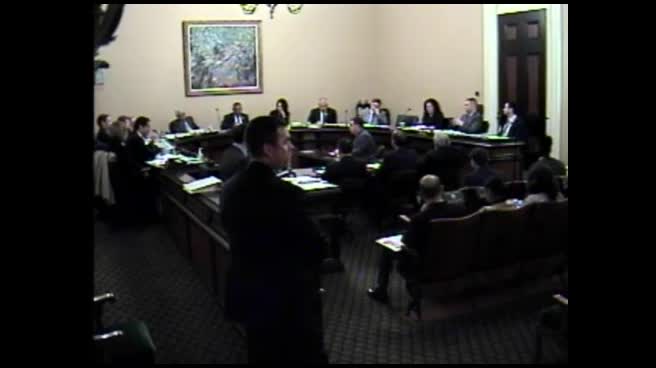 6MIN
Assembly Standing Committee on Public Safety
Bill Author

Bill Co-Author(s):
