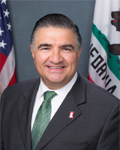
AB 75: Personal income taxes: earned income credit.
- Session Year: 2017-2018
- House: Assembly
- Latest Version Date: 2017-03-06
The Personal Income Tax Law allows various credits against the taxes imposed by that law, including certain credits that are allowed in modified conformity to credits allowed by federal income tax laws. Federal income tax laws allow a refundable earned income tax credit for certain low-income individuals who have earned income from wages, salaries, tips, and other employee compensation plus net earnings from self-employment and who meet certain other requirements. The Personal Income Tax Law, for taxable years beginning on or after January 1, 2015, in modified conformity with federal income tax laws, allows an earned income credit against personal income tax, which is only for earned income from wages, salaries, tips, and other employee compensation, and a payment in excess of that credit amount, to an eligible individual that is equal to that portion of the earned income tax credit allowed by federal law as determined by the earned income tax credit adjustment factor as set forth in the annual Budget Act which, unless otherwise specified in that act, is 0%.
This bill would, bill, for taxable years beginning on and after January 1, 2016, 2017, would expand the earned income credit allowed by the Personal Income Tax Law by providing additional conformity with federal income tax law to include specified net earnings from self-employment in earned income, thus allowing an earned income credit for taxpayers for those earnings. This bill would additionally set the earned income tax credit adjustment factor as 85%.
Existing law establishes the continuously appropriated Tax Relief and Refund Account and provides that payments required to be made to taxpayers or other persons from the Personal Income Tax Fund are to be paid from that account, including any amount allowable as an earned income credit in excess of any tax liabilities.
By authorizing new payments from that account for additional amounts in excess of personal income tax liabilities, this bill would make an appropriation.
This bill would declare that it is to take effect immediately as an urgency statute.
The Personal Income Tax Law allows various credits against the taxes imposed by that law, including certain credits that are allowed in modified conformity to credits allowed by federal income tax laws. Federal income tax laws allow a refundable earned income tax credit for certain low-income individuals who have earned income from wages, salaries, tips, and other employee compensation plus net earnings from self-employment and who meet certain other requirements. The Personal Income Tax Law, for taxable years beginning on or after January 1, 2015, in modified conformity with federal income tax laws, allows an earned income credit against personal income tax, which is only for earned income from wages, salaries, tips, and other employee compensation, and a payment in excess of that credit amount, to an eligible individual that is equal to that portion of the earned income tax credit allowed by federal law as determined by the earned income tax credit adjustment factor as set forth in the annual Budget Act which, unless otherwise specified in that act, is 0%.
This bill would, for taxable years beginning on and after January 1, 2016, expand the earned income credit allowed by the Personal Income Tax Law by providing additional conformity with federal income tax law to include specified net earnings from self-employment in earned income, thus allowing an earned income credit for taxpayers for those earnings. This bill would additionally set the earned income tax credit adjustment factor as 85%.
Existing law establishes the continuously appropriated Tax Relief and Refund Account and provides that payments required to be made to taxpayers or other persons from the Personal Income Tax Fund are to be paid from that account, including any amount allowable as an earned income credit in excess of any tax liabilities.
By authorizing new payments from that account for additional amounts in excess of personal income tax liabilities, this bill would make an appropriation.
This bill would declare that it is to take effect immediately as an urgency statute.
(a)(1)For each taxable year beginning on or after January 1, 2015, there shall be allowed against the net tax, as defined by Section 17039, an earned income tax credit in an amount equal to an amount determined in accordance with Section 32 of the Internal Revenue Code, relating to earned income, as applicable for federal income tax purposes for the taxable year, except as otherwise provided in this section.
(2)(A)The amount of the credit determined under Section 32 of the Internal Revenue Code, relating to earned income, as modified by this section, shall be multiplied by the earned income tax credit adjustment factor for the taxable year.
(B)(i)Unless otherwise specified in the annual Budget Act, the earned income tax credit adjustment factor for a taxable year beginning on or after January 1, 2015, and before January 1, 2016, 2017, shall be 0 percent.
(ii)The earned income tax credit adjustment factor for a taxable year beginning on or after January 1, 2016, 2017, shall be 85 percent.
(C)The earned income tax credit authorized by this section shall only be operative for taxable years for which resources are authorized in the annual Budget Act for the Franchise Tax Board to oversee and audit returns associated with the credit.
(b)(1)In lieu of the table prescribed in Section 32(b)(1) of the Internal Revenue Code, relating to percentages, the credit percentage and the phaseout percentage shall be determined as follows:
In the case of an eligible individual with: | The credit percentage is: | The phaseout percentage is: |
No qualifying children | 7.65% | 7.65% |
1 qualifying child | 34% | 34% |
2 qualifying children | 40% | 40% |
| 3 or more qualifying children | 45% | 45% |
(2)(A)In lieu of the table prescribed in Section 32(b)(2)(A) of the Internal Revenue Code, the earned income amount and the phaseout amount shall be determined as follows:
In the case of an eligible individual with: | The earned income amount is: | The phaseout amount is: |
No qualifying children | $3,290 | $3,290 |
1 qualifying child | $4,940 | $4,940 |
2 or more qualifying children | $6,935 | $6,935 |
(B)Section 32(b)(2)(B) of the Internal Revenue Code, relating to joint returns, shall not apply.
(c)(1)Section 32(c)(1)(A)(ii)(I) of the Internal Revenue Code is modified by substituting this state for the United States.
(2)Section 32(c)(2)(A) of the Internal Revenue Code is modified as follows:
(A)Section 32(c)(2)(A)(i) of the Internal Revenue Code is modified by deleting plus and inserting in lieu thereof the following: and only if such amounts are subject to withholding pursuant to Division 6 (commencing with Section 13000) of the Unemployment Insurance Code, plus. plus.
(B)In lieu of Section 32(c)(2)(A)(ii) of the Internal Revenue Code, substitute the following: the amount of the taxpayers reportable gross income from self-employment for the taxable year. For purposes of this section, reportable gross income from self-employment means gross income derived by an individual from any trade or business carried on by such individual that is properly reported to the Secretary on an information return for the taxable year and reported on a written statement furnished to that individual as required pursuant to Section 6041 of the Internal Revenue Code, relating to information at source, or Section 6041A of the Internal Revenue Code, relating to returns regarding payments of remuneration for services and direct sales.
(3)Section 32(c)(3)(C) of the Internal Revenue Code, relating to place of abode, is modified by substituting this state for the United States.
(d)Section 32(i)(1) of the Internal Revenue Code is modified by substituting $3,400 for $2,200.
(e)In lieu of Section 32(j) of the Internal Revenue Code, relating to inflation adjustments, for taxable years beginning on or after January 1, 2016, the amounts specified in paragraph (2) of subdivision (b) and in subdivision (d) shall be recomputed annually in the same manner as the recomputation of income tax brackets under subdivision (h) of Section 17041.
(f)If the amount allowable as a credit under this section exceeds the tax liability computed under this part for the taxable year, the excess shall be credited against other amounts due, if any, and the balance, if any, shall be paid from the Tax Relief and Refund Account and refunded to the taxpayer.
(g)The Franchise Tax Board may prescribe rules, guidelines, or procedures necessary or appropriate to carry out the purposes of this section. Chapter 3.5 (commencing with Section 11340) of Part 1 of Division 3 of Title 2 of the Government Code shall not apply to any rule, guideline, or procedure prescribed by the Franchise Tax Board pursuant to this section.
(h)Notwithstanding any other law, amounts refunded pursuant to this section shall be treated in the same manner as the federal earned income refund for the purpose of determining eligibility to receive benefits under Division 9 (commencing with Section 10000) of the Welfare and Institutions Code or amounts of those benefits.
(i)(1)For the purpose of implementing the credit allowed by this section for the 2015 taxable year, the Franchise Tax Board shall be exempt from the following:
(A)Special Project Report requirements under State Administrative Manual Sections 4819.36, 4945, and 4945.2.
(B)Special Project Report requirements under Statewide Information Management Manual Section 30.
(C)Section 11.00 of the 2015 Budget Act.
(D)Sections 12101, 12101.5, 12102, and 12102.1 of the Public Contract Code.
(2)The Franchise Tax Board shall formally incorporate the scope, costs, and schedule changes associated with the implementation of the credit allowed by this section in its next anticipated Special Project Report for its Enterprise Data to Revenue Project.
(j)(1)In accordance with Section 41 of the Revenue and Taxation Code, the purpose of the California Earned Income Tax Credit is to reduce poverty among Californias poorest working families and individuals. To measure whether the credit achieves its intended purpose, the Franchise Tax Board shall annually prepare a written report on the following:
(A)The number of tax returns claiming the credit.
(B)The number of individuals represented on tax returns claiming the credit.
(C)The average credit amount on tax returns claiming the credit.
(D)The distribution of credits by number of dependents and income ranges. The income ranges shall encompass the phase-in and phaseout ranges of the credit.
(E)Using data from tax returns claiming the credit, including an estimate of the federal tax credit determined under Section 32 of the Internal Revenue Code, an estimate of the number of families who are lifted out of deep poverty by the credit and an estimate of the number of families who are lifted out of deep poverty by the combination of the credit and the federal tax credit. For the purposes of this subdivision, a family is in deep poverty if the income of the family is less than 50 percent of the federal poverty threshold.
(2)The Franchise Tax Board shall provide the written report to the Senate Committee on Budget and Fiscal Review, the Assembly Committee on Budget, the Senate and Assembly Committees on Appropriations, the Senate Committee on Governance and Finance, the Assembly Committee on Revenue and Taxation, and the Senate and Assembly Committees on Human Services.
(k)The tax credit allowed by this section shall be known as the California Earned Income Tax Credit.
(l)The amendments made to this section by Chapter 722 of the Statutes of 2016 shall apply to taxable years beginning on or after January 1, 2016.
(m)The amendments made to this section by the act adding this subdivision shall apply to taxable years beginning on or after January 1, 2016. 2017.
SEC. 2.This act is an urgency statute necessary for the immediate preservation of the public peace, health, or safety within the meaning of Article IV of the California Constitution and shall go into immediate effect. The facts constituting the necessity are:
In order to assist and benefit a broader section of working poor Californians, it is necessary that this act take effect immediately.
REVISIONS: HeadingLine 4.(a)(1)For each taxable year beginning on or after January 1, 2015, there shall be allowed against the net tax, as defined by Section 17039, an earned income tax credit in an amount equal to an amount determined in accordance with Section 32 of the Internal Revenue Code, relating to earned income, as applicable for federal income tax purposes for the taxable year, except as otherwise provided in this section.
(2)(A)The amount of the credit determined under Section 32 of the Internal Revenue Code, relating to earned income, as modified by this section, shall be multiplied by the earned income tax credit adjustment factor for the taxable year.
(B)(i)Unless otherwise specified in the annual Budget Act, the earned income tax credit adjustment factor for a taxable year beginning on or after January 1, 2015, and before January 1, 2016, shall be 0 percent.
(ii)The earned income tax credit adjustment factor for a taxable year beginning on or after January 1, 2016, shall be 85 percent.
(C)The earned income tax credit authorized by this section shall only be operative for taxable years for which resources are authorized in the annual Budget Act for the Franchise Tax Board to oversee and audit returns associated with the credit.
(b)(1)In lieu of the table prescribed in Section 32(b)(1) of the Internal Revenue Code, relating to percentages, the credit percentage and the phaseout percentage shall be determined as follows:
In the case of an eligible individual with: | The credit percentage is: | The phaseout percentage is: |
No qualifying children | 7.65% | 7.65% |
1 qualifying child | 34% | 34% |
2 qualifying children | 40% | 40% |
| 3 or more qualifying children | 45% | 45% |
(2)(A)In lieu of the table prescribed in Section 32(b)(2)(A) of the Internal Revenue Code, the earned income amount and the phaseout amount shall be determined as follows:
In the case of an eligible individual with: | The earned income amount is: | The phaseout amount is: |
No qualifying children | $3,290 | $3,290 |
1 qualifying child | $4,940 | $4,940 |
2 or more qualifying children | $6,935 | $6,935 |
(B)Section 32(b)(2)(B) of the Internal Revenue Code, relating to joint returns, shall not apply.
(c)(1)Section 32(c)(1)(A)(ii)(I) of the Internal Revenue Code is modified by substituting this state for the United States.
(2)Section 32(c)(2)(A) of the Internal Revenue Code is modified as follows:
(A)Section 32(c)(2)(A)(i) of the Internal Revenue Code is modified by deleting plus and inserting in lieu thereof the following: and only if such amounts are subject to withholding pursuant to Division 6 (commencing with Section 13000) of the Unemployment Insurance Code. Code, plus.
(B)In lieu of Section 32(c)(2)(A)(ii) of the Internal Revenue Code shall not apply. Code, substitute the following: the amount of the taxpayers reportable gross income from self-employment for the taxable year. For purposes of this section, reportable gross income from self-employment means gross income derived by an individual from any trade or business carried on by such individual that is properly reported to the Secretary on an information return for the taxable year and reported on a written statement furnished to that individual as required pursuant to Section 6041 of the Internal Revenue Code, relating to information at source, or Section 6041A of the Internal Revenue Code, relating to returns regarding payments of remuneration for services and direct sales.
(3)Section 32(c)(3)(C) of the Internal Revenue Code, relating to place of abode, is modified by substituting this state for the United States.
(d)Section 32(i)(1) of the Internal Revenue Code is modified by substituting $3,400 for $2,200.
(e)In lieu of Section 32(j) of the Internal Revenue Code, relating to inflation adjustments, for taxable years beginning on or after January 1, 2016, the amounts specified in paragraph (2) of subdivision (b) and in subdivision (d) shall be recomputed annually in the same manner as the recomputation of income tax brackets under subdivision (h) of Section 17041.
(f)If the amount allowable as a credit under this section exceeds the tax liability computed under this part for the taxable year, the excess shall be credited against other amounts due, if any, and the balance, if any, shall be paid from the Tax Relief and Refund Account and refunded to the taxpayer.
(g)The Franchise Tax Board may prescribe rules, guidelines, or procedures necessary or appropriate to carry out the purposes of this section. Chapter 3.5 (commencing with Section 11340) of Part 1 of Division 3 of Title 2 of the Government Code shall not apply to any rule, guideline, or procedure prescribed by the Franchise Tax Board pursuant to this section.
(h)Notwithstanding any other law, amounts refunded pursuant to this section shall be treated in the same manner as the federal earned income refund for the purpose of determining eligibility to receive benefits under Division 9 (commencing with Section 10000) of the Welfare and Institutions Code or amounts of those benefits.
(i)(1)For the purpose of implementing the credit allowed by this section for the 2015 taxable year, the Franchise Tax Board shall be exempt from the following:
(A)Special Project Report requirements under State Administrative Manual Sections 4819.36, 4945, and 4945.2.
(B)Special Project Report requirements under Statewide Information Management Manual Section 30.
(C)Section 11.00 of the 2015 Budget Act.
(D)Sections 12101, 12101.5, 12102, and 12102.1 of the Public Contract Code.
(2)The Franchise Tax Board shall formally incorporate the scope, costs, and schedule changes associated with the implementation of the credit allowed by this section in its next anticipated Special Project Report for its Enterprise Data to Revenue Project.
(j)(1)In accordance with Section 41 of the Revenue and Taxation Code, the purpose of the California Earned Income Tax Credit is to reduce poverty among Californias poorest working families and individuals. To measure whether the credit achieves its intended purpose, the Franchise Tax Board shall annually prepare a written report on the following:
(A)The number of tax returns claiming the credit.
(B)The number of individuals represented on tax returns claiming the credit.
(C)The average credit amount on tax returns claiming the credit.
(D)The distribution of credits by number of dependents and income ranges. The income ranges shall encompass the phase-in and phaseout ranges of the credit.
(E)Using data from tax returns claiming the credit, including an estimate of the federal tax credit determined under Section 32 of the Internal Revenue Code, an estimate of the number of families who are lifted out of deep poverty by the credit and an estimate of the number of families who are lifted out of deep poverty by the combination of the credit and the federal tax credit. For the purposes of this subdivision, a family is in deep poverty if the income of the family is less than 50 percent of the federal poverty threshold.
(2)The Franchise Tax Board shall provide the written report to the Senate Committee on Budget and Fiscal Review, the Assembly Committee on Budget, the Senate and Assembly Committees on Appropriations, the Senate Committee on Governance and Finance, the Assembly Committee on Revenue and Taxation, and the Senate and Assembly Committees on Human Services.
(k)The tax credit allowed by this section shall be known as the California Earned Income Tax Credit.
(l)The amendments made to this section by the act adding this subdivision Chapter 722 of the Statutes of 2016 shall apply to taxable years beginning on or after January 1, 2016.
(m)The amendments made to this section by the act adding this subdivision shall apply to taxable years beginning on or after January 1, 2016.
SEC. 2.This act is an urgency statute necessary for the immediate preservation of the public peace, health, or safety within the meaning of Article IV of the California Constitution and shall go into immediate effect. The facts constituting the necessity are:
In order to assist and benefit a broader section of working poor Californians, it is necessary that this act take effect immediately.
|
Date
|
Status
|
|---|---|
| Feb 1, 2018 | From committee: Filed with the Chief Clerk pursuant to Joint Rule 56. |
| Jan 31, 2018 | Died pursuant to Art. IV, Sec. 10(c) of the Constitution. |
| Mar 27, 2017 | In committee: Hearing for testimony only. |
| Mar 14, 2017 | Coauthors revised. |
| Mar 13, 2017 | In committee: Set, first hearing. Hearing canceled at the request of author. |
| Mar 7, 2017 | Re-referred to Com. on REV. & TAX. |
| Mar 6, 2017 | From committee chair, with author's amendments: Amend, and re-refer to Com. on REV. & TAX. Read second time and amended. |
| Jan 19, 2017 | Referred to Com. on REV. & TAX. |
| Jan 5, 2017 | From printer. May be heard in committee February 4. |
| Jan 4, 2017 | Read first time. To print. |
This list shows positions taken on this bill by organizations on the date displayed, which is linked to the original source.
Positions by individuals are not included.
|
Organization
|
Position
|
Date
|
|---|---|---|
| California Alternative Payment Program Association | ** Support | Mar 24, 2017 |
| California Association for Micro Enterprise Opportunity | ** Support | Mar 24, 2017 |
| California Association Of Food Banks | ** Support | Mar 24, 2017 |
| California Catholic Conference, Inc. | ** Support | Mar 24, 2017 |
| Children's Defense Fund California | ** Support | Mar 24, 2017 |
| Children'S Defense Fund - California | ** Support | Mar 24, 2017 |
| Common Sense Kids Action | ** Support | Mar 24, 2017 |
| County Welfare Directors Association of California | ** Support | Mar 24, 2017 |
| Friends Committee On Legislation Of California | ** Support | Mar 24, 2017 |
| Golden State Opportunity | ** Support | Mar 24, 2017 |
| One individual | ** Support | Mar 24, 2017 |
| Small Business California | ** Support | Mar 24, 2017 |
Date of Hearing: March 27, 2017
ASSEMBLY COMMITTEE ON REVENUE AND TAXATION
Sebastian Ridley-Thomas, Chair
ABPCA Bill Id:AB 75 (
Author:Steinorth) – As Amended Ver:March 6, 2017
FOR TESTIMONY ONLY
2/3 vote. Urgency. Fiscal committee.
SUBJECT: Personal income taxes: earned income credit
SUMMARY: Expands the definition of “earned income” for the California Earned Income Tax Credit (CalEITC) to include specified earnings from self-employment, and sets the CalEITC adjustment factor at 85%. Specifically, this bill:
- Modifies, for taxable years beginning on or after January 1, 2017, the definition of "earned income" to include the amount of the taxpayer's reportable gross income from self-employment for the taxable year.
- Defines "reportable gross income from self-employment" as gross income derived by an individual from any trade or business carried on by such individual that is properly reported to the Secretary of Treasury on an information return for the taxable year and reported on a written statement furnished to that individual, as specified.
- Provides that the CalEITC adjustment factor for taxable years beginning on or after
January 1, 2017, is 85% (instead of 0%). - Makes an appropriation by authorizing new payments from the continuously appropriated Tax Relief and Refund Account as more taxpayers become eligible for the CalEITC and are allowed a credit in excess of any tax liabilities.
- Takes immediate effect as an urgency statute.
EXISTING FEDERAL LAW:
- Allows a refundable EITC to certain eligible individuals. A refundable credit allows for the excess of the credit over the taxpayer's tax liability to be refunded to the taxpayer. The federal EITC amount is based on a percentage of the taxpayer's earned income and is phased out as income increases. The percentage varies depending on whether the taxpayer has qualifying children. Married individuals must file a joint return to claim the credit.
- Includes the following as earned income:
- Wages, salaries, tips, and other employee compensation; and,
- Net earnings from self-employment. (Internal Revenue Code (IRC) Section 32(c)(2)(A).)
- Requires paid preparers of federal income tax returns or claims for refund involving the EITC to meet due diligence requirements in determining the taxpayer's eligibility for, and the amount of, the EITC.
- Requires a trade or business that makes payments of $600 or more to another person during the course of the trade or business to file an information return (Internal Revenue Service (IRS) Form 1099-MISC Miscellaneous Income) with the Secretary of Treasury.
EXISTING STATE LAW:
- Allows, in modified conformity with the federal EITC, a refundable state EITC under the Personal Income Tax (PIT) Law for the lowest income Californians for taxable years beginning on or after January 1, 2015.
- Modifies, for purposes of the CalEITC, the meaning of "earned income" set forth in IRC Section 32 to specify that:
- Earned income is only such amounts subject to withholding by the Employment Development Department; and,
- Earned income does not include net earnings from self-employment.
- Provides that the CalEITC is only operative for taxable years for which resources are authorized in the annual Budget Act for the Franchise Tax Board (FTB) to oversee and audit returns associated with the credit.
- Requires the Legislature to establish the CalEITC adjustment factor for each taxable year, or otherwise provides that the adjustment factor is zero percent.
FISCAL EFFECT: The FTB estimates General Fund revenue losses of $12 million in fiscal year (FY) 2017-18, $13 million in FY 2018-19, and $13 million in FY 2019-20.
COMMENTS:
- Author's Statement: The author has provided the following statement in support of this bill:
AB 75 addresses the unnecessary exclusion of self-employed individuals from eligibility for the CalEITC tax credit. Working families supported by self-employment and "sharing economy" jobs do not have access to the benefits of CalEITC tax credit, which has the potential to lift them out of poverty. AB 75 moves to resolve this exclusion of self-employed individuals by allowing IRS Form 1099 to be used to qualify workers for the credit provided through CalEITC. Expanding the CalEITC to self-employed individuals assists working, low-income households by returning more money back to their families for everyday expenses.
- Committee Staff Comments:
- Arguments in Support: Supporters of this bill state that limiting the CalEITC to income reported on an IRS Form W-2 denies some low-income taxpayers the credit simply due to the nature of their work. They state that with "self-employment and the growing number of 'sharing economy' jobs being commonly utilized by low-income workers, the current CalEITC program excludes the most vulnerable individuals from this tax credit."
- Federal EITC Overview: The federal EITC is a refundable income tax credit for low- to moderate-income individuals and families. Congress originally approved the tax credit legislation in 1975, in part to offset the burden of Social Security taxes and to provide an incentive to work. To qualify for the EITC, an individual must be employed. When the EITC exceeds the amount of taxes owed, it results in a tax refund to those who claim and qualify for the credit. The EITC is a percentage of the taxpayer's earned income with the amount of the credit first growing with earnings over a phase-in range, flattening out at the maximum credit amount until earnings reach the phase-out point, and then declining over a phase-out range as earnings increase until the credit reaches zero. The credit phase-in rate ranges from 7.65% to 45% and the phase-out rate ranges from 7.65% to 21.06%, depending on the number of qualifying children claimed by the taxpayer.
In order for a taxpayer to qualify for the federal EITC in tax year 2016, an individual's earned income must be less than the following amounts:
- $14,880 ($20,430 if married filing jointly) with no qualifying children, for a maximum credit amount of $506;
- $39,296 ($44,846 if married filing jointly) with one qualifying child, for a maximum credit amount of $3,373;
- $44,648 ($50,198 if married filing jointly) with two qualifying children, for a maximum credit amount of $5,572; or,
- $47,955 ($53,505 if married filing jointly) with three or more qualifying children, for a maximum credit amount of $6,269.
- CalEITC Overview: The CalEITC was established through the FY 2015-16 state budget. Similar to the federal EITC, the CalEITC is established as a refundable credit under the PIT Law and is based on a percentage of the taxpayer's earned income with the amount of the credit first growing over a phase-in range from 7.65% to 45%. Unlike the federal EITC, however, the credit immediately begins to phase out at the same rate that it phased in once the maximum credit amount is reached, with no flat range in between.
The CalEITC earned income eligibility ceilings are also lower than those set forth in the federal EITC and do not increase to account for married taxpayers filing jointly. As such, the CalEITC only reaches a portion of workers who are eligible for the federal EITC. For a taxpayer to qualify for the CalEITC in tax year 2016, an individual's earned income must be less than the following amounts:
- $6,717 with no qualifying children, for a maximum credit amount of $217;
- $10,087 with one qualifying child, for a maximum credit amount of $1,452;
- $14,161 with two qualifying children, for a maximum credit amount of $2,406; or,
- $14,161 with three or more qualifying children, for a maximum credit amount of $2,706.
In the 2015 tax year, more than 385,000 taxpayers received almost $200 million under the CalEITC, resulting in an average credit of $519 per taxpayer.
- Increasing Awareness of the CalEITC: Because the CalEITC is limited to the lowest income households, encouraging taxpayers to take advantage of the credit can be challenging. Some low-income workers are not required to file a tax return and must be encouraged to do so to claim the credit, and those who do file returns yearly may not be aware of the credit.
When the CalEITC was first enacted, $380 million in credits was expected to be claimed. However, the FY 2016-17 budget only estimated a $255 million reduction in PIT revenue from the credit, recognizing that many individuals eligible for the credit may not claim it. In response, the FY 2016-17 budget also included $2 million for the FTB to expand awareness of the credit amongst eligible individuals and increase the amount of credits claimed.
Recent figures from the FTB show that as of February 25, 2017, the state has issued $132.9 million worth of credits, a 50% increase compared to the same time last year. California has also seen the number of claims increase to 212,000, an increase of 42% compared to the same time last year.
- Expanding the CalEITC to Include Self-Employment Income: Another significant way in which the CalEITC differs from the federal EITC is that the CalEITC does not include self-employment income in calculations of "earned income." The CalEITC requires all income used to calculate the credit amount to be subject to withholding and specifically excludes self-employment income. This bill would include "reportable gross income from self-employment" income as "earned income" in calculating the CalEITC if the income is property reported on a Form 1099-MISC. While inclusion of self-employment income would increase the pool of individuals eligible to claim the credit and increase the credit amount for some taxpayers with a mix of income sources, it would also decrease or eliminate the credit amount for other taxpayers if their recalculated income exceeds existing limits.
As part of the Supplemental Report of the 2015-16 Budget Package, the FTB released a report exploring methods that could be considered to allow self-employment income to be included as earned income while protecting against improper claims. Inclusion of self-employment income in the federal EITC has historically contributed to income misreporting that resulted in improper claims of the credit. The IRS has found that improper EITC claims range from 29% to 39%, that income misreporting is the second biggest contributor to improper claims, and that the value of improper claims from misreporting self-employment income is approximately four times greater than that from misreporting wage income. To help increase compliance and avoid reporting errors, the IRS requires paid tax preparers to complete a form identifying the taxpayer-provided documents the preparer relied upon to calculate self-employment income. The IRS also provides specific correspondence to taxpayers to ensure accuracy of self-employment income and imposes restrictions on non-compliant taxpayers from claiming the EITC. Despite these efforts, a 2014 report by the Treasury Inspector General found that the estimated EITC improper payment rate had remained "relatively unchanged."
According to the FTB report:
Based on IRS experience with the federal EITC, expansion of the California EITC from a wage-based credit that enables verification against reliable employer-reported data to a credit that also includes [self-employment] income is likely to increase the amount of improper payments. Although Form 1099 or Form 1099-MISC Miscellaneous Income (Information Return) would be an indication of authentic business activity, historical return data indicates that only 34 percent of returns at the [adjusted gross income] levels applicable for the California EITC received a Form 1099 or Form 1099-MISC. Based on review of other state' review processes, the most reliable method to minimize improper payments would require significant manual review of EITC claims during return processing prior to issuance of the refund. Thus, expanding the California EITC to include [self-employment] income would be challenging to administer, and the department anticipates the costs to effectively administer the program would be significant.
The FTB report concludes by summarizing a number of methods that could be utilized to protect against improper payments if the CalEITC was expanded to include self-employment income, such as expanding documentation requirements, return analysis, and education and outreach efforts. This bill incorporates a method explored by the FTB to allow self-employment income in the CalEITC while protecting against improper payments by only allowing income from self-employment that is reported on a Form 1099. This bill further requires includable self-employment income to be gross income. Under the federal EITC, "earned income" includes net earnings from self-employment beyond that reported on a Form 1099. Because self-employed individuals only receive a Form 1099 when performing services for a trade or business (not an individual) and net income represents gross income less expenses, this method would only allow a fraction of self-employed individuals eligible for the federal EITC to become eligible for the CalEITC.
- Setting a Permanent Adjustment Factor: The CalEITC provides for an "adjustment factor" in calculating the amount of state credit that taxpayers would receive. The adjustment factor is a matching percentage of the credit amount allowed under the federal EITC. Existing law provides that the adjustment factor is 0% unless reestablished for each taxable year at a different rate, meaning that the amount of credit can change from year to year. The Governor's proposed FY 2017-18 budget sets the adjustment factor at 85% for tax year 2017, the same rate that has been established for all tax years since the program's inception.
This bill would set the adjustment factor in perpetuity at 85% instead of relying on annual action by the Legislature and Governor. Setting a fixed adjustment factor may result in more financial certainty for CalEITC beneficiaries, especially during economic downturns, but may also limit the state's ability to adjust revenue losses associated with the credit in times when fiscal flexibility is most needed.
- Related Legislation: AB 225 (Caballero) increases the CalEITC earned income threshold at which the credit's phase out begins, thereby increasing the amount of earned income a taxpayer may earn while still remaining eligible for the CalEITC. AB 225 is scheduled to be heard by this Committee today.
- Prior Legislation: AB 2807 (Steinorth), of the 2015-16 Legislative Session, would have modified the meaning of "earned income" to include self-employment income. AB 2807 was never heard by this Committee and returned to the Chief Clerk without further action.
REGISTERED SUPPORT / OPPOSITION:
Support
California Alternative Payment Program Association
California Association of Food Banks
California Association for Micro Enterprise Opportunity
California Catholic Conference, Inc.
Children's Defense Fund – California
Common Sense Kids Action
County Welfare Directors Association of California
Friends Committee on Legislation of California
Golden State Opportunity
Small Business California
One individual
Opposition
None on file
Analysis Prepared by: Irene Ho / REV. & TAX. / (916) 319-2098
Date of Hearing: March 13, 2017
ASSEMBLY COMMITTEE ON REVENUE AND TAXATION
Sebastian Ridley-Thomas, Chair
ABPCA Bill Id:AB 75 (
Author:Steinorth) – As Amended Ver:March 6, 2017
2/3 vote. Urgency. Fiscal committee.
SUBJECT: Personal income taxes: earned income credit
SUMMARY: Expands the definition of “earned income” for the California Earned Income Tax Credit (CalEITC) to include specified net earnings from self-employment, in conformity with federal law, and sets the CalEITC adjustment factor at 85%. Specifically, this bill:
- Modifies, for taxable years beginning on or after January 1, 2017, the definition of "earned income" to include the amount of the taxpayer's reportable gross income from self-employment for the taxable year.
- Defines "reportable gross income from self-employment" as gross income derived by an individual from any trade or business carried on by such individual that is properly reported to the Secretary of Treasury on an information return for the taxable year and reported on a written statement furnished to that individual, as specified.
- Provides that the CalEITC adjustment factor for taxable years beginning on or after
January 1, 2017, is 85% (instead of 0%). - Makes an appropriation by authorizing new payments from the continuously appropriated Tax Relief and Refund Account as more taxpayers become eligible for the CalEITC and are allowed a credit in excess of any tax liabilities.
- Takes immediate effect as an urgency statute.
EXISTING FEDERAL LAW:
- Allows a refundable EITC to certain eligible individuals. A refundable credit allows for the excess of the credit over the taxpayer's tax liability to be refunded to the taxpayer. The federal EITC amount is based on a percentage of the taxpayer's earned income and is phased out as income increases. The percentage varies depending on whether the taxpayer has qualifying children. Married individuals must file a joint return to claim the credit.
- Includes the following as earned income:
- Wages, salaries, tips, and other employee compensation; and,
- Net earnings from self-employment. (Internal Revenue Code (IRC) Section 32(c)(2)(A).)
- Requires paid preparers of federal income tax returns or claims for refund involving the EITC to meet due diligence requirements in determining the taxpayer's eligibility for, and the amount of, the EITC.
- Requires a trade or business that makes payments of $600 or more to another person during the course of the trade or business to file an information return (Internal Revenue Service (IRS) Form 1099-MISC Miscellaneous Income) with the Secretary of Treasury.
EXISTING STATE LAW:
- Allows, in modified conformity with the federal EITC, a refundable state EITC under the Personal Income Tax (PIT) Law for the lowest income Californians for taxable years beginning on or after January 1, 2015.
- Modifies, for purposes of the CalEITC, the meaning of "earned income" set forth in IRC Section 32 to specify that:
- Earned income is only such amounts subject to withholding by the Employment Development Department; and,
- Earned income does not include net earnings from self-employment.
- Provides that the CalEITC is only operative for taxable years for which resources are authorized in the annual Budget Act for the Franchise Tax Board (FTB) to oversee and audit returns associated with the credit.
- Requires the Legislature to establish the CalEITC adjustment factor for each taxable year, or otherwise provides that the adjustment factor is zero percent.
FISCAL EFFECT: The FTB estimates General Fund revenue losses of $12 million in fiscal year (FY) 2017-18, $13 million in FY 2018-19, and $13 million in FY 2019-20.
COMMENTS:
- Author's Statement: The author has provided the following statement in support of this bill:
AB 75 addresses the unnecessary exclusion of self-employed individuals from eligibility for the CalEITC tax credit. Working families supported by self-employment and "sharing economy" jobs do not have access to the benefits of CalEITC tax credit, which has the potential to lift them out of poverty. AB 75 moves to resolve this exclusion of self-employed individuals by allowing IRS Form 1099 to be used to qualify workers for the credit provided through CalEITC. Expanding the CalEITC to self-employed individuals assists working, low-income households by returning more money back to their families for everyday expenses.
- Committee Staff Comments:
- Arguments in Support: Supporters of this bill state that limiting the CalEITC to income reported on an IRS Form W-2 denies some low-income taxpayers the credit simply due to the nature of their work. They state that with "self-employment and the growing number of 'sharing economy' jobs being commonly utilized by low-income workers, the current CalEITC program excludes the most vulnerable individuals from this tax credit."
- Federal EITC Overview: The federal EITC is a refundable income tax credit for low- to moderate-income individuals and families. Congress originally approved the tax credit legislation in 1975, in part to offset the burden of Social Security taxes and to provide an incentive to work. To qualify for the EITC, an individual must be employed. When the EITC exceeds the amount of taxes owed, it results in a tax refund to those who claim and qualify for the credit. The EITC is a percentage of the taxpayer's earned income with the amount of the credit first growing with earnings over a phase-in range, flattening out at the maximum credit amount until earnings reach the phase-out point, and then declining over a phase-out range as earnings increase until the credit reaches zero. The credit phase-in rate ranges from 7.65% to 45% and the phase-out rate ranges from 7.65% to 21.06%, depending on the number of qualifying children claimed by the taxpayer.
In order for a taxpayer to qualify for the federal EITC in tax year 2016, an individual's earned income must be less than the following amounts:
- $14,880 ($20,430 if married filing jointly) with no qualifying children, for a maximum credit amount of $506;
- $39,296 ($44,846 if married filing jointly) with one qualifying child, for a maximum credit amount of $3,373;
- $44,648 ($50,198 if married filing jointly) with two qualifying children, for a maximum credit amount of $5,572; or,
- $47,955 ($53,505 if married filing jointly) with three or more qualifying children, for a maximum credit amount of $6,269.
- CalEITC Overview: The CalEITC was established through the FY 2015-16 state budget. Similar to the federal EITC, the CalEITC is established as a refundable credit under the PIT Law and is based on a percentage of the taxpayer's earned income with the amount of the credit first growing over a phase-in range from 7.65% to 45%. Unlike the federal EITC, however, the credit immediately begins to phase out at the same rate that it phased in once the maximum credit amount is reached, with no flat range in between.
The CalEITC earned income eligibility ceilings are also lower than those set forth in the federal EITC and do not increase to account for married taxpayers filing jointly. As such, the CalEITC only reaches a portion of workers who are eligible for the federal EITC. For a taxpayer to qualify for the CalEITC in tax year 2016, an individual's earned income must be less than the following amounts:
- $6,717 with no qualifying children, for a maximum credit amount of $217;
- $10,087 with one qualifying child, for a maximum credit amount of $1,452;
- $14,161 with two qualifying children, for a maximum credit amount of $2,406; or,
- $14,161 with three or more qualifying children, for a maximum credit amount of $2,706.
In the 2015 tax year, more than 385,000 taxpayers received almost $200 million under the CalEITC, resulting in an average credit of $519 per taxpayer.
- Increasing Awareness of the CalEITC: Because the CalEITC is limited to the lowest income households, encouraging taxpayers to take advantage of the credit can be challenging. Some low-income workers are not required to file a tax return and must be encouraged to do so to claim the credit, and those who do file returns yearly may not be aware of the credit.
When the CalEITC was first enacted, $380 million in credits was expected to be claimed. However, the FY 2016-17 budget only estimated a $255 million reduction in PIT revenue from the credit, recognizing that many individuals eligible for the credit may not claim it. In response, the FY 2016-17 budget also included $2 million for the FTB to expand awareness of the credit amongst eligible individuals and increase the amount of credits claimed.
Recent figures from the FTB show that as of February 25, 2017, the state has issued $132.9 million worth of credits, a 50% increase compared to the same time last year. California has also seen the number of claims increase to 212,000, an increase of 42% compared to the same time last year.
- Expanding the CalEITC to Include Self-Employment Income: Another significant way in which the CalEITC differs from the federal EITC is that the CalEITC does not include self-employment income in calculations of "earned income." The CalEITC requires all income used to calculate the credit amount to be subject to withholding and specifically excludes self-employment income. This bill would include "reportable gross income from self-employment" income as "earned income" in calculating the CalEITC if the income is property reported on a Form 1099-MISC. While inclusion of self-employment income would increase the pool of individuals eligible to claim the credit and increase the credit amount for some taxpayers with a mix of income sources, it would also decrease or eliminate the credit amount for other taxpayers if their recalculated income exceeds existing limits.
As part of the Supplemental Report of the 2015-16 Budget Package, the FTB released a report exploring methods that could be considered to allow self-employment income to be included as earned income while protecting against improper claims. Inclusion of self-employment income in the federal EITC has historically contributed to income misreporting that resulted in improper claims of the credit. The IRS has found that improper EITC claims range from 29% to 39%, that income misreporting is the second biggest contributor to improper claims, and that the value of improper claims from misreporting self-employment income is approximately four times greater than that from misreporting wage income. To help increase compliance and avoid reporting errors, the IRS requires paid tax preparers to complete a form identifying the taxpayer-provided documents the preparer relied upon to calculate self-employment income. The IRS also provides specific correspondence to taxpayers to ensure accuracy of self-employment income and imposes restrictions on non-compliant taxpayers from claiming the EITC. Despite these efforts, a 2014 report by the Treasury Inspector General found that the estimated EITC improper payment rate had remained "relatively unchanged."
According to the FTB report:
Based on IRS experience with the federal EITC, expansion of the California EITC from a wage-based credit that enables verification against reliable employer-reported data to a credit that also includes [self-employment] income is likely to increase the amount of improper payments. Although Form 1099 or Form 1099-MISC Miscellaneous Income (Information Return) would be an indication of authentic business activity, historical return data indicates that only 34 percent of returns at the [adjusted gross income] levels applicable for the California EITC received a Form 1099 or Form 1099-MISC. Based on review of other state' review processes, the most reliable method to minimize improper payments would require significant manual review of EITC claims during return processing prior to issuance of the refund. Thus, expanding the California EITC to include [self-employment] income would be challenging to administer, and the department anticipates the costs to effectively administer the program would be significant.
The FTB report concludes by summarizing a number of methods that could be utilized to protect against improper payments if the CalEITC was expanded to include self-employment income, such as expanding documentation requirements, return analysis, and education and outreach efforts. This bill incorporates a method explored by the FTB to allow self-employment income in the CalEITC while protecting against improper payments by only allowing income from self-employment that is reported on a Form 1099. This bill further requires includable self-employment income to be gross income. Under the federal EITC, "earned income" includes net earnings from self-employment beyond that reported on a Form 1099. Because self-employed individuals only receive a Form 1099 when performing services for a trade or business (not an individual) and net income represents gross income less expenses, this method would only allow a fraction of self-employed individuals eligible for the federal EITC to become eligible for the CalEITC.
- Setting a Permanent Adjustment Factor: The CalEITC provides for an "adjustment factor" in calculating the amount of state credit that taxpayers would receive. The adjustment factor is a matching percentage of the credit amount allowed under the federal EITC. Existing law provides that the adjustment factor is 0% unless reestablished for each taxable year at a different rate, meaning that the amount of credit can change from year to year. The Governor's proposed FY 2017-18 budget sets the adjustment factor at 85% for tax year 2017, the same rate that has been established for all tax years since the program's inception.
This bill would set the adjustment factor in perpetuity at 85% instead of relying on annual action by the Legislature and Governor. Setting a fixed adjustment factor may result in more financial certainty for CalEITC beneficiaries, especially during economic downturns, but may also limit the state's ability to adjust revenue losses associated with the credit in times when fiscal flexibility is most needed.
- Related Legislation: AB 225 (Caballero) increases the CalEITC earned income threshold at which the credit's phase out begins, thereby increasing the amount of earned income a taxpayer may earn while still remaining eligible for the CalEITC. AB 225 is scheduled to be heard by this Committee today.
- Prior Legislation: AB 2807 (Steinorth), of the 2015-16 Legislative Session, would have modified the meaning of "earned income" to include self-employment income. AB 2807 was never heard by this Committee and returned to the Chief Clerk without further action.
REGISTERED SUPPORT / OPPOSITION:
Support
California Association of Food Banks
California Association for Micro Enterprise Opportunity
California Catholic Conference, Inc.
Children's Defense Fund – California
Common Sense Kids Action
Friends Committee on Legislation of California
Opposition
None on file
Analysis Prepared by: Irene Ho / REV. & TAX. / (916) 319-2098
Discussed in Hearing
 4MIN