AB 903: California Marijuana Tax Fund: California Highway Patrol.
- Session Year: 2017-2018
- House: Assembly
- Latest Version Date: 2017-04-19
(1)Existing law, the Control, Regulate and Tax Adult Use of Marijuana Act (AUMA), an initiative statute approved by the voters at the November 8, 2016, statewide general election as Proposition 64, among other things, establishes the California Marijuana Tax Fund as a continuously appropriated fund consisting of specified taxes, interest, penalties, and other amounts imposed by AUMA. AUMA requires, after other specified disbursements are made from the fund, the Controller to disburse the sum of $3,000,000 annually to the Department of the California Highway Patrol beginning fiscal year 20182019 until fiscal year 20222023, and requires the department to use those funds to to, among other things, establish and adopt protocols to determine whether a driver is operating a vehicle while impaired, including impairment by the use of marijuana or marijuana products, and to establish and adopt protocols impaired and setting forth best practices to assist law enforcement agencies.
This bill would amend AUMA by requiring the department to additionally use its annual appropriation from the fund to study the viability of standards for marijuana impairment. impairment and coordinate with research organizations within the state to accomplish, establish, and adopt these protocols and studies.
(2)AUMA authorizes legislative amendment of its provisions with a 2/3 vote of both houses of the Legislature, without submission to the voters, to further its purposes and intent.
This bill would declare that its provisions further specified purposes and intent of the Control, Regulate and Tax Adult Use of Marijuana Act.
(1)Existing law, the Control, Regulate and Tax Adult Use of Marijuana Act (AUMA), an initiative statute approved by the voters at the November 8, 2016, statewide general election as Proposition 64, among other things, establishes the California Marijuana Tax Fund as a continuously appropriated fund consisting of specified taxes, interest, penalties, and other amounts imposed by AUMA. AUMA requires, after other specified disbursements are made from the fund, the Controller to disburse the sum of $3,000,000 annually to the Department of the California Highway Patrol beginning fiscal year 20182019 until fiscal year 20222023, and requires the department to use those funds to establish and adopt protocols to determine whether a driver is operating a vehicle while impaired, including impairment by the use of marijuana or marijuana products, and to establish and adopt protocols setting forth best practices to assist law enforcement agencies.
This bill would amend AUMA by requiring the department to use its annual appropriation from the fund to study the viability of standards for marijuana impairment.
(2)AUMA authorizes legislative amendment of its provisions with a 2/3 vote of both houses of the Legislature, without submission to the voters, to further its purposes and intent.
This bill would declare that its provisions further specified purposes and intent of the Control, Regulate and Tax Adult Use of Marijuana Act.
(a)Beginning with fiscal year 20172018 the Department of Finance shall estimate revenues to be received pursuant to Sections 34011 and 34012 and provide those estimates to the Controller no later than June 15 of each year. The Controller shall use these estimates when disbursing funds pursuant to this section. Before any funds are disbursed pursuant to subdivisions (b), (c), (d), and (e) of this section, the Controller shall disburse from the Tax Fund to the appropriate account, without regard to fiscal year, the following:
(1)Reasonable costs incurred by the board for administering and collecting the taxes imposed by this part. Those costs shall not exceed 4 percent of tax revenues received.
(2)Reasonable costs incurred by the bureau, the Department of Consumer Affairs, the Department of Food and Agriculture, and the State Department of Public Health for implementing, administering, and enforcing Chapter 3.5 (commencing with Section 19300) of Division 8 of the Business and Professions Code and Division 10 (commencing with Section 26000) of the Business and Professions Code to the extent those costs are not reimbursed pursuant to Section 26180 of the Business and Professions Code or pursuant to Chapter 3.5 (commencing with Section 19300) of Division 8 of the Business and Professions Code. This paragraph shall remain operative through fiscal year 20222023.
(3)Reasonable costs incurred by the Department of Fish and Wildlife, the State Water Resources Control Board, and the Department of Pesticide Regulation for carrying out their respective duties under Chapter 3.5 (commencing with Section 19300) of Division 8 or Division 10 (commencing with Section 26000) of the Business and Professions Code to the extent those costs are not otherwise reimbursed.
(4)Reasonable costs incurred by the Controller for performing duties imposed by the Control, Regulate and Tax Adult Use of Marijuana Act (the act), including the audit required by Section 34020.
(5)Reasonable costs incurred by the State Auditor for conducting the performance audit pursuant to Section 26191 of the Business and Professions Code.
(6)Reasonable costs incurred by the Legislative Analysts Office for performing duties imposed by Section 34017.
(7)Sufficient funds to reimburse the Division of Labor Standards Enforcement and the Division of Occupational Safety and Health within the Department of Industrial Relations and the Employment Development Department for the costs of applying and enforcing state labor laws to licensees under Chapter 3.5 (commencing with Section 19300) of Division 8 and Division 10 (commencing with Section 26000) of the Business and Professions Code.
(b)The Controller shall next disburse the sum of ten million dollars ($10,000,000) to a public university or universities in California annually beginning with fiscal year 20182019 until fiscal year 20282029 to research and evaluate the implementation and effect of the act, and shall, if appropriate, make recommendations to the Legislature and Governor regarding possible amendments to the act. The recipients of these funds shall publish reports on their findings at a minimum of every two years and shall make the reports available to the public. The bureau shall select the universities to be funded. The research funded pursuant to this subdivision shall include, but not necessarily be limited to:
(1)Impacts on public health, including health costs associated with marijuana use, as well as whether marijuana use is associated with an increase or decrease in use of alcohol or other drugs.
(2)The impact of treatment for maladaptive marijuana use and the effectiveness of different treatment programs.
(3)Public safety issues related to marijuana use, including studying the effectiveness of the packaging and labeling requirements and advertising and marketing restrictions contained in the act at preventing underage access to and use of marijuana and marijuana products, and studying the health-related effects among users of varying potency levels of marijuana and marijuana products.
(4)Marijuana use rates, maladaptive use rates for adults and youth, and diagnosis rates of marijuana-related substance use disorders.
(5)Marijuana market prices, illicit market prices, tax structures and rates, including an evaluation of how to best tax marijuana based on potency, and the structure and function of licensed marijuana businesses.
(6)Whether additional protections are needed to prevent unlawful monopolies or anti-competitive behavior from occurring in the nonmedical marijuana industry and, if so, recommendations as to the most effective measures for preventing such behavior.
(7)The economic impacts in the private and public sectors, including, but not necessarily limited to, job creation, workplace safety, revenues, taxes generated for state and local budgets, and criminal justice impacts, including, but not necessarily limited to, impacts on law enforcement and public resources, short and long term consequences of involvement in the criminal justice system, and state and local government agency administrative costs and revenue.
(8)Whether the regulatory agencies tasked with implementing and enforcing the act are doing so in a manner consistent with the purposes of the act, and whether different agencies might do so more effectively.
(9)Environmental issues related to marijuana production and the criminal prohibition of marijuana production.
(10)The geographic location, structure, and function of licensed marijuana businesses, and demographic data, including race, ethnicity, and gender, of license holders.
(11)The outcomes achieved by the changes in criminal penalties made under the act for marijuana-related offenses, and the outcomes of the juvenile justice system, in particular, probation-based treatments and the frequency of up-charging illegal possession of marijuana or marijuana products to a more serious offense.
(c)The Controller shall next disburse the sum of three million dollars ($3,000,000) annually to the Department of the California Highway Patrol beginning fiscal year 20182019 until fiscal year 20222023 to establish and adopt protocols to determine whether a driver is operating a vehicle while impaired, including impairment by the use of marijuana or marijuana products, to study the viability of standards for marijuana impairment, and to establish and adopt protocols setting forth best practices to assist law enforcement agencies. The department may hire personnel to establish the protocols specified in this subdivision. In addition, the department may make grants fund the department to do all of the following:
(1)Coordinate with research organizations within the state to do all of the following:
(A)Establish and adopt protocols to determine whether a driver is operating a vehicle while impaired, including impairment by the use of marijuana or marijuana products.
(B)Study the viability of standards for marijuana impairment.
(C)Establish and adopt protocols setting forth best practices to assist law enforcement agencies.
(2)Hire personnel to establish the protocols specified in this subdivision.
(3)Make grants to public and private research institutions for the purpose of developing technology for determining when a driver is operating a vehicle while impaired, including impairment by the use of marijuana or marijuana products.
(d)The Controller shall next disburse the sum of ten million dollars ($10,000,000) beginning fiscal year 20182019 and increasing ten million dollars ($10,000,000) each fiscal year thereafter until fiscal year 20222023, at which time the disbursement shall be fifty million dollars ($50,000,000) each year thereafter, to the Governors Office of Business and Economic Development, in consultation with the Labor and Workforce Development Agency and the State Department of Social Services, to administer a community reinvestments grants program to local health departments and at least 50 percent to qualified community-based nonprofit organizations to support job placement, mental health treatment, substance use disorder treatment, system navigation services, legal services to address barriers to reentry, and linkages to medical care for communities disproportionately affected by past federal and state drug policies. The office shall solicit input from community-based job skills, job placement, and legal service providers with relevant expertise as to the administration of the grants program. In addition, the office shall periodically evaluate the programs it is funding to determine the effectiveness of the programs, shall not spend more than 4 percent for administrative costs related to implementation, evaluation, and oversight of the programs, and shall award grants annually, beginning no later than January 1, 2020.
(e)The Controller shall next disburse the sum of two million dollars ($2,000,000) annually to the University of California San Diego Center for Medicinal Cannabis Research to further the objectives of the center including the enhanced understanding of the efficacy and adverse effects of marijuana as a pharmacological agent.
(f)By July 15 of each fiscal year beginning in fiscal year 20182019, the Controller shall, after disbursing funds pursuant to subdivisions (a), (b), (c), (d), and (e), disburse funds deposited in the Tax Fund during the prior fiscal year into sub-trust accounts, which are hereby created, as follows:
(1)Sixty percent shall be deposited in the Youth Education, Prevention, Early Intervention and Treatment Account, and disbursed by the Controller to the State Department of Health Care Services for programs for youth that are designed to educate about, and to prevent, substance use disorders and to prevent harm from substance use. The State Department of Health Care Services shall enter into interagency agreements with the State Department of Public Health and the State Department of Education to implement and administer these programs. The programs shall emphasize accurate education, effective prevention, early intervention, school retention, and timely treatment services for youth, their families, and caregivers. The programs may include, but are not limited to, the following components:
(A)Prevention and early intervention services including outreach, risk survey and education to youth, families, caregivers, schools, primary care health providers, behavioral health and substance use disorder service providers, community and faith-based organizations, foster care providers, juvenile and family courts, and others to recognize and reduce risks related to substance use, and the early signs of problematic use and of substance use disorders.
(B)Grants to schools to develop and support student assistance programs, or other similar programs, designed to prevent and reduce substance use and improve school retention and performance, by supporting students who are at risk of dropping out of school and promoting alternatives to suspension or expulsion that focus on school retention, remediation, and professional care. Schools with higher than average dropout rates should be prioritized for grants.
(C)Grants to programs for outreach, education, and treatment for homeless youth and out-of-school youth with substance use disorders.
(D)Access and linkage to care provided by county behavioral health programs for youth, and their families and caregivers, who have a substance use disorder or who are at risk for developing a substance use disorder.
(E)Youth-focused substance use disorder treatment programs that are culturally and gender competent, trauma informed, evidence based, and provide a continuum of care that includes screening and assessment (substance use disorder as well as mental health), early intervention, active treatment, family involvement, case management, overdose prevention, prevention of communicable diseases related to substance use, relapse management for substance use and other cooccurring behavioral health disorders, vocational services, literacy services, parenting classes, family therapy and counseling services, medication-assisted treatments, psychiatric medication and psychotherapy. When indicated, referrals shall be made to other providers.
(F)To the extent permitted by law and where indicated, interventions shall utilize a two-generation approach to addressing substance use disorders with the capacity to treat youth and adults together. This would include supporting the development of family-based interventions that address substance use disorders and related problems within the context of families, including parents, foster parents, caregivers, and all their children.
(G)Programs to assist individuals, as well as families and friends of drug using young people, to reduce the stigma associated with substance use, including being diagnosed with a substance use disorder or seeking substance use disorder services. This includes peer-run outreach and education to reduce stigma, anti-stigma campaigns, and community recovery networks.
(H)Workforce training and wage structures that increase the hiring pool of behavioral health staff with substance use disorder prevention and treatment expertise, including providing ongoing education and coaching that increases substance use treatment providers core competencies and trains providers on promising and evidenced-based practices.
(I)Construction of community-based youth treatment facilities.
(J)The departments may contract with each county behavioral health program for the provision of services.
(K)Funds shall be allocated to counties based on demonstrated need, including the number of youth in the county, the prevalence of substance use disorders among adults, and confirmed through statistical data, validated assessments, or submitted reports prepared by the applicable county to demonstrate and validate need.
(L)The departments shall periodically evaluate the programs they are funding to determine the effectiveness of the programs.
(M)The departments may use up to 4 percent of the moneys allocated to the Youth Education, Prevention, Early Intervention and Treatment Account for administrative costs related to implementation, evaluation, and oversight of the programs.
(N)If the Department of Finance ever determines that funding pursuant to marijuana taxation exceeds demand for youth prevention and treatment services in the state, the departments shall provide a plan to the Department of Finance to provide treatment services to adults as well as youth using these funds.
(O)The departments shall solicit input from volunteer health organizations, physicians who treat addiction, treatment researchers, family therapy and counseling providers, and professional education associations with relevant expertise as to the administration of grants made pursuant to this paragraph.
(2)Twenty percent shall be deposited in the Environmental Restoration and Protection Account and disbursed by the Controller as follows:
(A)To the Department of Fish and Wildlife and the Department of Parks and Recreation for the cleanup, remediation, and restoration of environmental damage in watersheds affected by marijuana cultivation and related activities, including, but not limited to, damage that occurred prior to enactment of this part, and to support local partnerships for this purpose. The Department of Fish and Wildlife and the Department of Parks and Recreation may distribute a portion of the funds they receive from the Environmental Restoration and Protection Account through grants for purposes specified in this paragraph.
(B)To the Department of Fish and Wildlife and the Department of Parks and Recreation for the stewardship and operation of state-owned wildlife habitat areas and state park units in a manner that discourages and prevents the illegal cultivation, production, sale, and use of marijuana and marijuana products on public lands, and to facilitate the investigation, enforcement, and prosecution of illegal cultivation, production, sale, and use of marijuana or marijuana products on public lands.
(C)To the Department of Fish and Wildlife to assist in funding the watershed enforcement program and multiagency taskforce established pursuant to subdivisions (b) and (c) of Section 12029 of the Fish and Game Code to facilitate the investigation, enforcement, and prosecution of these offenses, and to ensure the reduction of adverse impacts of marijuana cultivation, production, sale, and use on fish and wildlife habitats throughout the state.
(D)For purposes of this paragraph, the Secretary of the Natural Resources Agency shall determine the allocation of revenues between the departments. During the first five years of implementation, first consideration should be given to funding purposes specified in subparagraph (A).
(E)Funds allocated pursuant to this paragraph shall be used to increase and enhance activities described in subparagraphs (A), (B), and (C), and not replace allocation of other funding for these purposes. Accordingly, annual General Fund appropriations to the Department of Fish and Wildlife and the Department of Parks and Recreation shall not be reduced below the levels provided in the Budget Act of 2014 (Chapter 25 of the Statutes of 2014).
(3)Twenty percent shall be deposited into the State and Local Government Law Enforcement Account and disbursed by the Controller as follows:
(A)To the Department of the California Highway Patrol for conducting training programs for detecting, testing, and enforcing laws against driving under the influence of alcohol and other drugs, including driving under the influence of marijuana. The department may hire personnel to conduct the training programs specified in this subparagraph.
(B)To the Department of the California Highway Patrol to fund internal California Highway Patrol programs and grants to qualified nonprofit organizations and local governments for education, prevention, and enforcement of laws related to driving under the influence of alcohol and other drugs, including marijuana; programs that help enforce traffic laws, educate the public in traffic safety, provide varied and effective means of reducing fatalities, injuries, and economic losses from collisions; and for the purchase of equipment related to enforcement of laws related to driving under the influence of alcohol and other drugs, including marijuana.
(C)To the Board of State and Community Corrections for making grants to local governments to assist with law enforcement, fire protection, or other local programs addressing public health and safety associated with the implementation of the act. The board shall not make any grants to local governments that have banned the cultivation, including personal cultivation under paragraph (3) of subdivision (b) of Section 11362.2 of the Health and Safety Code, or retail sale of marijuana or marijuana products pursuant to Section 26200 of the Business and Professions Code or as otherwise provided by law.
(D)For purposes of this paragraph, the Department of Finance shall determine the allocation of revenues between the agencies; provided, however, beginning in fiscal year 20222023 the amount allocated pursuant to subparagraph (A) shall not be less than ten million dollars ($10,000,000) annually and the amount allocated pursuant to subparagraph (B) shall not be less than forty million dollars ($40,000,000) annually. In determining the amount to be allocated before fiscal year 20222023 pursuant to this paragraph, the Department of Finance shall give initial priority to subparagraph (A).
(g)Funds allocated pursuant to subdivision (f) shall be used to increase the funding of programs and purposes identified and shall not be used to replace allocation of other funding for these purposes.
(h)Effective July 1, 2028, the Legislature may amend this section by a majority vote to further the purposes of the act, including allocating funds to programs other than those specified in subdivisions (d) and (f). Any revisions pursuant to this subdivision shall not result in a reduction of funds to accounts established pursuant to subdivisions (d) and (f) in any subsequent year from the amount allocated to each account in fiscal year 20272028. Prior to July 1, 2028, the Legislature may not change the allocations to programs specified in subdivisions (d) and (f).
SEC. 2.The Legislature finds and declares that this act furthers the purposes and intent of the Control, Regulate and Tax Adult Use of Marijuana Act, for the following reason:
This act would enhance the ability of the Department of the California Highway Patrol to improve enforcement of the laws relating to driving under the influence of alcohol and drugs, including marijuana.
(a)Beginning with fiscal year 20172018 the Department of Finance shall estimate revenues to be received pursuant to Sections 34011 and 34012 and provide those estimates to the Controller no later than June 15 of each year. The Controller shall use these estimates when disbursing funds pursuant to this section. Before any funds are disbursed pursuant to subdivisions (b), (c), (d), and (e) of this section, the Controller shall disburse from the Tax Fund to the appropriate account, without regard to fiscal year, the following:
(1)Reasonable costs incurred by the board for administering and collecting the taxes imposed by this part; provided, however, such part. Those costs shall not exceed 4 percent of tax revenues received.
(2)Reasonable costs incurred by the bureau, the Department of Consumer Affairs, the Department of Food and Agriculture, and the State Department of Public Health for implementing, administering, and enforcing Chapter 3.5 (commencing with Section 19300) of Division 8 of the Business and Professions Code and Division 10 (commencing with Section 26000) of the Business and Professions Code to the extent those costs are not reimbursed pursuant to Section 26180 of the Business and Professions Code or pursuant to Chapter 3.5 (commencing with Section 19300) of Division 8 of the Business and Professions Code. This paragraph shall remain operative through fiscal year 20222023.
(3)Reasonable costs incurred by the Department of Fish and Wildlife, the State Water Resources Control Board, and the Department of Pesticide Regulation for carrying out their respective duties under Chapter 3.5 (commencing with Section 19300) of Division 8 or Division 10 (commencing with Section 26000) of the Business and Professions Code to the extent those costs are not otherwise reimbursed.
(4)Reasonable costs incurred by the Controller for performing duties imposed by the Control, Regulate and Tax Adult Use of Marijuana Act, Act (the act), including the audit required by Section 34020.
(5)Reasonable costs incurred by the State Auditor for conducting the performance audit pursuant to Section 26191 of the Business and Professions Code.
(6)Reasonable costs incurred by the Legislative Analysts Office for performing duties imposed by Section 34017.
(7)Sufficient funds to reimburse the Division of Labor Standards Enforcement and the Division of Occupational Safety and Health within the Department of Industrial Relations and the Employment Development Department for the costs of applying and enforcing state labor laws to licensees under Chapter 3.5 (commencing with Section 19300) of Division 8 and Division 10 (commencing with Section 26000) of the Business and Professions Code.
(b)The Controller shall next disburse the sum of ten million dollars ($10,000,000) to a public university or universities in California annually beginning with fiscal year 20182019 until fiscal year 20282029 to research and evaluate the implementation and effect of the Control, Regulate and Tax Adult Use of Marijuana Act, act, and shall, if appropriate, make recommendations to the Legislature and Governor regarding possible amendments to the Control, Regulate and Tax Adult Use of Marijuana Act. act. The recipients of these funds shall publish reports on their findings at a minimum of every two years and shall make the reports available to the public. The bureau shall select the universities to be funded. The research funded pursuant to this subdivision shall include include, but not necessarily be limited to:
(1)Impacts on public health, including health costs associated with marijuana use, as well as whether marijuana use is associated with an increase or decrease in use of alcohol or other drugs.
(2)The impact of treatment for maladaptive marijuana use and the effectiveness of different treatment programs.
(3)Public safety issues related to marijuana use, including studying the effectiveness of the packaging and labeling requirements and advertising and marketing restrictions contained in the act at preventing underage access to and use of marijuana and marijuana products, and studying the health-related effects among users of varying potency levels of marijuana and marijuana products.
(4)Marijuana use rates, maladaptive use rates for adults and youth, and diagnosis rates of marijuana-related substance use disorders.
(5)Marijuana market prices, illicit market prices, tax structures and rates, including an evaluation of how to best tax marijuana based on potency, and the structure and function of licensed marijuana businesses.
(6)Whether additional protections are needed to prevent unlawful monopolies or anti-competitive behavior from occurring in the nonmedical marijuana industry and, if so, recommendations as to the most effective measures for preventing such behavior.
(7)The economic impacts in the private and public sectors, including, but not necessarily limited to, job creation, workplace safety, revenues, taxes generated for state and local budgets, and criminal justice impacts, including, but not necessarily limited to, impacts on law enforcement and public resources, short and long term consequences of involvement in the criminal justice system, and state and local government agency administrative costs and revenue.
(8)Whether the regulatory agencies tasked with implementing and enforcing the Control, Regulate and Tax Adult Use of Marijuana Act act are doing so in a manner consistent with the purposes of the act, and whether different agencies might do so more effectively.
(9)Environmental issues related to marijuana production and the criminal prohibition of marijuana production.
(10)The geographic location, structure, and function of licensed marijuana businesses, and demographic data, including race, ethnicity, and gender, of license holders.
(11)The outcomes achieved by the changes in criminal penalties made under the Control, Regulate and Tax Adult Use of Marijuana Act act for marijuana-related offenses, and the outcomes of the juvenile justice system, in particular, probation-based treatments and the frequency of up-charging illegal possession of marijuana or marijuana products to a more serious offense.
(c)The Controller shall next disburse the sum of three million dollars ($3,000,000) annually to the Department of the California Highway Patrol beginning fiscal year 20182019 until fiscal year 20222023 to establish and adopt protocols to determine whether a driver is operating a vehicle while impaired, including impairment by the use of marijuana or marijuana products, to study the viability of standards for marijuana impairment, and to establish and adopt protocols setting forth best practices to assist law enforcement agencies. The department may hire personnel to establish the protocols specified in this subdivision. In addition, the department may make grants to public and private research institutions for the purpose of developing technology for determining when a driver is operating a vehicle while impaired, including impairment by the use of marijuana or marijuana products.
(d)The Controller shall next disburse the sum of ten million dollars ($10,000,000) beginning fiscal year 20182019 and increasing ten million dollars ($10,000,000) each fiscal year thereafter until fiscal year 20222023, at which time the disbursement shall be fifty million dollars ($50,000,000) each year thereafter, to the Governors Office of Business and Economic Development, in consultation with the Labor and Workforce Development Agency and the State Department of Social Services, to administer a community reinvestments grants program to local health departments and at least 50 percent to qualified community-based nonprofit organizations to support job placement, mental health treatment, substance use disorder treatment, system navigation services, legal services to address barriers to reentry, and linkages to medical care for communities disproportionately affected by past federal and state drug policies. The office shall solicit input from community-based job skills, job placement, and legal service providers with relevant expertise as to the administration of the grants program. In addition, the office shall periodically evaluate the programs it is funding to determine the effectiveness of the programs, shall not spend more than 4 percent for administrative costs related to implementation, evaluation evaluation, and oversight of the programs, and shall award grants annually, beginning no later than January 1, 2020.
(e)The Controller shall next disburse the sum of two million dollars ($2,000,000) annually to the University of California San Diego Center for Medicinal Cannabis Research to further the objectives of the center including the enhanced understanding of the efficacy and adverse effects of marijuana as a pharmacological agent.
(f)By July 15 of each fiscal year beginning in fiscal year 20182019, the Controller shall, after disbursing funds pursuant to subdivisions (a), (b), (c), (d), and (e), disburse funds deposited in the Tax Fund during the prior fiscal year into sub-trust accounts, which are hereby created, as follows:
(1)Sixty percent shall be deposited in the Youth Education, Prevention, Early Intervention and Treatment Account, and disbursed by the Controller to the State Department of Health Care Services for programs for youth that are designed to educate about about, and to prevent prevent, substance use disorders and to prevent harm from substance use. The State Department of Health Care Services shall enter into interagency agreements with the State Department of Public Health and the State Department of Education to implement and administer these programs. The programs shall emphasize accurate education, effective prevention, early intervention, school retention, and timely treatment services for youth, their families families, and caregivers. The programs may include, but are not limited to, the following components:
(A)Prevention and early intervention services including outreach, risk survey and education to youth, families, caregivers, schools, primary care health providers, behavioral health and substance use disorder service providers, community and faith-based organizations, fostercare foster care providers, juvenile and family courts, and others to recognize and reduce risks related to substance use, and the early signs of problematic use and of substance use disorders.
(B)Grants to schools to develop and support student assistance programs, or other similar programs, designed to prevent and reduce substance use, use and improve school retention and performance, by supporting students who are at risk of dropping out of school and promoting alternatives to suspension or expulsion that focus on school retention, remediation, and professional care. Schools with higher than average dropout rates should be prioritized for grants.
(C)Grants to programs for outreach, education education, and treatment for homeless youth and out-of-school youth with substance use disorders.
(D)Access and linkage to care provided by county behavioral health programs for youth, and their families and caregivers, who have a substance use disorder or who are at risk for developing a substance use disorder.
(E)Youth-focused substance use disorder treatment programs that are culturally and gender competent, trauma-informed, evidence-based trauma informed, evidence based, and provide a continuum of care that includes screening and assessment (substance use disorder as well as mental health), early intervention, active treatment, family involvement, case management, overdose prevention, prevention of communicable diseases related to substance use, relapse management for substance use and other co-occurring cooccurring behavioral health disorders, vocational services, literacy services, parenting classes, family therapy and counseling services, medication-assisted treatments, psychiatric medication and psychotherapy. When indicated, referrals must shall be made to other providers.
(F)To the extent permitted by law and where indicated, interventions shall utilize a two-generation approach to addressing substance use disorders with the capacity to treat youth and adults together. This would include supporting the development of family-based interventions that address substance use disorders and related problems within the context of families, including parents, foster parents, caregivers caregivers, and all their children.
(G)Programs to assist individuals, as well as families and friends of drug using young people, to reduce the stigma associated with substance use use, including being diagnosed with a substance use disorder or seeking substance use disorder services. This includes peer-run outreach and education to reduce stigma, anti-stigma campaigns, and community recovery networks.
(H)Workforce training and wage structures that increase the hiring pool of behavioral health staff with substance use disorder prevention and treatment expertise. Provide expertise, including providing ongoing education and coaching that increases substance use treatment providers core competencies and trains providers on promising and evidenced-based practices.
(I)Construction of community-based youth treatment facilities.
(J)The departments may contract with each county behavioral health program for the provision of services.
(K)Funds shall be allocated to counties based on demonstrated need, including the number of youth in the county, the prevalence of substance use disorders among adults, and confirmed through statistical data, validated assessments assessments, or submitted reports prepared by the applicable county to demonstrate and validate need.
(L)The departments shall periodically evaluate the programs they are funding to determine the effectiveness of the programs.
(M)The departments may use up to 4 percent of the moneys allocated to the Youth Education, Prevention, Early Intervention and Treatment Account for administrative costs related to implementation, evaluation evaluation, and oversight of the programs.
(N)If the Department of Finance ever determines that funding pursuant to marijuana taxation exceeds demand for youth prevention and treatment services in the state, the departments shall provide a plan to the Department of Finance to provide treatment services to adults as well as youth using these funds.
(O)The departments shall solicit input from volunteer health organizations, physicians who treat addiction, treatment researchers, family therapy and counseling providers, and professional education associations with relevant expertise as to the administration of any grants made pursuant to this paragraph.
(2)Twenty percent shall be deposited in the Environmental Restoration and Protection Account, Account and disbursed by the Controller as follows:
(A)To the Department of Fish and Wildlife and the Department of Parks and Recreation for the cleanup, remediation, and restoration of environmental damage in watersheds affected by marijuana cultivation and related activities activities, including, but not limited to, damage that occurred prior to enactment of this part, and to support local partnerships for this purpose. The Department of Fish and Wildlife and the Department of Parks and Recreation may distribute a portion of the funds they receive from the Environmental Restoration and Protection Account through grants for purposes specified in this paragraph.
(B)To the Department of Fish and Wildlife and the Department of Parks and Recreation for the stewardship and operation of state-owned wildlife habitat areas and state park units in a manner that discourages and prevents the illegal cultivation, production, sale sale, and use of marijuana and marijuana products on public lands, and to facilitate the investigation, enforcement enforcement, and prosecution of illegal cultivation, production, sale, and use of marijuana or marijuana products on public lands.
(C)To the Department of Fish and Wildlife to assist in funding the watershed enforcement program and multiagency taskforce established pursuant to subdivisions (b) and (c) of Section 12029 of the Fish and Game Code to facilitate the investigation, enforcement, and prosecution of these offenses offenses, and to ensure the reduction of adverse impacts of marijuana cultivation, production, sale, and use on fish and wildlife habitats throughout the state.
(D)For purposes of this paragraph, the Secretary of the Natural Resources Agency shall determine the allocation of revenues between the departments. During the first five years of implementation, first consideration should be given to funding purposes specified in subparagraph (A).
(E)Funds allocated pursuant to this paragraph shall be used to increase and enhance activities described in subparagraphs (A), (B), and (C), and not replace allocation of other funding for these purposes. Accordingly, annual General Fund appropriations to the Department of Fish and Wildlife and the Department of Parks and Recreation shall not be reduced below the levels provided in the Budget Act of 2014 (Chapter 25 of the Statutes of 2014).
(3)Twenty percent shall be deposited into the State and Local Government Law Enforcement Account and disbursed by the Controller as follows:
(A)To the Department of the California Highway Patrol for conducting training programs for detecting, testing testing, and enforcing laws against driving under the influence of alcohol and other drugs, including driving under the influence of marijuana. The department may hire personnel to conduct the training programs specified in this subparagraph.
(B)To the Department of the California Highway Patrol to fund internal California Highway Patrol programs and grants to qualified nonprofit organizations and local governments for education, prevention prevention, and enforcement of laws related to driving under the influence of alcohol and other drugs, including marijuana; programs that help enforce traffic laws, educate the public in traffic safety, provide varied and effective means of reducing fatalities, injuries injuries, and economic losses from collisions; and for the purchase of equipment related to enforcement of laws related to driving under the influence of alcohol and other drugs, including marijuana.
(C)To the Board of State and Community Corrections for making grants to local governments to assist with law enforcement, fire protection, or other local programs addressing public health and safety associated with the implementation of the Control, Regulate and Tax Adult Use of Marijuana Act. act. The board shall not make any grants to local governments which that have banned the cultivation, including personal cultivation under paragraph (3) of subdivision (b) of Section 11362.2 of the Health and Safety Code, or retail sale of marijuana or marijuana products pursuant to Section 26200 of the Business and Professions Code or as otherwise provided by law.
(D)For purposes of this paragraph, the Department of Finance shall determine the allocation of revenues between the agencies; provided, however, beginning in fiscal year 20222023 the amount allocated pursuant to subparagraph (A) shall not be less than ten million dollars ($10,000,000) annually and the amount allocated pursuant to subparagraph (B) shall not be less than forty million dollars ($40,000,000) annually. In determining the amount to be allocated before fiscal year 20222023 pursuant to this paragraph, the Department of Finance shall give initial priority to subparagraph (A).
(g)Funds allocated pursuant to subdivision (f) shall be used to increase the funding of programs and purposes identified and shall not be used to replace allocation of other funding for these purposes.
(h)Effective July 1, 2028, the Legislature may amend this section by a majority vote to further the purposes of the Control, Regulate and Tax Adult Use of Marijuana Act, act, including allocating funds to programs other than those specified in subdivisions (d) and (f). Any revisions pursuant to this subdivision shall not result in a reduction of funds to accounts established pursuant to subdivisions (d) and (f) in any subsequent year from the amount allocated to each account in fiscal year 20272028. Prior to July 1, 2028, the Legislature may not change the allocations to programs specified in subdivisions (d) and (f).
SEC. 2.The Legislature finds and declares that this act furthers the purposes and intent of the Control, Regulate and Tax Adult Use of Marijuana Act, for the following reason:
This act would enhance the ability of the Department of the California Highway Patrol to improve enforcement of the laws relating to driving under the influence of alcohol and drugs, including marijuana.
|
Date
|
Status
|
|---|---|
| Feb 1, 2018 | From committee: Filed with the Chief Clerk pursuant to Joint Rule 56. |
| Jan 31, 2018 | Died pursuant to Art. IV, Sec. 10(c) of the Constitution. |
| May 26, 2017 | In committee: Held under submission. |
| May 10, 2017 | In committee: Set, first hearing. Referred to APPR. suspense file. |
| Apr 25, 2017 | From committee: Do pass and re-refer to Com. on APPR. with recommendation: To Consent Calendar. (Ayes 7. Noes 0.) (April 25). Re-referred to Com. on APPR. |
| Apr 20, 2017 | Re-referred to Com. on PUB. S. |
| Apr 19, 2017 | From committee chair, with author's amendments: Amend, and re-refer to Com. on PUB. S. Read second time and amended. |
| Apr 18, 2017 | In committee: Set, first hearing. Hearing canceled at the request of author. |
| Mar 27, 2017 | Referred to Com. on PUB. S. |
| Feb 17, 2017 | From printer. May be heard in committee March 19. |
| Feb 16, 2017 | Read first time. To print. |
|
Date
|
Description
|
Location
|
Votes
|
|
|---|---|---|---|---|
| Apr 25, 2017 | Do pass and be re-referred to the Committee on [Appropriations] with recommendation: To Consent Calendar | Assembly Standing Committee on Public Safety |
Passed |
This list shows positions taken on this bill by organizations on the date displayed, which is linked to the original source.
Positions by individuals are not included.
|
Organization
|
Position
|
Date
|
|---|---|---|
| California Police Chiefs Association | ** Support | Apr 24, 2017 |
| Peace Officers Research Association Of California | ** Support | Apr 24, 2017 |
Date of Hearing: May 10, 2017
ASSEMBLY COMMITTEE ON APPROPRIATIONS
Lorena Gonzalez Fletcher, Chair
ABPCA Bill Id:AB 903
Author:(Cunningham) – As Amended Ver:April 19, 2017
Policy Committee: | Public Safety | Vote: | 7 - 0 |
|
| ||
|
|
Urgency: No State Mandated Local Program: No Reimbursable: No
SUMMARY:
This bill amends the Adult Use of Marijuana Act (Act) to require that the California Highway Patrol (CHP) to use its annual appropriation of $3 million from the California Marijuana Tax Fund for CHP to also fund research organizations to study the viability of standards for marijuana impairment.
FISCAL EFFECT:
No additional costs to CHP. This bill requires the study to be funded within the existing $3 million annual appropriation.
COMMENTS:
- Background. Current law provides a $3 million to CHP beginning fiscal year 2018-2019 until fiscal year 2022-2023 to establish and adopt protocols to determine whether a driver is operating a vehicle while impaired, including impairment by the use of marijuana or marijuana products, and to establish and adopt protocols setting forth best practices to assist law enforcement agencies. The department may hire personnel to establish the protocols specified in current law. In addition, the department may make grants to public and private research institutions for the purpose of developing technology for determining when a driver is operating a vehicle while impaired, including impairment by the use of marijuana or marijuana products.
The behavioral effects of other drugs are not as well understood compared to the behavioral effects of alcohol. Certain generalizations can be made: high doses generally have a larger effect than small doses; well-learned tasks are less affected than novel tasks; and certain variables, such as prior exposure to a drug, can either reduce or accentuate expected effects, depending on circumstances. However, the ability to predict an individual’s performance at a specific dosage of drugs other than alcohol is limited
- Purpose. According to the author, "AB 903 seeks to combat increased drug-impaired driving with the passage of Prop. 64. State law currently limits alcohol impairment in drivers to 0.08 percent of blood-alcohol content, but no established limits exist for marijuana impairment. This bill aims to ensure protocols are in place for law enforcement agencies to follow, similar to how states such as Colorado and Washington have done since the passage of their related ballot measures.”
This bill requires the CHP to additionally use its appropriation to study the viability of standards for marijuana impairment.
- Support According to the California Police Chiefs Association, "On November 8, 2016 California voters passed Proposition 64 to legalize recreational marijuana. Included in the initiative is a mandate that the California Highway Patrol (CHP) adopt protocols to determine whether a driver is operating a vehicle under the influence of marijuana. AB 903 would also require the CHP to study the viability of standards for marijuana impairment.”
- Prior Legislation: AB 1571 (Lackey), of the 2015-16 Legislative Session, required the court to consider a blood alcohol concentration (BAC) of .08 or more, in combination with the presence of specified drugs, as an aggravating factor that may justify enhancing the terms and conditions of probation, for first time driving under the influence (DUI) offenders. AB 1571 was held in this Committee on Suspense.
AB 2740 (Low) created a per se standard for driving under the influence of marijuana. AB 2740 was held in this Committee on Suspense.
AB 1356, Lackey, of the 2015-2016 Legislative Session, would have allowed the use of an oral fluids screening test to determine the presence or concentration of drugs, to assist the officer in making a determination that a person was driving under the influence of drugs. AB 1356 failed passage in the Assembly Public Safety Committee.
Analysis Prepared by: Pedro Reyes / APPR. / (916) 319-2081
Date of Hearing: April 25, 2017
Counsel: Gabriel Caswell
ASSEMBLY COMMITTEE ON
Reginald Byron Jones-Sawyer, Sr., Chair
ABPCA Bill Id:
Author:() – As Ver:
SUMMARY:
Amends the Adult Use of Marijuana Act to require that the California Highway Patrol (CHP) use its annual appropriation of $3 million from the California Marijuana Tax Fund to fund the CHP to appropriate funds to study and adopt protocols to determine marijuana impairment. Specifically, this bill:
- Specifies that the CHP may spend their annual three million dollar ($3,000,000) grant to fund themselves to coordinate with research organizations within the state to:
- Establish and adopt protocols to determine whether a driver is operating a vehicle while impaired, including impairment by the use of marijuana and marijuana products.
- Study the viability of standards for marijuana impairment.
- Establish and adopt protocols setting forth best practices to assist law enforcement agencies.
- Establish and adopt protocols to determine whether a driver is operating a vehicle while impaired, including impairment by the use of marijuana and marijuana products.
- Allows the hiring of personnel to establish the protocols specified.
EXISTING LAW
- Provides that beginning with fiscal year 2017-2018 the Department of Finance shall estimate revenues to be received from the marijuana excise taxes and provide those estimates to the Controller no later than June 15 of each year. The Controller shall use these estimates when disbursing funds. Before any funds are disbursed the Controller shall disburse from the fund to the appropriate account, without regard to fiscal year, the reimbursements and costs associated with the collection of the fund, as specified. (Rev. & Tax. Code, § 34019, subd. (a).)
- Provides that the Controller shall next disburse the sum of two million dollars ($2,000,000) annually to the University of California San Diego Center for Medicinal Cannabis Research to further the objectives of the center including the enhanced understanding of the efficacy and adverse effects of marijuana as a pharmacological agent. (Rev. & Tax. Code, § 34019, subd. (e).)
- Provides that the Controller shall disburse the sum of three million dollars ($3,000,000) annually to the Department of the California Highway Patrol beginning fiscal year 2018-2019 until fiscal year 2022-2023 to establish and adopt protocols to determine whether a driver is operating a vehicle while impaired, including impairment by the use of marijuana or marijuana products, and to establish and adopt protocols setting forth best practices to assist law enforcement agencies. The department may hire personnel to establish the protocols specified in this subdivision. In addition, the department may make grants to public and private research institutions for the purpose of developing technology for determining when a driver is operating a vehicle while impaired, including impairment by the use of marijuana or marijuana products. (Rev. & Tax. Code, § 34019, subd. (c).)
- Provides that the Controller shall disburse the sum of ten million dollars ($10,000,000) to a public university or universities in California annually beginning with fiscal year 2018-2019 until fiscal year 2028-2029 to research and evaluate the implementation and effect of the Control, Regulate and Tax Adult Use of Marijuana Act, and shall, if appropriate, make recommendations to the Legislature and Governor regarding possible amendments to the Control, Regulate and Tax Adult Use of Marijuana Act. The research funded pursuant to this subdivision shall include but not necessarily be limited to: (Rev. & Tax. Code, § 34019, subd. (b).)
- Impacts on public health, including health costs associated with marijuana use, as well as whether marijuana use is associated with an increase or decrease in use of alcohol or other drugs;
- The impact of treatment for maladaptive marijuana use and the effectiveness of different treatment programs;
- Public safety issues related to marijuana use, including studying the effectiveness of the packaging and labeling requirements and advertising and marketing restrictions contained in the act at preventing underage access to and use of marijuana and marijuana products, and studying the health-related effects among users of varying potency levels of marijuana and marijuana products;
- Marijuana use rates, maladaptive use rates for adults and youth, and diagnosis rates of marijuana-related substance use disorders;
- Marijuana market prices, illicit market prices, tax structures and rates, including an evaluation of how to best tax marijuana based on potency, and the structure and function of licensed marijuana businesses;
- Whether additional protections are needed to prevent unlawful monopolies or anti-competitive behavior from occurring in the nonmedical marijuana industry and, if so, recommendations as to the most effective measures for preventing such behavior;
- The economic impacts in the private and public sectors, including, but not necessarily limited to, job creation, workplace safety, revenues, taxes generated for state and local budgets, and criminal justice impacts, including, but not necessarily limited to, impacts on law enforcement and public resources, short and long term consequences of involvement in the criminal justice system, and state and local government agency administrative costs and revenue;
- Whether the regulatory agencies tasked with implementing and enforcing the Control, Regulate and Tax Adult Use of Marijuana Act are doing so consistent with the purposes of the act, and whether different agencies might do so more effectively;
- Environmental issues related to marijuana production and the criminal prohibition of marijuana production;
- The geographic location, structure, and function of licensed marijuana businesses, and demographic data, including race, ethnicity, and gender, of license holders; and
- The outcomes achieved by the changes in criminal penalties made under the Control, Regulate and Tax Adult Use of Marijuana Act for marijuana-related offenses, and the outcomes of the juvenile justice system, in particular, probation-based treatments and the frequency of upcharging illegal possession of marijuana or marijuana products to a more serious offense.
- Impacts on public health, including health costs associated with marijuana use, as well as whether marijuana use is associated with an increase or decrease in use of alcohol or other drugs;
- States that the Controller shall disburse the sum of ten million dollars ($10,000,000) beginning fiscal year 2018-2019 and increasing ten million dollars ($10,000,000) each fiscal year thereafter until fiscal year 2022-2023, at which time the disbursement shall be fifty million dollars ($50,000,000) each year thereafter, to the Governor's Office of Business and Economic Development, in consultation with the Labor and Workforce Development Agency and the State Department of Social Services, to administer a community reinvestments grants program to local health departments and at least 50 percent to qualified community-based nonprofit organizations to support job placement, mental health treatment, substance use disorder treatment, system navigation services, legal services to address barriers to reentry, and linkages to medical care for communities disproportionately affected by past federal and state drug policies. The office shall solicit input from community-based job skills, job placement, and legal service providers with relevant expertise as to the administration of the grants program. In addition, the office shall periodically evaluate the programs it is funding to determine the effectiveness of the programs, shall not spend more than 4 percent for administrative costs related to implementation, evaluation and oversight of the programs, and shall award grants annually, beginning no later than January 1, 2020. (Rev. & Tax. Code, § 34019, subd. (d).)
- Provides that by July 15 of each fiscal year beginning in fiscal year 2018-2019, the Controller shall, after distributing the above funds, disburse additional funds as specified. (Rev. & Tax. Code, § 34019, subd. (f).)
- Provides that it is unlawful for any person who is under the influence of any alcoholic beverage or drug, or under the combined influence of alcoholic beverage and drugs, to drive a vehicle. (Veh. Code, § 23152 subd. (a).)
- Provides that it is unlawful for any person who is addicted to the use of any drug to drive a vehicle. (Veh. Code, § 23152 subd. (c).)
- States that the fact that any person charged with driving under the influence of any drug or under the combined influence of alcohol and any drug that he or she is, or has been, entitled to use under the laws of this state shall not constitute a defense against any violation of the driving under the influence laws. (Veh. Code, § 23630.)
- States that it is unlawful for any person who has 0.08% or more by weight of alcohol in his or her blood to drive a vehicle. (Veh. Code, § 23152 subd. (b).)
- Provides that it is unlawful for any person who is addicted to the use of any drug to drive a vehicle. (Veh. Code, § 23152 subd. (c).)
- States legislative intent that a person be subject to enhanced mandatory minimum penalties for multiple offenses within a period of 10 years, regardless of whether the convictions are obtained in the same sequence as the offenses had been committed. (Veh. Code, § 23217.)
- States that if a person is convicted of a first violation of driving under the influence of alcohol, or drugs, or the combined influence of alcohol and drugs, that person shall be punished by imprisonment in the county jail for not less than 96 hours, at least 48 hours of which shall be consecutive, nor more than six months, and by a fine of not less than $390 nor more than $1,000. (Veh. Code, § 23536 subd. (a).) Further states that the person's privilege to drive a motor vehicle shall be suspended. (Veh. Code, § 2356 subd. (c).)
- Provides that if a person is convicted of driving under the influence of alcohol, or drugs, or the combined influence of alcohol and drugs, and the offense occurred within ten years of a separate violation of driving under the influence, that person shall be punished by imprisonment in the county jail for not less than 90 days nor more than one year and by a fine of not less than $390 nor more than $1,000. States that the person's privilege to drive a motor vehicle shall be suspended. (Veh. Code, § 23540 subd. (a).)
- Provides that if a person is convicted of a violation of driving under the influence of alcohol, or drugs, or the combined influence of alcohol and drugs, and the offense occurred within ten years of a separate violation of driving under the influence, that person shall be punished by imprisonment in the county jail for not less than 120 days nor more than one year, and the person's privilege to drive a motor vehicle shall be revoked. (Veh. Code , § 23546 subd. (a).)
- Provides that in prosecution for driving under the influence (DUI), it is a rebuttable presumption that the person had 0.08% or more blood alcohol concentration (BAC) level at the time of driving the vehicle if his or her BAC level is 0.08% at a chemical test performed within three hours after the driving. (Veh. Code, § 23152.)
- Provides that in a prosecution for DUI, it is a presumption affecting the burden of proof that if the person had 0.05%, by weight, of alcohol in his or her blood, it shall be presumed that the person was not under the influence of an alcoholic beverage at the time of the alleged offense. (Veh. Code, § 23610 subd. (a)(1).)
- States that if there was, at that time, 0.05% or more but less than 0.08%, by weight, of alcohol in the person's blood, it shall be presumed that the person was not under the influence of an alcoholic beverage, but the fact may be considered with other competent evidence in determining whether the person was under the influence of an alcoholic beverage at the time of the alleged offense. (Veh. Code, § 23610 subd. (a)(2).)
- Provides that if there was at that time 0.08% or more, by weight, of alcohol in the person's blood, it shall be presumed that the person was under the influence of an alcoholic beverage at the time of the alleged offense. (Veh. Code, § 23610 subd. (a)(3).)
- States that in any county where the board of supervisors has approved, and the Department of Alcohol and Drug Programs has licensed, a program or programs pursuant to law, the court shall also impose as a condition of probation that the driver shall enroll and participate in, and successfully complete a licensed driving-under-the-influence program, in the driver's county of residence or employment, as designated by the court. (Veh. Code, § 23538 subd. (b).)
- Provides that the court shall refer a first offender whose blood-alcohol concentration was less than 0.20%, by weight, to participate for at least three months or longer, as ordered by the court, in a licensed program that consists of at least 30 hours of program activities, including those education, group counseling, and individual interview sessions described by law. (Veh. Code § 23538 subd. (b)(1).)
- States that the court shall refer a first offender whose blood-alcohol concentration was 0.20% or more, by weight, or who refused to take a chemical test, to participate for at least six months or longer, as ordered by the court, in a licensed program that consists of at least 45 hours of program activities, including those education, group counseling, and individual interview sessions described by law. (Veh. Code, § 23538 subd. (b)(2).)
- States that the court shall order a person to participate in an alcohol and drug problem assessment program pursuant to law, inclusive, and the related regulations of the State Department of Alcohol and Drug Programs, if the person was convicted of a violation of a DUI, as specified, that occurred within 10 years of a separate DUI, as specified, that resulted in a conviction. (Veh. Code, § 23646 subd. (b)(1).)
- Provides that a court may order a person convicted of a DUI, as specified, to attend an alcohol and drug problem assessment program pursuant to this article. (Veh. Code, § 23646 subd. (b)(2).)
- States that a preliminary alcohol screening test that indicates the presence or concentration of alcohol based on a breath sample in order to establish reasonable cause to believe the person was driving a vehicle under the influence of alcohol is a field sobriety test and may be used by an officer as a further investigative tool. (Veh. Code, § 23612, subd. (h).)
- Specifies that if the officer decides to use a preliminary alcohol screening test, the officer shall advise the person that he or she is requesting that person to take a preliminary alcohol screening test to assist the officer in determining if that person is under the influence of alcohol or drugs, or a combination of alcohol and drugs. The person's obligation to submit to a blood, breath, or urine test, as required if arrested for driving a vehicle under the influence of alcohol or drugs, for the purpose of determining the alcohol or drug content of that person's blood, is not satisfied by the person submitting to a preliminary alcohol screening test. The officer shall advise the person of that fact and of the person's right to refuse to take the preliminary alcohol screening test. (Veh. Code, § 23612, subd. (i).)
- States that a person who drives a motor vehicle is deemed to have given his or her consent to chemical testing of his or her blood or breath for the purpose of determining the alcoholic content of his or her blood, if lawfully arrested for an offense allegedly committed in violation driving under the influence of drugs or alcohol. If a blood or breath test, or both, are unavailable, then the person shall give urine. (Veh. Code, § 23612, subd. (a)(1)(A).)
- Provides that a person who drives a motor vehicle is deemed to have given his or her consent to chemical testing of his or her blood for the purpose of determining the drug content of his or her blood, if lawfully arrested driving under the influence of drugs or drugs and alcohol. If a blood test is unavailable, the person shall be deemed to have given his or her consent to chemical testing of his or her urine and shall submit to a urine test. (Veh. Code, § 23612, subd. (a)(1)(B).)
- States that the testing shall be incidental to a lawful arrest and administered at the direction of a peace officer having reasonable cause to believe the person was driving a motor vehicle in violation of specified driving under the influence offenses. (Veh. Code, § 23612, subd. (a)(1)(C).)
- Specifies that the person shall be told that his or her failure to submit to, or the failure to complete, the required chemical testing will result in a fine, mandatory imprisonment if the person is convicted of a violation driving under the influence or driving under the influence causing injury, and (i) the suspension of the person's privilege to operate a motor vehicle for a period of one year, (ii) the revocation of the person's privilege to operate a motor vehicle for a period of two years if the refusal occurs within 10 years of a separate violation of specified offenses, or if the person's privilege to operate a motor vehicle has been suspended or revoked pursuant to the Department of Motor Vehicles (DMV) administrative action for driving under the influence of alcohol for an offense that occurred on a separate occasion, or (iii) the revocation of the person's privilege to operate a motor vehicle for a period of three years if the refusal occurs within 10 years of a two or more separate violations of specified offenses, or if the person's privilege to operate a motor vehicle has been suspended or revoked pursuant DMV administrative action for driving under the influence of alcohol for an offense that occurred on a separate occasion, or if there is any combination of those convictions, administrative suspensions, or revocations. (Veh. Code, § 23612, subd. (a)(1)(D).)
- States that if the person is lawfully arrested for driving under the influence of an alcoholic beverage, the person has the choice of whether the test shall be of his or her blood or breath and the officer shall advise the person that he or she has that choice. If the person arrested either is incapable, or states that he or she is incapable, of completing the chosen test, the person shall submit to the remaining test. If a blood or breath test, or both, are unavailable, then the individual shall provide urine. (Veh. Code, § 23612, subd. (a)(2)(A).)
- Provides that if the person is lawfully arrested for driving under the influence of any drug or the combined influence of an alcoholic beverage and any drug, the person has the choice of whether the test shall be of his or her blood or breath, and the officer shall advise the person that he or she has that choice. (Veh. Code, § 23612, subd. (a)(2)(B).)
- States that a person who chooses to submit to a breath test may also be requested to submit to a blood test if the officer has reasonable cause to believe that the person was driving under the influence of a drug or the combined influence of an alcoholic beverage and a drug and if the officer has a clear indication that a blood test will reveal evidence of the person being under the influence. The officer shall state in his or her report the facts upon which that belief and that clear indication are based. The officer shall advise the person that he or she is required to submit to an additional test. The person shall submit to and complete a blood test. If the person arrested is incapable of completing the blood test, the person shall submit to and complete a urine test. (Veh. Code, § 23612, subd. (a)(2)(c).)
- Requires that the officer advise the person that he or she does not have the right to have an attorney present before stating whether he or she will submit to a test or tests, before deciding which test or tests to take, or during administration of the test or tests chosen, and that, in the event of refusal to submit to a test or tests, the refusal may be used against him or her in a court of law. (Veh. Code, § 23612, subd. (4).)
- Specifies that a person lawfully arrested for an offense allegedly committed while the person was driving a motor vehicle under the influence, may request the arresting officer to have a chemical test made of the arrested person's blood or breath for the purpose of determining the alcoholic content of that person's blood, and, if so requested, the arresting officer shall have the test performed. (Veh. Code, § 23612, subd. (d)(1).)
- States that if a blood or breath test is not available, the person shall submit to the remaining test in order to determine the percent, by weight, of alcohol in the person's blood. If both the blood and breath tests are unavailable, the person shall be deemed to have given his or her consent to chemical testing of his or her urine and shall submit to a urine test. (Veh. Code, § 23612, subd. (d)(2).)
- Provides that if the person, who has been arrested for specified violations of driving a motor vehicle under the influence of alcohol or drugs, refuses or fails to complete a chemical test or tests, or requests that a blood or urine test be taken, the peace officer, acting on behalf of the department, shall serve the notice of the order of suspension or revocation of the person's privilege to operate a motor vehicle personally on the arrested person. (Veh. Code, § 23612, subd. (e).)
FISCAL EFFECT:
Unknown
COMMENTS:
- Author's Statement: According to the author, "AB 903 seeks to combat increased drug-impaired driving with the passage of Prop. 64. State law currently limits alcohol impairment in drivers to 0.08 percent of blood-alcohol content, but no established limits exist for marijuana impairment. This bill aims to ensure protocols are in place for law enforcement agencies to follow, similar to how states such as Colorado and Washington have done since the passage of their related ballot measures.”
- UC San Diego Study Commissioned by the Legislature to Develop Sobriety Tests for California Law Enforcement to Spot Drivers Impaired by Marijuana: The State of California appropriated $1.8 million to the University of California San Diego's Center for Medicinal Cannabis Research to develop a method for determining when drivers are under the influence of marijuana. In addition, Proposition 64 has appropriated an additional $2 million annually to the UC San Diego Center for Medical Cannabis Research. According to an April 17, 2016 article in the San Diego Union-Tribune[1]:
"State asks UCSD to find ways to detect stoned drivers" by Gary Robbins
UC San Diego will try to develop a faster, better way to determine whether drivers are high on marijuana through a study prompted by the possibility that California voters will approve the recreational use of pot in November.
The $1.8 million project was commissioned by the Legislature, which said sobriety tests currently used by law enforcement aren’t ideal for spotting drivers impaired by marijuana.
Researchers at the university plan to use driving simulators to study people’s behavior while they’re high on pot and formulate sobriety exercises that motorists would have to pass on a hand-held device, such as an iPad.
Studies of this type are uncommon in the United States.
The federal government classifies marijuana as a Schedule 1 drug, meaning that it has no accepted medical use and possesses a high potential for abuse. As a result of this categorization, scientists said it can take as long as 18 months to obtain federally sanctioned marijuana for research.
But the government is under pressure to reclassify marijuana because studies of pot have identified some clear medicinal benefits. Nationally, there also has been growing societal acceptance of the drug for medical and recreational uses.
Political experts said a measure to legalize recreational marijuana in California is likely to qualify for the Nov. 8 ballot, and the prospect of the nation’s most populous state approving that measure is raising questions about everything from “drugged driving” to where pot would be sold. Such issues haven’t been fully resolved, even though California voters approved medical marijuana in 1996.
“We’re not trying to punish people; we’re trying to prevent accidents,” Assemblyman Tom Lackey, R-Palmdale, who was a California Highway Patrol officer for 28 years, said of the sobriety-screening project at UC San Diego.
“We need roadside tools that detect whether a driver is impaired by marijuana. This program could have national implications,” he added.
At present, law-enforcement officers in the state have other options for assessing whether a driver has been impaired by marijuana.
They can administer a field sobriety test, which requires drivers to perform certain physical and mental tasks including standing on one leg and counting backward. That evaluation method has proven to be very useful in identifying people who have been drinking alcohol, but scientists said it doesn’t always reveal whether a person is high on pot.
In some cases, an officer can subject a motorist to a blood test, which can reveal the presence of THC, the main active ingredient in marijuana. But this analysis doesn’t gauge exactly when a person used the drug, and the level of THC doesn’t necessarily correlate to how high an individual is.
The UC San Diego study will aim to help clarify matters.
“We want to be able to determine if a motorist is impaired by marijuana, how impaired they are and how long that impairment will last,” said Igor Grant, chair of psychiatry at the university and director of the Center for Medicinal Cannabis Research.
“We also would like to measure the strength of the marijuana and how the potency relates to impairment,” he added.
One of Grant’s colleagues, psychiatry professor Thomas Marcotte, said: “The ultimate goal is to find a way to determine if a motorist is impaired by marijuana by examining various body fluids (blood, saliva, breath) and cognitive testing that could be done at the roadside.”
Barth Wilsey, a UC San Diego physician who is also involved in the study, said “People tend to experience distorted time and have problems with memory when stoned. We aim to see whether these and other marijuana-related impairments might be detectable with tests on an iPad that could be used in the field by law-enforcement officers.”
It’s unclear whether the legalization of marijuana for recreational use will lead to a large, persistent and clearly proven increase in traffic accidents and fatalities. Recreational marijuana is currently legal in four states and the District of Columbia. Colorado led the way in late 2012.
The Colorado Highway Patrol and Denver police have reported a sharp rise in the number of motorists who were ticketed for driving while impaired by marijuana. But law-enforcement officials said they’re just beginning to collect the kind of data they’ll need to understand the impact of Colorado’s marijuana regulations.
Even so, the potential public-safety challenges worry Lackey, who wrote in a newspaper column last year that “If California’s experience legalizing recreational marijuana will be anything like Colorado’s, we will have a very serious drug-impaired driving problem on our hands that inevitably will increase the number of fatal traffic accidents.”
The California branch of the National Organization for the Reform of Marijuana Laws, or NORML, has a different take on the matter.
“Yes, there has been an increase in the number of drivers testing positive for marijuana in Colorado, Washington, California and other states,” said Dale Gieringer, state coordinator for California NORML. “However, none of these states show a concomitant increase in accident rates. On the contrary, accident and DUI rates in California have generally been on the decline even as marijuana positives have increased.”
- Proposition 64, The California Marijuana Legislation Initiative: On November 8, 2016, California voters approved the "California Marijuana Legislation Initiative" by 57% of the vote. The initiative was commonly referred to as the Adult Use of Marijuana Act (AUMA).
Prior to the passage of AUMA the possession or use of marijuana for recreational purposes in the State of California was illegal. In 1996, the passage of Proposition 215 legalized medicinal marijuana. Both medical and recreational marijuana use and possession were, and currently are, illegal under federal law.
Proposition 64 allowed adults aged 21 years or older to possess and use marijuana for recreational purposes. The initiative levied two additional new excise taxes, one for cultivation of marijuana and the other on the retail sales of marijuana. The first tax is a cultivation tax of $9.25 per ounce for flowers and $2.75 per ounce for leaves, with exceptions for certain medical marijuana sales and cultivation. The second tax is a 15 percent tax on the retail price of marijuana. These taxes will be adjusted for inflation starting in 2020. Local governments were authorized to levy taxes on marijuana as well.
- Revenue from the California Marijuana Tax Fund: Revenue from the two taxes from the AUMA will be deposited in a new California Marijuana Tax Fund. First, the revenue will be used to cover costs of administrating and enforcing the measure. Next, it will be distributed to drug research, treatment, and enforcement, including:
- $2 million per year to the UC San Diego Center for Medical Cannabis Research to study the efficacy and adverse effects of marijuana as a pharmacological agent;
- $10 million per year for 11 years for public California universities to research and evaluate the implementation and impact of Proposition 64. Researchers would make policy change recommendations to the California Legislature and California Governor;
- $3 million annually for five years to the Department of the California Highway Patrol for developing protocols to determine whether a vehicle driver is impaired due to marijuana consumption;
- $10 million, increasing each year by $10 million until settling at $50 million in 2022, for grants to local health departments and community-based nonprofits supporting "job placement, mental health treatment, substance use disorder treatment, system navigation services, legal services to address barriers to reentry, and linkages to medical care for communities disproportionately affected by past federal and state drug policies;"
- The remaining revenue will be distributed as follows:
- 60 percent to youth programs, including drug education, prevention, and treatment;
- 20 percent to prevent and alleviate environmental damage from illegal marijuana producers; and
- 20 percent to programs designed to reduce driving under the influence of marijuana and a grant program designed to reduce negative impacts on health or safety resulting from the proposition.
- 60 percent to youth programs, including drug education, prevention, and treatment;
- $2 million per year to the UC San Diego Center for Medical Cannabis Research to study the efficacy and adverse effects of marijuana as a pharmacological agent;
- Toxicologists Cannot Produce an Accurate Per Se Drug Impairment Standard: If a defendant is to be punished for driving under the influence, they should actually be under the influence at the time of they were operating a motor vehicle. Otherwise, drivers are merely being convicted of driving under the influence for having ingested a substance (legally or illegally) at some point prior to driving. According to a 2011 National Highway Transportation and Safety Administration, Drug Recognition Expert Training Manual, "Toxicology has some important limitations. One limitation is that, with the exception of alcohol, toxicology cannot produce 'per se' proof of drug impairment. That is, the chemist can't analyze the blood or urine and come up with a number that 'proves' the person was or wasn't impaired." (emphasis added). Additionally, The National Highway Transportation Safety Administration also noted in a 2015 report that “specific drug concentration levels cannot be reliably equated with a specific degree of driver impairment.”[2] As the bill relates to the presence of THC (marijuana) in the system of a driver, “It is difficult to establish a relationship between a person's THC blood or plasma concentration and performance impairing effects. It is inadvisable to try and predict effects based on blood THC concentrations alone, and currently impossible to predict specific effects based on THC-COOH concentrations[3].”
The presence of drugs in the system of a driver is helpful when evaluating whether or not a person is driving under the influence. However, that evidence is far from conclusive. Under current law evidence of drug use can be used to argue that a driver was under the influence at the time they drove a vehicle.
- The Effect of Drugs On an Individual’s Ability to Drive is Not Well Understood: Research has established that there is a close relationship between BAC level and impairment. Some effects are detectable at very low BACs (e.g., .02 grams per deciliter, or g/dL) and as BAC rises, the types and severity of impairment increase. (Drug Impaired Driving Understanding the Problem & Ways to Reduce It (2009), National Highway Transportation Safety Administration, pp. 2-3.)
The behavioral effects of other drugs are not as well understood compared to the behavioral effects of alcohol. Certain generalizations can be made: high doses generally have a larger effect than small doses; well-learned tasks are less affected than novel tasks; and certain variables, such as prior exposure to a drug, can either reduce or accentuate expected effects, depending on circumstances. However, the ability to predict an individual’s performance at a specific dosage of drugs other than alcohol is limited. Most psychoactive drugs are chemically complex molecules whose absorption, action, and elimination from the body are difficult to predict. Further, there are considerable differences between individuals with regard to the rates with which these processes occur. (Drug Impaired Driving Understanding the Problem & Ways to Reduce It (2009), National Highway Transportation Safety Administration, pp. 2-3.)
The presence of a drug in a person’s blood sample might indicate a drug that was affecting the individual at the time the sample was taken, or it might indicate a drug that was consumed at some point in the past and was no longer affecting the individual at the time the sample was taken. The length of time that a drug or its metabolite is present in a given biological sample is often called its detection time. This may vary depending on the dose (amount), route of administration (injected, inhaled etc.) and elimination rate (how long it takes the body to get rid of the substance). The presence of a drug metabolite in a biological fluid may or may not reflect consumption of the drug recently enough to impair driving performance. (Drug Toxicology for Prosecutors, American Prosecutors Research Institute (2004), p. 8.)
There are additional factors that complicate the determination of the effects on drugs on driving impairment. There are individual differences in absorption, distribution, and metabolism. Some individuals will show evidence of impairment at drug concentrations that are not associated with impairment in others. Wide ranges of drug concentrations in different individuals have been associated with equivalent levels of impairment. In certain instances drugs can be detected in the blood because of accumulation. Blood levels of some drugs or their metabolites may accumulate with repeated administrations if the time-course of elimination is insufficient. (Drug Impaired Driving Understanding the Problem & Ways to Reduce It (2009), National Highway Transportation Safety Administration, p. 3.) Because of these factors, specific drug concentration levels cannot be reliably equated with effects on driver performance. - Conflicting Evidence on Per Se Standards for Driving Under the Influence of Drugs: Under existing law, if a person's driving is impaired by being under the influence of a drug, he or she can be arrested and charged under Vehicle Code Section 23152(a). A preliminary alcohol screening test is not determinative of blood alcohol content, but is a field sobriety test which may be used as a further investigative tool in order to establish reasonable cause to believe a person was driving a vehicle while under the influence of alcohol. (See Vehicle Code § 23612 subd. (h).) If the officer decides to use the preliminary alcohol screening test, the officer shall advise the person that he or she is being asked to take the test to assist the officer in determining if he or she is under the influence of alcohol or drugs, or a combination of alcohol and drugs. The person's obligation to submit to a chemical analysis of his or her blood, breath, or urine is not satisfied by the person submitting to a preliminary alcohol screening test. (Veh. Code § 23612 subd. (i).)
If the preliminary alcohol screening test indicates that there is no alcohol present, this may be an indicator of driving under the influence of drugs, taken together with other factors which provided the peace officer with the reasonable cause to stop the driver, such as erratic driving, failure of other field sobriety tests, etc. Existing law provides that a person who chose a breath test may also be requested to submit to a blood or urine test if the officer has reasonable cause to believe that the person was driving under the influence of a drug, or under the combined influence of alcohol and a drug, and if the officer has a clear indication that a blood or urine test will reveal evidence of the person being under the influence. (Vehicle Code § 23612 subd. (a)(2)(C).) That section also requires the officer to state in his or her report the facts upon which that belief and clear indication are based.
- The Time it Takes for a Drug to Be Eliminated from the System: According to a report issued by the United Nations Office on Drugs and Crime:
Drugs vary by their elimination half-lives, which is the time required for the blood levels to decline by 50%. The half-life of a drug is heavily influenced by a variety of factors, including the individual’s age, sex, physical condition and clinical status. A compromised liver and the concurrent presence of another disease or drug have the potential of enhancing the toxic effects of the drug by slowing down the elimination process. Under different clinical conditions, however, the process may be speeded up. Therefore, great variation may be found in the half-lives of the same drug.
Approximately six half-lives are required to eliminate 99% of any drug. Because the half-life of cocaine is relatively short, averaging one hour, only six hours are needed for the elimination of 99% of the drug. Cocaine metabolites have a longer half-life and can be detected for a considerably longer period of time through urine drug assays. Compared with cocaine, phenobarbital has a much longer half-life (80 to 120 hours), so that at least 480 hours, or 20 days, are required to eliminate 99% of the drug. Since there is much variation in the half-lives of different drugs and the absolute amount of drug present can be very small, it is crucial that the appropriate body fluid for analysis is selected for testing.
Elimination of ethanol [alcohol] follows a different pattern. Its levels decline almost linearly over time. The average elimination rate is between 15 mg/100 ml and 20 mg/100 ml (0.015-0.02 per cent) per hour, although rates of between 10 mg/100 ml and 30 mg/100 ml (0.01-0.03 per cent) per hour have also been observed. In the alcoholic patient, the elimination rate is generally higher. In forensic calculations, a rate of 15 mg/100 ml (0.015%) per hour is usually used. (http://www.unodc.org/unodc/en/data-and-analysis/bulletin/bulletin_1993-01-01_2_page005.html)
- Standard of Proof: "For a defendant to be guilty of driving while under the influence of drugs in violation of Vehicle Code Section 23152(a), 'the drug(s) must have so far affected the nervous system, the brain, or the muscles of the individual as to impair to an appreciable degree the ability to operate a motor vehicle in a manner like that of an ordinarily prudent and cautious person in full possession of his or her faculties," citing People v. Enriquez, 42 Cal. App. 4th at p. 665; Gilbert v. Municipal Court, 73 Cal. App. 3d at p. 727. "Driving while under the influence of drugs involves a greater degree of impairment of an individual's faculties, and in that respect is not similar to merely being under the influence of drugs." [People v. Canty, 32 Cal. 4th 1266 (2004).]
- Argument in Support: According to the California Police Chiefs Association, "On November 8, 2016 California voters passed Proposition 64 to legalize recreational marijuana. Included in the initiative is a mandate that the California Highway Patrol (CHP) adopt protocols to determine whether a driver is operating a vehicle under the influence of marijuana. AB 903 would also require the CHP to study the viability of standards for marijuana impairment.
"As the number of drug impaired driving incidents continue to increase, it is imperative that California begins to identify the appropriate deterrents, measurements and responses as soon as possible; AB 909 is an important inclusion in this effort."
- Prior Legislation:
- AB 1571 (Lackey) required the court to consider a blood alcohol concentration (BAC) of .08 or more, in combination with the presence of specified drugs, as an aggravating factor that may justify enhancing the terms and conditions of probation, for first time driving under the influence (DUI) offenders. AB 1571 failed passage in the Assembly Appropriations Committee.
- AB 2740 (Low) created a per se standard for driving under the influence of marijuana. AB 2740 failed passage in the Assembly Appropriations Committee.
- AB 1356, Lackey, of the 2015-2016 Legislative Session, would have allowed the use of an oral fluids screening test to determine the presence or concentration of drugs, to assist the officer in making a determination that a person was driving under the influence of drugs. AB 1356 failed passage in the Assembly Public Safety Committee.
- AB 2500 (Frazier), of the 2013-2014 Legislative Session, would have made it unlawful for a person to drive a motor vehicle if his or her blood contained specified amount of various designated controlled substances. As originally introduced, the bill would have made it unlawful to drive with any “detectable” amount of various designated controlled substances, including delta-9-tetrahydrocannabinol of marijuana. It was modified to incorporate specified measurable amounts – with the amounts varying depending on the substance. The designated amount triggering criminal punishment for delta-9-tetrahydrocannabinol was of 2 nanograms, or more, per milliliter of whole blood. AB 2500 failed passage in the Assembly Public Safety Committee.
- SB 289 (Correa), of the 2013-2014 Legislative Session, would have created a zero tolerance for drugged driving per se standard. SB 289 failed passage in Senate Public Safety Committee.
- AB 2552 (Torres), Chapter 753, Statutes of 2012, was originally a zero tolerance for drugged driving per se standard bill but was amended in the Assembly to modify the penal code to allow the tracking of charges for drugged driving as distinguished from driving under the influence of alcohol.
- AB 1215 (Benoit), of the 2007-2008 Legislative Session, created a zero tolerance for drugged driving per se standard. AB 1215 failed passage in the Assembly Public Safety Committee.
- AB 1571 (Lackey) required the court to consider a blood alcohol concentration (BAC) of .08 or more, in combination with the presence of specified drugs, as an aggravating factor that may justify enhancing the terms and conditions of probation, for first time driving under the influence (DUI) offenders. AB 1571 failed passage in the Assembly Appropriations Committee.
REGISTERED SUPPORT / OPPOSITION:
Support
California Police Chiefs Association
Peace Officers Research Association of California
Opposition
None
Analysis Prepared by:
http://www.sandiegouniontribune.com/news/science/sdut-ucsd-marijuana-sobrietytest-2016apr17-htmlstory.html ↑
National Highway Transportation Safety Administration, Roadside Survey of Alcohol and Drug Use by Drivers (February 2015). ↑
http://www.nhtsa.gov/People/injury/research/job185drugs/cannabis.htm ↑
Discussed in Hearing
 1H
Assembly Standing Committee on Appropriations
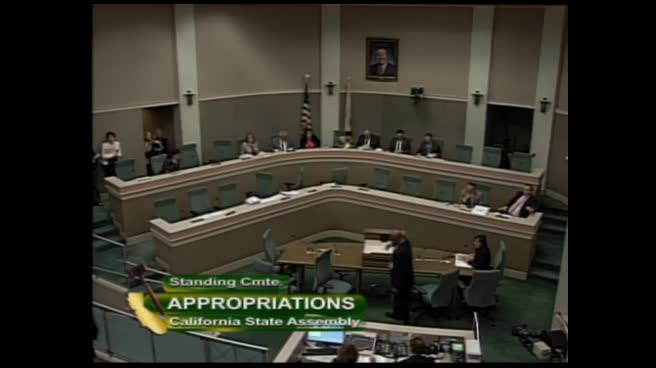 2MIN
Assembly Standing Committee on Appropriations
Bill Author
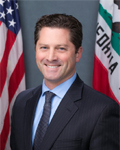
Bill Co-Author(s):