SB 1180: California Disabled Veteran Business Enterprise Program.
- Session Year: 2017-2018
- House: Senate
- Latest Version Date: 2018-03-19
Under existing law, the administering agency for the California Disabled Veteran Business Enterprise Program is the Department of General Services, except in the case of contracts for professional bond services. Existing law requires the Director of General Services to adopt written policies and guidelines establishing a uniform process for state contracting to provide a certified disabled veteran business enterprise (DVBE) participation incentive to bidders, which all state agencies are required to use when awarding contracts.
Existing law requires an awarding department, upon completion of an awarded contract for which a commitment to achieve a DVBE goal was made, to require the prime contractor that entered into a subcontract with a DVBE to certify to the awarding department specified information relating to amounts paid under the contract.
This bill would require an awarding department to maintain all records of the information provided by the prime contractor pursuant to those provisions and to retain the records for a minimum of 6 years after collection. The bill would require the awarding department to maintain those records in a manner that facilitates access and review by external auditors. The bill would require the awarding department to establish appropriate review procedures for those records to ensure the accuracy and completeness of the award amounts and paid amounts reported.
Under existing law, the administering agency for the California Disabled Veteran Business Enterprise Program is the Department of General Services, except in the case of contracts for professional bond services. Existing law requires the Director of General Services to adopt written policies and guidelines establishing a uniform process for state contracting to provide a certified disabled veteran business enterprise (DVBE) participation incentive to bidders, which all state agencies are required to use when awarding contracts.
Existing law requires an awarding department, upon completion of an awarded contract for which a commitment to achieve a DVBE goal was made, to require the prime contractor that entered into a subcontract with a DVBE to certify to the awarding department specified information relating to amounts paid under the contract.
This bill would require an awarding department to maintain all records of the information provided by the prime contractor pursuant to those provisions and to retain the records for a minimum of 6 years after collection. The bill would require the awarding department to establish appropriate review procedures for those records to ensure the accuracy and completeness of the award amounts and paid amounts reported.
(a)The administering agency for the California Disabled Veteran Business Enterprise Program is the Department of General Services, except in the case of contracts for professional bond services. The Department of General Services shall consult with the California Disabled Veteran Business Enterprise Program Advocate, appointed by the Secretary of the Department of Veterans Affairs pursuant to Section 999.11, on all matters relating to the California Disabled Veteran Business Enterprise Program. The Director of General Services shall adopt written policies and guidelines establishing a uniform process for state contracting that would provide a disabled veteran business enterprise participation incentive to bidders. The incentive program shall be used by all state agencies when awarding contracts.
(b)The Department of Veterans Affairs shall do all of the following:
(1)Establish a method of monitoring adherence to the goals specified in Sections 999.1 and 999.2.
(2)Promote the California Disabled Veteran Business Enterprise Program to the fullest extent possible.
(3)Maintain complete records of its promotional efforts.
(4)Establish a system to track the effectiveness of its efforts to promote the California Disabled Veteran Business Enterprise Program, which shall include regular, periodic surveys of newly certified disabled veteran business enterprises to determine how they learned of the program, why they became certified, and what their experience with awarding departments has been.
(c)An awarding department shall not credit toward the departments 3-percent goal state funds expended on a contract with a disabled veteran business enterprise that does not meet and maintain the certification requirements.
(d)Upon completion of an awarded contract for which a commitment to achieve a disabled veteran business enterprise goal was made, an awarding department shall require the prime contractor that entered into a subcontract with a disabled veteran business enterprise to certify to the awarding department all of the following:
(1)The total amount the prime contractor received under the contract.
(2)The name and address of the disabled veteran business enterprise that participated in the performance of the contract.
(3)The amount each disabled veteran business enterprise received from the prime contractor.
(4)That all payments under the contract have been made to the disabled veteran business enterprise. An awarding department shall keep that certification on file. A person or entity that knowingly provides false information shall be subject to a civil penalty for each violation in the minimum amount of two thousand five hundred dollars ($2,500) and the maximum amount of twenty-five thousand dollars ($25,000). An action for a civil penalty under this subdivision may be brought by any public prosecutor in the name of the people of the State of California and the penalty imposed shall be enforceable as a civil judgment.
(e)An awarding department shall maintain all records of the information provided by the prime contractor pursuant to subdivision (d) and shall establish appropriate review procedures for those records to ensure the accuracy and completeness of the award amounts and paid amounts reported. The records shall be maintained in a manner that facilitates access and review by external auditors. Records collected pursuant to this subdivision shall be retained for a minimum of six years after collection.
(f)A prime contractor may, subject to the approval of the Department of General Services, replace a disabled veteran business enterprise identified by the prime contractor in its bid or offer, pursuant to subdivision (a) of Section 999.10, with another disabled veteran business enterprise.
(g)The administering agency shall adopt rules and regulations, including standards for good faith efforts, for the purpose of implementing this section. Emergency regulations consistent with this section may be adopted.
(a)The administering agency for the California Disabled Veteran Business Enterprise Program is the Department of General Services, except in the case of contracts for professional bond services. The Department of General Services shall consult with the California Disabled Veteran Business Enterprise Program Advocate, appointed by the Secretary of the Department of Veterans Affairs pursuant to Section 999.11, on all matters relating to the California Disabled Veteran Business Enterprise Program. The Director of General Services shall adopt written policies and guidelines establishing a uniform process for state contracting that would provide a disabled veteran business enterprise participation incentive to bidders. The incentive program shall be used by all state agencies when awarding contracts.
(b)The Department of Veterans Affairs shall do all of the following:
(1)Establish a method of monitoring adherence to the goals specified in Sections 999.1 and 999.2.
(2)Promote the California Disabled Veteran Business Enterprise Program to the fullest extent possible.
(3)Maintain complete records of its promotional efforts.
(4)Establish a system to track the effectiveness of its efforts to promote the California Disabled Veteran Business Enterprise Program, which shall include regular, periodic surveys of newly certified disabled veteran business enterprises to determine how they learned of the program, why they became certified, and what their experience with awarding departments has been.
(c)An awarding department shall not credit toward the departments 3-percent goal state funds expended on a contract with a disabled veteran business enterprise that does not meet and maintain the certification requirements.
(d)Upon completion of an awarded contract for which a commitment to achieve a disabled veteran business enterprise goal was made, an awarding department shall require the prime contractor that entered into a subcontract with a disabled veteran business enterprise to certify to the awarding department all of the following:
(1)The total amount the prime contractor received under the contract.
(2)The name and address of the disabled veteran business enterprise that participated in the performance of the contract.
(3)The amount each disabled veteran business enterprise received from the prime contractor.
(4)That all payments under the contract have been made to the disabled veteran business enterprise. An awarding department shall keep that certification on file. A person or entity that knowingly provides false information shall be subject to a civil penalty for each violation in the minimum amount of two thousand five hundred dollars ($2,500) and the maximum amount of twenty-five thousand dollars ($25,000). An action for a civil penalty under this subdivision may be brought by any public prosecutor in the name of the people of the State of California and the penalty imposed shall be enforceable as a civil judgment.
(e)An awarding department shall maintain all records of the information provided by the prime contractor pursuant to subdivision (d) and shall establish appropriate review procedures for those records to ensure the accuracy and completeness of the award amounts and paid amounts reported. Records collected pursuant to this subdivision shall be retained for a minimum of six years after collection.
(e)(f)A prime contractor may, subject to the approval of the Department of General Services, replace a disabled veteran business enterprise identified by the prime contractor in its bid or offer, pursuant to subdivision (a) of Section 999.10, with another disabled veteran business enterprise.
(f)(g)The administering agency shall adopt rules and regulations, including standards for good faith efforts, for the purpose of implementing this section. Emergency regulations consistent with this section may be adopted.
|
Date
|
Status
|
|---|---|
| Jun 7, 2018 | Referred to Coms. on J., E.D., & E. and A. & A.R. |
| May 31, 2018 | In Assembly. Read first time. Held at Desk. |
| May 31, 2018 | Read third time. Passed. (Ayes 39. Noes 0.) Ordered to the Assembly. |
| May 29, 2018 | Ordered to special consent calendar. |
| May 25, 2018 | From committee: Do pass. (Ayes 7. Noes 0.) (May 25). |
| May 18, 2018 | Set for hearing May 25. |
| May 7, 2018 | May 7 hearing: Placed on APPR. suspense file. |
| Apr 27, 2018 | Set for hearing May 7. |
| Apr 24, 2018 | From committee: Do pass and re-refer to Com. on APPR. (Ayes 7. Noes 0.) (April 24). Re-referred to Com. on APPR. |
| Apr 12, 2018 | Set for hearing April 24. |
| Apr 10, 2018 | From committee: Do pass and re-refer to Com. on V.A. with recommendation: To consent calendar. (Ayes 12. Noes 0.) (April 10). Re-referred to Com. on V.A. |
| Mar 19, 2018 | From committee with author's amendments. Read second time and amended. Re-referred to Com. on G.O. |
| Mar 15, 2018 | Set for hearing April 10. |
| Feb 22, 2018 | Referred to Coms. on G.O. and V.A. |
| Feb 15, 2018 | From printer. May be acted upon on or after March 17. |
| Feb 14, 2018 | Introduced. Read first time. To Com. on RLS. for assignment. To print. |
|
Date
|
Description
|
Location
|
Votes
|
|
|---|---|---|---|---|
| May 31, 2018 | Special Consent SB1180 | Senate Floor |
Passed |
|
| May 25, 2018 | Do pass | Senate Standing Committee on Appropriations |
Passed |
|
| May 7, 2018 | Placed on suspense file | Senate Standing Committee on Appropriations |
Passed |
|
| Apr 24, 2018 | Do pass, but first be re-referred to the Committee on [Appropriations] | Senate Standing Committee on Veterans Affairs |
Passed |
|
| Apr 10, 2018 | Do pass, but first be re-referred to the Committee on [Veterans Affairs] with the recommendation: To Consent Calendar | Senate Standing Committee on Governmental Organization |
Passed |
This list shows positions taken on this bill by organizations on the date displayed, which is linked to the original source.
Positions by individuals are not included.
Office of Senate Floor Analyses (916) 651-1520 Fax: (916) 327-4478 | SB |
THIRD READING
Bill No: SB 1180
:
SENATE GOVERNMENTAL ORG. COMMITTEE: 12-0, 4/10/18
AYES: Dodd, Wilk, Bradford, Cannella, Gaines, Galgiani, Glazer, Hill, Hueso, Lara, Portantino, Vidak
SENATE VETERANS AFFAIRS COMMITTEE: 7-0, 4/24/18
AYES: Newman, Nielsen, Dodd, Hueso, Nguyen, Roth, Wilk
SENATE APPROPRIATIONS COMMITTEE: 7-0, 5/25/18
AYES: Lara, Bates, Beall, Bradford, Hill, Nielsen, Wiener
DIGEST: This bill requires an awarding department to maintain all records of the information currently provided by a prime contractor that entered into a subcontract with a disabled veteran business enterprise (DVBE) and to retain those records for a minimum of six years, as specified.
ANALYSIS:
Existing law:
- Establishes the DVBE program, which requires state agencies and all other state entities contracting for materials, supplies, equipment, alteration, repair, or improvement to have at least 3% participation goals for DVBE, as defined.
- Specifies that the Department of General Services (DGS), except in the case of contracts for professional bond services, is the administering agency of the DVBE program.
- Defines a DVBE to mean a business certified by the administering agency that meets all of the following:
- It is a sole proprietorship at least 51% owned by one or more disabled veterans, or in the case of a publicly owned business, at least 51% of its stock is owned by one or more disabled veterans; a subsidiary that is wholly owned by a parent corporation, but only if at least 51% of the voting stock of the parent corporation is unconditionally owned by one or more disabled veterans; or a joint venture in which at least 51% of the joint venture’s management, control, earnings are held by one or more disabled veterans.
- The management and control of the daily business operations are by one or more disabled veterans. The disabled veterans who exercise management and control are not required to be the same disabled veteran as the owner of the business.
- It is a sole proprietorship, corporation, or partnership with its home office located in the United States, which is not a branch or subsidiary of a foreign firm, or other foreign-based businesses.
- Defines a “disabled veteran” to mean a veteran of the military, naval, or air service of the United States, who has at least a 10% service-connected disability and who is domiciled in the state.
- Requires an awarding department, upon completion of an awarded contract for which a commitment to achieve a DVBE goal was made, to require the prime contractor that entered into a subcontract with a DVBE to certify to the awarding department specified information relating to amounts paid under the contract, as specified.
This bill:
- Requires an awarding department to maintain all records of the information currently provided by a prime contractor that entered into a subcontract with a DVBE and to retain those records for a minimum of six years after collection.
- Requires an awarding department to establish appropriate review procedures for those records to ensure the accuracy and completeness of the award amounts and paid amounts reported.
- Requires those records to be maintained in a manner that facilitates access and review by external auditors.
Background
DVBE program. The DVBE program directs state governmental entities, such as state agencies and departments, to procure goods and services from DVBEs that DGS has certified as meeting the eligibility requirements of a DVBE. In order for a business to be certified as a DVBE, the business must be at least 51% owned by one or more disabled veterans, have its daily operations managed by one or more disabled veterans, and have its home office located in the United States.
The DVBE program requires state governmental entities that award contracts for goods or services, known as awarding departments, to meet or exceed the statewide participation goal of 3%. Awarding departments may meet the 3% goal either by contracting directly with a certified DVBE as prime contractors or by requiring a prime contractor to use a DVBE as subcontractors for portion of the work.
State departments that fail to meet the annual 3% goal can, in theory, have their delegated contracting authority removed, however DGS has never removed that authority based solely on a department’s failure to meet the 3% goal. At the end of the 2015-16 fiscal years, there were 2,043 certified DVBEs.
State Audit Report 2013-115. In 2013, the California State Auditor (Auditor) performed an audit of the DVBE program which found numerous deficiencies in the program. The audit, state report 2013-115, concluded that the DVBE program would be strengthened by more meaningful performance standards.
The audit also found that DGS had not provided clear guidance as to what level of support and documentation is sufficient to support their reported DVBE performance data nor how to report DVBE participation on multiyear contracts. In some cases, the audit found that some departments failed to maintain supporting records or manually counted their DVBE data incorrectly resulting in inaccurate reporting of that department’s DVBE participation goals.
The Auditor noted that relatively few DVBEs seemed to benefit from the DVBE. During fiscal year 2012-13, while there were roughly 1,400 DVBEs, only 256, or 19%, did business with the State. In fact, 30 DVBEs accounted for 83% of the total amount the State awarded to DVBEs.
This bill seeks to alleviate some of those deficiencies by requiring an awarding department to maintain specified records for a period of at least six years and requiring an awarding department to maintain those records in a manner that facilitates access and review by external auditors.
Comments
Purpose of the bill. According to the author’s office, “after reviewing a large sample of historical data of the DVBE program for fiscal year 2012-13, State Audit Report 2013-115 concluded that many contract awarding departments are currently doing a substandard job in obtaining and maintaining certifications and data. SB 1180 would require that an awarding department maintain all records of the information provided by the prime contractor to retain the records for a minimum of six years after collection and to establish appropriate review procedures for those records to ensure the ongoing accuracy and completeness of the award and paid amounts.”
The author’s office states that, “ensuring the proper collection and storage of data is a key component to certifying that the DVBE program is being utilized as it is intended and that the state is reaching its attainment goals.”
Related/Prior Legislation
SB 1179 (Newman, 2018) requires an awarding department to give a prime contractor that fails to comply with specified certification requirements reasonable opportunity to comply with those requirements. In addition, the bill requires DGS to suspend a prime contractor, upon notification of the failure, as specified. (Pending on the Senate Floor)
AB 961 (Quirk-Silva, 2017) would have tightened the existing monitoring and accountability requirements for state procurement activities related to the DVBE program. (Vetoed by Governor Brown)
FISCAL EFFECT: Appropriation: Fiscal Com.: Local:
According to the Senate Appropriations Committee, unknown potentially significant costs for reviewing and maintaining records to any department that awards contracts.
None received
OPPOSITION: (Verified 5/25/18)
None received
5/26/18 15:26:21
**** END ****
SENATE COMMITTEE ON APPROPRIATIONS
Senator Ricardo Lara, Chair
2017 - 2018 Regular Session
SB 1180 (Newman) - California Disabled Veteran Business Enterprise Program
Version: March 19, 2018 | Policy Vote: G.O. 12 - 0, V.A. 7 - 0 |
Urgency: No | Mandate: No |
Hearing Date: May 7, 2018 | Consultant: Debra Cooper |
This bill meets the criteria for referral to the Suspense File.
Bill Summary:
SB 1180 would require a contract-awarding department (awarding department) to maintain for a period of at least six years all records of subcontractor payment certification, which are required under existing law to be provided by a prime contractor that entered into a subcontract with a disabled veteran business enterprise (DVBE).
Fiscal Impact:
Unknown potentially significant costs for reviewing and maintaining records to any department that awards contracts. (various funds)
Background:
The DVBE Program addresses the special needs of disabled veterans seeking rehabilitation and training through entrepreneurship. The Department of General Services (DGS) is designated as the administering agency while CalVet is responsible for various advisory, monitoring, and promotional responsibilities.
The DVBE program requires that, individually and collectively, all State governmental entities that award contracts for goods and services expend at least 3% of the annual value of all their contracts on DVBEs certified by DGS. Departments that award contracts may meet this goal by either contracting directly with certified DVBE firms or requiring winning bidders to use them as subcontractors. To be eligible to become a certified DVBE, a business must be at least 51% owned by a disabled veteran, have its daily operations managed and controlled by a disabled veteran, and be located in the United States.
A 2013 State Auditor report of the DVBE program found numerous deficiencies in the program. Among those deficiencies, the report concluded that DGS had not provided clear guidance as to what level of support and documentation is sufficient to support their reported DVBE performance data and that some departments manually counted their DVBE data incorrectly or failed to maintain supporting records.
Proposed Law:
This bill would require that an awarding department maintain all records of the information currently provided by a prime contractor that entered into a subcontract with a DVBE and to retain those records for a minimum of six years after collection. This bill would also require that an awarding department establish appropriate review procedures for those records to ensure the accuracy and completeness of the award amounts and paid amounts reported. Lastly, this bill would require those records to be maintained in a manner that facilitates access and review by external auditors.
Related Legislation:
SB 1179 (Newman, 2018) would require an awarding department to give a prime contractor that fails to comply with specified certification requirements reasonable opportunity to comply with those requirements. In addition, the bill requires DGS, upon notification of the failure, to suspend the prime contractor temporarily for a first violation and permanently for a second violation. This bill is pending in the Senate Appropriations Committee.
AB 961 (Quirk-Silva, 2017) would have tightened the existing monitoring and accountability requirements for state procurement activities related to the DVBE program. The bill included a six-year records retention provision. This bill was vetoed by Governor Brown.
AB 177 (Ruskin, Chapter 342, Statutes of 2010) increased penalties for persons who falsely engage in activities relating the Small Business Procurement and Contract Act, including small businesses, microbusiness, and DVBEs.
SB 548 (Huff, Chapter 595, Statutes of 2009) requires an awarding department, upon completion of an awarded contract for which a commitment to achieve a DVBE goal was made, to require the prime contractor that entered into a subcontract with a DVBE firm to certify to the awarding department certain information pertaining to the contract, and that all payments under the contract have been made to the DVBE firm. This bill also requires an awarding department to keep that certification on file. This bill specifies that a person or entity that knowingly provides false information is subject to a civil penalty, as specified, and that an action for a civil penalty may be brought by any public prosecutor in the name of the people of the State of California.
Staff Comments:
DGS predicts that they would need additional staffing resources to review records provided by prime contractors to ensure the accuracy and completeness of the information provided regarding award amounts and paid amounts reported at a cost of approximately $142,000 annually. Other departments that manage a similar or greater volume of contracts may need additional staffing resources as well.
-- END --
SENATE COMMITTEE ON VETERANS AFFAIRS
Senator Josh Newman, Chair
2017 - 2018 Regular
Bill No: SB 1180 Hearing Date: 4/24/18
Author: | |||
Version: | 3/19/18 Amended | ||
Urgency: | No | Fiscal: | Yes |
Consultant: | Wade Teasdale | ||
Subject: California Disabled Veteran Business Enterprise Program
DESCRIPTION
Summary:
This bill requires a contract-awarding department (awarding department) to maintain for a period of at least six years all records of subcontractor payment certification, which are required under existing law to be provided by a prime contractor that entered into a subcontract with a disabled veteran business enterprise (DVBE).
Existing law:
- Establishes the California Disabled Veteran Business Enterprise program, which requires state agencies and all other state entities contracting for materials, supplies, equipment, alteration, repair, or improvement to have at least 3% participation goals for DVBEs, as defined.
- Specifies that DGS, except in the case of contracts for professional bond services, is the administering agency of the DVBE program.
- Defines a DVBE to mean a business certified by the administering agency that meets all of the following:
- It is a sole proprietorship at least 51% owned by one or more disabled veterans, or in the case of a publicly owned business, at least 51% of its stock is owned by one or more disabled veterans; a subsidiary that is wholly owned by a parent corporation, but only if at least 51% of the voting stock of the parent corporation is unconditionally owned by one or more disabled veterans; or a joint venture in which at least 51% of the joint venture’s management, control, earnings are held by one or more disabled veterans.
- The management and control of the daily business operations are by one or more disabled veterans. The disabled veterans who exercise management and control are not required to be the same disabled veterans as the owner of the business.
- It is a sole proprietorship, corporation, or partnership with its home office located in the United States, which is not a branch or subsidiary of a foreign firm, or other foreign-based businesses.
- Defines a “disabled veteran” to mean a veteran of the military, naval, or air service of the United States, who has at least a 10% service-connected disability and who is domiciled in California.
- Requires an awarding department, upon completion of an awarded contract for which a commitment to achieve a DVBE goal was made, to require the prime contractor that entered into a subcontract with a DVBE to certify to the awarding department information relating to amounts paid under the contract, as specified.
- Subjects a person or entity that knowingly provides false information on the certification discussed above, certain civil penalties.
- Makes it a crime to, among other things, knowingly and with intent to defraud, fraudulently represent participation of a DVBE in order to obtain or retain a bid preference or a state contract.
- Requires DGS to suspend, for a specified period, any person who violates the DVBE bidding provisions, from bidding on, or participating as either a contractor, subcontractor, or supplier in, any state contract or project, as specified.
- Requires DGS to monitor the status of all reported violations and maintain and make available to all state departments a central listing of all firms and persons who have been determined to have committed violations resulting in suspension.
- Prohibits an awarding department from entering into any contract with any person suspended for violating these provisions during the suspension and requires the awarding department to check the central listing provided by DGS to verify that the person or contract to whom the contract is being awarded, or any person being utilized as a subcontractor or supplier by that person or contractor, is not under suspension.
This bill:
- Requires an awarding department to maintain all records of the information currently provided by a prime contractor that entered into a subcontract with a DVBE and to retain those records for a minimum of six years after collection.
- Requires an awarding department to establish appropriate review procedures for those records to ensure the accuracy and completeness of the award amounts and paid amounts reported.
- Requires those records to be maintained in a manner that facilitates access and review by external auditors.
BACKGROUND
Existing law requires each state government department awarding contracts to require that prime contractors certify to that department:
- The total amount the prime contractor receives under the contract;
- The name and address of the disabled veteran enterprise (DVBE) subcontractor participating in the performance of the contract;
- The amount each DVBE subcontractor receives from the prime contractor; and
- That all payments under the contract have been made to the DVBE.
Existing law also requires the awarding department to keep these certifications on file.
After reviewing a large sample of historical data of the DVBE program for FY 2012/13, State Audit Report 2013-115 concluded that many awarding departments currently do a substandard job in obtaining and maintaining the certifications and their data. The audit included two of the state’s largest departments: Department of Transportation (Caltrans), and Department of Corrections and Rehabilitation (CDCR). Caltrans and CDCR are among the highest volume contractors, including DVBE-related contracts.
The same audit established that Caltrans lacked the data to validate 39% of its DVBE subcontractor payments and had to correct its annual contracting activity report to the DVBE program’s central administering agency, the Department of General Services (DGS). The audit found that CDCR lacked the data to validate 65% of its reported DVBE subcontractor payment data and also had to resubmit a corrected report to DGS.
Due to the size of their overall procurement programs and high level of DVBE participation, the corrected reports by the two large departments drove the overall state-level DVBE goal attainment for FY 2012/13 down to just 3.12%, a meaningful drop from state-level DVBE goal attainment levels of 4.39% in FY 2011/12 and 4.36% in FY 2010/11. Caltrans and CDCR are just two of the more than 100 state-level entities participating in the DVBE program.
Ensuring the proper collection and storage of subcontractor payment data is a key factor in ensuring that DVBEs are being used properly and paid promptly. The data also is valuable in ensuring that the DVBE program is being utilized as it is intended and that the state is reaching its attainment goals.
COMMENT
- Committee Analysis Comments: This bill was approved (12-0) by Senate Governmental Organization Committee on 4/10/2018 with a recommendation to the Consent Calendar.
- Prior/Related Legislation:
SB 1179 (Newman, 2018) requires an awarding department to give a prime contractor that fails to comply with specified certification requirements reasonable opportunity to comply with those requirements. In addition, the bill requires DGS, upon notification of the failure, to suspend the prime contractor temporarily for a first violation and permanently for a second violation. (Pending in Senate Veterans Affairs Committee)
AB 961 (Quirk-Silva, vetoed, 2017) would have tightened the existing monitoring and accountability requirements for state procurement activities related to the DVBE program. The bill included a six-year records retention provision.
AB 177 (Ruskin, Chapter 342, Statutes of 2010) increased penalties for persons who falsely engage in activities relating the Small Business Procurement and Contract Act, including small businesses, microbusiness, and DVBEs.
SB 548 (Huff, Chapter 595, Statutes of 2009) requires an awarding department, upon completion of an awarded contract for which a commitment to achieve a DVBE goal was made, to require the prime contractor that entered into a subcontract with a DVBE firm to certify to the awarding department certain information pertaining to the contract, and that all payments under the contract have been made to the DVBE firm. This bill also requires an awarding department to keep that certification on file. This bill specifies that a person or entity that knowingly provides false information is subject to a civil penalty, as specified, and that an action for a civil penalty may be brought by any public prosecutor in the name of the people of the State of California.
POSITIONS
Sponsor: Author
Support: None received
Oppose: None received
-- END --
SENATE COMMITTEE ON GOVERNMENTAL ORGANIZATION
Senator Bill Dodd
Chair
2017 - 2018 Regular
Bill No: 1180 Hearing Date: 4/10/2018
Author: | , et al. | ||
Version: | 3/19/2018 Amended | ||
Urgency: | No | Fiscal: | Yes |
Consultant: | Felipe Lopez | ||
SUBJECT: California Disabled Veteran Business Enterprise Program
DIGEST: This bill requires an awarding department to maintain all records of the information currently provided by a prime contractor that entered into a subcontract with a disabled veteran business enterprise (DVBE) and to retain those records for a minimum of six years, as specified.
ANALYSIS:
Existing law:
- Establishes the DVBE program, which requires state agencies and all other state entities contracting for materials, supplies, equipment, alteration, repair, or improvement to have at least 3% participation goals for DVBE, as defined.
- Specifies that the Department of General Services (DGS), except in the case of contracts for professional bond services, is the administering agency of the DVBE program.
- Defines a DVBE to mean a business certified by the administering agency that meets all of the following:
- It is a sole proprietorship at least 51% owned by one or more disabled veterans, or in the case of a publicly owned business, at least 51% of its stock is owned by one or more disabled veterans; a subsidiary that is wholly owned by a parent corporation, but only if at least 51% of the voting stock of the parent corporation is unconditionally owned by one or more disabled veterans; or a joint venture in which at least 51% of the joint venture’s management, control, earnings are held by one or more disabled veterans.
- The management and control of the daily business operations are by one or more disabled veterans. The disabled veterans who exercise management and control are not required to be the same disabled veteran as the owner of the business.
- It is a sole proprietorship, corporation, or partnership with its home office located in the United States, which is not a branch or subsidiary of a foreign firm, or other foreign-based businesses.
- Defines a “disabled veteran” to mean a veteran of the military, naval, or air service of the United States, who has at least a 10% service-connected disability and who is domiciled in the state.
- Requires an awarding department, upon completion of an awarded contract for which a commitment to achieve a DVBE goal was made, to require the prime contractor that entered into a subcontract with a DVBE to certify to the awarding department specified information relating to amounts paid under the contract, as specified.
This bill:
- Requires an awarding department to maintain all records of the information currently provided by a prime contractor that entered into a subcontract with a DVBE and to retain those records for a minimum of six years after collection.
- Requires an awarding department to establish appropriate review procedures for those records to ensure the accuracy and completeness of the award amounts and paid amounts reported.
- Requires those records to be maintained in a manner that facilitates access and review by external auditors.
Background
Purpose of the bill. According to the author’s office, “after reviewing a large sample of historical data of the DVBE program for fiscal year 2012-13, State Audit Report 2013-115 concluded that many contract awarding departments are currently doing a substandard job in obtaining and maintaining certifications and data. SB 1180 would require that an awarding department maintain all records of the information provided by the prime contractor to retain the records for a minimum of six years after collection and to establish appropriate review procedures for those records to ensure the ongoing accuracy and completeness of the award and paid amounts.”
The author’s office states that, “ensuring the proper collection and storage of data is a key component to certifying that the DVBE program is being utilized as it is intended and that the state is reaching its attainment goals.”
DVBE program. The DVBE program directs state governmental entities, such as state agencies and departments, to procure goods and services from DVBEs that DGS has certified as meeting the eligibility requirements of a DVBE. In order for a business to be certified as a DVBE, the business must be at least 51% owned by one or more disabled veterans, have its daily operations managed by one or more disabled veterans, and have its home office located in the United States.
The DVBE program requires state governmental entities that award contracts for goods or services, known as awarding departments, to meet or exceed the statewide participation goal of 3%. Awarding departments may meet the 3% goal either by contracting directly with a certified DVBE as prime contractors or by requiring a prime contractor to use a DVBE as subcontractors for portion of the work.
State departments that fail to meet the annual 3% goal can, in theory, have their delegated contracting authority removed, however DGS has never removed that authority based solely on a department’s failure to meet the 3% goal. At the end of the 2015-16 fiscal years, there were 2,043 certified DVBEs.
State Audit Report 2013-115. In 2013, the California State Auditor (Auditor) performed an audit of the DVBE program which found numerous deficiencies in the program. The audit, state report 2013-115, concluded that the DVBE program would be strengthened by more meaningful performance standards.
The audit also found that DGS had not provided clear guidance as to what level of support and documentation is sufficient to support their reported DVBE performance data nor how to report DVBE participation on multiyear contracts. In some cases, the audit found that some departments failed to maintain supporting records or manually counted their DVBE data incorrectly resulting in inaccurate reporting of that department’s DVBE participation goals.
The Auditor noted that relatively few DVBEs seemed to benefit from the DVBE. During fiscal year 2012-13, while there were roughly 1,400 DVBEs, only 256, or 19%, did business with the State. In fact, 30 DVBEs accounted for 83% of the total amount the State awarded to DVBEs.
This bill seeks to alleviate some of those deficiencies by requiring an awarding department to maintain specified records for a period of at least six years and requiring an awarding department to maintain those records in a manner that facilitates access and review by external auditors.
Prior/Related Legislation
SB 1179 (Newman, 2018) requires an awarding department to give a prime contractor that fails to comply with specified certification requirements reasonable opportunity to comply with those requirements. In addition, the bill requires DGS to suspend a prime contractor, upon notification of the failure, as specified. (Pending in Senate Governmental Organization Committee)
AB 961 (Quirk-Silva, 2017) would have tightened the existing monitoring and accountability requirements for state procurement activities related to the DVBE program. (Vetoed by Governor Brown)
AB 177 (Ruskin, Chapter 342, Statutes of 2010) increased penalties for persons who falsely engage in activities relating the Small Business Procurement and Contract Act, including small businesses, microbusiness, and DVBEs.
FISCAL EFFECT: Appropriation: Fiscal Com.: Local:
SUPPORT:
None received
OPPOSITION:
None received
DUAL REFERRAL: Senate Veterans Affairs Committee
Discussed in Hearing
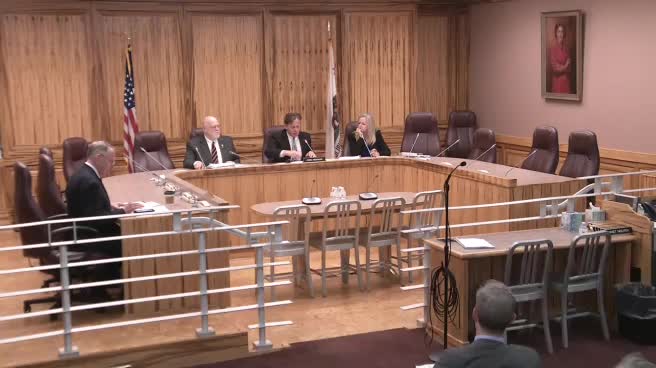 2MIN
Senate Standing Committee on Veterans Affairs
Bill Author

Bill Co-Author(s):
