SB 1184: Vehicles: City of Sacramento shared autonomous vehicle pilot project.
- Session Year: 2017-2018
- House: Senate
- Latest Version Date: 2018-05-01
Existing law permits the operation of an autonomous vehicle on public roads for testing purposes if, among other requirements, a driver is seated in the drivers seat and is capable of taking immediate manual control of the vehicle in the event of an autonomous technology failure or other emergency. Existing law, notwithstanding the above provision, until 180 days after the operative date of regulations promulgated by the Department of Motor Vehicles to allow testing of autonomous vehicles without a driver in the vehicle, authorizes the Contra Costa Transportation Authority and Livermore Amador Valley Transit Authority to conduct pilot projects to test autonomous vehicles that do not have a driver seated in the drivers seat and are not equipped with a steering wheel, a brake pedal, or an accelerator if the testing is conducted only at specified locations and the autonomous vehicle operates at speeds of less than 35 miles per hour.
Existing regulations require a manufacturer testing an autonomous vehicle on public roads to comply with specified requirements, including applying for and receiving a Manufacturers Testing Permit or a Manufacturers Testing PermitDriverless Vehicles from the Department of Motor Vehicles, providing proof to the department of the manufacturers ability to respond to a judgment for damages up to $5,000,000, and providing written identification of an autonomous vehicle to the department. Existing regulations prohibit a manufacturer from allowing an autonomous test vehicle to be operated on a public road if, among other things, the manufacturer receives compensation for providing a ride to a member of the public.
This bill would authorize the City of Sacramento to conduct a shared autonomous vehicle pilot project within a one-mile radius of the University/65th Street light rail station to test autonomous vehicles that do not have a driver seated in the drivers seat and are not equipped with a steering wheel, a brake pedal, or an accelerator, as specified. The bill would require the city or a manufacturer participating in the pilot project to certify that local law enforcement approves of the testing area and conditions, as specified. The bill would exempt the city and a manufacturer participating in the pilot project from specified Department of Motor Vehicles regulations, and would allow a manufacturer to receive compensation for allowing a member of the public to ride in an autonomous vehicle. vehicle, but would prohibit directly charging a fee to a member of the public to ride in an autonomous vehicle.
This bill would make these provisions inoperative on June 1, 2020, and would repeal it as of January 1, 2021.
This bill would make legislative findings and declarations as to the necessity of a special statute for the City of Sacramento.
Existing law permits the operation of an autonomous vehicle on public roads for testing purposes if, among other requirements, a driver is seated in the drivers seat and is capable of taking immediate manual control of the vehicle in the event of an autonomous technology failure or other emergency. Existing law, notwithstanding the above provision, until 180 days after the operative date of regulations promulgated by the Department of Motor Vehicles to allow testing of autonomous vehicles without a driver in the vehicle, authorizes the Contra Costa Transportation Authority and Livermore Amador Valley Transit Authority to conduct pilot projects to test autonomous vehicles that do not have a driver seated in the drivers seat and are not equipped with a steering wheel, a brake pedal, or an accelerator if the testing is conducted only at specified locations and the autonomous vehicle operates at speeds of less than 35 miles per hour.
Existing regulations require a manufacturer testing an autonomous vehicle on public roads to comply with specified requirements, including applying for and receiving a Manufacturers Testing Permit or a Manufacturers Testing PermitDriverless Vehicles from the Department of Motor Vehicles, providing proof to the department of the manufacturers ability to respond to a judgment for damages up to $5,000,000, and providing written identification of an autonomous vehicle to the department. Existing regulations prohibit a manufacturer from allowing an autonomous test vehicle to be operated on a public road if, among other things, the manufacturer receives compensation for providing a ride to a member of the public.
This bill would authorize the City of Sacramento to conduct a shared autonomous vehicle pilot project to test autonomous vehicles that do not have a driver seated in the drivers seat and are not equipped with a steering wheel, a brake pedal, or an accelerator, as specified. The bill would exempt the city and a manufacturer participating in the pilot project from specified Department of Motor Vehicles regulations, and would allow a manufacturer to receive compensation for allowing a member of the public to ride in an autonomous vehicle.
This bill would make these provisions inoperative on June 1, 2020, and would repeal it as of January 1, 2021.
This bill would make legislative findings and declarations as to the necessity of a special statute for the City of Sacramento.
Existing law requires a court to suspend or delay a persons driving privilege if that person committed an act of vandalism while the person was 13 years of age or older, except as specified. Existing law authorizes the person whose driving privilege was suspended or delayed due to an act of vandalism to reduce the period of suspension or delay by performing community service, as specified.This bill would make technical, nonsubstantive changes to those provisions and would delete an obsolete reference.Existing law requires a court to suspend or delay a persons driving privilege if that person committed an act of vandalism while the person was 13 years of age or older, except as specified. Existing law authorizes the person whose driving privilege was suspended or delayed due to an act of vandalism to reduce the period of suspension or delay by performing community service, as specified.
This bill would make technical, nonsubstantive changes to those provisions and would delete an obsolete reference.
(a)Notwithstanding Section 38750, the City of Sacramento is authorized to conduct a shared autonomous vehicle (SAV) pilot project for the testing of autonomous vehicles that do not have a driver seated in the drivers seat and are not equipped with a steering wheel, a brake pedal, or an accelerator, provided the following requirements are met:
(1)The testing shall be conducted only within a one-mile radius of the University/65th Street light rail station in the City of Sacramento, and a vehicle may traverse roads publicly maintained and open to the use of the public within the area of the pilot project. project, except for public freeways.
(2)An autonomous vehicle shall operate at speeds of less than 35 miles per hour. hour and have a gross vehicle weight rating of no greater than 10,000 pounds.
(3)A An autonomous vehicle manufacturer participating in the pilot program project shall possess a Manufacturers Testing PermitDriverless Vehicles or a Permit to Deploy Autonomous Vehicles on Public Streets from the department.
(b)Before the start of testing of an autonomous vehicle that does not have a driver seated in the drivers seat on or across a public road, the City of Sacramento or an autonomous vehicle manufacturer participating in the pilot project, or a combination of the two, shall certify that local law enforcement agencies with jurisdiction over the public roads in the designated testing area approve of the geographic area and environmental, traffic, and speed conditions authorized for the pilot project.
(b)(c)The City of Sacramento and an autonomous vehicle manufacturer participating in the pilot project shall comply with Article 3.7 (commencing with Section 227.02) of Chapter 1 of Division 1 of Title 13 of the California Code of Regulations, except for subdivision (f) of Section 227.26 of the California Code of Regulation Regulations and any other provision that prohibits a manufacturer from receiving compensation for allowing a member of the public to ride as a passenger in an autonomous vehicle.
(d)Notwithstanding subdivision (c), the City of Sacramento and an autonomous vehicle manufacturer participating in the pilot project shall not directly charge a fee to a member of the public to ride as a passenger in an autonomous vehicle under this pilot project.
(c)(e)This section shall become inoperative on June 1, 2020, and, as of January 1, 2021, is repealed.
SEC. 2.The Legislature finds and declares that a special statute is necessary and that a general statute cannot be made applicable within the meaning of Section 16 of Article IV of the California Constitution because of the unique needs of the City of Sacramento regarding an SAV pilot project.
(a)Notwithstanding Section 38750, the City of Sacramento is authorized to conduct a shared autonomous vehicle (SAV) pilot project for the testing of autonomous vehicles that do not have a driver seated in the drivers seat and are not equipped with a steering wheel, a brake pedal, or an accelerator, provided the following requirements are met:
(1)The testing shall be conducted only within the City of Sacramento, and a vehicle may traverse roads publicly maintained and open to the use of the public within the area of the pilot project.
(2)An autonomous vehicle shall operate at speeds of less than 35 miles per hour.
(3)A vehicle manufacturer participating in the pilot program shall possess a Manufacturers Testing PermitDriverless Vehicles or a Permit to Deploy Autonomous Vehicles on Public Streets from the department.
(b)The City of Sacramento and an autonomous vehicle manufacturer participating in the pilot project shall comply with Article 3.7 (commencing with Section 227.02) of Chapter 1 of Division 1 of Title 13 of the California Code of Regulations, except for subdivision (f) of Section 227.26 of the California Code of Regulation and any other provision that prohibits a manufacturer from receiving compensation for allowing a member of the public to ride as a passenger in an autonomous vehicle.
(c)This section shall become inoperative on June 1, 2020, and, as of January 1, 2021, is repealed.
SEC. 2.The Legislature finds and declares that a special statute is necessary and that a general statute cannot be made applicable within the meaning of Section 16 of Article IV of the California Constitution because of the unique needs of the City of Sacramento regarding an SAV pilot project.
SECTION 1.Section 13202.6 of the Vehicle Code is amended to read:13202.6.(a)(1)For a conviction of a person for a violation of Section 594, 594.3, or 594.4 of the Penal Code, committed while the person was 13 years of age or older, the court shall suspend the persons driving privilege for not more than two years, except when the court finds that a personal or family hardship exists that requires the person to have a drivers license for his or her own, or a member of his or her familys, employment, school, or medically related purposes. If the person convicted does not yet have the privilege to drive, the court shall order the department to delay issuing the privilege to drive for not less than one year nor more than three years subsequent to the time the person becomes legally eligible to drive. However, if there is no further conviction for violating Section 594, 594.3, or 594.4 of the Penal Code in a 12-month period after the conviction, the court, upon petition of the person affected, may modify the order imposing the delay of the privilege. For each successive offense, the court shall suspend the persons driving privilege for those possessing a drivers license or delay the eligibility for those not in possession of a drivers license at the time of their conviction for one additional year.(2)A person whose driving privilege is suspended or delayed for an act involving vandalism in violation of Section 594, 594.3, or 594.4 of the Penal Code, may elect to reduce the period of suspension or delay imposed by the court by performing community service under the supervision of the probation department. The period of suspension or delay ordered under paragraph (1) shall be reduced at the rate of one day for each hour of community service performed. The period of suspension or delay ordered under paragraph (1) shall be reduced at the rate of one day for each day of community service performed when the defendant and his or her parents or legal guardians are responsible for keeping a specified property in the community free of graffiti for a specified period of time. The suspension shall be reduced only when the specified period of participation has been completed. Participation of a parent or legal guardian is not required under this paragraph if the court deems this participation to be detrimental to the defendant, or if the parent or legal guardian is a single parent who must care for young children. For purposes of this paragraph, community service means cleaning up graffiti from any public property, including public transit vehicles.(3)As used in this section, the term conviction includes the findings in juvenile proceedings specified in Section 13105.(b)(1)When the court suspends driving privileges pursuant to subdivision (a), the court in which the conviction occurred shall require all drivers licenses held by the person to be surrendered to the court. The court shall, within 10 days following the conviction, transmit a certified abstract of the conviction, together with any drivers licenses surrendered, to the department.(2)Violations of restrictions imposed pursuant to this section are subject to Section 14603.(c)The suspension, restriction, or delay of driving privileges pursuant to this section shall be in addition to any other penalty imposed upon conviction of a violation of Section 594, 594.3, or 594.4 of the Penal Code.(a)(1)For every a conviction of a person for a violation of Section 594, 594.3, or 594.4 of the Penal Code, committed while the person was 13 years of age or older, the court shall suspend the persons driving privilege for not more than two years, except when the court finds that a personal or family hardship exists that requires the person to have a drivers license for his or her own, or a member of his or her familys, employment, school, or medically related purposes. If the person convicted does not yet have the privilege to drive, the court shall order the department to delay issuing the privilege to drive for not less than one year nor more than three years subsequent to the time the person becomes legally eligible to drive. However, if there is no further conviction for violating Section 594, 594.3, or 594.4 of the Penal Code in a 12-month period after the conviction, the court, upon petition of the person affected, may modify the order imposing the delay of the privilege. For each successive offense, the court shall suspend the persons driving privilege for those possessing a drivers license or delay the eligibility for those not in possession of a drivers license at the time of their conviction for one additional year.
(2)A person whose driving privilege is suspended or delayed for an act involving vandalism in violation of Section 594, 594.3, or 594.4 of the Penal Code, may elect to reduce the period of suspension or delay imposed by the court by performing community service under the supervision of the probation department. The period of suspension or delay ordered under paragraph (1) shall be reduced at the rate of one day for each hour of community service performed. If the jurisdiction has adopted a graffiti abatement program as defined in subdivision (f) of Section 594 of the Penal Code, the The period of suspension or delay ordered under paragraph (1) shall be reduced at the rate of one day for each day of community service performed in the graffiti abatement program when the defendant and his or her parents or legal guardians are responsible for keeping a specified property in the community free of graffiti for a specified period of time. The suspension shall be reduced only when the specified period of participation has been completed. Participation of a parent or legal guardian is not required under this paragraph if the court deems this participation to be detrimental to the defendant, or if the parent or legal guardian is a single parent who must care for young children. For purposes of this paragraph, community service means cleaning up graffiti from any public property, including public transit vehicles.
(3)As used in this section, the term conviction includes the findings in juvenile proceedings specified in Section 13105.
(b)(1)Whenever When the court suspends driving privileges pursuant to subdivision (a), the court in which the conviction is had occurred shall require all drivers drivers licenses held by the person to be surrendered to the court. The court shall, within 10 days following the conviction, transmit a certified abstract of the conviction, together with any drivers drivers licenses surrendered, to the department.
(2)Violations of restrictions imposed pursuant to this section are subject to Section 14603.
(c)The suspension, restriction, or delay of driving privileges pursuant to this section shall be in addition to any other penalty imposed upon conviction of a violation of Section 594, 594.3, or 594.4 of the Penal Code.
|
Date
|
Status
|
|---|---|
| Jun 11, 2018 | June 11 set for first hearing canceled at the request of author. |
| May 31, 2018 | Referred to Coms. on TRANS. and C. & C. |
| May 21, 2018 | In Assembly. Read first time. Held at Desk. |
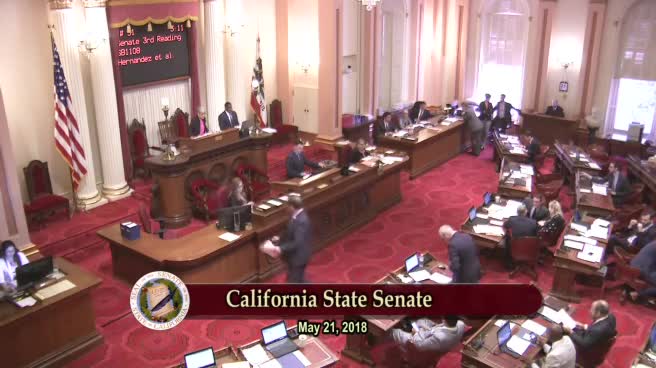
| May 21, 2018 | Read third time. Passed. (Ayes 30. Noes 6.) Ordered to the Assembly. |
| May 15, 2018 | Read second time. Ordered to third reading. |
| May 14, 2018 | From committee: Be ordered to second reading pursuant to Senate Rule 28.8. |
| May 4, 2018 | Set for hearing May 14. |
| May 1, 2018 | Read second time and amended. Re-referred to Com. on APPR. |
| Apr 30, 2018 | From committee: Do pass as amended and re-refer to Com. on APPR. (Ayes 10. Noes 1.) (April 24). |
| Apr 11, 2018 | Set for hearing April 24. |
| Apr 4, 2018 | Re-referred to Com. on T. & H. |
| Mar 22, 2018 | From committee with author's amendments. Read second time and amended. Re-referred to Com. on RLS. |
| Mar 1, 2018 | Referred to Com. on RLS. |
| Feb 16, 2018 | From printer. May be acted upon on or after March 18. |
| Feb 15, 2018 | Introduced. Read first time. To Com. on RLS. for assignment. To print. |
|
Date
|
Description
|
Location
|
Votes
|
|
|---|---|---|---|---|
| May 21, 2018 | Senate 3rd Reading SB1184 Pan | Senate Floor |
Passed |
|
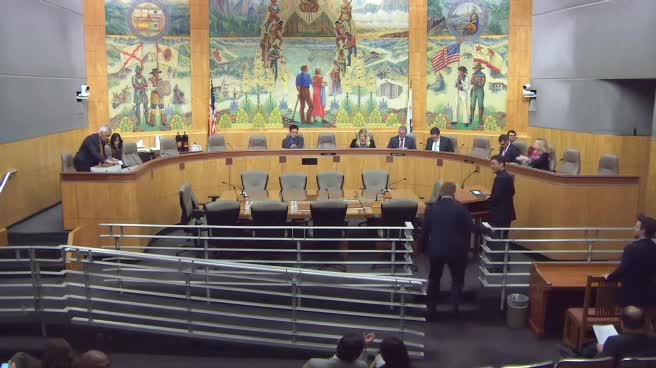
| Apr 24, 2018 | Do pass as amended, but first amend, and re-refer to the Committee on [Appropriations] | Senate Standing Committee on Transportation and Housing |
Passed |
This list shows positions taken on this bill by organizations on the date displayed, which is linked to the original source.
Positions by individuals are not included.
|
Organization
|
Position
|
Date
|
|---|---|---|
| Amalgamated Transit Union | * Against | Apr 24, 2018 |
| California Conference Board Of The Amalgamated Transit Union | ** Against | May 16, 2018 |
| California Conference Of Machinists | ** Against | May 16, 2018 |
| California Labor Federation | ** Against | May 16, 2018 |
| California Teamsters | ** Against | May 16, 2018 |
| City Of Sacramento | ** Support | May 16, 2018 |
| Sacramento State University | * Support | Apr 24, 2018 |
Office of Senate Floor Analyses (916) 651-1520 Fax: (916) 327-4478 | SB |
THIRD READING
Bill No: SB 1184
:
SENATE TRANS. & HOUSING COMMITTEE: 10-1, 4/24/18
AYES: Beall, Cannella, Allen, Dodd, Gaines, Galgiani, McGuire, Roth, Skinner, Wiener
NOES: Vidak
NO VOTE RECORDED: Morrell, Wieckowski
SENATE APPROPRIATIONS COMMITTEE: Senate Rule 28.8
DIGEST:
This bill authorizes the City of Sacramento to conduct a shared autonomous vehicle (SAV) pilot project. This bill requires the manufacturer participating in the pilot program to possess a testing or deployment permit from the Department of Motor Vehicles (DMV), but exempts the manufacturer from the prohibition on receiving compensation when testing AVs.
ANALYSIS: Existing law authorizes the operation of AVs on public roads for testing and non-testing purposes under certain circumstances subject to regulations adopted by the DMV, as specified.
This bill:
- Authorizes the City of Sacramento to conduct a SAV pilot project for the testing of AVs that do not have a driver seated in the driver’s seat and are not equipped with a steering wheel, a brake pedal, or an accelerator, under specific requirements.
- Requires the testing shall be conducted only within a one-mile radius of the University/65th Street light rail station in the City of Sacramento, and a vehicle may traverse roads and be open to use of the public only within the area of the pilot project.
- Requires the AV operate at speeds of less than 35 miles per hour.
- Requires the vehicle manufacturer participating in the pilot project or the City of Sacramento to obtain approval from local law enforcement on the geographic area and the environmental, traffic and speed conditions authorized for the project before testing.
- Requires the vehicle manufacturer participating in the pilot program to possess a Manufacturer’s Testing Permit – Driverless Vehicles or a Permit to Deploy Autonomous Vehicles on Public Roads.
- Exempts the manufacturer participating in the pilot program and the City of Sacramento from the provision in the regulations that prohibits a manufacturer from receiving compensation for allowing a member of the public to ride as a passenger in an AV.
- Prohibits the manufacturer participating in the pilot program and the City of Sacramento from directly charging a fee to a member of the public for riding an AV under the pilot project.
- Makes the authorization inoperative on June 1, 2020, and repeals the bill on January 1, 2021.
Background
- AV Permits in California. In 2012, SB 1298 (Padilla, Chapter 570) established conditions for the operation of AVs in California. In 2014, the DMV adopted regulations for the testing of AVs on public roads with a test driver and establishing an application and approval permit for a Manufacturer’s Testing Permit. As of April 1, 2018, there are 52 manufacturers that have this permit. In early 2018, the DMV adopted regulations for testing AVs without a test driver at the wheel and/or without a steering wheel (Manufacturer’s Testing Permit – Driverless Vehicles) and for deployment of AVs in California (Permit to Deploy Autonomous Vehicles on Public Roads). DMV began accepting applications for these permits on April 1, 2018. To date, only one manufacturer has submitted an application for a testing permit to operate driverless vehicles.[1]
- Requirements under the Permits. To apply for the Manufacturer’s Testing Permit — Driverless Vehicles, manufacturers are required to maintain $5 million in insurance coverage, report any accidents to the DMV within 10 days, annually report the number and circumstance of any disengagement of the autonomous system, provide written notification to local authorities in the testing vicinity, and provide a law enforcement interaction plan to law enforcement agencies and other first responders in the testing vicinity. Under testing permits, manufacturers are also prohibited from charging the public a fee or receiving compensation for providing a ride in the vehicle.
To apply for the Permit to Deploy Autonomous Vehicles on Public Roads, manufacturers must comply with a series of additional requirements, including providing the specific operational design domain of the AV (i.e., the road and environmental conditions in which the AV is designed to operate), and equipping the vehicle with an autonomous technology data recorder that will capture all vehicle functions at least 30 seconds before a collision in a readable format. All AVs tested or deployed in California are prohibited from weighing more than 10,000 pounds.
Comments
- Purpose. According to the author, AVs are the future of transportation and Sacramento wants to make sure it is not left behind. This bill allows the City of Sacramento to conduct a SAV pilot project at Sacramento State University (CSUS). The project will give the City of Sacramento the opportunity to conduct the necessary testing to determine the condition needed for these vehicles to safely operate.
- Similar SAV pilot programs. In the last two years, while the DMV was still in the process of adopting regulations for the testing of AVs without a driver, the Legislature authorized two pilot programs similar to this bill permitting the testing of AVs without a driver and/or without a steering wheel by Contra Costa Transportation Authority on public roads at a privately-owned business park and at the GoMentum Station in Contra Costa, and by Livermore Amador Valley Transit Authority within the City of Dublin. Both of these pilot programs will become inoperative this year, since the DMV regulations have now been adopted and the manufacturers can now obtain a testing permit.
This bill requires manufacturers to possess a testing or deployment permit from the DMV to participate in this pilot project, but exempts the manufacturer from the provision prohibiting receiving compensation for testing AVs.
- No compensation for testing. DMV has stated that the reason for prohibiting manufacturers from receiving compensation is that testing with the public as passengers should be done with safety in mind.[2] Manufacturers are able to receive compensation for providing rides in AVs or by selling or leasing AVs (with or without a driver) once they obtain a deployment permit.
However, as pointed out by the author, there is an issue where a third-party organization, like the City of Sacramento, interested in testing AVs and providing the service for free to the public is unable to pay the manufacturer for providing the vehicle, until the manufacturer gets a deployment permit. It is unclear how quickly DMV will approve a deployment permit to manufacturers without a substantial track record of performance under a testing permit. This bill provides an exemption to the provision prohibiting manufacturers from receiving compensation under a testing permit, but also prohibits the City and manufacturer from charging riders directly to narrow the exemption, so that the City can pay the manufacturer for the vehicle but test riders cannot be charged a fee. There is a question of whether it is sound policy to provide an exemption to the AV regulations that were just adopted.
- Proposed pilot project. For this proposed pilot project, the City of Sacramento plans to test a small, low-speed, driverless shuttle. These types of AV shuttles have room for 10-12 people sitting and standing and have been tested in other pilot projects in California and throughout the country. This bill specifies that the vehicle cannot travel faster than 35 mph in the pilot program. The proposed route for this pilot project is to operate this shuttle between the University/65th Street Light Rail Station and the CSUS campus for faculty, students, and campus staff to use. The distance between the light rail station and the campus is roughly a mile and highly congested. The hope is that the pilot project will encourage more transit use and reduce parking congestion, and engage students with the opportunity to witness an AV project. The project is planned to deploy as early as 2019.
- Safety concerns. This past March, the first fatality in the United States caused by an AV collision occurred in Arizona, when a vehicle operating in autonomous mode with a test driver in the seat collided with a woman crossing the street. Though it will take some time for the courts and the National Highway Traffic Safety Authority to determine who was at fault for this specific collision, the question arises as to the safety of testing AVs on public roads, especially those without a test driver.
This bill requires the manufacturer participating in the pilot program to obtain a driverless testing permit or deployment permit and does not exempt the manufacturer from any of the safety requirements under the permits. The DMV has ongoing latitude to issue testing and deployment permits as appropriate, including the ones for this pilot project. This bill also additionally requires the City and the manufacturer participating in the pilot program to obtain approval from local law enforcement before testing.
Related/Prior Legislation
AB 1444 (Baker, Chapter 719, Statutes of 2017) authorized testing of a SAV that does not have a driver seated in the driver’s seat and are not equipped with a steering wheel, a brake pedal, or an accelerator by Livermore Amador Valley Transit Authority within the City of Dublin.
AB 1592 (Bonilla, Chapter 814, Statutes of 2016) authorized testing of AVs that do not have a driver seated in the driver’s seat and are not equipped with a steering wheel, a brake pedal, or an accelerator at a privately-owned business park and at the GoMentum Station in Contra Costa.
SB 1298 (Padilla, Chapter 570, Statutes of 2012) established conditions for the operation of AVs upon public roadways.
FISCAL EFFECT: Appropriation: Fiscal Com.: Local:
City of Sacramento (source)
OPPOSITION: (Verified 5/16/18)
California Conference Board of the Amalgamated Transit Union
California Conference of Machinists
California Labor Federation
California Teamsters
ARGUMENTS IN SUPPORT: Writing in support of this bill, the City of Sacramento states that this bill will help accelerate the safe deployment of AVs in California by allowing the City of Sacramento to demonstrate the feasibility of an autonomous shuttle service for faculty, students, and staff of CSUS, and prepare for the future, large-scale deployment of this life-saving technology.
ARGUMENTS IN OPPOSITION: Writing in opposition to this bill, the California Labor Federation urges the Legislature to develop a plan for the future of work in the state rather than facilitate the rapid growth of automated vehicles whose safety is untested.
5/16/18 16:02:15
**** END ****
SENATE COMMITTEE ON TRANSPORTATION AND HOUSING
Senator Jim Beall, Chair
2017 - 2018 Regular
Bill No: Hearing Date: 4/24/2018
Author: | Pan | ||
Version: | 3/22/2018 Amended | ||
Urgency: | No | Fiscal: | Yes |
Consultant: | Jeffery Song | ||
SUBJECT:
DIGEST: This bill authorizes the City of Sacramento to conduct a shared autonomous vehicle (SAV) pilot project. This bill requires the manufacturer participating in the pilot program to possess a testing or deployment permit from the DMV, but exempts the manufacturer from the prohibition on receiving compensation when testing AVs.
ANALYSIS:
Existing law: Authorizes the operation of autonomous vehicles on public roads for testing and non-testing purposes under certain circumstances subject to regulations adopted by the Department of Motor Vehicles (DMV), as specified.
This bill:
- Authorizes the City of Sacramento to conduct a shared autonomous vehicle (SAV) pilot project for the testing of autonomous vehicles that do not have a driver seated in the driver’s seat and are not equipped with a steering wheel, a brake pedal, or an accelerator, under specific requirements.
- Requires the testing shall be conducted only within the City of Sacramento, and a vehicle may traverse roads and be open to use of the public only within the area of the pilot project.
- Requires the autonomous vehicle operate at speeds of less than 35 miles per hour.
- Requires the vehicle manufacturer participating in the pilot program to possess a Manufacturer’s Testing Permit – Driverless Vehicles or a Permit to Deploy Autonomous Vehicles on Public Roads.
- Exempts the manufacturer participating in the pilot program and the City of Sacramento from the provision in the regulations that prohibits a manufacturer from receiving compensation for allowing a member of the public to ride as a passenger in an autonomous vehicle.
- Makes the authorization inoperative on June 1, 2020 and repeals the bill on January 1, 2021.
COMMENTS
- Purpose. According to the author, autonomous vehicles are the future of transportation and Sacramento wants to make sure it is not left behind. This bill allows the City of Sacramento to conduct a shared autonomous vehicle pilot project at Sacramento State University (CSUS). The project will give the City of Sacramento the opportunity to conduct the necessary testing to determine the condition needed for these vehicles to safely operate.
- Background. In 2012, SB 1298 (Padilla) established conditions for the operation of autonomous vehicles (AV) in California. In 2014, the DMV adopted regulations for the testing of AVs on public roads with a test driver and establishing an application and approval permit for a Manufacturer’s Testing Permit. As of April 1, 2018, there are 52 manufacturers that have this permit. In early 2018, the DMV adopted regulations for testing AVs without a test driver at the wheel and/or without a steering wheel (Manufacturer’s Testing Permit – Driverless Vehicles) and for deployment of AVs in California (Permit to Deploy Autonomous Vehicles on Public Roads). DMV began accepting applications for these permits on April 1, 2018. To date, only one manufacturer has submitted an application for a testing permit to operate driverless vehicles.[1]
- Requirements under the Permits. To apply for the Manufacturer’s Testing Permit — Driverless Vehicles, manufacturers are required to maintain $5 million in insurance coverage, report any accidents to the DMV within 10 days, annually report the number and circumstance of any disengagement of the autonomous system, provide written notification to local authorities in the testing vicinity, and provide a law enforcement interaction plan to law enforcement agencies and other first responders in the testing vicinity. Under testing permits, manufacturers are also prohibited from charging the public a fee or receiving compensation for providing a ride in the vehicle.
To apply for the Permit to Deploy Autonomous Vehicles on Public Roads, manufacturers must comply with a series of additional requirements: (1) maintain insurance on the vehicle; (2) provide DMV with the specific operational design domain (ODD) of the AV (i.e., the road and environmental conditions in which the AV is designed to operate); (3) equip the vehicle with an autonomous technology data recorder that will capture all vehicle functions at least 30 seconds before a collision in a readable format; (4) comply with federal and state motor vehicle standards and safety guidelines on AVs; (5) meet current industry standards on defending against cyber-attacks; (6) provide a law-enforcement interaction plan; (7) provide a summary of the testing results; and (8) provide a written disclosure to the consumer that describes any personal information that will be collected, or anonymize that information. All AVs tested or deployed in California are prohibited from weighing more than 10,000 pounds.
- Similar SAV Pilot Programs. In the last two years, while the DMV was still in the process of adopting regulations for the testing of AVs without a driver, the Legislature authorized two pilot programs similar to this bill permitting the testing of AVs without a driver and/or without a steering wheel by Contra Costa Transportation Authority on public roads at a privately-owned business park and at the GoMentum Station in Contra Costa, and by Livermore Amador Valley Transit Authority within the City of Dublin. Both of these pilot programs will become inoperative this year, since the DMV regulations have now been adopted and the manufacturers can now obtain a testing permit.
This bill requires manufacturers to possess a testing or deployment permit from the DMV to participate in this pilot project, but exempts the manufacturer from the provision prohibiting receiving compensation for testing AVs.
- No Compensation for Testing. DMV has stated that the reason for prohibiting manufacturers from receiving compensation is that testing with the public as passengers should be done with safety in mind.[2] Manufacturers are able to receive compensation for providing rides in AVs or by selling or leasing AVs (with or without a driver) once they obtain a deployment permit.
However, as pointed out by the author, there is an issue where a third-party organization, like the City of Sacramento, interested in testing AVs and providing the service for free to the public is unable to pay the manufacturer for providing the vehicle, until the manufacturer gets a deployment permit. It is unclear how quickly DMV will approve a deployment permit to manufacturers without a substantial track record of performance under a testing permit. This bill would provide an exemption to the provision prohibiting manufacturers from receiving compensation under a testing permit, so that the City can pay the manufacturer for the vehicle. There is a question of whether it is sound policy for the committee to provide an exemption to the AV regulations that were just adopted.
- Proposed Pilot Project. For this proposed pilot project, the City of Sacramento plans to test a small, low-speed, driverless shuttle. These types of AV shuttles have room for 10-12 people sitting and standing and have been tested in other pilot projects in California and throughout the country. The bill specifies that the vehicle cannot travel faster than 35 mph in the pilot program. The proposed route for this pilot project is to operate this shuttle between the University/65th Street Light Rail Station and the CSUS campus for faculty, students, and campus staff to use. The distance between the light rail station and the campus is roughly a mile and highly congested. The hope is that the pilot project will encourage more transit use and reduce parking congestion, and engage students with the opportunity to witness an AV project. The project is planned to deploy as early as 2019.
- Safety Concerns. This past March, the first fatality in the United States caused by an AV collision occurred in Arizona, when a vehicle operating in autonomous mode with a test driver in the seat collided with a woman crossing the street. Though it will take some time for the courts and the National Highway Traffic Safety Authority (NHTSA) to determine who was at fault for this specific collision, the question arises as to the safety of testing AVs on public roads, especially those without a test driver.
This bill requires the manufacturer participating in the pilot program to obtain a driverless testing permit or deployment permit and does not exempt the manufacturer from any of the safety requirements under the permits. The DMV has ongoing latitude to issue testing and deployment permits as appropriate, including the ones for this pilot project.
- Opposition. Opponents of the bill are concerned about the safety of AVs and the future automation of driving jobs. Though this bill does not allow for the testing of large commercial vehicles, which is prohibited, the bill does facilitate the testing of AVs to provide micro-transit service. The opponents recommend that instead of hurrying to progress AV technology, more thought and planning is needed to determine how we can use this technology to make workers’ lives better, rather than to replace them.
- Exemption for Sacramento. In 2017, Sacramento Mayor Steinberg launched the Autonomous Transportation Open Standards Lab to position Sacramento as a leader in AV technology. The City of Sacramento wants to take a proactive approach to maximize safety by making its infrastructure AV-ready through testing and pilot projects.
In order for the bill to provide the one exemption from the regulations needed to move the pilot project forward, the author may wish to consider amending the bill to do the following:
- Limiting the allowable area of the pilot project to the proposed plan.
- Requiring additional safety precautions, such as obtaining approval from local authorities.
- Specifying that no member of the public will be directly charged a fee for riding an autonomous vehicle under this pilot project.
Related Legislation:
AB 1444 (Baker, Chapter 719, Statutes of 2017) — authorized testing of a shared autonomous vehicle that does not have a driver seated in the driver’s seat and are not equipped with a steering wheel, a brake pedal, or an accelerator by Livermore Amador Valley Transit Authority within the City of Dublin.
AB 1592 (Bonilla, Chapter 814, Statutes of 2016) — authorized testing of autonomous vehicles that do not have a driver seated in the driver’s seat and are not equipped with a steering wheel, a brake pedal, or an accelerator at a privately-owned business park and at the GoMentum Station in Contra Costa.
SB 1298 (Padilla, Chapter 570, Statutes of 2012) — established conditions for the operation of autonomous vehicles upon public roadways.
FISCAL EFFECT: Appropriation: No Fiscal Com.: Yes Local: No
POSITIONS: (Communicated to the committee before noon on Wednesday,
4/18/2018.)
SUPPORT:
City of Sacramento
OPPOSITION:
CA Conference Board of the Amalgamated Transit Union
CA Conference of Machinists
California Labor Federation
California Teamsters
-- END --
Discussed in Hearing
 3MIN
Senate Floor
 12MIN
Senate Standing Committee on Transportation and Housing
Bill Author

Bill Co-Author(s):