SB 1243: Public postsecondary education: The California State Pathways in Technology Program.
- Session Year: 2017-2018
- House: Senate
- Latest Version Date: 2018-05-25
Existing law establishes a system of public elementary and secondary education in this state. Under this system, local educational agencies throughout the state provide instruction to pupils in kindergarten and grades 1 to 12, inclusive. Existing law also establishes the California Community Colleges, under the administration of the Board of Governors of the California Community Colleges, as one of the segments of public postsecondary education in this state. Existing law authorizes the California Community Colleges to grant associate degrees.
This bill would establish the California State Pathways in Technology (CA P-TECH) Program as a public-private partnership for purposes of preparing California students for high-skill jobs of the future in technology, manufacturing, health care, and finance. The bill would specify the core benefits of the program for participating students, including an opportunity to earn an Associate in Science associate of science degree in a high-tech field or an Associate Degree for Transfer associate degree for transfer in a high-tech field. The bill would express the intent of the Legislature that the CA P-TECH Program be funded through an appropriation in the annual Budget Act or in another statute. This bill would require its provisions be implemented only upon the enactment of an appropriation in the annual Budget Act or another statute for its purposes.
Existing law establishes a system of public elementary and secondary education in this state. Under this system, local educational agencies throughout the state provide instruction to pupils in kindergarten and grades 1 to 12, inclusive. Existing law also establishes the California Community Colleges, under the administration of the Board of Governors of the California Community Colleges, as one of the segments of public postsecondary education in this state. Existing law authorizes the California Community Colleges to grant associate degrees.
This bill would establish the California State Pathways in Technology (CA P-TECH) Program as a public-private partnership for purposes of preparing California students for high-skill jobs of the future in technology, manufacturing, health care, and finance. The bill would specify the core benefits of the program for participating students, including an opportunity to earn an Associate of Applied Science degree. in Science degree in a high-tech field or an Associate Degree for Transfer in a high-tech field. The bill would express the intent of the Legislature that the CA P-TECH Program be funded through an appropriation in the annual Budget Act or in another statute.
Existing law establishes a system of public elementary and secondary education in this state. Under this system, local educational agencies throughout the state provide instruction to pupils in kindergarten and grades 1 to 12, inclusive. Existing law also establishes the California Community Colleges, under the administration of the Board of Governors of the California Community Colleges, as one of the segments of public postsecondary education in this state. Existing law authorizes the California Community Colleges to grant associate degrees.
This bill would establish the California State Pathways in Technology (CA P-TECH) Program as a public-private partnership for purposes of preparing California students for high-skill jobs of the future in technology, manufacturing, health care, and finance. The bill would specify the core benefits of the program for participating students, including an opportunity to earn an Associate of Applied Science degree. The bill would express the intent of the Legislature that the CA P-TECH Program be funded through an appropriation in the annual Budget Act or in another statute.
(a)The California State Pathways in Technology (CA P-TECH) Program is hereby established as a public-private partnership that will prepare thousands of California students for high-skill jobs of the future in technology, manufacturing, health care, and finance.
(b)The CA P-TECH Program model shall deliver five core benefits to students:
(1)A rigorous, relevant, and cost-free education in grades 9 to 14, inclusive, focused on the knowledge and skills that students need for science, technology, engineering, and mathematics (STEM) careers.
(2)Workplace learning that includes mentoring by industry professionals, worksite visits, speakers, and internships.
(3)Intensive, individualized academic support by both K12 and postsecondary faculty within an extended academic year or school day that enables students to progress through the program at their own pace.
(4)An opportunity to earn an Associate in Science associate of science degree in a high-tech field or an Associate Degree for Transfer associate degree for transfer in a high-tech field.
(5)A commitment to students who complete the program to be first in line for a job with participating business partners following completion of the program.
88671.(a)The CA P-TECH Program shall accomplish all of the following:
(1)Develop programs of study in high-wage, high-skill, and high-demand career areas.
(2)Align school, college, and community systems in the programs of study developed under this part.
(3)Support strong academic performance by program participants.
(4)Promote informed and appropriate career choices and preparation.
(5)Ensure that employers in key technical fields have access to a talented and skilled workforce.
(b)Through the programs of study developed pursuant to this part, participating students shall be able to earn college course credit toward an associate degree. Career pathways shall commence in grade 9, and shall include workplace learning, and high school and postsecondary coursework. These pathways shall provide a seamless sequence of study, extending through two years of postsecondary career and technical education, that shall culminate in the award of an Associate in Science associate of science degree or Associate Degree for Transfer an associate degree for transfer degree.
88672.It is the intent of the Legislature that the CA P-TECH Program shall be funded through an appropriation in the annual Budget Act or in another statute.This part shall by implemented only upon the enactment of an appropriation in the annual Budget Act or another statute for these purposes.
REVISIONS: HeadingLine 2.(a)The California State Pathways in Technology (CA P-TECH) Program is hereby established as a public-private partnership that will prepare thousands of California students for high-skill jobs of the future in technology, manufacturing, health care, and finance.
(b)The CA P-TECH Program model shall deliver five core benefits to students:
(1)A rigorous, relevant, and cost-free education in grades 9 to 14, inclusive, focused on the knowledge and skills that students need for science, technology, engineering, and mathematics (STEM) careers.
(2)Workplace learning that includes mentoring by industry professionals, worksite visits, speakers, and internships.
(3)Intensive, individualized academic support by both K12 and postsecondary faculty within an extended academic year or school day that enables students to progress through the program at their own pace.
(4)An opportunity to earn an Associate of Applied Science degree in a high-tech field. Associate in Science degree in a high-tech field or an Associate Degree for Transfer in a high-tech field.
(5)A commitment to students who complete the program to be first in line for a job with participating business partners following completion of the program.
88671.(a)The CA P-TECH Program shall accomplish all of the following:
(1)Develop programs of study in high-wage, high-skill, and high-demand career areas.
(2)Align school, college, and community systems in the programs of study developed under this part.
(3)Support strong academic performance by program participants.
(4)Promote informed and appropriate career choices and preparation.
(5)Ensure that employers in key technical fields have access to a talented and skilled workforce.
(b)Through the programs of study developed pursuant to this part, participating students shall be able to earn college course credit toward an associate degree. Career pathways shall commence in grade 9, and shall include workplace learning, and high school and postsecondary coursework. These pathways shall provide a seamless sequence of study, extending through two years of postsecondary career and technical education, that shall culminate in the award of an Associate of Applied Science degree. in Science degree or Associate Degree for Transfer degree.
88672.It is the intent of the Legislature that the CA P-TECH Program shall be funded through an appropriation in the annual Budget Act or in another statute.
(a)The California State Pathways in Technology (CA P-TECH) Program is hereby established as a public-private partnership that will prepare thousands of California students for high-skill jobs of the future in technology, manufacturing, health care, and finance.
(b)The CA P-TECH Program model shall deliver five core benefits to students:
(1)A rigorous, relevant, and cost-free education in grades 9 to 14, inclusive, focused on the knowledge and skills that students need for science, technology, engineering, and mathematics (STEM) careers.
(2)Workplace learning that includes mentoring by industry professionals, worksite visits, speakers, and internships.
(3)Intensive, individualized academic support by both K12 and postsecondary faculty within an extended academic year or school day that enables students to progress through the program at their own pace.
(4)An opportunity to earn an Associate of Applied Science degree in a high-tech field.
(5)A commitment to students who complete the program to be first in line for a job with participating business partners following completion of the program.
88671.(a)The CA P-TECH Program shall accomplish all of the following:
(1)Develop programs of study in high-wage, high-skill, and high-demand career areas.
(2)Align school, college, and community systems in the programs of study developed under this part.
(3)Support strong academic performance by program participants.
(4)Promote informed and appropriate career choices and preparation.
(5)Ensure that employers in key technical fields have access to a talented and skilled workforce.
(b)Through the programs of study developed pursuant to this part, participating students shall be able to earn college course credit toward an associate degree. Career pathways shall commence in grade 9, and shall include workplace learning, and high school and postsecondary coursework. These pathways shall provide a seamless sequence of study, extending through two years of postsecondary career and technical education, that shall culminate in the award of an Associate of Applied Science degree.
88672.It is the intent of the Legislature that the CA P-TECH Program shall be funded through an appropriation in the annual Budget Act or in another statute.
|
Date
|
Status
|
|---|---|
| Jun 26, 2018 | June 26 set for first hearing canceled at the request of author. |
| Jun 7, 2018 | Referred to Com. on HIGHER ED. |
| May 31, 2018 | In Assembly. Read first time. Held at Desk. |
| May 30, 2018 | Read third time. Passed. (Ayes 35. Noes 0.) Ordered to the Assembly. |
| May 29, 2018 | Read second time. Ordered to third reading. |
| May 25, 2018 | From committee: Do pass as amended. (Ayes 7. Noes 0.) (May 25). |
| May 18, 2018 | Set for hearing May 25. |
| Apr 30, 2018 | April 30 hearing: Placed on APPR. suspense file. |
| Apr 20, 2018 | Set for hearing April 30. |
| Apr 18, 2018 | Read second time and amended. Re-referred to Com. on APPR. |
| Apr 17, 2018 | From committee: Do pass as amended and re-refer to Com. on APPR. (Ayes 6. Noes 0.) (April 11). |
| Mar 15, 2018 | Set for hearing April 11. |
| Mar 13, 2018 | March 21 set for first hearing canceled at the request of author. |
| Mar 5, 2018 | Set for hearing March 21. |
| Mar 1, 2018 | Referred to Com. on ED. |
| Feb 16, 2018 | From printer. May be acted upon on or after March 18. |
| Feb 15, 2018 | Introduced. Read first time. To Com. on RLS. for assignment. To print. |
|
Date
|
Description
|
Location
|
Votes
|
|
|---|---|---|---|---|
| May 30, 2018 | Senate 3rd Reading SB1243 Portantino | Senate Floor |
Passed |
|
| May 25, 2018 | Do pass as amended | Senate Standing Committee on Appropriations |
Passed |
|
| Apr 30, 2018 | Placed on suspense file | Senate Standing Committee on Appropriations |
Passed |
|
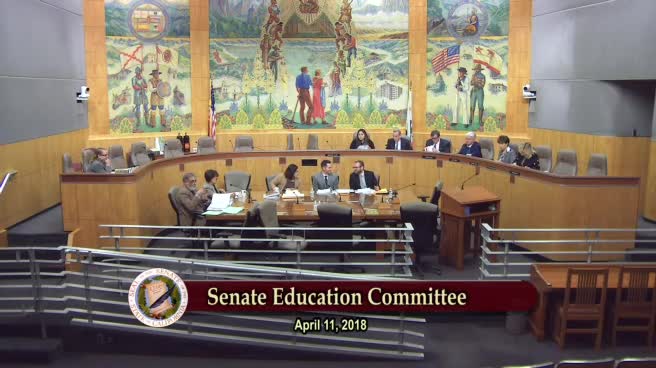
| Apr 11, 2018 | Do pass as amended, but first amend, and re-refer to the Committee on [Appropriations] | Senate Standing Committee on Education |
Passed |
This list shows positions taken on this bill by organizations on the date displayed, which is linked to the original source.
Positions by individuals are not included.
|
Organization
|
Position
|
Date
|
|---|---|---|
| California Chamber Of Commerce | ** Support | May 29, 2018 |
| Foundation for Excellence in Education | * Support | Apr 11, 2018 |
| IBM Corporation | * Support | Apr 11, 2018 |
| Northrop Grumman | ** Support | May 29, 2018 |
| San Gabriel Valley Economic Partnership | ** Support | May 29, 2018 |
| San Jose-Evergreen Community College District | ** Support | May 29, 2018 |
Office of Senate Floor Analyses (916) 651-1520 Fax: (916) 327-4478 | SB |
THIRD READING
Bill No: SB 1243
Amended: 5/25/18
SENATE EDUCATION COMMITTEE: 6-0, 4/11/18
AYES: Allen, Wilk, Galgiani, Leyva, Pan, Vidak
SENATE APPROPRIATIONS COMMITTEE: 7-0, 5/25/18
AYES: Lara, Bates, Beall, Bradford, Hill, Nielsen, Wiener
DIGEST:
This bill establishes, contingent on an appropriation for its purposes, the California State Pathways in Technology (CA P-TECH) Program as a public-private partnership for purposes of preparing California students for high-skill jobs of the future in technology, manufacturing, health care, and finance.
Existing law:
1) States legislative findings and declarations that middle college high schools (MCHSs) have proven to be a highly effective collaborative effort between local school districts and community colleges, that the goal of the MCHS is to select at-risk high school students who are performing below their academic potential and place them in an alternative high school located on a community college campus in order to reduce the likelihood that they will drop out of school before graduation. (Education Code § 11300)
2) Requires each MCHS to be structured as a broad-based, comprehensive instructional program focusing on college preparatory and school-to-work curricula, career education, work experience, community service, and support and motivational activities. (EC § 11300)
3) Authorizes the specific design of an MCHS to vary depending on the circumstances of the community college or school district, but requires the basic elements of the MCHS to include, but not be limited to, the following:
a) A curriculum that focuses on college and career preparation.
b) A reduced adult-student ratio.
c) Flexible scheduling to allow for work internships, community service experience, and interaction with community college student role models.
d) Opportunities for experiential internships, work apprenticeships, and community service. (EC § 11300)
4) Requires the California Community Colleges (CCC) and the California Department of Education (CDE) to collaborate with each other and with their respective local community colleges and local school districts to ensure the continued success of existing MCHSs and to promote the establishment of new MCHSs, by doing at least the following:
a) With respect to existing MCHSs, monitor the ongoing viability of the programs, assist with the resolution of policy or financial issues that may arise, and track specific outcomes for students and schools, including attendance rates, graduation rates, college entrance and attendance rates, and employment rates for those students who do not attend college.
b) With respect to the promotion of new MCHSs, respond to inquiries from school districts and community colleges about the establishment of MCHS, advise local entities on startup costs and ongoing funding mechanisms for the program, consult with local entities on the organizational structure of, and curriculum development for, the MCHSs, facilitate the completion of any necessary facilities improvements, communicate with local entities at least biannually about the existence of MCHSs and the availability of CDE and CCC resources, if any, to assist with the establishment of MCHSs. (EC § 11301)
5) States legislative findings and declarations that early college high schools (ECHSs) are innovative partnerships between charter or noncharter public secondary schools and a local community college, the California State University, or the University of California that allow pupils to earn a high school diploma and up to two years of college credit in four years or less; that ECHSs are small, autonomous schools that blend high school and college into a coherent educational program; and that in early college high schools, pupils begin taking college courses as soon as they demonstrate readiness and the college credit earned may be applied toward completing an associate or bachelor’s degree, transfer to a four-year university, or obtaining a skills certificate. (EC § 11302)
6) Authorizes the governing board of a school district, upon recommendation of the principal of a pupil’s school and with parental consent, to authorize a student to concurrently enroll in a community college during any session or term to undertake one or more courses of instruction, but prohibits a principal from recommending more than five percent of the total number of students in the same grade level for community college summer session attendance. (Education Code § 48800 et seq.)
7) Establishes the California Career Pathways Trust as a state education and economic and workforce development initiative with the goal of preparing pupils in kindergarten and grades 1 to 12, inclusive, to successfully transition to postsecondary education and training and to employment in high-skill, high-wage, and high-growth or emerging sectors of the state’s economy. (EC § 53010 et seq.)
8) Authorizes the governing board of a community college district to enter into a College and Career Access Pathways partnership with the governing board of a school district for the purpose of offering or expanding dual enrollment opportunities for students who may not already be college bound or who are underrepresented in higher education, with the goal of developing seamless pathways from high school to community college for career technical education or preparation for transfer, improving high school graduation rates, or helping high school pupils achieve college and career readiness. (EC § 76004)
This bill establishes, contingent on an appropriation for its purposes, the CA P-TECH Program as a public-private partnership for purposes of preparing California students for high-skill jobs of the future in technology, manufacturing, healthcare, and finance. Specifically, this bill:
1) Establishes the CA P-TECH Program as a public-private partnership for purposes of preparing California students for high-skill jobs of the future in technology, manufacturing, healthcare, and finance.
2) Requires the CA P-TECH Program model to deliver five core benefits to students:
a) A rigorous, relevant, and cost-free education in grades 9 to 14, inclusive, focused on the knowledge and skills that students need for science, technology, engineering, and mathematics careers.
b) Workplace learning that includes mentoring by industry professionals, worksite visits, speakers, and internships.
c) Intensive, individualized academic support by both K–12 and postsecondary faculty within an extended academic year or school day that enables students to progress through the program at their own pace.
d) An opportunity to earn an Associate in Science degree in a high-tech field or an Associate Degree for Transfer in a high-tech field.
e) A commitment to students who complete the program to be first in line for a job with participating business partners following completion of the program.
3) Requires the CA P-TECH program to accomplish all of the following:
a) Develop programs of study in high-wage, high-skill, and high-demand career areas.
b) Align school, college, and community systems in the programs of study developed under this part.
c) Support strong academic performance by program participants.
d) Promote informed and appropriate career choices and preparation.
e) Ensure that employers in key technical fields have access to a talented and skilled workforce.
4) Requires that students participating in the programs of study developed pursuant to CA P-TECH to be able to earn college course credit toward an associate degree.
5) Requires career pathways to commence in grade 9, include workplace learning, and high school and postsecondary coursework, and provide a seamless sequence of study, extending through two years of postsecondary career and technical education that culminate in the award of an Associate in Science degree in a high-tech field or an Associate Degree for Transfer in a high-tech field.
6) States the intent of the Legislature that the CA P-TECH Program be funded through an appropriation in the annual Budget Act or in another statute.
7) Specifies that its provisions shall be implemented only upon the enactment of an appropriation in the annual budget Act or another statute for its purposes.
Comments
- Need for the bill. According to the author’s office, “As technological progress continues, California must develop educational programs to keep pace with the modern world. California must prepare students for high skill jobs and emerging job markets. Currently, California does not have a specific institution in place to achieve this goal. P-Tech was initially launched in New York City in 2010. The program is offered for students in 9th grade through community college. P-Tech students will be able to take core courses in English, science, mathematics, and the arts. In addition, students will work toward an associate degree in applied science in a high tech field. The CA P-TECH program will offer students a rigorous, relevant, and cost-free education in grades 9-14 focused on the knowledge and skills that students need for science, technology, engineering, and mathematics (STEM) careers. Students will have the opportunity to experience workplace learning from industry professionals. CA P-TECH will provide students intensive, individualized academic support.”
- Existing similar opportunities? As identified above, existing law provides multiples opportunities for dual enrollment in high school and community college and provides for a variety of different programs that link educational programming, particularly career technical education programming, from the high school level to the community college level. Some of the examples include MCHSs, ECHSs, California Career Pathways Trust (CCPT), and the College and Career Access Pathways Partnerships (CCAP).
ECHSs and MCHSs
ECHSs are designed for young people who are underrepresented in postsecondary education, including students who have not had access to the academic preparation needed to meet college readiness standards, students for whom the cost of college is prohibitive, students of color, first-generation college-goers, and English language learners. MCHS is a collaborative program that enables high-potential, "at-risk" students to obtain a high school education while concurrently receiving direct access to college courses and services. High school students attend classes at a community college and earn credit toward a high school diploma while having the opportunity to concurrently take college courses and to receive more intensive counseling and administrative attention. According to Job for the Future, there are currently 40 ECHS in California, of which 92 percent are partnered with a community college. According to the Chancellor’s Office, nine community colleges offer recognized middle college programs. These programs are subject to the same conditions that exist for special admit students, with the exception that MCHS students are exempt from the low enrollment priority provisions for classes necessary for completion of their programs
CCPT
Funding for CCPT was $500 million across the 2013 and 2014 Budget Acts. According to the CDE, the initial award of $248.3 million in competitive CCPT grants went to 39 fiscal agents including kindergarten through grade twelve local educational agencies (LEAs) and community college districts representing a variety of consortia throughout the state. These grants involve the participation of and partnerships with approximately 647 LEAs, including K–12 schools, adult schools, and charter schools; 85 community colleges; and 845 business partners” and then “40 round two CCPT grants to consortia around the state. These grants involve the participation of and partnerships with approximately 627 LEAs, including K–12 schools, adult schools, and charter schools; 89 community colleges; and 1,008 business partners.”
A specific example of a CCPT is the Silicon Valley Career Pathways Project, a joint project between the San Jose-Evergreen Community College District, the Workforce Institute, and the Metropolitan Education District. It involves nine community colleges, 10 school districts, three alternative and charter schools, three California State Universities, three Workforce Investment Boards, the Deputy Sector Navigators, and nearly 30 employers and provides five industry sectors: public service, medical science, engineering, computer information, and advanced manufacturing. Under the project, once a student completes a specific program, or even while working towards completion, he or she may be selected to participate in a company internship. This hands-on experience increases a student’s chances of immediate employment after graduation.
CCAP Partnerships
Another specific example of an existing program is the CCAP Partnership between Culver City Unified School District and West Los Angeles College “to offer college and career access pathways through dual credit courses in computer science, technical production for theater, and architecture. These courses, to be provided by West at Culver City High School and Culver City Park High School, fulfill both diploma and college degree requirements. Additionally, the students will be taking these college classes tuition-free.”
While these types of programs may not be limited solely to technology, manufacturing, healthcare, and finance, nor all result in an associate in science degree, they do underscore the efforts undertaken to align K-12 and community college education opportunities, especially in career areas that are in high demand and that do not require baccalaureate degrees.
FISCAL EFFECT: Appropriation: Fiscal Com.: Local:
According to the Senate Appropriations Committee, “While the bill does not include an appropriation nor does it specify any funding parameters such as the maximum grant size or the number of projects to be funded, it could result in one-time Proposition 98 General Fund cost pressure of between $15 million to $21 million. A precise amount would depend on the allowable grant size as well as the number of grantees to be selected. To the extent that state funding is provided for purposes of this measure, the Chancellor’s Office anticipates ongoing General Fund costs of up to $75,000 to fund one half-time position necessary to implement a competitive grant program and to provide ongoing technical assistance.”
IBM (source)
California Chamber of Commerce
Northrop Grumman
San Gabriel Valley Economic Partnership
San José-Evergreen Community College District
OPPOSITION: (Verified 5/25/18)
5/29/18 19:12:58
**** END ****
SENATE COMMITTEE ON APPROPRIATIONS
Senator Ricardo Lara, Chair
2017 - 2018 Regular Session
SB 1243 (Portantino) - Public postsecondary education: The California State Pathways in Technology Program
Version: April 18, 2018 | Policy Vote: ED. 6 - 0 |
Urgency: No | Mandate: No |
Hearing Date: May 25, 2018 | Consultant: Lenin Del Castillo |
Bill Summary:
This bill establishes the California State Pathways in Technology (P-TECH) Program as a public-private partnership for purposes of preparing California students for high-skill jobs of the future in technology, manufacturing, health care, and finance.
*********** ANALYSIS ADDENDUM – SUSPENSE FILE ***********
The following information is revised to reflect amendments
adopted by the committee on May 25, 2018
Fiscal Impact:
- While the bill does not include an appropriation nor does it specify any funding parameters such as the maximum grant size or the number of projects to be funded, it could result in one-time Proposition 98 General Fund cost pressure of between $15 million to $21 million. A precise amount would depend on the allowable grant size as well as the number of grantees to be selected.
- To the extent that state funding is provided for purposes of this measure, the Chancellor’s Office anticipates ongoing General Fund costs of up to $75,000 to fund one half-time position necessary to implement a competitive grant program and to provide ongoing technical assistance.
Committee Amendments:
Provide that the program shall only be implemented contingent upon an appropriation in the annual Budget Act or another statute for that purpose.
-- END --
SENATE COMMITTEE ON
Senator Ricardo Lara, Chair
2017 - 2018 Regular Session
SB 1243 (Portantino) - Public postsecondary education: The California State Pathways in Technology Program
Version: | Policy Vote: |
Urgency: | Mandate: |
Hearing Date: | Consultant: |
This bill meets the criteria for referral to the Suspense File.
Bill Summary:
This bill establishes the California State Pathways in Technology (P-TECH) Program as a public-private partnership for purposes of preparing California students for high-skill jobs of the future in technology, manufacturing, health care, and finance.
Fiscal Impact:
- While the bill does not include an appropriation nor does it specify any funding parameters such as the maximum grant size or the number of projects to be funded, this bill could result in one-time Proposition 98 General Fund costs of between $15 million to $21 million. A precise amount would depend on the allowable grant size as well as the number of grantees to be selected.
- To the extent that state funding is provided for purposes of this measure, the Chancellor’s Office anticipates ongoing General Fund costs of up to $75,000 to fund one half-time position necessary to implement a competitive grant program and to provide ongoing technical assistance.
Background:
Existing law requires each middle college high school (MCHS) to be structured as a broad-based, comprehensive instructional program focusing on college preparatory and school-to-work curricula, career education, work experience, community service, and support and motivational activities. Existing law authorizes the specific design of a MCHS to vary depending on the circumstances of the community college or school district, but requires the basic elements of the MCHS to include, but not be limited to, the following: a curriculum that focuses on college and career preparation; a reduced adult-student ratio; flexible scheduling to allow for work internships, community service experience, and interaction with community college student role models, and opportunities for experiential internships, work apprenticeships, and community service.
Existing law also requires the California Community Colleges (CCC) and the California Department of Education (CDE) to collaborate with each other and with their respective local community colleges and local school districts to ensure the continued success of existing middle college high schools and to promote the establishment of new middle college high schools, by doing at least the following:
- With respect to existing Middle College High Schools (MCHS), monitor the ongoing viability of the programs, assist with the resolution of policy or financial issues that may arise, and track specific outcomes for students and schools, including attendance rates, graduation rates, college entrance and attendance rates, and employment rates for those students who do not attend college.
- With respect to the promotion of new MCHS, respond to inquiries from school districts and community colleges about the establishment of MCHS, advise local entities on startup costs and ongoing funding mechanisms for the program, consult with local entities on the organizational structure of, and curriculum development for, the MCHS, facilitate the completion of any necessary facilities improvements, communicate with local entities at least biannually about the existence of MCHS and the availability of CDE and CCC resources, if any, to assist with the establishment of MCHS.
Existing law authorizes the governing board of a school district, upon recommendation of the principal of a pupil’s school and with parental consent, to authorize a student to concurrently enroll in a community college during any session or term to undertake one or more courses of instruction, but prohibits a principal from recommending more than 5 percent of the total number of students in the same grade level for community college summer session attendance.
Proposed Law:
This bill establishes the California State Pathways in Technology (P-TECH) Program as a public-private partnership for purposes of preparing California students for high-skill jobs of the future in technology, manufacturing, healthcare, and finance.
This bill requires the P-TECH Program to deliver the following five core benefits to students:
- A rigorous, relevant, and cost-free education in grades 9 to 14, inclusive, focused on the knowledge and skills that students need for science, technology, engineering, and mathematics (STEM) careers.
- Workplace learning that includes mentoring by industry professionals, worksite visits, speakers, and internships.
- Intensive, individualized academic support by both K–12 and postsecondary faculty within an extended academic year or school day that enables students to progress through the program at their own pace.
- An opportunity to earn an associate in science degree in a high-tech field or an associate degree for transfer in a high-tech field.
- A commitment to students who complete the program to be first in line for a job with participating business partners following completion of the program.
Further, the bill requires the P-TECH program to accomplish all of the following:
- Develop programs of study in high-wage, high-skill, and high-demand career areas.
- Align school, college, and community systems in the programs of study developed under this part.
- Support strong academic performance by program participants.
- Promote informed and appropriate career choices and preparation.
- Ensure that employers in key technical fields have access to a talented and skilled workforce.
This bill requires that participating students be able to earn college course credit toward an associate degree. The bill also provides that career pathways commence in grade 9, include workplace learning, and high school and postsecondary coursework, and provide a seamless sequence of study, extending through two years of postsecondary career and technical education that culminate in the award of an Associate of Applied Science degree.
Related Legislation:
AB 288 (Holden, Chapter 618, Statutes of 2015) authorizes the governing board of a community college district to enter into a College and Career Access Pathways (CCAP) partnership with the governing board of a school district, in its immediate service area, with the goal of developing seamless pathways from high school to community college in order to offer or expand dual enrollment opportunities for students who may not be college bound or who are underrepresented in higher education.
AB 86 (Chapter 48, Statutes of 2013) created the California Career Pathway Trust (CCPT). The 2013 Budget Act provided $250 million in Proposition 98 General Fund for the Superintendent of Public Instruction to award one-time regional and local implementation grants to school districts, county offices, charter schools and community colleges for the CCPT program.
Staff Comments:
This bill states the intent of the Legislature that the P-TECH Program be funded through an appropriation in the annual Budget Act or in another statute. However, the bill does not include an appropriation nor does it specify any parameters regarding minimum grant amounts or terms, number of grants to be awarded, selection criteria, or whether a competitive grant process would be utilized. Absent these details, the cost of the program could vary significantly. Based on the P-Tech program that currently exists in New York which this bill appears to duplicate, the grant amounts could be up to $3 million for each grantee over a seven-year period. Assuming a cohort size of between five and seven programs, this bill could result in one-time Proposition 98 General Fund costs of between $15 million to $21 million. A precise amount would depend on the allowable grant size as well as the number of projects to be selected which are not specified in the bill.
-- END --
SENATE COMMITTEE ON EDUCATION
Senator Benjamin Allen, Chair
2017 - 2018 Regular
Bill No: Hearing Date: April 11, 2018
Author: | |||
Version: |
| ||
Urgency: | Fiscal: | ||
Consultant: | Brandon Darnell | ||
Subject:
SUMMARY
This bill establishes the California State Pathways in Technology (CA P-TECH) Program as a public-private partnership for purposes of preparing California students for high-skill jobs of the future in technology, manufacturing, health care, and finance.
BACKGROUND
Existing law:
1) State’s Legislative findings and declarations that middle college high schools (MCHS) have proven to be a highly effective collaborative effort between local school districts and community colleges, that the goal of the MCHS is to select at-risk high school students who are performing below their academic potential and place them in an alternative high school located on a community college campus in order to reduce the likelihood that they will drop out of school before graduation. (Education Code § 11300)
2) Requires each middle college high school to be structured as a broad-based, comprehensive instructional program focusing on college preparatory and school-to-work curricula, career education, work experience, community service, and support and motivational activities. (EC § 11300)
3) Authorize the specific design of a MCHS to vary depending on the circumstances of the community college or school district, but requires the basic elements of the MCHS to include, but not be limited to, the following:
a) A curriculum that focuses on college and career preparation.
b) A reduced adult-student ratio.
c) Flexible scheduling to allow for work internships, community service experience, and interaction with community college student role models.
d) Opportunities for experiential internships, work apprenticeships, and community service. (EC § 11300)
4) Requires the California Community Colleges (CCC) and the California Department of Education (CDE) shall collaborate with each other and with their respective local community colleges and local school districts to ensure the continued success of existing middle college high schools and to promote the establishment of new middle college high schools, by doing at least the following:
a) With respect to existing Middle College High Schools (MCHS), monitor the ongoing viability of the programs, assist with the resolution of policy or financial issues that may arise, and track specific outcomes for students and schools, including attendance rates, graduation rates, college entrance and attendance rates, and employment rates for those students who do not attend college.
b) With respect to the promotion of new MCHS, respond to inquiries from school districts and community colleges about the establishment of MCHS, advise local entities on startup costs and ongoing funding mechanisms for the program, consult with local entities on the organizational structure of, and curriculum development for, the MCHS, facilitate the completion of any necessary facilities improvements, communicate with local entities at least biannually about the existence of MCHS and the availability of CDE and CCC resources, if any, to assist with the establishment of MCHS. (EC § 11301)
5) States Legislative finds and declarations that Early College High Schools (ECHS) are innovative partnerships between charter or noncharter public secondary schools and a local community college, the California State University, or the University of California that allow pupils to earn a high school diploma and up to two years of college credit in four years or less; that ECHS are small, autonomous schools that blend high school and college into a coherent educational program; and that in early college high schools, pupils begin taking college courses as soon as they demonstrate readiness and the college credit earned may be applied toward completing an associate or bachelor’s degree, transfer to a four-year university, or obtaining a skills certificate. (EC § 11302)
6) Authorizes the governing board of a school district, upon recommendation of the principal of a pupil’s school and with parental consent, to authorize a student to concurrently enroll in a community college during any session or term to undertake one or more courses of instruction, but prohibits a principal from recommending more than 5 percent of the total number of students in the same grade level for community college summer session attendance. (Education Code § 48800, et seq.)
7) Establishes the California Career Pathways Trust as a state education and economic and workforce development initiative with the goal of preparing pupils in kindergarten and grades 1 to 12, inclusive, to successfully transition to postsecondary education and training and to employment in high-skill, high-wage, and high-growth or emerging sectors of the state’s economy. (EC § 53010, et seq.)
8) Authorizes the governing board of a community college district to enter into a College and Career Access Pathways partnership with the governing board of a school district for the purpose of offering or expanding dual enrollment opportunities for students who may not already be college bound or who are underrepresented in higher education, with the goal of developing seamless pathways from high school to community college for career technical education or preparation for transfer, improving high school graduation rates, or helping high school pupils achieve college and career readiness. (EC § 76004)
ANALYSIS
This bill establishes the California State Pathways in Technology (CA P-TECH) Program as a public-private partnership for purposes of preparing California students for high-skill jobs of the future in technology, manufacturing, healthcare, and finance.
Specifically, this bill:
1) Establishes the CA P-TECH Program as a public-private partnership for purposes of preparing California students for high-skill jobs of the future in technology, manufacturing, healthcare, and finance.
2) Requires the CA P-TECH Program model to deliver five core benefits to students:
a) A rigorous, relevant, and cost-free education in grades 9 to 14, inclusive, focused on the knowledge and skills that students need for science, technology, engineering, and mathematics (STEM) careers.
b) Workplace learning that includes mentoring by industry professionals, worksite visits, speakers, and internships.
c) Intensive, individualized academic support by both K–12 and postsecondary faculty within an extended academic year or school day that enables students to progress through the program at their own pace.
d) An opportunity to earn an Associate of Applied Science degree in a high-tech field.
e) A commitment to students who complete the program to be first in line for a job with participating business partners following completion of the program.
3) Requires the CA P-TECH program to accomplish all of the following:
a) Develop programs of study in high-wage, high-skill, and high-demand career areas.
b) Align school, college, and community systems in the programs of study developed under this part.
c) Support strong academic performance by program participants.
d) Promote informed and appropriate career choices and preparation.
e) Ensure that employers in key technical fields have access to a talented and skilled workforce.
4) Requires that students participating in the programs of study developed pursuant to California State Pathways in Technology (CA P-TECH) to be able to earn college course credit toward an associate degree.
5) Requires career pathways to commence in grade 9, include workplace learning, and high school and postsecondary coursework, and provide a seamless sequence of study, extending through two years of postsecondary career and technical education that culminate in the award of an Associate of Applied Science degree.
6) States the intent of the Legislature that the CA P-TECH Program be funded through an appropriation in the annual Budget Act or in another statute.
STAFF COMMENTS
- Need for the bill. According to the author’s office, “As technological progress continues, California must develop educational programs to keep pace with the modern world. California must prepare students for high skill jobs and emerging job markets. Currently, California does not have a specific institution in place to achieve this goal. P-Tech was initially launched in New York City in 2010. The program is offered for students in 9th grade through community college. P-Tech students will be able to take core courses in English, science, mathematics, and the arts. In addition, students will work toward an associate degree in applied science in a high tech field. The CA P-TECH program will offer students a rigorous, relevant, and cost-free education in grades 9-14 focused on the knowledge and skills that students need for science, technology, engineering, and mathematics (STEM) careers. Students will have the opportunity to experience workplace learning from industry professionals. CA P-TECH will provide students intensive, individualized academic support.”
- Existing similar opportunities? As identified above, existing law provides multiples opportunities for dual enrollment in high school and community college and provides for a variety of different programs that link educational programming, particularly career technical education programming, from the high school level to the community college level. Some of the examples include middle college high schools, early college high schools, California Career Pathways Trust the College and Career Access Pathways Partnerships.
Early College High Schools (ECHS) and Middle College High Schools (MCHS):
ECHS are designed for young people who are underrepresented in postsecondary education, including students who have not had access to the academic preparation needed to meet college readiness standards, students for whom the cost of college is prohibitive, students of color, first-generation college-goers, and English language learners. Middle College High Schools (MCHS) is a collaborative program that enables high-potential, "at-risk" students to obtain a high school education while concurrently receiving direct access to college courses and services. High school students attend classes at a community college and earn credit toward a high school diploma while having the opportunity to concurrently take college courses and to receive more intensive counseling and administrative attention. According to Job for the Future, which launched Early College High Schools (ECHS) in 2002, there are currently 40 ECHS in California, of which 92 percent are partnered with a community college. According to the Chancellor’s Office, 9 community colleges offer recognized middle college programs. These programs are subject to the same conditions that exist for special admit students, with the exception that MCHS students are exempt from the low enrollment priority provisions for classes necessary for completion of their programs
CALIFORNIA CAREER PATHWAYS TRUST (CCPT):
Funding for CCPT was $500 million across the 2013 and 2014 Budget Acts. According to the California Department of Education, the initial award of $248.3 million in competitive CCPT grants went to 39 fiscal agents including kindergarten through grade twelve local educational agencies (LEAs) and community college districts representing a variety of consortia throughout the state. These grants involve the participation of and partnerships with approximately 647 LEAs, including K–12 schools, adult schools, and charter schools; 85 community colleges; and 845 business partners” and then “40 round two CCPT grants to consortia around the state. These grants involve the participation of and partnerships with approximately 627 LEAs, including K–12 schools, adult schools, and charter schools; 89 community colleges; and 1,008 business partners.”
A specific example of a CCPT is the Silicon Valley Career Pathways Project, a joint project between the San Jose-Evergreen Community College District, the Workforce Institute, and the Metropolitan Education District. It involves 9 community colleges, 10 school districts, 3 alternative and charter schools, 3 California State Universities, 3 Workforce Investment Boards, the Deputy Sector Navigators, and nearly 30 employers and provides 5 industry sectors: public service, medical science, engineering, computer information, and advanced manufacturing. Under the project, once a student completes a specific program, or even while working towards completion, he or she may be selected to participate in a company internship. This hands-on experience increases a student’s chances of immediate employment after graduation.
College and Career Access Pathways (CCAP) Partnerships:
Another specific example of an existing program is the CCAP Partnership between Culver City Unified School District and West Los Angeles College “to offer college and career access pathways through dual credit courses in computer science, technical production for theater, and architecture. These courses, to be provided by West at Culver City High School and Culver City Park High School, fulfill both diploma and college degree requirements. Additionally, the students will be taking these college classes tuition-free.”
While these types of programs may not be limited solely to technology, manufacturing, healthcare, and finance, nor all result in an associate in science degree, they do underscore the efforts undertaken to align K-12 and community college education opportunities, especially in career areas that are in high demand and that do not require baccalaureate degrees. The committee may wish to consider whether these existing dual/concurrent enrollment structures provide sufficient opportunities for school districts and community college districts to establish programs or partnerships that largely accomplish goals put forward by this bill.
- Technical amendment. This bill requires the California State Pathways in Technology (CA P-TECH) Program model to deliver five core benefits, including an opportunity to earn an Associate of Applied Science degree in a high-tech field. However, California community colleges (CCC) are only authorized to issue the following types associate degrees:
a) Associate in arts degree.
b) Associate in science degree.
c) Associate degrees for transfer.
Staff recommends a technical amendment in paragraph (5) of subdivision (b) of Section 88670, as follows:
“(5) An opportunity to earn an Associate of Applied Science associates in science degree in a high-tech field or an associate degree for transfer in a high-tech field.”
4) Previous legislation. AB 288 (Holden, 2015) authorizes the governing board of a community college district to enter into a College and Career Access Pathways (CCAP) partnership with the governing board of a school district, in its immediate service area, with the goal of developing seamless pathways from high school to CCC in order to offer or expand dual enrollment opportunities for students who may not be college bound or who are underrepresented in higher education; and, outlines the conditions that must be met prior to the adoption of the CCAP agreement.
AB 86 (Chapter 48, Statutes of 2013) created the California Career Pathway Trust (CCPT). The 2013 Budget Act provided $250 million in Proposition 98 General Fund for the Superintendent of Public Instruction to award one-time regional and local implementation grants to school districts, county offices, charter schools and community colleges for the CCPT program.
SB 858, Chapter 32, Statutes of 2014 appropriated an additional $250 million for a second round of CCPT grant awards.
SUPPORT
San José-Evergreen Community College District
OPPOSITION
None received
-- END --
Discussed in Hearing
View Older Hearings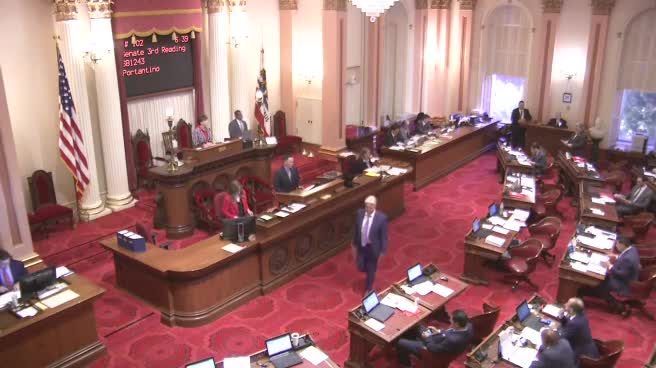
Bill Author

Bill Co-Author(s):
