SB 183: Educational equity: immigration status.
- Session Year: 2017-2018
- House: Senate
- Latest Version Date: 2018-09-26
Existing law, the Equity in Higher Education Act, states the policy of the State of California to afford all persons, regardless of their disability, gender, gender identity, gender expression, nationality, race or ethnicity, religion, sexual orientation, or any other specified characteristic, equal rights and opportunities in postsecondary educational institutions of the state, and states that the purpose of related existing law is to prohibit acts that are contrary to that policy and to provide remedies therefor. Existing law prohibits a person from being subjected to discrimination on those bases and states that each characteristic includes a perception that the person has that characteristic or that the person is associated with a person who has, or is perceived to have, that characteristic.
This bill would expressly reference immigration status in the specified characteristics for purposes of those provisions. The bill would specify that nothing in the Equity in Higher Education Act shall be construed to require a postsecondary educational institution to offer admission or student financial aid to a nonimmigrant alien, as specified, except as provided, and that nothing in the act shall be construed to change a students eligibility for state financial aid.
Existing law prohibits specified conduct inside public buildings owned and occupied, or leased and occupied, by the state. Existing law provides that a judicial officer has the power to preserve and enforce order in judicial proceedings and to compel obedience to judicial orders, as specified.This bill would clarify the power of judicial officers to prevent activities that threaten access to courthouses, including by protecting the privilege from arrest. The bill would provide that no person shall be subject to civil arrest or service of process while attending, or going to or from, a courthouse or court proceeding. The bill would provide that a person who knowingly executes or facilitates an arrest or service of process at a courthouse or court proceeding shall be liable for contempt of court, false imprisonment, or both. By expanding the scope of an existing crime, this bill would impose a state-mandated local program.The California Constitution requires the state to reimburse local agencies and school districts for certain costs mandated by the state. Statutory provisions establish procedures for making that reimbursement.This bill would provide that no reimbursement is required by this act for a specified reason.Existing law prohibits specified conduct inside public buildings owned and occupied, or leased and occupied, by the state. Existing law provides that a judicial officer has the power to preserve and enforce order in judicial proceedings and to compel obedience to judicial orders, as specified.
This bill would prohibit federal immigration enforcement agents, officers, or personnel from entering a building owned and occupied, or leased and occupied, by the state, a public school, or a campus of the California Community Colleges, to perform surveillance, effectuate an arrest, or question an individual therein, without a valid federal warrant, and would limit the activities therein of federal immigration enforcement agents, officers, or personnel with a warrant to the individual who is the subject of the warrant. clarify the power of judicial officers to prevent activities that threaten access to courthouses, including by protecting the privilege from arrest. The bill would provide that no person shall be subject to civil arrest or service of process while attending, or going to or from, a courthouse or court proceeding. The bill would provide that a person who knowingly executes or facilitates an arrest or service of process at a courthouse or court proceeding shall be liable for contempt of court, false imprisonment, or both. By expanding the scope of an existing crime, this bill would impose a state-mandated local program.
The California Constitution requires the state to reimburse local agencies and school districts for certain costs mandated by the state. Statutory provisions establish procedures for making that reimbursement.
This bill would provide that no reimbursement is required by this act for a specified reason.
Existing law prohibits specified conduct inside public buildings owned and occupied, or leased and occupied by the state.
This bill would prohibit federal immigration enforcement agents, officers, or personnel from entering a building owned and occupied, or leased and occupied, by the state, a public school, or a campus of the California Community Colleges, to perform surveillance, effectuate an arrest, or question an individual therein, without a valid federal warrant. warrant, and would limit the activities therein of federal immigration enforcement agents, officers, or personnel with a warrant to the individual who is the subject of the warrant.
Existing law prohibits specified conduct inside public buildings owned and occupied, or leased and occupied by the state.
This bill would prohibit federal immigration enforcement agents, officers, or personnel from entering a building owned and occupied, or leased and occupied, by the state, a public school, or a campus of the California Community Colleges, to perform surveillance, effectuate an arrest, or question an individual therein, without a valid federal warrant.
The Marine Life Protection Act (MLPA) establishes the Marine Life Protection Program to reexamine and redesign Californias marine protected area system. Existing law requires the Department of Fish and Wildlife to prepare, and the Fish and Game Commission to adopt, a master plan that guides the adoption and implementation of the program, including recommended alternative networks of marine protected areas. Under the MLPA, the commission is authorized to regulate commercial and recreational fishing and any other taking of marine species in marine protected areas.The Marine Managed Areas Improvement Act (MMAIA) establishes a uniform classification system for state marine managed areas, prescribing 6 classifications for designating managed areas in the marine and estuarine environments, including marine protected areas. Under the MMAIA, marine protected areas include a state marine reserve, a state marine park, and a state marine conservation area. The MMAIA prescribes restrictions and allowable uses for each classification. In a state marine park, it is unlawful to injure, damage, take, or possess any living or nonliving marine resource for commercial exploitation purpose. Also, in a state marine park, any human use that would compromise protection of the species of interest, natural community or habitat, or geological, cultural, or recreational features may be restricted by the designating entity or managing agency. In a state marine conservation area, it is unlawful to injure, damage, take, or possess any living, geological, or cultural marine resource for commercial or recreational purposes, or a combination of commercial and recreational purposes, that the designating entity or managing agency determines would compromise protection of the species of interest, natural community, habitat, or geological features.Existing law requires that any proposals for marine protected areas made after January 1, 2002, follow the guidelines set forth in the MMAIA and that specified areas and reserves be designated, deleted, or modified by the commission pursuant to the MMAIA, and the restrictions and allowable uses applicable to those areas be as set forth in the MMAIA. Existing law establishes the Native American Heritage Commission and vests the commission with specified powers and duties. This bill would authorize a California Native American tribe to submit a request to the Native American Heritage Commission to approve the tribes record of aboriginal use of a specified area of the marine environment for subsistence and cultural purposes. Upon approval by the Native American Heritage Commission of the tribes record of aboriginal use, the bill would authorize the tribe to request, and would require the Fish and Game Commission to issue, an exemption that authorizes members and lineal descendants of the tribe to engage in subsistence fishing and cultural gathering and use of live plants and dead animals within any state marine conservation area or state marine park located in the area described in the approval where the aboriginal use occurred.The Marine Life Protection Act (MLPA) establishes the Marine Life Protection Program to reexamine and redesign Californias marine protected area system. Existing law requires the Department of Fish and Wildlife to prepare, and the Fish and Game Commission to adopt, a master plan that guides the adoption and implementation of the program, including recommended alternative networks of marine protected areas. Under the MLPA, the commission is authorized to regulate commercial and recreational fishing and any other taking of marine species in marine protected areas.
The Marine Managed Areas Improvement Act (MMAIA) establishes a uniform classification system for state marine managed areas, prescribing 6 classifications for designating managed areas in the marine and estuarine environments, including marine protected areas. Under the MMAIA, marine protected areas include a state marine reserve, a state marine park, and a state marine conservation area. The MMAIA prescribes restrictions and allowable uses for each classification. In a state marine park, it is unlawful to injure, damage, take, or possess any living or nonliving marine resource for commercial exploitation purpose. Also, in a state marine park, any human use that would compromise protection of the species of interest, natural community or habitat, or geological, cultural, or recreational features may be restricted by the designating entity or managing agency. In a state marine conservation area, it is unlawful to injure, damage, take, or possess any living, geological, or cultural marine resource for commercial or recreational purposes, or a combination of commercial and recreational purposes, that the designating entity or managing agency determines would compromise protection of the species of interest, natural community, habitat, or geological features.
Existing law requires that any proposals for marine protected areas made after January 1, 2002, follow the guidelines set forth in the MMAIA and that specified areas and reserves be designated, deleted, or modified by the commission pursuant to the MMAIA, and the restrictions and allowable uses applicable to those areas be as set forth in the MMAIA.
Existing law establishes the Native American Heritage Commission and vests the commission with specified powers and duties.
This bill would authorize a California Native American tribe to submit a request to the Native American Heritage Commission to approve the tribes record of aboriginal use of a specified area of the marine environment for subsistence and cultural purposes. Upon approval by the Native American Heritage Commission of the tribes record of aboriginal use, the bill would authorize the tribe to request, and would require the Fish and Game Commission to issue, an exemption that authorizes members and lineal descendants of the tribe to engage in subsistence fishing and cultural gathering and use of live plants and dead animals within any state marine conservation area or state marine park located in the area described in the approval where the aboriginal use occurred.
It is the policy of the State of California to afford all persons, regardless of disability, gender, gender identity, gender expression, nationality, race or ethnicity, religion, sexual orientation, or any other basis that is contained in the prohibition of hate crimes set forth in subdivision (a) of Section 422.6 of the Penal Code, including immigration status, equal rights and opportunities in the postsecondary educational institutions of the state. The purpose of this chapter is to prohibit acts that are contrary to that policy and to provide remedies for the commission of those prohibited acts.
SEC. 2.Section 66260.6 of the Education Code is amended to read:66260.6.Disability, gender, gender identity, gender expression, nationality, race or ethnicity, religion, sexual orientation, or any other characteristic that is contained in the definition of hate crimes set forth in Section 422.55 of the Penal Code, including immigration status, includes a perception that the person has any of those characteristics or that the person is associated with a person who has, or is perceived to have, any of those characteristics.
SEC. 3.Section 66270 of the Education Code is amended to read:66270.No person shall be subjected to discrimination on the basis of disability, gender, gender identity, gender expression, nationality, race or ethnicity, religion, sexual orientation, or any characteristic listed or defined in Section 11135 of the Government Code or any other characteristic that is contained in the prohibition of hate crimes set forth in subdivision (a) of Section 422.6 of the Penal Code, including immigration status, in any program or activity conducted by any postsecondary educational institution that receives, or benefits from, state financial assistance or enrolls students who receive state student financial aid.
SEC. 4.Section 66270.3 is added to the Education Code, to read:66270.3.Nothing in this chapter shall be construed to require a postsecondary institution to offer admission or student financial aid to a nonimmigrant alien within the meaning of paragraph (15) of subdivision (a) of Section 1101 of Title 8 of the United States Code, as that paragraph exists on January 1, 2019. However, students granted status pursuant to subparagraphs (T) or (U) of paragraph (15), as specified, shall not be subjected to discrimination in admission or financial aid on the basis of immigration status. Nothing in this chapter shall be construed to change a students eligibility for state financial aid.
SEC. 5.The Legislature finds and declares that the amendments of Sections 66251, 66260.6, and 66270 made by this act do not constitute a change in, but are declaratory of, existing law.
It is the policy of the State of California to afford all persons, regardless of disability, gender, gender identity, gender expression, nationality, race or ethnicity, religion, sexual orientation, or any other basis that is contained in the prohibition of hate crimes set forth in subdivision (a) of Section 422.6 of the Penal Code, including immigration status, equal rights and opportunities in the postsecondary educational institutions of the state. The purpose of this chapter is to prohibit acts that are contrary to that policy and to provide remedies therefor. for the commission of those prohibited acts.
SEC. 2.Section 66260.6 of the Education Code is amended to read:66260.6.Disability, gender, gender identity, gender expression, nationality, race or ethnicity, religion, sexual orientation, or any other characteristic that is contained in the definition of hate crimes set forth in Section 422.55 of the Penal Code Code, including immigration status, includes a perception that the person has any of those characteristics or that the person is associated with a person who has, or is perceived to have, any of those characteristics.
SEC. 3.Section 66270 of the Education Code is amended to read:66270.No person shall be subjected to discrimination on the basis of disability, gender, gender identity, gender expression, nationality, race or ethnicity, religion, sexual orientation, or any characteristic listed or defined in Section 11135 of the Government Code or any other characteristic that is contained in the prohibition of hate crimes set forth in subdivision (a) of Section 422.6 of the Penal Code Code, including immigration status, in any program or activity conducted by any postsecondary educational institution that receives, or benefits from, state financial assistance or enrolls students who receive state student financial aid.
SEC. 4.Section 66270.3 is added to the Education Code, to read:66270.3.Nothing in this chapter shall be construed to require a postsecondary institution to offer admission or student financial aid to a nonimmigrant alien within the meaning of paragraph (15) of subdivision (a) of Section 1101 of Title 8 of the United States Code, as that paragraph exists on January 1, 2019. However, students granted status pursuant to subparagraphs (T) or (U) of paragraph (15), as specified, shall not be subjected to discrimination in admission or financial aid on the basis of immigration status. Nothing in this chapter shall be construed to change a students eligibility for state financial aid.
SEC. 5.The Legislature finds and declares that the amendments of Sections 66251, 66260.6, and 66270 made by this act do not constitute a change in, but are declaratory of, existing law.
SECTION 1.The Legislature finds and declares the following:(a)The threat that persons may be subject to civil arrest or service of process while in Californias courthouses or their environs, or while attending or going to or coming from judicial proceedings, is a threat to the proper functioning of Californias government and to the rights enjoyed by all Californians.(b)The United States Supreme Court has recognized that the unhindered and untrammeled functioning of our courts is part of the very foundation of our constitutional democracy, and that a state may therefore adopt measures necessary and appropriate to safeguarding the administration of justice by its courts. (United States v. Grace (1983) 461 U.S. 171, 178.)(c)The United States Supreme Court has likewise acknowledged that a state has the power to preserve the property under its control for the use to which it is lawfully dedicated, and that [t]here is little doubt that in some circumstances the Government may ban the entry on to public property that is not a public forum of all persons except those who have legitimate business on the premises. (United States v. Grace (1983) 461 U.S. 171, 178.)(d)Accordingly, California may regulate entry and access to the courts, and activity on courthouse premises and vicinities, that threatens the fair and nondiscriminatory administration of justice or the openness of courts.(e)Proceedings in Californias courts in both criminal and civil matters have historically been open to the public, and this presumption of openness has been codified under the Code of Civil Procedure section 124, which provides that, with certain exceptions, the sittings of every court shall be public.(f)The United States Supreme Court has said that, courts of justice ought everywhere to be open, accessible, free from interruption, and to cast a perfect protection around every [person] who necessarily approaches them. (Stewart v. Ramsay (1916) 242 U.S. 128, 129.)(g)Public access to courts serves a vital role in the functioning of Californias judicial process and the preservation of our republican form of government, which is a government of lawslaws for California and Californians.(h)Public scrutiny of judicial proceedings allows the public to observe the functioning of their government and determine whether justice is meted out fairly.(i)Access fosters an appearance of fairness, promoting public confidence in, and respect for, the judicial process.(j)Providing this transparency also serves as a critical check on the use and abuse of judicial powera check that is essential to our structure of self-government.(k)Public access to Californias courts also enhances the truth-finding function of judicial proceedings, safeguarding their integrity.(l)Accordingly, protecting persons from civil arrest or service of process while in Californias courthouses or their environs, or while attending or going to or coming from judicial proceedings, is necessary to preserve the vital role served by public access to courts.(m)Protecting persons from civil arrest or service of process while in Californias courthouses or their environs, or while attending or going to or coming from judicial proceedings, is also necessary to ensure that litigants, witnesses, and others are not deterred from participating in such proceedings which are often necessary to protect and vindicate rights guaranteed by the laws of California; that courts and parties have access to testimony and other evidence critical to fact-finding; and that the dignity of judicial proceedings is upheld and not disturbed or diminished, all of which ensures California courts ability to administer justice.(n)Protecting persons from civil arrest or service of process while in Californias courthouses or their environs, or while attending or going to or coming from judicial proceedings, is also necessary to preserve the individual rights of all Californians.(o)Access to courts is part of the right to free speech enshrined in the California and United States constitutions, because access to government ensures that Californians constitutionally protected right to discuss the government is the right to engage in informed discussion.(p)Access, being vital, should be universal in so far as possible, to protect Californians rights to equal protection of the lawsand Californias right to benefit from the informed views of all.(q)Access is necessary to preserve the right to petition government for redress, and to preserve numerous trial rights of individuals, including the right to be present, to present claims and defenses, to testify at trial, to call witnesses, to compulsory process, and of course to have a public trial.(r)Civil arrests of, or service of process upon, persons in Californias courthouses or their environs, or persons attending or going to or coming from judicial proceedings, threatens all of the foregoing public and private values of public access as well as the core functions of California courts, and must be considered unreasonable and unlawful seizures whether undertaken by local, state, or federal officers.(s)The provisions of this act are thus necessary to protect and preserve the integrity of the proceedings of the judicial branch of California government.(t)Courts being essential to a republican form of government and to the functioning of Californias government, California has the reserved power under the Tenth Amendment to protect their proceedings, as well as the obligation under the United States Constitution to preserve Californias republican form of government.SEC. 2.Section 177 of the Code of Civil Procedure is amended to read:177.A judicial officer shall have power:1.To preserve and enforce order in the officers immediate presence, and in proceedings before the officer, when the officer is engaged in the performance of official duty;2.To compel obedience to the officers lawful orders as provided in this code;3.To compel the attendance of persons to testify in a proceeding before the officer, in the cases and manner provided in this code;4.To administer oaths to persons in a proceeding pending before the officer, and in all other cases where it may be necessary in the exercise of his powers and duties.5.To prevent activities that threaten access to state courthouses and court proceedings, and to prevent interruption of judicial administration, including protecting the privilege from civil arrest or service of process at courthouses and court proceedings and their vicinities and for persons attending, or going to or from, courthouses and court proceedings.SEC. 3.Section 43.54 is added to the Civil Code, to read:43.54.(a)No person shall be subject to civil arrest of any type, or service of process, while at a courthouse or court proceeding, or in its vicinity, or while attending, or going to or from, any courthouse or court proceeding.(b)This section does not narrow, or in any way lessen, any existing common law privilege.SEC. 4.Section 1209.1 is added to the Code of Civil Procedure, to read:1209.1.(a)A person who knowingly violates Section 43.54 of the Civil Code, or an order of the court issued pursuant to paragraph (5) of Section 177, by executing or facilitating an arrest or service of process, shall be liable for contempt of court, false imprisonment, or both.(b)The Attorney General may bring a civil action in the name of the people to obtain appropriate equitable and declaratory relief if the Attorney General has reasonable cause to believe that a violation of subdivision (a) has occurred.(c)In any successful action to enforce liability for a violation of this section, a party may recover court costs and reasonable attorneys fees.SEC. 5.The provisions of this act are severable. If any provision of this act or its application is held invalid, that invalidity shall not affect other provisions or applications that be given effect without the invalid provision or application.SEC. 6.No reimbursement is required by this act pursuant to Section 6 of Article XIIIB of the California Constitution because the only costs that may be incurred by a local agency or school district will be incurred because this act creates a new crime or infraction, eliminates a crime or infraction, or changes the penalty for a crime or infraction, within the meaning of Section 17556 of the Government Code, or changes the definition of a crime within the meaning of Section 6 of Article XIIIB of the California Constitution.The Legislature finds and declares the following:
(a)The threat that persons may be subject to civil arrest or service of process while in Californias courthouses or their environs, or while attending or going to or coming from judicial proceedings, is a threat to the proper functioning of Californias government and to the rights enjoyed by all Californians.
(b)The United States Supreme Court has recognized that the unhindered and untrammeled functioning of our courts is part of the very foundation of our constitutional democracy, and that a state may therefore adopt measures necessary and appropriate to safeguarding the administration of justice by its courts. (United States v. Grace (1983) 461 U.S. 171, 178.)
(c)The United States Supreme Court has likewise acknowledged that a state has the power to preserve the property under its control for the use to which it is lawfully dedicated, and that [t]here is little doubt that in some circumstances the Government may ban the entry on to public property that is not a public forum of all persons except those who have legitimate business on the premises. (United States v. Grace (1983) 461 U.S. 171, 178.)
(d)Accordingly, California may regulate entry and access to the courts, and activity on courthouse premises and vicinities, that threatens the fair and nondiscriminatory administration of justice or the openness of courts.
(e)Proceedings in Californias courts in both criminal and civil matters have historically been open to the public, and this presumption of openness has been codified under the Code of Civil Procedure section 124, which provides that, with certain exceptions, the sittings of every court shall be public.
(f)The United States Supreme Court has said that, courts of justice ought everywhere to be open, accessible, free from interruption, and to cast a perfect protection around every [person] who necessarily approaches them. (Stewart v. Ramsay (1916) 242 U.S. 128, 129.)
(g)Public access to courts serves a vital role in the functioning of Californias judicial process and the preservation of our republican form of government, which is a government of lawslaws for California and Californians.
(h)Public scrutiny of judicial proceedings allows the public to observe the functioning of their government and determine whether justice is meted out fairly.
(i)Access fosters an appearance of fairness, promoting public confidence in, and respect for, the judicial process.
(j)Providing this transparency also serves as a critical check on the use and abuse of judicial powera check that is essential to our structure of self-government.
(k)Public access to Californias courts also enhances the truth-finding function of judicial proceedings, safeguarding their integrity.
(l)Accordingly, protecting persons from civil arrest or service of process while in Californias courthouses or their environs, or while attending or going to or coming from judicial proceedings, is necessary to preserve the vital role served by public access to courts.
(m)Protecting persons from civil arrest or service of process while in Californias courthouses or their environs, or while attending or going to or coming from judicial proceedings, is also necessary to ensure that litigants, witnesses, and others are not deterred from participating in such proceedings which are often necessary to protect and vindicate rights guaranteed by the laws of California; that courts and parties have access to testimony and other evidence critical to fact-finding; and that the dignity of judicial proceedings is upheld and not disturbed or diminished, all of which ensures California courts ability to administer justice.
(n)Protecting persons from civil arrest or service of process while in Californias courthouses or their environs, or while attending or going to or coming from judicial proceedings, is also necessary to preserve the individual rights of all Californians.
(o)Access to courts is part of the right to free speech enshrined in the California and United States constitutions, because access to government ensures that Californians constitutionally protected right to discuss the government is the right to engage in informed discussion.
(p)Access, being vital, should be universal in so far as possible, to protect Californians rights to equal protection of the lawsand Californias right to benefit from the informed views of all.
(q)Access is necessary to preserve the right to petition government for redress, and to preserve numerous trial rights of individuals, including the right to be present, to present claims and defenses, to testify at trial, to call witnesses, to compulsory process, and of course to have a public trial.
(r)Civil arrests of, or service of process upon, persons in Californias courthouses or their environs, or persons attending or going to or coming from judicial proceedings, threatens all of the foregoing public and private values of public access as well as the core functions of California courts, and must be considered unreasonable and unlawful seizures whether undertaken by local, state, or federal officers.
(s)The provisions of this act are thus necessary to protect and preserve the integrity of the proceedings of the judicial branch of California government.
(t)Courts being essential to a republican form of government and to the functioning of Californias government, California has the reserved power under the Tenth Amendment to protect their proceedings, as well as the obligation under the United States Constitution to preserve Californias republican form of government.
SEC. 2.Section 177 of the Code of Civil Procedure is amended to read:177.Every A judicial officer shall have power:
1.To preserve and enforce order in his the officers immediate presence, and in proceedings before him, the officer, when he the officer is engaged in the performance of official duty;
2.To compel obedience to his the officers lawful orders as provided in this Code; code;
3.To compel the attendance of persons to testify in a proceeding before him, the officer, in the cases and manner provided in this Code; code;
4.To administer oaths to persons in a proceeding pending before him, the officer, and in all other cases where it may be necessary in the exercise of his powers and duties.
5.To prevent activities that threaten access to state courthouses and court proceedings, and to prevent interruption of judicial administration, including protecting the privilege from civil arrest or service of process at courthouses and court proceedings and their vicinities and for persons attending, or going to or from, courthouses and court proceedings.
SEC. 3.Section 43.54 is added to the Civil Code, to read:43.54.(a)No person shall be subject to civil arrest of any type, or service of process, while at a courthouse or court proceeding, or in its vicinity, or while attending, or going to or from, any courthouse or court proceeding.
(b)This section does not narrow, or in any way lessen, any existing common law privilege.
SEC. 4.Section 1209.1 is added to the Code of Civil Procedure, to read:1209.1.(a)A person who knowingly violates Section 43.54 of the Civil Code, or an order of the court issued pursuant to paragraph (5) of Section 177, by executing or facilitating an arrest or service of process, shall be liable for contempt of court, false imprisonment, or both.
(b)The Attorney General may bring a civil action in the name of the people to obtain appropriate equitable and declaratory relief if the Attorney General has reasonable cause to believe that a violation of subdivision (a) has occurred.
(c)In any successful action to enforce liability for a violation of this section, a party may recover court costs and reasonable attorneys fees.
SEC. 5.The provisions of this act are severable. If any provision of this act or its application is held invalid, that invalidity shall not affect other provisions or applications that be given effect without the invalid provision or application.
SEC. 6.No reimbursement is required by this act pursuant to Section 6 of Article XIIIB of the California Constitution because the only costs that may be incurred by a local agency or school district will be incurred because this act creates a new crime or infraction, eliminates a crime or infraction, or changes the penalty for a crime or infraction, within the meaning of Section 17556 of the Government Code, or changes the definition of a crime within the meaning of Section 6 of Article XIIIB of the California Constitution.
SECTION 1.The Legislature finds and declares all of the following:(a)Immigrants are valuable and essential members of the California community. Almost one in three Californians is foreign-born, and one in two children in California has at least one immigrant parent. A relationship of trust between Californias immigrant community and state and local agencies is central to the enforcement of various civil laws that impact the people of California. This trust is threatened when state and local agencies are entangled with federal immigration enforcement, with the result that immigrant community members fear approaching various state agencies when they seek to claim earned benefits or to report violations of state law or regulations, including, but not limited to, insurance, wage and hour claims, workers compensation benefits, Division of Occupational Safety and Health violations, and unfair labor practices.(b)The presence of federal immigration enforcement agents or personnel in various state buildings or facilities in which immigrant community members appear to report violations of state laws or regulations will serve to discourage them from reporting those violations, against the public interest of all Californians.(c)Immigrant community members appear in California state courts, both civil and criminal, pursuant to a subpoena, a warrant, or to pay fines. They do so with an expectation that the matter at issue is strictly a state matter, and they are not subject to contact with, or review by, federal immigration enforcement.SEC. 2.Chapter 31.5 (commencing with Section 7595.5) is added to Division 7 of Title 1 of the Government Code, to read:31.5.Federal Immigration Enforcement Agents in State and Public School Buildings7595.5.(a)Federal immigration enforcement agents, officers, or personnel shall not enter a building owned and occupied, or leased and occupied, by the state, a public school, or a campus of the California Community Colleges, to perform surveillance, effectuate an arrest, or question an individual therein, without a valid federal warrant.(b)When in possession of a valid federal warrant, the activities of federal immigration enforcement agents, officers, or personnel in a building owned and occupied, or leased and occupied, by the state, a public school, or a campus of the California Community Colleges, shall be limited to the individual who is the subject of the warrant. (c)For purposes of this section: (1)Public school means a public elementary or secondary school offering kindergarten or any of grades 1 to 12, inclusive.(2)State means a state agency, as defined pursuant to Section 11000, the Legislature, superior court, court of appeal, the Supreme Court, the Judicial Council, or the Administrative Office of the Courts, and each campus of the California State University and the University of California.The Legislature finds and declares all of the following:
(a)Immigrants are valuable and essential members of the California community. Almost one in three Californians is foreign-born, and one in two children in California has at least one immigrant parent. A relationship of trust between Californias immigrant community and state and local agencies is central to the enforcement of various civil laws that impact the people of California. This trust is threatened when state and local agencies are entangled with federal immigration enforcement, with the result that immigrant community members fear approaching various state agencies when they seek to claim earned benefits or to report violations of state law or regulations, including, but not limited to, insurance, wage and hour claims, workers compensation benefits, Cal-OSHA Division of Occupational Safety and Health violations, and unfair labor practices.
(b)The presence of federal immigration enforcement agents or personnel in various state buildings or facilities in which immigrant community members appear to report violations of state laws or regulations will serve to discourage them from reporting those violations, against the public interest of all Californians.
(c)Immigrant community members appear in California state courts, both civil and criminal, pursuant to a subpoena, a warrant, or to pay fines. They do so with an expectation that the matter at issue is strictly a state matter, and they are not subject to contact with, or review by, federal immigration enforcement.
SEC. 2.Chapter 31.5 (commencing with Section 7595.5) is added to Division 7 of Title 1 of the Government Code, to read:31.5.Federal Immigration Enforcement Agents in State and Public School Buildings7595.5.(a)Federal immigration enforcement agents, officers, or personnel shall not enter a building owned and occupied, or leased and occupied, by the state, a public school, or a campus of the California Community colleges, Colleges, to perform surveillance, effectuate an arrest, or question an individual therein, without a valid federal warrant.
(b)When in possession of a valid federal warrant, the activities of federal immigration enforcement agents, officers, or personnel in a building owned and occupied, or leased and occupied, by the state, a public school, or a campus of the California Community Colleges, shall be limited to the individual who is the subject of the warrant.
(b)(c)For purposes of this section:
(1)Public school means a public elementary or secondary school offering kindergarten or any of grades 1 to 12, inclusive.
(2)State means a state agency, as defined pursuant to Section 11000, the Legislature, superior court, court of appeal, the Supreme Court, the Judicial Council, or the Administrative Office of the Courts, and each campus of the California State University and the University of California.
The Legislature finds and declares all of the following:
(a)Immigrants are valuable and essential members of the California community. Almost one in three Californians is foreign-born, and one in two children in California has at least one immigrant parent. A relationship of trust between Californias immigrant community and state and local agencies is central to the enforcement of various civil laws that impact the people of California. This trust is threatened when state and local agencies are entangled with federal immigration enforcement, with the result that immigrant community members fear approaching various state agencies when they seek to claim earned benefits or to report violations of state law or regulations, including, but not limited to, insurance, wage and hour claims, workers compensation benefits, Cal-OSHA violations, and unfair labor practices.
(b)The presence of federal immigration enforcement agents or personnel in various state buildings or facilities in which immigrant community members appear to report violations of state laws or regulations will serve to discourage them from reporting those violations, against the public interest of all Californians.
(c)Immigrant community members appear in California state courts, both civil and criminal, pursuant to a subpoena, a warrant, or to pay fines. They do so with an expectation that the matter at issue is strictly a state matter, and they are not subject to contact with, or review by, federal immigration enforcement.
SEC. 2.Chapter 31.5 (commencing with Section 7595.5) is added to Division 7 of Title 1 of the Government Code, to read:31.5.Federal Immigration Enforcement Agents in State and Public School Buildings7595.5.(a)Federal immigration enforcement agents, officers, or personnel shall not enter a building owned and occupied, or leased and occupied, by the state, a public school, or a campus of the California Community colleges, to perform surveillance, effectuate an arrest, or question an individual therein, without a valid federal warrant.
(b)For purposes of this section:
(1)Public school means a public elementary or secondary school offering kindergarten or any of grades 1 to 12, inclusive.
(2)State means a state agency, as defined pursuant to Section 11000, the Legislature, superior court, court of appeal, the Supreme Court, the Judicial Council, or the Administrative Office of the Courts, and each campus of the California State University and the University of California.
SECTION 1.The Legislature finds and declares all of the following:(a)The first marine protected area (MPA) adopted pursuant to the Marine Life Protection Act for central California was adopted in 2008 with no mention of federally recognized Indian tribes despite repeated requests for tribal consultation.(b)The Northern California MPAs included provisions for federally recognized Indian tribes only after repeated protests and actual disruptions of meetings by Indian tribes.(c)Even after recognizing the need to consult with federally recognized Indian tribes, the Fish and Game Commission did not adopt any provisions for federally recognized Indian tribes in the Southern California MPAs.(d)The Department of Fish and Wildlife did not implement a policy for tribal consultation until October 2, 2014, after all MPAs had been adopted pursuant to the Marine Life Protection Act.(e)The Fish and Game Commission did not implement a policy for tribal consultation until June 10, 2015, after all MPAs had been adopted pursuant to the Marine Life Protection Act.SEC. 2.Section 2864 is added to the Fish and Game Code, to read:2864.(a)Notwithstanding the restrictions and allowable uses applicable to state marine conservation areas and state marine parks pursuant to Section 1591, including those established in the Marine Managed Areas Improvement Act (Chapter 7 (commencing with Section 36600) of Division 27 of the Public Resources Code), upon approval by the Native American Heritage Commission of a California Native American tribes record of aboriginal use pursuant to Section 5097.992 of the Public Resources Code, the tribe may request, and the Fish and Game Commission shall issue, an exemption that authorizes members and lineal descendants of the tribe identified pursuant to subdivision (b) to engage in the following activities within any state marine conservation area or state marine park located in the area described in the approval where the aboriginal use occurred:(1)Subsistence fishing.(2)Cultural and ceremonial gathering and use of live plants and dead animals.(b)As part of a request for an exemption submitted pursuant to subdivision (a), a California Native American tribe shall include a list of members and lineal descendants who are eligible to engage in the activities authorized by the exemption. A California Native American tribe may submit revisions to the list of members and lineal descendants to the commission at any time.(c)An exemption issued pursuant to this section shall not authorize the take of a species designated as an endangered, threatened, or candidate species pursuant to Chapter 1.5 (commencing with Section 2050) of Division 3 and shall be issued in compliance with federal law.(d)This section does not apply to a Northern California MPA if the commission adopted an exemption for tribal take in the Northern California MPA on or before January 1, 2017.(e)The commission and a California Native American tribe that receives an exemption pursuant to this section shall periodically discuss the implementation of the exemption.(f)For purposes of this section, California Native American tribe means a federally recognized Native American tribe in California.SEC. 3.Section 5097.992 is added to the Public Resources Code, to read:5097.992.(a)For purposes of obtaining an exemption pursuant to Section 2864 of the Fish and Game Code, a California Native American tribe may submit a request to the commission to approve the tribes record of aboriginal use of a specified area of the marine environment for subsistence and cultural purposes.(b)Upon determining that a request submitted pursuant to subdivision (a) adequately establishes a record of aboriginal use for a specified area of the marine environment, the commission shall approve the record of aboriginal use and shall include in the approval a description of the area of the marine environment where the aboriginal use occurred.(c)For purposes of this section, California Native American tribe means a federally recognized Native American tribe in California.The Legislature finds and declares all of the following:
(a)The first marine protected area (MPA) adopted pursuant to the Marine Life Protection Act for central California was adopted in 2008 with no mention of federally recognized Indian tribes despite repeated requests for tribal consultation.
(b)The Northern California MPAs included provisions for federally recognized Indian tribes only after repeated protests and actual disruptions of meetings by Indian tribes.
(c)Even after recognizing the need to consult with federally recognized Indian tribes, the Fish and Game Commission did not adopt any provisions for federally recognized Indian tribes in the Southern California MPAs.
(d)The Department of Fish and Wildlife did not implement a policy for tribal consultation until October 2, 2014, after all MPAs had been adopted pursuant to the Marine Life Protection Act.
(e)The Fish and Game Commission did not implement a policy for tribal consultation until June 10, 2015, after all MPAs had been adopted pursuant to the Marine Life Protection Act.
SEC. 2.Section 2864 is added to the Fish and Game Code, to read:2864.(a)Notwithstanding the restrictions and allowable uses applicable to state marine conservation areas and state marine parks pursuant to Section 1591, including those established in the Marine Managed Areas Improvement Act (Chapter 7 (commencing with Section 36600) of Division 27 of the Public Resources Code), upon approval by the Native American Heritage Commission of a California Native American tribes record of aboriginal use pursuant to Section 5097.992 of the Public Resources Code, the tribe may request, and the Fish and Game Commission shall issue, an exemption that authorizes members and lineal descendants of the tribe identified pursuant to subdivision (b) to engage in the following activities within any state marine conservation area or state marine park located in the area described in the approval where the aboriginal use occurred:
(1)Subsistence fishing.
(2)Cultural and ceremonial gathering and use of live plants and dead animals.
(b)As part of a request for an exemption submitted pursuant to subdivision (a), a California Native American tribe shall include a list of members and lineal descendants who are eligible to engage in the activities authorized by the exemption. A California Native American tribe may submit revisions to the list of members and lineal descendants to the commission at any time.
(c)An exemption issued pursuant to this section shall not authorize the take of a species designated as an endangered, threatened, or candidate species pursuant to Chapter 1.5 (commencing with Section 2050) of Division 3 and shall be issued in compliance with federal law.
(d)This section does not apply to a Northern California MPA if the commission adopted an exemption for tribal take in the Northern California MPA on or before January 1, 2017.
(e)The commission and a California Native American tribe that receives an exemption pursuant to this section shall periodically discuss the implementation of the exemption.
(f)For purposes of this section, California Native American tribe means a federally recognized Native American tribe in California.
SEC. 3.Section 5097.992 is added to the Public Resources Code, to read:5097.992.(a)For purposes of obtaining an exemption pursuant to Section 2864 of the Fish and Game Code, a California Native American tribe may submit a request to the commission to approve the tribes record of aboriginal use of a specified area of the marine environment for subsistence and cultural purposes.
(b)Upon determining that a request submitted pursuant to subdivision (a) adequately establishes a record of aboriginal use for a specified area of the marine environment, the commission shall approve the record of aboriginal use and shall include in the approval a description of the area of the marine environment where the aboriginal use occurred.
(c)For purposes of this section, California Native American tribe means a federally recognized Native American tribe in California.
|
Date
|
Status
|
|---|---|
| Sep 26, 2018 | Chaptered by Secretary of State. Chapter 779, Statutes of 2018. |
| Sep 26, 2018 | Approved by the Governor. |
| Sep 6, 2018 | Enrolled and presented to the Governor at 4 p.m. |
| Aug 29, 2018 | Assembly amendments concurred in. (Ayes 29. Noes 8.) Ordered to engrossing and enrolling. |
| Aug 28, 2018 | In Senate. Concurrence in Assembly amendments pending. |
| Aug 28, 2018 | Read third time. Passed. Ordered to the Senate. |
| Aug 24, 2018 | Read third time and amended. |
| Aug 20, 2018 | Read second time. Ordered to third reading. |
| Aug 16, 2018 | From committee: Do pass. (Ayes 12. Noes 5.) (August 16). |
| Aug 16, 2018 | Joint Rule 62(a) suspended. |
| Aug 15, 2018 | August 15 set for first hearing. Placed on suspense file. |
| Aug 7, 2018 | Re-referred to Com. on APPR. pursuant to Joint Rule 10.5. |
| Aug 7, 2018 | Read second time. Ordered to third reading. |
| Aug 6, 2018 | Read second time and amended. Ordered to second reading. |
| Jul 5, 2018 | From committee: Do pass as amended. (Ayes 8. Noes 1.) (July 3). |
| Jun 26, 2018 | From committee: Do pass and re-refer to Com. on JUD. (Ayes 5. Noes 2.) (June 26). Re-referred to Com. on JUD. |
| Jun 14, 2018 | Referred to Coms. on PUB. S. and JUD. |
| Jan 30, 2018 | In Assembly. Read first time. Held at Desk. |
| Jan 29, 2018 | Read third time. Passed. (Ayes 28. Noes 7.) Ordered to the Assembly. |
| Jan 23, 2018 | Read second time. Ordered to third reading. |
| Jan 22, 2018 | Read third time and amended. |
| Jan 10, 2018 | Read second time. Ordered to third reading. |
| Jan 9, 2018 | From committee: Do pass. (Ayes 5. Noes 2.) (January 9). |
| Jan 4, 2018 | Set for hearing January 9. |
| Jan 3, 2018 | Re-referred to Com. on PUB. S. |
| Sep 11, 2017 | Withdrawn from committee. |
| Sep 8, 2017 | From committee with author's amendments. Read second time and amended. Re-referred to Com. on N.R. & W. |
| Feb 2, 2017 | Referred to Com. on N.R. & W. |
| Jan 25, 2017 | From printer. May be acted upon on or after February 24. |
| Jan 24, 2017 | Introduced. Read first time. To Com. on RLS. for assignment. To print. |
|
Date
|
Description
|
Location
|
Votes
|
|
|---|---|---|---|---|
| Aug 29, 2018 | Unfinished Business SB183 Lara et al. Concurrence | Senate Floor |
Passed |
|
| Aug 28, 2018 | SB 183 Lara Senate Third Reading By ARAMBULA | Assembly Floor |
Passed |
|
| Aug 24, 2018 | SB 183 Lara Senate Third Reading By ARAMBULA Amendment Set #1 | Assembly Floor |
Passed |
|
| Aug 16, 2018 | Do pass. | Assembly Standing Committee on Appropriations |
Passed |
|
| Jul 3, 2018 | Do pass as amended. | Assembly Standing Committee on Judiciary |
Passed |
|
| Jun 26, 2018 | Do pass and be re-referred to the Committee on [Judiciary] | Assembly Standing Committee on Public Safety |
Passed |
|
| Jan 29, 2018 | Senate 3rd Reading SB183 Lara et al. | Senate Floor |
Passed |
|
| Jan 9, 2018 | Do pass | Senate Standing Committee on Public Safety |
Passed |
This list shows positions taken on this bill by organizations on the date displayed, which is linked to the original source.
Positions by individuals are not included.
|
Organization
|
Position
|
Date
|
|---|---|---|
| American Academy of Pediatrics - California | ** Support | Aug 28, 2018 |
| American Civil Liberties Union of California | ** Support | Jul 1, 2018 |
| Anti-Defamation League | ** Support | Jul 1, 2018 |
| California Applicants' Attorneys Association | ** Support | Jul 1, 2018 |
| California Asian Pacific Chamber Of Commerce | ** Support | Aug 28, 2018 |
| California Community College Chancellor Office | * Support | Jan 9, 2018 |
| California Employment Lawyers Association | ** Support | Jul 1, 2018 |
| California Federation Of Teachers | ** Support | Jul 1, 2018 |
| California Health Advocates | ** Support | Aug 28, 2018 |
| California Immigrant Policy Center | ** Support | Aug 28, 2018 |
| California Labor Federation | ** Support | Jul 1, 2018 |
| California Public Defenders Association | ** Support | Jul 1, 2018 |
| California State PTA | ** Support | Aug 28, 2018 |
| California State Student Association | ** Support | Aug 28, 2018 |
| California Teachers Association | ** Support | Jul 1, 2018 |
| Coalition for Humane Immigrant Rights | ** Support | Jul 1, 2018 |
| common sense kid action | ** Support | Jul 1, 2018 |
| Disability Rights California | ** Support | Aug 28, 2018 |
| Friends Committee on Legislation | ** Support | Jul 1, 2018 |
| Los Angeles County | ** Support | Jul 1, 2018 |
| Los Angeles County Office Of Education | ** Support | Aug 28, 2018 |
| National Association of Social Workers - California Chapter | ** Support | Jul 1, 2018 |
| National Union of Health Care Workers | * Support | Jan 9, 2018 |
| nextgen | ** Support | Jul 1, 2018 |
| Oakland Privacy | ** Support | Jul 1, 2018 |
| San Francisco Unified School District | ** Support | Jul 1, 2018 |
| San Jose Evergreen Community College District | ** Support | Aug 28, 2018 |
| SEIU | ** Support | Jul 1, 2018 |
| SEIU Local 1000 | ** Support | Jul 1, 2018 |
| University Of California Student Association | ** Support | Aug 28, 2018 |
Office of Senate Floor Analyses (916) 651-1520 Fax: (916) 327-4478 | SB |
UNFINISHED BUSINESS
Bill No: SB 183
:
PRIOR SENATE VOTES NOT RELEVANT
ASSEMBLY FLOOR: 57-22, 8/28/18 - See last page for vote
DIGEST:
This bill provides that it is the policy of the State of California to afford all persons, regardless of immigration status, equal rights and opportunities in the postsecondary educational institutions of the state.
Assembly Amendments
(1) delete the prior version of this bill and replace it with the content of SB 691 (Lara), with the addition of a clarification that nothing in the bill shall be construed to change a student’s eligibility for state financial aid.
Existing law:
- Establishes the Equity in Higher Education Act (Act), which provides that it is the policy of the State of California to afford all persons, regardless of disability, gender, gender identity, gender expression, nationality, race or ethnicity, religion, sexual orientation equal rights and opportunities in the postsecondary educational institutions of the state, as specified. (Ed. Code Sec. 66251 et seq.)
- Prohibits a person from being subjected to discrimination on the basis of disability, gender, gender identity, gender expression, nationality, race or ethnicity, religion, sexual orientation, or any other characteristic that is listed under Section 11135 of the Government Code prohibiting discrimination in state or state-funded programs or activities on certain bases (including sex), or any other characteristic contained in the Penal Code statute prohibiting hate crimes, in any program or activity conducted by an educational institution that receives, or benefits from, state financial assistance or enrolls pupils who receive state student financial aid. (Ed. Code Sec. 66270.)
- Provides specified guidance and requirements related to a discrimination complaint against a post-secondary educational institution, including the following:
- persons who have filed a complaint shall be advised by the educational institution that they may have civil law remedies, as specified;
- that nothing in the Act shall require an exhaustion of remedies provided by the institution before a civil law remedy may be purchased; and
- a moratorium requiring that a student file a discrimination complaint with the educational institution 90 days prior to seeking any civil remedy, as specified. (Ed. Code Sec. 66292.3.)
This bill:
- Provides that the policy of the State of California to afford all persons equal rights and opportunities in postsecondary education institutions, regardless of disability, gender, race or ethnicity, and other specified characteristics, also extends to immigration status under existing law.
- Provides that discrimination on the basis of immigration status (in addition to characteristics, such as disability, gender, race, and religion) in any program or activity conducted by any postsecondary education institution that receives, or benefits from, state financial assistance, or enrolls students who receive state student financial aid, is also prohibited under existing law.
- Provides that "disability, gender, gender identity, gender expression, nationality, race or ethnicity, religion, sexual orientation, or any other characteristic that is contained in the definition of hate crimes set forth in Penal Code Section 422.55, including immigration status," includes a perception that the person has any of those characteristics or that the person is associated with a person who has, or is perceived to have, any of those characteristics.
- Provides that nothing in this act shall be construed to require a postsecondary institution to offer admission or student financial aid to a nonimmigrant alien within the meaning of Title 8 United States Code Section 1101(a)(15), as that paragraph exists on January 1, 2019. Further provides, however that students granted status pursuant to subparagraphs (T) or (U) of paragraph (15), as specified, shall not be subjected to discrimination in admission or financial aid on the basis of immigration status. Provides that nothing in the act shall be construed to change a student’s eligibility for state financial aid.
- Finds and declares that the amendments to the Education Code made by this bill (as described in 1) to 3), above) do not constitute a change in, but are declaratory of, existing law.
Background
California provides a host of nondiscrimination statutes that generally seek to ensure equal opportunities in state educational programs by prohibiting discrimination against protected classes of individuals. (See e.g. Ed. Code Sec. 200 et seq., entitled Educational Equity; see also 5 C.C.R. Sec. 4900 et seq. for regulations that seek to ensure compliance with federal and state nondiscrimination laws.) With respect to higher education institutions, California’s Equity in Higher Education Act prohibits a person from being subject to discrimination on the basis of certain characteristics in any program or activity conducted by an educational institution that receives, or benefits from, state financial assistance or enrolls pupils who receive state student financial aid. (Ed. Code Sec. 66270 et seq.) These protected bases include disability, gender, gender identity, gender expression, nationality, race or ethnicity, religion, sexual orientation, or any other characteristic that is listed under Section 11135 of the Government Code prohibiting discrimination in state or state-funded programs or activities on certain bases (such as sex), or any other characteristic contained in the Penal Code statute prohibiting hate crimes. (Ed. Code Sec. 66270.)
With regard to K-12 educational institutions, the U.S. Supreme Court has long held that all children, regardless of immigration status, have a right to attend public school. The Court first laid down this principle in its landmark decision, Plyer v. Doe (1982) 457 U.S. 202. Subsequently, California voters attempted to restrict the ability of undocumented students to attend California public schools when they passed Proposition 187 in 1994. Applying, among other things, the holding in Plyer v. Doe, the federal courts first enjoined and then ultimately approved a settlement striking down this aspect of Proposition 187. (League of United Latin Am. Citizens v. Wilson (C.D. Cal. Nov. 20, 1995) 908 F. Supp. 755.; League of United Latin Am. Citizens v. Wilson (C.D. Cal. Nov. 14, 1997) 997 F. Supp. 1244.)
Last year the Senate passed, and the Governor signed into law, AB 699 (O’Donnell, Chapter 493, Statutes of 2017) which, among other things, codified Plyer by amending various Education Code provisions to prohibit discrimination based on immigration status in K-12 public schools. By adding “immigration status” to the list of protected characteristics in the Equity in Higher Education Act, this bill seeks to prohibit discrimination based on immigration status in California’s public post-secondary institutions as well.
FISCAL EFFECT: Appropriation: Fiscal Com.: Yes Local:
According to the Assembly Appropriations Committee, the bill would have no cost.
American Academy of Pediatrics – California
California Asian Pacific Chamber of Commerce
California Health Advocates
California Immigrant Policy Center
California State PTA
California State Student Association
Disability Rights California
Los Angeles County Office of Education
San Jose Evergreen Community College District
University of California Student Association
OPPOSITION: (Verified 8/28/18)
None received
ARGUMENTS IN SUPPORT: The author writes:
California has worked to ensure that undocumented students are able to attain post-secondary education in the same way every other Californian is able to do so. While not exclusively for undocumented students, AB 540 (Firebaugh, Ch. 814, Stats. 2001) exempts California nonresidents from paying nonresident tuition at our public higher education institutions if they meet certain criteria. Including immigration status as a covered basis under the Equity in Higher Education Act will make very clear California’s continued commitment to all people looking to further their education. With the successful passage of AB 699 (O’Donnell, Ch. 493, Stats. 2017), the Legislature has demonstrated that it is already willing to support this same language in the Educational Equity Chapter (Ed. Code Sec. 200) for students in K-12 public schools. By including this language for postsecondary educational institutions, California will ensure that this principle and policy is carried throughout a student’s entire educational career in our public school systems.
ASSEMBLY FLOOR: 57-22, 8/28/18
AYES: Aguiar-Curry, Arambula, Baker, Berman, Bloom, Bonta, Burke, Caballero, Calderon, Carrillo, Cervantes, Chau, Chiu, Chu, Cooley, Cooper, Daly, Eggman, Frazier, Friedman, Gabriel, Cristina Garcia, Eduardo Garcia, Gipson, Gloria, Gonzalez Fletcher, Gray, Grayson, Holden, Irwin, Jones-Sawyer, Kalra, Kamlager-Dove, Lackey, Levine, Limón, Low, McCarty, Medina, Mullin, Muratsuchi, Nazarian, O'Donnell, Quirk, Quirk-Silva, Reyes, Rivas, Rodriguez, Rubio, Salas, Santiago, Mark Stone, Thurmond, Ting, Weber, Wood, Rendon
NOES: Acosta, Travis Allen, Bigelow, Brough, Chávez, Chen, Choi, Cunningham, Dahle, Fong, Gallagher, Harper, Kiley, Maienschein, Mathis, Mayes, Melendez, Obernolte, Patterson, Steinorth, Voepel, Waldron
NO VOTE RECORDED: Flora
8/28/18 21:31:12
**** END ****
SENATE THIRD READING
STR Bill Id:SB 183
Author:(Lara)
As Amended Ver:August 24, 2018
Majority vote
SENATE VOTE: 28-7
Committee | Votes | Ayes | Noes |
Public Safety | 5-2 | Jones-Sawyer, Carrillo, Kamlager-Dove, Quirk, Santiago | Lackey, Kiley |
Judiciary | 8-1 | Mark Stone, Chau, Chiu, Holden, Kalra, Maienschein, Reyes, Gonzalez Fletcher | Kiley |
Appropriations | 12-5 | Gonzalez Fletcher, Bloom, Bonta, Calderon, Carrillo, Chau, Eggman, Friedman, Eduardo Garcia, Nazarian, Quirk, Reyes | Bigelow, Brough, Fong, Gallagher, Obernolte |
SUMMARY: Clarifies that, under the Equity in Higher Education Act, all persons in post-secondary educational institutions are entitled to equal rights and freedom from discrimination on the basis of their immigration status. Specifically, this bill:
- Provides that the policy of the State of California to afford all persons equal rights and opportunities in postsecondary education institutions, regardless of disability, gender, race or ethnicity, and other specified characteristics, also extends to immigration status under existing law.
- Provides that discrimination on the basis of immigration status (in addition to characteristics, such as disability, gender, race, and religion) in any program or activity conducted by any postsecondary education institution that receives, or benefits from, state financial assistance, or enrolls students who receive state student financial aid, is also prohibited under existing law.
- Provides that "disability, gender, gender identity, gender expression, nationality, race or ethnicity, religion, sexual orientation, or any other characteristic that is contained in the definition of hate crimes set forth in Penal Code Section 422.55, including immigration status," includes a perception that the person has any of those characteristics or that the person is associated with a person who has, or is perceived to have, any of those characteristics.
- Provides that nothing in this act shall be construed to require a postsecondary institution to offer admission or student financial aid to a nonimmigrant alien within the meaning of Title 8 United States Code (U.S.C.) Section 1101(a)(15), as that paragraph exists on January 1, 2019. Further provides, however that students granted status pursuant to subparagraphs (T) or (U) of paragraph (15), as specified, shall not be subjected to discrimination in admission or financial aid on the basis of immigration status.
- Finds and declares that the amendments to the Education Code made by this bill (as described in 1) to 3), above) do not constitute a change in, but are declaratory of, existing law.
- Clarifies that nothing in this act shall be construed to change a student's eligibility for state financial aid.
FISCAL EFFECT: According to the Assembly Appropriations Committee, no cost.
COMMENTS: This bill seeks to clarify that, under the Equity in Higher Education Act, all persons in post-secondary educational institutions are entitled to equal rights and freedom from discrimination on the basis of their immigration status.
According to the author: "The Equity in Higher Education Act does not explicitly list immigration status as a covered basis for equal rights and opportunities offered to all people in postsecondary educational institutions in California. Discrimination on the basis of immigration status in public schools is already prohibited by California law. This bill's inclusion of 'immigration status' among the protected classes from discrimination in California public schools would just make that explicitly clear."
K-12 schools. With regard to K-12 education, all children have a right to attend public school, regardless of immigration status, under the United States (U.S.) Supreme Court's landmark decision in Plyler v. Doe (1982) 457 U.S. 202. Subsequently, California voters attempted to restrict the ability of undocumented students to attend California public schools when they passed Proposition 187 in 1994. However, this part of Proposition 187 was ultimately found to be unenforceable by the federal courts (League of United Latin Am. Citizens v. Wilson (C.D. Cal. 1997) 997 F. Supp. 1244) because, as a state law, it was pre-empted by the federal Personal Responsibility and Work Opportunity Reconciliation Act of 1996 (PRA), a comprehensive statutory scheme enacted by Congress to determine aliens' eligibility for federal, state, and local benefits and services. Because the PRA preempts state law and expressly defers to the Plyler ruling, the right of all children to receive a K-12 education in our public schools remains the law.
Last year, the Legislature passed and the Governor signed AB 699 (O'Donnell), Chapter 493, Statutes of 2017, which codifies Plyler in the Education Code by expressly prohibiting discrimination based on immigration status in K-12 education. AB 699 also acts to ensure educational opportunity for immigrant students in a different way—specifically, by establishing various policies to be implemented by public schools in California that safeguard against immigration enforcement activities on K-12 school campuses.
Post-secondary educational institutions. Last year, the Legislature also approved and the Governor signed AB 21 (Kalra), Chapter 488, Statutes of 2017, which urges higher education institutions in California to implement various prescribed policies and protections in order to safeguard against immigration enforcement on these campuses.
In the realm of higher education, where ability to pay tuition is a potential barrier that does not exist at the K-12 level, the Legislature has in the past enacted laws intended to ensure that undocumented students, who are ineligible for federal financial aid, nonetheless have access to an affordable state education. For example, in 2001 the Legislature passed AB 540 (Firebaugh), Chapter 814, Statutes of 2001, to ensure that students who had graduated from and attended a California high school for at least three years, were exempted from paying out-of-state tuition at California community colleges and state universities, regardless of immigration status. In addition, the Legislature passed and the Governor signed SB 1139 (Lara), Chapter 786, Statutes of 2016, which makes any student who meets the requirements for admission eligible to participate in a medical school program and medical residency training program, regardless of immigration status. SB 1139 also prohibits grant and loan forgiveness programs from denying an application based on applicants' citizenship or immigration status.
Consistent with the legislation and policies described above, this bill seeks to further the purpose of AB 699 in the Equity in Higher Education Act and make clear that discrimination on the basis of immigration status is prohibited in post-secondary educational institutions in California.
Clarification that discrimination based on immigration status is already unlawful. Existing law, Education Code Section 66251, declares that it is the policy of the State of California to afford all persons in public schools equal rights and opportunities in the educational institutions of the state, regardless of their disability, gender, gender identity, gender expression, nationality, race or ethnicity, religion, sexual orientation, or any other characteristic that is contained in the definition of hate crimes set forth in Penal Code Section 422.6(a). Similarly, Education Code Section 66270 prohibits discrimination on the basis of disability, gender, gender identity, gender expression, nationality, race or ethnicity, religion, sexual orientation, or any characteristic listed or defined in Government Code Section 11135 or any other characteristic that is contained in the prohibition of hate crimes set forth in Penal Code Section 422.6(a).
In order to clarify that discrimination based on immigration status is already unlawful in post-secondary institutions and that this bill is simply making this fact more transparent, recent amendments to the bill state that the amendments made to Education Code Sections 66251, 66260.6, and 66270 by this bill are declaratory of existing law. This also helps harmonize the interpretation of this bill with AB 699—the bill establishing current law which it seeks to adopt and extend to the higher education arena.
Offers of admission or financial aid to nonimmigrant students. As stated by the author, this bill seeks to guarantee all persons equal rights and opportunities, and freedom from discrimination, in the postsecondary educational institutions of the state, regardless of immigration status. However, as mentioned above, a student's immigration status may make that student ineligible, under federal rules, for federal financial aid or admission to a federal program or fellowship that provides financial support, depending on the circumstance (for example, whether the student is an undocumented immigrant to the U.S., or a nonimmigrant foreign national temporarily in the country on a student visa). This raises the question whether a college or university can truly provide "equal rights and opportunities" under this statute to certain categories of students in cases where federal law prohibits it based on immigration status. Furthermore, because existing law allows these nondiscrimination provisions to be enforced through a civil action (Education Code Section 66292.4), post-secondary institutions may be rightfully concerned that they could be forced to defend a lawsuit for breach of this bill, should it become law, for actions taken simply to comply with federal law.
In order to address this concern, the bill clarifies that nothing in the Act shall be construed to require a postsecondary institution to offer admission or student financial aid to certain nonimmigrant foreign students, as defined by reference to specified provisions of the federal Immigration and Nationality Act (INA) (8 U.S.C. Section 1101).
Paragraph (15) of subdivision (a) of Section 1101 of Title 8 of the United States Code specifies almost two dozen classes of "nonimmigrant aliens" which are excluded from the INA's definition of the term "immigrant." According to the author, this bill mirrors other provisions of the Education Code that also refer to 8 U.S.C. Section1101(a), paragraph 15 in order to draw a distinction between immigrant and nonimmigrant students for purposes of eligibility for certain benefits. For example, AB 540 (2001) exempts certain nonresident students, including persons without lawful immigration status, from paying more costly nonresident tuition at California State Universities and community colleges—with the exception of "nonimmigrant aliens within the meaning of paragraph (15) of subsection (a) of Section 1101 of Title 8 of the United States Code." (Education Code 68130.5(a).) According to the author, the legislative history of AB 540 shows that this language was used to make clear that nonimmigrant foreign nationals, including ambassadors, foreign ministers, diplomats, and others listed in paragraph (15) would not be exempt from paying nonresident tuition because that was not the subgroup of people judged to be in need of the benefit conferred by the bill.
Among other things, SB 1139 (Lara), Chapter 786, Statutes of 2016, provides that any student who meets the requirements for admission is eligible to participate in a medical school program and medical residency training program, regardless of immigration status, including undocumented students and those who are exempt from nonresident tuition under AB 540. SB 1139, by the same author as this bill, recognized that some classes of "nonimmigrant aliens"—specifically, those who qualify as victims of human trafficking or victims of crime or abuse under subparagraphs (T) and (U), respectively—do in fact qualify for federal financial aid benefits, and therefore were exempted from the nonimmigrant exemption.
Accordingly, this bill follows the same approach as SB 1139 and likewise excludes victims of human trafficking or victims of crime or abuse under subparagraphs (T) and (U) from the class of nonimmigrant aliens to whom the bill's protections are not intended to apply. Specifically, the bill clarifies that students granted status pursuant to subparagraphs (T) or (U) of paragraph (15), as specified, shall not be subjected to discrimination in admission or financial aid on the basis of immigration status. Recent amendments clarify that, in addition to federal financial aid, nothing in this act shall be construed to change a student's eligibility for state financial aid.
Analysis Prepared by: Anthony Lew / JUD. / (916) 319-2334 FN: 0004732
SENATE THIRD READING
STR Bill Id:SB 183
Author:(Lara)
As Amended Ver:August 6, 2018
Majority vote
SENATE VOTE: 28-7
Committee | Votes | Ayes | Noes |
Public Safety | 5-2 | Jones-Sawyer, Carrillo, Kamlager-Dove, Quirk, Santiago | Lackey, Kiley |
Judiciary | 8-1 | Mark Stone, Chau, Chiu, Holden, Kalra, Maienschein, Reyes, Gonzalez Fletcher | Kiley |
SUMMARY: Codifies the common law privilege from civil arrest and service of process while attending, and going to and from, court proceedings. Specifically, this bill:
- Makes findings and declarations on the importance of keeping courts of justice open, accessible, and free from interruption, and on the need to protect persons from civil arrest or service of process while in California's courts or their environs, or while attending, or going to or coming from, judicial proceedings. Specifies that this protection is needed in order to ensure that litigants, witnesses, and others are not deterred from participating in such proceedings, and that the dignity of judicial proceedings are upheld and not disturbed.
- Specifies that judicial officers have the power to prevent activities that threaten access to state courthouses and court proceedings, and to prevent interruption of judicial administration, including the privilege from civil arrest or service of process at courthouses and court proceedings and their vicinities and for persons attending, or going to or from, courthouses and court proceedings.
- Provides that no person shall be subject to civil arrest of any type, or served with process, while at a courthouse or court proceeding, or in its vicinity, or while attending, or going to or from, any courthouse or court proceeding.
- Makes any person who knowingly violates the prohibitions of this bill regarding civil arrest or service of process for individuals at a courthouse, or going to or from any courthouse, liable for contempt of court, false imprisonment, or both.
- Authorizes the Attorney General to bring a civil action in the name of the people to obtain appropriate equitable and declaratory relief if the Attorney General has reasonable cause to believe that a violation of the provisions of this bill has occurred.
EXISTING LAW:
- Gives judicial officers the following powers:
- To preserve and enforce order in their immediate presence, and in proceedings before them, when they are engaged in the performance of official duty.
- To compel obedience to their lawful orders as provided in the Code of Civil Procedure.
- To compel the attendence of persons to testify in a proceeding before them, in the cases and manners provided by the Code of Civil Procedure.
- To administer oaths to persons in a proceeding pending before them, and in all other cases where it may be necessary in the exercise of their powers and duties.
- Authorizes the court to issue warrants for the civil arrest of a witness who fails to appear in court pursuant to a subpoena or court order.
- Provides that if a person comes into this State in obedience to a subpoena directing that person to attend and testify in this State, that person shall not, while in this State pursuant to the subpoena or order, be subject to arrest or the service of process, civil or criminal, in connection with matters which arose before his entrance into this State under the subpoena.
- Protects the right of the people to be secure in their persons, houses, papers and effects against unreasonable seizures and searches; specifies that a warrant may not issue except on probable cause, supported by oath or affirmation, particularly describing the place to be searched and the persons and things to be seized.
- Holds that courts of justice ought everywhere to be open, accessible, free from interruption, and to cast a perfect protection around every [person] who necessarily approaches them. (Stewart v. Ramsey (1916) 242 U.S. 128, 129.)
EXISTING FEDERAL LAW:
- Provides, under the United States Constitution, that "the right of the people to be secure in their persons, houses, papers, and effects, against unreasonable searches and seizures, shall not be violated, and no warrants shall issue, but upon probable cause, supported by Oath or affirmation, and particularly describing the place to be searched and the persons or things to be seized."
- Specify that the powers not delegated to the United States by the Constitution, nor prohibited by it to the states, are reserved to the states respectively, or to the people.
- The Code of Federal Regulations states, "Nothing in this section prohibits an immigration officer from entering into any area of a business or other activity to which the general public has access or onto open fields that are not farms or other outdoor agricultural operations without a warrant, consent, or any particularized suspicion in order to question any person whom the officer believes to be an alien concerning his or her right to be or remain in the United States."
- Authorizes the Secretary of DHS to enter into agreements that delegate immigration powers to local police. The negotiated agreements between ICE and the local police are documented in memorandum of agreements.
FISCAL EFFECT: According to the Assembly Appropriations Committee, unknown significant costs, likely in the hundreds of thousands of dollars annually, for the Department of Justice to handle increased workload associated with litigation.
COMMENTS: According to the author, "The intent of SB 183 is to limit ICE agents' access to public buildings in California. Under the bill, federal immigration enforcement agents would not be able to enter a building owned and occupied, or leased and occupied by the state or public schools to perform surveillance, effectuate an arrest, or question an individual unless they had a valid federal warrant to do so. This bill is intended to give everyone the assurance that they can take part in state sanctioned activities or perform other activities required by law, such as paying a fine, attending school or getting a permit, without the concern of being harassed or arrested by ICE agents.
"Immigrants are valuable members of the California community. They are essential to the unique multi-cultural fabric of California. A relationship of trust between California's immigrant community and state and local agencies is essential for enforcement of civil laws. This trust is threatened when federal immigration enforcement agents are present in California's courts, state agencies, and educational facilities to target undocumented individuals.
"Chief Justice Tani Cantil-Sakauye recently asked the federal government to cease 'stalking' undocumented California residents near courts, and said that the presence of ICE agents has a chilling effect on documented and undocumented immigrants alike. Labor Commissioner Julie Su issued guidelines to her staff to ban ICE agents from her offices because their presence 'could disrupt enforcement of labor laws by discouraging immigrant workers from reporting" violations.
"By requiring ICE agents to possess a valid federal warrant before entering a state building or school, this bill will protect the relationship between immigrants, non-immigrants, and law enforcement and help build a supportive environment where individuals can go to work at various administrative agencies, report for court dates, parents can pick up their children from school, and students can attend classes without the fear of being targeted by federal agents based on their immigration status."
Please see the policy committee analysis for a full discussion of this bill.
Analysis Prepared by: David Billingsley / PUB. S. / (916) 319-3744 FN: 0004080
Date of Hearing: August 15, 2018
ASSEMBLY COMMITTEE ON APPROPRIATIONS
Lorena Gonzalez Fletcher, Chair
SBPCA Bill Id:SB 183
Author:(Lara) – As Amended Ver:August 6, 2018
Policy Committee: | Public Safety | Vote: | 5 - 2 |
Judiciary | 8 - 1 | ||
|
|
Urgency: No State Mandated Local Program: Yes Reimbursable: No
SUMMARY:
This bill codifies the common law privilege from arrest and service of process while attending, and going to and from, court proceedings, and provides means for protecting that privilege. This bill authorizes the attorney general to bring a civil action to obtain relief if there is reasonable cause to believe that a violation of the protections in this bill has occurred.
FISCAL EFFECT:
Unknown significant costs, likely in the hundreds of thousands of dollars annually, for the Department of Justice to handle increased workload associated with litigation.
COMMENTS:
Background and purpose. In the past year, Immigration and Customers Enforcement (ICE) officers have carried out many civil arrests in California courthouses. When an ICE agent takes custody of a person who is allegedly not authorized to be in the United States, the agent makes a civil, not a criminal, arrest. A criminal arrest occurs only when there is probable cause that the arrestee has committed a crime, and the purpose of the arrest is to hold the person until there is a trial to establish guilt, or until sufficient bail is posted. However, ICE arrests are not based on probable cause of a crime. As the U.S. Supreme Court has held, "it is not a crime for a removable alien to remain present in the United States." Under the common law "privilege from arrest," a person may not be subjected to a "civil arrest" or served with process while attending, or going to and from, a court proceeding. This bill codifies this long held common law privilege and authorizes the attorney general to seek a remedy if civil arrests are made at California courthouses.
Analysis Prepared by: Jessica Peters / APPR. / (916) 319-2081
Date of Hearing:
ASSEMBLY COMMITTEE ON
, Chair
SBPCA Bill Id:
Author:() – As Ver:
As Proposed to be Amended
SENATE VOTE:
SUBJECT: CourtHouses: Privilege from CIVIL Arrest
KEY ISSUE: should the legislature codify the common law "privilege from arrest" that protects persons from civil arrest and service of process while attending, or going to or from, a courthouse or judicial proceeding?
SYNOPSIS
The common law "privilege from arrest" protects persons from "civil arrest" while they are attending, or going to and from, a court proceeding. Unlike a "criminal" arrest, which is based on probable cause that the arrestee has committed a crime, a "civil arrest" compels a person's attendance as a witness or party in a civil suit or proceeding. Civil arrests are not as common as they once were, but they have not completely disappeared. For example, any arrest made pursuant to a bench warrant is a civil arrest, as are arrests made by immigration enforcement officers to determine if a person is eligible for deportation. In the past year, federal immigration officers have carried out civil arrests in California courthouses. Indeed, these arrests prompted California Chief Justice Tani Cantil-Sakauye to write a letter to U.S. Attorney General Jeff Sessions to "respectfully request that you refrain from this sort of enforcement in California's courthouses," because such activities "not only compromise our core value of fairness but they undermine the judiciary's ability to provide equal access to justice." Although the Chief Justice did not invoke the common law "privilege from arrest" by name, her letter perfectly summarized the twin aims of the privilege: (1) to protect the right of persons to access the courts and participate in court proceedings without fear of arrest; and (2) to permit the courts to fulfill their responsibility, as institutions, to ensure safe and orderly judicial administration.
This bill would effectively codify the common law privilege from civil arrest. Specifically, it does the following: (1) clarifies the power of judicial officers to prevent activities that threaten access to courthouses, including by protecting the privilege from arrest;(2) provides that no person shall be subject to civil arrest of any type, or served with process, while attending, or going to or from, a courthouse or court proceeding; and (3) provides that any person who knowingly executes or facilitates an arrest or service of process at a courthouse or court proceeding shall be liable for contempt of court, false imprisonment, or both. As currently in print, the bill would have prohibited a warrantless entry into any state building, including but not limited to a courthouse, for the purpose of surveillance, interrogation, or making an arrest. However, the author will take amendments in this Committee to codify the common law privilege. The amendments are reflected in the summary and analysis below. The bill is supported by many civil rights groups. There is no registered opposition to the bill.
SUMMARY: Codifies the common law privilege from arrest and service of process while attending, and going to and from, court proceedings, and provides means for protecting that privilege. Specifically, this bill:
- Makes findings and declarations on the importance of keeping courts of justice open, accessible, and free from interruption, and on the need to protect persons from civil arrest or service of process while in California's courts or their environs, or while attending, or going to or coming from, judicial proceedings. Specifies that this protection is needed in order to ensure that litigants, witnesses, and others are not deterred from participating in such proceedings, and that the dignity of judicial proceedings are upheld and not disturbed.
- Provides that judicial officers have the power to prevent activities that threaten access to state courthouses and court proceedings, and to prevent interruption of judicial administration, including the privilege from civil arrest or service of process at courthouses and court proceedings and their vicinities and for persons attending, or going to or from, courthouses and court proceedings.
- Provides that no person shall be subject to civil arrest of any type, or served with process, while at a courthouse or court proceeding, or in its vicinity, or while attending, or going to or from, any courthouse or court proceeding. Specifies that this provision shall not be construed to narrow, or in any way lessen, any pre-existing common law privilege.
- Makes any person who knowingly violates the 3), above, or violates any court order issued pursuant to 2), above, liable for contempt of court, false imprisonment, or both.
- Authorizes the Attorney General to bring a civil action in the name of the people to obtain appropriate equitable and declaratory relief if the Attorney General has reasonable cause to believe that a violation of the provisions of this bill has occurred.
- Specifies that the provisions of this bill are severable, and if any provision or its application is held invalid, that invalidity shall not affect the bill’s other provisions or applications.
EXISTING LAW:
- Gives judicial officers the following powers:
- To preserve and enforce order in their immediate presence, and in proceedings before them, when they are engaged in the performance of official duty.
- To compel obedience to their lawful orders as provided in the Code of Civil Procedure.
- To compel the attendence of persons to testify in a proceeding before them, in the cases and manners provided by the Code of Civil Procedure.
- To administer oaths to persons in a proceeding pending before them, and in all other cases where it may be necessary in the exercise of their powers and duties. (Code of Civil Procedure Section 177.)
- Authorizes the court to issue warrants for the civil arrest of a witness who fails to appear in court pursuant to a subpoena or court order. (Code of Civil Procedure Section 1993.)
- Provides that if a person comes into this State in obedience to a subpoena directing that person to attend and testify in this State, that person shall not, while in this State pursuant to the subpoena or order, be subject to arrest or the service of process, civil or criminal, in connection with matters which arose before his entrance into this State under the subpoena. (Penal Code Section 1334.4.)
- Protects the right of the people to be secure in their persons, houses, papers and effects against unreasonable seizures and searches; specifies that a warrant may not issue except on probable cause, supported by oath or affirmation, particularly describing the place to be searched and the persons and things to be seized. (California Constitution, Article I, Section 13.)
- Holds that courts of justice ought everywhere to be open, accessible, free from interruption, and to cast a perfect protection around every [person] who necessarily approaches them. (Stewart v. Ramsey (1916) 242 U.S. 128, 129.)
FISCAL EFFECT: As currently in print this bill is keyed non-fiscal.
COMMENTS: Under the common law "privilege from arrest," a person may not be subjected to a "civil arrest" or served with process while attending, or going to and from, a court proceeding. Unlike a "criminal" arrest, which is based on probable cause that the arrestee committed a crime, a "civil arrest" is made to compel a person's attendance as a witness or party in a civil suit or proceeding. This bill, as proposed to be amended in this Committee, would effectively codify that common law privilege. Specifically, as proposed to be amended, SB 183 does the following: (1) Clarifies the power of judicial officers to prevent activities that threaten access to courthouses, including by protecting the privilege from arrest; (2) Provides that no person shall be subject to civil arrest of any type, or served with process, while attending, or going to or from, a courthouse or court proceeding; and (3) Provides that any person who knowingly executes or facilitates an arrest or service of process at a courthouse or court proceeding shall be liable for contempt of court, false imprisonment, or both.
The Common Law Privilege from Arrest: The English common law "privilege from arrest" apparently dates back to at least to the late 14th century, as references to it can be found in the Year Books (English legal reports) from the reign of Henry IV. (Sampson v. Graves (1924) 203 NYS 729, 730.) By the time that William Blackstone wrote his Commentaries on the Laws of England in the late 18th century (1765-1769), the privilege was apparently well-established. Blackstone wrote:
Suitors, witnesses, and other persons, necessarily attending any courts of record upon business, are not to be arrested during their actual attendance, which includes their necessary coming and returning. And no arrest can be made in the king’s presence, nor within the verge of his royal palace, nor in any place where the king’s justices are actually sitting. [William Blackstone, Commentaries on the Laws of England (Chicago: Univ. of Chicago Reprint, 1979), Book III, Chapter 19, p. 289.]
According to 19th century American treatise writers, the privilege was widely accepted in the American colonies and, subsequently, tacitly adopted by all of the U.S. states (including California) that adopted the English common law. For example, Simon Greenleaf's Treatise on the Law of Evidence, originally published in 1858, closely paraphrased Blackstone (absent references to the King). By 1896, the privilege apparently was so well-accepted that an American federal judge could write: "It is, perhaps, not too much to say that no rule of practice is more firmly rooted in the jurisprudence of United States courts than that of the exemption of persons from the writ of arrest and of summons while attending upon courts of justice, either as witnesses or suitors." (Hale v. Wharton (1896) 73 F. 739, 740.) California also expressly recognizes, by statute, a variation of the privilege from arrest: a person from out-of-state, who is subpoenaed to attend a judicial proceeding in this state, shall not, while in this State, be subject to arrest or the service of process, civil or criminal, in connection with matters that arose before his entrance into this State under the subpoena. (Penal Code Section 1334.4.)
While the common law privilege from arrest has a long history in both England and the United States, it has fallen out of use in modern law, largely because the "civil arrest" has also become less common. At one time a private plaintiff could arrest a defendant in a civil suit (or hire a bailiff do so) in order to make the defendant attend the trial; however, such forms of "self-help" were eventually discouraged and replaced by a (supposedly) more orderly method of issuing a summons that, if need be, could be backed by a bench warrant and executed by a peace officer. Not surprisingly, as civil arrests declined, there were fewer occasions to invoke the privilege. (See e.g. Christopher Lasch, A Common Law Privilege to Protect State and Local Courts During the Crimmigation Crisis, 127 Yale L. J. F. 410, 423-431.)
Immigration Arrests as a New Form of Civil Arrest: While traditional civil arrests may have declined, they have not entirely disappeared. Most notably, in the past year especially, Immigration and Customers Enforcement (ICE) officers have carried out many civil arrests in California courthouses. When an ICE agent takes custody of a person who is allegedly not authorized to be in the United States, the agent makes a civil, not a criminal, arrest. A criminal arrest occurs only when there is probable cause that the arrestee has committed a crime, and the purpose of the arrest is to hold the person until there is a trial to establish guilt, or until sufficient bail is posted. However, ICE arrests are not based on probable cause of a crime. As the U.S. Supreme Court has held, "it is not a crime for a removable alien to remain present in the United States." (Arizona v. U.S. (2012) 567 U.S. 387, 407.) As such, a deportation hearing is "a purely civil matter." The purpose of the hearing is not to determine if the person has committed a crime, but rather to determine if the person is eligible to remain in the country. The deportation proceeding itself is not a criminal proceeding, but is a civil proceeding that lacks many of the procedural protections of a criminal proceeding. A criminal conviction can lead to incarceration in a jail or prison. However, the "judge's sole power [in a civil deportation proceeding] is to order deportation; the judge cannot adjudicate guilt or punish the respondent for any crime related to unlawful entry into or presence in this country." (INS v. Lopez-Mendoza (1984) 468 U.S. 1032, 1038-1039.)
According to Professor Christopher Lasch, the increase in civil arrests committed by ICE and other federal immigration officers suggests that it might be time to dust off the old common law privilege. (Lasch, supra, at pp. 410-423, pp. 440-441.) Indeed, reports of ICE arrests at California courthouses prompted California Chief Justice Tani Cantil-Sakauye to write a letter to U.S. Attorney General Jeff Sessions to "respectfully request that you refrain from this sort of enforcement in California's courthouses," because such activities "not only compromise our core value of fairness but they undermine the judiciary's ability to provide equal access to justice." (Chief Justice Tani Cantil-Sakauye to U.S. Attorney General Jeff Sessions, March 16, 2017.) Although the Chief Justice did not invoke the common law "privilege from civil arrest" by name, her letter perfectly summarized the twin aims of the privilege: (1) to protect the right of persons to access the courts and participate in court proceedings without fear of arrest; and (2) to permit the courts to fulfill their responsibility, as institutions, to ensure safe, efficient, and orderly judicial administration.
This Bill, as Proposed to be Amended, Likely Avoids Federal Preemption: Last year the Legislature enacted measures that sought to curb California's participation in the aggressive immigration policies of the current federal administration. SB 54 (Chap. 495, Stats. 2017) limits the ability of local law enforcement to share information with immigration authorities and participate in immigration enforcement activities. AB 450 (Chap. 492, Stats. 2017) requires California employers to request a search warrant before allowing ICE agents to conduct enforcement actions in the non-public places of a workplace. AB 103 (Chap. 17, Stats. 2017) authorizes the California Attorney General to review and investigate the detention and enforcement practices of federal facilities. All three laws have been challenged on preemption grounds in a suit brought by the United States against the State of California, Governor Brown, and Attorney General Becerra. (New York Times, March 6, 2018.)
If this bill is enacted, it too may face a challenge from the current administration. If so, a strong case could be made that this bill – like the last year's measures for that matter – are well within the police powers of this state and do not conflict with federal immigration laws or authority. While the conduct of federal immigration officials in California courthouses may have prompted interest in codifying the common law privilege from arrest, the privilege long predates federal immigration policy and is firmly rooted in the state's interest in protecting access to justice and preserving the integrity and efficient operation of the state's courts. To begin with, this bill does not target immigration enforcement; it codifies the long-standing common law rule that prevents anyone from attempting to execute a civil arrest against a person attending a court proceeding as a party or witness. While the nature and extent of civil arrests may have changed over time, the rationale for the common law privilege has not. As Professor Lasch stresses in his recent article, the privilege is intended to serve two objectives, one related to the person, the other related to a place. As to the person, the privilege (like this bill) protects the right to all residents within the court's jurisdiction to access justice and vindicate rights, without fear of arrest. As to the place, the privilege protects the sanctity of the court as an institution and the power of judges to conduct proceedings without physical interference. Both of these are legitimate and substantial state interests that have nothing to do with federal immigration, and which in no way frustrate the purposes of federal immigration law.
Not only are the courts and the administration of justice unquestionably "matters of traditional state concern," in the language of preemption analysis, this bill prohibits a civil arrest within the courthouse or its environs by "any person" – whether a private or public person, whether a local, state, or federal officer. Moreover, nothing in this bill prevents immigration officers, like any other law enforcement officer, from making arrests in any other place or at any other time. Because the bill, like the common law privilege, only applies to a civil arrest, nothing would prevent any law enforcement officer, at any level, from making a criminal arrest in the courthouse if there is probable cause that the targeted person committed a crime, or if the arresting officer witnessed criminal conduct.
Proposed Author Amendments: As noted above, as originally introduced, and as currently in print, this bill would have prevented an immigration enforcement officer from entering a state building, for the purpose of conducting surveillance, questioning, or an arrest, without a federal warrant. The author will take the amendments below in this Committee. The amendments are reflected in the analysis.
- Amendment 1: Delete the contents of the bill in print
- Amendment 2: Insert the following:
SECTION 1. The Legislature finds and declares the following:
(a) The threat that persons may be subject to civil arrest or service of process while in California’s courthouses or their environs, or while attending or going to or coming from judicial proceedings, is a threat to the proper functioning of California’s government and to the rights enjoyed by all Californians.
(b) The United States Supreme Court has recognized that “the unhindered and untrammeled functioning of our courts is part of the very foundation of our constitutional democracy,” and that a state may therefore adopt measures necessary and appropriate to safeguarding the administration of justice by its courts. (United States v. Grace (1983) 461 U.S. 171, 178.)
(c) The United States Supreme Court has likewise acknowledged that a state has “the power to preserve the property under its control for the use to which it is lawfully dedicated,” and that “[t]here is little doubt that in some circumstances the Government may ban the entry on to public property that is not a ‘public forum’ of all persons except those who have legitimate business on the premises.” (United States v. Grace (1983) 461 U.S. 171, 178.)
(d) Accordingly, California may regulate entry and access to the courts, and activity on courthouse premises and vicinities, that threatens the fair and nondiscriminatory administration of justice or the openness of courts.
(e) Proceedings in California’s courts in both criminal and civil matters have historically been open to the public, and this presumption of openness has been codified under the Code of Civil Procedure Section 124, which provides that with certain exceptions, “the sittings of every court shall be public.”
(f) The United States Supreme Court has said that, “courts of justice ought everywhere to be open, accessible, free from interruption, and to cast a perfect protection around every [person] who necessarily approaches them.” (Stewart v. Ramsay (1916) 242 U.S. 128, 129.)
(g) Public access to courts serves a vital role in the functioning of California’s judicial process and the preservation of our republican form of government, which is a “government of laws”—laws for California and Californians.
(h) Public scrutiny of judicial proceedings allows the public to observe the functioning of their government and determine whether justice is meted out fairly.
(i) Access fosters an appearance of fairness, promoting public confidence in, and respect for, the judicial process.
(j) Providing this transparency also serves as a critical check on the use and abuse of judicial power—a check that is essential to our structure of self-government.
(k) Public access to California’s courts also enhances the truth-finding function of judicial proceedings, safeguarding their integrity.
(l) Accordingly, protecting persons from civil arrest or service of process while in California’s courthouses or their environs, or while attending or going to or coming from judicial proceedings, is necessary to preserve the vital role served by public access to courts.
(m) Protecting persons from civil arrest or service of process while in California’s courthouses or their environs, or while attending or going to or coming from judicial proceedings, is also necessary to ensure that litigants, witnesses, and others are not deterred from participating in such proceedings which are often necessary to protect and vindicate rights guaranteed by the laws of California; that courts and parties have access to testimony and other evidence critical to fact-finding; and that the dignity of judicial proceedings is upheld and not disturbed or diminished, all of which ensures California courts’ ability to administer justice.
(n) Protecting persons from civil arrest or service of process while in California’s courthouses or their environs, or while attending or going to or coming from judicial proceedings, is also necessary to preserve the individual rights of all Californians.
(o) Access to courts is part of the right to free speech enshrined in the California and United States constitutions, because access to government ensures that Californians’ constitutionally protected right to discuss the government is the right to engage in informed discussion.
(p) Access, being vital, should be universal in so far as possible, to protect Californians’ rights to equal protection of the laws—and California’s right to benefit from the informed views of all.
(q) Access is necessary to preserve the right to petition government for redress, and to preserve numerous trial rights of individuals, including the right to be present, to present claims and defenses, to testify at trial, to call witnesses, to compulsory process, and of course to have a public trial.
(r) Civil arrests of, or service of process upon, persons in California’s courthouses or their environs, or persons attending or going to or coming from judicial proceedings, threatens all of the foregoing public and private values of public access as well as the core functions of California courts, and must be considered unreasonable and unlawful seizures whether undertaken by local, state, or federal officers.
(s) The provisions of this Act are thus necessary to protect and preserve the integrity of the proceedings of the judicial branch of California government.
(t) Courts being essential to a republican form of government and to the functioning of California’s government, California has the reserved power under the Tenth Amendment to protect their proceedings, as well as the obligation under the United States Constitution to preserve California’s republican form of government.
SECTION 2. Section 177 of the Code of Civil Procedure, is amended to read:
(a) Every Judicial officers shall have power:
1. To preserve and enforce order in his their immediate presence, and in proceedings before him them, when he is they are engaged in the performance of official duty;
2. To compel obedience to his their lawful orders as provided in this Code;
3. To compel the attendance of persons to testify in a proceeding before him them, in the cases and manner provided in this Code;
4. To administer oaths to persons in a proceeding pending before him them, and in all other cases where it may be necessary in the exercise of his their powers and duties
5. To prevent activities that threaten access to state courthouses and court proceedings, and to prevent interruption of judicial administration, including the privilege from civil arrest or service of process at courthouses and court proceedings and their vicinities and for persons attending, or going to or from, courthouses and court proceedings.
SECTION 3. Section 43.54 of the Civil Code, is added to read:
(a) No person shall be subject to civil arrest of any type, or served with process, while at a courthouse or court proceeding, or in its vicinity, or while attending, or going to or from, any courthouse or court proceeding.
(b) Nothing in this section shall be construed to narrow, or in any way lessen, any pre-existing common law privilege.
SECTION 4. Section 1209.1 of the Code of Civil Procedure, is added to read:
(a) Any person who knowingly violates Section 43.54 of the Civil Code, or an order of the court issued pursuant to paragraph (5) of Section 177, by executing or facilitating an arrest or service of process, shall be liable for contempt of court, false imprisonment, or both.
(b) The Attorney General may bring a civil action in the name of the people to obtain appropriate equitable and declaratory relief if the Attorney General has reasonable cause to believe that a violation of subdivision (a) has occurred.
(c) In any successful action to enforce liability for a violation of this section, a party may recover court costs and reasonable attorney’s fees.
SECTION 5
The provisions of this act are severable. If any provision of this act or its application is held invalid, that invalidity shall not affect other provisions or applications that can be given effect without the invalid provision or application.
REGISTERED SUPPORT / OPPOSITION:
Support
California Applicants’ Attorneys Association (sponsor)
Coalition for Humane Immigrant Rights (CHIRLA) (sponsor)
American Civil Liberties Union of California
Anti-Defamation League
California Employment Lawyers Association
California Federation of Teachers
California Immigrant Policy Center
California Labor Federation
California Public Defenders Association
California State PTA
California Teachers Association
Common Sense Kid Action
Friends Committee on Legislation
National Association of Social Workers – California Chapter
NextGen
Los Angeles County
Oakland Privacy
San Francisco Unified School District
SEIU Local 1000
SEIU
Opposition
None on file
Analysis Prepared by:
Date of Hearing: June 26, 2018
Counsel: David Billingsley
ASSEMBLY COMMITTEE ON PUBLIC SAFETY
Reginald Byron Jones-Sawyer, Sr., Chair
SBPCA Bill Id:SB 183
Author:(Lara) – As Amended Ver:January 22, 2018
SUMMARY: Prohibits federal immigration enforcement personnel from entering a building owned and occupied, or leased and occupied, by the state, a public school, or a campus of the California Community Colleges, for immigration enforcement, without a federal warrant. Specifically, this bill:
- Prohibits federal immigration enforcement agents, officers, or personnel from entering a building owned and occupied, or leased and occupied, by the state, a public school, or a campus of the California Community Colleges, to perform surveillance, effectuate an arrest, or question an individual therein, without a valid federal warrant.
- Specifies that when in possession of a valid federal warrant, the activities of federal immigration enforcement personnel in a building owned and occupied, or leased and occupied, by the state, a public school, or a campus of the California Community Colleges, shall be limited to the individual who is the subject of the warrant.
- Defines the following terms for purposes of this bill:
- “Public school” means “a public elementary or secondary school offering kindergarten or any of grades 1 to 12, inclusive;” and
- “State” means “a state agency, as otherwise defined in the, the Legislature, superior court, court of appeal, the Supreme Court, the Judicial Council, or the Administrative Office of the Courts, and each campus of the California State University and the University of California.”
- “Public school” means “a public elementary or secondary school offering kindergarten or any of grades 1 to 12, inclusive;” and
EXISTING LAW:
- Provides, under the California Constitution, that “the right of the people to be secure in their persons, houses, papers and effects against unreasonable seizures and searches may not be violated; and a warrant may not issue except on probable cause, supported by oath or affirmation, particularly describing the place to be searched and the persons and things to be seized.” (Article I, Section 13 of the California Constitution.)
- Includes in the definition of “state building” any building or structure owned by a state agency, which is identified as specified, except for vehicular bridges, roadways, highways, or any facilities or buildings owned by the University of California or the California State University. (Government Code, § 8878.52, subd. (h))
- States that except as otherwise required by federal law, an employer, or a person acting on behalf of the employer, shall not provide voluntary consent to an immigration enforcement agent to enter any nonpublic areas of a place of labor. Specifies that this does not apply if the immigration enforcement agent provides a judicial warrant. (Government Code, § 7285.1, subd. (a).)
- Specifies that an employer who violates by providing consent for an immigration agent to enter a nonpublic area, shall be subject to a civil penalty of $2,000 up to $5,000 for a first violation and $5,000 up to §10,000 for each subsequent violation. (Government Code, § 7285.1, subd. (a).)
- Prohibits Law Enforcement Agencies (LEAs) (including school police and security departments) from using resources to investigate, interrogate, detain, detect, or arrest people for immigration enforcement purposes. Restrictions include:
- Inquiring into an individual's immigration status;
- Detaining a person based on a hold request from ICE;
- Providing information regarding a person’s release date or responding to requests for notification by providing release dates or other information unless that information is available to the public;
- Providing personal information, as specified, including, but not limited to, name, social security number, home or work addresses, unless that information is “available to the public;”
- Arresting a person based on a civil immigration warrant;
- Participating in border patrol activities, including warrantless searches;
- Performing the functions of an immigration agent whether through agreements, or any program that deputizes police as immigration agents;
- Using ICE agents as interpreters;
- Transfer an individual to immigration authorities unless authorized by a judicial warrant or judicial probable cause determination, or except as otherwise specified;
- Providing office space exclusively for immigration authorities in a city or county law enforcement facility; and,
- Entering into a contract, after June 15, 2017, with the federal government to house or detain adult or minor non-citizens in a locked detention facility for purposes of immigration custody. (Gov. Code, § 7284.6, subd. (a).)
- Inquiring into an individual's immigration status;
- Specify that LEAs cannot honor transfer and notification requests from immigration authorities unless one of the following apply:
- The individual has been convicted of a serious or violent felony, as specified;
- The individual has been convicted of any felony which is punishable by imprisonment in state prison;
- The individual has been convicted within the last five years of a misdemeanor for a crime that is punishable either as a felony or misdemeanor (a wobbler);
- The individual has been convicted within the past 15 years for any one of a list of specified felonies;
- The individual is a current registrant on the California Sex and Arson Registry;
- The individual has been convicted of a federal crime that meets the definition of an aggravated felony as specified in the federal Immigration and Nationality Act; or,
- The individual is identified by ICE as the subject of an outstanding federal felony arrest warrant for any federal crime; or,
- The individual is arrested on a charge involving a serious or violent felony, as specified, or a felony that is punishable by imprisonment in state prison, and a magistrate makes a finding of probable cause as to that charge. (Gov. Code, § 7282.5.)
- The individual has been convicted of a serious or violent felony, as specified;
- Provides that LEAs are able to participate in joint taskforces with the federal government only if the primary purpose of the joint task force is not immigration enforcement. Participating agencies must annually report to the California Department of Justice (DOJ) if there were immigration arrests as a result of task force operations. (Gov. Code, § 7284.6, subds. (b) & (c).)
EXISTING FEDERAL LAW:
- Provides, under the U.S. Constitution, that “the right of the people to be secure in their persons, houses, papers, and effects, against unreasonable searches and seizures, shall not be violated, and no warrants shall issue, but upon probable cause, supported by Oath or affirmation, and particularly describing the place to be searched and the persons or things to be seized.” (4th Amendment of the U.S. Constitution.)
- Specify that the powers not delegated to the United States by the Constitution, nor prohibited by it to the states, are reserved to the states respectively, or to the people. (U.S. Const. Tenth Amend.)
- The Code of Federal Regulations states, “Nothing in this section prohibits an immigration officer from entering into any area of a business or other activity to which the general public has access or onto open fields that are not farms or other outdoor agricultural operations without a warrant, consent, or any particularized suspicion in order to question any person whom the officer believes to be an alien concerning his or her right to be or remain in the United States.” (8 C.F.R., § 287.8, subd. (f)(4).)
- Authorizes the Secretary of DHS to enter into agreements that delegate immigration powers to local police. The negotiated agreements between ICE and the local police are documented in memorandum of agreements. (8 U.S.C. § 1357, subd. (g).)
FISCAL EFFECT: Unknown.
COMMENTS:
- Author's Statement: According to the author, "The intent of SB 183 is to limit ICE agents’ access to public buildings in California. Under the bill, federal immigration enforcement agents would not be able to enter a building owned and occupied, or leased and occupied by the state or public schools to perform surveillance, effectuate an arrest, or question an individual unless they had a valid federal warrant to do so. This bill is intended to give everyone the assurance that they can take part in state sanctioned activities or perform other activities required by law, such as paying a fine, attending school or getting a permit, without the concern of being harassed or arrested by ICE agents.
“Immigrants are valuable members of the California community. They are essential to the unique multi-cultural fabric of California. A relationship of trust between California’s immigrant community and state and local agencies is essential for enforcement of civil laws. This trust is threatened when federal immigration enforcement agents are present in California’s courts, state agencies, and educational facilities to target undocumented individuals.
“Chief Justice Tani Cantil-Sakauye recently asked the federal government to cease ‘stalking’ undocumented California residents near courts, and said that the presence of ICE agents has a chilling effect on documented and undocumented immigrants alike. Labor Commissioner Julie Su issued guidelines to her staff to ban ICE agents from her offices because their presence ‘could disrupt enforcement of labor laws by discouraging immigrant workers from reporting” violations.’
“By requiring ICE agents to possess a valid federal warrant before entering a state building or school, this bill will protect the relationship between immigrants, non-immigrants, and law enforcement and help build a supportive environment where individuals can go to work at various administrative agencies, report for court dates, parents can pick up their children from school, and students can attend classes without the fear of being targeted by federal agents based on their immigration status.”
- Immigration Policies of the Trump Administration: The Trump administration has taken a very aggressive approach to immigration policy.
On January 25, 2016, President Trump signed a pair of executive orders on immigration. The orders crack down on people in the country without documentation and the cities that don’t readily hand them over for deportation. www.washingtonpost.com/news/post-nation/wp/2017/01/26/trump-wants-to-empower-local-police-to-enforce-immigration-law-raising-fears-of-racial-profiling/?utm_term=.f84cf1e505c6
The executive orders issued on January 25, 2016 included the following action items, among others:- Direct action for the hiring of an additional 5,000 border patrol agents’
- Direct action for the hiring of an additional 10,000 immigration officers’
- Instruct homeland security to broker agreements with governors and local officials so that state and local law enforcement authorities can enforce immigration law;
- Declare that “sanctuary jurisdictions” be prohibited from receiving federal grants;
- Direct appropriate action to terminate the Priority Enforcement Program and to reinstitute the immigration program known as "Secure Communities;" and,
- Direct construction of a southern border wall.
- Direct action for the hiring of an additional 5,000 border patrol agents’
Since the Trump administration assumed office, ICE has increased immigration enforcement at courthouses and other government buildings, such as schools. ICE has policies in place concerning immigration arrests at “sensitive locations.” “Sensitive locations” include schools and health care facilities. (https://www.ice.gov/ero/enforcement/sensitive-loc) Pursuant to ICE policy, enforcement actions are not to occur at or be focused on sensitive locations such as schools, places of worship, unless; (1) exigent circumstances exist; (2) other law enforcement actions have led officers to a sensitive location, or (3) prior approval is obtained from a designated supervisory official. (Id.)
Courthouses are not considered a sensitive location, but ICE also has policies concerning immigration arrests at courthouses. ICE indicates that it has had policies in place related to civil immigration enforcement inside courthouses for some time, but only recently formally codified its practices regarding arrests of immigrants at courthouses. (Id.) The anecdotal evidence indicates that the aggressive nature of immigration enforcement has extended to increased immigration arrests in California locations such as courthouses and schools operated by the state.
- Tenth Amendment of the U.S. Constitution and States Right to Avoid Commandeering of State Resources for Enforcement of Federal Law:
The U.S. Supreme Court has held that the Tenth Amendment of the U.S. Constitution prevents the federal government from forcing states to use state resources for the enforcement of federal law. However, there is a fine balance between state legislation which seeks to prevent the Federal Government from commandeering state resources for the enforcement of federal law and state legislation which actively conflicts or frustrates the enforcement of federal law. State legislation which crosses into the area in which it actively frustrates federal law will not pass judicial scrutiny.
In Printz v. U.S. (1997) 521 U.S. 898, the U.S. Supreme Court held that the federal government could not compel state and local authorities to enforce a federal regulatory scheme.
In 1993, Congress amended the Gun Control Act of 1968 by enacting the Brady Handgun Violence Prevention Act (Brady Act). The Brady Act required the Attorney General to establish a national system for instantly checking prospective handgun purchasers' backgrounds, and commanded the Chief Law Enforcement Officer (CLEO) of each local jurisdiction to conduct such checks and perform related tasks on an interim basis until the national system became operative. These requirements directed state law enforcement officers to participate in the administration of a federally enacted regulatory scheme.
The requirements mandating the participation of state officials was challenged and issue was ultimately heard by the U.S. Supreme Court. The U.S. Supreme Court held that the Federal Government may not compel the States to enact or administer a federal regulatory program and found the mandatory obligation imposed on CLEOs to perform background checks on prospective handgun purchasers was invalid. (Id. at 933.)
In reaching its holding, the Supreme Court pointed out that the Constitution established a system of "dual sovereignty" and referenced the 10th Amendment of the U.S. Constitution which states that "the powers not delegated to the United States by the Constitution, nor prohibited by it to the States, are reserved to the States respectively, or to the people." (Id. at 919.) The Supreme Court stated that "the Framers explicitly chose a Constitution that confers upon Congress the power to regulate individuals, not States. The great innovation of this design was that our citizens would have two political capacities, one state and one federal, each protected from incursion by the other--a legal system unprecedented in form and design, establishing two orders of government, each with its own direct relationship, its own privity, its own set of mutual rights and obligations to the people who sustain it and are governed by it.” (Id. at 920 (citations omitted).)
The Supreme Court noted that compelling state governments to enforce a federal regulatory program would cause the states to absorb the financial burden of implementing such a program. The Supreme Court went on to say that even when the States are not forced to absorb the costs of implementing a federal program, they are still put in the position of taking the blame for its burdensomeness and for its defects. (Id. at 930.) The holding of Printz is illustrative of the limits on the federal government to compel state entities to use their resources to enforce federal law.
An argument can be made that the provisions of this bill prohibiting federal agents entering state buildings without a warrant for purposes of immigration enforcement is an effort to avoid the commandeering of state resources (state buildings and the state functions taking place within those buildings) for purposes of a federal regulatory program (immigration enforcement). In expressing concern over the possibility of ICE agents making arrests in courthouses, the Chief Justice of the California Supreme Court, Tani Cantil-Sakauyey, has expressed concern that arrests of immigrants in courthouses interferes with the courthouse as an access to justice and due process. The enforcement of immigration laws in state buildings such as courts or schools can be disruptive to the functions those institutions are established to served. However, such an argument does not necessarily avoid a conflict between the provisions of this bill and federal law.
- Conflict Between State and Federal Law and the Supremacy Clause: Article VI, Paragraph 2 of the U.S. Constitution is referred to as the Supremacy Clause. It establishes that the federal constitution, and federal law generally, take precedence over state laws. It prohibits states from interfering with the federal government's exercise of its constitutional powers, and from assuming any functions that are exclusively entrusted to the federal government. Whenever federal and state laws conflict, the federal law governs. “Under the Supremacy Clause, from which our pre-emption doctrine is derived, any state law, however clearly within a State’s acknowledged power, which interferes with or is contrary to federal law, must yield.” (Gade v. National Solid Waste Management Association (1992) 505 U.S. 88, 108.) Under that analysis, a state law conflicts with a federal law if it is impossible to comply with both laws and fundamentally frustrates the purpose of federal law. (Id.)
The case of United States v. City of Arcata (N.D. Cal. 2009), U.S. Dist. LEXIS 57555, presents a situation in which a federal court determined that local ordinances passed for the purpose of preventing the recruitment of minors to the U.S. Armed Services violated the Supremacy Clause because the ordinances were in conflict with federal law. On that basis, the court found the ordinances invalid.
The California cities of Arcata and Eureka both passed an ordinance which stated that a person who is employed by or as an agent of the United States government shall not, within the City of [Arcata or Eureka], in the execution of his or her job duties, recruit, initiate contact with for the purposes of recruiting, or promote the future enlistment of any person under the age of eighteen into any branch of the United States Armed Forces. (Id.)
The District Court found that the ordinances violated the Supremacy Clause for several reasons. The District Court stated that the ordinances violated the Supremacy Clause because that sought to subject the conduct of the federal government directly to local government control, in violation of the principle of intergovernmental immunity. The Court found that the local prohibition on a federal employee's exercise of his job duties, in this case military recruitment, must be said to directly regulate the activities of the federal government because the exercise of the government's constitutional powers is necessarily through its employees and agents.
The District Court also found that the ordinances were in conflict with federal law because the ordinances subjected the federal government to discriminatory treatment by purporting to prohibit actions by federal employees or agents that are permitted for private persons; this again violates the principle of intergovernmental immunity. Finally, the District Court found that the ordinances are invalid under principles of field preemption; they seek to regulate a field that is reserved exclusively to the federal government, namely the regulation of the manner in which the federal government recruits members of the national armed forces. (Id.)
The provisions of this bill present similar issues to those addressed in United States v. City of Arcata. This bill would require for federal authorities to have a warrant to enter buildings that are open to the public if the federal authorities are there for immigration enforcement purposes. Federal law provides for the enforcement of immigration laws. Federal law does not require a warrant to enter a space that is open to the public. While this bill would not completely prohibit immigration enforcement actions, this bill does directly regulate the ability of a federal employee to perform his or her job duties (immigration enforcement). This bill seeks to deny federal agents entry into state buildings which are open to the open to the public, unless they possess a warrant, when the agent enters the building for purposes of immigration enforcement. There is a concern that this bill goes beyond a state law that prevents the “commandeering” of state resources for the purposes of enforcement of federal law and rises to the level of a conflict with the enforcement of federal law.
- The Fact That This Bill Allows Entry for Purposes of Immigration Enforcement with a Warrant is Unlikely to Eliminate the Issue of Conflict With Federal Law: This bill would allow federal authorities to enter state buildings for immigration enforcement purposes if they have a warrant, and the activities are limited to the person that is the subject of the warrant. The fact that this bill provides some mechanism to permit federal agents to enter state building to enforce federal immigration law does not necessarily serve to eliminate the conflict with federal law. An immigration agent would need to establish probable cause for a judge to issue either a search warrant or an arrest warrant. Investigations to enforce immigration law can involve actions and inquiries before evidence of probable cause has been established. An immigration agent may need to conduct an investigation to develop evidence sufficient to establish probable cause. A court would not issue a search or arrest warrant for such investigatory behavior because probable cause has not been established. Activities where an federal agent is looking to conduct interviews or other investigatory activities in state buildings that are based on reasonable suspicion or some other evidence that falls short of probable cause, don’t qualify for entry under the provisions of this bill for any reason.
Federal regulations specifically authorize immigration officers to enter areas where the general public has access without a warrant. The Code of Federal Regulations states, “Nothing in this section prohibits an immigration officer from entering into any area of a business or other activity to which the general public has access or onto open fields that are not farms or other outdoor agricultural operations without a warrant, consent, or any particularized suspicion in order to question any person whom the officer believes to be an alien concerning his or her right to be or remain in the United States.” (8 C.F.R., § 287.8, subd. (f)(4).)
If the prohibitions in this bill are appropriate, it seems equally legitimate to limit the ability for federal agents to enter a state building without a warrant for the purpose of investigating and enforcing federal anti-discrimination or workplace safety laws. - Argument in Support: According to the California State PTA, “SB 183 is intended to give everyone the assurance that they can take part in state sanctioned activities or perform other things required by law, such as paying a fine, attending school or getting a permit, without the concern of being harassed or arrested by ICE agents. If ICE agents need to arrest a specific person, is it unreasonable that they first get a warrant?
“The California State PTA believes all children who reside in California, regardless of their parents’ immigration status, have the right of access to a quality public education, adequate food and shelter, and basic health services. PTA also believes the congressional and executive branches of the United States Government must bear full responsibility for federal immigration policies and the resulting fiscal impact on the states. The California State PTA further believes that it is in the interest of all Californians to ensure that all children, including the children of undocumented immigrants, have the opportunity to reach their full potential and become productive members of society.” - Related Legislation:
- AB 2931 (Patterson), would have expanded the list of qualifying criminal convictions which permit law enforcement to cooperate with federal immigration authorities. AB 2931 failed passage in the Assembly Public Safety Committee.
- AB 2948 (Allen), would have repealed the California Values Act, which defines the circumstances under which law enforcement agencies (LEAs) may assist in the enforcement of federal immigration laws and participate in joint law enforcement task forces. AB 2948 was never heard in the Assembly Public Safety Committee.
- SB 1219 (Gaines), would have repealed the California Values Act. SB 1219 failed passage in the Senate Public Safety Committee.
- AB 2931 (Patterson), would have expanded the list of qualifying criminal convictions which permit law enforcement to cooperate with federal immigration authorities. AB 2931 failed passage in the Assembly Public Safety Committee.
- Prior Legislation:
- SB 54 (De Leon), Chapter 495, Statutes of 2017, enacted the California Values Act, which limits the involvement of state and local law enforcement agencies in federal immigration enforcement.
- AB 450, (Chiu), Chapter 492, Statutes of 2017, prohibits an employer from providing access to a federal government immigration enforcement agent to any non-public areas of a place of labor if the agent does not have a warrant.
- AB 103 (Budget Committee), Chapter 17, Statutes of 2017, requires the Attorney General to conduct a review of detention facilities in which noncitizens are being housed or detained for purposes of civil immigration proceedings in California.
- SB 31 (Lara), Chapter 826, Statutes of 2017, prohibits public agencies and public employees sharing specified information with federal authorities for the purpose of compiling a registry or database of individuals based on religion, national origin, or ethnicity, or otherwise assisting or participating in the creation, implementation, or enforcement of such a registry or database.
- AB 699 (O’Donnell), Chapter 493, Statutes of 2017, requires the Attorney General (AG) to publish model policies limiting assistance with immigration enforcement at public schools, requires local educational agencies (LEAs) to adopt the model policies or equivalent polices, and provides education and support to immigrant students and their families.
- AB 298 (Gallagher) of the 2017-2018 Legislative Session would have repealed the TRUST Act and required law enforcement to cooperate with federal immigration by detaining an individual convicted of a felony for up to 48 hours on an immigration hold, as specified, after the person became eligible for release from custody. AB 298 was failed passage in this committee.
- AB 1252 (Allen) of the 2017-2018 Legislative Session would have repealed the TRUST Act and prohibited state grants to county and local “sanctuary jurisdictions.” AB 1252 failed passage in this committee.
- AB 4 (Ammiano), Chapter 570, Statutes of 2013, enacted the TRUST Act which prohibits a law enforcement official from detaining an individual on the basis of an immigration hold after that individual becomes eligible for release from custody, unless, at the time of release eligibility certain conditions are met, including that the individual has been convicted of specified crimes.
- SB 54 (De Leon), Chapter 495, Statutes of 2017, enacted the California Values Act, which limits the involvement of state and local law enforcement agencies in federal immigration enforcement.
REGISTERED SUPPORT / OPPOSITION:
Support
California Applicants’ Attorneys Association (Sponsor)
American Civil Liberties Union of California
California Federation of Teachers
California Immigrant Policy Center
California Labor Federation
California Public Defenders Association
California State PTA
Common Sense Kid Action
Friends Committee on Legislation
National Association of Social Workers – California Chapter
Oakland Privacy
San Francisco Unified School District
Opposition
None
Analysis Prepared by: David Billingsley / PUB. S. / (916) 319-3744
Office of Senate Floor Analyses (916) 651-1520 Fax: (916) 327-4478 | SB |
THIRD READING
Bill No: SB 183
: 1/22/18
SENATE PUBLIC SAFETY COMMITTEE: 5-2, 1/9/18
AYES: Skinner, Bradford, Jackson, Mitchell, Wiener
NOES: Anderson, Stone
SOURCE: California Applicants’ Attorneys Association
Coalition for Humane Immigrant Rights
DIGEST: This bill prohibits federal immigration enforcement agents from entering buildings owned by the state or a public school or campus of a California Community College without a valid federal warrant.
Senate Floor Amendments of 1/22/18 clarify limitations of a warrant.
Existing law:
- Governs, in general, the use of state buildings and prohibits specified conduct inside state buildings. (See for example: Government Code §§ 431 (displaying flags); 4452 (handicapped access); 7595 (public office hours); 7596 (no smoking); 8878.90 (seismic safety); 14685 (maintenance).
- Includes in the definition of “state building” any building or structure owned by a state agency, which is identified pursuant to Section 8878.60, except for vehicular bridges, roadways, highways, or any facilities or buildings owned by the University of California or the California State University. (Government Code § 8878.52 (h))
- Provides, under the U.S. Constitution, that “the right of the people to be secure in their persons, houses, papers, and effects, against unreasonable searches and seizures, shall not be violated, and no warrants shall issue, but upon probable cause, supported by Oath or affirmation, and particularly describing the place to be searched and the persons or things to be seized.” (4th Amendment of the U.S. Constitution.)
- Provides, under the California Constitution, that “the right of the people to be secure in their persons, houses, papers and effects against unreasonable seizures and searches may not be violated; and a warrant may not issue except on probable cause, supported by oath or affirmation, particularly describing the place to be searched and the persons and things to be seized.” (Article I, Section 13 of the California Constitution.)
- Sets forth the requirements for an arrest warrant under California law. (Penal Code § 813)
- Sets forth the requirements for an arrest warrant under federal law. (Federal Rules of Criminal Procedure Rule 4)
- Limits the authority of an employee of the Immigration and Customs Enforcement Agency to arrest a person without a warrant. (8 U.S. Code § 1357)
This bill:
- Provides that federal immigration enforcement agents, officers or personnel shall not enter a building owned and occupied or leased and occupied, by the state, a public school, or a campus of the California Community Colleges, to perform surveillance, effectuate and arrest or question an individual therein, without a valid federal warrant.
- Defines “public school” as a public elementary or secondary school offering kindergarten or any of grades 1 to 12, inclusive.
- Defines “state” as a state agency, the Legislature, superior court, court of appeal, the Supreme Court, the Judicial Council, or the Administrative Office of the Courts, and each campus of the California State University and the University of California.
- Provides that when in possession of a valid federal warrant, the activities of federal immigration enforcement agents, officers, or personnel in a building owned and occupied, or leased and occupied, by the state, a public school, or a campus of the California Community Colleges, shall be limited to the individual who is the subject of the warrant.
Background
This bill will prohibit U.S. Immigration and Customs Enforcement (ICE) agents from entering state buildings without a valid federal warrant.
There have been a number of examples of arrests of people by ICE agents at courthouses throughout the country. (See for example: Bain and Saul, New York Post “ICE Agents ‘pounced’ on immigrant in Brooklyn courthouse: Attorney” November 28, 2017; Rhodan, Time “Plainclothes Officers Arrested Immigrants at Courthouse. Can they do that?” September 18, 2017; Garcia Hernandez, NY Times “ICE’s Courthouse Arrests Undercut Democracy” November 26, 2017) There have also been reports of arrests at or near schools. (See for example: Mays, Fresno Bee “After Arrests Near Schools, Valley Groups Skeptical of ICE Policies.” April 8, 2017; New York Post “NYC School Turns Away Immigration Agent Looking for Fourth Grader.” May 14, 2017)
This bill is intended to give everyone the assurance that they can take part in state sanctioned activities or perform other things required by law, such as paying a fine, attending school or getting a permit, without the concern of being harassed or arrested by ICE agents. If ICE agents need to arrest a specific person, is it unreasonable that they first get a warrant?
FISCAL EFFECT: Appropriation: Fiscal Com.: Local:
California Applicants’ Attorneys Association (co-source)
Coalition for Humane Immigrant Rights (co-source)
American Civil Liberties Union of California
California Employment Lawyers Association
California Federation of Teachers
California Labor Federation
California Public Defenders Association
California Teachers Association
Common Sense Kids Action
Friends Committee on Legislation of California
Service Employees International Union
OPPOSITION: (Verified 1/19/18)
None received
1/24/18 15:53:54
**** END ****
Office of Senate Floor Analyses (916) 651-1520 Fax: (916) 327-4478 | SB |
THIRD READING
Bill No: SB 183
:
SENATE PUBLIC SAFETY COMMITTEE: 5-2, 1/9/18
AYES: Skinner, Bradford, Jackson, Mitchell, Wiener
NOES: Anderson, Stone
SOURCE: California Applicants’ Attorneys Association
Coalition for Humane Immigrant Rights
DIGEST:
This bill prohibits federal immigration enforcement agents from entering buildings owned by the state or a public school or campus of a California Community College without a valid federal warrant.
Existing law:
- Governs, in general, the use of state buildings and prohibits specified conduct inside state buildings. (See for example: Government Code §§ 431 (displaying flags) 4452 (handicapped access); 7595 (public office hours); 7596 (no smoking); 8878.90 (seismic safety); 14685 (maintenance).
- Includes in the definition of “state building” any building or structure owned by a state agency, which is identified pursuant to Section 8878.60, except for vehicular bridges, roadways, highways, or any facilities or buildings owned by the University of California or the California State University. (Government Code § 8878.52 (h))
- Provides, under the U.S. Constitution, that “the right of the people to be secure in their persons, houses, papers, and effects, against unreasonable searches and seizures, shall not be violated, and no warrants shall issue, but upon probable cause, supported by Oath or affirmation, and particularly describing the place to be searched and the persons or things to be seized.” (4th Amendment of the U.S. Constitution.)
- Provides, under the California Constitution, that “the right of the people to be secure in their persons, houses, papers and effects against unreasonable seizures and searches may not be violated; and a warrant may not issue except on probable cause, supported by oath or affirmation, particularly describing the place to be searched and the persons and things to be seized.” (Article I, Section 13 of the California Constitution.)
- Sets forth the requirements for an arrest warrant under California law. (Penal Code § 813)
- Sets forth the requirements for an arrest warrant under federal law. (Federal Rules of Criminal Procedure Rule 4)
- Limits the authority of an employee of the Immigration and Customs Enforcement Agency to arrest a person without a warrant. (8 U.S. Code § 1357)
This bill:
- Provides that federal immigration enforcement agents, officers or personnel shall not enter a building owned and occupied or leased and occupied, by the state, a public school, or a campus of the California Community Colleges, to perform surveillance, effectuate and arrest or question an individual therein, without a valid federal warrant.
- Defines “public school” as a public elementary or secondary school offering kindergarten or any of grades 1 to 12, inclusive.
- Defines “state” as a state agency, the Legislature, superior court, court of appeal, the Supreme Court, the Judicial Council, or the Administrative Office of the Courts, and each campus of the California State University and the University of California.
Background
This bill will prohibit U.S. Immigration and Customs Enforcement (ICE) agents from entering state buildings without a valid federal warrant.
There have been a number of examples of arrests of people by ICE agents at courthouses throughout the country. (See for example: Bain and Saul, New York Post “ICE Agents ‘pounced’ on immigrant in Brooklyn courthouse: Attorney” November 28, 2017; Rhodan, Time “Plainclothes Officers Arrested Immigrants at Courthouse. Can they do that?” September 18, 2017; Garcia Hernandez, NY Times “ICE’s Courthouse Arrests Undercut Democracy” November 26, 2017) There have also been reports of arrests at or near schools. (See for example: Mays, Fresno Bee “After Arrests Near Schools, Valley Groups Skeptical of ICE Policies.” April 8, 2017; New York Post “NYC School Turns Away Immigration Agent Looking for Fourth Grader.” May 14, 2017)
This bill is intended to give everyone the assurance that they can take part in state sanctioned activities or perform other things required by law, such as paying a fine, attending school or getting a permit, without the concern of being harassed or arrested by ICE agents. If ICE agents need to arrest a specific person, is it unreasonable that they first get a warrant?
FISCAL EFFECT: Appropriation: Fiscal Com.: Local:
California Applicants’ Attorneys Association (co-source)
Coalition for Humane Immigrant Rights (co-source)
American Civil Liberties Union of California
California Employment Lawyers Association
California Federation of Teachers
California Labor Federation
California Public Defenders Association
California Teachers Association
Common Sense Kids Action
Friends Committee on Legislation of California
Service Employees International Union
OPPOSITION: (Verified 1/10/18)
None received
ARGUMENTS IN SUPPORT: The California Applicants’ Attorneys Association, one of the sponsors of this bill states in part:
In essence, SB 183 attempts to protect and vindicate rights and benefits that are granted by the State of California. As a result, pursuant to the 10th Amendment of the Constitution, California is wholly within its right to craft legislation to facilitate the execution of these rights and benefits for all California residents. This is a fundamental premise of this country’s federal form of governance.
The United States Supreme Court recently described federalism, and its relationship with state sovereignty as follows: “Federalism is more than an exercise in setting the boundary between different institutions of government for their own integrity. State sovereignty is not just an end to itself: Rather federalism secures to citizen the liberties that derive from the diffusion of sovereign power… It allows States to respond, through enactment of positive law. To the initiative of those who seek a voice in shaping the destiny of their own times… By denying any one government complete jurisdiction over all concerns of public life, federalism protects the liberty of the individual from arbitrary power. When government acts in excess of tis lawful powers, that liberty is at state.” (Emphasis added.) Bond v. United States, 564 U.S. 9-10 (2011)
1/10/18 15:09:38
**** END ****
SENATE COMMITTEE ON PUBLIC SAFETY
Senator Nancy Skinner, Chair
2017 - 2018 Regular
Bill No: SB 183 Hearing Date: January 9, 2018
Author: | Lara | ||
Version: | September 8, 2017 | ||
Urgency: | No | Fiscal: | No |
Consultant: | MK | ||
Subject: State Buildings: Federal Immigration Agents
HISTORY
Source: California Applicants’ Attorneys Association
Coalition for Humane Immigrant Rights
Prior Legislation: SB 54 (De León) Chapter 495, Stats. 2017
AB 450 (Chiu) Chapter 492, Stats. 2017
AB 699 (O’Donnell) Chapter 493, Stats. 2017
Support: American Civil Liberties Union of California; California Employment Lawyers Association; California Public Defenders Association; California Teachers Association; Common Sense Kids Action; Friends Committee on Legislation of California
Opposition: None known
PURPOSE
The purpose of this bill is to prohibit federal immigration enforcement agents from entering buildings owned by the state or a public school or campus of a California Community College without a valid federal warrant.
Existing law, in general, governs the use of state buildings and prohibits specified conduct inside state buildings. (See for example: Government Code §§ 431 (displaying flags) 4452 (handicapped access); 7595 (public office hours); 7596 (no smoking); 8878.90 (seismic safety); 14685 (maintenance).
Existing law includes in the definition of “state building” any building or structure owned by a state agency, which is identified pursuant to Section 8878.60, except for vehicular bridges, roadways, highways, or any facilities or buildings owned by the University of California or the California State University. (Government Code § 8878.52 (h))
The US Constitution provides that “the right of the people to be secure in their persons, houses, papers, and effects, against unreasonable searches and seizures, shall not be violated, and no warrants shall issue, but upon probable cause, supported by Oath or affirmation, and particularly describing the place to be searched and the persons or things to be seized.” (4th Amendment of the U.S. Constitution.)
The California Constitution provides that “the right of the people to be secure in their persons, houses, papers and effects against unreasonable seizures and searches may not be violated; and a warrant may not issue except on probable cause, supported by oath or affirmation, particularly describing the place to be searched and the persons and things to be seized.” (Article I, Section 13 of the California Constitution.)
Existing law sets forth the requirements for an arrest warrant under California law. (Penal Code § 813)
Existing law sets forth the requirements for an arrest warrant under Federal law. (Federal Rules of Criminal Procedure Rule 4)
Existing law limits the authority of an employee of the Immigration and Customs Enforcement Agency to arrest a person without a warrant. (8 U.S. Code §1357)
This bill provides that federal immigration enforcement agents, officers or personnel shall not enter a building owned and occupied or leased and occupied, by the state, a public school, or a campus of the California Community Colleges, to perform surveillance, effectuate and arrest or question and individual therein, without a valid federal warrant.
This bill defines “public school” as a public elementary or secondary school offering kindergarten or any of grades 1 to 12, inclusive.
This bill defines “state” as a state agency, the Legislature, superior court, court of appeal, the Supreme Court, the Judicial Council, or the Administrative Office of the Courts, and each campus of the California State University and the University of California.
COMMENTS
1. Need for This Bill
According to the author:
Although current law does not ban ICE agents’ access to public buildings in California, the bills listed above have limited the ability of ICE agents to enter various public facilities or work with local law enforcement. SB 54 (de León) limits the involvement of state and local law enforcement agencies in federal immigration enforcement. AB 21 (Kalra) requires higher education segments to establish policies that safeguard against immigration enforcement activities on campuses. AB 699 (O’Donnell) requires the Attorney General to create model policies limiting assistance with immigration enforcement at K-12 public schools. AB 450 (Chiu) prohibits an employer from providing access to federal immigration agents to any non-public areas of a place of labor if the agent does not have a warrant.
The intent of SB 183 is to limit ICE agents’ access to public buildings in California. Under the bill, federal immigration enforcement agents would not be able to enter a building owned and occupied, or leased and occupied by the state or public schools to perform surveillance, effectuate an arrest, or question an individual unless they had a valid federal warrant to do so.
Immigrants are valuable members of the California community. They are essential to the unique multi-cultural fabric of California. A relationship of trust between California’s immigrant community and state and local agencies is essential for enforcement of civil laws. This trust is threatened when federal immigration enforcement agents are present in California’s courts, state agencies, and educational facilities to target undocumented individuals.
Chief Justice Tani Cantil-Sakauye recently asked the federal government to cease “stalking” undocumented California residents near courts, and said that the presence of ICE agents has a chilling effect on documented and undocumented immigrants alike. Labor Commissioner Julie Su issued guidelines to her staff to ban ICE agents from her offices because their presence “could disrupt enforcement of labor laws by discouraging immigrant workers from reporting” violations.
By requiring ICE agents to possess a valid federal warrant before entering a state building or school, this bill will protect the relationship between immigrants, non-immigrants, and law enforcement and help build a supportive environment where individuals can go to work at various administrative agencies, report for court dates, parents can pick up their children from school, and students can attend classes without the fear of being targeted by federal agents based on their immigration status.
2. ICE Agents Will Need a Warrant
This bill will prohibit ICE agents from entering state buildings without a valid federal warrant.
There have been a number of examples of arrests of people by ICE agents at courthouses throughout the country. (see for example: Bain and Saul, New York Post “ICE Agents ‘pounced’ on immigrant in Brooklyn courthouse: Attorney” November 28, 2017; Rhodan, Time “Plainclothes Officers Arrested Immigrants at Courthouse. Can they do that?” September 18, 2017; Garcia Hernandez, NY Times “ICE’s Courthouse Arrests Undercut Democracy” November 26, 2017) There have also been reports of arrests at or near schools. (see for example: Mays, Fresno Bee “After Arrests Near Schools, Valley Groups Skeptical of ICE Policies.” April 8, 2017; New York Post “NYC School Turns Away Immigration Agent Looking for Fourth Grader.” May 14, 2017)
This bill is intended to give everyone the assurance that they can take part in state sanctioned activities or perform other things required by law, such as paying a fine, attending school or getting a permit, without the concern of being harassed or arrested by ICE agents. If ICE agents need to arrest a specific person, is it unreasonable that they first get a warrant?
3. Argument in Support
The California Applicant’s Attorneys Association, the sponsor of this bill states in part:
In essence, SB 183 attempts to protect and vindicate rights and benefits that are granted by the State of California. As a result, pursuant to the 10th Amendment of the Constitution, California is wholly within its right to craft legislation to facilitate the execution of these rights and benefits for all California residents. This is a fundamental premise of this country’s federal form of governance.
The United State Supreme Court recently described federalism, and its relationship with state sovereignty as follows: “Federalism is more than an exercise in setting the boundary between different institutions of government for their own integrity. State sovereignty is not just an end to itself: Rather federalism secures to citizen the liberties that derive from the diffusion of sovereign power… It allows States to respond, through enactment of positive law. To the initiative of those who seek a voice in shaping the destiny of their own times… By denying any one government complete jurisdiction over all concerns of public life, federalism protects the liberty of the individual from arbitrary power. When government acts in excess of tis lawful powers, that liberty is at state.” (Emphasis added.) Bond v. United States, 564 U.S. 9-10 (2011)
-- END –
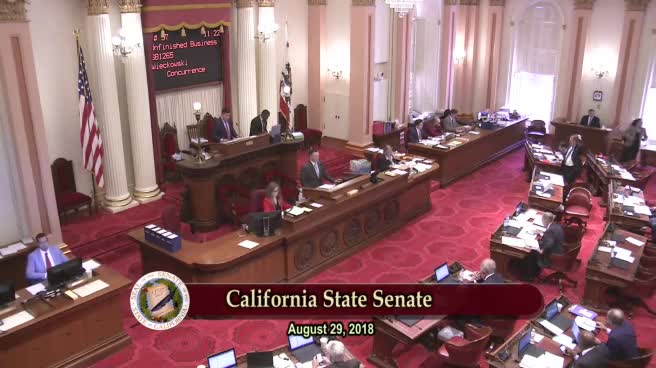
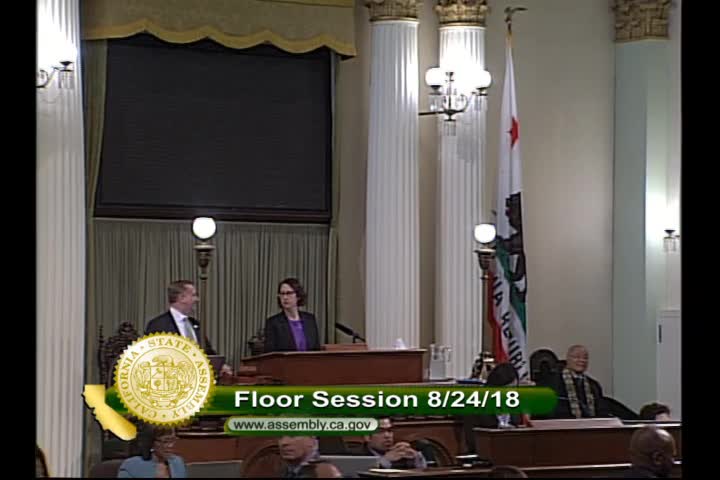

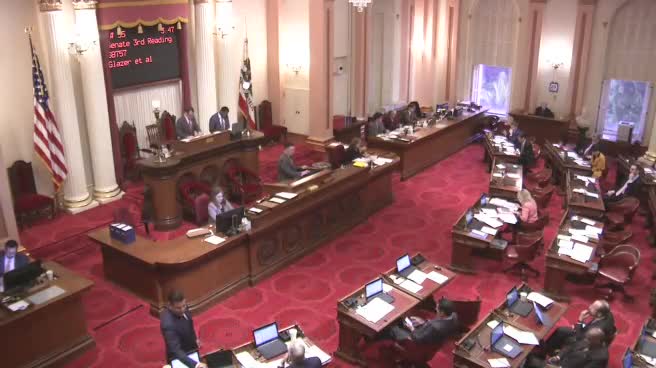
Bill Author

Bill Co-Author(s):