SB 679: Political Reform Act of 1974: postgovernment employment.
- Session Year: 2017-2018
- House: Senate
- Latest Version Date: 2017-04-26
The Milton Marks Postgovernment Employment Restrictions Act of 1990 prohibits a Member of the Legislature, for a period of one year after leaving office, from acting as a compensated agent or attorney for, or otherwise representing, any other person by making appearances before or communications with the Legislature or its committees, present Members, or officers or employees, if the appearance or communication is made for the purpose of influencing legislative action.
This bill would extend the time period of these prohibitions for to 2 years if a Member of the Legislature who resigns from office to 5 years. office, commencing with the effective date of the resignation. This bill would make other technical, nonsubstantive changes.
Because a violation of the act is punishable as a misdemeanor, this bill would impose a state-mandated local program.
The California Constitution requires the state to reimburse local agencies and school districts for certain costs mandated by the state. Statutory provisions establish procedures for making that reimbursement.
This bill would provide that no reimbursement is required by this act for a specified reason.
The Political Reform Act of 1974, an initiative measure, provides that the Legislature may amend the act to further the acts purposes upon a 2/3 vote of each house of the Legislature and compliance with specified procedural requirements.
This bill would declare that it furthers the purposes of the act.
The Milton Marks Postgovernment Employment Restrictions Act of 1990 prohibits a Member of the Legislature, for a period of one year after leaving office, from acting as a compensated agent or attorney for, or otherwise representing, any other person by making appearances before or communications with the Legislature or its committees, present Members, or officers or employees, if the appearance or communication is made for the purpose of influencing legislative action.
This bill would extend the time period of these prohibitions for a Member of the Legislature who resigns from office to 5 years. This bill would make other technical, nonsubstantive changes.
Because a violation of the act is punishable as a misdemeanor, this bill would impose a state-mandated local program.
The California Constitution requires the state to reimburse local agencies and school districts for certain costs mandated by the state. Statutory provisions establish procedures for making that reimbursement.
This bill would provide that no reimbursement is required by this act for a specified reason.
The Political Reform Act of 1974, an initiative measure, provides that the Legislature may amend the act to further the acts purposes upon a 2/3 vote of each house of the Legislature and compliance with specified procedural requirements.
This bill would declare that it furthers the purposes of the act.
The Administrative Procedure Act governs the procedure for the adoption, amendment, or repeal of regulations by state agencies and for the review of those regulatory actions by the Office of Administrative Law. Existing law requires that office to establish a unique numbering system for each regulatory action for identification and tracking purposes.
This bill would make nonsubstantive changes to this provision.
(a)This section shall be known, and may be cited, as the Milton Marks Postgovernment Employment Restrictions Act of 1990.
(b)A (1)Except as provided in paragraph (2), a Member of the Legislature, for a period of five years one year after leaving office, shall not, for compensation, act as agent or attorney for, or otherwise represent, any other person by making any formal or informal appearance, or by making any oral or written communication, before the Legislature, any committee or subcommittee thereof, any present Member of the Legislature, or any officer or employee thereof, if the appearance or communication is made for the purpose of influencing legislative action.
(2)If a Member of the Legislature resigns from office, the time period in paragraph (1) is two years, commencing with the effective date of the resignation.
(c)An elected state officer, other than a Member of the Legislature, for a period of one year after leaving office, shall not, for compensation, act as agent or attorney for, or otherwise represent, any other person by making any formal or informal appearance, or by making any oral or written communication, before any state administrative agency, or any officer or employee thereof, if the appearance or communication is for the purpose of influencing administrative action, or influencing any action or proceeding involving the issuance, amendment, awarding, or revocation of a permit, license, grant, or contract, or the sale or purchase of goods or property. For purposes of this subdivision, an appearance before a state administrative agency does not include an appearance in a court of law, before an administrative law judge, or before the Workers Compensation Appeals Board.
(d)(1)A designated employee of a state administrative agency, any officer, employee, or consultant of a state administrative agency who holds a position which entails the making, or participation in the making, of decisions which may foreseeably have a material effect on any financial interest, and no member of a state administrative agency, for a period of one year after leaving office or employment, shall not, for compensation, act as agent or attorney for, or otherwise represent, any other person, by making any formal or informal appearance, or by making any oral or written communication, before any state administrative agency, or officer or employee thereof, for which he or she worked or represented during the 12 months before leaving office or employment, if the appearance or communication is made for the purpose of influencing administrative or legislative action, or influencing any action or proceeding involving the issuance, amendment, awarding, or revocation of a permit, license, grant, or contract, or the sale or purchase of goods or property. For purposes of this paragraph, an appearance before a state administrative agency does not include an appearance in a court of law, before an administrative law judge, or before the Workers Compensation Appeals Board. The prohibition of this paragraph applies to designated employees employed by a state administrative agency on or after January 7, 1991.
(2)For purposes of paragraph (1), a state administrative agency of a designated employee of the Governors office includes any state administrative agency subject to the direction and control of the Governor.
(e)The prohibitions contained in subdivisions (b), (c), and (d) shall not apply to any individual subject to this section who is or becomes any of the following:
(1)An officer or employee of another state agency, board, or commission if the appearance or communication is for the purpose of influencing legislative or administrative action on behalf of the state agency, board, or commission.
(2)An official holding an elective office of a local government agency if the appearance or communication is for the purpose of influencing legislative or administrative action on behalf of the local government agency.
SEC. 2.No reimbursement is required by this act pursuant to Section 6 of Article XIIIB of the California Constitution because the only costs that may be incurred by a local agency or school district will be incurred because this act creates a new crime or infraction, eliminates a crime or infraction, or changes the penalty for a crime or infraction, within the meaning of Section 17556 of the Government Code, or changes the definition of a crime within the meaning of Section 6 of Article XIIIB of the California Constitution.
SEC. 3.The Legislature finds and declares that this bill furthers the purposes of the Political Reform Act of 1974 within the meaning of subdivision (a) of Section 81012 of the Government Code.
(a)This section shall be known, and may be cited, as the Milton Marks Postgovernment Employment Restrictions Act of 1990.
(b)No A Member of the Legislature, for a period of one year five years after leaving office, shall, shall not, for compensation, act as agent or attorney for, or otherwise represent, any other person by making any formal or informal appearance, or by making any oral or written communication, before the Legislature, any committee or subcommittee thereof, any present Member of the Legislature, or any officer or employee thereof, if the appearance or communication is made for the purpose of influencing legislative action.
(c)No An elected state officer, other than a Member of the Legislature, for a period of one year after leaving office, shall, shall not, for compensation, act as agent or attorney for, or otherwise represent, any other person by making any formal or informal appearance, or by making any oral or written communication, before any state administrative agency, or any officer or employee thereof, if the appearance or communication is for the purpose of influencing administrative action, or influencing any action or proceeding involving the issuance, amendment, awarding, or revocation of a permit, license, grant, or contract, or the sale or purchase of goods or property. For purposes of this subdivision, an appearance before a state administrative agency does not include an appearance in a court of law, before an administrative law judge, or before the Workers Compensation Appeals Board.
(d)(1)No A designated employee of a state administrative agency, any officer, employee, or consultant of a state administrative agency who holds a position which entails the making, or participation in the making, of decisions which may foreseeably have a material effect on any financial interest, and no member of a state administrative agency, for a period of one year after leaving office or employment, shall, shall not, for compensation, act as agent or attorney for, or otherwise represent, any other person, by making any formal or informal appearance, or by making any oral or written communication, before any state administrative agency, or officer or employee thereof, for which he or she worked or represented during the 12 months before leaving office or employment, if the appearance or communication is made for the purpose of influencing administrative or legislative action, or influencing any action or proceeding involving the issuance, amendment, awarding, or revocation of a permit, license, grant, or contract, or the sale or purchase of goods or property. For purposes of this paragraph, an appearance before a state administrative agency does not include an appearance in a court of law, before an administrative law judge, or before the Workers Compensation Appeals Board. The prohibition of this paragraph shall only apply applies to designated employees employed by a state administrative agency on or after January 7, 1991.
(2)For purposes of paragraph (1), a state administrative agency of a designated employee of the Governors office includes any state administrative agency subject to the direction and control of the Governor.
(e)The prohibitions contained in subdivisions (b), (c), and (d) shall not apply to any individual subject to this section who is or becomes any of the following:
(1)An officer or employee of another state agency, board, or commission if the appearance or communication is for the purpose of influencing legislative or administrative action on behalf of the state agency, board, or commission.
(2)An official holding an elective office of a local government agency if the appearance or communication is for the purpose of influencing legislative or administrative action on behalf of the local government agency.
(f)This section shall become operative on January 1, 1991, but only if Senate Constitutional Amendment No. 32 of the 198990 Regular Session is approved by the voters. With respect to Members of the Legislature whose current term of office on January 1, 1991, began in December 1988, this section shall not apply until January 1, 1993.SEC. 2.No reimbursement is required by this act pursuant to Section 6 of Article XIIIB of the California Constitution because the only costs that may be incurred by a local agency or school district will be incurred because this act creates a new crime or infraction, eliminates a crime or infraction, or changes the penalty for a crime or infraction, within the meaning of Section 17556 of the Government Code, or changes the definition of a crime within the meaning of Section 6 of Article XIIIB of the California Constitution.
SEC. 3.The Legislature finds and declares that this bill furthers the purposes of the Political Reform Act of 1974 within the meaning of subdivision (a) of Section 81012 of the Government Code.
(a)The office shall establish a system to give provide a unique identification number to each regulatory action.
(b)The office and the state agency taking the regulatory action shall use the identification number given provided by the office pursuant to subdivision (a) to refer to the regulatory action for which a notice has already has been published in the California Regulatory Notice Register.
(c)The identification number shall be sufficient information for a member of the public to identify and track a regulatory action both with the office and the state agency taking the regulatory action. No other information pertaining to the regulatory action shall be required of a member of the public if the identification number of the regulatory action has been provided.
|
Date
|
Status
|
|---|---|
| Aug 30, 2017 | August 30 set for second hearing canceled at the request of author. |
| Aug 23, 2017 | August 23 hearing postponed by committee. |
| Jul 19, 2017 | July 19 set for first hearing canceled at the request of author. |
| Jun 28, 2017 | From committee: Do pass and re-refer to Com. on APPR. (Ayes 7. Noes 0.) (June 28). Re-referred to Com. on APPR. |
| Jun 12, 2017 | Referred to Com. on E. & R. |
| May 31, 2017 | In Assembly. Read first time. Held at Desk. |
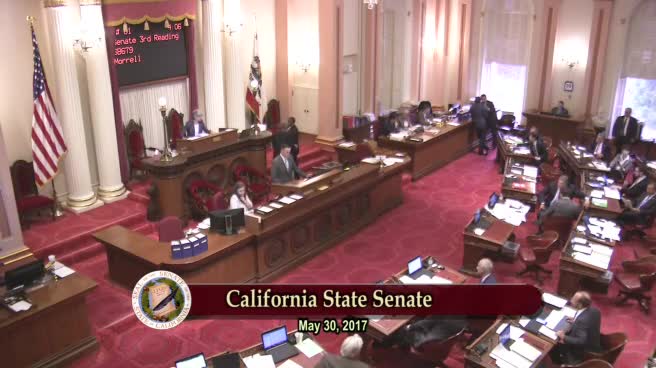
| May 30, 2017 | Read third time. Passed. (Ayes 38. Noes 0. Page 1262.) Ordered to the Assembly. |
| May 23, 2017 | Read second time. Ordered to third reading. |
| May 22, 2017 | From committee: Be ordered to second reading pursuant to Senate Rule 28.8. |
| May 16, 2017 | Set for hearing May 22. |
| May 15, 2017 | May 15 hearing postponed by committee. |
| May 4, 2017 | Set for hearing May 15. |
| May 3, 2017 | May 8 hearing postponed by committee. |
| May 1, 2017 | Set for hearing May 8. |
| Apr 26, 2017 | Read second time and amended. Re-referred to Com. on APPR. |
| Apr 25, 2017 | From committee: Do pass as amended and re-refer to Com. on APPR. (Ayes 5. Noes 0. Page 744.) (April 18). |
| Apr 7, 2017 | Set for hearing April 18. |
| Apr 5, 2017 | Re-referred to Com. on E. & C.A. |
| Mar 27, 2017 | From committee with author's amendments. Read second time and amended. Re-referred to Com. on RLS. |
| Mar 9, 2017 | Referred to Com. on RLS. |
| Feb 21, 2017 | From printer. May be acted upon on or after March 23. |
| Feb 17, 2017 | Introduced. Read first time. To Com. on RLS. for assignment. To print. |
|
Date
|
Description
|
Location
|
Votes
|
|
|---|---|---|---|---|
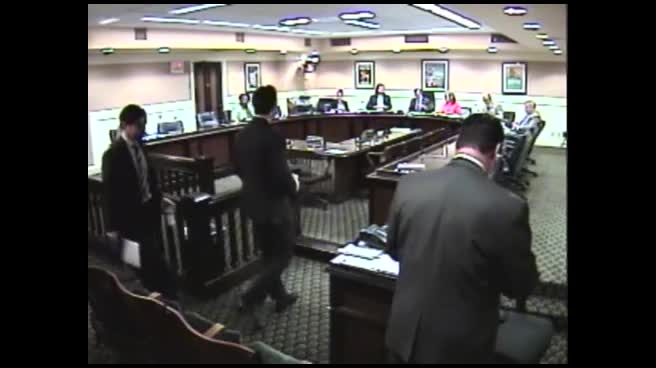
| Jun 28, 2017 | Do pass and be re-referred to the Committee on [Appropriations] | Assembly Standing Committee on Elections and Redistricting |
Passed |
|
| May 30, 2017 | Senate 3rd Reading SB679 Morrell | Senate Floor |
Passed |
|
| Apr 18, 2017 | Do pass as amended, but first amend, and re-refer to the Committee on [Appropriations] | Senate Standing Committee on Elections and Constitutional Amendments |
Passed |
This list shows positions taken on this bill by organizations on the date displayed, which is linked to the original source.
Positions by individuals are not included.
|
Organization
|
Position
|
Date
|
|---|---|---|
| California Clean Money Campaign | ** Support | Jun 26, 2017 |
Date of Hearing: June 28, 2017
ASSEMBLY COMMITTEE ON ELECTIONS AND REDISTRICTING
Marc Berman, Chair
SBPCA Bill Id:SB 679
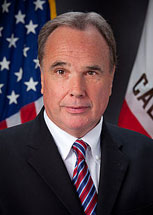
Author:(Morrell) – As Amended Ver:April 26, 2017
SENATE VOTE: 38-0
SUBJECT: Political Reform Act of 1974: postgovernment employment.
SUMMARY: Extends the length of the "revolving door" ban, for a member of the Legislature who resigns from office, from one year to two years after the person leaves office. Specifically, this bill:
- Prohibits a member of the Legislature who resigns from office, for a period of two years after the person leaves office, from acting as a compensated agent or attorney for, or otherwise representing, any other person by making appearances before or communications with the Legislature if the appearance or communication is made for the purpose of influencing legislative action. Former members of the Legislature who did not resign from office would continue to be subject to a one year prohibition on such appearances and communications.
- Makes conforming and technical changes.
EXISTING LAW:
- Creates the Fair Political Practices Commission (FPPC), and makes it responsible for the impartial, effective administration and implementation of the Political Reform Act (PRA).
- Prohibits a member of the Legislature, for a period of one year after leaving office, from acting as a compensated agent or attorney for, or otherwise representing, any other person by making appearances before or communications with the Legislature, as specified, if the appearance or communication is made for the purpose of influencing legislative action.
- Defines "legislative action," for the purpose of the restrictions on post-legislative employment activities by former members of the Legislature, to mean the drafting, introduction, consideration, modification, enactment or defeat of any bill, resolution, amendment, report, nomination or other matter by the Legislature or by either house or any committee, subcommittee, joint or select committee thereof, or by a member or employee of the Legislature acting in his official capacity. Provides that "legislative action" also includes the action of the Governor in approving or vetoing any bill.
- Prohibits an elected state officer, other than a member of the Legislature, for a period of one year after leaving office, from acting as a compensated agent or attorney for, or otherwise representing any other person by making appearances before or communications with any state administrative agency, as specified, if the appearance or communication is for the purpose of influencing specified administrative actions.
- Provides that the above prohibitions do not apply to any individual who is or becomes any of the following:
- An officer or employee of another state agency, board, or commission if the appearance or communication is for the purpose of influencing legislative or administrative action on behalf of the state agency, board, or commission; or,
- An official holding an elective office of a local government agency if the appearance or communication is for the purpose of influencing legislative or administrative action on behalf of the local government agency.
- An officer or employee of another state agency, board, or commission if the appearance or communication is for the purpose of influencing legislative or administrative action on behalf of the state agency, board, or commission; or,
- Prohibits a state or local public official from making, participating in making, or using his or her official position to influence, any governmental decision directly relating to any person or other entity with whom he or she is negotiating, or has any arrangement concerning, prospective employment.
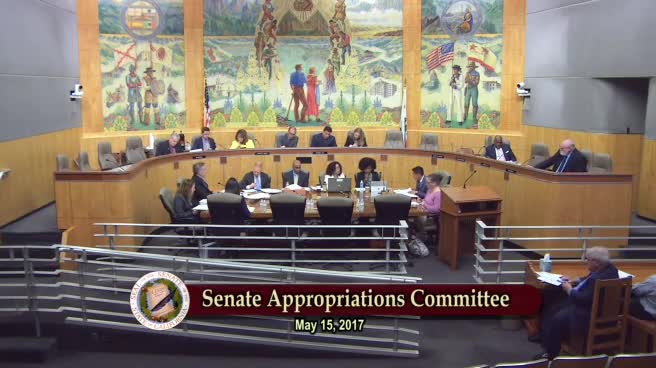
FISCAL EFFECT: According to the Senate Appropriations Committee, pursuant to Senate Rule 28.8, negligible state costs.
COMMENTS:
- Purpose of the Bill: According to the author:
While the current 12 month limitation has helped to address the revolving door, unfortunately, it doesn’t go quite far enough. We have continued to see legislators resign office to take highly paid lobbying jobs.
This is particularly a problem, as employment negotiations, especially those for high caliber positions, can easily go on for months. Furthermore, the legislature works within a two year legislative cycle, which means policy negotiations can go well beyond one year. This misalignment allows legislators to inappropriately influence policy that they may have been party to prior to leaving office. This bill takes a step in the right direction towards addressing this problem by extending the revolving door ban for a [legislator] who resigns to two years.
In addition to these obvious conflicts of interest, a legislator resigning from office causes significant costs to local governments that have to pay for a special election to fill their vacancy.
- Revolving Door Restrictions: The PRA restricts the post-governmental activities of certain former public officials, including members of the Legislature. These restrictions are commonly known as a "revolving door" ban. Specifically, members of the Legislature are prohibited, for one year after leaving the Legislature, from representing any other person by appearing before or communicating with, for compensation, the Legislature, any committee or subcommittee thereof, any legislator, or any officer or employee of the Legislature, if the appearance or communication is made for the purpose of influencing legislative action. The one year ban generally serves to prevent former legislators from taking advantage of their relationships with former colleagues and subordinates for the benefit of third parties by prohibiting former legislators from having direct communications with the Legislature in an attempt to influence decisions. This one year ban applies regardless of whether a former legislator is registered as a lobbyist; even if a former legislator does not qualify as a lobbyist under the PRA, that person nonetheless can violate the revolving door ban by making appearances or communications before the Legislature in the year after the person leaves office.
The one year ban does not prohibit a former legislator from providing strategic advice to others about business before the Legislature in the year after the person leaves office, as long as the former legislator does not appear before or directly contact the Legislature. - Resignations from the California Legislature: From 2001-2016, there were 32 instances in which a member of the Legislature resigned from office before the completion of his or her term. Of those 32 resignations, 28 resulted in a special election being held to fill the resulting vacancy (in the other four cases, the resignation occurred close enough to the end of the member's term that a special election was not held, and the seat was left vacant for the remainder of the term instead). More than 84% of the resignations were the result of members being elected to other public offices by the voters (25 cases) or being appointed by the Governor to fill vacancies in other elective offices (two cases). In the five cases where a member of the Legislature resigned for a reason other than assuming another public office, one resigned after a criminal conviction, one resigned amid press reports about comments he made regarding an alleged relationship with a lobbyist, and three resigned from office and subsequently accepted governmental relations jobs with private organizations.
- Will This Bill Achieve Its Goal? The author maintains that the existing one year revolving door ban is insufficient because "[w]e have continued to see legislators resign office to take highly paid lobbying jobs." As detailed above, however, since 2001, only three sitting legislators resigned from office and subsequently accepted governmental relations jobs with private organizations – most of the members who resigned did so in order to serve in other elective offices. Furthermore, two of the three former legislators who resigned from office and accepted governmental relations jobs have not subsequently registered as lobbyists, which may be an indication that those individuals are not engaged in communications or appearances that are covered by the revolving door ban (though, as detailed above, the revolving door ban applies even in situations where a person is not registered as a lobbyist). Given that relatively few members of the Legislature have resigned to take governmental relations jobs with private industry, and the fact that the revolving door ban does not prohibit a former legislator from working in governmental relations as long as the legislator does not appear before or directly contact the Legislature, the degree to which this bill will serve to discourage resignations from the Legislature is unclear.
- Arguments in Support: In support of this bill, the California Clean Money Campaign writes:
In recent years, several legislators have left office in the middle of their term to take government affairs positions with big businesses. This is a major disruption of California's legislature because the abandoned seats remain open for many months until expensive and low-turnout special elections can be held. Worse, this practice might raise questions in the public's mind about whether the legislator's plan to leave office early and take a highly-paid position might have influenced their legislative positions and actions…
Although there are many legitimate reasons for leaving office early, elected officials who do so should not benefit by becoming paid lobbyists earlier than their colleagues who serve out their full terms. Doubling the normal one-year ban on becoming lobbyists for elected officials who do so, as SB 679, is a very reasonable step to stop legislators who resign in the middle of their terms from benefiting financially by lobbying for the very interests whose bills they may be voting on.
- Related Legislation: AB 1620 (Dababneh), provides that if a Member of the Legislature resigns from office, his or her "revolving door" ban will commence with the effective date of the resignation and continue until one year after the last day of the second year of the legislative session during which he or she resigned. AB 1620 is pending in the Senate Appropriations Committee. AB 1620 previously proposed extending the length of the "revolving door" ban when a member of the Legislature resigns from office so that it remained in effect until a year had passed since the end of the term to which the person was elected. That version of AB 1620 was approved by this committee on a 7-0 vote, and was approved on the Assembly Floor by a 69-0 vote.
Both this bill and AB 1620 would ensure that no former member of the Legislature would be able to legally lobby the Legislature at any time within the same two-year legislative session during which he or she resigned. However, AB 1620 could provide for a shorter or longer ban than this bill, depending on the effective date of the resignation. For instance, if a member resigned prior to the half-way point in the session, the ban would be longer under AB 1620 but if the resignation occurs after the half-way point the total length of the ban would be shorter that the two years provided in this bill. - Previous Legislation: SB 976 (Vidak) of 2016 was similar to this bill. SB 976 was approved by the Senate Elections & Constitutional Amendments Committee, but was then referred to the Senate Rules Committee where it was held.
AB 2284 (Patterson) of 2016 would have required a legislator who resigned before the completion of his or her term to use surplus campaign funds to pay for any resulting special election, among other provisions. AB 2284 failed passage in this committee on a 2-3 vote.
ACA 9 (Gomez) of 2016 would have prohibited a legislator who vacated his or her seat prior to the expiration of the term of office for reasons other than personal medical reasons from being permitted to lobby for compensation before the Legislature until 12 months had passed from the date his or her term of office would have expired, among other provisions. Those provisions subsequently were amended out of ACA 9, and it was never heard in committee. - Political Reform Act of 1974: California voters passed an initiative, Proposition 9, in 1974 that created the FPPC and codified significant restrictions and prohibitions on candidates, officeholders, and lobbyists. That initiative is commonly known as the PRA. Amendments to the PRA that are not submitted to the voters, such as those contained in this bill, must further the purposes of the initiative and require a two-thirds vote of both houses of the Legislature.
REGISTERED SUPPORT / OPPOSITION:
Support
California Clean Money Campaign
Opposition
None on file.
Analysis Prepared by: Ethan Jones / E. & R. / (916) 319-2094
Office of Senate Floor Analyses (916) 651-1520 Fax: (916) 327-4478 | SB |
THIRD READING
Bill No: SB 679
:
SENATE ELECTIONS & C.A. COMMITTEE: 5-0, 4/18/17
AYES: Stern, Anderson, Allen, Hertzberg, Leyva
SENATE APPROPRIATIONS COMMITTEE: Senate Rule 28.8
DIGEST:
This bill provides that if a Member of the Legislature resigns from office, his or her “revolving door” prohibition will be two years, commencing with the effective date of the resignation.
Existing law:
- Prohibits a Member of the Legislature, for a period of one year after leaving office, from acting as a compensated agent or attorney for, or otherwise representing, any other person by making appearances before or communications with the Legislature if the appearance or communication is made for the purpose of influencing legislative action.
- Defines “legislative action” as the drafting, introduction, consideration, modification, enactment or defeat of any bill, resolution, amendment, report, nomination or other matter by the Legislature or by either house or any committee, subcommittee, joint or select committee thereof, or by a Member or employee of the Legislature acting in his official capacity. “Legislative action” also means the action of the Governor in approving or vetoing any bill.
- Prohibits an elected state officer, other than a Member of the Legislature, for a period of one year after leaving office, from acting as a compensated agent or attorney for, or otherwise representing any other person by making any formal or informal appearance, or by making any oral or written communication before any state administrative agency if the appearance or communication is for the purpose of influencing specified administrative actions.
- Provides that the above prohibitions do not apply to any individual who is or becomes any of the following:
- An officer or employee of another state agency, board, or commission if the appearance or communication is for the purpose of influencing legislative or administrative action on behalf of the state agency, board, or commission.
- An official holding an elective office of a local government agency if the appearance or communication is for the purpose of influencing legislative or administrative action on behalf of the local government agency.
- Prohibits a state or local public official from making, participating in making, or using his or her official position to influence, any governmental decision directly relating to any person or other entity with whom he or she is negotiating, or has any arrangement concerning, prospective employment.
This bill:
- Provides that if a Member of the Legislature resigns from office, his or her “revolving door” prohibition will be two years, commencing with the effective date of the resignation.
- Makes other technical, nonsubstantive changes.
Background
"Revolving door" prohibitions are intended to address situations whereby former elected officers and other officials return to represent clients who have business before, or are seeking to influence policy decisions made by, their former agencies. In many of these instances, the former official may be lobbying his or her former subordinates or peers who may feel inordinate pressure to be accommodating.
Do you have to be an actual lobbyist? Existing law generally defines “lobbyist” as any individual who receives $2,000 or more in economic consideration in a calendar month, other than reimbursement for reasonable travel expenses, or whose principal duties as an employee are, to communicate directly or through his or her agents with any elective state official, agency official, or legislative official for the purpose of influencing legislative or administrative action.
Regulations promulgated by the Fair Political Practices Commission further define non-contract lobbyists as individuals who spend one-third or more of their time, in any calendar month, for which they receive compensation from his or her employer, engaging in direct communication, other than administrative testimony, with one or more qualifying officials for the purpose of influencing legislative or administrative action.
The existing revolving door prohibitions apply whether or not the former elected state officeholder qualifies as a "lobbyist" under this current definition.
Resignations from the California Legislature. Between 2001and 2016, there were 32 instances in which a Member of the Legislature resigned from office before the completion of his or her term. Of those 32 resignations, 28 resulted in a special election being held to fill the resulting vacancy (in the other four cases, the resignation happened close enough to the end of the Member's term that a special election was not held, and the seat was left vacant for the remainder of the term instead).
Most of the resignations were the result of Members being elected to other public offices by the voters (25 cases) or being appointed by the Governor to fill vacancies in other elective offices (two cases). In the five cases where a Member of the Legislature resigned for a reason other than assuming another public office, one resigned after a criminal conviction, one resigned amid press reports about comments he made regarding an alleged relationship with a lobbyist, and three resigned from office and subsequently accepted governmental relations jobs with private organizations.
Comments
- According to the author, “while the current 12 month limitation has helped to address the revolving door, unfortunately, it doesn’t go quite far enough. We have continued to see legislators resign office to take highly paid lobbying jobs.
Employment negotiations, especially those for high caliber positions, can easily go on for months. Additionally, the legislature works within a 2 year legislative cycle, therefore, policy negotiations can go well beyond 1 year. This misalignment allows legislators to inappropriately influence policy that they may have been party to prior to leaving office.
In addition to this obvious conflict of interest, a legislator resigning office causes significant costs to local governments that have to pay for a special election to fill their vacancy.
Current law restricts elected officials from lobbying for one year after leaving office, given that the California legislature convenes under a two year session a one year restriction simply doesn’t adequately protect against conflicts. In addition, legislators leaving in the middle of session to accept an outside job cause significant costs to local government to complete a special election.”
Related/Prior Legislation
AB 1620 (Dababneh, 2017), which is currently pending referral in the Senate Rules Committee, extends the revolving door prohibition for a Member of the Legislature who resigns from office from the effective date of the resignation to one year after the final date of the term to which the officer was elected.
SB 976 (Vidak, 2016) was approved by the Senate Elections and Constitutional Amendments Committee and the Senate Appropriations Committee but was then referred to the Senate Rules Committee where it was held. SB 976 would have extended the revolving door prohibition for a Member of the Legislature who resigns from office to two years commencing with the effective date of the resignation.
ACA 9 (Gomez, 2016), which was dropped by the author while it was pending in the Assembly Elections and Redistricting Committee, would have, among other things, prohibited a Member of the Legislature who vacates his or her seat prior to the expiration of the term of office for other than personal medical reasons from being permitted to lobby, for compensation before the Legislature until 12 months have passed from the date his or her term of office would have expired.
FISCAL EFFECT: Appropriation: Fiscal Com.: Local:
California Clean Money Campaign
OPPOSITION: (Verified 5/25/17)
None received
5/25/17 9:39:31
**** END ****
SENATE COMMITTEE ON
ELECTIONS AND CONSTITUTIONAL AMENDMENTS
Senator Henry Stern, Chair
2017 - 2018 Regular
Bill No: SB Hearing Date: 4/18/17
Author: | |||
Version: | 3/27/17 | ||
Urgency: | No | Fiscal: | Yes |
Consultant: | Darren Chesin | ||
Subject: Political Reform Act of 1974: postgovernment employment
DIGEST
This bill extends the existing “revolving door” ban for members of the Legislature from one year to five years after leaving office.
ANALYSIS
Existing law:
- Prohibits a member of the Legislature, for a period of one year after leaving office, from acting as a compensated agent or attorney for, or otherwise representing, any other person by making appearances before or communications with the Legislature if the appearance or communication is made for the purpose of influencing legislative action.
- Defines “legislative action” as the drafting, introduction, consideration, modification, enactment or defeat of any bill, resolution, amendment, report, nomination or other matter by the Legislature or by either house or any committee, subcommittee, joint or select committee thereof, or by a member or employee of the Legislature acting in his official capacity. “Legislative action” also means the action of the Governor in approving or vetoing any bill.
- Prohibits an elected state officer, other than a member of the Legislature, for a period of one year after leaving office, from acting as a compensated agent or attorney for, or otherwise representing any other person by making any formal or informal appearance, or by making any oral or written communication before any state administrative agency if the appearance or communication is for the purpose of influencing specified administrative actions.
- Provides that the above prohibitions do not apply to any individual who is or becomes any of the following:
- An officer or employee of another state agency, board, or commission if the appearance or communication is for the purpose of influencing legislative or administrative action on behalf of the state agency, board, or commission.
- An official holding an elective office of a local government agency if the appearance or communication is for the purpose of influencing legislative or administrative action on behalf of the local government agency.
- Prohibits a state or local public official from making, participating in making, or using his or her official position to influence, any governmental decision directly relating to any person or other entity with whom he or she is negotiating, or has any arrangement concerning, prospective employment.
This bill:
- Extends the time period of these prohibitions for a member of the Legislature from a period of one year to a period of five years after leaving office.
- Makes other technical, nonsubstantive changes.
BACKGROUND
"Revolving door" prohibitions are intended to address situations whereby former elected officers and other officials return to represent clients who have business before, or are seeking to influence policy decisions made by, their former agencies. In many of these instances, the former official may be lobbying his or her former subordinates or peers who may feel inordinate pressure to be accommodating.
Do you have to be an actual lobbyist? Existing law generally defines “lobbyist” as any individual who receives $2,000 or more in economic consideration in a calendar month, other than reimbursement for reasonable travel expenses, or whose principal duties as an employee are, to communicate directly or through his or her agents with any elective state official, agency official, or legislative official for the purpose of influencing legislative or administrative action.
Regulations promulgated by the Fair Political Practices Commission (FPPC) further define non-contract lobbyists as individuals who spend one-third or more of their time, in any calendar month, for which they receive compensation from his or her employer, engaging in direct communication, other than administrative testimony, with one or more qualifying officials for the purpose of influencing legislative or administrative action.
The existing revolving door prohibitions apply whether or not the former elected state officeholder qualifies as a "lobbyist" under this current definition.
Resignations from the California Legislature. Between 2001and 2016, there were 32 instances in which a member of the Legislature resigned from office before the completion of his or her term. Of those 32 resignations, 28 resulted in a special election being held to fill the resulting vacancy (in the other four cases, the resignation happened close enough to the end of the member's term that a special election was not held, and the seat was left vacant for the remainder of the term instead).
Most of the resignations were the result of members being elected to other public offices by the voters (25 cases) or being appointed by the Governor to fill vacancies in other elective offices (two cases). In the five cases where a member of the Legislature resigned for a reason other than assuming another public office, one resigned after a criminal conviction, one resigned amid press reports about comments he made regarding an alleged relationship with a lobbyist, and three resigned from office and subsequently accepted governmental relations jobs with private organizations.
COMMENTS
- According to the author: While the current 12 month limitation has helped to address the revolving door, unfortunately, it doesn’t go quite far enough. We have continued to see legislators resign office to take highly paid lobbying jobs.
Employment negotiations, especially those for high caliber positions, can easily go on for months. Additionally, the legislature works within a 2 year legislative cycle, therefore, policy negotiations can go well beyond 1 year. This misalignment allows legislators to inappropriately influence policy that they may have been party to prior to leaving office.
In addition to this obvious conflict of interest, a legislator resigning office causes significant costs to local governments that have to pay for a special election to fill their vacancy.
Current law restricts elected officials from lobbying for one year after leaving office, given that the California legislature convenes under a two year session a one year restriction simply doesn’t adequately protect against conflicts. In addition, legislators leaving in the middle of session to accept an outside job cause significant costs to local government to complete a special election. - Staff Comments. The author states that this bill is intended to address legislators who resign from office to accept outside employment. However, this bill would extend the revolving door prohibition for all former legislators whether or not they resign before the end of their terms. As stated in the BACKGROUND section above, since 2001, only three sitting legislators resigned from office and subsequently accepted governmental relations jobs with private organizations – most resigned to seek other elective offices. Do three resignations to pursue private sector employment warrant a five-fold extension of the existing prohibition? Should this bill be narrowed to only apply to those legislators who resign before the end of their terms?
RELATED/PRIOR LEGISLATION
AB 1620 (Dababneh), which is currently pending in the Assembly Elections and Redistricting Committee, would extend the revolving door prohibition for a member of the Legislature who resigns from office from the effective date of the resignation to one year after the final date of the term to which the officer was elected.
SB 976 (Vidak, of 2016), was approved by this committee and the Senate Appropriations Committee but was then referred to the Senate Rules Committee where it was held. SB 976 would have extended the revolving door prohibition for a member of the Legislature who resigns from office to two years commencing with the effective date of the resignation.
ACA 9 (Gomez of 2016), which was dropped by the author while it was pending in the Assembly Elections and Redistricting Committee, would have, among other things, prohibited a member of the Legislature who vacates his or her seat prior to the expiration of the term of office for other than personal medical reasons from being permitted to lobby, for compensation before the Legislature until 12 months have passed from the date his or her term of office would have expired.
POSITIONS
Sponsor: Author
Support: None received
Oppose: None received
-- END --
Discussed in Hearing
 4MIN
Assembly Standing Committee on Elections and Redistricting
 4MIN
Senate Floor
 2MIN
Senate Standing Committee on Appropriations
Bill Author
Bill Co-Author(s):