SB 705: Solid waste: expanded polystyrene food service containers.
- Session Year: 2017-2018
- House: Senate
- Latest Version Date: 2017-05-26
Existing law requires all rigid plastic bottles and rigid plastic containers sold in the state to be labeled with a code that indicates the resin used to produce the rigid plastic bottle or rigid plastic container. The California Integrated Waste Management Act of 1989, administered by the Department of Resources Recycling and Recovery, requires every rigid plastic packaging container, as defined, sold or offered for sale in this state to generally meet one of specified criteria.
This bill would enact the Ocean Pollution Reduction Act of 2017, which 2017. The bill would prohibit a food provider, vendor, as defined, that is subject to specified federal requirements for the posting of calories and nutrients imposed upon restaurants and other retail food establishments, on and after January 1, 2020, from dispensing prepared food to a customer in an expanded polystyrene food service container. The bill would prohibit all food vendors from dispensing prepared food to a customer in an expanded polystyrene food service container on and after January 1, 2022. The bill would authorize a city or county to grant a food vendor an exemption from these prohibitions, as specified, upon request of the food vendor, if the food vendor demonstrates to the satisfaction of the city or county that compliance with the prohibition would impose an undue economic hardship, as defined. The bill would authorize a city, a county, a city and county, or the state to impose civil liability on a person or entity that knowingly violates that prohibition, or reasonably should have known that it was violating that prohibition, in the amount of $1,000 per day for the first violation, $2,000 per day for the second 2nd violation, and $5,000 per day for the third 3rd and subsequent violations. The bill would require any civil penalties collected to be paid to the office that brought the action and would authorize these penalties, if collected by the Attorney General, to be expended, upon appropriation by the Legislature, to enforce that prohibition. The bill would require the Department of Resources Recycling and Recovery to develop an Internet Web page with information on how to comply with, and how to file a complaint for a violation of, that prohibition. The act would also define related terms.
Existing law requires all rigid plastic bottles and rigid plastic containers sold in the state to be labeled with a code that indicates the resin used to produce the rigid plastic bottle or rigid plastic container. The California Integrated Waste Management Act of 1989, administered by the Department of Resources Recycling and Recovery, requires every rigid plastic packaging container, as defined, sold or offered for sale in this state to generally meet one of specified criteria.
This bill would enact the Ocean Pollution Reduction Act of 2017, which would prohibit a food provider, on and after January 1, 2020, from dispensing prepared food to a customer in an expanded polystyrene food service container. The act would prohibit a food provider, on and after January 1, 2021, from dispensing prepared food to a customer in a city or county in a food service container made of a type of plastic unless the governing body of the city or county responsible for waste hauling adopts an ordinance to accept food service containers made of that type of plastic in the citys or countys curbside recycling or curbside food waste composting program and publishes the ordinance, as specified. The bill would authorize a city, a county, a city and county, or the state to impose civil liability on a person or entity that knowingly violates that prohibition, or reasonably should have known that it was violating that prohibition, in the amount of $1,000 per day for the first violation, $2,000 per day for the second violation, and $5,000 per day for the third and subsequent violations. The bill would require any civil penalties collected to be paid to the office that brought the action and would authorize these penalties, if collected by the Attorney General, to be expended, upon appropriation by the Legislature, to enforce that prohibition. The bill would require the Department of Resources Recycling and Recovery to develop an Internet Web page with information on how to comply with, and how to file a complaint for a violation of, that prohibition. The act would also define related terms.
Existing law requires all rigid plastic bottles and rigid plastic containers sold in the state to be labeled with a code that indicates the resin used to produce the rigid plastic bottle or rigid plastic container. The California Integrated Waste Management Act of 1989, administered by the Department of Resources Recycling and Recovery, requires every rigid plastic packaging container, as defined, sold or offered for sale in this state to generally meet one of specified criteria.
This bill would enact the Ocean Pollution Reduction Act of 2017, which would prohibit a food provider, on and after January 1, 2020, from dispensing prepared food to a customer in an expanded polystyrene food service container. The act would prohibit a food provider, on and after January 1, 2021, from dispensing prepared food to a customer in a city or county in a disposable food service container made of a type of plastic unless the disposable food service container is accepted for recovery by the recycling or composting program serving the food provider, and governing body of the city or county responsible for waste hauling adopts an ordinance to accept food service containers made of that type of plastic in the citys or countys curbside recycling or curbside food waste composting program and publishes the ordinance, as specified. The act would also define related terms.
Existing law requires all rigid plastic bottles and rigid plastic containers sold in the state to be labeled with a code that indicates the resin used to produce the rigid plastic bottle or rigid plastic container. The California Integrated Waste Management Act of 1989, administered by the Department of Resources Recycling and Recovery, requires every rigid plastic packaging container, as defined, sold or offered for sale in this state to generally meet one of specified criteria.
This bill would enact the Ocean Pollution Reduction Act of 2017, which would prohibit a food provider, on and after January 1, 2021, from dispensing prepared food to a customer in a disposable food service container unless the disposable food service container is accepted for recovery by the recycling or composting program serving the food provider, and would define related terms.
This chapter shall be known, and may be cited, as the Ocean Pollution Reduction Act of 2017.
42398.1.For the purposes of this chapter, the following terms have the following meanings:
(a)Expanded polystyrene food service container means a single-use rigid container made primarily of expanded polystyrene and used in the restaurant and food service industry for serving or transporting prepared, ready-to-consume food or beverages, including, but not limited to, plates, cups, bowls, trays, and hinged containers. Expanded polystyrene food service container does not include packaging for unprepared foods.
(b)Food provider vendor means an establishment that provides prepared food for public consumption on or off its premises and includes, but is not limited to, a store, shop, sales outlet, restaurant, grocery store, supermarket, delicatessen, catering truck or vehicle, any other person who provides prepared food, and any organization, group, or individual that regularly provides food as a part of its services. Food vendor does not include any of the following:
(1)A facility run by the State Department of State Hospitals.
(2)A state or local correctional facility or institution, including, but not limited to, a state prison, county jail, facility of the Division of Juvenile Justice, or county- or city-operated juvenile detention facility, including a juvenile hall, camp, or school.
(3)A school campus, as defined in Section 49430 of the Education Code.
(c)Prepared food means a food or beverage prepared for consumption on or off a food providers vendors premises, using any cooking or food preparation technique. Prepared food does not include raw or uncooked meat, fish, or eggs provided for consumption without further food preparation.
(d)Undue economic hardship means a situation in which a food vendor has no reasonable alternative to the expanded polystyrene food service containers in use by that food vendor and compliance with subdivision (a) of Section 42398.2 would cause significant economic hardship to that food vendor.
42398.2.(a)(1)On and after January 1, 2020, a food provider vendor subject to Section 343(q)(5)(H) of Title 21 of the United States Code or to Section 114094 of the Health and Safety Code, as it read on January 1, 2017, shall not dispense prepared food to a customer in an expanded polystyrene food service container.
(2)On and after January 1, 2022, a food vendor shall not dispense prepared food to a customer in an expanded polystyrene food service container.
(b)The Department of Resources Recycling and Recovery shall develop an Internet Web page with information on how to comply with subdivision (a) and how to file a complaint for a violation of subdivision (a).
(c)(1)A food vendor may request from the city or county in which the food vendor is located an exemption from subdivision (a). The city or county may grant the exemption if the food vendor demonstrates to the satisfaction of the city or county that compliance with subdivision (a) would impose an undue economic hardship on the food vendor. A city or county may exempt a food vendor pursuant to this subdivision from subdivision (a) until January 1, 2023, or not more than one year from the date of the demonstration, whichever date is later.
(2)A food vendor granted an exemption pursuant to paragraph (1) may reapply to the city or county before the expiration of the exemption. The city or county may grant additional exemptions from subdivision (a) not to exceed one year each if the food vendor demonstrates at the time of application to the satisfaction of the city or county a continued undue economic hardship.
42398.3.(a)A city, a county, a city and county, or the state may impose civil liability on a person or entity that knowingly violates subdivision (a) of Section 42398.2, or reasonably should have known that it was violating subdivision (a) of Section 42398.2, in the amount of one thousand dollars ($1,000) per day for the first violation, two thousand dollars ($2,000) per day for the second violation, and five thousand dollars ($5,000) per day for the third and subsequent violations.
(b)Any civil penalties collected pursuant to subdivision (a) shall be paid to the office of the city attorney, city prosecutor, district attorney, or Attorney General that brought the action. The penalties collected pursuant to this section by the Attorney General may be expended by the Attorney General, upon appropriation by the Legislature, to enforce subdivision (a) of Section 42398.2.
42398.4.This chapter does not preempt the authority of a county, city, or city and county to adopt and enforce additional single-use take-out food packaging ordinances, regulations, or policies that are more restrictive than the applicable standards required by this chapter.
This chapter shall be known, and may be cited, as the Ocean Pollution Reduction Act of 2017.
42398.1.For the purposes of this chapter, the following terms have the following meanings:
(a)Plastic food service container means a single-use rigid container made primarily of a type of plastic specified in Section 18015 and used in the restaurant and food service industry for serving or transporting prepared, ready-to-consume food or beverages, including, but not limited to, plates, cups, bowls, trays, and hinged or lidded containers. Plastic food service container does not include expanded polystyrene food service containers, beverage containers, as defined in Section 14505, or single-use disposable items, such as straws, cup lids, and utensils, or single-use disposable packaging for unprepared foods.(b)(a)Expanded polystyrene food service container means a single-use rigid container made primarily of expanded polystyrene and used in the restaurant and food service industry for serving or transporting prepared, ready-to-consume food or beverages, including, but not limited to, plates, cups, bowls, trays, and hinged containers. Expanded polystyrene food service container does not include packaging for unprepared foods.
(c)(b)Food provider means an establishment that provides prepared food for public consumption on or off its premises and includes, but is not limited to, a store, shop, sales outlet, restaurant, grocery store, supermarket, delicatessen, catering truck or vehicle, any other person who provides prepared food, and any organization, group, or individual that regularly provides food as a part of its services.
(d)(c)Prepared food means a food or beverage prepared for consumption on or off a food providers premises, using any cooking or food preparation technique. Prepared food does not include raw or uncooked meat, fish, or eggs provided for consumption without further food preparation.
42398.2.(a)On and after January 1, 2020, a food provider shall not dispense prepared food to a customer in an expanded polystyrene food service container.
(b)On and after January 1, 2021, a food provider shall not dispense prepared food to a customer in a city or county in a plastic food service container made of a type of plastic unless the governing body of the city or county responsible for waste hauling adopts an ordinance to accept plastic food service containers made of that type of plastic in the citys or countys curbside recycling or curbside food waste composting program and publishes the ordinance on the citys or countys Internet Web site and in educational materials promoting recycling and composting.(b)The Department of Resources Recycling and Recovery shall develop an Internet Web page with information on how to comply with subdivision (a) and how to file a complaint for a violation of subdivision (a).
42398.3.(a)A city, a county, a city and county, or the state may impose civil liability on a person or entity that knowingly violates subdivision (a) of Section 42398.2, or reasonably should have known that it was violating subdivision (a) of Section 42398.2, in the amount of one thousand dollars ($1,000) per day for the first violation, two thousand dollars ($2,000) per day for the second violation, and five thousand dollars ($5,000) per day for the third and subsequent violations.
(b)Any civil penalties collected pursuant to subdivision (a) shall be paid to the office of the city attorney, city prosecutor, district attorney, or Attorney General that brought the action. The penalties collected pursuant to this section by the Attorney General may be expended by the Attorney General, upon appropriation by the Legislature, to enforce subdivision (a) of Section 42398.2.
42398.3. 42398.4.This chapter does not preempt the authority of a county, city, or city and county to adopt and enforce additional single-use take-out food packaging ordinances, regulations, or policies that are more restrictive than the applicable standards required by this chapter.
This chapter shall be known, and may be cited, as the Ocean Pollution Reduction Act of 2017.
42398.1.For the purposes of this chapter, the following terms have the following meanings:
(a)Disposable Plastic food service container means a single-use disposable product rigid container made primarily of a type of plastic specified in Section 18015 and used in the restaurant and food service industry for serving or transporting prepared, ready-to-consume food or beverages, including, but not limited to, plates, cups, bowls, trays, and hinged or lidded containers. Disposable Plastic food service container does not include expanded polystyrene food service containers, beverage containers, as defined in Section 14505, or single-use disposable items, such as straws, cup lids, and utensils, or single-use disposable packaging for unprepared foods.
(b)Expanded polystyrene food service container means a single-use rigid container made primarily of expanded polystyrene and used in the restaurant and food service industry for serving or transporting prepared, ready-to-consume food or beverages, including, but not limited to, plates, cups, bowls, trays, and hinged containers. Expanded polystyrene food service container does not include packaging for unprepared foods.
(b)(c)Food provider means an establishment that provides prepared food for public consumption on or off its premises and includes, but is not limited to, a store, shop, sales outlet, restaurant, grocery store, supermarket, delicatessen, catering truck or vehicle, any other person who provides prepared food, and any organization, group, or individual that regularly provides food as a part of its services.
(c)(d)Prepared food means a food or beverage prepared for consumption on or off a food providers premises, using any cooking or food preparation technique. Prepared food does not include raw or uncooked meat, fish, or eggs provided for consumption without further food preparation.
42398.2.On42398.2.(a)On and after January 1, 2020, a food provider shall not dispense prepared food to a customer in an expanded polystyrene food service container.
(b)On and after January 1, 2021, a food provider shall not dispense prepared food to a customer in a city or county in a disposable plastic food service container made of a type of plastic unless the disposable food service container is accepted for recovery by the recycling or composting program serving the food provider. governing body of the city or county responsible for waste hauling adopts an ordinance to accept plastic food service containers made of that type of plastic in the citys or countys curbside recycling or curbside food waste composting program and publishes the ordinance on the citys or countys Internet Web site and in educational materials promoting recycling and composting.
42398.3.This chapter does not preempt the authority of a county, city, or city and county to adopt and enforce additional single-use take-out food packaging ordinances, regulations, or policies that are more restrictive than the applicable standards required by this chapter.
This chapter shall be known, and may be cited, as the Ocean Pollution Reduction Act of 2017.
42398.1.For the purposes of this chapter, the following terms have the following meanings:
(a)Disposable food service container means a single-use disposable product used in the restaurant and food service industry for serving or transporting prepared, ready-to-consume food or beverages, including, but not limited to, plates, cups, bowls, trays, and hinged or lidded containers. Disposable food service container does not include single-use disposable items, such as straws, cup lids, and utensils, or single-use disposable packaging for unprepared foods.
(b)Food provider means an establishment that provides prepared food for public consumption on or off its premises and includes, but is not limited to, a store, shop, sales outlet, restaurant, grocery store, supermarket, delicatessen, catering truck or vehicle, any other person who provides prepared food, and any organization, group, or individual that regularly provides food as a part of its services.
(c)Prepared food means a food or beverage prepared for consumption on or off a food providers premises, using any cooking or food preparation technique. Prepared food does not include raw or uncooked meat, fish, or eggs provided for consumption without further food preparation.
42398.2.On and after January 1, 2021, a food provider shall not dispense prepared food to a customer in a disposable food service container unless the disposable food service container is accepted for recovery by the recycling or composting program serving the food provider.
42398.3.This chapter does not preempt the authority of a county, city, or city and county to adopt and enforce additional single-use take-out food packaging ordinances, regulations, or policies that are more restrictive than the applicable standards required by this chapter.
|
Date
|
Status
|
|---|---|
| Jan 30, 2018 | Read third time. Refused passage. (Ayes 18. Noes 16.) |
| Jan 30, 2018 | Senate rules suspended to allow bill to be taken up out of order. |
| Jan 30, 2018 | Read second time. Ordered to third reading. |
| Jan 29, 2018 | From inactive file on motion of Senator Allen. |
| Jun 1, 2017 | Ordered to inactive file on request of Senator Allen. |
| May 31, 2017 | Reconsideration granted. (Ayes 40. Noes 0. Page 1353.) |
| May 26, 2017 | From committee: Do pass as amended. (Ayes 5. Noes 2.) (May 25). |
| May 19, 2017 | Set for hearing May 25. |
| May 15, 2017 | May 15 hearing: Placed on APPR. suspense file. |
| May 4, 2017 | Set for hearing May 15. |
| May 3, 2017 | May 8 hearing postponed by committee. |
| May 1, 2017 | Set for hearing May 8. |
| Apr 26, 2017 | Read second time and amended. Re-referred to Com. on APPR. |
| Apr 25, 2017 | From committee: Do pass as amended and re-refer to Com. on APPR. (Ayes 4. Noes 2. Page 785.) (April 19). |
| Apr 5, 2017 | From committee with author's amendments. Read second time and amended. Re-referred to Com. on EQ. |
| Mar 28, 2017 | Set for hearing April 19. |
| Mar 22, 2017 | April 5 set for first hearing canceled at the request of author. |
| Mar 15, 2017 | Set for hearing April 5. |
| Mar 9, 2017 | Referred to Coms. on EQ. and APPR. |
| Feb 21, 2017 | From printer. May be acted upon on or after March 23. |
| Feb 17, 2017 | Introduced. Read first time. To Com. on RLS. for assignment. To print. |
|
Date
|
Description
|
Location
|
Votes
|
|
|---|---|---|---|---|
| Jan 30, 2018 | Senate 2nd Reading SB705 Allen et al. | Senate Floor |
Passed |
|
| May 31, 2017 | Senate 3rd Reading SB705 Allen et al. Reconsider | Senate Floor |
Passed |
|
| May 31, 2017 | Senate 3rd Reading SB705 Allen et al. | Senate Floor |
Failed |
|
| May 25, 2017 | Do pass as amended | Senate Standing Committee on Appropriations |
Passed |
|
| May 15, 2017 | Placed on suspense file | Senate Standing Committee on Appropriations |
Passed |
|
| Apr 19, 2017 | Do pass as amended, but first amend, and re-refer to the Committee on [Appropriations] | Senate Standing Committee on Environmental Quality |
Passed |
This list shows positions taken on this bill by organizations on the date displayed, which is linked to the original source.
Positions by individuals are not included.
|
Organization
|
Position
|
Date
|
|---|---|---|
| 5gyres | ** Support | Jan 30, 2018 |
| 7th Generation Advisors | ** Support | Jan 30, 2018 |
| Aia Architect, John Kelley | ** Support | Jan 30, 2018 |
| American Chemistry Council | ** Against | Jan 30, 2018 |
| Arguments In Opposition: | ** Against | Apr 17, 2017 |
| Azul | ** Support | Jan 30, 2018 |
| Ballona Creek Renaissance | ** Support | Jan 30, 2018 |
| Bay Area Stormwater Management Agencies Association | ** Support | Jan 30, 2018 |
| black women for wellness | ** Support | Jan 30, 2018 |
| Blue Business Council | ** Support | Jan 30, 2018 |
| Breast Cancer Prevention Partners | ** Support | Jan 30, 2018 |
| California Alliance For Retired Americans | ** Support | Jan 30, 2018 |
| California Association of Environmental Health Administrators | ** Support | Jan 30, 2018 |
| California Chamber Of Commerce | ** Against | Jan 30, 2018 |
| California League Of Conservation Voters | ** Support | Jan 30, 2018 |
| California Manufacturers And Technology Association | ** Against | Jan 30, 2018 |
| California Public Interest Research Group | ** Support | Jan 30, 2018 |
| California Resource Recovery Association | ** Support | Jan 30, 2018 |
| California Restaurant Association | ** Against | Jan 30, 2018 |
| California Retailers Association | ** Against | Jan 30, 2018 |
| California State Parks Foundation | ** Support | Jan 30, 2018 |
| Californians Against Waste | ** Support | Jan 30, 2018 |
| Center For Biological Diversity | ** Support | Jan 30, 2018 |
| Center For Environmental Health | ** Support | Jan 30, 2018 |
| Center For Food Safety | ** Support | Jan 30, 2018 |
| Center for Oceanic Awareness, Research, and Education | ** Support | Apr 17, 2017 |
| Central Contra Costa Solid Waste Authority | ** Support | Jan 30, 2018 |
| City of Santa Monica | ** Support | Apr 17, 2017 |
| Clean Water Action | ** Support | Jan 30, 2018 |
| Community Water Center | ** Support | Jan 30, 2018 |
| consumer attorneys california | ** Support | Jan 30, 2018 |
| Dart Container Corporation of California | ** Against | Jan 30, 2018 |
| Defenders Of Wildlife | ** Support | Jan 30, 2018 |
| Endangered Habitats League | ** Support | Jan 30, 2018 |
| Environment California | ** Support | Jan 30, 2018 |
| Environmental Working Group | ** Support | Jan 30, 2018 |
| Excellent Packaging & Supply | ** Support | Apr 17, 2017 |
| Excellent Packaging Supply | ** Support | Jan 30, 2018 |
| Gaia | ** Support | Jan 30, 2018 |
| geyerlamb | ** Support | Jan 30, 2018 |
| Global Alliance for Incinerator Alternatives | ** Support | Apr 17, 2017 |
| Green Action | ** Support | Jan 30, 2018 |
| Green Science Policy Institute | ** Support | Jan 30, 2018 |
| Heal The Bay | ** Support | Jan 30, 2018 |
| IBEW | ** Against | Jan 30, 2018 |
| In Summary, Opponents Of This Bill Argue: | ** Against | Apr 17, 2017 |
| In Summary, Proponents Argue: | ** Against | Apr 17, 2017 |
| Industrial District Green | ** Support | Jan 30, 2018 |
| Integrated Waste Management Task Force | ** Support | Jan 30, 2018 |
| International Franchise Association (Ifa) | * Against | Apr 19, 2017 |
| kd foods | ** Support | Jan 30, 2018 |
| La Pena Cultural Center | ** Support | Jan 30, 2018 |
| LAANE | ** Support | Jan 30, 2018 |
| Los Angeles Solid Waste Management Committee | ** Support | Jan 30, 2018 |
| Monterey Bay Aquarium | ** Support | Jan 30, 2018 |
| Napa Recycling & Waste Services | ** Support | Jan 30, 2018 |
| napa valley cando | ** Support | Jan 30, 2018 |
| National Federation of Independent Businesses | ** Against | Jan 30, 2018 |
| Natural Resources Defense Council | ** Support | Jan 30, 2018 |
| ocean beach people's organic food market | ** Support | Jan 30, 2018 |
| One individual | ** Support | Jun 1, 2017 |
| pacifica's environmental family | ** Support | Jan 30, 2018 |
| Pacoima Beautiful | ** Support | Jan 30, 2018 |
| Pactiv Corporation | * Against | May 15, 2017 |
| parents for a safe environment | ** Support | Jan 30, 2018 |
| Parents for a Safer Environment | ** Support | Apr 17, 2017 |
| Physicians for Social Responsibility | ** Support | Jan 30, 2018 |
| Plastic Pollution Coalition | ** Support | Jan 30, 2018 |
| Plastics Industry Association | ** Against | Jan 30, 2018 |
| Salinas Valley Recycles | ** Support | Jan 30, 2018 |
| San Fernando Valley Young Democrats | ** Support | Jan 30, 2018 |
| San Francisco Bay Area Physicians for Social Responsibility | ** Support | Apr 17, 2017 |
| San Francisco Baykeeper | ** Support | Jan 30, 2018 |
| San Francisco Department of the Environment | ** Support | Jan 30, 2018 |
| Save Our Shores | ** Support | Jan 30, 2018 |
| Save The Bay | ** Support | Jan 30, 2018 |
| Sierra Club California | ** Support | Jan 30, 2018 |
| Spottswoode | ** Support | Jan 30, 2018 |
| Stop Waste | ** Support | Jan 30, 2018 |
| Surfrider Foundation | ** Support | Jan 30, 2018 |
| Team Marine | ** Support | Jan 30, 2018 |
| Teamsters | ** Support | Jan 30, 2018 |
| The Added Edge | ** Support | Jan 30, 2018 |
| The Story of Stuff Project | ** Support | Jan 30, 2018 |
| Tri-CED Community Recycling | ** Support | Apr 17, 2017 |
| Tri-City Economic Development Corporation | ** Support | Jan 30, 2018 |
| tuolumne river preservation trust | ** Support | Jan 30, 2018 |
| UPSTREAM | ** Support | Jan 30, 2018 |
| VALLEY INDUSTRY AND COMMERCE ASSOCIATION | ** Against | Jan 30, 2018 |
| Voices For Progress Education Fund | ** Support | Jan 30, 2018 |
| Western Mining Alliance | ** Against | Jan 30, 2018 |
| Wholly H2O | ** Support | Jan 30, 2018 |
| Wishtoyo Chumash Foundation | ** Support | Jan 30, 2018 |
| Women's Voices for the Earth | ** Support | Jan 30, 2018 |
| World Centric | ** Support | Jan 30, 2018 |
| Zero Waste San Diego | ** Support | Jan 30, 2018 |
| Zero Waste USA | ** Support | Jan 30, 2018 |
Office of Senate Floor Analyses (916) 651-1520 Fax: (916) 327-4478 | SB |
THIRD READING
Bill No: SB 705
Amended: 5/26/17
SENATE ENVIRONMENTAL QUALITY COMMITTEE: 4-2, 4/19/17
AYES: Wieckowski, Hill, Skinner, Stern
NOES: Stone, Bates
NO VOTE RECORDED: Lara
SENATE APPROPRIATIONS COMMITTEE: 5-2, 5/25/17
AYES: Lara, Beall, Bradford, Hill, Wiener
NOES: Bates, Nielsen
SENATE FLOOR: 15-19, 5/31/17 (FAIL)
AYES: Allen, Atkins, Beall, De León, Hertzberg, Hill, Jackson, Lara, McGuire, Mitchell, Monning, Skinner, Stern, Wieckowski, Wiener
NOES: Anderson, Bates, Berryhill, Cannella, Dodd, Fuller, Gaines, Glazer, Leyva, Mendoza, Moorlach, Morrell, Newman, Nguyen, Nielsen, Roth, Stone, Vidak, Wilk
NO VOTE RECORDED: Bradford, Galgiani, Hernandez, Hueso, Pan, Portantino
DIGEST:
This bill enacts the Ocean Pollution Reduction Act of 2017, which prohibits a food vendor, as defined, from dispensing prepared food to a customer in an expanded polystyrene food service container, as defined. Chain establishments are subject to the ban on January 1, 2020; the ban goes into effect for others by January 1, 2022. A city or county may grant an exemption from the ban to a food vendor who demonstrates that the ban will impose an undue economic hardship, and also exempts state hospitals, correctional facilities, and school campuses. The bill also requires the Department of Resources Recycling and Recovery (CalRecycle) to post information about the prohibition on its Internet Web site.
Existing federal law:
- Prohibits, under the federal Marine Plastic Pollution Research and Control Act of 1987, the at-sea disposal of plastic and other solid materials for all navigable waters within the United States. (Public Law 100-220, Title 11, 1987, 101 Stat. 1460).
- Requires the National Oceanic and Atmospheric Administration (NOAA) to develop a National Marine Debris Monitoring Program designed to assess the effectiveness of the current national marine debris legislation. (33 U.S.C. §1951 et seq.).
- Requires, under the federal Clean Water Act, the state to identify a list of impaired water bodies and develop and implement Total Maximum Daily Loads (TMDLs) for impaired water bodies (33 U.S.C. §1251 et seq.).
Existing state law:
- Establishes, under the California Beverage Container Recycling and Litter Reduction Act, a deposit program for certain beverage containers sold within the state, with the goal of reducing litter and encouraging recycling; the current program goal is an 80 percent or higher recycling rate. (Public Resources Code (PRC) §14500 et seq.).
- Requires, under the California Integrated Waste Management Act, each city or county to divert an increasing percentage of solid waste from landfills through source reduction, recycling and composting, and environmentally safe transformation and land disposal. It is the current policy goal of the state that at least 75% of solid waste be diverted by 2020, and annually thereafter. Additionally, provides various programs to reduce litter and educate consumers about the importance of recycling. (PRC §40000 et seq.)
- Regulates, under the Porter-Cologne Water Quality Control Act (Porter-Cologne), discharges of pollutants in stormwater and urban runoff by regulating, through the National Pollution Discharge Elimination System (NPDES), industrial discharges and discharges through the municipal storm drain systems. (Water Code §13000 et seq.).
This bill:
- Enacts the Ocean Pollution Reduction Act of 2017.
- Defines terms “expanded polystyrene food service container,” “food vendor,” “prepared food,” and “undue economic hardship.” “Food vendor” does not include: state hospitals, correctional facilities, or school campuses.
- Prohibits, on and after January 1, 2020, a chain food vendor from dispensing prepared food to a customer in an expanded polystyrene food service container; on and after January 1, 2022, all food vendors.
- Requires CalRecycle to develop an Internet Web page with information on how to comply with this chapter and how to file a complaint for violation of this chapter.
- Authorizes, if a food vendor demonstrates that compliance with this chapter will impose undue economic hardship, a city or county to exempt the food vendor from this chapter’s requirements until January 1, 2023, or not more than one year from the date of the demonstration, whichever is later. A food vendor granted an exemption my reapply prior to the expiration of the exemption; and a city or county can grant additional exemptions (each not to exceed one year) if the food vendor demonstrates continued undue economic hardship at the time of the application.
- Authorizes a city, a county, a city and county, or the state to impose civil liability on a person or entity that knowingly violates this chapter, or reasonably should have known that it violated this chapter, in the amount of $1,000 per day for the first violation, $2,000 per day for the second violation, and $5,000 per day for the third and subsequent violations. Civil penalties collected shall be paid to whichever office brought the action.
- Provides that the bill does not preempt the authority of a county, city, or city and county to adopt and enforce additional single-use take-out food packaging ordinances, regulations, or policies that are more restrictive than the applicable standards required in this bill.
Background
- Marine debris. According to the United States Environmental Protection Agency (US EPA), marine debris has become a problem along shorelines, coastal waters, estuaries, and oceans throughout the world. Marine debris can be life threatening to marine organisms and can adversely affect coastal communities and the fishing industry. Land-based litter from stormwater runoff, solid waste, floating structures, and poorly maintained garbage constitutes nearly 80% of the marine debris found on our beaches and oceans, with 90% of it plastic.
When debris from the land reaches the beaches and ocean, marine life is often threatened because they confuse the debris for food. Small pieces of plastic container, bags, and cigarette filters are often found in the stomachs of fish, birds, whales, and other marine creatures. Recent studies have found that the average mass of plastics in the seawater off the coast of Long Beach is two and a half times greater than the average mass of plankton; and six times greater in the waters 1,000 miles west of San Francisco. After storms with excessive runoff, the mass of plastics is even greater.
In February 2007, the Ocean Protection Council (OPC) adopted a resolution to reduce marine debris, which included specific actions on single-use plastics. OPC’s final implementation strategy for the resolution includes three “priority actions for measurable success:” 1) Implement a take-back program for convenience food packaging; 2) Prohibit single-use products that pose significant ocean litter impacts where a feasible alternative is available; and, 3) Assess fees on commonly littered items.
Single-use plastic bags and other packaging, such as polystyrene food take-out containers were specifically identified as priority reduction targets by the OPC. On November 8, 2016, California voters approved Proposition 67, the statewide Single-Use Carryout Bag Ban (SB 270, Padilla, de León, Lara, Chapter 850, Statutes of 2014). As a result, most grocery stores, retail stores with a pharmacy, convenience stores, food marts, and liquor stores are no longer able to provide single-use plastic carry-out bags to their customers. Instead, these stores may provide a reusable grocery bag or recycled paper bag to a customer at the point of sale at a charge of at least 10 cents.
Comments
- Purpose of Bill. Author states:
“Plastic food service containers, which are usually made of polystyrene, expanded polystyrene (EPS) or polystyrene foam (most commonly known as Styrofoam), are a major component of urban litter and often wind up in waterways, bays and eventually the ocean, where they leach toxins into the water. Clean up costs are then born by local cities, counties, and eventually residents.
“The Ocean Protection Council estimates that the current cost of cleaning up marine debris, including take-out food packaging, annually may exceed $1 billion. Non-recyclable single-use food packaging costs California families hundreds of dollars annually in hidden litter clean-up costs. Local governments are also hard hit by these costs. The City of Los Angeles estimates that compliance with Total Maximum Daily Loads for its impaired waterways, including those for litter pollution, will cost more than $1 billion.
“SB 705 will reduce the amount of toxic waste that pollutes our beaches and oceans, chokes our landfills and litters our communities by phasing out takeout food packaging that cannot be recycled or composted in the communities where it is distributed. The bill prohibits food providers such as restaurants, grocery stores, supermarkets and food trucks from dispensing food in a disposable food container that is not recyclable or compostable in the local municipality where that provider is located.”
- Reduction of ocean pollution. A ban of EPS food service containers will directly reduce the amount of polystyrene litter that eventually ends up in California beaches and waters. Data from beach cleanups show decreasing amounts of EPS found as more and more local governments have banned ESP food ware. In 2012, EPS litter on local Santa Cruz beaches had decreased by as much as 71% compared to 2008, when Santa Cruz and Pacific Grove banned EPS.
- Other potential benefits. Reducing polystyrene production would also lower any potential health hazards to humans and wildlife from polystyrene exposure. Styrene, a component of polystyrene, can be found in air, water, and soil after release from the manufacture, use, and disposal of styrene-based products. Additionally, studies have also found that styrene can leach into food and drink. Styrene was recently declared likely to be a carcinogen by the National Toxicology Program and is on Proposition 65’s Chemicals Known to the State to Cause Cancer or Reproductive Toxicity list.
FISCAL EFFECT: Appropriation: Fiscal Com.: Local:
According to the Senate Appropriations Committee, this bill has minor cost (special fund) to CalRecycle, to develop and maintain a Web site with information about the ban.
5Gyres
7th Generation Advisors
AIA Architect, John Kelley
Azul
Ballona Creek Renaissance
Bay Area Stormwater Management Agencies Association
Blue Business Council
Black Women for Wellness
Breast Cancer Prevention Partners
Californians Against Waste
California Alliance for Retired Americans
California Association of Environmental Health Administrators
California Chapters of the Solid Waste Association of North America
California League of Conservation Voters
California State Parks Foundation
California Public Interest Research Group
California Resource Recovery Association
Center for Biological Diversity
Center for Environmental Health
Center for Food Safety
Central Contra Costa Solid Waste Authority
Clean Water Action
Cities of Arcata, Brisbane, Burbank, Calabasas, Culver City, Encinitas, Long Beach, Richmond, San Francisco, Santa Monica, and Torrance
COARE
Community Water Center
Consumer Attorneys California
Defenders of Wildlife
Endangered Habitats League
Environment California
Environmental Working Group
Excellent Packaging Supply
GAIA
GeyerLamb
Green Action
Green Science Policy Institute
Heal the Bay
Industrial District Green
KD Foods
Laane
La Pena Cultural Center
Los Angeles Solid Waste Management Committee/Integrated Waste Management Task Force
Napa Recycling & Waste Services
Napa Valley CanDo
Natural Resources Defense Council
Ocean Beach People’s Organic Food Market
Pacifica’s Environmental Family
Pacoima Beautiful
Parents for a Safe Environment
Physicians for Social Responsibility
Plastic Pollution Coalition
Salinas Valley Recycles
San Fernando Valley Young Democrats
San Francisco Baykeeper
San Francisco Department of the Environment
Save the Bay
Save Our Shores
Sierra Club California
Sonoma County AB 939 Task Force on Waste Diversion
SpottsWoode
Stop Waste
Surfrider Foundation
Monterey Bay Aquarium
The Added Edge
Team Marine
Teamsters
The Story of Stuff Project
Tri-City Economic Development Corporation
Tuolumne River Preservation Trust
Upstream
Voices for Progress Education Fund
Wholly H2O
Wishtoyo Chumash Foundation
World Centric
Women’s Voices for the Earth
Zero Waste San Diego
Zero Waste USA
One individual
OPPOSITION: (Verified 1/30/18)
American Chemistry Council
California Chamber of Commerce
California Manufacturers and Technology Association
California Restaurant Association
California Retailers Association
Dart Container Corporation of California
IBEW
National Federation of Independent Businesses
Plastics Industry Association
Valley Industry and Commerce Association
Western Mining Alliance
1/30/18 10:46:31
**** END ****
SENATE COMMITTEE ON APPROPRIATIONS
Senator Ricardo Lara, Chair
2017 - 2018 Regular Session
SB 705 (Allen) - Solid waste: expanded polystyrene food service containers
Version: April 26, 2017 | Policy Vote: E.Q. 4 - 2 |
Urgency: No | Mandate: No |
Hearing Date: May 25, 2017 | Consultant: Narisha Bonakdar |
*********** ANALYSIS ADDENDUM – SUSPENSE FILE ***********
The following information is revised to reflect amendments
adopted by the committee on May 25, 2017
Bill Summary:
SB 705 enacts the Ocean Pollution Reduction Act of 2017, which prohibits a food vendor, as defined, from dispensing prepared food to a customer in an expanded polystyrene food service container, as defined. Chain establishments are subject to the ban on January 1, 2020; the ban goes into effect for others by January 1, 2022. A city or county may grant an exemption from the ban to a food vendor who demonstrates that the ban will impose an undue economic hardship, and also exempts state hospitals, Correctional facilities, and K-12 school facilities. The bill also requires the Department of Resources Recycling and Recovery (CalRecycle) to post information about the prohibition on its website.
Fiscal Impact:
Minor costs (special fund) to CalRecycle, to develop and maintain a website with information about the ban.
Author Amendments:
- Phase in the ban to subject chain vendors to the prohibition by January 1, 2020, and other vendors by January 1, 2022.
- Clarify that state hospitals, correctional facilities, and K-12 schools are not subject to the ban.
- Allow local jurisdictions to exempt food vendors who demonstrate the ban will impose an undue economic hardship.
Committee Amendments:
>
-- END --
SENATE COMMITTEE ON APPROPRIATIONS
Senator Ricardo Lara, Chair
2017 - 2018 Regular Session
SB 705 (Allen) - Solid waste: expanded polystyrene food service containers
Version: April 26, 2017 | Policy Vote: E.Q. 4 - 2 |
Urgency: No | Mandate: No |
Hearing Date: May 15, 2017 | Consultant: Narisha Bonakdar |
This bill does not meet the criteria for referral to the Suspense File.
Bill Summary:
SB 705 enacts the Ocean Pollution Reduction Act of 2017, which prohibits a food provider from dispensing prepared food to a customer in an expanded polystyrene food service container, as defined.
Fiscal Impact:
Unknown, likely minor, costs to the Department of Resources Recycling and Recovery, (special fund) to develop and maintain a website with information about the ban.
Background:
Waste management and recycling. The Integrated Waste Management Act of 1989 (IWMA) establishes the goal that the state, through source reduction, recycling, and compost, divert 75% of solid waste generated by 2020, and requires cities and counties to divert 50% of their solid waste by 2000. The IWMA also requires exporters, brokers, and transporters of recyclables or compost to submit periodic information to CalRecycle on the types, quantities, and destinations of materials that are disposed of, sold, or transferred; and grants CalRecycle regulatory authority to adopt practices and procedures related to waste tracking in the state. Additionally, the act establishes various programs to reduce litter and educate consumers about the importance of recycling.
Marine debris. Marine debris can have a deleterious impact on marine organisms and can adversely affect coastal communities and the fishing industry. Debris can come from ocean sources such as waste discharged by ships, recreational boaters and fishermen, and offshore oil and gas exploration and production facilities. However, land-based litter constitutes nearly 80% of the marine debris found on California beaches and oceans, and 90% of it is plastic.
Current law provides for several state and federally-implemented programs to address marine debris. The federal Marine Plastic Pollution Research and Control Act of 1987, which, among other things, prohibits the at-sea disposal of plastic and other solid materials for all navigable waters within the United States and requires the US Environmental Protection Agency (US EPA), the National Oceanic and Atmospheric Administration (NOAA), and the US Coast Guard to jointly conduct a public education program on the marine environment.
The federal Clean Water Act (CWA) requires the state to identify a list of impaired water bodies and develop and implement Total Maximum Daily Loads (TMDL) for impaired water bodies. TMDL is the calculation of the maximum amount of a pollutant allowed to enter a waterbody so that the waterbody will meet and continue to meet water quality standards for that particular pollutant. A TMDL determines a pollutant reduction target and allocates load reductions necessary to the source(s) of the pollutant.
In November 2008, the Ocean Protection Council (OPC) adopted a strategy to reduce marine debris, which outlined three “priority actions for measurable success”: 1) Implement a take-back program for convenience food packaging; 2) Prohibit single-use products that pose significant ocean litter impacts where a feasible alternative is available; and, 3) Assess fees on commonly littered items.
OPC specifically identified single-use plastic bags and other packaging, such as polystyrene food take-out containers as priority reduction targets. On November 8, 2016, California voters approved Proposition 67, the statewide Single-Use Carryout Bag Ban (SB 270, Padilla, de León, Lara, Chapter 850, Statutes of 2014). As a result, customers wanting a single-use plastic bag must pay at least 10 cents per bag used.
Proposed Law:
This bill enacts the Ocean Pollution Reduction Act of 2017. Specifically, the bill:
- Defines terms “expanded polystyrene food service container”, “food provider”, and “prepare food”.
On and after January 1, 2020, prohibits a food provider from dispensing prepared food to a customer in an expanded polystyrene food service container.
Requires the Department of Resources Recycling and Recovery to develop a webpage with information on how to comply with the polystyrene ban and how to file a complaint for a violation of subdivision.
Authorizes a city, a county, a city and county, or the state to impose civil liability on a person or entity that knowingly violates subdivision the ban, or reasonably should have known that it was violating the ban. The bill specifies a $1,000 fine per day for the first violation, $2,000 per day for the second violation, and $5,000 per day for the third and subsequent violations.
Provides that any civil penalties collected must be paid to the office of the city attorney, city prosecutor, district attorney, or Attorney General (AG) that brought the action. Penalties collected by the Attorney General may be expended by the Attorney General, upon appropriation by the Legislature, for enforcement.
Provides that the bill does not preempt the authority of a county, city, or city and county to adopt and enforce additional single-use take-out food packaging ordinances, regulations, or policies that are more restrictive than the applicable standards required in the bill.
Related Legislation:
AB 1659 (Low, 2017) would set up a product stewardship program, similar to the carpet stewardship program (AB 2398, Perez, Chapter 681, Statutes of 2010), for plastic food service packaging. The bill would require, by June 30, 2018, a manufacturer of plastic packaging sold in California, individually or through a plastic packaging stewardship organization, to submit to the department one or more plastic packaging stewardship plans collectively covering each particular type of plastic packaging distributed, sold, or used in the state by that manufacturer. The bill would require the manufacturer or organization to, among other things, establish a plastic packaging stewardship fee that would be imposed on members of the organization and to determine the appropriate projects and programs to be funded by the stewardship fee that would further the efforts to recycle the particular type of plastic packaging. The bill would require each plastic packaging stewardship organization to make reasonable efforts to achieve specified rate of community access to residential curbside collection programs for each type of plastic packaging covered by the organization’s plan, with an overall goal of a 75% rate of community access for each type of plastic packaging on or before January 1, 2043. This bill is pending hearing in Assembly Appropriations Committee.
AB 1594 (Bloom, 2017) would require the Ocean Protection Council, on or before January 1, 2019, to complete a study identifying the primary sources and types of ocean plastic pollution, as determined by an analysis of statewide beach clean-up efforts, including recommendations to be provided to the Legislature regarding legislative action or other strategies that may be implemented by the state to reduce plastic pollution on state beaches and in ocean waters. This bill is pending hearing in Assembly Appropriations Committee.
SB 529 (Leno, 2013) would have prohibited fast food facilities, on and after July, 2014, from distributing disposable food service packaging or a single-use carryout bag to a consumer, unless they met criteria for either compostable or recyclable packaging as defined by the bill. SB 529 would have also prohibited a food provider from distributing disposable food service packaging or single-use carryout bags to a consumer, unless CalRecycle determines they are recovered for composting or recycling at a rate of 25% or more, on and after July 1, 2016, at a rate of 50% on and after July 1, 2018, and at a rate of 75% or more on and after July 1, 2020. This bill failed in the Senate Appropriations Committee.
SB 567 (DeSaulnier, Chapter 594, Statutes of 2011) replaced existing definitions and provisions relating to plastic bags and containers and replaces those with definitions and provisions related to plastic products labeled as “compostable” or “marine degradable.” The product cannot use those terms unless it meets those ASTM standard specifications or another adopted standard, or unless the plastic product is labeled with a qualified claim and the plastic product meets that standard. The bill prohibited the sale of a plastic product that is labeled as “biodegradable,” “degradable,” “decomposable,” or any form of those terms.
SB 568 (Lowenthal, 2011) would have prohibited a food vendor, on and after January 1, 2016, from dispensing prepared food to a customer in a polystyrene foam food container and would define related terms. This bill failed on the Assembly Floor.
AB 2138 (Chesbro, 2010) would have prohibited a food provider from distributing disposable food service packaging, including bags, to a consumer unless it is either compostable or recyclable, as defined. AB 2138 would have also prohibited a food provider from distributing disposable food service packaging, including bags, to a consumer, unless CalRecycle determines the disposable food service packaging is recovered for composting or recycling at a rate of 25% or more. This bill failed in the Assembly Appropriations Committee.
AB 904 (Feuer, 2008) would have prohibited a takeout food provider from distributing single-use food service packaging to a consumer after July 1, 2012, unless the single-use food service packaging is either compostable or recyclable packaging, as defined. This bill failed in the Senate Appropriations Committee.
Staff Comments:
Potential Attorney General Costs. This bill could result in costs to the Attorney General (AG). The bill authorizes the AG to enforce the provisions of this bill, and to use any penalties assessed for enforcement. Costs would depend on the number and complexity of cases brought by the AG. Some or all of the costs would be recovered through penalty revenue. This authority is identical to language in the plastic bag ban, which, to date, has not been exercised. Staff notes that this bill will likely be enforced at the local level, with the exception of an egregious violation committed by large statewide retailer. Most of these no longer use polystyrene.
-- END –
SENATE COMMITTEE ON ENVIRONMENTAL QUALITY
Senator Wieckowski, Chair
2017 - 2018 Regular
Bill No: SB 705
Author: | Allen | ||
Version: | 4/5/2017 | Hearing Date: | 4/19/2017 |
Urgency: | No | Fiscal: | No |
Consultant: | Anna Reade | ||
SUBJECT: Solid waste: food service containers.
ANALYSIS:
Existing law:
- Under the federal Marine Plastic Pollution Research and Control Act of 1987, prohibits the at-sea disposal of plastic and other solid materials for all navigable waters within the United States. The law also requires the US Environmental Protection Agency (US EPA), the National Oceanic and Atmospheric Administration (NOAA), and the US Coast Guard to jointly conduct a public education program on the marine environment (Public Law 100-220, Title 11, 1987, 101 Stat. 1460).
- Requires NOAA to develop a National Marine Debris Monitoring Program designed to assess the effectiveness of the current national marine debris legislation. Monitoring this program takes place at designated beaches every 28 days (33 U.S.C. §1951 et seq.).
- Under the federal Clean Water Act (CWA), requires the state to identify a list of impaired water bodies and develop and implement Total Maximum Daily Loads (TMDLs) for impaired water bodies (33 U.S.C. §1251 et seq.).
- Under the California Beverage Container Recycling and Litter Reduction Act of 1986, requires beverage containers, as defined, sold in-state to have a California redemption value (CRV) of 5 cents for containers that hold fewer than 24 ounces and 10 cents for containers that hold 24 ounces or more, and requires distributors to pay a redemption payment to the Department of Resources Recycling and Recovery (CalRecycle) for every beverage container sold in the state. These funds are continuously appropriated to CalRecycle for the payment of refund values and processing fees. (Public Resources Code (PRC) §14500 et seq.).
- Under the Integrated Waste Management Act of 1989 (IWMA), establishes a state recycling goal of 75% of solid waste generated be diverted from landfill disposal by 2020 through source reduction, recycling, and composting. Requires cities and counties to divert 50% of their solid waste from landfill disposal by 2000. Also requires exporters, brokers, and transporters of recyclables or compost to submit periodic information to CalRecycle on the types, quantities, and destinations of materials that are disposed of, sold, or transferred; and grants CalRecycle regulatory authority to adopt practices and procedures related to waste tracking in the state. Additionally, provides various programs to reduce litter and educate consumers about the importance of recycling. (PRC §40000 et seq.)
- Under the Porter-Cologne Water Quality Control Act (Porter-Cologne), regulates discharges of pollutants in stormwater and urban runoff by regulating, through the National Pollution Discharge Elimination System (NPDES), industrial discharges and discharges through the municipal storm drain systems. (Water Code §13000 et seq.).
This bill:
- Enacts the Ocean Pollution Reduction Act of 2017.
- Prohibits, on and after January 1, 2020, a food provider from dispensing prepared food to a customer in an expanded polystyrene food service container.
- Prohibits, on and after January 1, 2021, a food provider from dispensing prepared food to a customer in a plastic food service container unless the governing body responsible for waste hauling in the food provider’s city or county adopts an ordinance to accept plastic food service containers made of that type of plastic in the city’s or county’s curbside recycling or composting program.
- Requires the governing body to publish the ordinance on the city’s or county’s Internet Web site and in educational materials promoting recycling and composting.
- Requires the governing body to publish the ordinance on the city’s or county’s Internet Web site and in educational materials promoting recycling and composting.
- Defines “plastic food service container” as a single-use rigid container made primarily of a plastic resin, defined in PRC §18015, and used in the restaurant and food service industry for serving or transporting prepared, ready-to-consume food or beverages, including, but not limited to, plates, cups, bowls, trays, and hinged or lidded containers.
- “Plastic food service container” does not include: expanded polystyrene food service containers, individual beverage containers in which the beverage is packaged to be sold, single-use disposable items, such as straws, cup lids, and utensils, or single-use disposable packaging for unprepared foods.
- “Plastic food service container” does not include: expanded polystyrene food service containers, individual beverage containers in which the beverage is packaged to be sold, single-use disposable items, such as straws, cup lids, and utensils, or single-use disposable packaging for unprepared foods.
- Defines “expanded polystyrene food service container” as a single-use rigid container made primarily of expanded polystyrene and used in the restaurant and food service industry for serving or transporting prepared, ready-to-consume food or beverages, including, but not limited to, plates, cups, bowls, trays, and hinged or lidded containers.
- “Expanded polystyrene food service container” does not include packaging for unprepared foods.
- Defines “food provider” as an establishment that provides prepared food for public consumption on or off its premises and includes, but is not limited to, a store, shop, sales outlet, restaurant, grocery store, supermarket, delicatessen, catering truck or vehicle, any other person who provides prepared food, and any organization, group, or individual that regularly provides food as a part of its services.
- Defines “prepared food” as a food or beverage prepared for consumption on or off a food provider’s premises, using any cooking or food preparation technique.
- “Prepared food” does not include raw or uncooked meat, fish, or eggs provided for consumption without further food preparation.
- “Prepared food” does not include raw or uncooked meat, fish, or eggs provided for consumption without further food preparation.
- Does not preempt the authority of a county, city, or city and county to adopt and enforce additional single-use take-out food packaging ordinances, regulations, or policies that are more restrictive than the applicable standards required by this chapter.
Background
- Marine debris. According to US EPA, marine debris has become a problem along shorelines, coastal waters, estuaries, and oceans throughout the world. Marine debris can be life threatening to marine organisms and can adversely affect coastal communities and the fishing industry. In general, there are two types of marine debris that pollute our ocean and coastline in California. The first is from ocean sources, and includes waste discharged by ships, recreational boaters and fishermen, and offshore oil and gas exploration and production facilities. The second, and by far more environmentally destructive, type of marine debris is from the land. This type of debris includes stormwater runoff, solid waste, floating structures, and poorly maintained garbage bins, and is transmitted to the marine environment by waterways. Land-based litter constitutes nearly 80% of the marine debris found on our beaches and oceans, and 90% of it is plastic.
When debris from the land reaches the beaches and ocean, marine life is often threatened because they confuse the debris for food. Small pieces of preproduction plastic, plastic cups, bags, and cigarette filters are often found in the stomachs of fish, birds, whales, and other marine creatures. Recent studies by the Algalita Marine Research Foundation and the Southern California Coastal Water Research Project have found that the average mass of plastics in the seawater off the coast of Long Beach is two and a half times greater than the average mass of plankton. After storms with excessive runoff, the mass of plastics is even greater. A similar study over seawater 1,000 miles west of San Francisco found the mass of plastics was six times the mass of plankton in drifts where marine animals congregate for feeding on plankton.
In February 2007, the Ocean Protection Council (OPC) adopted a resolution to reduce marine debris, which included specific actions on single-use plastics. In November 2008, OPC adopted its final implementation strategy for the resolution. The strategy includes three “priority actions for measurable success:” 1) Implement a take-back program for convenience food packaging; 2) Prohibit single-use products that pose significant ocean litter impacts where a feasible alternative is available; and, 3) Assess fees on commonly littered items.
Single-use plastic bags and other packaging, such as polystyrene food take-out containers were specifically identified as priority reduction targets by the OPC. On November 8, 2016, California voters approved Proposition 67, the statewide Single-Use Carryout Bag Ban (SB 270, Padilla, de León, Lara, Chapter 850, Statutes of 2014). As a result, most grocery stores, retail stores with a pharmacy, convenience stores, food marts, and liquor stores are no longer able to provide single-use plastic carry-out bags to their customers. Instead, these stores may provide a reusable grocery bag or recycled paper bag to a customer at the point of sale at a charge of at least 10 cents. SB 705 is proposing to address the need to reduce other packing that is not recyclable or compostable.
Comments
- Purpose of Bill. Author states:
“Plastic food service containers, which are usually made of polystyrene, expanded polystyrene (EPS) or polystyrene foam (most commonly known as Styrofoam), are a major component of urban litter and often wind up in waterways, bays and eventually the ocean, where they leach toxins into the water. Clean up costs are then born by local cities, counties, and eventually residents.
“The Ocean Protection Council estimates that the current cost of cleaning up marine debris, including take-out food packaging, annually may exceed $1 billion. Non-recyclable single-use food packaging costs California families hundreds of dollars annually in hidden litter clean-up costs. Local governments are also hard hit by these costs. The City of Los Angeles estimates that compliance with Total Maximum Daily Loads for its impaired waterways, including those for litter pollution, will cost more than $1 billion.
“SB 705 will reduce the amount of toxic waste that pollutes our beaches and oceans, chokes our landfills and litters our communities by phasing out takeout food packaging that cannot be recycled or composted in the communities where it is distributed. The bill prohibits food providers such as restaurants, grocery stores, supermarkets and food trucks from dispensing food in a disposable food container that is not recyclable or compostable in the local municipality where that provider is located.”
- Reduction of ocean pollution. A ban of EPS food service containers will directly reduce the amount of polystyrene litter that eventually ends up in California beaches and waters. Data from beach cleanups show decreasing amounts of EPS found as more and more local governments have banned ESP food ware. In 2012, EPS litter on local Santa Cruz beaches had decreased by as much as 71% compared to 2008, when Santa Cruz and Pacific Grove banned EPS.
Prohibiting the use of plastic food service containers unless accepted for curbside recycling or composting will have a less direct effect on ocean pollution, but will most likely also reduce the amount of litter that ends up in the ocean.
Increased use of recyclable and compostable food service containers will divert some of this waste from landfills; the amount of waste diversion will depend on recycling and composting rates. It is unclear how much this will affect accidental littering of waterways. Single-use light materials, regardless of what they are made of, can result in litter that eventually pollutes our waterways if improperly disposed of. However, one advantage of compostable containers is that they can eventually breakdown in the environment.
- Other potential benefits. In addition to reducing marine debris, this bill should divert waste in general. This could mean less non-recyclable and non-compostable materials being sent to landfills or ending up as litter on land or in waterways; which would save money, resources and time spent on litter clean up.
Reducing polystyrene production would also lower any potential health hazards to humans and wildlife from polystyrene exposure. Styrene, a component of polystyrene, can be found in air, water, and soil after release from the manufacture, use, and disposal of styrene-based products. Additionally, studies have also found that styrene can leach into food and drink. Styrene was recently declared likely to be a carcinogen by the National Toxicology Program and is on Proposition 65’s Chemicals Known to the State to Cause Cancer or Reproductive Toxicity list.
- Recyclable versus compostable “plastic.” PRC §18015 specifies the labeling of rigid plastic bottles and containers by the type of plastic resin they are composed of. According to CalRecycle, plastics made out of type 1 and 2 resins are commonly recycled and plastics made with resin types 3-6 are not commonly recycled; none of these resins are biodegradable. These plastics cannot be accepted in curbside food waste composting programs.
Some food service containers made out of bio-based polymers can be designed to be compostable and have similar physical characteristics to traditional petroleum-based plastic food service containers. Compostable or biodegradable polymer products that meet certain American Society for Testing and Materials standard specifications, the OK Compost HOME certification or a standard adopted by CalRecycle can be labeled compostable plastic, which currently falls under resin type 7, OTHER.
However, multilayer plastic resin products also fall under the type 7, OTHER, classification in Section 18015. This means that both petroleum-based plastic and bio-based polymer products fall under the same rigid plastic product classification. If a product is not clearly labeled “compostable” as part of the packaging design, the only way to tell the difference between the two is to look for “PLA” on the bottom of the product near the recycling symbol; this has caused confusion for consumers as to what bin type 7 products belong in and contamination of both recycling and organic waste streams.
- Implementation. Several questions arise as to how this bill will be implemented.
- Oversight. Currently the bill does not give authority to or mandate a state agency to oversee the implementation of this bill. Oversight and enforcement authority is needed for the successful implementation of a statewide program such as this one.
CalRecycle would be a natural choice as the agency to oversee the implementation of this bill because regulating food service container waste falls within its jurisdiction. Additionally, CalRecycle has experience with managing product bans, such as California’s Single-Use Carryout Bag Ban.
Enforcement. It is unclear as to how effectively this ban will be enforced. In jurisdictions where the local governing body has adopted an ordinance to accept certain plastic food service containers in their curbside recycling or composting programs, the ordinance would be enforced locally. However, there is no enforcement mechanism provided for the statewide ban of EPS food service containers or for plastic food service containers in jurisdictions that have not adopted an ordinance to permit plastic food service containers.
- Local ordinance requirement. A question arises as to whether every city and county in California will have the recycling infrastructure to cost effectively recycle or compost food-soiled plastic food service containers by 2021? If not, local governments that do not have haulers willing to accept food-soiled food service containers will be forced to effectively ban the use of all plastic food service containers in their jurisdiction. Food providers in these cities or counties will no longer be able to use plastic or food service containers, even if they are recyclable or compostable in other cities and counties in California. This will narrow food providers’ options to paper-based compostable food service containers. Another question arises as to if this will impose an unfair financial burden on certain food providers in these jurisdictions?
Region specific solutions. Different local governments will have different circumstances that will impact their capacity to comply with this ban. As this bill moves through the legislative process, the author may wish to consider circumstances for which a city, county, or certain food service providers would qualify for assistance, such as an extension of time, to comply.
- Coordination. With the passage of AB 341 (Chesbro, Chapter 476, Statutes of 2011), the Governor and the Legislature established a policy goal for the state that not less than 75% of solid waste generated be source reduced, recycled, or composted by the year 2020.
Additionally, SB 1383 (Lara, Chapter 395, Statutes of 2016) established a target of 50% reduction in the statewide disposal of organic waste from the 2014 level by 2020 and a 75% reduction by 2025, and requires CalRecycle and the California Air Resources Board (ARB) to adopt regulations to achieve these organic waste reduction targets.
This bill is likely to significantly change the types of service containers in use and thus the composition of waste streams in California. Involving CalRecycle in the implementation of this bill may help CalRecycle coordinate efforts to meet California’s solid waste reduction targets.
- Container content. The types of containers available to food providers and the ability to compost or recycle them are continually evolving. More and more recyclable alternatives to EPS food ware are being made available at comparable prices to EPS. As recycling capabilities advance, it may be advantageous to California’s goals of waste reduction to encourage a certain level of recycled content in containers permitted for use as food service containers. The flexibility provided by agency oversight and regulation might allow California to better respond to market and technology changes.
- Conclusion. As noted above, there are several concerns with this bill, including lack of state oversight for a statewide ban, lack of enforcement capabilities and the possibility of confusion in its interpretation. Considering that local governments already have the ability to choose to ban specific types of plastic food service containers in their jurisdiction, banning plastic food service containers UNLESS a local government chooses not to is a confusing, and likely difficult to implement and enforce, way to address the goal of ocean pollution reduction.
Because of above-mentioned issues, the Committee may wish to consider amending this bill as follows:
- Providing CalRecycle the authority to implement and enforce PRC §42398.2(a), the EPS food service container ban.
- Specifying minimum penalties, civil and/or administrative, for violation of this section, similar to the Single-Use Carryout Bag ban (PRC §42285).
- Removing PRC §42398.1(a), the definition of “plastic food service container,” and 42398.2 (b), the plastic food service container ban/ordinance requirement.
- Requiring CalRecycle to report to the Legislature by January 1, 2019, recommendations on how to best increase the recycling and composting of plastic food service containers used in the restaurant and food service industry for serving or transporting prepared, ready-to-consume food or beverages, including, but not limited to, plates, cups, bowls, trays, and hinged or lidded containers, including what types of containers should be permitted in order to achieve California’ waste reduction and recycling goals.
Related/Prior Legislation
- AB 1659 (Low, 2017) would set up a product stewardship program, similar to the carpet stewardship program (AB 2398, Perez, Chapter 681, Statutes of 2010), for plastic food service packaging. The bill would require, by June 30, 2018, a manufacturer of plastic packaging sold in California, individually or through a plastic packaging stewardship organization, to submit to the department one or more plastic packaging stewardship plans collectively covering each particular type of plastic packaging distributed, sold, or used in the state by that manufacturer. The bill would require the manufacturer or organization to, among other things, establish a plastic packaging stewardship fee that would be imposed on members of the organization and to determine the appropriate projects and programs to be funded by the stewardship fee that would further the efforts to recycle the particular type of plastic packaging. The bill would require each plastic packaging stewardship organization to make reasonable efforts to achieve specified rate of community access to residential curbside collection programs for each type of plastic packaging covered by the organization’s plan, with an overall goal of a 75% rate of community access for each type of plastic packaging on or before January 1, 2043. Assembly – in committee process – Natural Resources.
- AB 1594 (Bloom, 2017) would require the Ocean Protection Council, on or before January 1, 2019, to complete a study identifying the primary sources and types of ocean plastic pollution, as determined by an analysis of statewide beach clean-up efforts, including recommendations to be provided to the Legislature regarding legislative action or other strategies that may be implemented by the state to reduce plastic pollution on state beaches and in ocean waters. Assembly – in committee process – Natural Resources.
- SB 529 (Leno, 2013) would have prohibited fast food facilities, on and after July, 2014, from distributing disposable food service packaging or a single-use carryout bag to a consumer, unless they met criteria for either compostable or recyclable packaging as defined by the bill. SB 529 would have also prohibited a food provider from distributing disposable food service packaging or single-use carryout bags to a consumer, unless CalRecycle determines they are recovered for composting or recycling at a rate of 25% or more, on and after July 1, 2016, at a rate of 50% on and after July 1, 2018, and at a rate of 75% or more on and after July 1, 2020. This bill failed in the Senate Appropriations Committee.
- SB 567 (DeSaulnier, Chapter 594, Statutes of 2011) replaced existing definitions and provisions relating to plastic bags and containers and replaces those with definitions and provisions related to plastic products labeled as “compostable” or “marine degradable.” The product cannot use those terms unless it meets those ASTM standard specifications or another adopted standard, or unless the plastic product is labeled with a qualified claim, and the plastic product meets that standard. The bill prohibited the sale of a plastic product that is labeled as “biodegradable,” “degradable,” “decomposable,” or any form of those terms.
- SB 568 (Lowenthal, 2011) would have prohibited a food vendor, on and after January 1, 2016, from dispensing prepared food to a customer in a polystyrene foam food container and would define related terms. This bill failed on the Assembly Floor.
- AB 2138 (Chesbro, 2010) would have prohibited a food provider from distributing disposable food service packaging, including bags, to a consumer unless it is either compostable or recyclable, as defined. AB 2138 would have also prohibited a food provider from distributing disposable food service packaging, including bags, to a consumer, unless CalRecycle determines the disposable food service packaging is recovered for composting or recycling at a rate of 25% or more. This bill failed in the Assembly Appropriations Committee.
- AB 1329 (Brownley, Chesbro, 2009) would have prohibited the sale and distribution of rigid polyvinyl chlorine packaging containers. This bill was amended on the Senate Floor to address another policy matter.
- AB 1358 (Hill, 2009) would have prohibited a food vendor from dispensing prepared food to a customer in a disposable polystyrene food container, a disposable nonrecyclable plastic food container, or a disposable nonrecycled content paper container. It would have allowed a food vendor to distribute prepared food in a compostable plastic container in a jurisdiction where organic waste is collected curbside for composting. This bill was amended on the Assembly Floor to change author (Feuer) and address another policy matter.
- AB 904 (Feuer, 2008) would have prohibited a takeout food provider from distributing single-use food service packaging to a consumer after July 1, 2012, unless the single-use food service packaging is either compostable or recyclable packaging, as defined. This bill failed in the Senate Appropriations Committee.
DOUBLE REFERRAL:
If this measure is approved by the Senate Environmental Quality Committee, the do pass motion must include the action to re-refer the bill to the Senate Appropriations Committee.
SOURCE:
Author
SUPPORT:
AB 939 Task Force on Waste Diversion of Sonoma County
AZUL
Black Women for Wellness
Breast Cancer Prevention Partners
California Alliance for Retired Americans
California League of Conservation Voters
California State Parks Foundation
Californians Against Waste
CalPIRG
Center for Biological Diversity
Center for Environmental Health
Center for Food Safety
Center for Oceanic Awareness, Research, and Education
City of Santa Monica
Clean Water Action
Community Water Center
Consumer Attorneys of CA
Defenders of Wildlife
Environment California
Environmental Working Group
Excellent Packaging & Supply
Global Alliance for Incinerator Alternatives
Green Science Policy Institute
Heal the Bay
Laane: A New Economy for All
Napa Recycling & Waste Services
Natural Resources Defense Council
Pacoima Beautiful
Parents for a Safer Environment
Plastic Pollution Coalition
Team Marine
The 5 Gyres Institute
The Story of Stuff Project
Tri-CED Community Recycling
Tuolumne River Trust
San Francisco Bay Area Physicians for Social Responsibility
San Francisco Baykeeper
Save Our Shores
Save The Bay
Seventh Generation Advisors
Sierra Club California
Stop Waste
Surfrider Foundation
UPSTREAM Policy Institute
Voices for Progress Education Fund
Wholly H2O
Wishtoyo Chumash Foundation
Women’s Voices for the Earth
World Centric
Zero Waste San Diego
Zero Waste USA
OPPOSITION:
American Chemistry Council
California Chamber of Commerce
California Manufacturers and Technology Association
California Restaurant Association
California Retailers Association
National Federation of Independent Businesses
Plastics Industry Association
Western Mining Alliance
ARGUMENTS IN SUPPORT:
Proponents of this bill argue that “EPS takeout food packaging is a statewide problem that is toxic to humans, pollutes coastal and inland waterways, litters our streets at great cost to ratepayers, kills wildlife, and impairs the ability of communities to comply with stormwater regulations.”
In summary, proponents argue:
- “The harm done to California coastal and inland waters [from takeout food packaging] is both severe and costly…EPS food packaging is a particular bad actor product” that blows easily out of trash receptacles, doesn’t biodegrade, breaks into small, difficult to collect pieces and ends up in waterways where it leaches toxic chemicals into the aquatic environment that move up the food chain.
- “EPS contains the monomer styrene, which is listed on California’s Proposition 65 as a chemical known by the state of California to cause cancer and can leach into food or beverages that people consume.”
- “Recycling opportunities for polystyrene and much other plastic take-out food packaging are limited, and no widespread recycling scheme for polystyrene has ever been successfully implemented…food tainted EPS must be thoroughly cleaned and transported at a great cost.”
- “Given the availability of economically equivalent alternatives that are both safer and recyclable or compostable, polystyrene use is outdated.” Producers of polystyrene products already make alternatives and almost 100 jurisdictions in the state have already passed ordinances banning EPS takeout packaging.
ARGUMENTS IN OPPOSITION:
Opponents of this bill argue that this bill will be ineffective at reducing ocean pollution and that a more effective approach would be to “promote litter education and recycling programs, prevention and clean-up activities, as well as create stricter enforcement and liability on the people who litter.”
In summary, opponents of this bill argue:
- This bill takes a “discriminatory approach of selecting and eliminating a given type of food service product [which] has proven an ineffective method to address this issue…Comprehensive efforts should be aimed at reducing all compositions of litter, not solely individual products…those who litter do not discriminate between materials.”
- This bill “does not establish uniformity, but rather perpetuates a compliance patchwork…resulting in unnecessary burdens on businesses and ultimately consumers.”
- This bill “imposes higher costs on businesses with little environmental effort.” Polystyrene foam containers are economically priced and among the most efficient for keeping foods fresh, free of leaks and spills and at temperature. “Alternative packaging materials are often as high as 2-3 times more expensive and do not perform as efficiently…Polystyrene also satisfies many health and safety considerations in the food service industry…this makes polystyrene a desired option for consumers because of its practical applications when dining-to-go.”
-- END –
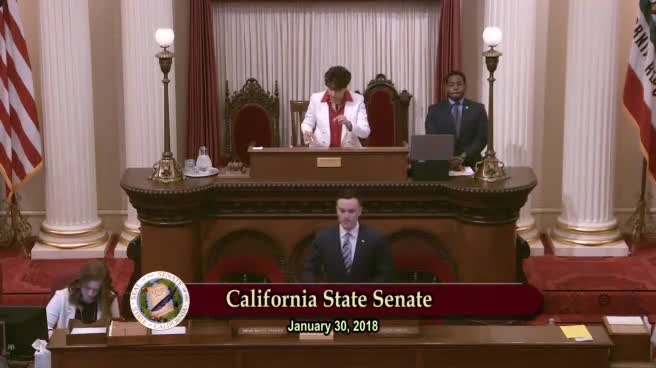
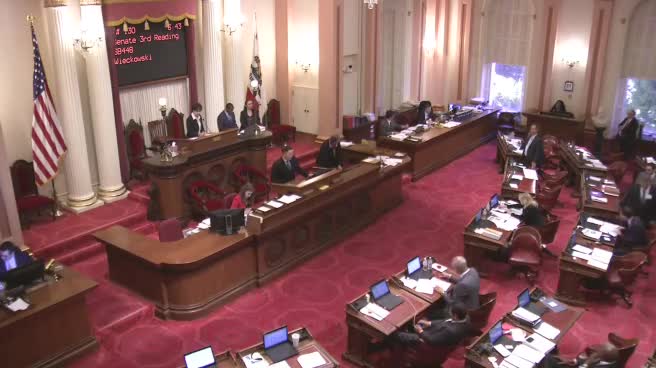

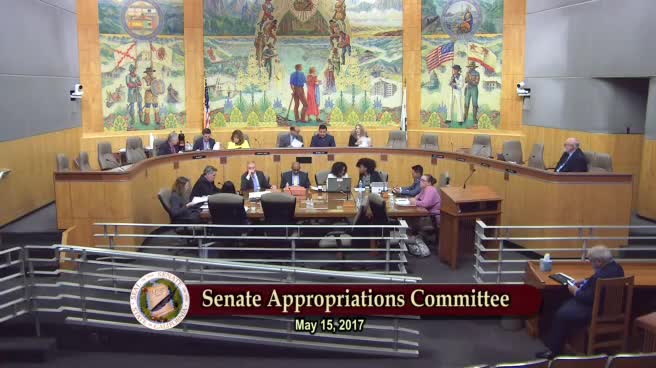
Bill Author


