SB 778: Water systems: consolidations: administrative and managerial services.
- Session Year: 2017-2018
- House: Senate
- Latest Version Date: 2017-07-13
Existing law declares it to be the established policy of the state that every human being has the right to safe, clean, affordable, and accessible water adequate for human consumption, cooking, and sanitary purposes.
Existing law, the California Safe Drinking Water Act, provides for the operation of public water systems and imposes on the State Water Resources Control Board various responsibilities and duties. The act authorizes the state board to order consolidation with a receiving water system where a public water system or a state small water system, serving a disadvantaged community, as defined, consistently fails to provide an adequate supply of safe drinking water. The act, if consolidation is either not appropriate or not technically and economically feasible, authorizes the state board to contract with an administrator to provide administrative and managerial services to designated public water systems and to order the designated public water system to accept administrative and managerial services, as specified.
This bill would require, on or before March 1, 2018, and regularly thereafter, as specified, the state board to track and publish on its Internet Web site an analysis of all voluntary and ordered consolidations of water systems, including publishing information on systems that have occurred on or after July 1, 2014. The bill would require the published information to include the resulting outcomes of the consolidations and whether the consolidations have succeeded or failed in providing an adequate supply of safe drinking water to the communities served by the consolidated water systems.
Existing law declares it to be the established policy of the state that every human being has the right to safe, clean, affordable, and accessible water adequate for human consumption, cooking, and sanitary purposes.
Existing law, the California Safe Drinking Water Act, provides for the operation of public water systems and imposes on the State Water Resources Control Board various responsibilities and duties. The act authorizes the state board to order consolidation with a receiving water system where a public water system or a state small water system, serving a disadvantaged community, as defined, consistently fails to provide an adequate supply of safe drinking water. The act, if consolidation is either not appropriate or not technically and economically feasible, authorizes the state board to contract with an administrator to provide administrative and managerial services to designated public water systems and to order the designated public water system to accept administrative and managerial services, as specified.
This bill would require, on or before March 1, 2018, the state board to track and publish on its Internet Web site an analysis of all voluntary and ordered consolidations of water systems, including publishing information on the resulting outcomes of the consolidations and whether the consolidations have succeeded or failed in providing an adequate supply of safe drinking water to the communities served by the consolidated water systems.
This bill would create the Safe Drinking Water Fund, and would make moneys in the fund available, upon appropriation by the Legislature, for the purposes of contracting with an administrator to provide administrative and managerial services to designated public water systems and ordering the designated public water system to accept the administrative and managerial services.Existing law declares it to be the established policy of the state that every human being has the right to safe, clean, affordable, and accessible water adequate for human consumption, cooking, and sanitary purposes.
Existing law, the California Safe Drinking Water Act, provides for the operation of public water systems and imposes on the State Water Resources Control Board various responsibilities and duties. The act authorizes the state board to order consolidation with a receiving water system where a public water system or a state small water system, serving a disadvantaged community, as defined, consistently fails to provide an adequate supply of safe drinking water. The act, if consolidation is either not appropriate or not technically or and economically feasible, authorizes the state board to contract with an administrator to provide administrative and managerial services to designated public water systems and to order the designated public water system to accept administrative and managerial services, as specified.
This bill would require, on or before March 1, 2018, the state board to submit a report to the Legislature on track and publish on its Internet Web site an analysis of all voluntary and ordered consolidations of water systems, including publishing information on the resulting outcomes of the consolidations and whether the consolidations have succeeded or failed in providing an adequate supply of safe drinking water to the communities served by the consolidated water systems.
This bill would create the Safe Drinking Water Fund, and would continuously appropriate make moneys in the fund available, upon appropriation by the Legislature, for the purposes of contracting with an administrator to provide administrative and managerial services to designated public water systems and ordering the designated public water system to accept the administrative and managerial services.
Existing law declares it to be the established policy of the state that every human being has the right to safe, clean, affordable, and accessible water adequate for human consumption, cooking, and sanitary purposes.
Existing law, the California Safe Drinking Water Act, provides for the operation of public water systems and imposes on the State Water Resources Control Board various responsibilities and duties. The act authorizes the state board to order consolidation with a receiving water system where a public water system or a state small water system, serving a disadvantaged community, as defined, consistently fails to provide an adequate supply of safe drinking water. The act, if consolidation is not appropriate or technically or economically feasible, authorizes the state board to contract with an administrator to provide administrative and managerial services to designated public water systems and to order the designated public water system to accept administrative and managerial services, as specified.
This bill would require, on or before March 1, 2018, the state board to submit a report to the Legislature on voluntary and ordered consolidations of water systems, including the resulting outcomes of the consolidations and whether the consolidations have succeeded or failed in providing an adequate supply of safe drinking water to the communities served by the consolidated water systems.
This bill would create the Safe Drinking Water Fund, and would continuously appropriate moneys in the fund for the purposes of contracting with an administrator to provide administrative and managerial services to designated public water systems and ordering the designated public water system to accept the administrative and managerial services.
Existing law declares it to be the established policy of the state that every human being has the right to safe, clean, affordable, and accessible water adequate for human consumption, cooking, and sanitary purposes.
Existing law, the California Safe Drinking Water Act, provides for the operation of public water systems and imposes on the State Water Resources Control Board various responsibilities and duties. The act authorizes the state board to order consolidation with a receiving water system where a public water system or a state small water system, serving a disadvantaged community, as defined, consistently fails to provide an adequate supply of safe drinking water. The act, if consolidation is not appropriate or technically or economically feasible, authorizes the state board to contract with an administrator to provide administrative and managerial services to designated public water systems and to order the designated public water system to accept administrative and managerial services, as specified.
This bill would create the Safe Drinking Water Fund, and would continuously appropriate moneys in the fund for the purposes of contracting with an administrator to provide administrative and managerial services to designated public water systems and ordering the designated public water system to accept the administrative and managerial services.
Under existing law, it is the policy of the state that every human being has the right to safe, clean, affordable, and accessible water adequate for human consumption, cooking, and sanitary purposes.This bill would declare the intent of the Legislature to enact subsequent legislation that would impose a charge, moneys from which would assist the state in providing safe drinking water to the residents of California.Under existing law, it is the policy of the state that every human being has the right to safe, clean, affordable, and accessible water adequate for human consumption, cooking, and sanitary purposes.
This bill would declare the intent of the Legislature to enact subsequent legislation that would impose a charge, moneys from which would assist the state in providing safe drinking water to the residents of California.
(a)Where a public water system or a state small water system, serving a disadvantaged community, consistently fails to provide an adequate supply of safe drinking water, the state board may order consolidation with a receiving water system as provided in this section and Section 116684. The consolidation may be physical or operational. The state board may also order the extension of service to an area within a disadvantaged community that does not have access to an adequate supply of safe drinking water so long as the extension of service is an interim extension of service in preparation for consolidation. The state board may set timelines and performance measures to facilitate completion of consolidation.
(b)Before ordering consolidation or extension of service as provided in this section, the state board shall do all of the following:
(1)Encourage voluntary consolidation or extension of service.
(2)Consider other enforcement remedies specified in this article.
(3)Consult with, and fully consider input from, the relevant local agency formation commission regarding the provision of water service in the affected area, the recommendations for improving service in a municipal service review, and any other relevant information.
(4)Consult with, and fully consider input from, the Public Utilities Commission when the consolidation would involve a water corporation subject to the commissions jurisdiction.
(5)Consult with, and fully consider input from, the local government with land use planning authority over the affected area, particularly regarding any information in the general plan required by Section 65302.10 of the Government Code.
(6)Consult with, and fully consider input from, all public water systems in the chain of distribution of the potentially receiving water systems.
(7)(A)Notify the potentially receiving water system and the potentially subsumed water system, if any, and establish a reasonable deadline of no less than six months, unless a shorter period is justified, for the potentially receiving water system and the potentially subsumed water system, if any, to negotiate consolidation or another means of providing an adequate supply of safe drinking water.
(B)During this period, the state board shall provide technical assistance and work with the potentially receiving water system and the potentially subsumed water system to develop a financing package that benefits both the water systems.
(C)Upon a showing of good cause, the deadline may be extended by the state board at the request of the potentially receiving water system, potentially subsumed water system, or the local agency formation commission with jurisdiction over the potentially subsumed water system.
(8)Obtain written consent from any domestic well owner for consolidation or extension of service. A domestic well owner within the consolidation or extended service area who does not provide written consent shall be ineligible, until the consent is provided, for any future water-related grant funding from the state other than funding to mitigate a well failure, disaster, or other emergency.
(9)(A)Hold at least one public meeting at the initiation of this process in a place as close as feasible to the affected areas. The state board shall make reasonable efforts to provide a 30-day notice of the meeting to the ratepayers, renters, and property owners to receive water service through service extension or in the area of the subsumed water system and all affected local government agencies and drinking water service providers. The meeting shall provide representatives of the potentially subsumed water system, affected ratepayers, renters, property owners, and the potentially receiving water system an opportunity to present testimony. The meeting shall provide an opportunity for public comment.
(B)An initial public meeting shall not be required for a potentially subsumed area that is served only by domestic wells.
(c)Upon expiration of the deadline set by the state board pursuant to paragraph (7) of subdivision (b), the state board shall do the following:
(1)Consult with the potentially receiving water system and the potentially subsumed water system, if any.
(2)(A)Conduct a public hearing, in a location as close as feasible to the affected communities.
(B)The state board shall make reasonable efforts to provide a 30-day notice of the hearing to the ratepayers, renters, and property owners to receive water service through service extension or in the area of the subsumed water system and to all affected local government agencies and drinking water service providers.
(C)The hearing shall provide representatives of the potentially subsumed water system, affected ratepayers, renters, property owners, and the potentially receiving water system an opportunity to present testimony.
(D)The hearing shall provide an opportunity for public comment.
(d)Before ordering consolidation or extension of service, the state board shall find all of the following:
(1)The potentially subsumed water system has consistently failed to provide an adequate supply of safe drinking water.
(2)All reasonable efforts to negotiate consolidation or extension of service were made.
(3)Consolidation of the receiving water system and subsumed water system or extension of service is appropriate and technically and economically feasible.
(4)There is no pending local agency formation commission process that is likely to resolve the problem in a reasonable amount of time.
(5)Concerns regarding water rights and water contracts of the subsumed and receiving water systems have been adequately addressed.
(6)Consolidation or extension of service is the most effective and cost-effective means to provide an adequate supply of safe drinking water.
(7)The capacity of the proposed interconnection needed to accomplish the consolidation is limited to serving the current customers of the subsumed water system.
(e)Upon ordering consolidation or extension of service, the state board shall do all of the following:
(1)As necessary and appropriate, make funds available, upon appropriation by the Legislature, to the receiving water system for the costs of completing the consolidation or extension of service, including, but not limited to, replacing any capacity lost as a result of the consolidation or extension of service, providing additional capacity needed as a result of the consolidation or extension of service, and legal fees. Funding pursuant to this paragraph is available for the general purpose of providing financial assistance for the infrastructure needed for the consolidation or extension of service and does not need to be specific to each individual consolidation project. The state board shall provide appropriate financial assistance for the infrastructure needed for the consolidation or extension of service. The state boards existing financial assistance guidelines and policies shall be the basis for the financial assistance.
(2)Ensure payment of standard local agency formation commission fees caused by state board-ordered consolidation or extension of service.
(3)Adequately compensate the owners of a privately owned subsumed water system for the fair market value of the system, as determined by the Public Utilities Commission or the state board.
(4)Coordinate with the appropriate local agency formation commission and other relevant local agencies to facilitate the change of organization or reorganization.
(f)(1)For the purposes of this section, the consolidated water system shall not increase charges on existing customers of the receiving water system solely as a consequence of the consolidation or extension of service unless the customers receive a corresponding benefit.
(2)For purposes of this section, fees or charges imposed on a customer of a subsumed water system shall not exceed the cost of consolidating the water system with a receiving system or the extension of service to the area.
(g)Division 3 (commencing with Section 56000) of Title 5 of the Government Code shall not apply to an action taken by the state board pursuant to this section.
(h)On or before March 1, 2018, and regularly thereafter, but not less than once per year, the state board shall track and publish on its Internet Web site an analysis of all voluntary and ordered consolidations of water systems, including, but not limited to, those under this article. article, that have occurred on and after July 1, 2014. The information published shall include the resulting outcomes of consolidating the water systems and whether consolidations have succeeded or failed in providing an adequate supply of safe drinking water to the communities served by the consolidated water systems.
(i)(1)The requirement for submitting a report imposed under subdivision (h) is inoperative on March 1, 2022, pursuant to Section 10231.5 of the Government Code.(2)A report to be submitted pursuant to subdivision (h) shall be submitted in compliance with Section 9795 of the Government Code.(a)Where a public water system or a state small water system, serving a disadvantaged community, consistently fails to provide an adequate supply of safe drinking water, the state board may order consolidation with a receiving water system as provided in this section and Section 116684. The consolidation may be physical or operational. The state board may also order the extension of service to an area within a disadvantaged community that does not have access to an adequate supply of safe drinking water so long as the extension of service is an interim extension of service in preparation for consolidation. The state board may set timelines and performance measures to facilitate completion of consolidation.
(b)Before ordering consolidation or extension of service as provided in this section, the state board shall do all of the following:
(1)Encourage voluntary consolidation or extension of service.
(2)Consider other enforcement remedies specified in this article.
(3)Consult with, and fully consider input from, the relevant local agency formation commission regarding the provision of water service in the affected area, the recommendations for improving service in a municipal service review, and any other relevant information.
(4)Consult with, and fully consider input from, the Public Utilities Commission when the consolidation would involve a water corporation subject to the commissions jurisdiction.
(5)Consult with, and fully consider input from, the local government with land use planning authority over the affected area, particularly regarding any information in the general plan required by Section 65302.10 of the Government Code.
(6)Consult with, and fully consider input from, all public water systems in the chain of distribution of the potentially receiving water systems.
(7)(A)Notify the potentially receiving water system and the potentially subsumed water system, if any, and establish a reasonable deadline of no less than six months, unless a shorter period is justified, for the potentially receiving water system and the potentially subsumed water system, if any, to negotiate consolidation or another means of providing an adequate supply of safe drinking water.
(B)During this period, the state board shall provide technical assistance and work with the potentially receiving water system and the potentially subsumed water system to develop a financing package that benefits both the water systems.
(C)Upon a showing of good cause, the deadline may be extended by the state board at the request of the potentially receiving water system, potentially subsumed water system, or the local agency formation commission with jurisdiction over the potentially subsumed water system.
(8)Obtain written consent from any domestic well owner for consolidation or extension of service. A domestic well owner within the consolidation or extended service area who does not provide written consent shall be ineligible, until the consent is provided, for any future water-related grant funding from the state other than funding to mitigate a well failure, disaster, or other emergency.
(9)(A)Hold at least one public meeting at the initiation of this process in a place as close as feasible to the affected areas. The state board shall make reasonable efforts to provide a 30-day notice of the meeting to the ratepayers, renters, and property owners to receive water service through service extension or in the area of the subsumed water system and all affected local government agencies and drinking water service providers. The meeting shall provide representatives of the potentially subsumed water system, affected ratepayers, renters, property owners, and the potentially receiving water system an opportunity to present testimony. The meeting shall provide an opportunity for public comment.
(B)An initial public meeting shall not be required for a potentially subsumed area that is served only by domestic wells.
(c)Upon expiration of the deadline set by the state board pursuant to paragraph (7) of subdivision (b), the state board shall do the following:
(1)Consult with the potentially receiving water system and the potentially subsumed water system, if any.
(2)(A)Conduct a public hearing, in a location as close as feasible to the affected communities.
(B)The state board shall make reasonable efforts to provide a 30-day notice of the hearing to the ratepayers, renters, and property owners to receive water service through service extension or in the area of the subsumed water system and to all affected local government agencies and drinking water service providers.
(C)The hearing shall provide representatives of the potentially subsumed water system, affected ratepayers, renters, property owners, and the potentially receiving water system an opportunity to present testimony.
(D)The hearing shall provide an opportunity for public comment.
(d)Before ordering consolidation or extension of service, the state board shall find all of the following:
(1)The potentially subsumed water system has consistently failed to provide an adequate supply of safe drinking water.
(2)All reasonable efforts to negotiate consolidation or extension of service were made.
(3)Consolidation of the receiving water system and subsumed water system or extension of service is appropriate and technically and economically feasible.
(4)There is no pending local agency formation commission process that is likely to resolve the problem in a reasonable amount of time.
(5)Concerns regarding water rights and water contracts of the subsumed and receiving water systems have been adequately addressed.
(6)Consolidation or extension of service is the most effective and cost-effective means to provide an adequate supply of safe drinking water.
(7)The capacity of the proposed interconnection needed to accomplish the consolidation is limited to serving the current customers of the subsumed water system.
(e)Upon ordering consolidation or extension of service, the state board shall do all of the following:
(1)As necessary and appropriate, make funds available, upon appropriation by the Legislature, to the receiving water system for the costs of completing the consolidation or extension of service, including, but not limited to, replacing any capacity lost as a result of the consolidation or extension of service, providing additional capacity needed as a result of the consolidation or extension of service, and legal fees. Funding pursuant to this paragraph is available for the general purpose of providing financial assistance for the infrastructure needed for the consolidation or extension of service and does not need to be specific to each individual consolidation project. The state board shall provide appropriate financial assistance for the infrastructure needed for the consolidation or extension of service. The state boards existing financial assistance guidelines and policies shall be the basis for the financial assistance.
(2)Ensure payment of standard local agency formation commission fees caused by state board-ordered consolidation or extension of service.
(3)Adequately compensate the owners of a privately owned subsumed water system for the fair market value of the system, as determined by the Public Utilities Commission or the state board.
(4)Coordinate with the appropriate local agency formation commission and other relevant local agencies to facilitate the change of organization or reorganization.
(f)(1)For the purposes of this section, the consolidated water system shall not increase charges on existing customers of the receiving water system solely as a consequence of the consolidation or extension of service unless the customers receive a corresponding benefit.
(2)For purposes of this section, fees or charges imposed on a customer of a subsumed water system shall not exceed the cost of consolidating the water system with a receiving system or the extension of service to the area.
(g)Division 3 (commencing with Section 56000) of Title 5 of the Government Code shall not apply to an action taken by the state board pursuant to this section.
(h)On or before March 1, 2018, the state board shall track and publish on its Internet Web site an analysis of all voluntary and ordered consolidations of water systems, including, but not limited to, those under this article. The information published shall include the resulting outcomes of consolidating the water systems and whether consolidations have succeeded or failed in providing an adequate supply of safe drinking water to the communities served by the consolidated water systems.
(i)(1)The requirement for submitting a report imposed under subdivision (h) is inoperative on March 1, 2022, pursuant to Section 10231.5 of the Government Code.
(2)A report to be submitted pursuant to subdivision (h) shall be submitted in compliance with Section 9795 of the Government Code.
SEC. 2.Chapter 4.1 (commencing with Section 116756) is added to Part 12 of Division 104 of the Health and Safety Code, to read:4.1.Safe Drinking Water Fund116756.(a)The Legislature finds and declares the following:(1)It is an established state policy that all Californians have a right to safe, clean, and affordable water for drinking, cooking, and cleaning.(2)Too many Californians, largely in the most disadvantaged communities, rely in whole or in part on contaminated groundwater for their drinking water. These communities often lack the resources needed to operate and maintain water treatment systems to deliver safe and affordable water.(3)Thousands of families are in homes with tapwater that is so polluted that it cannot be safely consumed.(b)It is the intent of the Legislature, in enacting this chapter, to achieve the established state policy, to ensure that all Californians have access to safe, affordable drinking water, and to support the human right to water without overburdening low-income ratepayers.116757.There is hereby created in the State Treasury the Safe Drinking Water Fund. Moneys in the fund shall be available, upon appropriation by the Legislature, to the state board for expenditure to implement Section 116686.(a)Where a public water system or a state small water system, serving a disadvantaged community, consistently fails to provide an adequate supply of safe drinking water, the state board may order consolidation with a receiving water system as provided in this section and Section 116684. The consolidation may be physical or operational. The state board may also order the extension of service to an area within a disadvantaged community that does not have access to an adequate supply of safe drinking water so long as the extension of service is an interim extension of service in preparation for consolidation. The state board may set timelines and performance measures to facilitate completion of consolidation.
(b)Before ordering consolidation or extension of service as provided in this section, the state board shall do all of the following:
(1)Encourage voluntary consolidation or extension of service.
(2)Consider other enforcement remedies specified in this article.
(3)Consult with, and fully consider input from, the relevant local agency formation commission regarding the provision of water service in the affected area, the recommendations for improving service in a municipal service review, and any other relevant information.
(4)Consult with, and fully consider input from, the Public Utilities Commission when the consolidation would involve a water corporation subject to the commissions jurisdiction.
(5)Consult with, and fully consider input from, the local government with land use planning authority over the affected area, particularly regarding any information in the general plan required by Section 65302.10 of the Government Code.
(6)Consult with, and fully consider input from, all public water systems in the chain of distribution of the potentially receiving water systems.
(7)(A)Notify the potentially receiving water system and the potentially subsumed water system, if any, and establish a reasonable deadline of no less than six months, unless a shorter period is justified, for the potentially receiving water system and the potentially subsumed water system, if any, to negotiate consolidation or another means of providing an adequate supply of safe drinking water.
(B)During this period, the state board shall provide technical assistance and work with the potentially receiving water system and the potentially subsumed water system to develop a financing package that benefits both the water systems.
(C)Upon a showing of good cause, the deadline may be extended by the state board at the request of the potentially receiving water system, potentially subsumed water system, or the local agency formation commission with jurisdiction over the potentially subsumed water system.
(8)Obtain written consent from any domestic well owner for consolidation or extension of service. A domestic well owner within the consolidation or extended service area who does not provide written consent shall be ineligible, until the consent is provided, for any future water-related grant funding from the state other than funding to mitigate a well failure, disaster, or other emergency.
(9)(A)Hold at least one public meeting at the initiation of this process in a place as close as feasible to the affected areas. The state board shall make reasonable efforts to provide a 30-day notice of the meeting to the ratepayers, renters, and property owners to receive water service through service extension or in the area of the subsumed water system and all affected local government agencies and drinking water service providers. The meeting shall provide representatives of the potentially subsumed water system, affected ratepayers, renters, property owners, and the potentially receiving water system an opportunity to present testimony. The meeting shall provide an opportunity for public comment.
(B)An initial public meeting shall not be required for a potentially subsumed area that is served only by domestic wells.
(c)Upon expiration of the deadline set by the state board pursuant to paragraph (7) of subdivision (b), the state board shall do the following:
(1)Consult with the potentially receiving water system and the potentially subsumed water system, if any.
(2)(A)Conduct a public hearing, in a location as close as feasible to the affected communities.
(B)The state board shall make reasonable efforts to provide a 30-day notice of the hearing to the ratepayers, renters, and property owners to receive water service through service extension or in the area of the subsumed water system and to all affected local government agencies and drinking water service providers.
(C)The hearing shall provide representatives of the potentially subsumed water system, affected ratepayers, renters, property owners, and the potentially receiving water system an opportunity to present testimony.
(D)The hearing shall provide an opportunity for public comment.
(d)Before ordering consolidation or extension of service, the state board shall find all of the following:
(1)The potentially subsumed water system has consistently failed to provide an adequate supply of safe drinking water.
(2)All reasonable efforts to negotiate consolidation or extension of service were made.
(3)Consolidation of the receiving water system and subsumed water system or extension of service is appropriate and technically and economically feasible.
(4)There is no pending local agency formation commission process that is likely to resolve the problem in a reasonable amount of time.
(5)Concerns regarding water rights and water contracts of the subsumed and receiving water systems have been adequately addressed.
(6)Consolidation or extension of service is the most effective and cost-effective means to provide an adequate supply of safe drinking water.
(7)The capacity of the proposed interconnection needed to accomplish the consolidation is limited to serving the current customers of the subsumed water system.
(e)Upon ordering consolidation or extension of service, the state board shall do all of the following:
(1)As necessary and appropriate, make funds available, upon appropriation by the Legislature, to the receiving water system for the costs of completing the consolidation or extension of service, including, but not limited to, replacing any capacity lost as a result of the consolidation or extension of service, providing additional capacity needed as a result of the consolidation or extension of service, and legal fees. Funding pursuant to this paragraph is available for the general purpose of providing financial assistance for the infrastructure needed for the consolidation or extension of service and does not need to be specific to each individual consolidation project. The state board shall provide appropriate financial assistance for the infrastructure needed for the consolidation or extension of service. The state boards existing financial assistance guidelines and policies shall be the basis for the financial assistance.
(2)Ensure payment of standard local agency formation commission fees caused by state board-ordered consolidation or extension of service.
(3)Adequately compensate the owners of a privately owned subsumed water system for the fair market value of the system, as determined by the Public Utilities Commission or the state board.
(4)Coordinate with the appropriate local agency formation commission and other relevant local agencies to facilitate the change of organization or reorganization.
(f)(1)For the purposes of this section, the consolidated water system shall not increase charges on existing customers of the receiving water system solely as a consequence of the consolidation or extension of service unless the customers receive a corresponding benefit.
(2)For purposes of this section, fees or charges imposed on a customer of a subsumed water system shall not exceed the cost of consolidating the water system with a receiving system or the extension of service to the area.
(g)Division 3 (commencing with Section 56000) of Title 5 of the Government Code shall not apply to an action taken by the state board pursuant to this section.
(h)On or before March 1, 2018, the state board shall submit a report to the Legislature analyzing track and publish on its Internet Web site an analysis of all voluntary and ordered consolidations of water systems systems, including, but not limited to, those under this article. The report information published shall include the resulting outcomes of consolidating the water systems and whether consolidations have succeeded or failed in providing an adequate supply of safe drinking water to the communities served by the consolidated water systems.
(i)(1)The requirement for submitting a report imposed under subdivision (h) is inoperative on March 1, 2022, pursuant to Section 10231.5 of the Government Code.
(2)A report to be submitted pursuant to subdivision (h) shall be submitted in compliance with Section 9795 of the Government Code.
SEC. 2.Chapter 4.1 (commencing with Section 116756) is added to Part 12 of Division 104 of the Health and Safety Code, to read:4.1.Safe Drinking Water Fund116756.(a)The Legislature finds and declares the following:
(1)It is an established state policy that all Californians have a right to safe, clean, and affordable water for drinking, cooking, and cleaning.
(2)Too many Californians, largely in the most disadvantaged communities, rely in whole or in part on contaminated groundwater for their drinking water. These communities often lack the resources needed to operate and maintain water treatment systems to deliver safe and affordable water.
(3)Thousands of families are in homes with tapwater that is so polluted that it cannot be safely consumed.
(b)It is the intent of the Legislature, in enacting this chapter, to achieve the established state policy, to ensure that all Californians have access to safe, affordable drinking water, and to support the human right to water without overburdening low-income ratepayers.
116757.There is hereby created in the State Treasury the Safe Drinking Water Fund. Notwithstanding Section 13340 of the Government Code, moneys in the fund are hereby continuously appropriated, without regard to fiscal years, Moneys in the fund shall be available, upon appropriation by the Legislature, to the state board for expenditure to implement Section 116686.
(a)Where a public water system or a state small water system, serving a disadvantaged community, consistently fails to provide an adequate supply of safe drinking water, the state board may order consolidation with a receiving water system as provided in this section and Section 116684. The consolidation may be physical or operational. The state board may also order the extension of service to an area within a disadvantaged community that does not have access to an adequate supply of safe drinking water so long as the extension of service is an interim extension of service in preparation for consolidation. The state board may set timelines and performance measures to facilitate completion of consolidation.
(b)Before ordering consolidation or extension of service as provided in this section, the state board shall do all of the following:
(1)Encourage voluntary consolidation or extension of service.
(2)Consider other enforcement remedies specified in this article.
(3)Consult with, and fully consider input from, the relevant local agency formation commission regarding the provision of water service in the affected area, the recommendations for improving service in a municipal service review, and any other relevant information.
(4)Consult with, and fully consider input from, the Public Utilities Commission when the consolidation would involve a water corporation subject to the commissions jurisdiction.
(5)Consult with, and fully consider input from, the local government with land use planning authority over the affected area, particularly regarding any information in the general plan required by Section 65302.10 of the Government Code.
(6)Consult with, and fully consider input from, all public water systems in the chain of distribution of the potentially receiving water systems.
(7)(A)Notify the potentially receiving water system and the potentially subsumed water system, if any, and establish a reasonable deadline of no less than six months, unless a shorter period is justified, for the potentially receiving water system and the potentially subsumed water system, if any, to negotiate consolidation or another means of providing an adequate supply of safe drinking water.
(B)During this period, the state board shall provide technical assistance and work with the potentially receiving water system and the potentially subsumed water system to develop a financing package that benefits both the receiving water system and the subsumed water system. water systems.
(C)Upon a showing of good cause, the deadline may be extended by the state board at the request of the potentially receiving water system, potentially subsumed water system, or the local agency formation commission with jurisdiction over the potentially subsumed water system.
(8)Obtain written consent from any domestic well owner for consolidation or extension of service. Any A domestic well owner within the consolidation or extended service area who does not provide written consent shall be ineligible, until the consent is provided, for any future water-related grant funding from the state other than funding to mitigate a well failure, disaster, or other emergency.
(9)(A)Hold at least one public meeting at the initiation of this process in a place as close as feasible to the affected areas. The state board shall make reasonable efforts to provide a 30-day notice of the meeting to the ratepayers, renters, and property owners to receive water service through service extension or in the area of the subsumed water system and all affected local government agencies and drinking water service providers. The meeting shall provide representatives of the potentially subsumed water system, affected ratepayers, renters, property owners, and the potentially receiving water system an opportunity to present testimony. The meeting shall provide an opportunity for public comment.
(B)An initial public meeting shall not be required for a potentially subsumed area that is served only by domestic wells.
(c)Upon expiration of the deadline set by the state board pursuant to paragraph (7) of subdivision (b), the state board shall do the following:
(1)Consult with the potentially receiving water system and the potentially subsumed water system, if any.
(2)(A)Conduct a public hearing, in a location as close as feasible to the affected communities.
(B)The state board shall make reasonable efforts to provide a 30-day notice of the hearing to the ratepayers, renters, and property owners to receive water service through service extension or in the area of the subsumed water system and to all affected local government agencies and drinking water service providers.
(C)The hearing shall provide representatives of the potentially subsumed water system, affected ratepayers, renters, property owners, and the potentially receiving water system an opportunity to present testimony.
(D)The hearing shall provide an opportunity for public comment.
(d)Before ordering consolidation or extension of service, the state board shall find all of the following:
(1)The potentially subsumed water system has consistently failed to provide an adequate supply of safe drinking water.
(2)All reasonable efforts to negotiate consolidation or extension of service were made.
(3)Consolidation of the receiving water system and subsumed water system or extension of service is appropriate and technically and economically feasible.
(4)There is no pending local agency formation commission process that is likely to resolve the problem in a reasonable amount of time.
(5)Concerns regarding water rights and water contracts of the subsumed and receiving water systems have been adequately addressed.
(6)Consolidation or extension of service is the most effective and cost-effective means to provide an adequate supply of safe drinking water.
(7)The capacity of the proposed interconnection needed to accomplish the consolidation is limited to serving the current customers of the subsumed water system.
(e)Upon ordering consolidation or extension of service, the state board shall do all of the following:
(1)As necessary and appropriate, make funds available, upon appropriation by the Legislature, to the receiving water system for the costs of completing the consolidation or extension of service, including, but not limited to, replacing any capacity lost as a result of the consolidation or extension of service, providing additional capacity needed as a result of the consolidation or extension of service, and legal fees. Funding pursuant to this paragraph is available for the general purpose of providing financial assistance for the infrastructure needed for the consolidation or extension of service and does not need to be specific to each individual consolidation project. The state board shall provide appropriate financial assistance for the infrastructure needed for the consolidation or extension of service. The state boards existing financial assistance guidelines and policies shall be the basis for the financial assistance.
(2)Ensure payment of standard local agency formation commission fees caused by state board-ordered consolidation or extension of service.
(3)Adequately compensate the owners of a privately owned subsumed water system for the fair market value of the system, as determined by the Public Utilities Commission or the state board.
(4)Coordinate with the appropriate local agency formation commission and other relevant local agencies to facilitate the change of organization or reorganization.
(f)(1)For the purposes of this section, the consolidated water system shall not increase charges on existing customers of the receiving water system solely as a consequence of the consolidation or extension of service unless the customers receive a corresponding benefit.
(2)For purposes of this section, fees or charges imposed on a customer of a subsumed water system shall not exceed the cost of consolidating the water system with a receiving system or the extension of service to the area.
(g)Division 3 (commencing with Section 56000) of Title 5 of the Government Code shall not apply to an action taken by the state board pursuant to this section.
(h)On or before March 1, 2018, the state board shall submit a report to the Legislature analyzing voluntary and ordered consolidations of water systems under this article. The report shall include the resulting outcomes of consolidating the water systems and whether consolidations have succeeded or failed in providing an adequate supply of safe drinking water to the communities served by the consolidated water systems.
(i)(1)The requirement for submitting a report imposed under subdivision (h) is inoperative on March 1, 2022, pursuant to Section 10231.5 of the Government Code.
(2)A report to be submitted pursuant to subdivision (h) shall be submitted in compliance with Section 9795 of the Government Code.
SECTION 1.SEC. 2.Chapter 4.1 (commencing with Section 116756) is added to Part 12 of Division 104 of the Health and Safety Code, to read:4.1.Safe Drinking Water Fund116756.(a)The Legislature finds and declares the following:
(1)It is an established state policy that all Californians have a right to safe, clean, and affordable water for drinking, cooking, and cleaning.
(2)Too many Californians, largely in the most disadvantaged communities, rely in whole or in part on contaminated groundwater for their drinking water. These communities often lack the resources needed to operate and maintain water treatment systems to deliver safe and affordable water.
(3)Thousands of families are in homes with tapwater that is so polluted that it cannot be safely consumed.
(b)It is the intent of the Legislature, in enacting this chapter, to achieve the established state policy, to ensure that all Californians have access to safe, affordable drinking water, and to support the human right to water without overburdening low-income ratepayers.
116757.There is hereby created in the State Treasury the Safe Drinking Water Fund. Notwithstanding Section 13340 of the Government Code, moneys in the fund are hereby continuously appropriated, without regard to fiscal years, to the state board for expenditure to implement Section 116686.
(a)The Legislature finds and declares the following:
(1)It is an established state policy that all Californians have a right to safe, clean, and affordable water for drinking, cooking, and cleaning.
(2)Too many Californians, largely in the most disadvantaged communities, rely in whole or in part on contaminated groundwater for their drinking water. These communities often lack the resources needed to operate and maintain water treatment systems to deliver safe and affordable water.
(3)Thousands of families are in homes with tapwater that is so polluted that it cannot be safely consumed.
(b)It is the intent of the Legislature, in enacting this chapter, to achieve the established state policy, to ensure that all Californians have access to safe, affordable drinking water, and to support the human right to water without overburdening low-income ratepayers.
116757.There is hereby created in the State Treasury the Safe Drinking Water Fund. Notwithstanding Section 13340 of the Government Code, moneys in the fund are hereby continuously appropriated, without regard to fiscal years, to the state board for expenditure to implement Section 116686.
SECTION 1.It is the intent of the Legislature to enact subsequent legislation that would impose a charge, moneys from which would assist the state in providing safe drinking water to the residents of California.It is the intent of the Legislature to enact subsequent legislation that would impose a charge, moneys from which would assist the state in providing safe drinking water to the residents of California.
|
Date
|
Status
|
|---|---|
| Sep 1, 2017 | September 1 hearing: Held in committee and under submission. |
| Aug 23, 2017 | August 23 set for first hearing. Placed on suspense file. |
| Jul 13, 2017 | Read second time and amended. Re-referred to Com. on APPR. |
| Jul 12, 2017 | From committee: Do pass as amended and re-refer to Com. on APPR. (Ayes 7. Noes 0.) (July 11). |
| Jun 15, 2017 | Referred to Com. on E.S. & T.M. |
| Jun 1, 2017 | In Assembly. Read first time. Held at Desk. |
| May 31, 2017 | Read third time. Passed. (Ayes 38. Noes 1. Page 1336.) Ordered to the Assembly. |
| May 26, 2017 | Read second time and amended. Ordered to third reading. |
| May 25, 2017 | From committee: Do pass as amended. (Ayes 6. Noes 1. Page 1190.) (May 25). |
| May 19, 2017 | Set for hearing May 25. |
| May 15, 2017 | May 15 hearing: Placed on APPR. suspense file. |
| May 4, 2017 | Set for hearing May 15. |
| May 3, 2017 | May 8 hearing postponed by committee. |
| May 1, 2017 | Set for hearing May 8. |
| Apr 26, 2017 | Read second time and amended. Re-referred to Com. on APPR. |
| Apr 25, 2017 | From committee: Do pass as amended and re-refer to Com. on APPR. (Ayes 7. Noes 0. Page 785.) (April 19). |
| Apr 5, 2017 | From committee with author's amendments. Read second time and amended. Re-referred to Com. on EQ. |
| Mar 31, 2017 | Set for hearing April 19. |
| Mar 29, 2017 | Re-referred to Com. on EQ. |
| Mar 23, 2017 | From committee with author's amendments. Read second time and amended. Re-referred to Com. on RLS. |
| Mar 9, 2017 | Referred to Com. on RLS. |
| Feb 21, 2017 | From printer. May be acted upon on or after March 23. |
| Feb 17, 2017 | Introduced. Read first time. To Com. on RLS. for assignment. To print. |
|
Date
|
Description
|
Location
|
Votes
|
|
|---|---|---|---|---|
| Jul 11, 2017 | Do pass as amended and be re-referred to the Committee on [Appropriations] | Assembly Standing Committee on Environmental Safety and Toxic Materials |
Passed |
|
| May 31, 2017 | Senate 3rd Reading SB778 Hertzberg | Senate Floor |
Passed |
|
| May 25, 2017 | Do pass as amended | Senate Standing Committee on Appropriations |
Passed |
|
| May 15, 2017 | Placed on suspense file | Senate Standing Committee on Appropriations |
Passed |
|
| Apr 19, 2017 | Do pass as amended, but first amend, and re-refer to the Committee on [Appropriations] | Senate Standing Committee on Environmental Quality |
Passed |
This list shows positions taken on this bill by organizations on the date displayed, which is linked to the original source.
Positions by individuals are not included.
|
Organization
|
Position
|
Date
|
|---|---|---|
| Clean Water Action | ** Support | Jul 7, 2017 |
| Community Water Center | ** Support | Jul 7, 2017 |
| Leadership Counsel for Justice & Accountability | ** Support | Jul 7, 2017 |
Date of Hearing: August 23, 2017
ASSEMBLY COMMITTEE ON APPROPRIATIONS
Lorena Gonzalez Fletcher, Chair
SBPCA Bill Id:SB 778
Author:(Hertzberg) – As Amended Ver:July 13, 2017
Policy Committee: | Environmental Safety and Toxic Materials | Vote: | 7 - 0 |
|
| ||
|
|
Urgency: No State Mandated Local Program: No Reimbursable: No
SUMMARY:
This bill requires the State Water Resources Control Board (SWRCB) to post information on its Internet Website analyzing public water consolidations and their successes or failures. Specifically, this bill:
- Requires SWRCB, by March 1, 2018, and at least annually thereafter, to track and publish on its website an analysis of all drinking water system consolidations occurring on and after July 1, 2014, including but not limited to SWRCB-ordered consolidations.
- Requires the analysis to include whether consolidations have succeeded or failed in providing an adequate supply of safe drinking water to the communities served by the consolidated systems.
FISCAL EFFECT:
According to SWRB, no additional resources are necessary to accomplish the requirements of this bill.
COMMENTS:
Background and Purpose. Senate Bill 88 (Committee on Budget and Fiscal Review), Chapter 27, Statutes 2015, authorized SWRCB to require certain water systems that consistently fail to provide safe drinking water to consolidate with, or receive an extension of service from, another public water system. The consolidation can be physical or managerial. Although for many years the State's Drinking Water program has encouraged, and will likely continue to encourage, voluntary consolidations of public water systems, this authority allows the state to mandate consolidation of water systems when other options are not appropriate.
Under this relatively new law, SWRCB’s Division of Drinking Water (DDW) issues letters to water systems to consolidate with, or seek an extension of service, from a public water system. The recipients of such letters have up to six months from the date the letter is issued to voluntarily consolidate with, or receive extension of service from, a public water system.
To date, there have been two mandatory consolidations completed, and there have been more than 100 voluntary consolidations in that time period. And within those voluntary consolidations, SWRCB has had varying levels of participation; for about 40 SWRCB helped to fund for some SWRCB provided guidance, and for others for SWRCB just issued a permit.
SWRCB currently posts information on its website about ordered consolidations. It also tracks and has information on voluntary consolidations. When a drinking water systems voluntarily consolidate, DDW must be informed and will review the consolidation, and re-issue a new water supply permit to the water system and delete from their system inventory any water system(s) that cease to exist through the consolidation.
According to the author, “SB 778 requires the [SWRCB] to publish on its website the outcomes of voluntary or ordered consolidations and whether they have succeeded or failed in providing an adequate supply of safe drinking water.”
Analysis Prepared by: Jennifer Galehouse / APPR. / (916) 319-2081
Date of Hearing: July 11, 2017
ASSEMBLY COMMITTEE ON ENVIRONMENTAL SAFETY AND TOXIC MATERIALS
Bill Quirk, Chair
SBPCA Bill Id:SB 778
Author:(Hertzberg) – As Amended Ver:May 26, 2017
SENATE VOTE: 38-1
SUBJECT: Water systems: consolidations: administrative and managerial services
SUMMARY: Requires the State Water Resources Control Board (State Water Board) to post information on its Internet Website analyzing the public water consolidations and their successes or failures to date. Specifically, this bill:
- Requires, on or before March 1, 2018, the State Water Board to track and publish on its Internet Website an analysis of all voluntary and ordered consolidations of drinking water systems. Requires the information published to include the resulting outcomes of consolidating the water systems and whether consolidations have succeeded or failed in providing an adequate supply of safe drinking water to the communities served by the consolidated water systems.
- Sunsets the one-time requirement on March 1, 2022.
EXISTING LAW:
- Pursuant to the federal Safe Drinking Water Act (SDWA), authorizes the United States Environmental Protection Agency (US EPA) to set standards for drinking water quality and to oversee the states, localities, and water suppliers who implement those standards.
- Pursuant to the California SDWA, requires the State Water Board to regulate drinking water and to enforce the federal SDWA and other regulations. (Health and Safety Code (HSC) § 116275 et seq.)
- Authorizes the State Water Board, where a public water system or a state small water system within a disadvantaged community, consistently fails to provide an adequate supply of safe drinking water, to order consolidation with a receiving water system. Provides that the consolidation may be physical or operational. (HSC § 116682 (a))
- Requires any legislation that imposes a reporting requirement to include a provision that repeals the reporting requirement, or makes the reporting requirement inoperative, four years after the date on which the requirement becomes operative. (Government Code § 10231.5)
- Establishes requirements for disseminating state agency reports to the Legislature. (Government Code § 9795)
FISCAL EFFECT: Unknown.
COMMENTS:
Need for the bill: According to the author,
"All Californians have a right to safe, clean, and affordable water for drinking, cooking, and cleaning. Thousands of families are in homes with tap water that is so polluted that it cannot be safely consumed. The State Water Resources Control Board [State Water Board] currently maintains a list of under resourced water systems on the Human Right to Water web portal. According to the [State Water Board], 292 public water systems are out of compliance with federal drinking water standards for contaminants such as nitrate and arsenic.
Current law allows the [State Water Board] to identify failing water systems and order consolidation or extension of services with another water system in order to provide an adequate supply of safe drinking water.
SB 778 requires the [State Water Board] to publish on its website the outcomes of voluntary or ordered consolidations and whether they have succeeded or failed in providing an adequate supply of safe drinking water."
Drinking water needs: According to the State Water Board, 98% of Californians are served by public water systems drinking water that meets federal and state drinking water standards, which leaves 2% of Californians with drinking water that fails to meet drinking water standards.
Nitrates, hexavalent chromium, perchlorate, arsenic, and other contaminants are present in water supplies across the state, and water treatment can be very costly. It is estimated that more than 1 million California residents who live in mostly rural areas have unreliable access to safe drinking water. Findings from a 2012 University of California at Davis study, Addressing Nitrate in California's Drinking Water, suggest that drinking water contamination in California disproportionally affects small, rural, and low-income communities that depend mostly on groundwater as their drinking water source.
According to the US EPA Small Drinking Water Systems research, drinking water treatment plants are increasingly being challenged by changes in the quality of their source waters and by their aging treatment and distribution system infrastructure. Factors such as shrinking water due to the statewide drought, limited financial resources, climate change, agricultural runoff, harmful algal blooms, and industrial land use increase the probability that chemicals that have not previously been detected in water, or that are being detected at significantly different levels than expected. This is likely to disproportionately affect small drinking water systems due to limited resources and treatment options, among other factors.
Consolidation in California: Consolidation is the joining of two or more water systems, which includes, usually but not always, a smaller system being absorbed into a larger water system. One way to do this is through physical consolidation. For example, a small mobile home park which has its own water system may be near a city and decides it no longer wishes to be responsible for providing drinking water. The city can begin providing water to the mobile home park through an interconnection. The mobile home park can dissolve its water system and no longer be responsible for providing water. In this case, we call the city the "receiving" water system and the mobile home park the "subsumed" water system.
Managerial consolidations also exist. Managerial consolidation is when a small water system becomes part of a larger water system for all managerial purposes, but continues to use their original water supply and distribution system. For example, a small community may once have had an all-volunteer staff. The volunteer staff may be aging and no longer wants to be responsible for the water system. The water system may be too far from the large water system to make it cost-effective to physically consolidate. The larger water system can legally take over the water system functions such as regulatory reporting, billing, operations, etc., but use its existing infrastructure. The smaller water system dissolves and is no longer legally responsible for water service.
According to the US EPA, restructuring can be an effective means to help small water systems achieve and maintain technical, managerial, and financial capacity, and to reduce the oversight and resources that states need to devote to these systems. The State Water Board maintains that consolidating public water systems and extending service from existing public water systems to communities and areas which currently rely on under-performing or failing small water systems, as well as private wells, reduces costs and improves reliability.
To promote consolidation in California, CDPH, which is the State Water Board's processor to managing the state's drinking water program, established the Consolidation Incentive Program (Program). The Program provided an incentive to encourage larger, compliant water systems to consolidate with nearby noncompliant systems. Previously, CDPH only invited drinking water systems that were out of compliance with drinking water standards to submit applications for Safe Drinking Water State Revolving Fund (SDWSRF) funding. However, through the consolidation incentive process, lower-ranked projects for compliant systems that hadn't previously received SDWSRF invitations became eligible for SDWSRF funding. By agreeing to consolidate with a neighboring noncompliant system, CDPH re-ranked low-ranked, compliant system projects into a fundable category.
In order to provide further support and direction for the state's consolidation efforts, AB 783 (Arambula, Chapter 614, Statutes of 2007) required CDPH to prioritize funding of water projects in disadvantaged communities, and directed CDPH to encourage; provide funds for and studies on; and, prioritize funding for projects that consolidate small public water systems in certain situations.
The State Water Board received authority over the state's drinking water program in July 2014, and since that time, the consolidation of failing drinking water systems in order to supply safe, affordable, and reliable drinking water has been a priority for the State Water Board.
Effective June 24, 2015, Senate Bill 88 (Statutes 2015, Chapter 27) authorized the State Water Board to require certain water systems that consistently fail to provide safe drinking water to consolidate with, or receive an extension of service from, another public water system. The consolidation can be physical or managerial. Although for many years the State's Drinking Water program has encouraged -- and will continue to encourage -- voluntary consolidations of public water systems, this authority will allow the state to mandate consolidation of water systems where appropriate.
The State Water Board’s Division of Drinking Water (DDW) will issue letters to water systems to consolidate with, or seek an extension of service, from a public water system. The recipients of such letters have up to six months from the date the letter is issued to voluntarily consolidate with, or receive extension of service from, a public water system.
Under the State Water Board's authority, there have been two mandatory consolidations completed, and there have been more than 100 voluntary consolidations in that time period. And within those, the State Water Board has had varying levels of participation. Some (about 40) were consolidations the State Water Board helped to fund, some to which the State Water Board provided guidance, and others for which the State Water Board just issued a permit.
Accessing information: SB 778 requires the State Water Board to track and publish on its website an analysis of all voluntary and ordered consolidations of water systems, and an evaluation of whether the consolidations have succeeded or failed in providing an adequate supply of safe drinking water to the communities served by the consolidated water systems.
The State Water Board currently posts information on its website about ordered consolidations. It also tracks and has information on voluntary consolidations.
When a drinking water system voluntarily consolidates, the State Water Board's DDW must be informed and will review the consolidation, and re-issue a new water supply permit to the water system and delete from their system inventory any water system(s) that cease to exist through the consolidation.
Technical amendments:
- Since the State Water Board currently posts information on its website about consolidations, the bill could require the State Water Board to maintain that practice and regularly post information on voluntary and ordered consolidations on an ongoing basis, instead of only requiring information posted one-time. The Committee may wish to consider making that clarification.
- The bill does not specify for which period of time the State Water Board should post information when identifying and evaluating consolidations in California.
CDPH did not transfer information regarding consolidations to the State Water Board because this information was not tracked prior to the administrative move. The State Water Board does not have any comprehensive data on voluntary consolidations that occurred while the program was at CDPH.
The State Water Board received authority over the Drinking Water Program in July 1, 2014; therefore, the Committee may wish to consider specifying that information should only be posted online on consolidations since that transfer date.
- While the bill requires the State Water Board to post information on its website, it does not specifically require the State Water Board to submit "a report," which makes the reporting provisions in Sec. 116682 (i) unnecessary. The Committee may wish to delete the reporting requirements.
Related legislation:
- SB 552 (Wolk, Chapter 773, Statutes of 2016) authorizes the State Water Board to contract with an administrator to provide administrative and managerial services to a designated PWS to assist with the provision of an adequate and affordable supply of safe drinking water.
- SB 88 (Senate Committee on Budget and Fiscal Review, Chapter 27, Statutes of 2015) enacted the Brown Administration's public water system consolidation proposal and authorizes the State Water Board to require certain water systems that consistently fail to provide safe drinking water to consolidate with, or receive an extension of service from, another public water system. The consolidation can be physical or managerial. While for many years the state's drinking water program had encouraged voluntary consolidation of public water systems, the new authority allows the state to mandate the consolidation of water systems where appropriate.
REGISTERED SUPPORT / OPPOSITION:
Support
Clean Water Action
Community Water Center
Leadership Counsel for Justice & Accountability
Opposition
None on file.
Analysis Prepared by: Paige Brokaw / E.S. & T.M. /
Office of Senate Floor Analyses (916) 651-1520 Fax: (916) 327-4478 | SB |
THIRD READING
Bill No: SB 778
:
SENATE ENVIRONMENTAL QUALITY COMMITTEE: 7-0, 4/19/17
AYES: Wieckowski, Stone, Bates, Hill, Lara, Skinner, Stern
SENATE APPROPRIATIONS COMMITTEE: 6-1, 5/25/17
AYES: Lara, Bates, Beall, Bradford, Hill, Wiener
NOES: Nielsen
DIGEST:
This bill requires, on or before March 1, 2018, the State Water Resources Control Board (SWRCB) to track and publish specified information related to consolidated water companies on its Internet Web site.
Existing law, under the California Safe Drinking Water Act:
- Requires the SWRCB to administer provisions relating to the regulation of drinking water to protect public health, including, but not limited to, conducting research, studies, and demonstration programs relating to the provision of a dependable, safe supply of drinking water, enforcing the federal Safe Drinking Water Act, adoption of enforcement regulations, and conducting studies and investigations to assess the quality of water in domestic water supplies.
- Requires SWRCB to ensure that all public water systems are operated in compliance with the act.
- Authorizes SWRCB, where a public water system or a state small water system within a disadvantaged community, consistently fails to provide an adequate supply of safe drinking water, to order consolidation with a receiving water system. Provides that the consolidation may be physical or operational.
- Authorizes SWRCB to contract with an administrator to provide administrative and managerial services to a designated public water system, as defined, to assist with the provision of an adequate and affordable supply of safe drinking water.
This bill requires, on or before March 1, 2018, SWRCB to submit a report to the Legislature on consolidations of water systems, including the resulting outcomes of the consolidations and whether the consolidations have succeeded or failed in providing an adequate supply of safe drinking water to the communities served by the consolidated water systems.
Background
- Transfer of the Drinking Water Program. SB 861 (Senate Budget and Fiscal Review Committee, Chapter 35, Statutes of 2014) transferred the Drinking Water Program from the California Department of Public Health (DPH) to SWRCB, giving SWRCB primary enforcement authority (primacy) to enforce federal and state safe drinking water acts, and is responsible for the regulatory oversight of about 8,000 public water systems throughout the state.
The 2014-15 Budget Act and SB 861 transferred $200.3 million ($5 million General Fund) and 291.2 positions for the administration of the Drinking Water Program from DPH to SWRCB.
The goal of Transferring the Drinking Water Program was to achieve the following objectives:
- Establish a single water quality agency to enhance accountability for water quality issues.
- Better provide comprehensive technical and financial assistance to help communities, especially small disadvantaged communities, address an array of challenges related to drinking water, wastewater, water recycling, pollution, desalination, and stormwater.
- Improve the efficiency and effectiveness of drinking water, groundwater, water recycling, and water quality programs.
- Safe Drinking Water Plan for California. In 1993, the California Department of Health Services (DHS) (now DPH) submitted to the Legislature the report entitled, “Drinking Water into the 21st Century: Safe Drinking Water Plan for California” (1993 Plan). In 1996, the Legislature enacted SB 1307 (Calderon, Chapter 755, Statutes of 1996) requiring a periodic update of the original Plan.
DPH assembled a team of experts that conducted extensive reviews and analyses, resulting in a draft plan that included an overview of drinking water regulation, reviews and plans for drinking water quality/monitoring and threats, treatment technologies, funding aspects and financial assistance, and a focus on the challenges faced by small drinking water systems.
Following the July 1, 2014, transition of the Drinking Water Program to the SWRCB, the draft plan’s recommendations and implementation plan has been enhanced based on the synergies and resources resulting from incorporation of the program into SWRCB.
The Safe Drinking Water Plan for California includes SWRCB’s assessment of the overall quality of the state’s drinking water, the identification of specific water quality problems, an analysis of the known and potential health risks that may be associated with drinking water contamination in California, and specific recommendations to improve drinking water quality.
- The Water Quality, Supply, and Infrastructure Improvement Act of 2014 (Proposition 1). Proposition 1, approved by the voters in November, 2014, authorized $7.12 billion in general obligation bonds for state water supply infrastructure projects, such as public water system improvements, surface and groundwater storage, drinking water protection, water recycling and advanced water treatment technology, water supply management and conveyance, wastewater treatment, drought relief, emergency water supplies, and ecosystem and watershed protection and restoration.
- Clean, Safe and Reliable Drinking Water. Proposition 1 authorized $520 million for expenditures, grants and loans for projects that improve water quality or help provide clean, safe, and reliable drinking water to all Californians and provides that the projects eligible for funding pursuant to this section shall help improve water quality for a beneficial use. The purposes of this section are to:
- Reduce contaminants in drinking water supplies regardless of the source of the water or the contamination.
- Assess and prioritize the risk of contamination to drinking water supplies.
- Address the critical and immediate needs of disadvantaged, rural, or small communities that suffer from contaminated drinking water supplies, including, but not limited to, projects that address a public health emergency.
- Leverage other private, federal, state, and local drinking water quality and wastewater treatment funds.
- Reduce contaminants in discharges to, and improve the quality of, waters of the state.
- Prevent further contamination of drinking water supplies.
- Provide disadvantaged communities with public drinking water infrastructure that provides clean, safe, and reliable drinking water supplies that the community can sustain over the long term.
- Ensure access to clean, safe, reliable, and affordable drinking water for California’s communities.
- Meet primary and secondary safe drinking water standards or remove contaminants identified by the state or federal government for development of a primary or secondary drinking water standard.
- Clean, Safe and Reliable Drinking Water. Proposition 1 authorized $520 million for expenditures, grants and loans for projects that improve water quality or help provide clean, safe, and reliable drinking water to all Californians and provides that the projects eligible for funding pursuant to this section shall help improve water quality for a beneficial use. The purposes of this section are to:
The funds are to be allocated as follows:
- $260 million shall be available for deposit into the State Water Pollution Control Revolving Fund Small Community Grant Fund for grants for wastewater treatment projects. Priority shall be given to projects that serve disadvantaged communities and severely disadvantaged communities, and to projects that address public health hazards. Projects may include, but not be limited to, projects that identify, plan, design, and implement regional mechanisms to consolidate wastewater systems or provide affordable treatment technologies.
- $260 million shall be available for grants and loans for public water system infrastructure improvements and related actions to meet safe drinking water standards, ensure affordable drinking water, or both. Priority shall be given to projects that provide treatment for contamination or access to an alternate drinking water source or sources for small community water systems or state small water systems in disadvantaged communities whose drinking water source is impaired by chemical and nitrate contaminants and other health hazards identified by SWRCB.
- Specifies that at least 10% of the funds must be allocated for severely disadvantaged communities and up to 15% of the funds must be allocated for technical assistance to disadvantaged communities.
- Benefitting By Economies of Scale. As of January 2014, there were 7,642 public water systems in California classified into three different categories: 3,015 Community Water Systems serving communities with full-time residents; 1,489 Non-Transient Non-Community Water Systems serving the same non-residents at least six months per year (e.g., schools, places of work, and prisons); and 3,138 Transient Non-Community Water Systems serving non-residents at least 60 days per (e.g., restaurants & campgrounds). When the larger systems exceed maximum contaminant levels, those problems are usually corrected promptly. In contrast, over time, small water systems, because of their small base of rate payers, are much less able to remain compliant with state drinking water standards. This is especially true when water system users include disadvantaged communities, defined as any community where the median household income is below 80% of the statewide median household income. This problem with small water systems experiencing the bulk of violations extends across water system categories. In addition to the community systems where residents may have repeated long-term exposure to contaminants in impure water, many Non-Transient Non-Community systems include schools, where vulnerable populations may also get substantial repeated exposure to contaminants. In 2014, 68 schools or day-care facilities with their own water systems served contaminated water to more than 24,000 people. According to SWRCB, for common sources of drinking water contamination, such as arsenic and nitrates, expensive systems must be installed and operated to treat the water to meet drinking water standards. In many cases, technological advances have not yet been sufficient to make such treatment systems affordable, especially to small, disadvantaged communities. In addition, many small disadvantaged communities do not have the technical, managerial, or financial capability to operate what are sometimes complex drinking water systems. Disadvantaged communities also often lack the rate base to pay for operation and maintenance costs, meaning that they are effectively prohibited from accessing capital improvement funding that requires demonstration of ability to fund such costs. SB 88 (Senate Budget and Fiscal Review Committee, Chapter 27, Statutes of 2015) trailer bill that permits SWRCB to order water system consolidation or extension of services.
SWRCB maintains that consolidating public water systems and extending service from existing public water systems to communities and areas which currently rely on under-performing or failing small water systems, as well as private wells, reduces costs and improves reliability. Consolidation does this by extending costs to a larger pool of ratepayers.
- New tools in 2016 for addressing drinking water system failures: Last year the Legislature passed and Governor Brown signed two additional bills to help stop the proliferation of new small water systems and provide greater oversight and assistance to those that are not currently candidates for consolidation.
SB 1263 (Wieckowski, Pavley, Chapter 843, Statutes of 2016) now requires SWRCB to review permit applications for new water systems and authorizes SWRCB to deny a permit if it is found that the service area of the public water system can be served by one or more currently permitted public water systems, as specified.
SB 552 (Wolk, Chapter 773, Statutes of 2016) which, in addition to the consolidation authority provided by SB 88, provides SWRCB another tool to address the systemic issues affecting public water systems serving small, disadvantaged communities, by authorizing SWRCB to identify public water systems that are consistently unable to provide an adequate and affordable supply of safe drinking water and, once funding is available, contract with a competent administrator to provide managerial and technical expertise to that system.
Comments
Purpose of Bill. According to the author, all Californians have a right to safe, clean, and affordable water for drinking, cooking, and cleaning. Unfortunately, too many Californians, largely in the most disadvantaged communities, rely in whole or in part on contaminated groundwater for their drinking water needs. These communities often lack the resources needed to operate and maintain water treatment systems to deliver safe water to their residents. According to the author SB 778 requires the SWRCB to report to the Legislature the outcomes of voluntary or ordered consolidations and whether they have succeeded or failed in providing an adequate supply of safe drinking water.
FISCAL EFFECT: Appropriation: Fiscal Com.: Local:
According to the Senate Appropriations Committee:
- Unknown costs, equal to up to 5 percent of any funds appropriated (special fund), to the SWRCB to administer program.
- Minor costs to the SWRCB to track and provide information on water agency consolidations.
- Cost pressures in the millions (special fund) to fund the program.
Clean Water Action
Community Water Center
Leadership Counsel for Justice and Accountability
OPPOSITION: (Verified 5/24/17)
None received
5/27/17 15:23:13
**** END ****
SENATE COMMITTEE ON APPROPRIATIONS
Senator Ricardo Lara, Chair
2017 - 2018 Regular Session
SB 778 (Hertzberg) - Water systems: consolidations: administrative and managerial services
Version: April 26, 2017 | Policy Vote: E.Q. 7 - 0 |
Urgency: No | Mandate: No |
Hearing Date: May 15, 2017 | Consultant: Narisha Bonakdar |
This bill meets the criteria for referral to the Suspense File.
Bill Summary:
SB 778 requires, on or before March 1, 2018, the State Water Resources Control Board (SWRCB) to track and publish specified information related to consolidated water companies on its website. The bill also creates the Safe Drinking Water Fund (Fund), which, upon appropriation by the Legislature, would provide funds for SWRCB to contract with an administrator to provide administrative and managerial services to designated public water systems.
Fiscal Impact:
- Unknown costs, equal to up to 5 percent of any funds appropriated (special fund), to the SWRCB to administer program.
- Minor costs to the SWRCB to track and provide information on water agency consolidations.
- Cost pressures in the millions (special fund) to fund the program.
Background:
California Safe Drinking Water Act. The California Safe Drinking Water Act requires the SWRCB to regulate drinking water to protect public health, and requires SWRCB to ensure that all public water systems are operated in compliance with the act. If a public water system within a disadvantaged community consistently fails to provide an adequate supply of safe drinking water, the SWRCB may order the water system to consolidate with a receiving water system. The SWRCB may also contract with an administrator to provide administrative and managerial services to a designated public water system, as defined, to assist with the provision of an adequate and affordable supply of safe drinking water.
The Water Quality, Supply, and Infrastructure Improvement Act of 2014 (Proposition 1). Proposition 1, approved by the voters in November of 2014, authorized $7.12 billion in general obligation bonds for state water supply infrastructure projects, such as public water system improvements, surface and groundwater storage, drinking water protection, water recycling and advanced water treatment technology, water supply management and conveyance, wastewater treatment, drought relief, emergency water supplies, and ecosystem and watershed protection and restoration.
Proposition 1 authorized $520 million for expenditures, grants, and loans for projects that improve water quality or help provide clean, safe, and reliable drinking water to all Californians, and provides that eligible projects must help improve water quality for a beneficial use. At least 10% of the funds must be allocated for severely disadvantaged communities and up to 15% of the funds must be allocated for technical assistance to disadvantaged communities. The funds are to be allocated as follows:
- $260 million for the State Water Pollution Control Revolving Fund Small Community Grant Fund for grants for wastewater treatment projects. Priority is given to projects that serve disadvantaged and severely disadvantaged communities, and to projects that address public health hazards.
- $260 million available for grants and loans for public water system infrastructure improvements and related actions to meet safe drinking water standards, ensure affordable drinking water, or both. Priority is given to projects that provide treatment for contamination or access to an alternate drinking water source or sources for small community water systems or state small water systems in disadvantaged communities whose drinking water source is impaired by chemical and nitrate contaminants and other health hazards identified by SWRCB.
Consolidated water systems are more effective. As of January 2014, there were 7,642 public water systems in California classified into three different categories: 3,015 Community Water Systems serving communities with full-time residents; 1,489 Non-Transient Non-Community Water Systems serving the same non-residents at least six months per year (e.g., schools, places of work, and prisons); and 3,138 Transient Non-Community Water Systems serving non-residents at least 60 days per (e.g., restaurants & campgrounds).
According to SWRCB, expensive systems must be installed and operated to treat the water to meet drinking water standards for common sources of drinking water contamination, such as arsenic and nitrates. Because of their small ratepayer base, small water systems often lack the technical, managerial, or financial resources to purchase or maintain these systems. This is especially true of disadvantaged communities. As such, SWRCB maintains that, by extending costs to a larger pool of ratepayers, consolidating public water systems reduces costs and improves reliability.
Proposed Law:
- This bill:
- Requires, on or before March 1, 2018, the SWRCB to track and publish an analysis of all ordered and voluntary consolidation of water systems, including the resulting outcomes of the consolidations and whether the consolidations have succeeded or failed in providing an adequate supply of safe drinking water to the communities served by the consolidated water systems.
- Creates the Safe Drinking Water Fund, which, upon appropriation by the Legislature, would provide funds for SWRCB to contract with an administrator to provide administrative and managerial services to designated public water systems.
Related Legislation:
SB 5 (de León) enacts the California Drought, Water, Parks, Climate, Coastal Protection, and Outdoor Access for All Act of 2018, which places a $3.5 billion bond before voters at the June 2018 statewide direct primary election. Among other expenditures, SB 5 allocates funds for clean water projects. Pending hearing in the Senate Appropriations Committee.
SB 623 (Monning) creates the Safe and Affordable Drinking Water Fund as specified. Pending hearing in the Senate Appropriations Committee.
SB 1263 (Wieckowski, Pavley, Chapter 843, Statutes of 2016) required SWRCB to review permit applications for new water systems and authorizes SWRCB to deny a permit if it is found that the service area of the public water system can be served by one or more currently permitted public water systems, as specified.
SB 552 (Wolk, Chapter 773, Statutes of 2016) authorized the SWRCB to identify public water systems that are consistently unable to provide an adequate and affordable supply of safe drinking water and, once funding is available, contract with a competent administrator to provide managerial and technical expertise to that system.
SB 88 (Budget and Fiscal Review Committee, Chapter 27, Statutes of 2015) permitted SWRCB to order water system consolidation or extension of services.
SB 861 (Committee on Budget and Fiscal Review, Chapter 35, Statutes of 2014) transferred the Drinking Water Program from the California Department of Public Health to SWRCB.
Staff Comments:
A fund without funding. SB 778 creates the Safe Drinking Water Fund, which upon appropriation by the Legislature, would provide moneys for SWRCB to contract with an administrator to specified services to designated public water systems. This new fund is not necessary to achieve the bill’s intent. However, it does result in minor costs to develop and administer the fund, and significant cost pressure to provide funding.
Two bills creating the same fund. SB 623 (Monning, 2017) also creates a Safe and Affordable Drinking Water Fund to provide grants, loans, contracts, or services to assist communities without access to safe and affordable drinking water. Since these two bills create identical funds, the authors will need to reconcile the two bills language to prevent one from chaptering out.
-- END --
SENATE COMMITTEE ON ENVIRONMENTAL QUALITY
Senator Wieckowski, Chair
2017 - 2018 Regular
Bill No: SB 778
Author: | Hertzberg | ||
Version: | 4/5/2017 | Hearing Date: | 4/19/2017 |
Urgency: | No | Fiscal: | Yes |
Consultant: | Rachel Machi Wagoner | ||
SUBJECT: Water systems: consolidations: administrative and managerial services
ANALYSIS:
Existing law, under the California Safe Drinking Water Act,
- Requires the State Water Resources Control Board (SWRCB) to administer provisions relating to the regulation of drinking water to protect public health, including, but not limited to, conducting research, studies, and demonstration programs relating to the provision of a dependable, safe supply of drinking water, enforcing the federal Safe Drinking Water Act, adoption of enforcement regulations, and conducting studies and investigations to assess the quality of water in domestic water supplies.
- Requires SWRCB to ensure that all public water systems are operated in compliance with the act.
- Authorizes SWRCB, where a public water system or a state small water system within a disadvantaged community, consistently fails to provide an adequate supply of safe drinking water, to order consolidation with a receiving water system. Provides that the consolidation may be physical or operational.
- Authorizes SWRCB to contract with an administrator to provide administrative and managerial services to a designated public water system, as defined, to assist with the provision of an adequate and affordable supply of safe drinking water.
This bill:
- Requires, on or before March 1, 2018, SWRCB to submit a report to the Legislature on - consolidations of water systems, including the resulting outcomes of the consolidations and whether the consolidations have succeeded or failed in providing an adequate supply of safe drinking water to the communities served by the consolidated water systems.
- Creates the Safe Drinking Water Fund, and would continuously appropriate moneys in the fund for the purposes of contracting with an administrator to provide administrative and managerial services to designated public water systems and ordering the designated public water system to accept the administrative and managerial services.
Background
- Transfer of the Drinking Water Program.
SB 861 (Committee on Budget and Fiscal Review, Chapter 35, Statutes of 2014) transferred the Drinking Water Program from the California Department of Public Health (DPH) to SWRCB, giving SWRCB primary enforcement authority (primacy) to enforce federal and state safe drinking water acts, and is responsible for the regulatory oversight of about 8,000 public water systems throughout the state.
The 2014-15 Budget Act and SB 861 transferred $200.3 million ($5 million General Fund) and 291.2 positions for the administration of the Drinking Water Program from DPH to SWRCB.
The goal of Transferring the Drinking Water Program was to achieve the following objectives:
- Establish a single water quality agency to enhance accountability for water quality issues.
- Better provide comprehensive technical and financial assistance to help communities, especially small disadvantaged communities, address an array of challenges related to drinking water, wastewater, water recycling, pollution, desalination, and stormwater.
- Improve the efficiency and effectiveness of drinking water, groundwater, water recycling, and water quality programs.
- Safe Drinking Water Plan for California.
In 1993, the California Department of Health Services (DHS) (now DPH) submitted to the Legislature the report entitled, “Drinking Water into the 21st Century: Safe Drinking Water Plan for California” (1993 Plan). In 1996, the Legislature enacted SB 1307 (Calderon, Chapter 755, Statutes of 1996) requiring a periodic update of the original Plan.
DPH assembled a team of experts that conducted extensive reviews and analyses, resulting in a draft plan that included an overview of drinking water regulation, reviews and plans for drinking water quality/monitoring and threats, treatment technologies, funding aspects and financial assistance, and a focus on the challenges faced by small drinking water systems.
Following the July 1, 2014, transition of the Drinking Water Program to the SWRCB, the draft plan’s recommendations and implementation plan has been enhanced based on the synergies and resources resulting from incorporation of the program into SWRCB.
The Safe Drinking Water Plan for California includes SWRCB’s assessment of the overall quality of the state’s drinking water, the identification of specific water quality problems, an analysis of the known and potential health risks that may be associated with drinking water contamination in California, and specific recommendations to improve drinking water quality.
- The Water Quality, Supply, and Infrastructure Improvement Act of 2014 (Proposition 1).
Proposition 1, approved by the voters in November, 2014, authorizes $7.12 billion in general obligation bonds for state water supply infrastructure projects, such as public water system improvements, surface and groundwater storage, drinking water protection, water recycling and advanced water treatment technology, water supply management and conveyance, wastewater treatment, drought relief, emergency water supplies, and ecosystem and watershed protection and restoration.
- Clean, Safe and Reliable Drinking Water. Proposition 1 authorizes $520 million for expenditures, grants and loans for projects that improve water quality or help provide clean, safe, and reliable drinking water to all Californians and provides that the projects eligible for funding pursuant to this section shall help improve water quality for a beneficial use. The purposes of this section are to:
- Reduce contaminants in drinking water supplies regardless of the source of the water or the contamination.
- Assess and prioritize the risk of contamination to drinking water supplies.
- Address the critical and immediate needs of disadvantaged, rural, or small communities that suffer from contaminated drinking water supplies, including, but not limited to, projects that address a public health emergency.
- Leverage other private, federal, state, and local drinking water quality and wastewater treatment funds.
- Reduce contaminants in discharges to, and improve the quality of, waters of the state.
- Prevent further contamination of drinking water supplies.
- Provide disadvantaged communities with public drinking water infrastructure that provides clean, safe, and reliable drinking water supplies that the community can sustain over the long term.
- Ensure access to clean, safe, reliable, and affordable drinking water for California’s communities.
- Meet primary and secondary safe drinking water standards or remove contaminants identified by the state or federal government for development of a primary or secondary drinking water standard.
The funds are to be allocated as follows:
- $260 million shall be available for deposit into the State Water Pollution Control Revolving Fund Small Community Grant Fund for grants for wastewater treatment projects. Priority shall be given to projects that serve disadvantaged communities and severely disadvantaged communities, and to projects that address public health hazards. Projects may include, but not be limited to, projects that identify, plan, design, and implement regional mechanisms to consolidate wastewater systems or provide affordable treatment technologies.
- $260 million shall be available for grants and loans for public water system infrastructure improvements and related actions to meet safe drinking water standards, ensure affordable drinking water, or both. Priority shall be given to projects that provide treatment for contamination or access to an alternate drinking water source or sources for small community water systems or state small water systems in disadvantaged communities whose drinking water source is impaired by chemical and nitrate contaminants and other health hazards identified by SWRCB.
- Specifies that at least 10% of the funds must be allocated for severely disadvantaged communities and up to 15% of the funds must be allocated for technical assistance to disadvantaged communities.
- Benefitting By Economies of Scale. As of January 2014, there were 7,642 public water systems in California classified into three different categories: 3,015 Community Water Systems serving communities with full-time residents; 1,489 Non-Transient Non-Community Water Systems serving the same non-residents at least six months per year (e.g., schools, places of work, and prisons); and 3,138 Transient Non-Community Water Systems serving non-residents at least 60 days per (e.g., restaurants & campgrounds).
When the larger systems exceed maximum contaminant levels, those problems are usually corrected promptly. In contrast, over time, small water systems, because of their small base of rate payers, are much less able to remain compliant with state drinking water standards. This is especially true when water system users include disadvantaged communities, defined as any community where the median household income is below 80% of the statewide median household income. This problem with small water systems experiencing the bulk of violations extends across water system categories. In addition to the community systems where residents may have repeated long-term exposure to contaminants in impure water, many Non-Transient Non-Community systems include schools, where vulnerable populations may also get substantial repeated exposure to contaminants. In 2014, 68 schools or day-care facilities with their own water systems served contaminated water to more than 24,000 people.
According to SWRCB, for common sources of drinking water contamination, such as arsenic and nitrates, expensive systems must be installed and operated to treat the water to meet drinking water standards. In many cases, technological advances have not yet been sufficient to make such treatment systems affordable, especially to small, disadvantaged communities. In addition, many small disadvantaged communities do not have the technical, managerial, or financial capability to operate what are sometimes complex drinking water systems. Disadvantaged communities also often lack the rate base to pay for operation and maintenance costs, meaning that they are effectively prohibited from accessing capital improvement funding that requires demonstration of ability to fund such costs.
SB 88 (Budget and Fiscal Review Committee, Chapter 27, Statutes of 2015) trailer bill that permits SWRCB to order water system consolidation or extension of services.
SWRCB maintains that consolidating public water systems and extending service from existing public water systems to communities and areas which currently rely on under-performing or failing small water systems, as well as private wells, reduces costs and improves reliability. Consolidation does this by extending costs to a larger pool of ratepayers.
- New tools in 2016 for addressing drinking water system failures: Last year the Legislature passed and Governor Brown signed two additional bills to help stop the proliferation of new small water systems and provide greater oversight and assistance to those that are not currently candidates for consolidation.
SB 1263 (Wieckowski, Pavley, Chapter 843, Statutes of 2016) now requires SWRCB to review permit applications for new water systems and authorizes SWRCB to deny a permit if it is found that the service area of the public water system can be served by one or more currently permitted public water systems, as specified.
SB 552 (Wolk, Chapter 773, Statutes of 2016) which, in addition to the consolidation authority provided by SB 88, provides SWRCB another tool to address the systemic issues affecting public water systems serving small, disadvantaged communities, by authorizing SWRCB to identify public water systems that are consistently unable to provide an adequate and affordable supply of safe drinking water and, once funding is available, contract with a competent administrator to provide managerial and technical expertise to that system.
Comments
- Purpose of Bill. According to the author, “all Californians have a right to safe, clean, and affordable water for drinking, cooking, and cleaning. Unfortunately, too many Californians, largely in the most disadvantaged communities, rely in whole or in part on contaminated groundwater for their drinking water needs. These communities often lack the resources needed to operate and maintain water treatment systems to deliver safe water to their residents. SB 778 creates a dedicated fund, administered by the Water Board, to support the human right to water and to ensure that all Californians have access to safe, affordable drinking water.”
The author states that SB 778 “also requires the SWRCB to report to the Legislature the outcomes of voluntary or ordered consolidations and whether they have succeeded or failed in providing an adequate supply of safe drinking water.”
- A fund without funding. SB 778 creates the Safe Drinking Water Fund, and would continuously appropriate moneys in the fund for the purposes of contracting with an administrator to provide administrative and managerial services to designated public water systems and ordering the designated public water system to accept the administrative and managerial services.
A new fund would not be necessary in order to implement the provisions of
SB 552. Without funding this provision has little impact.
- Two Bills Creating the Same Fund. SB 623 (Monning) also creates a Safe and Affordable Drinking Water Fund, and would continuously appropriate moneys in the fund to expend moneys for grants, loans, contracts, or services to assist those without access to safe and affordable drinking water consistent with a fund implementation plan adopted annually by the board, as prescribed. As these two bills create the same account for the same purposes, the authors need to reconcile which bill will proceed.
- Suggested amendments. SB 778 requires SWRCB to submit a report to the Legislature on - consolidations of water systems, including the resulting outcomes of the consolidations and whether the consolidations have succeeded or failed in providing an adequate supply of safe drinking water to the communities served by the consolidated water systems.
Better understanding of how SWRCB is utilizing the consolidation authority and what systems have been consolidated will be important information for tracking the progress of California’s water delivery systems. However, an amendment should be taken to simply direct SWRCB to collect and provide the data to the Legislature through the budget review process, rather than create a new costly report.
Additionally, while it is important to understand how SWRCB utilizes its consolidation authority as provided under SB 88, it would be additionally beneficial to track and understand those consolidations that are happening by water systems independently of the SB 88 consolidation process. The bill should include tracking all consolidations of California water systems.
SB 778 provides a continuous appropriation to The Safe Drinking Water Fund with unidentified funding. A continuous appropriation denies the Legislature the approval of the appropriations to a fund through the budget. As this is a new authority, the funding source is unidentified and as drinking water programs should be overseen by the Legislature through the budget process, an amendment should be taken to remove the continuous appropriation.
Related Legislation
- SB 5 (de León) enacts the California Drought, Water, Parks, Climate, Coastal Protection, and Outdoor Access for All Act of 2018, which places a $3 billion bond before voters at the June 2018 statewide direct primary election. Among other expenditures, SB 5 specifies $1 billion to be appropriated for clean water projects, $250 million for each of the following programs, created by Proposition 1 (2014): Clean, Safe, and Reliable Drinking Water; Regional Water Security, Climate, and Drought Preparedness, Water Recycling, and Groundwater Sustainability (Chapter 11). SB 5 was passed out of the Senate Committee on Natural Resources and Water on March 7, 2017 on a vote of 7-2, passed out of the Senate Committee on Governance and Finance on March 22, 2017 on a vote 5-1 and is set to be heard in the Senate Committee on Appropriations on April 17, 2017.
SB 623 (Monning) creates the Safe and Affordable Drinking Water Fund as specified. SB 623 is set to be heard in the Senate Committee on Environmental Quality on April 19, 2017.
SOURCE:
Author
SUPPORT:
None received
OPPOSITION:
None received
-- END --
Discussed in Hearing
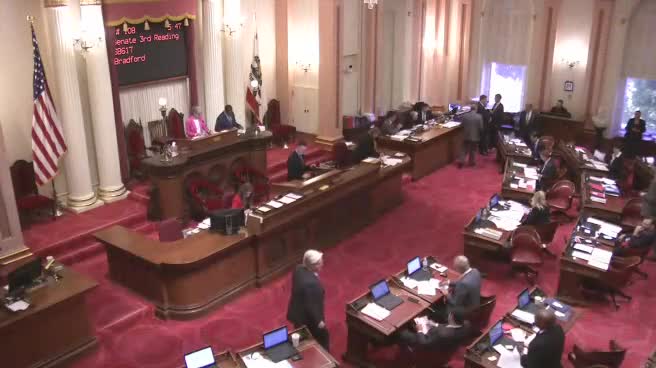 2MIN
Senate Floor
 48MIN
Senate Standing Committee on Appropriations
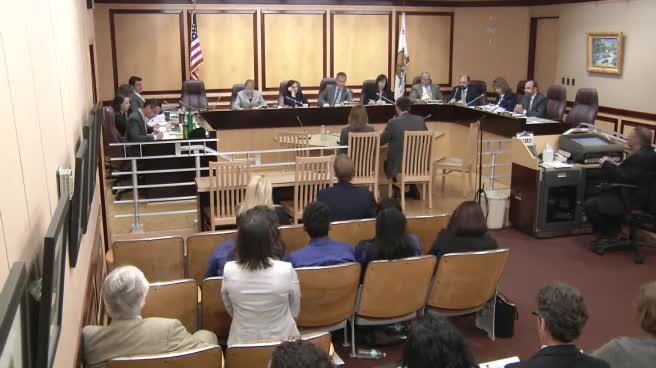 6MIN
Senate Standing Committee on Environmental Quality
Bill Author

Bill Co-Author(s):