SR 22
- Session Year: 2017-2018
- House: Senate
- Latest Version Date: 2017-03-07
WHEREAS, Unfettered and secure public access to educational institutions, health care facilities, government buildings, community gatherings, courthouses, and places of worship is integral to the basic rights and well-being of all Californians; and
WHEREAS, The mere possibility that immigration enforcement activity is taking place at sensitive locations chills the participation in society of immigrants, documented and undocumented alike, as well as their family members, and all who, regardless of their status, may be profiled as immigrants; and
WHEREAS, Despite repeated statements by President Trump that his immigration enforcement efforts would focus on dangerous criminals, he has directed his administration to vastly expand the scope of those to be detained and deported to include nearly all of the three million undocumented immigrants living in California; and
WHEREAS, A child cannot feel safe and secure going to daycare, school, or university when immigration enforcement may take place there at any time; and
WHEREAS, The education of Californias youth is of paramount importance and impacts us all; and
WHEREAS, A patient, individual feeling ill, or person seeking testing or preventative care cannot feel safe and secure accessing a hospital, clinic, dental office, or other place of medical care when immigration enforcement may take place there at any time; and
WHEREAS, The health of every Californian is vitally important and impacts us all; and
WHEREAS, An attorney, litigant, or witness cannot feel safe and secure entering a courthouse when immigration enforcement may take place there at any time; and
WHEREAS, Equal justice for all is of the utmost importance, is constitutionally required, and impacts us all; and
WHEREAS, A person of faith cannot feel safe and secure entering a church, mosque, synagogue, temple, or other house of worship when immigration enforcement may take place there at any time; and
WHEREAS, The free exercise of religion is deeply revered and constitutionally required; and
WHEREAS, An individual cannot feel safe and secure openly protesting, speaking at a news conference, attending a rally, going to a public hearing, or approaching a government building when immigration enforcement may take place there at any time; and
WHEREAS, Freedom of expression, freedom of association, and the right to petition the government for redress are critically important and constitutionally required for the health of our democracy; and
WHEREAS, On October 24, 2011, John Morton, then Director of the United States Immigration and Customs Enforcement (ICE) within the United States Department of Homeland Security, issued a policy memorandum directing ICE agents not to conduct immigration enforcement actions at or focused on sensitive locations, such as schools, hospitals, institutions of worship, funerals, weddings, public demonstrations, marches, rallies, and parades, except as authorized; and
WHEREAS, Memoranda released on February 20, 2017, by John Kelly, the current Secretary of Homeland Security, do not contradict and therefore, by their own terms, do not repeal the federal policy limiting immigration enforcement at sensitive locations; and
WHEREAS, Nonetheless, there have been numerous reports since the beginning of President Trumps Administration of ICE agents conducting immigration enforcement arrests in and around those specific sensitive locations; and
WHEREAS, On February 8, 2017, ICE agents arrested a group of people emerging from a Virginia church basement that was operating as a hypothermia shelter for the homeless; and
WHEREAS, On February 9, 2017, security cameras captured video of ICE agents entering a Texas family law courthouse and detaining a domestic violence survivor who was there to obtain a restraining order. In a sworn court statement, the ICE agents indicated that they encountered the woman outside the courthouse; and
WHEREAS, On February 22, 2017, ICE agents entered a Texas hospital and detained for a second time a 26-year-old mother of two who had been diagnosed with a brain tumor just 11 days prior, and tied her at the hands and feet; and
WHEREAS, On March 1, 2017, ICE agents detained a 22-year-old woman who was previously registered with the Deferred Action for Childhood Arrivals (DACA) program, moments after she had publicly spoken about immigration policy at a press conference outside the city hall located in Jackson, Mississippi; and
WHEREAS, The Trump administration has justified its vast expansion of those targeted for deportation by falsely portraying the United States as a country under siege by a flood of undocumented immigrants who threaten public safety, giving rise to anti-immigrant fervor and a nativist desire to preserve our nations historically dominant Euro-Christian culture; now, therefore, be it
Resolved by the Senate of the State of California, That the Senate calls upon President Trump and Secretary Kelly to publicly and explicitly reaffirm the principles and content of the ICE policy memorandum dated October 24, 2011, regarding enforcement actions at or focused on sensitive locations; and be it further
Resolved, That the Senate calls upon Secretary Kelly to underscore to the public and to all United States Department of Homeland Security personnel that the policy on sensitive locations is not limited to enforcement at the sensitive location, but also to enforcement focused on sensitive locations, and that in other words, waiting across the street from a church or school for people to emerge from the sensitive location violates the policy as much as entering the location itself, as does following someone away from a press conference or other sensitive location so as to detain them; and be it further
Resolved, That the Senate calls upon Secretary Kelly to take affirmative steps, including public commitment to the sensitive locations policy, staff training, investigation or reports of past and future violations of the policy, including, but not limited to, investigating the incidents detailed in this resolution, and pursuing disciplinary action against personnel found to have violated the policy; and be it further
Resolved, That the Secretary of the Senate transmit copies of this resolution to the President and Vice President of the United States, the Secretary of the Department of Homeland Security, the Speaker of the House of Representatives, the Minority Leader of the House of Representatives, the Majority Leader of the United States Senate, the Minority Leader of the United States Senate, and to each Senator and Representative from California in the Congress of the United States.
|
Date
|
Status
|
|---|---|
| Mar 6, 2017 | Senate Rule Suspended. |
| Mar 6, 2017 | Introduced. |
|
Date
|
Description
|
Location
|
Votes
|
|
|---|---|---|---|---|
| Mar 6, 2017 | W/O REF. TO FILE SR22 De León | Senate Floor |
Passed |
This list shows positions taken on this bill by organizations on the date displayed, which is linked to the original source.
Positions by individuals are not included.
Office of Senate Floor Analyses (916) 651-1520 Fax: (916) 327-4478 | SR 22 |
THIRD READING
Bill No: SR 22
Introduced: 3/6/17
SUBJECT: Immigration Enforcement
DIGEST:
This resolution declares that secure, unfettered access to certain key locations such as hospitals, schools, courthouses, government buildings and places of religious worship is critical to the health, safety, education, well-being of all Californians and is also central to the exercise of many constitutional rights. It calls upon the U.S. Department of Homeland Security to adhere to policies prohibiting immigration enforcement activity at or focused on these sensitive locations.
Existing law:
- Provides, under the Fifth Amendment to the U.S. Constitution, that a person shall not be deprived of life, liberty, or property without due process of law. (U.S. Const., 5th Amend.)
- Holds that once an alien enters the country, the legal circumstances change, for the Due Process Clause applies to all persons within the United States, including aliens, whether their presence here is lawful, unlawful, temporary, or permanent. (Zadvydas v. Davis (2001) 533 U.S. 678.)
- Provides that, pursuant to the Due Process Clause of the Fifth Amendment to the U.S. Constitution, the federal government may not deny equal protection of the laws. (Bolling v. Sharpe (1954) 347 U.S. 497.)
- Holds that, pursuant to the Due Process Clause, the government may not discriminate against undocumented children in the provision of public education. (Plyer v. Doe (1982) 457 U.S. 202.)
- Provides that, pursuant to the First Amendment to the U.S. Constitution, the government may not prohibit the free exercise of religion. (U.S. Const., 1st Amend.).
- Provides that, pursuant to the First Amendment to the U.S. Constitution, the government may not abridge the right of the people peaceably to assemble. (U.S. Const., 1st Amend.).
- Provides that, pursuant to the First Amendment to the U.S. Constitution, the government may not abridge the right of the people to petition the government for redress. (U.S. Const., 1st Amend.).
This resolution makes the following legislative findings:
- Secure, unfettered access to certain key locations such as hospitals, schools, courthouses, government buildings and places of religious worship is essential to the health, safety, education, and well-being of all Californians and is also fundamental to the exercise of many constitutional rights.
- Even the possibility that immigration enforcement is taking place at or around such locations infringes on the ability of immigrants, both documented and undocumented, as well as those who may be profiled as immigrants, to feel safe and secure going to such locations.
- Despite repeated statements that his immigration enforcement efforts would focus on dangerous criminals, President Trump has vastly expanded enforcement priorities so that they target nearly all of the three million immigrants living in California.
- Existing U.S. Department of Homeland Security policy prohibits immigration enforcement actions at or focused on these sensitive locations.
- There have been multiple violations of this policy since the inauguration of the Trump Administration in which Department of Homeland Security personnel have conducted immigration enforcement at or focused on sensitive locations.
- The Trump administration has justified its expansion of those targeted for deportation by falsely portraying the United States as a country under siege by a flood of undocumented immigrants who threaten public safety, giving rise to anti-immigrant fervor and a nativist desire to preserve our nation’s historically dominant Euro-Christian culture.
This resolution:
- Calls upon the President of the United States and the Secretary of Homeland Security to publicly and explicitly reaffirm policies prohibiting immigration enforcement actions at or focused on sensitive locations.
- Calls upon the Secretary of Homeland Security to underscore that the policy includes limitations on enforcement activities not just at, but also “focused on” sensitive locations, meaning that waiting across the street from a sensitive location or following someone away from a sensitive location is as much a violation as entering the location itself.
- Calls upon the Secretary of Homeland Security to take affirmative steps to enforce the policy, including: public commitment, staff training, investigation of violations and disciplinary action against violators.
- Directs the Secretary of the Senate to transmit copies of this resolution to the President and Vice-President of the United States, to the Secretary of the Department of Homeland Security, to the Speaker of the House of Representatives, to the Majority Leader of the Senate, and to each Senator and Representative from California in the Congress of the United States.
Background
Certain locations are inseparable from the conduct of community life: hospitals and medical clinics; churches, mosques, synagogues, temples and all other houses of worship; schools and universities; as well as courthouses and government buildings. Restrictions on access to these locations are restrictions on the purposes for which these locations exist: healthcare, communal religious worship, education, justice, and democracy.
Immigration enforcement activity at or focused on these locations has a chilling effect on access to those locations. That chilling effect extends well beyond just the immigrants who might be subject to immigration enforcement. In California, as in the nation as a whole, such immigrants are thoroughly woven into the social fabric of our state. An undocumented mother takes her citizen children to school. An undocumented man testifies as a key witness at a trial. A citizen uncle takes his undocumented nieces and nephews for their annual check-ups. A young person with Deferred Action for Childhood Arrivals (DACA) status visits her Congressperson to discuss the program. An H1-B visa holder attends religious services. This kind of civic participation is stifled when people fear to go to the places where it happens.
In recognition of this chilling effect on civic engagement, in October of 2011, the U.S. Department of Homeland Security implemented a policy “designed to ensure that these enforcement actions do not occur at nor are focused on sensitive locations.”[1]
The sensitive locations covered by this policy include, but are not limited to, the following:
- schools (including pre-schools, primary schools, secondary schools, post-secondary schools up to and including colleges and universities, and other institutions of learning such as vocational or trade schools);
- hospitals;
- churches, synagogues, mosques or other institutions of worship, such as buildings rented for the purpose of religious services;
- the site of a funeral, wedding, or other public religious ceremony; and
- a site during the occurrence of a public demonstration, such as a march, rally or parade.
This is not an exclusive list, and ICE officers and agents shall consult with their supervisors if the location of a planned enforcement operation could reasonably be viewed as being at or near a sensitive location. Supervisors should take extra care when assessing whether a planned enforcement action could reasonably be viewed as causing significant disruption to the normal operations of the sensitive location. ICE employees should also exercise caution. For example, particular care should be exercised with any organization assisting children, pregnant women, victims of crime or abuse, or individuals with significant mental or physical disabilities.[2]
Only very narrow exceptions apply, such as when immigration officers are in hot pursuit of someone who represents an imminent danger to others.
During the administration of President Obama, Immigration and Customs E prioritized the deportation of gang members and those who had been convicted of serious felonies.[3] President Obama summarized this policy with the phrase “[f]elons, not families. Criminals, not children. Gang members, not a mom who’s working hard to provide for her kids.”[4]
Rhetorically, President Trump has largely echoed President Obama on his immigration enforcement priorities, saying he intends to focus on criminals first. His actual policies, however, have dramatically expanded the list of immigration enforcement priorities to include virtually every undocumented person. Pursuant to Executive Orders from President Trump, on February 20, 2017, Department of Homeland Security Secretary John Kelly issued a pair of memoranda changing immigration enforcement policy. In these orders, Secretary Kelly directed ICE to prioritize:
removable aliens who: (1) have been convicted of any criminal offense; (2) have been charged with any criminal offense that has not been resolved; (3) have committed acts which constitute a chargeable criminal offense; (4) have engaged in fraud or willful misrepresentation in connection with any official matter before a governmental agency; (5) have abused any program related to receipt of public benefits; (6) are subject to a final order of removal but have not complied with their legal obligation to depart the United States; or (7) in the judgment of an immigration officer, otherwise pose a risk to public safety or national security.[5]
Number three is particularly broad, theoretically encompassing anyone who has so much as jaywalked at some point in their life. As a practical matter, Trump’s rules mean that virtually every undocumented person is a target, no matter how truly dangerous they are.
But while Secretary Kelly’s February 20, 2017, memoranda dramatically expanded the targets of federal immigration enforcement, they left the policy on sensitive locations in force. The memoranda explicitly state that: “all existing conflicting directives, memoranda, or field guidance regarding the enforcement of our immigration laws and priorities for removal are hereby rescinded – to the extent of the conflict…”[6] Since nothing in the February 20, 2017, memoranda addresses enforcement at sensitive locations, the existing policy remains in force.
ICE’s website confirms as much. As of March 3, 2017, a Frequently Asked Questions page specific to the sensitive locations policy states:
The ICE and CBP sensitive locations policies, which remain in effect, provide that enforcement actions at sensitive locations should generally be avoided, and require either prior approval from an appropriate supervisory official or exigent circumstances necessitating immediate action. DHS is committed to ensuring that people seeking to participate in activities or utilize services provided at any sensitive location are free to do so without fear or hesitation.[7]
Despite this, there are indications that some ICE officers, and perhaps ICE itself, no longer feel fully bound by the sensitive locations policy. First, people closely tracking the ICE website noticed a potentially telling deletion on the Frequently Asked Questions page. Whereas prior to the inauguration of President Trump, the page had said:
Are courthouses sensitive locations?
Courthouses do not fall under ICE or CBP’s policies concerning enforcement actions at or focused on sensitive locations. However, enforcement actions at courthouses will only be executed against individuals falling within the public safety priorities of DHS’s immigration enforcement priorities set forth in the November 20, 2014 memorandum from Secretary Johnson entitled Policies for the Apprehension, Detention and Removal of Undocumented Immigrants. Such enforcement actions will, absent exigent circumstances, not lead to arrest of non-targeted individuals and will, wherever practicable, take place outside of public areas of the courthouse.[8]
It now reads:
Are courthouses sensitive locations?
Courthouses do not fall under ICE or CBP’s policies concerning enforcement actions at or focused on sensitive locations.[9]
Second, since the inauguration of the Trump administration, there have been multiple reports of ICE conducting immigration enforcement actions at or focused on sensitive locations in apparent violation of the sensitive locations policy.
Early in the morning of February 8, 2017, ICE agents staked out an overnight homeless shelter near Alexandria, Virginia. The shelter is housed in the basement of the Rising Hope Mission Church. On the morning in question, ICE agents waited across the street from the church. When homeless men began emerging from the church basement and crossed the street, the ICE agents detained a group of Latino men, forcing them to stand against a wall and interrogating them. Ultimately, several of the homeless men were placed in ICE vehicles and driven away from the scene.[10]
On February 9, 2017, ICE agents entered an El Paso, Texas family law courthouse and proceeded to a courtroom in which survivors of domestic violence were seeking restraining orders. The agents waited for one of the survivors to obtain her order and then escorted her out of the courthouse, holding her closely by the arm as they went. Once outside the courthouse, the ICE agents placed the woman in a vehicle and drove her away. The agents later submitted a sworn affidavit saying they first encountered the woman outside the courthouse, though courthouse security camera footage appeared to show otherwise.[11]
On February 22, 2017, ICE agents entered a Dallas, Texas hospital and re-detained a woman, the mother of two, who had been diagnosed with a brain tumor just eleven days earlier. The woman had been in an ICE detention facility until she was taken to the hospital because of severe head pain. Witnesses stated that the ICE agents bound the woman by her hands and feet upon removing her. According to ICE, the woman no longer needed hospitalization and would continue to receive medical care through the detention facility. Under public pressure, the woman was later released from detention on bond.[12]
On March 1, 2017, ICE agents detained a 22 year old moments after she spoke critically about immigration enforcement policy at a public press conference outside the Jackson, Mississippi City Hall. The young woman had previously been registered with the Deferred Action for Childhood Arrivals (DACA) program, but her status had expired. She had been unable to put together the $495 its costs to renew DACA status until shortly before she was detained and her application was still pending. According to reports, ICE agents followed the woman’s car away from the press conference and subsequently pulled her over.[13]
Finally, on March 2, 2017, after this resolution was submitted for drafting, ICE agents pulled over and detained a father in Los Angeles, moments after he dropped off one of his children at school.[14]
These incidents have been widely reported. As a result, immigrants, their families, and communities are fearful that they will be targeted. It is impossible to quantify the extent of this effect, but based on reports from faith leaders, educators, and health care professionals, it is widespread.
This resolution emphasizes that safe and secure access to sensitive locations is essential to the well-being of Californians and to the full exercise of their constitutional rights. It calls upon the federal government to publicy and explicitly reaffirm its commitment not to conduct immigration enforcement actions at or focused on such sensitive locations. Finally, it urges DHS Secretary Kelly to take affirmative steps to ensure that DHS personnel follow the policy, including investigation into reports of violations and disciplinary action where violations are found.
Comments
- Stated need for the bill. The author writes the following:
Only two months into the Trump presidency, there is growing evidence that the federal government’s longstanding policy not to carry out immigration enforcement activities at certain key locations – such as schools, hospitals, protests, and places of worship – is in question. Recent enforcement actions appear to break with previous Immigration and Customs Enforcement (ICE) policy designating “sensitive locations” as off limits to ICE enforcement activity. Incidents include ICE agents arresting a man just blocks from his daughter’s school, staking out a courthouse to arrest a victim of domestic violence while she was seeking a restraining order, and ICE detaining homeless individuals outside a church shelter. It is not clear whether ICE agents carrying out immigration enforcement actions at sensitive locations are doing so despite the policy prohibiting it, or with approval from ICE leadership.
The Trump Administration has stated that its goal is not to engage in mass deportation but to focus on priority criminals. Yet, the recent enforcement actions taken at sensitive locations point to mass deportations strategies that breed confusion in California communities. Parents are afraid to send their children to schools, and immigrants across the country are avoiding leaving their homes, even to run basic errands, for fear of being detained by ICE. There is an urgent need for President Trump and Department of Homeland Security Secretary Kelly to reaffirm the principles and content of the October 24, 2011 Department of Homeland Security policy memorandum restricting enforcement actions at or focused on sensitive locations.
- Overly Narrow Interpretation of “Sensitive Locations.” Places like courthouses and government buildings are not explicitly included in the sensitive locations policy memorandum. ICE and ICE officers may be relying on that omission to justify conducting immigration enforcement action at or focused on those locations. If so, they are reading the policy far too narrowly. The memorandum itself makes plain that locations mentioned explicitly “is not an exclusive list.”[15] Moreover, the list is prefaced by the following introduction: “[t]he sensitive locations covered by this policy include, but are not limited to, the following…”[16]
Because access to courthouses and government buildings is essential to the administration of justice and to the function of democracy, they should be considered sensitive locations. Disrupting access to courts undercuts the people’s constitutional rights to due process and equal protection of the laws. Making people afraid to speak at public hearings, rallies, and press conferences abridges their right to freedom of assembly and to petition thr government for redress.
- Failure to Comply with “Focused On” Aspect of Policy. In conducting their recent immigration enforcement actions, ICE and its field officers seem to be drawing a very fine line between being “at” a sensitive location and being near one. For example, with regard to the Virginia church detentions, a spokesperson stated that the ICE officers had complied with the sensitive locations policy because they were across the street from the church, not on church property, when the arrests took place.[17] It is easy to imagine similar justifications for some of the other recent actions. The arrest of the woman who spoke at the press conference did not take place at City Hall during the press conference; it was nearby and a few minutes later. The father was not arrested on the school grounds where he dropped off his daughters; it was a few blocks away. Such an interpretation of the sensitive locations policy may also explain why the ICE officers who arrested the domestic violence survivor felt compelled to write, in their sworn affidavits, that they first encountered the woman out on the sidewalk, when security camera footage from the courthouse clearly shows that they apprehended her inside.
This is a clear misreading of the sensitive locations policy. The policy is quite explicitly not limited to the physical site of the sensitive location. Rather, the policy prohibits enforcement activities “at or focused on” sensitive locations. The language is in keeping with the purpose of the policy, which is not to disrupt people’s use of the sensitive location. In terms of its chilling effect, standing across the street from a church or following someone away from a press conference has almost exactly the same effect as entering the church property or making an arrest at the press conference.
FISCAL EFFECT: Appropriation: No Fiscal Com.: No Local: No
None received
None received
Prepared by: Timothy Griffiths / JUD. / (916) 651-4113
3/6/17 12:57:21
**** END ****
Morton, Enforcement Actions at or Focused on Sensitive Locations (October 24, 2011) United States Immigration and Customs Enforcement, p. 1 <https://www.ice.gov/doclib/ero-outreach/pdf/10029.2-policy.pdf> (as of Mar. 5, 2017). ↑
Id at pp. 1-2. (Emphasis added.) ↑
See Johnson, Policies for the Apprehension, Detention and Removal of Undocumented Immigrants (Nov. 20, 2014) U.S. Department of Homeland Security <https://www.dhs.gov/sites/default/files/publications/
14_1120_memo_prosecutorial_discretion.pdf> (as of Mar. 5, 2017). ↑
Obama, Remarks by the President in Address to the Nation on Immigration (Nov. 20, 2014) < https://obamawhitehouse.archives.gov/the-press-office/2014/11/20/remarks-president-address-nation-immigration> (as of Mar. 5, 2017). ↑
Kelly, Enforcement of the Immigration Laws to Serve the National Interest (Feb. 20, 2017) U.S. Department of Homeland Security p.2 < https://www.dhs.gov/sites/default/files/publications/17_0220_S1_Enforcement-of-the-Immigration-Laws-to-Serve-the-National-Interest.pdf> (as of Mar. 5, 2017). Kelly, Implementation of the President's Border Security and Immigration Enforcement Improvements Policies (Feb. 20, 2017) U.S. Department of Homeland Security, p. 1 <https://www.dhs.gov/sites/default/files/publications/17_0220_S1_Implementing-the-Presidents-Border-Security-Immigration-Enforcement-Improvement-Policies.pdf> (as of Mar. 5, 2017). ↑
Ibid. ↑
<https://www.ice.gov/ero/enforcement/sensitive-loc> (as of Mar. 5, 2017). ↑
<https://twitter.com/TomJawetz/status/834417551723679745> (as of Mar. 5, 2017). ↑
<https://www.ice.gov/ero/enforcement/sensitive-loc> (as of Mar. 5, 2017). ↑
Carey, ICE Agents Arrest Men Leaving Fairfax County Church Shelter (Feb. 15, 2017) NBC4 Washington <http://www.nbcwashington.com/news/local/ICE-Agents-Arrest-Men-Leaving-Alexandria-Church-Shelter-413889013.html> (as of Mar. 5 2017). ↑
Schladen, ICE Detains Alleged Domestic Violence Victim (Feb. 15, 2017) El Paso Times <http://www.elpasotimes.com/story/news/2017/02/15/ice-detains-domestic-violence-victim-court/97965624/> (as of Mar. 5, 2017). ↑
See Guerrero, Undocumented ICE Detainee with Brain Tumor Forcibly Removed from North Texas Hospital: Lawyer (Feb. 23, 2017) NBC5 Dallas Fort Worth < http://www.nbcdfw.com/news/local/Undocumented-Woman-with-Brain-Tumor-Removed-from-North-Texas-Hospital-414651843.html> (as of Mar. 5, 2017). ↑
See Lynch, DREAMer Speaks Out on Immigration, Gets Arrested by ICE (Mar. 2, 2017) CNN <http://www.cnn.com/2017/03/01/us/dreamer-arrested-jackson-mississippi/> (as of Mar. 5, 2017). ↑
Castillo, Immigrant Arrested by ICE After Dropping Daughter Off at School, Sending Shockwaves Through Neighborhood (Mar. 3, 2017) Los Angeles Times <http://www.latimes.com/local/lanow/la-me-immigration-school-20170303-story.html> (as of Mar. 5, 2017). ↑
Morton, Enforcement Actions at or Focused on Sensitive Locations (October 24, 2011) United States Immigration and Customs Enforcement, p. 1 <https://www.ice.gov/doclib/ero-outreach/pdf/10029.2-policy.pdf> (as of Mar. 5, 2017). (Emphasis added.) ↑
Ibid. ↑
Carey, ICE Agents Arrest Men Leaving Fairfax County Church Shelter (Feb. 15, 2017) NBC4 Washington <http://www.nbcwashington.com/news/local/ICE-Agents-Arrest-Men-Leaving-Alexandria-Church-Shelter-413889013.html> (as of Mar. 5 2017). ↑
Bill Author
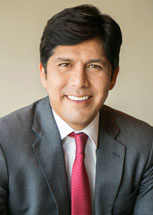
Bill Co-Author(s):