SR 27
- Session Year: 2017-2018
- House: Senate
- Latest Version Date: 2017-04-04
WHEREAS, Since the 1960s, California has made great strides in protecting the public by cleaning up the states air and reducing air pollution while the economy of the state has grown and thrived; and
WHEREAS, Even before the federal Clean Air Act (42 U.S.C. Sec. 7401 et seq.) was enacted in the 1970s, California had already begun its pioneering efforts to reduce smog and air pollution from the transportation sector; and
WHEREAS, The Congress and President of the United States acknowledged and supported Californias transportation clean air efforts by enacting Section 209 of the federal Clean Air Act (42 U.S.C. Sec. 7401 et seq.), which grants California unique authority to set its own vehicular pollution control standards if granted a waiver by the United States Environmental Protection Agency; and
WHEREAS, Over the past 50 years, over 145 waivers have been granted to California to clean up its air by both Republican and Democratic administrations in recognition of the fact that our state continues to have regions suffering from the worst pollution in the country; and
WHEREAS, The granting of waivers under Section 209 of the federal Clean Air Act (42 U.S.C. Sec. 7401 et seq.) has saved California residents and businesses billions of dollars in fuel costs through more efficient and less gas guzzling cars and trucks; and
WHEREAS, The United States Environmental Protection Agency estimates that achieving the new ozone standard of 70 parts per billion would save the states residents an estimated $400 million to $1.4 billion per year when accounting for both the costs of reducing emissions and the avoided costs of health care, lost work days, low productivity, and other impacts of pollution; and
WHEREAS, Two studies sponsored by the State Air Resources Board show that clean air standards generated 5,600 jobs in 1980 and 32,000 jobs in 2001. State Air Resources Board staff estimate that the number of air pollution control industry jobs has now grown to 42,000 in 2015, account for 3.2 percent of total manufacturing jobs in California, and have generated $8 billion in revenue; and
WHEREAS, In 2015 the American Lung Association in California estimated that the states residents are hit with $15 billion per year in costs due to asthma attacks, lost work days, emergency room visits, hospitalizations, premature deaths, and other climate damage, such as agricultural productivity, property damage, human health, and ecosystem resources; and
WHEREAS, Pollution from the transportation sector creates smog and air pollution that chokes the lungs of our children, causes the elderly to visit emergency rooms with cardiopulmonary disease, and causes thousands of deaths per year; and
WHEREAS, According to the federal Centers for Disease Control and Prevention, 13.1 percent of adults and 12.5 percent of children have been diagnosed with asthma, and lower-income and minority groups are disproportionately affected by asthma due to their increased exposure to air pollution; and
WHEREAS, Under Section 209 of the federal Clean Air Act (42 U.S.C. Sec. 7401 et seq.), the United States Environmental Protection Agency is required by law to grant the waiver unless (1) the proposed standards are not more protective of public health and welfare than the federal standards, (2) the state does not need stricter standards given a set of compelling and extraordinary circumstances, and (3) the proposed standards are inconsistent with other provisions of the federal Clean Air Act (42 U.S.C. Sec. 7401 et seq.); and
WHEREAS, The process of California being granted a waiver is ministerial and nondiscretionary on the part of the United States Environmental Protection Agency; and
WHEREAS, Today, cars in California are 99 percent cleaner than they were in the 1960s due to actions California has taken pursuant to Section 209 waivers and other actions, resulting in thousands of avoided premature deaths and even more avoided illness; and
WHEREAS, Californias air quality has improved, but the cities and regions in the United States with the worst air quality are all still in California. In 2016, California cities occupied the top four positions for worst ozone and short-term particulate matter and seven positions for worst year-round particulate matter; now, therefore, be it
Resolved by the Senate of the State of California,That the California Senate opposes any efforts by the current administration and Congress of the United States to deny, roll back, or otherwise undermine the waiver authority duly granted under the federal Clean Air Act (42 U.S.C. Sec. 7401 et seq.); and be it further
Resolved,That the Secretary of the Senate transmit a copy of this resolution to the President and Congress of the United States and to the Administrator of the United States Environmental Protection Agency.
|
Date
|
Status
|
|---|---|
| Apr 3, 2017 | Read. Adopted. (Ayes 27. Noes 4. Page 582.) |
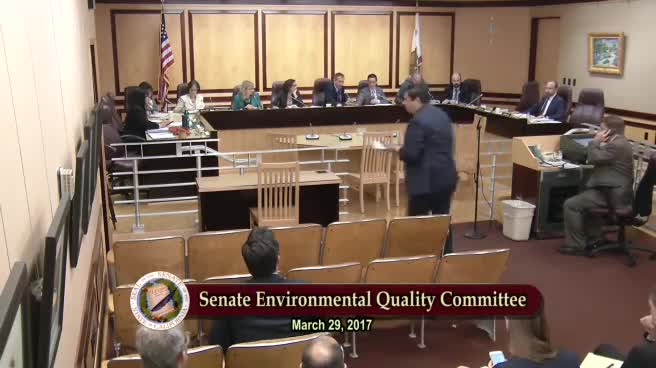
| Mar 29, 2017 | From committee: Be adopted. Ordered to third reading. (Ayes 5. Noes 0. Page 537.) (March 29). |
| Mar 24, 2017 | Set for hearing March 29. |
| Mar 16, 2017 | Re-referred to Com. on EQ. |
| Mar 9, 2017 | Introduced. Referred to Com. on RLS. |
|
Date
|
Description
|
Location
|
Votes
|
|
|---|---|---|---|---|
| Apr 3, 2017 | Senate 3rd Reading SR27 Wieckowski | Senate Floor |
Passed |
|
| Mar 29, 2017 | Be adopted. Ordered to third reading | Senate Standing Committee on Environmental Quality |
Passed |
This list shows positions taken on this bill by organizations on the date displayed, which is linked to the original source.
Positions by individuals are not included.
|
Organization
|
Position
|
Date
|
|---|---|---|
| Coalition For Clean Air | ** Support | Mar 29, 2017 |
Office of Senate Floor Analyses (916) 651-1520 Fax: (916) 327-4478 | SR |
THIRD READING
Bill No: SR 27
:
SENATE ENVIRONMENTAL QUAL. COMMITTEE: 5-0, 3/29/17
AYES: Wieckowski, Hill, Lara, Skinner, Stern
NO VOTE RECORDED: Stone, Bates
DIGEST: This resolution resolves that the Senate of the State of California opposes any efforts by the current administration and Congress of the United States to deny, roll back, or otherwise undermine California’s ability to set stricter air quality and vehicular emissions standards than the federal government.
ANALYSIS: Existing federal law, the Federal Clean Air Act (FCAA) and its implementing regulations, set National Ambient Air Quality Standards (NAAQS) for six criteria pollutants, designate air basins that do not achieve NAAQS as nonattainment, allow only California to set vehicular emissions standards stricter than the federal government, and allow other states to adopt either the federal or California vehicular emissions standards. (42 U.S.C. §7401 et seq.)
Existing state law establishes the Air Resources Board (ARB) as the air pollution control agency in California and requires the ARB, among other things, to enforce the NAAQS established under the FCAA, including setting appropriate vehicular emissions standards for criteria pollutants and greenhouse gases. (Health and Safety Code (HSC) §39500 et seq.)
This resolution:
- Describes California’s history of setting air quality and emissions standards prior to the federal government.
- Makes findings about the negative economic, environmental, and public health impacts of air pollution.
- Makes findings about the economic, environmental, and public health benefits of controlling air pollution.
- Resolves that the Senate of the State of California opposes any efforts by the current administration and Congress of the United States to deny, roll back, or otherwise undermine California’s ability to set stricter air quality and vehicular emissions standards than the federal government.
Background
- Health Impacts of Air Pollution
When not adequately controlled, air pollution has dire consequences on the health and safety of both people and the environment. Poor air quality causes the lungs to constrict, resulting in wheezing, shortness of breath and chest tightness, especially during exercise or physical activity.
It is well known that air pollution causes asthma. According to the Centers for Disease Control and Prevention, nationwide 7.4% of adults and 8.6% of children have been diagnosed with asthma. In California, the numbers are significantly higher: 13.1% of adults and 12.5% of children have been diagnosed with asthma. Lower income and minority groups are disproportionately affected by asthma due to their increased exposure to air pollution.
Depending on exposure, air pollution alone can cause an increased risk of cardiovascular and respiratory illness, lung disease, cancerous tumors, birth defects, premature births, developmental disorders, central nervous system damage, intellectual disability, persistent memory impairments, epilepsy, dementia, and premature death.
- Air Quality Standards
The FCAA passed in 1963 and has been revised many times thereafter. The FCAA and its implementing regulations are intended to protect public health and environmental quality by limiting and reducing pollution from various sources. Under the FCAA, the United States Environmental Protection Agency (US EPA) establishes NAAQS that apply to outdoor air throughout the country.
In 1969 and 1971, ARB set the first air quality standards for ozone, Particulate Matter (PM), oxides of nitrogen (NOx), oxides of sulfur (SOx), and carbon monoxide due to their negative impacts on public health above specified concentrations.
The federal government followed suit and set NAAQS for six “criteria pollutants.” These included ground-level ozone, PM, NOx, SOx, and carbon monoxide, and added lead. Now, the US EPA reviews each NAAQS at five-year intervals to ensure that the standards are based on the most recent scientific information.
Regions that do not meet the national standards for any one of the standards are designated “nonattainment areas.” The FCAA sets deadlines for attainment based on the severity of nonattainment and requires states to develop comprehensive plans, known as the state implementation plan, to attain and maintain air-quality standards for each area designated nonattainment for an NAAQS.
- Section 209 Waivers
California has long understood that motor vehicles emit significant amounts of contaminants that cause air pollution in California, and has led the nation in promulgating motor vehicle emission control standards. For example, California first regulated tailpipe emission standards from new passenger vehicles in 1966, two years before EPA adopted any comparable federal tailpipe standards.
Recognizing that California had successfully promulgated regulations to control vehicle emissions, when the United States Congress enacted the Air Quality Act of 1967 it specifically authorized only California to establish vehicle emission standards that were separate from, and more stringent than, comparable federal standards. Since then, Congress has ratified and expanded California’s ability to establish its own motor vehicle emissions control program. The US EPA must grant a waiver, however, before California’s rules may be enforced.
When California files a waiver request, the US EPA publishes a notice for public hearing and written comment in the Federal Register. Once the public hearing and comment period are over, the US EPA reviews the comments and the Administrator determines whether the requirements for obtaining a waiver have been met.
Under Section 209 of the FCAA, the Administrator is obligated to grant the waiver unless there is evidence that (1) the proposed standards are not more protective of public health and welfare than the federal standards, (2) the state does not need stricter standards given a set of compelling and extraordinary circumstances (e.g., pollution could be abated using the less strict federal standards), and (3) the proposed standards are not consistent with Section 202(a) of the FCAA (this section prescribes the US EPA Administrator’s scope of the authority to regulate emissions from all classes of motor vehicles and their engines). In other words, the process of California being granted a waiver is ministerial, or nondiscretionary on the part of the Administrator.
Once a waiver is granted, other states may choose to follow either the national standard or the stricter California standards. Currently, 10 states (including California) follow California’s Low Emission Vehicle (LEV) Standard and the Zero Emission Vehicle (ZEV) mandate. Three states and Washington, D.C. follow only the LEV standard.
Although California has ultimately prevailed in receiving every one of the nearly 150 waiver requests it has made, California has faced federal administrations in the past that have not supported the stricter standards we have set that are necessary to meet our obligations under the federal and state law.
In 2005, the US EPA under President Bush failed to act on a waiver request made by California. The state informed then-Administrator Johnson of their intent to sue for delay. Ultimately, the US EPA denied the waiver request, triggering a lawsuit by California against the US EPA.
While that lawsuit was pending in the courts, there was a change of administration and the EPA, under president Obama, reversed the denial and granted the waiver request. This approval made the lawsuit moot.
- LEV and ZEV
- LEV I/II/II. Adopted in 1990, the LEV I standards applied to criteria pollutant emissions for vehicles from 1994 through 2003. Amendments adopted in 1998, termed LEV II, tightened the fleet average emission standards for 2004-2010, and required significantly lower NOx emissions from specific vehicle categories. In 2012, ARB adopted the LEV III amendments, which include more stringent emission standards for both criteria pollutants (which include NOx) and greenhouse gases for new passenger vehicles.
- ZEV Regulation. The ZEV Regulation requires large volume and intermediate volume vehicle manufacturers that sell cars in California to produce ZEVs (such as battery electric and fuel cell vehicles), clean plug-in hybrids, clean hybrids and clean gasoline vehicles with near-zero tail pipe emissions. In general, the ZEV regulation requires that 15% of new car sales be ZEVs by 2025. This target is intended to achieve 1.5 million ZEVs on the road by 2025 as directed under Governor Brown’s Executive Order B-16-2012.
Comments
- Purpose of Resolution
According to the author, “since 1966 California has regulated tailpipe emission standards from new passenger vehicles. When the federal Clean Air Quality Act was initially passed by Congress after California’s trail-blazing standards were imposed, it authorized our state to place more stringent requirements on automobiles. This was done in recognition of the severe smog blanketing much of California and the significant amounts of contaminants emitted from motor vehicles. For more than four decades, Congress has ratified and expanded California’s ability to set vehicle emission standards. Both Republican and Democratic administrations have granted more than 140 California waiver requests and no waiver has ever been successfully rejected or revoked.
“Several news articles are reporting that President Trump will issue an order to weaken or invalidate these waivers. Not only would such an action increase pollution and worsen the health of Californians, it would also increase pollution in several other states that follow our stricter standards. It would also send a clear signal that the United States is taking a major step backwards in the fight against climate change.
“At a hearing of the Senate Environmental Quality Committee last month, the Committee learned that the clean energy sector generates $27 billion per year and employs 125,000 people. University of California, Berkeley published a study showing California’s clean air and climate programs have injected $13 billion of net economic benefit into the San Joaquin Valley. A 2015 American Lung Association report found air pollution hits state’s residents with $15 billion per year in costs associated with asthma attacks, lost work days, emergency room visits, premature deaths and climate damage to our ecosystem and agricultural productivity. Without these Clean Air waivers, the health of more Californians will be jeopardized.
“The federal Clean Air Act statute recognizes that “California is to have the broadest possible discretion in selecting the best means to protect the health of its citizens.” Improving the quality of the air we breathe should remain a primary focus for all governments, as it has been since the dawn of the environmental movement. Dirtying our air by relaxing proven standards will result in a completely avoidable and unnecessary fight between California and Washington.”
FISCAL EFFECT: Appropriation: No Fiscal Com.: No Local: No
Coalition for Clean Air
OPPOSITION: (Verified 3/29/17)
None received
3/29/17 15:42:41
SENATE COMMITTEE ON ENVIRONMENTAL QUALITY
Senator Wieckowski, Chair
2017 - 2018 Regular
Bill No: SR 27
Author: | Wieckowski | ||
Version: | 3/9/2017 | Hearing Date: | 3/29/2017 |
Urgency: | No | Fiscal: |
|
Consultant: | David Ernest García | ||
SUBJECT: Relative to vehicular air pollution
ANALYSIS:
Existing federal law:
- The Federal Clean Air Act (FCAA) and its implementing regulations set National Ambient Air Quality Standards (NAAQS) for six criteria pollutants, designate air basins that do not achieve NAAQS as nonattainment, allow only California to set vehicular emissions standards stricter than the federal government, and allow other states to adopt either the federal or California vehicular emissions standards. (42 U.S.C. §7401 et seq.)
Existing state law:
- Establishes the Air Resources Board (ARB) as the air pollution control agency in California and requires the ARB, among other things, to enforce the NAAQS established under the FCAA, including setting appropriate vehicular emissions standards for criteria pollutants and greenhouse gases. (Health and Safety Code (HSC) §39500 et seq.)
This resolution:
- Describes California’s history of setting air quality and emissions standards prior to the federal government.
- Makes findings about the negative economic, environmental, and public health impacts of air pollution.
- Makes findings about the economic, environmental, and public health benefits of controlling air pollution.
- Resolves that the Senate of the State of California opposes any efforts by the current administration and Congress of the United States to deny, roll back, or otherwise undermine California’s ability to set stricter air quality and vehicular emissions standards than the federal government.
Background
- Health Impacts of Air Pollution.
When not adequately controlled, air pollution has dire consequences on the health and safety of both people and the environment. Poor air quality causes the lungs to constrict, resulting in wheezing, shortness of breath and chest tightness, especially during exercise or physical activity.
It is well known that air pollution causes asthma. According to the Centers for Disease Control and Prevention, nationwide 7.4% of adults and 8.6% of children have been diagnosed with asthma. In California, the numbers are significantly higher: 13.1% of adults and 12.5% of children have been diagnosed with asthma. Lower income and minority groups are disproportionately affected by asthma due to their increased exposure to air pollution.
Depending on exposure, air pollution alone can cause an increased risk of cardiovascular and respiratory illness, lung disease, cancerous tumors, birth defects, premature births, developmental disorders, central nervous system damage, intellectual disability, persistent memory impairments, epilepsy, dementia, and premature death. - Air Quality Standards.
The Federal Clean Air Act (FCAA) passed in 1963 and has been revised many times thereafter. The FCAA and its implementing regulations are intended to protect public health and environmental quality by limiting and reducing pollution from various sources. Under the FCAA, the US EPA establishes National Ambient Air Quality Standards (NAAQS) that apply to outdoor air throughout the country.
In 1969 and 1971, ARB set the first air quality standards for ozone, Particulate Matter (PM), oxides of nitrogen (NOx), oxides of sulfur (SOx), and carbon monoxide due to their negative impacts on public health above specified concentrations.
The federal government followed suit and set NAAQS for six “criteria pollutants.” These included ground-level ozone, PM, NOx, SOx, and carbon monoxide, and added lead. Now, the US EPA reviews each NAAQS at five-year intervals to ensure that the standards are based on the most recent scientific information.
Regions that do not meet the national standards for any one of the standards are designated “nonattainment areas.” The FCAA sets deadlines for attainment based on the severity of nonattainment and requires states to develop comprehensive plans, known as the state implementation plan (SIP), to attain and maintain air-quality standards for each area designated nonattainment for an NAAQS. - Section 209 Waivers.
California has long understood that motor vehicles emit significant amounts of contaminants that cause air pollution in California, and has led the nation in promulgating motor vehicle emission control standards. For example, California first regulated tailpipe emission standards from new passenger vehicles in 1966, two years before EPA adopted any comparable federal tailpipe standards.
Recognizing that California had successfully promulgated regulations to control vehicle emissions, when the United States Congress enacted the Air Quality Act of 1967 it specifically authorized only California to establish vehicle emission standards that were separate from, and more stringent than, comparable federal standards. Since then, Congress has ratified and expanded California’s ability to establish its own motor vehicle emissions control program. The US EPA must grant a waiver, however, before California’s rules may be enforced.
When California files a waiver request, the US EPA publishes a notice for public hearing and written comment in the Federal Register. Once the public hearing and comment period are over, the US EPA reviews the comments and the Administrator determines whether the requirements for obtaining a waiver have been met.
Under Section 209 of the FCAA, the Administrator is obligated to grant the waiver unless there is evidence that (1) the proposed standards are not more protective of public health and welfare than the federal standards, (2) the state does not need stricter standards given a set of compelling and extraordinary circumstances (e.g., pollution could be abated using the less strict federal standards), and (3) the proposed standards are not consistent with Section 202(a) of the FCAA (this section prescribes the US EPA Administrator’s scope of the authority to regulate emissions from all classes of motor vehicles and their engines). In other words, the process of California being granted a waiver is ministerial, or nondiscretionary on the part of the Administrator.
Once a waiver is granted, other states may choose to follow either the national standard or the stricter California standards. Currently, 10 states (including California) follow California’s Low Emission Vehicle (LEV) Standard and the Zero Emission Vehicle mandate. Three states and Washington, D.C. follow only the LEV standard.
Although California has ultimately prevailed in receiving every one of the nearly 150 waiver requests it has made, California has faced federal administrations in the past that have not supported the stricter standards we have set that are necessary to meet our obligations under the federal and state law.
In 2005, the US EPA under President Bush failed to act on a waiver request made by California. The state informed then-Administrator Johnson of their intent to sue for delay. Ultimately, the US EPA denied the waiver request, triggering a lawsuit by California against the US EPA.
While that lawsuit was pending in the courts, there was a change of administration and the EPA, under president Obama, reversed the denial and granted the waiver request. This approval made the lawsuit moot. - LEV and ZEV.
- Low Emission Vehicles I/II/III (LEV I/II/III). Adopted in 1990, the LEV I standards applied to criteria pollutant emissions for vehicles from 1994 through 2003. Amendments adopted in 1998, termed LEV II, tightened the fleet average emission standards for 2004-2010, and required significantly lower NOx emissions from specific vehicle categories. In 2012, ARB adopted the LEV III amendments, which include more stringent emission standards for both criteria pollutants (which include NOx) and greenhouse gases for new passenger vehicles.
- Zero Emission Vehicle (ZEV) Regulation. The Zero Emission Vehicle (ZEV) Regulation requires large volume and intermediate volume vehicle manufacturers that sell cars in California to produce ZEVs (such as battery electric and fuel cell vehicles), clean plug-in hybrids, clean hybrids and clean gasoline vehicles with near-zero tail pipe emissions. In general, the ZEV regulation requires that 15% of new car sales be ZEVs by 2025. This target is intended to achieve 1.5 million ZEVs on the road by 2025 as directed under Governor Brown’s Executive Order B-16-2012.
- Low Emission Vehicles I/II/III (LEV I/II/III). Adopted in 1990, the LEV I standards applied to criteria pollutant emissions for vehicles from 1994 through 2003. Amendments adopted in 1998, termed LEV II, tightened the fleet average emission standards for 2004-2010, and required significantly lower NOx emissions from specific vehicle categories. In 2012, ARB adopted the LEV III amendments, which include more stringent emission standards for both criteria pollutants (which include NOx) and greenhouse gases for new passenger vehicles.
Comments
- Purpose of Resolution.
According to the author, “since 1966 California has regulated tailpipe emission standards from new passenger vehicles. When the federal Clean Air Quality Act was initially passed by Congress after California’s trail-blazing standards were imposed, it authorized our state to place more stringent requirements on automobiles. This was done in recognition of the severe smog blanketing much of California and the significant amounts of contaminants emitted from motor vehicles. For more than four decades, Congress has ratified and expanded California’s ability to set vehicle emission standards. Both Republican and Democratic administrations have granted more than 140 California waiver requests and no waiver has ever been successfully rejected or revoked.
“Several news articles are reporting that President Trump will issue an order to weaken or invalidate these waivers. Not only would such an action increase pollution and worsen the health of Californians, it would also increase pollution in several other states that follow our stricter standards. It would also send a clear signal that the United States is taking a major step backwards in the fight against climate change.
“At a hearing of the Senate Environmental Quality Committee last month, the Committee learned that the clean energy sector generates $27 billion per year and employs 125,000 people. University of California, Berkeley published a study showing California’s clean air and climate programs have injected $13 billion of net economic benefit into the San Joaquin Valley. A 2015 American Lung Association report found air pollution hits state’s residents with $15 billion per year in costs associated with asthma attacks, lost work days, emergency room visits, premature deaths and climate damage to our ecosystem and agricultural productivity. Without these Clean Air waivers, the health of more Californians will be jeopardized.
“The federal Clean Air Act statute recognizes that “California is to have the broadest possible discretion in selecting the best means to protect the health of its citizens.” Improving the quality of the air we breathe should remain a primary focus for all governments, as it has been since the dawn of the environmental movement. Dirtying our air by relaxing proven standards will result in a completely avoidable and unnecessary fight between California and Washington.”
SOURCE:
Author
SUPPORT:
Coalition for Clean Air
OPPOSITION:
None received
-- END --
Discussed in Hearing
View Older Hearings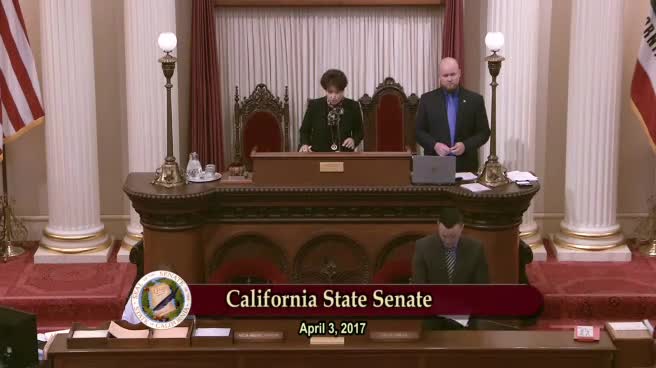
Bill Author
Bill Co-Author(s):