SR 72
- Session Year: 2017-2018
- House: Senate
- Latest Version Date: 2018-01-23
WHEREAS, January 22, 2018, marks the 45th anniversary of the United States Supreme Courts landmark decision in Roe v. Wade, which affirmed that every woman has a fundamental right to control her own reproductive decisions and to decide whether to end or to continue pregnancy, and is an occasion deserving of acknowledgment; and
WHEREAS, Roe v. Wade has been the cornerstone of womens ability to control their reproductive lives, allowing every woman in the United States the right to decide when, if, and with whom to have children, and how many children to have; and
WHEREAS, Womens ability to control their reproductive lives has helped and facilitated their participation in the economic and social life of our nation; and
WHEREAS, Roe v. Wade has drastically reduced the maternal mortality rate for women terminating their pregnancies in the United States. In the years prior to the decision, illegal abortion accounted for approximately 17 percent of all reported deaths attributable to pregnancy and childbirth, and many women were severely injured as a result of back alley abortion procedures; and
WHEREAS, Interference with a womans right to choose causes women to be forced into illegal and dangerous abortions, as they often were in the United States before the Roe v. Wade decision. Many women are forced to make these decisions today in countries where abortion is illegal and unsafe. Each year between 4.7 percent to 13.2 percent of maternal deaths can be attributed to unsafe abortion. Many survivors of an illegal abortion suffer serious and often permanent injuries; and
WHEREAS, Roe v. Wade continues to protect the health and freedom of women throughout the United States; and
WHEREAS, The State of California stands in strong support of every womans fundamental right, as confirmed in Roe v. Wade, to make her own decisions regarding her pregnancy; now, therefore, be it
Resolved by the Senate of the State of California, That the Senate urges the President of the United States and the United States Congress to express their support for a womans fundamental right to control her own reproductive decisions, as well as their support for access to comprehensive reproductive health care, including the services provided by Planned Parenthood; and be it further
Resolved, That the Secretary of the Senate transmit copies of this resolution to the President and Vice President of the United States, to the Speaker of the House of Representatives, to the Majority Leader of the Senate, to each Senator and Representative from California in the Congress of the United States, and to the author for appropriate distribution.
WHEREAS, January 22, 2018, marks the 45th anniversary of the United States Supreme Courts landmark decision in Roe v. Wade, which affirmed that every woman has a fundamental right to control her own reproductive decisions and to decide whether to end or to continue pregnancy, and is an occasion deserving of acknowledgement; and
WHEREAS, Roe v. Wade has been the cornerstone of womens ability to control their reproductive lives, allowing every woman in the United States the right to decide when, if, and with whom to have children, and how many children to have; and
WHEREAS, Womens ability to control their reproductive lives has helped and facilitated their participation in the economic and social life of our nation; and
WHEREAS, Roe v. Wade has drastically reduced the maternal mortality rate for women terminating their pregnancies in the United States. In the years prior to the decision, illegal abortion accounted for approximately 17 percent of all reported deaths attributable to pregnancy and childbirth, and many women were severely injured as a result of back alley abortion procedures; and
WHEREAS, Interference with a womans right to choose causes women to be forced into illegal and dangerous abortions, as they often were in the United States before the Roe v. Wade decision. Many women are forced to make these decisions today in countries where abortion is illegal and unsafe. Each year between 4.7 percent to 13.2 percent of maternal deaths can be attributed to unsafe abortion. Many survivors of an illegal abortion suffer serious and often permanent injuries; and
WHEREAS, Roe v. Wade continues to protect the health and freedom of women throughout the United States; and
WHEREAS, The State of California stands in strong support of every womans fundamental right, as confirmed in Roe v. Wade, to make her own decisions regarding her pregnancy; now, therefore, be it
Resolved by the Senate of the State of California, That the Senate urges the President of the United States and the United States Congress to express their support for a womans fundamental right to control her own reproductive decisions, as well as their support for access to comprehensive reproductive health care, including the services provided by Planned Parenthood; and be it further
Resolved, That the Secretary of the Senate transmit copies of this resolution to the President and Vice President of the United States, to the Speaker of the House of Representatives, to the Majority Leader of the Senate, to each Senator and Representative from California in the Congress of the United States, and to the author for appropriate distribution.
|
Date
|
Status
|
|---|---|
| Jan 22, 2018 | Read. Adopted. (Ayes 25. Noes 11.) |
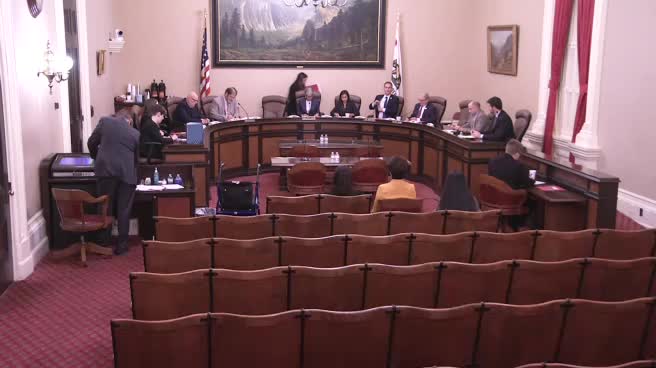
| Jan 16, 2018 | From committee: Be adopted. Ordered to third reading. (Ayes 4. Noes 2.) (January 16). |
| Jan 11, 2018 | Set for hearing January 16. |
| Jan 10, 2018 | Re-referred to Com. on JUD. |
| Jan 4, 2018 | Introduced. Referred to Com. on RLS. |
|
Date
|
Description
|
Location
|
Votes
|
|
|---|---|---|---|---|
| Jan 22, 2018 | Senate 3rd Reading SR72 Leyva et al. | Senate Floor |
Passed |
|
| Jan 16, 2018 | Be adopted. Ordered to third reading | Senate Standing Committee on Judiciary |
Passed |
This list shows positions taken on this bill by organizations on the date displayed, which is linked to the original source.
Positions by individuals are not included.
|
Organization
|
Position
|
Date
|
|---|---|---|
| Actress | * Support | Jan 22, 2018 |
| American Civil Liberties Union of California | ** Support | Jan 17, 2018 |
| Planned Parenthood Affiliates Of California | ** Support | Jan 17, 2018 |
Office of Senate Floor Analyses (916) 651-1520 Fax: (916) 327-4478 | SR |
THIRD READING
Bill No: SR 72
:
SENATE JUDICIARY COMMITTEE: 4-2, 1/16/18
AYES: Jackson, Hertzberg, Monning, Wieckowski
NOES: Moorlach, Anderson
NO VOTE RECORDED: Stern
DIGEST:
This resolution commemorates the 45th Anniversary of the U.S. Supreme Court’s decision in the case Roe v. Wade (1973) 410 U.S. 113, which established a woman’s constitutional right to choose for herself whether or not to carry her pregnancy to term. This resolution makes a series of California Senate findings regarding the positive impact of that decision on the reproductive, economic, and social life of women and the nation as a whole. This resolution urges the U.S. President and Congress to express support for a woman’s constitutional right to control her own reproductive decisions as well as access to comprehensive reproductive health care services, including those of Planned Parenthood.
This resolution finds and declares that:
- the 45th anniversary of Roe v. Wade is an occasion deserving of acknowledgement;
- Roe v. Wade has been the cornerstone to the ability of women to control when, if, with whom, and how many children to have;
- such control has facilitated women’s participation in economic and social life;
- Roe v. Wade has drastically reduced the percentage of women who die or are severely injured while attempting to terminate their pregnancies;
- interference with the constitutional right to terminate a pregnancy forces women into illegal and dangerous abortions;
- Roe v. Wade continues to protect the health and freedom of women throughout the U.S.; and
- the State of California strongly supports the constitutional right set forth in the holding of Roe v. Wade.
This resolution publicly urges the U.S. President and Congress to express their support for a woman’s fundamental right to control her own reproductive decisions, as well as their support for access to comprehensive reproductive care, including those provided by Planned Parenthood.
In 1973, the U.S. Supreme Court held in Roe v. Wade (1973) 410 U.S. 113 that the constitutional right to privacy extends to a woman’s decision whether or not to terminate a pregnancy. Prior to the Roe v. Wade decision, it was illegal in several states for medical professionals to assist a woman to terminate her pregnancy. These laws forced women who wanted to terminate their pregnancies to carry the fetus to term against their will; to terminate their pregnancy on their own; to seek the help of unlicensed and unregulated laypeople; or to seek assistance from doctors operating illicitly. Since they were illegal, all such procedures took place in clandestine conditions. Frequently, these conditions were dangerous or even fatal to the woman attempting to terminate her pregnancy. Abortions carried out under these types of conditions are sometimes referred to as “back alley” abortions.
Under Roe v. Wade and subsequent U.S. Supreme Court decisions, a state may not place an “undue burden” on a woman’s ability to terminate her pregnancy, should she so choose. (See Planned Parenthood of Southeastern Pennsylvania v. Casey (1982) 505 U.S. 833.)
If, in the future, the U.S. Supreme court partially or fully overturned the central holding in Roe v. Wade, state governments or the federal government would be free to impose additional restrictions on abortion or even outlaw it entirely.
Comments
Historical and legal background to Roe v. Wade
Roe v. Wade, (1973) 410 U.S. 113, is the landmark U.S. Supreme Court decision holding that the constitutional right to privacy extends to a woman’s decision whether to terminate a pregnancy, while acknowledging that some state regulation was permissible. The plaintiff in the case was “Jane Roe,” an unmarried woman who wanted to end her pregnancy under safe and clinical conditions but was unable to get a “legal” abortion in Texas because her life was not threatened by the continuation of the pregnancy. Unable to afford travel to another state to obtain an abortion, she challenged the statute making it a crime to perform an abortion unless a woman’s life was at stake. She also claimed that the Texas law abridged her right of personal privacy.
The court struck down the Texas law, finding for the first time that the constitutional right to privacy is “broad enough to encompass a woman’s decision whether or not to terminate her pregnancy.” At the same time, the high court also defined two compelling state interests that would satisfy restrictions on a woman’s right to choose to terminate a pregnancy: 1) states may regulate the abortion procedure after the first trimester of pregnancy in ways necessary to promote a woman’s health; and 2) after the point of fetal viability, a state may, to protect the potential life of the fetus, prohibit abortions that are not necessary to preserve a woman’s life or health.
Roe v. Wade has been one of the most debated Supreme Court decisions, and its application and continued validity have frequently been challenged in the courts. Most significantly, in Planned Parenthood of Southeastern Pennsylvania v. Casey (1992) 505 U.S. 833, the Court reaffirmed the basic holding of Roe v. Wade, yet also permitted the state to impose restrictions on abortion as long as those restrictions do not “unduly burden” a woman’s right to choose to terminate a pregnancy.
For example, under this line of cases, the U.S. Supreme Court recently struck down a Texas law that required any facility performing abortions to meet the state requirements for an ambulatory surgical center and also required any doctor performing abortions to have admitting privileges at a hospital with 30 miles. (Whole Woman’s Health v. Hellerstedt (2016) 579 U.S. ____; 136 S. Ct. 2292). Since, in practice, almost no abortion facility or provider could meet these mandates, the Texas law had the practical effect of dramatically restricting access to abortion services in the state. By contrast, under Casey the U.S. Supreme Court upheld a federal statute that restricted so-called “partial birth abortions.” (Gonzales v. Carhart, 550 U.S. 124.)
Economic and Social Impacts of Roe v. Wade
The existence of a constitutional right to choose whether, when, with whom, and how many children to bear has had a profound impact on the lives of women in the U.S. Indeed, in upholding the fundamental conclusion of Roe v. Wade while reaching its decision in Planned Parenthood v. Casey, the Supreme Court noted that “the ability of women to participate equally in the economic and social life of the Nation has been facilitated by their ability to control their reproductive lives.”(588 U.S. 833, 856.)
In reviewing a wide selection of data in 2013, the Guttmacher Institute reached similar conclusions. “Once young women were able to satisfy their education and first full-time job aspirations with a reduced risk of unplanned interruptions, their own expectations of their career trajectories—and the expectations of employers—evolved. Many began to seek and attain jobs and professional status in fields previously dominated by men.”[1]
By making a series of findings about the impact of Roe v. Wade, this resolution confirms and declares the California Senate’s strong support for the decision.
Sources for statistics cited
This resolution states that, prior to Roe v. Wade, illegal abortion accounted for approximately 17 percent of all reported deaths attributed to pregnancy and childbirth. That statistic comes from the Guttmacher Institute’s 2003 special analysis of conditions prior to the decision.[2]
This resolution also states that between 4.7 and 13.2 percent of maternal deaths each year can be attributed to unsafe abortion. These figures come from the World Health Organization’s September 2017 Fact Sheet on the subject.[3]
FISCAL EFFECT: Appropriation: No Fiscal Com.: No Local: No
American Civil Liberties Union of California
Planned Parenthood Affiliates of California
OPPOSITION: (Verified 1/17/18)
None received
ARGUMENTS IN SUPPORT: According to the author:
The 1973 Roe v. Wade decision making access to abortion safe and legal has greatly improved the health of women and families. Roe v. Wade has been the cornerstone of women’s remarkable strides toward equality in the past four decades, and reproductive freedom is critical to a woman’s ability to participate fully in the social, political, and economic life of our state and nation.
California is committed to protecting public health and the welfare of all its residents, and recognizes that access to reproductive health services, including family planning and prenatal care, supports individuals and their families by ensuring that children are planned, wanted, and healthy.
The public policy of California, as expressed in the Reproductive Privacy Act, and protected by the California Constitution’s express right of privacy, is that each woman has the fundamental right to make her own decisions regarding her reproductive health.
California has a pioneering history in supporting reproductive rights, including the California Supreme Court's 1969 decision in People v. Belous, recognizing that a woman's decision to end a pregnancy is protected by her constitutional right to privacy, four years prior to the United States Supreme Court’s decision in Roe v. Wade.
In a democracy, people may have differing views about abortion, but most people recognize that only a pregnant woman can know, and should be entitled to decide, what option is best for herself and her family. Over 69 percent of Americans oppose efforts to overturn Roe v. Wade, which would create a public health crisis by once again making abortion illegal and unsafe.
In support of the bill, Planned Parenthood Affiliates of California writes:
Abortion accessibility has had a profound impact upon the lives of women and families, giving women the ability to control their reproductive decisions and therefore their economical and societal lives. With one in four women obtaining an abortion in their lifetime, the 45th anniversary of Roe v. Wade is a significant historical reminder of the importance of safe and medically accurate reproductive and sexual health care.
In further support of the resolution, the American Civil Liberties Union of California writes:
SR 72 articulates continued support for laws that ensure safe access to abortion, at a time when abortion services and abortion providers, like Planned Parenthood, are under serious federal attack. Planned Parenthood health centers are often the primary source of healthcare for underserved communities. Millions of people visit their clinics annually for a wide array of services including abortion services, well-woman exams, birth control, testing and treatment of sexually transmitted infections, pregnancy tests, cancer screenings, prenatal care, comprehensive sexual health education, and primary care. Planned Parenthood is dedicated to prevention: 80% of its patients receive services to prevent unintended pregnancies, which annually prevents about 560,000 unintended pregnancies. This results in significant costs-savings to California. In this state in 2010, $1.8 billion was spent on unintended pregnancies: $1,062 million paid by the federal government, and $689.3 million paid by the state. (Internal citations omitted.)
1/17/18 13:17:54
Sonfield et al, The Social and Economic Benefits of Women’s Ability To Determine Whether and When to Have Children, (March 2013) Guttmacher Institute <https://www.guttmacher.org/sites/default/files/
report_pdf/social-economic-benefits.pdf> p. 11 (as of Jan. 12, 2018.) ↑
Gold, Lessons from Before Roe: Will Past be Prologue? (March 2003) Guttmacher Institute Policy Review <https://www.guttmacher.org/gpr/2003/03/lessons-roe-will-past-be-prologue> (as of Jan. 12, 2018). ↑
Preventing Unsafe Abortion (September 2017) World Health Organization <http://www.who.int/
mediacentre/factsheets/fs388/en/> (as of Jan. 12, 2018). ↑
Senator Hannah-Beth Jackson, Chair
2017-2018 Regular Session
Bill No: SR 72 (Author:Leyva)
Version: January 4, 2018
Hearing Date: January 16, 2018
Fiscal: No
Urgency: No
Consultant: TSG
SUBJECT
The 45th anniversary of the Roe v. Wade decision
DESCRIPTION
The U.S. Supreme Court’s decision in the case Roe v. Wade (1973) 410 U.S. 113, established a woman’s constitutional right to choose for herself whether or not to carry her pregnancy to term. On the occasion of the 45th anniversary of Roe v. Wade, this resolution would make a series of California Senate findings regarding the positive impact of that decision on the reproductive, economic, and social life of women and the nation as a whole. This resolution urges the U.S. President and Congress to express support for a woman’s constitutional right to control her own reproductive decisions as well as access to comprehensive reproductive health care services, including those of Planned Parenthood.
BACKGROUND
In 1973, the U.S. Supreme Court held in Roe v. Wade (1973) 410 U.S. 113 that the constitutional right to privacy extends to a woman’s decision whether or not to terminate a pregnancy. Prior to the Roe v. Wade decision, it was illegal in several states for medical professionals to assist a woman to terminate her pregnancy. These laws forced women who wanted to terminate their pregnancies to carry the fetus to term against their will; to terminate their pregnancy on their own; to seek the help of unlicensed and unregulated laypeople; or to seek assistance from doctors operating illicitly. Since they were illegal, all such procedures took place in clandestine conditions. Frequently, these conditions were dangerous or even fatal to the woman attempting to terminate her pregnancy. Abortions carried out under these types of conditions are sometimes referred to as “back alley” abortions.
Under Roe v. Wade and subsequent U.S. Supreme Court decisions, a state may not place an “undue burden” on a woman’s ability to terminate her pregnancy, should she so choose. (See Planned Parenthood of Southeastern Pennsylvania v. Casey (1982) 505 U.S. 833.)
If, in the future, the U.S. Supreme court partially or fully overturned the central holding in Roe v. Wade, state governments or the federal government would be free to impose additional restrictions on abortion or even outlaw it entirely.
CHANGES TO EXISTING LAW
This resolution would make no changes to existing California statutes. Rather, the resolution would declare the California Senate’s findings that:
- the 45th anniversary of Roe v. Wade is an occasion deserving of acknowledgement;
- Roe v. Wade has been the cornerstone to the ability of women to control when, if, with whom, and how many children to have;
- such control has facilitated women’s participation in economic and social life;
- Roe v. Wade has drastically reduced the percentage of women who die or are severely injured while attempting to terminate their pregnancies;
- interference with the constitutional right to terminate a pregnancy forces women into illegal and dangerous abortions;
- Roe v. Wade continues to protect the health and freedom of women throughout the U.S.; and
- the State of California strongly supports the constitutional right set forth in the holding of Roe v. Wade.
This resolution would publicly urge the U.S. President and Congress to express their support for a woman’s fundamental right to control her own reproductive decisions, as well as their support for access to comprehensive reproductive care, including those provided by Planned Parenthood.
COMMENT
1. Stated need for the bill
According to the author:
The 1973 Roe v. Wade decision making access to abortion safe and legal has greatly improved the health of women and families. Roe v. Wade has been the cornerstone of women’s remarkable strides toward equality in the past four decades, and reproductive freedom is critical to a woman’s ability to participate fully in the social, political, and economic life of our state and nation.
California is committed to protecting public health and the welfare of all its residents, and recognizes that access to reproductive health services, including family planning and prenatal care, supports individuals and their families by ensuring that children are planned, wanted, and healthy.
The public policy of California, as expressed in the Reproductive Privacy Act, and protected by the California Constitution’s express right of privacy, is that each woman has the fundamental right to make her own decisions regarding her reproductive health.
California has a pioneering history in supporting reproductive rights, including the California Supreme Court's 1969 decision in People v. Belous, recognizing that a woman's decision to end a pregnancy is protected by her constitutional right to privacy, four years prior to the United States Supreme Court’s decision in Roe v. Wade.
In a democracy, people may have differing views about abortion, but most people recognize that only a pregnant woman can know, and should be entitled to decide, what option is best for herself and her family. Over 69 percent of Americans oppose efforts to overturn Roe v. Wade, which would create a public health crisis by once again making abortion illegal and unsafe.
In support of the bill, Planned Parenthood Affiliates of California writes:
Abortion accessibility has had a profound impact upon the lives of women and families, giving women the ability to control their reproductive decisions and therefore their economical and societal lives. With one in four women obtaining an abortion in their lifetime, the 45th anniversary of Roe v. Wade is a significant historical reminder of the importance of safe and medically accurate reproductive and sexual health care.
In further support of the resolution, the American Civil Liberties Union of California writes:
SR 72 articulates continued support for laws that ensure safe access to abortion, at a time when abortion services and abortion providers, like Planned Parenthood, are under serious federal attack. Planned Parenthood health centers are often the primary source of healthcare for underserved communities. Millions of people visit their clinics annually for a wide array of services including abortion services, well-woman exams, birth control, testing and treatment of sexually transmitted infections, pregnancy tests, cancer screenings, prenatal care, comprehensive sexual health education, and primary care. Planned Parenthood is dedicated to prevention: 80% of its patients receive services to prevent unintended pregnancies, which annually prevents about 560,000 unintended pregnancies. This results in significant costs-savings to California. In this state in 2010, $1.8 billion was spent on unintended pregnancies: $1,062 million paid by the federal government, and $689.3 million paid by the state. (Internal citations omitted.)
2. Historical and legal background to Roe v. Wade
Roe v. Wade, (1973) 410 U.S. 113, is the landmark U.S. Supreme Court decision holding that the constitutional right to privacy extends to a woman’s decision whether to terminate a pregnancy, while acknowledging that some state regulation was permissible. The plaintiff in the case was “Jane Roe,” an unmarried woman who wanted to end her pregnancy under safe and clinical conditions but was unable to get a “legal” abortion in Texas because her life was not threatened by the continuation of the pregnancy. Unable to afford travel to another state to obtain an abortion, she challenged the statute making it a crime to perform an abortion unless a woman’s life was at stake. She also claimed that the Texas law abridged her right of personal privacy.
The court struck down the Texas law, finding for the first time that the constitutional right to privacy is “broad enough to encompass a woman’s decision whether or not to terminate her pregnancy.” At the same time, the high court also defined two compelling state interests that would satisfy restrictions on a woman’s right to choose to terminate a pregnancy: 1) states may regulate the abortion procedure after the first trimester of pregnancy in ways necessary to promote a woman’s health; and 2) after the point of fetal viability, a state may, to protect the potential life of the fetus, prohibit abortions that are not necessary to preserve a woman’s life or health.
Roe v. Wade has been one of the most debated Supreme Court decisions, and its application and continued validity have frequently been challenged in the courts. Most significantly, in Planned Parenthood of Southeastern Pennsylvania v. Casey (1992) 505 U.S. 833, the Court reaffirmed the basic holding of Roe v. Wade, yet also permitted the state to impose restrictions on abortion as long as those restrictions do not “unduly burden” a woman’s right to choose to terminate a pregnancy.
For example, under this line of cases, the U.S. Supreme Court recently struck down a Texas law that required any facility performing abortions to meet the state requirements for an ambulatory surgical center and also required any doctor performing abortions to have admitting privileges at a hospital with 30 miles. (Whole Woman’s Health v. Hellerstedt (2016) 579 U.S. ____; 136 S. Ct. 2292). Since, in practice, almost no abortion facility or provider could meet these mandates, the Texas law had the practical effect of dramatically restricting access to abortion services in the state. By contrast, under Casey the U.S. Supreme Court upheld a federal statute that restricted so-called “partial birth abortions.” (Gonzales v. Carhart, 550 U.S. 124.)
3. Economic and Social Impacts of Roe v. Wade
The existence of a constitutional right to choose whether, when, with whom, and how many children to bear has had a profound impact on the lives of women in the U.S. Indeed, in upholding the fundamental conclusion of Roe v. Wade while reaching its decision in Planned Parenthood v. Casey, the Supreme Court noted that “the ability of women to participate equally in the economic and social life of the Nation has been facilitated by their ability to control their reproductive lives.”(588 U.S. 833, 856.)
In reviewing a wide selection of data in 2013, the Guttmacher Institute reached similar conclusions. “Once young women were able to satisfy their education and first full-time job aspirations with a reduced risk of unplanned interruptions, their own expectations of their career trajectories—and the expectations of employers—evolved. Many began to seek and attain jobs and professional status in fields previously dominated by men.”[1]
By making a series of findings about the impact of Roe v. Wade, this resolution confirms and declares the California Senate’s strong support for the decision.
4. Sources for statistics cited
The resolution states that, prior to Roe v. Wade, illegal abortion accounted for approximately 17 percent of all reported deaths attributed to pregnancy and childbirth. That statistic comes from the Guttmacher Institute’s 2003 special analysis of conditions prior to the decision.[2]
The resolution also states that between 4.7 and 13.2 percent of maternal deaths each year can be attributed to unsafe abortion. These figures come from the World Health Organization’s September 2017 Fact Sheet on the subject.[3]
Support: Planned Parenthood Affiliates of California
Opposition: None known
HISTORY
Source: Author
Related Pending Legislation: None known
Prior Legislation:
SR 12 (Atkins, 2017) was substantially similar to SR 72.
HR 32 (Atkins, 2016) was substantially similar to SR 12.
SJR 19 (Jackson, Res. Ch. 52, Stats. 2016) was substantially similar to SR 12.
SR 55 (Jackson, 2014) urged the U.S. Senate to reconsider and approve SB 2578, the “Not My Boss’s Business Act,” which sought to prevent employers from denying coverage of contraceptives regardless of their religious views.
SR 10 (Jackson, 2013) recognized, on the 40th anniversary of Roe v. Wade, the critical importance of continued access to safe and legal abortion. SR 10 also made a series of California Senate findings regarding the effect of Roe v. Wade on the ability of women to exercise their full rights under federal and state law. Finally, SR 10 urged the U.S. President and Congress to protect and uphold the intent and substance of Roe v. Wade’s holding.
SJR 19 (Alquist, Figueroa, Kehoe, 2005) was similar to SR 10. SJR 19 was referred to this Committee but not set for hearing.
AJR 3 (Cohn, Karnett, Res. Ch. 83, Stats. 2005) was nearly identical to SJR 19 (Alquist, Figueroa, Kehoe, 2005).
AJR 57 (Jackson, Res. Ch. 50, Stats. 2004) was nearly identical to AJR 3.
AJR 2 (Jackson, Res. Ch. 63, Stats. 2003) was nearly identical to AJR 57.
SJR 3 (Karnette, Res. Ch. 112, Stats. 2001) was substantially similar to AJR 2.
**************
Sonfield et al, The Social and Economic Benefits of Women’s Ability To Determine Whether and When to Have Children, (March 2013) Guttmacher Institute <https://www.guttmacher.org/sites/default/files/
report_pdf/social-economic-benefits.pdf> p. 11 (as of Jan. 12, 2018.) ↑
Gold, Lessons from Before Roe: Will Past be Prologue? (March 2003) Guttmacher Institute Policy Review <https://www.guttmacher.org/gpr/2003/03/lessons-roe-will-past-be-prologue> (as of Jan. 12, 2018). ↑
Preventing Unsafe Abortion (September 2017) World Health Organization <http://www.who.int/
mediacentre/factsheets/fs388/en/> (as of Jan. 12, 2018). ↑
Discussed in Hearing
View Older Hearings
Bill Author






Bill Co-Author(s):