AB 533: Income taxes: exclusion: turf removal water conservation program.
- Session Year: 2019-2020
- House: Assembly
- Latest Version Date: 2019-04-04
|
Date
|
Status
|
|---|---|
| Feb 3, 2020 | From committee: Filed with the Chief Clerk pursuant to Joint Rule 56. |
| Jan 31, 2020 | Died pursuant to Art. IV, Sec. 10(c) of the Constitution. |
| Jan 23, 2020 | In committee: Held under submission. |
| May 16, 2019 | In committee: Hearing postponed by committee. |
| May 1, 2019 | In committee: Set, first hearing. Referred to APPR. suspense file. |
| Apr 23, 2019 | From committee: Do pass and re-refer to Com. on APPR. (Ayes 11. Noes 0.) (April 22). Re-referred to Com. on APPR. |
| Apr 8, 2019 | Re-referred to Com. on REV. & TAX. |
| Apr 4, 2019 | From committee chair, with author's amendments: Amend, and re-refer to Com. on REV. & TAX. Read second time and amended. |
| Mar 20, 2019 | Re-referred to Com. on REV. & TAX. |
| Mar 19, 2019 | From committee chair, with author's amendments: Amend, and re-refer to Com. on REV. & TAX. Read second time and amended. |
| Mar 18, 2019 | In committee: Hearing for testimony only. |
| Feb 21, 2019 | Referred to Com. on REV. & TAX. |
| Feb 14, 2019 | From printer. May be heard in committee March 16. |
| Feb 13, 2019 | Read first time. To print. |
|
Date
|
Description
|
Location
|
Votes
|
|
|---|---|---|---|---|
| Apr 22, 2019 | Do pass and be re-referred to the Committee on [Appropriations] | Assembly Standing Committee on Revenue and Taxation |
Passed |
This list shows positions taken on this bill by organizations on the date displayed, which is linked to the original source.
Positions by individuals are not included.
Date of Hearing: May 1, 2019
ASSEMBLY COMMITTEE ON APPROPRIATIONS
Lorena Gonzalez, Chair
ABPCA Bill Id:AB 533
Author:(Holden) – As Amended Ver:April 4, 2019
Policy Committee: | Revenue and Taxation | Vote: | 11 - 0 |
|
| ||
|
|
Urgency: No State Mandated Local Program: Yes Reimbursable: No
SUMMARY:
This bill extends, from January 1, 2019, to January 1, 2024, the sunset date for a gross income exclusion for amounts received from a local water agency or supplier as part of a turf removal water conservation program.
FISCAL EFFECT:
Annual General Fund (GF) revenue loss of $500,000 in 2019-20, $350,000 in 2020-21 and $350,000 in 2021-22. Revenue losses would increase during periods of drought when localities expand the use of financial incentives to encourage turf removal.
COMMENTS:
- Background. Existing state law allows taxpayers to exclude from gross income various financial incentives received as part of a conservation or energy efficiency program, meaning that these incentives are not considered income for state income tax purposes. For example, a taxpayer can exclude from gross income the amount the taxpayer receives as financial rebates or vouchers issued by the California Energy Commission or the California Public Utilities Commission for the purchase of thermal systems, solar systems or fuel cell generating systems.
Prior to January 1, 2019, a taxpayer could also similarly exclude from their income the financial incentives received from a local water agency to remove a property’s turf. However, that program expired because ABB 2283 (Holden), which would have extended the sunset, was held on this committee’s Suspense File.
- Purpose. According to supporters, AB 533 will help incentivize Californians to increase water efficiency by exempting financial incentives issued by a local water agency. Writing in support, Los Angeles Mayor Eric Garcetti writes that consumer rebates are important tools to achieve water use efficiency objectives and it is the city’s experience that fewer individuals and corporations take advantage of these incentives they are considered taxable income
Analysis Prepared by: Luke Reidenbach / APPR. / (916) 319-2081
Date of Hearing: April 22, 2019
ASSEMBLY COMMITTEE ON REVENUE AND TAXATION
Autumn R. Burke, Chairwoman
ABPCA Bill Id:AB 533 (
Author:Holden) – As Amended Ver:April 4, 2019
FOR VOTE ONLY
Majority vote. Tax levy. Fiscal committee.
SUBJECT: Income taxes: exclusion: turf removal water conservation program
SUMMARY: Extends, by five years, the sunset date for the existing gross income exclusion applicable to rebates, vouchers, or other financial incentives issued by a local water agency or supplier for participation in a turf removal water conservation program. Specifically, this bill:
- Extends this gross income exclusion under both the Personal Income Tax (PIT) Law and the Corporation Tax (CT) Law.
- Contains the following legislative findings and declarations:
- Utility-sponsored financial incentives, including consumer rebates, are among the most important and cost-effective tools available to local water providers to achieve water use efficiency objectives, particularly for turf replacement, irrigation controllers, leak detection devices, and other high-cost water saving options. Local public utilities are using incentive programs to encourage local property owners to manage storm water onsite, thus reducing urban flooding, improving water quality, and increasing water supplies.
- Rebates, vouchers, or other financial incentives issued by local water agencies or suppliers have been an effective tool in advancing efficiency and water management objectives statewide, and individual consumers and businesses should not be taxed for providing this statewide benefit.
- Financial incentives issued by a local water agency or supplier as part of a water conservation or efficiency program, the primary purpose of which is to reduce consumption of water or to improve the management of water demand, provide a significant public benefit. Financial incentives issued by a local water agency or supplier as part of a water runoff management improvement program, the primary purpose of which is to reduce the amount or manage the quality of storm water runoff, provide a significant public benefit.
- The income tax exclusions allowed by this bill have the objective of eliminating disincentives to participation in water conservation or efficiency and storm water runoff management improvement programs aimed at increasing water conservation or efficiency or improving storm water quality in California.
- To enable the Legislature to determine whether the tax expenditures allowed by this bill are meeting, failing to meet, or exceeding the objectives of this bill, the Department of Finance shall include an analysis of these tax expenditures in the annual report required pursuant to Government Code Section 13305.
- Taxpayer information collected pursuant to this bill is subject to Revenue and Taxation Code (R&TC) Section 19542.
- Provides that no reimbursement is required by this bill pursuant to Section 6 of Article XIIIB of the California Constitution for specified reasons.
- Takes immediate effect as a tax levy.
EXISTING FEDERAL LAW:
- Defines "gross income" as, except as otherwise provided, all income from whatever source derived. (Internal Revenue Code (IRC) Section 61.) Among other things, gross income specifically includes compensation for services, business income, gains from dealings in property, interest, rents, royalties, dividends, and annuities.
- Excludes from gross income the value of any subsidy provided (directly or indirectly) by a public utility to a customer for the purchase or installation of any energy conservation measure, as defined. (IRC Section 136.)
EXISTING STATE LAW:
- Provides that IRC Section 61, relating to the definition of gross income, shall apply, except as specified. (R&TC Section 17071.)
- Provides an exclusion, under both the PIT Law and the CT Law, for any rebate, voucher, or other financial incentive issued by the California Energy Commission, the Public Utility Commission, or a local publicly owned electric utility, for an expense incurred by a taxpayer to purchase or install a:
- Thermal system as defined in Public Resources Code (PRC) Section 25600;
- Solar system as defined in PRC Section 25600;
- Wind energy system device that produces electricity; or,
- Fuel cell generating system that produces electricity. (R&TC Sections 17138.1 and 24308.1.)
FISCAL EFFECT: Pending
COMMENTS:
- The author notes the following in support of this bill:
Water conservation shouldn't be taxed. We must do all we can to incentivize Californians to increase water efficiency in a state that is prone to chronic droughts. Assembly Bill 533 exempts any rebates, vouchers, or other financial incentives issued by a local water agency or supplier for expenses incurred to participate in a [water efficiency program] from state or corporate income tax.
- This bill is supported by City of Los Angeles Mayor Eric Garcetti, who notes:
Consumer rebates are among the most important and cost-effective tools available to the City of Los Angeles Department of Water and Power (LADWP) to achieve water use efficiency objectives, particularly for turf replacement and irrigation controllers. However, over a certain amount, rebate funds that individuals and businesses receive through these programs may be deemed to be taxable under state law. LADWP's experience is that fewer individuals and corporations avail themselves to financial incentives if they are taxable income.
- Committee Staff Comments:
- What is a "tax expenditure"? Existing law provides various credits, deductions, exclusions, and exemptions for particular taxpayer groups. In the late 1960s, U.S. Treasury officials began arguing that these features of the tax law should be referred to as "expenditures" since they are generally enacted to accomplish some governmental purpose and there is a determinable cost associated with each (in the form of foregone revenues).
As the Department of Finance notes in its annual Tax Expenditure Report, there are several key differences between tax expenditures and direct expenditures. First, tax expenditures are reviewed less frequently than direct expenditures. This can offer taxpayers greater economic certainty, but it can also result in tax expenditures remaining a part of the tax code without demonstrating any public benefit. Second, there is generally no control over the amount of revenue losses associated with any given tax expenditure. Finally, it should also be noted that, once enacted, it takes a two-thirds vote to rescind an existing tax expenditure absent a sunset date. This effectively results in a "one-way ratchet" whereby tax expenditures can be conferred by majority vote, but cannot be rescinded, irrespective of their efficacy, without a supermajority vote.
- Existing (and recent) state law: Existing federal and state law excludes from gross income any subsidy provided by a public utility for the purchase or installation of any "energy conservation measure". An "energy conservation measure", in turn, is defined as any installation or modification primarily designed to reduce the consumption of electricity or natural gas or to improve the management of energy demand in a dwelling unit, as specified.
Existing state law also provides an exclusion for any rebate, voucher, or other financial incentive issued by the California Energy Commission, the Public Utility Commission, or a local publicly owned electric utility, for an expense incurred by a taxpayer to purchase or install a specified thermal system, solar system, wind energy system, or a fuel cell generating system.
Finally, until very recently, state law provided an exclusion for any amount received as a rebate, voucher, or other financial incentive issued by a local water agency or supplier for participation in a turf removal water conservation program. The exclusion specifically applied for taxable years beginning on or after January 1, 2014, and before January 1, 2019. (Former R&TC Sections 17138.2 and 24308.2.)
- What are we covering? In recent years, a number of local governments and agencies have established rebate programs to encourage water conservation. For example, the Metropolitan Water District of Southern California ("Metropolitan") recently announced that its Board of Directors had voted to double a rebate offered for replacing turf – increasing it to $2 per square foot of grass removed. Applications for the rebate are available as of April 1 and Metropolitan has announced that $50 million in applications will be accepted each year.
California's now-expired gross income exclusion specifically applied to rebates issued for participation in similar turf removal programs. This bill, in turn, extends the gross income exclusion for five years.
- Wait, isn't the drought over? There can be no doubt that California's water situation has improved dramatically in the last year. According to the National Integrated Drought Information System, there are only 7,000 California residents currently experiencing drought conditions. Another 6.3 million residents, however, live in areas considered "abnormally dry". This relative improvement has actually lead some to fear that water conservation habits, which had improved over five years of drought, are quickly deteriorating. In addition, this bill's advocates note that water conservation programs remain vital given climate change and the near certainty of drought conditions returning at some point in the future.
- Issues of conformity: This bill would continue a state gross income exclusion for which federal law appears to have no counterpart, thus increasing nonconformity. California typically conforms to federal law for gross income exclusions for ease of administration.
- Policy on tax expenditures: SB 1335 (Leno), Chapter 845, Statutes of 2014, added R&TC Section 41, which recognized that the Legislature should apply the same level of review used for government spending programs to tax credits introduced on or after January 1, 2015. This Committee has recently adopted a new policy, requiring that all new tax expenditure proposals (including gross income exclusions) comply with the requirements of R&TC Section 41. Specifically, a tax expenditure proposal must outline specific goals, purposes, and objectives that the tax expenditure will achieve, along with detailed performance indicators for the Legislature to use when measuring whether the tax expenditure meets those stated goals, purposes, and objectives. A tax expenditure bill will not be eligible for a Committee vote unless it has complied with these requirements.
In addition to the R&TC Section 41 requirements, this Committee's policy also requires that all tax expenditure proposals contain an appropriate sunset provision to be eligible for a vote. According to the new policy, an "appropriate sunset provision" shall mean five years, except in the case of a tax expenditure measure providing relief to California veterans, in which case "appropriate sunset provision" shall mean 10 years.
This bill has been amended to conform to this Committee's policy.
- Suggested amendments: This bill's statement of findings makes reference to storm water management programs covered in the prior version of this bill. To prevent confusion, the author may wish to take amendments revising these findings to make them consistent with the most recent amendments.
- Prior legislation:
- AB 2283 (Holden), of the 2017-18 Legislative Session, would have provided a temporary gross income exclusion for any amount received as a rebate, voucher, or other financial incentive issued by a local water agency or supplier for participation in a turf removal water conservation program. AB 2283 was held on the Assembly Appropriations Committee’s Suspense File.
- AB 2434 (Gomez), Chapter 738, Statutes of 2014, provided, for taxable years beginning on or after January 1, 2014, and before January 1, 2019, a gross income exclusion for amounts received as a rebate, voucher, or other financial incentive issued by a local water agency or supplier for participation in a turf removal water conservation program.
- SB 358 (Cannella), of the 2011-12 Legislative Session, would have excluded from gross income any amount provided to a person by the California Air Resources Board, an air pollution control district, or an air quality management district, as defined, for the purpose of air pollution reduction.
- AB 1968 (Nation), Chapter 843, Statutes of 2002, provided an exclusion for specified rebates and vouchers issued for expenses paid or incurred by a taxpayer to purchase or install a thermal system, solar system, wind energy system, or a fuel cell generating system.
REGISTERED SUPPORT / OPPOSITION:
Support
ACWA
Alameda County Water District
Alliance for Water Efficiency
Association of California Water Agencies
CalDesal
California Building Industry Association
California Municipal Utilities Association
California Special Districts Association
California Water Efficiency Partnership
Calleguas Municipal Water District
Camrosa Water District
Central Basin Municipal Water District
City of Compton Water Department
City of Folsom
City of Los Angeles Mayor Eric Garcetti
City of Pasadena
City of Sacramento
City of San Diego
City of Torrance
CSDA
Cucamonga Valley Water District
Desert Water Agency
East Bay Municipal Utility District
East Orange County Water District
Eastern Municipal Water District
Elsinore Valley Municipal Water District
El Toro Water District
Foothill Municipal Water District
Inland Action
Inland Empire Utilities Agency
Irvine Ranch Water District
Las Virgenes Municipal Water District
LAX Coastal Chamber of Commerce
Long Beach Water Department
Los Angeles Business Council
Monte Vista Water District
Mesa Water District
Metropolitan Water District of Southern California
Municipal Water District of Orange County
Orange County Water District
Pasadena Water and Power
Rancho California Water District
Regional Water Authority
Sacramento Suburban Water District
San Francisco Public Utilities Commission
San Gabriel Valley Economic Partnership
San Gabriel Valley Water Association
San Juan Water District
Santa Clara Valley Water District
Santa Margarita Water District
SAWPA
Serrano Water District
Southern California Water Coalition
Southwest Riverside County Association of Realtors
Three Valleys Municipal Water District
Upper San Gabriel Valley Municipal Water District
WaterNow Alliance
Western Basin Municipal Water District
Western Municipal Water District
Opposition
None on file
Analysis Prepared by: M. David Ruff / REV. & TAX. / (916) 319-2098
Date of Hearing: March 18, 2019
ASSEMBLY COMMITTEE ON REVENUE AND TAXATION
Autumn R. Burke, Chairwoman
ABPCA Bill Id:AB 533 (
Author:Holden) – As Introduced Ver:February 13, 2019
FOR TESTIMONY ONLY
Majority vote. Tax levy. Fiscal committee.
SUBJECT: Income taxes: exclusion: water conservation or efficiency programs: water runoff management improvement program
SUMMARY: Provides an exclusion from gross income for any amount received as a rebate, voucher, or other financial incentive issued by a local water agency or supplier for any water conservation or efficiency program or water runoff management improvement program, as specified. Specifically, this bill:
- Provides that gross income does not include any amount received as a rebate, voucher, or other financial incentive issued by a local water agency or supplier for any:
- Water conservation or efficiency program the primary purpose of which is to reduce consumption of water or to improve the management of water demand; or,
- Water runoff management improvement program the primary purpose of which is to reduce the amount or manage the quality of storm water runoff.
- Provides this gross income exclusion under both the Personal Income Tax (PIT) Law and the Corporation Tax (CT) Law.
- Takes immediate effect as a tax levy.
EXISTING FEDERAL LAW:
- Defines "gross income" as, except as otherwise provided, all income from whatever source derived. (Internal Revenue Code (IRC) Section 61.) Among other things, gross income specifically includes compensation for services, business income, gains from dealings in property, interest, rents, royalties, dividends, and annuities.
- Excludes from gross income the value of any subsidy provided (directly or indirectly) by a public utility to a customer for the purchase or installation of any energy conservation measure, as defined. (IRC Section 136.)
EXISTING STATE LAW:
- Provides that IRC Section 61, relating to the definition of gross income, shall apply, except as specified. (Revenue and Taxation Code (R&TC) Section 17071.)
- Provides an exclusion, under both the PIT Law and the CT Law, for any rebate, voucher, or other financial incentive issued by the California Energy Commission, the Public Utility Commission, or a local publicly owned electric utility, for an expense incurred by a taxpayer to purchase or install a:
- Thermal system as defined in Public Resources Code (PRC) Section 25600;
- Solar system as defined in PRC Section 25600;
- Wind energy system device that produces electricity; or,
- Fuel cell generating system that produces electricity. (R&TC Sections 17138.1 and 24308.1.)
FISCAL EFFECT: It is estimated that this bill would reduce General Fund revenues by $5.2 million in fiscal year (FY) 2019-20, by $3.5 million in FY 2020-21, and by $3.6 million in FY 2021-22.
COMMENTS:
- The author notes the following in support of this bill:
Water conservation shouldn't be taxed. We must do all we can to incentivize Californians to increase water efficiency in a state that is prone to chronic droughts. Assembly Bill 533 exempts any rebates, vouchers, or other financial incentives issued by a local water agency or supplier for expenses incurred to participate in a water efficiency or storm water improvement program from state or corporate income tax. California currently has a patchwork of tax exemptions for different water conservation programs, including water efficient appliances and turf replacement, some of which are set to expire shortly. AB 533 will incentivize and encourage participation in water agency conservation programs designed to increase water use efficiency and improve storm water management throughout California.
- This bill is co-sponsored by the California Water Efficiency Partnership, the Metropolitan Water District of Southern California, and the WaterNow Alliance, which note:
Consumer rebates and subsidies are among the most cost-effective tools for increasing participation in conservation and storm water management programs. Yet, when the state is not faced with drought and water use restrictions, it is difficult to maintain public participation in conservation measures. Rebates provide a much needed financial incentive to conserve year-round. Reducing that incentive by making rebates taxable income would be a major disincentive for households and businesses and will undermine their success.
Indoor and outdoor water uses are opportunities to realize additional conservation gains in our homes and businesses. Water savings can come from more efficient indoor plumbing fixtures and outdoor watering systems, and by replacing landscapes with drought-tolerant plants. Storm water runoff management programs can improve local water quality, conserve water resources, protect public health, and reduce flooding. For these reasons, we fully endorse AB 533 as a means to incentivize homeowners and businesses to make important investments in water conservation and storm water capture projects to further protect our critical water resources.
- This bill is opposed by the California Tax Reform Association, which notes:
While CTRA does not oppose excluding a small rebate on a water bill from income for households, the bill goes too far in including exemptions for large users and corporations. Furthermore, the term "financial incentive" is so vague as to suggest any number of potential subsidies.
As written, this bill creates a General Fund subsidy for water users, which has not existed in California for many decades. Since water districts are generally supported by rates and not the General Fund, we would be concerned if this involved more than the need for filing and record-keeping simplicity for small users who receive rebates.
- Committee Staff Comments:
- What is a "tax expenditure"? Existing law provides various credits, deductions, exclusions, and exemptions for particular taxpayer groups. In the late 1960s, U.S. Treasury officials began arguing that these features of the tax law should be referred to as "expenditures" since they are generally enacted to accomplish some governmental purpose and there is a determinable cost associated with each (in the form of foregone revenues).
As the Department of Finance notes in its annual Tax Expenditure Report, there are several key differences between tax expenditures and direct expenditures. First, tax expenditures are reviewed less frequently than direct expenditures. This can offer taxpayers greater economic certainty, but it can also result in tax expenditures remaining a part of the tax code without demonstrating any public benefit. Second, there is generally no control over the amount of revenue losses associated with any given tax expenditure. Finally, it should also be noted that, once enacted, it takes a two-thirds vote to rescind an existing tax expenditure absent a sunset date. This effectively results in a "one-way ratchet" whereby tax expenditures can be conferred by majority vote, but cannot be rescinded, irrespective of their efficacy, without a supermajority vote.
- Existing (and recent) state law: Existing federal and state law excludes from gross income any subsidy provided by a public utility for the purchase or installation of any "energy conservation measure". An "energy conservation measure", in turn, is defined as any installation or modification primarily designed to reduce the consumption of electricity or natural gas or to improve the management of energy demand in a dwelling unit, as specified.
Existing state law also provides an exclusion for any rebate, voucher, or other financial incentive issued by the California Energy Commission, the Public Utility Commission, or a local publicly owned electric utility, for an expense incurred by a taxpayer to purchase or install a specified thermal system, solar system, wind energy system, or a fuel cell generating system.
Finally, until very recently, state law provided an exclusion for any amount received as a rebate, voucher, or other financial incentive issued by a local water agency or supplier for participation in a turf removal water conservation program. The exclusion specifically applied for taxable years beginning on or after January 1, 2014, and before January 1, 2019. (Former R&TC Sections 17138.2 and 24308.2.)
- What are we covering? In recent years, a number of local governments and agencies have established rebate programs to encourage water conservation. For example, the Metropolitan Water District of Southern California ("Metropolitan") recently announced that its Board of Directors had voted to double a rebate offered for replacing turf – increasing it to $2 per square foot of grass removed. Applications for the rebate will be available beginning April 1 and Metropolitan has announced that $50 million in applications will be accepted each year.
California's now-expired gross income exclusion specifically applied to rebates issued for participation in similar turf removal programs. It should be noted, however, that this bill's proposed exclusion is significantly broader. Specifically, it applies to any water conservation program or any program designed to either reduce or manage storm water runoff. While this expansion might encourage more creativity in water conservation programs, it could also result in larger foregone revenues for the state.
- Wait, isn't the drought over? There can be no doubt that California's water situation has improved dramatically in the last year. According to the National Integrated Drought Information System, there are only 7,000 California residents currently experiencing drought conditions. Another 6.3 million residents, however, live in areas considered "abnormally dry". This relative improvement has actually lead some to fear that water conservation habits, which had improved over five years of drought, are quickly deteriorating. In addition, this bill's advocates note that water conservation programs remain vital given climate change and the near-certainty of drought conditions returning at some point in the future.
- Issues of conformity: This bill would establish a state gross income exclusion for which federal law appears to have no counterpart, thus increasing nonconformity. California typically conforms to federal law for gross income exclusions for ease of administration.
- Policy on tax expenditures: SB 1335 (Leno), Chapter 845, Statutes of 2014, added R&TC Section 41, which recognized that the Legislature should apply the same level of review used for government spending programs to tax credits introduced on or after January 1, 2015. This Committee has recently adopted a new policy, requiring that all new tax expenditure proposals (including gross income exclusions) comply with the requirements of R&TC Section 41. Specifically, a tax expenditure proposal must outline specific goals, purposes, and objectives that the tax expenditure will achieve, along with detailed performance indicators for the Legislature to use when measuring whether the tax expenditure meets those stated goals, purposes, and objectives. A tax expenditure bill will not be eligible for a Committee vote unless it has complied with these requirements.
In addition to the R&TC Section 41 requirements, this Committee's policy also requires that all tax expenditure proposals contain an appropriate sunset provision to be eligible for a vote. According to the new policy, an "appropriate sunset provision" shall mean five years, except in the case of a tax expenditure measure providing relief to California veterans, in which case "appropriate sunset provision" shall mean 10 years.
While this bill does not currently comply with this Committee's new policy, the author has expressed interest in amending this bill to comply with both requirements outlined above.
- Prior legislation:
- AB 2283 (Holden), of the 2017-18 Legislative Session, would have provided a temporary gross income exclusion for any amount received as a rebate, voucher, or other financial incentive issued by a local water agency or supplier for participation in a turf removal water conservation program. AB 2283 was held on the Assembly Appropriations Committee’s suspense file.
- AB 2434 (Gomez), Chapter 738, Statutes of 2014, provided, for taxable years beginning on or after January 1, 2014, and before January 1, 2019, a gross income exclusion for amounts received as a rebate, voucher, or other financial incentive issued by a local water agency or supplier for participation in a turf removal water conservation program.
- SB 358 (Cannella), of the 2011-12 Legislative Session, would have excluded from gross income any amount provided to a person by the California Air Resources Board, an air pollution control district, or an air quality management district, as defined, for the purpose of air pollution reduction.
- AB 1968 (Nation), Chapter 843, Statutes of 2002, provided an exclusion for specified rebates and vouchers issued for expenses paid or incurred by a taxpayer to purchase or install a thermal system, solar system, wind energy system, or a fuel cell generating system.
- Prior legislation:
REGISTERED SUPPORT / OPPOSITION:
Support
California Water Efficiency Partnership (Co-Sponsor)
Metropolitan Water District of Southern California (Co-Sponsor)
WaterNow Alliance (Co-Sponsor)
California Building Industry Association
California Municipal Utilities Association
Calleguas Municipal Water District
Camrosa Water District
Central Basin Municipal Water District
City of Compton Water Department
City of Pasadena
Cucamonga Valley Water District
East Orange County Water District
Eastern Municipal Water District
Elsinore Valley Municipal Water District
El Toro Water District
Foothill Municipal Water District
Inland Action
Inland Empire Utilities Agency
Irvine Ranch Water District
Las Virgenes Municipal Water District
LAX Coastal Chamber of Commerce
Long Beach Water Department
Mesa Water District
Municipal Water District of Orange County
Pasadena Water and Power
Rancho California Water District
Regional Water Authority
San Gabriel Valley Economic Partnership
San Gabriel Valley Municipal Water District
Santa Margarita Water District
Serrano Water District
Southwest California Legislative Council
Southern California Water Coalition
Southwest Riverside County Association of Realtors
Three Valleys Municipal Water District
Upper San Gabriel Valley Municipal Water District
Western Municipal Water District
Opposition
California Tax Reform Association
Analysis Prepared by: M. David Ruff / REV. & TAX. / (916) 319-2098
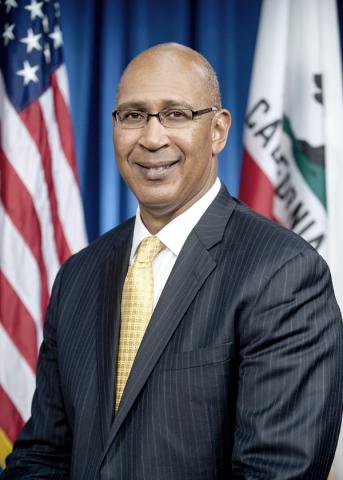
Bill Author