AB 1195: Climate Change Preparedness, Resiliency, and Jobs for Communities Program: climate-beneficial projects: grant funding.
- Session Year: 2023-2024
- House: Assembly
- Latest Version Date: 2023-03-29
Current Status:
Failed
(2024-02-01: From committee: Filed with the Chief Clerk pursuant to Joint Rule 56.)
Introduced
In Committee
First Chamber
In Committee
Second Chamber
Enacted
What does this bill do?
This bill creates the Climate Change Preparedness, Resiliency, and Jobs for Communities Program run by the Strategic Growth Council to award competitive grants to local groups—like nonprofits, special districts, joint powers authorities, and tribes—to develop and carry out multi‑benefit, climate‑beneficial projects that boost community and landscape resilience and create jobs. Grants will prioritize underresourced communities and fund three types of projects—community resiliency (affordable housing, greening, workforce, trails, zero‑emission tech), landscape resiliency (water, coasts, wildfire, habitat), and climate‑career pathways—and the council can offer technical help and multi‑year or advance payments.
The summary is provided by generative AI which can make mistakes. For original language, please view the details in the table below.
Existing law establishes the Transformative Climate Communities Program, to be administered by the Strategic Growth Council, and requires the program to fund the development and implementation of neighborhood-level transformative climate community plans that include multiple, coordinated greenhouse gas emissions reduction projects that provide local economic, environmental, and health benefits to disadvantaged communities identified by the California Environmental Protection Agency. Existing law requires the council to award competitive grants to eligible entities, as specified, through an application process and to develop guidelines and selection criteria for plan development and implementation of the program, as provided.
This bill would establish the Climate Change Preparedness, Resiliency, and Jobs for Communities Program, to be administered by the council, and would require the council to fund grants to develop and implement multibenefit, community-level, climate-beneficial projects to support community and landscape resiliency and workforce development. The bill would require the council to award competitive grants to eligible entities, as defined, through an application process, as provided. The bill would require the council, on or before July 1, 2024, to develop guidelines to implement the program and criteria to select projects eligible for grant funding that include, at a minimum, specified information related to community resiliency grants, landscape resiliency grants, and climate and career pathways grants.
For purposes of this part, the following terms have the following meanings:
(a)Council means the Strategic Growth Council.
(b)Eligible entity includes, but is not limited to, a nonprofit organization, a special district, a joint powers authority, or a tribal government that is eligible to apply for and receive grant funding from the council pursuant to the program.
(c)Funded entity means an eligible entity that is awarded a grant by and receives grant funding from the council pursuant to the program.
(d)Program means the Climate Change Preparedness, Resiliency, and Jobs for Communities Program created pursuant to Section 75301.
(e)Special district means any regional park district, regional park and open-space district, or regional open-space district formed pursuant to Article 3 (commencing with Section 5500) of Chapter 3 of Division 5.
(f)Underresourced community means a community identified pursuant to Section 39711 of the Health and Safety Code, subdivision (d) of Section 39713 of the Health and Safety Code, or subdivision (g) of Section 75005 of this code.
75301.The Climate Change Preparedness, Resiliency, and Jobs for Communities Program is hereby created, to be administered by the council. The council shall fund grants to develop and implement multibenefit, community-level, climate beneficial climate-beneficial projects to support community and landscape resiliency and workforce development.
75302.(a)The council shall award competitive grants to eligible entities through an application process and implement the program to do all of the following:
(1)Provide a preference for Prioritize projects in underresourced communities.
(2)Ensure that projects that receive grant funding maximize multibenefit, community-level, climate-beneficial projects that create community and landscape resiliency and workforce development benefits.
(3)Make grant selections for plan development contingent on the implementation of one or more projects identified by the plan.
(4)Disburse grants throughout the state to maximize the impacts and benefits of the program in as many communities as possible.
(5)Ensure that the grant application process is simple and minimizes the resources necessary for an eligible entity to apply for grant funding.
(b)In awarding grants pursuant to the program, the council may do both of the following:
(1)Prioritize projects that are administered by a special district or a state conservancy.
(2)Award to an eligible entity a grant over multiple years.
(c)To be eligible for grant funding pursuant to the program, an eligible entity shall deploy best management practices in the development and implementation of projects to reduce emissions of greenhouse gases, remove barriers that will lead to greenhouse gas emissions reductions, sequester greenhouse gases, reduce vehicle miles travelled, or provide other climate or climate adaptation benefits. benefits to the greatest extent practicable.
75303.(a)The council and all funded entities shall endeavor to identify additional public and private sources of funding to sustain and expand the program.(b)75303.(a)The council may provide financial technical assistance, when necessary, to assist eligible entities with the grant application process and or to assist funded entities with project development and implementation.
(b)The council may authorize advance payments on a grant awarded under this section in accordance with Section 11019.1 of the Government Code.
75304.(a)Before awarding grant funding under the program, the council, on or before July 1, 2024, shall develop guidelines to implement the program and criteria to select projects eligible for grant funding.
(b)In developing the guidelines and selection criteria required pursuant to subdivision (a), the council shall consider comments, if any, from local governments, regional agencies, tribes, and other stakeholders. The council shall conduct outreach to underresourced communities to encourage comments on the draft guidelines and selection criteria from those communities.
(c)The guidelines and selection criteria developed by the council pursuant to subdivision (a), shall provide, at a minimum, for all of the following:
(1)(A)Community resiliency grants to support the development of climate-beneficial projects with multiple benefits, including, but not limited to, affordable housing, community greening, and workforce development.
(B)In awarding community resiliency grants, the council shall prioritize projects that maximize one or more of the following benefits:
(i)Affordable housing.
(ii)Urban greening.
(iii)School greening.
(iv)River parkways.
(v)Parks.
(vi)Urban tree canopies.
(vii)Water capture and reuse.
(viii)Brownfield cleanup and remediation pilots.
(ix)Workforce development.
(x)Zero-emission appliances.
(xi)Active transportation and trails.
(xii)Zero- and near-zero emission near-zero-emission vehicle technologies and infrastructure for underresourced communities.
(C)The council shall attempt to do all of the following in its guidelines and selection criteria for community resiliency grants:
(i)Incorporate the development of new affordable housing and the protection and restoration of existing affordable housing stock.
(ii)Include provisions that leverage funding pursuant to the Housing-Related Parks Program established pursuant to Section 50701 of the Health and Safety Code, as appropriate.
(iii)Use of a portion of funds by agencies or eligible entities to acquire and bank lands for future, integrated community climate resiliency projects.
(iv)Promote nongovernmental organization partnerships, especially between conservation, environmental justice, community-based, public health, workforce development, and housing organizations.
(v)Promote a portfolio approach to select projects to receive grant funding, including support for local organizations that work in the community.
(vi)Support leveraging regional funds, including, but not necessarily limited to, funds from measures adopted by the County of Los Angeles, such as Measure A, Measure M, and Measure HHH adopted in 2016, Measure H adopted in 2017, and Measure W adopted in 2018.
(vii)Advance antidisplacement policies that promote equitable and sustainable project development without displacing existing communities.
(D)Grant funds may be used for project and program costs that support project completion and maintenance, including any of the following:
(i)Acquisition.
(ii)Restoration.
(iii)Enhancement.
(iv)Planning.
(v)Capacity.
(vi)Construction.
(vii)Technical assistance.
(viii)Advanced payments.
(ix)Maintenance and operations.
(x)Community access.
(2)(A)Landscape resiliency grants to support the development of climate beneficial climate-beneficial projects with multiple benefits, including, but not limited to, water conservation, watershed resiliency, wildlife and fish species enhancements, and natural landscapes resiliency.
(B)In awarding landscape resiliency grants, the council shall prioritize projects that maximize one or more of the following benefits: benefits to:
(i)The coast and oceans.
(ii)Natural lands.
(iii)Natural community conservation plan and habitat conservation plan implementation.
(iv)Wetlands and mountain meadows.
(v)Wildfire management and restoration, including projects in the wildland urban wildland-urban interface.
(C)The council shall attempt to do all of the following in its guidelines and selection criteria for landscape resiliency grants:
(i)Promote nongovernmental organization partnerships, especially between conservation, environmental justice, tribal, and community-based organizations.
(ii)Promote a portfolio approach to select projects to receive grant funding, including support for local organizations that work in the community.
(iii)Support project deployment throughout the state.
(iv)Support leveraging regional funds.
(v)Advance antidisplacement policies that promote equitable and sustainable development without displacing existing communities.
(D)Grant funds may be used for project and program costs that support project completion and maintenance, including any of the following:
(i)Acquisition.
(ii)Restoration.
(iii)Enhancement.
(iv)Planning.
(v)Capacity.
(vi)Construction.
(vii)Technical assistance.
(viii)Workforce development.
(ix)Advanced payments.
(x)Maintenance and operations.
(xi)Community access.
(3)Climate and career pathways grants to support the development of climate-beneficial projects with multiple benefits that incorporate partnerships with nonprofit organizations that provide certifications or placement services for jobs and careers in the natural resources field, including, but not limited to, fire and vegetative management, restoration, parks, and natural resources management.
For purposes of this part, the following terms have the following meanings:
(a)Council means the Strategic Growth Council.
(b)Eligible entity includes, but is not limited to, a nonprofit organization, a special district, a joint powers authority, or a tribal government that is eligible to apply for and receive grant funding from the council pursuant to the program.
(c)Funded entity means an eligible entity that is awarded a grant by and receives grant funding from the council pursuant to the program.
(d)Program means the Climate Change Preparedness, Resiliency, and Jobs for Communities Program created pursuant to Section 75301.
(e)Special district means any regional park district, regional park and open-space district, or regional open-space district formed pursuant to Article 3 (commencing with Section 5500) of Chapter 3 of Division 5.
(f)Underresourced community means a community identified pursuant to Section 39711 of the Health and Safety Code, subdivision (d) of Section 39713 of the Health and Safety Code, or subdivision (g) of Section 75005 of this code.
75301.The Climate Change Preparedness, Resiliency, and Jobs for Communities Program is hereby created, to be administered by the council. The council shall fund grants to develop and implement multibenefit, community-level, climate beneficial projects to support community and landscape resiliency and workforce development.
75302.(a)The council shall award competitive grants to eligible entities through an application process and implement the program to do all of the following:
(1)Provide a preference for projects in underresourced communities.
(2)Ensure that projects that receive grant funding maximize multibenefit, community-level, climate-beneficial projects that create community and landscape resiliency and workforce development benefits.
(3)Make grant selections for plan development contingent on the implementation of one or more projects identified by the plan.
(4)Disburse grants throughout the state to maximize the impacts and benefits of the program in as many communities as possible.
(5)Ensure that the grant application process is simple and minimizes the resources necessary for an eligible entity to apply for grant funding.
(b)In awarding grants pursuant to the program, the council may do both of the following:
(1)Prioritize projects that are administered by a special district or a state conservancy.
(2)Award to an eligible entity a grant over multiple years.
(c)To be eligible for grant funding pursuant to the program, an eligible entity shall deploy best management practices in the development and implementation of projects to reduce emissions of greenhouse gases, remove barriers that will lead to greenhouse gas emissions reductions, sequester greenhouse gases, reduce vehicle miles travelled, or provide other climate or climate adaptation benefits.
75303.(a)The council and all funded entities shall endeavor to identify additional public and private sources of funding to sustain and expand the program.
(b)The council may provide financial assistance, when necessary, to assist eligible entities with the grant application process and to assist funded entities with project development and implementation.
75304.(a)Before awarding grant funding under the program, the council, on or before July 1, 2024, shall develop guidelines to implement the program and criteria to select projects eligible for grant funding.
(b)In developing the guidelines and selection criteria required pursuant to subdivision (a), the council shall consider comments, if any, from local governments, regional agencies, and other stakeholders. The council shall conduct outreach to underresourced communities to encourage comments on the draft guidelines and selection criteria from those communities.
(c)The guidelines and selection criteria developed by the council pursuant to subdivision (a), shall provide, at a minimum, for all of the following:
(1)(A)Community resiliency grants to support the development of climate-beneficial projects with multiple benefits, including, but not limited to, affordable housing, community greening, and workforce development.
(B)In awarding community resiliency grants, the council shall prioritize projects that maximize one or more of the following benefits:
(i)Affordable housing.
(ii)Urban greening.
(iii)School greening.
(iv)River parkways.
(v)Parks.
(vi)Urban tree canopies.
(vii)Water capture and reuse.
(viii)Brownfield cleanup and remediation pilots.
(ix)Workforce development.
(x)Zero-emission appliances.
(xi)Active transportation and trails.
(xii)Zero- and near-zero emission vehicle technologies and infrastructure for underresourced communities.
(C)The council shall attempt to do all of the following in its guidelines and selection criteria for community resiliency grants:
(i)Incorporate the development of new affordable housing and the protection and restoration of existing affordable housing stock.
(ii)Include provisions that leverage funding pursuant to the Housing-Related Parks Program established pursuant to Section 50701 of the Health and Safety Code, as appropriate.
(iii)Use of a portion of funds by agencies or eligible entities to acquire and bank lands for future, integrated community climate resiliency projects.
(iv)Promote nongovernmental organization partnerships, especially between conservation, environmental justice, community-based, public health, workforce development, and housing organizations.
(v)Promote a portfolio approach to select projects to receive grant funding, including support for local organizations that work in the community.
(vi)Support leveraging regional funds, including, but not necessarily limited to, funds from measures adopted by the County of Los Angeles, such as Measure A, Measure M, and Measure HHH adopted in 2016, Measure H adopted in 2017, and Measure W adopted in 2018.
(vii)Advance antidisplacement policies that promote equitable and sustainable project development without displacing existing communities.
(D)Grant funds may be used for project and program costs that support project completion and maintenance, including any of the following:
(i)Acquisition.
(ii)Restoration.
(iii)Enhancement.
(iv)Planning.
(v)Capacity.
(vi)Construction.
(vii)Technical assistance.
(viii)Advanced payments.
(ix)Maintenance and operations.
(x)Community access.
(2)(A)Landscape resiliency grants to support the development of climate beneficial projects with multiple benefits, including, but not limited to, water conservation, watershed resiliency, wildlife and fish species enhancements, and natural landscapes resiliency.
(B)In awarding landscape resiliency grants, the council shall prioritize projects that maximize one or more of the following benefits:
(i)The coast and oceans.
(ii)Natural lands.
(iii)Natural community conservation plan and habitat conservation plan implementation.
(iv)Wetlands and mountain meadows.
(v)Wildfire management and restoration, including projects in the wildland urban interface.
(C)The council shall attempt to do all of the following in its guidelines and selection criteria for landscape resiliency grants:
(i)Promote nongovernmental organization partnerships, especially between conservation, environmental justice, and community-based organizations.
(ii)Promote a portfolio approach to select projects to receive grant funding, including support for local organizations that work in the community.
(iii)Support project deployment throughout the state.
(iv)Support leveraging regional funds.
(v)Advance antidisplacement policies that promote equitable and sustainable development without displacing existing communities.
(D)Grant funds may be used for project and program costs that support project completion and maintenance, including any of the following:
(i)Acquisition.
(ii)Restoration.
(iii)Enhancement.
(iv)Planning.
(v)Capacity.
(vi)Construction.
(vii)Technical assistance.
(viii)Workforce development.
(ix)Advanced payments.
(x)Maintenance and operations.
(xi)Community access.
(3)Climate and career pathways grants to support the development of climate-beneficial projects with multiple benefits that incorporate partnerships with nonprofit organizations that provide certifications or placement services for jobs and careers in the natural resources field, including, but not limited to, fire and vegetative management, restoration, parks, and natural resources management.
|
Date
|
Status
|
|---|---|
| Feb 1, 2024 | From committee: Filed with the Chief Clerk pursuant to Joint Rule 56. |
| Jan 31, 2024 | Died pursuant to Art. IV, Sec. 10(c) of the Constitution. |
| May 18, 2023 | In committee: Held under submission. |
| Apr 19, 2023 | In committee: Set, first hearing. Referred to APPR. suspense file. |
| Mar 30, 2023 | Re-referred to Com. on APPR. |
| Mar 29, 2023 | Read second time and amended. |
| Mar 28, 2023 | From committee: Amend, and do pass as amended and re-refer to Com. on APPR. (Ayes 8. Noes 1.) (March 27). |
| Mar 2, 2023 | Referred to Com. on NAT. RES. |
| Feb 17, 2023 | From printer. May be heard in committee March 19. |
| Feb 16, 2023 | Read first time. To print. |
|
Date
|
Description
|
Location
|
Votes
|
|
|---|---|---|---|---|
| Mar 27, 2023 | Do pass as amended and be re-referred to the Committee on [Appropriations] | Assembly Standing Committee on Natural Resources |
Passed |
This list shows positions taken on this bill by organizations on the date displayed, which is linked to the original source.
Positions by individuals are not included.
|
Organization
|
Position
|
Date
|
|---|---|---|
| California Association Of Local Conservation Corps | ** Support | |
| California Association Of Local Conservation Corps | * Support | Mar 27, 2023 |
| California Invasive Plant Council | ** Support | |
| Calstart | ** Support | |
| Community Nature Connection | * Support | Mar 27, 2023 |
| Endangered Habitats League | ** Support | |
| Fresno Metro Black Chamber of Commerce | ** Support | |
| Holos Communities | ** Support | |
| LA Conservation Corps. | * Support | Mar 27, 2023 |
| Land Trust Of Santa Cruz County | ** Support | |
| Los Angeles Conservation Corps | ** Support | |
| Los Angeles Neighborhood Land Trust | ** Support | |
| Midpeninsula Regional Open Space District | ** Support | |
| Natural Resources Defense Council | ** Support |
Date of Hearing: April 19, 2023
ASSEMBLY COMMITTEE ON APPROPRIATIONS
Chris Holden, Chair
ABPCA Bill Id:AB 1195
Author:(Calderon) – As Amended Ver:March 29, 2023
Policy Committee: | Natural Resources | Vote: | 8 - 1 |
|
| ||
|
|
Urgency: No State Mandated Local Program: No Reimbursable: No
SUMMARY:
This bill establishes the Climate Change Preparedness, Resiliency, and Jobs for Communities Program (Program) to provide grants to develop and implement multibenefit, community-level, climate-beneficial projects to support community and landscape resiliency and workforce development.
Specifically, this bill:
- Requires the Strategic Growth Council (SGC) to administer the Program, as specified, and award competitive grants to eligible entities to develop and implement multibenefit, community-level, climate beneficial projects to support community and landscape resiliency and workforce development.
- Authorizes SGC to prioritize projects that are administered by a special district or a state conservancy and award a grant to an eligible entity over multiple years.
- Requires an eligible entity, to be eligible for grant funding, to reduce emissions of greenhouse gases (GHG), remove barriers that will lead to GHG emission reductions, sequester GHGs, reduce vehicle miles travelled, or provide other climate or climate adaptation benefits to the greatest extent practicable.
- Authorizes SGC to provide technical assistance, when necessary, to assist eligible entities with the grant application process or to assist funded entities with project development and implementation.
- Authorizes SGC to authorize advance payments on a Program grant, as specified.
- Requires SGC, on or before July 1, 2024, to develop guidelines to implement the Program and criteria to select projects eligible for grant funding, as specified.
- Requires SGC to consider comments, if any, from local governments, regional agencies, tribes, and other stakeholders and to conduct outreach to underresourced communities to encourage comments on the draft guidelines and selection criteria from these communities.
FISCAL EFFECT:
Cost pressure of an unknown but significant amount, likely in the tens to hundreds of millions of dollars (General Fund, special fund, or bond funds), to support SGC’s implementation of the Program and to provide grants under the Program. As currently drafted, this bill does not identify a funding source for the Program.
As an example, if the Legislature appropriates $200 million for the Program, which is in line with allocations for many analogous programs, SGC estimates one-time start-up costs of approximately $6.3 million and ongoing, annual costs of approximately $1.2 million (General Fund, special fund, or bond funds). This includes six new positions to establish the Program, additional procurement and accounting staff capacity for the new workload created by the Program, impacts to the existing Transformative Climate Communities Program (see comments below), contracting costs, technical assistance, and language access. SGC notes these costs could change significantly depending on the size of program and the level of funding approved by the Legislature.
COMMENTS:
1) Purpose. According to the author:
With repeated drought cycles, destructive wildfires, and rising sea levels, California must continue investing in efforts that combat climate change. It is imperative that we reduce greenhouse gas emissions, increase utilization of renewable energy sources, and target these efforts at the community level. Assembly Bill 1195 will create the Climate Change Preparedness, Resiliency, and Jobs for Communities Grant Program. The program will uplift disadvantaged communities by awarding grants to locals that deploy multi-benefit, climate resilient projects. The program will also grant landscape resiliency grants that will promote natural landscapes, water conservation, and fish and wildlife preservation.
2) Background. The Transformative Climate Communities (TCC) Program, administered by SGC, deploys a place-based strategy for reducing GHGs through a combination of community-driven climate projects in a single neighborhood. Project examples include affordable and sustainable housing developments, transit stations and facilities, electric bicycle and car share programs, solar installation and energy efficiency, urban greening and green infrastructure, bicycle and pedestrian facilities, recycling and waste management, and health and well-being projects. Since 2018, SGC has awarded over $230 million in TCC implementation and planning grants to 26 communities across the state.
In response to a multibillion dollar budget deficit, the Governor’s January budget for fiscal year (FY) 2023-24 proposes reducing funding for TCC by $105 million over two years. This would leave the program with $100 million annually in both FY 2022-23 and 2023-24. The administration estimates this reduction would result in between five and 10 fewer communities receiving TCC funds, as well as reduced implementation grant amounts for continuing grantees. The administration notes that applicants could apply to a similar new federal program. According to the Legislative Analyst’s Office:
The U.S. Environmental Protection Agency recently established the Environmental and Climate Justice Block Grants Program, which is modeled directly after California’s TCC program. This $3 billion federal program will provide three‑year implementation grants on a competitive basis to applying states, tribes, municipalities, and community‑based organizations. California communities have no guarantees about how much they will receive from this program or whether it will directly backfill the locations and amounts that state funds would have supported. However, the federal program presents an opportunity to potentially support the goal of expanding the TCC program even if the state reduces its funding. SGC indicates it will use existing staff to provide technical assistance and support communities interested in applying for the federal program.
This bill directs SGC, in awarding community resilience grants, to prioritize projects that maximize affordable housing, urban greening, school greening, river parkways, parks, urban tree canopies, water capture and reuse, brownfield cleanup and remediation pilots, workforce development, zero-emission appliances, active transportation and trails, and zero- and near-zero emission vehicle technologies and infrastructure for underresourced communities. The proposed Program is substantially similar to TCC as well as dozens of other programs funded by the state, including: Affordable Housing and Sustainable Communities Program, Community Air Protection Program (AB 617), Clean Cars 4 All, Clean Mobility in Schools, Clean Vehicle Rebate Project, Urban Greening Program, Urban and Community Forestry Program, Active Transportation Program, Green Schoolyards Grant Program, Climate Ready Program, numerous park improvement and access programs, Low-Carbon Economy Workforce, Building Initiative for Low-Emissions Development, and many others.
Given the budget shortfall facing the state and the reductions proposed to TCC and other existing climate investments – many of which are already oversubscribed – it is not clear if a new and potentially redundant grant program is justified at this time.
Analysis Prepared by: Nikita Koraddi / APPR. / (916) 319-2081
Date of Hearing: March 27, 2023
ASSEMBLY COMMITTEE ON NATURAL RESOURCES
Luz Rivas, Chair
ABPCA Bill Id:AB 1195 (
Author:Calderon) – As Introduced Ver:February 16, 2023
SUBJECT: Climate Change Preparedness, Resiliency, and Jobs for Communities Program: climate-beneficial projects: grant funding.
SUMMARY: Establishes the Climate Change Preparedness, Resiliency, and Jobs for Communities Program to provide grants to develop and implement multibenefit, community-level, climate beneficial projects to support community and landscape resiliency and workforce development.
EXISTING LAW:
- Requires the Air Resources Board (ARB), pursuant to California Global Warming Solutions Act of 2006 (AB 32, Núñez, Chapter 488, Statutes of 2006), to adopt a statewide greenhouse gas (GHG) emissions limit equivalent to 1990 levels by 2020 and adopt regulations to achieve maximum technologically feasible and cost-effective GHG emission reductions.
- Establishes the Greenhouse Gas Reduction Fund (GGRF) as the repository for all moneys, except for fines and penalties, collected by ARB from the auction or sale of allowances pursuant to a market-based compliance mechanism (i.e., the cap-and-trade program adopted by ARB under AB 32).
- Establishes the GGRF Investment Plan and Communities Revitalization Act (AB 1532, Pérez, Chapter 807, Statutes of 2012) to set procedures for the investment of GHG allowance auction revenues. AB 1532 authorizes a range of GHG reduction investments and establishes several additional policy objectives.
- Requires the GGRF Investment Plan to allocate a minimum of 25% of the available moneys in GGRF projects located within identified disadvantaged communities. (AB 1550, Gomez, Chapter 369, Statutes of 2016)
- Defines the following terms:
- “Disadvantaged communities” as areas disproportionately affected by environmental pollution and other hazards that can lead to negative public health effects, exposure, or environmental degradation, and areas with concentrations of people that are of low income, high unemployment, low levels of homeownership, high rent burden, sensitive populations, or low levels of educational attainment. (Health and Safety Code (HSC) § 39711)
- “Low-income household or low-income community” as those with household incomes at or below 80% of the statewide median income or with household incomes at or below the threshold designated as low income by the Department of Housing and Community Development’s list of state income limits. (HSC § 39713(d)(1))
- “Low-income communities” are census tracts with median household incomes at or below 80% of the statewide median income or with median household incomes at or below the threshold designated as low income by the Department of Housing and Community Development’s list of state income limits. (HSC § 39713(d)(2))
- “Disadvantaged community” is a community with a median household income less than 80% of the statewide average. “Severely disadvantaged community” means a community with a median household income less than 60% of the statewide average. (Public Resources Code (PRC) § 75005(g))
- Establishes the Transformative Climate Communities (TCC) Program, to be administered by the Strategic Growth Council (SGC), and requires the program to fund the development and implementation of neighborhood-level transformative climate community plans that include multiple, coordinated GHG emissions reduction projects that provide local economic, environmental, and health benefits to disadvantaged communities identified by the California Environmental Protection Agency (CalEPA). (PRC § 75240)
- Requires SGC to award competitive grants to eligible entities, as specified, through an application process and to develop guidelines and selection criteria for plan development and implementation of the program, as provided. (PRC § 75241)
- Authorize SGC to offer advance payments up to 25% of the grant amount. (PRC § 75245)
THIS BILL:
- Defines the following terms for purposes of the bill:
- “Eligible entity” includes, but is not limited to, a nonprofit organization, a special district, a joint powers authority, or a tribal government that is eligible to apply for and receive grant funding from SGC pursuant to the program.
- “Program” means the Climate Change Preparedness, Resiliency, and Jobs for Communities Program.
- “Underresourced community” means a community identified pursuant to Section 39711 of the HSC, subdivision (d) of Section 39713 of the HSC, or subdivision (g) of Section 75005 of HSC.
- Requires the SGC to administer the Program and fund grants to develop and implement multibenefit, community-level, climate beneficial projects to support community and landscape resiliency and workforce development.
- Requires the SGC to award competitive grants to eligible entities through an application process and implement the Program to do all of the following:
- Provide a preference for projects in underresourced communities.
- Ensure that projects that receive grant funding maximize multibenefit, community-level, climate-beneficial projects that create community and landscape resiliency and workforce development benefits.
- Make grant selections for plan development contingent on the implementation of one or more projects identified by the plan.
- Disburse grants throughout the state to maximize the impacts and benefits of the program in as many communities as possible.
- Ensure that the grant application process is simple and minimizes the resources necessary for an eligible entity to apply for grant funding.
- Authorizes the SGC to prioritize projects that are administered by a special district or a state conservancy, and to award to an eligible entity a grant over multiple years.
- Requires an eligible entity, to be eligible for grant funding, to deploy best management practices in the development and implementation of projects to reduce GHGs, remove barriers that will lead to GHG reductions, sequester GHGs, reduce vehicle miles travelled, or provide other climate or climate adaptation benefits.
- Requires the SGC and all funded entities to endeavor to identify additional public and private sources of funding to sustain and expand the Program.
- Authorizes SGC to provide financial assistance, when necessary, to assist eligible entities with the grant application process and to assist funded entities with project development and implementation.
- Requires the SGC, before awarding grant funding under the Program, to, on or before July 1, 2024, develop guidelines to implement the program and criteria to select projects eligible for grant funding.
- Requires SGC to consider comments, if any, from local governments, regional agencies, and other stakeholders. Requires SGC to conduct outreach to underresourced communities to encourage comments on the draft guidelines and selection criteria from those communities.
- Requires the guidelines and selection criteria developed by the SGC to provide, at a minimum, for all of the following:
- Community resiliency grants to support the development of climate-beneficial projects with multiple benefits, including, but not limited to, affordable housing, community greening, and workforce development.
- In awarding community resiliency grants, requires SGC to prioritize projects that maximize one or more of the following benefits:
- Affordable housing.
- Urban greening.
- School greening.
- River parkways.
- Parks.
- Urban tree canopies.
- Water capture and reuse.
- Brownfield cleanup and remediation pilots.
- Workforce development.
- Zero-emission appliances.
- Active transportation and trails.
- Zero- and near-zero emission vehicle technologies and infrastructure for underresourced communities.
- Requires the SGC to attempt to do all of the following in its guidelines and selection criteria for community resiliency grants:
- Incorporate the development of new affordable housing and the protection and restoration of existing affordable housing stock.
- Include provisions that leverage funding pursuant to the Housing-Related Parks Program, as appropriate.
- Use of a portion of funds by agencies or eligible entities to acquire and bank lands for future, integrated community climate resiliency projects.
- Promote nongovernmental organization partnerships, especially between conservation, environmental justice, community-based, public health, workforce development, and housing organizations.
- Promote a portfolio approach to select projects to receive grant funding, including support for local organizations that work in the community.
- Support leveraging regional funds, including, but not necessarily limited to, funds from measures adopted by the County of Los Angeles, such as Measure A, Measure M, and Measure HHH adopted in 2016, Measure H adopted in 2017, and Measure W adopted in 2018.
- Advance antidisplacement policies that promote equitable and sustainable project development without displacing existing communities.
- Authorizes grant funds to be used for project and program costs that support project completion and maintenance, including any of the following:
- Acquisition.
- Restoration.
- Enhancement.
- Planning.
- Capacity.
- Construction.
- Technical assistance.
- Advanced payments.
- Maintenance and operations.
- Community access.
- Landscape resiliency grants to support the development of climate beneficial projects with multiple benefits, including, but not limited to, water conservation, watershed resiliency, wildlife and fish species enhancements, and natural landscapes resiliency. Requires the SGC to prioritize projects that maximize one or more of the following benefits:
- The coast and oceans.
- Natural lands.
- Natural community conservation plan and habitat conservation plan implementation.
- Wetlands and mountain meadows.
- Wildfire management and restoration, including projects in the wildland urban interface.
- Requires the SGC to attempt to do all of the following in its guidelines and selection criteria for landscape resiliency grants:
- Promote nongovernmental organization partnerships, especially between conservation, environmental justice, and community-based organizations.
- Promote a portfolio approach to select projects to receive grant funding, including support for local organizations that work in the community.
- Support project deployment throughout the state.
- Support leveraging regional funds.
- Advance antidisplacement policies that promote equitable and sustainable development without displacing existing communities.
- Authorizes grant funds to be used for project and program costs that support project completion and maintenance, including any of the following:
- Acquisition.
- Restoration.
- Enhancement.
- Planning.
- Capacity.
- Construction.
- Technical assistance.
- Workforce development.
- Advanced payments.
- Maintenance and operations.
- Community access.
- Climate and career pathways grants to support the development of climate-beneficial projects with multiple benefits that incorporate partnerships with nonprofit organizations that provide certifications or placement services for jobs and careers in the natural resources field, including, but not limited to, fire and vegetative management, restoration, parks, and natural resources management
FISCAL EFFECT: Unknown.
COMMENTS:
- Need for the bill. Author’s statement:
With repeated drought cycles, destructive wildfires, and rising sea levels, California must continue investing in efforts that combat climate change. It is imperative that we reduce greenhouse gas emissions, increase utilization of renewable energy sources, and target these efforts at the community level.
Assembly Bill 1195 will create the Climate Change Preparedness, Resiliency, and Jobs for Communities Grant Program. The program will uplift disadvantaged communities by awarding grants to locals that deploy multi-benefit, climate resilient projects. The program will also grant landscape resiliency grants that will promote natural landscapes, water conservation, and fish and wildlife preservation.
- Environmental justice. While climate change already impacts every region of the state, communities experience these impacts differently based on a wide range of
factors. Many disadvantaged and low-income communities experience heightened risk and increased sensitivity to climate change and have less capacity and fewer resources to cope with, adapt to, or recover from climate impacts. These disproportionate effects are caused by physical (built and environmental), social, political, and/or economic factor(s), which are exacerbated by climate change.
The Office of Environmental Health Hazard Assessment (OEHHA) developed and regularly updates the CalEnviroScreen, a tool that incorporates the most recent publicly available data for pollution and environmental health hazard indicators to identify the state’s communities most disproportionately vulnerable to and impacted by environmental pollution for purposes of state climate investments (GGRF). At least 25% of funds must be allocated toward disadvantaged communities; at least 5% must be allocated toward projects within low-income communities or benefiting low-income households, and at least 5% must be allocated toward projects within and benefiting low-income communities, or low-income households, that are within a half-mile of a designated disadvantaged community. By mid-2022, of the $11.4 billion funds generated from Cap-and-Trade, nearly half -- $5.1 billion – of all invested funds will directly benefit California’s priority populations, which include disadvantaged and low-income communities and low-income households statewide.
- Transformative Climate Communities Program. TCC Program (or TCCP, but you used TCC Program above) to empower communities most impacted by pollution to choose their own goals, strategies, and projects to reduce GHGs and local air pollution with data-driven milestones and measureable outcomes.
Initially funded by California’s Cap-and-Trade program, TCC Program is now funded through the General Fund ($420 million over 3-years). The shift in the funding source may be attributed to the stability of the General Fund due to the state’s previous surplus of revenues.
Since 2018, SGC has awarded more than $230 million in TCC Program implementation and planning grants to 26 communities in California through a competitive process. SGC has awarded TCC Program implementation grants between $9 and $66.5 million to the neighborhoods of South Stockton, East Oakland, Eastside Riverside, Sacramento’s River District, Northeast San Fernando Valley (Los Angeles), Watts (Los Angeles), Downtown Ontario, and Fresno’s Southwest, Downtown, and Chinatown neighborhoods. TCC Program also funds planning grants to help communities prepare for implementation. SGC awards TCC Program grants and partners with the Department of Conservation to implement them.
- Climate Change Preparedness, Resiliency, and Jobs for Communities Program. This bill proposes creation of the Program, which would be in addition to TCC Program. The Program would require SGC to fund grants to develop and implement multibenefit, community-level, climate-beneficial projects to support community and landscape resiliency and workforce development. More specifically, the bill would require grant guidelines to be developed for:
Community resiliency grants to support the development of climate-beneficial projects with multiple benefits, including, but not limited to, affordable housing, community greening, and workforce development.
Landscape resiliency grants to support the development of climate-beneficial projects with multiple benefits, including, but not limited to, water conservation, watershed resiliency, wildlife and fish species enhancements, and natural landscapes resiliency.
Climate and career pathways grants to support the development of climate-beneficial projects with multiple benefits that incorporate partnerships with nonprofit organizations that provide certifications or placement services for jobs and careers in the natural resources field, including, but not limited to, fire and vegetative management, restoration, parks, and natural resources management.
In addition, grant funds can be used to support project and program costs that support project completion and maintenance, such as acquisition, restoration, planning, technical assistance, and workforce development.
- How is this Program different from TCC Program? The bill is remarkably similar to TCC Program, albeit with differences that the author contends make a significant difference for potential grant applicants.
First, the grant sizes would be smaller. TCC Program grants sizes are larger, making the bar high and administrative burden prohibitive for smaller community groups intending to do smaller projects. The goal with AB 1195 is to get more funding out the door faster, enabling smaller projects to get funded and implemented. The bill requires SGC to “disburse grants throughout the state to maximize the impacts and benefits of the program in as many communities as possible” and “ensure that the grant application process is simple and minimizes the resources necessary for an eligible entity to apply for grant funding.”
The author may wish to consider better defining the size of the available grant and clarifying how small groups and/or recipients of smaller grants could be better suited by this program. This could include defining parameters on project planning costs (i.e. no more than x% of grant for planning), eligible project timing (i.e. 3-6 month implementation), grant value limits, etc.
Second, this Program would have a greater focus on natural resources and conservation, including landscaping with benefits for water conservation, watershed resiliency, wildlife and fish species enhancements, and natural landscapes resiliency.
The Legislative Analyst’s Office (LAO) April 5, 2022 report, Climate Change Impacts Across California -Crosscutting Issues, notes that “given the magnitude of climate change impacts California already is beginning to experience, the Legislature will confront persistent questions about how the state should respond … Given that certain groups—such as low-income households, medically sensitive populations, and workers in outdoor industries— generally are more vulnerable to the effects of climate change, the Legislature may want to consider how it can target state programs in ways that support these populations.”
AB 1195 attempts to capture that sentiment. However, the distinction between TCC Program and this new Program should be further refined.
- California’s climate investments. The 2022-23 fiscal year budget included $54 billion over 5 years to support transformative climate investments in transportation, energy, housing, education, wildfire resilience, drought, and health. Revenues from quarterly Cap‑and‑Trade auctions are deposited in the GGRF and the funds are generally allocated to climate‑related programs. Under current law, about 65% of auction revenue is continuously appropriated to certain projects and programs, including high‑speed rail, affordable housing, transit, and safe drinking water.
This year, the state is facing a $22.5 billion budget deficit and the Governor’s January 10 proposed significant cuts across the board for the state’s climate investments and environmental programs, including $6 billion in cuts to the 5-year climate spending plan.
It should be noted that the TCC Program funding is proposed to be cut from $140 million to $100 million (GGRF), and future year funding is uncertain.
The Greenlining Institute, which sponsored the TCC Program-enacting legislation, did a 5-year review report on TCC Program provided recommendations for strengthening the program. The bulk of the recommendations revolve around funding such as:
- Advocates were heartened by a funding increase approved in the recently-concluded California state budget process, but future funding is not guaranteed. The state must adequately and consistently fund the pathway from planning to implementation, and support the local ecosystems needed to support community transformation.
- To sustain community transformation, the governor and legislature should explore ways to establish a consistent funding source for the program.
Given the similarities between TCC and the program proposed by this bill, these fiscal recommendations would likely also apply to a new program at the SGC, especially in light of the budget deficit.
Alternatively, AB 1567 (E. Garcia) proposes a $15.1 billion bond, the Safe Drinking Water, Wildfire Prevention, Drought Preparation, Flood Protection, Extreme Heat Mitigation, and Workforce Development Bond Act of 2023, for the next ballot. Given the state’s foreseen budget deficit over the next several fiscal years, some stakeholders are putting stock in this bond (and other proposed climate bonds currently in the Legislative process) to fund programs where state funding is likely to be reduced.
- Committee amendments.
- This bill provides a preference for projects in underresourced communities. The understood intent is to ensure prioritization for these communities. While “preference” may be synonymous with “prioritization,” the committee may wish to amend the bill as follows to be consistent with the verbiage in the state’s codified goals for investing in low income and disadvantaged communities.
Sec. 75302 (a)(1) Provide a preference for Prioritize projects in underresourced communities.
- The SGC is politically appointed, which requires their compliance with the Fair Political Practices Act (FPPA). Under the FPPA, an elected official who fundraises or otherwise solicits payments from one individual or organization to be given to another individual or organization may be required to report the payment. Generally, a payment is considered "behested" and subject to reporting if it is made: at the request, suggestion, or solicitation of, or made in cooperation, consultation, coordination or concert with the public official; and, for a legislative, governmental or charitable purpose. AB 1195 requires SGC and all funded entities to endeavor to identify additional public and private sources of funding to sustain and expand the program. To prevent any perceived conflicts of interest, the Committee may wish to consider amending the bill as follows:
75303. (a) The council and all funded entities shall endeavor to identify additional public and private sources of funding to sustain and expand the program.
- In that same section, the bill allows the SGC to provide financial assistance to assist eligible entities with the grant application process. It is the understood intent to allow the SGC to provide technical assistance to grant applicants. The Committee may wish to amend the bill to make that clear. In addition, the SGC is authorized to provide advance payments to grantees under the TCC program. The Committee may wish to provide the same authority under this program as follows.
Sec. 75303 (a) The council may provide financial technical assistance, when necessary, to assist eligible entities with the grant application process and/or to assist funded entities with project development and implementation.
(b) The council may authorize advance payments on a grant awarded under this section in accordance with Section 11019.1 of the Government Code.
- The bill requires grant recipients to deploy best management practices (BMP) in the development and implementation of projects to reduce GHGs. “BMP” is a term of art, often referring to adopted or published guidelines for conducting some sort of effort. There are no established BMPs for this specific purpose, so the Committee may wish to amend the bill as follows:
Sec. 75302 (c) To be eligible for grant funding pursuant to the program, an eligible entity shall deploy best management practices in the development and implementation of projects to reduce emissions of greenhouse gases, remove barriers that will lead to greenhouse gas emissions reductions, sequester greenhouse gases, reduce vehicle miles travelled, or provide other climate or climate adaptation benefits to greatest extent practicable.
- Tribes are critical stakeholders to state policy development, and many reside in areas that have been developed into urban environments. The Committee may wish to consider amending the bill to include Tribes in the guidelines development process in Sec. 75304 (b) and Sec. 75304 (c)(2)(C)(i).
- Related legislation.
SB 989 (Hertzberg, Chapter 712, Statutes of 2022) proposed establishing the Climate Change Preparedness, Resiliency, and Jobs for Communities Program to award community resiliency, landscape resiliency, and climate and career pathways grants, as specified, to underresourced communities. It was ultimately gut & amended with unrelated language before it was enacted.
AB 1640 (Ward, 2022) requires the Office of Planning and Research to facilitate the creation of regional climate networks and create standards for the development of a regional climate adaptation action plan to support the implementation of regional climate adaptation efforts. This bill was held in the Senate Appropriations Committee.
REGISTERED SUPPORT / OPPOSITION:
Support
California Association of Local Conservation Corps
California Invasive Plant Council
CALSTART
Endangered Habitats League
Fresno Metro Black Chamber of Commerce
Holos Communities
Land Trust of Santa Cruz County
Los Angeles Conservation Corps
Los Angeles Neighborhood Land Trust
Midpeninsula Regional Open Space District
Natural Resources Defense Council
Opposition
California Association of Realtors (unless amended)
Analysis Prepared by: Paige Brokaw / NAT. RES. /
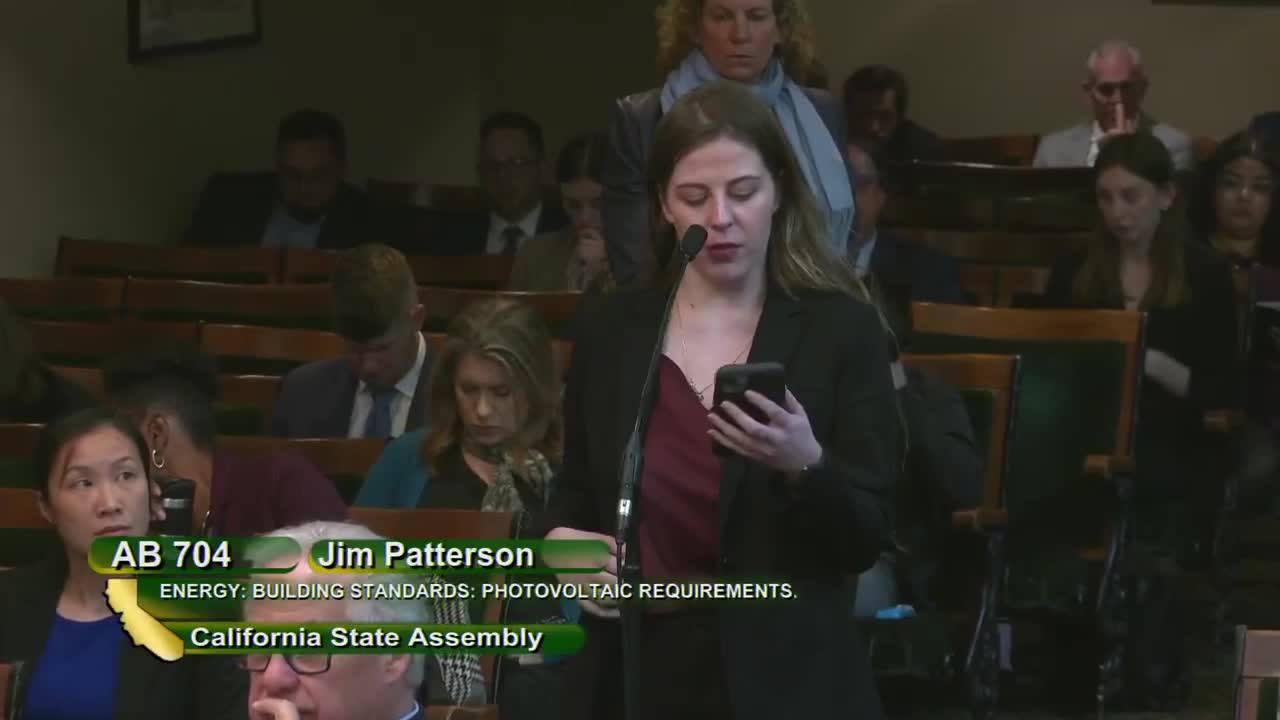
Discussed in Hearing
 6MIN
Assembly Standing Committee on Natural Resources
Bill Author
Bill Co-Author(s):