AB 1387: In-Home Supportive Services Program: provider shortage: grant-based outreach program.
- Session Year: 2023-2024
- House: Assembly
- Latest Version Date: 2023-02-17
Current Status:
Failed
(2024-02-01: From committee: Filed with the Chief Clerk pursuant to Joint Rule 56.)
Introduced
In Committee
First Chamber
In Committee
Second Chamber
Enacted
Existing law provides for the county-administered In-Home Supportive Services (IHSS) program, under which qualified aged, blind, and disabled persons are provided with services in order to permit them to remain in their own homes and avoid institutionalization. Existing law establishes the Medi-Cal program, which is administered by the State Department of Health Care Services, under which qualified low-income individuals receive health care services. Existing law authorizes certain Medi-Cal recipients to receive waiver personal care services (WPCS) in order to permit them to remain in their own homes. Existing law permits services to be provided under the IHSS program either through the employment of individual providers, a contract between the county and an entity for the provision of services, the creation by the county of a public authority, or a contract between the county and a nonprofit consortium.
This bill would require the department, by March 1, 2024, to issue a request for proposals for a 3-year, grant-based program to support outreach and education to encourage immigrants to become in-home supportive services (IHSS) providers, contingent upon an appropriation by the Legislature for that purpose. The bill would require eligible grantees for the program to include nonprofit, community-based agencies that engage with immigrant populations, counties administering the IHSS program, and county public authorities. The bill would set forth eligible outreach activities, including developing educational and outreach materials, and providing community outreach workers. The bill would require grantees to report to the department, at least semiannually, on the outcomes achieved by the outreach campaign, including, but not limited to, activities and methods utilized to reach and recruit providers. If the grantee reporting requirements result in additional workload for counties, those provisions would be implemented only if funding for that purpose is provided in the State Budget. The bill would require the department to report to the Legislature, within 6 months after the conclusion of the program, on the effectiveness of the program, including the extent to which the outreach campaign resulted in an increase in the IHSS provider workforce. The provisions of the bill would be repealed on January 1, 2028.
The bill would make related findings and declarations relating to the existence of a shortage in the IHSS program workforce. The bill also would declare the intent of the Legislature to enact subsequent legislation that permits undocumented in-home supportive services recipients to select a relative as their provider of choice, regardless of immigration status.
The Legislature finds and declares as follows:
(a)Beginning January 1, 2020, the State of California extended full-scope Medi-Cal eligibility to all undocumented young adults up to 26 years of age, and more recently, under the omnibus health trailer bill of the 202122 budget, California expanded full-scope Medi-Cal benefits to undocumented older adults over 50 years of age. As a result, these undocumented populations also became eligible for the In-Home-Supportive Services (IHSS) program.
(b)The IHSS program is a county-administered program that allows eligible individuals requiring home care and disability assistance to choose their own home care providers to remain safely at home and avoid costly institutionalization.
(c)According to Californias Master Plan for Aging (MPA), the state will face a labor shortage of up to 3,200,000 paid direct care workers in the coming years, including direct care providers in the IHSS program.
(d)It is incumbent that California take the necessary steps now to begin to address the current and growing workforce shortage in the IHSS program.
(e)Further, while the IHSS program is predicated on consumers being able to hire a home care provider of their choice, many recipients are denied that right; they are unable to select an undocumented family member to act as their provider due to the federal and state requirements that all IHSS providers have a Social Security number.
(f)Nearly one-quarter of the nations undocumented immigrants reside in California, where they constitute more than 6 percent of the states population. California has consistently demonstrated support for undocumented residents, particularly those seeking essential health and care services.
SEC. 2.Section 12305.88 is added to the Welfare and Institutions Code, to read:12305.88.(a)(1) By March 1, 2024, the State Department of Social Services shall issue a request for proposals for a three-year, grant-based program to support outreach and education to encourage immigrants to become in-home supportive services (IHSS) providers. The department shall award program grants by July 1, 2024.
(2)The department shall select grantees based on criteria established pursuant this section, and any other relevant criteria developed by the department in consultation with stakeholder representatives described in subdivision (c). Eligible grantees shall include nonprofit, community-based agencies that engage with immigrant populations, counties administering the IHSS program, county public authorities, and labor representatives. Eligible activities may include, but are not limited to, the following:
(A)Developing educational and outreach materials, including materials in target population native languages, that include, but are not limited to, the following:
(i)Promotion of IHSS job and career opportunities, including the value of this profession.
(ii)Job duties and responsibilities of IHSS providers.
(iii)Monetary and employment benefits.
(iv)Pathways and available training for IHSS employment.
(v)Family and community impact, including the ability to care for a loved one.
(B)Developing and executing marketing strategies. Eligible activities may include, but are not limited to, the following:
(i)Use of traditional media, ethnic media, and social media for marketing and promotion.
(ii)Out-of-home and digital advertising, such as bus advertisements, billboards, social media and internet website advertisements, and newspapers.
(C)Providing community outreach workers to provide information, recruit prospective IHSS providers, and assist them in applying.
(D)A digital or telephonic mechanism for prospective IHSS providers to submit questions and receive answers.
(b)(1)(A) The department shall require grantees to report, no less than semiannually, on the outcomes achieved by this outreach campaign, including, but not limited to, activities and methods utilized to reach and recruit providers, where and how prospective providers are getting information and what gaps exist for them in learning about becoming a provider, the number of individuals served, and any barriers to recruitment. To the extent possible, the department shall identify the number of new IHSS providers recruited. The department shall consult with stakeholders pursuant to subdivision (c) to identify the most cost-effective and efficient method for determining newly recruited IHSS providers.
(B) If implementation of this paragraph results in additional workload for counties, this paragraph shall be implemented only to the extent that funding for its purposes is provided in the state budget.
(2)(A)The department shall report to the Legislature on the effectiveness of the outreach program, including the aggregated data provided by grantees pursuant to subdivision (A) of paragraph (1), and an assessment of the extent to which the outreach campaign resulted in an increase in the IHSS workforce. The report shall be submitted no later than six months from the conclusion of the program.
(B) A report submitted pursuant to this paragraph shall be submitted in accordance with Section 9795 of the Government Code.
(c)The department shall consult with stakeholders in the development of the outreach program and reporting requirements, including, but not limited to, the following:
(1)Immigrant service organizations.
(2)Aging and disability advocates.
(3)The California Association of Public Authorities.
(4)The County Welfare Directors Association of California.
(5)Provider representatives.
(6)Marketing firms with experience in multicultural communications and advertising.
(7)Other agencies, as appropriate.
(d)The establishment of the grant-based outreach and education program pursuant to this section shall be contingent upon appropriation by the Legislature for that purpose.
(e)This section shall remain in effect only until January 1, 2028, and as of that date is repealed.
SEC. 3.It is the intent of the Legislature to enact subsequent legislation that permits undocumented in-home supportive services recipients to select a relative as their provider of choice, regardless of immigration status.
|
Date
|
Status
|
|---|---|
| Feb 1, 2024 | From committee: Filed with the Chief Clerk pursuant to Joint Rule 56. |
| Jan 31, 2024 | Died pursuant to Art. IV, Sec. 10(c) of the Constitution. |
| May 18, 2023 | In committee: Held under submission. |
| May 10, 2023 | In committee: Set, first hearing. Referred to APPR. suspense file. |
| May 3, 2023 | In committee: Hearing postponed by committee. |
| Apr 19, 2023 | From committee: Do pass and re-refer to Com. on APPR. (Ayes 6. Noes 1.) (April 18). Re-referred to Com. on APPR. |
| Mar 9, 2023 | Referred to Com. on HUM. S. |
| Feb 18, 2023 | From printer. May be heard in committee March 20. |
| Feb 17, 2023 | Read first time. To print. |
|
Date
|
Description
|
Location
|
Votes
|
|
|---|---|---|---|---|
| Apr 18, 2023 | Do pass and be re-referred to the Committee on [Appropriations] | Assembly Standing Committee on Human Services |
Passed |
This list shows positions taken on this bill by organizations on the date displayed, which is linked to the original source.
Positions by individuals are not included.
|
Organization
|
Position
|
Date
|
|---|---|---|
| Alameda County Social Services Agency | * Support | Apr 18, 2023 |
| Alzheimer'S Association, State Policy Office | ** Support | |
| Board of Supervisors Santa Clara County | * Support | Apr 18, 2023 |
| California Association Of Area Agencies On Aging | * Support | Apr 18, 2023 |
| California Coalition on Family Caregiving | ** Support | |
| California Commission on Aging | ** Support | |
| California Domestic Workers Coalition | ** Support | |
| California Immigrant Policy Center | * Support | Apr 18, 2023 |
| California Rural Legal Assistance Foundation, Inc. | ** Support | |
| City & County of San Francisco | ** Support | |
| Community Living Campaign | ** Support | |
| County of Santa Clara | ** Support | |
| County Welfare Directors Association | * Support | Apr 18, 2023 |
| Disability Rights California | * Support | Apr 18, 2023 |
| Edgewood Center for Children and Families | ** Support | |
| Family Caregiver Alliance | ** Support | |
| Hand in Hand: The Domestic Employers Network | ** Support | |
| Justice in Aging | ** Support | |
| Los Angeles County Board of Supervisors | * Support | Apr 18, 2023 |
| National Domestic Workers Alliance | ** Support | |
| Personal Assistance Services Council | * Support | Apr 18, 2023 |
| San Francisco Human Services Agency | * Support | Apr 18, 2023 |
| SEIU California | ** Support | |
| UDW AFSCME Local 3930 | * Support | Apr 18, 2023 |
Date of Hearing: May 10, 2023
ASSEMBLY COMMITTEE ON APPROPRIATIONS
Chris Holden, Chair
ABPCA Bill Id:AB 1387
Author:(Ting) – As Introduced Ver:February 17, 2023
Policy Committee: | Human Services | Vote: | 6 - 1 |
|
| ||
|
|
Urgency: No State Mandated Local Program: No Reimbursable: No
SUMMARY:
This bill, upon appropriation by the Legislature, establishes a grant program administered by the California Department of Social Services (CDSS) to encourage immigrants to become In-Home Supportive Services (IHSS) providers.
Specifically, this bill:
- Requires CDSS, by March 1, 2024, to issue a request for proposals for a three-year, grant-based program to support outreach and education to encourage immigrants to become IHSS providers.
- Requires CDSS to award program grants by July 1, 2024.
- Requires CDSS to select grantees based on criteria in this bill and relevant criteria developed by CDSS in consultation with stakeholder representatives.
- Provides that eligible grantees must include nonprofit, community-based agencies that engage with immigrant populations, counties administering the IHSS program, county public authorities, and labor representatives.
- Establishes eligible activities to include developing educational and outreach materials, developing and executing marketing strategies, providing community outreach workers to provide information, recruit prospective IHSS providers, and assist them in applying.
- Requires grantees to report data on the outcomes achieved by this outreach campaign, including activities and methods utilized, where and how prospective providers are getting information, the number of individuals served, and any barriers to recruitment.
- Requires CDSS to report, no later than six months from the conclusion of the program, to the Legislature on the effectiveness of the outreach program, including the aggregated data provided by grantees.
- States the intent of the Legislature to enact subsequent legislation that permits undocumented IHSS recipients to select a relative as their provider of choice, regardless of immigration status.
- Sunsets this grant program on January 1, 2028.
FISCAL EFFECT:
- Estimated General Fund (GF) cost pressures of an unknown amount, likely in the low millions of dollars, to fund the grants. The author is seeking $3 million in the state budget for this purpose.
- CDSS estimates ongoing GF costs of $860,000 in the first year and $838,000 annually through the life of the program, for five additional staff to establish and administer the grant program, receive and compile reports from grantees, and provide a report to the Legislature showing the effectiveness of the program.
COMMENTS:
- Purpose. This bill seeks to expand the pool of IHSS providers by establishing a grant program to encourage immigrants to become IHSS providers. According to the author:
While the State has laudably expanded the eligible pool of IHSS recipients, California does not have enough IHSS providers to meet this need. The vast majority of IHSS recipients rely on a family member or loved one to serve as their IHSS provider; yet, despite the IHSS workforce crisis, undocumented recipients are denied the right to select an undocumented family member to act as their provider. This is because providers are required to give a social security number to sign up. This barrier to allow undocumented relatives to serve as providers is inconsistent with both the IHSS consumer-driven model and with the priorities California has consistently demonstrated in support of undocumented residents.
- Background. IHSS allows individuals 65 years old and older, living with a disability, or blind to live in the place of their choosing and avoid premature institutional care. IHSS can be used for services such as housecleaning, meal preparation, laundry, grocery shopping, personal care services (such as bathing, grooming and paramedical services), accompaniment to medical appointments, and protective supervision for the mentally impaired.
All eligible IHSS recipients must physically reside in the United States, be a California resident, Medi-Cal qualified, live at home or place of own choosing which can include a licensed community care facility, and complete a Health Care Certification form. IHSS is administered through counties. IHSS clients self-direct their care, which allows them to choose and hire their own provider, including friends and family. About 70% of IHSS providers are related to their client.
According to the Census Bureau, the youngest cohort of baby boomers will be at least 65 years old by 2030. In 2021, California expanded Medi-Cal to qualified individuals regardless of immigration status. With this expansion, individuals with functional impairments who are undocumented and over the age of 50 are also newly eligible for IHSS.
The Department of Labor statistics show there are not enough direct care workers to meet population needs due to low wages, meager benefits and low respect for demanding jobs requiring difficult physical and emotional work. Low wages make caregivers difficult to recruit, making family caregivers crucial to serving this vulnerable population. Family caregivers can be eligible for IHSS funding to supplement lost wages due to their caregiving duties. However, undocumented immigrants are not eligible to be IHSS caregivers due to immigration status. This means undocumented recipients cannot select an undocumented family member to act as their IHSS provider.
This bill attempts to address the caregiver provider shortage by directing outreach to the immigrant community and encouraging IHSS provider enrollment. The bill also states Legislative intent to enact subsequent legislation to permit undocumented IHSS recipients to select a relative as their provider of choice, regardless of immigration status.
Analysis Prepared by: Jennifer Swenson / APPR. / (916) 319-2081
Date of Hearing: April 18, 2023
ASSEMBLY COMMITTEE ON HUMAN SERVICES
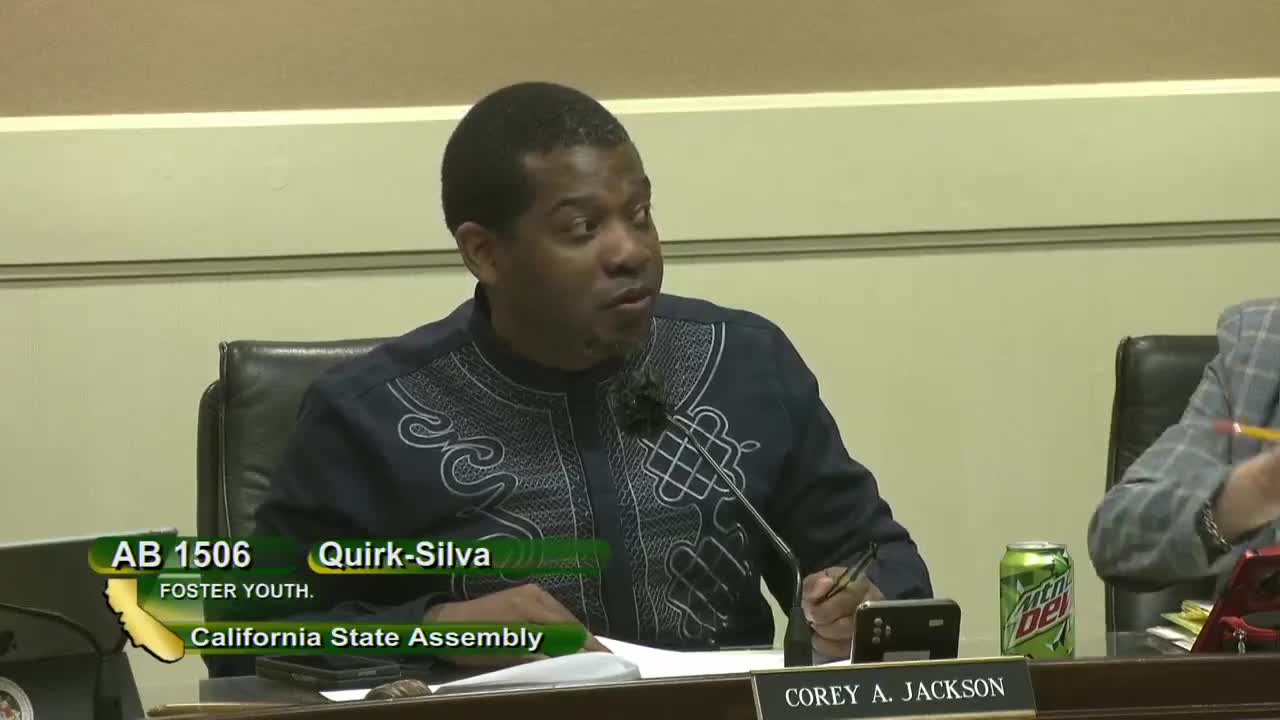
Corey A. Jackson, Chair
ABPCA Bill Id:AB 1387 (
Author:Ting) – As Introduced Ver:February 17, 2023
SUBJECT: In-Home Supportive Services Program: provider shortage: grant-based outreach program
SUMMARY: Establishes a grant program to encourage immigrants to become in-home supportive services (IHSS) providers; Requires the California Department of Social Services (CDSS) to administer the grant program, collect data, and provide a report to the Legislature; and requires grantees to perform specified activities and report data. Specifically, this bill:
- Requires CDSS, by March 1, 2024, to issue a request for proposals for a three-year, grant-based program to support outreach and education to encourage immigrants to become IHSS providers.
- Requires CDSS to award program grants by July 1, 2024.
- Requires CDSS to select grantees based on criteria in this bill and relevant criteria developed by CDSS in consultation with stakeholder representatives.
- Provides that eligible grantees must include nonprofit, community-based agencies that engage with immigrant populations, counties administering the IHSS program, county public authorities, and labor representatives.
- Establishes eligible activities to include, but not be limited to, the following:
- Developing educational and outreach materials, including materials in target population native languages, that include, but are not limited to, the following:
- Promotion of IHSS job and career opportunities, including the value of this profession.
- Job duties and responsibilities of IHSS providers.
- Monetary and employment benefits.
- Pathways and available training for IHSS employment.
- Family and community impact, including the ability to care for a loved one.
- Developing and executing marketing strategies. Eligible activities may include, but are not limited to, the following:
- Use of traditional media, ethnic media, and social media for marketing and promotion.
- Out-of-home and digital advertising, such as bus advertisements, billboards, social media and internet website advertisements, and newspapers.
- Providing community outreach workers to provide information, recruit prospective IHSS providers, and assist them in applying.
- A digital or telephonic mechanism for prospective IHSS providers to submit questions and receive answers.
- Requires grantees to report, no less than semiannually, on the outcomes achieved by this outreach campaign, including, but not limited to:
- Activities and methods utilized to reach and recruit providers;
- Where and how prospective providers are getting information and what gaps exist for them in learning about becoming a provider; and,
- The number of individuals served, and any barriers to recruitment.
- Requires CDSS, to the extent possible, to identify the number of new IHSS providers recruited.
- Requires CDSS to consult with stakeholders described below in 11) to identify the most cost-effective and efficient method for determining newly recruited IHSS providers.
- Provides if implementation of 5) - 8) results in additional workload for counties, these requirements will only be implemented to the extent that funding for its purposes is provided in the state budget.
- Requires CDSS to report, no later than six months from the conclusion of the program, to the Legislature on the effectiveness of the outreach program, including the aggregated data provided by grantees as described in 6).
- Requires CDSS to consult with stakeholders in the development of the outreach program and reporting requirements, including, but not limited to, the following:
- Immigrant service organizations.
- Aging and disability advocates.
- The California Association of Public Authorities.
- The County Welfare Directors Association of California.
- Provider representatives.
- Marketing firms with experience in multicultural communications and advertising.
- Other agencies, as appropriate.
- Provides that the establishment of the grant-based outreach and education program pursuant to this section shall be contingent upon appropriation by the Legislature for that purpose.
- Sunsets this grant program on January 1, 2028.
- Makes the following legislative findings and declarations:
- Beginning January 1, 2020, the State of California extended full-scope Medi-Cal eligibility to all undocumented young adults up to 26 years of age, and more recently, under the omnibus health trailer bill of the 2021–22 budget, California expanded full-scope Medi-Cal benefits to undocumented older adults over 50 years of age. As a result, these undocumented populations also became eligible for the IHSS program.
- The IHSS program is a county-administered program that allows eligible individuals requiring home care and disability assistance to choose their own home care providers to remain safely at home and avoid costly institutionalization.
- According to California’s Master Plan for Aging, the state will face a labor shortage of up to 3.2 million paid direct care workers in the coming years, including direct care providers in the IHSS program.
- It is incumbent that California take the necessary steps now to begin to address the current and growing workforce shortage in the IHSS program.
- Further, while the IHSS program is predicated on consumers being able to hire a home care provider of their choice, many recipients are denied that right; they are unable to select an undocumented family member to act as their provider due to the federal and state requirements that all IHSS providers have a Social Security number.
- Nearly one-quarter of the nation’s undocumented immigrants reside in California, where they constitute more than 6% of the state’s population. California has consistently demonstrated support for undocumented residents, particularly those seeking essential health and care services.
EXISTING LAW:
- Provides direction to counties to administer IHSS for aged, blind, and persons living with a disability. (Welfare and Institutions Code Section [WIC] 12300)
- Defines supportive services as domestic services and services related to domestic services, heavy cleaning, personal care services, accompaniment by a provider when needed during necessary travel to health-related appointments or to alternative resource sites, yard hazard abatement, protective supervision, teaching and demonstration directed at reducing the need for other supportive services, and paramedical services which make it possible for the recipient to establish and maintain an independent living arrangement. Personal care services shall mean all of the following:
- Assistance with ambulation.
- Bathing, oral hygiene, and grooming.
- Dressing.
- Care and assistance with prosthetic devices.
- Bowel, bladder, and menstrual care.
- Repositioning, skin care, range of motion exercises, and transfers.
- Feeding and assurance of adequate fluid intake.
- Respiration.
- Assistance with self-administration of medications. (WIC 12300 (b))
- Restricts parents of children receiving IHSS benefits from being paid unless the provider leaves full-time employment or is prevented from obtaining full-time employment because no other suitable provider is available. (WIC 12300(e))
- Establishes a workweek as beginning at 12:00 a.m. on Sunday and includes the next consecutive 168 hours, terminating at 11:59 p.m. the following Saturday, and restricts a provider from working more than 66 hours in a week. (WIC 12300.4)
- Requires counties to perform a background check on individuals applying to become IHSS providers, and stipulates circumstances under which individuals shall be excluded from becoming an IHSS provider, as well as circumstances under which such an exclusion might be waived, as specified. (WIC 12305.86 and 12305.87)
FISCAL EFFECT: Unknown, this bill has not been analyzed by a fiscal committee.
COMMENTS:
Background: Master Plan for Aging. In June 2019, Governor Newsom issued Executive Order N-14-19 that ordered the California Health and Human Services Agency to convene a “Master Plan for Aging Stakeholder Committee” to establish a 10-year plan with aging services based on data, stakeholder input, and research. The Executive Order also established a Long-Term Services and Supports (LTSS) Subcommittee that was required, by March 2020, to report:
- The growth and sustainability of long-term care programs and their infrastructure, including the IHSS program.
- Access to long-term care, financing for long-term care services, and the quality of long-term care provided in an array of settings.
- The impact of program sustainability and other factors, such as labor supply and retention of the workforce providing long-term services and supports.
- A recommendation to stabilize long-term care, including the IHSS program as a foundational source for implementing the Master Plan whereby our aging population can safely remain in their own homes within their own communities.
Following the Executive Order, the COVID-19 pandemic necessitated a major policymaking pause across many health and human services programs, and for the aging and disabled population particularly. As a result, the report was released in May 2020 and the contents were shaped by the immediate crisis to recipients of long-term care services. The pandemic highlighted the need for in-home options rather than institutional setting like community care facilities.
One of the five objectives offered in the LTSS report was: “Recognizing personal preferences and labor market challenges, the state must: 1) provide maximum support to family caregivers who have additional jobs outside the family caregiving setting through family leave policies, including job protections, that allow unpaid caregivers the flexibility to continue to earn while providing needed family support and; 2) accelerate growth of the paid workforce to meet increasing demand for LTSS.” The Master Plan for Aging estimates that California will face a caregiver shortage of up to 3.2 million paid direct care workers.
California is the most racially and ethnically diverse state in the nation. By 2030, White, non-Latino Californians over the age of 60 will no longer represent the majority of older adults in California and the majority will identify as Black; Latino/x; Asian, Native Hawaiian, or Pacific Islander; American Indian or Alaska Native; or multiracial. This shift will further necessitate adequate culturally competent and linguistically appropriate services and providers to better reflect the needs of the population they will be serving.
To accomplish the above objective, the LTSS subcommittee recommended ensuring a linguistically and culturally responsive workforce by identifying best practices in cultural responsiveness which could include implicit bias training. As described in the LTSS subcommittee report, person-centered care relies on understanding and accepting everyone’s race, ethnicity, language, culture, faith tradition, sexual orientation, history, lived experience and preferences.
The Department of Aging regularly offers a variety of training on such cultural inclusivity
As part of the objectives laid out in the LTSS Subcommittee Stakeholder Report, to ensure there is an easy-to-navigate LTSS system that includes home and community-based and residential options statewide, making sure that IHSS recipients receive timely, accurate information that is linguistically and culturally responsive is critical to consistency and accuracy. This bill would take the recommendation and encourage culturally responsive and multi-lingual IHSS workers that reflect their recipients’ needs by outreaching to the immigrant community.
In-Home Support Services allows individuals 65 years old and older, living with a disability, and/or blind to live in the place of their choosing and avoid premature institutional care. IHSS can be used for services such as housecleaning, meal preparation, laundry, grocery shopping, personal care services (such as bowel and bladder care, bathing, grooming and paramedical services), accompaniment to medical appointments, and protective supervision for the mentally impaired.
All eligible IHSS recipients must physically reside in the United States, be a California resident, Medi-Cal qualified, live at home or place of own choosing which can include a licensed community care facility, long-term care facility, and complete a Health Care Certification form. IHSS is administered through counties. IHSS clients self-direct their care, which allows them to choose and hire their own provider, including friends and family. About 70% of IHSS providers are related to their client.
When an individual is determined eligible for IHSS services by a county social worker, they are authorized for a certain number of hours of care per week. IHSS recipients are responsible for hiring, firing, directing, and supervising their IHSS workers. These responsibilities include some administrative duties, such as scheduling and signing timesheets; however, the state handles payroll. Providers must complete an enrollment process, including submitting fingerprint images for a criminal background check and participating in a provider orientation prior to receiving payment for services.
The population needing to be served by IHSS is increasing and diversifying. According to how the Census Bureau defines baby boomers, the youngest cohort of baby boomers will be at least 65 years old by 2030. Adding to the pool of potential IHSS recipients, in 2021, California expanded Medi-Cal to qualified individuals regardless of immigration status. With this expansion, individuals with functional impairments who are undocumented and over the age of 50 are also newly eligible for IHSS.
According to a 2020 California State Auditor’s report of the IHSS program: “From January 2015 through December 2019, the number of recipients statewide who lacked care grew on average from 33,000 to more than 40,000 each month.” As a result of California’s aging population, expanded criteria for eligible recipients of IHSS, and the existing caregiving workforce shortage, this issue will continue to worsen the shortage of IHSS workers to provide the necessary care.
Caregiving Workforce. California’s direct care workers are largely women and women of color. National Partnership for Women & Families reports, 89% of paid caregivers are women. Of the 89% of women, 28% are Black, 21% are Hispanic or Latino, and 9% are other which equates to half of the direct care staff.
The Department of Labor statistics show that there are not enough direct care workers to meet population needs due to low wages, meager benefits and low respect for demanding jobs requiring difficult physical and emotional work. In recent years, California increased hourly wages to help retain and recruit caregivers as well as offer a bonus for working through the difficulty of the pandemic. Each county determines hourly wages, and as of April 2023, the average is $16.52/hour with Santa Clara County offering the highest rate of $19.04/hour. The low wages make the field difficult to recruit, making family caregivers crucial to serving this vulnerable population.
California relies on family caregivers to take care of loved ones who are aging and/or living with disabilities. According to the Gallup-Healthways Well-Being Index in 2011, more than 1 in 6 Americans working full-time or part-time report assisting with the care of an elderly or disabled family member, relative, or friend. Family caregivers can be eligible for IHSS funding to supplement of their lost wages due to their caregiving duties. However, undocumented recipients are denied the right to select an undocumented family member to act as their provider due to immigration status. This bill will provide outreach to immigrant communities to encourage IHSS provider enrollment.
Paid caregivers often make it possible for family caregivers to remain in the workforce and provide valuable, loving care. At the same time, their wages are low, their jobs are insecure and they lack access to basic protections like paid family and medical leave and paid sick days to care for their own loved ones and personal health needs. According to an AARP report, “Valuing the Invaluable: 2015 Update”, the economic value of this work is staggering; family caregiving was recently estimated to be worth $470 billion.
Author’s Statement: According to the Author, “With the State’s recent expansion of Medi-Cal to undocumented older adults (in May 2022), individuals with functional impairments who are undocumented and over the age of 50 are also newly eligible for IHSS. While the State has laudably expanded the eligible pool of IHSS recipients, California does not have enough IHSS providers to meet this need. The vast majority of IHSS recipients rely on a family member or loved one to serve as their IHSS provider; yet, despite the IHSS workforce crisis, undocumented recipients are denied the right to select an undocumented family member to act as their provider. This is because providers are required to give a social security number to sign up. This barrier to allow undocumented relatives to serve as providers is inconsistent with both the IHSS consumer-driven model and with the priorities California has consistently demonstrated in support of undocumented residents. To address this provider shortage, [this bill] would establish a 3-year, grant-based pilot program to support outreach and education to encourage immigrants to become IHSS providers. It would also declare the intent of the Legislature to establish a policy that would allow undocumented IHSS recipients to select an undocumented relative to serve as their provider.”
Need for this bill: As outlined above, there is a clear direct care workforce shortage that will continue to worsen over time. The Department of Aging reports one in four Californians will be over 60 years old by 2030, representing 10.8 million people; thus, more people will continue to need care. The data show family caregivers who are women and women of color typically bear the brunt of this responsibility. Providing outreach to inform these caretakers of a financial benefit helps encourage aging in place. With the expansion of eligibility to Medi-Cal to the undocumented community, who often experience language barriers upon their arrival, there is an additional need for cultural and linguistic competent care.
This bill attempts to address the caregiver provider shortage reported by directing outreach to the immigrant community and encouraging IHSS provider enrollment. This bill allows CDSS to determine grantees to implement outreach and education strategies that are enumerated in the bill. Furthermore, this bill requires a legislative report to evaluate the efficacy of the program.
Equity Implications: Californians with Medi-Cal eligibility who demonstrate the need for support services due to age, disability, or blindness are eligible for IHSS. California’s expansion of Medi-Cal ensured that nearly 286,000 undocumented older adults over the age of 50 could benefit from full-scope Medi-Cal services, including IHSS. The state’s shortage of IHSS providers means that many of these newly eligible older adults will not be able to receive the supportive services they need, and are thus deprived of the care necessary to avoid hospitalization, nursing care, and poor health outcomes.
California’s Master Plan for Aging notes that by 2030, the majority of Californians over 60 years old will identify as Black; Latino/x; Asian, Native Hawaiian, or Pacific Islander; American Indian or Alaska Native; or multiracial, necessitating more culturally competent and linguistically appropriate services and providers.
Policy Considerations: To address the current direct care workforce shortage, this bill establishes a grant program to encourage immigrants to become IHSS providers. While the bill explicitly states the outreach will be directed toward immigrants, the bill also states legislative intent to expand provider eligibility to undocumented immigrants in subsequent legislation. Without making a change in statutory language, undocumented workers are currently unable to become providers. As part of the grant program, eligible grantees would be required to develop educational and outreach materials in the target populations’ native languages, and would not necessarily preclude undocumented immigrants, which would serve to satisfy the author’s stated goal in the intent language.
With the recent changes in Medi-Cal-eligibility for individuals regardless of immigration status, including newly eligible IHSS recipients, outreach encouraging provider enrollment could be confusing if individuals are restricted based solely on their immigration status. Thus, until the Author’s stated intent of allowing undocumented immigrants to become providers is accomplished, the outreach material might need clarification to avoid unnecessary confusion.
RELATED AND PRIOR LEGISLATION:
AB 133 (Committee on Budget), Chapter 143, Statutes of 2021, expanded eligibility for full scope Medi-Cal to individuals who are 50 years of age or older, regardless of citizenship or immigration status, if otherwise eligible.
REGISTERED SUPPORT / OPPOSITION:
Support
City & County of San Francisco (Sponsor)
Alzheimer's Association State Policy Office
California Coalition on Family Caregiving
California Commission on Aging
California Domestic Workers Coalition
California Immigrant Policy Center
California Rural Legal Assistance Foundation, INC.
Community Living Campaign
County of Santa Clara
County Welfare Directors Association of California (CWDA)
Disability Rights California
Edgewood Center for Children and Families
Family Caregiver Alliance (FCA)
Hand in Hand: the Domestic Employers Network
Justice in Aging
National Domestic Workers Alliance
SEIU California
UDW/AFSCME Local 3930
Opposition
None on file
Analysis Prepared by: Alexandria Smith / HUM. S. / (916) 319-2089
Discussed in Hearing
 8MIN
Assembly Standing Committee on Human Services
Bill Author

Bill Co-Author(s):
