AB 1477: Alcohol and drug treatment programs: licensing and certification fee.
- Session Year: 2023-2024
- House: Assembly
- Latest Version Date: 2023-03-27
Current Status:
Failed
(2024-02-01: From committee: Filed with the Chief Clerk pursuant to Joint Rule 56.)
Introduced
In Committee
First Chamber
In Committee
Second Chamber
Enacted
What does this bill do?
This bill freezes the licensing and certification fees charged by the Department of Health Care Services for all residential addiction treatment facilities and addiction treatment programs at the rates last published in 2022. Those rates stay in effect until January 1, 2031 or until opioid overdose deaths fall by 50% from the January 1, 2024 level, and after that fees can be raised over time until the licensing program can cover its own costs, with no single-year increase greater than 15%.
The summary is provided by generative AI which can make mistakes. For original language, please view the details in the table below.
Existing law makes the State Department of Health Care Services responsible for administering prevention, treatment, and recovery programs for adult alcoholism and drug abuse. Existing law requires the department to charge a fee to all programs for licensure or certification by the department and to submit any proposed new fees or fee changes to the Legislature for approval, as specified. Existing law prohibits new fees or fee changes from being implemented with without legislative approval.
This bill would require all fees for licensing of nonprofit residential treatment facilities and certification of nonprofit treatment programs that provide addiction treatment services to Medi-Cal beneficiaries to be at the rate last published in 2022. The bill would leave that rate in effect until January 1, 2034, 2031, or until deaths related to opioid overdose reported by the California Overdose Surveillance Dashboard have declined by 50%, whichever is first. The bill would then require that fee increases continue until licensing and certification programs are self-sufficient, but would prohibit the increase from exceeding 15% in a single year.
Existing law makes the State Department of Health Care Services responsible for administering prevention, treatment, and recovery programs for adult alcoholism and drug abuse. Existing law requires the department to charge a fee to all programs for licensure or certification by the department and to submit any proposed new fees or fee changes to the Legislature for approval, as specified. Existing law prohibits new fees or fee changes from being implemented with legislative approval.
This bill would require all fees for licensing of nonprofit residential treatment facilities and certification of nonprofit treatment programs that provide addiction treatment services to Medi-Cal beneficiaries to be at the rate last published in 2022. The bill would leave that rate in effect until January 1, 2034, or until deaths related to opioid overdose reported by the California Overdose Surveillance Dashboard have declined by 50%, whichever is first.
The Legislature finds and declares the following:
(a)Data from the federal Center Centers for Disease Prevention and Controls Control and Preventions (CDC) National Center for Health Statistics show shows that nationally there were more than 100,000 Americans who died by overdose from May 2020 to April 2021, inclusive, with more than 64,000 of these deaths being a result of synthetic opioids and fentanyl.
(b)California experienced a 45-percent increase as more than 10,800 Californians died during this time.
(c)The number of amphetamine-related emergency department visits increased by nearly 50 percent between 2018 and 2020 and the number of non-heroin-related opioid emergency room visits more than doubled in the same period.
(d)Data from the California Health Care Foundation show shows that around 8.5 percent of Californias population lives with a substance use disorder, with 6.4 percent meeting criteria for an alcohol use disorder and 3.3 percent meeting criteria for a substance use disorder involving illegal drugs.
(e)Fifty-six of 58 counties in California are not meeting network adequacy requirements for the provision of substance use disorder services.
(f)Only 40 percent of commercial HMO and PPO health plan members with an alcohol or other drug dependence diagnosis received care that met the national quality standard of an initial treatment visit within 14 days of diagnosis.
(g)About 2.7 million Californians had a diagnosable substance use disorder in the past year, and only 1 in 10 of these individuals received treatment.
(h)The State Department of Health Care Services (DHCS) instituted licensure and certification fee reduction waivers throughout the first year of the COVID-19 Pandemic Emergency to assist facilities licensed and certified by DHCS to keep their doors open and to provide critical services, thus depleting the Residential and Outpatient Program Licensing Fund reserve.
(i)Section 11833.02 of the Health and Safety Code requires the fund to be supported by fees and federal funds, unless there is a specific appropriation from the General Fund.
(j)The Legislature declares that California faces a substance use disorder emergency and resolves to temporarily freeze licensing and certification fees for treatment programs to remove disincentives to building the states treatment capacity.
SEC. 2.Section 11833.02 of the Health and Safety Code is amended to read:11833.02.(a)The department shall charge a fee to all programs for licensure or certification by the department, regardless of the form of organization or ownership of the program.
(b)The department may establish fee scales using different capacity levels, categories based on measures other than program capacity, or any other category or classification that the department deems necessary or convenient to maintain an effective and equitable fee structure.
(c)Licensing and certification fees shall be evaluated annually, taking into consideration the overall cost of the residential and outpatient licensing and certification activities of the department, including initial issuance, renewals, complaints, enforcement activity, related litigation, and any other program activity relating to licensure and certification, plus a reasonable reserve.
(d)Beginning January 1, 2024, all fees for licensing of nonprofit residential treatment facilities and certification of nonprofit treatment programs that provide addiction treatment services to Medi-Cal beneficiaries shall be designated at the rate last published in 2022. This rate shall remain in effect until January 1, 2034, 2031, or until deaths related to any opioid overdose reported by the California Overdose Surveillance Dashboard have declined by 50 percent compared to the deaths on January 1, 2024, whichever is first. Upon a 50-percent reduction in overdose deaths, or after January 1, 2034, 2031, fees may be increased by not more than 10 percent per year until the Residential and Outpatient Program Licensing Fund meets the requirements set forth in subdivision (g). increased. These increases shall occur over a number of years and at a percentage to be determined based upon the estimated annual operating deficit for the licensing and certification programs. These fee increases shall continue until the licensing and certification programs funded through the Residential and Outpatient Program Licensing Fund are self-sufficient. A single-year increase prior to fund self-sufficiency shall not be more than 15 percent.
(e)The department shall submit any proposed new fees or fee changes to the Legislature for approval no later than April 1 of each year as part of the spring finance letter process. New fees or fee changes shall not be implemented without legislative approval.
(f)The department shall issue a provider bulletin pursuant to subdivision (a) of Section 11833.04 setting forth the approved fee structure. The department shall, on an annual basis, publish the current fee structure on the departments internet website.
(g)Unless funds are specifically appropriated from the General Fund in the annual Budget Act or other legislation to support the division, the Licensing and Certification Division, no later than the beginning of the 201011 fiscal year, shall be supported entirely by federal funds and special funds.
The Legislature finds and declares the following:
(a)Data from the federal Center for Disease Prevention and Controls (CDC) National Center for Health Statistics show that nationally there were more than 100,000 Americans who died by overdose from May 2020 to April 2021, inclusive, with more than 64,000 of these deaths being a result of synthetic opioids and fentanyl.
(b)California experienced a 45-percent increase as more than 10,800 Californians died during this time.
(c)The number of amphetamine-related emergency department visits increased by nearly 50 percent between 2018 and 2020 and the number of non-heroin-related opioid emergency room visits more than doubled in the same period.
(d)Data from the California Health Care Foundation show that around 8.5 percent of Californias population lives with a substance use disorder, with 6.4 percent meeting criteria for an alcohol use disorder and 3.3 percent meeting criteria for a substance use disorder involving illegal drugs.
(e)Fifty-six of 58 counties in California are not meeting network adequacy requirements for the provision of substance use disorder services.
(f)Only 40 percent of commercial HMO and PPO health plan members with an alcohol or other drug dependence diagnosis received care that met the national quality standard of an initial treatment visit within 14 days of diagnosis.
(g)About 2.7 million Californians had a diagnosable substance use disorder in the past year, and only 1 in 10 of these individuals received treatment.
(h)The State Department of Health Care Services (DHCS) instituted licensure and certification fee reduction waivers throughout the first year of the COVID-19 Pandemic Emergency to assist facilities licensed and certified by DHCS to keep their doors open and to provide critical services, thus depleting the Residential and Outpatient Program Licensing Fund reserve.
(i)Section 11833.02 of the Health and Safety Code requires the fund to be supported by fees and federal funds, unless there is a specific appropriation from the General Fund.
(j)The Legislature declares that California faces a substance use disorder emergency and resolves to temporarily freeze licensing and certification fees for treatment programs to remove disincentives to building the states treatment capacity.
SEC. 2.Section 11833.02 of the Health and Safety Code is amended to read:11833.02.(a)The department shall charge a fee to all programs for licensure or certification by the department, regardless of the form of organization or ownership of the program.
(b)The department may establish fee scales using different capacity levels, categories based on measures other than program capacity, or any other category or classification that the department deems necessary or convenient to maintain an effective and equitable fee structure.
(c)Licensing and certification fees shall be evaluated annually, taking into consideration the overall cost of the residential and outpatient licensing and certification activities of the department, including initial issuance, renewals, complaints, enforcement activity, related litigation, and any other program activity relating to licensure and certification, plus a reasonable reserve.
(d)Beginning January 1, 2024, all fees for licensing of nonprofit residential treatment facilities and certification of nonprofit treatment programs that provide addiction treatment services to Medi-Cal beneficiaries shall be designated at the rate last published in 2022. This rate shall remain in effect until January 1, 2034, or until deaths related to any opioid overdose reported by the California Overdose Surveillance Dashboard have declined by 50 percent compared to the deaths on January 1, 2024, whichever is first. Upon a 50-percent reduction in overdose deaths, or after January 1, 2034, fees may be increased by not more than 10 percent per year until the Residential and Outpatient Program Licensing Fund meets the requirements set forth in subdivision (g).
(d)(e)The department shall submit any proposed new fees or fee changes to the Legislature for approval no later than April 1 of each year as part of the spring finance letter process. No new New fees or fee changes shall not be implemented without legislative approval.
(e)(f)The department shall issue a provider bulletin pursuant to subdivision (a) of Section 11833.04 setting forth the approved fee structure. The department shall, on an annual basis, publish the current fee structure on the departments Internet Web site. internet website.
(f)(g)Unless funds are specifically appropriated from the General Fund in the annual Budget Act or other legislation to support the division, the Licensing and Certification Division, no later than the beginning of the 201011 fiscal year, shall be supported entirely by federal funds and special funds.
|
Date
|
Status
|
|---|---|
| Feb 1, 2024 | From committee: Filed with the Chief Clerk pursuant to Joint Rule 56. |
| Jan 31, 2024 | Died pursuant to Art. IV, Sec. 10(c) of the Constitution. |
| May 18, 2023 | In committee: Held under submission. |
| Apr 19, 2023 | In committee: Set, first hearing. Referred to APPR. suspense file. |
| Mar 28, 2023 | Re-referred to Com. on APPR. |
| Mar 27, 2023 | Read second time and amended. |
| Mar 23, 2023 | From committee: Amend, and do pass as amended and re-refer to Com. on APPR. (Ayes 14. Noes 0.) (March 21). |
| Mar 9, 2023 | Referred to Com. on HEALTH. |
| Feb 18, 2023 | From printer. May be heard in committee March 20. |
| Feb 17, 2023 | Read first time. To print. |
|
Date
|
Description
|
Location
|
Votes
|
|
|---|---|---|---|---|
| Mar 21, 2023 | Do pass as amended and be re-referred to the Committee on [Appropriations] | Assembly Standing Committee on Health |
Passed |
This list shows positions taken on this bill by organizations on the date displayed, which is linked to the original source.
Positions by individuals are not included.
|
Organization
|
Position
|
Date
|
|---|---|---|
| Behavioral Health Community | * Support | Mar 21, 2023 |
| California Access Coalition | ** Support | |
| California Consortium of Addiction Professionals and Programs | ** Support | |
| California Council Of Community Behavioral Health Agencies | ** Support | |
| ChildrenS Institute | ** Support | |
| Drug Policy Alliance | ** Support | |
| Exodus Recovery, Inc. | ** Support | |
| Hillsides | ** Support | |
| McAlister Institute | ** Support | |
| Native American Training Institute | ** Support | |
| PathPoint | ** Support | |
| Sacramento Recovery House | * Support | Mar 21, 2023 |
| Safe Passages | ** Support | |
| Steinberg Institute | * Support | Mar 21, 2023 |
| Sycamores | ** Support | |
| Tarzana Treatment Centers, Inc. | ** Support | |
| The Turning Point Home | ** Support |
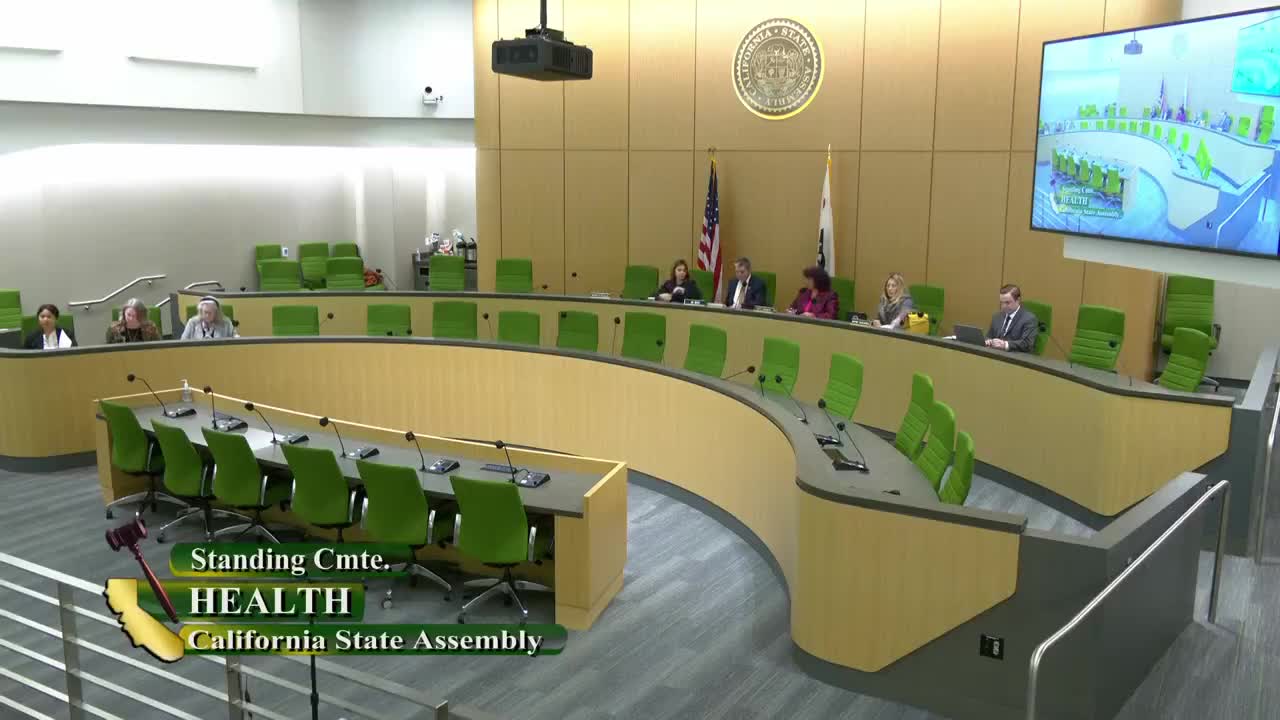
Date of Hearing: April 19, 2023
ASSEMBLY COMMITTEE ON APPROPRIATIONS
Chris Holden, Chair
ABPCA Bill Id:AB 1477
Author:(Quirk-Silva) – As Amended Ver:March 27, 2023
Policy Committee: | Health | Vote: | 14 - 0 |
|
| ||
|
|
Urgency: No State Mandated Local Program: No Reimbursable: No
SUMMARY:
This bill requires the Department of Health Care Services (DHCS) to keep fees for licensing of residential treatment facilities (RTFs) and certification of addiction treatment programs (also known as alcohol and other drug treatment recovery services, or AODs) at the rates published in 2022. This bill requires DHCS, on January 1, 2031, or when deaths related to opioid overdose reported by the California Overdose Surveillance Dashboard have declined by 50%, whichever is first, to increase fees for licensing and certification programs by no more than 15% in a single year, until the programs are self-sufficient.
FISCAL EFFECT:
Costs of $3.5 million per year, likely increasing over time as license and certification fees are held steady while costs associated with licensing and certification activities increase. Greater numbers of licenses and certifications, which advocates believe the state needs, will also magnify state costs (Residential and Outpatient Program Licensing Fund (ROPLF)).
According to DHCS, the ROPLF is becoming insufficient to sustain program oversight requirements and staffing levels.
COMMENTS:
- Purpose. According to the author:
Data from the California Health Care Foundation shows that around 8.5 percent of California’s population lives with a substance use disorder, with 6.4 percent meeting criteria for an alcohol use disorder and 3.3 percent meeting criteria for a substance use disorder involving illegal drugs.
Due to the pandemic, [DHCS] instituted licensure and certification fee reduction waivers throughout the first year of the COVID-19 Pandemic Emergency to assist facilities licensed and certified by DHCS to keep their doors open and to provide critical services. However, substance use treatment is still crucial. We need to make sure that the non-profit service providers are able to stay open and continue to deliver the services needed in our communities.
- Background—Licensing, Certification, and DHCS’s Budget Proposal.
Licensing. DHCS has sole authority to license RTFs, which provide 24-hour residential nonmedical services to eligible adults recovering from alcohol or other drug misuse or abuse. DHCS requires licensure when at least one of the following services is provided: detoxification, group sessions, individual sessions, educational sessions, or AOD abuse recovery or treatment planning. Facilities may also be subject to other types of permits, clearances, business taxes, or local fees that may be required by the facility’s locality.
Certification. Many facilities licensed by DHCS as RTFs also acquire DHCS certification; however, certification is not required for either RTFs or AODs. Certification by DHCS identifies RTFs and AODs that exceed minimum levels of service quality and are in substantial compliance with the AOD certification standards. According to the Assembly Health Committee analysis, AOD programs that do not seek voluntary certification from DHCS are not subject to any governmental oversight, leading to unregulated facilities, poor quality of care, and patient safety risks.
DHCS 2023 Budget Trailer Bill Proposal. DHCS submitted trailer bill legislation that would strengthen oversight for SUD licensing and certification. DHCS proposes to require the certification of all AOD programs. According to DHCS, mandatory certification of AOD programs will provide DHCS with the necessary oversight to verify facility compliance with applicable laws and establishes oversight mechanisms similar to RTF licensure requirements, such as criteria for acceptable facility performance, structural requirements, program inspections, and appropriate administrative actions.
Additionally, DHCS is proposing trailer bill language to improve the ROPLF fee process. The ROPLF consists of specified fees, fines and penalties collected from licensed RTFs and certified AOD programs. DHCS states these revenues are to support and maintain sufficient resources for DHCS to administer the program and provide adequate oversight of its providers. The fees for RTFs and AODs were last increased in 2014. Since then, nine legislative bills have enacted additional substance use disorder (SUD) provider oversight requirements, nearly doubling DHCS workload and requiring increased staff. DHCS notes current fees are based on the workload and staffing resources needed in 2014, despite a near doubling in workload and the addition of 31 staff positions to perform the legislatively mandated operations. Additionally, because of increased program closures associated with the COVID-19 public health emergency, the revenue to the ROPLF has declined. This loss of revenue has further contributed to the ROPLF becoming insufficient to sustain existing program oversight requirements and staffing levels.
DHCS requested an increase to provider fees of 63% ($3.5 million) in the 2022-23 budget to allow fees to support the administrative functions of the program as originally intended. However, the fee increase was denied by the Legislature because of the concern that it would exacerbate the shortage of treatment programs, increase costs to already struggling programs, and prevent additional programs from coming into the field.
DHCS is also seeking authorization to determine fees in a manner similar to other state licensing programs. This process entails evaluating all licensing fees annually based on the projected costs for the coming fiscal year, consideration of anticipated revenues and any surplus in the ROPLF at the close of the fiscal year, which may be carried forward, and then, based on that evaluation, establish fees for the subsequent fiscal year. If DHCS should propose to increase licensing and certification fees, it would be required to justify the increase by showing that insufficient assets are available in the ROPLF.
- Related Legislation. AB 1055 (Bains) creates, upon appropriation by the Legislature, the Allied Behavioral Health Board (Board) within the Department of Consumer Affairs, and requires the Board to establish regulations and standards for the licensure of alcohol and drug counselors. AB 1055 is pending in Assembly Business and Professions Committee.
- Prior Legislation.
- AB 919 (Petrie-Norris), Chapter 811, Statutes of 2019, expanded the prohibitions on specified entities from giving or receiving remuneration or anything of value for the referral of a person who is seeking SUD recovery or treatment services in order to prevent those specified entities from inducing an individual to receive recovery or treatment services by providing free housing, transportation, or other related services.
- SB 589 (Bates), of the 2019-20 Legislative Session, would have prohibited an operator of an RTF, AOD, recovery residence (RR), or a third party from engaging in specified misleading activities about the entity’s products, goods, services, or geographical locations. AB 589 was vetoed by the Governor, who stated, in part:
While it is important to protect vulnerable patients and their families from unethical marketing practices, I am concerned that as crafted, this measure creates a false promise. DHCS has no jurisdiction or licensing oversight over RRs or third parties. As such, it cannot take enforcement against those entities for violations of advertisement requirements.
Analysis Prepared by: Allegra Kim / APPR. / (916) 319-2081
Date of Hearing: March 21, 2023
ASSEMBLY COMMITTEE ON HEALTH
Jim Wood, Chair
ABPCA Bill Id:AB 1477
Author:(Quirk-Silva) – As Introduced Ver:February 17, 2023
SUBJECT: Alcohol and drug treatment programs: licensing and certification fee.
SUMMARY: Establishes a moratorium on fee increases for the licensing of nonprofit residential treatment facilities (RTFs) and certifying of nonprofit treatment programs (AODs) that provide addiction treatment services to Medi-Cal beneficiaries to the rate last published in 2022. Specifically, this bill:
- Requires that beginning January 1, 2024 all fees for licensing of nonprofit RTFs and certification of nonprofit AOD programs that provide addiction treatment services to Medi-Cal beneficiaries be designated at the rate last published in 2022.
- Requires that this rate remain in effect until January 1, 2034, or until deaths related to any opioid overdose reported by the California Overdose Surveillance Dashboard have declined by 50%, compared to the deaths on January 1, 2024, whichever is first.
- Provides that upon a 50% reduction in overdose deaths, or after January 1, 2034, fees may be increased by not more than 10% per year until the Residential and Outpatient Program Licensing Fund (ROPLF) meets the requirement that the Licensing and Certification Division is either funded by the ROPLF or is supported entirely by federal funds and special funds.
EXISTING LAW:
- Grants the Department of Health Care Services (DHCS) the sole authority in state government to administer, license, certify, and regulate all substance use disorder (SUD) functions and programs. [Health and Safety Code (HSC) §11750, et seq.]
- Requires DHCS to license RTFs that provide 24-hour residential non-medical services to adults who are recovering from problems related to alcohol, drug, or alcohol and drug misuse or abuse, and who need alcohol, drug, or alcohol and drug recovery, treatment, or detoxification services. [HSC §11834.01, et seq.]
- Defines “alcoholism or drug abuse RTF” as any place or building that provides 24-hour residential nonmedical services to adults who are recovering from problems related to alcohol, drug, or alcohol and drug misuse or abuse, and who need alcohol, drug, or alcohol and drug recovery treatment or detoxification services. [HSC §11834.02]
- Requires RTF licensees to provide at least one of the following nonmedical services: recovery, treatment, or detoxification services. Requires DHCS to adopt regulations requiring records and procedures appropriate for the type of service provided. [HSC §11834.26]
- Grants DHCS the authority to implement program certification procedures for AOD treatment recovery services including the minimal level of service quality required to qualify for and obtain state certification. [HSC §11830.1]
- Defines a “recovery residence” (RR) as a residential dwelling that provides primary housing for individuals who seek a cooperative living arrangement that supports personal recovery from an SUD and that does not require licensure by DHCS and does not provide licensable services, as specified, including residential dwellings commonly referred to as “sober living homes,” “sober living environments,” or “unlicensed alcohol and drug free residences.” [HSC §11833.05]
- Establishes the ROPLF in the State Treasury. Requires all fees, fines, and penalties collected from RTF and AOD programs to be deposited into the ROPLF. Requires the money in the ROPLF to be available upon appropriation by the Legislature for the purpose of supporting the licensing and certification activities of the DHCS.
- Permits the DHCS Director to suspend or revoke any license issued to an RTF, or deny an application for licensure, extend the licensing period, or modify a license for any reason that includes, but is not limited to, a violation of licensing laws, repeated violations, conduct that puts the health and safety of a resident of the RTF in jeopardy, and an RTF’s refusal to allow DHCS representatives to enter an RTF. [HSC §11834.36]
- Permits DHCS’s Director, to temporarily suspend any license, prior to any hearing, when DHCS’s Director determines the action is necessary to protect residents of the RTF from physical and mental abuse, abandonment, or any other substantial threat to health and safety, as specified. [HSC §11834.36]
FISCAL EFFECT: Unknown. This bill has not yet been analyzed by a fiscal committee.
COMMENTS:
- PURPOSE OF THIS BILL. According to the author, data from the California HealthCare Foundation show that approximately 8.5% of California’s population lives with SUDs, with 6.4% meeting criteria for an alcohol use disorder, and 3.3% meeting criteria for a SUD involving illegal drugs. Due to the pandemic, DHCS instituted licensure and certification fee reduction waivers throughout the first year of the COVID-19 Pandemic Emergency to assist facilities licensed and certified by DHCS to keep their doors open and to provide critical services. However, substance use treatment is still crucial. The author points out that we need to make sure that the non-profit service providers are able to stay open and continue to deliver the services needed in our communities. The author concludes that this bill is a practical qualitative-based solution that requires all licensing and certification fees for non-profit substance providers to remain at the rate last published in 2022 and stay at that level for 10 years or until deaths related to any opioid overdose reported by the California Overdose Surveillance Dashboard has declined by 50%.
- BACKGROUND.
- Alcohol and Drug Treatment Facility Licensing and Certification. DHCS has sole authority to license facilities that provide 24-hour residential nonmedical services to eligible adults who are recovering from problems related to alcohol or other drug misuse or abuse. Licensure is required when at least one of the following services is provided: detoxification, group sessions, individual sessions, educational sessions, or AOD abuse recovery or treatment planning. Facilities may also be subject to other types of permits, clearances, business taxes, or local fees that may be required by the cities or counties in which the facilities are located. Many facilities licensed by DHCS as RTFs also acquire certification by DHCS; however, certification for RTFs is not mandatory. AODs may also seek certification through DHCS’ certification program but again, certification is not mandatory. Certification by DHCS identifies those facilities (both RTFs and AODs) that exceed minimum levels of service quality and are in substantial compliance with State program standards, specifically the AOD Certification Standards.
RRs are not licensed by DHCS or any other state entity. They may choose to be voluntarily certified by an independent nonprofit organization that has been approved by DHCS to certify. RRs are not permitted to provide any of the services provided by RTFs or AODs.
As of July 2014, fees for licensure and biennial renewal of a RTF is $3,050 for the initial license and $324/bed for biennial renewal. Fees for certification of AODs is $2,931 for the initial certification and $3,798 for the biennial renewal.
- DHCS 2023 Budget Trailer Bill Proposal. DHCS has submitted trailer bill legislation that would strengthen oversight for SUD licensing and certification. According to DHCS’ fact sheet, RTFs are required to be licensed. They may also seek voluntary certification through the DHCS’s certification program. While AODs are not licensed, they can also apply for certification. Not all AOD programs are certified. Those AOD programs that do not seek voluntary certification from DHCS are not subject to any governmental oversight, leading to unregulated facilities, poor quality of care, and patient safety risks.
Recognizing this gap in oversight with the current voluntary outpatient SUD certification program, DHCS is proposing to require the certification of all AOD programs. DHCS will continue to maintain the voluntary certification of RTFs. According to DHCS, mandatory certification of AOD programs provides DHCS with the necessary oversight to verify facility compliance with applicable laws and establishes oversight mechanisms similar to RTF licensure requirements, such as criteria for acceptable facility performance, structural requirements, program inspections, and appropriate administrative actions.
Additionally, DHCS seeks through its trailer bill to improve the ROPLF fee process. The ROPLF consists of specified fees, fines and penalties collected from licensed RTFs and certified AOD programs. These revenues are intended to support and maintain sufficient resources for DHCS to administer the program and provide adequate oversight of its providers. The fees for RTFs and AODs were last increased in 2014. Since 2014, 14 legislative bills have passed that have resulted in additional SUD provider oversight requirements, all of which increased DHCS workload and staffing requirements (31 new positions), that are currently supported by ROPLF. Current fees are based on the workload and staffing resources needed in 2014, and fees have not increased since then, despite the workload nearly doubling because of expanding SUD provider oversight requirements and the hiring of 31 new staff position to perform the legislative mandated operations. Additionally, in recent years, because of increased program closures associated with the COVID-19 public health emergency, the ROPLF has experienced a steady decline in revenue. This loss of revenue has further contributed to the ROPLF becoming insufficient to sustain existing program oversight requirements and staffing levels.
As part of the 2022 budget process, DHCS requested an increase to provider fees of 63% ($3.5 million) to allow fees to support the administrative functions of the program as originally intended. However, the fee increase was denied by the Legislature because of the concern that it would exacerbate the shortage of treatment programs, increase costs to already struggling programs, and prevent additional programs from coming into the field. While the Budget Act of 2022 did include General Fund resources for the estimated increased fee collection for 2022-23, a long-term solution to the ongoing program revenue deficit is required
Because the revenues in the ROPLF are insufficient to sustain existing programs, DHCS is proposing to amend the processes required to implement a fee increase. Specifically, DHCS seeks authorization to determine fees similar to other state licensing program. This process entails evaluating all licensing fees annually based on the projected costs for the coming fiscal year, consideration of anticipated revenues and any surplus in the ROPLF at the close of the fiscal year which may be carried forward, and then based on that evaluation, establish fees for the subsequent fiscal year. If DHCS should propose to increase licensing and certification fees, they would be required to justify the increase by showing that insufficient assets are available in the ROPLF. This proposal would remove the process of reporting and receiving approval from the Legislature for fee increases and allow DHCS to implement a fee increase in a more efficient manner. - Substance Use Issues Worsening. According to a Kaiser Family Foundation report (Kaiser Report), published in August 2021, entitled, “Substance Use Issues are Worsening Alongside Access to Care,” the recent uptick in substance use issues is disproportionately affecting people of color. Between 2018 and 2020, drug overdose death rates increased across all racial and ethnic groups, but increases were larger for American Indian and Alaska Native (AIAN), Black, and Hispanic people compared to their White counterparts. Recent data also suggest that people of color are disproportionately experiencing substances use problems. Larger shares of Hispanic (28%) and Black (19%) adults reported starting or increasing the use of alcohol or drugs compared to white adults (13%) since the pandemic began. Additionally, fentanyl-related deaths, which have accounted for many drug overdose deaths during the pandemic, may also be disproportionately affecting Black communities. These increases in substance use problems come at a time when many people of color have faced a number of negative effects of the pandemic, including increased mental distress, job loss, and infection and deaths due to COVID-19.
Substance use issues were a concern even before the pandemic, yet many of those in need of care, particularly people of color, were not receiving treatment. In 2019, over 20 million people over the age of 12 reported having a SUD in the past year. However, only 10% of these individuals reported receiving care. For those individuals with a SUD in the past year and an unmet need for treatment, 24% reported not knowing where to seek services and 21% reported not having health insurance and being unable to afford the cost. Data from 2018 found that among those who began substance use treatment, the treatment completion rate was less than half (42%). These access to care issues and low utilization rates were more pronounced among people of color.
The Kaiser Report stated there is some reporting and evidence indicating that access and utilization of substance use services has further worsened during the pandemic. Early on in the pandemic, there were reports of some state and local programs decreasing funding for substance use services, though these funds may be restored as state budgets bounce back. Other media reports have highlighted treatment centers limiting their patient capacity or facing difficulty with patient retention, while some centers have closed. A recent analysis found that in 2020 there was a significant drop in initiation of addiction treatment in California.
A recent study published in the Journal of Substance Abuse Treatment in April 2021, entitled “Impacts of COVID-19 on Residential Treatment Programs for SUD” examined 20 RTFs programs in California. All programs were state-licensed, publicly funded, and served mostly low-income clients covered by Medi-Cal. The COVID-19 pandemic presented special challenges for RTFs, which may have lacked infrastructure and support to appropriately implement infection control protocols while maintaining on-site treatment services. The study findings highlight COVID-related threats to the long-term survival of residential SUD treatment programs; retention of the SUD treatment workforce; and, clients’ SUD treatment outcomes
The analysis identified six major themes:- Program level impacts included decreased revenue from diminished client censuses and insufficient resources to implement infection control measures;
- Staff impacts included layoffs, furloughs, and increased physical and emotional fatigue;
- Client impacts included delayed treatment initiation, receipt of fewer services while in treatment, lower retention, and economic and psychosocial barriers to community re-entry;
- Use of telehealth impact included technical and interpersonal challenges association with telehealth visits;
- Programs needs included availability of personal protective equipment, stimulus funding, hazard pay, and consistent public health guidance; and,
- Positive effects included increased attention to hygiene and health, telehealth expansion, operational improvements, and official recognition of SUD treatment as an essential health care service.
- Cracking down on unscrupulous activities in California. In November 2016, the California Department of Insurance (CDI) issued a press release about an investigation that resulted in the arrest of the operators of some Southern California sober living homes, operated as Community Recovery of Los Angeles (CRLA). The operators were arrested on several felony counts of grand theft and identity theft for allegedly conspiring to defraud clients and insurers out of more than $176 million. Affected insurers paid nearly $44 million before discovering the suspected fraud and stopping payments to CRLA, which was accused of luring people with treatment marketing schemes and stealing patient identities to buy health insurance policies for people without their knowledge, as well as committing acts such as submitting claims for services not provided, falsely representing CRLA as a licensed RTF while not being licensed as such, and filing fraudulent health insurance policy applications. A document posted on DHCS’s website indicated at the time that CRLA operated both RRs, which were claiming to be licensed, and DHCS-certified AOD programs. In March 2018, the Orange County Register subsequently reported that one of the operators of CRLA plead guilty to 46 felony counts involving the insurance billing scheme and received 11 years in state prison following a plea to 28 counts of money laundering, seven counts of grand theft, six counts of identity theft, and five counts of insurance fraud.
- DHCS 2023 Budget Trailer Bill Proposal. DHCS has submitted trailer bill legislation that would strengthen oversight for SUD licensing and certification. According to DHCS’ fact sheet, RTFs are required to be licensed. They may also seek voluntary certification through the DHCS’s certification program. While AODs are not licensed, they can also apply for certification. Not all AOD programs are certified. Those AOD programs that do not seek voluntary certification from DHCS are not subject to any governmental oversight, leading to unregulated facilities, poor quality of care, and patient safety risks.
In January 2020, CDI, through a joint effort with the Orange County District Attorney’s Office, shut down an alleged $3.2 million health care fraud ring which preyed on those with SUDs in order to bilk insurance companies out of millions. Several individuals were charged with multiple felony counts including insurance fraud and money laundering in connection with the scheme. The Insurance Commissioner stated that the suspects are accused of finding patients across the country who were seeking help for their SUDs, and flying them to California to enter treatment at Casa Bella International Inc., which was owned and operated by one of the suspects. In order to obtain payment from the insurance company for these clients, the suspects are accused of directing employees to fill out policies for the patients using false information. The suspect who owned the facility is alleged to have paid the co-conspirators upwards of $10,000 for each patient who stayed enrolled in treatment for more than 30 days.
Most recently, in June 2020, CDI issued another press release announcing the arrests of five more suspects who are alleged to have been conspiring with the suspects arrested earlier in the year. The new defendants face up to 21 years in prison for their alleged involvement in a scheme that resulted in $60 million in fraudulent billing and $11.7 million in insurance losses. Authorities allege that all the defendants used mass media marketing campaigns to identify addicted clients from across the country who were seeking treatment. According to CDI, the conspirators and their employees then falsified clients’ health care insurance applications to circumvent California residency requirements and closed enrollment periods; employed a money-laundering scheme they devised to conceal their involvement in paying clients’ insurance premiums; and, trafficked their clients into Southern California treatment facilities.
- SUPPORT. The California Council of Community Behavioral Health Agencies (CBHA) states in a support position that the proposed 75% increase in state licensing and certification fees now being considered by the Legislature would adversely affect their programs and may force others with slim margins to close at a time when they are needed the most. Given the circumstances of record overdose fatalities and a declining workforce, a licensure and certification fee increase of the magnitude proposed by the state would devastate small six-bed programs who make up one-half of capacity. CBHA further states that this bill will halt any proposed increases in licensing and certification fees for non-profit SUD providers until January 1, 2034, or until deaths related to any opioid overdose reported by the California Overdose Surveillance Dashboard have declined by 50%, whichever is first. This ensures that safety net providers can keep their doors open and continue to serve those most in need. In concluding, CBHA states that it is urgent that we do not further burden safety net providers at this time. This bill seeks to ensure non-profit SUD treatment providers have the opportunity to build the foundation they need to withstand future licensure and certification fee increases.
- RELATED LEGISLATION. AB 1055 (Bains) creates, upon appropriation by the Legislature, the Allied Behavioral Health Board (Board) within the Department of Consumer Affairs. Requires the Board to establish regulations and standards for the licensure of alcohol and drug counselors, as specified. Requires an applicant for licensure to satisfy certain requirements, including, among other requirements, possession of a master’s degree in alcohol and drug counseling or a related counseling master’s degree. AB 1055 is pending hearing in the Assembly Business and Professions Committee.
- PREVIOUS LEGISLATION.
- AB 1158 (Petrie Norris), Chapter 443, Statutes of 2021, requires an RFT licensed by DHCS serving more than six residents to maintain specified insurance coverages, including commercial general liability insurance and employer’s liability insurance. Requires a licensee serving six or fewer residents to maintain general liability insurance coverage. Requires any government entity that contracts with privately owned RRs or RTFs serving more than six residents to require the contractors to, at all times, maintain specific insurance coverage.
- SB 349 (Umberg), Chapter 15, Statutes of 2022, creates the California Ethical Treatment for Persons with Addiction Act to provide protection for SUD treatment clients and their families. Imposes requirements and proscribes unlawful acts relating to marketing and advertising with respect to treatment providers. Requires treatment providers to: adopt a client bill of rights for persons seeking treatment for SUD; make the bill of rights available to all
- AB 919 (Petrie-Norris), Chapter 811, Statutes of 2019, expands the prohibitions on specified entities from giving or receiving remuneration or anything of value for the referral of a person who is seeking SUD recovery or treatment services in order to prevent those specified entities from inducing an individual to receive recovery or treatment services by providing free housing, transportation, and other related services. Requires the establishment of an enforcement program for purposes of unlawful referrals.
- SB 589 (Bates) of 2020 would have prohibited an operator of a RTF, an AOD program, a RR, or a third party from engaging in specified marketing activities including make a false or misleading statements or providing false or misleading information about the entity’s products, goods, services, or geographical locations in its marketing, advertising materials, or media, or on its internet website or on a third-party internet AB 589 was vetoed by the Governor who stated:
“This bill would establish several prohibitions related to the advertisement of SUD services by the operator of a RTF, an AOD, a RR, or a third party that provides any advertising or marketing services or directory listings to any of those entities.
While it is important to protect vulnerable patients and their families from unethical marketing practices, I am concerned that as crafted, this measure creates a false promise. DHCS has no jurisdiction or licensing oversight over RRs or third parties. As such, it cannot take enforcement against those entities for violations of advertisement requirements.”
- POLICY COMMENTS. This bill seeks to place a moratorium on fee increases for licensed RTFs and certified AODs for a period of 10 years. There is no dispute that licensing and certifying programs should ideally be self-sufficient with fees covering the cost of the program, related enforcement efforts, and staffing needs. Under perfect circumstances, fees should be at a rate to cover the ongoing operating costs of program oversight. However, the pandemic and the resultant trauma and uncertainty inflicted upon the addiction treatment industry was neither ideal nor perfect. While the DHCS granted a moratorium on fee and fee increases during the pandemic, beginning in 2022, it sought to increase fees, an effort which was rejected by the Legislature in order to allow time for the industry to rebound and gain a more solid footing post-pandemic. Increasing fees, to an already struggling-to-recover industry, may result in more facilities closing. These closures will only further hamper access to care and the ability to meet the tremendous increased need for SUD treatment that has grown exponentially during the course of the COVID-19 pandemic.
DHCS’ trailer bill proposal to require mandatory certification of all AOD programs that provide outpatient counselling and services to those suffering from addiction is a step forward in not only ensuring greater patient safety and quality programs; but also toward increasing the number of entities paying certification fees. DHCS confirms in its background paper seeking mandatory certification and a fee increase that they currently do not have the required resources to appropriately protect consumers and to ensure adherence to licensing and certification requirements. There is no doubt that fee increases are warranted; but the immediate implementation of increases may further undermine the SUD treatment industry. It is impossible to predict if raising fees will result in more facility/program closures at a time when more programs are needed. It is also unknown how much revenue may be generated with mandatory certification of all existing AOD programs not currently certified as well as any new programs. These new revenues could offset the amount needed in fee increases. It is prudent to allow sufficient time to ensure stabilization of the SUD treatment community before assessing significant fee increases that may further jeopardize access to SUD treatment. - COMMITTEE AMENDMENTS.
- The bill, as written, creates a multi-tiered fee structure for RTFs and AODs – one for non-profit entities treating Medi-Cal eligible patients and another for entities, both for-profit and non-profit, who do not treat Medi-Cal patients. Since all treatment providers have experienced the same difficulties and because the creation of a two-tiered system further complicates an already complicated licensing and certifying structure, the Committee may wish to amend the bill to maintain the existing fee structure.
- The 10-year moratorium on fees seems excessive; however, sufficient time is needed to evaluate the impact of mandatory certification on fee revenue in order to reinstate fee increases in an informed manner. A seven year additional moratorium on fee increases when added to the 10 years the industry has already experienced without a fee increase is expected to be sufficient time for the industry to rebound and be able to begin supporting itself through appropriate licensure fee rates. The Committee recommends a seven-year moratorium in place of the proposed 10-years.
- The Committee recommends clarifying how fee increases may occur following the seven year moratorium by clarifying that the fee increases are to occur over a number of years, and at a percentage to be determined based upon the estimated annual operating deficit; however in no instance may a single year fee increase be more than 15%.
- The Committee recommends this bill be amended to clarify that ongoing legislative approval for fee increases will continue until the estimated annual operating deficit in the ROPLF has been eliminated as described below.
HSC 11833.02 (d) and (e) is proposed to be amended as follows:
(d) Beginning January 1, 2024, all fees for licensing of nonprofit residential treatment facilities and certification of nonprofit treatment programs that provide addiction treatment services to Medi-Cal beneficiaries shall be designated at the rate last published in 2022. This rate shall remain in effect until January 1, 2034 2031, or until deaths related to any opioid overdose reported by the California Overdose Surveillance Dashboard have declined by 50 percent compared to the deaths on January 1, 2024, whichever is first. Upon a 50-percent reduction in overdose deaths, or after January 1, 2034 2031, fees may be increased. These increases shall occur over a number of years and at a percentage to be determined based upon the estimated annual operating deficit for the licensing and certification programs. These fee increases shall continue until the licensing and certification programs are self-sufficient. In no instance may a single year increase be more than 15%. by not more than 10 percent per year until the Residential and Outpatient Program Licensing Fund meets the requirements set forth in subdivision (g).
(e) The department shall submit any proposed new fees or fee changes to the Legislature for approval no later than April 1 of each year as part of the spring finance letter process. New fees or fee changes shall not be implemented without legislative approval. until the estimated annual operating deficit in the Residential and Outpatient Program Licensing Fund has been eliminated.
REGISTERED SUPPORT / OPPOSITION:
Support
California Consortium of Addiction Professionals and Programs (cosponsor)
California Council of Community Behavioral Health Agencies (cosponsor)
California Access Coalition
Children’s Institute
Drug Policy Alliance
Exodus Recovery, Inc.
Hillsides
McAlister Institute
Native American Training Institute
Pathpoint
Safe Passages
Sycamores
Tarzana Treatment Centers, Inc.
The Turning Point Home
Opposition
None on file.
Analysis Prepared by: Judith Babcock / HEALTH / (916) 319-2097


Bill Co-Author(s):