AB 1534: Methane emissions: municipal solid waste landfills: remote sensing data.
- Session Year: 2023-2024
- House: Assembly
- Latest Version Date: 2023-02-17
Current Status:
Failed
(2024-02-01: From committee: Filed with the Chief Clerk pursuant to Joint Rule 56.)
Introduced
In Committee
First Chamber
In Committee
Second Chamber
Enacted
What does this bill do?
The bill requires the California Air Resources Board to evaluate and, if feasible and when data are available, update state rules for landfill methane to incorporate methane remote sensing data (such as satellite or aerial methane measurements). This would change how landfill emissions are monitored and could affect landfill operators and air regulators.
The summary is provided by generative AI which can make mistakes. For original language, please view the details in the table below.
The California Global Warming Solutions Act of 2006 designates the State Air Resources Board as the state agency charged with monitoring and regulating sources of emissions of greenhouse gases. Existing law requires the state board to approve and begin implementing a comprehensive short-lived climate pollutant strategy, as specified, to achieve a reduction in the statewide emissions of methane by 40 percent below 2013 levels by 2030, and requires methane emissions reduction goals to include specified targets to reduce the landfill disposal of organics. The state board has implemented regulations pursuant to the act for the purpose of reducing methane emissions from municipal solid waste landfills.
This bill would require the state board, no later than June 30, 2026, to evaluate and, if feasible and to the extent data is available, revise those regulations to incorporate the use of methane remote sensing data.
The state board shall, no later than June 30, 2026, evaluate and, if feasible and to the extent data is available, revise the regulations contained in Subarticle 6 (commencing with Section 95460) of Article 4 of Subchapter 10 Chapter 1 of Division 3 of Title 17 of the California Code of Regulations to incorporate the use of methane remote sensing data.
|
Date
|
Status
|
|---|---|
| Feb 1, 2024 | From committee: Filed with the Chief Clerk pursuant to Joint Rule 56. |
| Jan 31, 2024 | Died pursuant to Art. IV, Sec. 10(c) of the Constitution. |
| May 18, 2023 | In committee: Held under submission. |
| Apr 26, 2023 | In committee: Set, first hearing. Referred to APPR. suspense file. |
| Apr 11, 2023 | From committee: Do pass and re-refer to Com. on APPR. (Ayes 11. Noes 0.) (April 10). Re-referred to Com. on APPR. |
| Mar 9, 2023 | Referred to Com. on NAT. RES. |
| Feb 18, 2023 | From printer. May be heard in committee March 20. |
| Feb 17, 2023 | Read first time. To print. |
|
Date
|
Description
|
Location
|
Votes
|
|
|---|---|---|---|---|
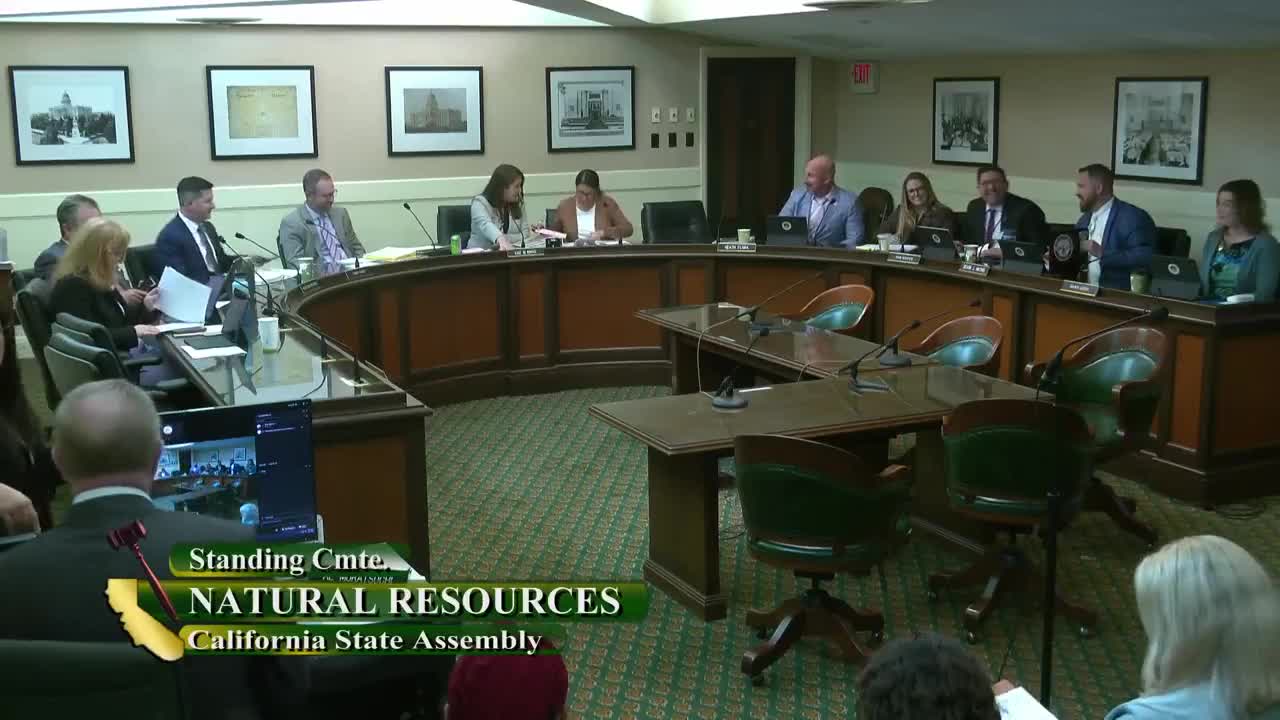
| Apr 10, 2023 | Do pass and be re-referred to the Committee on [Appropriations] | Assembly Standing Committee on Natural Resources |
Passed |
This list shows positions taken on this bill by organizations on the date displayed, which is linked to the original source.
Positions by individuals are not included.
|
Organization
|
Position
|
Date
|
|---|---|---|
| California Resource Recovery Association | ** Support | |
| Californians Against Waste | * Support | Apr 10, 2023 |
| Climate Action California | ** Support | |
| Coalition For Clean Air | * Support | Apr 10, 2023 |
| Elders Climate Action Norcal Chapter | ** Support | |
| Elders Climate Action Socal Chapter | ** Support | |
| Republic Services | * Support | Apr 10, 2023 |
| The Climate Center | ** Support | |
| Zero Waste Sonoma | ** Support |
Date of Hearing: April 26, 2023
ASSEMBLY COMMITTEE ON APPROPRIATIONS
Chris Holden, Chair
ABPCA Bill Id:AB 1534
Author:(Irwin) – As Introduced Ver:February 17, 2023
Policy Committee: | Natural Resources | Vote: | 11 - 0 |
|
| ||
|
|
Urgency: No State Mandated Local Program: No Reimbursable: No
SUMMARY:
This bill requires the Air Resources Board (ARB), no later than June 30, 2026, to evaluate and, if feasible and to the extent data is available, revise the regulations relating to methane emissions from municipal solid waste landfills to incorporate the use of methane remote sensing data.
FISCAL EFFECT:
ARB estimates costs of approximately $879,000 in fiscal year (FY) 2023-24 and $875,000 in FY 2024-25 and ongoing (Cost of Implementation Account) for four new positions to implement the requirements of this bill, including updating the landfill methane regulation to incorporate the use of remote sensing data, ongoing regulatory implementation and compliance efforts, and site inspections and enforcement.
COMMENTS:
1) Purpose. According to the author:
The fight against climate change remains one of the pressing issues facing California. As technology improves, we must adopt these new methods to help measure and improve how we address this challenge. AB 1534 would allow the California Air Resources Board to identify and regulate significant methane emissions from landfills by using remote sensing technology and reduce contributions to global warming.
2) Background. The global warming potential of methane over its short atmospheric life is more than 25 times greater than that of carbon dioxide, which remains in the atmosphere for decades. According to the United States Environmental Protection Agency, municipal solid waste landfills are the third largest human-generated source of methane emissions in the United States. Landfills must have methane collection systems in place to capture and manage methane emissions, but these systems in modern landfills capture only roughly 60% to 90% of the methane emitted.
Remote methane sensing technology includes the use of satellites, drones, and airplanes to identify methane emission sources. Between 2016 and 2018, ARB and the California Energy Commission (CEC) partnered with the National Aeronautics and Space Administration’s (NASA) Jet Propulsion Laboratory (JPL) to conduct a California Methane Survey (Survey) to map point sources of methane emissions to help prioritize investments to reduce greenhouse emissions. JPL flew remote sensing equipment over the state and identified hundreds of point sources, including “super-emitters,” meaning point sources that emit an outsized proportion of methane emissions. According to the Survey, 10% of point sources were responsible for 60% of the total methane emissions detected. Based on this finding, researchers estimate that relatively few point sources are responsible for one-third of California’s methane emissions. In total, the Survey identified more than 550 point sources emitting methane plumes.
Landfills accounted for 41% of the emissions identified by the Survey; the other two highest emitting sectors were manure management operations and oil and gas operations. Of the 270 landfills surveyed, 30 were observed emitting large methane plumes; however, those 30 landfills were responsible for 40% of the total point source emissions detected by the Survey. As a result of the Survey, regulators were able to identify facilities with the highest emissions and work with operators to reduce emissions. For example, the Survey found very high emissions from the Sunshine Canyon Landfill in Los Angeles County. When notified of the plume, the operator was able to identify problems with the landfill cover and gas capture system. Over the following year, the operator was able to make a number of changes that dramatically reduced methane emissions. These improvements also resulted in fewer odor complaints from nearby residents.
Since the Survey, California has partnered with other entities, including JPL, universities, satellite data companies, and philanthropic entities on the deployment of a satellite using new technology to identify and quantify methane and carbon dioxide emissions. According to ARB, these satellite systems may enable frequent observation of large portions of California, thus supporting regulatory mitigation programs and helping California reach its climate targets. The Budget Act of 2022 allocated $100 million and seven positions for ARB for the purchase of methane plume data from a commercial satellite company. This money will be awarded through a competitive request for proposal process this year. ARB notes these funds and positions will not cover the costs associated with implementing this bill.
Analysis Prepared by: Nikita Koraddi / APPR. / (916) 319-2081
Date of Hearing: April 10, 2023
ASSEMBLY COMMITTEE ON NATURAL RESOURCES
Luz Rivas, Chair
ABPCA Bill Id:AB 1534 (
Author:Irwin) – As Introduced Ver:February 17, 2023
SUBJECT: Methane emissions: municipal solid waste landfills: remote sensing data
SUMMARY: Requires the Air Resources Board (ARB), no later than June 30, 2026, to evaluate, and, if feasible and to the extent data is available, revise the regulations relating to methane emissions from municipal solid waste landfills to incorporate the use of methane remote sensing data.
EXISTING LAW:
- Requires ARB, pursuant to California Global Warming Solutions Act of 2006, to adopt a statewide greenhouse gas (GHG) emissions limit equivalent to 1990 levels by 2020 and adopt regulations to achieve maximum technologically feasible and cost-effective GHG emission reductions. AB 32 authorizes ARB to permit the use of market-based compliance mechanisms to comply with GHG reduction regulations once specified conditions are met. Requires ARB to approve a statewide GHG emissions limit equivalent to 85% below the 1990 level by 2045. (Health and Safety Code (HSC) 38500-38599.11)
- Requires ARB to develop a comprehensive strategy to reduce the emissions of short-lived climate pollutants (SLCP) to achieve a 40% reduction in methane emissions, 40% reduction in hydrofluorocarbon gases, and 50% reduction in anthropogenic black carbon below 2013 levels by 2030. (HSC 39730-39730.5)
- Requires the state to reduce the disposal of organic waste by 40% from the 2014 level by 2020 and 75% by 2025 to help achieve the state’s methane reduction goal. (HSC 39730.6)
- Establishes regulations for methane emissions from municipal solid waste landfills that govern gas collection and control systems, surface methane emission standards, construction activities, permanent shutdown and removal of gas collection and control systems, monitoring requirements, recordkeeping and reporting requirements, and test methods and procedures, among other things. (California Code of Regulations Title 17 94560-95476)
FISCAL EFFECT: Unknown
COMMENTS:
- Author’s statement:
The fight against climate change remains one of the pressing issues facing California. As technology improves, we must adopt these new methods to help measure and improve how we address this challenge. AB 1534 would allow the California Air Resources Board to identify and regulate significant methane emissions from landfills by using remote sensing technology and reduce contributions to global warming.
- Waste disposal in California. More than 40 million tons of waste are disposed of in California’s landfills annually, of which 28.4% is organic materials, 13% is plastic, and 15.5% is paper. The Department of Resources Recycling and Recovery (CalRecycle) is charged with diverting at least 75% of solid waste from landfills statewide by 2020. Local governments have been required to divert 50% of the waste generated within the jurisdiction from landfill disposal since 2000. AB 341 (Chesbro), Chapter 476, Statutes of 2011, requires commercial waste generators, including multi-family dwellings, to arrange for recycling services for the material they generate and requires local governments to implement commercial solid waste recycling programs designed to divert solid waste generated by businesses out of the landfill. A follow up bill, AB 1826 (Chesbro), Chapter 727, Statutes of 2014, requires generators of organic waste (i.e., food waste and yard waste) to arrange for recycling services for that material to keep it out of the landfill.
SB 1383 (Lara), Chapter 395, Statutes of 2016, requires ARB to approve and implement a comprehensive SLCP strategy to achieve, from 2013 levels, a 40% reduction in methane, a 40% reduction in hydrofluorocarbon gases, and a 50% reduction in anthropogenic black carbon, by 2030. In order to accomplish these goals, the bill specified that the methane emission reduction goals include targets to reduce the landfill disposal of organic waste 50% by 2020 and 75% by 2025 from the 2014 level.
- Short lived climate pollutants. SLCPs are GHGs that linger in the atmospheres for a shorter period of time than carbon dioxide, but have much larger impacts on climate over their lifetimes. The primary SLCPs are methane, black carbon, tropospheric ozone, and hydrofluorocarbons, which are estimated to account for up to 45% of current climate change. Reducing SLCP emissions reduces near-term climate impacts.
The global warming potential of methane is more than 25 times greater than carbon dioxide over its short atmospheric life (approximately 12 years). According to the United States Environmental Protection Agency, municipal solid waste landfills are the third-largest human-generated source of methane emissions in the United States. Landfills are required to have methane collection systems in place to capture and manage methane emissions, but these systems in modern landfills only capture roughly 60% to 90% of the methane emitted. - Remote sensing technology. Remote methane sensing technology includes the use of satellites, drones, or airplanes to identify methane emission sources. Between 2016 and 2018, ARB and the California Energy Commission (CEC) partnered with the National Aeronautics and Space Administration’s (NASA) Jet Propulsion Laboratory (JPL) to conduct a California Methane Survey (Survey) to map point sources of methane emissions to help prioritize investments to reduce GHG emissions. JPL flew remote sensing equipment over the state and identified hundreds of point sources, including “super-emitters,” or sources that emit an outsized proportion of methane emissions. According to the Survey, 10% of point sources were responsible for 60% of the total methane emissions detected. Based on this finding, researchers estimate that relatively few sources are responsible for one-third of California’s methane emissions. In total, the Survey identified more than 550 point sources emitting methane plumes.
Landfills accounted for 41% of the emissions identified by the Survey; the other two highest emitting sectors were manure management operations and oil and gas operations, which each accounted for 26% of emissions. Of the 270 landfills surveyed, 30 were observed emitting large methane plumes; however, those 30 were responsible for 40% of the total point source emissions detected by the Survey. The lead scientist on the study, Riley Duren, stated “these findings illustrate the importance of monitoring point sources across multiple sectors of the economy and broad regions, both for improved understanding of methane budgets and to support emission mitigation efforts.”
As a result of the Survey, regulators were able to identify facilities with the highest emissions and work with operators to reduce them. For example, the Survey found very high emissions from the Sunshine Canyon Landfill in Los Angeles County. When notified of the plume, the operator was able to identify problems with the landfill cover and gas capture system. Over the following year, the operator was able to make a number of changes that dramatically reduced methane emissions. These improvements also resulted in fewer odor complaints from nearby residents.
Since the Survey, California has partnered with other entities, including JPL, universities, satellite data companies, and philanthropic entities on the deployment of a satellite using new technology to identify and quantify methane and carbon dioxide emissions. The operation will be managed by a nonprofit organization called Carbon Mapper, which is on track to launch two satellites in 2023 to detect and quantify high emission methane and carbon dioxide emissions sources. The California State Budget Act of 2022 allocated $100 million for investments in satellite mapping of methane and other GHG emission sources. - This bill. This bill requires ARB to evaluate the inclusion of remote sensing technology into its regulations for methane emissions from municipal solid waste landfills. This change, if adopted by ARB, could identify methane plumes from landfills that may be missed by current inspection and monitoring procedures. Once identified, the operators of the facilities emitting the highest levels of methane can make the changes necessary to reduce their emissions, resulting in lower SLCP emissions statewide and significant benefits to the climate.
REGISTERED SUPPORT / OPPOSITION:
Support
California Resource Recovery Association
Californians Against Waste
Climate Action California
Coalition for Clean Air
Elders Climate Action NorCal Chapter
Elders Climate Action SoCal Chapter
Republic Services – Western Region
The Climate Center
Zero Waste Sonoma
Opposition
None on file
Analysis Prepared by: Elizabeth MacMillan / NAT. RES. /
Discussed in Hearing
 3MIN
Assembly Standing Committee on Natural Resources
Bill Author

Bill Co-Author(s):