AB 920: Discrimination: housing status.
- Session Year: 2023-2024
- House: Assembly
- Latest Version Date: 2023-02-14
Current Status:
Failed
(2024-02-01: From committee: Filed with the Chief Clerk pursuant to Joint Rule 56.)
Introduced
In Committee
First Chamber
In Committee
Second Chamber
Enacted
Existing law prohibits discrimination in any program or activity that is conducted, operated, or administered by the state, or by any state agency, that is funded directly by the state, or that receives any financial assistance from the state, based upon specified personal characteristics.
This bill would also prohibit discrimination based upon housing status, as defined.
(a)No person in the State of California shall, on the basis of sex, race, color, religion, ancestry, national origin, ethnic group identification, age, mental disability, physical disability, medical condition, genetic information, marital status, housing status, or sexual orientation, be unlawfully denied full and equal access to the benefits of, or be unlawfully subjected to discrimination under, any program or activity that is conducted, operated, or administered by the state or by any state agency, is funded directly by the state, or receives any financial assistance from the state. Notwithstanding Section 11000, this section applies to the California State University.
(b)With respect to discrimination on the basis of disability, programs and activities subject to subdivision (a) shall meet the protections and prohibitions contained in Section 202 of the federal Americans with Disabilities Act of 1990 (42 U.S.C. Sec. 12132), and the federal rules and regulations adopted in implementation thereof, except that if the laws of this state prescribe stronger protections and prohibitions, the programs and activities subject to subdivision (a) shall be subject to the stronger protections and prohibitions.
(c)The protected bases referenced in this section have the same meanings as those terms are defined in Section 12926.
(d)The protected bases used in this section include a perception that a person has any of those characteristics or that the person is associated with a person who has, or is perceived to have, any of those characteristics.
SEC. 2.Section 12926 of the Government Code is amended to read:12926.As used in this part in connection with unlawful practices, unless a different meaning clearly appears from the context:
(a)Affirmative relief or prospective relief includes the authority to order reinstatement of an employee, awards of backpay, reimbursement of out-of-pocket expenses, hiring, transfers, reassignments, grants of tenure, promotions, cease and desist orders, posting of notices, training of personnel, testing, expunging of records, reporting of records, and any other similar relief that is intended to correct unlawful practices under this part.
(b)Age refers to the chronological age of any individual who has reached a 40th birthday.
(c)Except as provided by Section 12926.05, employee does not include any individual employed by that persons parent, spouse, or child or any individual employed under a special license in a nonprofit sheltered workshop or rehabilitation facility.
(d)Employer includes any person regularly employing five or more persons, or any person acting as an agent of an employer, directly or indirectly, the state or any political or civil subdivision of the state, and cities, except as follows:
Employer does not include a religious association or corporation not organized for private profit.
(e)Employment agency includes any person undertaking for compensation to procure employees or opportunities to work.
(f)Essential functions means the fundamental job duties of the employment position the individual with a disability holds or desires. Essential functions does not include the marginal functions of the position.
(1)A job function may be considered essential for any of several reasons, including, but not limited to, any one or more of the following:
(A)The function may be essential because the reason the position exists is to perform that function.
(B)The function may be essential because of the limited number of employees available among whom the performance of that job function can be distributed.
(C)The function may be highly specialized, so that the incumbent in the position is hired based on expertise or the ability to perform a particular function.
(2)Evidence of whether a particular function is essential includes, but is not limited to, the following:
(A)The employers judgment as to which functions are essential.
(B)Written job descriptions prepared before advertising or interviewing applicants for the job.
(C)The amount of time spent on the job performing the function.
(D)The consequences of not requiring the incumbent to perform the function.
(E)The terms of a collective bargaining agreement.
(F)The work experiences of past incumbents in the job.
(G)The current work experience of incumbents in similar jobs.
(g)(1)Genetic information means, with respect to any individual, information about any of the following:
(A)The individuals genetic tests.
(B)The genetic tests of family members of the individual.
(C)The manifestation of a disease or disorder in family members of the individual.
(2)Genetic information includes any request for, or receipt of, genetic services, or participation in clinical research that includes genetic services, by an individual or any family member of the individual.
(3)Genetic information does not include information about the sex or age of any individual.
(h)Labor organization includes any organization that exists and is constituted for the purpose, in whole or in part, of collective bargaining or of dealing with employers concerning grievances, terms or conditions of employment, or of other mutual aid or protection.
(i)Medical condition means either of the following:
(1)Any health impairment related to or associated with a diagnosis of cancer or a record or history of cancer.
(2)Genetic characteristics. For purposes of this section, genetic characteristics means either of the following:
(A)Any scientifically or medically identifiable gene or chromosome, or combination or alteration thereof, that is known to be a cause of a disease or disorder in a person or that persons offspring, or that is determined to be associated with a statistically increased risk of development of a disease or disorder, and that is presently not associated with any symptoms of any disease or disorder.
(B)Inherited characteristics that may derive from the individual or family member, that are known to be a cause of a disease or disorder in a person or that persons offspring, or that are determined to be associated with a statistically increased risk of development of a disease or disorder, and that are presently not associated with any symptoms of any disease or disorder.
(j)Mental disability includes, but is not limited to, all of the following:
(1)Having any mental or psychological disorder or condition, such as intellectual disability, organic brain syndrome, emotional or mental illness, or specific learning disabilities, that limits a major life activity. For purposes of this section:
(A)Limits shall be determined without regard to mitigating measures, such as medications, assistive devices, or reasonable accommodations, unless the mitigating measure itself limits a major life activity.
(B)A mental or psychological disorder or condition limits a major life activity if it makes the achievement of the major life activity difficult.
(C)Major life activities shall be broadly construed and shall include physical, mental, and social activities and working.
(2)Any other mental or psychological disorder or condition not described in paragraph (1) that requires special education or related services.
(3)Having a record or history of a mental or psychological disorder or condition described in paragraph (1) or (2), which is known to the employer or other entity covered by this part.
(4)Being regarded or treated by the employer or other entity covered by this part as having, or having had, any mental condition that makes achievement of a major life activity difficult.
(5)Being regarded or treated by the employer or other entity covered by this part as having, or having had, a mental or psychological disorder or condition that has no present disabling effect, but that may become a mental disability as described in paragraph (1) or (2).
Mental disability does not include sexual behavior disorders, compulsive gambling, kleptomania, pyromania, or psychoactive substance use disorders resulting from the current unlawful use of controlled substances or other drugs.
(k)Veteran or military status means a member or veteran of the United States Armed Forces, United States Armed Forces Reserve, the United States National Guard, and the California National Guard.
(l)On the bases enumerated in this part means or refers to discrimination on the basis of one or more of the following: race, religious creed, color, national origin, ancestry, physical disability, mental disability, medical condition, genetic information, marital status, sex, age, sexual orientation, reproductive health decisionmaking, or veteran or military status.
(m)Physical disability includes, but is not limited to, all of the following:
(1)Having any physiological disease, disorder, condition, cosmetic disfigurement, or anatomical loss that does both of the following:
(A)Affects one or more of the following body systems: neurological, immunological, musculoskeletal, special sense organs, respiratory, including speech organs, cardiovascular, reproductive, digestive, genitourinary, hemic and lymphatic, skin, and endocrine.
(B)Limits a major life activity. For purposes of this section:
(i)Limits shall be determined without regard to mitigating measures such as medications, assistive devices, prosthetics, or reasonable accommodations, unless the mitigating measure itself limits a major life activity.
(ii)A physiological disease, disorder, condition, cosmetic disfigurement, or anatomical loss limits a major life activity if it makes the achievement of the major life activity difficult.
(iii)Major life activities shall be broadly construed and includes physical, mental, and social activities and working.
(2)Any other health impairment not described in paragraph (1) that requires special education or related services.
(3)Having a record or history of a disease, disorder, condition, cosmetic disfigurement, anatomical loss, or health impairment described in paragraph (1) or (2), which is known to the employer or other entity covered by this part.
(4)Being regarded or treated by the employer or other entity covered by this part as having, or having had, any physical condition that makes achievement of a major life activity difficult.
(5)Being regarded or treated by the employer or other entity covered by this part as having, or having had, a disease, disorder, condition, cosmetic disfigurement, anatomical loss, or health impairment that has no present disabling effect but may become a physical disability as described in paragraph (1) or (2).
(6)Physical disability does not include sexual behavior disorders, compulsive gambling, kleptomania, pyromania, or psychoactive substance use disorders resulting from the current unlawful use of controlled substances or other drugs.
(n)Notwithstanding subdivisions (j) and (m), if the definition of disability used in the federal Americans with Disabilities Act of 1990 (Public Law 101-336) would result in broader protection of the civil rights of individuals with a mental disability or physical disability, as defined in subdivision (j) or (m), or would include any medical condition not included within those definitions, then that broader protection or coverage shall be deemed incorporated by reference into, and shall prevail over conflicting provisions of, the definitions in subdivisions (j) and (m).
(o)Race, religious creed, color, national origin, ancestry, physical disability, mental disability, medical condition, genetic information, marital status, sex, age, sexual orientation, reproductive health decisionmaking, or veteran or military status includes a perception that the person has any of those characteristics or that the person is associated with a person who has, or is perceived to have, any of those characteristics.
(p)Reasonable accommodation may include either of the following:
(1)Making existing facilities used by employees readily accessible to, and usable by, individuals with disabilities.
(2)Job restructuring, part-time or modified work schedules, reassignment to a vacant position, acquisition or modification of equipment or devices, adjustment or modifications of examinations, training materials or policies, the provision of qualified readers or interpreters, and other similar accommodations for individuals with disabilities.
(q)Religious creed, religion, religious observance, religious belief, and creed include all aspects of religious belief, observance, and practice, including religious dress and grooming practices. Religious dress practice shall be construed broadly to include the wearing or carrying of religious clothing, head or face coverings, jewelry, artifacts, and any other item that is part of an individual observing a religious creed. Religious grooming practice shall be construed broadly to include all forms of head, facial, and body hair that are part of an individual observing a religious creed.
(r)(1)Sex includes, but is not limited to, the following:
(A)Pregnancy or medical conditions related to pregnancy.
(B)Childbirth or medical conditions related to childbirth.
(C)Breastfeeding or medical conditions related to breastfeeding.
(2)Sex also includes, but is not limited to, a persons gender. Gender means sex, and includes a persons gender identity and gender expression. Gender expression means a persons gender-related appearance and behavior whether or not stereotypically associated with the persons assigned sex at birth.
(s)Sexual orientation means heterosexuality, homosexuality, and bisexuality.
(t)Supervisor means any individual having the authority, in the interest of the employer, to hire, transfer, suspend, lay off, recall, promote, discharge, assign, reward, or discipline other employees, or the responsibility to direct them, or to adjust their grievances, or effectively to recommend that action, if, in connection with the foregoing, the exercise of that authority is not of a merely routine or clerical nature, but requires the use of independent judgment.
(u)Undue hardship means an action requiring significant difficulty or expense, when considered in light of the following factors:
(1)The nature and cost of the accommodation needed.
(2)The overall financial resources of the facilities involved in the provision of the reasonable accommodations, the number of persons employed at the facility, and the effect on expenses and resources or the impact otherwise of these accommodations upon the operation of the facility.
(3)The overall financial resources of the covered entity, the overall size of the business of a covered entity with respect to the number of employees, and the number, type, and location of its facilities.
(4)The type of operations, including the composition, structure, and functions of the workforce of the entity.
(5)The geographic separateness or administrative or fiscal relationship of the facility or facilities.
(v)National origin discrimination includes, but is not limited to, discrimination on the basis of possessing a drivers license or identification card granted under Section 12801.9 of the Vehicle Code.
(w)Race is inclusive of traits historically associated with race, including, but not limited to, hair texture and protective hairstyles.
(x)Protective hairstyles includes, but is not limited to, such hairstyles as braids, locks, and twists.
(y)Reproductive health decisionmaking includes, but is not limited to, a decision to use or access a particular drug, device, product, or medical service for reproductive health. This subdivision and other provisions in this part relating to reproductive health decisionmaking shall not be construed to mean that subdivision (r) of this section and other provisions in this part related to sex do not include reproductive health decisionmaking.
(z)Housing status refers to the status of experiencing homelessness, as defined in paragraph (2) of subdivision (a) of Section 50675.15 of the Health and Safety Code.
REVISIONS: HeadingLine 2.|
Date
|
Status
|
|---|---|
| Feb 1, 2024 | From committee: Filed with the Chief Clerk pursuant to Joint Rule 56. |
| Jan 31, 2024 | Died pursuant to Art. IV, Sec. 10(c) of the Constitution. |
| May 18, 2023 | In committee: Held under submission. |
| Apr 26, 2023 | In committee: Set, first hearing. Referred to APPR. suspense file. |
| Mar 28, 2023 | Coauthors revised. |
| Mar 28, 2023 | From committee: Do pass and re-refer to Com. on APPR. (Ayes 7. Noes 2.) (March 28). Re-referred to Com. on APPR. |
| Mar 20, 2023 | In committee: Hearing postponed by committee. |
| Feb 23, 2023 | Referred to Com. on JUD. |
| Feb 15, 2023 | From printer. May be heard in committee March 17. |
| Feb 14, 2023 | Read first time. To print. |
|
Date
|
Description
|
Location
|
Votes
|
|
|---|---|---|---|---|
| Mar 28, 2023 | Do pass and be re-referred to the Committee on [Appropriations] | Assembly Standing Committee on Judiciary |
Passed |
This list shows positions taken on this bill by organizations on the date displayed, which is linked to the original source.
Positions by individuals are not included.
|
Organization
|
Position
|
Date
|
|---|---|---|
| ACLU of Northern California | * Support | Mar 28, 2023 |
| All Home | ** Support | |
| Bay Area Legal Aid | ** Support | |
| Black Lives Matter Los Angeles | ** Support | |
| California Association Of Mental Health Patients' Rights Advocates | ** Support | |
| California for Safety and Justice | ** Support | |
| Centro Legal de la Raza | ** Support | |
| Communities United for Restorative Youth Justice | ** Support | |
| Congregations Organized for Prophetic Engagement | ** Support | |
| Consumer Attorneys Of California | ** Support | |
| Corporation For Supportive Housing | ** Support | |
| Disability Rights California | * Support | Mar 28, 2023 |
| Disability Rights Education & Defense Fund | ** Support | |
| East Bay YIMBY | ** Support | |
| Ella Baker Center For Human Rights | ** Support | |
| Fair Housing Advocates of Northern California | ** Support | |
| Grow the Richmond | ** Support | |
| Housing California | ** Support | |
| Housing Is a Human Right - Orange County | ** Support | |
| Housing Rights Center | ** Support | |
| How to ADU | ** Support | |
| HPP Cares | ** Support | |
| Initiate Justice | ** Support | |
| Inland Coalition for Immigrant Justice | ** Support | |
| Inland Empire Immigrant Youth Collective | ** Support | |
| Inner City Law Center | ** Support | |
| Institute to Develop Equity, Advocacy, and Leadership | ** Support | |
| Justice in Aging | ** Support | |
| Law Foundation of Silicon Valley | ** Support | |
| Legal Aid Foundation of Los Angeles | ** Support | |
| Legal Aid of Marin | ** Support | |
| Los Angeles Regional Reentry Partnership | ** Support | |
| Mountain View YIMBY | ** Support | |
| Napa-Solano for Everyone | ** Support | |
| National Alliance to End Homelessness | ** Support | |
| National Association of Social Workers -California Chapter | * Support | Mar 28, 2023 |
| National Housing Law Project | ** Support | |
| Nikkei Progressives | ** Support | |
| Northern Neighbors Sf | ** Support | |
| Oakland Privacy | * Support | Mar 28, 2023 |
| Orange County United Way | ** Support | |
| Peninsula for Everyone | ** Support | |
| People For Housing Orange County | ** Support | |
| People's Budget Orange County | ** Support | |
| Progress Noe Valley | ** Support | |
| Public Advocates | ** Support | |
| Public Interest Law Project | ** Support | |
| Sacramento regional coalition to end homelessness | ** Support | |
| Safe Place For Youth | ** Support | |
| San Francisco Yimby | ** Support | |
| San Luis Obispo Yimby | ** Support | |
| Santa Cruz Yimby | ** Support | |
| Santa Rosa Yimby | ** Support | |
| South Bay Yimby | ** Support | |
| Southside Forward | ** Support | |
| Stop the Musick Coalition | ** Support | |
| Stronger Women United | ** Support | |
| SvHome Action Fund | ** Support | |
| The Western Center on Law and Poverty | * Support | Mar 28, 2023 |
| Union Station Homeless Services | ** Support | |
| University of the Pacific McGeorge School of Law Homeless Advocacy Clinic | ** Support | |
| Venice Community Housing Corporation | ** Support | |
| Venice Justice Committee | ** Support | |
| Ventura County YIMBY | ** Support | |
| Western Regional Advocacy Project | ** Support | |
| Yimby Action | ** Support |
Date of Hearing: April 26, 2023
ASSEMBLY COMMITTEE ON APPROPRIATIONS
Chris Holden, Chair
ABPCA Bill Id:AB 920
Author:(Bryan) – As Introduced Ver:February 14, 2023
Policy Committee: | Judiciary | Vote: | 7 - 2 |
|
| ||
|
|
Urgency: No State Mandated Local Program: No Reimbursable: No
SUMMARY:
This bill would add “housing status” to the list of protected characteristics in Government Code section 11135, which prohibits any program administered or funded by the state from denying full and complete benefits to, or otherwise discriminating against, someone on the basis of certain protected characteristics. The bill defines “housing status” to mean the status of experiencing homelessness.
FISCAL EFFECT:
Costs in the low millions of dollars (General Fund) for staffing for the Civil Rights Department (CRD) to review and investigate incoming complaints of discrimination based on housing status, and to conciliate, mediate, or prosecute those complaints of discrimination. As discussed below, costs are somewhat uncertain because they are dependent on the number of complaints of discrimination based on housing status received by CRD.
COMMENTS:
- Author’s Statement. According to the author:
Adding housing status to California’s anti-discrimination law advances the civil rights of people who are unfairly discriminated against simply because they are experiencing homelessness. It will help to ensure that our broader solution framework for solving homelessness continues to be rooted in care, supportive services, compassion, affordable housing, and local innovations that build on the core needs of people who are unhoused – while simultaneously protecting our most vulnerable neighbors from senseless discrimination that runs counter to those goals.
- Prohibited Discrimination. California has a robust network of laws protecting against discrimination. One of those laws, Government Code section 11135, provides that no one shall, on the basis of certain protected characteristics, be denied full and equal access to the benefits of, or subject to unlawful discrimination under, any program that is conducted, operated, or administered by the state, or is funded or receives financial assistance from the state. Characteristics and conditions protected by this law are sex, race, color, religion, ancestry, national origin, ethnic group identification, age, mental disability, physical disability, mental condition, genetic information, marital status, and sexual orientation. This bill would add “housing status,” defined as the status of experiencing homelessness, to the list of characteristics protected by Government Code section 11135. The bill would prohibit any program administered or funded by the state from discriminating against someone because they are experiencing homelessness, and prohibit the program from using someone’s homelessness as a basis for denying them full and equal access to benefits provided by the program.
- Enforcement of Discrimination Complaints. CRD is responsible for enforcing Government Code section 11135 by investigating complaints of unlawful discrimination and resolving them through conciliation, mediation, or prosecution. Under this bill, if a person submits a complaint to CRD stating they were unlawfully denied full access to a benefit provided by a state-funded program because of their housing status, CRD must investigate the complaint and, if it has merit, resolve the complaint, often through mediation or prosecution by CRD personnel. Alternatively, a person may enforce Government Code section 11135 by filing a civil lawsuit against a state-funded program that unlawfully discriminated against them based on their housing status.
Costs resulting from CRD’s enforcement of this bill are somewhat uncertain because they depend on the number of complaints submitted to CRD alleging unlawful discrimination due to housing status. CRD reports it receives fewer than 50 complaints annually under Government Code section 11135, but CRD anticipates this bill’s new protection for housing status may spur a significant increase in the number of complaints filed with CRD. Although the number of future complaints that will be made as a result of this bill is unknowable, given the magnitude of the homelessness crisis in California, CRD’s prediction of an increase in claims resulting from this bill seems reasonable.
Analysis Prepared by: Annika Carlson / APPR. / (916) 319-2081
Date of Hearing: March 28, 2023
ASSEMBLY COMMITTEE ON JUDICIARY
Brian Maienschein, Chair
ABPCA Bill Id:AB 920
Author:(Bryan) – As Introduced Ver:February 14, 2023
SUBJECT: Discrimination: housing status
KEY ISSUE: should “housing status” be added to lists of protected characteristics in the statute that prohibIts state-operated and state-funded programs from discriminating on the basis of those characteristics?
SYNOPSIS
Existing law provides that no person shall be denied the benefits of, or be subjected to discrimination under, any state-operated or state-funded program or activity on the basis of certain protected characteristics, including sex, race, color, religion, ancestry, national origin, ethnic group identification, age, mental disability, physical disability, medical condition, genetic information, marital status, or sexual orientation. This bill would add “housing status” to this list of protected characteristics. The bill defines “housing status” to mean the status of experiencing homelessness, which in turn is defined in reference to other state and federal statutes and regulations. Beneath these layers of definitions, “homelessness” means what we usually think it means: an individual or family that does not have a primary nighttime residence that is designed to be residence (i.e. not a subway station or similar structure). The definition also includes persons living in a temporary shelter, who would be homeless but for the shelter.
The author’s background information documents the general problems that the homeless face, not least of which are the indignities and violence they encounter on a daily basis. This bill, of course, cannot address all of the problems; rather, it is a more measured response that seeks to end discrimination against the homeless in state-operated or state-funded programs or activities. Apparently, the author and supporters are primarily concerned with state-funded housing and safety net programs, particularly ones that have an address requirement. This does not mean that people experiencing homelessness would automatically qualify for those programs; but it does mean that the benefits of such programs could not be denied to an individual for no other reason than their housing status. The bill is supported by dozens of social justice groups and those who advocate for the homeless and the poor. There is no registered opposition to this bill.
SUMMARY: Adds “housing status” to list of protected characteristics in Government Code Section 11135. Specifically, this bill:
- Adds “housing status” to the list of protected characteristics in Government Code Section 11135, which provides that no person shall be denied full and equal access to the benefits of, or be subjected to discrimination under, any state-operated or state-funded program on the basis of the following protected characteristics: sex, race, color, religion, ancestry, national origin, ethnic group identification, age, mental disability, physical disability, medical condition, genetic information, marital status, or sexual orientation.
- Defines “housing status” for purposes of the above to mean the status of experiencing homelessness, as defined in specified state and federal statutes and regulations.
EXISTING LAW provides that no person shall be denied full and equal access to the benefits of, or be subjected to discrimination under, any state-operated or state-funded program on the basis of the following protected characteristics: sex, race, color, religion, ancestry, national origin, ethnic group identification, age, mental disability, physical disability, medical condition, genetic information, marital status, or sexual orientation. (Government Code Section 11135.)
FISCAL EFFECT: As currently in print this bill is keyed fiscal.
COMMENTS: According to the author, the “routine discrimination against unhoused people runs counter to our state’s important goal of providing dignified housing and care for all Californians, including our most vulnerable neighbors who are experiencing homelessness.” In support of AB 920, the author contends:
[AB 920] will protect unhoused people from being targeted, persecuted, or denied access to programs and benefits by the state, or a state-funded agency, simply because of their housing status. Adding housing status to California’s anti-discrimination law advances the civil rights of people who are unfairly discriminated against simply because they are experiencing homelessness. It will help to ensure that our broader solution framework for solving homelessness continues to be rooted in care, supportive services, compassion, affordable housing, and local innovations that build on the core needs of people who are unhoused – while simultaneously protecting our most vulnerable neighbors from senseless discrimination that runs counter to those goals.
“Protected Characteristics” under California’s Anti-Discrimination Statutes. California has several statutes that prohibit discrimination on the basis of enumerated characteristics. Originally, these statutes prohibited discrimination on the basis of supposedly “immutable” traits such as sex, race, or national origin. Over the years, the Legislature has added to the list of “protected characteristics” to include such things as age, disability, marital status, sexual orientation, gender identity, religion, or Veteran status. These protected characteristics appear, albeit with slightly different contents, in several Civil Rights and anti-discrimination statutes, including the Unruh Civil Rights Act (Civil Code Section 51), the Ralph Civil Rights Act (Civil Code Section 51.7), and in the employment and housing provisions of the Fair Employment and Housing Act and related sections of the Government Code.
This bill amends just one of those statutes: Government Code Section 11135. This statute provides that no person, on the basis of a protected characteristic, shall be denied the full and equal benefits of, or face discrimination under, “any program or activity that is conducted, operated, or administered by the state or by any state agency, is funded directly by the state, or receives any financial assistance from the state.” In short, the provision applies not only to state-operated programs, but also to any “program or activity” that is funded in whole or in part by state funds.
While clearly this applies to any state-operated program or state agency, it can also apply to contractors, grantees, or private entities that receive state funds to carry out programs or activities. For example, the California Department of Housing and Community Development operates the Multifamily Housing Program that provides low-interest loans to entities – both nonprofit and for-profit – to construct affordable housing for low-income and very-low-income individuals and families. Under Government Code Section 11135, this program cannot discriminate on the basis of a protected characteristic – which would include housing status, as defined, under this bill. However, this provision (and therefore this bill) does not apply to private housing that was not constructed with the aid of public money. Such restrictions on state-funded projects are quite common; they reflect the simple proposition that if a private person or entity draws from the public till, some mandatory policy objectives might attach.
Some federally-funded public assistance programs already prohibit discrimination against people experiencing homelessness. In addition to housing discrimination in public and state-funded housing, the author and sponsors are also concerned about discrimination against the homeless in the provision of social benefits otherwise available to people in need. CalWORKS is a public assistance program that provides cash aid and other services, including food stamps, to eligible families who have children. For the most part, these benefits go to eligible families who have children in the home. However, because many of these programs receive both state and federal funds, they must follow federal regulations. For example, the Supplemental Nutritional Assistance Program (SNAP) and Cal FRESH provide food stamps to people in need. Because most people who receive this aid are housed, the program asks for a residential address to which benefits, or information about them, may be sent. However, under federal regulations, a person cannot be denied participation in the state-level SNAP programs (i.e. CalFRESH) just because they are homeless. Federal regulations expressly provide that the state SNAP agencies, “shall not require an otherwise eligible household to reside in a permanent dwelling or have a fixed mailing address as a condition of eligibility.” (7 CFR Section 273.3.) This does not mean that the programs cannot ask applicants for an address – they have good reason for doing so for a variety of reasons – but they cannot deny food stamps solely because the applicant has no permanent address or dwelling.
Thus, as applied to state-operated or state-funded public assistance programs, the premise of this bill mirrors the reasoning of existing federal regulations. Indeed, it seems counterintuitive to suppose that a state-funded program for people in need would exclude the neediest. Making “housing status” – defined as “homelessness” – a protected characteristic under Section 11135, does not mean that every state-funded housing or public assistance program will be prohibited from asking for an address or making any distinctions between the housed and unhoused in calculating benefits. Obviously, a public or state-funded private program offering rental assistance could insist that there be a rental unit to which assistance will apply. However, this bill may cause some state-operated or state-funded housing and assistance programs to reevaluate their policies to ensure that they do not discriminate against applicants on the basis of housing status alone.
A broader question of civil and human rights. This bill seeks only to prohibit discrimination against people experiencing homelessness in state-operated and state-funded programs. Yet, as the support letters and background information provided to Committee suggests, the problems run deeper. For example, the background information calls out the public and private violence, harassment, and criminalization that unhoused people face on daily basis. This bill, which only addresses programs covered by Section 11135, cannot ameliorate all of those conditions. While this bill may not be the appropriate vehicle, the Legislature may at some point consider whether “housing status” should also be added to the list of protected characteristics in the state’s civil rights statutes, including the Unruh Civil Rights Act (Civil Code Section 51) and the Ralph Civil Rights Act. (Civil Code Section 51.7.) The former prohibits a business establishment from discriminating against a person on the basis of that person’s protected characteristics; the latter provides that all people shall be free of violence or intimidation on account of their protected characteristics. Neither statute includes “housing status” among its list of protected characteristics. In 2015, the Legislature attempted to address these broader issues with AB 5 (Ammiano), which would have established a “Homeless Persons Bill of Rights.” The measure died in the Assembly Appropriations Committee, apparently due to the estimated costs of fulfilling its promises.
At the federal level, in July of 2021, U.S. Representative Cori Bush introduced into Congress the “Unhoused Bill of Rights,” a resolution that, among other things, called upon Congress to do the following:
[U]phold, protect, and enforce the civil and human rights of unhoused individuals, including the human rights to housing, universal healthcare, livable wages, education, employment opportunities, access to public facilities, free movement in public spaces, privacy, confidentiality, internet access, vote, freedom from harassment by law enforcement, private businesses, property owners, and housed residents, and equal rights to health care, legal representation, and social services without discrimination based on housing status.
This bill may not achieve all of Representative Bush’s aspirations, but it may be a decent start.
ARGUMENTS IN SUPPORT: A large coalition civil rights groups, social justice groups, and organizations advocating on behalf of people experiencing homelessness and poverty support AB 920. The coalition argues that AB 920 will “protect unhoused people from being targeted or denied access to programs and benefits by the state, or a state-funded agency, simply because they are unhoused.” Although every person in California should have “the right to participate fully and equally in society free from discrimination . . . this right is denied to many residents simply because they are unhoused.” The coalition adds that our failure to ensure that all Californians have “universal access to a safe, permanent, and affordable place to live, many state and local governments continue to harass, displace, and segregate unhoused people,” has disproportionately harmed people of color.
In short, the coalition believes that AB 920 will accomplish three important objectives: (1) protect the health, wellbeing, and dignity of unhoused people who are harmed and sometimes killed by discriminatory policies and initiatives; (2) affirm California’s commitment to equal protection under the law and the right of all people to full and equal participation in society; and (3) shift priorities towards real solutions, including safe, affordable, and permanent housing.
REGISTERED SUPPORT / OPPOSITION:
Support
ACLU California Action
All Home
Bay Area Legal Aid
Black Lives Matter - Los Angeles
California Association of Mental Health Patients' Rights Advocates
California for Safety and Justice
Centro Legal De LA Raza
Communities United for Restorative Youth Justice (CURYJ)
Congregations Organized for Prophetic Engagement
Congregations Organized for Prophetic Engagement (COPE)
Consumer Attorneys of California
Corporation for Supportive Housing
Corporation for Supportive Housing (CSH)
Disability Rights California
Disability Rights Education & Defense Fund
East Bay Yimby
Ella Baker Center for Human Rights
Fair Housing Advocates of Northern California
Grow the Richmond
Housing California
Housing Is a Human Right - Orange County
Housing Rights Center
How to ADU
HPP Cares
Initiate Justice
Inland Coalition for Immigrant Justice
Inland Empire Immigrant Youth Collective
Inner City Law Center
Institute to Develop Equity, Advocacy, and Leadership (IDEAL)
Justice in Aging
Law Foundation of Silicon Valley
Legal Aid Foundation of Los Angeles
Legal Aid of Marin
Los Angeles Regional Reentry Partnership (LARRP)
Mountain View Yimby
Napa-Solano for Everyone
National Alliance to End Homelessness
National Association of Social Workers, California Chapter
National Housing Law Project
Nikkei Progressives
Northern Neighbors Sf
Oakland Privacy
Orange County United Way
Peninsula for Everyone
People for Housing - Orange County
People's Budget Orange County
Progress Noe Valley
Public Advocates
Public Interest Law Project
Sacramento Regional Coalition to End Homelessness
Safe Place for Youth
San Francisco Yimby
San Luis Obispo Yimby
Santa Cruz Yimby
Santa Rosa Yimby
South Bay Yimby
Southside Forward
Stop the Musick Coalition
Stronger Women United
SV@home Action Fund
Union Station Homeless Services
University of the Pacific McGeorge School of Law Homeless Advocacy Clinic
Venice Community Housing Corporation
Venice Justice Committee
Ventura County Yimby
Western Center on Law and Poverty
Western Regional Advocacy Project
Yimby Action
Opposition
None on file
Analysis Prepared by: Tom Clark / JUD. / (916) 319-2334
Discussed in Hearing
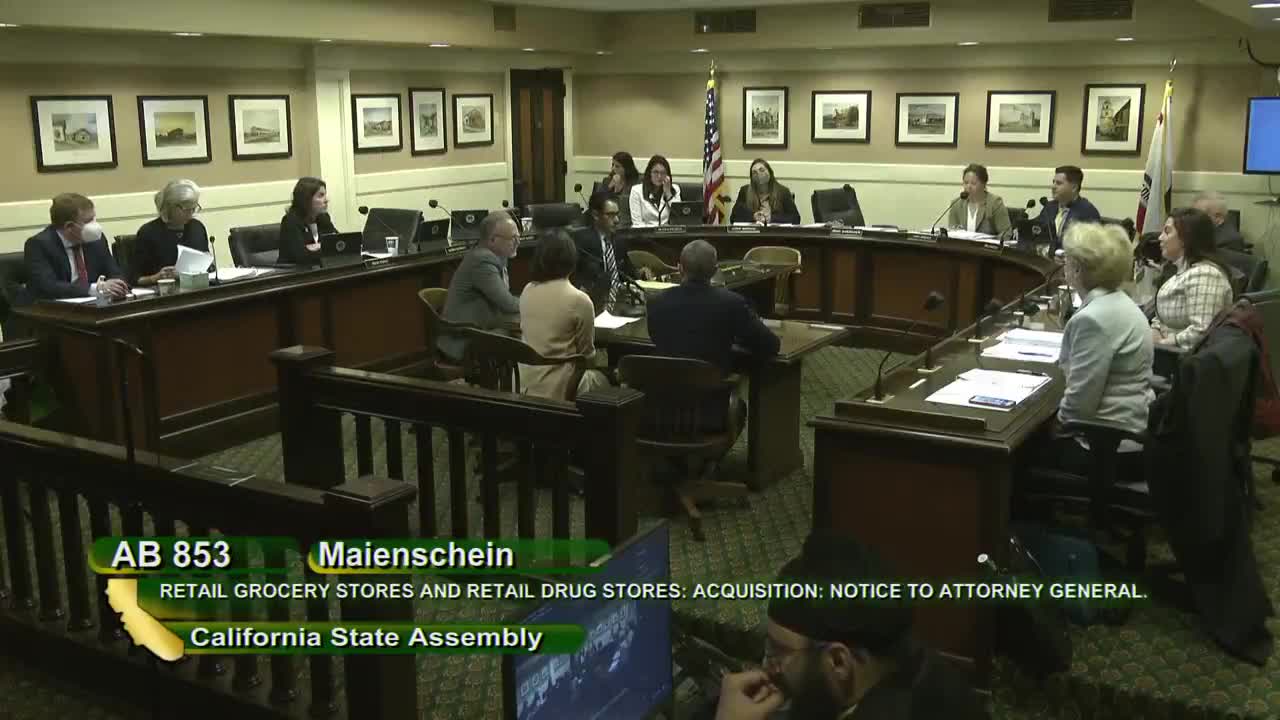 13MIN
Assembly Standing Committee on Judiciary
Bill Author

Bill Co-Author(s):
