SB 1087: Oil imports: air quality emissions data.
- Session Year: 2023-2024
- House: Senate
- Latest Version Date: 2024-04-30
Current Status:
Failed
(2024-05-16: May 16 hearing: Held in committee and under submission.)
Introduced
In Committee
First Chamber
In Committee
Second Chamber
Enacted
Existing law, the Petroleum Industry Information Reporting Act of 1980, requires refiners, as defined, to report monthly to the State Energy Resources Conservation and Development Commission (Energy Commission), for each of their refineries, specified information, including the origin of petroleum receipts and the source of imports of finished petroleum products.
This bill would express the intent of the Legislature that that, to the extent feasible within existing resources, the Energy Commission monitor foreign countries that export oil to California and identify on its internet website which of those countries have demonstrated human rights abuses, as documented by the United States Department of State, and which of those countries have lower environmental standards for the production of oil than California.
Existing law imposes various limitations on the emissions of air contaminants for the control of air pollution from vehicular and nonvehicular sources. Existing law requires the State Air Resources Board to post on its internet website information on air quality conditions and trends statewide and to develop and conduct a program of monitoring airborne fine particles smaller than 2.5 microns in diameter (PM 2.5).
This bill would require the state board to annually produce an assessment of the greenhouse gas emissions associated with the transportation of oil in California, as specified, and to include that assessment on the state boards internet website. The bill would also require the Energy Commission to annually provide data collected pursuant to the Petroleum Industry Information Reporting Act of 1980 to the state board for the purposes of the assessment. The bill would require the data to comply with specified confidentiality requirements.
Under existing law, the Geologic Energy Management Division in the Department of Conservation regulates the drilling, operation, maintenance, and abandonment of oil and gas wells in the state.
This bill would require the division to provide a link on its internet website to air quality emissions data associated with the transportation of oil imported into the state.
Existing law, the Petroleum Industry Information Reporting Act of 1980, requires refiners, as defined, to report monthly to the State Energy Resources Conservation and Development Commission (Energy Commission), for each of their refineries, specified information, including the origin of petroleum receipts and the source of imports of finished petroleum products.
This bill would express the intent of the Legislature that the Energy Commission monitor foreign countries that export oil to California and identify on its internet website which of those countries have demonstrated human rights abuses, as documented by the United States Department of State, and which of those countries have lower environmental standards for the production of oil than California.
Existing law imposes various limitations on the emissions of air contaminants for the control of air pollution from vehicular and nonvehicular sources. Existing law requires the State Air Resources Board to post on its internet website information on air quality conditions and trends statewide and to develop and conduct a program of monitoring airborne fine particles smaller than 2.5 microns in diameter (PM 2.5).
This bill would require the state board to annually produce an assessment of the greenhouse gas emissions associated with the transportation of oil in California, as specified, and to include that assessment on the boards internet website. The bill would also require the Energy Commission to annually provide data collected pursuant to the Petroleum Industry Information Reporting Act of 1980 to the state board for the purposes of the assessment.
Under existing law, the Geologic Energy Management Division in the Department of Conservation regulates the drilling, operation, maintenance, and abandonment of oil and gas wells in the state.
This bill would require the division to provide a link on its internet website to air quality emissions data associated with the transportation of oil imported into the state.
It is the intent of the Legislature that that, to the extent feasible within existing resources, the State Energy Resources Conservation and Development Commission monitor foreign countries that export oil to California and identify on its internet website which of those countries have demonstrated human rights abuses, as documented by the United States Department of State, and which of those countries have lower environmental standards for the production of oil than California.
SEC. 2.Section 39619.9 is added to the Health and Safety Code, to read:39619.9.(a)The state board shall annually produce an assessment of the greenhouse gas emissions associated with the transportation of oil in California. The assessment shall be made available on the state boards internet website. The assessment shall include all of the following:
(1)An estimate of the greenhouse gas emissions associated with the transportation of oil in this state for oil imported into the state during the previous year broken down by the country of origin.
(2)An estimate of the greenhouse gas emissions associated with the transportation of oil in this state for oil produced within the state during the previous year.
(3)A description of the methodology and assumptions used to produce the assessment.
(4)A citation or link to the data used to produce the assessment.
(b)(1)The State Energy Resources Conservation and Development Commission shall annually provide data collected pursuant to Chapter 4.5 (commencing with Section 25350) of Division 15 of the Public Resources Code to the state board for the purposes of the assessment required pursuant to subdivision (a).
(2)Data provided to the state board pursuant to paragraph (1) shall comply with applicable confidentiality requirements specified in Chapter 4.5 (commencing with Section 25350) of Division 15 of the Public Resources Code.
SEC. 3.Section 3118 is added to the Public Resources Code, to read:3118.The division shall provide a link on its internet website to air quality emissions data associated with the transportation of oil imported into the state.
It is the intent of the Legislature that the State Energy Resources Conservation and Development Commission monitor foreign countries that export oil to California and identify on its internet website which of those countries have demonstrated human rights abuses, as documented by the United States Department of State, and which of those countries have lower environmental standards for the production of oil than California.
SEC. 2.Section 39619.9 is added to the Health and Safety Code, to read:39619.9.(a)The state board shall annually produce an assessment of the greenhouse gas emissions associated with the transportation of oil in California. The assessment shall be made available on the boards internet website. The assessment shall include all of the following:
(1)An estimate of the greenhouse gas emissions associated with the transportation of oil in this state for oil imported into the state during the previous year broken down by the country of origin.
(2)An estimate of the greenhouse gas emissions associated with the transportation of oil in this state for oil produced within the state during the previous year.
(3)A description of the methodology and assumptions used to produce the assessment.
(4)A citation or link to the data used to produce the assessment.
(b)The State Energy Resources Conservation and Development Commission shall annually provide data collected pursuant to Chapter 4.5 (commencing with Section 25350) of Division 15 of the Public Resources Code to the state board for the purposes of the assessment required pursuant to subdivision (a).
SEC. 3.Section 3118 is added to the Public Resources Code, to read:3118.The division shall provide a link on its internet website to air quality emissions data associated with the transportation of oil imported into the state.
|
Date
|
Status
|
|---|---|
| May 16, 2024 | May 16 hearing: Held in committee and under submission. |
| May 14, 2024 | Set for hearing May 16. |
| May 13, 2024 | May 13 hearing: Placed on APPR suspense file. |
| May 3, 2024 | Set for hearing May 13. |
| Apr 30, 2024 | Read second time and amended. Re-referred to Com. on APPR. |
| Apr 29, 2024 | From committee: Do pass as amended and re-refer to Com. on APPR. (Ayes 17. Noes 0. Page 3700.) (April 22). |
| Apr 4, 2024 | Set for hearing April 22. |
| Mar 20, 2024 | From committee: Do pass and re-refer to Com. on E., U. & C. with recommendation: To consent calendar. (Ayes 6. Noes 0. Page 3379.) (March 20). Re-referred to Com. on E., U. & C. |
| Mar 5, 2024 | Set for hearing March 20. |
| Feb 21, 2024 | Referred to Coms. on E.Q. and E., U. & C. |
| Feb 13, 2024 | From printer. May be acted upon on or after March 14. |
| Feb 12, 2024 | Introduced. Read first time. To Com. on RLS. for assignment. To print. |
|
Date
|
Description
|
Location
|
Votes
|
|
|---|---|---|---|---|
| May 13, 2024 | Placed on suspense file | Senate Standing Committee on Appropriations |
Passed |
|
| Apr 22, 2024 | Do pass as amended, but first amend, and re-refer to the Committee on [Appropriations] | Senate Standing Committee on Energy, Utilities and Communications |
Passed |
|
| Mar 20, 2024 | Do pass, but first be re-referred to the Committee on [Energy, Utilities and Communications] with the recommendation: To Consent Calendar | Senate Standing Committee on Environmental Quality |
Passed |
This list shows positions taken on this bill by organizations on the date displayed, which is linked to the original source.
Positions by individuals are not included.
|
Organization
|
Position
|
Date
|
|---|---|---|
| Associated Builders And Contractors Of California | * Support | Apr 22, 2024 |
| Associated Builders And Contractors Of California | ** Support | |
| California Independent Petroleum Association | ** Support | |
| Californians for Energy and Science | ** Support | |
| Cat Canyon Resources | ** Support | |
| City Of Taft | ** Support | |
| County of Fresno | ** Support | |
| EverData | ** Support | |
| Fresno Chamber of Commerce | ** Support | |
| Fresno County Board of Supervisors | * Support | Apr 22, 2024 |
| General Production Service | ** Support | |
| Greater Bakersfield Chamber of Commerce | ** Support | |
| Hathaway | ** Support | |
| INDEPENDENT OIL PRODUCERS ALLIANCE | ** Support | |
| Kern Citizens For Energy | ** Support | |
| kern county hispanic chamber of commerce | ** Support | |
| Mission Oil | ** Support | |
| Nielsen Marksamar | * Support | Apr 22, 2024 |
| Ridgecrest Chamber of Commerce | ** Support | |
| San Joaquin Facilities Management | ** Support | |
| Taft College Foundation | ** Support |
SENATE COMMITTEE ON
Senator Anna Caballero, Chair
2023 - 2024 Regular Session
SB 1087 (Grove) - Oil imports: air quality emissions data
Version: | Policy Vote: |
Urgency: | Mandate: |
Hearing Date: | Consultant: |
Bill Summary:
This bill would require the California Air Resources Board (ARB) to conduct specified annual assessments about the greenhouse gas (GHG) emissions associated with the transportation of oil in California.
Fiscal Impact:
- The California Air Resources Board (ARB) estimates ongoing costs of about $451,000 annually (Oil, Gas, and Geothermal Administrative Fund [OGGAF]) to calculate GHG and criteria emissions factors associated with the import, production, and export of oil in California; determine and revise pathway differences and emission rates for various countries; collaborate with the U.S. Environmental Protection Agency (EPA), the California Energy Commission (CEC), and stakeholders; and develop and publish a report, among other things.
- The CEC and the Geologic Energy Management Division (CalGEM) within the Department of Conservation estimate that any costs would be minor and absorbable.
Background:
California is increasingly reliant on international sources of crude oil. While Texas and a number of other states are well-known for their oil and gas reserves, California has historically had substantial proven oil resources. In terms of cumulative oil production, California is the site of several of the most productive oil fields in the United States. Los Angeles and Kern Counties remain the site of substantial oil operations in the state. Despite this history, California primarily sources its oil from overseas. California crude comprised 23.4 percent of the total number of barrels received by in-state refineries in 2023 while over 60 percent of oil supplied to California’s refineries come from international sources. CEC data regarding the international sources of crude oil imported into California in 2023 show that Iraq is the largest source of crude oil imports to California, followed by Saudi Arabia, Brazil, Ecuador, and Guyana. Collectively, these countries supply over 75 percent of California’s imported crude oil. California’s reliance on imported oil is shaped by a number of factors, including the lack of domestic oil pipelines from other states, the costs associated with procuring oil by rail or truck, global commodity prices for crude oil, and limited in-state oil and gas extraction.
While in-state oil extraction has declined over several decades, agencies have recently adopted policies to accelerate the phase out of both petroleum use in the transportation sector and oil extraction in California. Executive Order N-79-20 established a goal that 100 percent of in-state sales of new passenger cars and trucks will be zero-emission by 2035. This executive order also established a goal that 100 percent of medium- and heavy-duty vehicles in the state will be zero-emission by 2045. In response to this Executive Order, ARB has adopted regulations aimed at phasing out the sale of petroleum-fueled vehicles. In 2021, Governor Newsom followed this Executive Order by directing CalGEM to cease issuing permits for fracking in 2024 and ordering ARB to explore pathways to end in-state oil extraction by 2045. An end to in-state oil extraction without a cessation of oil use would likely result in California sourcing all its oil from imports.
Proposed Law:
This bill would require ARB to conduct specified annual assessments about GHG emissions associated with the transportation of oil in California. Specifically, this bill would:
- Require ARB to annually assess the GHG emissions associated with oil transportation in California.
- Require ARB to post this assessment on its website, and specifies that this assessment must include the following:
- An estimate of GHG emissions from transporting oil imported into the state during the prior year, broken down by country of origin.
- An estimate of GHG emissions from transporting oil produced in-state during the prior year.
- A description of the methodology used for GHG assessments conducted pursuant to this bill.
- A link to data used for the assessment.
- Require the CEC to annually provide data collected pursuant to PIIRA to ARB to facilitate the assessment required by this bill.
- Specify that data provided to ARB shall comply with applicable confidentiality requirements specified in Chapter 4.5 (commencing with Section 25350) of Division 15 of the Public Resources Code.
- Require CalGEM to post a link on its website to air quality data related to the transportation of oil in the state.
- State legislative intent that, to the extent feasible within existing resources, the CEC monitor foreign countries that export oil to California and identify on its website those countries that have demonstrated human rights abuses, as documented by the United States Department of State, and which of those countries have lower environmental standards for oil production than the United States.
Related Legislation:
SBX1 2 (Skinner, Chapter 1, Statutes of 2023) modified PIIRA to require refineries to submit specified data regarding their economic performance to the CEC. The bill also required the CEC to assess the reliability of transportation fuels and retail outlets for those fuels.
SB15 (Grove, 2023) contained provisions substantially similar to those in this bill. The bill was held in the Assembly Appropriations Committee.
SB 1319 (Grove, 2022) was substantially similar to this bill and required ARB to annually assess emissions associated with oil transportation in California. The bill was held in the Assembly Appropriations Committee.
SB 1322 (Allen, Chapter 374, Statutes of 2022) modified PIIRA to require refiners with multiple refineries operating in the state to submit certain data about their economic performance to the CEC. The bill also increased public access to data about refiners.
SB 406 (Stern, Chapter 727, Statutes of 2021) made various changes to CalGEM reporting and transparency requirements, including establishing requirements for posting information maintained by CalGEM on the CalGEM website.
-- END --
SENATE COMMITTEE ON ENERGY, UTILITIES AND COMMUNICATIONS
Senator Steven Bradford, Chair
2023 - 2024 Regular
Bill No: Hearing Date: 4/22/2024
Author: | |||
Version: | Introduced | ||
Urgency: | Fiscal: | ||
Consultant: | |||
SUBJECT:
DIGEST: This bill requires the California Air Resources Board (CARB) to conduct specified annual assessments about the greenhouse gas (GHG) emissions associated with the transportation of oil in California.
ANALYSIS:
Existing law:
- Establishes the California Energy Commission (CEC) as a five-member commission within the Natural Resources Agency and tasks the CEC with monitoring, analyzing, and making recommendations on statewide trends in the energy sector, including fuel supply and demand. (Public Resources Code §25200 et. seq.)
- Establishes the Petroleum Industry Information Reporting Act of 1980 (PIIRA), which establishes requirements for oil refiners and marketers to submit specified data to the CEC and requires the CEC to analyze this data to identify trends in demand and supply for petroleum, including factors influencing gasoline price changes. Existing law requires retail transportation fueling stations to report specified information about their sales of gasoline, diesel, and other fuels to the CEC. (Public Resources Code §25350 et. seq.)
- Establishes various confidentiality protections within PIIRA, including specifying that the CEC may disclose certain confidential information received under PIIRA to CARB or the Attorney General if CARB or the Attorney General agree to keep the information confidential. (Public Resources Code §25350 et. seq.)
- Establishes the Geologic Energy Management Division in the Department of Conservation (CalGEM) for the purposes of overseeing the drilling, operation, maintenance, and removal of oil and gas wells. Existing law specifies the duties of CalGEM regarding authorization of oil and gas exploration within California. (Public Resources Code §3000 et. seq.)
This bill:
- Requires CARB to annually assess the GHG emissions associated with oil transportation in California.
- Requires CARB to post this assessment on its website, and specifies that this assessment must include the following:
- An estimate of GHG emissions from transporting oil imported into the state during the prior year, broken down by country of origin.
- An estimate of GHG emissions from transporting oil produced in-state during the prior year.
- A description of the methodology used for GHG assessments conducted pursuant to this bill.
- A link to data used for the assessment.
- Requires the CEC to annually provide data collected pursuant to PIIRA to CARB to facilitate the assessment required by this bill.
- Requires CalGEM to post a link on its website to air quality data related to the transportation of oil in the state.
- States legislative intent that the CEC monitor foreign countries that export oil to California and identify on its website those countries that have demonstrated human rights abuses, as documented by the United States Department of State, and which of those countries have lower environmental standards for oil production than the United States.
Background
California is increasingly reliant on international sources of crude oil. While Texas and a number of other states are well-known for their oil and gas reserves, California has historically had substantial proven oil resources. In terms of cumulative oil production, California is the site of several of the most productive oil fields in the United States. Los Angeles and Kern Counties remain the site of substantial oil operations in the state. Despite this history, California primarily sources its oil from overseas. California crude comprised 23.4 percent of the total number of barrels received by in-state refineries in 2023 while over 60 percent of oil supplied to California’s refineries come from international sources. CEC data regarding the international sources of crude oil imported into California in 2023 show that Iraq is the largest source of crude oil imports to California, followed by Saudi Arabia, Brazil, Ecuador, and Guyana. Collectively, these countries supply over 75 percent of California’s imported crude oil. California’s reliance on imported oil is shaped by a number of factors, including the lack of domestic oil pipelines from other states, the costs associated with procuring oil by rail or truck, global commodity prices for crude oil, and limited in-state oil and gas extraction.
While in-state oil extraction has declined over several decades, agencies have recently adopted policies to accelerate the phase out of both petroleum use in the transportation sector and oil extraction in California. Executive Order N-79-20 established a goal that 100 percent of in-state sales of new passenger cars and trucks will be zero-emission by 2035. This executive order also established a goal that 100 percent of medium- and heavy-duty vehicles in the state will be zero-emission by 2045. In response to this Executive Order, CARB has adopted regulations aimed at phasing out the sale of petroleum-fueled vehicles. In 2021, Governor Newsom followed this Executive Order by directing CalGEM to cease issuing permits for fracking in 2024 and ordering CARB to explore pathways to end in-state oil extraction by 2045. An end to in-state oil extraction without a cessation of oil use would likely result in California sourcing all its oil from imports.
Bill emphasizes challenges to achieving global emissions reductions from certain strategies. While California may avoid some local emissions from ceasing fracking and oil extraction, the cessation of these practices within the state do not necessarily contribute to a reduction in total global emissions. As long as demand for petroleum remains consistent, oil will be procured from other mechanisms and locations that are associated with even higher emissions. In 2015, the California Natural Resources Agency commissioned an independent assessment of oil and gas extraction methods with the California Council on Science and Technology and researchers at the Lawrence Berkeley National Laboratory. The assessment identified a number of risks associated with fracking, including potential water contamination; however, the report also stated that fracking in California produced fewer overall emissions than sourcing oil from other methods. The report states: “Oil produced in California using hydraulic fracturing also emits less greenhouse gas per barrel than the average barrel imported to California.” Emissions impacts may be only one part of the overall environmental and public health concerns associated with fracking, but the tendency to shift emissions without achieving meaningful reductions remains a challenge to slowing global warming. Even when California ceases domestic oil extraction, our demand for oil will contribute to extraction in other geographic areas. As a result, larger global emissions reductions associated with oil and gas extraction may largely depend on efforts to reduce the overall use of these resources. To the extent that we continue to largely rely on imported oil, this bill may provide more detailed information about the overall emissions impacts associated with that continued reliance.
Need for amendments. As currently drafted, provisions of this bill may be interpreted to enable the disclosure of confidential data collected pursuant to PIIRA outside the disclosure provisions set forth in PIIRA. This does not appear to be the author’s intent. Additionally, this bill would express legislative intent for the CEC to monitor human rights abuses in countries from which California sources its oil. The CEC may not be sufficiently resourced to monitor international human rights issues. As a result, the author and committee may wish to amend this bill to clarify the following:
- That it is the Legislature’s intent that the CEC should monitor human rights abuses in oil-producing countries to the extent feasible within existing resources.
- That sharing and use of PIIRA data pursuant to this bill shall be subject to existing PIIRA confidentiality provisions.
Dual Referral. This bill passed out of the Senate Committee on Environmental Quality on March 20, 2024 with a vote of 6-0.
Prior/Related Legislation
SBX1 2 (Skinner, Chapter 1, Statutes of 2023) modified PIIRA to require refineries to submit specified data regarding their economic performance to the CEC. The bill also required the CEC to assess the reliability of transportation fuels and retail outlets for those fuels.
SB15 (Grove, 2023) contained provisions substantially similar to those in this bill. The bill was held in the Assembly Appropriations Committee.
SB 1319 (Grove, 2022) was substantially similar to this bill and required CARB to annually assess emissions associated with oil transportation in California. The bill was held in the Assembly Appropriations Committee.
SB 1322 (Allen, Chapter 374, Statutes of 2022) modified PIIRA to require refiners with multiple refineries operating in the state to submit certain data about their economic performance to the CEC. The bill also increased public access to data about refiners.
SB 406 (Stern, Chapter 727, Statutes of 2021) made various changes to CalGEM reporting and transparency requirements, including establishing requirements for posting information maintained by CalGEM on the CalGEM website.
FISCAL EFFECT: Appropriation: Fiscal Com.: Local:
SUPPORT:
Associated Builders and Contractors of California
California Independent Petroleum Association
Californians for Energy and Science
Cat Canyon Resources
City of Taft
County of Fresno
EverData
Fresno Chamber of Commerce
General Production Service
Greater Bakersfield Chamber of Commerce
Hathaway
Independent Oil Producers Alliance
Kern Citizens for Energy
Kern County Hispanic Chamber of Commerce
Mission Oil
Ridgecrest Chamber of Commerce
San Joaquin Facilities Management
Taft College Foundation
13 Individuals
OPPOSITION:
None received
ARGUMENTS IN SUPPORT: According to the author:
SB 1087 simply asks whether California should be importing its oil from countries that do not share our values on human rights and environmental standards. The bill expresses the intent of the Legislature that the California Energy Commission report on the human rights records and environmental standards of the countries that we buy oil from. The measure would also require the Air Resources Board to report on its website the amount of particulate matter released into the air from tanker ship emissions from oil imported into the state. The bill is a recognition that California should not be importing oil from countries that do not share our California values. We can produce the oil we use, and keep the jobs and revenues inside our Golden State while protecting our environment.
-- END --
SENATE COMMITTEE ON ENVIRONMENTAL QUALITY
Senator Allen, Chair
2023 - 2024 Regular
Bill No: SB 1087
Author: | Grove | ||
Version: | 2/12/2024 | Hearing Date: | 3/20/2024 |
Urgency: | No | Fiscal: | Yes |
Consultant: | Eric Walters | ||
SUBJECT: Oil imports: air quality emissions data
DIGEST: This bill would express the intent of the Legislature that the California Energy Commission (CEC, formerly the State Energy Resources Conservation and Development Commission) monitor countries that export oil to California and identify human rights abuses and lower environmental standards for oil production than California. It would require the California Air Resources Board (CARB) to report greenhouse gas (GHG) emissions data associated with oil transported in California and the Geologic Energy Management Division (CalGEM) to make available air quality emissions data associated with the transportation of imported oil.
ANALYSIS:
Existing law:
- Establishes CalGEM in the Department of Conservation as the regulator of the drilling, operation, maintenance, and abandonment of oil and gas wells in the state. (Public Resources Code (PRC) § 3100 et seq., PRC § 690)
- Requires, under the Petroleum Industry Information Reporting Act of 1980, refiners, as defined, to report monthly to the CEC, for each of their refineries, specified information, including petroleum sales volumes and prices, and the origin of petroleum and finished petroleum products receipts. (PRC § 25350 et seq.)
- Establishes CARB as the state agency charged with monitoring and regulating sources of GHG emissions and other air pollutants. Existing law requires CARB to make available, and update at least annually, on its internet website the emissions of GHGs, criteria pollutants, and toxic air contaminants for certain facilities in the state, and to annually present an informational report to a specific legislative committee on the reported emissions of GHGs, criteria pollutants, and toxic air contaminants from certain energy and industry sectors, as prescribed. (Health and Safety Code § 39500 et seq.)
This bill:
- Expresses the intent of the Legislature that the CEC monitor foreign countries that export oil to California and identify on its internet website which of those countries have demonstrated human rights abuses, as documented by the United States Department of State or by human rights organizations, and which of those countries have lower environmental standards for oil production than California.
- Requires CARB to annually produce an assessment of the GHG emissions associated with the transportation of oil in California, both oil imported to and produced in California, and to include that assessment on the Board’s internet website.
- Requires the CEC to annually provide data to CARB for the purposes of this assessment pursuant to the Petroleum Industry Information Reporting Act of 1980.
- Requires CalGEM to provide a link on its internet website to air quality emissions data associated with the transportation of oil imported into the state.
Background
- Climate change and fossil fuels. The burning of fossil fuels is the main source of GHGs causing climate change. California’s statutory emission reduction goals dictate that GHG emissions be reduced to 40% below the 1990 level by 2030 (updated to 48% in CARB’s 2022 Scoping Plan) and reduced to at least 85% below 1990 levels by 2045. Net zero emissions (carbon neutrality) are to be achieved by 2045.
Due to initiatives to meet these goals such as the Advanced Clean Car Standards, Low Carbon Fuel Standard requirements, and improved land-use planning, California’s demand for crude oil has declined. Oil demand is likely to continue to fall as a result of these and additional policies, such as the Governor’s Executive Order N-79-20 which calls for the elimination of new internal combustion passenger vehicles by 2035. Not importing oil into California can cut emissions, but, ultimately, any credible plan to meet California’s climate goals will lean heavily on phasing out oil production and consumption. - Oil production poses environmental risk. All oil production poses environmental risk no matter where it is produced. The largest portion of imported oil to California comes from Ecuador. Much of this oil is sourced from the Amazon rainforest, which is home to the highest biodiversity on the planet and functions as a significant climate-stabilizing carbon sink. Oil extraction continues to encroach into the Amazon including in Ecuador’s Yasuní National Park, a United Nations Educational, Scientific and Cultural Organization (UNESCO) recognized site home to several indigenous communities including two uncontacted tribes. The Ecuadoran Heavy Crude Oil Pipeline has ruptured twice in the last three years, causing extensive environmental damage. However, environmental damage related to oil extraction occurs in California as well, despite stringent environmental regulations. For example, an oil spill off the coast of Orange County in October 2021 leaked almost 25,000 gallons of oil and triggered the Governor to declare a state of emergency. Over 750 miles of shoreline underwent cleanup efforts. Sadly, this was a relatively small spill: in 2015, a pipeline ruptured in Santa Barbara and spilled 126,000 gallons of oil, much of which flowed to the ocean and caused extensive ecological damage. Spills of up to 3 million gallons checker California’s oil history.
- Oil production in California. California has about four percent of the nation's total crude oil reserves and produced almost 131 million barrels of crude oil in 2021. There are about 100,000 oil wells in California, mostly in Kern and Los Angeles counties. While California is a top-10 oil-producing state, production has been declining since the mid-1980s, with California having dropped from third to seventh among oil-producing states (as of 2021). The oil and gas sector is a major employer in some areas. According to the American Petroleum Institute, the oil and gas industry in California supported 1,059,000 total jobs (164,600 direct and 894,400 indirect), or 4.3% of California’s total employment, and contributed $199.3 billion to California’s gross domestic product ($85.3 billion direct and $114 billion indirect), 6.4% of the state’s total in 2019.
- Magnitude of foreign oil imports to California. California produces only about 2% of its daily oil consumption; it produces about 391,000 barrels of oil per day and consumes 1.8 million barrels of oil per day. California’s dependence on foreign oil has grown as Californian supply has dropped and Alaskan imports have fallen. According to the most recent data available from the CEC, in 2021, California’s refineries used 28.9% Californian oil, 14.9% Alaskan oil, and 56.2% foreign oil. The top three sources of foreign oil were Ecuador, Saudi Arabia, and Iraq, each accounting for approximately 20% of oil imports.
- Human rights violations in countries providing oil to California. The United States Department of State issues annual Country Reports on Human Rights Practices for countries receiving U.S. assistance and all United Nations member states. These reports cover internationally recognized individual, civil, political, and worker rights, as set forth in the Universal Declaration of Human Rights and other international agreements.
The most recent Department of State reports covering 2021 qualitatively document some human rights transgressions in Ecuador, Saudi Arabia, and Iraq, the top oil exporters to California. None of these abuses were specifically liked to the oil industry, though scattered examples linked to oil extraction exist from previous years. - However, Californian oil production also has social and equity concerns. In California, 5.4 million people live within a mile of an oil or gas well (14% of the state’s population). Of these, 1.8 million, 92% people of color, live in an area heavily burdened by environmental pollution. Oil and gas extraction operations release harmful airborne chemicals, such as volatile organic compounds, hydrogen sulfide, particulate matter (PM2.5), and ozone, damaging the environment and human health. Health risks include respiratory damage (e.g. asthma, reduced lung function, symptoms such as wheezing), perinatal consequences (e.g. preterm birth, low birth weight, heart defects, and other developmental problems), cardiovascular disease, and cancer. These ultimately lead to developmental problems, chronic health issues, and increased mortality. Previous legislation has recognized and attempted to mitigate the health risks of the oil and gas industry to Californians. AB 1647 (Muratsuchi, Chapter 589, Statutes of 2017) required refinery-related fenceline air monitoring systems starting in 2020, though environmental justice concerns remain regarding disproportionate impacts still affecting disadvantaged communities in proximity to oil and gas operations. SB 1137 (Gonzalez, Chapter 365, Statutes of 2022) establishes a health protection zone of 3,200 feet of a sensitive receptor, which includes residences, healthcare facilities, and schools. It prohibits CalGEM from approving new oil or gas development within this health protection zone. Impacts of oil extraction to people within the state should not be discounted.
Comments
- Purpose of Bill. According to the author, “SB 1087 simply asks whether California should be importing its oil from countries that do not share our values on human rights and environmental standards. The bill expresses the intent of the Legislature that the California Energy Commission report on the human rights records and environmental standards of the countries that we buy oil from. The measure would also require the Air Resources Board to report on its website the amount of particulate matter released into the air from tanker ship emissions from oil imported into the state. The bill is a recognition that California should not be importing oil from countries that do not share our California values. We can produce the oil we use, and keep the jobs and revenues inside our Golden State while protecting our environment.”
- This looks familiar. Last session, SB 1319 (Grove) went through the Senate Committees on Natural Resources and Water and Environmental Quality and the Assembly Natural Resources Committee. Suggested amendments made by these committees are reflected in last year’s SB 15 (Grove). In turn, SB 15 proceeded through the legislative process before being held in the Assembly Appropriations Committee, as SB 1319 had been. SB 1087 is identical to SB 15, which this committee previously passed out on consent.
Meeting California’s statutorily required emission reduction goals necessitates a rapid movement away from oil production and consumption, both domestic and imported. This bill does not advance that goal. If the Committee decides to advance this proposal, the following comments provide suggestions to further the completeness and transparency of oil transportation emissions, environmental impact, and human rights reporting required by this bill.
- Agency separation of reporting requirements makes comparison challenging. This bill gives CalGEM and CARB slightly different reporting requirements. It directs CARB to provide an estimate of GHG emissions associated with (1) the transportation of imported oil in California and (2) the transportation of Californian oil in California. This bill directs CalGEM, meanwhile, to provide references on its website to “air quality emissions data associated with transportation of oil imported into the state.” It is unclear if this means the GHG emissions associated with moving oil from its country of origin into California and not within California. The separation of these emission reports makes it challenging to directly compare the climate-warming impacts of transporting Californian oil and foreign oil. The two agencies are not tasked with collecting and presenting emissions data in a consistent way: “air quality emissions data” and “GHG emissions” are not necessarily equivalent. Further, CalGEM is responsible for regulating oil extraction within the state, not regulating oil imports, so it is not clear whether emissions from moving oil internationally are within its purview. Mobile emissions sources within the state fall under the purview of CARB. Moving forward, the author may wish to consider more effective reporting requirements that achieve the desired air quality comparisons by specifying pollutants to report and appropriately designating agency responsibility, especially as it pertains to any emissions occurring outside of California.
- California is increasing its oil exports as in-state demand falls. According to a report by Communities for a Better Environment using data from CEC and CARB, California refiners exported nearly 1.1 billion barrels, or 34%, of their total liquid petroleum fuels production during 2015–2019, an increase of 29% over the previous 5 years. Exporting oil also emits GHGs and other air pollutants. The question arises whether oil exports could be reduced to partially ameliorate the environmental and social concerns of imported oil. Reporting emissions associated with transporting Californian oil out of the state would be an important component to complete the picture this policy is trying to shed light on.
- No clear path forward to monitor environmental standards of oil production in foreign countries. This bill specifies that the CEC should use the U.S. Department of State’s human rights abuses reports or those of other human rights organizations to assess the countries from which California is sourcing its oil. However, the bill does not specify a data source to evaluate the environmental impacts of oil production in foreign countries. Moving forward, the author may wish to consider providing more specificity for data sources documenting environmental standards for oil production in other countries.
DOUBLE REFERRAL:
If this measure is approved by the Senate Environmental Quality Committee, the do pass motion must include the action to re-refer the bill to the Senate Energy, Utilities, and Communications Committee.
Related/Prior Legislation
SB 1319 (Grove, 2022) was the previous version of this bill. This bill died in the Assembly Appropriations Committee.
AB 3217 (Gloria, 2020) would have required, no later than December 31, 2023, CARB, in cooperation with CalGEM and CEC, to complete and publish an analysis of the life-cycle GHG emissions associated with crude oil produced in the state, as prescribed. This bill died in the Assembly Natural Resources Committee.
SR 98 (Wilk, 2022) would have resolved the environmental, human rights, and political disadvantages of importing oil from the Amazon region over using Californian oil. This resolution died in the Senate Rules Committee.
SB 1137 (Gonzalez, Chapter 365, Statutes of 2022) established a health protection zone of 3,200 feet of a sensitive receptor, which includes residences, healthcare facilities, and schools. This bill prohibits CalGEM from approving new oil or gas development within this health protection zone.
AB 1647 (Muratsuchi, Chapter 589, Statutes of 2017) requires a refinery-related community air monitoring system, as defined, to be installed on or before January 1, 2020, as specified, and would require an air district to design, develop, install, operate, and maintain the refinery-related community air monitoring system or to contract with a third party to provide those services. The bill requires an owner or operator of a petroleum refinery to develop, install, operate, and maintain a fence-line monitoring system, as defined, on or before January 1, 2020, as specified.
SOURCE:
Author
SUPPORT:
California Independent Petroleum Association (CIPA)
Californians for Energy and Science
Cat Canyon Resources, LLC
City of Taft
Everdata, LLC
Fresno Chamber of Commerce
Greater Bakersfield Chamber of Commerce
Hathaway LLC
Independent Oil Producers Agency
Mission Oil Company
Mmi Services INC.
Ridgecrest Chamber of Commerce
OPPOSITION:
None received
-- END --
Discussed in Hearing
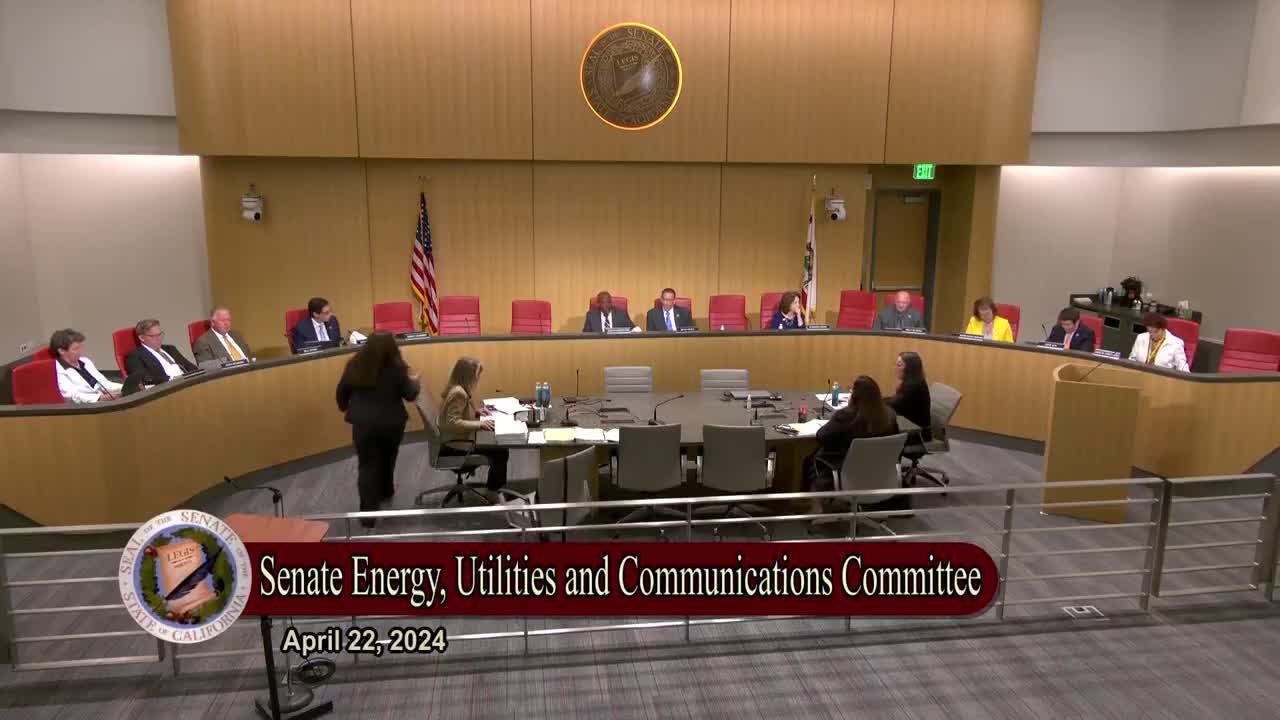 10MIN
Senate Standing Committee on Energy, Utilities and Communications
 40SEC
Senate Standing Committee on Energy, Utilities and Communications
Bill Author

Bill Co-Author(s):