SB 1362: Qualified ABLE Program: CalABLE accounts: funding.
- Session Year: 2023-2024
- House: Senate
- Latest Version Date: 2024-02-16
Current Status:
Failed
(2024-05-16: May 16 hearing: Held in committee and under submission.)
Introduced
In Committee
First Chamber
In Committee
Second Chamber
Enacted
Existing federal law, the Stephen Beck, Jr., Achieving a Better Life Experience Act of 2014 (ABLE Act), encourages and assists individuals and families to save private funds for the purpose of supporting eligible individuals with disabilities to maintain their health, independence, and quality of life by excluding from gross income distributions used for qualified disability expenses by a beneficiary of a qualified ABLE program established and maintained by a state, as specified.
Existing law establishes the Qualified ABLE Program for purposes of implementing the federal ABLE Act in this state, and creates the California ABLE Program Trust with the purposes, powers, and duties of the trust to be vested in and exercised by the California ABLE Act Board. Existing law requires the board to segregate the moneys coming into the ABLE program trust into 2 funds: the program fund, which is continuously appropriated, for specified purposes of the act, and the administrative fund, which is available upon appropriation by the Legislature for administration of the act. Existing law requires all moneys paid by designated beneficiaries or eligible individuals in connection with ABLE accounts to be deposited, as received, into the program fund, promptly invested, and accounted for separately.
This bill would require the CalABLE program to make a one-time deposit of at least $250 into each new CalABLE account that meets specified requirements, including that the account was opened on or after a date to be determined by the board, but no earlier than January 1, 2025, and the designated beneficiary of the account is a California resident. The bill would also authorize the board to provide additional financial incentives designated to increase moneys paid by designated beneficiaries or eligible individuals in connection with their CalABLE accounts. The bill would make those provisions subject to an appropriation by the Legislature.
(a)The CalABLE program shall make a one-time deposit of at least two hundred fifty dollars ($250) into each new CalABLE account that meets all of the following requirements:
(1)The CalABLE account was opened on or after a date to be determined by the board, but in no event shall this date be prior to July 1, 2025.
(2)The designated beneficiary of the CalABLE account is a California resident.
(3)The CalABLE account has been funded with a one-time deposit of at least fifty dollars ($50).
(4)Any other requirements that may be adopted by the board as a condition of receiving the one-time deposit.
(b)The board may provide additional financial incentives designated to increase moneys paid by designated beneficiaries or eligible individuals in connection with their CalABLE accounts.
(c)Implementation of this section shall be subject to an appropriation by the Legislature for this purpose.
|
Date
|
Status
|
|---|---|
| May 16, 2024 | May 16 hearing: Held in committee and under submission. |
| May 10, 2024 | Set for hearing May 16. |
| May 6, 2024 | May 6 hearing: Placed on APPR suspense file. |
| Apr 26, 2024 | Set for hearing May 6. |
| Apr 24, 2024 | From committee: Do pass and re-refer to Com. on APPR. (Ayes 7. Noes 0. Page 3759.) (April 24). Re-referred to Com. on APPR. |
| Apr 16, 2024 | From committee: Do pass and re-refer to Com. on REV. & TAX. (Ayes 5. Noes 0. Page 3607.) (April 15). Re-referred to Com. on REV. & TAX. |
| Apr 12, 2024 | Set for hearing April 24 in REV. & TAX. pending receipt. |
| Apr 4, 2024 | Set for hearing April 15. |
| Feb 29, 2024 | Referred to Coms. on HUMAN S. and REV. & TAX. |
| Feb 20, 2024 | From printer. May be acted upon on or after March 18. |
| Feb 16, 2024 | Introduced. Read first time. To Com. on RLS. for assignment. To print. |
|
Date
|
Description
|
Location
|
Votes
|
|
|---|---|---|---|---|
| May 6, 2024 | Placed on suspense file | Senate Standing Committee on Appropriations |
Passed |
|
| Apr 24, 2024 | Do pass, but first be re-referred to the Committee on [Appropriations] | Senate Standing Committee on Revenue and Taxation |
Passed |
|
| Apr 15, 2024 | Do pass, but first be re-referred to the Committee on [Revenue and Taxation] | Senate Standing Committee on Human Services |
Passed |
This list shows positions taken on this bill by organizations on the date displayed, which is linked to the original source.
Positions by individuals are not included.
|
Organization
|
Position
|
Date
|
|---|---|---|
| Association Of Regional Center Agencies | ** Support | |
| California Community Living Network | * Support | Apr 24, 2024 |
| California Disability Services Association | ** Support | |
| California State Treasurer | ** Support | |
| Coalition California Welfare Rights Organization | * Support | Apr 15, 2024 |
| Fiona Ma, California State Treasurer | ** Support |
SENATE COMMITTEE ON
Senator Anna Caballero, Chair
2023 - 2024 Regular Session
SB 1362 (Newman) - Qualified ABLE Program: CalABLE accounts: funding
Version: | Policy Vote: |
Urgency: | Mandate: |
Hearing Date: | Consultant: |
Bill Summary:
SB 1362 would require the California Achieving a Better Life Experience (CalABLE) program to deposit at least $250 into new CalABLE accounts that meet specific requirements.
Fiscal Impact:
Unknown, ongoing General Fund costs, to provide the $250 deposits and for administration.
Background:
In 2014, the federal ABLE Act was signed into law and provided that individuals with disabilities could save more than $2,000 without impacting eligibility for means-tested public benefits, such as Medicaid and Supplemental Social Security (SSI).
The California version of the ABLE act, the CalABLE program, is administered by the CalABLE Act Board. Current law defines individuals eligible for CalABLE accounts as someone who developed their disability before the age of 26. The individual must have been living with their disability for at least one year, or they must expect their disability to last for at least a year. An initial deposit of at least $25 is required to open an account, and a $1 minimum for all further contributions. There is an annual fee of $30, which is deducted in quarterly installments. If an individual wants paper statements that is an additional $10 a year fee.
Current law requires the CalABLE Act Board to segregate moneys coming into the ABLE program trust into the following two funds:
- The program fund, which is continuously appropriated; and,
- The administrative fund, which is available upon appropriation by the Legislature.
All moneys paid by designated beneficiaries or eligible individuals in connection with ABLE accounts must be deposited and received into the program fund, promptly invested, and accounted for separately. Funds from a CalABLE account can be used for a wide range of qualified disability expenses, which include but are not limited to education, housing, transportation, employment training and support, assistive technology, personal support services, health care expenses, and financial management. For SSI recipients, the first $100,000 in an ABLE account is not counted as a resource. Balances above this amount may cause the SSI payments to be suspended, but not the eligibility for SSI itself. Eligibility for Medicaid is not affected by the amount in a CalABLE account, regardless of the total balance. State law provides that up to $100,000 can be in an ABLE account without counting toward determining eligibility for a state or local means-tested program.
Proposed Law:
Specific provisions of the bill would:
- Require the CalABLE program to make a one-time deposit of at least $250 into each new CalABLE account that meets all of the following requirements:
- The CalABLE account was opened on or after a date to be determined by the board, but in no event can the date be prior to July 1, 2025.
- The designated beneficiary of the CalABLE account is a California resident.
- The CalABLE account has been funded with a one-time deposit of at least $50.
- Any other requirements that may be adopted by the board as a condition of receiving the one-time deposit.
- Authorize the board to provide additional financial incentives designated to increase moneys paid by designated beneficiaries or eligible individuals in connection with their CalABLE accounts.
- Condition implementation upon an appropriation by the Legislature.
-- END --
SENATE COMMITTEE ON REVENUE AND TAXATION
Senator Steven Glazer, Chair
2023 - 2024 Regular
Bill No: | SB 1362 | Hearing Date: | 4/24/24 |
Author: | Newman | Tax Levy: | No |
Version: | 2/16/24 | Fiscal: | Yes |
Consultant: | Grinnell | ||
Qualified ABLE Program: CalABLE accounts: funding
Directs the California Achieving a Better Life Experience Act (CalABLE) program to make a one-time deposit of at least $250 into each new CalABLE account.
Background
In 2014, Congress authorized the Achieving a Better Life Experience Act (ABLE) which provides parents of people with disabilities a way to save tax-free for their children’s future needs as an alternative to Special Needs and Supplement Needs Trusts. The individual must be entitled to Social Security Disability Insurance benefits, or have a disability certificate on file with the Internal Revenue Service. States administer ABLE programs on behalf of the programs’ beneficiaries. Individuals can be named the beneficiary of only one ABLE account, and beneficiaries must be either blind or disabled before reaching 26 years of age, which is set to increase to age 46 in 2026. Taxpayers can then contribute up to $18,000 each year to any ABLE account.
ABLE accounts generally follow the same rules as education savings accounts allowed by Section 529 of the Internal Revenue Code: individuals can make nondeductible cash contributions to an ABLE account in the name of a specified beneficiary, and earnings can grow tax free. ABLE account distributions are also not included in the beneficiary’s income so long as they’re used for qualified services for the beneficiary, and distributions don’t exceed the cost of the services, which include education, housing, transportation, employment training and support, assistive technology and personal support services, health, prevention, and wellness, financial management and administrative services, legal fees, oversight and monitoring, and funeral and burial services. If money is withdrawn from an account for something other than qualified disability expenses, the beneficiary is subject to an additional 10% penalty on the overall amount withdrawn.
The Legislature authorized CalABLE accounts in 2015 under the administration of the State Treasurer’s Office, and conformed to the federal tax treatment of ABLE accounts as of January 1st, 2015 (AB 449, Irwin, and SB 324, Pavley, 2015). The California ABLE Act Board, consisting of the Treasurer, the Director of Finance, the Controller, the Director of Developmental Services, the Chairperson of the State Council on Developmental Disabilities, the Director of Rehabilitation, and the Chair of the State Independent Living Council, directly manages the program.
The CalABLE program opened to the public on December 18, 2018. The Legislature has conformed several times to federal changes to ABLE accounts, including eliminating differences in qualification criteria, increasing contribution limits to up to the federal poverty level, and allowing taxpayers to roll-over Section 529 plans to ABLE accounts, among other changes (AB 91, Burke, 2019). In 2022, the Legislature made clarifying changes to bring California CalABLE account definitions in alignment with federal law, among other changes (AB 2216, Irwin). Last year, the Legislature conformed state law to the recent change made by Congress to ABLE accounts in the Consolidated Appropriations Act, specifically to increase the age for eligible individuals before which an individual's blindness or disability must have begun to qualify for an ABLE account (AB 339, Irwin).
The author and State Treasurer Fiona Ma want to encourage individuals who qualify for ABLE accounts to create them by providing a one-time matching deposit of $250.
Proposed Law
Senate Bill 1362 directs the CalABLE program to make a one-time deposit of at least $250 into each new CalABLE account:
- Opened on or after a date to be determined by the CalABLE board, but not before July 1, 2025.
- Where the account’s designated beneficiary is a California resident.
- Funded with a one-time deposit of at $50.
- That meets any other requirements adopted by the CalABLE board as a condition of receiving the one-time deposit.
SB 1362 permits the CalABLE board to provide additional financial incentives designated to increase moneys paid by designated beneficiaries or eligible individuals in connection with their CalABLE accounts. The measure provides its provisions are subject to an appropriation by the Legislature.
State Revenue Impact
No estimate.
Comments
1. Purpose of the bill. According to the author, “SB 1362 will encourage eligible Californians with qualifying disabilities to fully utilize the savings accounts to which they’re entitled. This bill will motivate and assist disabled Californians to open a CalABLE account by making one-time deposits of at least $250 into each new CalABLE account, as a first step toward ensuring their long-term financial security. By better ensuring the financial well-being of individuals with disabilities, we can create a more inclusive and prosperous California.”
2. Hello neighbor. California began administering ABLE accounts in 2018 under the management of the State Treasurer. Today, there are more than 10,000 accounts with more than $110 million under management. SB 1362 seeks to build on this by replicating a success from the state of Nevada, which offered a similar match to encourage people to open new accounts. According to the Senate Human Services Committee:
“In late 2021, Nevada announced it would use $5 million from federal America Rescue Plan Act funds to fund ABLE accounts through the Transforming Opportunities for Toddlers and Students (TOT) Grant Program. According to the sponsors, 2,000 people applied, with grants provided to 1,000 applicants and funding ran out after just three days. An additional $5 million was allocated for the ABLE program and a further $2 million was allocated for children with disabilities in foster care. As of 2024, approximately $10 million has been disbursed to 2,000 accounts and the state is working to disburse the remaining $2 million for children with disabilities in the foster care system.”
3. Show me the money. SB 1362 directs the CalABLE program to make a one-time deposit of at least $250 into each new CalABLE account; however, the measure does not contain an appropriation funding the deposit. Instead, the bill states that implementation of its provisions is subject to an appropriation by the Legislature.
4. Double-referred. On April 15th, the Committee on Human Services approved SB 1362 unanimously. The Revenue and Taxation Committee is hearing the measure as the committee of second reference.
Support and Opposition
(4/19/24)
Support: Fiona Ma, California State Treasurer (Sponsor)
Association of Regional Center Agencies
California Community Living Network
California Disability Services Association
Opposition: None submitted.
-- END --
SENATE COMMITTEE ON HUMAN SERVICES
Senator Alvarado-Gil, Chair
2023 - 2024 Regular
Bill No: | SB 1362 | ||
Author: | Newman | ||
Version: | February 16, 2024 | Hearing Date: | April 15, 2024 |
Urgency: | No | Fiscal: | Yes |
Consultant: | Heather Hopkins | ||
Subject: Qualified ABLE Program: CalABLE accounts: funding
SUMMARY
This bill requires the California Achieving a Better Life Experience (CalABLE) program to deposit at least $250 into new CalABLE accounts that meet specific requirements.
ABSTRACT
Existing Law:
- Establishes the California ABLE Program Trust, administered by the California ABLE Act Board. (WIC 4877)
- Defines individuals eligible for CalABLE accounts as someone who developed their disability before the age of 26. The individual must have been living with their disability for at least one year, or they must expect their disability to last for at least a year. (WIC 4875)
- Requires the California ABLE Act Board to segregate moneys coming into the ABLE program trust into the following two funds:
- The Program fund, which is continuously appropriated; and,
- The administrative fund, which is available upon appropriation by the Legislature. (WIC 4877)
- Requires all moneys paid by designated beneficiaries or eligible individuals in connection with ABLE accounts to be deposited and received into the Program fund, promptly invested, and accounted for separately. (WIC 4878)
- Provides that up to $100,000 can be in an ABLE account without counting toward determining eligibility for a state or local means-tested program. (WIC 4880)
This Bill:
- Provides the CalABLE program shall make a deposit of at least $250 into each new CalABLE account that meets the following requirements:
- The account was opened on or after a date determined by the California ABLE Act Board, but not sooner than July 1, 2025;
- The designated beneficiary of the account is a California resident; and
- The account has been funded with a one-time deposit of at least $50.
- The account was opened on or after a date determined by the California ABLE Act Board, but not sooner than July 1, 2025;
- Provides that the Board may adopt other requirements as a condition to receive the one-time $250 deposit.
- Provides that the Board may provide additional financial incentives designated to increase moneys paid by designated beneficiaries or eligible individuals in connection with their CalABLE accounts.
- Provides that implementation of this bill is subject to an appropriation.
FISCAL IMPACT
This bill has not yet been analyzed by a fiscal committee.
BACKGROUND AND DISCUSSION
Purpose of the Bill:
According to the author, “SB 1362 will encourage eligible Californians with qualifying disabilities to fully utilize the savings accounts to which they’re entitled. This bill will motivate and assist disabled Californians to open a CalABLE account by making one-time deposits of at least $250 into each new CalABLE account, as a first step toward ensuring their long-term financial security. By better ensuring the financial well-being of individuals with disabilities, we can create a more inclusive and prosperous California.”
CalABLE Program
Individuals with disabilities are disproportionately living in poverty. In California, the poverty rate for people with disabilities is 22.2%, with San Benito County having the lowest rate at 13.9% and Plumas County having the highest rate at 39.7%. The rate of poverty in California for people without disabilities is 10.3%.[1] According to the State Council on Developmental Disabilities, Californians with disabilities earn $5,213 less on average than Californians without disabilities.
Prior to the ABLE program, individuals receiving federal benefits were restricted in the amount of money they could save to $2,000. This helped to keep many in poverty without the ability to save and plan for the future. In 2014, President Obama signed the Stephen Beck Jr. Achieving a Better Life Experience (ABLE) Act which provided that individuals with disabilities could save more than $2,000 without impacting eligibility for means-tested public benefits, such as Medicaid/Medi-Cal and Supplemental Social Security (SSI).
The California version of the ABLE act, CalABLE Savings Plan, opened to the public in December of 2018. To qualify for a CalABLE account, a person must have a disability that began before the age of 26 and they must be eligible for SSI or SSDI due to their disability or have a physician's certification of their significant disability. An initial deposit of at least $25 is required to open an account, and a $1 minimum for all further contributions. There is an annual fee of $30, which is deducted in quarterly installments. If an individual wants paper statements that is an additional $10 a year fee.
Funds from a CalABLE account can be used for a wide range of qualified disability expenses, which include but are not limited to education, housing, transportation, employment training and support, assistive technology, personal support services, health care expenses, and financial management. For SSI recipients, the first $100,000 in an ABLE account is not counted as a resource. Balances above this amount may cause the SSI payments to be suspended, but not the eligibility for SSI itself. Eligibility for Medicaid is not affected by the amount in a CalABLE account, regardless of the total balance. These policies aim to offer individuals with disabilities a powerful tool for financial independence and security while ensuring they retain access to vital public benefits.
Nevada’s Experience
On April 21, 2021, Nevada signed into law AB 62, which authorized the State Treasurer to adopt procedures for the administration for the Nevada ABLE Savings Program including:
- A procedure for enrolling in the program;
- Procedures for a person to access information regarding a savings trust account, including, without limitation, the balance in the account;
- Methods and incentives to encourage contributions to a savings trust account; and
- A procedure for distributions from a savings trust account.
AB 62 went on to allow the State Treasurer to apply for and accept any gift, grant, donation, bequest or other source of money to carry out the Nevada ABLE Savings Program. With this bill, Nevada became the first state to provide individuals with seed contributions. Under Nevada’s ABLE plan, an initial deposit of $25 is required.
In late 2021, Nevada announced it would use $5 million from federal America Rescue Plan Act funds to fund ABLE accounts through the Transforming Opportunities for Toddlers and Students (TOT) Grant Program. According to the sponsors, 2,000 people applied, with grants provided to 1,000 applicants and funding ran out after just three days. An additional $5 million was allocated for the ABLE program and a further $2 million was allocated for children with disabilities in foster care. As of 2024, approximately $10 million has been disbursed to 2,000 accounts and the state is working to disburse the remaining $2 million for children with disabilities in the foster care system.
Related/Prior Legislation:
AB 339 (Irwin, Chapter 324, Statutes of 2023) beginning January 1, 2026, revises the definition of “eligible individual” under the Qualified ABLE Program by increasing the age limit for when an eligible individual’s blindness or disability occurred to 46 years of age to conform with the federal ABLE Act.
AB 2216 (Irwin, Chapter 896, Statutes of 2022) made technical changes to the CalABLE Act to better align with the Federal ABLE Act.
AB 91 (Burke, Chapter 39, Statutes of 2019) eliminated differences in qualification criteria for ABLE accounts between federal and California tax law to increase contribution limits to up to the federal poverty level and allow taxpayers to roll-over Section 529 plans to ABLE accounts.
SB 218 (Dodd, Chapter 482, Statutes of 2017) allows assets in a CalABLE account to be transferred to another CalABLE account upon the death of the designated beneficiary and prohibits the state from recovering the balance of a CalABLE account to recoup Medi-Cal spending by the state.
AB 384 (Irwin, Chapter 470, Statutes of 2017) allows CalABLE to administer ABLE accounts for beneficiaries in other states, and eliminates the $100,000 cap on the exclusion from countable resources for Medi-Cal eligibility purposes.
AB 688 (Calderon, Chapter 529, Statutes of 2017) provides that moneys in an ABLE account, not to exceed $100,000, shall be exempt from a money judgment without making a claim.
SB 324 (Pavley, Chapter 796, Statutes of 2015) and AB 449 (Irwin, Chapter 774, Statutes of 2015) established a CalABLE program, and conformed income tax law to the federal income tax treatment of ABLE accounts.
COMMENTS
This bill proposes, upon appropriation, to provide $250 in seed money for new ABLE accounts that meet specified requirements. Based on the Nevada experience with a similar program, this is likely to generate a large amount of interest in individuals wanting to open an ABLE account. Given that individuals with disabilities are disproportionately living in poverty, any efforts to help them save more money and secure a more stable financial future is beneficial.
POSITIONS
Support:
California State Treasurer (Sponsor)
Association of Regional Center Agencies
California Community Living Network
California Disability Services Association
Oppose:
None
-- END --
https://disabilitycompendium.org/sites/default/files/iod/reports/2023-state-report-for-county-level-data-poverty-pdfs/2023_State_Report_for_County-Level_Data__Poverty_CA.pdf?ts=1675213694 ↑
Discussed in Hearing
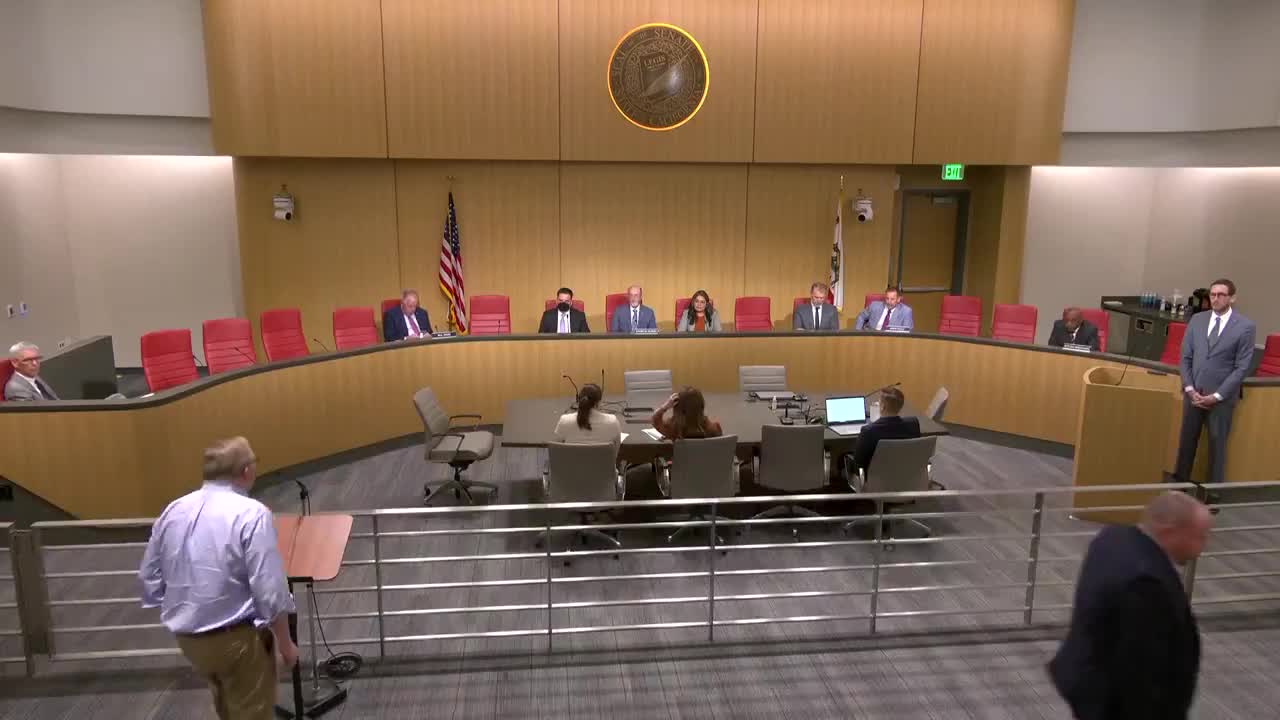 7MIN
Senate Standing Committee on Revenue and Taxation
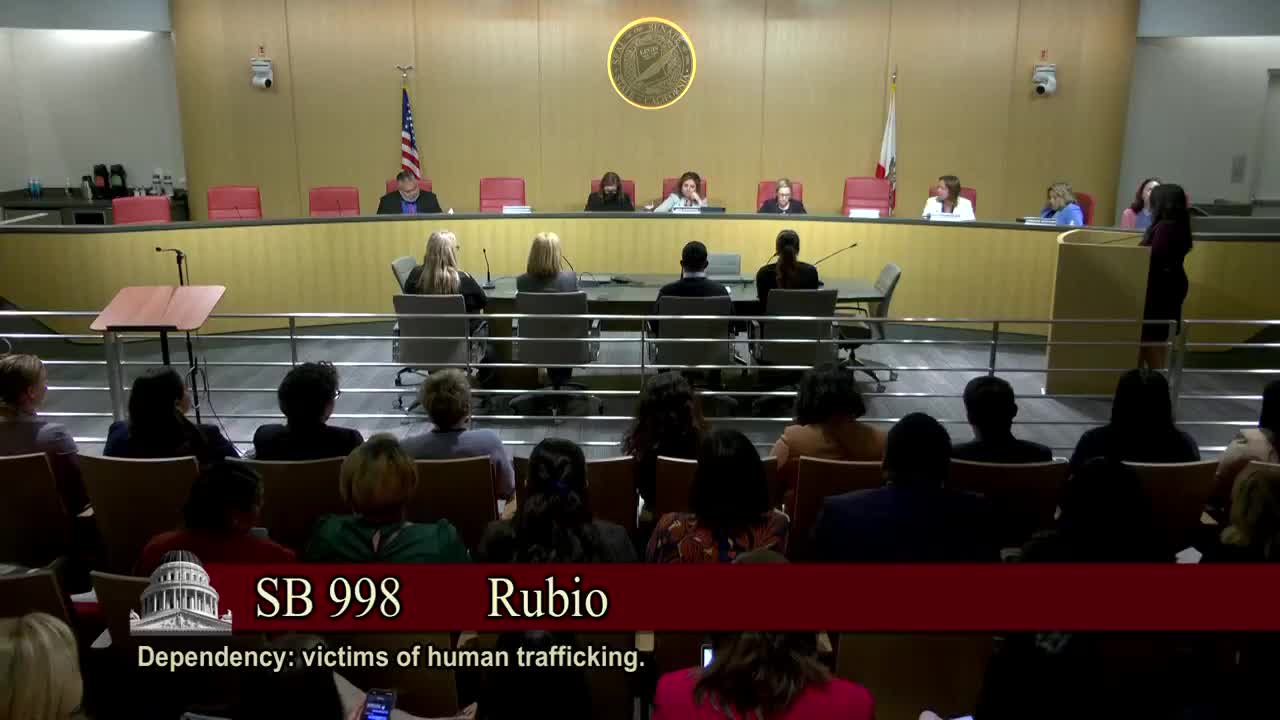 12MIN
Senate Standing Committee on Human Services
Bill Author
Bill Co-Author(s):