SB 1376: Public contracts: Local Agency Public Construction Act: reporting.
- Session Year: 2023-2024
- House: Senate
- Latest Version Date: 2024-04-18
Current Status:
Failed
(2024-05-16: May 16 hearing: Held in committee and under submission.)
Introduced
In Committee
First Chamber
In Committee
Second Chamber
Enacted
What does this bill do?
Creates a temporary pilot requiring up to three local public agencies to submit monthly, machine‑readable reports about their contracts — including contractor names and IDs, contract amounts and dates, bidding method and number of bidders, reasons for noncompetitive awards or selecting a non‑lowest bidder, contract changes, and reported owner race, ethnicity, gender, and LGBT status — to the Office of Planning and Research for publication in a searchable, downloadable online database. OPR must review the database annually with the participating agencies, recommend whether to expand or improve reporting, and the State Auditor may audit the program before it expires on January 1, 2030.
The summary is provided by generative AI which can make mistakes. For original language, please view the details in the table below.
Existing law, the Local Agency Public Construction Act, sets forth the requirements for competitive bidding on various types of contracts awarded by local agencies.
Existing law, the State Contract Act, requires the Department of General Services to make available a report on state contracting activity containing specified information.
This bill would require a participating local public entity, as defined, commencing January 1, 2026, and monthly thereafter, to compile and submit to the Office of Planning and Research prescribed information on the entitys contracting activity similar to the information required for the State Contract Act report. The bill would require the Office of Planning and Research, commencing July 1, 2026, to develop and maintain a public online database and accompanying data dictionary compiling the submitted data on its internet website. Commencing January 1, 2027, and annually thereafter, the bill would require the Office of Planning and Research, in collaboration with the California State Auditor, as specified, Research to review the databases database established pursuant to the bill and, together with the participating local public entities, make recommendations to the Legislature on further transparency and reporting improvements for requiring local public entities to submit similar data. data, as specified. The bill would require the California State Auditor, if approved by the Joint Legislative Audit Committee, to conduct an audit of the program on or before January 1, 2029. The bill would repeal its provisions on January 1, 2030. By imposing additional duties on specified local public entities, the bill would create a state-mandated local program.
The California Constitution requires the state to reimburse local agencies and school districts for certain costs mandated by the state. Statutory provisions establish procedures for making that reimbursement.
This bill would provide that, if the Commission on State Mandates determines that the bill contains costs mandated by the state, reimbursement for those costs shall be made pursuant to the statutory provisions noted above.
Existing law, the Local Agency Public Construction Act, sets forth the requirements for competitive bidding on various types of contracts awarded by local agencies.
Existing law, the State Contract Act, requires the Department of General Services to make available a report on state contracting activity containing specified information.
This bill would require a participating local public entity, as defined, commencing January 1, 2026, and monthly thereafter, to compile and submit to the Office of Planning and Research prescribed information on the entitys contracting activity similar to the information required for the State Contract Act report. The bill would require the Office of Planning and Research, commencing July 1, 2026, to develop and maintain a public online database and accompanying data dictionary compiling the submitted data on its internet website. Commencing January 1, 2027, and annually thereafter, the bill would require the Office of Planning and Research, in collaboration with the California State Auditor, as specified, to review the databases established pursuant to the bill and, together with the participating local public entities, make recommendations to the Legislature on further transparency and reporting improvements for requiring local public entities to submit similar data. The bill would repeal its provisions on January 1, 2030. By imposing additional duties on specified local public entities, the bill would create a state-mandated local program.
The California Constitution requires the state to reimburse local agencies and school districts for certain costs mandated by the state. Statutory provisions establish procedures for making that reimbursement.
This bill would provide that, if the Commission on State Mandates determines that the bill contains costs mandated by the state, reimbursement for those costs shall be made pursuant to the statutory provisions noted above.
Existing law, the Planning and Zoning Law, which is administered by the Director of State Planning and Research, requires a local planning agency to prepare, and a local legislative body to adopt, a long-term general plan that includes prescribed elements. Existing law prescribes the definition of right-of-way for these purposes.This bill would make nonsubstantive changes in the definition of right-of-way, as described above.Existing law, the Planning and Zoning Law, which is administered by the Director of State Planning and Research, requires a local planning agency to prepare, and a local legislative body to adopt, a long-term general plan that includes prescribed elements. Existing law prescribes the definition of right-of-way for these purposes.
This bill would make nonsubstantive changes in the definition of right-of-way, as described above.
(a)Commencing July 1, 2026, the Office of Planning and Research shall develop and maintain a public online database and accompanying data dictionary compiling data submitted by each participating local public entity. The office shall host the database and data dictionary on its internet website.
(1)The database shall be easily accessible, machine readable, and searchable via open data format, and shall be published under an open license. All of the data shall be downloadable in a bulk download format.
(2)The office may adopt regulations, as necessary or appropriate, to carry out the purposes of this article. Chapter 3.5 (commencing with Section 11340) of Part 1 of Division 3 of Title 2 of the Government Code shall not apply to regulations adopted pursuant to this article.
(b)Commencing January 1, 2026, and monthly thereafter, a participating local public entity shall compile and submit to the Office of Planning and Research the following:
(1)A listing of contracts that a participating local public entity has entered into during the previous fiscal year. The listing shall include the following as unique data fields:
(A)All of the following quantitative data:
(i)The name and identification number of each contractor.
(ii)The sourcing method for each contract, the type of bidding entered into, and the number of bidders.
(iii)The amount of the contract price.
(iv)The term of the initial contract, including date of execution and initial term expiration, and any and all renewals, extensions, and the date when the work began and was completed if the contract is underway.
(B)All of the following descriptive information for each contract:
(i)If the low bidder was not accepted, an explanation of why another contractor was selected.
(ii)If the contract was a noncompetitive bid contract, an explanation of why.
(iii)Justification for entering into each consulting services contract.
(iv)The award description, including all of the following:
(I)Quantity and pricing of the good or service.
(II)Description in detail of the good or service, including any unique project identifier number and a description of what the good or service is to be used for.
(III)Plain language descriptions of the good or service.
(2)A separate listing of contracts completed during the previous fiscal year, with the same information specified in paragraph (1).
(3)A separate listing of any contracts underway during the previous fiscal year on which a change was made regarding any of the following:
(A)The completion date of the contract.
(B)Any modifications to the value of the contract.
(C)The purpose of the contract or duties of the contractor. A brief explanation shall be given if the change in purpose is significant.
(4)For all contracts described in paragraphs (1) to (3), inclusive, the following information, to the extent that the information has been reported to the entity:
(A)The levels of participation in the entitys contracts by business enterprises by race, ethnicity, and gender of the owner.
(B)Whether a business awarded a contract is owned by a lesbian, gay, bisexual, or transgender person.
(b)(c)(1)For purposes of this section, participating local public entity means up to three local public entities subject to this part, at least two of which have been designated high risk pursuant to Section 8546.10 of the Government Code, either on a volunteer basis or part selected pursuant to paragraph (2).
(2)If no local public entity has voluntarily submitted information by July 1, 2026, (A)On or before July 1, 2025, the Office of Planning and Research shall designate select three local public entities that have been designated high risk pursuant to Section 8546.10 of the Government Code to participate.
(B)If the Office of Planning and Research has not selected three local public entities to participate by July 1, 2025, the office shall instead select up to three local public entities that are delinquent in filing the report required by Section 53891 of the Government Code. A local public entity selected after July 1, 2025, pursuant to this subparagraph shall have six months from the date of selection to commence reporting pursuant to subdivision (b).
20104.91.Commencing January 1, 2027, and annually thereafter, the Office of Planning and research, in collaboration with the California State Auditor, Research shall review the database established pursuant to this article, and, together with the participating local public entities, as defined in Section 20104.90, make recommendations to the Legislature on further transparency and reporting improvements for requiring all local public entities to submit similar data. and whether the Legislature should consider expanding these reporting requirements to all local public entities.
(a)The Office of Planning and Research shall issue the recommendations to the Legislature, pursuant to Section 9795 of the Government Code, on or before July 1 of each year.
(b)Notwithstanding Section 8544.5 of the Government Code, the California State Auditor shall collaborate pursuant to this section only upon appropriation by the Legislature for its costs.(b)On or before January 1, 2029, if approved by the Joint Legislative Audit Committee, the California State Auditor shall conduct an audit of the program created by this article.
20104.92.This article shall remain in effect only until January 1, 2030, and as of that date is repealed.
SEC. 2.If the Commission on State Mandates determines that this act contains costs mandated by the state, reimbursement to local agencies and school districts for those costs shall be made pursuant to Part 7 (commencing with Section 17500) of Division 4 of Title 2 of the Government Code.
(a)Commencing July 1, 2026, the Office of Planning and Research shall develop and maintain a public online database and accompanying data dictionary compiling data submitted by each participating local public entity. The office shall host the database and data dictionary on its internet website.
(1)The database shall be easily accessible, machine readable, and searchable via open data format, and shall be published under an open license. All of the data shall be downloadable in a bulk download format.
(2)The office may adopt regulations, as necessary or appropriate, to carry out the purposes of this article. Chapter 3.5 (commencing with Section 11340) of Part 1 of Division 3 of Title 2 of the Government Code shall not apply to regulations adopted pursuant to this article.
(b)Commencing January 1, 2026, and monthly thereafter, a participating local public entity shall compile and submit to the Office of Planning and Research the following:
(1)A listing of contracts that a participating local public entity has entered into during the previous fiscal year. The listing shall include the following as unique data fields:
(A)All of the following quantitative data:
(i)The name and identification number of each contractor.
(ii)The sourcing method for each contract, the type of bidding entered into, and the number of bidders.
(iii)The amount of the contract price.
(iv)The term of the initial contract, including date of execution and initial term expiration, and any and all renewals, extensions, and the date when the work began and was completed if the contract is underway.
(B)All of the following descriptive information for each contract:
(i)If the low bidder was not accepted, an explanation of why another contractor was selected.
(ii)If the contract was a noncompetitive bid contract, an explanation of why.
(iii)Justification for entering into each consulting services contract.
(iv)The award description, including all of the following:
(I)Quantity and pricing of the good or service.
(II)Description in detail of the good or service, including any unique project identifier number and a description of what the good or service is to be used for.
(III)Plain language descriptions of the good or service.
(2)A separate listing of contracts completed during the previous fiscal year, with the same information specified in paragraph (1).
(3)A separate listing of any contracts underway during the previous fiscal year on which a change was made regarding any of the following:
(A)The completion date of the contract.
(B)Any modifications to the value of the contract.
(C)The purpose of the contract or duties of the contractor. A brief explanation shall be given if the change in purpose is significant.
(4)For all contracts described in paragraphs (1) to (3), inclusive, the following information, to the extent that the information has been reported to the entity:
(A)The levels of participation in the entitys contracts by business enterprises by race, ethnicity, and gender of the owner.
(B)Whether a business awarded a contract is owned by a lesbian, gay, bisexual, or transgender person.
(b)(1)For purposes of this section, participating local public entity means up to three local public entities subject to this part, at least two of which have been designated high risk pursuant to Section 8546.10 of the Government Code, either on a volunteer basis or selected pursuant to paragraph (2).
(2)If no local public entity has voluntarily submitted information by July 1, 2026, the Office of Planning and Research shall designate three local public entities to participate.
20104.91.Commencing January 1, 2027, and annually thereafter, the Office of Planning and research, in collaboration with the California State Auditor, shall review the database established pursuant to this article, and, together with the participating local public entities, as defined in Section 20104.90, make recommendations to the Legislature on further transparency and reporting improvements for requiring all local public entities to submit similar data.
(a)The Office of Planning and Research shall issue the recommendations to the Legislature, pursuant to Section 9795 of the Government Code, on or before July 1 of each year.
(b)Notwithstanding Section 8544.5 of the Government Code, the California State Auditor shall collaborate pursuant to this section only upon appropriation by the Legislature for its costs.
20104.92.This article shall remain in effect only until January 1, 2030, and as of that date is repealed.
SEC. 2.If the Commission on State Mandates determines that this act contains costs mandated by the state, reimbursement to local agencies and school districts for those costs shall be made pursuant to Part 7 (commencing with Section 17500) of Division 4 of Title 2 of the Government Code.
SECTION 1.Section 65003 of the Government Code is amended to read:65003.Right-of-way means a public or private right-of-way and includes an area required for public use pursuant to a general plan or specific plan.Right-of-way means any a public or private right-of-way and includes any an area required for public use pursuant to any a general plan or specific plan.
|
Date
|
Status
|
|---|---|
| May 16, 2024 | May 16 hearing: Held in committee and under submission. |
| May 10, 2024 | Set for hearing May 16. |
| Apr 29, 2024 | April 29 hearing: Placed on APPR suspense file. |
| Apr 23, 2024 | Set for hearing April 29. |
| Apr 18, 2024 | Read second time and amended. Re-referred to Com. on APPR. |
| Apr 17, 2024 | From committee: Do pass as amended and re-refer to Com. on APPR. (Ayes 5. Noes 2. Page 3664.) (April 17). |
| Apr 5, 2024 | Set for hearing April 17. |
| Apr 3, 2024 | Re-referred to Com. on L. GOV. |
| Mar 18, 2024 | From committee with author's amendments. Read second time and amended. Re-referred to Com. on RLS. |
| Feb 29, 2024 | Referred to Com. on RLS. |
| Feb 20, 2024 | From printer. May be acted upon on or after March 18. |
| Feb 16, 2024 | Introduced. Read first time. To Com. on RLS. for assignment. To print. |
|
Date
|
Description
|
Location
|
Votes
|
|
|---|---|---|---|---|
| Apr 29, 2024 | Placed on suspense file | Senate Standing Committee on Appropriations |
Passed |
|
| Apr 17, 2024 | Do pass as amended, but first amend, and re-refer to the Committee on [Appropriations] | Senate Standing Committee on Local Government |
Passed |
This list shows positions taken on this bill by organizations on the date displayed, which is linked to the original source.
Positions by individuals are not included.
|
Organization
|
Position
|
Date
|
|---|---|---|
| California News Publishers Association | * Support | Apr 17, 2024 |
| Los Angeles County District Attorney'S Office | * Support | Apr 17, 2024 |
| Open Contracting Partnership | ** Support |
SENATE COMMITTEE ON
Senator Anna Caballero, Chair
2023 - 2024 Regular Session
SB 1376 (Gonzalez) - Public contracts: Local Agency Public Construction Act: reporting
Version: | Policy Vote: |
Urgency: | Mandate: |
Hearing Date: | Consultant: |
Bill Summary:
SB 1376 would require the Governor’s Office of Planning and Research (OPR) to develop and maintain a database of information shared by participating local public agencies on their contracting activities, as specified, until January 1, 2030.
Fiscal Impact:
- OPR estimates costs of approximately $1.02 million in the first year, including approximately $300,000 in one-time costs to develop and implement the database, and ongoing costs of approximately $729,000 annually until 2030 for 3.0 PY of staff to maintain the database, coordinate with participating local entities, and make recommendations to the Legislature in an annual report. (General Fund)
- Unknown significant mandated costs for three participating local agencies to develop processes and procedures for collecting and reporting specified information on contracting activities, develop or procure IT systems to collect and report data in an open, machine readable format, and coordinate with OPR. The magnitude of costs is highly dependent upon the types of local agencies chosen to participate, the size and characteristics of participating entities, and the number and types of contracting activities the local agencies engage in. These costs are likely to be reimbursable by the state from the General Fund, subject to a determination by the Commission on State Mandates. (General Fund)
- One-time California State Auditor costs, likely in the range of $400,000 to $600,000 in 2028-29 to conduct an audit of the program established by the bill, subject to approval by the Joint Legislative Audit Committee. (General Fund)
Background:
Existing law, the Local Agency Public Construction Act, prescribes the requirements for competitive bidding on various types of contracts awarded by local agencies. Generally, contracts for public works, as well as for supplies, equipment, and materials, must be awarded to the lowest responsible bidder, but alternative contracting methods sometimes authorize local agencies to award contracts using other selection standards, such as procurement using “best value” criteria.
Existing law, the State Contract Act, requires state entities to report specified information on their contracting activities to the Department of General Services (DGS). DGS compiles this state contracting information into an annual report.
Existing law, as enacted by AB 187 (Lara), Chap. 451/2011, authorizes the State Auditor to establish a high-risk local agency audit program to identify, audit, and issue reports, on local agencies the Auditor identifies as being at a high-risk of waste, fraud, abuse, mismanagement, or that the Auditor has identified as having major challenges with its economy, efficiency, or effectiveness. The Auditor is responsible for state costs associated with the program, must only conduct the program as funds permit, and these audits cannot interfere with mandated audits and audits the Joint Legislative Audit Committee requests. For high-risk local agencies, the Auditor must issue audit reports once every three years with recommendations for improvement. The Auditor has focused exclusively on cities in this program so far, and maintains a high-risk city dashboard, which it annually updates to identify cities that could be facing fiscal challenges.
Proposed Law:
SB 1376 would require OPR to develop and maintain a database of information shared by participating local public agencies on their contracting activities. Specifically, this bill would do the following:
- Require OPR, beginning July 1, 2026, to develop and maintain a public database and accompanying data dictionary compiling data submitted by each participating local public entity. OPR may adopt regulations, as necessary or appropriate, that are not subject to the requirements of the Administrative Procedures Act.
- Define “participating local public entity” as up to three local public entities selected by OPR by July 1, 2025 that have been designated as high risk to participate. If OPR has not selected three entities by that date, it must instead select up to three local public entities that are delinquent in filing specified financial reports.
- Require the database to be easily accessible, machine readable, and searchable via open data format, downloadable in a bulk format, and published under an open license.
- Require a participating local public entity, beginning on January 1, 2026, to compile and submit the following information to OPR on a monthly basis:
- A listing of contracts a participating local public entity has entered into during the previous fiscal year, which must include the following data fields and descriptive information:
- The name and identification number of each contractor;
- The sourcing method for each contract, the type of bidding, and the number of bidders;
- The amount of the contract price;
- The term of the initial contract, including when work began or was completed, and whether the contract can be renewed and extended;
- Whether the low bidder was accepted, and if the low bidder was not accepted, an explanation why the agency selected another contractor;
- Whether the contract was noncompetitively bid, and if it was, why;
- Justification for entering into each consulting services contract; and
- The award description, including the quantity and pricing of the good or service, a detailed description of the good or service, and plain language descriptions.
- A separate listing of contracts completed during the previous fiscal year with the same information listed above;
- A separate listing of contracts underway during the previous fiscal year on which a change was made regarding the completion date, amount of money the contractor will receive if it exceeds 3% of the original contract price, the purpose of the contract or duties of the contractor, and if the change is significant, a brief explanation; and
- If provided to the entity, the identity of the business owner by race, ethnicity, gender, and lesbian, gay, bisexual, or transgender (LGBT) status.
- A listing of contracts a participating local public entity has entered into during the previous fiscal year, which must include the following data fields and descriptive information:
- Require OPR, beginning January 1, 2027 and annually thereafter, to review the database and make recommendations to the Legislature with participating local entities on further transparency and reporting improvements, and whether the Legislature should consider expanding reporting requirements to all local public entities. OPR must issue recommendations to the Legislature by July 1 each year.
- Require the State Auditor to conduct an audit of the program created by the bill by January 1, 2029, if approved by the Joint Legislative Audit Committee.
- Repeal the bill on January 1, 2030.
Staff Comments:
This bill imposes a state-mandated local program by requiring three participating local public entities selected by OPR to collect and report specified information on contracting activities to OPR for inclusion in the database. Depending on the size and characteristics of the local public entity chosen by OPR, this could involve reporting detailed information on thousands of contracts for each entity. As an illustrative example, San Francisco receives a variety of goods and services through contracts, and as of January of 2023, San Francisco had over 10,900 active contracts with more than 4,000 nonprofit organizations and for-profit companies. On average San Francisco spends approximately $5.2 billion on contracts each year, and the contracts range from public works construction projects, to housing and services contracts, to software procurement contracts, down to a $150 contract for delivering a newspaper to the Mayor’s office. Reporting information on each of these contracts, as specified in this bill, would be an expensive and onerous exercise. If OPR selected a smaller, rural, and economically challenged local agency with limited resources to participate in the program, the burdens of reporting specified information on contracting activities could be particularly acute. Staff notes that local costs to comply with the reporting requirements are likely to be reimbursable from the state General Fund, subject to a determination by the Commission on State Mandates, if a participating local agency files a claim for reimbursement.
-- END --
SENATE COMMITTEE ON LOCAL GOVERNMENT
Senator María Elena Durazo, Chair
2023 - 2024 Regular
Bill No: | SB 1376 | Hearing Date: | 4/17/24 |
Author: | Gonzalez | Fiscal: | Yes |
Version: | 3/18/24 | Consultant: | Peterson |
Public contracts: Local Agency Public Construction Act: reporting
Requires the Office of Planning and Research (OPR), starting on July 1, 2026, to develop and maintain a database with contracting data that participating local public entities will submit.
Background
The Local Agency Public Construction Act generally requires local agencies to invite bids for construction projects and award contracts to the lowest responsible bidder. Local agencies typically use the traditional design-bid-build method for constructing public works. This approach splits construction projects into two distinct phases: design and construction. During the design phase, the local agency prepares detailed project plans and specifications using its own employees or by hiring outside architects and engineers. Once project designs are complete, local agencies invite bids from the construction community and awards the contract to the lowest responsible bidder. Over the last couple of decades, legislators have gradually expanded local agencies’ authority to complete construction projects using various alternatives to the design-bid-build project delivery method.
The State Contract Act requires the Department of General Services (DGS) to report information on contracts that the state enters into, including:
- A listing of contracts the state has entered into during the previous fiscal year;
- Contracts completed during the current fiscal year;
- A list of any contracts underway during that fiscal year during which a change was made; and
- The level of participation, by agency, of disabled veteran business enterprises, small businesses, and businesses owned by different races, ethnicities, genders, or sexual orientation.
Unlike state agencies, local agencies are not required to maintain a similar database of their contracts. However, they must publish certain contract information in newspapers. For county public work contracts, the board of supervisors must publish bid advertisements in newspapers of general circulation. If no such newspaper exists, the county must post the notice in three public places for at least two weeks. Counties with 500,000 or fewer residents must also publish notices inviting informal bids in the same manner, but at least 24 hours before the scheduled time to open the bids. Cities with more than one newspaper must also publish a notice inviting bids, and contract for the publication of legal notices. Some alternative procurement methods also have their own reporting requirements. For example, if a county uses certain alternate procurement methods, they must report information to the Legislature (SB 991, Newman, 2022).
State Auditor high-risk local government audit program. In response to criminal convictions stemming from the misappropriation of public funds in the City of Bell in Los Angeles County, AB 187 (Lara, 2011) granted the State Auditor the authority to establish a high-risk local agency audit program to identify, audit, and issue reports, on local agencies the Auditor identifies as being at a high-risk ofwaste, fraud, abuse, mismanagement, or that the Auditor has identified as having major challenges with its economy, efficiency, or effectiveness. The Auditor is responsible for state costs associated with the program, must only conduct the program as funds permit, and these audits cannot interfere with mandated audits and audits the Joint Legislative Audit Committee requests. For high-risk local agencies, the Auditor must issue audit reports once every three years with recommendations for improvement. The Auditor has focused exclusively on cities in this program so far, and maintains a high-risk city dashboard, which it annually updates to identify cities that could be facing fiscal challenges.
For example, the Auditor first issued a report on the City of Maywood in Los Angeles County in 2016, where it identified a multitude of concerns regarding the city’s financial practices, including:
- Inadequate oversight of city operations;
- Lack of transparency;
- Ongoing deficits;
- Deficient budgeting process;
- Failure to maximize revenue;
- Poor contract administration; and
- Inadequate accounting controls.
After a 2019 update to its initial audit revealed some progress toward implementing a corrective action plan, the Auditor removed its high-risk designation for the City of Maywood in December 2022. The 2022 report highlighted Maywood’s progress implementing its corrective action plan, including:
- Improving its process for hiring and overseeing key management positions;
- Establishing a comprehensive hiring policy;
- Evaluating the performance of its city manager;
- Ceasing incurring ongoing deficits;
- Improving budget policies; and
- Establishing key internal financial controls.
While Maywood has taken steps to respond to the Auditor’s reports, other cities have not. For example, despite undergoing a similar audit process, the Auditor continues to designate Richmond, a city in Alameda County, as high-risk due to various factors, such as high pension costs and an ongoing deficit forecast. A handful of cities remain high-risk.
To increase transparency and accountability over local contracting, the author wants to create a local agency contracting database.
Proposed Law
Senate Bill 1376 requires the Office of Planning and Research (OPR), starting on July 1, 2026, to develop and maintain a public online contract database and accompanying data dictionary compiling data that participating local public entities submit. The database must be easily accessible, machine readable, searchable via open data format, and published under an open license. All data must be downloadable in a bulk download format.
The bill defines “participating local public entities” to mean up to three local public entities, at least two of which must have a high-risk designation from the State Auditor. If no public entities volunteer information by July 1, 2026, OPR must designate the agencies that will participate.
OPR can adopt regulations to carry out SB 1376’s requirements, and those regulations are not subject to the Administrative Procedures Act (APA).
Starting on January 1, 2026, and monthly thereafter, a participating local public entity must compile and submit the following information to OPR:
- A listing of contracts a participating local public entity has entered into during the previous fiscal year, which must include the following data fields and descriptive information:
- The name and identification number of each contractor;
- The sourcing method for each contract, the type of bidding, and the number of bidders;
- The amount of the contract price;
- The term of the initial contract, including when work began or was completed, and whether the contract can be renewed and extended;
- Whether the low bidder was accepted, and if the low bidder was not accepted, an explanation why the agency selected another contractor;
- Whether the contract was noncompetitively bid, and if it was, why;
- Justification for entering into each consulting services contract; and
- The award description, including the quantity and pricing of the good or service, a detailed description of the good or service, and plain language descriptions.
- A separate listing of contracts completed during the previous fiscal year with the same information listed above;
- A separate listing of contracts underway during the previous fiscal year on which a change was made regarding the completion date, amount of money the contractor will receive if it exceeds 3% of the original contract price, the purpose of the contract or duties of the contractor, and if the change is significant, a brief explanation; and
- If provided to the entity, the identity of the business owner by race, ethnicity, gender, and lesbian, gay, bisexual, or transgender (LGBT) status.
Starting January 1, 2027, and annually thereafter, OPR must collaborate with the State Auditor to review the database, and, together with the participating local public entities, make recommendations to the Legislature on further transparency and reporting improvements for requiring all local public entities to submit similar data. The measure provides that the State Auditor need only collaborate if the Legislature appropriates funds for its costs.
The measure sunsets its provisions on January 1, 2030.
Comments
1. Purpose of the bill. According to the author, “Senate Bill 1376 will establish a pilot program to implement much needed transparency and accountability requirements for local agencies and governments in their public contracting and procurement processes. In California, local officials have significant authority over contracting and procurement practices on behalf of the people they serve. This has left room for numerous instances of collusion where local officials push through no-bid contracts, often for personal gain. Other local officials have accepted lavish bribes, gifts, and kickbacks in exchange for supporting bids by certain contractors.
“SB 1376 tasks the Governor’s Office of Planning and Research with creating and maintaining a public database of information on local agency contracts. Following best practices, this data would comply with open contracting principles, including being publicly accessible, in an open format, and machine-readable. By making this information available, the public will gain insight into who is awarded contracts and how often competitive bidding is not followed. Sunlight is the best disinfectant, and by creating additional transparency and accountability mechanisms for local governments, the public will get visibility into procurement and contracting activity that elected officials engage in on behalf of the people.”
2. Sure, but will it work? SB 1376 seeks to make local agency contracting more transparent and reduce fraud by having local agencies submit contracting information to OPR to publish in a publicly accessible, machine-readable database. Rather than require all local agencies to provide OPR with this information, SB 1376 requires up to three local agencies, two of which the Auditor must have designated as high risk, to provide information to OPR. If no one volunteers within six months, OPR can designate entities to participate. There is no incentive for local agencies to volunteer, and it is unclear why local officials would disclose this information if they were aware of fraudulent activities. Additionally, local agencies taking liberties with their contracts could convince other local agencies to disclose their own contract information to reduce the risk the offending agency would be selected to provide its contract information. The measure does not provide more time for local agencies that OPR designates if there are no volunteers, leaving them without sufficient time to comply with the bill’s timelines. Rather than wait for volunteers, the Committee may wish to consider amending the bill to require OPR to select the three local agencies from those the Auditor has designated high-risk, or are delinquent in filing their annual financial transaction reports, and clarify their timelines for complying with the bill’s requirements.
3. Let’s be clear. SB 1376 requires the State Auditor to collaborate with OPR on recommendations to the Legislature regarding the effectiveness of the program. However, the bill does not define what it means to “collaborate,” nor does it specify what happens if OPR and the Auditor disagree on recommendations. Additionally, collaborating with OPR on recommendations may complicate the State Auditor’s independent oversight role over the department and this program. The Committee may wish to consider amending the bill to instead require the State Auditor to audit the effectiveness of the database before it sunsets in 2030.
4. Following the rules. SB 1376 provides that OPR need not comply with the Administrative Procedures Act (APA) when it develops guidelines for this program, which should allow it get the program up and running more quickly. While the APA can make developing guidelines for such a program cumbersome, it does set public comment periods and ensure Office of Administrative Law review. This allows interested parties to weigh in on the rules state agencies create. Without going through the full APA process, the public does not have as much opportunity to weigh in on the program. However, in this case OPR is under a short timeline to develop a contracting database, which is very different from a state agency creating rules around what requirements apply to regulated parties. Should OPR receive an APA exemption to develop this program?
5. Mandate. The California Constitution requires the state to reimburse local governments for the costs of new or expanded state mandated local programs. Because SB 1376 adds to the duties of local officials, Legislative Counsel says that the bill imposes a new state mandate. The measure states that if the Commission on State Mandates determines that the bill imposes a reimbursable mandate, then reimbursement must be made pursuant to existing statutory provisions.
Support and Opposition
(4/12/24)
Support: Open Contracting Partnership
Opposition: None submitted.
-- END --
Discussed in Hearing
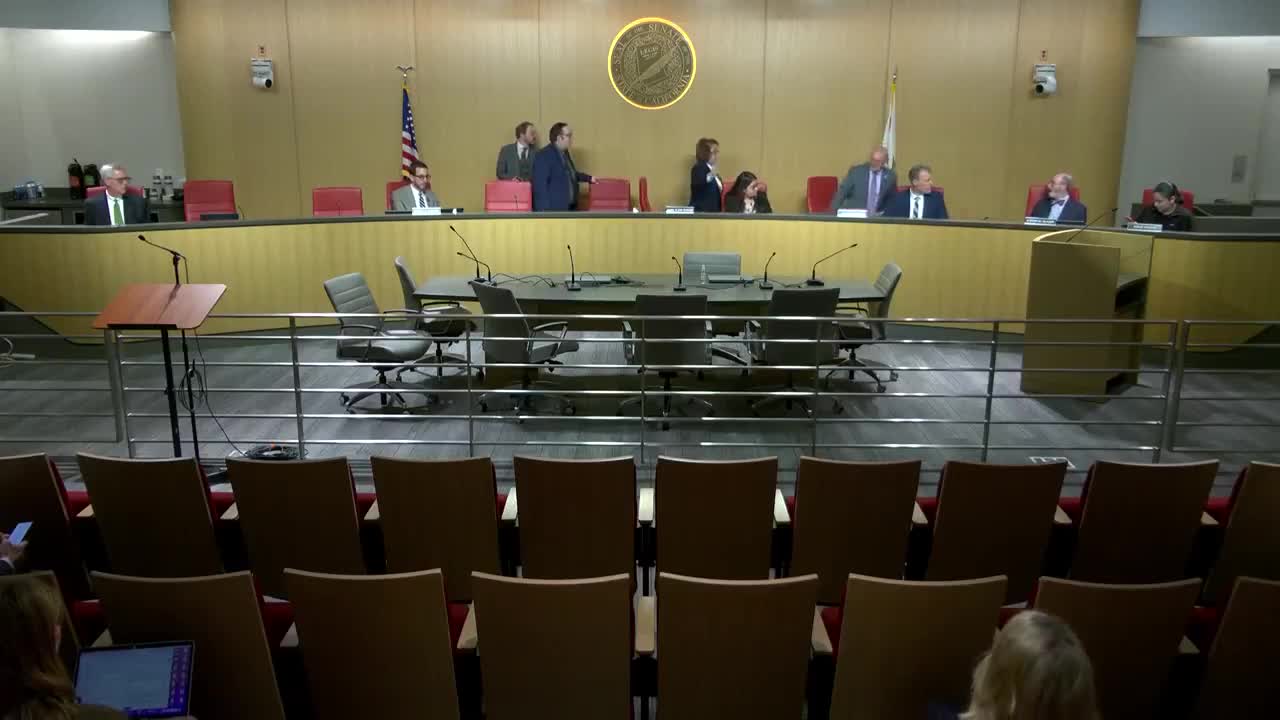 6MIN
Senate Standing Committee on Local Government
Bill Author

Bill Co-Author(s):