SB 513: Incarcerated persons: mental health.
- Session Year: 2023-2024
- House: Senate
- Latest Version Date: 2023-02-14
Current Status:
Failed
(2024-02-01: Returned to Secretary of Senate pursuant to Joint Rule 56.)
Introduced
In Committee
First Chamber
In Committee
Second Chamber
Enacted
What does this bill do?
The bill requires the Department of Corrections and Rehabilitation to provide regular, consistent mental health therapy to people in California state prisons who ask for it. The department must expand in-person and virtual therapy options and may contract with outside mental health providers. It must give a first therapy appointment within two weeks of a request, make services available regardless of security level or sentence length, and provide private space for sessions when possible.
The summary is provided by generative AI which can make mistakes. For original language, please view the details in the table below.
Existing law provides that the supervision, management, and control of the state prisons, and the responsibility for the care, custody, treatment, training, discipline, and employment of persons confined therein are vested in the Secretary of the Department of Corrections and Rehabilitation. Existing law requires the secretary to provide facilities and licensed professional personnel for a psychiatric and diagnostic clinic and any such branches thereof as may be required at one or more of the state prisons or institutions under the jurisdiction of the department.
This bill would require the department to conduct mental health treatment for state prison inmates in a manner to accomplish various goals, including providing, to the greatest extent possible, regular and consistent mental health therapy to inmates who seek it, and ensuring that an inmate is provided an introductory mental health therapy appointment within 2 weeks of the inmate requesting care. The bill would also make Legislative findings and declarations.
The Legislature finds and declares all of the following:
(a)Rehabilitation is an essential function of the Department of Corrections and Rehabilitation.
(b)The primary function of the departments statewide mental health program is to ensure state prison inmates have ready access to mental health services based on their need.
(c)Mental health therapy contributes to personal growth, reflection, and preparation for safe and successful reentry post incarceration and helps foster a safer environment for staff and state prison inmates.
(d)To that end, access to consistent mental health therapy should be available to all persons incarcerated in state prison, whatever their security level or length of sentence, without having to be publicly classified as having a serious mental disorder.
(e)The development of telehealth using tablets and other technologies will provide for a greater variety of options for incarcerated persons to meet with therapists.
(f)Mental health therapy refers to 50-minute psychotherapy sessions offered at a minimum of two times per month provided by a psychiatrist, psychologist, licensed social worker, or licensed therapist.
SEC. 2.Section 5068.1 is added to the Penal Code, to read:5068.1.In order to foster the growth, mental and emotional wellness, and rehabilitation of state prison inmates, the Department of Corrections and Rehabilitation shall conduct mental health treatment in a manner that accomplishes all of the following goals:
(a)Provides, to the greatest extent possible, regular and consistent mental health therapy to an inmate who seeks it by, among other things, increasing virtual or in-person therapy opportunities and contracting with mental health providers outside of the department.
(b)Offers mental health therapy to the greatest extent possible, even if the institution, facility, or section of the state prison is restricting in-person therapy for reasons, including, but not limited to, a security or medical concern.
(c)Ensures that an inmate is provided an introductory mental health therapy appointment within two weeks of requesting care.
(d)Is accessible to all inmates regardless of security level, sentence length, or mental health classification.
(e)Provides, to the greatest extent possible, a private space for an inmate to receive mental health therapy.
|
Date
|
Status
|
|---|---|
| Feb 1, 2024 | Returned to Secretary of Senate pursuant to Joint Rule 56. |
| May 18, 2023 | May 18 hearing: Held in committee and under submission. |
| May 12, 2023 | Set for hearing May 18. |
| Apr 10, 2023 | April 10 hearing: Placed on APPR suspense file. |
| Apr 3, 2023 | Set for hearing April 10. |
| Mar 29, 2023 | From committee: Do pass and re-refer to Com. on APPR. (Ayes 5. Noes 0. Page 579.) (March 28). Re-referred to Com. on APPR. |
| Mar 6, 2023 | Set for hearing March 28. |
| Feb 22, 2023 | Referred to Com. on PUB S. |
| Feb 15, 2023 | From printer. May be acted upon on or after March 17. |
| Feb 14, 2023 | Introduced. Read first time. To Com. on RLS. for assignment. To print. |
|
Date
|
Description
|
Location
|
Votes
|
|
|---|---|---|---|---|
| Apr 10, 2023 | Placed on suspense file | Senate Standing Committee on Appropriations |
Passed |
|
| Mar 28, 2023 | Do pass, but first be re-referred to the Committee on [Appropriations] | Senate Standing Committee on Public Safety |
Passed |
This list shows positions taken on this bill by organizations on the date displayed, which is linked to the original source.
Positions by individuals are not included.
|
Organization
|
Position
|
Date
|
|---|---|---|
| Anti-Recidivism Coaition | * Support | Mar 28, 2023 |
| California Public Defenders Association | * Support | Mar 28, 2023 |
| Californians for Safety and Justice | * Support | Mar 28, 2023 |
| Ella Baker Center For Human Rights | * Support | Mar 28, 2023 |
| Grip Training Institute | * Support | Mar 28, 2023 |
| Initiate Justice | * Support | Mar 28, 2023 |
| Legal Services for Prisoners with Children | * Support | Mar 28, 2023 |
| Mental Health America of California | * Support | Mar 28, 2023 |
| National Association of Social Workers | * Support | Mar 28, 2023 |
| Prosecutors Alliance of California | ** Support | Mar 28, 2023 |
| San Francisco Public Defenders Association | * Support | Mar 28, 2023 |
| Smart Justice California | ** Support | Mar 28, 2023 |
| Transformative In-Prison Workgroup | * Support | Mar 28, 2023 |
SENATE COMMITTEE ON
Senator Anthony Portantino, Chair
2023 - 2024 Regular Session
SB 513 (Wiener) - Incarcerated persons: mental health
Version: | Policy Vote: |
Urgency: | Mandate: |
Hearing Date: | Consultant: |
Bill Summary:
SB 513 would require the Department of Corrections and Rehabilitation (CDCR) to conduct regular and consistent mental health therapy for inmates who seek it, and ensure that an inmate is provided an introductory mental health therapy appointment within 2 weeks of the inmate requesting care.
Fiscal Impact:
CDCR reports unknown but significant costs in the low hundreds of millions of dollars (General Fund).
Background:
In 1990, Coleman v. Wilson was filed in federal court challenging the inadequate mental health care provided in the state’s prisons and alleging that the civil rights of incarcerated persons were being violation. The federal court found that CDCR was violating the Eighth Amendment by failing to provide constitutionally adequate mental health care to incarcerated individuals with serious mental disorders. The Eighth Amendment violations stemmed in large part from the department’s failure to identify with any accuracy the number of mentally ill individuals in the prison population. A special master was appointed to oversee remedial efforts which have continued for nearly three decades. During the early remedial phase, the department developed a screening mechanism to identify mentally ill individuals and plans for a mental health system to deliver mental health care to thousands of incarcerated individuals who had serious mental disorders. CDCR’s Statewide Mental Health Program (SMHP) continues to operate under a court order arising out of Coleman.
The primary function of the SMHP is to ensure that patients have access to mental health services based on their need. CDCR describes its vision for the program as follows:
- Our services meet or exceed national mental health care standards. We ensure optimal functioning of individuals in our care and promote their successful reintegration into society by using research, evaluation, and assessment to develop and enhance evidence-based treatment strategies. We foster safe and secure environments within the institution and are committed to public safety.
- We are a competent, well-trained staff, who uphold and live our organizational values to promote interdisciplinary cooperation, employee wellness, effective leadership, humane treatment, and a highly productive workforce.
- Self-governance, program and service evaluation, assessments, and continuous self-monitoring are used to ensure quality improvement and system-wide, multilevel information sharing and decision making. Our information technology system is state-of- the-art and staffing and space meet evolving operational requirements.
- We are accredited as an autonomously operating division, cooperating and partnering with external stakeholders to sustain sufficient funding to fulfill our mission and to minimize recidivism by providing continuity of care.
CDCR’s Mental Health Services Delivery System (MHSDS) is organized by levels of care. The lowest level of care is the Correctional Clinical Case Management (CCCMS) through which patients are assigned a primary clinician, offered individual therapy at least once every 90 days, undergo psychiatry follow-up every 90 days for medication monitoring, and receive updated treatment planning annually. The next level of care is the Enhanced Outpatient Program (EOP) which is the highest level of outpatient mental health care within MHSDS. The EOP is appropriate for patients whose symptoms impact their ability to function in the general population. Patients are provided with substantially more treatment interventions than CCCMS patients, and the focus is to provide short- to intermediate-term clinical care. The next level of care is the Mental Health Crisis Bed (MHCB) which is an acute level of care that provides short-term treatment for severe episodes of psychiatric distress or mental disorder. More specifically, the MHCB provides care for patients who are a danger to themselves or others, have a serious impairment in taking care of their daily needs, and are in acute psychiatric distress. Finally, the highest level of care is offered through licensed Psychiatric Inpatient Programs (PIPs) which are located within specific prisons throughout the state. PIPs are designed to provide more intensive treatment for patients who cannot function adequately or stabilize in an outpatient program or shorter term inpatient program. In some cases, placement at one of the facilities operated by the Department of State Hospitals may be appropriate.
Notably, CDCR’s mental health system is designed to provide treatment to individuals with serious mental health disorders. Department training materials indicate that the core mental disorders treated by the MHSDS are severe mood disorders such as bipolar disorder and major depressive disorder, psychotic disorders such as schizophrenia, and exhibitionistic disorder. Other disorders treated by the department, such as anxiety, substance use, personality, and trauma-related disorders, are based on medical necessity, when intervention is necessary to protect life or treat significant disability or dysfunction in patients. (Id.)
This bill requires CDCR to conduct mental health treatment in a manner that: provides, to the greatest extent possible, regular and consistent mental health therapy to an incarcerated person who seeks it by increasing virtual or in-person therapy opportunities; offers mental health therapy to the greatest extent possible, even if the institution is restricting in-person therapy for security or medical-related concerns; ensures that an incarcerated person is provided an introductory mental health therapy appointment within two weeks of requesting care; is accessible to all incarcerated individuals regardless of security level, sentence length, or mental health classification; and provides, to the greatest extent possible, a private space for an incarcerated person to receive mental health therapy.
Proposed Law:
Requires CDCR to conduct mental health treatment in a manner that accomplishes all of the following goals:
- Provides, to the greatest extent possible, regular and consistent mental health therapy to an inmate who seeks it by, among other things, increasing virtual or in-person therapy opportunities and contracting with mental health providers outside of the department.
- Offers mental health therapy to the greatest extent possible, even if the institution, facility, or section of the state prison is restricting in-person therapy for reasons, including, but not limited to, a security or medical concern.
- Ensures that an inmate is provided an introductory mental health therapy appointment within two weeks of requesting care.
- Is accessible to all inmates regardless of security level, sentence length, or mental health classification.
- Provides, to the greatest extent possible, a private space for an inmate to receive mental health therapy.
Staff Comments:
According to the most recent CDCR population report (April 5, 2023) there are over 92,000 persons in state prison at the 34 adult institutions. SB 513 would require CDCR to provide each incarcerated person who seeks mental health therapy with an introductory 50-minute psychotherapy session within two weeks of the request, and two 50-minute psychotherapy sessions per month thereafter. Assuming that 25% of the people in state prison sought therapy under SB 513, CDCR would be responsible for approximately 40,000 hours of total time with a clinical psychologist per month (480,000 annually). The hourly rate for a licensed clinical psychologist in a correctional setting is $67.22. That results in an annual cost of over $30 million. Actual costs may be higher in order for CDCR to hire numerous permanent clinical psychologists, provide salary and benefits, and potentially arrange for travel between institutions. SB 513 requires, to the greatest extent possible, that CDCR provide a private space for mental health therapy to occur. Additional major costs are likely to be incurred in order to construct private spaces within prisons in order to conduct mental health therapy.
-- END --
SENATE COMMITTEE ON PUBLIC SAFETY
Senator Aisha Wahab, Chair
2023 - 2024 Regular
Bill No: SB 513 Hearing Date: March 28, 2023
Author: | Wiener | ||
Version: | February 14, 2023 | ||
Urgency: | No | Fiscal: | Yes |
Consultant: | SJ | ||
Subject: Incarcerated persons: mental health
HISTORY
Source: Anti-Recidivism Coalition
Mental Health America of California
Prior Legislation: None
Support: CA Youth Empowerment Network; California Association of Mental Health Peer Run Organizations; California Nurses Association; Californians for Safety and Justice; Communities United for Restorative Youth Justice; Disability Rights California; Initiate Justice; Initiate Justice Action; Mental Health America of California; Prosecutors Alliance California; Smart Justice California
Opposition: None known
PURPOSE
The purpose of this bill is to require the California Department of Corrections and Rehabilitation (CDCR) to conduct mental health treatment for state prison inmates in a manner to accomplish various goals, including providing, to the greatest extent possible, regular and consistent mental health therapy to inmates who seek it, and ensuring that an inmate is provided an introductory mental health therapy appointment within 2 weeks of the inmate requesting care.
Existing law establishes CDCR to administer the state prison system under the direction of the Secretary. (Pen. Code, § 5000 et seq.)
Existing law vests the Secretary of the CDCR with the supervision, management and control of state prisons. Provides that the Secretary is also responsible for the care, custody, treatment, training, discipline and employment of a person confined in those prisons. (Pen. Code, § 5054.)
Existing law provides that the Secretary may prescribe and amend the rules and regulations for the administration of the prisons. (Pen. Code, § 5058.)
Existing law defines “medically necessary” as health care services that are determined by the attending or primary medical, mental health, or dental care provider to be needed to protect life, prevent significant illness or disability, or alleviate severe pain, and are supported by health outcome data or clinical evidence as being an effective health care service for the purpose intended or in the absence of available health outcome data is judged to be necessary and is supported by diagnostic information or specialty consultation. (Cal. Code Regs., tit. 15, § 3999.98.)
Existing law defines “mental health evaluation” as a psychological evaluation performed by a mental health clinician that includes a brief narrative of the presenting problem, historical information of relevance, a mental status examination and assessment of level of functioning, determination of need for mental health treatment and recommended level of care, and a referral to a psychiatrist if there is a possible need for psychotropic medication or other psychiatric intervention. (Cal. Code Regs., tit. 15, § 3999.98.)
Existing law states that CDCR only provide patients with the health care services that are medically necessary and provides that such services may be subject to approval or disapproval by the licensed medical, mental health, or dental care supervisors. (Cal. Code Regs., tit. 15, § 3999.200.)
Existing law provides that CDCR will provide a broad range of mental health services to patients by assessing the needs of its population and developing specialized programs of mental health care, to the extent resources are available for this purpose. Provides that necessary and appropriate mental health services will be provided to patients, and adequate staff and facilities will be maintained for the delivery of such services. (Cal. Code Regs., tit. 15, § 3999.330, subd. (a).)
Existing law provides that when a patient is found to require mental health care not available within these resources, but which is available in the Department of State Hospitals, the case will be referred to the Secretary for consideration of temporary transfer to that department pursuant to Penal Code section 2684. (Cal. Code Regs., tit. 15, § 3999.330, subd. (b).)
Existing law requires all required mental health treatment or diagnostic services to be provided under the supervision of a psychiatrist licensed to practice in this state, or a psychologist licensed to practice in this state and who holds a doctoral degree and has at least two years of experience in the diagnosis and treatment of emotional and mental disorders. (Cal. Code Regs., tit. 15, § 3999.330, subd. (d).)
Existing law provides that records of mental health diagnosis, evaluation, and treatment prepared or maintained by CDCR remain the property of the department and are subject to all applicable laws governing their confidentiality and disclosure. Provides that treatment will be in accord with sound principles of practice and will not serve a punitive purpose. (Cal. Code Regs., tit. 15, § 3999.330, subd. (e).)
Existing law requires all persons committed to CDCR to be informed that mental health services are available to them. Requires they are informed that, upon their request, an evaluative interview will be provided within a reasonable period of time by a licensed practitioner, or a specially trained counselor supervised by a licensed practitioner. Provides that, upon request, they will be provided with information as to what specialized treatment programs may be available in the department and how such treatment may be obtained. (Cal. Code Regs., tit. 15, § 3999.330, subd. (f).)
This bill requires CDCR to conduct mental health treatment in a manner that accomplishes all of the following goals:
- Provides, to the greatest extent possible, regular and consistent mental health therapy to an inmate who seeks it by, among other things, increasing virtual or in-person therapy opportunities and contracting with mental health providers outside of the department.
- Offers mental health therapy to the greatest extent possible, even if the institution, facility, or section of the state prison is restricting in-person therapy for reasons, including, but not limited to, a security or medical concern.
- Ensures that an inmate is provided an introductory mental health therapy appointment within two weeks of requesting care.
- Is accessible to all inmates regardless of security level, sentence length, or mental health classification.
- Provides, to the greatest extent possible, a private space for an inmate to receive mental health therapy.
This bill contains uncodified legislative findings and declarations.
COMMENTS
- Need For This Bill
According to the author:
Senate Bill 513 provides access to mental health therapy for incarcerated Californians, regardless of security level, sentence length, or mental health classification. Currently, if an incarcerated person in California is not classified to one of four tiers according to CDCR’s Mental Health Services Delivery System, they do not have access to mental healthcare at all. If they are classified, they may access mental health therapy in prisons, but sessions are often too short and inconsistent to provide effective relief. SB 513 accomplishes the two-fold goal of improving the existing mental health therapy system in prisons, and expanding access to these services for all incarcerated people. By treating underlying conditions and encouraging reflection and personal growth, SB 513 will also improve California’s recidivism rate.
- Mental Health Care in Prisons
In 1990, Coleman v. Wilson was filed in federal court challenging the inadequate mental health care provided in the state’s prisons and alleging that the civil rights of incarcerated persons were being violation. The federal court found that CDCR was violating the Eighth Amendment by failing to provide constitutionally adequate mental health care to incarcerated individuals with serious mental disorders. The Eighth Amendment violations stemmed in large part from the department’s failure to identify with any accuracy the number of mentally ill individuals in the prison population. A special master was appointed to oversee remedial efforts which have continued for nearly three decades. During the early remedial phase, the department developed a screening mechanism to identify mentally ill individuals and plans for a mental health system to deliver mental health care to thousands of incarcerated individuals who had serious mental disorders. CDCR’s Statewide Mental Health Program (SMHP) continues to operate under a court order arising out of Coleman.
According to CDCR, the primary function of the SMHP is to ensure that patients have access to mental health services based on their need. The department describes its vision for the program as follows:
- Our services meet or exceed national mental health care standards. We ensure optimal functioning of individuals in our care and promote their successful reintegration into society by using research, evaluation, and assessment to develop and enhance evidence-based treatment strategies. We foster safe and secure environments within the institution and are committed to public safety.
- We are a competent, well-trained staff, who uphold and live our organizational values to promote interdisciplinary cooperation, employee wellness, effective leadership, humane treatment, and a highly productive workforce.
- Self-governance, program and service evaluation, assessments, and continuous self-monitoring are used to ensure quality improvement and system-wide, multilevel information sharing and decision making. Our information technology system is state-of- the-art and staffing and space meet evolving operational requirements.
- We are accredited as an autonomously operating division, cooperating and partnering with external stakeholders to sustain sufficient funding to fulfill our mission and to minimize recidivism by providing continuity of care.
(https://www.cdcr.ca.gov/dhcs/mental-health-program/)
CDCR’s Mental Health Services Delivery System (MHSDS) is organized by levels of care. The lowest level of care is the Correctional Clinical Case Management (CCCMS) through which patients are assigned a primary clinician, offered individual therapy at least once every 90 days, undergo psychiatry follow-up every 90 days for medication monitoring, and receive updated treatment planning annually. The next level of care is the Enhanced Outpatient Program (EOP) which is the highest level of outpatient mental health care within MHSDS. The EOP is appropriate for patients whose symptoms impact their ability to function in the general population. Patients are provided with substantially more treatment interventions than CCCMS patients, and the focus is to provide short- to intermediate-term clinical care. The next level of care is the Mental Health Crisis Bed (MHCB) which is an acute level of care that provides short-term treatment for severe episodes of psychiatric distress or mental disorder. More specifically, the MHCB provides care for patients who are a danger to themselves or others, have a serious impairment in taking care of their daily needs, and are in acute psychiatric distress. Finally, the highest level of care is offered through licensed Psychiatric Inpatient Programs (PIPs) which are located within specific prisons throughout the state. PIPs are designed to provide more intensive treatment for patients who cannot function adequately or stabilize in an outpatient program or shorter term inpatient program. In some cases, placement at one of the facilities operated by the Department of State Hospitals may be appropriate.
Notably, CDCR’s mental health system is designed to provide treatment to individuals with serious mental health disorders. Department training materials indicate that the core mental disorders treated by the MHSDS are severe mood disorders such as bipolar disorder and major depressive disorder, psychotic disorders such as schizophrenia, and exhibitionistic disorder. (https://www.cdcr.ca.gov/bph/wp-content/uploads/sites/161/2020/10/Mental-Health-Delivery-System-rem.pdf) Other disorders treated by the department, such as anxiety, substance use, personality, and trauma-related disorders, are based on medical necessity, when intervention is necessary to protect life or treat significant disability or dysfunction in patients. (Id.)
This bill requires CDCR to conduct mental health treatment in a manner that: provides, to the greatest extent possible, regular and consistent mental health therapy to an incarcerated person who seeks it by increasing virtual or in-person therapy opportunities; offers mental health therapy to the greatest extent possible, even if the institution is restricting in-person therapy for security or medical-related concerns; ensures that an incarcerated person is provided an introductory mental health therapy appointment within two weeks of requesting care; is accessible to all incarcerated individuals regardless of security level, sentence length, or mental health classification; and provides, to the greatest extent possible, a private space for an incarcerated person to receive mental health therapy.
- Argument in Support
Californians for Safety and Justice writes:
This measure will provide access to mental health therapy for incarcerated Californians, regardless of security level, sentence length, or mental health classification. Access to therapy will help to rehabilitate incarcerated people and improve California’s recidivism rate.
There are approximately 97,000 people incarcerated in California’s prisons. The California Department of Corrections and Rehabilitation (CDCR) currently provides therapy to only the most severe cases of mental illness – those assigned to one of four classifications:
- Core Clinical Case Management System (Triple-CMS): the lowest classification level. Patients are supposed to receive therapy at least once every 90 days.
- Enhanced Outpatient Program (EOP): the highest level of outpatient mental care. Patients whose symptoms impact their ability to function and live in separate housing.
- Mental Health Crisis Bed (MHCB): patients who are in acute psychiatric distress and typically stay for less than 10 days when deemed a danger to themselves or others.
- Psychiatric Inpatient Programs (PIP): patients who need acute or immediate care and are often experiencing suicidal ideation.
Currently, around 30,000 incarcerated people fall into one of these classifications. Though they technically have access to therapy, their sessions are often as short as 15 minutes, and they are often cycled through different therapists sporadically. These constraints make building a rapport with their therapist and establishing consistency - which are key to the success of any mental health treatment - impossible. The other 67,000 incarcerated Californians who are not classified have no access to any mental health care at all.
Requiring incarcerated people to be classified prior to seeing a mental health therapist poses several problems. According to the National Alliance on Mental Illness (NAMI), about 3 in 5 people (63%) with a history of mental illness do not receive mental health treatment while incarcerated in state and federal prisons. In 2013, the California Journal of Politics and Policy found that of the majority of incarcerated persons with mental health or substance use issues, less than 10% receive treatment. Often, incarcerated people who would benefit from therapy will deny they have mental health issues, given the stigma surrounding mental health issues in prisons. As a result, they may not feel safe seeking it out.
People with mental health issues are far over-represented in California’s prisons, which makes access to consistent mental health therapy even more critical to effectively rehabilitating incarcerated people in California and reducing our recidivism rate. Research has demonstrated that justice-involved people have high levels of trauma and PTSD that lead them to engage in criminogenic behavior as a method of “survival coping.” … [R]esearch n post-traumatic growth indicates that people can heal from trauma. Unfortunately, most incarcerated people do not have access to mental health support to do so.
All people incarcerated in CDCR, regardless of their security level or length of sentence, should have access to this vital form of healthcare without having to be publicly classified as having a serious mental disorder.
-- END --
Discussed in Hearing
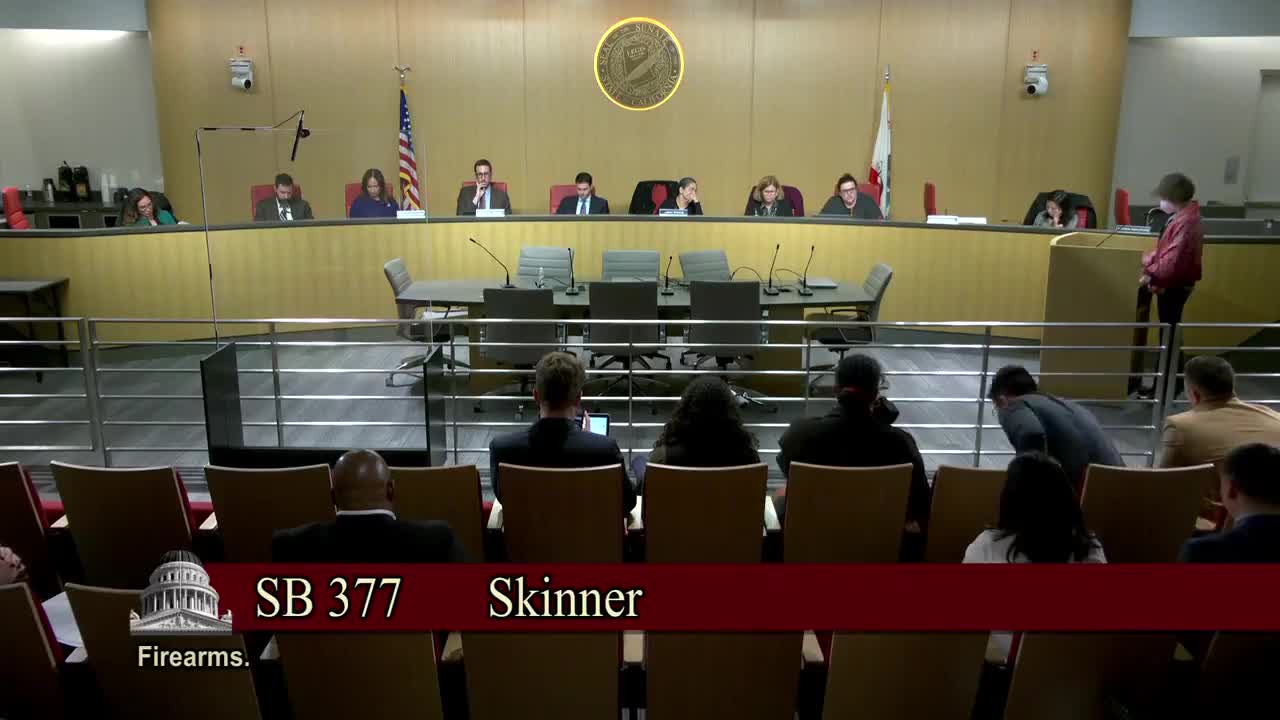 16MIN
Senate Standing Committee on Public Safety
Bill Author