SB 650: Gaming: charitable raffles.
- Session Year: 2023-2024
- House: Senate
- Latest Version Date: 2023-10-07
Current Status:
Passed
(2023-10-07: Chaptered by Secretary of State. Chapter 406, Statutes of 2023.)
Introduced
In Committee
First Chamber
In Committee
Second Chamber
Enacted
The California Constitution authorizes the Legislature to permit private, nonprofit organizations to conduct raffles as a funding mechanism to support beneficial and charitable works, if, among other conditions, at least 90% of the gross receipts from the raffle go directly to beneficial or charitable purposes in California. The California Constitution further authorizes the Legislature to amend the percentage of gross receipts required to be dedicated to beneficial or charitable purposes by a statute passed by a 2/3 vote of each house of the Legislature. Existing statutory law implements those provisions and requires the Department of Justice to administer and enforce those provisions.
Existing statutory law, until January 1, 2024, authorizes a major league sports raffle at a home game conducted by an eligible organization, as defined, for the purpose of directly supporting specified beneficial or charitable purposes in California, or financially supporting another private, nonprofit, eligible organization, as defined, that performs those purposes if, among other requirements, 50% of the gross receipts generated from the sale of raffle tickets are used to benefit or provide support for beneficial or charitable purposes, as defined, the other 50% is paid to the winner, and the winners of the prizes are determined by a manual draw, as specified.
This bill would permanently extend the operation of those provisions beyond January 1, 2024. By extending the operation of provisions that revise the percentage of gross receipts required to go to beneficial or charitable purposes pursuant to the California Constitution, this bill would require a 2/3 vote of each house.
(a)Notwithstanding Section 320.5, this section applies to an eligible organization.
(b)A raffle that is conducted by an eligible organization for the purpose of directly supporting beneficial or charitable purposes or financially supporting another private, nonprofit eligible organization, as defined in subdivision (c) of Section 320.5, that performs beneficial or charitable purposes may be conducted in accordance with this section.
(c)For purposes of this section, eligible organization means a private, nonprofit organization established by, or affiliated with, a team from the Major League Baseball, National Hockey League, National Basketball Association, National Football League, Womens National Basketball Association, or Major League Soccer, or a private, nonprofit organization established by the Professional Golfers Association of America, Ladies Professional Golf Association, or National Association for Stock Car Auto Racing that has been qualified to conduct business in California for at least one year before conducting a raffle, is qualified for an exemption under Section 501(c)(3) of the Internal Revenue Code, and is exempt from taxation pursuant to Section 23701a, 23701b, 23701d, 23701e, 23701f, 23701g, 23701k, 23701l, 23701t, or 23701w of the Revenue and Taxation Code.
(d)For purposes of this section, raffle means a scheme for the distribution of prizes by chance among persons who have paid money for paper tickets that provide the opportunity to win these prizes, in which all of the following are true:
(1)Each ticket sold contains a unique and matching identifier.
(2)(A)Winners of the prizes are determined by a manual draw from tickets described in paragraph (1) that have been sold for entry in the manual draw.
(B)An electronic device may be used to sell tickets. The ticket receipt issued by the electronic device to the purchaser may include more than one unique and matching identifier, representative of and matched to the number of tickets purchased in a single transaction.
(C)A random number generator is not used for the manual draw or to sell tickets.
(D)The prize paid to the winner is comprised of one-half or 50 percent of the gross receipts generated from the sale of raffle tickets for a raffle.
(3)The manual draw is conducted in California under the supervision of a natural person who meets all of the following requirements:
(A)The person is 18 years of age or older.
(B)The person is affiliated with the eligible organization conducting the raffle.
(C)The person is registered with the Department of Justice pursuant to paragraph (4) of subdivision (o).
(4)(A)Fifty percent of the gross receipts generated from the sale of raffle tickets for any given manual draw are used by the eligible organization conducting the raffle solely for charitable purposes, or used to benefit another private, nonprofit organization, provided that an organization receiving these funds is itself an eligible organization as defined in subdivision (c) of Section 320.5. As used in this section, charitable purposes excludes purposes that are intended to benefit officers, directors, or members, as defined by Section 5056 of the Corporations Code, of the eligible organization. Funds raised by raffles conducted pursuant to this section shall not be used to fund any beneficial, charitable, or other purpose outside of California. This section does not preclude an eligible organization from using funds from sources other than the sale of raffle tickets to pay for the administration or other costs of conducting a raffle if these expenses comply with legal standard of care requirements described in Sections 5231, 7231, and 9241 of the Corporations Code.
(B)An employee of an eligible organization who is a direct seller of raffle tickets shall not be treated as an employee for purposes of workers compensation under Section 3351 of the Labor Code if both of the following conditions are satisfied:
(i)Substantially all of the remuneration, whether or not paid in cash, for the performance of the service of selling raffle tickets is directly related to sales rather than to the number of hours worked.
(ii)The services performed by the person are performed pursuant to a written contract between the seller and the eligible organization and the contract provides that the person will not be treated as an employee with respect to the selling of raffle tickets for workers compensation purposes.
(C)For purposes of this section, an employee selling raffle tickets shall be deemed to be a direct seller, as described in Section 650 of the Unemployment Insurance Code, as long as the employee meets the requirements of that section.
(e)A person who receives compensation in connection with the operation of the raffle shall be an employee of the eligible organization that is conducting the raffle, and in no event may compensation be paid from revenues required to be dedicated to beneficial or charitable purposes.
(f)A raffle ticket shall not be sold in exchange for Bitcoin or any other cryptocurrency.
(g)A raffle that is otherwise permitted under this section shall not be conducted by means of, or otherwise utilize, any gaming machine that meets the definition of slot machine contained in Section 330a, 330b, or 330.1.
(h)(1)A raffle otherwise permitted under this section shall not be conducted, nor may tickets for a raffle be sold, within an operating satellite wagering facility or racetrack inclosure licensed pursuant to the Horse Racing Law (Chapter 4 (commencing with Section 19400) of Division 8 of the Business and Professions Code) or within a gambling establishment licensed pursuant to the Gambling Control Act (Chapter 5 (commencing with Section 19800) of Division 8 of the Business and Professions Code).
(2)A raffle shall not be operated or conducted in any manner over the internet, nor may raffle tickets be sold, traded, or redeemed over the Internet. For purposes of this paragraph, an eligible organization shall not be deemed to operate or conduct a raffle over the internet, or sell raffle tickets over the internet, if the eligible organization advertises its raffle on the internet or permits others to do so. Information that may be conveyed on an internet website pursuant to this paragraph includes, but is not limited to, all of the following:
(A)Lists, descriptions, photographs, or videos of the raffle prizes.
(B)Lists of the prize winners.
(C)The rules of the raffle.
(D)Frequently asked questions and their answers.
(E)Raffle entry forms, which may be downloaded from the internet website for manual completion by raffle ticket purchasers, but shall not be submitted to the eligible organization through the Internet.
(F)Raffle contact information, including the eligible organizations name, address, telephone number, facsimile number, or email address.
(i)An individual, corporation, partnership, or other legal entity shall not hold a financial interest in the conduct of a raffle, except the eligible organization that is itself authorized to conduct that raffle, and any private, nonprofit, eligible organizations receiving financial support from that charitable organization pursuant to subdivisions (b) and (d).
(j)(1)An eligible organization may conduct a major league sports raffle only at a home game.
(2)An eligible organization shall not conduct more than one major league sports raffle per home game.
(k)An employee shall not sell raffle tickets in any seating area designated as a family section.
(l)An eligible organization shall disclose to all ticket purchasers the designated private, nonprofit, eligible organization for which the raffle is being conducted.
(m)An eligible organization that conducts a raffle to financially support another private, nonprofit eligible organization, as defined in subdivision (c) of Section 320.5, shall distribute all proceeds not paid out to the winners of the prizes to the private, nonprofit organization within 15 days of conducting the raffle, in accordance with this section.
(n)Any raffle prize remaining unclaimed by a winner at the end of the season for a team with an affiliated eligible organization that conducted a raffle to financially support another private, nonprofit eligible organization, as defined in subdivision (c) of Section 320.5, shall be donated within 30 days from the end of the season by the eligible organization to the designated private, nonprofit organization for which the raffle was conducted.
(o)(1)(A)An eligible organization shall not conduct a raffle authorized under this section, unless it has a valid registration issued by the Department of Justice. The department shall furnish a registration form via the Internet or upon request to eligible nonprofit organizations. The department shall, by regulation, collect only the information necessary to carry out the provisions of this section on this form. This information shall include, but is not limited to, all of the following:
(i)The name and address of the eligible organization.
(ii)The federal tax identification number, the corporate number issued by the Secretary of State, the organization number issued by the Franchise Tax Board, or the California charitable trust identification number of the eligible organization.
(iii)The name and title of a responsible fiduciary of the organization.
(B)(i)The department may require an eligible organization to pay a minimum annual registration fee of ten thousand dollars ($10,000) to cover the reasonable costs of the department to administer and enforce this section.
(ii)An eligible organization shall pay, in addition to the annual registration application fee, two hundred dollars ($200) for every individual raffle conducted at an eligible location to cover the reasonable costs of the department to administer and enforce this section. This fee shall be submitted in conjunction with the annual registration form.
(2)(A)A manufacturer or distributor of raffle-related products or services shall not conduct business with an eligible organization for purposes of conducting a raffle pursuant to this section unless the manufacturer or distributor has a valid annual registration issued by the department.
(B)The department may require a manufacturer or distributor of raffle-related products or services to pay a minimum annual registration fee of ten thousand dollars ($10,000) to cover the reasonable costs of the department to administer and enforce this section.
(3)An eligible organization shall register the equipment used in the sale and distribution of raffle tickets, and shall have the equipment tested by an independent gaming testing lab.
(4)(A)A person affiliated with an eligible organization who conducts the manual draw shall annually register with the department.
(B)The department may require a person affiliated with an eligible organization who conducts the manual draw to pay a minimum annual registration fee of twenty dollars ($20) to cover the reasonable costs of the department to administer and enforce this section.
(5)(A)The department may, by regulation, adjust the annual registration fees described in this section as needed to ensure that revenues will fully offset, but not exceed, the reasonable costs incurred by the department pursuant to this section. The fees shall be deposited by the department into the Major League Sporting Event Raffle Fund, which is hereby created in the State Treasury.
(B)A loan is hereby authorized from the General Fund to the Major League Sporting Event Raffle Fund on or after July 1, 2016, in an amount of up to one million five thousand dollars ($1,005,000) to address department workload related to the initial implementation activities relating to this section by the departments Indian and Gaming Law Section. The terms and conditions of the loan shall first be approved by the Department of Finance pursuant to appropriate fiscal standards. The loan shall be subject to all of the following conditions:
(i)Of the total amount loaned, no more than three hundred thirty-five thousand dollars ($335,000) shall be provided annually to the department.
(ii)The loan shall be repaid to the General Fund as soon as there is sufficient money in the Major League Sporting Event Raffle Fund to repay the loan, but no later than December 31, 2023.
(iii)Interest on the loan shall be paid from the Major League Sporting Event Raffle Fund at the rate accruing to moneys in the Pooled Money Investment Account.
(6)The department shall receive moneys for the costs incurred pursuant to this section subject to an appropriation by the Legislature.
(7)The department shall adopt regulations necessary to effectuate this section, including emergency regulations, pursuant to the Administrative Procedure Act (Chapter 3.5 (commencing with Section 11340) of Part 1 of Division 3 of Title 2 of the Government Code).
(8)The department shall maintain an automated database of all registrants.
(9)A local law enforcement agency shall notify the department of any arrests or investigation that may result in an administrative or criminal action against a registrant.
(10)The department may, to the extent the Legislature appropriates funds for this purpose, investigate all suspected violations of this section or any regulation adopted pursuant to this section, or any activity that the registrant has engaged in that is not in the best interests of the publics health, safety, or general welfare as it pertains to charitable raffles.
(11) The department may, to the extent the Legislature appropriates funds for this purpose, audit the records and other documents of a registrant to ensure compliance with this section.
(12)Once registered, an eligible organization shall post all of the following information on either its internet website or the affiliated sport teams internet website for each raffle:
(A)The gross receipts generated from the sale of raffle tickets.
(B)Each eligible recipient organization and the amount each eligible recipient organization received.
(C)The prize total.
(D)The winning ticket number and whether the prize was claimed.
(13)(A)Once registered, an eligible organization shall file with the department, each season or year thereafter, a report that includes all of the following information:
(i)For each raffle, all of the following information:
(I)The gross receipts generated from the sale of raffle tickets.
(II)Each eligible recipient organization and the amount each eligible recipient organization received.
(III)The prize total.
(IV)The winning ticket number and whether the prize was claimed.
(ii)The total number of raffles conducted for the season or year.
(iii)The gross receipts generated from the sale of raffle tickets for the season or year.
(iv)The average per raffle gross receipts generated from the sale of raffle tickets for the season or year.
(v)The prize total for the season or year, including any prize that was not claimed.
(vi)The average per raffle prize total for the season or year, including any prize that was not claimed.
(vii)The prize total that was not claimed, if any, during the season or year. For each raffle in which the prize was not claimed, the name of the eligible recipient organization who received the prize.
(viii)A schedule of all vendors used to operate the raffles and total payments made to each vendor.
(ix)An itemization of the direct costs of conducting the raffles, including labor, raffle equipment, software, marketing, and consulting costs.
(B)Failure to timely submit the seasonal or annual report to the department, as required in this paragraph, shall be grounds for denial of an annual registration and for the imposition of penalties under Section 12591.1 of the Government Code.
(C)Failure to submit a complete financial report shall be grounds for the denial of an annual registration and for the imposition of penalties under Section 12591.1 of the Government Code if the filer does not resubmit a complete form within 30 days of receiving a notice of incomplete filing.
(D)(i)An eligible organization shall file with the department and post on either its internet website or the affiliated sport teams internet website the report required by this paragraph no later than 60 days after the end of the league season or year.
(ii)The department shall post the reports required by this paragraph on its internet website, but shall not post the report on the online search portal of the Attorney Generals Registry of Charitable Trusts maintained pursuant to Section 12584 of the Government Code.
(14)The department shall annually furnish to registrants a form to collect this information.
(p)The department may take legal action against a registrant if it determines that the registrant has violated this section or a regulation adopted pursuant to this section, or that the registrant has engaged in any conduct that is not in the best interests of the publics health, safety, or general welfare. An action taken pursuant to this subdivision does not prohibit the commencement of an administrative or criminal action by the Attorney General, a district attorney, city attorney, or county counsel.
(q)An action and hearing conducted to deny, revoke, or suspend a registry, or other administrative action taken against a registrant, shall be conducted pursuant to the Administrative Procedure Act (Chapters 4.5 (commencing with Section 11400) and 5 (commencing with Section 11500) of Part 1 of Division 3 of Title 2 of the Government Code). The department may seek civil remedies, including imposing fines, for violations of this section, and may seek recovery of the costs incurred in investigating or prosecuting an action against a registrant or applicant in accordance with those procedures specified in Section 125.3 of the Business and Professions Code. A proceeding conducted under this subdivision is subject to judicial review pursuant to Section 1094.5 of the Code of Civil Procedure. A violation of this section shall not constitute a crime.
(r)This section shall remain in effect only until January 1, 2024, and as of that date is repealed.|
Date
|
Status
|
|---|---|
| Oct 7, 2023 | Chaptered by Secretary of State. Chapter 406, Statutes of 2023. |
| Oct 7, 2023 | Approved by the Governor. |
| Sep 13, 2023 | Enrolled and presented to the Governor at 4 p.m. |
| Sep 7, 2023 | In Senate. Ordered to engrossing and enrolling. |
| Sep 7, 2023 | Read third time. Passed. (Ayes 79. Noes 0. Page 2998.) Ordered to the Senate. |
| Sep 5, 2023 | Read second time. Ordered to third reading. |
| Sep 1, 2023 | From committee: Do pass. (Ayes 16. Noes 0.) (September 1). |
| Aug 23, 2023 | August 23 set for first hearing. Placed on suspense file. |
| Jul 12, 2023 | From committee: Do pass and re-refer to Com. on APPR. (Ayes 20. Noes 0.) (July 12). Re-referred to Com. on APPR. |
| Jun 8, 2023 | Referred to Com. on G.O. |
| May 25, 2023 | In Assembly. Read first time. Held at Desk. |
| May 25, 2023 | Read third time. Passed. (Ayes 40. Noes 0. Page 1303.) Ordered to the Assembly. |
| May 23, 2023 | Ordered to special consent calendar. |
| May 18, 2023 | Read second time. Ordered to third reading. |
| May 18, 2023 | From committee: Do pass. (Ayes 7. Noes 0. Page 1178.) (May 18). |
| May 12, 2023 | Set for hearing May 18. |
| Apr 10, 2023 | April 10 hearing: Placed on APPR suspense file. |
| Mar 29, 2023 | Set for hearing April 10. |
| Mar 28, 2023 | From committee: Do pass and re-refer to Com. on APPR. (Ayes 13. Noes 0. Page 546.) (March 28). Re-referred to Com. on APPR. |
| Mar 14, 2023 | Set for hearing March 28. |
| Mar 1, 2023 | Referred to Com. on G.O. |
| Feb 17, 2023 | From printer. May be acted upon on or after March 19. |
| Feb 16, 2023 | Introduced. Read first time. To Com. on RLS. for assignment. To print. |
|
Date
|
Description
|
Location
|
Votes
|
|
|---|---|---|---|---|
| Sep 7, 2023 | SB 650 Dodd Senate Third Reading By Low | Assembly Floor |
Passed |
|
| Sep 1, 2023 | Do pass. | Assembly Standing Committee on Appropriations |
Passed |
|
| Jul 12, 2023 | Do pass and be re-referred to the Committee on [Appropriations] | Assembly Standing Committee on Governmental Organization |
Passed |
|
| May 25, 2023 | Special Consent SB650 Dodd et al. | Senate Floor |
Passed |
|
| May 18, 2023 | Do pass | Senate Standing Committee on Appropriations |
Passed |
|
| Apr 10, 2023 | Placed on suspense file | Senate Standing Committee on Appropriations |
Passed |
|
| Mar 28, 2023 | Do pass, but first be re-referred to the Committee on [Appropriations] | Senate Standing Committee on Governmental Organization |
Passed |
This list shows positions taken on this bill by organizations on the date displayed, which is linked to the original source.
Positions by individuals are not included.
|
Organization
|
Position
|
Date
|
|---|---|---|
| Aeg | ** Support | |
| Anaheim Ducks Foundation | ** Support | |
| Anaheim Ducks Hockey Club | ** Support | |
| Giants Community Fund | ** Support | |
| Golden State Warriors | * Support | Mar 28, 2023 |
| Los Angeles Angels | * Support | Mar 28, 2023 |
| Los Angeles Dodgers | ** Support | |
| Los Angeles Dodgers Foundation | ** Support | |
| Los Angeles Galaxy | ** Support | |
| Los Angeles Kings | ** Support | |
| Major League Baseball | * Support | Jul 12, 2023 |
| National Hockey League | ** Support | |
| NFL LLC | * Support | Jul 12, 2023 |
| Oakland A's | * Support | Mar 28, 2023 |
| Oakland A’s | ** Support | |
| Pechanga Band of Indians | * Indeterminate | Mar 28, 2023 |
| San Diego Padres | ** Support | |
| San Francisco 49ers | ** Support | |
| San Francisco Giants | * Support | Jul 12, 2023 |
| San Jose Sharks LLC | * Support | Jul 12, 2023 |
| Sharks Sports & Entertainment, LLC | ** Support |
SENATE THIRD READING
STR Bill Id:SB 650
Author:(Dodd)
As Introduced Ver:February 16, 2023
2/3 vote
SUMMARY
This bill deletes the January 1, 2024, sunset date in law that allows eligible nonprofit organizations that are established or affiliated with various professional sports teams to conduct 50/50 raffles, as specified.
Major Provisions
Removes the January 1, 2024 sunset date for the 50/50 Major League Sports Raffle Program, extending the authorization allowing eligible nonprofit organizations that are established or affiliated with various professional sports teams to conduct 50/50 raffles in perpetuity.
COMMENTS
Background.
Proposition 17 (2000) amended the State Constitution, as an exception to the lottery ban, to allow a private non-profit organization to conduct raffles if at least 90% of the raffle's gross receipts are dedicated to charitable purposes. Proposition 17 allowed the Legislature to statutorily modify, with a two-thirds vote, the minimum amount of gross receipts that the non-profit organization must allocate for charitable purposes.
In 2015, SB 549 (Hall), Chapter 509, Statutes of 2015 authorized, until January 1, 2018, nonprofit organizations established by professional sports leagues to conduct 50/50 raffles. In these types of raffles, 50% of the money goes to charity and 50% goes to the winner of the raffle. Even though a smaller percentage is going to the charity, supporters of 50/50 raffles argue that the overall amount is greater, since individuals are more inclined to participate; which in turn increases the overall total of funds going to charity.
Under the bill, eligible organizations are authorized to conduct one raffle per home game/event and required to pay a minimum annual registration fee of $5,000 and $100 per individual raffle to cover the reasonable costs of DOJ to administer and enforce the provisions of the bill. Subsequent legislation increased the annual registration fee to $10,000 and the individual raffle cost to $200. DOJ was also authorized by regulation, to adjust the annual registration fees to ensure that revenues will fully offset, but not exceed, the reasonable costs incurred by the department. The Major League Sports Raffle Program, which is administered by the Indian & Gaming Law Section (IGLS) within DOJ’s Public Rights Division and the Bureau of Gambling Control (BGC), currently consists of seven dedicated positions to implement, administer, and enforce the program.
In response to concerns from tribal interests that the random number generator resembled a gaming device, the bill also included a ban on its use. As a result, the measure required a manual draw that must be documented for potential DOJ inspection. SB 549 included a sunset clause that would terminate the program on December 31, 2018, unless the Legislature decided to extend it. This was done to allow for a periodic evaluation of the program's effectiveness and impact.
AB 888 (Low), Chapter 575, Statutes of 2018, extended the original 2018 sunset date to January 1, 2024, revised reporting requirements, and allowed DOJ to be reimbursed by program registrants for the reasonable costs of auditing or reviewing the program. SB 650 repeals the 50/50 raffle program's current sunset date
Reporting and Auditing for 50/50 Raffles. Current law requires each eligible organization to annually file with DOJ and post on its Internet website a report that includes information such as; the number of raffles conducted for the season or calendar year, the average gross receipts per raffle, the gross receipts generated from the sale of raffle tickets for the season and or calendar year, and the prize total that was not claimed, if any, during the season. Current law states that failure to submit the report should be grounds for denial of their annual registration.
Current law authorizes DOJ to audit the records and other documents of a registrant to ensure compliance. In addition, current law provides that DOJ is entitled to reimbursement from the registrant for all actual and reasonable costs incurred in auditing, reviewing, and evaluating the 50/50 raffle program. The DOJ has indicated that they have conducted a number of audits and have found no major issues with the 50/50 raffle program.
According to the Author
[T]he 50/50 raffle program, which is self-sustaining and has produced no major issues, has touched the lives of people across the state by raising much needed critical funds for charities and supporting community capital outlay projects in underserved communities. Since the passage of the original 50/50 raffle bill, millions of dollars have been raised for a diverse group of local charitable organizations throughout the state.
Arguments in Support
This bill is supported by various major league sports teams and affiliated entities.
The Sharks Sports & Entertainment, LLC and the Sharks Foundation writes in support, "In 2022, major league sports raffles raised over $3.3 million for local charities throughout the state. The Sharks have found that 50/50 raffles have enabled us to broaden our reach in the community and expand our partnerships with local charities and causes. Areas of impact include but are not limited to youth and character development, education, health and fitness, social justice, military, environmental, conservation and disadvantaged programs throughout California. The Sharks play an important role in contributing to the state's economy, generating good jobs, actively participating in the local community, and supporting many charitable and philanthropic organizations through our Sharks Foundation.
Arguments in Opposition
None on file.
FISCAL COMMENTS
According to the Assembly Appropriations Committee, "Costs of approximately $443,000 in fiscal year 2023-24 and $828,000 annually thereafter to the Department of Justice (DOJ) to continue the raffle program and permanently fund the five staff positions needed to administer and enforce the existing program (Major League Sports Event Raffle Fund)."
VOTES
SENATE FLOOR: 40-0-0
YES: Allen, Alvarado-Gil, Archuleta, Ashby, Atkins, Becker, Blakespear, Bradford, Caballero, Cortese, Dahle, Dodd, Durazo, Eggman, Glazer, Gonzalez, Grove, Hurtado, Jones, Laird, Limón, McGuire, Menjivar, Min, Newman, Nguyen, Niello, Ochoa Bogh, Padilla, Portantino, Roth, Rubio, Seyarto, Skinner, Smallwood-Cuevas, Stern, Umberg, Wahab, Wiener, Wilk
ASM GOVERNMENTAL ORGANIZATION: 20-0-2
YES: Santiago, Lackey, Aguiar-Curry, Berman, Bryan, Cervantes, Megan Dahle, Davies, Garcia, Gipson, Jones-Sawyer, Low, Mathis, McCarty, McKinnor, Jim Patterson, Quirk-Silva, Ramos, Ta, Valencia
ABS, ABST OR NV: Blanca Rubio, Villapudua
ASM APPROPRIATIONS: 16-0-0
YES: Holden, Megan Dahle, Bryan, Calderon, Wendy Carrillo, Dixon, Mike Fong, Hart, Lowenthal, Mathis, Papan, Pellerin, Sanchez, Soria, Weber, Wilson
UPDATED
VERSION: February 16, 2023
CONSULTANT: Eric Johnson / G.O. / (916) 319-2531 FN: 0001447
Date of Hearing: August 23, 2023
ASSEMBLY COMMITTEE ON APPROPRIATIONS
Chris Holden, Chair
SBPCA Bill Id:SB 650
Author:(Dodd) – As Introduced Ver:February 16, 2023
Policy Committee: | Governmental Organization | Vote: | 20 - 0 |
|
| ||
|
|
Urgency: No State Mandated Local Program: No Reimbursable: No
SUMMARY:
This bill repeals the January 1, 2024, sunset date on the law authorizing a 50/50 raffle conducted by an eligible non-profit organization at a major league sports home game.
FISCAL EFFECT:
Costs of approximately $443,000 in fiscal year 2023-24 and $828,000 annually thereafter to the Department of Justice (DOJ) to continue the raffle program and permanently fund the five staff positions needed to administer and enforce the existing program (Major League Sports Event Raffle Fund).
COMMENTS:
- Purpose. According to the author:
[T]he 50/50 raffle program, which is self-sustaining and has produced no major issues, has touched the lives of people across the state by raising much needed critical funds for charities and supporting community capital outlay projects in underserved communities. Since the passage of the original 50/50 raffle bill, millions of dollars have been raised for a diverse group of local charitable organizations throughout the state.
This bill is supported by various major league sports teams and affiliated entities.
- Charitable Raffles. Proposition 17 (2000) amended the State Constitution, as an exception to the lottery ban, to allow a private non-profit organization to conduct raffles if at least 90% of the raffle’s gross receipts are dedicated to charitable purposes. Proposition 17 allowed the Legislature to statutorily modify, with a two-thirds vote, the minimum amount of gross receipts that the non-profit organization must allocate for charitable purposes.
SB 549 (Hall), Chapter 509, Statutes of 2015, authorized, until December 31, 2018, non-profit organizations established by professional sports leagues to conduct 50/50 raffles via manual draw, with 50% of the money going to charity and 50% going to the raffle winner. Although such raffles send a smaller percentage of raffle proceeds to charity, proponents argue the overall amount raised for charity is greater, since individuals are more inclined to participate if the jackpot is higher. Eligible non-profit organizations must pay a $10,000 annual registration fee (which DOJ may adjust as needed) and $200 per individual raffle conducted to cover the reasonable costs to DOJ to oversee the raffle program. AB 888 (Low), Chapter 575, Statutes of 2018, extended the original 2018 sunset date to January 1, 2024, revised reporting requirements, and allowed DOJ to be reimbursed by program registrants for the reasonable costs of auditing or reviewing the program. This bill repeals the 50/50 raffle program’s current sunset date.
Analysis Prepared by: Irene Ho / APPR. / (916) 319-2081
Date of Hearing: July 12, 2023
ASSEMBLY COMMITTEE ON GOVERNMENTAL ORGANIZATION
Miguel Santiago, Chair
SBPCA Bill Id:SB 650
Author:(Dodd) – As Introduced Ver:February 16, 2023
SENATE VOTE: 40-0
SUBJECT: Gaming: charitable raffles
SUMMARY: This bill deletes the January 1, 2024, sunset that allows eligible nonprofit organizations that are established or affiliated with various professional sports teams to conduct 50/50 raffles, as specified. Specifically, this bill:
1) Removes the January 1, 2024 sunset date for the 50/50 Major League Sports Raffle Program, extending the authorization allowing eligible nonprofit organizations that are established or affiliated with various professional sports teams to conduct 50/50 raffles in perpetuity.
EXISTING LAW:
1) The California Constitution Article IV, Section 19, allows the Legislature to authorize eligible organizations as defined by the Legislature, to conduct raffles as a funding mechanism to provide support for their own or another private, nonprofit, eligible organization's beneficial and charitable works, provided that a) at least 90% of the gross receipts from the raffle go directly to beneficial or charitable purposes in California, and b) any person who receives compensation in connection with the operation of a raffle is an employee of the private nonprofit organization that is conducting the raffle. The Legislature, two-thirds of the membership of each house concurring, may amend the percentage of gross receipts required by this subdivision to be dedicated to beneficial or charitable purposes by means of a statute that is signed by the Governor.
2) Authorizes an eligible organization, until January 1, 2024, to conduct a 50/50 raffle for the purpose of directly supporting specified beneficial or charitable purposes in California, or financially supporting another private, nonprofit, eligible organization.
3) Defines an “eligible organization” as a private, nonprofit organization established by, or affiliated with, a team from Major League Baseball, National Hockey League, National Basketball Association, National Football League, Women’s National Basketball Association, or Major League Soccer; or a private, nonprofit organization established by the Professional Golfers’ Association of America, Ladies Professional Golf Association; or National Association for Stock Car Auto Racing that has been qualified to conduct business in California for at least one year prior to conducting a raffle, is qualified for an exemption under section 501 (c)(3) of the Internal Revenue Code, and is exempt from taxation as specified.
4) Specifies that a raffle shall not be conducted by means of, or otherwise utilize, any gaming machine that meets the definition of a slot machine, as defined.
5) Specifies that a raffle shall not be operated or conducted in any manner over the Internet, nor may raffle tickets be sold, traded, or redeemed over the Internet. An eligible organization shall not be deemed to operate or conduct a raffle over the Internet, or sell raffle tickets over the Internet, if the eligible organization advertises its raffle on the Internet or permits others to do so.
6) Provides an eligible organization may conduct a major league sports raffle only at a home game.
7) Provides an eligible organization shall not conduct more than one major league sports raffle per home game. An employee shall not sell raffle tickets in any seating area designated as a family section. An eligible organization shall disclose to all ticket purchasers the designated private, nonprofit, eligible organization for which the raffle is being conducted.
8) Specifies that DOJ may require an eligible organization to pay a minimum annual registration fee of $10,000 to cover the reasonable costs of DOJ to administer and enforce the provisions of this bill.
9) Specifies that an eligible organization shall pay, in addition to the annual registration fee, $200 for every individual raffle conducted at an eligible location to cover the reasonable costs of DOJ to administer and enforce the provisions of this bill.
10) Requires an eligible organization, once registered, to post all of the following information on either its Internet Web site or the affiliated sport team’s Internet Web site for each raffle:
a) The gross receipts generated from the sale of raffle tickets.
b) Each eligible recipient organization and the amount each eligible recipient organization received.
c) The prize total.
d) The winning ticket number and whether the prize was claimed.
11) Requires an eligible organization, once registered, to file with DOJ, each season or year thereafter, a report that includes specified information.
12) Requires an eligible organization to file with DOJ and post on either its Internet Web site or the affiliated sport team’s Internet Web site the report required by the provisions of this bill no later than 60 days after the end of the league season or year.
FISCAL EFFECT: This bill is keyed fiscal by Legislative Counsel
COMMENTS:
Purpose of the bill. According to the author’s office, “the 50/50 raffle program, which is self-sustaining and has produced no major issues, has touched the lives of people across the state by raising much needed critical funds for charities and supporting community capital outlay projects in underserved communities. Since the passage of the original 50/50 raffle bill, millions of dollars have been raised for a diverse group of local charitable organizations throughout the state. For instance, since the creation of 50/50 raffles, the San Francisco Giants Community Fund has been able to serve over 150,000 youth and now serves 30,000 youth annually, a new record in the Fund’s thirty-one years of service. The 50/50 raffle is directly responsible for the expansion of the Giants Community Fund programs, including the flagship program Junior Giants and newly expanded Junior Giants Schools Program, allowing the Fund to renovate three youth baseball fields for Junior Giants to play on.”
Background.
Charitable raffles have been legal in the State of California since July 1, 2001, with the successful passage of SB 639 (McPherson, Chapter 778, Statutes of 2000) and voter approval of Proposition 17. Proposition 17 in 2000 amended the State Constitution, as an exception to the lottery ban, to permit private nonprofits to conduct raffles with at least 90% of the raffle's gross receipts dedicated to charitable purposes. California voters passed this proposition with a 59% majority. According to Proposition 17, the Legislature has the power to modify the minimum amount of gross receipts that nonprofit organizations must allocate for charitable purposes. However, this power is subject to two conditions: first, the Legislature must pass a bill with a two-thirds majority in both houses; and second, the Governor must sign the bill into law.
In 2015, SB 549 (Hall, Chapter 509, Statutes of 2015) authorized, until January 1, 2018, nonprofit organizations established by professional sports leagues to conduct 50/50 raffles. In these types of raffles, 50% of the money goes to charity and 50% goes to the winner of the raffle. Even though a smaller percentage is going to the charity, supporters of 50/50 raffles argue that the overall amount is greater, since individuals are more inclined to participate; which in turn increases the overall total of funds going to charity.
Under the bill, eligible organizations are authorized to conduct one raffle per home game/event and required to pay a minimum annual registration fee of $5,000 and $100 per individual raffle to cover the reasonable costs of DOJ to administer and enforce the provisions of the bill. Subsequent legislation increased the annual registration fee to $10,000 and the individual raffle cost to $200. DOJ was also authorized by regulation, to adjust the annual registration fees to ensure that revenues will fully offset, but not exceed, the reasonable costs incurred by the department. The Major League Sports Raffle Program, which is administered by the Indian & Gaming Law Section (IGLS) within DOJ’s Public Rights Division and the Bureau of Gambling Control (BGC), currently consists of seven dedicated positions to implement, administer, and enforce the program.
In response to concerns from tribal interests that the random number generator resembled a gaming device, the bill also included a ban on its use. As a result, the measure required a manual draw that must be documented for potential DOJ inspection. SB 549 included a sunset clause that would terminate the program on December 31, 2018, unless the Legislature decided to extend it. This was done to allow for a periodic evaluation of the program's effectiveness and impact.
In 2018, the Legislature passed, and the Governor signed, AB 888 (Low, Chapter 575, Statutes of 2018) which extended the sunset date from December 31, 2018, to January 1, 2024. Among various provision, the bill required eligible organizations to complete more detailed reports covering the total amount raised for each raffle as well as the overall 50/50 raffle program. The bill required the reports to be submitted to DOJ as well as requiring the eligible organizations to post those reports on their own Internet Web site. Finally, the bill allowed DOJ to be reimbursed by registrants for all reasonable costs DOJ might incur for any auditing, reviewing or evaluating of the program.
San Francisco 49ers 50/50 Raffle Program. During the 2021-22 season, including the preseason, the San Francisco 49ers conducted a total of 10 raffles, benefitting eight different organizations. The average gross receipts per raffle was $80,107, with the lowest being $45,600 and the largest being $128,260. On average, each raffle raised approximately $40,000 dollars per raffle. Overall, the San Francisco 49ers 50/50 raffle program raised approximately $400,535 for various nonprofits.
Some of the nonprofits that benefitted from these raffles included the Okizu Foundation, which helps all members of families affected by childhood cancer, the Fresh Lifelines for Youth, which works with underprivileged youth to disrupt the pipeline to prison and unlock their potential. The Okizu foundation received approximately $50,750 and Fresh Lifelines for Youth received $25,570.
Reporting and Auditing for 50/50 Raffles. Current law requires each eligible organization to annually file with DOJ and post on its Internet website a report that includes information such as; the number of raffles conducted for the season or calendar year, the average gross receipts per raffle, the gross receipts generated from the sale of raffle tickets for the season and or calendar year, and the prize total that was not claimed, if any, during the season. Current law states that failure to submit the report should be grounds for denial of their annual registration.
Current law authorizes DOJ to audit the records and other documents of a registrant to ensure compliance. In addition, current law provides that DOJ is entitled to reimbursement from the registrant for all actual and reasonable costs incurred in auditing, reviewing, and evaluating the 50/50 raffle program. The DOJ has indicated that they have conducted a number of audits and have found no major issues with the 50/50 raffle program.
Bureau/DOJ Regulations. Title 11, Division 3, Chapter 1 of the California Code of Regulations outlines the specific requirements for organization participation in the Major League Sports Raffle Program, including but not limited to: eligibility; registration types and processes; equipment registration and use; and, discipline and penalties for violations of statute and regulations. Every eligible organization must also comply with any tax withholding requirements established by the Department of the Treasury, the IRS or the State of California, Franchise Tax Board, and any reporting requirements on monetary transactions imposed by state or federal laws.
An eligible organization is prohibited from printing any word or phrase on promotional material or advertising that implies or expresses that a purchase of a raffle ticket is a charitable donation. Prior to the sale of any raffle tickets, the eligible organization is responsible for ensuring that every affiliated person participating in the sale of raffle tickets possess the training knowledge, and experience necessary to carry out their assigned duties as well as understand current law and any regulations established by DOJ. Eligible organizations, affiliated persons, and any other individuals or entities required to register with DOJ shall immediately notify DOJ of any conduct or event that may affect the integrity of any registered event.
In support. The Sharks Sports & Entertainment, LLC and the Sharks Foundation writes in support, “In 2022, major league sports raffles raised over $3.3 million for local charities throughout the state. The Sharks have found that 50/50 raffles have enabled us to broaden our reach in the community and expand our partnerships with local charities and causes. Areas of impact include but are not limited to youth and character development, education, health and fitness, social justice, military, environmental, conservation and disadvantaged programs throughout California. The Sharks play an important role in contributing to the state’s economy, generating good jobs, actively participating in the local community, and supporting many charitable and philanthropic organizations through our Sharks Foundation.”
According to the Los Angeles Dodgers Foundation, “these raffles, which have successfully operated in California for the past eight years, have raised millions of dollars annually for local charities and nonprofits. Our team found that the 50/50 raffle enables us to broaden our reach in the community and expand our partnerships with local charities and causes. Currently, more than 100 professional sports franchises in 26 states successfully operate 50/50 raffles at sporting events in order to maximize donations to community philanthropic causes.”
Prior legislation. AB 888 (Low), Chapter 575, Statutes of 2018. Extended, from January 1, 2018, to January 1, 2024, the sunset that allows eligible nonprofit organizations that are established or affiliated with various professional sports teams to conduct 50/50 raffles, as specified.
SB 549 (Hall), Chapter 509, Statutes of 2015. Authorized, until December 31, 2018, eligible organizations, as defined, to conduct a 50/50 raffle for the purpose of directly supporting a specified beneficial or charitable purpose in California, or financially supporting another private, nonprofit, eligible organization.
SB 200 (Correa), Chapter 38, Statutes of 2009. Authorized eligible organizations to advertise raffles over the Internet.
SB 1369 (Cedillo), Chapter 748, Statutes of 2008. Authorized remote caller bingo as a game in which specific tax-exempt organizations, as defined, may use audio or video technology to link designated in-state facilities for playing bingo pursuant to a local ordinance and state regulation and oversight. The bill provided that remote caller bingo could only be played using traditional paper or other tangible bingo cards and daubers, and shall not be played using electronic devices. In addition, the bill provided that prizes for remote caller bingo could not exceed 37% of the gross receipts of the game and overhead may not exceed 20%, as defined.
SB 639 (McPherson), Chapter 778, Statutes of 2000. Permitted raffles to be conducted by private, nonprofit organizations, for the purposes of providing financial support for beneficial charitable works if, among other criteria, at least 90% of the gross receipts from the sale of raffle tickets are used to benefit or provide support for the charitable or beneficial purposes of the conducting nonprofit.
SCA 4 (McPherson), Resolution Chapter 123, Statutes of 1999. Placed Proposition 17 on the March 2000 ballot, which was approved by the voters to authorize charitable raffles in California, provided that at least 90% of the gross receipts from the raffle go directly to beneficial or charitable purposes, as defined.
REGISTERED SUPPORT / OPPOSITION:
Support
AEG
Anaheim Ducks Foundation
Anaheim Ducks Hockey Club
Giants Community Fund
Los Angeles Dodgers
Los Angeles Dodgers Foundation
Los Angeles Galaxy
Los Angeles Kings
Oakland A’s
National Hockey League
San Diego Padres
San Francisco 49ers
San Francisco Giants
San Jose Sharks
Sharks Foundation
Sharks Sports & Entertainment, LLC
Opposition
None on file
Analysis Prepared by: Eric Johnson / G.O. / (916) 319-2531
SENATE RULES COMMITTEE Office of Senate Floor Analyses (916) 651-1520 Fax: (916) 327-4478 | SB 650 |
THIRD READING
Bill No: SB 650
Author: Dodd (D), et al.
Introduced: 2/16/23
Vote: 27
SENATE GOVERNMENTAL ORG. COMMITTEE: 13-0, 3/28/23
AYES: Dodd, Wilk, Alvarado-Gil, Ashby, Bradford, Glazer, Jones, Nguyen, Ochoa Bogh, Padilla, Roth, Rubio, Seyarto
NO VOTE RECORDED: Archuleta, Portantino
SENATE APPROPRIATIONS COMMITTEE: 7-0, 5/18/23
AYES: Portantino, Jones, Ashby, Bradford, Seyarto, Wahab, Wiener
SUBJECT: Gaming: charitable raffles
SOURCE: Author
DIGEST: This bill deletes the January 1, 2024, sunset that allows eligible nonprofit organizations that are established or affiliated with various professional sports teams to conduct 50/50 raffles, as specified.
ANALYSIS:
Existing law:
- Authorizes an eligible organization, until January 1, 2024, to conduct a 50/50 raffle for the purpose of directly supporting specified beneficial or charitable purposes in California, or financially supporting another private, nonprofit, eligible organization.
- Defines an “eligible organization” as a private, nonprofit organization established by, or affiliated with, a team from Major League Baseball, National Hockey League, National Basketball Association, National Football League, Women’s National Basketball Association, or Major League Soccer; or a private, nonprofit organization established by the Professional Golfers’ Association of America, Ladies Professional Golf Association; or National Association for Stock Car Auto Racing that has been qualified to conduct business in California for at least one year prior to conducting a raffle, is qualified for an exemption under section 501 (c)(3) of the Internal Revenue Code, and is exempt from taxation as specified.
- Specifies that a raffle otherwise permitted under this section shall not be conducted by means of, or otherwise utilize, any gaming machine that meets the definition of a slot machine, as defined.
- Specifies that a raffle shall not be operated or conducted in any manner over the Internet, nor may raffle tickets be sold, traded, or redeemed over the Internet. An eligible organization shall not be deemed to operate or conduct a raffle over the Internet, or sell raffle tickets over the Internet, if the eligible organization advertises its raffle on the Internet or permits others to do so.
- Prohibits an eligible organization from conducting more than one raffle per home game.
- Specifies that DOJ may require an eligible organization to pay a minimum annual registration fee of $10,000 to cover the reasonable costs of DOJ to administer and enforce the provisions of this bill.
- Specifies that an eligible organization shall pay, in addition to the annual registration fee, $200 for every individual raffle conducted at an eligible location to cover the reasonable costs of DOJ to administer and enforce the provisions of this bill.
- Requires an eligible organization, once registered, to post all of the following information on either its Internet Web site or the affiliated sport team’s Internet Web site for each raffle:
- The gross receipts generated from the sale of raffle tickets.
- Each eligible recipient organization and the amount each eligible recipient organization received.
- The prize total.
- The winning ticket number and whether the prize was claimed.
- Requires an eligible organization, once registered, to file with DOJ, each season or year thereafter, a report that includes specified information.
- Requires an eligible organization to file with DOJ and post on either its Internet Web site or the affiliated sport team’s Internet Web site the report required by the provisions of this bill no later than 60 days after the end of the league season or year.
This bill deletes the January 1, 2024, sunset that allows eligible nonprofit organizations that are established or affiliated with various professional sports teams to conduct 50/50 raffles, as specified.
Background
Purpose of the bill. According to the author’s office, “the 50/50 raffle program, which is self-sustaining and has produced no major issues, has touched the lives of people across the state by raising much needed critical funds for charities and supporting community capital outlay projects in underserved communities. Since the passage of the original 50/50 raffle bill, millions of dollars have been raised for a diverse group of local charitable organizations throughout the state. For instance, since the creation of 50/50 raffles, the San Francisco Giants Community Fund has been able to serve over 150,000 youth and now serves 30,000 youth annually, a new record in the Fund’s thirty-one years of service. The 50/50 raffle is directly responsible for the expansion of the Giants Community Fund programs, including the flagship program Junior Giants and newly expanded Junior Giants Schools Program, allowing the Fund to renovate three youth baseball fields for Junior Giants to play on.”
History. Charitable raffles have been legal in the State of California since July 1, 2001, with the successful passage of SB 639 (McPherson, Chapter 778, Statutes of 2000) and voter approval of Proposition 17. Despite their previous illegality, raffles had long been a popular fundraising tool used by various nonprofit organizations. Thus in 2000, local law enforcement authorities and members of the nonprofit community decided to sponsor legislation to legalize some raffles and provide for regulation.
Because a constitutional amendment was needed, Proposition 17 in 2000 was approved by California voters with 59% of the vote to exempt charitable raffles from the prohibition against lotteries provided that the Legislature established reasonable statutory regulations and that 90% of the gross receipts from raffles go directly to beneficial or charitable purposes. Proposition 17 also authorized the Legislature to change the percentages of gross receipts that must go directly to charitable purposes with a two-thirds vote of the Legislature and approval by the Governor.
In 2015, SB 549 (Hall, Chapter 509, Statutes of 2015) authorized, until January 1, 2018, nonprofit organizations, established by professional sports leagues to conduct 50/50 raffles. In these types of raffles 50% of the money goes to the charity and 50% of the money goes to the winner of the raffle. Even though a smaller percentage is going to the charity, supporters of 50/50 raffles argue that the overall amount is greater, since individuals are more inclined to participate; which in turn increases the overall total of funds going to charity.
Under the bill, eligible organizations are authorized to conduct one raffle per home game/event and required to pay a minimum annual registration fee of $5,000 and $100 per individual raffle to cover the reasonable costs of DOJ to administer and enforce the provisions of the bill. Subsequent legislation has increased the annual registration fee to $10,000 and increased the per individual raffle to $200. DOJ was also authorized to adjust the annual registration fees needed to ensure that revenues fully offset the reasonable costs incurred by DOJ.
The bill also included a prohibition on the use of a random number generator after tribal concerns were raised that the device resembled a gaming device. As such, the bill requires a manual draw which must be recorded for possible inspection by DOJ. SB 549 also included a sunset date of December 31, 2018 to allow the legislature the opportunity to review the program.
In 2018, the legislature passed, and the Governor signed, AB 888 (Low, Chapter 575, Statutes of 2018) which extended the sunset date from December 31, 2018, to January 1, 2024. Among other things, the bill also required eligible organizations to complete much more detailed reports detailing the total amount of money raised by each raffle and the overall 50/50 raffle program. The bill requires those reports to be submitted to DOJ as well as requires eligible organizations to post those reports on their own Internet Web site. Finally, the bill allowed DOJ to be reimbursed by registrants for all reasonable cost DOJ might incur for any auditing, reviewing or evaluating of the program.
San Francisco 49ers 50/50 Raffle Program. During the 2021-22 season, including the preseason, the San Francisco 49ers conducted a total of 10 raffles, benefitting eight different organizations. The average gross receipts per raffle was $80,107, with the lowest being $45,600 and the largest being $128,260. On average, each raffle raised approximately $40,000 dollars per raffle. Overall, the San Francisco 49ers 50/50 raffle program raised approximately $400,535 for various nonprofits.
Some of the nonprofits that benefitted from these raffles included the Okizu Foundation, which helps all members of families affected by childhood cancer, the Fresh Lifelines for Youth, which works with underprivileged youth to disrupt the pipeline to prison and unlock their potential. The Okizu foundation received approximately $50,750 and Fresh Lifelines for Youth received $25,570.
Reporting and Auditing for 50/50 Raffles. Current law requires each eligible organization to annually file with DOJ and post on its Internet website a report that includes information such as; the number of raffles conducted for the season or calendar year, the average gross receipts per raffle, the gross receipts generated from the sale of raffle tickets for the season and or calendar year, and the prize total that was not claimed, if any, during the season. Current law states that failure to submit the report should be grounds for denial of their annual registration.
Current law authorizes DOJ to audit the records and other documents of a registrant to ensure compliance. In addition, current law provides that DOJ is entitled to reimbursement from the registrant for all actual and reasonable costs incurred in auditing, reviewing, and evaluating the 50/50 raffle program. The DOJ has indicated that they have conducted a number of audits and have found no major issues with the 50/50 raffle program.
Bureau/DOJ Regulations. While many of DOJ’s regulation pertaining to the 50/50 raffle program have already been discussed, DOJ established various other requirements and prohibitions to ensure the integrity of 50/50 raffles.
For instance, every manual draw conducted under is required to be video recorded and must be maintained as part of the records required to be maintained.
Every eligible organization must also comply with any tax withholding requirements established by the Department of the Treasury, the IRS or the State of California, Franchise Tax Board, and any reporting requirements on monetary transactions imposed by state or federal laws.
An eligible organization is prohibited from printing any word or phrase on promotional material or advertising that implies or expresses that a purchase of a raffle ticket is a charitable donation. Prior to the sale of any raffle tickets, the eligible organization is responsible for ensuring that every affiliated person participating in the sale of raffle tickets possess the training knowledge, and experience necessary to carry out their assigned duties as well as understand current law and any regulations established by DOJ. An eligible organization, affiliated person, and any other person or entity that is required by SB 549 to be registered with DOJ is required to notify DOJ immediately about any conduct activity, or incident that may affect the integrity of any registered event.
Related/Prior Legislation
AB 888 (Low, Chapter 575, Statutes of 2018) extended, from January 1, 2018, to January 1, 2024, the sunset that allows eligible nonprofit organizations that are established or affiliated with various professional sports teams to conduct 50/50 raffles, as specified.
SB 549 (Hall, Chapter 509, Statutes of 2015) authorized, until December 31, 2018, eligible organizations, as defined, to conduct a 50/50 raffle for the purpose of directly supporting a specified beneficial or charitable purpose in California, or financially supporting another private, nonprofit, eligible organization.
SB 639 (McPherson, Chapter 778, Statutes of 2000) permitted raffles to be conducted by private, nonprofit organizations, for the purposes of providing financial support for beneficial charitable works if, among other criteria, at least 90% of the gross receipts from the sale of raffle tickets are used to benefit or provide support for the charitable or beneficial purposes of the conducting nonprofit.
SCA 4 (McPherson, Resolution Chapter 123, Statutes of 1999) placed Proposition 17 on the March 2000 ballot, which was approved by the voters to authorize charitable raffles in California, provided that at least 90% of the gross receipts from the raffle go directly to beneficial or charitable purposes, as defined.
FISCAL EFFECT: Appropriation: No Fiscal Com.: Yes Local: No
According to the Senate Appropriations Committee, the DOJ anticipates costs of $605,000 in Fiscal Year (FY) 2023-24 and $1,123,000 in FY 2024-25 and ongoing to permanently extend the operations of the Major League Sports Raffle Program (Major League Sporting Event Raffle Fund). Annual registration fees from eligible organizations may offset, to some extent, DOJ’s costs to administer and enforce the program.
SUPPORT: (Verified 5/15/23)
AEG
Anaheim Ducks Foundation
Anaheim Ducks Hockey Club
Giants Community Fund
Los Angeles Dodgers
Los Angeles Dodgers Foundation
Los Angeles Galaxy
Los Angeles Kings
Oakland A’s
National Hockey League
San Diego Padres
San Francisco 49ers
San Francisco Giants
Sharks Foundation
Sharks Sports & Entertainment, LLC
OPPOSITION: (Verified 5/15/23)
None received
ARGUMENTS IN SUPPORT: According to the Los Angeles Dodgers Foundation, “these raffles, which have successfully operated in California for the past eight years, have raised millions of dollars annually for local charities and nonprofits. Our team found that the 50/50 raffle enables us to broaden our reach in the community and expand our partnerships with local charities and causes. Currently, more than 100 professional sports franchises in 26 states successfully operate 50/50 raffles at sporting events in order to maximize donations to community philanthropic causes.”
Prepared by: Felipe Lopez / G.O. / (916) 651-1530
5/20/23 13:05:19
**** END ****
SENATE COMMITTEE ON
Senator Anthony Portantino, Chair
2023 - 2024 Regular Session
SB 650 (Dodd) - Gaming: charitable raffles
Version: | Policy Vote: |
Urgency: | Mandate: |
Hearing Date: | Consultant: |
Bill Summary:
SB 650 removes the sunset date for the 50/50 Major League Sports Raffle Program, extending the authorization allowing eligible nonprofit organizations that are established or affiliated with various professional sports teams to conduct 50/50 raffles in perpetuity.
Fiscal Impact:
The Department of Justice (DOJ) anticipates costs of $605,000 in Fiscal Year (FY) 2023-24 and $1,123,000 in FY 2024-25 and ongoing to permanently extend the operations of the Major League Sports Raffle Program (Major League Sporting Event Raffle Fund). Annual registration fees from eligible organizations may offset, to some extent, DOJ’s costs to administer and enforce the program.
Background:
A raffle is a type of gambling competition or lottery in which prizes are awarded to people who pay for a chance to win. Each person enters the game of chance by submitting a detachable coupon or stub from the paper ticket purchased. At a set time, at least one winner is drawn at random from a container holding a copy of each paper ticket. A raffle must be conducted under the supervision of a natural person age 18 or older and awarding raffle prizes by use of a gaming machine, apparatus, or device such as a slot machine is prohibited. Operating or conducting a raffle via the Internet is also prohibited.
In California, charities and certain other private nonprofit organizations may conduct raffles to raise funds for beneficial or charitable purposes in the state. This exception to the general constitutional prohibition against lotteries requires that at least 90 percent of the gross receipts from these raffles go directly to beneficial or charitable purposes in California. Unless specifically exempted, a nonprofit organization must register with the Attorney General's Registry of Charitable Trusts before the raffle and must also file an aggregate financial disclosure report for all raffles held during the reporting year. An organization may register for raffles at any time during the calendar year, but must file the raffle registration at least 60 days before the scheduled date of the raffle.
In 2015, SB 549 (Hall, Chapter 509, Statutes of 2015) established the 50/50 Major League Sports Raffle Program, authorizing 50/50 raffles conducted by eligible organizations at major league sports home games. As authorized, 50 percent of the gross receipts generated from the sale of raffle tickets must be used to benefit or provide support for beneficial or charitable purposes in California, and the other 50 percent must be paid to the winner, which is determined by a manual draw. SB 549 provided for the program to sunset on January 1, 2018.
The program was subsequently extended by AB 888 (Low, Chapter 575, Statutes of 2018), which extended the sunset date to January 1, 2024. Among other things, AB 888 also required eligible organizations to complete much more detailed reports detailing the total amount of money raised by each raffle and the overall 50/50 raffle program. AB 888 requires those reports to be submitted to DOJ as well as requires eligible organizations to post those reports on their own Internet Web site. Finally, AB 888 allowed DOJ to be reimbursed by registrants for all reasonable cost DOJ might incur for any auditing, reviewing or evaluating of the program.
Proposed Law:
Removes the January 1, 2024 sunset date for the 50/50 Major League Sports Raffle Program, extending the authorization allowing eligible nonprofit organizations that are established or affiliated with various professional sports teams to conduct 50/50 raffles in perpetuity.
Staff Comments:
The Major League Sports Raffle Program, which is administered by the Indian & Gaming Law Section (IGLS) within DOJ’s Public Rights Division and the Bureau of Gambling Control (BGC), currently consists of seven dedicated positions to implement, administer, and enforce the program. To continue the program in perpetuity, the DOJ notes the following ongoing resources would be required:
- 1.0 Personnel Year (PY) at the Deputy Attorney General level in the IGLS.
- 1.0 PY at the Legal Secretary level in the IGLS.
- 1.0 PY at the Special Agent level in the BGC.
- 1.0 PY at the Investigative Auditor III level in the BGC.
- 1.0 PY at the Staff Services Analyst level in the BGC.
- 1.0 PY at the Investigative Auditor III level in the BGC.
- 1.0 PY at the Field Representative level in the BGC.
-- END --
SENATE COMMITTEE ON GOVERNMENTAL ORGANIZATION
Senator Bill Dodd
Chair
2023 - 2024 Regular
Bill No: SB Hearing Date: 3/28/2023
Author: | Dodd, et al. | ||
Version: | Introduced | ||
Urgency: | Fiscal: | ||
Consultant: | |||
SUBJECT:
DIGEST: This bill deletes the January 1, 2024, sunset that allows eligible nonprofit organizations that are established or affiliated with various professional sports teams to conduct 50/50 raffles, as specified.
ANALYSIS:
Existing law:
- Authorizes an eligible organization, until January 1, 2024, to conduct a 50/50 raffle for the purpose of directly supporting specified beneficial or charitable purposes in California, or financially supporting another private, nonprofit, eligible organization.
- Defines an “eligible organization” as a private, nonprofit organization established by, or affiliated with, a team from Major League Baseball, National Hockey League, National Basketball Association, National Football League, Women’s National Basketball Association, or Major League Soccer; or a private, nonprofit organization established by the Professional Golfers’ Association of America, Ladies Professional Golf Association; or National Association for Stock Car Auto Racing that has been qualified to conduct business in California for at least one year prior to conducting a raffle, is qualified for an exemption under section 501 (c)(3) of the Internal Revenue Code, and is exempt from taxation as specified.
- Specifies that a raffle ticket shall not be sold in exchange for Bitcoin or any other cryptocurrency.
- Specifies that a raffle otherwise permitted under this section shall not be conducted by means of, or otherwise utilize, any gaming machine that meets the definition of a slot machine, as defined.
- Specifies that a raffle otherwise permitted under this section shall not be conducted, nor may tickets for a raffle be sold, within an operating satellite wagering facility or racetrack enclosure.
- Specifies that a raffle shall not be operated or conducted in any manner over the Internet, nor may raffle tickets be sold, traded, or redeemed over the Internet. An eligible organization shall not be deemed to operate or conduct a raffle over the Internet, or sell raffle tickets over the Internet, if the eligible organization advertises its raffle on the Internet or permits others to do so.
- Prohibits an eligible organization from conducting more than one raffle per home game.
- Prohibits the sale of raffle tickets in any seating area designated as a family section.
- Requires the eligible organization to disclose to all ticket purchasers the designated private, nonprofit, eligible organization for which the raffle is being conducted.
- Specifies that an eligible organization that conducts a raffle to financially support another private, nonprofit eligible organization shall distribute all proceeds not paid out to the winners of the prizes to the private, nonprofit organization within 15 days of conducting the raffle.
- Specifies that any raffle prize remaining unclaimed by a winner at the end of the season for a team with an affiliated eligible organization that conducted a raffle to financially support another private, nonprofit eligible organization shall be donated within 30 days from the end of the season by the eligible organization to the designated private, nonprofit organization for which the raffle was conducted.
- Provides that an eligible organization shall not conduct a raffle unless it has a valid registration issued by the Bureau of Gambling Control (Bureau), under the California Department of Justice (DOJ).
- Specifies that DOJ may require an eligible organization to pay a minimum annual registration fee of $10,000 to cover the reasonable costs of DOJ to administer and enforce the provisions of this bill.
- Specifies that an eligible organization shall pay, in addition to the annual registration fee, $200 for every individual raffle conducted at an eligible location to cover the reasonable costs of DOJ to administer and enforce the provisions of this bill.
- Specifies that DOJ may require a manufacturer or distributor of raffle-related products or services to pay a minimum annual registration fee of $10,000 to cover the reasonable costs of DOJ to administer and enforce the provisions of this bill.
- Requires an eligible organization to register the equipment used in the sale and distribution of raffle tickets, and shall have the equipment tested by an independent gaming tested lab.
- Requires a person affiliated with an eligible organization who conducts the manual draw to annually register with DOJ.
- Specifies that DOJ may require a person affiliated with an eligible organization who conducts the manual draw to pay a minimum annual registration fee of $20 to cover the reasonable costs of DOJ to administer and enforce the provisions of this bill.
- Specifies that DOJ may, by regulation, adjust the annual registration fees as needed to ensure that revenues will fully offset, but not exceed, the reasonable costs incurred by DOJ pursuant to the provisions of this bill.
- Requires DOJ to maintain an automated database of all registrants. Each local law enforcement agency shall notify DOJ of any arrests or investigation that may result in an administrative or criminal action against a registrant. DOJ may audit the records and other documents of a registrant to ensure compliance with the provisions of this bill and may charge a registrant the direct costs associated with an audit.
- Specifies that DOJ may, to the extent the Legislature appropriates funds for this purpose, investigate all suspected violations or any activity that the registrant has engaged in that is not in the best interests of the public’s health, safety, or general welfare as it pertains to charitable raffles.
- Provides that DOJ is entitled to reimbursement from the registrants for all actual, reasonable, and direct costs incurred in auditing, reviewing, and evaluating the raffle reports being audited.
- Requires an eligible organization, once registered, to post all of the following information on either its Internet Web site or the affiliated sport team’s Internet Web site for each raffle:
- The gross receipts generated from the sale of raffle tickets.
- Each eligible recipient organization and the amount each eligible recipient organization received.
- The prize total.
- The winning ticket number and whether the prize was claimed.
- Requires an eligible organization, once registered, to file with DOJ, each season or year thereafter, a report that includes all of the following information:
- For each raffle, all of the following information:
- The gross receipts generated from the sale of raffle tickets.
- Each eligible recipient organization and the mount each eligible recipient received.
- The prize total.
- The winning ticket number and whether the prize was claimed.
- The total number of raffles conducted for the season or year.
- The gross receipts generated from the sale of raffle tickets for the season or year.
- The average per raffle gross receipts generated from the sale of raffle tickets for the season or year.
- The prize total for the season or year, including any prize that was not claimed.
- The average per raffle prize total for the season or year, including any prize that was not claimed.
- The prize total that was not claimed, if any, during the season or year. For each raffle in which the prize was not claimed, the name of the eligible organization who received the prize.
- A schedule of all vendors used to operate the raffles and total payments made to each vendor.
- An itemization of the direct costs of conducting the raffle, including labor, raffle equipment, software, marketing, and consulting costs.
- For each raffle, all of the following information:
- Provides that failure to submit a complete financial report shall be grounds for the denial of an annual registration and penalties if the filer does not resubmit a complete form within 30 days of receiving a notice of incomplete filing.
- Requires an eligible organization to file with DOJ and post on either its Internet Web site or the affiliated sport team’s Internet Web site the report required by the provisions of this bill no later than 60 days after the end of the league season or year.
- Specifies that DOJ may take legal action against a registrant if it determines that the registrant has violated provisions of this bill or a regulation adopted, or that the registrant has engaged in any conduct that is not in the best interests of the public’s health, safety, or general welfare. An action taken by DOJ does not prohibit the commencement of an administrative or criminal action by the Attorney General, or district attorney, city attorney, or county counsel.
- Specifies that an action and hearing conducted to deny, revoke, or suspend a registry, or other administrative action taken against a registrant shall be conducted pursuant to the Administrative Procedure Act. The DOJ may seek civil remedies, including imposing fines and may seek recovery of the costs incurred in investigating or prosecuting an action against a registrant or applicant.
This bill deletes the January 1, 2024, sunset that allows eligible nonprofit organizations that are established or affiliated with various professional sports teams to conduct 50/50 raffles, as specified.
Background
Purpose of the Bill. According to the author’s office, “the 50/50 raffle program, which is self-sustaining and has produced no major issues, has touched the lives of people across the state by raising much needed critical funds for charities and supporting community capital outlay projects in underserved communities. Since the passage of the original 50/50 raffle bill, millions of dollars have been raised for a diverse group of local charitable organizations throughout the state. For instance, since the creation of 50/50 raffles, the San Francisco Giants Community Fund has been able to serve over 150,000 youth and now serves 30,000 youth annually, a new record in the Fund’s thirty-one years of service. The 50/50 raffle is directly responsible for the expansion of the Giants Community Fund programs, including the flagship program Junior Giants and newly expanded Junior Giants Schools Program, allowing the Fund to renovate three youth baseball fields for Junior Giants to play on.”
The author’s office further states that, “SB 650 removes the January 1, 2024, sunset so that professional sports teams and sports organizations can continue to provide millions of dollars in charitable funding to worthy philanthropic organizations throughout the state of California.”
History. Charitable raffles have been legal in the State of California since July 1, 2001, with the successful passage of SB 639 (McPherson, Chapter 778, Statutes of 2000) and voter approval of Proposition 17. Despite their previous illegality, raffles had long been a popular fundraising tool used by various nonprofit organizations. Thus in 2000, local law enforcement authorities and members of the nonprofit community decided to sponsor legislation to legalize some raffles and provide for regulation.
Because a constitutional amendment was needed, Proposition 17 in 2000 was approved by California voters with 59% of the vote to exempt charitable raffles from the prohibition against lotteries provided that the Legislature established reasonable statutory regulations and that 90% of the gross receipts from raffles go directly to beneficial or charitable purposes. Proposition 17 also authorized the Legislature to change the percentages of gross receipts that must go directly to charitable purposes with a two-thirds vote of the Legislature and approval by the Governor.
In 2015, SB 549 (Hall, Chapter 509, Statutes of 2015) authorized, until January 1, 2018, nonprofit organizations, established by professional sports leagues to conduct 50/50 raffles. In these types of raffles 50% of the money goes to the charity and 50% of the money goes to the winner of the raffle. Even though a smaller percentage is going to the charity, supporters of 50/50 raffles argue that the overall amount is greater, since individuals are more inclined to participate; which in turn increases the overall total of funds going to charity.
Under the bill, eligible organizations are authorized to conduct one raffle per home game/event and required to pay a minimum annual registration fee of $5,000 and $100 per individual raffle to cover the reasonable costs of DOJ to administer and enforce the provisions of the bill. Subsequent legislation has increased the annual registration fee to $10,000 and increased the per individual raffle to $200. DOJ was also authorized to adjust the annual registration fees needed to ensure that revenues fully offset the reasonable costs incurred by DOJ.
The bill also included a prohibition on the use of a random number generator after tribal concerns were raised that the device resembled a gaming device. As such, the bill requires a manual draw which must be recorded for possible inspection by DOJ. SB 549 also included a sunset date of December 31, 2018 to allow the legislature the opportunity to review the program.
In 2018, the legislature passed, and the Governor signed, AB 888 (Low, Statutes of 2018) which extended the sunset date from December 31, 2018, to January 1, 2024. Among other things, the bill also required eligible organizations to complete much more detailed reports detailing the total amount of money raised by each raffle and the overall 50/50 raffle program. The bill requires those reports to be submitted to DOJ as well as requires eligible organizations to post those reports on their own Internet Web site. Finally, the bill allowed DOJ to be reimbursed by registrants for all reasonable cost DOJ might incur for any auditing, reviewing or evaluating of the program.
Los Angeles Dodgers 50/50 Raffle Program. As previously discussed, eligible organizations are required to annually submit a report to DOJ that, among other things, details the total amount of money raised through their 50/50 raffle program.
According to their 2022 annual report, the Los Angeles Dodgers conducted 88 total raffles during that 2022 season. The average gross receipts generated from each raffle was $58,233. Thus on average, the Los Angeles Dodgers 50/50 raffle program raised approximately $29,116 per raffle for nonprofits. Overall, the Los Angeles dodgers were able to raise approximately $2,562,252 through their 50/50 raffle program.
San Francisco 49ers 50/50 Raffle Program. During the 2021-22 season, including the preseason, the San Francisco 49ers conducted a total of 10 raffles, benefitting eight different organizations. The average gross receipts per raffle was $80,107, with the lowest being $45,600 and the largest being $128,260. On average, each raffle raised approximately $40,000 dollars per raffle. Overall, the San Francisco 49ers 50/50 raffle program raised approximately $400,535 for various nonprofits.
Some of the nonprofits that benefitted from these raffles included the Okizu Foundation, which helps all members of families affected by childhood cancer, the Fresh Lifelines for Youth, which works with underprivileged youth to disrupt the pipeline to prison and unlock their potential. The Okizu foundation received approximately $50,750 and Fresh Lifelines for Youth received $25,570.
Reporting Requirement for 501 c3’s. Only those nonprofits that are classified as 501c3’s are allowed to conduct 50/50 raffles under the provisions set forth by SB 549. As part of that classification, they are required to maintain books and records to prove to the Internal Revenue Service (IRS) that it complies with various tax rules. Those books and records must be available for inspection by the IRS.
Except in a few cases, the law does not require a special kind of record. Rather, the IRS recommends that a nonprofit set up a recordkeeping system that uses an accounting method that is appropriate for proper monitoring and reporting of its financial activities for the year. The IRS requires that records appropriately identify the income and expense items that are attributable to each program, if the nonprofit has more than one. In addition to keeping various records, each organization is required to annually file a form 990 with the IRS to provide the public with the nonprofits’ financial information.
At the state level, charities are required to annually register and report to the Attorney General a copy of their form 990, 990-PF, or 990-EZ, together with Form RRF-1 and pay a fee. In addition, charities are required to submit their California return of tax-exempt organizations. Additionally, they are required to make its three most recent federal tax returns, its status application, and its determination letter available for public inspection.
Reporting and Auditing for 50/50 Raffles. Current law requires each eligible organization to annually file with DOJ and post on its Internet website a report that includes information such as; the number of raffles conducted for the season or calendar year, the average gross receipts per raffle, the gross receipts generated from the sale of raffle tickets for the season and or calendar year, and the prize total that was not claimed, if any, during the season. Current law states that failure to submit the report should be grounds for denial of their annual registration.
Current law authorizes DOJ to audit the records and other documents of a registrant to ensure compliance. In addition, current law provides that DOJ is entitled to reimbursement from the registrant for all actual and reasonable costs incurred in auditing, reviewing, and evaluating the 50/50 raffle program. The DOJ has indicated that they have conducted a number of audits and have found no major issues with the 50/50 raffle program.
Bureau/DOJ Regulations. While many of DOJ’s regulation pertaining to the 50/50 raffle program have already been discussed, DOJ established various other requirements and prohibitions to ensure the integrity of 50/50 raffles.
For instance, every manual draw conducted under is required to be video recorded and must be maintained as part of the records required to be maintained.
Every eligible organization must also comply with any tax withholding requirements established by the Department of the Treasury, the IRS or the State of California, Franchise Tax Board, and any reporting requirements on monetary transactions imposed by state or federal laws.
An eligible organization is prohibited from printing any word or phrase on promotional material or advertising that implies or expresses that a purchase of a raffle ticket is a charitable donation. Prior to the sale of any raffle tickets, the eligible organization is responsible for ensuring that every affiliated person participating in the sale of raffle tickets possess the training knowledge, and experience necessary to carry out their assigned duties as well as understand current law and any regulations established by DOJ. An eligible organization, affiliated person, and any other person or entity that is required by SB 549 to be registered with DOJ is required to notify DOJ immediately about any conduct activity, or incident that may affect the integrity of any registered event.
Prior/Related Legislation
AB 888 (Low, Chapter 575, Statutes of 2018) extended, from January 1, 2018, to January 1, 2024, the sunset that allows eligible nonprofit organizations that are established or affiliated with various professional sports teams to conduct 50/50 raffles, as specified.
AB 2075 (Quirk-Silva, 2018) would have authorize a private, nonprofit organization to conduct a raffle if the raffle is conducted at a fair, exposition, or exposition. (Never heard in the Assembly Governmental Organization Committee)
AB 2347 (Gloria, 2018) would have decreased the percentage of gross receipts from charitable raffles required to go to beneficial or charitable purposes form 90% to 50% for a raffle that generates gross ticket sale receipts less than $1000, conducted by an eligible organization whose gross ticket sale receipts do not exceed $5000 for all raffles in a calendar year. The bill would also have exempted from certain registration and reporting requirements any organization that has not conducted a single raffle that generates gross ticket sale receipts exceeding $1000 and annual gross ticket sale receipts not exceeding $5000 for all raffles in a calendar year. (Never heard in the Assembly Governmental Organization Committee)
SB 549 (Hall, Chapter 509, Statutes of 2015) authorized , until December 31, 2018, eligible organizations, as defined, to conduct a 50/50 raffle for the purpose of directly supporting a specified beneficial or charitable purpose in California, or financially supporting another private, nonprofit, eligible organization.
AB 1691 (Jones-Sawyer, 2014) would have authorized an eligible organization to conduct a 50/50 raffle for the purpose of directly supporting specified beneficial or charitable purposes in California, or financially supporting another private, nonprofit, eligible organization. (Held in the Assembly Appropriations Committee)
SB 200 (Correa, Chapter 38, Statutes of 2009) authorized eligible organizations to advertise raffles over the Internet.
AB 1588 (Soto, 2008) would have decreased the percentage of gross receipts from the sale of raffle tickets required to go to beneficial or charitable purposes form 90% to 50% for a 50/50 raffle and from 90% to 60% for a dream home raffle, as defined. (Never Heard in the Assembly Governmental Organization Committee)
SB 1369 (Cedillo, Chapter 748, Statutes of 2008) authorized remote caller bingo as a game in which specific tax-exempt organizations, as defined, may use audio or video technology to link designated in-state facilities for playing bingo pursuant to a local ordinance and state regulation and oversight. The bill provided that remote caller bingo could only be played using traditional paper or other tangible bingo cards and daubers, and shall not be played using electronic devices. In addition, the bill provided that prizes for remote caller bingo could not exceed 37% of the gross receipts of the game and overhead may not exceed 20%, as defined.
AB 423 (Longville, 2003) would have decreased the percentage of gross receipts from the sale of raffle tickets required to go to beneficial or charitable purposes from 90% to 50% for a 50/50 raffle. (Never heard in the Assembly Governmental Organization Committee)
SB 639 (McPherson, Chapter 778, Statutes of 2000) permitted raffles to be conducted by private, nonprofit organizations, for the purposes of providing financial support for beneficial charitable works if, among other criteria, at least 90% of the gross receipts from the sale of raffle tickets are used to benefit or provide support for the charitable or beneficial purposes of the conducting nonprofit.
SCA 4 (McPherson, Resolution Chapter 123, Statutes of 1999) placed Proposition 17 on the March 2000 ballot, which was approved by the voters to authorize charitable raffles in California, provided that at least 90% of the gross receipts from the raffle go directly to beneficial or charitable purposes, as defined.
FISCAL EFFECT: Appropriation: No Fiscal Com.: Yes Local: No
SUPPORT:
AEG
Giants Community Fund
Los Angeles Dodgers
Los Angeles Dodgers Foundation
Los Angeles Galaxy
Los Angeles Kings
Oakland A’s
San Diego Padres
San Francisco 49ers
San Francisco Giants
Sharks Foundation
Sharks Sports & Entertainment, LLC
OPPOSITION:
None received
ARGUMENTS IN SUPPORT: According to the Los Angeles Dodgers Foundation, “these raffles, which have successfully operated in California for the past eight years, have raised millions of dollars annually for local charities and nonprofits. Our team found that the 50/50 raffle enables us to broaden our reach in the community and expand our partnerships with local charities and causes. Currently, more than 100 professional sports franchises in 26 states successfully operate 50/50 raffles at sporting events in order to maximize donations to community philanthropic causes.”
Discussed in Hearing
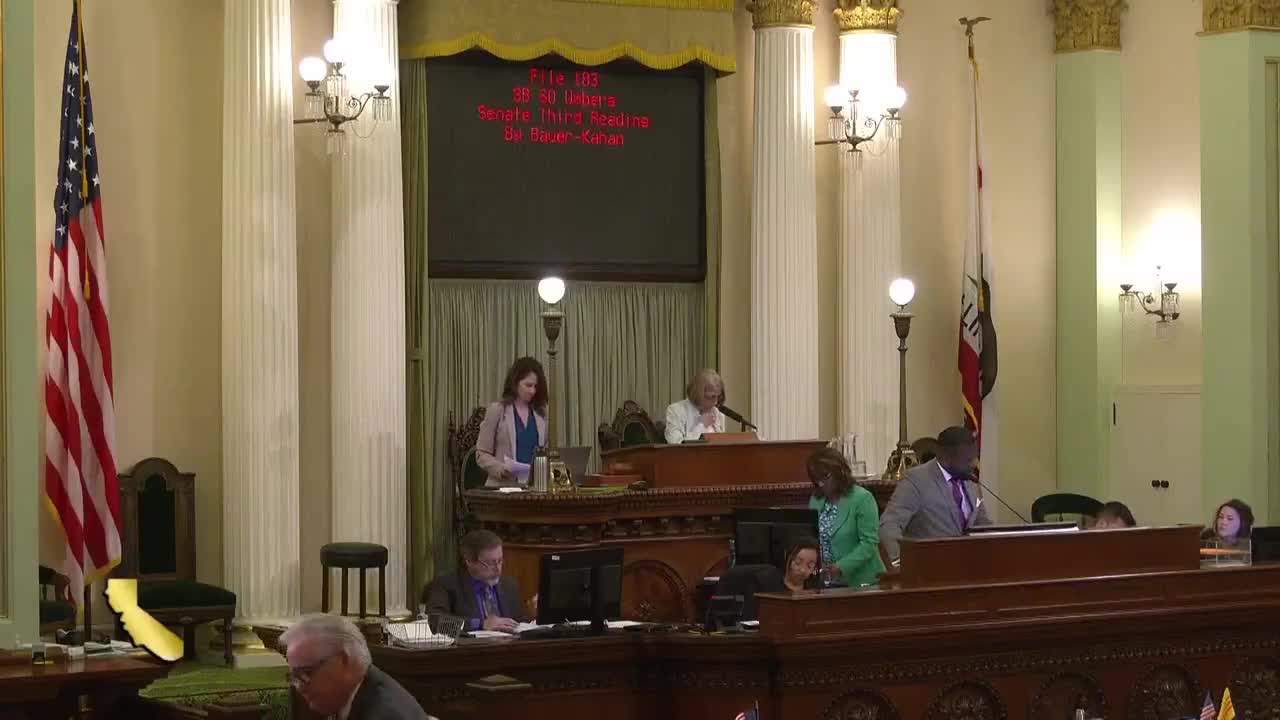 1MIN
Assembly Floor
 5MIN
Assembly Standing Committee on Governmental Organization
 11MIN
Senate Standing Committee on Governmental Organization
Bill Author