SB 730: Home care aides.
- Session Year: 2023-2024
- House: Senate
- Latest Version Date: 2023-03-30
Current Status:
Failed
(2024-02-01: Returned to Secretary of Senate pursuant to Joint Rule 56.)
Introduced
In Committee
First Chamber
In Committee
Second Chamber
Enacted
Existing law, the Home Care Services Consumer Protection Act, provides for the licensure and regulation of home care organizations by the State Department of Social Services and for the registration of home care aides. Existing law authorizes a registered home care aide to provide certain home care services and assistance to a client, including assisting with medication that the client self-administers.
This bill would authorize a registered home care aide to read the clients blood pressure and body temperature, as specified. The bill would specify that authorized home care services include taking a reading of the clients digital blood pressure pressure, body temperature, or oxygen level from a device provided by the client and reporting the reading to the clients nurse, doctor, or family representative and assisting the client with emptying their colostomy bag, catheter bag, or urostomy bag. The bill would clarify that a home care aide may assist with medication that the client self-administers by opening the container, filling the medication pill box organizer, ensuring that the client is aware of the written medication instructions, and assisting the client in the application of topical medication, as specified.
Existing law, the Home Care Services Consumer Protection Act, provides for the licensure and regulation of home care organizations by the State Department of Social Services and for the registration of home care aides. Existing law authorizes a registered home care aide to provide certain home care services and assistance to a client, including assisting with medication that the client self-administers.
This bill would authorize a registered home care aide to read the clients blood pressure and body temperature, as specified. The bill would specify that authorized home care services include taking a reading of the clients digital blood pressure or oxygen level from a device provided by the client and reporting the reading to the clients nurse, doctor, or family representative and assisting the client with emptying their colostomy bag, catheter bag, or urostomy bag. The bill would clarify that a home care aide may assist with medication that the client self-administers by opening the container, ensuring that the client is aware of the written medication instructions, and assisting the client in the application of topical medication, as specified.
For purposes of this chapter, the following definitions shall apply:
(a)Affiliated home care aide means an individual, 18 years of age or older, who is employed by a home care organization to provide home care services to a client and is listed on the home care aide registry.
(b)Child or children means an individual or individuals under 18 years of age.
(c)Client means an individual who receives home care services from a registered home care aide.
(d)Department means the State Department of Social Services.
(e)Director means the Director of Social Services.
(f)Family member means any spouse, by marriage or otherwise, domestic partner, child or stepchild, by natural birth or by adoption, parent, brother, sister, half-brother, half-sister, parent-in-law, brother-in-law, sister-in-law, nephew, niece, aunt, uncle, first cousin, or any person denoted by the prefix grand or great, or the spouse of any of these persons, even if the marriage has been terminated by death or dissolution.
(g)Home care aide applicant means an individual, 18 years of age or older, who is requesting to become a registered home care aide and the department has received and is processing the individuals complete home care aide application and nonrefundable application fee.
(h)Home care aide application means the official form, designated by the department, to request to become a registered home care aide.
(i)Home care aide registry means a department-established and department-maintained internet website of registered home care aides and home care aide applicants, which includes all of the following: the individuals name, registration number, registration status, registration expiration date, and, if applicable, the home care organization to which the affiliated home care aide or affiliated home care aide applicant is associated.
(j)Home care organization means an individual, 18 years of age or older, firm, partnership, corporation, limited liability company, joint venture, association, or other entity that arranges for home care services by an affiliated home care aide to a client, and is licensed pursuant to this chapter.
(k)Home care organization applicant means an individual, 18 years of age or older, or a firm, partnership, corporation, limited liability company, joint venture, association, or other entity where the individual or individuals applying for the license are 18 years of age or older and are requesting to become a home care organization licensee and the department has received and is processing the complete home care organization application and nonrefundable application fee.
(l)Home care organization application means the official form, designated by the department, to request to become a licensed home care organization.
(m)Home care organization licensee means an individual, 18 years of age or older, firm, partnership, corporation, limited liability company, joint venture, association, or other entity having the authority and responsibility for the operation or management of a licensed home care organization.
(n)(1)Home care services means nonmedical services and assistance provided by a registered home care aide to a client who, because of advanced age or physical or mental disability, cannot perform these services. These services enable the client to remain in the clients residence and include, but are not limited to, assistance with the following: bathing, dressing, feeding, exercising, personal hygiene and grooming, transferring, ambulating, positioning, toileting and incontinence care, assisting with medication that the client self-administers, housekeeping, meal planning and preparation, laundry, transportation, correspondence, making telephone calls, shopping for personal care items or groceries, companionship, taking a reading of the clients digital blood pressure or body temperature from a device provided by the client and reporting the reading to the clients nurse, doctor, or family representative, taking a reading of the clients oxygen level from a device provided by the client and reporting the reading to the clients nurse, doctor, or family representative, and assisting the client with emptying their colostomy bag, catheter bag, or urostomy bag. This subdivision shall not authorize a registered home care aide to assist with medication that the client self-administers that would otherwise require administration or oversight by a licensed health care professional.
(2)For purposes of this subdivision, assisting with medication that the client self-administers means all of the following: includes, but is not limited to, the following nonmedical services:
(A)Opening the medication container.
(B)Filling the medication pill box organizer.
(B)(C)Ensuring that the client is aware of the written medication instructions.
(C)(D)Assisting the client in the application of topical medication, if the home care aide uses gloves and applicators as necessary.
(o)Registered home care aide means an affiliated home care aide or independent home care aide, 18 years of age or older, who is listed on the home care aide registry.
(p)Independent home care aide means an individual, 18 years of age or older, who is not employed by a home care organization, but who is listed on the home care aide registry and is providing home care services through a direct agreement with a client.
SEC. 2.Section 1796.13 is added to the Health and Safety Code, to read:1796.13.If a client is under the supervision of a nurse, a home care aide may read the blood pressure and the body temperature of the client, if the home care aide records that information and provides it to the supervising nurse upon request.For purposes of this chapter, the following definitions shall apply:
(a)Affiliated home care aide means an individual, 18 years of age or older, who is employed by a home care organization to provide home care services to a client and is listed on the home care aide registry.
(b)Child or children means an individual or individuals under 18 years of age.
(c)Client means an individual who receives home care services from a registered home care aide.
(d)Department means the State Department of Social Services.
(e)Director means the Director of Social Services.
(f)Family member means any spouse, by marriage or otherwise, domestic partner, child or stepchild, by natural birth or by adoption, parent, brother, sister, half-brother, half-sister, parent-in-law, brother-in-law, sister-in-law, nephew, niece, aunt, uncle, first cousin, or any person denoted by the prefix grand or great, or the spouse of any of these persons, even if the marriage has been terminated by death or dissolution.
(g)Home care aide applicant means an individual, 18 years of age or older, who is requesting to become a registered home care aide and the department has received and is processing the individuals complete home care aide application and nonrefundable application fee.
(h)Home care aide application means the official form, designated by the department, to request to become a registered home care aide.
(i)Home care aide registry means a department-established and department-maintained Internet Web site internet website of registered home care aides and home care aide applicants, which includes all of the following: the individuals name, registration number, registration status, registration expiration date, and, if applicable, the home care organization to which the affiliated home care aide or affiliated home care aide applicant is associated.
(j)Home care organization means an individual, 18 years of age or older, firm, partnership, corporation, limited liability company, joint venture, association, or other entity that arranges for home care services by an affiliated home care aide to a client, and is licensed pursuant to this chapter.
(k)Home care organization applicant means an individual, 18 years of age or older, or a firm, partnership, corporation, limited liability company, joint venture, association, or other entity where the individual or individuals applying for the license are 18 years of age or older and are requesting to become a home care organization licensee and the department has received and is processing the complete home care organization application and nonrefundable application fee.
(l)Home care organization application means the official form, designated by the department, to request to become a licensed home care organization.
(m)Home care organization licensee means an individual, 18 years of age or older, firm, partnership, corporation, limited liability company, joint venture, association, or other entity having the authority and responsibility for the operation or management of a licensed home care organization.
(n)(1)Home care services means nonmedical services and assistance provided by a registered home care aide to a client who, because of advanced age or physical or mental disability, cannot perform these services. These services enable the client to remain in his or her the clients residence and include, but are not limited to, assistance with the following: bathing, dressing, feeding, exercising, personal hygiene and grooming, transferring, ambulating, positioning, toileting and incontinence care, assisting with medication that the client self-administers, housekeeping, meal planning and preparation, laundry, transportation, correspondence, making telephone calls, shopping for personal care items or groceries, and companionship. companionship, taking a reading of the clients digital blood pressure from a device provided by the client and reporting the reading to the clients nurse, doctor, or family representative, taking a reading of the clients oxygen level from a device provided by the client and reporting the reading to the clients nurse, doctor, or family representative, and assisting the client with emptying their colostomy bag, catheter bag, or urostomy bag. This subdivision shall not authorize a registered home care aide to assist with medication that the client self-administers that would otherwise require administration or oversight by a licensed health care professional.
(2)For purposes of this subdivision, assisting with medication that the client self-administers means all of the following:
(A)Opening the medication container.
(B)Ensuring that the client is aware of the written medication instructions.
(C)Assisting the client in the application of topical medication, if the home care aide uses gloves and applicators as necessary.
(o)Registered home care aide means an affiliated home care aide or independent home care aide, 18 years of age or older, who is listed on the home care aide registry.
(p)Independent home care aide means an individual, 18 years of age or older, who is not employed by a home care organization, but who is listed on the home care aide registry and is providing home care services through a direct agreement with a client.
SEC. 2.Section 1796.13 is added to the Health and Safety Code, to read:1796.13.If a client is under the supervision of a nurse, a home care aide may read the blood pressure and the body temperature of the client, if the home care aide records that information and provides it to the supervising nurse upon request.
|
Date
|
Status
|
|---|---|
| Feb 1, 2024 | Returned to Secretary of Senate pursuant to Joint Rule 56. |
| May 18, 2023 | May 18 hearing: Held in committee and under submission. |
| May 12, 2023 | Set for hearing May 18. |
| May 1, 2023 | May 1 hearing: Placed on APPR suspense file. |
| Apr 21, 2023 | Set for hearing May 1. |
| Apr 18, 2023 | From committee: Do pass and re-refer to Com. on APPR. (Ayes 4. Noes 0. Page 749.) (April 17). Re-referred to Com. on APPR. |
| Mar 30, 2023 | From committee with author's amendments. Read second time and amended. Re-referred to Com. on HUMAN S. |
| Mar 13, 2023 | Set for hearing April 17. |
| Mar 1, 2023 | Referred to Com. on HUMAN S. |
| Feb 21, 2023 | From printer. May be acted upon on or after March 20. |
| Feb 17, 2023 | Introduced. Read first time. To Com. on RLS. for assignment. To print. |
|
Date
|
Description
|
Location
|
Votes
|
|
|---|---|---|---|---|
| May 1, 2023 | Placed on suspense file | Senate Standing Committee on Appropriations |
Passed |
|
| Apr 17, 2023 | Do pass, but first be re-referred to the Committee on [Appropriations] | Senate Standing Committee on Human Services |
Passed |
This list shows positions taken on this bill by organizations on the date displayed, which is linked to the original source.
Positions by individuals are not included.
|
Organization
|
Position
|
Date
|
|---|---|---|
| Association Of Regional Center Agencies | ** Support | |
| BrightStar Care | * Support | Apr 17, 2023 |
| California Nurses Association | * Support | Apr 17, 2023 |
| Home Care Association Of America | * Support | Apr 17, 2023 |
| Home Instead | * Support | Apr 17, 2023 |
SENATE COMMITTEE ON
Senator Anthony Portantino, Chair
2023 - 2024 Regular Session
SB 730 (Ochoa Bogh) - Home care aides
Version: | Policy Vote: |
Urgency: | Mandate: |
Hearing Date: | Consultant: |
Bill Summary:
SB 730 would expand the activities a home care aide may perform.
Fiscal Impact:
The California Department of Social Services (CDSS) estimates ongoing General Fund costs of at least $1 million to administer and oversee the provisions. CDSS anticipates costs for administering training, creating regulations, enforcement, and working in partnership with the California Department of Public Health. CDSS indicates that current Home Care Aide registration fee revenues are insufficient to cover the costs of the program, creating cost pressures on the fee amounts.
Background:
Current law establishes the Home Care Services Consumer Protection Act which requires Home Care Organizations (HCOs) to be licensed and creates a public online registry for Home Care Aides (HCAs) who have been background checked. The law is intended to promote consumer protection for elderly and disabled individuals who hire private aides to come into their homes and provide assistance with activities of daily living. CDSS is responsible for licensing HCOs, including processing applications, receiving and responding to complaints and conducting unannounced visits to ensure compliance.
Existing law defines “home care services” to mean “nonmedical services and assistance provided by a registered home care aide to a client who, because of advanced age or physical or mental disability, cannot perform these services. These services enable the client to remain in his or her residence and include, but are not limited to, assistance with the following: bathing, dressing, feeding, exercising, personal hygiene and grooming, transferring, ambulating, positioning, toileting and incontinence care, assisting with medication that the client self-administers, housekeeping, meal planning and preparation, laundry, transportation, correspondence, making telephone calls, shopping for personal care items or groceries, and companionship. The law prohibits a registered home care aide “to assist with medication that the client self-administers that would otherwise require administration or oversight by a licensed health care professional.”
Proposed Law:
Specific provisions of the bill would:
- Expand the list of services home care aides can assist a client with to include:
- Taking a reading of the client’s digital blood pressure or body temperature from a device provided by the client and reporting the reading to the client’s nurse, doctor, or family representative.
- Taking a reading of the client’s oxygen level from a device provided by the client and reporting the reading to the client’s nurse, doctor, or family representative.
- Assisting the client with emptying their colostomy bag, catheter bag, or urostomy bag.
- Define “assisting with medication that the client self-administers” to mean including, but not limited to:
- Opening the medication container.
- Filling the medication pill box organizer.
- Ensuring that the client is aware of the written medication instructions.
- Assisting the client in the application of topical medication, if the home care aide uses gloves and applicators as necessary.
-- END --
SENATE COMMITTEE ON HUMAN SERVICES
Senator Alvarado-Gil, Chair
2023 - 2024 Regular
Bill No: | SB 730 | ||
Author: | Ochoa Bogh | ||
Version: | February 17, 2023 | Hearing Date: | April 17, 2023 |
Urgency: | No | Fiscal: | Yes |
Consultant: | Heather Hopkins | ||
Subject: Home care aides
SUMMARY
This bill expands the activities a home care aide may perform to include: taking blood pressure readings, oxygen levels, and assisting in emptying colostomy, catheter, or urostomy bags. This bill specifically defines “assisting with medication that the client self-administers” to include, but not limited to: opening medication containers, filling the medication pill box organizer, ensuring clients are aware of written medication instruction, and assisting in application of topical medications.
ABSTRACT
Existing Law:
- Licenses and regulates home health agencies, under the California Department of Public Health (CDPH), to provide skilled nursing services to patients in the home. (HSC 1725, et seq.)
- Permits a home health agency to also provide therapeutic services, in addition to skilled nursing services, which include physical, speech, occupational therapy, medical social services, or home health aide services. (HSC 1727.1)
- Defines “home health aide” as an aide who has successfully completed a CDPH-approved training program, is employed by a home health agency or hospice program, and provides personal care services in the patient’s home. (HSC 1727(c))
- Defines “home health aide services” as personal care services provided under a plan of treatment prescribed by the patient’s physician, and requires home health aide services to be provided by a person certified by CDPH as a home health aide. Specifies that services which do not involve personal care services provided under a plan of treatment prescribed by a physician may be provided by a person who is not a certified home health aide. (HSC 1727(d))
- Requires an applicant for certification as a home health aide to have successfully completed a training program with a minimum of 75 hours or an equivalent competency evaluation program approved by CDPH, and obtain a criminal record clearance. Requires certificates issued to home health aides to be renewed every two years, conditioned on the certificate holder obtaining a criminal record clearance. (HSC 1736.1)
- Defines “affiliate home care aide” to mean an adult individual who is employed by a home care organization to provide home care services to a client and is listed on the home care registry. (HSC 1796.12)
- Defines “home care organization” to mean an adult individual or entity that arranges for home care services by an affiliated home care aide to a client and is licensed. (HSC 1796.12)
- Defines “home care services” as nonmedical services and assistance provided by a registered home care aide to a client who, due to advanced age or physical or mental disability cannot perform these services and uses such services to remain in his or her residence. (HSC 1796.12)
- Defines services that can be performed by a home care aid as including, but not limited to, assisting with bathing, dressing, feeding, exercising, personal hygiene and grooming, transferring, ambulating, positioning, toileting and incontinence care, assisting with medication that the client- self-administers, housekeeping, meal planning and preparation, laundry, transportation, correspondence, making telephone calls, shopping for personal care items or groceries, and companionship. (HSC 1796.12)
- Defines “independent home care aide” to mean an adult individual who is not employed by a home care organization but who is listed on the home care aide registry and is providing home care services through a direct agreement with a client. (HSC 1796.12)
- Defines “registered home care aide” to mean an affiliated home care aide or independent home care aide who is listed on the home care aide registry. (HSC 1796.12)
This Bill:
- Expands the list of services home care aides can assist a client with to include:
- Taking a reading of the client’s digital blood pressure from a device provided by the client and reporting the reading to the client’s nurse, doctor, or family representative
- Taking a reading of the client’s oxygen level from a device provided by the client and reporting the reading to the client’s nurse, doctor, or family representative
- Assisting the client with emptying their colostomy bag, catheter bag, or urostomy bag.
- Taking a reading of the client’s digital blood pressure from a device provided by the client and reporting the reading to the client’s nurse, doctor, or family representative
- Defines “assisting with medication that the client self-administers” to mean including, but not limited to:
- Opening the medication container
- Filling the medication pill box organizer
- Ensuring that the client is aware of the written medication instructions
- Assisting the client in the application of topical medication, if the home care aide uses gloves and applicators as necessary
- Opening the medication container
- Provides that if a client is under the supervision of a nurse, a home care aide may read the blood pressure and the body temperature of the client, if the home care aide records that information and provides it to the supervising nurse upon request.
FISCAL IMPACT
This bill has not been yet analyzed by a fiscal committee.
BACKGROUND AND DISCUSSION
Purpose of the Bill:
According to the author, “The Legislative Analyst’s Office estimates that the number of California seniors with disabilities… will increase by 135 percent by 2060. Despite needing extra assistance, many of these individuals could stay in their homes and live independently with the help of custodial caregivers like home care aides. However, due to the narrow interpretation [via a fact sheet produced by the Home Care Services Bureau of the Department of Social Services] of Health and Safety Code Section 1796.12(n), home care aides are prohibited from performing simple tasks like opening prescription pill bottles and filling pill containers. As California’s population ages, it is important to ensure that caregivers are authorized to provide the nonmedical services necessary to allow seniors and individuals with disabilities to remain in their homes for as long as possible.”
CDSS Home Care Services Fact Sheet
Under the umbrella of DSS is the Home Care Services Bureau which licenses Home Care Organizations HCO). In April 2017 CDSS issued a fact sheet on home care services that outlined what HCOs and Home Care Aides (HCA) aides could and could not do under their interpretation of the statue. The fact sheet specifically noted “HCAs are not authorized to assist with medication that requires administration or oversight by a licensed medical professional. For example, a HCA may remind clients to take their medication; however, they may not directly provide it to the client. A HCA my instruct clients to fill a pillbox per their physician’s instructions but cannot fill the pillbox for them. There is no ‘medication waiver’ that will allow the HCO or JCA legal authority to assist or provide medication.” As a result of this narrow interpretation of the law, HCA cannot, for example, help someone with arthritis open their bill bottle. The April 2017 fact sheet represented a narrow interpretation of the statute. This bill seeks to codify a more expansive view of duties that HCA can perform. It is the author and sponsors’ belief that these more expanded duties will help seniors and disabled persons to remain in their homes for longer periods of time.
Needs of California’s Aging Population
In California, by the year 2030, one in four Californians will be over the age of 60.[1] As the number of older Californians grows, so too does the necessity to meet their needs, including their desire to age in place. Aging in place requires a system of care and support that allows older Californians to meet their care needs while remaining in their homes. Part of this solution include home health aides and the services that provide.
In 2022, LeadingAge California was awarded over $25 million by the California Department of Health Care Access and Information (HCAI) in order to implement The Gateway-In Project. The Gateway-In Project will add 2,700 Certified Nursing and Assistance and Home Health Aides to the workforce through their training and job placement programs.
Georgetown University Health Policy Institute found that 66 percent of adults in the United States use prescription drugs. With common chronic conditions this number is even high – with 89 percent of those with arthritis and 98 percent of people with diabetes using prescription drugs. With advanced aged comes even more increased use of prescription drugs. For those aged 80 and over, 92 percent of men and 90 percent of women use prescription drugs.[2]
As California’s population ages, and the percentage of Californians using prescription drugs increases, having assistance taking medication – including opening pill bottles and filling daily pill cases – could help to keep people in their homes as they are able to manage their medical conditions.
This bill would clarify that home aides can help with basic needs such as opening a pill bottle and reading prescription instructions. This may well allow a certain group of seniors to stay living in their homes for longer periods of time without needing increased care.
Home health aide training requirements.
Home health aides are direct care workers employed by home health agencies or hospice programs to provide personal care services in the homes of patients. Under statute, certified home health aides are required to take a minimum of 75 hours of training. However, current regulations require the basic training program for certification to be a minimum of 120 hours, with the classroom hours limited to 75 hours. The majority of the training covers personal care services, such as hygiene and mobility. CDPH approves two different types of training programs: a 40 hour program for applicants that are already certified nurse assistants, and therefore have already completed some related training, and the full 120 hour program for applicants without prior certification as a nurse assistant. The 40 hour programs are generally one week long and vary in cost, hovering around the $500 mark. There are also 120 hour programs, though fewer in numbers, and the price for these programs is in the thousands.
Master Plan on Aging.
In January 2021, the Newsom Administration published its Master Plan for Aging, which is intended to be a ten-year blueprint for state government, local government, the private sector, and philanthropy to prepare the state for the coming demographic changes and “continue California’s leadership in aging, disability, and equity.” The Master Plan for Aging outlines five goals, 23 strategies, and over 100 initiatives. Goal two of the Master Plan, “Health Reimagined,” focuses on ensuring that older adults have access to the care and services needed to optimize health and quality of life and continue to live where they choose. The Master Plan notes that over half of older adults, especially women, will eventually need home care or adult day health care to assist with daily activities such as meal preparation, physical activity, and bathing. One of the key strategies outlined under “Health Reimagined” is “Bridging Health Care with Home,” including testing models of health care delivery that maximize access to services and avoid unnecessary institutionalization.
Goal three of the Master Plan, “Inclusion and Equity, not Isolation,” focuses on opportunities for community engagement and protection from isolation. Home health aides help support these strategies outlined in the Master Plan by providing services that reduce isolation and allow older adults to receive care while remaining in their homes and communities. This desire to age in place (AIP) not only has benefits to the individual, but is also economically beneficial. In a four-year analysis of AIP, the total care costs for residents were thousands less than traditional care options. Costs for living and health care never approached the costs for nursing homes and assisted-living services. In addition, AIP residents had improved mental and physical health outcomes.[3]
Master Plan for Aging indicates that California will face a labor shortage up to 3.2 million paid direct care workers, which includes home health aides. As greater numbers of older adults choose to age in place, the shortage of these essential workers severely impacts the wellbeing of older adults and individuals with disabilities residing at home. This bill does not expand the available workforce, it would provide the existing home health aide workforce a more clear set of duties that would help seniors continue to reside at home.
COMMENTS
California’s population is rapidly aging, with increased healthcare problems that often come with age. By clarifying what tasks a home care aide can perform, this bill will help to keep people in their homes longer, without having to transition to expensive facilities.
SUPPORT/OPPOSITION
Arguments in Support:
Homecare Association of America writes, “Seniors whom we have been serving have requested that Home Care Aides provide them assistance with opening medication containers, which can be exceedingly difficult for a senior or an adult with a disability to do by themselves. In our discussions with DSS staff we were advised that legislation would be required to allow the HCA to open the medication container for them and read the instructions on the label to the client. This service, ‘assist[ing] with medication that the client self-administers’ to include opening the medication container and ensuring that the client is aware of the written instructions on the container, is entirely nonmedical in nature.
Arguments in Opposition:
The California Nurses Association writes, “SB 730 would place patients in danger by expanding the permissible duties of registered home care aides to perform patient care even though registered home care aides have no clinical education, training, or experience requirements. Any person over the age of eighteen can become a registered home care aide without any training, education, or clinical experience. All that is required to become a registered home care aide is to submit a criminal background statement, a set of fingerprints, and an application. Requirements to become a registered home care aide are only slightly better if the person works for a home care organization, which requires only five hours of training before working with a client, consisting of two hours of orientation and three hours of safety training but no clinical training.”
POSITIONS
Support:
Association of Regional Center Agencies
Home Care Association of America
Oppose:
California Nurses Association
-- END --
https://www.aging.ca.gov/download.ashx?lE0rcNUV0zZ4fIvtjh8hzg%3d%3d ↑
https://hpi.georgetown.edu/rxdrugs/ ↑
Science Daily - Aging in place preserves seniors' independence, reduces care costs, researchers find ↑
Discussed in Hearing
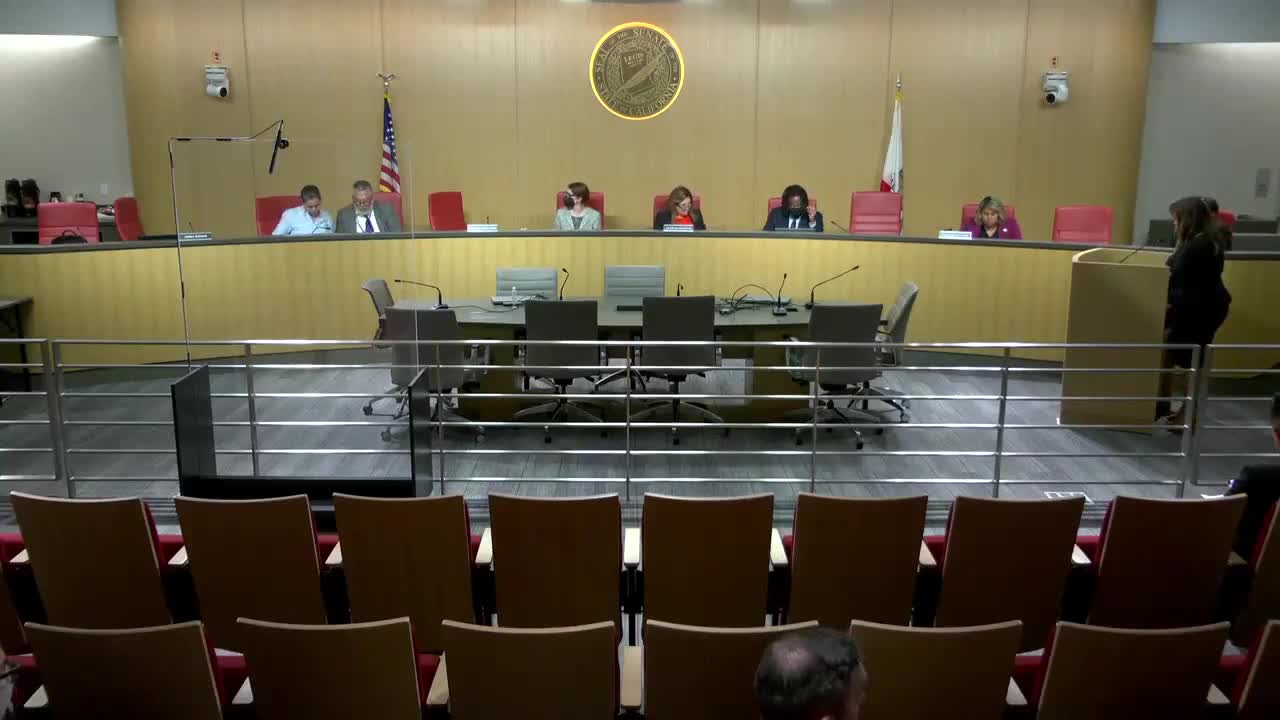 17MIN
Senate Standing Committee on Human Services
Bill Author

Bill Co-Author(s):