AB 1144: Prisons: elderly employment.
- Session Year: 2025-2026
- House: Assembly
- Latest Version Date: 2025-04-10
Current Status:
Failed
(2026-02-02: From committee: Filed with the Chief Clerk pursuant to Joint Rule 56.)
Introduced
In Committee
Awaiting First Chamber Vote
Passed First Chamber
In Committee
Awaiting Second Chamber Vote
Passed Second Chamber
Enacted
What does this bill do?
This bill lets people in state prison or county jail who are 55 or older, or who have a mental or physical disability, choose to keep working, cut back their hours, or stop working and retire. It prevents prisons and jails from punishing those inmates for refusing work — for example by issuing disciplinary write‑ups, changing security level, transferring them, placing them in segregation, or reducing privileges — and defines mental and physical disability by reference to state law.
The summary is provided by generative AI which can make mistakes. For original language, please view the details in the table below.
The California Constitution prohibits involuntary servitude, but exempts from this provision any servitude that is a punishment for a crime. Existing law requires the Department of Corrections and Rehabilitation (CDCR) to require each able-bodied inmate, including a condemned inmate, to work as prescribed by CDCR regulations. Existing CDCR regulations require each inmate to participate in 8 hours per day of programming, including labor, education, counseling, physical fitness, and other programs, 5 days per week.
Existing law also authorizes a board of supervisors or city council, through an order, to require all persons confined in a county or city jail, industrial farm, or road camp, as specified, to perform labor on the public works or ways in the county or city, respectively, and to engage in the prevention and suppression of forest, brush, and grass fires upon lands within the county or city, respectively.
Notwithstanding any other law, the California Constitution, as amended by Proposition 57 at the November 8, 2016, statewide general election, grants CDCR the authority to award credits earned for good behavior and approved rehabilitative or educational achievements.
This bill would authorize inmates 55 years of age or older, or inmates with mental or physical disabilities, as defined, except those sentenced to death, in state prison or county jail to elect whether to continue to work, reduce the number of hours worked, or retire. The bill would prohibit CDCR from punishing the inmate, in specified ways including a change or reduction in privilege group assignment, based on their election.
The California Constitution prohibits involuntary servitude, but exempts from this provision any servitude that is a punishment for a crime. Existing law requires the Department of Corrections and Rehabilitation (CDCR) to require each able-bodied inmate, including a condemned inmate, to work as prescribed by CDCR regulations. Existing CDCR regulations require each inmate to participate in 8 hours per day of programming, including labor, education, counseling, physical fitness, and other programs, 5 days per week.
Existing law also authorizes a board of supervisors or city council, through an order, to require all persons confined in a county or city jail, industrial farm, or road camp, as specified, to perform labor on the public works or ways in the county or city, respectively, and to engage in the prevention and suppression of forest, brush, and grass fires upon lands within the county or city, respectively.
Notwithstanding any other law, the California Constitution, as amended by Proposition 57 at the November 8, 2016, statewide general election, grants CDCR the authority to award credits earned for good behavior and approved rehabilitative or educational achievements.
This bill would authorize inmates 55 years of age or older, except those sentenced to death, in state prison or county jail to elect whether to continue to work, reduce the number of hours worked, or retire. The bill would prohibit CDCR from punishing the inmate, in specified ways including a change or reduction in privilege group assignment, based on their election.
(a)(1)The Department of Corrections and Rehabilitation shall require of every able-bodied prisoner under 55 years of age or any prisoner who does not have a mental or physical disability who is imprisoned in any state prison as many hours of faithful labor in each day and every day during their term of imprisonment as shall be prescribed by the rules and regulations of the Secretary of the Department of Corrections and Rehabilitation.
(2)Prisoners 55 years of age and older or prisoners with mental or physical disabilities shall elect whether to continue to work, to reduce the number of hours worked, or to cease working and retire.
(b)Whenever by any statute a price is required to be fixed for any services to be performed in connection with the work program of the Department of Corrections, the compensation paid to prisoners shall be included as an item of cost in fixing the final statutory price.
(c)Prisoners not engaged in work programs under the jurisdiction of the Prison Industry Authority, but who are engaged in productive labor outside of those programs may be compensated in like manner. The compensation of prisoners, including those 55 years of age and older or prisoners with mental and physical disabilities and who have opted for part-time work, shall be paid either out of funds appropriated by the Legislature for that purpose or out of other funds available to the Department of Corrections and Rehabilitation for expenditure, as the Director of Finance may direct.
(d)When a prisoner escapes, the secretary shall determine what portion of their earnings shall be forfeited and that forfeiture shall be deposited in the State Treasury in a fund known as the Inmate Welfare Fund of the Department of Corrections and Rehabilitation.
(e)The department shall not punish a prisoner who refuses to work pursuant to subdivision (a). For the purposes of this subdivision, punishment includes, but is not limited to:
(1)Disciplinary writeup.
(2)Change in security level.
(3)Involuntary transfer to a different correctional institution.
(4)Transfer to a special housing unit or administrative segregation.
(5)Change or reduction in privilege group assignment.
(6)Limiting participation in voluntary programming.
(f)For the purposes of this section, the following terms have the following meanings:
(1)Mental disability has the same meaning as in Section 12926 of the Government Code.
(2)Physical disability has the same meaning as in Section 12926 of the Government Code.
SEC. 2.Section 4017 of the Penal Code is amended to read:4017.(a)(1)All persons under 55 years of age who are confined in the county jail, industrial farm, road camp, or city jail under a final judgment of imprisonment rendered in a criminal action or proceeding proceeding, and all persons under 55 years of age or persons who do not have a mental or physical disability, who are confined in the county jail, industrial farm, road camp, or city jail as a condition of probation after suspension of imposition of a sentence or suspension of execution of sentence sentence, may be required by an order of the board of supervisors or city council to perform labor on the public works or ways in the county or city, respectively, and to engage in the prevention and suppression of forest, brush and grass fires upon lands within the county or city, respectively, or upon lands in adjacent counties where the suppression of fires would afford fire protection to lands within the county.
(2)A person 55 years of age or older or a person who has a mental or physical disability shall elect whether to continue to work, to reduce the number of hours worked, or to cease working and retire.
(b)Whenever any person so in custody shall suffer injuries or death while working in the prevention or suppression of forest, brush, or grass fires they shall be considered to be an employee of the county or city, respectively, for the purposes of compensation under the provisions of the Labor Code regarding workmens compensation and that work shall be performed under the direct supervision of a local, state or federal employee whose duties include fire prevention and suppression work. A regularly employed member of an organized fire department shall not be required to directly supervise more than 20 persons so in custody.
(c)As used in this section, labor on the public works includes clerical and menial labor in the county jail, industrial farm, camps maintained for the labor of persons upon the ways in the county, or city jail.
(d)For the purposes of this section, the following terms have the following meanings:
(1)Mental disability has the same meaning as in Section 12926 of the Government Code.
(2)Physical disability has the same meaning as in Section 12926 of the Government Code.
(a)(1)The Department of Corrections and Rehabilitation shall require of every able-bodied prisoner under 55 years of age imprisoned in any state prison as many hours of faithful labor in each day and every day during his or her their term of imprisonment as shall be prescribed by the rules and regulations of the Director of Corrections. Secretary of the Department of Corrections and Rehabilitation.
(2)Prisoners 55 years of age and older shall elect whether to continue to work, to reduce the number of hours worked, or to cease working and retire.
Whenever(b)Whenever by any statute a price is required to be fixed for any services to be performed in connection with the work program of the Department of Corrections, the compensation paid to prisoners shall be included as an item of cost in fixing the final statutory price.
Prisoners(c)Prisoners not engaged on in work programs under the jurisdiction of the Prison Industry Authority, but who are engaged in productive labor outside of such those programs may be compensated in like manner. The compensation of such prisoners prisoners, including those 55 years of age and older and who have opted for part-time work, shall be paid either out of funds appropriated by the Legislature for that purpose or out of such other funds available to the Department of Corrections and Rehabilitation for expenditure, as the Director of Finance may direct.
When any(d)When a prisoner escapes, the director secretary shall determine what portion of his or her their earnings shall be forfeited and such that forfeiture shall be deposited in the State Treasury in a fund known as the Inmate Welfare Fund of the Department of Corrections. Corrections and Rehabilitation.
(e)The department shall not punish a prisoner who refuses to work pursuant to subdivision (a). For the purposes of this subdivision, punishment includes, but is not limited to:
(1)Disciplinary writeup.
(2)Change in security level.
(3)Involuntary transfer to a different correctional institution.
(4)Transfer to a special housing unit or administrative segregation.
(5)Change or reduction in privilege group assignment.
(6)Limiting participation in voluntary programming.
SEC. 2.Section 4017 of the Penal Code is amended to read:4017.(a)(1)All persons under 55 years of age who are confined in the county jail, industrial farm, road camp, or city jail under a final judgment of imprisonment rendered in a criminal action or proceeding and all persons under 55 years of age who are confined in the county jail, industrial farm, road camp, or city jail as a condition of probation after suspension of imposition of a sentence or suspension of execution of sentence may be required by an order of the board of supervisors or city council to perform labor on the public works or ways in the county or city, respectively, and to engage in the prevention and suppression of forest, brush and grass fires upon lands within the county or city, respectively, or upon lands in adjacent counties where the suppression of fires would afford fire protection to lands within the county.
(2)A person 55 years of age or older shall elect whether to continue to work, to reduce the number of hours worked, or to cease working and retire.
Whenever(b)Whenever any such person so in custody shall suffer injuries or death while working in the prevention or suppression of forest, brush brush, or grass fires he they shall be considered to be an employee of the county or city, respectively, for the purposes of compensation under the provisions of the Labor Code regarding workmens compensation and such that work shall be performed under the direct supervision of a local, state or federal employee whose duties include fire prevention and suppression work. A regularly employed member of an organized fire department shall not be required to directly supervise more than 20 such persons so in custody.
As(c)As used in this section, labor on the public works includes clerical and menial labor in the county jail, industrial farm, camps maintained for the labor of such persons upon the ways in the county, or city jail.
|
Date
|
Status
|
|---|---|
| Feb 2, 2026 | From committee: Filed with the Chief Clerk pursuant to Joint Rule 56. |
| Jan 31, 2026 | Died pursuant to Art. IV, Sec. 10(c) of the Constitution. |
| May 23, 2025 | In committee: Held under submission. |
| Apr 30, 2025 | In committee: Set, first hearing. Referred to suspense file. |
| Apr 21, 2025 | Re-referred to Com. on APPR. |
| Apr 10, 2025 | Read second time and amended. |
| Apr 9, 2025 | From committee: Amend, and do pass as amended and re-refer to Com. on APPR. (Ayes 5. Noes 0.) (April 8). |
| Mar 10, 2025 | Referred to Com. on PUB. S. |
| Feb 21, 2025 | From printer. May be heard in committee March 23. |
| Feb 20, 2025 | Read first time. To print. |
|
Date
|
Description
|
Location
|
Votes
|
|
|---|---|---|---|---|
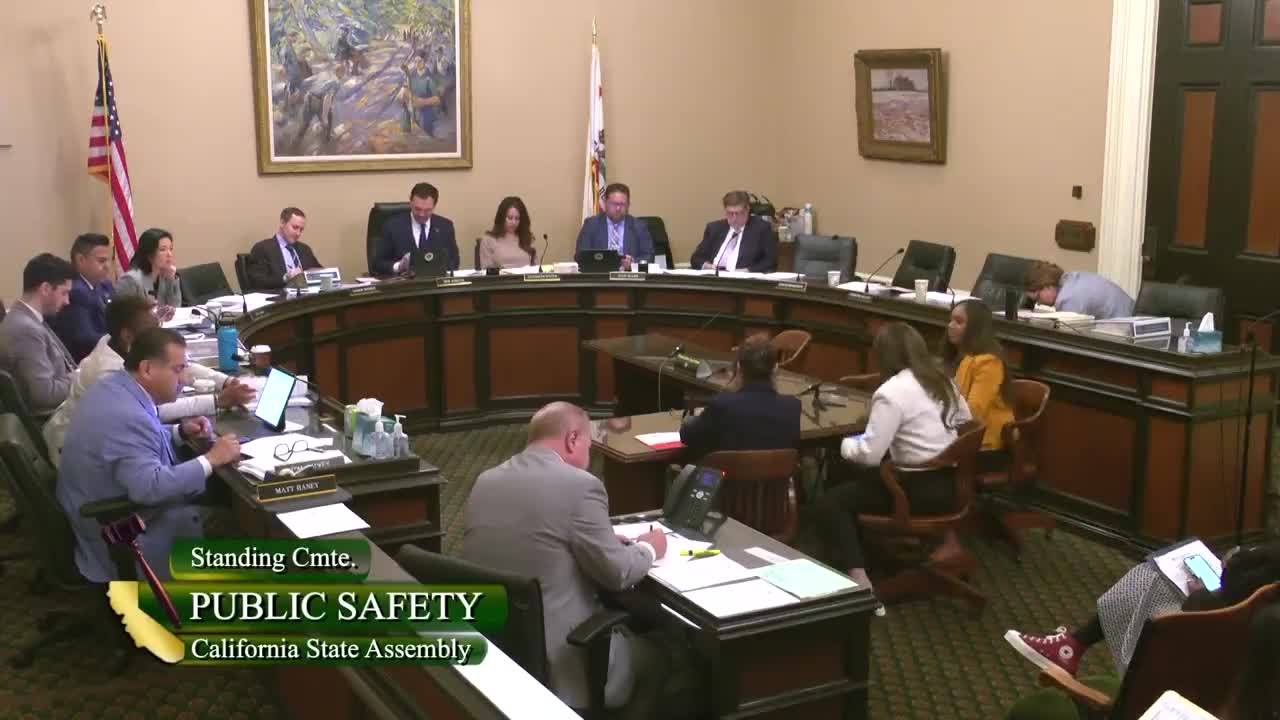
| Apr 8, 2025 | Do pass as amended and be re-referred to the Committee on [Appropriations] | Assembly Standing Committee on Public Safety |
Passed |
This list shows positions taken on this bill by organizations on the date displayed, which is linked to the original source.
Positions by individuals are not included.
|
Organization
|
Position
|
Date
|
|---|---|---|
| A New Way of Life Re-Entry Project | ** Support | |
| Aclu California Action | ** Support | |
| California Elder Justice Coalition | ** Support | |
| California Public Defenders Association | ** Support | |
| California State Sheriffs' Association | ** Against | |
| Cure California | ** Support | |
| Ella Baker Center For Human Rights | ** Support | |
| Grip Training Institute | ** Support | |
| Initiate Justice | ** Support | |
| Initiate Justice Action | ** Support | |
| Justice2jobs Coalition | ** Support | |
| LA Defensa | ** Support | |
| Los Angeles Regional Reentry Partnership | ** Support | |
| Vera Institute Of Justice | ** Support | |
| western center on law & poverty | ** Support |
Date of Hearing: April 30, 2025
ASSEMBLY COMMITTEE ON APPROPRIATIONS
Buffy Wicks, Chair
ABPCA Bill Id:AB 1144
Author:(McKinnor) – As Amended Ver:April 10, 2025
Policy Committee: | Public Safety | Vote: | 5 - 0 |
|
| ||
|
|
Urgency: No State Mandated Local Program: No Reimbursable: No
SUMMARY:
This bill allows an incarcerated person who is 55 or older, or who has specified physical or mental disabilities, to decide whether to continue working, to reduce the number of hours they work, or to stop working.
FISCAL EFFECT:
- Costs (General Fund) to the California Department of Corrections and Rehabilitation (CDCR) of an unknown but likely significant amount, possibly in the high hundreds of thousands of dollars to low millions annually. CDCR anticipates workload costs to revise its regulatory framework to address the voluntary work options provided by this bill. If a large proportion of the affected incarcerated population chooses to reduce or stop work hours, CDCR may need emergency contract staff to fulfill tasks typically completed by incarcerated workers. If CDCR must continue compensating incarcerated people who elect to stop working under this bill, costs may be significantly higher.
- Possible, likely non-reimbursable costs (local funds) to the counties. If a significant number of people incarcerated in county jails who meet this bill’s requirements decrease their work hours or stop working, counties may need to increase pay rates for incarcerated people, hire additional staff, or contract for services currently performed by incarcerated people in county jails.
COMMENTS:
- Background. The 13th Amendment of the United States Constitution prohibits slavery and involuntary servitude unless involuntary servitude is imposed as punishment for a crime. The California Constitution contains the same prohibition and the same exception. Accordingly, people incarcerated in prisons and jails in California may be compelled to work. Under CDCR regulations, an incarcerated person who refuses or otherwise fails to complete a work assignment is subject to disciplinary action and prison officials may limit or revoke privileges like visitation, canteen purchases, or access to recreation. Pay scales for most people incarcerated in CDCR facilities range from $0.16 to $0.74 per hour. Incarcerated people working in conservation camps and assigned to Prison Industry Authority receive higher wages, though they are still well below the minimum wage for non-incarcerated people in California.
This bill eliminates existing statutory authority for CDCR or a county jail to require an incarcerated person to work if the person is age 55 or older, or if they have a mental or physical disability. Instead, the bill requires CDCR or a county jail to permit such a person to decide whether to continue working, work fewer hours, or stop working. The bill also contemplates continued payment by CDCR of incarcerated people who meet this bill’s requirements and choose not to work – the bill specifies a fund source for such payments, but does not provide pay standards or other direction to CDCR about how to compensate incarcerated people who choose to stop working. As of March 2025, there were about 90,700 people in CDCR custody, about 21% of whom are aged 55 or older and about 40% of whom were enrolled in CDCR’s Mental Health Services Delivery System. At this time this analysis was prepared, the committee was unable to determine the overlap among these groups.
- Related Legislation. AB 475 (Wilson) eliminates mandatory work assignments for most people incarcerated by CDCR and instead requires CDCR to develop a voluntary work program. AB 475 is pending in this committee.
ACA 6 (Wilson) amends the California constitution to prohibit slavery in all forms. ACA 6 is pending referral in the Assembly.
Analysis Prepared by: Annika Carlson / APPR. / (916) 319-2081
Date of Hearing: April 8, 2025
Counsel: Dustin Weber
ASSEMBLY COMMITTEE ON
Nick Schultz, Chair
ABPCA Bill Id:
Author:() – As Ver:
As Proposed to be Amended in Committee
SUMMARY:
Authorizes incarcerated persons 55 years of age and older, and those persons with physical or mental disabilities, to elect whether to continue to work, to reduce the number of hours worked, or to cease working and retire. Specifically, this bill:
- Requires every able-bodied incarcerated person under 55 years of age imprisoned in any state prison as many hours of faithful labor in each day and every day during their term of imprisonment as prescribed by the rules and regulations of the Secretary of the Department of Corrections and Rehabilitation.
- Authorizes prisoners 55 years of age and older, and those persons with physical or mental disabilities, in state prisons to elect whether to continue to work, to reduce the number of hours worked, or to cease working and retire.
- States that the compensation of prisoners under the jurisdiction of the Prison Industry Authority, including those 55 years of age and older and who have opted for part-time work, to be paid either out of funds appropriated by the Legislature or out of such other funds available to the Department of Corrections and Rehabilitation (CDCR) for expenditure.
- Provides that CDCR shall not punish a prisoner who refuses to work, which includes, but is not limited to, disciplinary writeup, change in security level, involuntary transfer to a different correctional institution, transfer to a special housing unit or administrative segregation, change or reduction in privilege group assignment, and limiting participation in voluntary programming.
- States that all persons under 55 years of age and those persons with physical or mental disabilities, who are confined in the county jail, industrial farm, road camp, or city jail under a final judgment of imprisonment rendered in a criminal action or proceeding and all persons under 55 years of age, and those persons with physical or mental disabilities, who are confined in the county jail, industrial farm, road camp, or city jail as a condition of probation after suspension of imposition of a sentence or suspension of execution of sentence may be required by an order of the board of supervisors or city council to perform labor on the public works or ways in the county or city, respectively, and to engage in the prevention and suppression of forest, brush and grass fires upon lands within the county or city, respectively.
- Authorizes a person 55 years of age or older, and those persons with physical or mental disabilities, in county jail, industrial farm, road camp, or city jail to elect whether to continue to work, to reduce the number of hours worked, or to cease working and retire.
- Defines “mental disability” to include, but is not limited to, all of the following:
a) Having any mental or psychological disorder or condition, such as intellectual disability, organic brain syndrome, emotional or mental illness, or specific learning disabilities, that limits a major life activity. For purposes of this section:
i) “Limits” shall be determined without regard to mitigating measures, such as medications, assistive devices, or reasonable accommodations, unless the mitigating measure itself limits a major life activity.
ii) A mental or psychological disorder or condition limits a major life activity if it makes the achievement of the major life activity difficult.
iii) “Major life activities” shall be broadly construed and shall include physical, mental, and social activities and working.
b) Any other mental or psychological disorder or condition not described in paragraph (a) that requires special education or related services.
c) Having a record or history of a mental or psychological disorder or condition described in paragraph (a) or (b), which is known to the employer or other entity covered by this part.
d) Being regarded or treated by the employer or other entity covered by this part as having, or having had, any mental condition that makes achievement of a major life activity difficult.
e) Being regarded or treated by the employer or other entity covered by this part as having, or having had, a mental or psychological disorder or condition that has no present disabling effect, but that may become a mental disability as described in paragraph (a) or (b).
f) “Mental disability” does not include sexual behavior disorders, compulsive gambling, kleptomania, pyromania, or psychoactive substance use disorders resulting from the current unlawful use of controlled substances or other drugs.
- Defines “physical disability” to include, but is not limited to, all of the following:
- Having any physiological disease, disorder, condition, cosmetic disfigurement, or anatomical loss that does both of the following:
- Affects one or more of the following body systems: neurological, immunological, musculoskeletal, special sense organs, respiratory, including speech organs, cardiovascular, reproductive, digestive, genitourinary, hemic and lymphatic, skin, and endocrine.
- Limits a major life activity. For purposes of this section:
- “Limits” shall be determined without regard to mitigating measures such as medications, assistive devices, prosthetics, or reasonable accommodations, unless the mitigating measure itself limits a major life activity.
- A physiological disease, disorder, condition, cosmetic disfigurement, or anatomical loss limits a major life activity if it makes the achievement of the major life activity difficult.
- “Major life activities” shall be broadly construed and includes physical, mental, and social activities and working.
- Any other health impairment not described in paragraph (a) that requires special education or related services.
- Having a record or history of a disease, disorder, condition, cosmetic disfigurement, anatomical loss, or health impairment described in paragraph (a) or (b), which is known to the employer or other entity covered by this part.
- Being regarded or treated by the employer or other entity covered by this part as having, or having had, any physical condition that makes achievement of a major life activity difficult.
- Being regarded or treated by the employer or other entity covered by this part as having, or having had, a disease, disorder, condition, cosmetic disfigurement, anatomical loss, or health impairment that has no present disabling effect but may become a physical disability as described in paragraph (a) or (b).
- “Physical disability” does not include sexual behavior disorders, compulsive gambling, kleptomania, pyromania, or psychoactive substance use disorders resulting from the current unlawful use of controlled substances or other drugs.
- Having any physiological disease, disorder, condition, cosmetic disfigurement, or anatomical loss that does both of the following:
EXISTING LAW:
- States that CDCR shall require of every able-bodied prisoner in any state prison as many hours of faithful labor in each day and every day during his or her term of imprisonment as shall be prescribed by the rules and regulations of the Director of Corrections. (Pen. Code, § 2700, subd. (a).)
- Establishes that incarcerated persons not engaged on work programs under the jurisdiction of the Prison Industry Authority, but who are engaged in productive labor outside of such programs may be compensated in like manner. The compensation of such prisoners shall be paid either out of funds appropriated by the Legislature for that purpose or out of such other funds available to the CDCR for expenditure. (Pen. Code, § 2700, subd. (a).)
- States that when any prisoner escapes, the director shall determine what portion of his or her earnings shall be forfeited and such forfeiture shall be deposited in the State Treasury in a fund known as the Inmate Welfare Fund. (Pen. Code, § 2700, subd. (a).)
- Stipulates that all persons confined in the county jail, industrial farm, road camp, or city jail under a final judgment of imprisonment rendered in a criminal action or proceeding and all persons confined in the county jail, industrial farm, road camp, or city jail as a condition of probation after suspension of imposition of a sentence or suspension of execution of sentence may be required by an order of the board of supervisors or city council to perform labor on the public works or ways in the county or city, respectively, and to engage in the prevention and suppression of forest, brush and grass fires upon lands within the county or city, respectively. (Pen. Code, § 4017, subd. (a).)
- States that whenever any such person so in custody shall suffer injuries or death while working in the prevention or suppression of forest, brush or grass fires he shall be considered to be an employee of the county or city, respectively, for the purposes of compensation under the provisions of the Labor Code regarding workmen’s compensation and such work shall be performed under the direct supervision of a local, state or federal employee whose duties include fire prevention and suppression work. A regularly employed member of an organized fire department shall not be required to directly supervise more than 20 such persons so in custody. (Pen. Code, § 4017, subd. (a).)
- Defines “mental disability” to include, but is not limited to, all of the following:
a) Having any mental or psychological disorder or condition, such as intellectual disability, organic brain syndrome, emotional or mental illness, or specific learning disabilities, that limits a major life activity. For purposes of this section:
i) “Limits” shall be determined without regard to mitigating measures, such as medications, assistive devices, or reasonable accommodations, unless the mitigating measure itself limits a major life activity.
ii) A mental or psychological disorder or condition limits a major life activity if it makes the achievement of the major life activity difficult.
iii) “Major life activities” shall be broadly construed and shall include physical, mental, and social activities and working.
b) Any other mental or psychological disorder or condition not described in paragraph (a) that requires special education or related services.
c) Having a record or history of a mental or psychological disorder or condition described in paragraph (a) or (b), which is known to the employer or other entity covered by this part.
d) Being regarded or treated by the employer or other entity covered by this part as having, or having had, any mental condition that makes achievement of a major life activity difficult.
e) Being regarded or treated by the employer or other entity covered by this part as having, or having had, a mental or psychological disorder or condition that has no present disabling effect, but that may become a mental disability as described in paragraph (a) or (b).
f) “Mental disability” does not include sexual behavior disorders, compulsive gambling, kleptomania, pyromania, or psychoactive substance use disorders resulting from the current unlawful use of controlled substances or other drugs. (Gov. Code, § 12926., subd. (j).)
- Defines “physical disability” to include, but is not limited to, all of the following:
- Having any physiological disease, disorder, condition, cosmetic disfigurement, or anatomical loss that does both of the following:
- Affects one or more of the following body systems: neurological, immunological, musculoskeletal, special sense organs, respiratory, including speech organs, cardiovascular, reproductive, digestive, genitourinary, hemic and lymphatic, skin, and endocrine.
- Limits a major life activity. For purposes of this section:
- “Limits” shall be determined without regard to mitigating measures such as medications, assistive devices, prosthetics, or reasonable accommodations, unless the mitigating measure itself limits a major life activity.
- A physiological disease, disorder, condition, cosmetic disfigurement, or anatomical loss limits a major life activity if it makes the achievement of the major life activity difficult.
- “Major life activities” shall be broadly construed and includes physical, mental, and social activities and working. (Gov. Code, § 12926., subd. (m).)
- Any other health impairment not described in paragraph (a) that requires special education or related services.
- Having a record or history of a disease, disorder, condition, cosmetic disfigurement, anatomical loss, or health impairment described in paragraph (a) or (b), which is known to the employer or other entity covered by this part.
- Being regarded or treated by the employer or other entity covered by this part as having, or having had, any physical condition that makes achievement of a major life activity difficult.
- Being regarded or treated by the employer or other entity covered by this part as having, or having had, a disease, disorder, condition, cosmetic disfigurement, anatomical loss, or health impairment that has no present disabling effect but may become a physical disability as described in paragraph (a) or (b).
- “Physical disability” does not include sexual behavior disorders, compulsive gambling, kleptomania, pyromania, or psychoactive substance use disorders resulting from the current unlawful use of controlled substances or other drugs.
- Having any physiological disease, disorder, condition, cosmetic disfigurement, or anatomical loss that does both of the following:
FISCAL EFFECT:
Unknown
COMMENTS:
- Author's Statement: According to the author, “Older adults in California prisons, including those with chronic but not fully disabling illnesses, are required to work daily with no option to reduce their hours. Incarcerated individuals, even those in their 70s and 80s, must continue working, often performing physically demanding tasks such as lifting heavy materials, working in extreme heat and laboring in high-risk environments like kitchens and prison yards.
“This aging population faces a higher risk of workplace injuries, yet work assignments rarely consider age-related limitations. Without a medical exemption—difficult to obtain and often denied—older incarcerated individuals must either continue working or risk losing privileges, benefits, or even facing disciplinary action. The exemption process is lengthy, uncertain and inaccessible to many, forcing individuals with legitimate age-related health concerns to work under conditions that may be harmful.
“AB 1144 would grant incarcerated individuals aged 55 and older—excluding those sentenced to death—the right to choose whether to continue working or reduce their hours. The bill would also prohibit the California Department of Corrections and Rehabilitation (CDCR) from punishing individuals for making this choice, including restricting privileges or altering their classification status.
“By allowing older incarcerated individuals to make informed decisions about their work participation without fear of losing essential privileges such as visitation or canteen access, AB 1144 upholds their human dignity and recognizes their physical limitations. AB 1144 ensures that aging incarcerated people are not forced into labor that endangers their health, and provides reasonable accommodations to this aging population.”
- Effect of the Bill: This bill would allow incarcerated persons to retire from work requirements upon reaching age 55. This bill may turn out not to alter a majority of the existing confinement labor structure. CDCR has already announced that it is transforming approximately 75% of its full-time labor positions to half-time labor positions.[1] In addition to potentially increasing options for incarcerated persons to enroll and participate in more rehabilitative or educational programming,[2] CDCR’s expected change in job positions could dovetail with the requirements of this bill, possibly limiting excess administrative burdens.
As stated by the author, offering incarcerated persons a choice of work types upon reaching 55 years of age brings some additional measure of humanity to that person’s confinement. As one scholar noted, “The exploitative dynamics [of forced prison labor] are rooted in slavery . . . which relies on inhumane, regressive forms of revenue generation and masks the true costs of incarceration.”[3]
There are additional health considerations for older incarcerated persons as well. One study noted that incarcerated persons age faster compared to those not in confinement.[4] “Prisons are unhealthy places for anyone of any age, but keeping older adults locked up is particularly dangerous. A robust body of research shows that incarceration itself accelerates aging: people face more chronic and life-threatening illnesses earlier than we would expect outside of prison, and physiological signs of aging occur in people younger than expected.”[5] The paper also notes that for every one year spent in prison, incarcerated persons lose an average of two years off their expected lifespan.[6]
By making work for incarcerated persons voluntary at age 55 and older, this bill could align with CDCR’s existing plan to move most jobs to half-time positions and restore some measure of dignity and humanity in aging for incarcerated persons.
- Elder Voluntary Work and Public Safety: This bill would make work voluntary for those 55 years of age and older, and those with mental or physical disabilities, which could have impacts on public safety.
As California’s Elderly Parole Program (EPP) moves into its second decade, this bill could have a limited impact on the number of incarcerated persons who end up having the choice whether to work at age 55 or older. Incarcerated persons are eligible for the EPP after reaching age 50 and being continuously incarcerated for 20 years, except persons sentenced to death, persons sentenced to life without the possibility of parole, persons sentenced under California’s strike laws for a second or third strike, and persons convicted of first-degree murder of a peace officer or former peace officer due to performance of their official duties.[7] Incarcerated persons confined on a second or third strike must wait until 60 years of age and service of 25 years’ incarceration before becoming eligible for the EPP.[8] Between 2014-2020, fewer than 1 out of every 5 elderly parole applicants actually received parole.[9] If EPP sees growth in the future, this could mean fewer elderly persons remain incarcerated past 55 years of age, which could result in fewer who even have the opportunity to retire from work pursuant to this bill’s provisions.
Elderly incarcerated persons tend to be some of the least likely to reoffend. As a recent CDCR recidivism report showed, “The [recidivism] rate steadily decreases as age increases, with individuals ages 60 and over having the lowest conviction rate of all age groups (16.5 percent). This general trend has persisted with time, making older individuals some of the least likely to recidivate.”[10]
Making work voluntary could also promote improved rehabilitation and public safety outcomes by increasing marketable skills and lowering re-offense rates. One program that requires voluntary workers and payment of higher wages, the Prison Industry Enhancement Certification Program (PIECP), has demonstrated voluntary work programs can achieve these outcomes.[11] This bill could work with existing programs to improve public safety.
- Additional Considerations: This bill appears to create a natural conflict with AB 475 (Wilson) which was passed out of this Committee earlier this year. AB 475 would make all work voluntary for incarcerated persons, while this bill would allow for voluntary work for incarcerated persons 55 years of age and older, and those with physical or mental disabilities. By limiting voluntary work just to age 55 and older populations, the focus of this bill seems narrower relative to AB 475. It is unclear whether one approach might be superior to the other at this time.
- Committee Amendments: The proposed amendments would authorize the same voluntary work options for those incarcerated persons with mental disabilities or physical disabilities. The amendments define these terms for purposes of the bill.
- Argument in Support: According to the Ella Baker Center for Human Rights, “Based in Oakland, the Ella Baker Center (EBC) works to advance racial and economic justice to ensure dignity and opportunity for people with low income and people of color. We advocate for state legislation that fights abusive practices in prisons and jails, strengthens family connections, ends the economic burdens placed on people by mass incarceration, and reinvests in community. The Ella Baker Center works to shift resources away from prisons and punishment towards opportunities that make our communities safe, healthy, and strong.
“The Ella Baker Center, first and foremost, supports pathways to freedom and decarceration for individuals suffering from chronic illness, old age, and severe health risks. The number of incarcerated individuals in California, over 50 has risen from about 4% in 1994 to 25% in 2019 (Prison Policy Initiative). Due to the nature of long sentences, three strikes, and a history of over-incarceration, California’s prison population includes individuals who need additional care and choice. On the pathway to identifying opportunities for release, we must off er people a choice over whether they work while incarcerated to meaningfully support them in caring for themselves while incarcerated.
“Older adults in California prisons, including those with chronic but not fully disabling illnesses, are required to work daily with no option to reduce their hours. Incarcerated individuals, even those in their 70s and 80s, must continue working, often performing physically demanding tasks such as lifting heavy materials, working in extreme heat, and laboring in high-risk environments like kitchens and prison yards.
“This aging population faces a higher risk of workplace injuries, yet work assignments rarely consider age-related limitations. Without a medical exemption—difficult to obtain and often denied—older incarcerated individuals must either continue working or risk losing privileges, benefits, or even facing disciplinary action. The exemption process is lengthy, uncertain, and inaccessible to many, forcing individuals with legitimate age-related health concerns to work under conditions that may be harmful.”
- Argument in Opposition: According to the California State Sheriffs Association (CSSA), “On behalf of the California State Sheriffs’ Association (CSSA), I regret to inform you that we are opposed to your measure, Assembly Bill 1144, which would allow state prison and county jail inmates aged 55 years and older to elect whether to continue a custodial work assignment, to reduce the number of hours worked, or to cease working and retire.
“We disagree with the notion of installing an arbitrary age threshold at which inmates would be permitted to discontinue their work assignments. Inmate workers earn time credits toward early release and typically a wage in consideration of their completed work. These work assignments are generally compatible with and supportive of rehabilitative efforts.
“And though the bill is unclear on this point, the use of the term “retire” raises the question of whether an inmate who reaches the age of 55 and elects to discontinue or limit their work would still receive early release credits and/or monetary compensation. If such is determined to be the case, it would heighten our objection to the bill.”
- Related Legislation:
- ACA 6 (Wilson) would amend the California to prohibit slavery in all forms, including involuntary servitude. This resolution is pending referral.
- AB 475 (Wilson) would make all work voluntary, except for Proposition 66-impacted death-eligible persons, for all incarcerated persons. This bill is set to be heard in the Assembly Appropriations Committee.
- Prior Legislation:
- ACA 8 (Wilson), of the 2023-24 Legislative Session, would have prohibited slavery in any form. This amendment failed to secure majority support from California voters during the 2024 General Election.
- AB 628 (Wilson), of the 2023-24 Legislative Session, would have prohibited involuntary servitude, required CDCR to develop a voluntary work program and to prescribe rules and regulations regarding work and programming assignments for CDCR inmates, including the wages for work assignments, and would have required wages for work assignments in county and city jail programs to be set by local ordinance. This bill failed due to its corresponding constitutional amendment failing to pass.
- ACA 3 (Kamlager), of the 2021-22 Legislative Session, would have defined slavery to include involuntary servitude and forced labor compelled by the use or threat of physical or legal coercion. The measure would have clarified that the provisions are not intended to have any effect on voluntary work programs in corrections settings. This measure was held in the Senate Appropriations Committee.
REGISTERED SUPPORT / OPPOSITION:
Support
A New Way of Life Re-entry Project
ACLU California Action
California Elder Justice Coalition (CEJC)
California Public Defenders Association (CPDA)
Cure California
Ella Baker Center for Human Rights
Grip Training Institute
Initiate Justice
Initiate Justice Action
Justice2jobs Coalition
LA Defensa
Los Angeles Regional Reentry Partnership (LARRP)
Vera Institute of Justice
Western Center on Law & Poverty
1 private individual
Oppose
California State Sheriffs' Association
Analysis Prepared by:
The 2024-25 Budget: California Department of Corrections and Rehabilitation (Feb. 22, 2024) Legislative Analyst’s Office <https://www.lao.ca.gov/Publications/Report/4852> [as of Apr. 2, 2025]. ↑
Ibid. ↑
Mast, Forced Prison Labor in the “Land of the Free” (Jan. 16, 2025) Economic Policy Institute <https://www.epi.org/publication/rooted-racism-prison-labor/> [as of Mar. 17, 2025]. ↑
Ibid. ↑
Widra, The Aging Prison Population: Causes, Costs, and Consequences, Prison Policy Initiative (August 2, 2023) <https://www.prisonpolicy.org/blog/2023/08/02/aging/> [as of Apr. 2, 2025]. ↑
Ibid. ↑
Elderly Parole Hearings, California Department of Corrections and Rehabilitation <https://www.cdcr.ca.gov/bph/elderly-parole-hearings-overview/> [as of Apr. 2, 2025]. ↑
Ibid. ↑
Expanding Elderly Parole Eligibility in California, Recidiviz (Aug. 14, 2020) <5fb40eed8f1515cb65cb32bb_CA_elderlyparole_v3.pdf> [as of Apr. 2, 2025]. ↑
Recidivism Report for Individuals Released in Fiscal Year 2018-19, California Department of Corrections and Rehabilitation (Feb. 2024) <https://www.cdcr.ca.gov/research/wp-content/uploads/sites/174/2024/02/Statewide-Recidivism-Report-for-Individuals-Released-in-Fiscal-Year-2018-19.pdf> [as of Apr. 2, 2025]. ↑
Prison Industry Enhancement Certification Program, Bureau of Justice Assistance (Aug. 2018) <https://bja.ojp.gov/sites/g/files/xyckuh186/files/Publications/PIECP-Program-Brief_2018.pdf> [as of Mar. 31, 2025].
Ibid. ↑
Discussed in Hearing
 13MIN
Assembly Standing Committee on Public Safety
Bill Author

Bill Co-Author(s):