AB 548: Enhanced Services for Asylees and Vulnerable Noncitizens program.
- Session Year: 2025-2026
- House: Assembly
- Latest Version Date: 2025-03-24
Current Status:
Failed
(2026-02-02: From committee: Filed with the Chief Clerk pursuant to Joint Rule 56.)
Introduced
In Committee
Awaiting First Chamber Vote
Passed First Chamber
In Committee
Awaiting Second Chamber Vote
Passed Second Chamber
Enacted
What does this bill do?
This bill limits who can get help from the state’s Enhanced Services for Asylees and Vulnerable Noncitizens program to people living in California who entered the U.S. and were screened by the Department of Homeland Security between January 1, 2024 and January 1, 2026, and lets them receive up to 90 days of case-management help in the first year after that screening. It also reduces the nonprofit experience requirement for program grants from three years to one year and requires the department to collect and post grantee outcome data online.
The summary is provided by generative AI which can make mistakes. For original language, please view the details in the table below.
Existing law, subject to an appropriation in the annual Budget Act, establishes the Enhanced Services for Asylees and Vulnerable Noncitizens program to provide resettlement services for persons granted asylum by the United States Attorney General or the Secretary of Homeland Security or who are vulnerable noncitizens. For purposes of the program, vulnerable noncitizens are persons who are eligible to receive refugee cash assistance and services as victims of crime. Existing law requires the program, under the administration of the State Department of Social Services, to provide specified services for up to 90 days within the first year following a persons grant of asylum or eligibility for services as a victim of a crime, respectively. Existing law requires grants or contracts awarded under the program to be executed only with nonprofit organizations, as specified, with at least 3 years of experience with providing case management services and providing culturally and linguistically appropriate services. Existing law requires the department, in collaboration with service providers, to determine outcome metrics to define program success.
This bill would make technical, nonsubstantive changes to those provisions.This bill would change the eligibility criteria to receive services under the program from asylees or vulnerable noncitizens, as described above, to persons who, among other things, are screened by the United States Department of Homeland Security during January 1, 2024, to January 1, 2026, inclusive. The bill would require the program to provide services to an eligible person for up to 90 days within the first year following that screening. The bill would require grants or contracts awarded under the program to be executed only with nonprofit organizations with at least one year of experience with providing the above-described services. The bill would require the department to collect data from grantees related to the outcome metrics described above and post the findings on its internet website.
Existing law, subject to an appropriation in the annual Budget Act, establishes the Enhanced Services for Asylees and Vulnerable Noncitizens program to provide resettlement services for persons granted asylum by the United States Attorney General or the Secretary of Homeland Security or who are eligible to receive refugee cash assistance and services as victims of crime. Existing law requires the program, under the administration of the State Department of Social Services, to provide specified services for up to 90 days within the first year following a persons grant of asylum or eligibility for services as a victim of a crime, respectively.
This bill would make technical, nonsubstantive changes to those provisions.
(a)The Legislature finds and declares all of the following:
(1)Vulnerable noncitizens, asylees, and refugees are important to the fabric of our society.
(2)Regardless of their legal distinctions, noncitizens face many of the same challenges integrating into the state and are often living in the same communities.
(3)Refugees, asylees, and other noncitizens are granted different services due to the legal distinction of when they were identified, with refugees often being identified in the country of origin and asylees in the country of arrival.
(4)Between 2017 and 2019, the number of applicants granted asylum increased from 26,199 applicants to 46,508 applicants, representing a 56-percent increase. In 2019 alone, California was the settlement state for 34 percent of all new asylees, which was the highest rate of all states.(4)In 2022, California was the settlement state for 24 percent of all individuals granted asylum, the highest percentage of all states. Between 2020 and 2022, the number of individuals granted asylum who live in California ranged from 5,585 to 2,684, with 3,442 asylees living in California in 2022.
(5)Research indicates that while individuals granted asylum in this state are given eligibility to a wide range of benefits, most asylees do not get these benefits due to the lack of case management services and assistance in navigating the social safety net and health care systems.
(6)The state-funded Trafficking and Crime Victim Assistance Program (TCVAP) provides critical benefits and services to noncitizen victims of human trafficking, domestic violence, and other serious crimes. TCVAP benefits and services mirror those that are available to refugees after initial resettlement. These vulnerable noncitizens would benefit from initial case management services.
(7)Studies show that with proper case management support, noncitizens are better able to secure the benefits for which they are eligible, and find employment and bring immense contributions to the economy.
(b)(1)The Enhanced Services for Asylees and Vulnerable Noncitizens (ESAVN) program is hereby established to provide resettlement services for persons who are currently residing in California and who are granted asylum by the United States Attorney General or the United States Secretary of Homeland Security pursuant to Section 1158 of Title 8 of the United States Code or who are eligible for assistance and services under Section 13283. who meet both of the following conditions:
(A)Entered the United States.
(B)Are screened by the United States Department of Homeland Security during January 1, 2024, to January 1, 2026, inclusive.
(2)For purposes of this subdivision, a person may show that they are currently residing in California with any of the following:
(A)California drivers license or California identification card.
(B)Utility bill.
(C)Rental history.
(c)For purposes of this chapter, vulnerable noncitizen means any individual who would be eligible for services under Section 13283. eligible person means an individual who meets the criteria described in subdivision (b).
(d)Grants or contracts awarded pursuant to this section shall be executed only with nonprofit organizations that meet the requirements set forth in paragraph (3) or (5) of subsection (c) of Section 501 of the Internal Revenue Code and have at least three years one year of experience with both of the following:
(1)Providing case management services, as defined in subdivision (b) of Section 13651.
(2)Providing culturally and linguistically appropriate services.
(e)The department shall require qualified nonprofit organizations awarded contracts or grants pursuant to this section to report, monitor, or audit the services provided, as determined by the department.
(f)Funds allocated for these services may also be used to conduct a formal evaluation of the services provided by a qualified entity, as determined by the department.
SEC. 2.Section 13651 of the Welfare and Institutions Code is amended to read:13651.(a)The program shall provide culturally appropriate and responsive case management services for asylees and vulnerable noncitizens eligible persons for up to 90 days within the first year following the grant of asylum or after having been deemed eligible for services under Section 13283. eligible person being screened by the United States Department of Homeland Security.
(b)Case management services under the program shall include assistance in identifying and applying for all benefits to which the eligible person is legally entitled, including cultural orientation and integration programs, support in accessing and navigating the public benefits and health care systems, community connection and relationship building, English language instruction, and employment training, job placement assistance, and professional recredentialing and licensing application assistance.
(c)(1)The department shall, in collaboration with service providers, determine outcome metrics to define program success.
(2)The department shall collect data from grantees related to the outcome metrics determined pursuant to paragraph (1). The department shall post the findings on its internet website.
(a)The Legislature finds and declares all of the following:
(1)Vulnerable noncitizens, asylees, and refugees are important to the fabric of our society.
(2)Regardless of their legal distinctions, noncitizens face many of the same challenges integrating into the state and are often living in the same communities.
(3)Refugees, asylees, and other noncitizens are granted different services due to the legal distinction of when they were identified, with refugees often being identified in the country of origin and asylees in the country of arrival.
(4)Between 2017 and 2019, the number of applicants granted asylum increased from 26,199 applicants to 46,508 applicants, representing a 56-percent increase. In 2019 alone, California was the settlement state for 34 percent of all new asylees, which was the highest rate of all states.
(5)Research indicates that while individuals granted asylum in this state are given eligibility to a wide range of benefits, most asylees do not get these benefits due to the lack of case management services and assistance in navigating the social safety net and health care systems.
(6)The state-funded Trafficking and Crime Victim Assistance Program (TCVAP) provides critical benefits and services to noncitizen victims of human trafficking, domestic violence, and other serious crimes. TCVAP benefits and services mirror those that are available to refugees after initial resettlement. These vulnerable noncitizens would benefit from initial case management services.
(7)Studies show that with proper case management support, noncitizens are better able to secure the benefits for which they are eligible, and find employment and bring immense contributions to the economy.
(b)The Enhanced Services for Asylees and Vulnerable Noncitizens (ESAVN) is hereby established to provide resettlement services for persons who are currently residing in California and who are granted asylum by the United States Attorney General or the United States Secretary of Homeland Security pursuant to Section 1158 of Title 8 of the United States Code or who are eligible for assistance and services under Section 13283.
(c)For purposes of this chapter, a vulnerable noncitizen is defined as means any individual who would be eligible for services under Section 13283.
(d)Grants or contracts awarded pursuant to this section shall be executed only with nonprofit organizations that meet the requirements set forth in paragraph (3) or (5) of subsection (c) of Section 501 of the Internal Revenue Code and have at least three years of experience with both of the following:
(1)Providing case management services, as defined in subdivision (b) of Section 13651.
(2)Providing culturally and linguistically appropriate services.
(e)The department shall require qualified nonprofit organizations awarded contracts or grants pursuant to this section to report, monitor, or audit the services provided, as determined by the department.
(f)Funds allocated for these services may also be used to conduct a formal evaluation of the services provided by a qualified entity, as determined by the department.
|
Date
|
Status
|
|---|---|
| Feb 2, 2026 | From committee: Filed with the Chief Clerk pursuant to Joint Rule 56. |
| Jan 31, 2026 | Died pursuant to Art. IV, Sec. 10(c) of the Constitution. |
| May 23, 2025 | In committee: Held under submission. |
| May 7, 2025 | In committee: Set, first hearing. Referred to APPR. suspense file. |
| Apr 30, 2025 | From committee: Do pass and re-refer to Com. on APPR. (Ayes 5. Noes 2.) (April 29). Re-referred to Com. on APPR. |
| Mar 25, 2025 | Re-referred to Com. on HUM. S. |
| Mar 24, 2025 | From committee chair, with author's amendments: Amend, and re-refer to Com. on HUM. S. Read second time and amended. |
| Mar 24, 2025 | Referred to Com. on HUM. S. |
| Feb 12, 2025 | From printer. May be heard in committee March 14. |
| Feb 11, 2025 | Read first time. To print. |
|
Date
|
Description
|
Location
|
Votes
|
|
|---|---|---|---|---|
| Apr 29, 2025 | Do pass and be re-referred to the Committee on [Appropriations] | Assembly Standing Committee on Human Services |
Passed |
This list shows positions taken on this bill by organizations on the date displayed, which is linked to the original source.
Positions by individuals are not included.
|
Organization
|
Position
|
Date
|
|---|---|---|
| Afghans for A Better Tomorrow | ** Support | |
| Asian Americans Advancing Justice Southern California | ** Support | |
| CA Welcomes Coalition | ** Support | |
| Coalition for Humane Immigrant Rights | ** Support | |
| Latino Coalition for a Healthy California | ** Support | |
| Oasis Legal Services | ** Support | |
| western center on law & poverty | ** Support |
Date of Hearing: May 7, 2025
ASSEMBLY COMMITTEE ON APPROPRIATIONS
Buffy Wicks, Chair
ABPCA Bill Id:AB 548
Author:(Solache) – As Amended Ver:March 24, 2025
Policy Committee: | Human Services | Vote: | 5 - 2 |
|
| ||
|
|
Urgency: No State Mandated Local Program: No Reimbursable: No
SUMMARY:
This bill revises eligibility criteria for the Enhanced Services for Asylees and Vulnerable Noncitizens (ESAVN) program, specifies acceptable proof of California residency, and extends eligibility for grants or contracts awarded to nonprofit organizations with one year, rather than three years, of experience providing relevant services.
Specifically, this bill:
- Revises eligibility requirements for the ESAVN program as follows:
- Strikes provisions establishing eligibility for resettlement services to individuals who are granted asylum by the United States (U.S.) Attorney General or the U.S. Secretary of Homeland Security (DHS) pursuant to federal law or who are eligible for assistance and services under existing state law, as specified.
- Instead, establishes eligibility for individuals to have entered the U.S. and are screened by DHS during January 1, 2024, to January 1, 2026, inclusive.
- Provides, for purposes of the bill’s provisions, a person may show they are currently residing in California with a California driver’s license or California identification card, a utility bill or through rental history.
- Strikes the definition, “vulnerable noncitizen” as any individual who would be eligible for ESAVN services and replaces it with “eligible person” to mean an individual who meets the criteria described in item 1b, above.
- Provides conforming definitional changes for the provision of case management services.
- Provides that grants or contracts may be awarded pursuant to ESAVN to nonprofit organizations that have at least one year of experience, rather than three years, providing case management services and culturally and linguistically appropriate services.
- Requires the California Department of Social Services (CDSS) to collect data from grantees related to specified outcome metrics, and to post the findings on its internet website.
FISCAL EFFECT:
The ESAVN program was established through the 2021 Budget Act, which allocated $8 million over three years, until June 30, 2024. The program is currently unfunded and the Governor’s proposed budget does not provide funding to continue the program. The author has submitted a General Fund (GF) budget request for $15.2 million in one-time funding over three years to CDSS to continue to fund the ESAVN program.
This bill creates potential GF cost pressures, likely in the tens of millions of dollars annually, to fund the program sufficiently to provide caseworker services to asylees who lack legal status and are not eligible for state or federal services, as well as more broadly to others who fit the new definition of eligibility in the bill. As written, this could include U.S. citizens, foreign students, people making adjustments to their immigration status, and others who wouldn’t be served by ESAVN under existing law.
This bill also likely creates workload costs for CDSS to update its processes for reviewing bids from nonprofit organizations under the new one-year experience requirement, as well as to implement and monitor the data collection and posting requirements.
COMMENTS:
- Purpose. This bill is sponsored by the Coalition for Humane Immigrant Rights. According to the author:
Both refugees and asylees are eligible for a wide range of benefits, including Medi-Cal, and CalFresh, but unfortunately, without adequate support and a culturally responsive program, most new asylees are not aware of their eligibility and forgo enrolling in benefits. Sustaining the ESAVN Program ensures equitable access to vital safety net services for asylees and vulnerable immigrants as they restart their lives in California.
- Background. Vulnerable noncitizens. In the U.S., vulnerable noncitizens are legally characterized as refugees, asylees (also known as asylum seekers), and other noncitizens, such as parolees, conditional entrants, temporary protected status individuals, and legally permanent residents (LPRs), among others.
Refugees are individuals who have fled their home countries due to fear of persecution based on factors such as race, religion, nationality, political opinion, or membership in a particular social group. They undergo a vetting process while still in their country of origin or in a refugee camp. Asylees are individuals who have already arrived in the U.S. and are seeking protection from persecution in their home countries. They apply for asylum upon arrival or within one year of arrival, on the basis of fear of persecution based on the same criteria as refugees. Asylees’ legal status is determined through an adjudication process, often involving interviews, hearings, and legal representation. Other noncitizens who may also need protection and support, as defined in state law, include victims of human trafficking, domestic violence, or other serious crimes who are preparing to file or have filed petitions for a T-visa or have filed petitions for or received U-visa non-immigrant status with the appropriate federal agency.
CDSS administers the ESAVN program to provide culturally appropriate and responsive case management services for persons who are residing in California and who are granted asylum by the U.S. Attorney General or the Secretary of Homeland Security or who are eligible to receive refugee cash assistance and services as victims of crime. The ESAVN program is subject to an appropriation in the annual Budget Act and no additional funding has been provided since 2024. Existing law requires the ESAVN program be implemented only to the extent funds are appropriated.
This bill expands eligibility for resettlement services under the ESAVN program from “vulnerable noncitizens” to any “eligible person” who has entered the U.S. and has been screened by DHS between January 1, 2024 and January 1, 2026. The bill also clarifies acceptable documentation for residency in California.
Advocates assert the changes in this bill will allow recent arrivals, regardless of federal actions that may limit services, to receive services under the ESAVN program, provided funding is allocated in the state budget for this purpose.
Case Management Services. Existing law requires the ESAVN program to provide specified services for up to 90 days within the first year following a person’s grant of asylum or eligibility for services as a victim of a crime. Grants or contracts awarded pursuant to the program may be executed only with nonprofit organizations that meet specified requirements, including that an organization must have at least three years of experience providing both case management services and culturally and linguistically appropriate services.
Advocates assert the demand for these services surpasses the capacity of qualified nonprofits. To expand access to services, this bill requires a nonprofit organization to instead have at least one year of experience providing the above-described services. In 2024, when the program ended, there were 13 ESAVN grantee service providers.
Data Reporting. Existing law requires CDSS, in collaboration with service providers, to determine outcome metrics to define program success. This bill requires CDSS to collect data related to those outcome metrics from grantees and post the findings on the department’s internet website.
- Related Legislation. AB 1318 (Bonta), of this legislative session, expands the definition “qualified nonprofit organization” for the purposes of the administration of the ESAVN program, among other programs, to allow contracts or grants be awarded to nonprofits with either state tax-exempt status or federal 501(c)(3) status.
- Prior Legislation. AB 2218 (Santiago), of the 2023-24 Legislative Session, was similar to this bill, but did not include the eligibility criteria changes. AB 2218 was held on this committee’s suspense file.
Analysis Prepared by: Jennifer Swenson / APPR. / (916) 319-2081
Date of Hearing: April 29, 2025
ASSEMBLY COMMITTEE ON HUMAN SERVICES
Alex Lee, Chair
ABPCA Bill Id:AB 548 (
Author:Solache) – As Amended Ver:March 24, 2025
SUBJECT: Enhanced Services for Asylees and Vulnerable Noncitizens program
SUMMARY: Revises eligibility criteria for the Enhanced Services for Asylees and Vulnerable Noncitizens (ESAVN) program, specifies acceptable proof of California residency, and reduces the amount of time nonprofits are required to have provided relevant services before being awarded grants or contracts. Specifically, this bill:
- Revises eligibility requirements for the ESAVN program by:
- Striking provisions that establish resettlement services to individuals who are granted asylum by the United States (U.S.) Attorney General or the U.S. Secretary of Homeland Security pursuant to federal law in 11) below, or who are eligible for assistance and services under existing state law in 9) below.
- Specifying individuals must instead meet both of the following conditions:
- Entered the U.S.; and,
- Are screened by the U.S. Department of Homeland Security (DHS) during January 1, 2024, to January 1, 2026, inclusive.
- Provides that, for purposes of these provisions, a person may show that they are currently residing in California with any of the following:
- California driver’s license or California identification card;
- Utility bill; or,
- Rental history.
- Strikes the definition, “vulnerable noncitizen” as any individual who would be eligible for ESAVN services and replaces it with “eligible person” to mean an individual who meets the criteria described in b) of 1) above.
- Strikes references to the requirement for ESAVN to provide case management services for asylees and vulnerable noncitizens who have been granted asylum or after having been deemed eligible and instead, requires the ESAVN program to provide culturally appropriate and responsive case management services for eligible persons for up to 90 days within the first year following the eligible person being screen by DHS.
- Reduces the required experience for contracted nonprofit organizations from three years to one year for providing case management services and linguistically and culturally appropriate services.
- Requires the California Department of Social Services (CDSS) to collect data from grantees related to specified outcome metrics, and to post the findings on its internet website.
- Updates legislative findings and declarations with 2022 statistics on individuals granted asylum in the U.S., with California accounting for the highest percentage among all states at 24% (3,442) asylees residing in the state.
EXISTING LAW:
State law:
- Makings legislative findings and declarations regarding California hosting a significant proportion of noncitizens, including refugees and asylees, who face integration challenges and lack of access to benefits due to limited case management services, highlighting the importance of state-funded programs like the Trafficking and Crime Victim Assistance Program (TCVAP) and the positive impact of case management support on their ability to access benefits, find employment, and contribute to the economy. (Welfare and Institutions Code [WIC] § 13650(a))
- Establishes the ESAVN program to provide resettlement services for persons who are currently residing in California and who are granted asylum by the U.S. Attorney General or the U.S. Secretary of Homeland Security pursuant to 11) below, or who are eligible for assistance and services, as specified in 9) below. (WIC § 13650(b))
- Defines the following terms:
- “Vulnerable noncitizen” to mean any individual who would be eligible for services, as defined in 9) below. (WIC § 13650(c))
- “Victims of trafficking, domestic violence, and other serious crimes” to include both of the following:
- Noncitizen victims of a severe form of trafficking in persons, who have been subjected to an act or practice, as specified, and who have filed an I-914 application for T-nonimmigrant status (T-visa) with the appropriate federal agency, are preparing to file an application for status, as specified, or otherwise are taking steps to meet the conditions for federal benefits eligibility, as specified; and,
- Individuals who have filed a formal application with the appropriate federal agency for status, as specified. (WIC § 18945(b))
- Requires grants or contracts awarded to be executed only with nonprofit organizations that meet the requirements, as specified, and have at least three years of experience with both of the following:
- Providing case management services; and,
- Providing culturally and linguistically appropriate services. (WIC § 13650(d))
- Requires CDSS to require qualified nonprofit organizations awarded contracts or grants to report, monitor, or audit the services provided, as determined by CDSS. (WIC § 13650(e))
- Requires the ESAVN program to provide culturally appropriate and responsive case management services for asylees and vulnerable noncitizens for up to 90 days within the first year following the grant of asylum or after having been deemed eligible for services. (WIC § 13651(a))
- Requires case management services under the ESAVN program to include assistance in identifying and applying for all benefits to which the person is legally entitled, including cultural orientation and integration programs, support in accessing and navigating the public benefits and health care systems, community connection and relationship building, English language instruction, employment training, job placement assistance, and professional recredentialing and licensing application assistance. (WIC § 13651(b))
- Makes legislative findings and declarations that ESAVN is a state law that may provide assistance and services for undocumented persons, as defined in 14) below. (WIC § 13653)
- Requires CDSS to ensure that noncitizen victims of trafficking, domestic violence, and other serious crimes, as defined in b) of 3) above, have access to refugee cash assistance, and refugee social services, to the same extent as individuals who are admitted to the U.S. as refugees. (WIC § 13283)
Federal law: Note: For the purposes of referring to federal law accurately, this section uses the term “alien” which is not a term used in the Committee or California, per AB 1096 (Luz Rivas), Chapter 296, Statutes of 2021.
- Establishes the Immigration and Nationality Act (INA), covering aspects related to immigration, naturalization, deportation, and citizenship. (8 United States Code [U.S.C.] § 1101 et seq.)
- Provides that any alien who is physically present in the U.S. or who arrives in the U.S. (whether or not at a designated port of arrival and including an alien who is brought to the U.S. after having been interdicted in international or U.S. waters), irrespective of such alien’s status, may apply for asylum. (8 U.S.C. § 1158(a)(1))
- Defines “qualified alien” to mean an alien who, at the time the alien applies for, receives, or attempts to receive a federal public benefit, is:
- An alien who is lawfully admitted for permanent residence under the INA;
- An alien who is granted asylum, as defined;
- A refugee who is admitted to the U.S., as defined;
- An alien who is paroled into the U.S., as defined, for a period of at least one year;
- An alien whose deportation is being withheld;
- An alien who is granted conditional entry;
- An alien who is a Cuban and Haitian entrant; and,
- An individual who lawfully resides in the U.S. in accordance with a Compact of Free Association. (8 U.S.C. § 1641(b))
- Prohibits, notwithstanding any other provision of law and except as provided in specified exceptions and 14) below, an alien who is not: a qualified alien, as defined in 12) above; a nonimmigrant under the INA; or, an alien who is paroled into the U.S. for less than one year is not eligible for any state or local public benefit, as specified. (8 U.S.C. § 1621(a))
- Provides that a state may provide that an alien who is not lawfully present in the U.S. is eligible for any state or local public benefit for which such alien would otherwise be ineligible under 13) above, only through the enactment of a state law after August 22, 1996, which affirmatively provides for such eligibility. (8 U.S.C. § 1621(d))
FISCAL EFFECT: Unknown, this bill has not been analyzed by a fiscal committee.
COMMENTS:
Background: Refugees, Asylees & Vulnerable Noncitizens. The U.S. classifies vulnerable noncitizens into categories such as refugees, asylees, and others, such as parolees, conditional entrants, temporary protected status, or legally permanent residents, each with distinct legal pathways and rights.
Refugees are individuals fleeing persecution who are vetted abroad before resettlement into the U.S., often referred by the United Nations High Commission for Refugees or other agencies. Once approved, they are supported by resettlement agencies that assist with housing, employment, and other services. Refugee admissions are capped annually under the INA and have fluctuated over the years. In 2021, the refugee admissions cap was set at 15,000—the lowest since the U.S. Refugee Admissions Program (USRAP) began in 1980—while in 2023, it remained at 125,000 for the second consecutive year. Despite the cap, only 60,050 were admitted in 2023, with most coming from the Democratic Republic of the Congo, Syria, and Afghanistan. California resettled 3,670 refugees, primarily in the counties of Alameda, Los Angeles, Orange, Sacramento, San Diego, San Francisco, Santa Clara, and Stanislaus.
Asylees, on the other hand, are already in the U.S. or at a port of entry when seeking protection. They must apply within one year of arrival and may be granted asylum affirmatively by the U.S. Citizenship and Immigration Services (USCIS) within DHS or defensively by the Executive Office for Immigration Review within the U.S. Department of Justice in removal proceedings. Affirmative filings surged from 241,280 in 2022 to 456,750 in 2023, while defensive filings also rose to 488,620 in 2023 from 260,830 in 2022. Despite nearly 1 million applications, only 5.7% were granted asylum in 2023, with most coming from Afghanistan, China, and Venezuela. California was home to 13,890 asylees in 2023.
Other vulnerable noncitizens include victims of human trafficking, domestic violence, or other serious crimes who seek relief through T-visa or U-nonimmigrant status visas (U-visas). T-visas protect labor or sex trafficking victims, while U-visas assist those harmed by specific crimes, such as domestic violence, sexual assault, human trafficking, and other violent crimes. In 2023, USCIS received a record 13,800 T-visa applications (capped at 5,000 approvals per year) and completed about 4,700. U-visas petitions rose to 57,500, with about 25,200 processed out of a 10,000 annual cap.
Enhanced Services for Asylees and Vulnerable Noncitizens Program. Vulnerable noncitizens often face significant barriers to integration, including language obstacles, cultural differences, and unfamiliarity with the U.S. legal and social service systems. In response, California established the ESAVN program to provide culturally and linguistically appropriate case management services to asylees and noncitizen victims of human trafficking, domestic violence, and other serious crimes who qualify under the state-funded TCVAP. Eligible individuals must reside in California and receive services within the first year of being granted asylum or deemed eligible as a vulnerable noncitizen. ESAVN services last up to 90 days and focus on helping clients access public benefits and healthcare.
In July 2021, the Refugee Programs Bureau awarded $8 million in ESAVN funding to 13 nonprofit organizations operating across four regions: Northern California, the Bay Area, the Central Valley, and Southern California. This funding, provided through the Budget Acts of 2021, 2022, and 2023, supported services through June 30, 2024 – extended from the original end date of June 30, 2023. No additional funding was allocated beyond this extension. This bill reduces the required experience for nonprofit organizations from three years to one year for providing culturally and linguistically appropriate case management services.
According to a February 2024 report by the CDSS Refugee Programs Bureau Asylee & Trafficking Unit, from July 2022 to January 2024, 11 of the 13 funded agencies served a total of 1,828 clients. Of these, 43% (777 clients) were asylees and 57% (1,033 clients) were other vulnerable noncitizens. The top three nationalities represented were Mexico (37%), Afghanistan (20%), and Guatemala (7%). The most common services provided included assistance with accessing public benefits (65%), immigration services (51%), health care navigation (42%), and education (41%). The highest client service rates were in San Diego County (21%), followed by Merced (13%) and Fresno (12%).
Federal Actions. On January 20, 2025, President Donald Trump signed an executive order (EO) suspending the right to seek asylum at the U.S.-Mexico border. This unprecedented action effectively halts asylum claims for migrants crossing the southern border, regardless of their circumstances. The administration justified the suspension by declaring the situation at the southern border an “invasion,” invoking presidential authority to restrict entry of individuals deemed detrimental to U.S. interests. In addition to suspending asylum, the administration shut down the U.S. Customs and Border Protection’s CBP One mobile app, which asylum seekers previously used to schedule appointments at official ports of entry. This closure left many migrants in Mexico without a legal pathway to seek protection in the U.S. Advocacy groups have filed lawsuits challenging the EO, asserting that it unlawfully denies individuals the right to seek asylum and puts vulnerable populations at risk. The Trump administration also reinstated the “Remain in Mexico” policy, which requires asylum seekers to wait in Mexico while their claims are processed. These policies violate U.S. laws granting people fleeing persecution the right to access asylum.
On January 20, 2025, President Trump signed another EO indefinitely suspending USRAP, immediately halting refugee admissions and canceling flights for approximately 10,000 refugees, including over 1,660 Afghans who had already been cleared to enter the U.S. The order introduced new provisions allowing state and local governments to veto refugee resettlement within their jurisdictions and mandated a comprehensive 90-day review to potentially restart the program under new admission criteria emphasizing taxpayer savings and refugee assimilation. It also rescinded previous Biden administration efforts to strengthen refugee admissions, including private sponsorship. Although the EO provided for potential exemptions, no clear exemption process was established. On February 25, 2025, a federal judge in Seattle temporarily blocked the suspension, ruling that the administration had exceeded its legal authority. On April 11, 2025, a federal judge in the case of Pacito v Trump issued a ruling requiring the administration to comply with previous orders to resume refugee processing and restore contracts with resettlement agencies.
On January 31, 2025, the Immigration and Customs Enforcement (ICE) issued new interim guidance altering enforcement practices for individuals holding or seeking victim-based immigration protections, such as U-visas, T-visas, and Violence Against Women Act status. This guidance rescinds earlier, more victim-centered policies and now instructs ICE officers to coordinate with law enforcement to avoid disrupting investigations, although specifics on coordination are unclear. Notably, the new guidance removes mandatory consultation with legal advisors before enforcement actions, such as arrest or detention of an immigrant, no longer requiring officers to proactively identify crime victims, and ceases routine requests for expedited processing of victim-based immigration applications. Advocates have criticized these changes, arguing they may discourage immigrant crime victims from seeking assistance or cooperating with law enforcement, undermining the safety and protections these immigration programs were designed to provide.
This bill aims to expand eligibility for the ESAVN program to include all noncitizens who entered the U.S. and were screened by DHS between January 1, 2024 and January 1, 2026. This bill addresses the Trump administration’s recent restrictions, including the suspension of asylum rights at the U.S.-Mexico border, the indefinite halt of refugee admissions, and ICE’s restrictive changes to victim-based visa protections, ensuring vulnerable individuals impacted by these federal actions maintain access to critical state-funded resettlement and support services. This bill further clarifies acceptable documentation for residency in California, including a California driver’s license, identification card, utility bill, or rental history.
Author’s Statement: According to the Author, “Both refugees and asylees are eligible for a wide range of benefits, including Medi-Cal, and CalFresh, but unfortunately, without adequate support and a culturally responsive program, most new asylees are not aware of their eligibility and forgo enrolling in benefits. Unlike refugees who are assigned a case worker upon entry to the United States. Sustaining the Enhanced Services for Asylees and Vulnerable Non-Citizens (ESAVN) Program ensures equitable access to vital safety net services for asylees and vulnerable immigrants as they restart their lives in California.”
Equity Implications: Refugees, asylees, and vulnerable noncitizens are among the most vulnerable populations, often fleeing persecution, violence, and exploitation in their home countries in search of safety and security. Given the global displacement crisis and California's pivotal role as a haven for those seeking safety and refuge, this bill aims to alleviate disparities in access to support services and ensure that every individual has the chance to rebuild their lives with safety and dignity.
RELATED AND PRIOR LEGISLATION:
AB 2218 (Santiago) of 2024, would have extended eligibility for the ESAVN program’s awards and contracts to nonprofit organizations with one year of experience providing case management services and linguistically and culturally appropriate services. AB 2218 was held on the Assembly Committee on Appropriations suspense file.
AB 1368 (Calderon) of 2022, would have established the Enhanced Services Program for Asylees to provide resettlement services for persons granted political asylum to live in this state by the U.S. Attorney General. AB 1368 was held on the Senate Committee on Appropriations suspense file.
AB 135 (Committee on Budget), Chapter 85, Statutes of 2021, established the ESAVN program to provide for persons granted asylum or who are eligible to receive refugee cash assistance and services as victims of crime.
AB 1096 (Luz Rivas), Chapter 296, Statutes of 2021, struck the offensive and dehumanizing term "alien" used to describe a person who is not a citizen or national of the U.S. where it appears in multiple California code sections, and replaced it with other terms that do not include the word "alien," and makes other nonsubtantive changes.
REGISTERED SUPPORT / OPPOSITION:
Support
Coalition for Humane Immigrant Rights (CHIRLA) (Sponsor)
Afghans for a Better Tomorrow
Asian Americans Advancing Justice-Southern California
CA Welcomes Coalition
Latino Coalition for a Healthy California
Oasis Legal Services
Western Center on Law & Poverty
Opposition
None on file.
Analysis Prepared by: Bri-Ann Hernández-Mengual / HUM. S. / (916) 319-2089
Discussed in Hearing
 8MIN
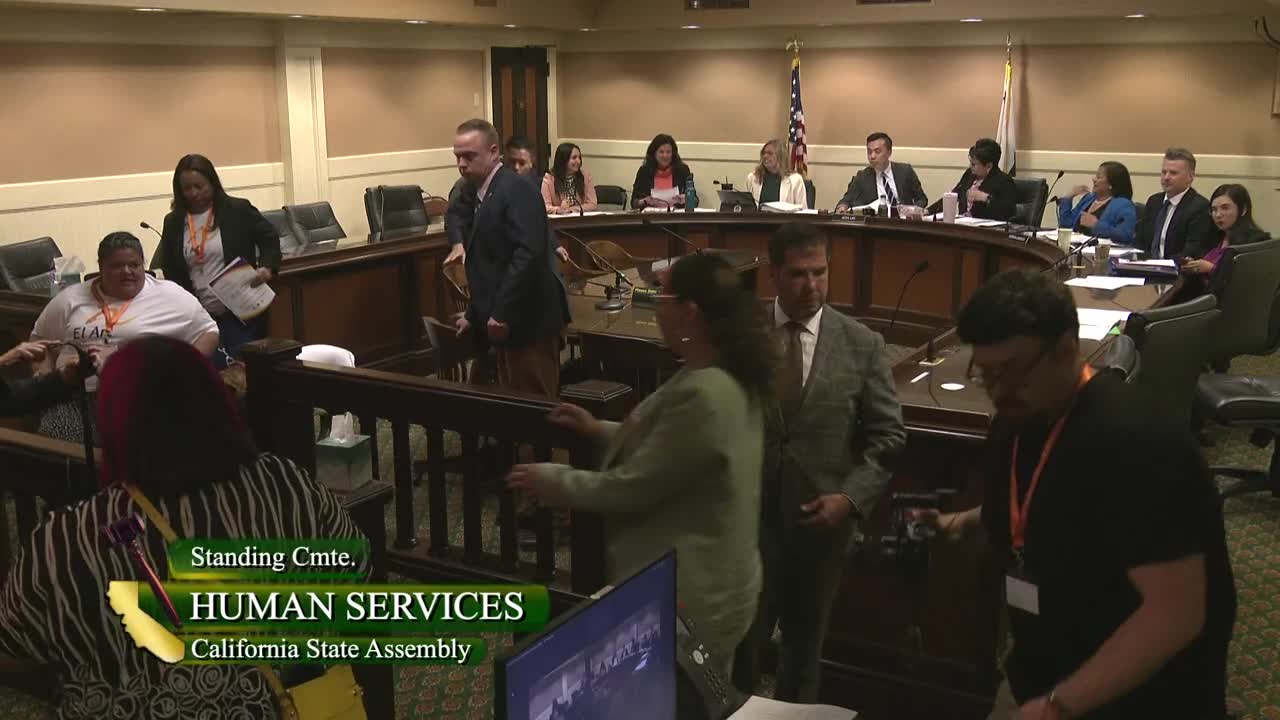
Assembly Standing Committee on Human Services
Bill Author
Bill Co-Author(s):