AB 701: Corrections: solitary confinement.
- Session Year: 2025-2026
- House: Assembly
- Latest Version Date: 2025-02-14
Current Status:
Failed
(2026-02-02: From committee: Filed with the Chief Clerk pursuant to Joint Rule 56.)
Introduced
In Committee
Awaiting First Chamber Vote
Passed First Chamber
In Committee
Awaiting Second Chamber Vote
Passed Second Chamber
Enacted
Existing law provides the Department of Corrections and Rehabilitation with jurisdiction over the state prison, as specified. Existing law states that it is unlawful to use any cruel, corporal, or unusual punishment or to inflict any treatment or allow any lack of care that would injure or impair the health of a prisoner, inmate, or person confined.
This bill would, upon appropriation by the Legislature, require the Department of Justice, in collaboration with the Department of Corrections and Rehabilitation and the Board of State and Community Corrections, to conduct a one-time comprehensive study on the use of solitary confinement in all detention facilities in California. The bill would require the study to include specified data about each instance of solitary confinement during the first 9 months of the year of 2026, including, among other data, the time and date solitary confinement began and ended, the facility in which it occurred, and the stated basis for the solitary confinement. The bill would require detention facilities to report the required data to the department. By increasing duties on local detention facilities, this bill would impose a state-mandated local program. The bill would require the Department of Justice to provide monthly data to the Legislature, and a final report to the Legislature and the Governor, by November 1, 2026, as specified.
The California Constitution requires the state to reimburse local agencies and school districts for certain costs mandated by the state. Statutory provisions establish procedures for making that reimbursement.
This bill would provide that, if the Commission on State Mandates determines that the bill contains costs mandated by the state, reimbursement for those costs shall be made pursuant to the statutory provisions noted above.
The Legislature finds and declares both of the following:
(a)Solitary confinement, defined as the practice of isolating individuals in a cell for 17 hours or more per day, has significant negative implications for mental health, rehabilitation, and public safety.
(b)Comprehensive data on the use of solitary confinement is essential to understanding its impact and developing informed policies that balance safety, security, and humane treatment.
2697.1.For the purposes of this article, the following terms have the following meanings:
(a)Cell means any room, area, or space that is used or is intended to be used by an incarcerated individual for sleep, or any room, area, or space that is not a shared space conducive to meaningful human interaction among many people in a group setting without physical barriers between people where a person or persons are held for any purpose.
(b)Detention facilities means all jails, prisons, and private detention facilities operating within the State of California. For purposes of this section, private detention facility has the same meaning as in Section 7320 of the Government Code.
(c)Meaningful human interaction means sustained, direct interaction between individuals that allows for empathetic communication and engagement, extending beyond purely transactional exchanges, conducted without physical barriers, and fostering an individuals psychological and social well-being.
(d)Out-of-cell means being in a space outside of, and in an area away from, a cell, in a group setting with other people all in the same shared space without physical barriers between people that is conducive to meaningful human interaction.
(e)Solitary confinement means the confinement of an individual in a cell or similarly confined holding or living space, alone or with other individuals, for 17 hours or more per day, or any situation in which an individual is locked in any space that is not a group setting conducive for meaningful human interaction for 17 hours or more per day.
2697.2.(a)Upon appropriation by the Legislature, the Department of Justice, in collaboration with the Department of Corrections and Rehabilitation and the Board of State and Community Corrections, shall conduct a one-time comprehensive study on the use of solitary confinement within all detention facilities in California.
(b)The study shall include, but not be limited to, the following data for each instance of solitary confinement during the first nine months of the year of 2026:
(1)The time and date solitary confinement began and ended, including any start date that began prior to the study period and any projected end date if someone is still in solitary confinement at the conclusion of the study period.
(2)The specific facility and unit where solitary confinement occurred, including the name of the unit and whether the unit is considered to be general population, disciplinary confinement, administrative segregation, an alternative to solitary confinement, protective custody, or another type of unit.
(3)The duration of solitary confinement, including the total consecutive duration in solitary confinement for each individual subjected to solitary confinement, including if that consecutive duration began prior to the study period, and the total duration during the study period of solitary confinement for each individual subjected to solitary confinement, including the total projected duration if the person is still in solitary confinement at the conclusion of the study period.
(4)The stated basis or reason for the use of solitary confinement.
(5)The demographics of the individual placed in solitary confinement, including age, gender, race, disability, pregnancy or postpartum status, identification as lesbian, gay, bisexual, transgender, intersex, or gender nonconforming, and any known mental or physical health conditions.
(6)The nature and frequency of any meaningful human interaction provided during confinement.
(7)The conditions of the confinement, including number of hours of out of cell time per day, location of out of cell time, number of hours of out of cell time in a group setting, number of hours of out of cell programming, cell size, lighting, ventilation, access to outdoor recreation, and access to outdoor recreation in a group setting.
(8)Any disciplinary, protective, administrative, or other rationale cited for the confinement.
(c)The study shall also include all of the following data during the study period for individuals in solitary confinement:
(1)The number of incidents of self-harm, suicide attempts, and suicides during solitary confinement or within 60 days after solitary confinement, broken down by facility, unit, and date of occurrence.
(2)The number of deaths occurring during solitary confinement broken down by facility, unit, cause of death, and date of occurrence.
(3)The number of sanctions to solitary confinement that occurred during the study period and the lengths of solitary confinement time imposed by each sanction.
(4)The number of sanctions that occurred in combination to incarcerated individuals solitary confinement. Sanctions include taking away a persons privileges or services such as visits, packages, correspondence, phone calls, tablets, cell shields, programs, recreation, commissary, out-of-cell time, food, restitution, forfeiture of funds, loss of good time, family reunion programs, and imposed work tasks.
(5)The number of incidents of staff uses of force inside of solitary confinement or to bring an incarcerated individual to solitary confinement, broken down by facility, unit, date of occurrence, and the level of injury to incarcerated people and staff.
(d)Detention facilities shall report the required data to the Department of Justice, with a frequency of reports determined by the department.
(e)(1)The Department of Justice shall provide a report with interim data collected pursuant to this section to the Legislature monthly, and post that monthly data publicly on its internet website, and submit a final report with the data collected in this study to the Governor and the Legislature, and post that report publicly on its website, by November 1, 2026.
(2)A report to be submitted pursuant to this subdivision shall be submitted in compliance with Section 9795 of the Government Code.
2697.3.All detention facilities shall cooperate fully with the Department of Justice for the purposes of this article and provide accurate and timely data as requested by the department.
2697.4.(a)The data collected pursuant to this article shall be used solely for the purposes of the study and policy development.
(b)Personally identifiable information shall not be disclosed in the reports or any associated publications pursuant to this article.
2697.5.This article shall remain in effect only until January 1, 2028, and as of that date is repealed.
SEC. 2.If the Commission on State Mandates determines that this act contains costs mandated by the state, reimbursement to local agencies and school districts for those costs shall be made pursuant to Part 7 (commencing with Section 17500) of Division 4 of Title 2 of the Government Code.
|
Date
|
Status
|
|---|---|
| Feb 2, 2026 | From committee: Filed with the Chief Clerk pursuant to Joint Rule 56. |
| Jan 31, 2026 | Died pursuant to Art. IV, Sec. 10(c) of the Constitution. |
| May 23, 2025 | In committee: Held under submission. |
| Apr 23, 2025 | In committee: Set, first hearing. Referred to suspense file. |
| Mar 26, 2025 | From committee: Do pass and re-refer to Com. on APPR. (Ayes 8. Noes 0.) (March 25). Re-referred to Com. on APPR. |
| Mar 3, 2025 | Referred to Com. on PUB. S. |
| Feb 15, 2025 | From printer. May be heard in committee March 17. |
| Feb 14, 2025 | Read first time. To print. |
|
Date
|
Description
|
Location
|
Votes
|
|
|---|---|---|---|---|
| Mar 25, 2025 | Do pass and be re-referred to the Committee on [Appropriations] | Assembly Standing Committee on Public Safety |
Passed |
This list shows positions taken on this bill by organizations on the date displayed, which is linked to the original source.
Positions by individuals are not included.
|
Organization
|
Position
|
Date
|
|---|---|---|
| Aclu California Action | ** Support | |
| California Collaborative for Immigrant Justice | ** Support | |
| NextGen California | ** Support | |
| San Francisco District Attorney Brooke Jenkins | ** Support |
Date of Hearing: April 23, 2025
ASSEMBLY COMMITTEE ON APPROPRIATIONS
Buffy Wicks, Chair
ABPCA Bill Id:AB 701
Author:(Ortega) – As Introduced Ver:February 14, 2025
Policy Committee: | Public Safety | Vote: | 8 - 0 |
|
| ||
|
|
Urgency: No State Mandated Local Program: Yes Reimbursable: Yes
SUMMARY:
This bill requires the Department of Justice (DOJ), in collaboration with the California Department of Corrections and Rehabilitation (CDCR) and the Board of State and Community Corrections (BSCC), to conduct a study of the use of solitary confinement in all detention facilities in California.
The study must include specified information about each instance of solitary confinement during the first nine months of 2026. DOJ must provide monthly interim reports to the Legislature, and provide a final report to the Legislature and Governor by November 1, 2026.
The required information includes the time and date solitary confinement began and ended, the facility and unit where the confinement occurred, the stated basis for use of confinement, the nature and frequency of any meaningful human interaction provided during confinement, and demographic information about each person placed in confinement. The bill also requires data collection intended to measure the impacts of solitary confinement, including data about any incidents of self-harm and suicide that occur in solitary confinement.
The bill defines “solitary confinement” as the confinement of an individual in a cell or similarly confined holding or living space, alone or with other individuals, for 17 hours or more per day, or any situation in which an individual is locked in any space that is not a group setting conducive for meaningful human interaction for 17 hours or more per day.
FISCAL EFFECT:
- Costs (General Fund) to DOJ, possibly in the low millions of dollars annually until the study is submitted to the Legislature in late 2026. DOJ was unable to provide a cost estimate in advance of this hearing, but the department will incur workload costs for developing and implement the study, conducting outreach and site visits, and completing the required data analysis and reporting.
- Costs (General Fund) to CDCR, likely in the low millions of dollars, for limited-term staffing to collect and report the required data. Although CDCR collects and publishes some information about its use of restricted housing units, this bill requires collection of different and more granular data, resulting in additional workload to establish and implement new data collection protocols.
- Costs (General Fund) to BSCC of an unknown amount. Assuming the bill requires BSCC only to serve as a liaison between DOJ and local detention facilities, BSCC anticipates minor and absorbable costs. If BSCC must take on additional responsibilities under the collaboration required by the bill, it may require additional resources to fulfill its obligations.
- Costs (local funds, General Fund) of an unknown but likely significant amount to cities and counties to collect and report required information about solitary confinement in city and county jails. These costs may be in the millions to tens of millions dollars in the aggregate statewide, depending on how much of this data is already collected by local detention facilities. General Fund costs will depend on whether the duties imposed by this bill constitute a reimbursable state mandate, as determined by the Commission on State Mandates.
Regardless of cost, consistent with Appropriations Committee rules and practice, this bill is eligible for placement on the suspense file because it has the primary purpose of requiring a report.
COMMENTS:
- Purpose. According to the author:
The science is clear: solitary confinement is cruel, inhumane, and causes severe physical, psychological, emotional, and social harm…Despite these known harms, California lacks clarity regarding how, why, and to what extent solitary confinement is currently employed across state prisons, jails, and private detention centers. Moreover, the real-world impact of Governor Newsom’s 2023 reforms remains unknown on a statewide and quantitative level. AB 701 seeks to illuminate these issues by systematically tracking the frequency, rationale, conditions, aftereffects, and demographic impacts of solitary confinement.
- Background. Solitary confinement, also known as restricted housing or segregated confinement, is a form of custody where an incarcerated person is separated from the general population and placed in a separate environment. Generally, a person placed in solitary confinement has very limited opportunities to interact with other people, go outdoors, or leave their cell. Solitary confinement is regarded by experts as extremely detrimental to an incarcerated person’s mental health.
In 2022, the Legislature passed AB 2632 (Holden), which would have limited the use of solitary confinement in California and required specified facilities to follow certain procedures related to segregated confinement. Governor Newsom vetoed the bill, writing that it “establishe[d] standards that are overly broad and exclusions that could risk the safety of both the staff and incarcerated population within these facilities.” In his veto message, the Governor directed CDCR to develop regulations restricting the use of segregated confinement but maintaining the practice where needed. CDCR filed emergency regulations in October 2023 that reduced the number of in-prison offenses that could result in solitary confinement and increasing the number of hours each incarcerated person must be permitted to be out of their cell to 20 hours per week. CDCR currently reports some aggregated data about its use of solitary confinement on its website.
This bill requires extensive data collection about solitary confinement by state and local detention facilities for a nine-month period in 2026. As discussed in more detail in the analysis of this bill by the Assembly Committee on Public Safety, there are significant issues with both the timeline of study required by the bill and the definition of “solitary confinement” in the bill. In addition to addressing the policy concerns expressed in that analysis, adopting a longer timeline for implementation and a narrower definition of the practices to be studied may help mitigate the very significant workload costs described above. CDCR also notes significant privacy and legal concerns about the collection and provision of individual-level data under the bill, and difficulties quantifying “meaningful human interaction” for the purposes of data collection.
- Prior Legislation. AB 280 (Holden), of the 2023-24 Legislative Session, was substantially the same as AB 2632, described above. AB 280 died on the Assembly inactive file.
SB 733 (Glaser), of the 2023-24 Legislative Session, would have required CDCR to annually report specified data about its use of solitary confinement to the Legislature and the Governor. SB 733 was held on this committee’s suspense file.
Analysis Prepared by: Annika Carlson / APPR. / (916) 319-2081
Date of Hearing:
Chief Counsel: Andrew Ironside
ASSEMBLY COMMITTEE ON PUBLIC SAFETY
Nick Schultz, Chair
ABPCA Bill Id:AB 701
Author:(Ortega) – As Introduced Ver:February 14, 2025
SUMMARY:
Requires the Department of Justice (DOJ) to study the use of solitary confinement in all jails, prisons, and private detention facilities operating within the State of California. Specifically, this bill:
- Requires DOJ, upon appropriation by the Legislature, in collaboration with the Department of Corrections and Rehabilitation (CDCR) and the Board of State and Community Corrections (BSCC), to conduct a one-time comprehensive study on the use of solitary confinement within all detention facilities in California.
- Requires the study to include, but not be limited to, the following data for each instance of solitary confinement during the first nine months of the year of 2026:
- The time and date solitary confinement began and ended, including any start date that began prior to the study period and any projected end date if someone is still in solitary confinement at the conclusion of the study period;
- The specific facility and unit where solitary confinement occurred, including the name of the unit and whether the unit is considered to be general population, disciplinary confinement, administrative segregation, an alternative to solitary confinement, protective custody, or another type of unit;
- The duration of solitary confinement, including the total consecutive duration in solitary confinement for each individual subjected to solitary confinement, including if that consecutive duration began prior to the study period, and the total duration during the study period of solitary confinement for each individual subjected to solitary confinement, including the total projected duration if the person is still in solitary confinement at the conclusion of the study period;
- The stated basis or reason for the use of solitary confinement;
- The demographics of the individual placed in solitary confinement, including age, gender, race, disability, pregnancy or postpartum status, identification as lesbian, gay, bisexual, transgender, intersex, or gender nonconforming, and any known mental or physical health conditions;
- The nature and frequency of any meaningful human interaction provided during confinement;
- The conditions of the confinement, including number of hours of out of cell time per day, location of out of cell time, number of hours of out of cell time in a group setting, number of hours of out of cell programming, cell size, lighting, ventilation, access to outdoor recreation, and access to outdoor recreation in a group setting; and,
- Any disciplinary, protective, administrative, or other rationale cited for the confinement.
- The time and date solitary confinement began and ended, including any start date that began prior to the study period and any projected end date if someone is still in solitary confinement at the conclusion of the study period;
- Requires the study to include all of the following data during the study period for individuals in solitary confinement:
- The number of incidents of self-harm, suicide attempts, and suicides during solitary confinement or within 60 days after solitary confinement, broken down by facility, unit, and date of occurrence;
- The number of deaths occurring during solitary confinement broken down by facility, unit, cause of death, and date of occurrence;
- The number of sanctions to solitary confinement that occurred during the study period and the lengths of solitary confinement time imposed by each sanction;
- The number of sanctions that occurred in combination to incarcerated individual’s solitary confinement. Sanctions include taking away a person’s privileges or services such as visits, packages, correspondence, phone calls, tablets, cell shields, programs, recreation, commissary, out-of-cell time, food, restitution, forfeiture of funds, loss of good time, family reunion programs, and imposed work tasks; and,
- The number of incidents of staff uses of force inside of solitary confinement or to bring an incarcerated individual to solitary confinement, broken down by facility, unit, date of occurrence, and the level of injury to incarcerated people and staff.
- The number of incidents of self-harm, suicide attempts, and suicides during solitary confinement or within 60 days after solitary confinement, broken down by facility, unit, and date of occurrence;
- Requires detention facilities to report the data to DOJ, with a frequency of reports determined by the department.
- Requires DOJ to provide a report with interim data to the Legislature monthly, and post that monthly data publicly on its internet website, and submit a final report with the data collected in this study to the Governor and the Legislature, and post that report publicly on its website, by November 1, 2026.
- Requires all detention facilities to cooperate fully with DOJ and provide accurate and timely data as requested by the department, and authorizes the use of the collected data only for the purposes of the study and policy development.
- Prohibits the disclosure of personally identifiable information in the reports or any associated publications, as specified.
- Provides the following definitions:
- “Cell” means any room, area, or space that is used or is intended to be used by an incarcerated individual for sleep, or any room, area, or space that is not a shared space conducive to meaningful human interaction among many people in a group setting without physical barriers between people where a person or persons are held for any purpose.
- “Detention facilities” means all jails, prisons, and private detention facilities, as specified, operating within the State of California.
- “Meaningful human interaction” means sustained, direct interaction between individuals that allows for empathetic communication and engagement, extending beyond purely transactional exchanges, conducted without physical barriers, and fostering an individuals’ psychological and social well-being.
- “Out-of-cell” means being in a space outside of, and in an area away from, a cell, in a group setting with other people all in the same shared space without physical barriers between people that is conducive to meaningful human interaction.
- “Solitary confinement” means the confinement of an individual in a cell or similarly confined holding or living space, alone or with other individuals, for 17 hours or more per day, or any situation in which an individual is locked in any space that is not a group setting conducive for meaningful human interaction for 17 hours or more per day.
- “Cell” means any room, area, or space that is used or is intended to be used by an incarcerated individual for sleep, or any room, area, or space that is not a shared space conducive to meaningful human interaction among many people in a group setting without physical barriers between people where a person or persons are held for any purpose.
- Provides a sunset date of January 1, 2028.
EXISTING LAW:
- Prohibits the infliction of cruel and unusual punishment. (Cal. Const., art. I, § 17.)
- Establishes rights for persons sentenced to imprisonment in a state prison, and provides that a person may, during that period of confinement be deprived of such rights, and only such rights, as is reasonably related to legitimate penological interests. (Pen. Code, § 2600.)
- Prohibits the use of any cruel, corporal or unusual punishment or to inflict any treatment or allow any lack of care whatever which would injure or impair the health of the prisoner, inmate, or person confined. (Pen. Code, § 2652.)
- Authorizes CDCR to prescribe and amend rules and regulations for the administration of the prisons. (Pen. Code, § 5058.)
- Requires the Secretary of CDCR to classify and assign prisoners to the institution of the appropriate security level and gender population nearest the prisoner’s home, unless other classification factors make such a placement unreasonable. (Pen. Code, § 5068.)
- Requires the sheriff to receive all persons committed to jail by competent authority and the board of supervisors to provide the sheriff with necessary food, clothing, and bedding, for those prisoners, which shall be of a quality and quantity at least equal to the minimum standards and requirements prescribed by the BSCC for the feeding, clothing, and care of prisoners in all county, city, and other local jails and detention facilities. (Pen. Code, § 4015.)
- Requires the BSCC to establish minimum standards for local correctional facilities. (Pen. Code, § 6030.)
- Requires private local detention facilities to operate pursuant to a contract with the city, county or city and county. (Pen. Code, § 6031.6.)
- Requires private local detention facilities to follow the minimum standards for local correctional facilitates established by the BSCC. (Pen. Code, § 6031.6, subd. (c).)
- Limits the confinement of a minor in a locked room or cell with minimal or no contact with persons, as specified, and sets forth the guidelines for the use of room confinement of a minor in a juvenile facility. (Welf. & Inst. Code, § 208.3.)
- Requires the California Attorney General to conduct reviews of county, local, or private locked detention facilities in which noncitizens are being housed or detained for purposes of civil immigration proceedings. (Gov. Code § 12532, subd. (a).)
- Prohibits a city, county or public agency from contracting with a private facility for the purpose of civil immigration facilities, except as specified. (Civ. Code, § 1670.9.)
- Prohibits private detention facilities in California, as specified. (Pen. Code, §§ 5003.1 & 9501.)
EXISTING FEDERAL LAW:
- Prohibits the infliction of cruel and unusual punishment. (U.S. Const., 8th Amend.)
- Makes the laws of the United States and the U.S. Constitution “the supreme Law of the Land.” (U.S. Const. art. VI, cl. 2.)
- Vests the control and management of federal penal and correctional institutions in the U.S. Attorney General, who shall promulgate rules for the government thereof. (18 U.S.C. § 4001, subd. (a).)
- Authorizes the U.S. Attorney General to classify inmates and provide for their proper government, discipline, treatment, care, rehabilitation and reformation. (18 U.S.C. § 4001, subd. (b).)
- Provides that the Bureau of Prisons (BOP), under the direction of the U.S. Attorney General, shall have charge of the management and regulation of all federal penal and correctional institutions and shall provide suitable quarters and provide for the safekeeping, care, and subsistence of all persons charged with or convicted of offenses against the United States. (18 U.S.C. § 4042.)
- Requires the BOP to designate the place of the prisoner’s imprisonment, and subject to bed availability, the prisoner’s security designation, the prisoner’s programmatic needs, the prisoner’s mental and medical health needs, any request made by the prisoner related to faith-based needs, recommendations of the sentencing court, and other security concerns. (18 U.S.C. § 3621.)
- Requires the U.S. Attorney General to arrange for appropriate places of detention for immigrants pending removal decision or removal. (8 U.S.C. § 1231, subd. (g)(1).)
- Requires the U.S. Attorney General to ensure that undocumented criminals incarcerated in federal facilities are held in facilities that provide a level of security appropriate to the crimes for which they were convicted. (8 U.S.C. § 1231, subd. (h)(4)(B).)
- Prohibits the use of room confinement for juveniles in federal custody for any reason other than as a temporary response to the juvenile’s behavior that poses a serious and immediate risk of physical harm to any individual. (18 U.S.C. § 5043.)
- Prohibits the use of segregated confinement in federal penal or corrections institutions for individuals who are pregnant or in post-partum recovery, unless the individual presents an immediate risk of harm to the individual or others. Any placement in a segregated housing unit must be limited and temporary. (18 U.S.C. § 4051, subd. (c).)
FISCAL EFFECT:
Unknown
COMMENTS:
- Author's Statement: According to the author, “The science is clear: solitary confinement is cruel, inhumane, and causes severe physical, psychological, emotional, and social harm. Extensive research shows that it neither enhances prison safety nor reduces recidivism, ultimately wasting millions of taxpayer dollars intended to protect inmates and fulfill the rehabilitative goals of our justice system. Despite these known harms, California lacks clarity regarding how, why, and to what extent solitary confinement is currently employed across state prisons, jails, and private detention centers. Moreover, the real-world impact of Governor Newsom’s 2023 reforms remains unknown on a statewide and quantitative level. AB 701 seeks to illuminate these issues by systematically tracking the frequency, rationale, conditions, aftereffects, and demographic impacts of solitary confinement. This bill represents a vital step towards reforming a punitive system that compromises both human dignity and public safety.”
- Mental, Psychological, and Physical Effects of Segregated Confinement: There is an increasing body of evidence that suggests that segregated housing produces unwanted and harmful outcomes, for the mental and physical health of those placed in isolation, for the public safety of the communities to which most will return, and for the corrections budgets of jurisdictions that rely on the practice for facility safety. When individuals are placed into segregated housing, it affects access to programming (e.g., education, treatment), the nature and extent of contact they can have with family and friends, and can even impact terms of community supervision.[1] According to a report by the Vera Institute of Justice, “nearly every scientific inquiry into the effects of solitary confinement over the past 150 years has concluded that subjecting an individual to more than 10 days of involuntary segregation results in a distinct set of emotional, cognitive, social, and physical pathologies.”[2] (Vera Institute of Justice, Solitary Confinement: Common Misconceptions and Emerging Safe Alternatives (May 2015) <https://www.vera.org/downloads/publications/solitary-confinement-misconceptions-safe-alternatives-report_1.pdf>[as of March 3, 2023].)
Further research has shown that there is an increased prevalence of hypertension in persons who have been in solitary condiment, which results in millions in additional future health care costs.[3] Also, vulnerable populations like pregnant women are far more susceptible to the potential dangers of solitary confinement.[4]
The World Health Organization, United Nations, and other international bodies have recognized solitary confinement as greatly harmful and potentially fatal. In 2015, the United Nations General Assembly ratified the Nelson Mandela Rules, prohibiting any period of segregation beyond 15 days and defining it as torture.[5] The American Medical Association (AMA) recently called for the elimination of solitary confinement of any length, for the mentally ill, citing its mental health harms.[6]
- Ineffectiveness of Segregated Confinement as a Penological Tool: Prison and jail administrators consider segregated confinement as a necessary tool to maintain safe and orderly correctional facilities and to promote the safety of staff and incarcerated people within prisons and jails. However, use of segregated confinement is not associated with reductions in facility or system wide misconduct and violence. Several studies on segregated confinement have found that its use does not decrease misconduct or violence, including staff assaults, and therefore does not improve the safety of the facility.[7]
Further empirical and anecdotal evidence suggests that segregated housing may have little influence on improving the behavior of incarcerated people and deterring violence.[8] There is little evidence to support the claim that segregated housing increases facility safety or that its absence would increase in-prison violence.[9]
In addition, a report by the ACLU indicates that there is little evidence or research about the goals, impacts or cost-effectiveness of solitary confinement as a corrections tool.[10] Data from some states suggest that recidivism rates for incarcerated people who have been held in segregated housing, regardless of whether they are released directly to the community, is significantly higher than for those who have not spent time in segregated housing while in prison.[11] Research from California suggests that rates of return to prison are 20% higher for solitary confinement prisoners.[12]
- Ashker v. Governor of State of California: In 2015, California settled Ashker v. Governor, a historic class-action lawsuit brought by the Center for Constitutional Rights (CCR) on behalf of a group of Pelican Bay State prisoners who had each spent at least a decade in isolation.[13] The settlement intended to end the practice of isolating prisoners who have not violated prison rules, cap the length of time a prisoner can spend in solitary confinement, and provide a restrictive but not isolating alternative for prisoners who violate prison rules on behalf of a gang.[14]
The Ashker agreement was first extended in 2019 by the federal court, based on a finding that CDCR was “effectively frustrating the purpose” of the settlement agreement by systemically violating due process rights.[15] In February 2022, the court determined that CDCR continues to violate the due process rights of incarcerated persons despite the Ashker agreement. The court found that CDCR is relying on inaccurate and fabricated confidential information to place individuals in solitary confinement and holding individuals in a restricted unit in the general population without adequate procedural safeguards.[16] Citing these violations, the court extended the Ashker agreement for a second one-year term.[17] CDCR appealed the orders extending the settlement agreement. The appeals were consolidated, and in August 2023, the Ninth Circuit reversed the district court’s order granting the first extension of the settlement agreement and vacated the order granting the second extension of the settlement agreement on jurisdictional grounds. - Additional Considerations: This bill requires the Department of Justice (DOJ) to study the use of solitary confinement in all jails, prisons, and private detention facilities operating within the State of California. To meaningfully achieve that goal, the author may wish to consider amends on the following issues:
- The Study’s Timeline: This bill would require DOJ to study solitary confinement in jails, prisons, and private detention facilities for the first nine months—through September 30—of 2026. At the same time, the bill requires DOJ to report on the number of incidents of self-harm, suicide attempts, and suicides that occur within 60 days after confinement. So, if an incarcerated person were released from solitary confinement on September 20, 2026, DOJ would to report include data on that person through November 19, 2026. However, the bill also requires the DOJ to release the final report on November 1, 2026. In other words, DOJ would be unable to fulfill the terms of the study under the timeline established by the bill.
The author should consider making the bill a one year study—January 1, 2026 to December 31, 2026—with the final report due on July 1, 2027. These amendments would give DOJ sufficient time to collect and process the data for the report without violating the law. - The Definition of Solitary Confinement: This bill defines “solitary confinement” as the confinement of an individual in a cell or similarly confined holding or living space, alone or with other individuals, for 17 hours or more per day. Merriam-Webster defines “solitary” as “being, living, or going alone or without companions.”[18] It defines “alone” as “separated from others.”[19] Thus, the bill uses the term “solitary” to include situations that by definition are not solitary.
This bill also defines “solitary confinement” to be isolation “for 17 hours or more a day.” In other words, under this bill a person would be considered to be housed in solitary confinement even if they were exposed to meaningful human interaction for seven hours a day and housed with other people for the rest of the day—meaning they were almost never alone.
- The Study’s Timeline: This bill would require DOJ to study solitary confinement in jails, prisons, and private detention facilities for the first nine months—through September 30—of 2026. At the same time, the bill requires DOJ to report on the number of incidents of self-harm, suicide attempts, and suicides that occur within 60 days after confinement. So, if an incarcerated person were released from solitary confinement on September 20, 2026, DOJ would to report include data on that person through November 19, 2026. However, the bill also requires the DOJ to release the final report on November 1, 2026. In other words, DOJ would be unable to fulfill the terms of the study under the timeline established by the bill.
The author may wish to change the definition of “solitary confinement” to mean being housed in a cell alone; or, conversely, to change the term used to describe being confined in a cell alone or with others. The author may also consider whether a definition of solitary confinement that includes the amount of meaningful human interaction and contact with others currently permissible under the bill is too broad. For example, Rule 44 of the United Nations Standard Minimum Rules for the Treatment of Prisoners [the Nelson Mandela Rules] define solitary confinement as “the confinement of prisoners for 22 hours or more a day without meaningful human contact.”[20]
- Argument in Support: According to ACLU California Action, “Solitary confinement is one of the most severe and destructive practices found in carceral settings today. The World Health Organization, United Nations, and other international bodies have recognized solitary confinement as greatly harmful and potentially fatal. In 2015, the United Nations General Assembly ratified the Nelson Mandela Rules, prohibiting any period of segregation beyond 15 days and defining it as torture.1 Despite the consensus around severe impacts of solitary confinement, it is currently unclear how frequently Californians are subjected to solitary confinement and to what extent solitary confinement is used in California facilities.
“AB 701 seeks to bring some transparency to these inhumane practices in our jails and prisons. The study will include specified data about each instance of solitary confinement during the first 9 months of the year of 2026, including, among other data, the time and date solitary confinement began and ended, the facility in which it occurred, and the stated basis for the solitary confinement. The bill also requires the Department of Justice to provide monthly data to the Legislature and a final report to the Legislature and the Governor, by November 1, 2026. A comprehensive study about the frequency and use of solitary confinement in detention facilities will help guide conversations on creating common safeguards across facilities and will inform the Legislature’s future reforms.” - Related Legislation: AB 1140 (Connolly) would require the Secretary of CDCR to develop and implement a pilot program to house people who are incarcerated at four adult prison facilities in single-occupancy cells by January 1, 2027.
- Prior Legislation:
- AB 2527 (Bauer-Kahan), Chapter 722, Statutes of 2024, prohibited incarcerated pregnant person from being placed in solitary confinement or restrictive housing units during their pregnancy or for 12 weeks postpartum.
- SB 733 (Glazer), of the 2023-204 Legislative Session, would have required the CDCR to collect and report to the Legislature specified data on solitary confinement. SB 733 was held in suspense in the Assembly Appropriations Committee.
- AB 280 (Holden), of the 2023-2024 Legislative Session, would limit the use of segregated confinement and requires facilities in the State in which individuals are subject to confinement or involuntary detention to follow specified procedures related to segregated confinement. AB 280 was placed on the inactive file in the Assembly.
- AB 2632 (Holden), of the 2021-2022 Legislative Session, was substantially similar to AB 280. AB 2632 was vetoed.
- AB 2321 (Jones-Sawyer), Chapter 781, Statutes of 2022, prohibits confinement of a minor in a locked single-person room or cell in a juvenile facility for a period lasting longer than one hour when room confinement is necessary for institutional operations.
- AB 1225 (Waldron), of the 2021-2022 Legislative Session, would have prohibited an incarcerated woman from being placed in solitary confinement for medical observation. AB 1225 was held in the Assembly Appropriations Committee.
- SB 759 (Anderson), Chapter 191, Statutes of 2016, repealed provisions of law that made incarcerated persons housed in segregation units ineligible to earn credits.
- SB 124 (Leno), of the 2015-2016 Legislative Session, would have established standards and protocols for the placement of juveniles in solitary confinement. SB 124 was held in the Assembly Appropriations Committee.
- SB 1289 (Lara), of the 2015-2016 Legislative Session, would have, among other things, prohibited an immigration detention facility from involuntarily placing a detainee in segregated housing because of his or her actual or perceived gender, gender identity, gender expression, or sexual orientation. SB 1289 was vetoed.
- SB 892 (Hancock), of the 2013-2014 Legislative Session, would have declared the intent of the Legislature that long-term segregated housing as a prison management strategy should be used only as a last resort and should be limited in duration. SB 892 failed passage on the Assembly Floor.
- SB 970 (Yee), of the 2013-2014 Legislative Session, would have prohibited a minor who is detained in, or sentenced to, any juvenile facility or other secure state or local facility from being subject to solitary confinement. SB 970 died in this Committee.
- AB 2527 (Bauer-Kahan), Chapter 722, Statutes of 2024, prohibited incarcerated pregnant person from being placed in solitary confinement or restrictive housing units during their pregnancy or for 12 weeks postpartum.
REGISTERED SUPPORT / OPPOSITION:
Support
ACLU California Action
California Collaborative for Immigrant Justice
Nextgen California
San Francisco District Attorney Brooke Jenkins
Opposition
None on file.
Analysis Prepared by:
Andrew Ironside / PUB. S. / (916) 319-3744
U.S. DOJ Office of Justice Programs’ (OJP) National Criminal Justice Reference Service (NCJRS), Examining Race and Gender Disparities in Restrictive Housing Placements (Sept. 2018) <https://www.ojp.gov/pdffiles1/nij/grants/252062.pdf> [as of March 3, 2023]. ↑
Vera Institute of Justice, Solitary Confinement: Common Misconceptions and Emerging Safe Alternatives (May 2015) <https://www.vera.org/downloads/publications/solitary-confinement-misconceptions-safe-alternatives-report_1.pdf> [as of March 3, 2023]. ↑
The Cardiovascular Health Burdens of Solitary Confinement (2019) J. Gen. Intern. Med. 34, 1977–1980. ↑
Unjust Isolation: The Diminishing Returns of Solitary Confinement of Pregnant Women and California’s Need to Regulate It (2021) 2 Hastings J. Crime & Punish. 122. ↑
The United Nations Standard Minimum Rules for the Treatment of Prisoners (the Nelson Mandela Rules), (2015). ↑
MA House of Delegates, Reducing the Use of Restrictive Housing in Prisoners with Mental Illness: Resolution 412 (2018) at p. 641. ↑
Benjamin Steiner and Calli M. Cain, The Relationship Between Inmate Misconduct, Institutional Violence, and Administrative Segregation: A Systematic Review of the Evidence, U.S. Department of Justice, National Institute of Justice (2016) <https://perma.cc/BCJ3-HYK3>[as of April 5, 2022]. ↑
Vera Institute of Justice, Solitary Confinement: Common Misconceptions and Emerging Safe Alternatives, supra, (May 2015). ↑
Ibid. ↑
ACLU, ACLU Briefing Paper: The Dangerous Overuse of Solitary Confinement in the United States (2014) <https://www.aclu.org/report/dangerous-overuse-solitary-confinement-united-states> [as of Feb. 15, 2023]. ↑
Ibid. ↑
Ibid. ↑
CCR, Summary of Ashker v. Governor of California Settlement Terms <https://ccrjustice.org/sites/default/files/attach/2015/08/2015-09-01-Ashker-settlement-summary.pdf> [as of Feb. 15, 2022]. ↑
Ibid. ↑
CCR, Court Finds Continued Systemic Constitutional Violations in California Prisons, CCR (Feb. 3, 2022) <https://ccrjustice.org/home/press-center/press-releases/court-finds-continued-systemic-constitutional-violations-california> [as of Feb. 15, 2023]. ↑
Ibid. ↑
Ibid. ↑
https://www.unodc.org/documents/justice-and-prison-reform/Nelson_Mandela_Rules-E-ebook.pdf ↑
Discussed in Hearing
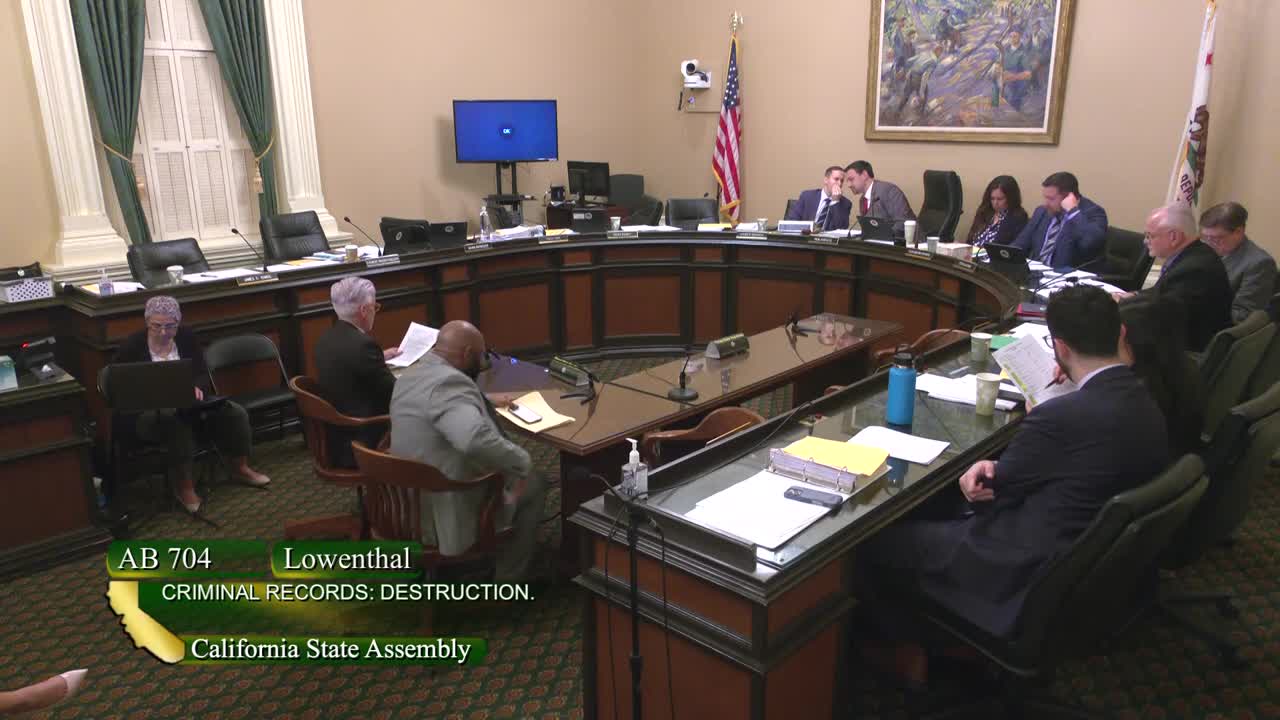 10MIN
Assembly Standing Committee on Public Safety
Bill Author

Bill Co-Author(s):