AB 746: Inmate Cooperative Program.
- Session Year: 2025-2026
- House: Assembly
- Latest Version Date: 2025-02-18
Current Status:
Failed
(2026-02-02: From committee: Filed with the Chief Clerk pursuant to Joint Rule 56.)
Introduced
In Committee
Awaiting First Chamber Vote
Passed First Chamber
In Committee
Awaiting Second Chamber Vote
Passed Second Chamber
Enacted
Existing law creates specified programs that employ inmates, including the joint venture program, which is established by the Secretary of Department of Corrections and Rehabilitation within state prisons that allows a public entity, nonprofit or for-profit entity, organization, or business to employ inmates confined in the state prison system for the purpose of producing goods or services. Existing law also establishes the Prison Industry Authority within the department for the purpose of developing and operating industrial, agricultural, and service enterprises employing prisoners in institutions under the jurisdiction of the department and for the purpose of creating and maintaining working conditions within the enterprises to ensure prisoners employed have the opportunity to work productively, to earn funds, and to acquire or improve effective work habits and occupational skills. Existing law requires, upon appropriation by the Legislature, the Office of Small Business Advocate within the Governors Office of Business and Economic Development to establish the California Employee Ownership Hub that would, among other things, work with all California state agencies whose regulations and programs affect employee-owned companies, and businesses with the potential to become employee owned, to enhance opportunities and reduce barriers.
Existing law, the Cooperative Corporation Law, governs the organization and operation of cooperatives, including, among others, worker cooperatives. Existing law defines a worker cooperative as a corporation formed under the Cooperative Corporation Law that includes a class of worker-members who are natural persons whose patronage consists of labor contributed to or other work performed for the corporation. Existing law requires specified information to be included in the articles of incorporation or bylaws, including, among other things, the apportionment and distribution of net earnings and losses of a worker cooperative. Existing law makes the violation of specified provisions under the Cooperative Corporation Law a crime.
This bill would require the Department of Corrections and Rehabilitation to establish the Inmate Cooperative Program to facilitate operations of inmate worker cooperatives within state prison facilities. The bill would authorize a group of inmates who seek to establish a worker cooperative to apply to the program by submitting an application to the warden of the facility. The bill would require the warden to approve an application only if the applicant, or a cooperative community partner acting on their behalf, submits a plan of operation to the warden containing specified information, including, among other things, the cooperatives draft bylaws, which describe the cooperatives mission, the cooperatives internal governance structure, an initial management structure, and compensation structure. The bill would define a cooperative community partner as a nonprofit organization, cooperative association, cooperative corporation, or individual that supports the inmates with the establishment, operation, and governance of certified inmate cooperatives.
This bill would require a group of inmates seeking to form a worker cooperative to incorporate as a worker cooperative following the approval of an application by the warden. The bill would require the Inmate Cooperative Program to certify the worker cooperative following approval of an application by the warden and incorporation of the cooperative. The bill would require the department to enter into a contract with the cooperative to outline the terms of operation, responsibilities, and compliance requirements. The bill would require a certified cooperative, as a condition to operate in a state prison facility, to write into their bylaws that their cooperative community partner is required to deduct 40% from each inmates gross wages and deposit the wages into a specified account. The bill would authorize a certified cooperative to engage in the production of goods, agricultural products, or services for the cooperatives use and sale.
This bill would require the California Employee Ownership Hub to choose a cooperative institution, which would, among other things, assist in the selection of a financial institution that would steward and manage an account that would be used to, among other things, create economic opportunities for survivors of crime and other persons impacted by their interactions with the criminal justice system with grants for specified purposes. The bill would define a cooperative institution as a nongovernmental nonprofit organization, cooperative association, or similar entity that is dedicated to supporting, overseeing, and promoting cooperative enterprises. The bill would require the financial institution to submit an annual report to the Governor detailing the accounts activities, resource allocations, and measurable outcomes of funded initiatives.
This bill would also require the department to deduct from inmate wages mandatory deductions for restitution orders and fines, among other things. The bill would require the department to provide certified cooperatives with access to necessary equipment, materials, and resources to support their operations, with no obligation for the department to fund these resources. The bill would prohibit an employee of the department from serving as a member, officer, or board member of any cooperative established under the Inmate Cooperative Program or from having any direct or indirect financial interest in the cooperative or its operations.
The Legislature finds and declares all of the following:
(a)Incarcerated individuals face systemic barriers to economic independence and reintegration, resulting in high recidivism rates.
(b)Worker cooperatives represent a proven model for fostering financial independence, personal agency, and leadership development. Evidence from international models demonstrates significant reductions in recidivism when incarcerated individuals participate in cooperative enterprises.
(c)Existing inmate labor programs, such as the Prison Industry Authority and Joint Venture Program, primarily focus on external economic outcomes that limit incarcerated individuals ability to develop agency and long-term economic empowerment.
(d)Incorporating worker cooperatives into California prisons aligns with the states goals of reducing recidivism, addressing labor inequities, and promoting economic growth.
(e)Cooperatives will reduce reliance on public assistance by fostering financial independence and sustainable reentry.
(f)Public safety will be strengthened as individuals gain meaningful skills, stable employment, and the opportunity to reintegrate successfully into their communities.
(g)Incarcerated individuals will give back to California communities and provide pathways for successful reentry with the creation of a Green Cooperative Reentry Reserve supporting the growth of an ecosystem of cooperative enterprises outside of prison benefiting incarcerated individuals, their communities, and the states economy.
(h)Integrating climate resilience and adaptation strategies into cooperative models will prepare incarcerated individuals to participate in the states growing green economy, address climate-related challenges, and contribute to a sustainable future.
SEC. 2.Article 2 (commencing with Section 2720) is added to Chapter 5 of Title 1 of Part 3 of the Penal Code, to read:2.Inmate Cooperative Program2720.For purposes of this article, the following terms have the following meanings:
(a)Applicant means a group of inmates applying to the Inmate Cooperative Program.
(b)California Employee Ownership Hub means the program established pursuant to Section 12100.33 of the Government Code.
(c)Certified inmate cooperative means a worker cooperative operating within a state correctional facility that has been certified by the Inmate Cooperative Program.
(d)Cooperative community partner means a nonprofit organization, cooperative association, cooperative corporation, or individual that supports the inmates with the establishment, operation, and governance of certified inmate cooperatives.
(e)Cooperative institution means a nongovernmental nonprofit organization, cooperative association, or similar entity that is dedicated to supporting, overseeing, and promoting cooperative enterprises.
(f)Green Cooperative Reentry Reserve means an account with a community development financial institution, cooperative, credit union, or nonprofit corporation that has at least five years of experience lending to or funding worker cooperatives.
(g)Inmate Cooperative Program means a collaborative initiative involving inmates, correctional staff, and external cooperatives or nonprofits to establish and operate cooperatives within state prison facilities.
(h)Inmate worker means an inmate working in a certified inmate cooperative.
(i)System-impacted individual means a person whose legal, economic, or familial circumstances have been significantly influenced by the incarceration, arrest, or conviction of themselves or a close relative. This also includes individuals affected by interactions with the criminal justice system, irrespective of incarceration.
(j)Worker cooperative has the same meaning as defined in Section 12253.5 of the Corporations Code.
2720.1.(a)(1)The Department of Corrections and Rehabilitation shall establish the Inmate Cooperative Program to facilitate operations of inmate cooperatives within state prison facilities.
(2)An applicant who seeks to establish an inmate cooperative may apply to the program by submitting an application to the warden of the facility.
(3)The warden shall review the applicants submission and shall provide written feedback.
(b)The warden shall approve an application only if the applicant, or a cooperative community partner acting on their behalf, submits a plan of operation to the warden containing all of the following:
(1)The chosen name of the cooperative.
(2)The cooperatives draft bylaws, which shall describe the cooperatives mission, the cooperatives internal governance structure, an initial management structure, and compensation structure, including that the cooperative community partner shall deduct 40 percent from each inmates gross wages and shall deposit the wages into the Green Cooperative Reentry Reserve.
(3)A draft business plan, which shall include intended sources of capital to start and operate the cooperative, intended hours of operation, projected space and utility requirements, and projected equipment needs. A business plan shall focus on environmentally sustainable industries, such as industries focused on renewable energy, eco-friendly product manufacturing, waste management, and sustainable agriculture, or shall focus on providing goods or services that create healthier conditions for inmates or the general public.
(4)A safety plan.
(5)A letter of partnership from the cooperative community partner with the name and contact information of the cooperative community partner who will act as the primary contact to the inmate cooperative.
(c)Following approval of an application by the warden, the applicant shall incorporate as a worker cooperative, pursuant to Part 2 (commencing with Section 12200) of Division 3 of Title 1 of the Corporations Code, with the support of its cooperative community partner.
(d)The program shall certify the worker cooperative following approval of an application by the warden and incorporation of the cooperative.
2720.2.(a)The department shall enter into a contract with a certified inmate cooperative to outline the terms of operation, responsibilities, and compliance requirements. The cooperative community partner may act as a liaison during the contract process and provide ongoing support in maintaining compliance with the contract and applicable regulations.
(b)As a condition to operate in a state prison facility, a certified inmate cooperative shall write into their bylaws that their cooperative community partner is required to deduct 40 percent from each inmates gross wages and deposit the wages into the Green Cooperative Reentry Reserve.
2720.3.(a)The California Employee Ownership Hub shall choose the cooperative institution, which shall meet all of the following:
(1)Have at least 10 years of cooperative development experience.
(2)Assist in the selection of a financial institution that will steward and manage the Green Cooperative Reentry Reserve.
(3)Appoint the cooperative community partner.
(4)Provide technical assistance, financial support, and other services to cooperative community partners involved in the establishment, operation, and governance of certified inmate cooperatives.
(b)(1)As a condition of stewarding the Green Cooperative Reentry Reserve, the financial institution shall only use moneys given to it by inmate wages to further the goal of reducing recidivism and create economic opportunities for system-impacted individuals and survivors of crime with grants, low-interest loans, or technical assistance to start or expand environmentally sustainable cooperative projects.
(2)The financial institution shall submit an annual report to the Governor detailing the Green Cooperative Reentry Reserves activities, resource allocations, and measurable outcomes of funded initiatives.
2720.4.(a)The compensation for inmate workers shall be determined by the certified inmate cooperative and shall be consistent with California minimum wage laws. Inmate workers shall receive compensation managed by the certified inmate cooperative through its cooperative community partner. The cooperative community partner shall deduct 40 percent from each inmates gross wages to be deposited into a Green Cooperative Reentry Reserve before issuing wage checks. The remaining wages shall then be transferred to the department for structured distribution pursuant to subdivision (b).
(b)The department shall structure the distribution of wages received from the cooperative community partner as follows, with deductions taken from the gross wages prior to distributing the net wages:
(1)Federal, state, and local taxes shall be withheld from gross wages.
(2)Mandatory deductions for restitution fines and orders under Section 2085.5 and other applicable laws shall be withheld from the gross wages. These deductions shall be no more than 20 percent but not less than 5 percent and shall be remitted to the department.
(c)After the above deductions, the net wages shall be distributed as follows:
(1)Twenty percent of the net wages shall be deposited into the inmate cooperative workers trust account.
(2)Twenty percent of the net wages shall be deposited into the inmate passbook savings account or another savings account to be released by the department to the inmate cooperative worker upon parole. In the event the inmate passes away while incarcerated or is ineligible for parole, the balance shall be allocated to a designated individual or next of kin, as determined by departmental regulations.
2720.5.(a)The department shall provide certified inmate cooperatives with access to necessary equipment, materials, and resources to support their operations, with no obligation for the department to fund these resources.
(b)Certified inmate cooperatives shall comply with all labor, safety, and governance standards. The department shall assist certified inmate cooperatives in meeting the Prison Industry Enhancement Certification Program (PIECP) requirements to ensure eligibility for interstate commerce and adherence to federal labor requirements, including fair wages and worker protections.
(c)Certified inmate cooperatives shall provide training in financial literacy, decisionmaking, and teamwork to enhance inmate workers postrelease economic opportunities.
(d)Certified inmate cooperatives may engage in the production of goods, agricultural products, or services for the cooperatives use and sale, in compliance with applicable regulations.
(e)Inmates workers shall be deemed to fulfill their work assignment responsibilities through their involvement in inmate cooperative activities.
(f)Inmate workers may take responsibility for their work assignments with oversight by the warden or their designee, provided that safety and regulatory compliance are maintained.
2720.6.Notwithstanding Section 2812 or any other law restricting the sale of inmate-provided services or inmate-manufactured goods, inmate workers shall be exempt from restrictions on producing and selling goods or services through the certified inmate cooperative.
2720.7.Notwithstanding any other law, an inmate who participates in the Inmate Cooperative Program is ineligible for unemployment benefits upon their release from prison based upon participation in that program.
2720.8.An employee of the department shall not serve as a member, officer, or board member of any certified inmate cooperative established under the Inmate Cooperative Program, nor may they have any direct or indirect financial interest in the cooperative or its operations.
REVISIONS: HeadingLine 2.|
Date
|
Status
|
|---|---|
| Feb 2, 2026 | From committee: Filed with the Chief Clerk pursuant to Joint Rule 56. |
| Jan 31, 2026 | Died pursuant to Art. IV, Sec. 10(c) of the Constitution. |
| May 23, 2025 | Coauthors revised. |
| May 23, 2025 | In committee: Held under submission. |
| May 14, 2025 | In committee: Set, first hearing. Referred to APPR. suspense file. |
| Apr 30, 2025 | From committee: Do pass and re-refer to Com. on APPR. (Ayes 8. Noes 0.) (April 29). Re-referred to Com. on APPR. |
| Apr 24, 2025 | From committee: Do pass and re-refer to Com. on PUB. S. (Ayes 6. Noes 0.) (April 23). Re-referred to Com. on PUB. S. |
| Apr 10, 2025 | Re-referred to Coms. on L. & E. and PUB. S. pursuant to Assembly Rule 96. |
| Apr 7, 2025 | Referred to Coms. on PUB. S. and L. & E. |
| Feb 19, 2025 | From printer. May be heard in committee March 21. |
| Feb 18, 2025 | Read first time. To print. |
|
Date
|
Description
|
Location
|
Votes
|
|
|---|---|---|---|---|
| Apr 29, 2025 | Do pass and be re-referred to the Committee on [Appropriations] | Assembly Standing Committee on Public Safety |
Passed |
|
| Apr 23, 2025 | Do pass and be re-referred to the Committee on [Public Safety] | Assembly Standing Committee on Labor and Employment |
Passed |
This list shows positions taken on this bill by organizations on the date displayed, which is linked to the original source.
Positions by individuals are not included.
|
Organization
|
Position
|
Date
|
|---|---|---|
| Acterra: Action for A Healthy Planet | ** Support | |
| All of Us or None | ** Support | |
| Alliedup Cooperative Inc. | ** Support | |
| Arizmendi Association of Cooperatives | ** Support | |
| Beloved Community Incubator | ** Support | |
| California Center for Cooperative Development | ** Support | |
| Colmenar Cooperative Consulting | ** Support | |
| Cooperative Professionals Guild | ** Support | |
| Csu-erfsa | ** Support | |
| Democracy at Work Institute | ** Support | |
| Earth Equity | ** Support | |
| Ella Baker Center For Human Rights | ** Support | |
| End Poverty in California | ** Support | |
| Grazing School of the West | ** Support | |
| Gundzik Gundzik Heeger Llp | ** Support | |
| Let Us Contribute Initiative | ** Support | |
| Network of Bay Area Worker Cooperatives | ** Support | |
| NextGen California | ** Support | |
| Norcal Resist | ** Support | |
| Planting Justice | ** Support | |
| Regenerative Landscape Alliance | ** Support | |
| Romero Institute | ** Support | |
| Sassy Facilitation | ** Support | |
| Sustainable Economies Law Center | ** Support | |
| Transformative Programming Works | ** Support | |
| Veggielution | ** Support | |
| Ventures | ** Support | |
| Wholehearted Bookkeeping, LLC | ** Support | |
| Worksafe | ** Support |
Date of Hearing: May 14, 2025
ASSEMBLY COMMITTEE ON APPROPRIATIONS
Buffy Wicks, Chair
ABPCA Bill Id:AB 746
Author:(McKinnor) – As Introduced Ver:February 18, 2025
Policy Committee: | Labor and Employment | Vote: | 6 - 0 |
Public Safety | 8 - 0 | ||
|
|
Urgency: No State Mandated Local Program: No Reimbursable: No
SUMMARY:
This bill requires the California Department of Corrections and Rehabilitation (CDCR) to establish a program to facilitate inmate worker cooperatives within state prisons and establishes requirements for operation of such cooperatives.
FISCAL EFFECT:
- CDCR anticipates costs (General Fund) potentially ranging from the low millions of dollars to the tens of millions of dollars per institution, largely for additional staffing needed to provide supervision, escorts, and searches related to cooperative operations. CDCR also anticipates administrative staffing impacts relating to executing and monitoring contracts on behalf of cooperative participants. CDCR also anticipates significant costs to procure or develop a payroll system to facilitate the bill’s tax withholding requirements, and to establish accounting infrastructure needed due to higher inmate compensation under the cooperatives. Finally, CDCR notes uncertain but potential increased litigation costs relating to contract disputes and workplace injuries.
- Costs (General Fund) of an unknown but potentially significant amount to the Office of Small Business Advocate (OSBA) within the Governor’s Office of Business and Economic Development. The bill requires the California Employee Ownership Hub, housed within OSBA, to select the cooperative institution to provide support to community partners working with inmate cooperatives.
COMMENTS:
- Purpose. According to the author:
California legislation allows prisoners to participate in programs under the Joint Venture Program and the Prison Industry Authority (PIA). While these allow prisoners to work and earn a salary, they do not permit prisoners to form, own, and operate their own enterprise. Prisoners are being made to be economically reliant by not being able to develop the necessary skill set for self-determination. Although California’s cooperative corporation code supports worker cooperatives and the California Employee Ownership Hub, there is not a legal pathway for incarcerated individuals to participate in or benefit from these cooperative structures.
- Background. The 13th Amendment of the United States Constitution prohibits slavery and involuntary servitude unless involuntary servitude is imposed as punishment for a crime. The California Constitution contains the same prohibition and the same exception. Accordingly, people incarcerated in prisons and jails in California may be compelled to work. Under CDCR regulations, an incarcerated person who refuses or otherwise fails to complete a work assignment is subject to disciplinary action and prison officials may limit or revoke privileges like visitation, canteen purchases, or access to recreation.
Pay scales for most people incarcerated in CDCR range from $0.16 to $0.74 per hour. Incarcerated people working in conservation camps and the Prison Industry Authority receive higher wages, though they are still well below the minimum wage for non-incarcerated people in California. The labor of incarcerated people is incorporated into many aspects of the prison system’s daily operations.
This bill requires CDCR to facilitate an alternative system of labor within prisons: worker cooperatives established and largely governed by incarcerated people. According to the National Center for Employee Ownership:
Worker cooperatives are enterprises solely owned and democratically governed by their workers. Generally, employees join the cooperative by paying a fee, and each worker gets one vote. They are most common in startups, small companies, and companies with social missions, although they are possible at companies with thousands of workers.
Analysis Prepared by: Annika Carlson / APPR. / (916) 319-2081
Date of Hearing:
Counsel: Kimberly Horiuchi
ASSEMBLY COMMITTEE ON PUBLIC SAFETY
Nick Schultz, Chair
ABPCA Bill Id:AB 746
Author:(McKinnor) – As Introduced Ver:February 18, 2025
SUMMARY:
Requires the Department of Corrections and Rehabilitation (CDCR) to establish the Inmate Cooperative Program. Specifically, this bill:
- Requires CDCR to establish the Inmate Cooperative Program (ICP or program) to facilitate operations of inmate cooperatives within state prison facilities.
- Authorizes an applicant who seeks to establish an inmate cooperative to apply to the program by submitting an application to the warden of the facility.
- Mandates the warden review the applicant’s submission and provide written feedback.
- Requires the warden to approve an application only if the applicant, or a cooperative community partner acting on their behalf, submits a plan of operation to the warden containing all of the following:
- The chosen name of the cooperative.
- The cooperative’s draft bylaws containing specified information.
- A draft business plan including specified information.
- A safety plan.
- A letter of partnership from the cooperative community partner, as specified.
- Requires, following approval of an application by the warden, the applicant to incorporate as a worker cooperative, as specified, with the support of its cooperative community partner.
- Mandates the program to certify the worker cooperative following approval of an application by the warden and incorporation of the cooperative.
- Requires the CDCR to enter into a contract with a certified inmate cooperative to outline the terms of operation, responsibilities, and compliance requirements, and authorizes the cooperative community partner to act as a liaison during the contract process and provide ongoing support in maintaining compliance with the contract and applicable regulations.
- Requires, as a condition to operate in a state prison facility, a certified inmate cooperative to write into their bylaws that their cooperative community partner is required to deduct 40 percent from each inmate’s gross wages and deposit the wages into the Green Cooperative Reentry Reserve.
- States the California Employee Ownership Hub must choose the cooperative institution, which shall meet all of the following:
- Have at least 10 years of cooperative development experience.
- Assist in the selection of a financial institution that will steward and manage the Green Cooperative Reentry Reserve.
- Appoint the cooperative community partner.
- Provide technical assistance, financial support, and other services to cooperative community partners involved in the establishment, operation, and governance of certified inmate cooperatives.
- Requires, as a condition of stewarding the Green Cooperative Reentry Reserve, the financial institution to only use moneys given to it by inmate wages to further the goal of reducing recidivism and create economic opportunities for system-impacted individuals and survivors of crime with grants, low-interest loans, or technical assistance to start or expand environmentally sustainable cooperative projects.
- Provides that the financial institution submit an annual report to the Governor detailing the Green Cooperative Reentry Reserve’s activities, resource allocations, and measurable outcomes of funded initiatives.
- Requires the compensation for inmate workers to be determined by the certified inmate cooperative and to be consistent with California minimum wage laws.
- Mandates an inmate worker receive compensation managed by the certified inmate cooperative through its cooperative community partner.
- States the cooperative community partner must deduct 40 percent from each inmate’s gross wages to be deposited into a Green Cooperative Reentry Reserve before issuing wage checks; and requires the remaining wages to then be transferred to the CDCR for structured distribution, as specified.
- Requires CDCR to structure the distribution of wages received from the cooperative community partner as follows, with deductions taken from the gross wages prior to distributing the net wages:
- Federal, state, and local taxes shall be withheld from gross wages.
- Mandatory deductions for restitution fines and orders and other applicable laws shall be withheld from the gross wages, as specified.
- After the above deductions, the net wages shall be distributed as follows:
- Twenty percent of the net wages shall be deposited into the inmate cooperative worker’s trust account.
- Twenty percent of the net wages shall be deposited into the inmate passbook savings account or another savings account to be released by the CDCR to the inmate cooperative worker upon parole. In the event the inmate passes away while incarcerated or is ineligible for parole, the balance shall be allocated to a designated individual or next of kin, as determined by departmental regulations.
- Provides that CDCR grant certified inmate cooperatives access to necessary equipment, materials, and resources to support their operations, with no obligation for the CDCR to fund these resources.
- Requires certified inmate cooperatives to comply with all labor, safety, and governance standards, and requires the CDCR to assist certified inmate cooperatives in meeting the Prison Industry Enhancement Certification Program requirements to ensure eligibility for interstate commerce and adherence to federal labor requirements, including fair wages and worker protections.
- Requires certified inmate cooperatives to provide training in financial literacy, decision making, and teamwork to enhance inmate workers’ post-release economic opportunities.
- Authorizes certified inmate cooperatives to engage in the production of goods, agricultural products, or services for the cooperative’s use and sale, in compliance with applicable regulations.
- Mandates inmate workers to be deemed to fulfill their work assignment responsibilities through their involvement in inmate cooperative activities.
- Authorizes inmate workers to take responsibility for their work assignments with oversight by the warden or their designee, provided that safety and regulatory compliance are maintained.
- Requires, notwithstanding any law restricting the sale of inmate-provided services or inmate-manufactured goods, inmate workers be exempt from restrictions on producing and selling goods or services through the certified inmate cooperative.
- Provides that, notwithstanding any other law, an inmate who participates in the Inmate Cooperative Program is ineligible for unemployment benefits upon their release from prison based upon participation in that program.
- Prohibits an employee of the CDCR from serving as a member, officer, or board member of any certified inmate cooperative established under the Inmate Cooperative Program, as well as prohibits them from having any direct or indirect financial interest in the cooperative or its operations.
- Makes related findings and declarations.
- Defines the following terms:
- “Applicant” means a group of inmates applying to the Inmate Cooperative Program.
- “Certified inmate cooperative” means a worker cooperative operating within a state correctional facility that has been certified by the Inmate Cooperative Program.
- “Cooperative community partner” means a nonprofit organization, cooperative association, cooperative corporation, or individual that supports the inmates with the establishment, operation, and governance of certified inmate cooperatives.
- “Cooperative institution” to mean a nongovernmental nonprofit organization, cooperative association, or similar entity that is dedicated to supporting, overseeing, and promoting cooperative enterprises.
- “Green Cooperative Reentry Reserve” to mean an account with a community development financial institution, cooperative, credit union, or nonprofit corporation that has at least five years of experience lending to or funding worker cooperatives.
- “Inmate Cooperative Program” to mean a collaborative initiative involving inmates, correctional staff, and external cooperatives or nonprofits to establish and operate cooperatives within state prison facilities.
- “Inmate worker” means an inmate working in a certified inmate cooperative.
- “System-impacted individual” means a person who’s legal, economic, or familial circumstances have been significantly influenced by the incarceration, arrest, or conviction of themselves or a close relative. This also includes individuals affected by interactions with the criminal justice system, irrespective of incarceration.
EXISTING LAW:
- Establishes the CDCR to consist of Adult Operations, Adult Programs, Health Care Services, Juvenile Justice, the Board of Parole Hearings, the Board of Juvenile Hearings, the State Commission on Juvenile Justice, the Prison Industry Authority, and the Prison Industry Board. (Gov. Code, § 12838.)
- Outlines the deductions from a prisoner's wages and trust account deposits to pay restitution fines and orders. (Pen. Code, § 2085.5.)
- Creates specified programs that employ inmates, including the joint venture program, which is established by the Secretary of the CDCR within state prisons that allows a public entity, nonprofit or for-profit entity, organization, or business to employ inmates confined in the state prison system for the purpose of producing goods or services. (Pen. Code, § 2700.)
- Establishes the Prison Industry Authority within the CDCR for the purpose of developing and operating industrial, agricultural, and service enterprises employing prisoners in institutions under the jurisdiction of the CDCR and for the purpose of creating and maintaining working conditions within the enterprises to ensure prisoners employed have the opportunity to work productively, to earn funds, and to acquire or improve effective work habits and occupational skills. (Pen. Code, § 2800.)
- Makes it unlawful for any person to sell, expose for sale, or offer for sale within this state, any article or articles manufactured wholly or in part by convict or other prison labor, except articles the sale of which is specifically sanctioned by law. (Pen. Code, § 2812.)
- Requires, upon appropriation by the Legislature, the Office of Small Business Advocate (OSBA) within the Governor’s Office of Business and Economic Development (GO-Biz) to establish the California Employee Ownership Hub that would, among other things, work with all California state agencies whose regulations and programs affect employee-owned companies, and businesses with the potential to become employee owned, to enhance opportunities and reduce barriers (Gov. Code, § 12100.30.)
- Establishes the Cooperative Corporation Law, which governs the organization and operation of cooperatives, including, among others, worker cooperatives. (Corporations Code § 12200 et seq.)
- Defines a worker cooperative as a corporation formed under the Cooperative Corporation Law that includes a class of worker-members who are natural persons whose patronage consists of labor contributed to or other work performed for the corporation. (Corporations Code § 12253.5.)
FISCAL EFFECT:
Unknown
COMMENTS:
- Author's Statement: According to the author, “California legislation allows prisoners to participate in programs under the Joint Venture Program and the Prison Industry Authority (PIA). While these allow prisoners to work and earn a salary, they do not permit prisoners to form, own, and operate their own enterprise. Prisoners are being made to be economically reliant by not being able to develop the necessary skill set for self-determination. Although California’s cooperative corporation code supports worker cooperatives and the California Employee Ownership Hub, there is not a legal pathway for incarcerated individuals to participate in or benefit from these cooperative structures.
“AB 746 addresses these deficiencies by formalizing a program under which, with the approval of the Warden and assistance from nonprofit community allies, incarcerated individuals can form certified worker cooperatives. The bill will also establish a Green Cooperative Reentry Reserve, funded by 40 percent of wages and surplus, that will provide seed capital to facilitate crime survivors, reentering citizens, and underserved communities in the creation of their own ecologically regenerative cooperatives.
“PIA and JVP have had a positive impact on reducing recidivism, however, both programs fail to stymie the root cause of the systemic problem that leads to an increase in recidivism, and a decrease in both public safety and long-term community stability. Below is an overview and side-by-side chart for easy reference of the most critical ways that AB 746 is distinct from the existing models.
“AB 746 is about creating job programs that truly rehabilitates and repairs. We are creating real opportunities for people both inside and outside of prison to earn dignified wages, contribute to their communities, and build a brighter future. This bill invests in communities hit hardest by poverty and incarceration, supports restitution for victims, and lifts up green businesses that can drive our economy forward. It’s a commonsense step toward justice, safety, and dignity for all.”
- Worker Cooperatives: According to the National Center for Employee Ownership, “Worker cooperatives are enterprises solely owned and democratically governed by their workers. Generally, employees join the cooperative by paying a fee, and each worker gets one vote. They are most common in startups, small companies, and companies with social missions, although they are possible at companies with thousands of workers.”
Worker cooperatives offer a way for groups of people to start and own a small business together when they may lack the means or expertise to do so alone. Worker-owners share in the profits, oversight, and often management of the organization using democratic practices. In contrast to traditional companies, worker cooperatives have been shown to provide better working conditions and wages, as well as increase household wealth for low-income workers.
The US Federation of Worker Cooperatives estimates that there are more than 900 worker cooperatives in the United States employing over 10,000 people.
In 2022, the Legislature passed and governor signed SB 1407 (Becker), Chapter 733, Statutes of 2022, which created the California Employee Ownership Act. This legislation, in part, established, upon appropriation by the Legislature, the California Employee Ownership Hub and a Hub Manager within the OSBA at the Governor’s Office of Business and Economic Development aimed at increasing awareness and understanding of employee ownership of businesses, assisting business owners and employees in navigating available resources, and streamlining and reducing barriers to employee ownership.
In addition, in 2022 the Legislature passed and governor signed AB 2849 (Bonta), Chapter 808, Statutes of 2022, which enacted the Promote Ownership by Workers for Economic Recovery (POWER) Act. The legislation established a panel convened by the Labor & Workforce Development Agency (LWDA) to study the creation of an Association of Cooperative Labor Contractors for the purpose of facilitating the growth of democratically run high-road cooperative labor contractors.
- PIA Joint Venture Program: The Joint Venture Program (JVP) is responsible for implementing the Prison Inmate Labor Initiative, Proposition 139, passed by the voters in 1990. Under its provisions, private businesses can set up operations inside California correctional facilities and hire incarcerated individuals. This includes only those businesses that are starting a new enterprise, expanding an existing business or relocating within California.
This relationship is a cooperative effort between private industry and the state of California benefiting businesses, victims, and the state while preparing incarcerated individuals for successful reintegration into the community.
Incarcerated individuals are paid a comparable wage that is then subject to deductions for room and board, crime victim compensation, prisoner family support, and mandatory incarcerated individual savings for release. In addition, incarcerated individual-employees pay federal and state taxes. According to the PIA website regarding the JVP:
CDCR holds the Prison Industry Enhancement certificate on behalf of the JVP. The Prison Industry Enhancement Certification Program (PIECP) was authorized in 1979 to encourage joint ventures between correctional industries and private sector companies and to establish employment opportunities for prisoners that approximate private sector work opportunities. Congress selected the Bureau of Justice Assistance (BJA) of the U.S. Department of Justice to administer the PIECP. BJA is charged with ensuring that these programs are in compliance with federal law and regulations. BJA selected the National Correctional Industries Association (NCIA) to assist in the administration of PIECP, to provide limited technical assistance, and conduct compliance assessments of cost accounting centers (CACs) or Joint Venture Programs in PIE certified jurisdictions.
Certification by the BJA exempts projects from certain federal restrictions on the marketability of prison-made goods, including the Ashurst-Sumners Act (18 U.S.C. 1761(a) and the Walsh-Healey Act (41 U.S.C. 35). Prison-made goods can be sold across state lines.
The PIECP was first authorized under the Justice System Improvement Act of 1979 (Public Law 96-157, Sec. 827) and later expanded under the Justice Assistance Act of 1984 (Public Law 98-473, Sec. 819). The Crime Control Act of 1990 (Public Law 101-647) authorized continuation of the program indefinitely.
BJA Federal Guidelines require that all projects pay incarcerated individuals a comparable wages defined as that wage rate which is not less than that paid for work of a similar nature in the locality in which the work is to be performed. In no case can the wage be less than the federal minimum wage or the California state minimum wage whichever is higher.[1]
- Prison Worker Cooperatives: The Sustainable Economies Law Center (SELC) has advocated for replicating prison worker cooperatives utilized in other countries here in the United States. According to the SELC website:
The exploitation inherent in the California prison labor system perpetuates cycles of poverty. This election cycle 2024, voters had an opportunity to reform California prison labor laws. Specifically, Proposition 6 would have repealed a current provision in the California Constitution allowing slavery as a punishment for crime. We were disheartened when the results came in. 54% of Californians voted against Proposition 6, allowing slavery and exploitation to continue.
Incarcerated workers get paid meager wages - often a few cents per hour - which is not enough to support their families, pay for basic needs, or save for their eventual reentry into society. Without securing dignified earnings, people in prison may become a financial burden on their loved ones, further straining the resources and cohesion of struggling households and communities. This economic strain exacerbates intergenerational cycles of trauma, violence, homelessness, and incarceration. Prison cooperatives stand out as a powerful alternative to this exploitative system.
Case studies from around the world show how cooperatives inside prisons benefit society and reduces recidivism. For example, prison coops in Italy, England, Iran, and Puerto Rico allow incarcerated workers to earn a living wage and gain valuable skills. (Shout out to the research of Jessica Gordon-Nembhard and Esther West, who have shed light on these examples). Unfortunately, people in prison are not allowed to operate worker owned coops in California.
When California leaders look to Norwegian models of incarceration to replicate, they miss the fact that their success is largely due to the economic opportunities made available to those being released from prison. That’s why the creation of cooperatives run for and by formerly incarcerated people is a critical component of this work.[2]
Proposition 6 (2024) proposed to amend the California Constitution to remove language in the California Constitution Article 1, section 6 which prohibits slavery but allows for involuntary servitude “to punish crime.” Proposition 6 failed passage by a vote of 53 percent to 26 percent in 2024.
- Argument in Support: According to Sustainable Economies Law Center, “In many underserved areas, limited job opportunities lead to higher levels of poverty, which in turn contribute to social instability and increased crime rates. Brookings Institute research shows that boys born into poverty are 20 times more likely to be incarcerated as adults than boys born into wealth. By providing meaningful employment through AB 746, we can address the root causes of poverty and reduce the conditions that foster criminal behavior.
“AB 746 will break down barriers to employment for those who are returning from prison while also increasing economic opportunities for vulnerable communities who face high rates of unemployment and poverty. By investing in industries such as clean energy, sustainable infrastructure, and environmentally responsible agriculture, AB 746 will create well-paying, stable jobs that provide individuals with the financial independence needed to build better futures.
“AB 746 will create new streams of revenue for the state and for reinvestment into struggling communities by granting wardens the power to allow incarcerated people to form work co-ops. The prison work co-op model is an international best practice used to support public safety around the world in nations such as Canada, Italy, and England. AB 746 will improve upon this international best practice by channeling 40% of the wages in surplus generated by California’s prison co-ops into a Green Reentry Coop Fund.
“The Green Reentry Coop Fund will be dedicated to stimulating entrepreneurship and innovation in struggling communities. It will do this by disbursing start-up grants to system-impacted people who have business ideas that will advance industries such as green construction and green manufacturing. Studies have shown that manufacturing and construction are the two industries in California that are the most effective at reducing recidivism. Through targeted business investment practices like this, the Green Reentry Coop Fund will help California respond to ecological crises while also breaking intergenerational cycles of poverty, trauma, and crime.
“California’s prison work coops will reduce recidivism and help offenders make amends by training incarcerated people to create and operate new green enterprises, while expanding access to dignified work opportunities, and increasing restitution payments to crime survivors. We strongly support AB 746 because it represents a forward-thinking approach to addressing systemic inequities in California. This bill provides a unique opportunity to reduce poverty, create economic mobility, and enhance public safety by ensuring that low-income communities have access to the green economy.”
- Prior Legislation:
- AB 2849 (Bonta), Chapter 808, Statutes of 2022 created the POWER Act that establishes a panel, within state government, to conduct a study regarding the creation of an Association of Cooperative Labor Contractors for the purpose of facilitating the growth of democratically run high-road cooperative labor contractors.
- SB 1407 (Becker), Chapter 733, Statutes of 2022 established the Hub and a Hub Manager within OSBA at the Governor’s Office of Business and Economic Development aimed at increasing awareness and understanding of employee ownership of businesses, assisting business owners and employees in navigating available resources, and streamlining and reducing barriers to employee ownership.
- AB 2849 (Bonta), Chapter 808, Statutes of 2022 created the POWER Act that establishes a panel, within state government, to conduct a study regarding the creation of an Association of Cooperative Labor Contractors for the purpose of facilitating the growth of democratically run high-road cooperative labor contractors.
REGISTERED SUPPORT / OPPOSITION:
Support
All of US or None (HQ)
Arizmendi Association of Cooperatives
Beloved Community Incubator
California Center for Cooperative Development
Colmenar Cooperative Consulting
Cooperative Professionals Guild
Csu-erfsa
Ella Baker Center for Human Rights
Grazing School of the West
Gundzik Gundzik Heeger Llp
Let US Contribute Initiative
Network of Bay Area Worker Cooperatives
Nextgen California
Norcal Resist
Planting Justice
Regenerative Landscape Alliance
Sustainable Economies Law Center
Transformative Programming Works
Veggielution
Ventures
Wholehearted Bookkeeping, LLC
Worksafe
Opposition
None submitted
Analysis Prepared by:
Kimberly Horiuchi / PUB. S. / (916) 319-3744
Date of Hearing: April 23, 2025
ASSEMBLY COMMITTEE ON LABOR AND EMPLOYMENT
Liz Ortega, Chair
ABPCA Bill Id:AB 746 (
Author:McKinnor) – As Introduced Ver:February 18, 2025
SUBJECT: Inmate Cooperative Program
SUMMARY: Requires the Department of Corrections and Rehabilitation (CDCR) to establish the Inmate Cooperative Program and take specified actions to facilitate operations of inmate worker cooperatives within state prison facilities; requires 40 percent from each inmate’s gross wages to be deposited into the Green Cooperative Reentry Reserve to be used to provide system-impacted individuals and survivors of crime with grants, low-interest loans, or technical assistance to start or expand environmentally sustainable cooperative projects. Specifically, this bill:
- Requires the CDCR to establish the Inmate Cooperative Program to facilitate operations of inmate cooperatives within state prison facilities.
- Authorizes an applicant who seeks to establish an inmate cooperative to apply to the program by submitting an application to the warden of the facility.
- Requires the warden to review the applicant’s submission and provide written feedback.
- Requires the warden to approve an application only if the applicant, or a cooperative community partner acting on their behalf, submits a plan of operation to the warden containing all of the following:
- The chosen name of the cooperative.
- The cooperative’s draft bylaws containing specified information.
- A draft business plan including specified information.
- A safety plan.
- A letter of partnership from the cooperative community partner, as specified.
- Requires, following approval of an application by the warden, the applicant to incorporate as a worker cooperative, pursuant to the Cooperative Corporation Law (see 7) in existing law below), with the support of its cooperative community partner.
- Requires the program to certify the worker cooperative following approval of an application by the warden and incorporation of the cooperative.
- Requires the CDCR to enter into a contract with a certified inmate cooperative to outline the terms of operation, responsibilities, and compliance requirements, and authorizes the cooperative community partner to act as a liaison during the contract process and provide ongoing support in maintaining compliance with the contract and applicable regulations.
- Requires, as a condition to operate in a state prison facility, a certified inmate cooperative to write into their bylaws that their cooperative community partner is required to deduct 40 percent from each inmate’s gross wages and deposit the wages into the Green Cooperative Reentry Reserve.
- Requires the California Employee Ownership Hub to choose the cooperative institution, which shall meet all of the following:
- Have at least 10 years of cooperative development experience.
- Assist in the selection of a financial institution that will steward and manage the Green Cooperative Reentry Reserve.
- Appoint the cooperative community partner.
- Provide technical assistance, financial support, and other services to cooperative community partners involved in the establishment, operation, and governance of certified inmate cooperatives.
- Requires, as a condition of stewarding the Green Cooperative Reentry Reserve, the financial institution to only use moneys given to it by inmate wages to further the goal of reducing recidivism and create economic opportunities for system-impacted individuals and survivors of crime with grants, low-interest loans, or technical assistance to start or expand environmentally sustainable cooperative projects.
- Requires the financial institution to submit an annual report to the Governor detailing the Green Cooperative Reentry Reserve’s activities, resource allocations, and measurable outcomes of funded initiatives.
- Requires the compensation for inmate workers to be determined by the certified inmate cooperative and to be consistent with California minimum wage laws; requires inmate workers to receive compensation managed by the certified inmate cooperative through its cooperative community partner; requires the cooperative community partner to deduct 40 percent from each inmate’s gross wages to be deposited into a Green Cooperative Reentry Reserve before issuing wage checks; and requires the remaining wages to then be transferred to the CDCR for structured distribution pursuant to 13) below.
- Requires the CDCR to structure the distribution of wages received from the cooperative community partner as follows, with deductions taken from the gross wages prior to distributing the net wages:
- Federal, state, and local taxes shall be withheld from gross wages.
- Mandatory deductions for restitution fines and orders and other applicable laws shall be withheld from the gross wages, as specified.
- After the above deductions, the net wages shall be distributed as follows:
- Twenty percent of the net wages shall be deposited into the inmate cooperative worker’s trust account.
- Twenty percent of the net wages shall be deposited into the inmate passbook savings account or another savings account to be released by the CDCR to the inmate cooperative worker upon parole. In the event the inmate passes away while incarcerated or is ineligible for parole, the balance shall be allocated to a designated individual or next of kin, as determined by departmental regulations.
- Requires the CDCR to provide certified inmate cooperatives with access to necessary equipment, materials, and resources to support their operations, with no obligation for the CDCR to fund these resources.
- Requires certified inmate cooperatives to comply with all labor, safety, and governance standards, and requires the CDCR to assist certified inmate cooperatives in meeting the Prison Industry Enhancement Certification Program requirements to ensure eligibility for interstate commerce and adherence to federal labor requirements, including fair wages and worker protections.
- Requires certified inmate cooperatives to provide training in financial literacy, decision making, and teamwork to enhance inmate workers’ post-release economic opportunities.
- Authorizes certified inmate cooperatives to engage in the production of goods, agricultural products, or services for the cooperative’s use and sale, in compliance with applicable regulations.
- Requires inmate workers to be deemed to fulfill their work assignment responsibilities through their involvement in inmate cooperative activities.
- Authorizes inmate workers to take responsibility for their work assignments with oversight by the warden or their designee, provided that safety and regulatory compliance are maintained.
- Requires, notwithstanding 5) below in existing law or any other law restricting the sale of inmate-provided services or inmate-manufactured goods, inmate workers to be exempt from restrictions on producing and selling goods or services through the certified inmate cooperative.
- Provides that, notwithstanding any other law, an inmate who participates in the Inmate Cooperative Program is ineligible for unemployment benefits upon their release from prison based upon participation in that program.
- Prohibits an employee of the CDCR from serving as a member, officer, or board member of any certified inmate cooperative established under the Inmate Cooperative Program, as well as prohibits them from having any direct or indirect financial interest in the cooperative or its operations.
- Makes related findings and declarations.
Definitions:
- Defines “applicant” to mean a group of inmates applying to the Inmate Cooperative Program.
- Defines “certified inmate cooperative” to mean a worker cooperative operating within a state correctional facility that has been certified by the Inmate Cooperative Program.
- Defines “cooperative community partner” to mean a nonprofit organization, cooperative association, cooperative corporation, or individual that supports the inmates with the establishment, operation, and governance of certified inmate cooperatives.
- Defines “cooperative institution” to mean a nongovernmental nonprofit organization, cooperative association, or similar entity that is dedicated to supporting, overseeing, and promoting cooperative enterprises.
- Defines “Green Cooperative Reentry Reserve” to mean an account with a community development financial institution, cooperative, credit union, or nonprofit corporation that has at least five years of experience lending to or funding worker cooperatives.
- Defines “Inmate Cooperative Program” to mean a collaborative initiative involving inmates, correctional staff, and external cooperatives or nonprofits to establish and operate cooperatives within state prison facilities.
- Defines “inmate worker” to mean an inmate working in a certified inmate cooperative.
- Defines “system-impacted individual” to mean a person whose legal, economic, or familial circumstances have been significantly influenced by the incarceration, arrest, or conviction of themselves or a close relative. This also includes individuals affected by interactions with the criminal justice system, irrespective of incarceration.
- Defines “worker cooperative” to have the same meaning as in existing law (see 8) below).
EXISTING LAW:
- Establishes the CDCR to consist of Adult Operations, Adult Programs, Health Care Services, Juvenile Justice, the Board of Parole Hearings, the Board of Juvenile Hearings, the State Commission on Juvenile Justice, the Prison Industry Authority, and the Prison Industry Board. Government Code § 12838 et seq.
- Outlines the deductions from a prisoner's wages and trust account deposits to pay restitution fines and orders. Penal Code § 2085.5
- Creates specified programs that employ inmates, including the joint venture program, which is established by the Secretary of the CDCR within state prisons that allows a public entity, nonprofit or for-profit entity, organization, or business to employ inmates confined in the state prison system for the purpose of producing goods or services. Penal Code § 2700 et seq.
- Establishes the Prison Industry Authority within the CDCR for the purpose of developing and operating industrial, agricultural, and service enterprises employing prisoners in institutions under the jurisdiction of the CDCR and for the purpose of creating and maintaining working conditions within the enterprises to ensure prisoners employed have the opportunity to work productively, to earn funds, and to acquire or improve effective work habits and occupational skills. Penal Code § 2800 et seq.
- Makes it unlawful for any person to sell, expose for sale, or offer for sale within this state, any article or articles manufactured wholly or in part by convict or other prison labor, except articles the sale of which is specifically sanctioned by law; provides that anyone violating this provision is guilty of a misdemeanor. Penal Code § 2812.
- Requires, upon appropriation by the Legislature, the Office of Small Business Advocate (OSBA) within the Governor’s Office of Business and Economic Development (GO-Biz) to establish the California Employee Ownership Hub that would, among other things, work with all California state agencies whose regulations and programs affect employee-owned companies, and businesses with the potential to become employee owned, to enhance opportunities and reduce barriers. Government Code § 12100.30 et seq.
- Establishes the Cooperative Corporation Law, which governs the organization and operation of cooperatives, including, among others, worker cooperatives. Corporations Code § 12200 et seq.
- Defines a worker cooperative as a corporation formed under the Cooperative Corporation Law that includes a class of worker-members who are natural persons whose patronage consists of labor contributed to or other work performed for the corporation. Corporations Code § 12253.5.
FISCAL EFFECT: Unknown
COMMENTS: Note: this bill is double referred to the Assembly Public Safety Committee upon passage out of this Committee.
Background on Worker Cooperatives:
According to the National Center for Employee Ownership, “Worker cooperatives are enterprises solely owned and democratically governed by their workers. Generally, employees join the cooperative by paying a fee, and each worker gets one vote. They are most common in startups, small companies, and companies with social missions, although they are possible at companies with thousands of workers.”[1]
Worker cooperatives offer a way for groups of people to start and own a small business together when they may lack the means or expertise to do so alone. Worker-owners share in the profits, oversight, and often management of the organization using democratic practices. In contrast to traditional companies, worker cooperatives have been shown to provide better working conditions and wages, as well as increase household wealth for low-income workers.
The US Federation of Worker Cooperatives estimates that there are more than 900 worker cooperatives in the United States employing over 10,000 people.[2]
Legislative actions related to worker cooperatives:
In 2022, the Legislature passed and governor signed SB 1407 (Becker), which created the California Employee Ownership Act. This legislation, in part, established, upon appropriation by the Legislature, the California Employee Ownership Hub and a Hub Manager within the OSBA at the GO-Biz aimed at increasing awareness and understanding of employee ownership of businesses, assisting business owners and employees in navigating available resources, and streamlining and reducing barriers to employee ownership.
In addition, in 2022 the Legislature passed and governor signed AB 2849 (Bonta), which enacted the Promote Ownership by Workers for Economic Recovery (POWER) Act. The legislation established a panel convened by the Labor & Workforce Development Agency (LWDA) to study the creation of an Association of Cooperative Labor Contractors for the purpose of facilitating the growth of democratically run high-road cooperative labor contractors.
Author’s Statements:
According to the author, “AB 746 is about creating job programs that truly rehabilitates and repairs. We are creating real opportunities for people both inside and outside of prison to earn dignified wages, contribute to their communities, and build a brighter future. This bill invests in communities hit hardest by poverty and incarceration, supports restitution for victims, and lifts up green businesses that can drive our economy forward. It’s a commonsense step toward justice, safety, and dignity for all.”
The author adds that the bill promotes equity solutions and maximizes benefits for underserved and marginalized communities in that “AB 746 will break down barriers to employment for those who are returning from prison while also increasing economic opportunities for vulnerable communities who face high rates of unemployment and poverty. In the face of economic and climate uncertainty, AB 746 will take meaningful and immediate action by creating cooperatives to support these communities.”
Arguments in Support
The Let Us Contribute Initiative is in support and states “The prison work co-op model is an international best practice used to support public safety around the world in nations such as Canada, Italy, and England. AB 746 will improve upon this international best practice by channeling 40% of the wages in surplus generated by California’s prison co-ops into a Green Reentry Coop Fund.
The Green Reentry Coop Fund will be dedicated to stimulating entrepreneurship and innovation in struggling communities. It will do this by disbursing start-up grants to system-impacted people who have business ideas that will advance industries such as green construction and green manufacturing. Studies have shown that manufacturing and construction are the two industries in California that are the most effective at reducing recidivism. Through targeted business investment practices like this, the Green Reentry Coop Fund will help California respond to ecological crises while also breaking intergenerational cycles of poverty, trauma, and crime.
California’s prison work coops will reduce recidivism and help offenders make amends by training incarcerated people to create and operate new green enterprises, while expanding access to dignified work opportunities, and increasing restitution payments to crime survivors.”
Arguments in Opposition
None on file.
Prior and Related Legislation
AB 247 (Bryan) of 2025 would require incarcerated individual hand crew members from county jails to be paid an hourly wage of $19 and to have the wage rate updated on an annual basis. Pending before the Assembly Appropriations Committee.
ACA 8 (Wilson), Chapter 133, Statutes of 2024 proposed to the people of the State of California, that the Constitution of the State be amended to delete language that allows involuntary servitude as punishment for a crime.
AB 2849 (Bonta) Chapter 808, Statutes of 2022 enacted the POWER Act that established a panel within the LWDA to conduct a study regarding the creation of an Association of Cooperative Labor Contractors for the purpose of facilitating the growth of democratically run high-road cooperative labor contractors.
SB 1407 (Becker), Chapter 733, Statutes of 2022 established the California Employee Ownership Hub and a Hub Manager within the OSBA at the GO-Biz aimed at increasing awareness and understanding of employee ownership of businesses, assisting business owners and employees in navigating available resources, and streamlining and reducing barriers to employee ownership.
REGISTERED SUPPORT / OPPOSITION:
Support
Acterra: Action for a Healthy Planet
All of US or None
Alliedup Cooperative Inc.
Arizmendi Association of Cooperatives
Democracy At Work Institute
Earth Equity
Ella Baker Center for Human Rights
End Poverty in California
Legal Services for Prisoners With Children
Let Us Contribute Initiative
Network of Bay Area Worker Cooperatives
Nextgen California
Romero Institute
Sassy Facilitation
Sustainable Economies Law Center
Transformative Programming Works
Opposition
None on file.
Analysis Prepared by: Erin Hickey / L. & E. /
Discussed in Hearing
 9MIN
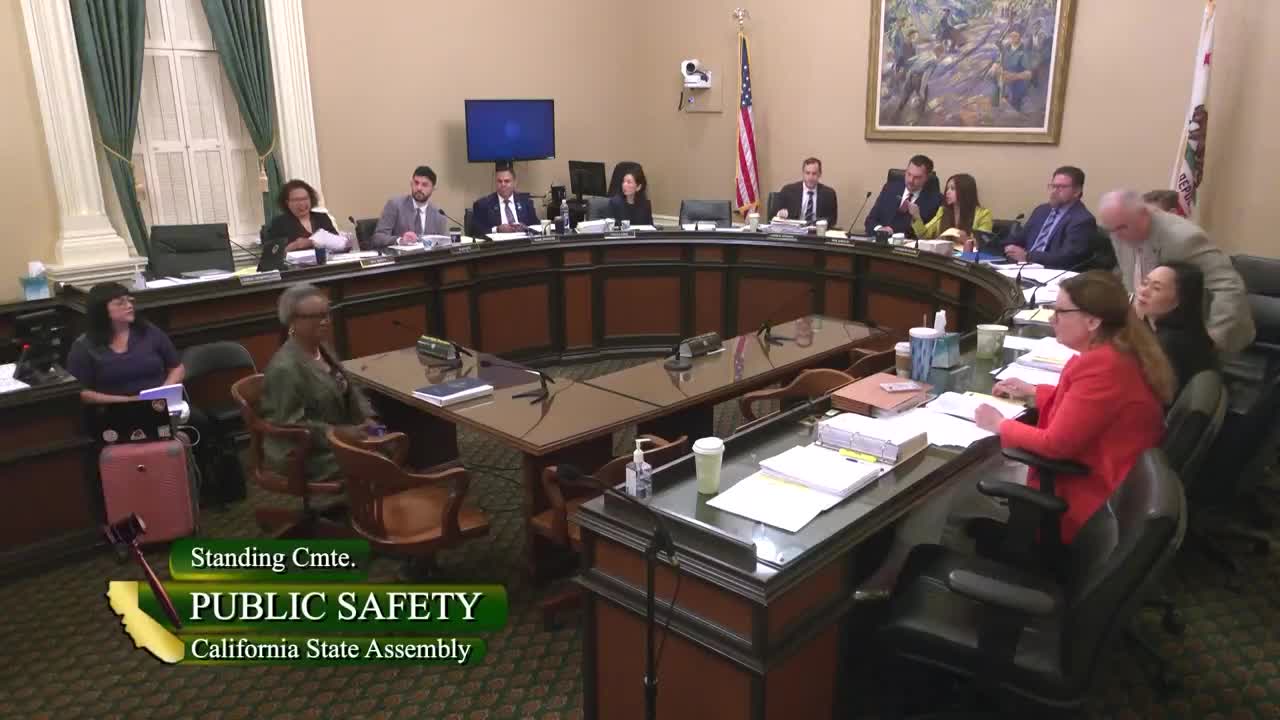
Assembly Standing Committee on Public Safety
 8MIN
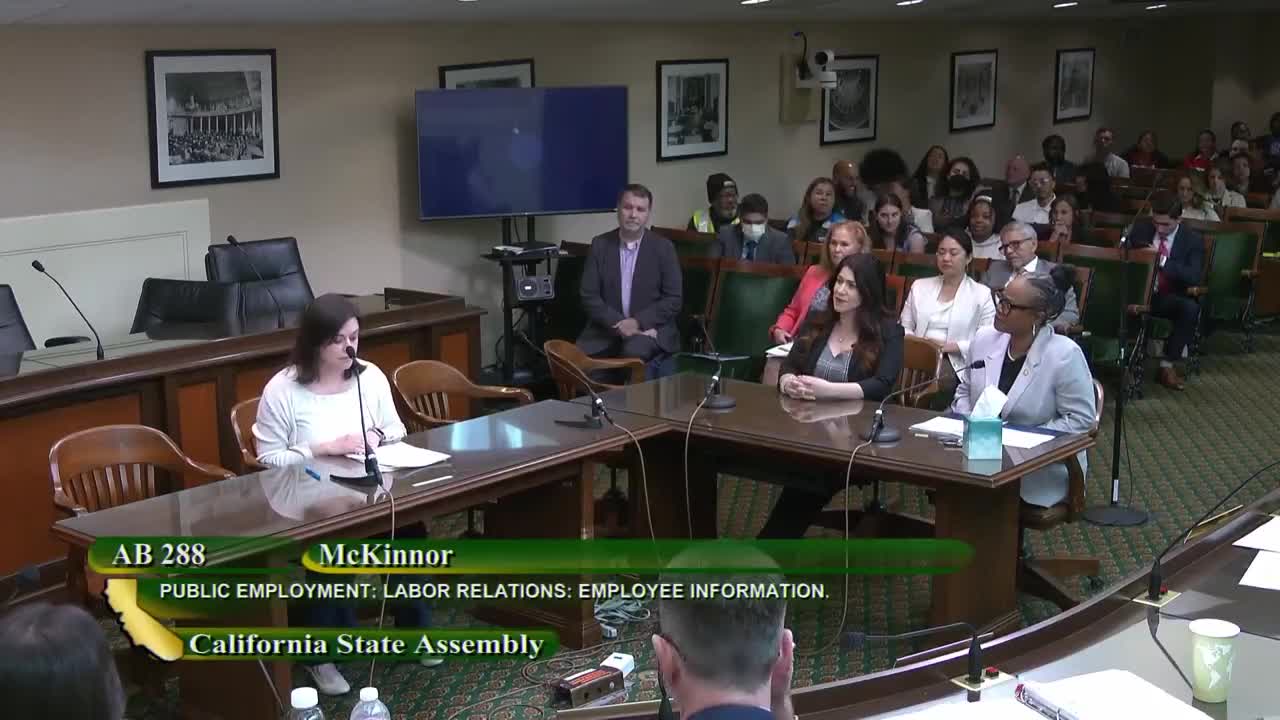
Assembly Standing Committee on Labor and Employment
Bill Author

Bill Co-Author(s):
