SB 388: California Latino Commission.
- Session Year: 2025-2026
- House: Senate
- Latest Version Date: 2025-09-12
Current Status:
Failed
(2026-03-02: Stricken from file.)
Introduced
In Committee
Awaiting First Chamber Vote
Passed First Chamber
In Committee
Awaiting Second Chamber Vote
Passed Second Chamber
Enacted
Existing law establishes various advisory boards and commissions in state government with specified duties and responsibilities.
This bill would create the California Latino Commission to address the inequities faced by the Latino community in housing, education, economic mobility, labor, and health care. The commission would consist of 9 members who have demonstrated expertise in specified areas, including housing policy and advocacy and economic development. The bill would task the commission with, among other things, collecting and analyzing data, developing recommendations, and monitoring the implementation of state programs and policies affecting the Latino community, as specified. The bill would require the commission to work with other state agencies and to submit an annual report to the Governor and the Legislature. The bill would establish that the commission and its activities would be supported by appropriations by the Legislature from the General Fund and grants from federal and private sources. The bill would repeal these provisions on January 1, 2036.
Existing law establishes various advisory boards and commissions in state government with specified duties and responsibilities.
This bill would create the California Latino Commission to address the inequities faced by the Latino community in housing, education, labor, and health care. The commission would consist of 9 members who have demonstrated expertise in specified areas, including housing policy and advocacy and economic development. The bill would task the commission with, among other things, collecting and analyzing data, developing recommendations, and monitoring the implementation of state programs and policies affecting the Latino community, as specified. The bill would require the commission to work with other state agencies and to submit an annual report to the Governor and the Legislature. The bill would establish that the commission and its activities would be supported by appropriations by the Legislature from the General Fund and grants from federal and private sources.
The Legislature finds and declares all of the following:
(a)Californias Latino population is a key driver of the states economy, but it faces significant challenges, particularly in housing, education, labor, and health care.
(b)The states housing crisis disproportionately impacts Latinos, with the group facing higher rates of overcrowding, evictions, and homelessness. This crisis exacerbates existing inequalities and undermines the quality of life for many Latinos.
(c)Latinos are underrepresented in science, technology, engineering, and mathematics (STEM) fields, which are critical to Californias economy and the high-paying jobs it provides. Despite an increasing number of Latinos attending institutions of higher education, barriers to obtaining STEM degrees persist.
(d)Latino students entering California community colleges are more likely to be placed in remedial courses, delaying their academic progress and diminishing their chances for upward mobility.
(e)Latinos are more likely to be engaged in precarious, low-wage gig work that often lacks the protections and benefits of traditional employment, while being underrepresented in organized labor unions.
(f)Nearly 60 percent of Latino children in California are covered by Medi-Cal, reflecting the persistent poverty among this group despite California being the wealthiest state in the nation.
(g)There is a critical need for a coordinated, comprehensive approach to address these systemic disparities and to create policies that ensure Latinos have equal opportunities to thrive in housing, education, the workforce, and health care.
8277.1.(a)The California Latino Commission is hereby established in state government to address the inequities faced by the Latino community in housing, education, economic mobility, labor, and health care.
(b)The commission shall consist of three members appointed by the Governor, three members appointed by the President pro Tempore of the Senate, and three members appointed by the Speaker of the Assembly who shall all have demonstrated expertise in any of the following areas:
(1)Housing policy and advocacy.
(2)Education, particularly in community colleges or STEM fields.
(3)Labor rights and union representation.
(4)Public health and health equity, with a focus on Medi-Cal and poverty.
(5)Economic development and workforce opportunities for Latinos.
(6)Environment and climate change.
(7)Small business and entrepreneurship.
(8)K12 students.
(9)Any other area deemed appropriate by the commission.
(c)Commission members shall serve two-year terms and shall meet at least quarterly to review data, develop strategies, and ensure that state policies are effectively addressing the needs of the Latino community.
8277.2.(a)The commission shall have the following powers and duties:
(1)Collecting and analyzing data regarding the disparities faced by Latinos in housing, education, employment, and health care, and assessing the effectiveness of existing state programs and policies in addressing those disparities.
(2)Developing recommendations to address the housing crisis affecting Latinos with particular focus on affordable housing, eviction prevention, rent control, and policies to reduce homelessness.
(3)Developing initiatives to increase Latino enrollment and graduation rates in STEM fields in Californias public universities, private universities, and community colleges, including mentorship, financial aid, and support services tailored to the needs of Latino students.
(4)Promoting policies that increase Latino participation in high-wage, high-tech industries, including the development of apprenticeship programs targeting Latino communities.
(5)Investigating the low participation of Latinos in organized labor and proposing strategies to increase union representation, collective bargaining rights, and workplace protections for Latinos.
(6)Working with health agencies to ensure equitable access to health services for Latinos, particularly through Medi-Cal, and developing long-term strategies for reducing poverty and improving the economic mobility of Latino families.
(7)Monitoring the implementation of state programs and policies affecting the Latino community, tracking progress over time, and reporting findings annually to the Governor and the Legislature.
(b)The commission shall host annual public forums, listening sessions, and town hall meetings across California, particularly in areas with significant Latino populations, to ensure that community members have a direct role in shaping the commissions agenda and priorities.
8277.3.(a)The commission shall collaborate with the following state agencies in order to achieve its objectives:
(1)The Department of Housing and Community Development.
(2)The University of California, the California State University, and the California Community Colleges.
(3)The Labor and Workforce Development Agency.
(4)The State Department of Public Health.
(5)The State Department of Education.
(6)Other state agencies, as needed.
(b)Each state agency shall provide appropriate and reasonable assistance to the commission, as needed, in order that it may carry out the purposes of this chapter.
8277.4.The commission and its activities shall be supported by appropriations by the Legislature from the General Fund and grants from federal and private sources.
8277.5.(a)Notwithstanding Section 10231.5, the commission shall submit an annual report to the Governor and the Legislature detailing its work, recounting the resources it needs, and recommending policies for the following year.
(b)A report to be submitted pursuant to subdivision (a) shall be submitted in compliance with Section 9795.
8277.6.This chapter shall remain in effect only until January 1, 2036, and as of that date is repealed.
The Legislature finds and declares all of the following:
(a)Californias Latino population is a key driver of the states economy, but it faces significant challenges, particularly in housing, education, labor, and health care.
(b)The states housing crisis disproportionately impacts Latinos, with the group facing higher rates of overcrowding, evictions, and homelessness. This crisis exacerbates existing inequalities and undermines the quality of life for many Latinos.
(c)Latinos are underrepresented in science, technology, engineering, and mathematics (STEM) fields, which are critical to Californias economy and the high-paying jobs it provides. Despite an increasing number of Latinos attending institutions of higher education, barriers to obtaining STEM degrees persist.
(d)Latino students entering California community colleges are more likely to be placed in remedial courses, delaying their academic progress and diminishing their chances for upward mobility.
(e)Latinos are more likely to be engaged in precarious, low-wage gig work that often lacks the protections and benefits of traditional employment, while being underrepresented in organized labor unions.
(f)Nearly 60 percent of Latino children in California are covered by Medi-Cal, reflecting the persistent poverty among this group despite California being the wealthiest state in the nation.
(g)There is a critical need for a coordinated, comprehensive approach to address these systemic disparities and to create policies that ensure Latinos have equal opportunities to thrive in housing, education, the workforce, and health care.
8277.1.(a)The California Latino Commission is hereby established in state government to address the inequities faced by the Latino community in housing, education, economic mobility, labor, and health care.
(b)The commission shall consist of three members appointed by the Governor, three members appointed by the President pro Tempore of the Senate, and three members appointed by the Speaker of the Assembly who shall all have demonstrated expertise in any of the following areas:
(1)Housing policy and advocacy.
(2)Education, particularly in community colleges or STEM fields.
(3)Labor rights and union representation.
(4)Public health and health equity, with a focus on Medi-Cal and poverty.
(5)Economic development and workforce opportunities for Latinos.
(6)Environment and climate change.
(7)Small business and entrepreneurship.
(8)K12 students.
(9)Any other area deemed appropriate by the commission.
(c)Commission members shall serve four-year two-year terms and shall meet at least quarterly to review data, develop strategies, and ensure that state policies are effectively addressing the needs of the Latino community.
8277.2.(a)The commission shall have the following powers and duties:
(1)Collecting and analyzing data regarding the disparities faced by Latinos in housing, education, employment, and health care, and assessing the effectiveness of existing state programs and policies in addressing those disparities.
(2)Developing recommendations to address the housing crisis affecting Latinos with particular focus on affordable housing, eviction prevention, rent control, and policies to reduce homelessness.
(3)Developing initiatives to increase Latino enrollment and graduation rates in STEM fields in Californias public universities, private universities, and community colleges, including mentorship, financial aid, and support services tailored to the needs of Latino students.
(4)Promoting policies that increase Latino participation in high-wage, high-tech industries, including the development of apprenticeship programs targeting Latino communities.
(5)Investigating the low participation of Latinos in organized labor and proposing strategies to increase union representation, collective bargaining rights, and workplace protections for Latinos.
(6)Working with health agencies to ensure equitable access to health services for Latinos, particularly through Medi-Cal, and developing long-term strategies for reducing poverty and improving the economic mobility of Latino families.
(7)Monitoring the implementation of state programs and policies affecting the Latino community, tracking progress over time, and reporting findings annually to the Governor and the Legislature.
(b)The commission shall host annual public forums, listening sessions, and town hall meetings across California, particularly in areas with significant Latino populations, to ensure that community members have a direct role in shaping the commissions agenda and priorities.
8277.3.(a)The commission shall collaborate with the following state agencies in order to achieve its objectives:
(1)The Department of Housing and Community Development.
(2)The University of California, the California State University, and the California Community Colleges.
(3)The Labor and Workforce Development Agency.
(4)The State Department of Public Health.
(5)The State Department of Education.
(6)Other state agencies, as needed.
(b)Each state agency shall provide appropriate and reasonable assistance to the commission, as needed, in order that it may carry out the purposes of this chapter.
(c)The commission may secure directly from any state department or agency information necessary to enable it to carry out the purposes of this chapter.8277.4.The commission and its activities shall be supported by appropriations by the Legislature from the General Fund and grants from federal and private sources.
8277.5.(a)Notwithstanding Section 10231.5, the commission shall submit an annual report to the Governor and the Legislature detailing its work, recounting the resources it needs, and recommending policies for the following year.
(b)A report to be submitted pursuant to subdivision (a) shall be submitted in compliance with Section 9795.
8277.6.This chapter shall remain in effect only until January 1, 2036, and as of that date is repealed.
The Legislature finds and declares all of the following:
(a)Californias Latino population is a key driver of the states economy, but it faces significant challenges, particularly in housing, education, labor, and health care.
(b)The states housing crisis disproportionately impacts Latinos, with the group facing higher rates of overcrowding, evictions, and homelessness. This crisis exacerbates existing inequalities and undermines the quality of life for many Latinos.
(c)Latinos are underrepresented in science, technology, engineering, and mathematics (STEM) fields, which are critical to Californias economy and the high-paying jobs it provides. Despite an increasing number of Latinos attending institutions of higher education, barriers to obtaining STEM degrees persist.
(d)Latino students entering California community colleges are more likely to be placed in remedial courses, delaying their academic progress and diminishing their chances for upward mobility.
(e)Latinos are more likely to be engaged in precarious, low-wage gig work that often lacks the protections and benefits of traditional employment, while being underrepresented in organized labor unions.
(f)Nearly 60 percent of Latino children in California are covered by Medi-Cal, reflecting the persistent poverty among this group despite California being the wealthiest state in the nation.
(g)There is a critical need for a coordinated, comprehensive approach to address these systemic disparities and to create policies that ensure Latinos have equal opportunities to thrive in housing, education, the workforce, and health care.
8277.1.(a)The California Latino Commission is hereby established in state government to address the inequities faced by the Latino community in housing, education, economic mobility, labor, and health care.
(b)The commission shall consist of three members appointed by the Governor, three members appointed by the President pro Tempore of the Senate, and three members appointed by the Speaker of the Assembly who shall all have demonstrated expertise in any of the following areas:
(1)Housing policy and advocacy.
(2)Education, particularly in community colleges or STEM fields.
(3)Labor rights and union representation.
(4)Public health and health equity, with a focus on Medi-Cal and poverty.
(5)Economic development and workforce opportunities for Latinos.
(6)Environment and climate change.
(7)Small business and entrepreneurship.
(8)K12 students.
(9)Any other area deemed appropriate by the commission.
(c)Commission members shall serve four-year terms and shall meet at least quarterly to review data, develop strategies, and ensure that state policies are effectively addressing the needs of the Latino community.
8277.2.(a)The commission shall have the following powers and duties:
(1)Collecting and analyzing data regarding the disparities faced by Latinos in housing, education, employment, and health care, and assessing the effectiveness of existing state programs and policies in addressing those disparities.
(2)Developing recommendations to address the housing crisis affecting Latinos with particular focus on affordable housing, eviction prevention, rent control, and policies to reduce homelessness.
(3)Developing initiatives to increase Latino enrollment and graduation rates in STEM fields in Californias public universities universities, private universities, and community colleges, including mentorship, financial aid, and support services tailored to the needs of Latino students.
(4)Promoting policies that increase Latino participation in high-wage, high-tech industries, including the development of apprenticeship programs targeting Latino communities.
(5)Investigating the low participation of Latinos in organized labor and proposing strategies to increase union representation, collective bargaining rights, and workplace protections for Latinos.
(6)Working with health agencies to ensure equitable access to health services for Latinos, particularly through Medi-Cal, and developing long-term strategies for reducing poverty and improving the economic mobility of Latino families.
(7)Monitoring the implementation of state programs and policies affecting the Latino community, tracking progress over time, and reporting findings annually to the Governor and the Legislature.
(b)The commission shall host annual public forums, listening sessions, and town hall meetings across California, particularly in areas with significant Latino populations, to ensure that community members have a direct role in shaping the commissions agenda and priorities.
8277.3.(a)The commission shall collaborate with the following state agencies in order to achieve its objectives:
(a)(1)The Department of Housing and Community Development.
(b)(2)The University of California, the California State University, and the California Community Colleges.
(c)(3)The Labor and Workforce Development Agency.
(d)(4)The State Department of Public Health.
(5)The State Department of Education.
(6)Other state agencies, as needed.
(b)Each state agency shall provide appropriate and reasonable assistance to the commission, as needed, in order that it may carry out the purposes of this chapter.
(c)The commission may secure directly from any state department or agency information necessary to enable it to carry out the purposes of this chapter.
8277.4.The commission and its activities shall be supported by appropriations by the Legislature from the General Fund and grants from federal and private sources.
8277.5.(a)Notwithstanding Section 10231.5, the commission shall submit an annual report to the Governor and the Legislature detailing its work, recounting the resources it needs, and recommending policies for the following year.
(b)A report to be submitted pursuant to subdivision (a) shall be submitted in compliance with Section 9795.
8277.6.This chapter shall remain in effect only until January 1, 2036, and as of that date is repealed.
The Legislature finds and declares all of the following:
(a)Californias Latino population is a key driver of the states economy, but it faces significant challenges, particularly in housing, education, labor, and health care.
(b)The states housing crisis disproportionately impacts Latinos, with the group facing higher rates of overcrowding, evictions, and homelessness. This crisis exacerbates existing inequalities and undermines the quality of life for many Latinos.
(c)Latinos are underrepresented in science, technology, engineering, and mathematics (STEM) fields, which are critical to Californias economy and the high-paying jobs it provides. Despite an increasing number of Latinos attending institutions of higher education, barriers to obtaining STEM degrees persist.
(d)Latino students entering California community colleges are more likely to be placed in remedial courses, delaying their academic progress and diminishing their chances for upward mobility.
(e)Latinos are more likely to be engaged in precarious, low-wage gig work that often lacks the protections and benefits of traditional employment, while being underrepresented in organized labor unions.
(f)Nearly 60 percent of Latino children in California are covered by Medi-Cal, reflecting the persistent poverty among this group despite California being the wealthiest state in the nation.
(g)There is a critical need for a coordinated, comprehensive approach to address these systemic disparities and to create policies that ensure Latinos have equal opportunities to thrive in housing, education, the workforce, and health care.
8277.1.(a)The California Latino Commission is hereby established in state government to address the inequities faced by the Latino community in housing, education, labor, and health care.
(b)The commission shall consist of three members appointed by the Governor, three members appointed by the President pro Tempore of the Senate, and three members appointed by the Speaker of the Assembly who shall all have demonstrated expertise in any of the following areas:
(1)Housing policy and advocacy.
(2)Education, particularly in community colleges or STEM fields.
(3)Labor rights and union representation.
(4)Public health and health equity, with a focus on Medi-Cal and poverty.
(5)Economic development and workforce opportunities for Latinos.
(c)Commission members shall serve four-year terms and shall meet at least quarterly to review data, develop strategies, and ensure that state policies are effectively addressing the needs of the Latino community.
8277.2.(a)The commission shall have the following powers and duties:
(1)Collecting and analyzing data regarding the disparities faced by Latinos in housing, education, employment, and health care, and assessing the effectiveness of existing state programs and policies in addressing those disparities.
(2)Developing recommendations to address the housing crisis affecting Latinos with particular focus on affordable housing, eviction prevention, rent control, and policies to reduce homelessness.
(3)Developing initiatives to increase Latino enrollment and graduation rates in STEM fields in Californias public universities and community colleges, including mentorship, financial aid, and support services tailored to the needs of Latino students.
(4)Promoting policies that increase Latino participation in high-wage, high-tech industries, including the development of apprenticeship programs targeting Latino communities.
(5)Investigating the low participation of Latinos in organized labor and proposing strategies to increase union representation, collective bargaining rights, and workplace protections for Latinos.
(6)Working with health agencies to ensure equitable access to health services for Latinos, particularly through Medi-Cal, and developing long-term strategies for reducing poverty and improving the economic mobility of Latino families.
(7)Monitoring the implementation of state programs and policies affecting the Latino community, tracking progress over time, and reporting findings annually to the Governor and the Legislature.
(b)The commission shall host annual public forums, listening sessions, and town hall meetings across California, particularly in areas with significant Latino populations, to ensure that community members have a direct role in shaping the commissions agenda and priorities.
8277.3.The commission shall collaborate with the following state agencies in order to achieve its objectives:
(a)The Department of Housing and Community Development.
(b)The University of California, the California State University, and the California Community Colleges.
(c)The Labor and Workforce Development Agency.
(d)The State Department of Public Health.
8277.4.The commission and its activities shall be supported by appropriations by the Legislature from the General Fund and grants from federal and private sources.
8277.5.(a)Notwithstanding Section 10231.5, the commission shall submit an annual report to the Governor and the Legislature detailing its work, recounting the resources it needs, and recommending policies for the following year.
(b)A report to be submitted pursuant to subdivision (a) shall be submitted in compliance with Section 9795.
|
Date
|
Status
|
|---|---|
| Mar 2, 2026 | Veto sustained. |
| Mar 2, 2026 | Stricken from file. |
| Oct 13, 2025 | In Senate. Consideration of Governor's veto pending. |
| Oct 13, 2025 | Vetoed by the Governor. |
| Sep 17, 2025 | Enrolled and presented to the Governor at 2 p.m. |
| Sep 10, 2025 | Assembly amendments concurred in. (Ayes 32. Noes 8. Page 2764.) Ordered to engrossing and enrolling. |
| Sep 8, 2025 | In Senate. Concurrence in Assembly amendments pending. |
| Sep 8, 2025 | Read third time. Passed. (Ayes 62. Noes 9. Page 3003.) Ordered to the Senate. |
| Sep 3, 2025 | Read second time. Ordered to third reading. |
| Sep 2, 2025 | Read second time and amended. Ordered to second reading. |
| Aug 29, 2025 | From committee: Do pass as amended. (Ayes 11. Noes 2.) (August 29). |
| Jul 2, 2025 | July 2 set for first hearing. Placed on APPR. suspense file. |
| Jun 26, 2025 | From committee: Do pass and re-refer to Com. on APPR. (Ayes 20. Noes 1.) (June 25). Re-referred to Com. on APPR. |
| Jun 9, 2025 | Referred to Com. on G.O. |
| Jun 3, 2025 | In Assembly. Read first time. Held at Desk. |
| Jun 2, 2025 | Read third time. Passed. (Ayes 30. Noes 8. Page 1366.) Ordered to the Assembly. |
| May 23, 2025 | Read second time. Ordered to third reading. |
| May 23, 2025 | From committee: Do pass. (Ayes 5. Noes 1. Page 1198.) (May 23). |
| May 16, 2025 | Set for hearing May 23. |
| Apr 7, 2025 | April 7 hearing: Placed on APPR. suspense file. |
| Mar 28, 2025 | Set for hearing April 7. |
| Mar 25, 2025 | From committee: Do pass and re-refer to Com. on APPR. (Ayes 11. Noes 2. Page 530.) (March 25). Re-referred to Com. on APPR. |
| Mar 18, 2025 | From committee with author's amendments. Read second time and amended. Re-referred to Com. on G.O. |
| Mar 7, 2025 | Set for hearing March 25. |
| Feb 26, 2025 | Referred to Coms. on G.O. and APPR. |
| Feb 18, 2025 | From printer. May be acted upon on or after March 17. |
| Feb 14, 2025 | Introduced. Read first time. To Com. on RLS. for assignment. To print. |
|
Date
|
Description
|
Location
|
Votes
|
|
|---|---|---|---|---|
| Sep 10, 2025 | Unfinished Business SB388 Padilla et al. Concurrence | Senate Floor |
Passed |
|
| Sep 8, 2025 | SB 388 Padilla Senate Third Reading By Carrillo | Assembly Floor |
Passed |
|
| Aug 29, 2025 | Do pass as amended. | Assembly Standing Committee on Appropriations |
Passed |
|
| Jun 25, 2025 | Do pass and be re-referred to the Committee on [Appropriations] | Assembly Standing Committee on Governmental Organization |
Passed |
|
| Jun 2, 2025 | Senate 3rd Reading SB388 Padilla et al. | Senate Floor |
Passed |
|
| May 23, 2025 | Do pass | Senate Standing Committee on Appropriations |
Passed |
|
| Apr 7, 2025 | Placed on suspense file | Senate Standing Committee on Appropriations |
Passed |
|
| Mar 25, 2025 | Do pass, but first be re-referred to the Committee on [Appropriations] | Senate Standing Committee on Governmental Organization |
Passed |
This list shows positions taken on this bill by organizations on the date displayed, which is linked to the original source.
Positions by individuals are not included.
|
Organization
|
Position
|
Date
|
|---|---|---|
| Alianza Coachella Valley | ** Support | |
| Alliance for A Better Community | ** Support | |
| Alliance for Better Community | ** Support | |
| California Faculty Association | ** Support | |
| California Hispanic Chambers Of Commerce | ** Support | |
| California Human Development | ** Support | |
| California Latino Legislative Caucus | ** Support | |
| Center for Employment and Training | ** Support | |
| Center for Employment Training | ** Support | |
| Central Valley Opportunity Center | ** Support | |
| First Day Foundation | ** Support | |
| Hispanas Organized for Political Equality | ** Support | |
| Imperial Valley Equity & Justice Coalition | ** Support | |
| Inland Coalition for Immigrant Justice | ** Support | |
| la Cooperativa Campesina de California | ** Support | |
| Latino Coalition for a Healthy California | ** Support | |
| Latino Education Advancement Foundation | ** Support | |
| Latino Legislative Caucus | ** Support | |
| Lideres Campesinas en California en California Inc. | ** Support | |
| Proteus,Inc. | ** Support | |
| Unidosus | ** Support | |
| University of California | ** Support |
SENATE RULES COMMITTEE Office of Senate Floor Analyses (916) 651-1520 Fax: (916) 327-4478 | SB 388 |
VETO
Bill No: SB 388
Author: Padilla (D), Cervantes (D), Hurtado (D) and Rubio (D), et al.
Enrolled: 9/12/25
Vote: 27
SENATE GOVERNMENTAL ORG. COMMITTEE: 11-2, 3/25/25
AYES: Padilla, Valladares, Archuleta, Ashby, Blakespear, Cervantes, Hurtado, Richardson, Rubio, Wahab, Weber Pierson
NOES: Jones, Ochoa Bogh
NO VOTE RECORDED: Dahle, Smallwood-Cuevas
SENATE APPROPRIATIONS COMMITTEE: 5-1, 5/23/25
AYES: Caballero, Cabaldon, Grayson, Richardson, Wahab
NOES: Seyarto
NO VOTE RECORDED: Dahle
SENATE FLOOR: 32-8, 9/10/25
AYES: Allen, Archuleta, Arreguín, Ashby, Becker, Blakespear, Cabaldon, Caballero, Cervantes, Cortese, Durazo, Gonzalez, Grayson, Grove, Hurtado, Laird, Limón, McGuire, McNerney, Menjivar, Padilla, Pérez, Reyes, Richardson, Rubio, Smallwood-Cuevas, Stern, Umberg, Valladares, Wahab, Weber Pierson, Wiener
NOES: Alvarado-Gil, Choi, Dahle, Jones, Niello, Ochoa Bogh, Seyarto, Strickland
ASSEMBLY FLOOR: 62-9, 9/8/25 - See last page for vote
SUBJECT: California Latino Commission
SOURCE: Author
DIGEST:
This bill establishes the California Latino Commission (CLC) to address the inequities faced by the Latino community in housing, education, economic mobility, labor, and health care.
ANALYSIS:
Existing law:
- Establishes within the state government various commissions, including, but not limited to, the Commission on the State of Hate, the Commission on the Status of Women and Girls, and the California Commission on Disability Access, as specified.
- Requires, via The Bagley-Keene Open Meetings Act (Bagley-Keene), with specified exceptions, that all meetings of a state body be open and public and all persons be permitted to attend any meeting of a state body.
- Requires any report that is required or requested by law to be submitted by a state or local agency to a committee of the Legislature or the Members of either house of the Legislature generally, to instead be submitted as a printed copy to the Secretary of the Senate, as an electronic copy to the Chief Clerk of the Assembly, and as an electronic or printed copy to the Legislative Counsel.
- Establishes the position of Statewide Director of Immigrant Inclusion to develop a comprehensive statewide report on programs and services that serve immigrants, develop an online clearinghouse of immigrant services, resources and programs, and monitor the implementation of statewide laws and regulations that service immigrants.
This bill:
- Establishes, until January 1, 2036, the CLC in state government to address the inequities faced by the Latino community in housing, education, economic mobility, labor, and health care.
- Requires the commission to be composed of three members appointed by the Governor, three members appointed by the President pro Tempore of the Senate, and three members appointed by the Speaker of the Assembly who shall have expertise in any of the following areas:
- Housing policy and advocacy.
- Education, particularly in community colleges or Science, Technology, Engineering and Mathematics (STEM) fields.
- Labor rights and union representation.
- Public health and health equity, with a focus on Medi-Cal and poverty.
- Economic development and workforce opportunities for Latinos.
- Environment and climate change.
- Small business and entrepreneurship.
- K-12 students.
- Any other area deemed appropriate by the CLC.
- Requires commission members to serve two-year terms and shall meet at least quarterly to review data, develop strategies, and ensure that state policies are effectively addressing the needs of the Latino community.
- Provides that CLC shall have the following powers and duties:
- Collecting and analyzing data regarding the disparities faced by Latinos in housing, education, employment, and healthcare, and assessing the effectives of existing state programs and policies in addressing those disparities.
- Developing recommendations to address the housing crisis affecting Latinos, as specified.
- Developing initiatives to increase Latino enrollment and graduation rates in STEM fields in California’s public universities, private universities, and community colleges, as specified.
- Promoting policies that increase Latino participation in high-wage, high-tech industries, as specified.
- Investigating the low participation of Latinos in organized labor and proposing strategies to increase union representation, collective bargaining rights, and workplace protections for Latinos.
- Working with health agencies to ensure equitable access to health services for Latinos, particularly through Medi-Cal, and developing long-term strategies for reducing poverty and improving the economic mobility of Latino families.
- Monitoring the implementation of state programs and policies affecting the Latino community, tracking progress over time, and reporting findings annually to the Governor and Legislature.
- Requires the CLC to host annual public forums, listening sessions, and town hall meetings across California, particularly in areas with significant Latino populations, to ensure that community members have a direct role in shaping the commission’s agenda and priorities.
- Requires the CLC to collaborate with specified state agencies.
- Requires each state agency to provide appropriate and reasonable assistance to the CLC, as specified.
- Provides that the CLC and its activities shall be supported by appropriations by the Legislature from the General Fund and grants from federal and private sources.
- Requires the CLC to submit an annual report to the Governor and the Legislature detailing its work, recounting the resources it needs, and recommending policies for the following year.
Background
Author Statement. According to the author’s office, “Latinos are the heart of our economy and our culture here in California. Yet, Latinos continue to face enormous challenges across various metrics including in education, housing, health, and economic mobility. We have not done enough to make Latinos part of our conversation as the state looks forward to the future workforce and our economy. As families face a growing affordability crisis, we must seek every avenue to help underserved communities find greater economic mobility and educational outcomes by ensuring those communities are front and center to the challenges impacting them. For a community as diverse as the Latino community, this means ensuring that they are the driver’s seat in identifying challenges and priorities to better serve their needs.”
Latino Community in California. The Latino community in California is a vital part of the state’s cultural, political, and social landscape. As of the latest census data, Latinos account for approximately 40% of California’s population, making them the largest ethnic group in the state. Mexican Americans form the majority, followed by Central Americans, South Americans, and Caribbean Americans.
The roots of the Latino community in California stretch back to the 18th century when Spanish explorers and settlers arrived in the region. The area was part of Mexico until the mid-19th century, which influenced early settlement patterns and cultural ties. Significant migrations of Mexicans to California occurred during the 20th century, particularly during the Mexican Revolution (1910-1920) and the Bracero Program (1942-1964), which allowed Mexican laborers temporary work in the United States. Most recent immigrants have come from various countries in Central and South America due to factors like political instability in immigrant’s home countries.
The historical ties to California have resulted in significant cultural contributions to the State of California. Spanish is widely spoken in California, and it is not uncommon to find bilingual education programs and various media outlets targeting Spanish speakers. Celebrations such as Dia de los Muertos, Cinco de Mayo, and various other events highlight the rich cultural heritage of the Latino community. Latino cuisine has also had a profound impact on California’s food culture, with Mexican food being a staple in California culinary landscape.
Despite all of these contributions, the Latino community has historically faced many challenges including disparities in housing, education, labor, and healthcare. Additionally, the recent intensification of immigration enforcement in California has profoundly affected the Latino community. For example, recent workplace raids, particularly in agriculture, have created a climate of fear among many Latino workers, leading to economic uncertainty for those workers and their families. Raids have also resulted in the detention and deportation of individuals, which can lead to separation of families and create unstable situations for children and relatives who may be U.S. citizens.
The recent fires in southern California have also dramatically impacted the Latino community in California. According to UCLA’s Latino Policy & Politics Institute, at least 74,000 Latinos were directly displaced or at risk of displacement due to the wildfires. Additionally, at least 35,000 jobs held by Latinos are at risk of temporary or permanent displacement due to the wildfires. The institute also found that Latino workers face greater economic instability due to limited opportunities for remote work. This disparity reflects the overrepresentation of Latinos in job requiring physical preference, which are particularly vulnerable to layoffs or closures during natural disasters.
Similar Entities in Other States. Several states have established Latino commissions or similar entities to address issues related to the Latino community, promote advocacy, and provide advice on policies affecting the Latino community in those states. These commissions often serve as advisory boards to state governments and focus on such issues as health, education, immigrant, and economic development. For example, the State of Illinois established the Latino Family Commission which purpose is to advise the Governor and the General Assembly, as well as work directly with state agencies to improve and expand existing policies, services, programs, and opportunities for Latino families. In Massachusetts, Governor Maura T. Healy signed an executive order in 2023, which established the Governor’s Council of Latino Empowerment. This council advises the Governor on strategies to expand economic opportunities for and improve the overall wellbeing of Massachusetts’s Latino community.
Related/Prior Legislation
SB 12 (Gonzalez, 2025) of the current legislative session establishes the Office of Immigrant and Refugee Affairs (Office) within a newly created Immigrant and Refugee Affairs Agency (Agency). The bill would establish duties and responsibilities of the Agency and the Office, which includes, among other duties, establishing a permanent structure within the state to serve immigrants and refugees, and assisting other state agencies in evaluating programs for accessibility and effectiveness in providing services to immigrant and refugees. (Held in the Senate Appropriations Committee Suspense File)
AB 3031 (Lee, 2024) would have established the LGBTQ+ Commission with the goals of acting in an advisory capacity to the Legislature and the Governor, engaging in fact finding and data collection, reviewing and assessing programs affecting the state’s LGBTQ+ community, and providing the Legislature and Governor with information and recommendations to address the needs of California’s LGBTQ+ community. (Vetoed by Governor Newsom)
AB 116 (Nakano, Chapter 716, Statutes of 2002) established the Commission on Asian and Pacific Islander American Affairs, required the commission to act as a liaison with Asian Pacific islander American (APIA) communities, hold meetings on issues affecting the APIA community, and submit an annual report the Governor and the Legislature that details the commission’s activities.
FISCAL EFFECT: Appropriation: No Fiscal Com.: Yes Local: No
According to the Assembly Appropriations Committee, Annual GF costs of an unknown amount, potentially in the high hundreds of thousands of dollars to low millions of dollars, to staff and operate the CLC. The author is requesting state budget funding of $1 million in the first year and $500,000 ongoing to establish and support the CLC. At the time of this analysis’s preparation, the proposed 2025-26 state budget agreement did not include funding for the CLC.
Additionally, costs to the CLC include office space, equipment, staff salaries, and resources for travel and large public meetings across the state, with significantly higher costs if the CLC requires data collection or other information technology infrastructure. It is likely that the CLC will require comparable resources to existing state commissions with related missions and sizes. For reference, the proposed 2025-26 state budget agreement includes $959,000 and four positions for the Commission on Asian and Pacific Islander American Affairs (GF) and approximately $2 million and 14 positions for the Commission on the Status of Women and Girls ($1.6 million GF, $357,000 Women and Girls Fund).
Finally, costs of an unknown, but potentially significant, amount across state agencies to collaborate with the CLC to achieve the CLC’s objectives (GF or special fund). Such costs will vary by agency, and may range from minor (if the agency has an informal advisory role) to significant (if formal interagency agreements for data and resource sharing or assistance are needed).
SUPPORT: (Verified 10/14/25)
Alianza Coachella Valley
Alliance for Better Community
California Faculty Association
California Hispanic Chambers of Commerce
California Human Development
California Latino Legislative Caucus
Center for Employment Training
Central Valley Opportunity Center
First Day Foundation
Hispanas Organized for Political Equality
Imperial Valley Equity & Justice Coalition
Inland Coalition for Immigrant Justice
LA Cooperativa Campesina De California
Latino Coalition for A Healthy California
Latino Legislative Caucus
Latino Education Advancement Foundation
Lideres Campesinas en California en California Inc.
Proteus,Inc.
Unidosus
University of California
OPPOSITION: (Verified 10/14/25)
None received
ARGUMENTS IN SUPPORT: According to the Latino Coalition for a Healthy California, “this proposal mirrors existing commissions and is tasked with making recommendations for the Governor and Legislature, developing initiatives, and monitoring progress in tackling disparities facing Latinos. The Latino community is not monolith. The issues facing Latinos in California face vary across the state, some with more urban challenges to those more commonly found in only the most rural areas. The Latino Commission will act as a focal point for experts to address this community’s diverse needs across the state through its ability to conduct research, develop strategies, and outline recommendations across key issues.”
GOVERNOR'S VETO MESSAGE:
This bill would establish the California Latino Commission to advise and make recommendations to the Legislature and the Governor on policy matters affecting Latino communities.
California is home to more than 15 million Latinos - nearly 40 percent of the state's population. Latinos play a central role in California's economy and culture, and my Administration will continue ongoing work to identify and address the challenges that face this community. While I am appreciative of the intent to provide this distinct venue to further address disparities and drive opportunity through data collection and analysis, initiatives, partnerships, evaluation, and other powers and duties, this bill would lead to ongoing implementation costs in the millions of dollars while duplicating existing efforts, many of which are supported by state funding.
In partnership with the Legislature this year, my Administration has enacted a balanced budget that recognizes the challenging fiscal landscape our state faces while maintaining our commitment to working families and our most vulnerable communities. With significant fiscal pressures and the federal government's hostile economic policies, it is vital that we remain disciplined when considering bills with significant fiscal implications that are not included in the budget, such as this measure.
For this reason, I cannot sign this bill.
ASSEMBLY FLOOR: 62-9, 9/8/25
AYES: Addis, Aguiar-Curry, Ahrens, Alvarez, Arambula, Ávila Farías, Bains, Bauer-Kahan, Bennett, Berman, Boerner, Bonta, Bryan, Calderon, Caloza, Carrillo, Connolly, Davies, Elhawary, Fong, Gabriel, Garcia, Gipson, Mark González, Haney, Harabedian, Hart, Hoover, Irwin, Jackson, Kalra, Krell, Lee, Lowenthal, McKinnor, Muratsuchi, Ortega, Pacheco, Papan, Patel, Patterson, Pellerin, Petrie-Norris, Quirk-Silva, Ramos, Ransom, Celeste Rodriguez, Michelle Rodriguez, Rogers, Blanca Rubio, Schiavo, Schultz, Sharp-Collins, Solache, Soria, Stefani, Valencia, Ward, Wicks, Wilson, Zbur, Rivas
NOES: Castillo, DeMaio, Dixon, Ellis, Gallagher, Johnson, Macedo, Sanchez, Tangipa
NO VOTE RECORDED: Alanis, Chen, Flora, Jeff Gonzalez, Hadwick, Lackey, Nguyen, Ta, Wallis
Prepared by: Felipe Lopez / G.O. / (916) 651-1530
10/14/25 16:10:55
**** END ****
SENATE RULES COMMITTEE Office of Senate Floor Analyses (916) 651-1520 Fax: (916) 327-4478 | SB 388 |
UNFINISHED BUSINESS
Bill No: SB 388
Author: Padilla (D), Cervantes (D), Hurtado (D) and Rubio (D), et al.
Amended: 9/2/25
Vote: 21
SENATE GOVERNMENTAL ORG. COMMITTEE: 11-2, 3/25/25
AYES: Padilla, Valladares, Archuleta, Ashby, Blakespear, Cervantes, Hurtado, Richardson, Rubio, Wahab, Weber Pierson
NOES: Jones, Ochoa Bogh
NO VOTE RECORDED: Dahle, Smallwood-Cuevas
SENATE APPROPRIATIONS COMMITTEE: 5-1, 5/23/25
AYES: Caballero, Cabaldon, Grayson, Richardson, Wahab
NOES: Seyarto
NO VOTE RECORDED: Dahle
SENATE FLOOR: 30-8, 6/2/25
AYES: Allen, Alvarado-Gil, Archuleta, Arreguín, Ashby, Becker, Blakespear, Cabaldon, Caballero, Cervantes, Cortese, Durazo, Gonzalez, Grayson, Laird, Limón, McGuire, McNerney, Menjivar, Padilla, Pérez, Richardson, Rubio, Smallwood-Cuevas, Stern, Umberg, Valladares, Wahab, Weber Pierson, Wiener
NOES: Choi, Dahle, Grove, Jones, Niello, Ochoa Bogh, Seyarto, Strickland
NO VOTE RECORDED: Hurtado, Reyes
ASSEMBLY FLOOR: 62-9, 9/8/25 - See last page for vote
SUBJECT: California Latino Commission
SOURCE: Author
DIGEST:
This bill establishes the California Latino Commission (CLC) to address the inequities faced by the Latino community in housing, education, economic mobility, labor, and health care.
Assembly Amendments
of 9/2/25 reduce, from four to two years, the term of a CLC member.
ANALYSIS:
Existing law:
- Establishes within the state government various commissions, including, but not limited to, the Commission on the State of Hate, the Commission on the Status of Women and Girls, and the California Commission on Disability Access, as specified.
- Requires, via The Bagley-Keene Open Meetings Act (Bagley-Keene), with specified exceptions, that all meetings of a state body be open and public and all persons be permitted to attend any meeting of a state body.
- Requires any report that is required or requested by law to be submitted by a state or local agency to a committee of the Legislature or the Members of either house of the Legislature generally, to instead be submitted as a printed copy to the Secretary of the Senate, as an electronic copy to the Chief Clerk of the Assembly, and as an electronic or printed copy to the Legislative Counsel.
- Establishes the position of Statewide Director of Immigrant Inclusion to develop a comprehensive statewide report on programs and services that serve immigrants, develop an online clearinghouse of immigrant services, resources and programs, and monitor the implementation of statewide laws and regulations that service immigrants.
This bill:
- Establishes, until January 1, 2036, the CLC in state government to address the inequities faced by the Latino community in housing, education, economic mobility, labor, and health care.
- Requires the commission to be composed of three members appointed by the Governor, three members appointed by the President pro Tempore of the Senate, and three members appointed by the Speaker of the Assembly who shall have expertise in any of the following areas:
- Housing policy and advocacy.
- Education, particularly in community colleges or Science, Technology, Engineering and Mathematics (STEM) fields.
- Labor rights and union representation.
- Public health and health equity, with a focus on Medi-Cal and poverty.
- Economic development and workforce opportunities for Latinos.
- Environment and climate change.
- Small business and entrepreneurship.
- K-12 students.
- Any other area deemed appropriate by the CLC.
- Requires commission members to serve two-year terms and shall meet at least quarterly to review data, develop strategies, and ensure that state policies are effectively addressing the needs of the Latino community.
- Provides that CLC shall have the following powers and duties:
- Collecting and analyzing data regarding the disparities faced by Latinos in housing, education, employment, and healthcare, and assessing the effectives of existing state programs and policies in addressing those disparities.
- Developing recommendations to address the housing crisis affecting Latinos, as specified.
- Developing initiatives to increase Latino enrollment and graduation rates in STEM fields in California’s public universities, private universities, and community colleges, as specified.
- Promoting policies that increase Latino participation in high-wage, high-tech industries, as specified.
- Investigating the low participation of Latinos in organized labor and proposing strategies to increase union representation, collective bargaining rights, and workplace protections for Latinos.
- Working with health agencies to ensure equitable access to health services for Latinos, particularly through Medi-Cal, and developing long-term strategies for reducing poverty and improving the economic mobility of Latino families.
- Monitoring the implementation of state programs and policies affecting the Latino community, tracking progress over time, and reporting findings annually to the Governor and Legislature.
- Requires the CLC to host annual public forums, listening sessions, and town hall meetings across California, particularly in areas with significant Latino populations, to ensure that community members have a direct role in shaping the commission’s agenda and priorities.
- Requires the CLC to collaborate with specified state agencies.
- Requires each state agency to provide appropriate and reasonable assistance to the CLC, as specified.
- Provides that the CLC and its activities shall be supported by appropriations by the Legislature from the General Fund and grants from federal and private sources.
- Requires the CLC to submit an annual report to the Governor and the Legislature detailing its work, recounting the resources it needs, and recommending policies for the following year.
Background
Author Statement. According to the author’s office, “Latinos are the heart of our economy and our culture here in California. Yet, Latinos continue to face enormous challenges across various metrics including in education, housing, health, and economic mobility. We have not done enough to make Latinos part of our conversation as the state looks forward to the future workforce and our economy. As families face a growing affordability crisis, we must seek every avenue to help underserved communities find greater economic mobility and educational outcomes by ensuring those communities are front and center to the challenges impacting them. For a community as diverse as the Latino community, this means ensuring that they are the driver’s seat in identifying challenges and priorities to better serve their needs.”
Latino Community in California. The Latino community in California is a vital part of the state’s cultural, political, and social landscape. As of the latest census data, Latinos account for approximately 40% of California’s population, making them the largest ethnic group in the state. Mexican Americans form the majority, followed by Central Americans, South Americans, and Caribbean Americans.
The roots of the Latino community in California stretch back to the 18th century when Spanish explorers and settlers arrived in the region. The area was part of Mexico until the mid-19th century, which influenced early settlement patterns and cultural ties. Significant migrations of Mexicans to California occurred during the 20th century, particularly during the Mexican Revolution (1910-1920) and the Bracero Program (1942-1964), which allowed Mexican laborers temporary work in the United States. Most recent immigrants have come from various countries in Central and South America due to factors like political instability in immigrant’s home countries.
The historical ties to California have resulted in significant cultural contributions to the State of California. Spanish is widely spoken in California, and it is not uncommon to find bilingual education programs and various media outlets targeting Spanish speakers. Celebrations such as Dia de los Muertos, Cinco de Mayo, and various other events highlight the rich cultural heritage of the Latino community. Latino cuisine has also had a profound impact on California’s food culture, with Mexican food being a staple in California culinary landscape.
Despite all of these contributions, the Latino community has historically faced many challenges including disparities in housing, education, labor, and healthcare. Additionally, the recent intensification of immigration enforcement in California has profoundly affected the Latino community. For example, recent workplace raids, particularly in agriculture, have created a climate of fear among many Latino workers, leading to economic uncertainty for those workers and their families. Raids have also resulted in the detention and deportation of individuals, which can lead to separation of families and create unstable situations for children and relatives who may be U.S. citizens.
The recent fires in southern California have also dramatically impacted the Latino community in California. According to UCLA’s Latino Policy & Politics Institute, at least 74,000 Latinos were directly displaced or at risk of displacement due to the wildfires. Additionally, at least 35,000 jobs held by Latinos are at risk of temporary or permanent displacement due to the wildfires. The institute also found that Latino workers face greater economic instability due to limited opportunities for remote work. This disparity reflects the overrepresentation of Latinos in job requiring physical preference, which are particularly vulnerable to layoffs or closures during natural disasters.
Similar Entities in Other States. Several states have established Latino commissions or similar entities to address issues related to the Latino community, promote advocacy, and provide advice on policies affecting the Latino community in those states. These commissions often serve as advisory boards to state governments and focus on such issues as health, education, immigrant, and economic development. For example, the State of Illinois established the Latino Family Commission which purpose is to advise the Governor and the General Assembly, as well as work directly with state agencies to improve and expand existing policies, services, programs, and opportunities for Latino families. In Massachusetts, Governor Maura T. Healy signed an executive order in 2023, which established the Governor’s Council of Latino Empowerment. This council advises the Governor on strategies to expand economic opportunities for and improve the overall wellbeing of Massachusetts’s Latino community.
Related/Prior Legislation
SB 12 (Gonzalez, 2025) of the current legislative session establishes the Office of Immigrant and Refugee Affairs (Office) within a newly created Immigrant and Refugee Affairs Agency (Agency). The bill would establish duties and responsibilities of the Agency and the Office, which includes, among other duties, establishing a permanent structure within the state to serve immigrants and refugees, and assisting other state agencies in evaluating programs for accessibility and effectiveness in providing services to immigrant and refugees. (Held in the Senate Appropriations Committee Suspense File)
AB 3031 (Lee, 2024) would have established the LGBTQ+ Commission with the goals of acting in an advisory capacity to the Legislature and the Governor, engaging in fact finding and data collection, reviewing and assessing programs affecting the state’s LGBTQ+ community, and providing the Legislature and Governor with information and recommendations to address the needs of California’s LGBTQ+ community. (Vetoed by Governor Newsom)
AB 116 (Nakano, Chapter 716, Statutes of 2002) established the Commission on Asian and Pacific Islander American Affairs, required the commission to act as a liaison with Asian Pacific islander American (APIA) communities, hold meetings on issues affecting the APIA community, and submit an annual report the Governor and the Legislature that details the commission’s activities.
FISCAL EFFECT: Appropriation: No Fiscal Com.: Yes Local: No
According to the Assembly Appropriations Committee, Annual GF costs of an unknown amount, potentially in the high hundreds of thousands of dollars to low millions of dollars, to staff and operate the CLC. The author is requesting state budget funding of $1 million in the first year and $500,000 ongoing to establish and support the CLC. At the time of this analysis’s preparation, the proposed 2025-26 state budget agreement did not include funding for the CLC.
Additionally, costs to the CLC include office space, equipment, staff salaries, and resources for travel and large public meetings across the state, with significantly higher costs if the CLC requires data collection or other information technology infrastructure. It is likely that the CLC will require comparable resources to existing state commissions with related missions and sizes. For reference, the proposed 2025-26 state budget agreement includes $959,000 and four positions for the Commission on Asian and Pacific Islander American Affairs (GF) and approximately $2 million and 14 positions for the Commission on the Status of Women and Girls ($1.6 million GF, $357,000 Women and Girls Fund).
Finally, costs of an unknown, but potentially significant, amount across state agencies to collaborate with the CLC to achieve the CLC’s objectives (GF or special fund). Such costs will vary by agency, and may range from minor (if the agency has an informal advisory role) to significant (if formal interagency agreements for data and resource sharing or assistance are needed).
SUPPORT: (Verified 9/2/25)
Alianza Coachella Valley
Alliance for Better Community
California Faculty Association
California Hispanic Chambers of Commerce
California Human Development
California Latino Legislative Caucus
Center for Employment Training
Central Valley Opportunity Center
First Day Foundation
Hispanas Organized for Political Equality
Imperial Valley Equity & Justice Coalition
Inland Coalition for Immigrant Justice
LA Cooperativa Campesina De California
Latino Coalition for A Healthy California
Latino Legislative Caucus
Latino Education Advancement Foundation
Lideres Campesinas en California en California Inc.
Proteus,Inc.
Unidosus
University of California
OPPOSITION: (Verified 9/2/25)
None received
ARGUMENTS IN SUPPORT: According to the Latino Coalition for a Healthy California, “this proposal mirrors existing commissions and is tasked with making recommendations for the Governor and Legislature, developing initiatives, and monitoring progress in tackling disparities facing Latinos. The Latino community is not monolith. The issues facing Latinos in California face vary across the state, some with more urban challenges to those more commonly found in only the most rural areas. The Latino Commission will act as a focal point for experts to address this community’s diverse needs across the state through its ability to conduct research, develop strategies, and outline recommendations across key issues.”
ASSEMBLY FLOOR: 62-9, 9/8/25
AYES: Addis, Aguiar-Curry, Ahrens, Alvarez, Arambula, Ávila Farías, Bains, Bauer-Kahan, Bennett, Berman, Boerner, Bonta, Bryan, Calderon, Caloza, Carrillo, Connolly, Davies, Elhawary, Fong, Gabriel, Garcia, Gipson, Mark González, Haney, Harabedian, Hart, Hoover, Irwin, Jackson, Kalra, Krell, Lee, Lowenthal, McKinnor, Muratsuchi, Ortega, Pacheco, Papan, Patel, Patterson, Pellerin, Petrie-Norris, Quirk-Silva, Ramos, Ransom, Celeste Rodriguez, Michelle Rodriguez, Rogers, Blanca Rubio, Schiavo, Schultz, Sharp-Collins, Solache, Soria, Stefani, Valencia, Ward, Wicks, Wilson, Zbur, Rivas
NOES: Castillo, DeMaio, Dixon, Ellis, Gallagher, Johnson, Macedo, Sanchez, Tangipa
NO VOTE RECORDED: Alanis, Chen, Flora, Jeff Gonzalez, Hadwick, Lackey, Nguyen, Ta, Wallis
Prepared by: Felipe Lopez / G.O. / (916) 651-1530
9/8/25 19:46:36
**** END ****
SENATE THIRD READING
STR Bill Id:SB 388
Author:(Padilla, et al.)
As Amended Ver:September 2, 2025
Majority vote
SUMMARY
This bill establishes, until January 1, 2036, the California Latino Commission (CLC) to address the inequities faced by the Latino community in housing, education, economic mobility, labor, and health care.
Major Provisions
- Establishes the CLC and provides the Commission has powers and duties to collect and analyze data regarding disparities and issues faced by Latinos in housing, education, employment, and health care, as well as develop and promote recommendations to address those disparities.
- Requires the CLC to consist of nine members serving two-year terms, with the Governor, President pro Tempore of the Senate, and Speaker of the Assembly each appointing three members.
- Provides Commission members meet at least quarterly to review data, develop strategies, and ensure that state policies are effectively addressing the needs of the Latino community.
- Requires the CLC to host annual public forums, listening sessions, and town hall meetings across California, particularly in areas with significant Latino populations, to ensure that community members have a direct role in shaping the commission’s agenda and priorities.
- Requires the CLC to collaborate with the Department of Housing and Community Development, the University of California, the California State University, the California Community Colleges, the Labor and Workforce Development Agency, the State Department of Public Health, the State Department of Education, and other state agencies as needed.
- Requires each state agency to provide appropriate and reasonable assistance to the Commission, as needed.
- Provides that the CLC and its activities shall be supported by appropriations by the Legislature from the General Fund and grants from federal and private sources.
- Requires the CLC to submit an annual report to the Governor and the Legislature detailing its work, recounting the resources it needs, and recommending policies for the following year.
- Sunsets the CLC on January 1, 2036.
- States legislative findings and declarations.
COMMENTS
Background.
Latino Community in California. The Latino community plays a pivotal role in shaping California’s cultural, political, and social fabric. According to the most recent census data, Latinos make up approximately 40% of the state’s population, making them the largest ethnic group in California. The majority are Mexican Americans, with significant representation from Central American, South American, and Caribbean backgrounds.
The roots of the Latino community in California stretch back to the 18th century when Spanish explorers and settlers arrived in the region. The area was part of Mexico until the mid-19th century, which influenced early settlement patterns and cultural ties. Significant migrations of Mexicans to California occurred during the 20th century, particularly during the Mexican Revolution (1910-1920) and the Bracero Program (1942-1964), which allowed Mexican laborers temporary work in the United States. Most recent immigrants have come from various countries in Central and South America due to factors like political instability in immigrant's home countries.
The historical ties to California have resulted in significant cultural contributions to the State of California. Spanish is widely spoken in California, and it is not uncommon to find bilingual education programs and various media outlets targeting Spanish speakers. Celebrations such as Dia de los Muertos, Cinco de Mayo, and various other events highlight the rich cultural heritage of the Latino community. Latino cuisine has also had a profound impact on California’s food culture, with Mexican food being a staple in California culinary landscape.
Despite all of these contributions, the Latino community has historically faced many challenges including disparities in housing, education, labor, and healthcare. Additionally, the recent intensification of immigration enforcement in California has profoundly affected the Latino community. For example, recent workplace raids, particularly in agriculture, have created a climate of fear among many Latino workers, leading to economic uncertainty for those workers and their families.
Immigration raids have also resulted in the detention and deportation of individuals, which can lead to separation of families and create unstable situations for children and relatives who may be U.S. citizens.
Additionally, the recent fires in southern California have also dramatically impacted the Latino community in California. According to UCLA's Latino Policy & Politics Institute, at least 74,000 Latinos were directly displaced or at risk of displacement due to the wildfires. Additionally, at least 35,000 jobs held by Latinos are at risk of temporary or permanent displacement due to the wildfires. The institute also found that Latino workers face greater economic instability due to limited opportunities for remote work. This disparity reflects the overrepresentation of Latinos in job requiring physical preference, which are particularly vulnerable to layoffs or closures during natural disasters.
Similar Entities in Other States. Multiple states have created Latino commissions or similar bodies to address issues related to the Latino community, promote advocacy, and provide advice on policies affecting the Latino community in those states. These commissions often serve as advisory boards to state governments and focus on such issues as health, education, immigration, and economic development. For example, the State of Illinois established the Latino Family Commission which purpose is to advise the Governor and the General Assembly, as well as work directly with state agencies to improve and expand existing policies, services, programs, and opportunities for Latino families. In Massachusetts, Governor Maura T. Healy signed an executive order in 2023, which established the Governor's Council of Latino Empowerment. This council advises the Governor on strategies to expand economic opportunities for and improve the overall wellbeing of Massachusetts's Latino community.
Executive Order (EO) N-16-22. Executive Order (EO) N-16-22. On September 13, 2022, Governor Newsom issued EO N-16-22, directing state agencies to take additional actions to embed equity analysis and considerations in their mission, policies, and practices. Amongst other directives, the EO requires every state agency to incorporate more inclusive public engagement and data analysis, tasks specified agencies to develop recommendations to improve language and communications access to state government services and programs, and establishes the state's first Racial Equity Commission to produce a Racial Equity Framework of resources and tools to promote racial equity and address structural racism. Governor Newsom also appointed the state’s first Chief Equity Officer at the Government Operations Agency to oversee these priorities in relation to state operations, procurement, and human resources.
According to the Author
According to the author, "Latinos are the heart of our economy and our culture here in California. Yet, Latinos continue to face enormous challenges across various metrics including in education, housing, health, and economic mobility. We have not done enough to make Latinos part of our conversation as the state looks forward to the future workforce and our economy. As families face a growing affordability crisis, we must seek every avenue to help underserved communities find greater economic mobility and educational outcomes by ensuring those communities are front and center to the challenges impacting them. For a community as diverse as the Latino community, this means ensuring that they are the driver's seat in identifying challenges and priorities to better serve their needs."
Arguments in Support
This bill is supported by the California Latino Legislative Caucus, various community groups, and education entities.
According to the Latino Coalition for a Healthy California, "this proposal mirrors existing commissions and is tasked with making recommendations for the Governor and Legislature, developing initiatives, and monitoring progress in tackling disparities facing Latinos. The Latino community is not monolith. The issues facing Latinos in California face vary across the state, some with more urban challenges to those more commonly found in only the most rural areas. The Latino Commission will act as a focal point for experts to address this community's diverse needs across the state through its ability to conduct research, develop strategies, and outline recommendations across key issues."
Arguments in Opposition
None received
FISCAL COMMENTS
According to the Assembly Committee on Appropriations analysis,
- Annual GF costs of an unknown amount, potentially in the high hundreds of thousands of dollars to low millions of dollars, to staff and operate the CLC. The author is requesting state budget funding of $1 million in the first year and $500,000 ongoing to establish and support the CLC. At the time of this analysis's preparation, the proposed 2025-26 state budget agreement did not include funding for the CLC.
Costs to the CLC include office space, equipment, staff salaries, and resources for travel and large public meetings across the state, with significantly higher costs if the CLC requires data collection or other information technology infrastructure. It is likely that the CLC will require comparable resources to existing state commissions with related missions and sizes. For reference, the proposed 2025-26 state budget agreement includes $959,000 and four positions for the Commission on Asian and Pacific Islander American Affairs (GF) and approximately $2 million and 14 positions for the Commission on the Status of Women and Girls ($1.6 million GF, $357,000 Women and Girls Fund).
- Costs of an unknown, but potentially significant, amount across state agencies to collaborate with the CLC to achieve the CLC’s objectives (GF or special fund). Such costs will vary by agency, and may range from minor (if the agency has an informal advisory role) to significant (if formal interagency agreements for assistance are needed)."
VOTES
SENATE FLOOR: 30-8-2
YES: Allen, Alvarado-Gil, Archuleta, Arreguín, Ashby, Becker, Blakespear, Cabaldon, Caballero, Cervantes, Cortese, Durazo, Gonzalez, Grayson, Laird, Limón, McGuire, McNerney, Menjivar, Padilla, Pérez, Richardson, Rubio, Smallwood-Cuevas, Stern, Umberg, Valladares, Wahab, Weber Pierson, Wiener
NO: Choi, Dahle, Grove, Jones, Niello, Ochoa Bogh, Seyarto, Strickland
ABS, ABST OR NV: Hurtado, Reyes
ASM GOVERNMENTAL ORGANIZATION: 20-1-1
YES: Blanca Rubio, Davies, Alvarez, Berman, Bryan, Carrillo, Alanis, Fong, Gabriel, Gipson, Hoover, McKinnor, Nguyen, Pacheco, Ramos, Michelle Rodriguez, Solache, Soria, Valencia, Wallis
NO: Sanchez
ABS, ABST OR NV: Ta
ASM APPROPRIATIONS: 11-2-2
YES: Wicks, Arambula, Calderon, Caloza, Elhawary, Fong, Mark González, Ahrens, Pacheco, Pellerin, Solache
NO: Sanchez, Dixon
ABS, ABST OR NV: Ta, Tangipa
UPDATED
VERSION: September 2, 2025
CONSULTANT: Eric Johnson / G.O. / (916) 319-2531 FN: 0001395
Date of Hearing: June 25, 2025
ASSEMBLY COMMITTEE ON GOVERNMENTAL ORGANIZATION
Blanca Rubio, Chair
SBPCA Bill Id:SB 388
Author:(Padilla) – As Amended Ver:March 18, 2025
SENATE VOTE: 30-8
SUBJECT: California Latino Commission
SUMMARY: This bill would establish the California Latino Commission (CLC or Commission) to address the inequities faced by the Latino community in housing, education, economic mobility, labor, and health care. Specifically, this bill:
1) Establishes the CLC and provides the Commission has powers and duties to collect and analyze data regarding disparities and issues faced by Latinos in housing, education, employment, and health care, as well as develop and promote recommendations to address those disparities.
2) Provides the CLC be composed of nine members: three members appointed by the Governor, three members appointed by the President pro Tempore of the Senate, and three members appointed by the Speaker of the Assembly.
3) Provides Commission members serve four-year terms and meet at least quarterly to review data, develop strategies, and ensure that state policies are effectively addressing the needs of the Latino community.
4) Requires the CLC to host annual public forums, listening sessions, and town hall meetings across California.
5) Requires the CLC to collaborate with the Department of Housing and Community Development, the University of California, the California State University, the California Community Colleges, the Labor and Workforce Development Agency, the State Department of Public Health, the State Department of Education, and other state agencies as needed.
6) Requires each state agency to provide appropriate and reasonable assistance to the Commission, as needed.
7) Authorizes the CLC to secure directly information from any state department or agency as necessary to carry out its duties.
8) Provides that the Commission and its activities be supported by appropriations by the Legislature from the General Fund and grants from federal and private sources.
9) Requires the CLC to submit an annual report to the Governor and the Legislature detailing its work, recounting the resources it needs, and recommending policies for the following year.
10) Sunsets the CLC on January 1, 2036.
11) States legislative findings and declarations.
EXISTING LAW:
1) Establishes within the state government various commissions, including, but not limited to, the Commission on the State of Hate, the Commission on the Status of Women and Girls, and the California Commission on Disability Access, as specified.
2) The Bagley-Keene Open Meetings Act requires, with specified exceptions, that all meetings of a state body be open and public and all persons be permitted to attend any meeting of a state body.
3) Requires any report that is required or requested by law to be submitted by a state or local agency to a committee of the Legislature or the Members of either house of the Legislature generally, to instead be submitted as a printed copy to the Secretary of the Senate, as an electronic copy to the Chief Clerk of the Assembly, and as an electronic or printed copy to the Legislative Counsel.
4) Establishes the position of Statewide Director of Immigrant Inclusion to develop a comprehensive statewide report on programs and services that serve immigrants, develop an online clearinghouse of immigrant services, resources and programs, and monitor the implementation of statewide laws and regulations that service immigrants.
FISCAL EFFECT: This bill is keyed fiscal by Legislative Counsel.
COMMENTS:
Purpose of the bill. According to the author’s office, “Latinos are the heart of our economy and our culture here in California. Yet, Latinos continue to face enormous challenges across various metrics including in education, housing, health, and economic mobility. We have not done enough to make Latinos part of our conversation as the state looks forward to the future workforce and our economy. As families face a growing affordability crisis, we must seek every avenue to help underserved communities find greater economic mobility and educational outcomes by ensuring those communities are front and center to the challenges impacting them. For a community as diverse as the Latino community, this means ensuring that they are the driver’s seat in identifying challenges and priorities to better serve their needs.”
Background.
Latino Community in California. The Latino community plays a pivotal role in shaping California’s cultural, political, and social fabric. According to the most recent census data, Latinos make up approximately 40% of the state’s population, making them the largest ethnic group in California. The majority are Mexican Americans, with significant representation from Central American, South American, and Caribbean backgrounds.
The roots of the Latino community in California stretch back to the 18th century when Spanish explorers and settlers arrived in the region. The area was part of Mexico until the mid-19th century, which influenced early settlement patterns and cultural ties. Significant migrations of Mexicans to California occurred during the 20th century, particularly during the Mexican Revolution (1910-1920) and the Bracero Program (1942-1964), which allowed Mexican laborers temporary work in the United States. Most recent immigrants have come from various countries in Central and South America due to factors like political instability in immigrant’s home countries.
The historical ties to California have resulted in significant cultural contributions to the State of California. Spanish is widely spoken in California, and it is not uncommon to find bilingual education programs and various media outlets targeting Spanish speakers. Celebrations such as Dia de los Muertos, Cinco de Mayo, and various other events highlight the rich cultural heritage of the Latino community. Latino cuisine has also had a profound impact on California’s food culture, with Mexican food being a staple in California culinary landscape.
Despite all of these contributions, the Latino community has historically faced many challenges including disparities in housing, education, labor, and healthcare. Additionally, the recent intensification of immigration enforcement in California has profoundly affected the Latino community. For example, recent workplace raids, particularly in agriculture, have created a climate of fear among many Latino workers, leading to economic uncertainty for those workers and their families.
Immigration raids have also resulted in the detention and deportation of individuals, which can lead to separation of families and create unstable situations for children and relatives who may be U.S. citizens.
Additionally, the recent fires in southern California have also dramatically impacted the Latino community in California. According to UCLA’s Latino Policy & Politics Institute, at least 74,000 Latinos were directly displaced or at risk of displacement due to the wildfires. Additionally, at least 35,000 jobs held by Latinos are at risk of temporary or permanent displacement due to the wildfires. The institute also found that Latino workers face greater economic instability due to limited opportunities for remote work. This disparity reflects the overrepresentation of Latinos in job requiring physical preference, which are particularly vulnerable to layoffs or closures during natural disasters.
Similar Entities in Other States. Multiple states have created Latino commissions or similar bodies to address issues related to the Latino community, promote advocacy, and provide advice on policies affecting the Latino community in those states. These commissions often serve as advisory boards to state governments and focus on such issues as health, education, immigration, and economic development. For example, the State of Illinois established the Latino Family Commission which purpose is to advise the Governor and the General Assembly, as well as work directly with state agencies to improve and expand existing policies, services, programs, and opportunities for Latino families. In Massachusetts, Governor Maura T. Healy signed an executive order in 2023, which established the Governor’s Council of Latino Empowerment. This council advises the Governor on strategies to expand economic opportunities for and improve the overall wellbeing of Massachusetts’s Latino community.
Executive Order (EO) N-16-22. On September 13, 2022, Governor Newsom issued EO N-16-22, directing state agencies to take additional actions to embed equity analysis and considerations in their mission, policies, and practices. Amongst other directives, the EO requires every state agency to incorporate more inclusive public engagement and data analysis, tasks specified agencies to develop recommendations to improve language and communications access to state government services and programs, and establishes the state’s first Racial Equity Commission to produce a Racial Equity Framework of resources and tools to promote racial equity and address structural racism. On August 3, 2022, Governor Newsom also appointed the state’s first Chief Equity Officer at the Government Operations Agency to oversee these priorities in relation to state operations, procurement information technology, and human resources.
In support. According to the Latino Coalition for a Healthy California, “this proposal mirrors existing commissions and is tasked with making recommendations for the Governor and Legislature, developing initiatives, and monitoring progress in tackling disparities facing Latinos. The Latino community is not monolith. The issues facing Latinos in California face vary across the state, some with more urban challenges to those more commonly found in only the most rural areas. The Latino Commission will act as a focal point for experts to address this community’s diverse needs across the state through its ability to conduct research, develop strategies, and outline recommendations across key issues.”
Related legislation. AB 766 (Sharp-Collins) of 2025. This bill would require each state agency subject to the Governor's authority to develop or update the agency's strategic plan with more inclusive practices that advance racial equity and to respond to identified disparities with changes to the organization's policies, programs, and operations, as specified. (Senate Committee on Governmental Organization)
SB 12 (Gonzalez) of 2025. This bill would establish the Office of Immigrant and Refugee Affairs within a newly created Immigrant and Refugee Affairs Agency, and tasks the Agency with enhancing, and reducing obstacles to, immigrant integration into the social, cultural, economic, and civic life of the state. (Senate Appropriations Committee - Held on Suspense File)
Prior legislation. AB 3031 (Lee), of 2024. This bill would have established the LGBTQ+ Commission with the goals of acting in an advisory capacity to the Legislature and the Governor, engaging in fact finding and data collection, reviewing and assessing programs affecting the state’s LGBTQ+ community, and providing the Legislature and Governor with information and recommendations to address the needs of California’s LGBTQ+ community. (Vetoed by Governor Newsom)
AB 116 (Nakano), Chapter 716, Statutes of 2002. Established the Commission on Asian and Pacific Islander American Affairs, required the commission to act as a liaison with Asian Pacific islander American (APIA) communities, hold meetings on issues affecting the APIA community, and submit an annual report the Governor and the Legislature that details the commission’s activities.
SB 17 (Pan), of 2021. This bill would have established the Racial Equity Commission within the Governor’s Office of Planning and Research to evaluate and recommend strategies for advancing racial equity across state agencies and departments. (Held on the Assembly Floor Inactive File)
SB 684 (Hueso), of 2021. This bill would have established the California Border Commission to serve as a public stakeholder body on cultural, economic, and environmental issues relating to California’s border region, which is described as the Counties of Imperial and San Diego. (Gut and amended to an unrelated issue)
AB 412 (Reyes), of 2021. This bill would have established the California Commission on Human Rights, as an advisory Commission, and tasks the Commission to, among other things, evaluate California’s successes and failures protecting human rights of individuals living within the state, determine statutory, regulatory, or budgetary solutions to better protect human rights, and report to the Legislature and the Governor, as specified. (Vetoed by Governor Newsom)
REGISTERED SUPPORT / OPPOSITION:
Support
Alianza Coachella Valley
Alliance for a Better Community
California Faculty Association
California Hispanic Chambers of Commerce
California Human Development
California Latino Legislative Caucus
Center for Employment and Training
Central Valley Opportunity Center (CVOC)
First Day Foundation
Hispanas Organized for Political Equality (HOPE)
Imperial Valley Equity & Justice Coalition
Inland Coalition for Immigrant Justice
LA Cooperativa Campesina De California
Latino Coalition for a Healthy California
Latino Education Advancement Foundation
Lideres Campesinas
Proteus, INC.
UnidosUS
University of California
Opposition
None on file
Analysis Prepared by: Eric Johnson / G.O. / (916) 319-2531
SENATE RULES COMMITTEE Office of Senate Floor Analyses (916) 651-1520 Fax: (916) 327-4478 | SB 388 |
THIRD READING
Bill No: SB 388
Author: Padilla (D), Cervantes (D), Hurtado (D) and Rubio (D), et al.
Amended: 3/18/25
Vote: 21
SENATE GOVERNMENTAL ORG. COMMITTEE: 11-2, 3/25/25
AYES: Padilla, Valladares, Archuleta, Ashby, Blakespear, Cervantes, Hurtado, Richardson, Rubio, Wahab, Weber Pierson
NOES: Jones, Ochoa Bogh
NO VOTE RECORDED: Dahle, Smallwood-Cuevas
SENATE APPROPRIATIONS COMMITTEE: 5-1, 5/23/25
AYES: Caballero, Cabaldon, Grayson, Richardson, Wahab
NOES: Seyarto
NO VOTE RECORDED: Dahle
SUBJECT: California Latino Commission
SOURCE: Author
DIGEST: This bill establishes the California Latino Commission (CLC) to address the inequities faced by the Latino community in housing, education, economic mobility, labor, and health care.
ANALYSIS:
Existing law:
- Establishes within the state government various commissions, including, but not limited to, the Commission on the State of Hate, the Commission on the Status of Women and Girls, and the California Commission on Disability Access, as specified.
- The Bagley-Keene Open Meetings Act (Bagley-Keene) requires, with specified exceptions, that all meetings of a state body be open and public and all persons be permitted to attend any meeting of a state body.
- Requires any report that is required or requested by law to be submitted by a state or local agency to a committee of the Legislature or the Members of either house of the Legislature generally, to instead be submitted as a printed copy to the Secretary of the Senate, as an electronic copy to the Chief Clerk of the Assembly, and as an electronic or printed copy to the Legislative Counsel.
- Establishes the position of Statewide Director of Immigrant Inclusion to develop a comprehensive statewide report on programs and services that serve immigrants, develop an online clearinghouse of immigrant services, resources and programs, and monitor the implementation of statewide laws and regulations that service immigrants.
This bill:
- Establishes, until January 1, 2036, the CLC in state government to address the inequities faced by the Latino community in housing, education, economic mobility, labor, and health care.
- Requires the commission to be composed of three members appointed by the Governor, three members appointed by the President pro Tempore of the Senate, and three members appointed by the Speaker of the Assembly who shall have expertise in any of the following areas:
- Housing policy and advocacy.
- Education, particularly in community colleges or STEM fields.
- Labor rights and union representation.
- Public health and health equity, with a focus on Medi-Cal and poverty.
- Economic development and workforce opportunities for Latinos.
- Environment and climate change.
- Small business and entrepreneurship.
- K-12 students.
- Any other area deemed appropriate by the CLC.
- Requires commission members to serve four-year terms and shall meet at least quarterly to review data, develop strategies, and ensure that state policies are effectively addressing the needs of the Latino community.
- Provides that CLC shall have the following powers and duties:
- Collecting and analyzing data regarding the disparities faced by Latinos in housing, education, employment, and healthcare, and assessing the effectives of existing state programs and policies in addressing those disparities.
- Developing recommendations to address the housing crisis affecting Latinos, as specified.
- Developing initiatives to increase Latino enrollment and graduation rates in STEM fields in California’s public universities, private universities, and community colleges, as specified.
- Promoting policies that increase Latino participation in high-wage, high-tech industries, as specified.
- Investigating the low participation of Latinos in organized labor and proposing strategies to increase union representation, collective bargaining rights, and workplace protections for Latinos.
- Working with health agencies to ensure equitable access to health services for Latinos, particularly through Medi-Cal, and developing long-term strategies for reducing poverty and improving the economic mobility of Latino families.
- Monitoring the implementation of state programs and policies affecting the Latino community, tracking progress over time, and reporting findings annually to the Governor and Legislature.
- Requires the CLC to host annual public forums, listening sessions, and town hall meetings across California, particularly in areas with significant Latino populations, to ensure that community members have a direct role in shaping the commission’s agenda and priorities.
- Requires the CLC to collaborate with specified state agencies.
- Requires each state agency to provide appropriate and reasonable assistance to the CLC, as specified.
- Authorizes the CLC to secure directly from any state agency information necessary to enable it to carry out the purpose of this bill.
- Provides that the CLC and its activities shall be supported by appropriations by the Legislature from the General Fund and grants from federal and private sources.
- Requires the CLC to submit an annual report to the Governor and the Legislature detailing its work, recounting the resources it needs, and recommending policies for the following year.
Background
Author Statement. According to the author’s office, “Latinos are the heart of our economy and our culture here in California. Yet, Latinos continue to face enormous challenges across various metrics including in education, housing, health, and economic mobility. We have not done enough to make Latinos part of our conversation as the state looks forward to the future workforce and our economy. As families face a growing affordability crisis, we must seek every avenue to help underserved communities find greater economic mobility and educational outcomes by ensuring those communities are front and center to the challenges impacting them. For a community as diverse as the Latino community, this means ensuring that they are the driver’s seat in identifying challenges and priorities to better serve their needs.”
Latino Community in California. The Latino community in California is a vital part of the state’s cultural, political, and social landscape. As of the latest census data, Latinos account for approximately 40% of California’s population, making them the largest ethnic group in the state. Mexican Americans form the majority, followed by Central Americans, South Americans, and Caribbean Americans.
The roots of the Latino community in California stretch back to the 18th century when Spanish explorers and settlers arrived in the region. The area was part of Mexico until the mid-19th century, which influenced early settlement patterns and cultural ties. Significant migrations of Mexicans to California occurred during the 20th century, particularly during the Mexican Revolution (1910-1920) and the Bracero Program (1942-1964), which allowed Mexican laborers temporary work in the United States. Most recent immigrants have come from various countries in Central and South America due to factors like political instability in immigrant’s home countries.
The historical ties to California have resulted in significant cultural contributions to the State of California. Spanish is widely spoken in California, and it is not uncommon to find bilingual education programs and various media outlets targeting Spanish speakers. Celebrations such as Dia de los Muertos, Cinco de Mayo, and various other events highlight the rich cultural heritage of the Latino community. Latino cuisine has also had a profound impact on California’s food culture, with Mexican food being a staple in California culinary landscape.
Despite all of these contributions, the Latino community has historically faced many challenges including disparities in housing, education, labor, and healthcare. Additionally, the recent intensification of immigration enforcement in California has profoundly affected the Latino community. For example, recent workplace raids, particularly in agriculture, have created a climate of fear among many Latino workers, leading to economic uncertainty for those workers and their families. Raids have also resulted in the detention and deportation of individuals, which can lead to separation of families and create unstable situations for children and relatives who may be U.S. citizens.
The recent fires in southern California have also dramatically impacted the Latino community in California. According to UCLA’s Latino Policy & Politics Institute, at least 74,000 Latinos were directly displaced or at risk of displacement due to the wildfires. Additionally, at least 35,000 jobs held by Latinos are at risk of temporary or permanent displacement due to the wildfires. The institute also found that Latino workers face greater economic instability due to limited opportunities for remote work. This disparity reflects the overrepresentation of Latinos in job requiring physical preference, which are particularly vulnerable to layoffs or closures during natural disasters.
Similar Entities in Other States. Several states have established Latino commissions or similar entities to address issues related to the Latino community, promote advocacy, and provide advice on policies affecting the Latino community in those states. These commissions often serve as advisory boards to state governments and focus on such issues as health, education, immigrant, and economic development. For example, the State of Illinois established the Latino Family Commission which purpose is to advise the Governor and the General Assembly, as well as work directly with state agencies to improve and expand existing policies, services, programs, and opportunities for Latino families. In Massachusetts, Governor Maura T. Healy signed an executive order in 2023, which established the Governor’s Council of Latino Empowerment. This council advises the Governor on strategies to expand economic opportunities for and improve the overall wellbeing of Massachusetts’s Latino community.
Related/Prior Legislation
SB 12 (Gonzalez, 2025) of the current legislative session establishes the Office of Immigrant and Refugee Affairs (Office) within a newly created Immigrant and Refugee Affairs Agency (Agency). The bill would establish duties and responsibilities of the Agency and the Office, which includes, among other duties, establishing a permanent structure within the state to serve immigrants and refugees, and assisting other state agencies in evaluating programs for accessibility and effectiveness in providing services to immigrant and refugees. (Pending in the Senate Appropriations Committee)
AB 3031 (Lee, 2024) would have established the LGBTQ+ Commission with the goals of acting in an advisory capacity to the Legislature and the Governor, engaging in fact finding and data collection, reviewing and assessing programs affecting the state’s LGBTQ+ community, and providing the Legislature and Governor with information and recommendations to address the needs of California’s LGBTQ+ community. (Vetoed by Governor Newsom)
AB 116 (Nakano, Chapter 716, Statutes of 2002) established the Commission on Asian and Pacific Islander American Affairs, required the commission to act as a liaison with Asian Pacific islander American (APIA) communities, hold meetings on issues affecting the APIA community, and submit an annual report the Governor and the Legislature that details the commission’s activities.
FISCAL EFFECT: Appropriation: No Fiscal Com.: Yes Local: No
According to the Senate Appropriations Committee, “unknown, one-time and ongoing costs likely ranging in the millions of dollars to establish and operate the Commission (General Fund). Costs to stand up the Commission include, but are not limited to, office space and other operating expenses and equipment for staff. Ongoing costs would include staff, travel, and other support resources to conduct forums, listening sessions, and stakeholder meetings across the state. Costs may be significantly higher if the Commission would require data collection or other IT infrastructure.
“Additionally, unknown, potentially significant fiscal impact to state agencies to assist the Commission in carrying out its duties (General Fund and various special funds). The bill requires state agencies to provide appropriate and reasonable assistance as needed. It is unknown what level and scope of assistance the Commission would require. The fiscal impact to other state entities may range from minor (if state agencies take a more informal advisory role) to significant (if formal interagency agreements for data and resource sharing or assistance would be required).”
SUPPORT: (Verified 5/13/25)
Alianza Coachella Valley
Alliance for Better Community
California Hispanic Chambers of Commerce
California Human Development
Center for Employment Training
Central Valley Opportunity Center
First Day Foundation
Hispanas Organized for Political Equality
Imperial Valley Equity & Justice Coalition
Inland Coalition for Immigrant Justice
LA Cooperativa Campesina De California
Latino Coalition for A Healthy California
Latino Education Advancement Foundation
Lideres Campesinas en California en California Inc.
Proteus,Inc.
Unidosus
University of California
OPPOSITION: (Verified 5/13/25)
None received
ARGUMENTS IN SUPPORT: According to the Latino Coalition for a Healthy California, “this proposal mirrors existing commissions and is tasked with making recommendations for the Governor and Legislature, developing initiatives, and monitoring progress in tackling disparities facing Latinos. The Latino community is not monolith. The issues facing Latinos in California face vary across the state, some with more urban challenges to those more commonly found in only the most rural areas. The Latino Commission will act as a focal point for experts to address this community’s diverse needs across the state through its ability to conduct research, develop strategies, and outline recommendations across key issues.”
Prepared by: Felipe Lopez / G.O. / (916) 651-1530
5/26/25 13:27:51
SENATE COMMITTEE ON
Senator Anna Caballero, Chair
2025 - 2026 Regular Session
SB 388 (Padilla) - California Latino Commission
Version: | Policy Vote: |
Urgency: | Mandate: |
Hearing Date: | Consultant: |
Bill Summary:
SB 388 establishes the California Latino Commission and tasks the Commission with collecting and analyzing data regarding disparities faced by Latinos in specified policy areas, developing and promoting recommendations to address those disparities, and collaborating with state agencies in carrying out its duties.
Fiscal Impact:
- Unknown, one-time and ongoing costs likely ranging in the millions of dollars to establish and operate the Commission (General Fund). Costs to stand up the Commission include, but are not limited to, office space and other operating expenses and equipment for staff. Ongoing costs would include staff, travel, and other support resources to conduct forums, listening sessions, and stakeholder meetings across the state. Costs may be significantly higher if the Commission would require data collection or other IT infrastructure.
- Unknown, potentially significant fiscal impact to state agencies to assist the Commission in carrying out its duties (General Fund and various special funds). The bill requires state agencies to provide appropriate and reasonable assistance as needed. It is unknown what level and scope of assistance the Commission would require. The fiscal impact to other state entities may range from minor (if state agencies take a more informal advisory role) to significant (if formal interagency agreements for data and resource sharing or assistance would be required).
Background:
As of the latest census data, Latinos account for approximately 40% of California’s population, making them the largest ethnic group in the state. Mexican Americans form the majority, followed by Central Americans, South Americans, and Caribbean Americans.
The roots of the Latino community in California stretch back to the 18th century when Spanish explorers and settlers arrived in the region. The area was part of Mexico until the mid-19th century, which influenced early settlement patterns and cultural ties. Significant migrations of Mexicans to California occurred during the 20th century, particularly during the Mexican Revolution (1910-1920) and the Bracero Program (1942-1964), which allowed Mexican laborers temporary work in the United States. Most recent immigrants have come from various countries in Central and South America due to various factors, including political instability in these immigrant’s home countries.
Proposed Law:
- Establishes the California Latino Commission and provides the Commission has powers and duties to collect and analyze data regarding disparities and issues faced by Latinos in housing, education, employment, and health care, as well as develop and promote recommendations to address those disparities.
- Provides the Commission be composed of nine members: three members appointed by the Governor, three members appointed by the President pro Tempore of the Senate, and three members appointed by the Speaker of the Assembly.
- Provides Commission members serve four-year terms and meet at least quarterly to review data, develop strategies, and ensure that state policies are effectively addressing the needs of the Latino community.
- Requires the Commission to host annual public forums, listening sessions, and town hall meetings across California.
- Requires the Commission to collaborate with the Department of Housing and Community Development, the University of California, the California State University, the California Community Colleges, the Labor and Workforce Development Agency, the State Department of Public Health, the State Department of Education, and other state agencies as needed.
- Requires each state agency to provide appropriate and reasonable assistance to the Commission, as needed.
- Authorizes the Commission to secure directly information from any state department or agency as necessary to carry out its duties.
- Provides that the Commission and its activities be supported by appropriations by the Legislature from the General Fund and grants from federal and private sources.
- Requires the Commission to submit an annual report to the Governor and the Legislature detailing its work, recounting the resources it needs, and recommending policies for the following year.
- Sunsets the Commission on January 1, 2036.
- States legislative findings and declarations.
Related Legislation:
SB 12 (Gonzalez, 2025) establishes the Office of Immigrant and Refugee Affairs within a newly created Immigrant and Refugee Affairs Agency, and tasks these new entities, among other duties, with establishing a permanent structure within the state to serve immigrants and refugees and assisting other state agencies in evaluating programs for accessibility and effectiveness. SB 12 is pending in the Senate Judiciary Committee.
Staff Comments:
For comparison, the Commission on Asian and Pacific Islander American Affairs and the Commission on the Status of Women and Girls are similar in size and related mission to the proposed California Latino Commission. The 2025-26 proposed Governor’s Budget for the Commission on Asian and Pacific Islander American Affairs includes funding for 4.0 PY of full time staff and a total budget of approximately $959,000 (General Fund). The 2025-26 proposed Governor’s Budget for the Commission on the Status of Women and Girls includes funding for 14.2 PY of full time staff and a total budget of approximately $1.6 million (General Fund and special funds).
The Commission established by this bill would likely require comparable resources and a budget ranging in millions of dollars. The bill specifies that the Commission’s activities be supported by appropriations from the Legislature from the General Fund and grants from federal and private sources. While it is unknown at what level the Commission would be funded at, the author’s office has submitted a budget request for $1 million in the first year and $500,000 ongoing to establish and staff the Commission.
-- END --
SENATE COMMITTEE ON GOVERNMENTAL ORGANIZATION
Senator Steve Padilla
Chair
2025 - 2026 Regular
Bill No: 388 Hearing Date: 3/25/2025
Author: | , et al. | ||
Version: | 3/18/2025 Amended | ||
Urgency: | No | Fiscal: | No |
Consultant: | Felipe Lopez | ||
SUBJECT: California Latino Commission
DIGEST: This bill establishes the California Latino Commission (CLC) to address the inequities faced by the Latino community in housing, education, economic mobility, labor, and health care.
ANALYSIS:
Existing law:
- Establishes within the state government various commissions, including, but not limited to, the Commission on the State of Hate, the Commission on the Status of Women and Girls, and the California Commission on Disability Access, as specified.
- The Bagley-Keene Open Meetings Act (Bagley-Keene) requires, with specified exceptions, that all meetings of a state body be open and public and all persons be permitted to attend any meeting of a state body.
- Requires any report that is required or requested by law to be submitted by a state or local agency to a committee of the Legislature or the Members of either house of the Legislature generally, to instead be submitted as a printed copy to the Secretary of the Senate, as an electronic copy to the Chief Clerk of the Assembly, and as an electronic or printed copy to the Legislative Counsel.
- Establishes the position of Statewide Director of Immigrant Inclusion to develop a comprehensive statewide report on programs and services that serve immigrants, develop an online clearinghouse of immigrant services, resources and programs, and monitor the implementation of statewide laws and regulations that service immigrants.
This bill:
- Establishes the CLC in state government to address the inequities faced by the Latino community in housing, education, economic mobility, labor, and health care.
- Requires the commission to be composed of three members appointed by the Governor, three members appointed by the President pro Tempore of the Senate, and three members appointed by the Speaker of the Assembly who shall have expertise in any of the following areas:
- Housing policy and advocacy.
- Education, particularly in community colleges or STEM fields.
- Labor rights and union representation.
- Public health and health equity, with a focus on Medi-cal and poverty.
- Economic development and workforce opportunities for Latinos.
- Environment and climate change.
- Small business and entrepreneurship.
- K-12 students.
- Any other area deemed appropriate by the CLC.
- Requires commission members to serve four-year terms and shall meet at least quarterly to review data, develop strategies, and ensure that state policies are effectively addressing the needs of the Latino community.
- Provides that CLC shall have the following powers and duties:
- Collecting and analyzing data regarding the disparities faced by Latinos in housing, education, employment, and healthcare, and assessing the effectives of existing state programs and policies in addressing those disparities.
- Developing recommendations to address the housing crisis affecting Latinos, as specified.
- Developing initiatives to increase Latino enrollment and graduation rates in STEM fields in California’s public universities, private universities, and community colleges, as specified.
- Promoting policies that increase Latino participation in high-wage, high-tech industries, as specified.
- Investigating the low participation of Latinos in organized labor and proposing strategies to increase union representation, collective bargaining rights, and workplace protections for Latinos.
- Working with health agencies to ensure equitable access to health services for Latinos, particularly through Medi-Cal, and developing long-term strategies for reducing poverty and improving the economic mobility of Latino families.
- Monitoring the implementation of state programs and policies affecting the Latino community, tracking progress over time, and reporting findings annually to the Governor and Legislature.
- Requires the CLC to host annual public forums, listening sessions, and town hall meetings across California, particularly in areas with significant Latino populations, to ensure that community members have a direct role in shaping the commission’s agenda and priorities.
- Requires the CLC to collaborate with the following state agencies:
- Department of Housing and Community Development.
- The University of California, the California State University, and the California Community Colleges.
- The Labor and Workforce Development Agency.
- The State Department of Public Health.
- The State Department of Education.
- Other state agencies, as needed.
- Requires each state agency to provide appropriate and reasonable assistance to the CLC, as specified.
- Authorizes the CLC to secure directly from any state agency information necessary to enable it to carry out the purpose of this bill.
- Provides that the CLC and its activities shall be supported by appropriations by the Legislature from the General Fund and grants from federal and private sources.
- Requires the CLC to submit an annual report to the Governor and the Legislature detailing its work, recounting the resources it needs, and recommending policies for the following year.
- Includes a sunset date of January 1, 2036.
Background
Author Statement. According to the author’s office, “Latinos are the heart of our economy and our culture here in California. Yet, Latinos continue to face enormous challenges across various metrics including in education, housing, health, and economic mobility. We have not done enough to make Latinos part of our conversation as the state looks forward to the future workforce and our economy. As families face a growing affordability crisis, we must seek every avenue to help underserved communities find greater economic mobility and educational outcomes by ensuring those communities are front and center to the challenges impacting them. For a community as diverse as the Latino community, this means ensuring that they are the driver’s seat in identifying challenges and priorities to better serve their needs.”
Latino Community in California. The Latino community in California is a vital part of the state’s cultural, political, and social landscape. As of the latest census data, Latinos account for approximately 40% of California’s population, making them the largest ethnic group in the state. Mexican Americans form the majority, followed by Central Americans, South Americans, and Caribbean Americans.
The roots of the Latino community in California stretch back to the 18th century when Spanish explorers and settlers arrived in the region. The area was part of Mexico until the mid-19th century, which influenced early settlement patterns and cultural ties. Significant migrations of Mexicans to California occurred during the 20th century, particularly during the Mexican Revolution (1910-1920) and the Bracero Program (1942-1964), which allowed Mexican laborers temporary work in the United States. Most recent immigrants have come from various countries in Central and South America due to factors like political instability in immigrant’s home countries.
The historical ties to California have resulted in significant cultural contributions to the State of California. Spanish is widely spoken in California, and it is not uncommon to find bilingual education programs and various media outlets targeting Spanish speakers. Celebrations such as Dia de los Muertos, Cinco de Mayo, and various other events highlight the rich cultural heritage of the Latino community. Latino cuisine has also had a profound impact on California’s food culture, with Mexican food being a staple in California culinary landscape.
Despite all of these contributions, the Latino community has historically faced many challenges including disparities in housing, education, labor, and healthcare. Additionally, the recent intensification of immigration enforcement in California has profoundly affected the Latino community. For example, recent workplace raids, particularly in agriculture, have created a climate of fear among many Latino workers, leading to economic uncertainty for those workers and their families. Raids have also resulted in the detention and deportation of individuals, which can lead to separation of families and create unstable situations for children and relatives who may be U.S. citizens.
The recent fires in southern California have also dramatically impacted the Latino community in California. According to UCLA’s Latino Policy & Politics Institute, at least 74,000 Latinos were directly displaced or at risk of displacement due to the wildfires. Additionally, at least 35,000 jobs held by Latinos are at risk of temporary or permanent displacement due to the wildfires. The institute also found that Latino workers face greater economic instability due to limited opportunities for remote work. This disparity reflects the overrepresentation of Latinos in job requiring physical preference, which are particularly vulnerable to layoffs or closures during natural disasters.
Similar Entities in Other States. Several states have established Latino commissions or similar entities to address issues related to the Latino community, promote advocacy, and provide advice on policies affecting the Latino community in those states. These commissions often serve as advisory boards to state governments and focus on such issues as health, education, immigrant, and economic development. For example, the State of Illinois established the Latino Family Commission which purpose is to advise the Governor and the General Assembly, as well as work directly with state agencies to improve and expand existing policies, services, programs, and opportunities for Latino families. In Massachusetts, Governor Maura T. Healy signed an executive order in 2023, which established the Governor’s Council of Latino Empowerment. This council advises the Governor on strategies to expand economic opportunities for and improve the overall wellbeing of Massachusetts’s Latino community.
Prior/Related Legislation
SB 12 (Gonzalez, 2025) establishes the Office of Immigrant and Refugee Affairs (Office) within a newly created Immigrant and Refugee Affairs Agency (Agency). The bill would establish duties and responsibilities of the Agency and the Office, which includes, among other duties, establishing a permanent structure within the state to serve immigrants and refugees, and assisting other state agencies in evaluating programs for accessibility and effectiveness in providing services to immigrant and refugees. (Pending in the Senate Judiciary Committee)
AB 3031 (Lee, 2024) would have established the LGBTQ+ Commission with the goals of acting in an advisory capacity to the Legislature and the Governor, engaging in fact finding and data collection, reviewing and assessing programs affecting the state’s LGBTQ+ community, and providing the Legislature and Governor with information and recommendations to address the needs of California’s LGBTQ+ community. (Vetoed by Governor Newsom)
SB 17 (Pan, 2021) would have established the Racial Equity Commission within the Governor’s Office of Planning and Research to evaluate and recommend strategies for advancing racial equity across state agencies and departments. (Held on the Assembly Floor Inactive File)
SB 684 (Hueso, 2021) would have established the California Border Commission to serve as a public stakeholder body on cultural, economic, and environmental issues relating to California’s border region, which is described as the Counties of Imperial and San Diego. (Gutted and Amended to an Unrelated Issue)
AB 412 (Reyes, 2021) would have established the California Commission on Human Rights, as an advisory Commission, and tasks the Commission to, among other things, evaluate California’s successes and failures protecting human rights of individuals living within the state, determine statutory, regulatory, or budgetary solutions to better protect human rights, and report to the Legislature and the Governor, as specified.
AB 116 (Nakano, Chapter 716, Statutes of 2002) established the Commission on Asian and Pacific Islander American Affairs, required the commission to act as a liaison with Asian Pacific islander American (APIA) communities, hold meetings on issues affecting the APIA community, and submit an annual report the Governor and the Legislature that details the commission’s activities.
FISCAL EFFECT: Appropriation: Fiscal Com.: Local:
SUPPORT:
Alianza Coachella Valley
Alliance for Better Community
California Human Development
Central Valley Opportunity Center
First Day Foundation
Hispanas Organized for Political Equality
Imperial Valley Equity & Justice Coalition
Inland Coalition for Immigrant Justice
LA Cooperativa Campesina De California
Latino Coalition for A Healthy California
Latino Education Advancement Foundation
Proteus,Inc.
Unidosus
OPPOSITION:
None received
ARGUMENTS IN SUPPORT: According to the Latino Coalition for a Healthy California, “this proposal mirrors existing commissions and is tasked with making recommendations for the Governor and Legislature, developing initiatives, and monitoring progress in tackling disparities facing Latinos. The Latino community is not monolith. The issues facing Latinos in California face vary across the state, some with more urban challenges to those more commonly found in only the most rural areas. The Latino Commission will act as a focal point for experts to address this community’s diverse needs across the state through its ability to conduct research, develop strategies, and outline recommendations across key issues.”
According to Hispanas Organized for Political Equality, “Latinas comprise nearly twenty percent of the population of California, representing the largest share (at thirty-nine percent) of California women. As mothers to over half of California’s children, Latinas shape the future workforce and fuel economic growth through their $1.9 trillion influence in Hispanic consumer purchasing power. In many ways, how Latina’s fare helps determine the future of the state, both in terms of their own well-being and the prospects for California’s next generation. The [CLC], as proposed by SB 388, will serve as a crucial mechanism for policy change, research, and advocacy to advance the economic well-being and social mobility of Latinos across the state.”
Discussed in Hearing
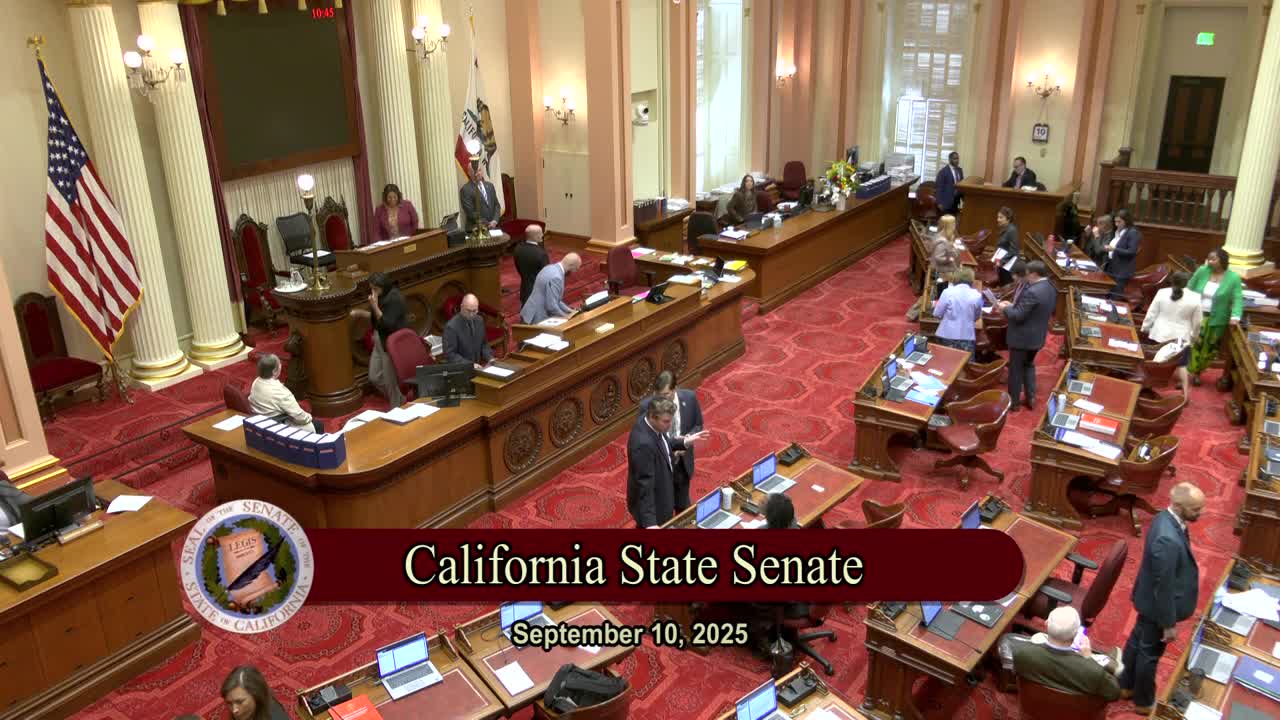 2MIN
Senate Floor
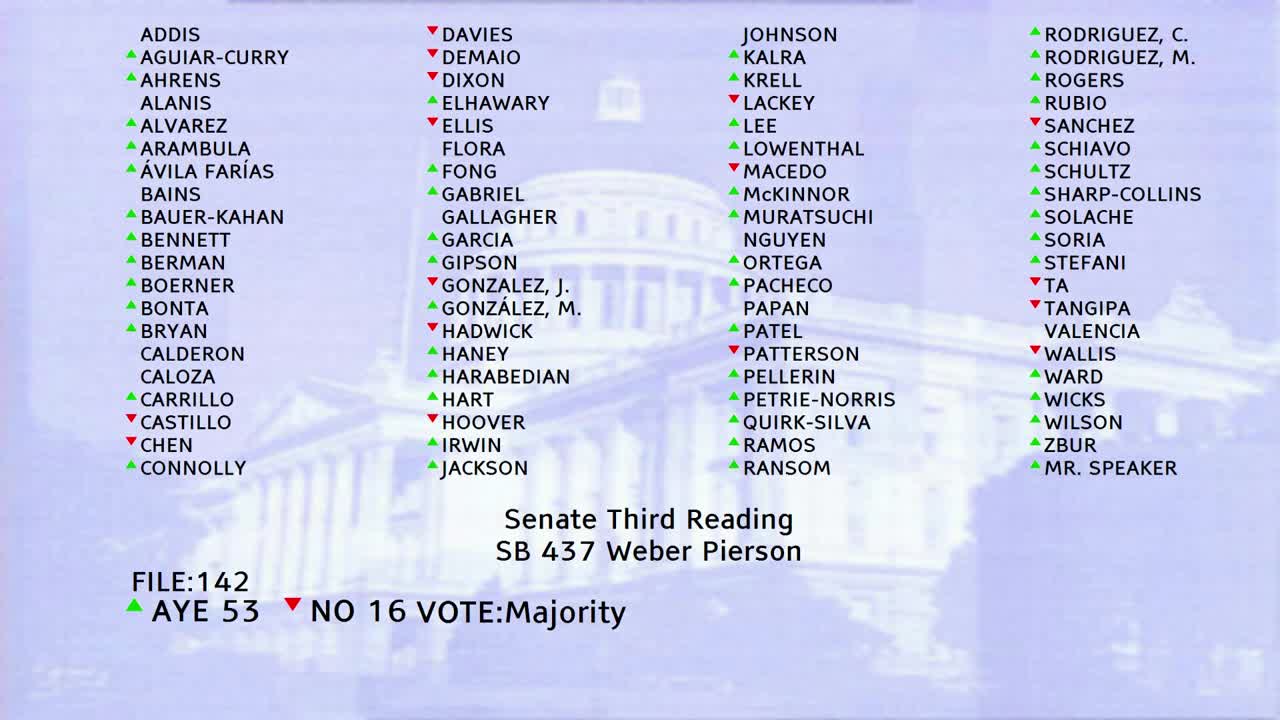 7MIN
Assembly Floor
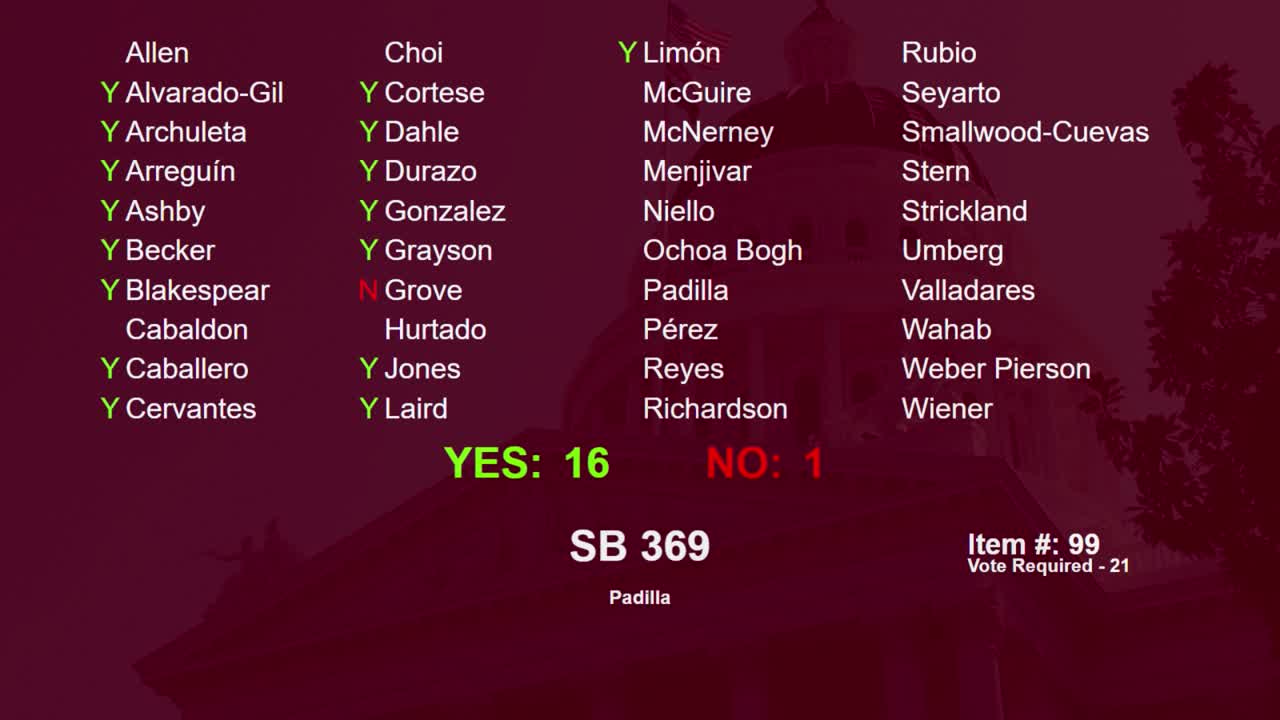 3MIN
Senate Floor
 31MIN