AB 1215: California Open Data Standard.
- Session Year: 2015-2016
- House: Assembly
- Latest Version Date: 2015-03-26
Existing law establishes the Department of Technology, within the Government Operations Agency, headed by the Director of Technology, who is also known as the State Chief Information Officer. The department is responsible for the approval and oversight of information technology projects in state government by, among other things, consulting with agencies during initial project planning to ensure that project proposals are based on well-defined programmatic needs and consider feasible alternatives to address the identified needs and benefits consistent with statewide strategies, policies, and procedures.
This bill would enact the California Open Data Act and create the position of the Chief Data Officer, who would be appointed by, and serve at the pleasure of, the Governor, and report to the Secretary of Government Operations. This bill would require the Chief Data Officer to establish the California Open Data Standard, as specified, and require state agencies to make public data, as defined, available on an Internet Web portal pursuant to that standard. This bill would authorize a local government to adopt that standard. This bill would require the Chief Data Officer to create a Data Working Group, composed of data coordinators from specific state agencies and 2 individuals with expertise in open data information technology, who are appointed by and serve at the pleasure of, the Chief Data Officer. This bill would further require each state agency, on or before July 1, 2016, to submit a strategic plan and a strategic enterprise application plan, as specified, to the Chief Data Officer and to post the reports on the Internet Web portal. This bill would also require specified legal policies for public data to be posted on the Internet Web portal. This bill would make legislative findings and declarations relating to this act.
Existing law requires, with specified exceptions, that all meetings of state and local government entities be open and public and that all persons be permitted to attend and participate. Existing law also requires that public records be open to inspection at all times during the office hours of a state or local government entity and that every person has a right to inspect any public record, except as specifically provided.
This bill would state the intent of the Legislature to enact legislation to strengthen the states commitment to an open and transparent government.
The Legislature finds and declares all of the following:
(a)State agencies contain great amounts of valuable information and reports on all aspects of life for Californians, including, but not limited to, health, business, public safety, labor data, transportation, parks, and recreation.
(b)New information technology has fundamentally changed the way people search for, and expect to find, information, and can aggregate large quantities of data to allow the state to provide information to the public with increasing efficiency and thoroughness.
(c)The state can use these powerful information technology tools to enhance public access to public data, thus making the state more transparent and promoting public trust.
(d)Ensuring the quality and consistency of public data is essential to maintaining its value and utility.
(e)It is the intent of the Legislature by this act to establish an open data policy for state agencies to post public data directly onto a central online Internet Web site at data.ca.gov and provide a single-stop access to public data that is owned, controlled, collected, or maintained by state agencies.
SEC. 2.Chapter 5.8 (commencing with Section 11549.30) is added to Part 1 of Division 3 of Title 2 of the Government Code, to read:5.8.The California Open Data Act1.General Provisions11549.30.This chapter shall be known and may be cited as the California Open Data Act.
11549.32.Unless the context requires otherwise, the following definitions shall apply to this chapter:
(a)Public data means all data that is collected by a state agency in pursuit of that state agencys responsibilities that is otherwise subject to disclosure pursuant to the California Public Records Act (Chapter 3.5 (commencing with Section 6250) of Division 7 of Title 1).
(b)State agency has the same meaning as in Section 11000.
(c)Strategic enterprise application plan means a comprehensive program developed by a state agency, articulating both principles and goals related to the application of its services and programs to the current and future needs of enterprise in the state.
(d)Strategic plan means a state agencys evaluation, over a period of up to five years, of its strategy and direction, including, but not limited to, a framework for decisionmaking with respect to resource allocation to achieve defined goals.
2.Chief Data Officer11549.34.There is in state government the Chief Data Officer, who shall be appointed by, and serve at the pleasure of, the Governor. The Chief Data Officer shall report to the Secretary of Government Operations.
11549.36.(a)The Chief Data Officer shall create an inventory of all available public data in the state.
(b)The Chief Data Officer shall establish an Internet Web portal at data.ca.gov to achieve the purposes of this chapter.
3.Open Data Standard11549.38.(a)The Chief Data Officer shall establish the California Open Data Standard for state agencies to make public data available. A local government agency may adopt the standard.
(b)In establishing the California Open Data Standard pursuant to subdivision (a), the Chief Data Officer shall consult with the subject matter experts from all state agencies, organizations specializing in technology and innovation, the academic community, and other interested groups designated by the Chief Data Officer.
(c)The California Open Data Standard shall include, but not be limited to, all of the following:
(1)A format that permits public notification of all updates whenever possible.
(2)Requirements to update public data as often as is necessary to preserve the integrity and usefulness of public data to the extent that a state agency regularly maintains or updates public data.
(3)Availability of public data without any registration or license requirement, or restrictions on the use of public data. Registration or license requirements, or restriction on the use of public data do not include measures designed or required to ensure access to public data, protect the Internet Web site housing public data from abuse or attempts to damage or impair the use of the Internet Web site, or analyze the types of public data being accessed to improve service delivery.
(4)Ability of public data to be electronically searched using external information technology.
11549.40.The Chief Data Officer may establish policies, standards, and guidelines to implement the California Open Data Standard.
11549.42.On or before July 1, 2016, the Chief Data Officer shall create a Data Working Group composed of all the following:
(a)A data coordinator from each agency listed in Section 12800 who shall be appointed by the secretary of the agency.
(b)Two individuals with expertise in open data information technology, appointed by and who serve at the pleasure of, the Chief Data Officer.
11549.44.(a)(1)On or before March 1, 2016, the Chief Data Officer shall prepare and publish a technical standards manual for publishing public data through the Internet Web portal by state agencies for the purpose of making public data available to the greatest number of users and for the greatest number of applications and shall, whenever practicable, use open standards for Internet Web publishing in a machine-readable format.
(2)The manual shall identify the policy for each technical standard and specify which types of data the standard applies to, and may recommend or require that public data be published in more than one technical standard. The manual shall include a plan to adopt or utilize an Internet Web application programming interface that permits application programs to request and receive public data directly from the Internet Web portal. The manual and related policies may be updated as necessary.
(b)The Chief Data Officer shall consult with organizations specializing in technology and innovation, the state agencies listed in Section 12800, academic institutions, and voluntary consensus standards bodies. Whenever feasible, the Chief Data Officer shall consult with these types of entities in the development of technical and open standards.
4.Compliance11549.46.(a)A state agency that releases public data shall do so in compliance with this chapter and on the Internet Web portal that is linked to data.ca.gov or any successor Internet Web site maintained by, or on behalf of, the state for the purposes of this chapter. If a state agency cannot make all public data available on the Internet Web portal, the state agency shall report to the Chief Data Officer all the public data it is unable to make available, state the reasons why it is unable to do so, and the date by which the state agency expects the public data to be made available on the Internet Web portal.
(b)Public data shall be made available in accordance with technical standards established by the Chief Data Officer.
(c)On or before July 1, 2016, each state agency shall submit a strategic plan and a strategic enterprise application plan consistent with this chapter to the Chief Data Officer and shall make the plans available to the public on the Internet Web portal at data.ca.gov. Each state agency shall collaborate with the Chief Data Officer in formulating its plans. The strategic plan shall include all of the following:
(1)A summary description of public data under the control of the state agency on or after January 1, 2016.
(2)A summary explanation of how its plans, budgets, capital expenditures, contracts, and other related documents and information for each information technology and telecommunications project it proposes to undertake can be utilized to support the California Open Data Standard and related savings and efficiencies. The strategic plan shall prioritize public data for inclusion on the Internet Web portal on or before January 1, 2017, in accordance with the standards established by the Chief Data Officer. For purposes of prioritizing public data, a state agency shall consider whether public data does any of the following:
(i)Increases agency accountability and responsiveness.
(ii)Improves public knowledge of the state agency and its operations.
(iii)Furthers the mission of the state agency.
(iv)Creates economic opportunity.
(v)Responds to an online demand for the public data.
(vi)Responds to a need or demand identified by public consultation.
5.Legal Policies11549.48.(a)The Chief Data Officer shall post the legal policies for the California Open Data Standard on the Internet Web portal.
(b)The Chief Data Officer may establish and maintain an online forum to solicit feedback from the public and to encourage discussion on the California Open Data Standard and public data available on the Internet Web portal.
(c)Use of the public data provided pursuant to this chapter shall be subject to all of the following legal policies:
(1)Public data available on the Internet Web portal are provided for informational purposes only. The state does not warrant the completeness, accuracy, content, or fitness for any particular purpose or use of any public data made available on the Internet Web portal, nor are any warranties to be implied or inferred with respect to the public data furnished pursuant to this chapter.
(2)The state is not liable for any deficiencies in the completeness, accuracy, content, or fitness for any particular purpose or use of any public data or any third-party application utilizing a public data.
(3)All public data shall be entirely in the public domain for purposes of applicable copyright laws.
SECTION 1.It is the intent of the Legislature to enact legislation to strengthen the states commitment to an open and transparent government.
It is the intent of the Legislature to enact legislation to strengthen the states commitment to an open and transparent government.
|
Date
|
Status
|
|---|---|
| Feb 27, 2015 | Introduced. To print. |
| Mar 1, 2015 | From printer. May be heard in committee March 31. |
| Mar 2, 2015 | Read first time. |
| Mar 26, 2015 | From committee chair, with author's amendments: Amend, and re-refer to Com. on A. & A.R. Read second time and amended. |
| Mar 26, 2015 | Referred to Coms. on A. & A.R. and P. & C.P. |
| Apr 6, 2015 | Re-referred to Com. on A. & A.R. |
| Apr 15, 2015 | From committee: Do pass and re-refer to Com. on P. & C.P. (Ayes 9. Noes 0.) (April 15). Re-referred to Com. on P. & C.P. |
| Apr 15, 2015 | From committee: Do pass and re-refer to Com. on P. & C.P. with recommendation: To Consent Calendar. (Ayes 9. Noes 0.) (April 15). Re-referred to Com. on P. & C.P. |
| Apr 22, 2015 | From committee: Do pass and re-refer to Com. on APPR. (Ayes 11. Noes 0.) (April 21). Re-referred to Com. on APPR. |
| May 13, 2015 | In committee: Set, first hearing. Referred to APPR. suspense file. |
| May 28, 2015 | In committee: Held under submission. |
| Jan 31, 2016 | Died pursuant to Article IV, Sec. 10(c) of the Constitution. |
| Feb 1, 2016 | From committee: Filed with the Chief Clerk pursuant to Joint Rule 56. |
|
Date
|
Description
|
Location
|
Votes
|
|
|---|---|---|---|---|
| Apr 21, 2015 | Do pass and be re-referred to the Committee on [Appropriations] | Assembly Standing Committee on Privacy and Consumer Protection |
Passed |
|
| Apr 15, 2015 | Do pass and be re-referred to the Committee on [Privacy and Consumer Protection] with recommendation: To Consent Calendar | Assembly Standing Committee on Accountability and Administrative Review |
Passed |
This list shows positions taken on this bill by organizations on the date displayed, which is linked to the original source.
Positions by individuals are not included.
|
Organization
|
Position
|
Date
|
|---|---|---|
| Data Transparency Coalition | * Support | Apr 21, 2015 |
AB 1215
Page 3
Date of Hearing: May 13, 2015
ASSEMBLY COMMITTEE ON APPROPRIATIONS
Jimmy Gomez, Chair
AB 1215
(Ting) – As Amended March 26, 2015
Policy Committee: |
Accountability and Administrative Review |
Vote: |
9 - 0 |
|
Privacy and Consumer Protection |
|
11 - 0 |
|
|
|
|
Urgency: No State Mandated Local Program: No Reimbursable: No
SUMMARY:
This bill creates the California Open Data Act and the position of the Chief Data Officer (CDO) to be appointed by the Governor. The CDO is required to work with state agencies and experts to create a California Open Data Standard (CODS) and a centralized Internet Web portal for the public to access public data from state agencies. Specifically, this bill:
Defines “public data” as all data collected by a state agency that is subject to disclosure under the California Public Records Act (PRA).
Creates a CDO, appointed by the Governor and serving under the Secretary of the Government Operations Agency, and requires the CDO to:
Inventory all available public data in the state;
Establish the CODS;
Publish, by March 1, 2016, a technical standards manual for state agencies; and
Establish, by July 1, 2016, a Data Working Group comprised of a data coordinator from each major state agency and two open data experts.
Specifies the CODS requirements regarding format, updates, availability of data, and search technologies, and specifies the legal policies regarding the data.
Requires each state agency to a) submit to the CDO, by July 1, 2016, a strategic plan and a strategic enterprise application plan; b) release data to the public via the centralized Internet web portal; and c) report to the CDO if the agency is unable to make data available, stating the reasons it is unable to do so.
Permits local governments to adopt the CODS.
FISCAL EFFECT:
Unknown costs, likely in the hundreds of thousands of dollars, to the Government Operations Agency to create a CDO, and to provide staff sufficient to carry out the required duties of a statewide data inventory, establishing a CODS, developing and publishing a technical manual, establishing a working group within the timeframe allowed in the bill.
Unknown, but significant costs, likely in the millions of dollars statewide, to state agencies to collaborate with the statewide data portal and to review and inventory public data. For example, the California Department of Insurance estimates it would cost them $199,000 in FY 2015-16, $377,000 in 2016-17, and $180,000 ongoing to interact with the Internet Web portal and to inventory the Department’s data and redact non-public information.
State agency costs may be partially offset in future years to the extent there is a decrease in PRA requests.
COMMENTS:
Purpose. This bill is intended to increase government transparency by expanding public access to state agency records and databases, to the extent such records and data are already required to be open to the public under the Public Records Act (PRA). The bill requires state agencies to make public data available in electronic formats that are easy to access, download, analyze and interpret. According to the author, “Access to public records is a cumbersome process for people and organizations that use them. Many times requests are granted with paper or PDF versions of data that is not easily used or analyzed. The intent of public records is not to create a more difficult process by having unusable data, but to increase access for public consumption."
Background. California has a centralized data portal at Data.CA.gov. The portal contains state government data in raw, machine-readable formats that can be reformatted and reused in different ways. According to the Data.CA.gov website, more than 100 million data records are available through the portal including: vital statistics such as population, birth, death, and marriage data; more than 50 million data records on education; California port import/export data; state highway traffic data; data on vehicle accidents, fatalities, and injuries; tourism data; water resource data; and geospatial data. And in 2010, Data.CA.gov launched a search function for several of the datasets, charts, and graphs. The Data.CA.gov datasets are available in variety of open formats including CSV, XLS, KML, TXT, and XML.
The California Health and Human Services Agency and the State Controller’s Office have been leaders among state agencies in the effort to move toward open data standards for public data. This bill seeks to require all state agencies to provide centralized access to all public data in an open data format.Related Legislation.
SB 573 (Pan), pending in the Senate Appropriations Committee, creates a CDO in state government and establishes a statewide open data portal to provide public access to date sets from agencies within the state.
AB 169 (Maienschein), pending referral in the Senate, would require a local agency, except a school district, that voluntarily posts a public record that is described as “open” on its Internet website to post the public record in an open format, as defined.
SB 272 (Hertzberg), pending referral in the Assembly, would require a local agency to create a catalog of “enterprise systems” utilized by the agency, make the catalog available to the public upon request in the agency’s offices, and to post the catalog on the agency’s website.
Prior Legislation. SB 1002 (Yee) of 2012 would have required the State Chief Information Officer to conduct a study to determine the feasibility of providing electronic records in a open format. SB 1002 was vetoed by the Governor.
Analysis Prepared by: Jennifer Swenson / APPR. / (916) 319-2081
AB 1215
Page 5
Date of Hearing: April 21, 2015
ASSEMBLY COMMITTEE ON PRIVACY AND CONSUMER PROTECTION
Mike Gatto, Chair
AB 1215
(Ting) – As Amended March 26, 2015
SUBJECT: California Open Data Standard
SUMMARY:
Establishes the California Open Data Act; requires the Governor to
appoint a Chief Data Officer (CDO); and requires the CDO to work with
state agencies and experts to create a California Open Data Standard
(CODS) and a centralized Internet web portal for the public to access
public data from state agencies. Specifically, this bill:
Defines “public data” as all data collected by a state agency that is subject to disclosure under the California Public Records Act (PRA).
Creates a CDO, appointed by the Governor and serving under the Secretary of the Government Operations Agency, and requires the CDO to:
Inventory all available public data in the state;
Establish the CODS;
Publish, by March 1, 2016, a technical standards manual for state agencies; and
Establish, by July 1, 2016, a Data Working Group comprised of a data coordinator from each major state agency and two open data experts.
Specifies that the CODS must require:
A format that permits public notification of all updates;
Updates as often as necessary to preserve the integrity and usefulness of the data;
Availability of data without user registration or licensing or other restrictions; and
Data to be searchable using external technology.
Specifies that the legal policies for the CODS must state that information is provided for informational purposes only; that the state does not warrant completeness, accuracy, content or fitness of any particular purpose; that the state is not liable for any deficiencies in the data; and that all data is considered in the public domain for copyright purposes.
Requires each state agency to:
Submit to the CDO by July 1, 2016, a strategic plan and a strategic enterprise application plan, including:
A description of the agency’s public data;
A summary of the agency will use its budget, capital expenditures, contracts, planned IT and telecommunications projects, can be utilized to support CODS;
Details on savings and efficiencies.
A prioritization of public data to be added to the centralized Internet web portal by January 1, 2017, based on the goals of increasing agency accountability and responsiveness; improving public knowledge of the agency, furthering the mission of the agency, creating economic opportunity, responding to public demand for online data.
Release data to the public via the centralized Internet web portal and report to the CDO if the agency is unable to make data available, stating the reasons it is unable to do so.
Permits local governments to adopt the CODS.
Makes various legislative findings.
EXISTING LAW:
Establishes the Department of Technology (CalTech) within the Government Operations Agency, supervised by the Director, who also serves as the state’s Chief Information Officer (CIO). (Government Code (GC) Section 11545 and 12803.2)
Requires the Director, among other things, to produce an annual IT strategic plan to guide the acquisition, management, and use of information technology (IT). (GC 11545(c))
Requires CalTech to approve, monitor and oversee state agency IT projects from start to finish. (Public Contract Code Section 12100 et seq. and GC Section 11546 et seq.)
FISCAL EFFECT: Unknown
COMMENTS:
Purpose of this bill. This bill is intended to increase government transparency by expanding public access to state agency records and databases to the extent such records and data are already required to be open to the public under the PRA. The bill requires state agencies to make public data available in electronic formats that are easy to access, download, analyze and interpret. This measure is sponsored by the Data Transparency Coalition.
Author’s statement. According to the author, “Access to public records is a cumbersome process for people and organizations that use them. Many times requests are granted with paper or PDF versions of data that is not easily used or analyzed. The intent of public records is not to create a more difficult process by having unusable data, but to increase access for public consumption."
“We know open data leads to more accountability and efficiency. As the home of Silicon Valley, California should be an open data leader. Data crunching technology is readily available and inexpensive, making it easier than ever for citizens to assess the performance of their government. We must seize the potential of the next frontier in open government. State agencies, including the California Health and Human Services Agency and the State Controller’s office have shown leadership in the open data movement by easing access to digital, usable data formats on their websites. We must develop our open data portal – www.data.ca.gov – to its potential so that the public can find information about the environment, corrections, consumer affairs and more in a standard format for easy use.
“We have seen how open data works in communities across the state. Local governments have also been champions of open records and public meetings. According to the U.S. City Open Data Census, a number of California cities are leading this movement. San Francisco, San Diego, Sacramento, Oakland, Los Angeles, and many others are among the nation’s leading cities that have increased transparency in government with open data.”
California’s existing open data portal. California has a centralized data portal at Data.CA.gov. The portal contains state government data in raw, machine-readable formats that can be reformatted and reused in different ways. According to the Data.CA.gov website, more than 100 million data records are available through the portal including: vital statistics such as population, birth, death, and marriage data; more than 50 million data records on education; California port import/export data; state highway traffic data; data on vehicle accidents, fatalities, and injuries; tourism data; water resource data; and geospatial data. And in 2010, Data.CA.gov launched a search function for several of the datasets, charts, and graphs. The Data.CA.gov datasets are available in variety of open formats including CSV, XLS, KML, TXT, and XML.
The California Health and Human Services Agency and the State Controller’s Office have been leaders among state agencies in the effort to move toward open data standards for public data. This bill seeks to require all state agencies to provide centralized access to all public data in an open data format.
What is the role for the state CIO and CalTech? The bill requires the CDO to consult with subject matter experts from “all state agencies,” organizations specializing in technology and innovation, the academic community, and other interested groups. The bill also requires the CDO to establish a working group with two open data experts and representatives from the major state agencies: Business, Consumer Services, and Housing Agency; Transportation Agency; California Environmental Protection Agency; California Health and Human Services Agency; Labor and Workforce Development Agency; Natural Resources Agency; Government Operations Agency; and Corrections and Rehabilitation Agency.
The author and the Committee may wish to consider whether the bill should require the state CIO to serve on the Data Working Group, which will develop the CODS, given that the state CIO and CalTech have not only the expertise but also the ultimate responsibility for the electronic data held by state agencies. Alternatively, the author and the Committee may wish to consider whether this bill should require the CDO to serve under and report to the state CIO, who would then report to the Secretary of the Government Operations Agency.
Are the timelines feasible? This bill requires the CDO to publish a technical standards manual the CODS for state agencies to use by March 1, 2016, i.e. within 60 days of the effective date of this bill. The author and the Committee may wish to consider whether a 60-day deadline for publishing a technical manual is feasible given the need to first assess the different types of public data held by state agencies and then work collaboratively with state agencies and outside experts on developing the technical manual.
This bill also requires state agencies to
finish strategic plans on implementing the CODS by July 1, 2016,
i.e., 120 days after the CODS technical manual should be published.
The author and the Committee may wish to consider whether a three or
even a six-month timeline for creating an agency-wide strategic plan
on CODS is feasible.
Privacy concerns. This bill only applies to data subject to the PRA; however, the CDO and state agencies will need to be extremely careful in establishing the methods of converting agency databases – or database extracts – to an open data standard and posting that data to the centralized Internet web portal for public use. Many public records are forms or applications that contain personally identifiable information (PII), such as Social Security numbers, health information, credit card information and more.
The author and the Committee may wish to consider whether the bill should require state agencies to address in their strategic plans the issue of identifying and redacting PII from the public data before it is made available on the centralized web portal.
Arguments in support. The Data Transparency Coalition, the bill’s sponsor, states, “AB 1215 is a significant step into making California one of the most data transparent states in the nation…There are numerous examples of other states and cities that have already implemented an open data portal to report their data. San Francisco’s access to real-time transit information resulted in decreased 311 call volume, which saved the city over $1 million a year…[O]ther states have saved millions of dollars by reducing Freedom of Information Act requests…Creating a state-wide open data portal will assist citizens in becoming more engaged in government, as well as third parties crating useful Apps which will pay huge dividends by creating a data platform that has the potential of becoming transformational.”
Related legislation. SB 573 (Pan) would require the Governor, on or before January 1, 2016, to appoint a CDO, who would report to the Secretary of Government Operations. The bill would require the CDO to create the statewide open data portal to provide public access to data sets from agencies within the state. The bill would require each agency, as defined, to appoint a data coordinator, who would be responsible for compliance with these provisions. The bill would require any data published on the statewide open data portal or other open data portal operated by an agency to comply with all state and federal privacy laws and regulations. SB 573 is currently pending in the Senate Governmental Organization Committee where it will be heard on April 28, 2015.
Double-referral. This bill was double-referred to the Assembly Accountability and Administrative Review Committee, where it was heard on April 15, 2015, and passed on a 9-0 vote.
REGISTERED SUPPORT / OPPOSITION:
Support
Data Transparency Coalition
Opposition
None received.
Analysis Prepared by: Jennie Bretschneider/ P. & C.P. / (916) 319-2200
AB 1215
Page 2
Date of Hearing: April 15, 2015
ASSEMBLY COMMITTEE ON ACCOUNTABILITY AND ADMINISTRATIVE REVIEW
Rudy Salas, Chair
AB 1215
(Ting) – As Amended March 26, 2015
SUBJECT: California Open Data Standard
SUMMARY: Establishes the position of Chief Data Officer (CDO) in state government and creates the California Open Data Standard (Standard) for state agencies to make public data available on an Internet Web portal. Specifically, this bill:
Creates the CDO to be appointed by the Governor and reportable to the Secretary of Government Operations.
Directs the CDO to create an inventory of all available public data in the state and to set up an Internet Web portal at data.ca.gov. for purposes of this bill.
Requires the CDO to establish the Standard for state agencies to make public data available and allows local government entities to adopt the Standard.
Directs the CDO to consult with subject matter experts from all state agencies and other specified stakeholders in establishing the Standard.
Requires the Standard to meet various specified requirements relating to the format of public data; updates to public data; availability of public data; and, the ability of public data to be electronically searched.
Authorizes the CDO to establish policies, standards, and guidelines to implement the Standard.
Directs the CDO to establish a Data Working Group, composed of data coordinators from each state agency and other specified members, by July 1, 2016.
Requires the CDO to prepare and publish a technical standards manual that meets specified requirements for publishing public data by March 1, 2016.
Specifies that the CDO must consult with specified types of entities in the development of technical and open standards whenever feasible.
Requires a state agency that is unable to comply with the requirements of this bill to provide the CDO with all the public data it is unable to make available; the reasons why it is unable to do so; and, the date by which it expects the public data to be made available on the Internet Web portal.
Directs each state agency, in collaboration with the CDO, to formulate and submit strategic plans containing specified information to the CDO no later than July 1, 2016, and to make those plans available to the public on the Internet Web portal.
Requires the CDO to post the legal policies for the Standard on the Internet Web portal and establishes various legal policies governing the use of the public data provided pursuant to this bill.
Defines various terms for purposes of this bill, including that "public data" means all data collected by a state agency in pursuit of its responsibilities that is otherwise subject to disclosure under the California Public Records Act (CPRA).
Makes numerous legislative findings and declarations relating to the value and utility of public data compiled and maintained by state agencies and the importance of statewide open data policies.
EXISTING LAW enacts the CPRA which expressly declares that “access to information concerning the conduct of the people’s business is a fundamental and necessary right of every person in this state” and generally requires governmental records to be disclosed to the public, upon request, unless an agency is exempted from doing so for a specific reason.
FISCAL EFFECT: Unknown
COMMENTS: According to the author, this bill creates the California Open Data Act to make more information about state government freely available for everyone to access, analyze, and re-publish without restrictions. It establishes the CDO, appointed by the Governor, to preside over the development and implementation of a centralized online information portal for state agencies to submit standardized data for the public to access.
This bill also requires each state entity to appoint a data coordinator to ensure the transfer of information and directs the CDO to consult with numerous stakeholders to develop standards for the types of data agencies should provide and in what format. State agencies would be required to submit strategic plans about their public data to the CDO and take specified actions if they are unable to make all public data available on the open data portal.
The sponsor, Data Transparency Coalition, adds that a statewide open data policy places the onus on the government to share public information for free and helps institutionalize a culture of open government within the state to fully capture the intent of what it means to have public records.
RELATED LEGISLATION: SB 573 (Pan), currently pending in the Senate Committee on Governmental Organization, creates a CDO in state government and establishes a statewide open data portal that is accessible to the public.
DOUBLE-REFERRAL: Should this bill pass this committee, it will be referred to the Assembly Committee on Privacy and Consumer Protection.
REGISTERED
SUPPORT / OPPOSITION:
Support
Data Transparency
Coalition (sponsor)
Opposition
None on file
Analysis Prepared by: Cassie Royce / A. & A.R. / (916) 319-3600
Discussed in Hearing
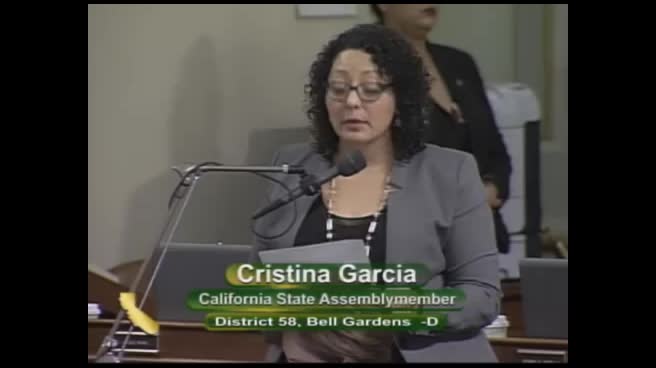 1MIN
Assembly Floor
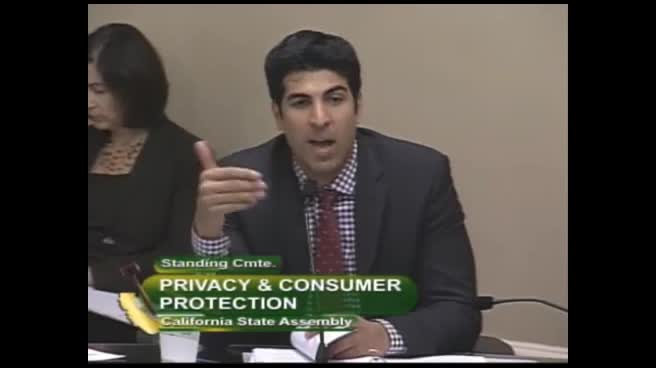 2MIN
Assembly Standing Committee on Privacy and Consumer Protection
Bill Author

Bill Co-Author(s):