AB 1238: Certified copies of marriage, birth, and death certificates: electronic application.
- Session Year: 2015-2016
- House: Assembly
- Latest Version Date: 2016-01-13
Under existing law, a certified copy of a birth, death, marriage, or military service record may only be supplied by the State Registrar, local registrar, or county recorder to an authorized person, as defined, who submits a written, faxed, or digitized image request accompanied by a notarized statement sworn under penalty of perjury that the applicant is an authorized person.
This bill would, if the request for a certified copy of a birth, death, or marriage record is made electronically, authorize the official to accept electronic acknowledgment, sworn under penalty of perjury, acknowledgment verifying the identity of the requestor using a remote identity proofing process aligned with federal guidelines for security and privacy, and satisfying other specified requirements, ensuring that the requester is an authorized person. The bill would require the request to provide a method for the official to establish the identity of the requester electronically and would require the system or product used to process the electronic request and to establish the requesters identity verification to comply with specified provisions and protect the personal information of the requester and guard against identity theft.
Under existing law, a certified copy of a birth, death, marriage, or military service record may only be supplied by the State Registrar, local registrar, or county recorder to an authorized person, as defined, who submits a written, faxed, or digitized image request accompanied by a notarized statement sworn under penalty of perjury that the applicant is an authorized person.
This bill would, if the request for a certified copy of a birth, death, or marriage record is made electronically, authorize the official to accept electronic acknowledgment, sworn under penalty of perjury, that the requester is an authorized person. The bill would require the request to provide a method for the official to establish the identity of the requester electronically and would require the system or product used to process the electronic request and to establish the requesters identity to comply with specified provisions and protect the personal information of the requester and guard against identity theft.
The Cigarette and Tobacco Products Tax Law imposes a tax on every distributor of cigarettes and tobacco products at specified rates, including additional taxes imposed under the Tobacco Tax and Health Protection Act of 1988 (Proposition 99) and the California Families and Children Act of 1998 (Proposition 10). That law imposes taxes on other tobacco products, including cigars, measured by wholesale cost, at a rate determined annually by the State Board of Equalization, as provided.
The Tobacco Tax and Health Protection Act of 1988, and the California Families and Children Act of 1998, each requires that amendments to its provisions be consistent with the acts purposes, and be approved, respectively, by either a 4/5 or 2/3 vote of both houses of the Legislature.
This bill would define a premium cigar for purposes of these taxes as any roll of tobacco spiral wrapped in leaf tobacco that does not contain a plastic or wooden filter or tip, and that weighs over 6 pounds per thousand cigars. The bill would also provide that the rate of tax imposed on the distribution of a premium cigar would not exceed $ ____.
The Cigarette and Tobacco Products Tax Law imposes a tax on every distributor of cigarettes and tobacco products at specified rates, including additional taxes imposed under the Tobacco Tax and Health Protection Act of 1988 (Proposition 99) and the California Families and Children Act of 1998 (Proposition 10). Existing law provides definitions that govern the construction of this law. That law imposes taxes on other tobacco products, including cigars, measured by wholesale cost, at a rate determined annually by the State Board of Equalization, as provided.
The Tobacco Tax and Health Protection Act of 1988, and the California Families and Children Act of 1998, each requires that amendments to its provisions be consistent with the acts purposes, and be approved, respectively, by either a 4/5 or 2/3 vote of both houses of the Legislature.
This bill would make a nonsubstantive change to this provision regarding definitions under the law. define a premium cigar for purposes of these taxes as any roll of tobacco spiral wrapped in leaf tobacco that does not contain a plastic or wooden filter or tip, and that weighs over 6 pounds per thousand cigars. The bill would also provide that the rate of tax imposed on the distribution of a premium cigar would not exceed $ ____.
The Cigarette and Tobacco Products Tax Law imposes a tax on every distributor of cigarettes and tobacco products at specified rates, including additional taxes imposed under the Tobacco Tax and Health Protection Act of 1988 (Proposition 99) and the California Families and Children Act of 1998 (Proposition 10). Existing law provides definitions that govern the construction of this law.
This bill would make a nonsubstantive change to this provision regarding definitions under the law.
(a)(1)If the State Registrar, local registrar, or county recorder receives a written, faxed, or digitized image of a request for a certified copy of a birth, death, or marriage record pursuant to Section 103525 that is accompanied by a notarized statement sworn under penalty of perjury or a faxed copy or digitized image of a notarized statement sworn under penalty of perjury that the requester is an authorized person, as defined in this section, that official may furnish a certified copy to the applicant pursuant to Section 103525.
(2)A faxed or digitized image of the notary acknowledgment accompanying a faxed request received pursuant to this subdivision for a certified copy of a birth, death, or marriage record shall be legible and, if the notarys seal is not photographically reproducible, show the name of the notary, the county of the notarys principal place of business, the notarys telephone number, the notarys registration number, and the notarys commission expiration date typed or printed in a manner that is photographically reproducible below, or immediately adjacent to, the notarys signature in the acknowledgment. If a request for a certified copy of a birth, death, or marriage record is made in person, the official shall take a statement sworn under penalty of perjury that the requester is signing his or her own legal name and is an authorized person, and that official may then furnish a certified copy to the applicant.
(3)If a request for a certified copy of a birth, death, or marriage record is made electronically, the official may accept an electronic acknowledgment, sworn under penalty of perjury, that the requester is an authorized person pursuant to this section. The request shall also provide a method for the official to establish the identity of the requester electronically, pursuant to this section. A system or product used to process the electronic request and establish the requesters identity acknowledgment verifying the identity of the requestor using a remote identity proofing process ensuring that the requester is an authorized person. The identity proofing process shall be aligned with the federal guidelines for security and privacy and shall include dynamic knowledge based authentication or an identity proofing method consistent with the electronic authentication guidelines of the National Institute of Standards and Technology. The verification shall comply with the provisions of the California Uniform Electronic Transactions Act and all other applicable state and federal laws and regulations to protect the personal information of the requester and guard against identity theft. If a requesters identity cannot be established electronically pursuant to this paragraph, the requester may accompany his or her request with a notarized statement of identity pursuant to paragraph (1).
(4)For purposes of this subdivision, digitized image means an image of an original paper request for a certified copy of a birth, death, or marriage record.
(5)Willfully obtaining or assisting another person in obtaining a vital record when he or she is not authorized to receive that record is a crime pursuant to Section 530.5 of the Penal Code.
(b)(1)If the person requesting a certified copy of a birth, death, or nonconfidential marriage record is not an authorized person or is an authorized person who is otherwise unable to satisfy the requirements of subdivision (a), the certified copy provided to the applicant shall be an informational certified copy and shall display a legend that states INFORMATIONAL, NOT A VALID DOCUMENT TO ESTABLISH IDENTITY. The legend shall be placed on the certificate in a manner that will not conceal information.
(2)If the person requesting a certified copy of a confidential marriage record is not an authorized person or is an authorized person who is otherwise unable to satisfy the requirements of subdivision (a), the official shall not release a certified copy of the confidential marriage record unless otherwise authorized by law.
(c)For purposes of this section, an authorized person means:
(1)For purposes of requests for certified copies of confidential marriage records, only a party to the confidential marriage.
(2)For purposes of requests for certified copies of birth, death, or nonconfidential marriage records, a person who is any of the following:
(A)The registrant or a parent or legal guardian of the registrant.
(B)A party entitled to receive the record as a result of a court order, or an attorney or a licensed adoption agency seeking the birth record in order to comply with the requirements of Section 3140 or 7603 of the Family Code.
(C)A member of a law enforcement agency or a representative of another governmental agency, as provided by law, who is conducting official business.
(D)A child, grandparent, grandchild, sibling, spouse, or domestic partner of the registrant.
(E)An attorney representing the registrant or the registrants estate, or any person or agency empowered by statute or appointed by a court to act on behalf of the registrant or the registrants estate.
(F)An agent or employee of a funeral establishment who acts within the course and scope of his or her employment and who orders certified copies of a death certificate on behalf of an individual specified in paragraphs (1) to (5), inclusive, of subdivision (a) of Section 7100.
(d)A person who asks the agent or employee of a funeral establishment to request a death certificate on his or her behalf warrants the truthfulness of his or her relationship to the decedent and is personally liable for all damages occasioned by, or resulting from, a breach of that warranty.
(e)Notwithstanding any other law:
(1)A member of a law enforcement agency or a representative of a state or local government agency, as provided by law, who orders a copy of a record to which subdivision (a) applies in conducting official business shall not be required to provide the notarized statement required by subdivision (a).
(2)An agent or employee of a funeral establishment who acts within the course and scope of his or her employment and who orders death certificates on behalf of individuals specified in paragraphs (1) to (5), inclusive, of subdivision (a) of Section 7100 shall not be required to provide the notarized statement required by subdivision (a).
(f)Informational certified copies of birth and death certificates issued pursuant to subdivision (b) shall only be printed from the single statewide database prepared by the State Registrar and shall be electronically redacted to remove any signatures for purposes of compliance with this section. Local registrars and county recorders shall not issue informational certified copies of birth and death certificates from a source other than the statewide database prepared by the State Registrar. This subdivision shall become operative on July 1, 2007, but only after the statewide database becomes operational and the full calendar year of the birth and death indices and images is entered into the statewide database and is available for the respective year of the birth or death certificate for which an informational copy is requested. The State Registrar shall provide written notification to local registrars and county recorders as soon as a year becomes available for issuance from the statewide database.
(a)(1)If the State Registrar, local registrar, or county recorder receives a written, faxed, or digitized image of a request for a certified copy of a birth, death, or marriage record pursuant to Section 103525 that is accompanied by a notarized statement sworn under penalty of perjury, perjury or a faxed copy or digitized image of a notarized statement sworn under penalty of perjury, perjury that the requester is an authorized person, as defined in this section, that official may furnish a certified copy to the applicant pursuant to Section 103525. A
(2)A faxed or digitized image of the notary acknowledgment accompanying a faxed request received pursuant to this subdivision for a certified copy of a birth, death, or marriage record shall be legible and, if the notarys seal is not photographically reproducible, show the name of the notary, the county of the notarys principal place of business, the notarys telephone number, the notarys registration number, and the notarys commission expiration date typed or printed in a manner that is photographically reproducible below, or immediately adjacent to, the notarys signature in the acknowledgment. If a request for a certified copy of a birth, death, or marriage record is made in person, the official shall take a statement sworn under penalty of perjury that the requester is signing his or her own legal name and is an authorized person, and that official may then furnish a certified copy to the applicant.
(3)If a request for a certified copy of a birth, death, or marriage record is made electronically, the official may accept an electronic acknowledgment, sworn under penalty of perjury, that the requester is an authorized person pursuant to this section. The request shall also provide a method for the official to establish the identity of the requester electronically, pursuant to this section. A system or product used to process the electronic request and establish the requesters identity shall comply with the provisions of the California Uniform Electronic Transactions Act and all other applicable state and federal laws and regulations to protect the personal information of the requester and guard against identity theft. If a requesters identity cannot be established electronically pursuant to this paragraph, the requester may accompany his or her request with a notarized statement of identity pursuant to paragraph (1).
(2)
(4)For purposes of this subdivision, digitized image means an image of an original paper request for a certified copy of a birth, death, or marriage record.
(5)Willfully obtaining or assisting another person in obtaining a vital record when he or she is not authorized to receive that record is a crime pursuant to Section 530.5 of the Penal Code.
(b)(1)If the person requesting a certified copy of a birth, death, or nonconfidential marriage record is not an authorized person or is an authorized person who is otherwise unable to satisfy the requirements of subdivision (a), the certified copy provided to the applicant shall be an informational certified copy and shall display a legend that states INFORMATIONAL, NOT A VALID DOCUMENT TO ESTABLISH IDENTITY. The legend shall be placed on the certificate in a manner that will not conceal information.
(2)If the person requesting a certified copy of a confidential marriage record is not an authorized person or is an authorized person who is otherwise unable to satisfy the requirements of subdivision (a), the official shall not release a certified copy of the confidential marriage record unless otherwise authorized by law.
(c)For purposes of this section, an authorized person means:
(1)For purposes of requests for certified copies of confidential marriage records, only a party to the confidential marriage.
(2)For purposes of requests for certified copies of birth, death, or nonconfidential marriage records, a person who is any of the following:
(A)The registrant or a parent or legal guardian of the registrant.
(B)A party entitled to receive the record as a result of a court order, or an attorney or a licensed adoption agency seeking the birth record in order to comply with the requirements of Section 3140 or 7603 of the Family Code.
(C)A member of a law enforcement agency or a representative of another governmental agency, as provided by law, who is conducting official business.
(D)A child, grandparent, grandchild, sibling, spouse, or domestic partner of the registrant.
(E)An attorney representing the registrant or the registrants estate, or any person or agency empowered by statute or appointed by a court to act on behalf of the registrant or the registrants estate.
(F)An agent or employee of a funeral establishment who acts within the course and scope of his or her employment and who orders certified copies of a death certificate on behalf of any an individual specified in paragraphs (1) to (5), inclusive, of subdivision (a) of Section 7100.
(d)A person who asks the agent or employee of a funeral establishment to request a death certificate on his or her behalf warrants the truthfulness of his or her relationship to the decedent, decedent and is personally liable for all damages occasioned by, or resulting from, a breach of that warranty.
(e)Notwithstanding any other law:
(1)A member of a law enforcement agency or a representative of a state or local government agency, as provided by law, who orders a copy of a record to which subdivision (a) applies in conducting official business shall not be required to provide the notarized statement required by subdivision (a).
(2)An agent or employee of a funeral establishment who acts within the course and scope of his or her employment and who orders death certificates on behalf of individuals specified in paragraphs (1) to (5), inclusive, of subdivision (a) of Section 7100 shall not be required to provide the notarized statement required by subdivision (a).
(f)Informational certified copies of birth and death certificates issued pursuant to subdivision (b) shall only be printed from the single statewide database prepared by the State Registrar and shall be electronically redacted to remove any signatures for purposes of compliance with this section. Local registrars and county recorders shall not issue informational certified copies of birth and death certificates from a source other than the statewide database prepared by the State Registrar. This subdivision shall become operative on July 1, 2007, but only after the statewide database becomes operational and the full calendar year of the birth and death indices and images is entered into the statewide database and is available for the respective year of the birth or death certificate for which an informational copy is requested. The State Registrar shall provide written notification to local registrars and county recorders as soon as a year becomes available for issuance from the statewide database.
SECTION 1.Section 30004 is added to the Revenue and Taxation Code, to read:30004.Premium cigar means any roll of tobacco spiral wrapped in leaf tobacco that does not contain a plastic or wooden filter or tip, and that weighs over six pounds per thousand cigars.
SEC. 2.Section 30112 is added to the Revenue and Taxation Code, to read:30112.Notwithstanding any other provision of this part, the rate of tax imposed on the distribution of a premium cigar shall not exceed ____($____).
Premium cigar means any roll of tobacco spiral wrapped in leaf tobacco that does not contain a plastic or wooden filter or tip, and that weighs over six pounds per thousand cigars.
SEC. 2.Section 30112 is added to the Revenue and Taxation Code, to read:30112.Notwithstanding any other provision of this part, the rate of tax imposed on the distribution of a premium cigar shall not exceed ____($____).
SECTION 1.Section 30002 of the Revenue and Taxation Code is amended to read:30002.Except where the context otherwise requires, the definitions provided in this chapter govern the construction of this part.
Except where the context otherwise requires, the definitions given provided in this chapter govern the construction of this part.
|
Date
|
Status
|
|---|---|
| Apr 23, 2015 | Re-referred to Com. on RLS. pursuant to Assembly Rule 96. |
| Feb 1, 2016 | From committee: Filed with the Chief Clerk pursuant to Joint Rule 56. |
| Jan 31, 2016 | Died pursuant to Article IV, Sec. 10(c) of the Constitution. |
| Jan 21, 2016 | In committee: Set, first hearing. Referred to APPR. suspense file. |
| Jan 21, 2016 | Held under submission. |
| Jan 14, 2016 | Re-referred to Com. on APPR. |
| Jan 13, 2016 | From committee: Do pass and re-refer to Com. on APPR. (Ayes 19. Noes 0.) (January 12). Re-referred to Com. on APPR. |
| Jan 13, 2016 | From committee chair, with author's amendments: Amend, and re-refer to Com. on APPR. Read second time and amended. |
| Jan 4, 2016 | From committee: Be re-referred to Com. on HEALTH. Re-referred. (Ayes 8. Noes 0.) (December 9). Re-referred to Com. on HEALTH. |
| Feb 27, 2015 | Introduced. To print. |
| Apr 21, 2015 | Re-referred to Com. on G.O. |
| Apr 20, 2015 | From committee chair, with author's amendments: Amend, and re-refer to Com. on G.O. Read second time and amended. |
| Apr 6, 2015 | Re-referred to Com. on G.O. |
| Mar 26, 2015 | Referred to Coms. on G.O. and REV. & TAX. |
| Mar 26, 2015 | From committee chair, with author's amendments: Amend, and re-refer to Com. on G.O. Read second time and amended. |
| Mar 2, 2015 | Read first time. |
| Mar 1, 2015 | From printer. May be heard in committee March 31. |
|
Date
|
Description
|
Location
|
Votes
|
|
|---|---|---|---|---|
| Jan 12, 2016 | Do pass and be re-referred to the Committee on [Appropriations] | Assembly Standing Committee on Health |
Passed |
|
| Dec 9, 2015 | Be re-referred to the Committee on [Health] | Assembly Standing Committee on Rules |
Passed |
This list shows positions taken on this bill by organizations on the date displayed, which is linked to the original source.
Positions by individuals are not included.
|
Organization
|
Position
|
Date
|
|---|---|---|
| American Civil Liberties Union of California | ** Against | Jan 12, 2016 |
| California Association of Clerks and Election Officials | ** Support | Jan 12, 2016 |
| California Association of County Veteran Service Officers | ** Support | Jan 12, 2016 |
| California State Association Of Counties | * Support | Jan 21, 2016 |
| Consumer Federation Of California | ** Against | Jan 12, 2016 |
| Little Hoover Commission | ** Support | Jan 12, 2016 |
| Los Angeles County Board of Supervisors | ** Support | Jan 12, 2016 |
| Privacy Rights Clearinghouse | ** Against | Jan 12, 2016 |
| Rural County Representatives of California | ** Support | Jan 12, 2016 |
| Urban Counties Caucus | ** Support | Jan 12, 2016 |
Date of Hearing: January 21, 2016
ASSEMBLY COMMITTEE ON APPROPRIATIONS
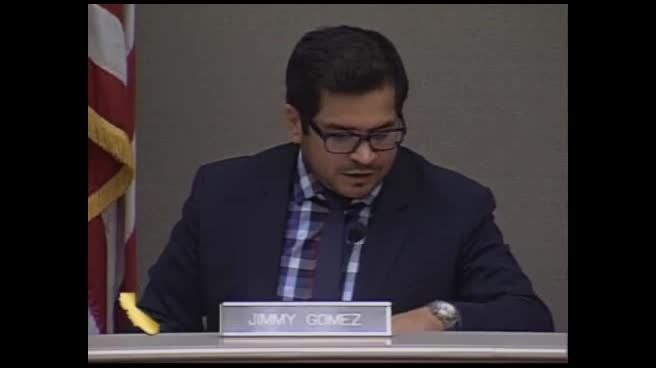
Jimmy Gomez, Chair
ABPCA Bill Id:AB 1238
Author:(Linder) – As Amended Ver:January 13, 2016
Policy Committee: | Health | Vote: | 19-0 |
|
|
Urgency: No State Mandated Local Program: No Reimbursable: No
SUMMARY:
This bill allows, if a request for a certified copy of a birth, death, or marriage record is made electronically, an official to accept an electronic acknowledgment verifying the identity of the requestor using a remote identity proofing process to ensure the requester is an authorized person. It also specifies security standards for the identity proofing process.
FISCAL EFFECT:
- This bill is permissive, thus it does not have direct costs to the California Department of Public Health (CDPH). However, allowing the use of an electronic option results in significant cost pressure for one-time Information Technology costs to CDPH to establish secure electronic verification methodology for vital records (Health Statistics Special Fund).
- On an ongoing basis, the cost for moving to electronic requests is uncertain. There will be some ongoing technology costs for a vendor to handle the authentication process, but it could result in personnel cost savings. It is worth noting the cost to the consumer would be significantly less, even if vital records fees were raised slightly, than the cost of having to provide a sworn statement from a notary.
- Vital records fee revenue could potentially shift between the state and counties, depending on whether and how the authority in this bill is used. If the state provides a secure and consumer-friendly way to request vital records, it could lead to a much larger volume of vital records requests coming in to the state, and decrease demand to county systems, particularly in counties that do not develop their own electronic systems. If this occurred, a transfer of fee revenue from the counties to the state could have significant fiscal consequences for county clerks. On the other hand, widespread adoption of electronic systems by counties could have the opposite effect of reducing demand and fee revenue for the state. Although fee revenue covers the costs of doing business for both the state and counties, significant changes to demand and revenue could disrupt operations, particularly for smaller counties.
COMMENTS:
- Purpose. The state currently does not have authority to verify identity in a completely automated way for purposes of vital records. This bill is intended to provide that authority, allowing electronic authentication in lieu of requiring a notarized affidavit of identity. The author states local agencies have established online systems for individuals to request vital records, but the legal requirement for a notarized affidavit poses a barrier to completing the entire process electronically.
- Background. Both the state and counties issue certified copies of vital records, including birth, death, and marriage certificates. Current law requires a request for a certified copy to either be made in person, or submitted with a notarized affidavit of identity for mail, fax and online requests. Although the state processes requests by mail, some local agencies such as Los Angeles County have created online systems.
- Prior Legislation.
- AB 2275 (Author:Ridley-Thomas) of 2013 was similar to this bill and failed in the Senate Judiciary Committee.
- AB 464 (Daly), Chapter 78, Statutes of 2013 allows for requests of birth, death, and marriage certificates using digitized images of a notarized statement.
- Support. Counties, clerks and election officials, and Little Hoover Commission support this bill, citing potential for improved efficiency, a higher level of service and lower costs.
- Opposition. American Civil Liberties Union (ACLU) of California, Consumer Federation of California and Privacy Rights Clearinghouse oppose this bill, citing risk of identity theft and threats to information privacy.
Analysis Prepared by: Lisa Murawski / APPR. / (916) 319-2081
Date of Hearing: January 12, 2016
ASSEMBLY COMMITTEE ON HEALTH
Rob Bonta, Chair
ABPCA Bill Id:AB 1238
Author:(Linder) – As Amended Ver:April 20, 2015
SUBJECT: Certified copies of marriage, birth, and death certificates: electronic application.
SUMMARY: Authorizes the State Registrar, a local registrar, or a county recorder to accept an electronic request for a marriage, birth, or death certificate if the requestor attests, under penalty of perjury, they are an authorized person. Requires the request to provide a method for the official to establish the identity of the requester electronically. Specifically, this bill:
- Authorizes the State Registrar, or a local registrar or county recorder to accept electronic acknowledgement, sworn under penalty of perjury, that the requester of a marriage, birth, or death certificate is an authorized person.
- Requires, if the request is accepted electronically, the request process to provide a method for the official to establish the identity of the requester electronically. The method to process electronic requests and to establish the requester’s identity would be required to comply with the provisions of the California Uniform Electronic Transactions Act and all other applicable state and federal laws and regulations to protect the personal information of the requester and guard against identity theft.
- Includes a cross reference to Penal Code Section 530.5 which provides that it is a crime to willfully obtain the personal identifying information, as defined, of another person and use that information for any unlawful purpose.
EXISTING LAW:
- Charges the Office of Vital Records with the responsibility of maintaining a uniform system for registration and a permanent central registry with a comprehensive and continuous index for all birth, death, fetal death, marriage, and dissolution certificates registered for vital events which occur in California.
- Allows the State Registrar, local registrar, or county recorder to furnish a certified copy of birth, death, or marriage to applicants upon request if:
- The request is written, faxed, or a digitized image and accompanied by a notarized statement that is written, faxed, or a digitized image, sworn under penalty of perjury, that the requester is an authorized person, as defined; or,
- The request is made in person, and the official takes a statement, sworn under penalty of perjury, that the requester is signing his or her own legal name and is an “authorized person.”
- Defines “authorized person,” for purposes of obtaining certified copies of birth, death, or marriage records, as any of the following:
- The person who is the subject of the record or the parent or legal guardian of that person;
- A party who is entitled to receive the record as a result of a court order;
- Law enforcement or governmental agency personnel conducting official business;
- A child, grandchild, sibling, spouse, domestic partner, or grandparent of the person who is the subject of the record;
- An attorney or other person empowered to act on behalf of the person who is the subject of the record; or,
- An agent or employee of a funeral establishment who orders death certificates when acting on behalf of specified individuals.
- Provides that, in all other cases in which the requester does not meet the requirements of an authorized person, a certified copy may be provided to the requester but the document shall be an informational certified copy and shall be redacted to remove any signatures that appear on the document. Requires the certified copy to contain the statement “INFORMATIONAL, NOT A VALID DOCUMENT TO ESTABLISH IDENTITY.”
FISCAL EFFECT: This bill has not been analyzed by a fiscal committee.
COMMENTS:
- PURPOSE OF THIS BILL. According to the author, individuals seeking vital records in California suffer longer wait times and pay significantly higher fees than individuals seeking records in most other states due to outdated statutes that govern vital records request policies. The author states that county and local staff are significantly burdened by current policies that dictate that a vital records request may only be partially competed online, followed by a notarized affidavit submitted on paper. This hybrid system of online requesting means, practically, that a vital records request cannot be processed without thousands of hours of county staff time wasted because staff must manually attach related documents for each individual request as supporting documentation is submitted. The author further asserts that California's policies are drastically out of step with national trends to increase access to vital government services through online technologies, as 34 other states and 171 local jurisdictions allow for digital authentication of vital records requests online as a standard matter of practice.
- BACKGROUND. The Office of Vital Records is charged with the responsibility of maintaining a uniform system for registration and a permanent central registry with a comprehensive and continuous index for all birth, death, fetal death, marriage, and dissolution certificates registered for vital events which occur in California. Certified copies of these records are available from the State Registrar, the 58 county recorders, and 61 local health jurisdictions.
- CALIFORNIA UNIFORM TRANSACTIONS ACT. This bill would require the electronic request for a vital record to provide a method for the official to establish the identity of the requester electronically. The method established to process electronic requests and establish the requester’s identity would be required to comply with the provisions of the California Uniform Electronic Transactions Act (Act). The purpose of the Act is to standardize state laws regarding retention of paper records (namely checks) and electronic signatures, in an effort to facilitate the validity of electronic contracts and transactions.
The Act, however, does little in the way of providing security against fraud. It allows for electronic notarization of signatures and provides that the requirement of an electronic signature under penalty of perjury is satisfied if the “electronic record includes, in addition to the electronic signature, all of the information as to which the declaration pertains together with a declaration under penalty of perjury by the person who submits the electronic signature that the information is true and correct.” Further, the Act does not require any standard of security, but merely defines a "security procedure" as a procedure employed for the purpose of verifying that an electronic signature, record, or performance is that of a specific person or for detecting changes or errors in the information in an electronic record. The procedure should include the use of algorithms or other codes, identifying words or numbers, encryption, or callback or other acknowledgment procedures.”
- ELECTRONIC AUTHENTICATION GUIDELINES. Electronic authentication (e-authentication) is the process of establishing confidence in user identities electronically presented to an information system. E-authentication presents a technical challenge when this process involves the remote authentication of individual people over an open network (i.e. the internet), for the purpose of electronic government and commerce. The National Institute of Standards and Technology (NIST), under the U.S. Department of Commerce, released guidelines in 2013 to provide technical guidance to agencies to allow an individual to remotely authenticate his or her identity to a federal IT system. These guidelines address only traditional, widely implemented methods for remote authentication based on secrets. With these methods, the individual to be authenticated proves that he or she knows or possesses some secret information.
- EXECUTIVE ORDER ON SECURING CONSUMER DATA ONLINE. In response to several high profile consumer data breaches, potentially leading to credit card fraud and identity crimes, President Obama issued an executive order on October 17, 2014 aimed at improving the security of consumer financial transactions. It states that "given that identity crimes, including credit, debit, and other payment card fraud, continue to be a risk to U.S. economic activity, and given the economic consequences of data breaches, the United States must take further action to enhance the security of data in the financial marketplace. While the U.S. Government's credit, debit, and other payment card programs already include protections against fraud, the Government must further strengthen the security of consumer data and encourage the adoption of enhanced safeguards nationwide in a manner that protects privacy and confidentiality while maintaining an efficient and innovative financial system." In part, the order directed the National Security Council staff, the Office of Science and Technology Policy, and Office of Management and Budget to present to the President by March, 2016 a plan to ensure that all agencies making personal data accessible to citizens through digital applications require the use of multiple factors of authentication and an effective identity proofing process, as appropriate.
- SUPPORT. The Urban Counties Caucus, cosponsor of this bill, writes in support that counties process thousands of these types of requests which can be very time consuming for both county staff and consumers. This bill would provide a more user-friendly way to get access to these records through established systems that verify the user’s identity which could provide significant cost savings to counties and provide better customer service for these vital records. The California State Association of Counties, cosponsor of the bill, states that updating vital records requests could also reduce the overall cost to the consumer of obtaining vital records. The current fee for a certified copy of a birth certificate in Los Angeles County ranges from $23 to $28, and the average notary fee is an additional $20.
- OPPOSITION. The Privacy Rights Clearinghouse (PRC) argues in opposition to the bill that the substitution of an electronic acknowledgement for a notarized affidavit will facilitate the ability of identity thieves and other fraudsters to obtain vital records that can then be used to engage in criminal acts against Californians. Certified copies of birth certificates can be used to fraudulently obtain many other important documents such as passports, driver’s licenses, and identification cards. Certified copies of death certificates can be used to fraudulently obtain decedents’ death benefits, including life insurance proceeds and investment accounts. Vital records contain a wealth of personal information, which if inappropriately released to the wrong person can result in a significant violation of privacy. Privacy is protected by California's Constitution, and should not be set aside merely to facilitate the issuance of vital records.
- RELATED LEGISLATION. AB 1546 (Olsen) requires the State Registrar, in consultation with the County Recorders’ Association of California and other stakeholders, to study the security features for paper used to print vital records, or suitably secure alternative features, and report findings and recommendations to the legislature by January 1, 2018. AB 1546 is schedule to be heard in this committee on January 12, 2016.
- PREVIOUS LEGISLATION.
- AB 2275 (Ridley-Thomas) of 2014 was identical to this bill and failed passage in the Senate Judiciary Committee.
- AB 464 (Daly), Chapter 78, Statutes of 2013, allows digitized images, as defined, to be included as part of a request for a certified copy of a birth, death, or marriage record.
- AB 130 (Jeffries), Chapter 412, Statutes of 2009, extends the existing limitations on the release and access of birth and death records to marriage records in order to prevent the unauthorized use of personal information.
- SB 471 (Margett) of 2007 would have required any individual, authorized by law to obtain a certified copy of a birth or death certificate, to show proof of identification when the request is made in person, except when the individual has been a victim of identity theft. SB 471 died in the Senate Health Committee.
- AB 1179 (Parra), Chapter 6, Statutes of 2004, prohibits county recorders from providing certified copies of military discharge papers except to specified persons and allows county recorders to accept faxed, notarized documents when specified information is present and photographically reproducible.
- AB 247 (Speier), Chapter 914, Statutes of 2002, authorizes the State Registrar, local registrar, or county recorder to provide a certified copy of a birth or death record to an authorized person who submits a statement sworn under penalty of perjury that the requester is signing his or her own legal name and is an authorized person.
- POLICY COMMENT. Vital records contain a wealth of personal information, which if inappropriately released to the wrong person could result in a significant violation of privacy. Privacy is protected by California's Constitution, and must be protected with the highest possible standards. Certified copies of birth certificates can be used to fraudulently obtain many other important documents such as passports, driver’s licenses, and identification cards. Certified copies of death certificates can be used to fraudulently obtain decedents’ death benefits, including life insurance proceeds and investment accounts. Given the inherent difficulties in verifying the identity of an individual over the Internet, and the countless opportunities for identity theft that vital records in the wrong hands could create, strong protections must be in place to ensure that vital records are safely maintained.
- SUGGESTED AMENDMENTS.
- Supporters of this bill have cited many other jurisdictions that use a specific technology known as "dynamic knowledge-based authentication" to ensure security and avoid identity theft. The language in the bill, however, does not describe any specific standards or guidelines for security that will protect personal information of the requester and guard against identity theft. The Committee may wish to amend this bill to specify the actual security standards that will be used to protect personal information, as follows:
Section 103526(a)(3) If a request for a certified copy of a birth, death, or marriage record is made electronically, the official may accept an electronic acknowledgment, verifying the identity of the requestor using a remote identity proofing process aligned with the US Federal guidelines for security and privacy ensuring that the requester is an authorized person. The identity proofing process for security and privacy shall include dynamic knowledge based authentication or an identity proofing method consistent with the electronic authentication guidelines of The National Institute of Standards and Technology. The verification must sworn under penalty of perjury, that the requester is an authorized person pursuant to this section. The request shall also provide a method for the official to establish the identity of the requester electronically, pursuant to this section. A system or product used to process the electronic request and establish the requester’s identity shall comply with the provisions of the California Uniform Electronic Transactions Act and all other applicable state and federal laws and regulations to protect the personal information of the requester and guard against identity theft. If a requester’s identity cannot be established electronically pursuant to this paragraph, the requester may accompany his or her request with a notarized statement of identity pursuant to paragraph (1).
- As drafted, the cross reference to Penal Code section 530.5 in paragraph (5) would inadvertently create a new crime of identity theft that is not consistent with identity theft as defined in the cross-referenced code section. Attesting to a false identity under this section is already defined as perjury in current law; therefore the cross-reference to identity theft in the Penal Code may be unnecessary. The Committee may wish to amend the bill to strike paragraph (5) of the bill.
(5) Willfully obtaining or assisting another person in obtaining a vital record when he or she is not authorized to receive that record is a crime pursuant to Section 530.5 of the Penal Code.
REGISTERED SUPPORT / OPPOSITION:
Support
California State Association of Counties (cosponsor)
Urban Counties Caucus (cosponsor)
California Association of Clerks and Election Officials
California Association of County Veteran Service Officers
Little Hoover Commission
Los Angeles County Board of Supervisors
Rural County Representatives of California
Opposition
American Civil Liberties Union of California
Consumer Federation of California
Privacy Rights Clearinghouse
Analysis Prepared by: Dharia McGrew / HEALTH / (916) 319-2097
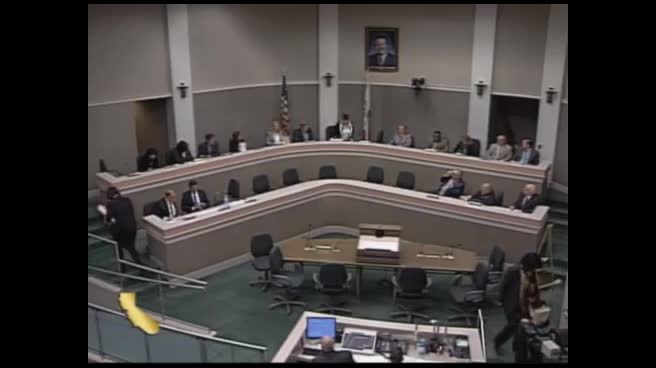
Discussed in Hearing
 2MIN
Assembly Standing Committee on Appropriations
5SEC
Assembly Standing Committee on Appropriations
 15MIN
Assembly Standing Committee on Health

Bill Co-Author(s):